17 Types Of BLUE BIRDS (ID Guide With Photos)
Did you spot a blue-colored bird in your backyard? In that case you’ll probably want to know what species you saw.
To help you identify the bird you came across, we’ll cover all the types of blue birds that can be seen in North America.
We’ll show you the birds that are either entirely or partially blue, and we’ll also cover where you can expect to find these birds.
The blue birds of North America
There are 17 types of blue-colored birds in North America, which we cover in full detail below.
Keep in mind that out of these 17 bird species, only two are entirely blue (the Indigo Bunting and Mountain Bluebird), while the others are partially blue colored birds.
Now let’s dive into the details, and take a closer look at each of these birds:
Eastern Bluebird
Scientific name: Sialia sialis
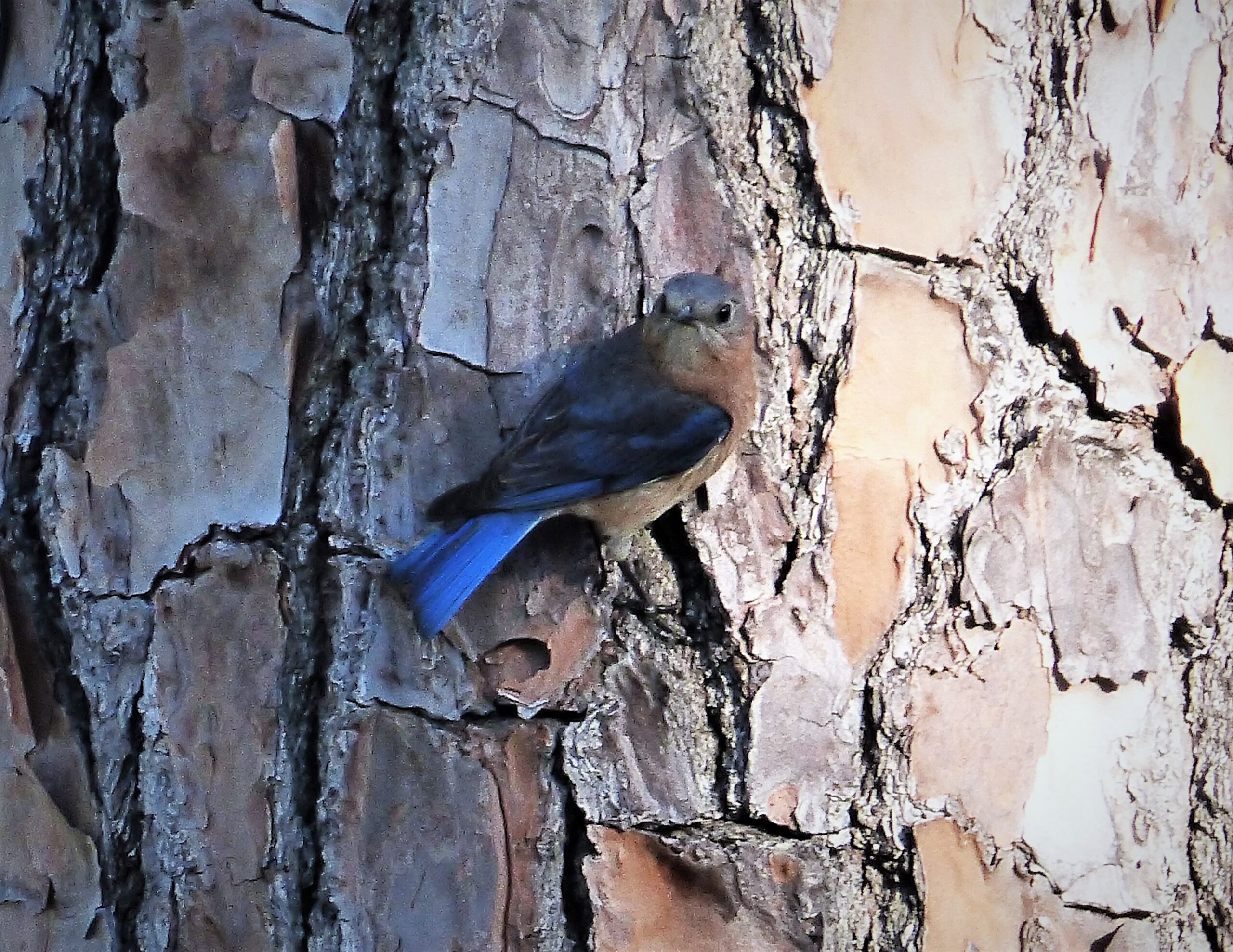
The Eastern Bluebird is found throughout the eastern US as a summer visitor.
The upperparts of adult male Eastern Bluebirds are a rich shade of admiral blue. The bright blue coloration of these birds also extends into their wings, tail, and the back of their heads.
The partial orange collar of males creates the impression of having a cap on their head. Male bluebirds have a prominent rufous orange chest.
This bluebird can be attracted with mealworms on your feeder
It is a migratory bird in the northern part of its range, but lives year-round in the southern United States. Northern populations winter in Mexico.
While this bird species originally used a Woodpecker cavity for nesting, they now readily accept artificial nest boxes to raise their brood.
You can attract bluebirds to your backyard by offering mealworms at your bird feeder.
Western Bluebird
Scientific name: Sialia mexicana
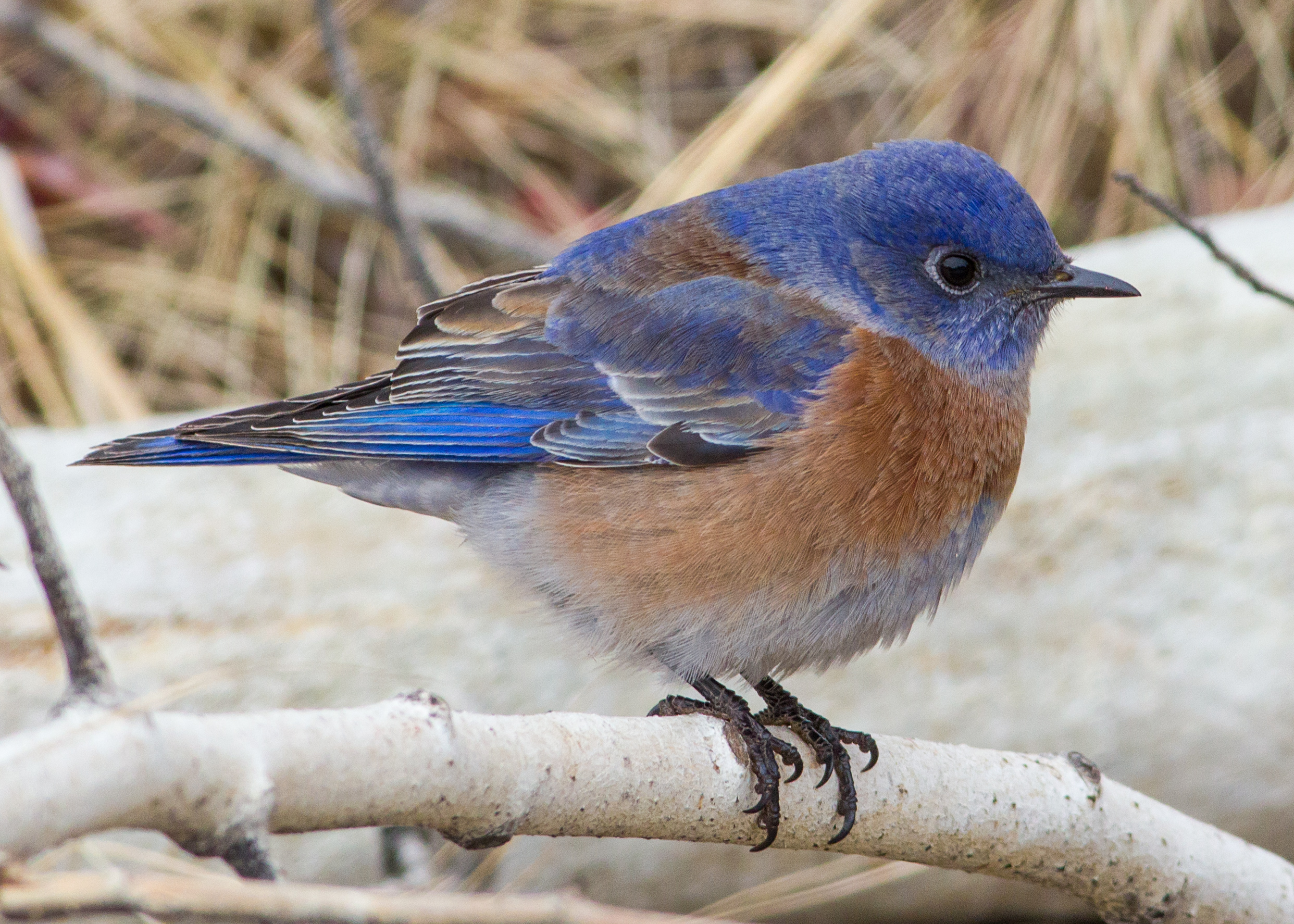
The Western Bluebird is the most common bluebird species in western North America.
It is a breeding bird and year-round resident in large areas of the western US, and also occurs in more southern parts of the country during the winter.
Male Western Bluebirds have blue heads and backs, which contrasts with reddish orange feathers on the chest.
Female and juvenile birds on the other hand, have more subdued hues, with gray-brown upperparts and a lighter gray underside.
While Western Bluebirds are migratory birds in northern parts of their range, they are permanent residents in southern states.
Mountain Bluebird
Scientific name: Sialia currucoides
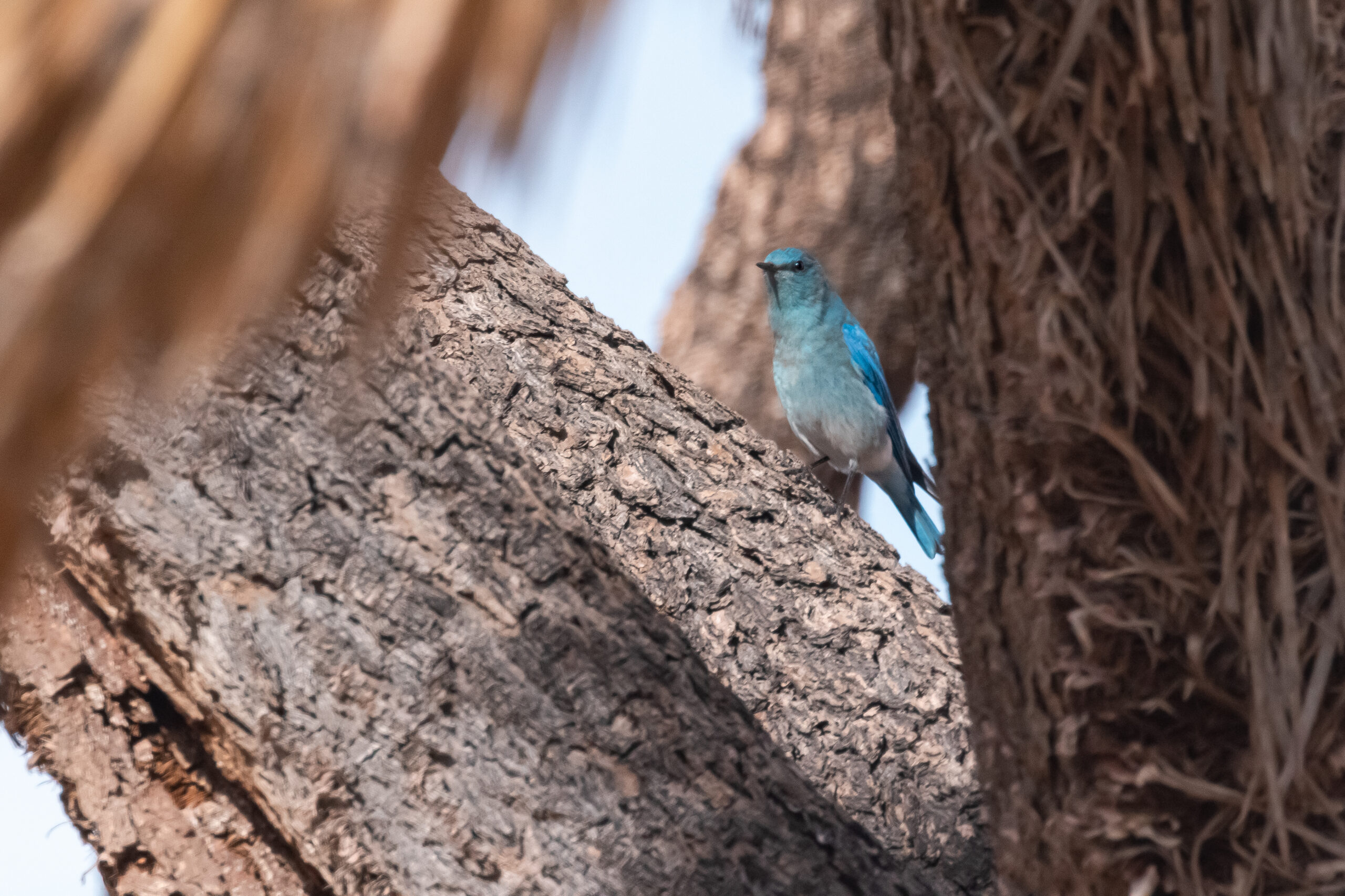
The Mountain Bluebird is generally found in more montane habitats than the former species, but the two types of bluebirds sometimes overlap in their distribution.
Adult males are almost entirely cerulean blue, except for their pale cream colored belly. The blue plumage is darker on the back, and lighter on the chest.
These bluebirds breed in mountainous regions of the western US and Canada.
They are migratory birds in northern parts of their range, while they are year-round residents in southern parts of their range.
During winter they occur in areas of the country where they don’t breed, and sometimes visit bird feeders offering berries or mealworms.
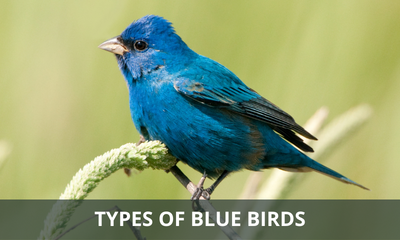
Indigo Bunting
Scientific name: Passerina cyanea
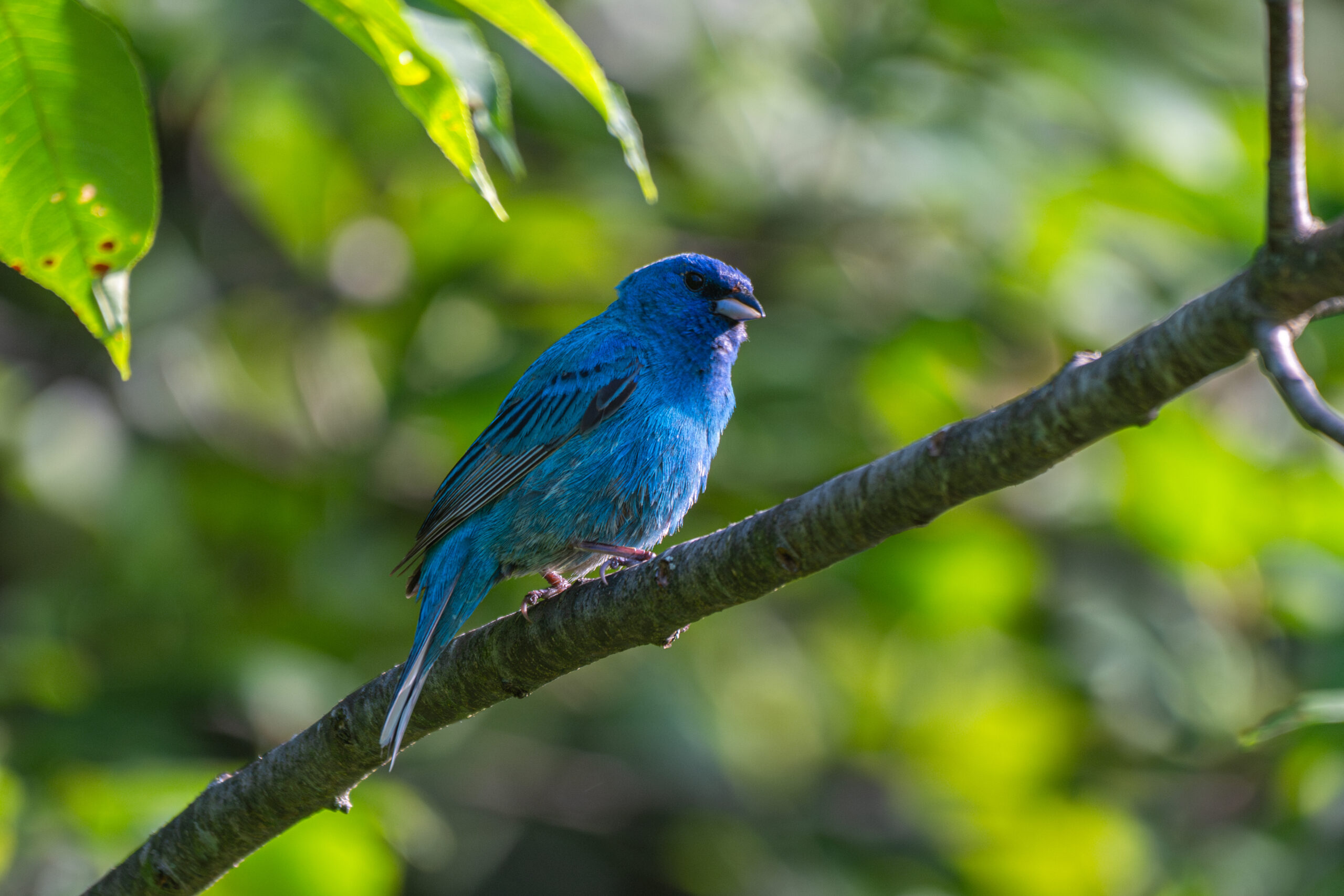
The Indigo Bunting is a brightly colored small finch. During the summer, the male is almost entirely indigo blue, except for darker brownish wingtips and tail feathers.
Females and juvenile birds are more inconspicuous, with light brown upperparts, and creamy white underparts.
The Indigo Bunting is relatively common in North America at forest edges, gardens, and parks, and will readily visit bird feeders that offer seeds.
This bird species is almost entirely blue
The Indigo Bunting is most commonly seen at bird feeders in spring, as it switches over from seeds to eating mostly insects during the spring and summer.
During the breeding season, males can often be observed singing from a treetop perch.
This blue bird is strictly migratory, and is only found in North America during the summer. It winters in Central and South America, and migrates in small flocks during the fall migration.
Blue Grosbeak
Scientific name: Passerina caerulea
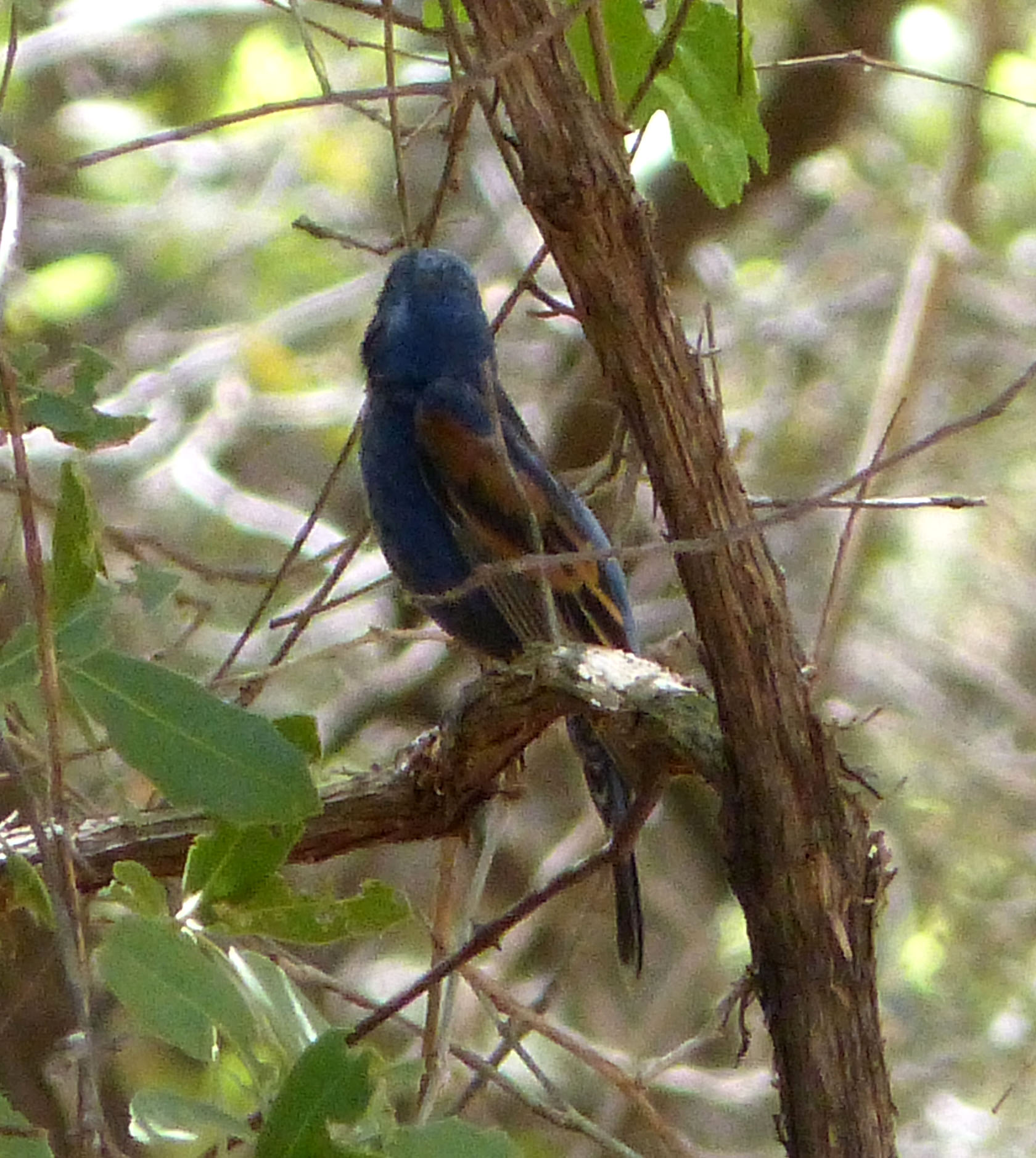
The Blue Grosbeak is a beautiful songbird that has a large beak shaped like a cone.
The adult males are almost entirely dark blue in color, except for two chestnut-brown wingbars and black feathers on their face.
Females, on the other hand, are brownish gray with pale underparts. Blue grosbeaks are breeding visitors in the southern half of the USA, but migrate to Central America to spend the winter.
The preferred habitat of this bird is shrubland and grassland interspersed with dense bushes.
Blue Jay
Scientific name: Cyanocitta cristata
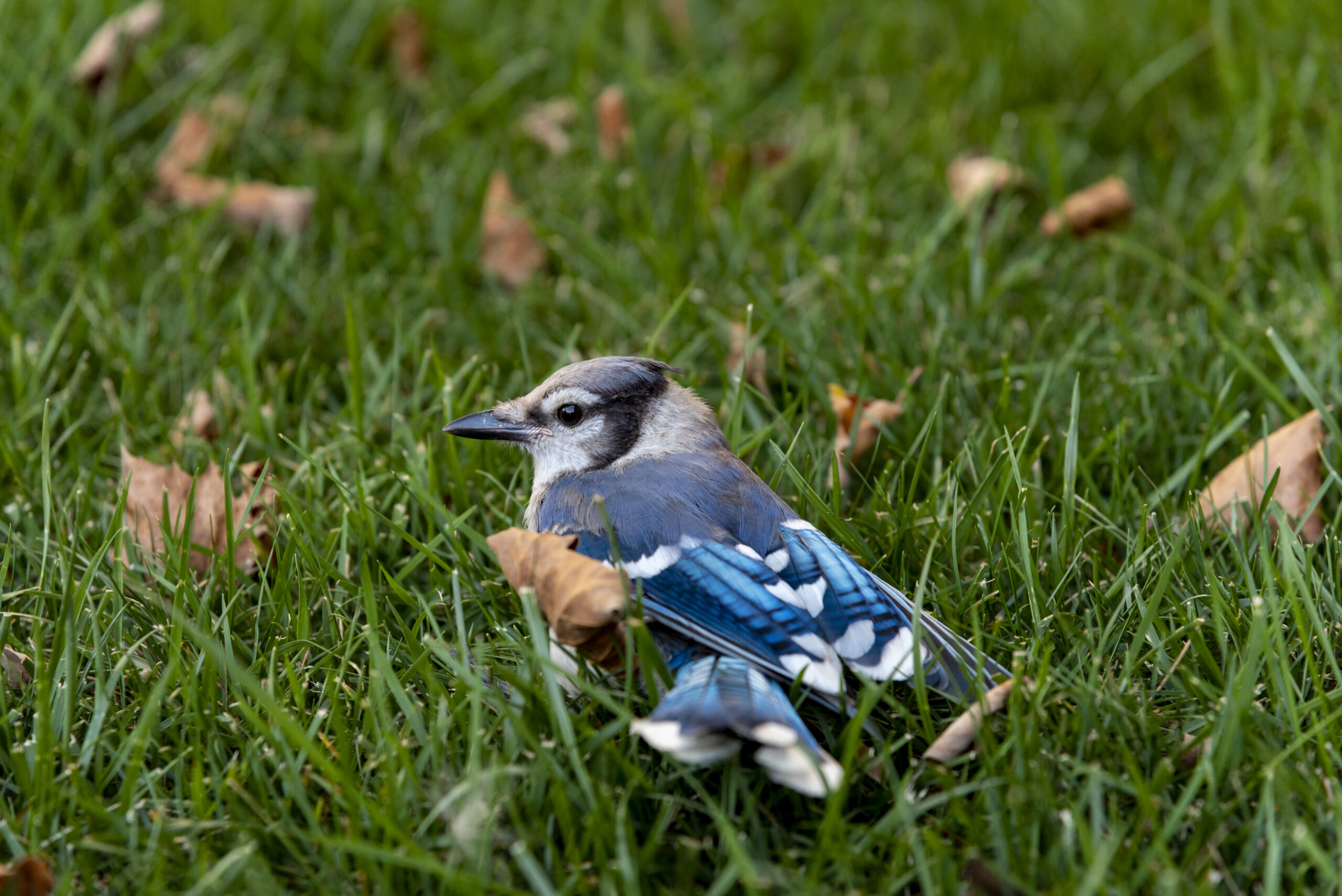
A common blue-colored bird found throughout the eastern US and Canada, the Blue Jay prefers open areas with scattered trees, shrubs, and other vegetation with dense undergrowth.
These beautiful dark blue birds are grayish blue on top, with bright arctic blue feathers in their wings and blue tails. Their underparts are light gray.
This is one of the most common blue colored birds
Blue Jays are social birds that live in small groups called colonies, with each colony containing one dominant pair and several subordinate members.
These blue-colored birds often use man made structures such as buildings, bridges, and telephone poles for foraging.
If you want to attract Blue Jays to your bird feeder, it’s best to offer them peanuts or sunflower seeds.
Lazuli Bunting
Scientific name: Passerina amoena
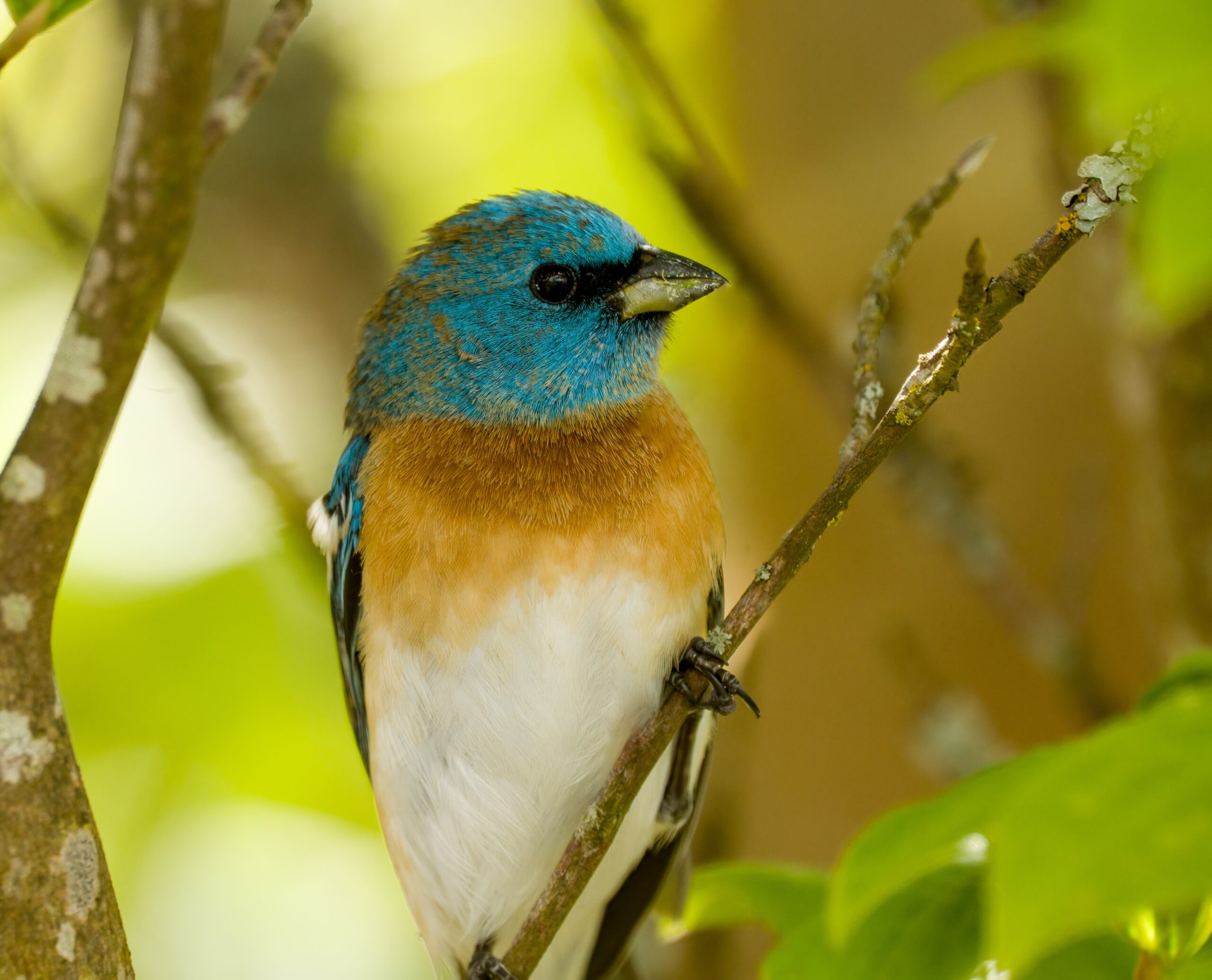
The Lazuli Bunting is a gorgeous songbird of the western United States, where it occurs as a summer visitor.
The hood, neck, and rump of adult males are light blue, while the wings are dark gray with a white wingbar.
Males also have a chestnut orange breast and a white belly throughout the summer months.
Females are buff-brown in color with black wings and a pale blue rump.
The Lazuli Bunting may be found in North America during the breeding season, which runs from May to August, before migrating to Mexico for the winter.
Blue-gray Gnatcatcher
Scientific name: Polioptila caerulea
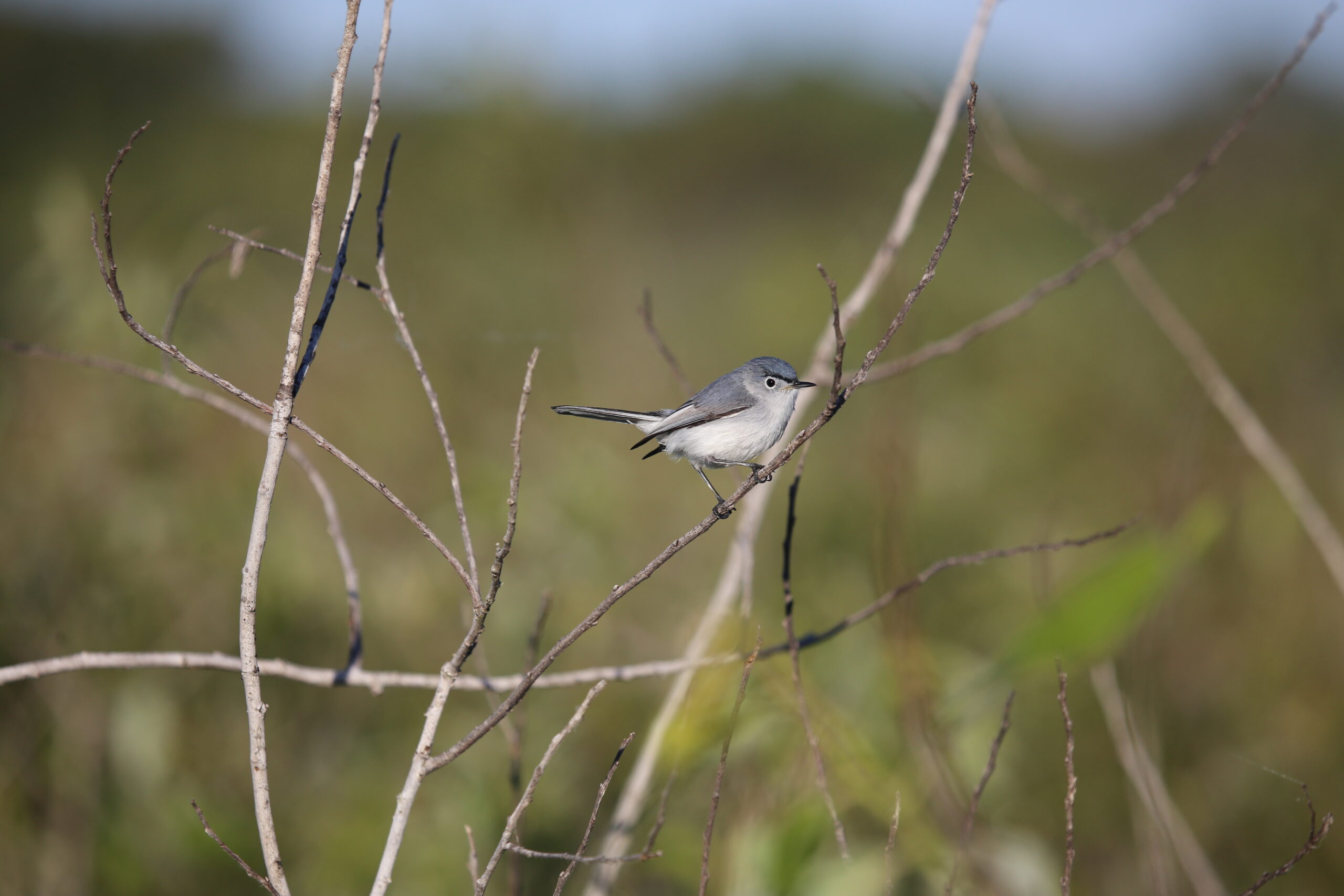
Except for their long tail, the Blue-gray Gnatcatchers look a lot like warblers.
The upperparts of adult males are blue-gray, while their underparts are a lighter gray. The tail is black with a white stripe at the margins.
It may be encountered as a breeding bird in the temperate regions of North America, predominantly from early May through August.
It is a partial migratory bird, with southeastern populations being year-round residents. Northern populations, however, spend the winter in the southern USA and Central America.
A great way to identify this bird is by its long tail that is often cocked upwards.
Black-throated Blue Warbler
Scientific name: Setophaga caerulescens
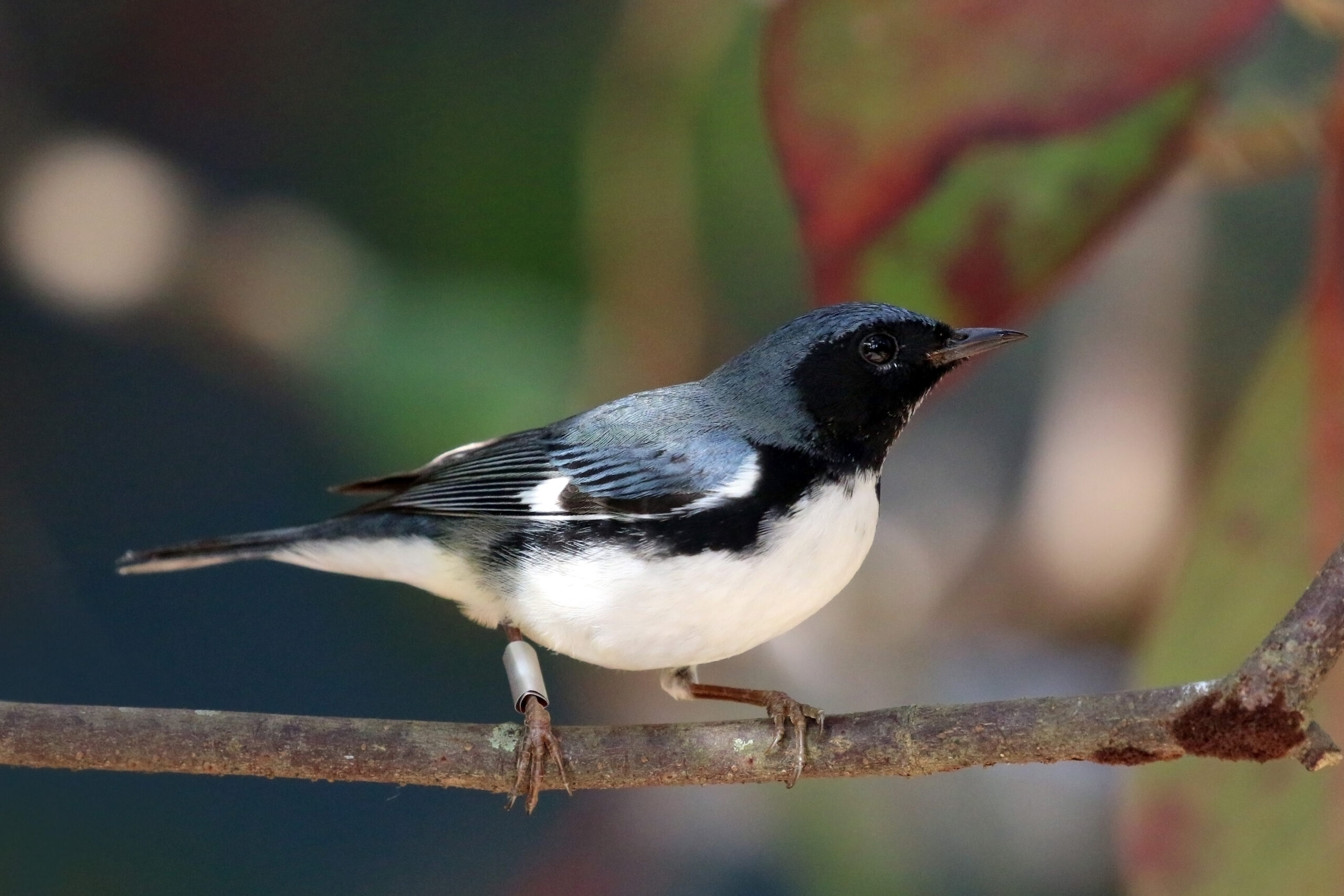
The male and female Black-throated Blue Warblers have plumages that are notably unlike one another.
During the summer, adult males have mostly dark blue upperparts, black wings, and a white patch at the base of the primary feathers on their wings.
There is a clear demarcation between the white underparts and the blue upper parts, which is due to a line of black feathers.
During the months of May through August, the Black-throated Blue Warbler may be encountered nesting in the northern and central regions of North America.
It is a strict migratory bird, and spends the rest of its year in the Caribbean. These warblers feed on insects most of the year, but also include berries in their diet during fall.
California Scrub-Jay
Scientific name: Aphelocoma californica
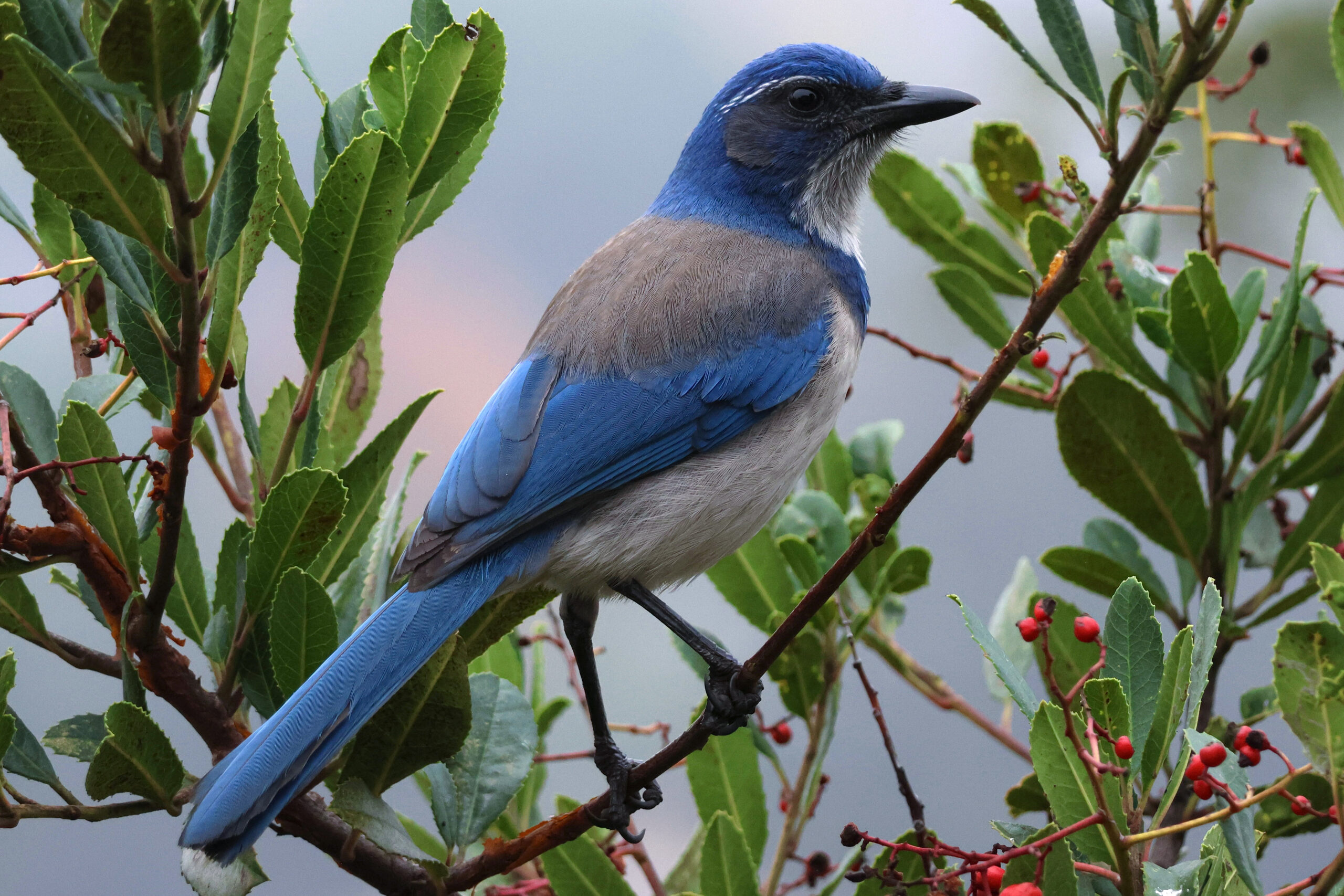
The California Scrub-Jay was called the Western Scrub Jay until a few years ago, and was thought to belong to a single species that occurs throughout the western United States.
However, in 2016 it was split into two different species, the California Scrub Jay (found along the Pacific Coast), and the Woodhouse’s Scrub Jay (found further inland).
Adult males and females look the same, and have an azure blue upper head, wings, and tail, as well as dark gray shoulders and a light gray belly. The largely blue body contrasts with a white throat streaked with gray.
These blue gray jays are year-round residents that can be encountered in a variety of lightly wooded habitats and shrubland.
Steller’s Jay
Scientific name: Cyanocitta stelleri
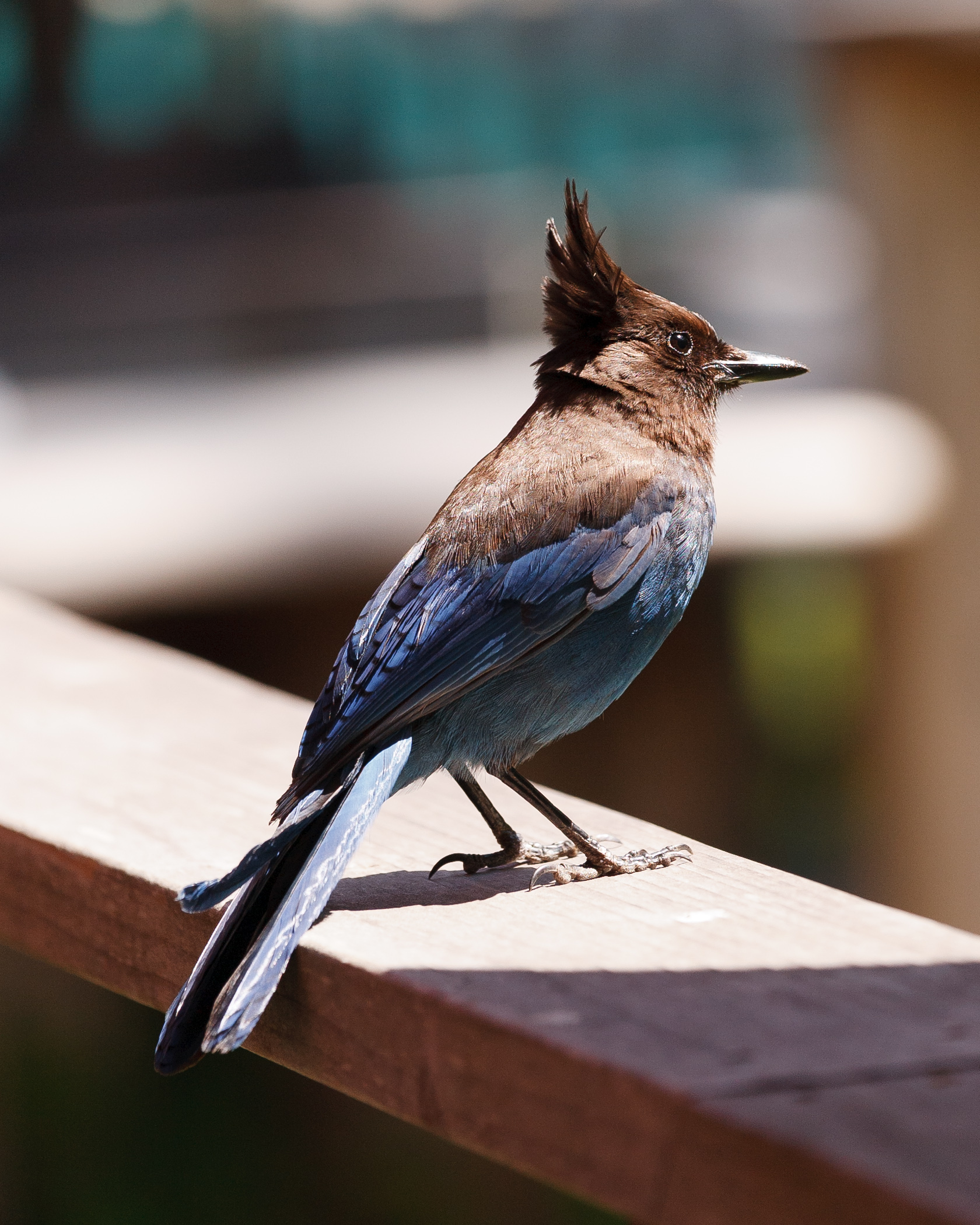
Steller’s Jay is a medium-sized member of the jay family, and is easily recognized due to the dark blue body combined with its striking crest.
It is a common breeding bird in a broad swathe along the Rocky Mountains, but is absent from the more arid areas in the south, including the Mojave Desert.
Both males and females look similar, and have a dark gray to blackish head, nape, and upper back, while the rest of the body is dark admiral blue.
While it is found year-round within its breeding range, in some years Steller’s Jays undertake irruptive movements towards the south, and show up in areas where they normally don’t occur.
Barn Swallow
Scientific name: Hirundo rustica
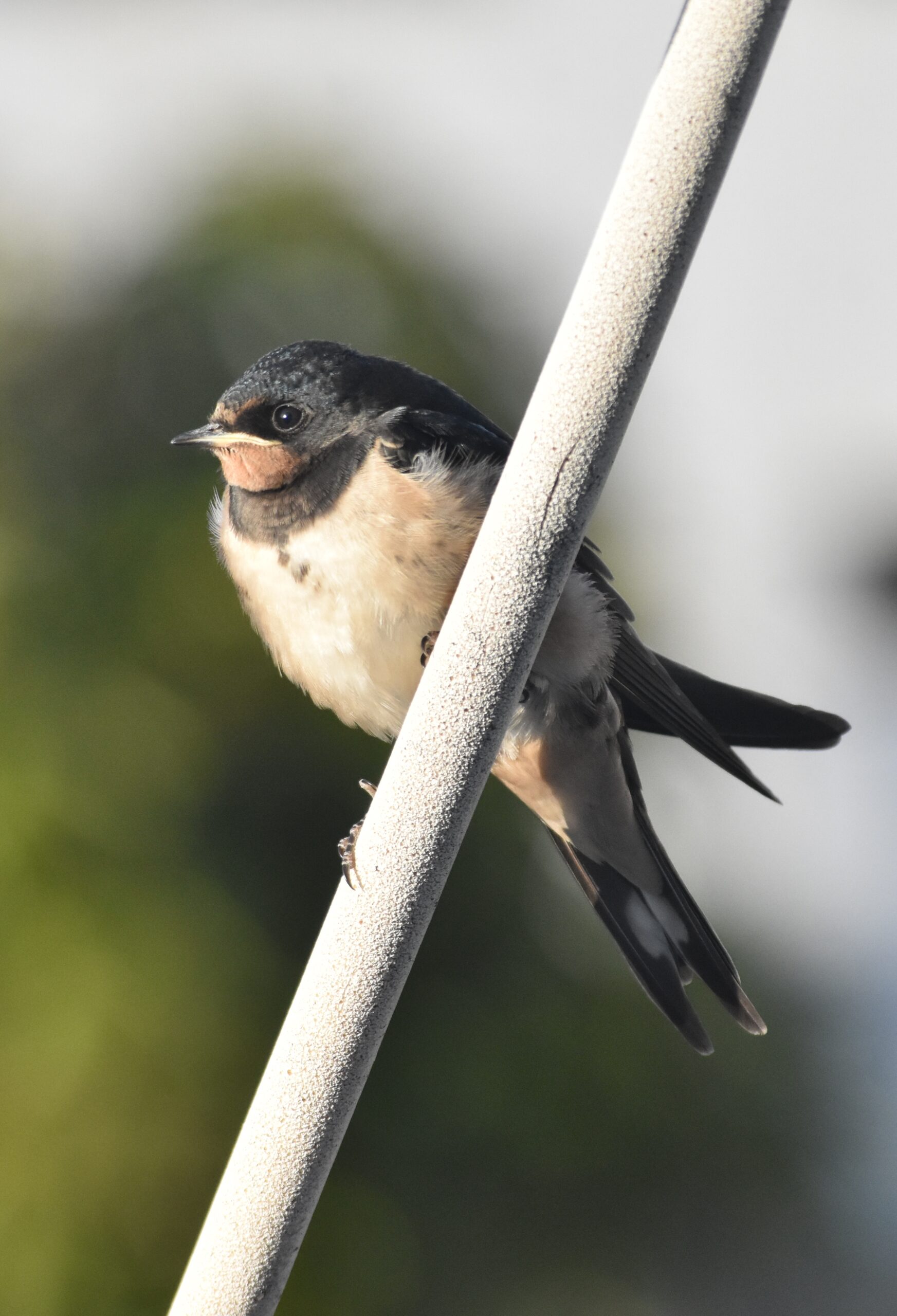
The Barn Swallow inhabits nearly all of North America south of the Arctic circle and may be found in a wide variety of habitats.
This bird has iridescent upperparts that shimmer in various shades of dark blue when the sunlight hits them.
Its underside is reddish-orange, including a chestnut orange forehead and throat, as well as a light reddish-orange belly.
The Barn Swallow feeds on flying insects, such as mosquitoes and flies, and catches them closer to the ground than other species of swallows.
It is a strictly migratory bird, and spends the winter in Central and Southern America.
Tree Swallow
Scientific name: Tachycineta bicolor
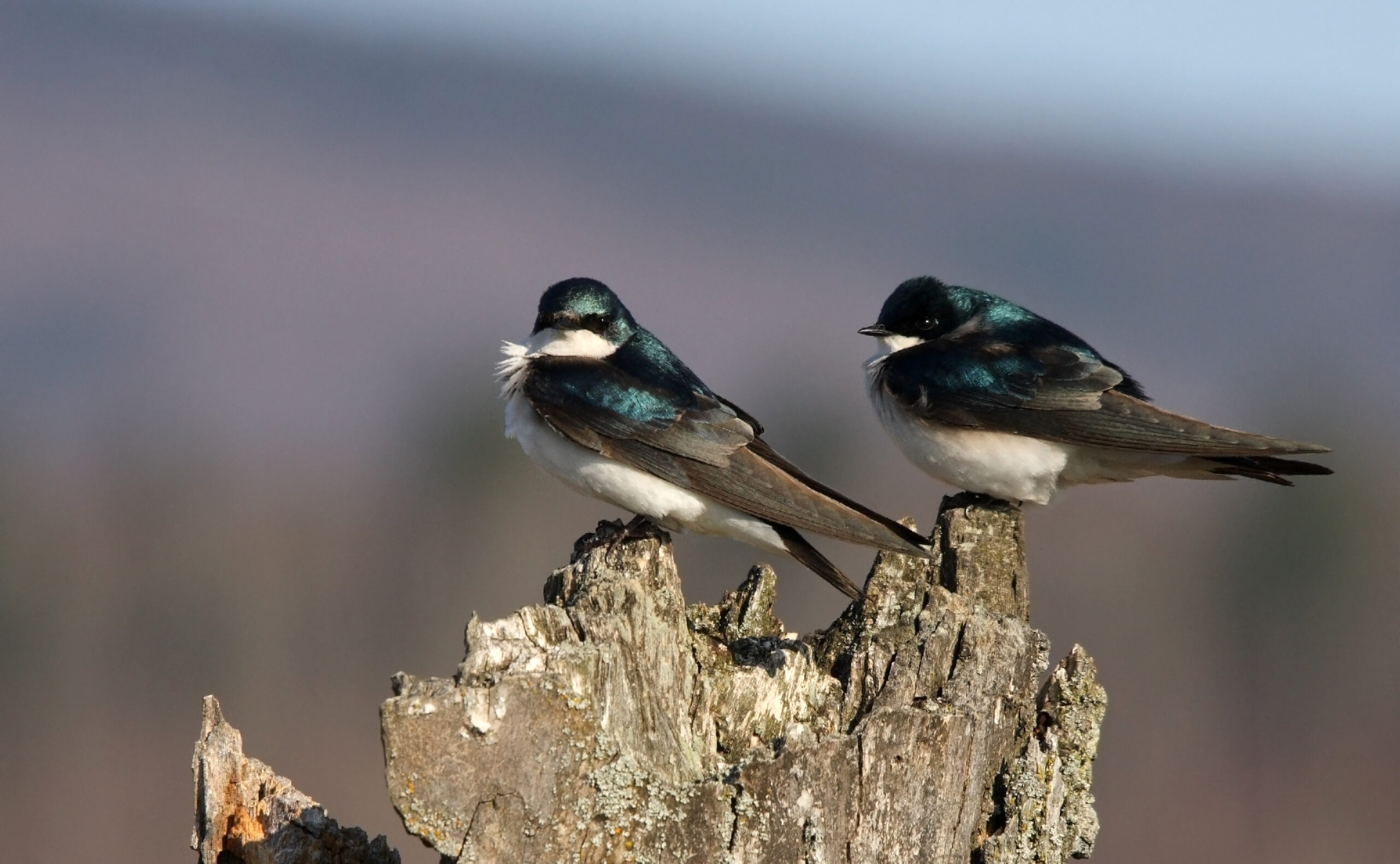
The Tree Swallow is relatively common throughout North America, and is most often found close to lakes, marshes, and ponds.
Adult Tree Swallows are greenish blue on top, and have buff white underparts. Their feathers are iridescent, and change color when viewed in direct sunlight.
This blue bird feeds exclusively on insects that it catches in the air, and as a strict insectivore it is a long distance migrant that only spends the summer in Wisconsin.
Tree Swallows winter around the Gulf of Mexico, as well as in Central America.
Purple Martin
Scientific name: Progne subis
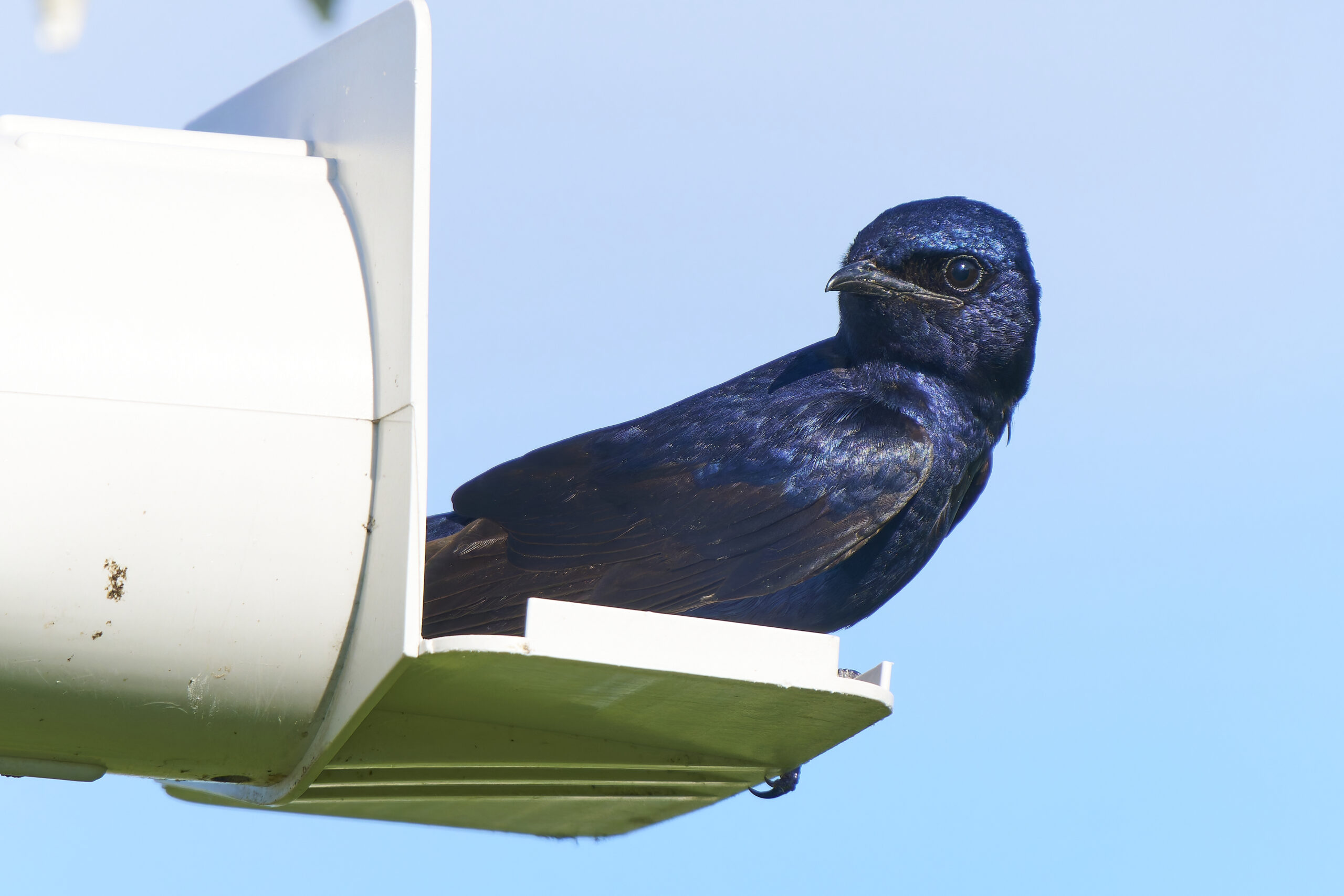
The Purple Martin is the largest martin in North America. The male is almost entirely dark purplish blue with an iridescent sheen. The wings and tail are black.
Juvenile birds and females are light gray on top, with beige white underparts. The male Purple Martin is the only martin species that doesn’t have a light colored belly.
While these blue-colored birds originally built their nest in tree cavities, they have switched over to using man-made nesting sites instead.
This bird is a strictly migratory species and spends the winter in South America. It congregates in large roosts in fall, which fly south together.
The best way to attract these gorgeous blue birds to your yard is by putting up a Purple Martin house in your backyard,
Belted Kingfisher
Scientific name: Megaceryle alcyon
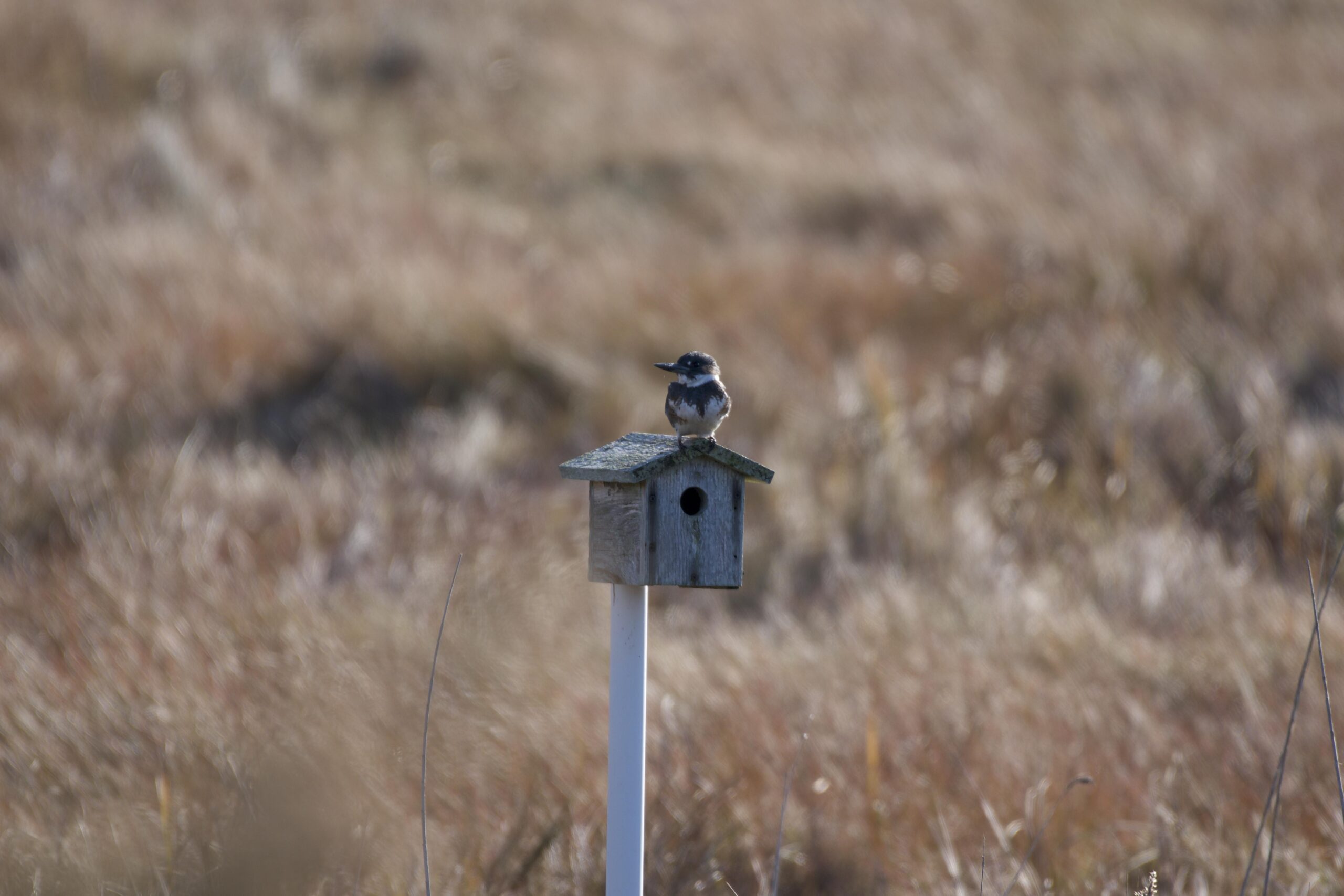
The Belted Kingfisher looks superficially similar to a Blue Jay, due to its grayish blue upperside.
However, the Belted Kingfisher is darker than a Jay, and is also more likely to be found close to water.
Adult male Belted Kingfishers are almost entirely teal blue on top, except for a white collar that separates the cap from the rest of the body.
This blue bird is a partial migratory bird, but can be seen year round in southern parts of its range.
This blue-colored bird feeds almost exclusively on small fish, and is therefore rarely seen far away from streams, lakes and other freshwater.
Great Blue Heron
Scientific name: Ardea herodias
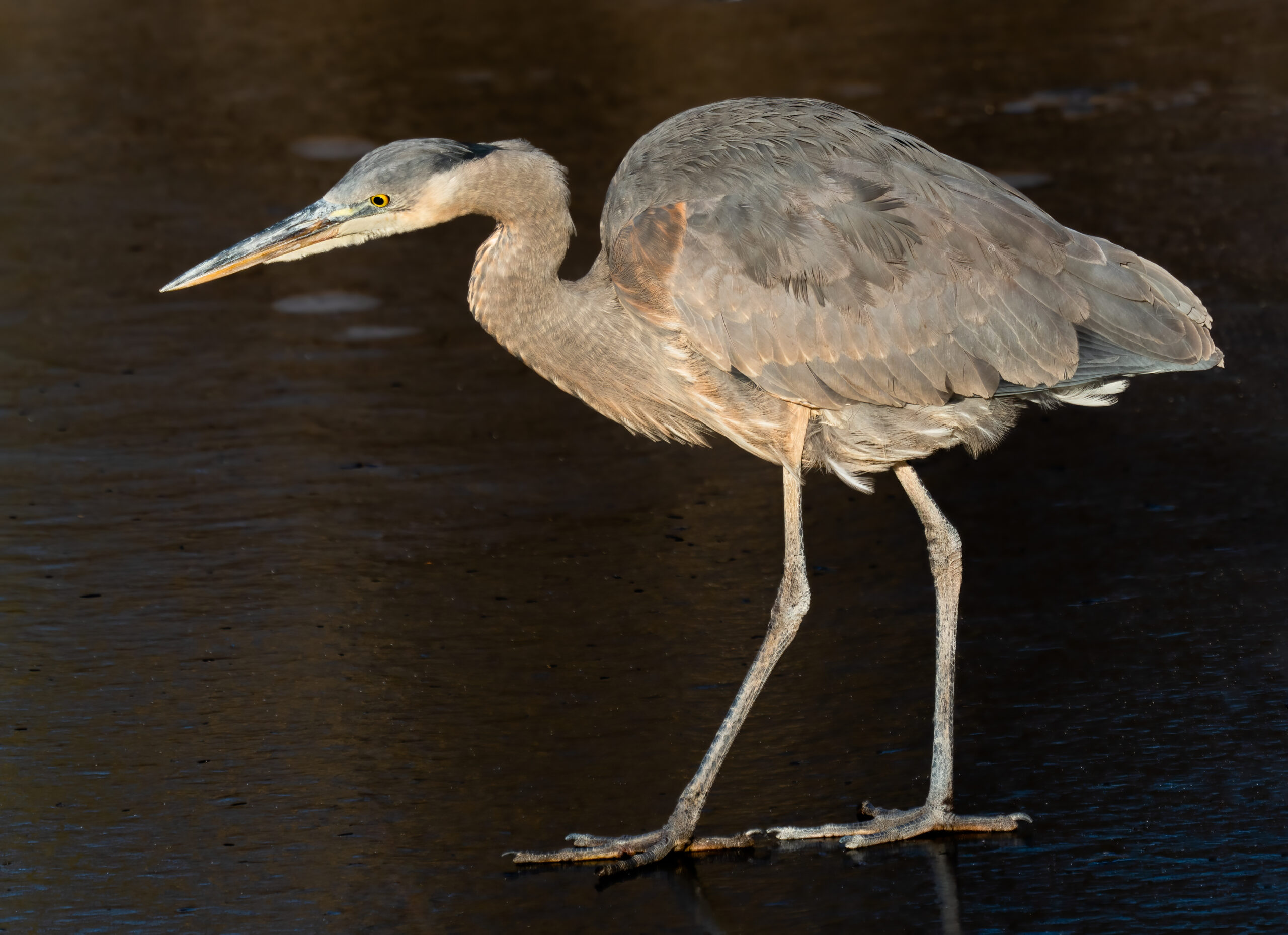
The Great Blue Heron is the most common herons in North America, where it can be seen year round.
This large bird has a wingspan of up to 6 feet. It is almost entirely blue gray, except for a white throat and eye stripe, as well as dark gray wing feathers.
This bird likes to hunt for small fish and other aquatic animals by wading in the shallows of lakes, marshes and ponds.
This blue bird also forages on meadows, golf courses and grassy areas, where it stalks rodents. It is a non-migratory bird, and can be seen in North America all year round.
However, it requires open water in order to catch fish, and northern birds will fly to southern states if the winter is very cold.
Little Blue Heron
Scientific name: Egretta caerulea
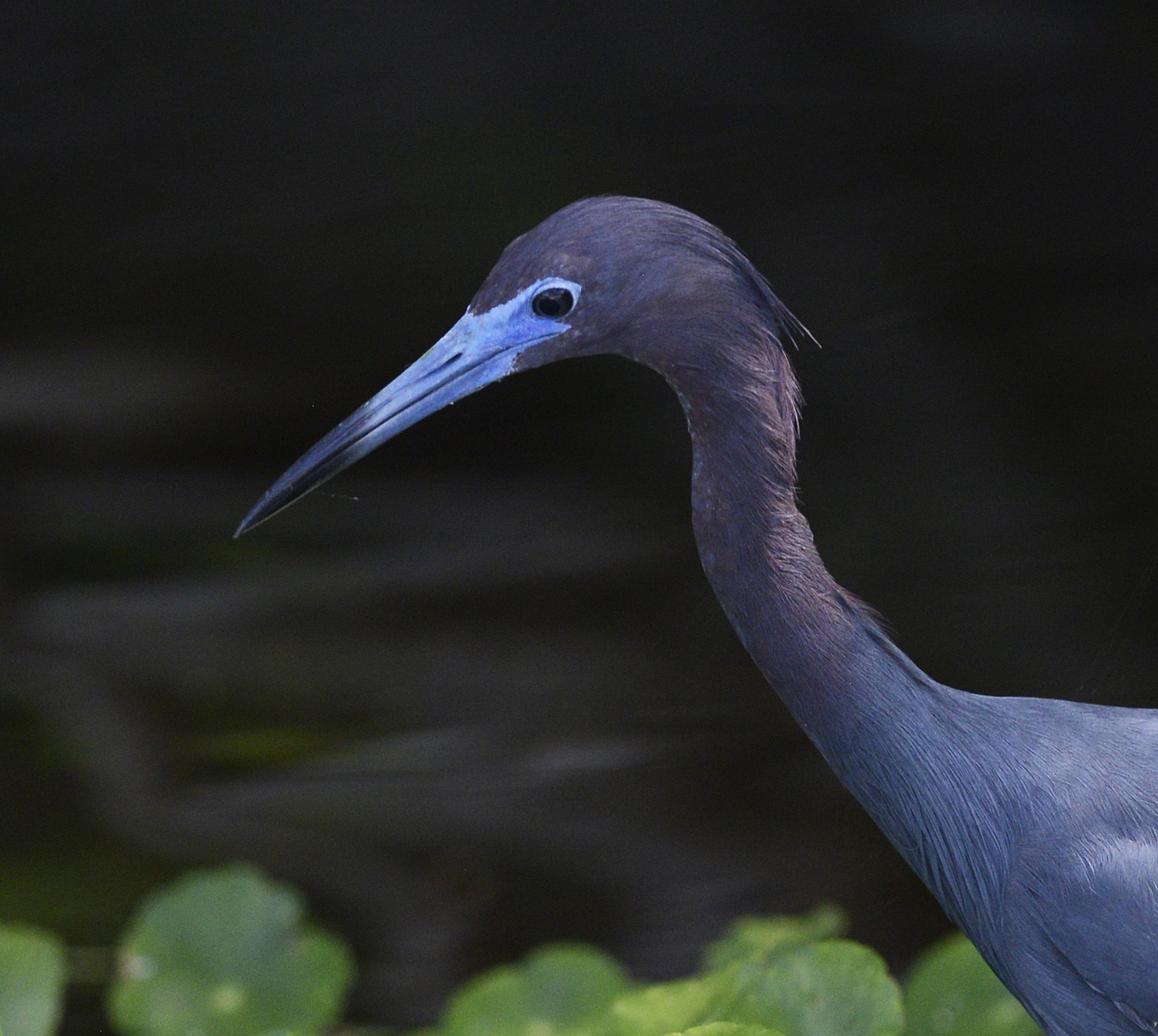
While adult Little Blue Herons are slate blue, young birds are entirely white during their first year.
Juvenile birds can be distinguished from other white herons by their dark pointy bill and green legs.
These small herons are rare to locally common breeding birds in North America. And while they are migratory in northern parts of their range, southern populations of Little Blue Herons are year-round residents.
These birds feed on small fish, mollusks and crustaceans, with crayfish forming a large part of their diet.
They prefer an aquatic habitat, where these birds hunt in the shallows, and are rarely seen away from water.
About the Color Blue in Birds
Blue is special because, unlike red or yellow, it is almost never a pigment. Reds and yellows come from carotenoid pigments in the diet, and blacks and browns come from melanin, but a blue bird gets its color from structure, not chemistry (Cornell Lab of Ornithology). In other words, the blue color of a feather is made by physics rather than paint.
Inside a blue feather is a spongy layer of keratin, the protein in hair and fingernails, filled with microscopic pockets of air. When light hits this nanostructure, blue wavelengths are scattered back to your eye while the rest are absorbed by a dark layer of melanin beneath. This is structural color, and you can prove it at home with a fallen feather. Hold a blue jay feather up to the light from behind and the blue disappears, because you are now seeing the brown melanin directly. Crush the feather and the blue is gone for good, because the structure that made it is destroyed (Dufresne et al., Scientific Reports, 2015).
There are two flavors of structural blue worth knowing. Most blue birds, such as bluebirds, jays, and buntings, show non-iridescent blue that looks the same shade from almost any angle. A few, such as the superb fairywren and the Indian peafowl, show iridescent blue that shifts and flares as the viewing angle changes, because their feather barbules act like tiny mirrors. Some blue is even brighter than it looks to us; the Eurasian blue tit’s crown blazes in ultraviolet light, which birds can see and we cannot, and females appear to prefer the most ultraviolet males (Hunt et al., 1998).
One more pattern to watch for. In many blue species, the brilliant color is a male ornament. The female may be brown or gray, so the dull bird beside a dazzling blue one is often his mate rather than a different species. Keep that in mind as you read the profiles.
Blue Birds Around the World
North America isn’t the only place with striking blue birds. Here are a few standout species from other parts of the world, each getting its blue the same structural way as the birds above.
Common Kingfisher (Alcedo atthis)
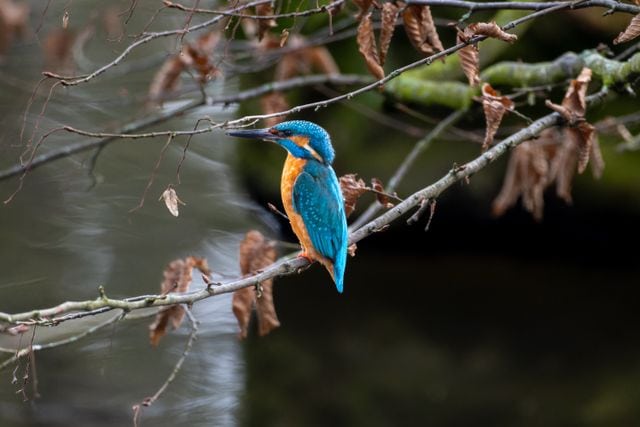
A jewel of Eurasian waterways, the common kingfisher shows brilliant blue to azure on its back and rump, set on a large head with a long dagger of a bill, with bright orange underparts and a white throat. The blue is structural and seems to flash electrically as the bird streaks low over the water. Sexes are nearly identical, separable only by the female’s orange marked lower bill. It measures about 16 cm (6.3 in) long (Woodland Trust).
It hunts small fish by diving from a perch or a hover along rivers, streams, canals, and ponds across Europe, much of Asia, and North Africa, and is often called the most colorful bird on its home waters. It is listed as Least Concern on the IUCN Red List globally, and as of the 2021 European Red List it is also Least Concern in Europe, where it had been assessed as Vulnerable in 2015; it remains sensitive to water pollution. Its call is a shrill, whistled chee.
Quick scan: azure back, orange underparts, long bill; both sexes blue; low fast flight over water; Eurasia and North Africa; sharp whistled call.
Eurasian Blue Tit (Cyanistes caeruleus)

A favorite of European gardens, the blue tit carries blue on its crown, wings, and tail, with a white face crossed by a dark eye line and bright yellow underparts. The blue is structural and, remarkably, reflects ultraviolet light strongly; the male’s crown is brighter in the ultraviolet that birds can see, and females appear to use this in choosing mates (Hunt et al., 1998). The yellow breast, by contrast, is carotenoid pigment from a caterpillar rich diet. It measures about 12 cm (4.7 in) long (BTO BirdFacts; eBird, Cornell Lab of Ornithology).
It is a common, acrobatic resident of woodlands, parks, and gardens across temperate Europe and western Asia, often hanging upside down at feeders through the winter months in small mixed flocks. Its call is a scolding churr and a thin tsee tsee tsee.
Quick scan: blue cap, white face, yellow breast; sexes similar but male brighter in ultraviolet; acrobatic at feeders; Europe and western Asia.
Superb Fairywren (Malurus cyaneus)
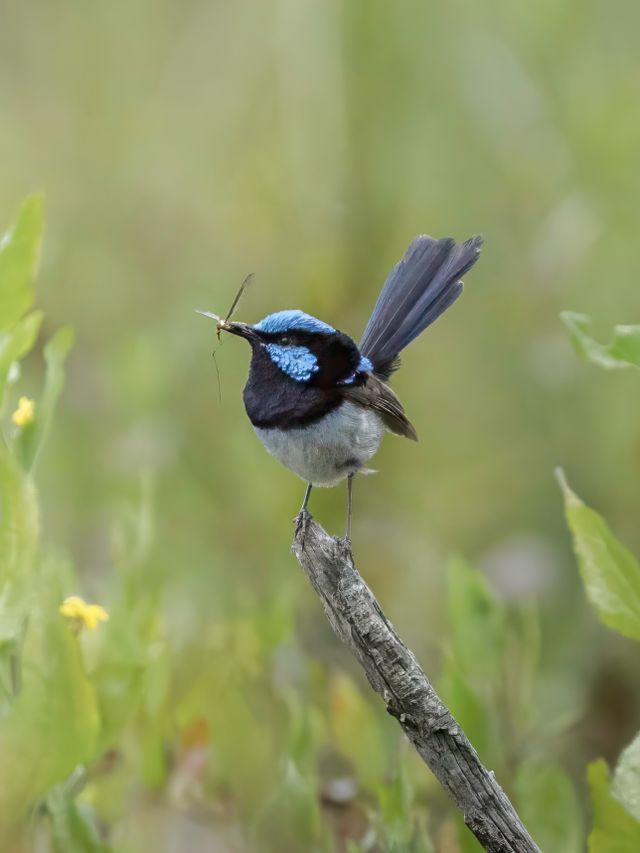
Few birds show structural blue as dramatically as the breeding male superb fairywren, whose crown, cheeks, and back glow an iridescent powder blue against a black mask and throat. The iridescence comes from flattened, twisted feather barbules, and like the blue tit it reflects ultraviolet light. Outside the breeding season, and in females and young, the bird is a plain gray brown with a bluish tail, so the trait is both sex linked and seasonal. It measures about 14 cm (5.5 in) long (BirdLife Australia).
This tiny, long tailed bird lives in small family groups in the gardens, parks, and woodlands of southeastern Australia, foraging on the ground with its tail held high. It was voted Australia’s Bird of the Year in 2021. Its song is a high, reeling trill.
Quick scan: breeding male iridescent blue and black; female and non-breeding birds gray brown; tail held cocked; family groups; southeastern Australia.
Blue-gray Tanager (Thraupis episcopus)
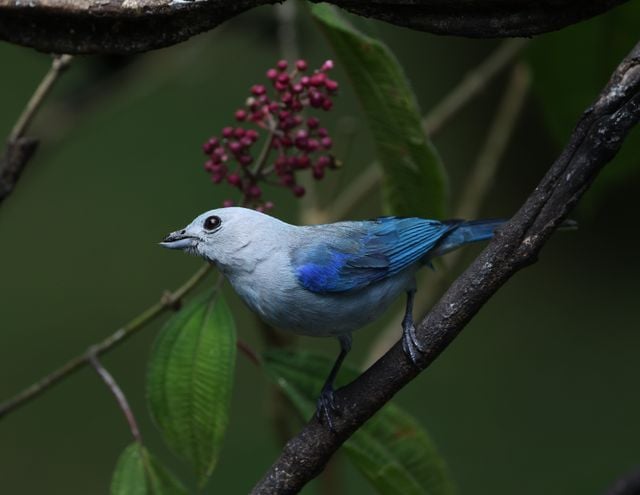
One of the most familiar birds of the American tropics, the blue-gray tanager is a soft, even blue gray over the head and underparts, with brighter blue wings and tail and a often contrasting shoulder patch. The blue is structural, in a gentle pastel rather than a brilliant flash, and the sexes look alike. It measures 16 to 18 cm (6.3 to 7.1 in) long (eBird, Cornell Lab of Ornithology).
It is abundant from southern Mexico through Central America and across most of the Amazon Basin, thriving in gardens, plantations, forest edges, and towns, often in noisy pairs feeding on wild fruits. As of the 2021 IUCN assessment it is Least Concern and increasing. Its song is a squeaky twitter.
Quick scan: even pale blue gray with brighter blue wings; sexes alike; gardens and edges; Mexico to Amazonia; squeaky voice.
Hyacinth Macaw (Anodorhynchus hyacinthinus)
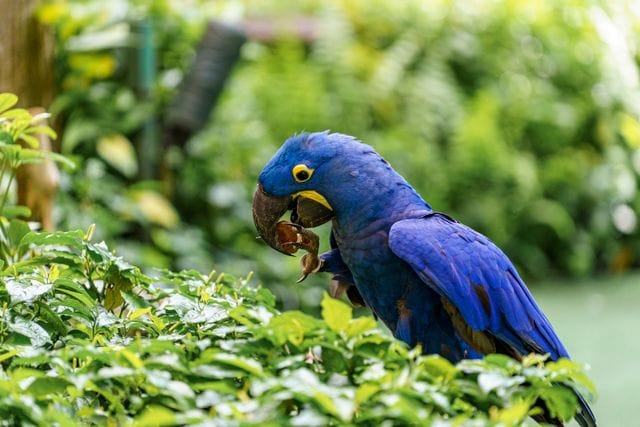
The largest of all the blue birds here, and the world’s longest parrot, the hyacinth macaw is a deep, uniform cobalt blue from head to tail, accented by bare yellow skin around the eye and at the base of its huge black bill. Even in parrots, whose reds and yellows come from a unique pigment class, this blue is structural. Both sexes look alike. It measures about 100 cm (3.3 ft) long, much of it tail (Animal Diversity Web).
It lives in the palm savannas and woodlands of central South America, especially the Brazilian Pantanal, using its massive bill to crack hard palm nuts. This is the one blue bird here under serious threat. It is listed as Vulnerable on the IUCN Red List and protected under CITES Appendix I, with a wild population estimated in the low thousands of mature individuals, pressured by habitat loss and illegal trapping for the wild bird trade. Its voice is a deep, harsh squawk.
Quick scan: huge, entirely cobalt blue parrot; yellow eye ring and bill base; sexes alike; South American palm country; Vulnerable in the wild.
Indian Peafowl (Pavo cristatus)
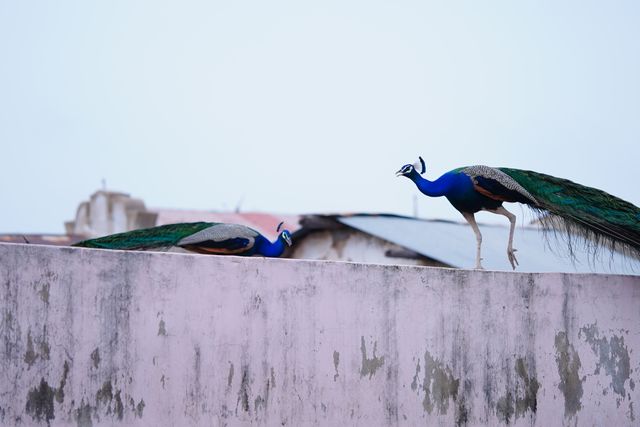
The peacock is perhaps the most famous blue bird on Earth, the male showing an intensely iridescent blue neck and breast, a fan shaped crest, and the enormous train of eyespotted feathers raised in courtship. Crucially, the blue and the train’s shimmering eyes come not from pigment but from the microscopic structure of the feathers, a textbook case of structural and photonic color. The peahen is mostly brown with a white face and a green sheen on the neck, and lacks the train, so the sexes differ enormously. The male’s body measures 100 to 115 cm (39 to 45 in), with the train adding another 125 to 150 cm (49 to 59 in) (multiple references).
It is native to the forests and grasslands of the Indian subcontinent, where it forages on the ground in small groups, and it is the national bird of India. As of recent IUCN assessment it is Least Concern. Its call is a loud, far carrying may-awe.
Quick scan: male iridescent blue neck with eyespotted train; peahen brown; ground forager; native to South Asia; loud wailing call.
Frequently Asked Questions
What kind of bird is blue?
Many unrelated birds are blue, because blue is a structural color that has evolved many times rather than a single family trait. The most familiar examples include the bluebirds, blue jay, and indigo bunting in North America, the common kingfisher and blue tit in Europe, the superb fairywren in Australia, and the hyacinth macaw and Indian peafowl elsewhere.
What is the most common blue bird in North America?
In eastern and central North America, the blue jay is the blue bird people see most often, especially at feeders and in suburbs. In open country, the eastern bluebird is widespread, and in the West the mountain bluebird and Steller’s jay are the common blue birds.
Are blue birds actually blue?
Not in the way red and yellow birds are colored. Birds have no blue pigment, so the blue you see is structural color, produced when microscopic structures in the feather scatter blue light back to your eye (Cornell Lab of Ornithology). Crush a blue feather and the blue disappears, because the structure is destroyed.
Why are male blue birds bluer than the females?
In many species the brilliant blue is a male ornament used to attract mates and signal quality, so females are duller and often brown or gray for camouflage while nesting. The indigo bunting and superb fairywren are clear examples, with vivid blue males and plain brown females.
What is the largest blue bird, and the rarest?
The largest blue bird in this guide is the hyacinth macaw, the world’s longest parrot at about 100 cm (3.3 ft). It is also the most at risk, listed as Vulnerable on the IUCN Red List and on CITES Appendix I, with only a few thousand mature individuals left in the wild due to habitat loss and trapping for the bird trade.
Is the peacock’s blue real or structural?
The peacock’s blue is structural, not pigment. The iridescent blue of the neck and the shimmering eyespots of the train come from the nanoscale architecture of the feathers, which is why the colors shift and flare as the bird turns in the light.
Final remarks
In summary, here are the 17 blue birds covered in this article:
- Eastern Bluebird
- Western Bluebird
- Mountain Bluebird
- Indigo Bunting
- Blue Grosbeak
- Blue Jay
- Steller’s Jay
- Lazuli Bunting
- Blue-gray Gnatcatcher
- Black-throated Blue Warbler
- Northern Parula
- Barn Swallow
- Tree Swallow
- Purple Martin
- Belted Kingfisher
- Great Blue Heron
- Little Blue Heron
If you’ve spotted one of these birds, but aren’t sure which species it was, check our detailed ID guide with photos above.
If you enjoyed this article, check out our guide to the blue birds of Colorado.