Birds in Tennessee: A Complete Guide to the Volunteer State’s Birdlife
Tennessee is home to 434 bird species recorded on the official state list as of December 2024, according to the Tennessee Bird Records Committee of the Tennessee Ornithological Society. That total reflects an unusually wide range of habitats for a landlocked state, from the Mississippi River bottomlands in the west to the high spruce and fir forests of the southern Appalachians in the east.
Most of that diversity is tied to Tennessee’s position on the Mississippi Flyway, one of North America’s great migration corridors, and to the elevation gradient that runs across its three Grand Divisions. The result is a state where a backyard feeder in Memphis, a cypress swamp at Reelfoot Lake, and a mountain trail in the Great Smokies can each yield a completely different set of birds within the same week.
Key Takeaways
- Tennessee has 434 bird species on its official state list as of December 2024, maintained by the Tennessee Bird Records Committee.
- The state bird is the Northern Mockingbird (Mimus polyglottos), designated in 1933.
- Tennessee sits on the Mississippi Flyway, a major route for migrating waterfowl and songbirds.
- Reelfoot Lake in West Tennessee and the Great Smoky Mountains in East Tennessee rank among the state’s premier birding destinations.
- Thousands of Sandhill Cranes (Antigone canadensis) winter at the Hiwassee Refuge, a regional conservation success story.
At a Glance: Tennessee Birds Quick Reference
The table below lists the species profiled in this guide along with other birds you are likely to encounter across Tennessee. Sizes are total length. Profiled species appear in the sections that follow; the remainder are common enough to note here but are covered in more depth in the linked spoke guides.
| Species | Scientific name | Size | When present | Where to find | Best feeder food |
|---|---|---|---|---|---|
| Northern Cardinal | Cardinalis cardinalis | 21 to 23 cm (8.3 to 9.1 in) | Year round | Yards, edges, thickets | Black oil sunflower |
| Carolina Chickadee | Poecile carolinensis | 11 to 13 cm (4.3 to 5.1 in) | Year round | Woods, suburbs | Sunflower, suet |
| Tufted Titmouse | Baeolophus bicolor | 14 to 16 cm (5.5 to 6.3 in) | Year round | Woods, feeders | Sunflower, peanuts |
| Carolina Wren | Thryothorus ludovicianus | 12 to 14 cm (4.7 to 5.5 in) | Year round | Brushy yards, woodpiles | Suet, mealworms |
| American Robin | Turdus migratorius | 20 to 28 cm (7.9 to 11 in) | Year round | Lawns, parks | Fruit, mealworms |
| Blue Jay | Cyanocitta cristata | 25 to 30 cm (9.8 to 11.8 in) | Year round | Oak woods, yards | Peanuts, sunflower |
| Red-bellied Woodpecker | Melanerpes carolinus | 23 to 26 cm (9.1 to 10.2 in) | Year round | Woods, suburbs | Suet, peanuts |
| Downy Woodpecker | Dryobates pubescens | 14 to 17 cm (5.5 to 6.7 in) | Year round | Woods, yards | Suet, sunflower |
| American Goldfinch | Spinus tristis | 11 to 14 cm (4.3 to 5.5 in) | Year round | Weedy fields, feeders | Nyjer, sunflower hearts |
| Eastern Bluebird | Sialia sialis | 16 to 21 cm (6.3 to 8.3 in) | Year round | Open fields, nest boxes | Mealworms |
| Ruby-throated Hummingbird | Archilochus colubris | 7 to 9 cm (2.8 to 3.5 in) | Spring to fall | Gardens, nectar feeders | Nectar (sugar water) |
| Red-tailed Hawk | Buteo jamaicensis | 45 to 65 cm (17.7 to 25.6 in) | Year round | Open country, roadsides | Not a feeder bird |
| Great Horned Owl | Bubo virginianus | 46 to 63 cm (18.1 to 24.8 in) | Year round | Woods, farmland | Not a feeder bird |
| Bald Eagle | Haliaeetus leucocephalus | 70 to 96 cm (27.6 to 37.8 in) | Year round, peaks in winter | Lakes, large rivers | Not a feeder bird |
| Great Blue Heron | Ardea herodias | 97 to 137 cm (38 to 54 in) | Year round | Lakes, rivers, marshes | Not a feeder bird |
| Wood Duck | Aix sponsa | 47 to 54 cm (18.5 to 21.3 in) | Year round | Wooded swamps, ponds | Not a feeder bird |
| Sandhill Crane | Antigone canadensis | 80 to 122 cm (31.5 to 48 in) | Winter, migration | Hiwassee Refuge, fields | Not a feeder bird |
| Eastern Towhee | Pipilo erythrophthalmus | 17 to 21 cm (6.7 to 8.3 in) | Year round | Brushy edges, thickets | Ground millet, sunflower |
| Mourning Dove | Zenaida macroura | 23 to 34 cm (9.1 to 13.4 in) | Year round | Open ground, yards | Millet, cracked corn |
| White-breasted Nuthatch | Sitta carolinensis | 13 to 14 cm (5.1 to 5.5 in) | Year round | Mature woods, feeders | Sunflower, suet |
| Brown Thrasher | Toxostoma rufum | 23 to 30 cm (9.1 to 11.8 in) | Year round | Dense shrubs, thickets | Ground feeding |
| Eastern Phoebe | Sayornis phoebe | 14 to 17 cm (5.5 to 6.7 in) | Year round in much of state | Bridges, eaves, streams | Not a feeder bird |
| House Finch | Haemorhous mexicanus | 13 to 14 cm (5.1 to 5.5 in) | Year round | Towns, feeders | Sunflower, nyjer |
| Dark-eyed Junco | Junco hyemalis | 14 to 16 cm (5.5 to 6.3 in) | Winter | Ground under feeders | Millet, cracked corn |
| White-throated Sparrow | Zonotrichia albicollis | 16 to 18 cm (6.3 to 7.1 in) | Winter | Brushy edges, yards | Millet, sunflower |
| Yellow-rumped Warbler | Setophaga coronata | 12 to 15 cm (4.7 to 5.9 in) | Winter, migration | Woods, edges | Suet (occasionally) |
| Indigo Bunting | Passerina cyanea | 12 to 13 cm (4.7 to 5.1 in) | Spring to fall | Field edges, roadsides | Nyjer, millet |
| Rose-breasted Grosbeak | Pheucticus ludovicianus | 18 to 22 cm (7.1 to 8.7 in) | Migration | Woodland edges, feeders | Sunflower |
| Red-winged Blackbird | Agelaius phoeniceus | 17 to 24 cm (6.7 to 9.4 in) | Year round | Marshes, fields | Mixed seed |
| American Crow | Corvus brachyrhynchos | 40 to 53 cm (15.7 to 20.9 in) | Year round | Nearly everywhere | Scraps, peanuts |
| Northern Mockingbird | Mimus polyglottos | 20 to 28 cm (7.9 to 11 in) | Year round | Open yards, hedges | Fruit, suet |
| Hairy Woodpecker | Dryobates villosus | 18 to 26 cm (7.1 to 10.2 in) | Year round | Mature woods | Suet, sunflower |
| Wild Turkey | Meleagris gallopavo | 100 to 125 cm (39 to 49 in) | Year round | Woods, field edges | Ground grain |
| Pied-billed Grebe | Podilymbus podiceps | 31 to 38 cm (12.2 to 15 in) | Mostly winter | Ponds, slow water | Not a feeder bird |
| Eastern Screech-Owl | Megascops asio | 16 to 25 cm (6.3 to 9.8 in) | Year round | Woodlots, suburbs | Not a feeder bird |
| Cerulean Warbler | Setophaga cerulea | 11 to 12 cm (4.3 to 4.7 in) | Spring to summer | Mature forest canopy | Not a feeder bird |
Why Tennessee Holds So Many Birds: Geography and Flyway
Tennessee’s bird diversity begins with its shape. The state stretches roughly 700 km (about 430 mi) east to west and is traditionally divided into three Grand Divisions: West, Middle, and East Tennessee. Each division carries a distinct landscape, and birds sort themselves accordingly.
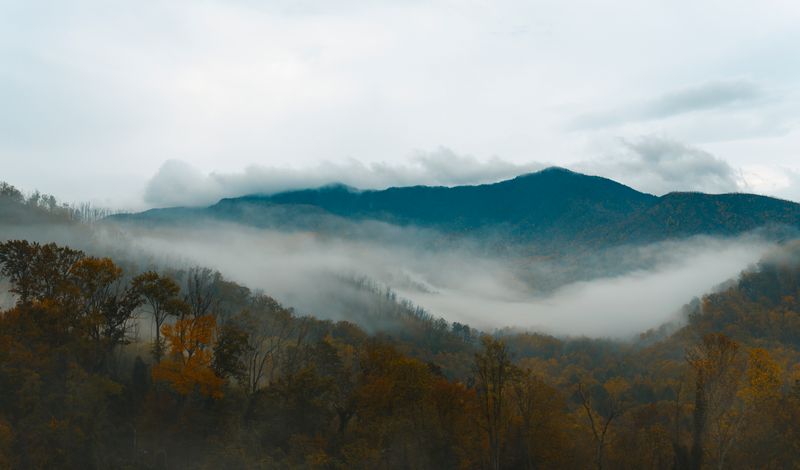
West Tennessee is defined by the Mississippi River floodplain, where bottomland hardwood forests, oxbows, and cypress swamps create rich wetland habitat. This is the lowest country in the state, dropping to about 54 m (177 ft) near the river. Middle Tennessee centers on the Nashville Basin and the surrounding Highland Rim, a landscape of rolling farmland, cedar glades, and river systems. East Tennessee rises through the Cumberland Plateau and the Ridge and Valley region into the southern Appalachians, culminating at Kuwohi (formerly Clingmans Dome), which reaches 2,025 m (6,643 ft) on the Tennessee and North Carolina border. The U.S. Board of Geographic Names restored the mountain’s Cherokee name, Kuwohi, in September 2024. According to the National Park Service, elevations across the park range from about 876 ft (267 m) to 6,643 ft (2,025 m), producing a stack of habitats so varied that moving from the lowest to the highest point is, in effect, like traveling from the southeastern United States to Maine (National Park Service).
This elevation gradient explains why high-elevation specialists such as the Red-breasted Nuthatch and breeding warblers persist in the mountains, while lowland wetland birds dominate the west.
Migration ties the regions together. Tennessee lies on the Mississippi Flyway, the broad north to south corridor that funnels waterfowl, shorebirds, and songbirds between northern breeding grounds and southern wintering areas. The U.S. Fish and Wildlife Service describes the Reelfoot area as a major stopover point and wintering area for waterfowl of the Mississippi Flyway (U.S. Fish and Wildlife Service). The Tennessee, Cumberland, and Ohio river systems, along with the large reservoirs created by Tennessee Valley Authority dams, give migrating birds the open water and shoreline they need to rest and refuel (American Birding Association).
The State Bird of Tennessee: Northern Mockingbird
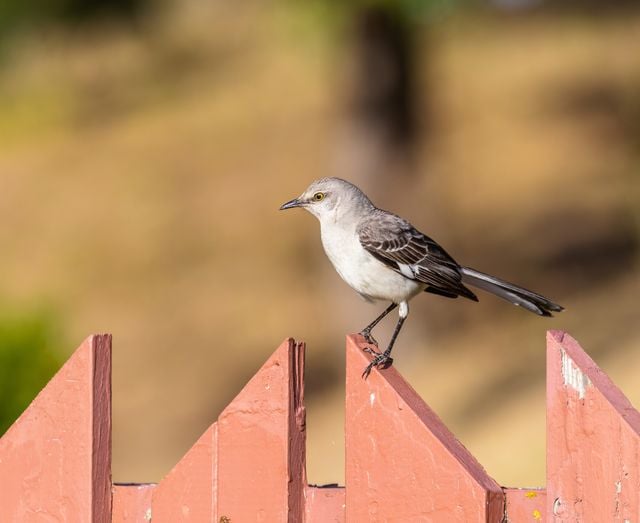
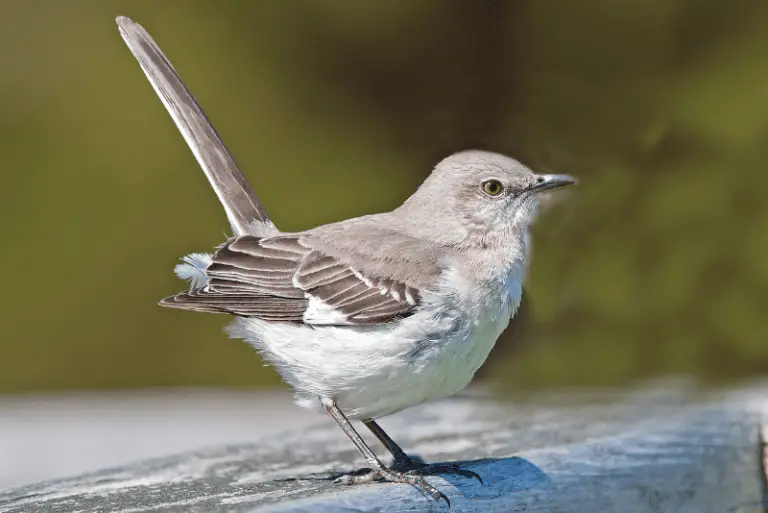
The state bird of Tennessee is the Northern Mockingbird (Mimus polyglottos), designated in 1933 after an election organized by the Tennessee Ornithological Society. It is a slim, long-tailed gray songbird known above all for its vocal mimicry, and it lives in Tennessee year round.
The mockingbird’s scientific name translates roughly as “many-tongued mimic,” a reference to its remarkable repertoire. According to the Tennessee Wildlife Resources Agency, a single male’s song repertoire may contain as many as 200 distinct song types, acquired by imitating other birds, mechanical sounds, and even other mockingbirds, and his collection can keep growing with age (Tennessee Wildlife Resources Agency). Males commonly sing from exposed perches and rooftops, and unmated males will sing on moonlit spring nights.
In identification terms, the Northern Mockingbird shows pale gray upperparts, a whitish belly, and bold white wing patches that flash conspicuously in flight. Both sexes look alike. It favors open habitats with scattered shrubs, including parks, cemeteries, and residential neighborhoods, where it is fiercely territorial and will chase off intruders many times its size. Because the species is so widespread and approachable, it is one of the easiest Tennessee birds for a beginner to learn first.
For a fuller account of its biology, history, and cultural place, see the dedicated guide to the Northern Mockingbird, the Tennessee state bird.
Common Backyard Birds of Tennessee
These are the species most Tennessee residents see from a kitchen window or a feeder. They are present across much of the state and are the natural starting point for new birders.
Northern Cardinal (Cardinalis cardinalis)

The Northern Cardinal measures about 21 to 23 cm (8.3 to 9.1 in) in length. The male is brilliant red with a black face mask and a prominent crest; the female is a warm tan with red accents and the same sharp crest and heavy orange bill. Both sexes sing.
Cardinals live in Tennessee year round and occupy yards, woodland edges, and brushy thickets statewide. They feed heavily on seeds, fruit, and insects, and they take readily to feeders. Black oil sunflower seed on a platform or hopper feeder is the surest way to attract them, and a brushy corner of the yard gives them the cover they prefer for nesting. Their clear, whistled cheer cheer cheer and metallic chip notes are among the most familiar sounds of a Tennessee morning.
Carolina Chickadee (Poecile carolinensis)
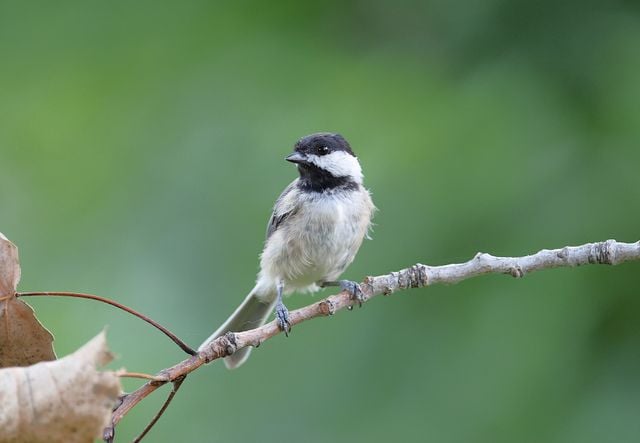
The Carolina Chickadee is a tiny, energetic bird, roughly 11 to 13 cm (4.3 to 5.1 in) long, with a black cap and bib, white cheeks, and soft gray upperparts. It is the chickadee of Tennessee; the similar Black-capped Chickadee is restricted to the highest mountains in the east.
Carolina Chickadees are year-round residents of woodlands and suburbs throughout the state. They are inquisitive and tame, often the first birds to investigate a new feeder. They favor sunflower seed and suet and readily use nest boxes. Their buzzy chick-a-dee-dee-dee call gives the family its name, and they frequently lead the mixed flocks of titmice, nuthatches, and small woodpeckers that move through woodlots in winter.
Tufted Titmouse (Baeolophus bicolor)

The Tufted Titmouse is a soft gray bird about 14 to 16 cm (5.5 to 6.3 in) long, with a pointed crest, large dark eyes, and rusty wash along the flanks. It is a year-round resident of deciduous woods and wooded suburbs across Tennessee.
Titmice are bold feeder visitors that favor sunflower seeds and peanuts, often grabbing a single seed and flying off to wedge and hammer it open. They join chickadees in winter foraging flocks and will use nest boxes. Their loud, whistled peter-peter-peter song carries well and is one of the easier woodland sounds to learn.
Carolina Wren (Thryothorus ludovicianus)

The Carolina Wren is a compact, rich reddish-brown bird, about 12 to 14 cm (4.7 to 5.5 in) long, with a bold white eyebrow stripe and a habit of cocking its tail upward. Despite its small size, it has an outsized voice.
This wren is a year-round resident statewide and thrives in brushy yards, woodpiles, and dense shrubbery. It eats mostly insects and spiders, which it gleans from bark, leaf litter, and tangled vegetation, and it will visit feeders for suet and mealworms. Pairs stay together year round and defend territory with a ringing teakettle-teakettle-teakettle song delivered loudly by the male. Severe winters can reduce its numbers, after which populations gradually rebuild.
American Robin (Turdus migratorius)

The American Robin is a familiar thrush, roughly 20 to 28 cm (7.9 to 11 in) long, with a gray back, brick-orange breast, and a cheerful caroling song. Males are more richly colored than females.
Robins live in Tennessee year round, though their numbers and behavior shift with the seasons. In spring and summer they patrol lawns and gardens, hunting earthworms and insects, while in fall and winter they form large roving flocks that feed on fruit and berries in woodlands and hedgerows. They rarely take seed at feeders but will come to fruit and mealworms. A birdbath is often more effective than any feeder for drawing robins close.
Blue Jay (Cyanocitta cristata)

The Blue Jay is a large, crested songbird, about 25 to 30 cm (9.8 to 11.8 in) long, patterned in blue, white, and black with a bold necklace mark. It is loud, intelligent, and unmistakable.
Blue Jays are year-round residents of oak woods, parks, and yards throughout Tennessee. They are especially fond of acorns and play a real role in oak forest regeneration by caching them. At feeders they prefer peanuts and sunflower seed and will dominate a feeder briefly before moving on. Jays are also accomplished mimics of hawk calls, which they sometimes use to clear other birds from a feeder.
Red-bellied Woodpecker (Melanerpes carolinus)
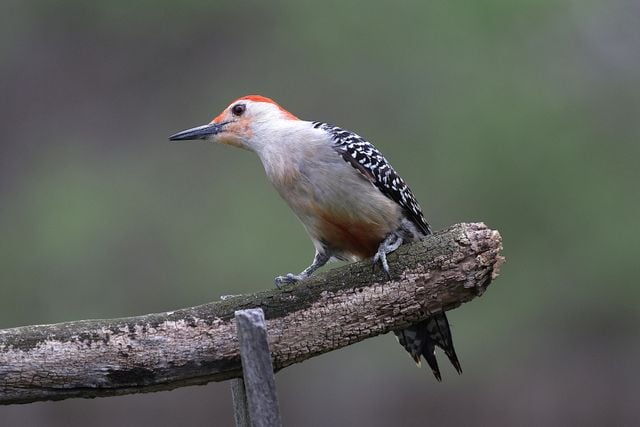
The Red-bellied Woodpecker is a medium woodpecker, roughly 23 to 26 cm (9.1 to 10.2 in) long, with a boldly barred black and white back and a red crown and nape. The faint reddish wash on the belly that gives it its name is rarely visible in the field.
This woodpecker is a year-round resident of woods and wooded suburbs statewide and is among the most frequent woodpeckers at Tennessee feeders. It eats insects, fruit, nuts, and seeds, and readily takes suet and peanuts. Its rolling churr call and the way it stores food in bark crevices make it a rewarding feeder regular. For the full set of Tennessee woodpeckers, including the Pileated and the Yellow-bellied Sapsucker, see the dedicated woodpecker guide.
Downy Woodpecker (Dryobates pubescens)

The Downy Woodpecker is the smallest woodpecker in North America, about 14 to 17 cm (5.5 to 6.7 in) long, with a black and white checkered pattern, a white back stripe, and a short stubby bill. Males show a small red patch on the back of the head.
Downies are year-round residents found in woods, parks, and yards across Tennessee. They feed on insects, larvae, and seeds, and they are devoted suet visitors. The Downy is easily confused with the larger Hairy Woodpecker; the look-alike table below covers how to tell them apart. Its gentle pik note and descending whinny are good identification clues.
American Goldfinch (Spinus tristis)

The American Goldfinch is a small finch, roughly 11 to 14 cm (4.3 to 5.5 in) long. In summer the male is bright lemon yellow with a black cap and black and white wings; in winter both sexes fade to a dull olive-buff, which often puzzles feeder watchers.
Goldfinches live in Tennessee year round, favoring weedy fields, roadsides, and gardens where they feed almost entirely on seeds. They are strongly drawn to nyjer (thistle) seed and sunflower hearts and will mob a well-stocked finch feeder. Because they nest late in summer, timed to the seeding of thistles and other plants, they are among the last songbirds to raise young each year.
Eastern Bluebird (Sialia sialis)

The Eastern Bluebird is a small thrush, about 16 to 21 cm (6.3 to 8.3 in) long. The male has a brilliant blue back, a rusty orange breast, and a white belly; the female is a softer gray-blue version of the same pattern.
Bluebirds are year-round residents of open country, favoring fields, pastures, orchards, and large lawns with scattered perches. They eat insects in the warm months and shift to fruit and berries in winter. Bluebirds do not eat seed, but they take mealworms eagerly and respond strongly to nest boxes placed in open habitat. Nest boxes and the volunteer bluebird trail movement helped this species rebound from steep mid-twentieth-century declines, and the Cornell Lab of Ornithology now rates it a species of low conservation concern. It is one of the clearest examples of how simple habitat support can lift a bird population (Cornell Lab of Ornithology).
Ruby-throated Hummingbird (Archilochus colubris)

The Ruby-throated Hummingbird is Tennessee’s common breeding hummingbird, a tiny bird only 7 to 9 cm (2.8 to 3.5 in) long. The male shows a glittering ruby throat that can look black in poor light, with iridescent green upperparts; the female lacks the colored throat.
This hummingbird is present in Tennessee from spring through fall, generally arriving in late March and April and departing by October. It feeds on flower nectar and small insects and visits nectar feeders filled with a simple solution of one part white sugar to four parts water, without dye. Planting native tubular flowers such as trumpet honeysuckle and bee balm provides natural nectar and supports the insects hummingbirds also need. For arrival timing and feeder care, see the Tennessee hummingbird guide.
Birds of Prey in Tennessee
Tennessee supports a strong community of raptors, from common roadside hawks to large owls and recovering eagles. The three profiled here are the species birders encounter most often.
Red-tailed Hawk (Buteo jamaicensis)

The Red-tailed Hawk is a large, broad-winged hawk, roughly 45 to 65 cm (17.7 to 25.6 in) long with a wingspan well over a meter. Adults typically show a brick-red tail, a pale chest, and a darker band of streaking across the belly, though plumage varies.
Red-tails are year-round residents and the most commonly seen large hawk in Tennessee, often perched on poles and fence posts along highways or soaring over open country. They hunt rodents, rabbits, and other small animals from a perch or on the wing. Their harsh, descending scream is so iconic that it is frequently dubbed over images of other raptors in film and television.
Great Horned Owl (Bubo virginianus)

The Great Horned Owl is a powerful, heavily built owl, about 46 to 63 cm (18.1 to 24.8 in) long, with prominent ear tufts, a barred chest, and large yellow eyes. It is one of Tennessee’s top avian predators.
Great Horned Owls are year-round residents found in woods, farmland, and wooded suburbs across the state. They hunt at night, taking prey ranging from mice to rabbits and even skunks, and they nest very early, often beginning in late winter. Their deep, rhythmic hooting carries far on still nights and is one of the easiest owl sounds to recognize. For Tennessee’s other owls, including the Eastern Screech-Owl and the Barred Owl, see the dedicated owl guide.
Bald Eagle (Haliaeetus leucocephalus)
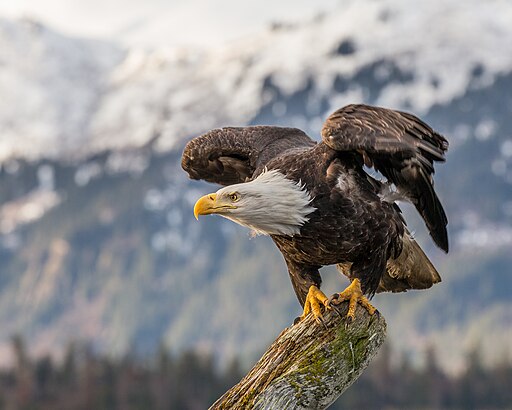
The Bald Eagle is unmistakable as an adult, a very large raptor 70 to 96 cm (27.6 to 37.8 in) long with a white head and tail and a massive yellow bill. Immature birds are mottled brown and white and take several years to gain the full adult pattern.
Eagles are present in Tennessee year round, with numbers peaking in winter when birds concentrate around lakes and large rivers. They feed largely on fish and waterfowl and often perch in tall trees near open water. According to the National Audubon Society, many pairs nest around Reelfoot Lake in West Tennessee, and hundreds of eagles gather there in winter (National Audubon Society). The species’ recovery, after severe declines in the twentieth century, is one of the best known conservation comebacks in North America.
Water and Wetland Birds
Tennessee’s rivers, reservoirs, and wetlands support a rich community of waterbirds. These three species represent the range, from a familiar wading bird to a striking duck of wooded swamps to a wintering crane that draws visitors from across the region.
Great Blue Heron (Ardea herodias)

The Great Blue Heron is the largest and most widespread heron in Tennessee, standing tall on long legs and measuring 97 to 137 cm (38 to 54 in) in length with a wingspan that can approach two meters. It is blue-gray overall with a white face, a black eyebrow stripe, and a heavy spearlike bill.
Great Blue Herons live in Tennessee year round along lakes, rivers, ponds, and marshes. They hunt by standing motionless or wading slowly, then striking at fish, frogs, and other small prey. They nest in colonies called rookeries, often in tall trees near water. Their slow, deliberate hunting style makes them one of the most rewarding large birds to watch, and they are common enough to appear even at suburban retention ponds.
Wood Duck (Aix sponsa)

The Wood Duck is widely considered one of North America’s most beautifully patterned waterfowl. It measures about 47 to 54 cm (18.5 to 21.3 in) long. The male is intricately marked with iridescent green and chestnut, bold white facial lines, and a sweptback crest; the female is gray-brown with a distinctive white eye ring.
Wood Ducks are residents of wooded swamps, beaver ponds, and quiet wooded streams, and they are especially associated with the bottomland forests of West Tennessee. Unusual among ducks, they nest in tree cavities and readily use nest boxes, and ducklings leap from the nest to the ground or water within a day of hatching. Their recovery from low numbers a century ago, aided by nest box programs and wetland protection, is a notable habitat-management success.
Sandhill Crane (Antigone canadensis)

The Sandhill Crane is among Tennessee’s largest birds, standing roughly four feet tall with a wingspan near six feet and a body length of about 80 to 122 cm (31.5 to 48 in). It is gray overall, often stained rusty, with a bright red crown and a bugling call that carries for more than a mile.
Sandhill Cranes are primarily winter visitors and migrants in Tennessee, and their numbers have been increasing. The Tennessee Wildlife Resources Agency notes that the species is an uncommon migrant and locally common winter resident, with wintering concentrations at the Hiwassee Refuge in Meigs County (Tennessee Wildlife Resources Agency). Cranes from the Eastern Population began stopping at Hiwassee in the early 1990s as the population recovered, and thousands now spend the winter at the confluence of the Hiwassee and Tennessee rivers. The viewing platform there offers one of the state’s most spectacular wildlife-watching opportunities.
Woodland and Grassland Specialties
Beyond the feeder regulars, Tennessee’s forests, edges, and open ground hold distinctive species worth seeking out.
Eastern Towhee (Pipilo erythrophthalmus)

The Eastern Towhee is a large, boldly marked sparrow, about 17 to 21 cm (6.7 to 8.3 in) long. The male has a black hood and back, rufous sides, and a white belly; the female shows the same pattern in warm brown. Both have red eyes across most of the state.
Towhees are year-round residents of brushy edges, thickets, and overgrown clearings, where they feed on the ground by scratching backward through leaf litter with both feet, a behavior that often gives them away before they are seen. They take seed scattered on the ground beneath feeders. Their bright drink-your-tea song and sharp chewink call are reliable identification cues in dense cover.
Other woodland and grassland birds worth noting include the Brown Thrasher, a large rufous mimic of dense shrubbery, the Eastern Phoebe, a tail-wagging flycatcher of bridges and stream banks, and the Wild Turkey, which has recovered strongly across Tennessee’s woods and field edges. Each appears in the at-a-glance table above.
Notable Migrants
Tennessee’s position on the Mississippi Flyway makes spring and fall migration a highlight of the birding year. Rather than profile every migrant here, this section points to the groups most worth watching, with fuller treatment in the linked guides.
Spring brings a wave of color through the state’s woodlands. The Rose-breasted Grosbeak (Pheucticus ludovicianus) passes through in migration and sometimes pauses at feeders, the male unmistakable with its black and white body and rose-red breast patch. The Indigo Bunting (Passerina cyanea) arrives to breed, the male an intense, almost glowing blue along field edges and roadsides through the warm months.
Warblers are the signature migrants. The Yellow-rumped Warbler (Setophaga coronata) is the common wintering warbler statewide, while the Cerulean Warbler (Setophaga cerulea), a sky-blue canopy species of mature forest, breeds in the eastern foothills. The IUCN lists the Cerulean Warbler as Near Threatened, and the U.S. Fish and Wildlife Service includes it among its Birds of Conservation Concern after decades of decline tied to the loss of mature forest. The Appalachian region, including the eastern Tennessee foothills, remains a recognized stronghold for the species (U.S. Fish and Wildlife Service; American Birding Association). For seasonal timing, see the seasonal table below.
Look-Alike Species: How to Tell Them Apart
A few Tennessee species are easy to confuse. The table below covers the most frequently mixed-up pairs.
| Pair | Key difference |
|---|---|
| Downy vs. Hairy Woodpecker | The Downy is smaller (14 to 17 cm) with a short, stubby bill; the Hairy is noticeably larger (18 to 26 cm) with a long bill about as long as its head is wide. |
| House Finch vs. Purple Finch | The male House Finch shows red concentrated on the head and chest with brown-streaked flanks; the male Purple Finch looks washed in raspberry over the head, back, and breast. |
| Carolina Chickadee vs. Black-capped Chickadee | Across nearly all of Tennessee the chickadee is Carolina; the Black-capped is limited to the highest eastern mountains and shows broader white wing edging. |
Tennessee Birds by Season: What to See When
Tennessee offers rewarding birding in every season, but the cast of characters changes through the year.
| Season | What to look for |
|---|---|
| Spring (March to May) | Returning migrants, peak warbler movement, Ruby-throated Hummingbirds arriving, breeding song at its height. |
| Summer (June to August) | Resident breeders nesting, Indigo Buntings on field edges, herons and Wood Ducks active on wetlands, mountain breeders at elevation. |
| Fall (September to November) | Southbound migration, mixed flocks, sparrows and kinglets returning, raptors on the move. |
| Winter (December to February) | Wintering waterfowl on lakes and rivers, Bald Eagles concentrated near open water, Sandhill Cranes at the Hiwassee Refuge, juncos and White-throated Sparrows at feeders. |
Notable Birding Locations in Tennessee
Tennessee’s best-known birding sites span the full width of the state.
Reelfoot Lake in the northwest corner is among the state’s premier birding destinations. Formed by the New Madrid earthquakes of 1811 and 1812, this shallow, cypress-lined lake is famous for its wintering Bald Eagles and abundant waterfowl, along with breeding herons, egrets, and a long list of songbirds (National Audubon Society).
The Hiwassee Refuge in Meigs County, managed by the Tennessee Wildlife Resources Agency, holds the largest winter flock of Sandhill Cranes in the southeastern United States outside Florida. Its year-round observation platform allows visitors to watch cranes and other waterbirds from a respectful distance, and the refuge also hosts an occasional endangered Whooping Crane (Tennessee Wildlife Resources Agency).
Great Smoky Mountains National Park, the most-visited national park in the country, offers high-elevation birding found almost nowhere else in the state. Its elevation range, from about 876 to 6,643 ft (267 to 2,025 m), supports high-elevation breeders such as the Red-breasted Nuthatch and Northern Saw-whet Owl near the southern edge of their range (National Park Service).
How to Attract Birds to Your Yard in Tennessee
A few well-chosen elements will draw a surprising variety of Tennessee birds to a yard of any size.
Food. Black oil sunflower seed in a hopper or tube feeder attracts the widest range of species, from cardinals to chickadees to finches. Nyjer (thistle) seed draws goldfinches, suet supports woodpeckers and wrens, and a tray or ground area with white millet serves doves, juncos, and sparrows. Offering a variety of feeder types spreads birds out and reduces crowding.
Water. A clean, shallow birdbath often attracts more species than food alone, including birds such as robins and warblers that rarely visit feeders. Moving or dripping water is especially effective. Refresh the water regularly and keep the basin clean.
Native plants. Native trees, shrubs, and flowers provide natural food and shelter and support the insects that most birds feed to their young. Berry-producing shrubs, seed-bearing flowers, and tubular blooms for hummingbirds reduce the need for feeders and benefit birds year round.
Nest boxes. Boxes sized correctly and placed in suitable habitat support cavity nesters such as Eastern Bluebirds, Carolina Chickadees, and Tufted Titmice. Eastern Bluebird boxes belong in open areas away from heavy brush.
Safe feeding. To keep feeder birds healthy, clean feeders and birdbaths regularly, discard wet or moldy seed, and space feeders to limit disease transmission. The Tennessee Wildlife Resources Agency periodically issues guidance on feeder care and on temporarily pausing feeding during disease outbreaks, so it is worth checking current state recommendations before the busy winter feeding season.
Conservation in Tennessee
Tennessee offers a clear example of how habitat management and public engagement can sustain bird populations. The wintering Sandhill Cranes at the Hiwassee Refuge are a case in point. The Tennessee Wildlife Resources Agency has managed the roughly 6,000 acre refuge for more than 60 years, growing crops such as corn, wheat, and millet and maintaining shallow water roosting habitat that gives cranes both food and safety (Tennessee Wildlife Resources Agency).
The result has been striking. Beginning in the early 1990s, recovering Sandhill Cranes from the Eastern Population began stopping at Hiwassee, and thousands now spend the entire winter there. The annual Tennessee Sandhill Crane Festival, which marked its 35th year in January 2026, celebrates this gathering while drawing public attention to the refuge and the region’s natural and cultural heritage (Tennessee Wildlife Resources Agency, 2026).
Forest birds tell a more cautionary story. The Cerulean Warbler, a canopy species whose eastern Tennessee foothills are a recognized breeding stronghold, is regarded as a species of conservation concern across its range. The IUCN lists it as Near Threatened, and it appears on the U.S. Fish and Wildlife Service’s Birds of Conservation Concern list, largely because of the loss of the mature forest it depends on (U.S. Fish and Wildlife Service). Protecting large, connected tracts of mature forest is central to its future. Together, the crane and the warbler illustrate the two halves of Tennessee conservation: recovering what was nearly lost, and safeguarding what remains.
Frequently Asked Questions
What is the most common backyard bird in Tennessee?
Several species compete for the title, but the Northern Cardinal, Carolina Chickadee, Tufted Titmouse, and Mourning Dove are among the most frequently seen backyard birds across Tennessee. All four are year-round residents that readily visit feeders, so they appear at yards in every part of the state.
What is the state bird of Tennessee?
The state bird of Tennessee is the Northern Mockingbird (Mimus polyglottos), designated in 1933. It is a gray, long-tailed songbird famous for mimicking the songs of other birds and a variety of other sounds, and it lives in the state year round.
When do hummingbirds arrive in Tennessee?
Ruby-throated Hummingbirds generally arrive in Tennessee in late March and April as they return from wintering grounds farther south, and most depart by October. Putting out a nectar feeder in early spring helps catch the first arrivals, and a simple solution of one part white sugar to four parts water, without dye, is all that is needed.
What is the largest bird in Tennessee?
Among regularly occurring birds, the Sandhill Crane and the Bald Eagle are the largest, both reaching wingspans of around two meters. The Great Blue Heron stands tallest among the state’s wading birds, and the Wild Turkey is the heaviest. Each can be seen in the appropriate habitat across much of the state.
How many bird species live in Tennessee?
Tennessee’s official state list included 434 species as of December 2024, according to the Tennessee Bird Records Committee of the Tennessee Ornithological Society. That figure counts every species accepted as naturally occurring, established, or introduced in the state, including rare visitors as well as common residents.
What birds can be seen in the Great Smoky Mountains?
The Great Smoky Mountains support high-elevation species uncommon elsewhere in Tennessee, including the Red-breasted Nuthatch and Northern Saw-whet Owl, along with a rich variety of breeding warblers. The park’s wide elevation range creates a sequence of habitats that birds use much as they would a long journey northward (National Park Service).
Conclusion
Tennessee rewards birders precisely because no single corner of the state tells the whole story. The cypress swamps and eagle-filled winters of Reelfoot, the wintering cranes of the Hiwassee, the feeder regulars of every suburb, and the mountain specialists of the Great Smokies all belong to the same state list of 434 species. Position on the Mississippi Flyway, a sweeping elevation gradient, and a network of protected lands together explain that abundance.
Whether your interest begins with a cardinal at the window or a crane on the horizon, the path forward is the same: learn the common birds first, follow the seasons, and visit the places where Tennessee’s diversity concentrates. To go deeper, explore the companion guides to the Northern Mockingbird, the state’s woodpeckers, its owls, and its hummingbirds, each of which picks up where this overview leaves off.
Works Cited
- American Birding Association. “Tennessee and Kentucky.” https://www.aba.org/tennessee-kentucky/
- National Audubon Society. “Birding in Tennessee.” https://www.audubon.org/magazine/birding-tennessee
- Tennessee Bird Records Committee, Tennessee Ornithological Society. “Official List of the Birds of Tennessee,” updated December 2024. https://tnbirds.org/wp-content/uploads/2024/12/UPDATED-_OFFICIAL-LIST-OF-THE-BIRDS-OF-TENNESSEE-Dec2024.pdf
- Tennessee Ornithological Society. “Tennessee Bird Records Committee.” https://tnbirds.org/tennessee-bird-records-committee/
- Tennessee Wildlife Resources Agency. “Northern Mockingbird.” https://www.tn.gov/twra/wildlife/birds/grassland-and-shrub-birds/northern-mockingbird.html
- Tennessee Wildlife Resources Agency. “Sandhill Crane.” https://www.tn.gov/twra/wildlife/birds/sandhill-crane-festival.html
- Tennessee Wildlife Resources Agency. “Hiwassee Refuge.” https://www.tn.gov/twra/wildlife-management-areas/cumberland-plateau-r3/hiwassee-refuge.html
- Tennessee Wildlife Resources Agency. “Tennessee Sandhill Crane Festival to Celebrate 35th Anniversary January 17-18,” 2026. https://www.tn.gov/twra/news/2026/1/7/tennessee-sandhill-crane-festival-to-celebrate-35th-anniversary-january-17-18.html
- Cornell Lab of Ornithology. All About Birds (species measurements and natural history). https://www.allaboutbirds.org/
- Cornell Lab of Ornithology. All About Birds, “Cerulean Warbler Life History.” https://www.allaboutbirds.org/guide/Cerulean_Warbler/lifehistory
- National Audubon Society. Audubon Field Guide (species measurements and natural history). https://www.audubon.org/bird-guide
- National Park Service. “Kuwohi name restored to the highest peak in the Smokies,” Great Smoky Mountains National Park, 2024. https://www.nps.gov/grsm/learn/news/kuwohi-name-restored-to-the-highest-peak-in-the-smokies.htm
- National Park Service. “Mountains,” Great Smoky Mountains National Park. https://home.nps.gov/grsm/learn/nature/mountains.htm
- U.S. Fish and Wildlife Service. “Cerulean Warbler.” https://www.fws.gov/species/cerulean-warbler-dendroica-cerulea
- U.S. Fish and Wildlife Service. “Reelfoot National Wildlife Refuge Bird List.” https://www.fws.gov/sites/default/files/documents/Reelfoot%20NWR%20Bird%20Brochure.pdf