Sounds of Night Birds: How to Identify 21 Nocturnal Birds by Their Calls
A sound woke me up around 2 a.m. once that I was fully convinced was someone in distress in the woods behind the house — a rasping, almost human shriek. It was a barred owl. Few experiences in the natural world are as quietly unsettling, or as thrilling once you know what it is, as an unfamiliar sound drifting through the dark. A rhythmic hoot from a distant treeline, a rolling trill outside the bedroom window, or a sudden rasping shriek can leave even seasoned listeners guessing. Because most night birds are heard far more often than they are seen, their voices become the most reliable clue to their identity.
This guide gathers the most frequently heard nocturnal and twilight birds of North America and explains how to tell them apart by ear. The species fall into five broad groups that commonly make night bird sounds: songbirds, nightjars and nighthawks, night-herons, owls, and a handful of other notable after-dark callers. For each, you will find the scientific name, a recording to compare against what you heard, and a plain description of the sound to listen for.
Key Takeaways
- Most birds heard after dark in North America belong to one of four families: nightjars, owls, night-herons, or a small number of nocturnal songbirds such as the Northern Mockingbird.
- The single most useful identification tool is the sound itself, since many of these birds are nearly impossible to see in low light.
- A “screaming” sound at night is most often a Barn Owl, though red foxes (which are not birds) produce a similar scream and are frequently mistaken for one.
- Several night birds, particularly the nightjars, have declined in recent decades, and listening surveys now help researchers track them.
Why So Many Birds Call at Night
Most birds are active by day and rest by night, so the calls that carry through the dark belong to a comparatively small and specialized set of species. Their reasons for singing after sunset vary.
For strictly nocturnal hunters such as owls and nightjars, night is simply the working day. Their calls establish territory boundaries, advertise for mates, and keep pairs in contact while they forage in conditions where sight is limited.
For daytime songbirds that occasionally sing at night, the explanation is different and increasingly tied to human activity. Unpaired male Northern Mockingbirds, for example, often sing through the small hours of spring nights while searching for a mate.
Artificial light appears to amplify this behavior. Studying six common songbird species, researchers at the Max Planck Institute for Ornithology found that street lighting caused dawn and dusk singing to begin earlier in the season, with the earliest-rising species affected most strongly (Da Silva et al., 2015). A more recent global analysis of nearly 600 species, led by ecologist Neil Gilbert at Oklahoma State University, reported that birds in light-polluted areas sang for close to an additional hour each day. Urban noise plays a role as well, with some birds shifting their songs into the quieter hours of night to be heard.
None of this means a daytime bird singing at night is in distress. More often it is simply responding to a brighter, louder world. If you would like to go deeper on this, our companion article explains why birds chirp at night in more detail.
How to Identify a Night Bird by Sound
Identifying a bird you cannot see takes a slightly different approach than visual birding. A few habits make it far easier.
Listen for rhythm and repetition first. Many night birds repeat a single phrase many times, and the cadence is often more distinctive than the individual notes. The steady chant of a whip-poor-will and the evenly spaced toots of a saw-whet owl are recognizable long before you can describe their exact pitch.
Note the time and the season. Nightjars call most insistently on warm, moonlit nights from late spring into summer. Owls are most vocal in late winter, when they are establishing nests. A call in January is far more likely to be an owl than a nightjar.
Consider your region and habitat. Range narrows the possibilities quickly. An accelerating “bouncing ball” whistle in an Arizona canyon points to one screech-owl, while a descending whinny in an Ohio woodlot points to another.
Finally, record what you hear. A phone recording lets you compare the nighttime sound directly against the clips below, and free tools such as the Cornell Lab’s Merlin Sound ID can suggest likely matches to confirm your own ear.
Songbirds
Northern Mockingbird
Scientific name: Mimus polyglottos
Sound of Northern Mockingbird:
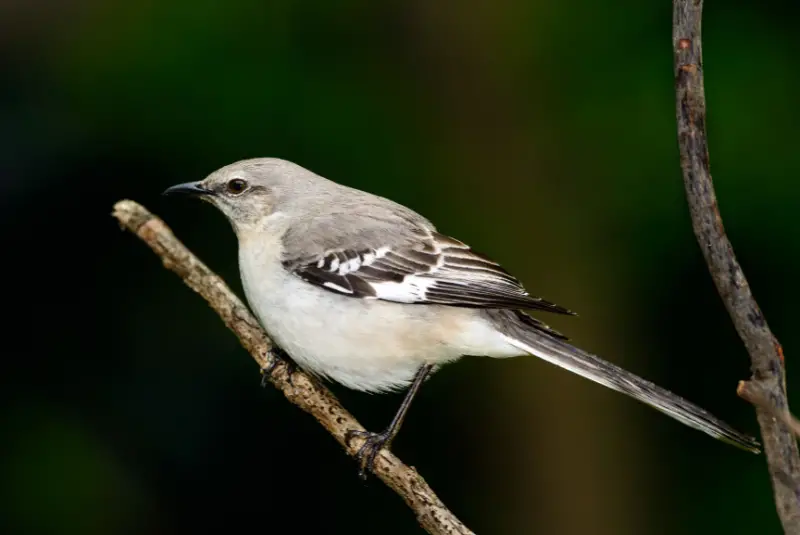
The Northern Mockingbird is the bird most often heard singing at night across North America. Its long, varied performance strings together imitations of other birds and ambient sounds, each phrase typically repeated several times before the bird moves on to the next.
Unpaired young males sing most persistently at night, often between midnight and the pre-dawn hours, as they advertise for a mate. A resident mockingbird in the neighborhood may sing on most spring nights, sometimes to the frustration of nearby sleepers.
This is the only mockingbird species in North America, and it is a familiar year-round resident across the United States and southern Canada. It favors open wooded areas and urban habitats with scattered trees, including parks, gardens, and golf courses.
Yellow-breasted Chat
Scientific name: Icteria virens

Sound of Yellow-breasted Chat:
The Yellow-breasted Chat delivers an unusual, almost conversational medley of whistles, chuckles, rattles, and harsh churrs, often with odd pauses between phrases. Like the mockingbird, unpaired males sometimes continue this performance into the night during the breeding season.
Chats are summer visitors and breeding birds across much of the United States, generally present from May through August. They are larger than a sparrow but smaller than a robin, with an olive-green back, a bright yellow breast, a gray face, and a bold white “spectacle” around the eye.
They favor dense cover such as thickets, brambles, and streamside shrubs, where they can be remarkably difficult to glimpse. Their diet includes insects such as moths, beetles, ants, and grasshoppers, along with berries like wild grapes and elderberries.
Nightjars & Nighthawks
The nightjars, family Caprimulgidae, are among the most thoroughly nocturnal birds in North America. Cryptically patterned and almost invisible by day, they are identified above all by their voices. Several members of this group have declined in recent decades, a point we return to near the end of this guide.
Common Nighthawk
Scientific name: Chordeiles minor
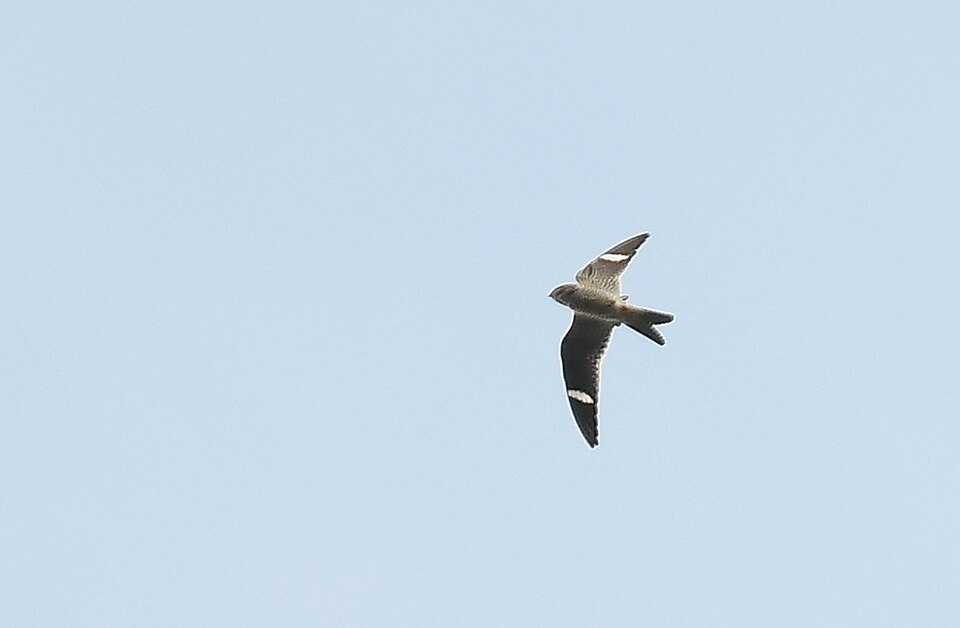
Sound of Common Nighthawk:
The Common Nighthawk announces itself with a sharp, buzzy peent given in flight, often over towns and open country at dusk. Displaying males add a remarkable sound at the bottom of a steep dive, when air rushing through the wing feathers produces a deep booming whoosh.
A member of the nightjar family rather than a true hawk, this bird is dark brown with bold white bars across the wings that flash conspicuously in flight. Look for it hawking insects above streetlights, stadiums, and billboards in the low light of dusk and dawn.
The Common Nighthawk breeds widely across North America in summer, including in cities, where it sometimes nests on flat gravel rooftops. It is a long-distance migrant, wintering in South America.
Lesser Nighthawk
Scientific name: Chordeiles acutipennis

Sound of Lesser Nighthawk:
The Lesser Nighthawk is slightly smaller than its common relative and gives a very different sound: a soft, low, toad-like trill, sometimes accompanied by gentle bleating notes. It typically flies lower to the ground and lacks the booming dive of the Common Nighthawk.
This is an uncommon summer visitor and breeding bird in the southwestern United States, though it is locally common in desert habitats. It hunts swarming insects and is often seen working the air around streetlights after dark.
Common Poorwill
Scientific name: Phalaenoptilus nuttallii

Sound of Common Poorwill:
The Common Poorwill is named for its call, a soft, rounded poor-will repeated steadily through the night. At close range a faint third syllable is sometimes audible, but the two clear notes are the reliable cue.
The smallest North American nightjar, it is strictly nocturnal and exceptionally well camouflaged. By day it rests on the ground, where its gray-brown plumage blends into rock and leaf litter. It is also the only bird known to enter prolonged torpor, a hibernation-like state, during cold spells.
Common Poorwills are summer visitors across much of the western United States and occur year-round in the warmer southwest.
Chuck-will’s-widow
Scientific name: Antrostomus carolinensis

Chuck-will’s-widow call:
The Chuck-will’s-widow is the largest nightjar in North America, and its rolling four-part call, often written as chuck-will’s-wid-ow, carries far on still summer nights. The introductory chuck is quieter and easy to miss, so listeners often hear only the three musical syllables that follow.
A summer visitor to the southeastern United States, this bird is most vocal around dusk and through the night, resting on a branch or on the ground by day. It feeds on flying insects taken in low, buoyant flight, and occasionally captures small birds and bats.
Eastern Whip-poor-will
Scientific name: Antrostomus vociferus

Eastern Whip-poor-will sound:
The Eastern Whip-poor-will gives one of the most celebrated sounds in American natural history: a tireless, three-syllable whip-poor-will chanted over and over, sometimes hundreds of times without pause on a moonlit night. The middle note dips, and the final note rises with emphasis.
It breeds across the eastern United States in summer and lingers as a scarce winter visitor in coastal areas of the southeast, from roughly October through April, when it falls largely silent. Most active at dusk and dawn, it hunts moths and other flying insects in open woodlands.
Mexican Whip-poor-will
Scientific name: Antrostomus arizonae
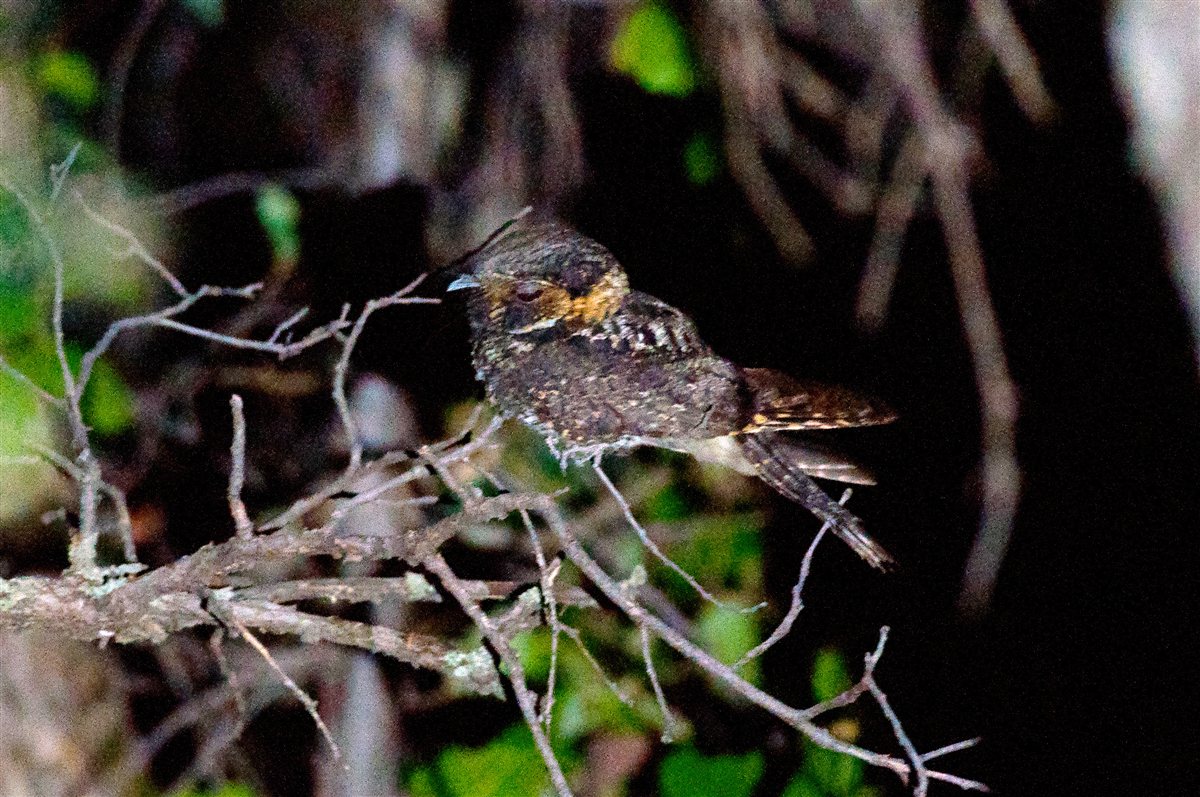
Sound of Mexican Whip-poor-will:
Once considered the same species as its eastern counterpart, the Mexican Whip-poor-will gives a similar three-part phrase that sounds noticeably lower, burrier, and more deliberate. Because the two species do not overlap in range, location alone usually settles the identification.
This bird inhabits mixed mountain forests in the foothills of the southwestern United States, where its call is a defining sound of summer canyons after dark.
Herons
Black-crowned Night-Heron
Scientific name: Nycticorax nycticorax
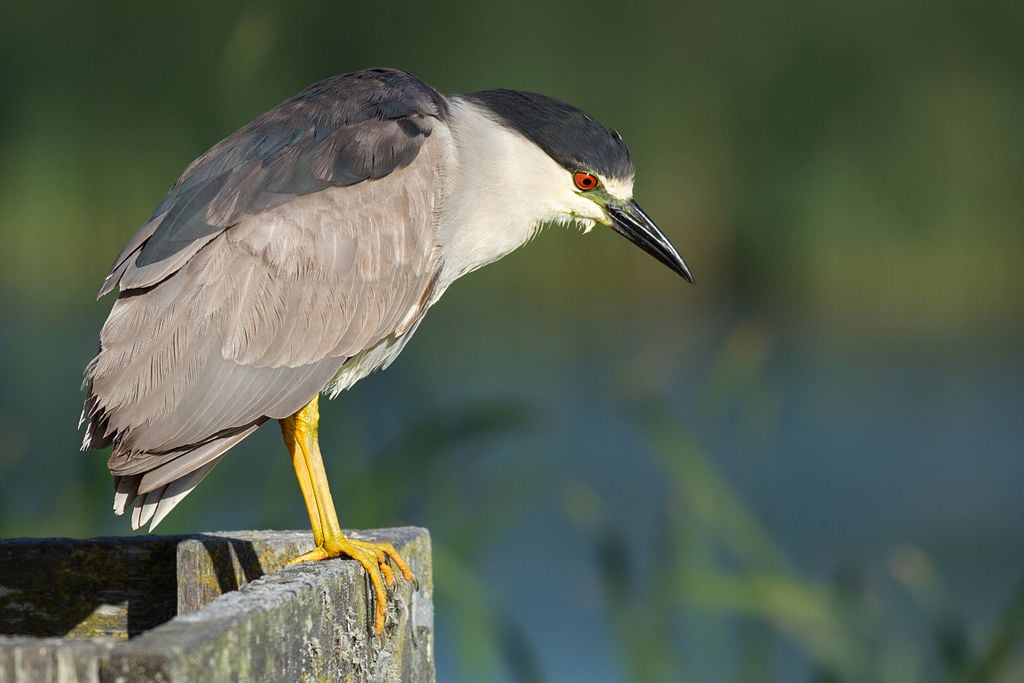
Black-crowned Night Heron sound:
True to its name, the Black-crowned Night-Heron is most active from dusk into the night, when it forages for fish, frogs, and crustaceans in wetlands across much of North America. Its signature sound is an abrupt, barking quawk, often delivered as the bird flushes from a roost or flies overhead in the dark.
This stocky heron is a common breeding bird through large parts of the continent, yet it can be surprisingly hard to find by day unless you locate its shaded roost. Night-herons are social and typically nest in colonies that may share a single tree.
Yellow-crowned Night-Heron
Scientific name: Nyctanassa violacea

Yellow-crowned Night Heron sound:
The Yellow-crowned Night-Heron gives a similar squawking call, though it tends to be higher and shorter than that of its black-crowned relative. It is also less strictly nocturnal, foraging by day as well as by night.
This species is most common in coastal habitats, where it specializes in hunting crabs and crayfish. It is largely a summer visitor to the southeastern United States, present from about April through October.
Owls
Owls are the birds most people picture when they imagine a voice in the dark, and for good reason. Their hoots, screeches, and trills are among the most evocative of all night sounds, and many species call most often in late winter as they pair up and claim nesting territories.
Great Horned Owl
Scientific name: Bubo virginianus

Great Horned Owl call:
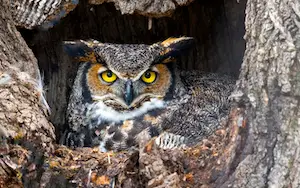
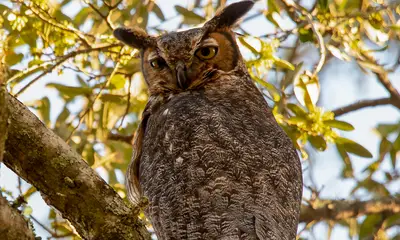
The Great Horned Owl delivers the classic deep, soft hoot of storybooks, a rhythmic series often rendered as who’s awake, me too. Pairs frequently duet, with the female’s voice pitched slightly higher than the male’s.
This is the largest owl that breeds widely across the United States, a powerful brown bird with prominent ear tufts, often called horns, and large yellow eyes. It nests remarkably early, laying eggs as soon as January or February in many regions.
Almost entirely nocturnal, the Great Horned Owl hunts in near-total darkness using exceptional hearing. Rather than building its own nest, it commonly takes over the old nests of hawks, herons, and other large birds. It occurs year-round across North America in habitats ranging from remote woodland to city parks, and it is a formidable predator of mammals and birds alike. Midwest listeners can cross-check it against other species in our Ohio owl sounds guide.
Barn Owl
Scientific name: Tyto alba

Barn Owl sound:
(Recording source: Jayrson De Oliveira, XC619814, www.xeno-canto.org/619814)
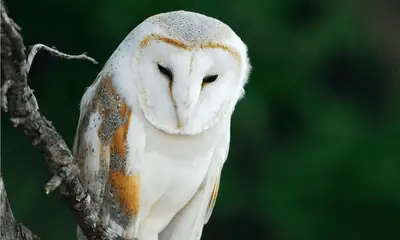
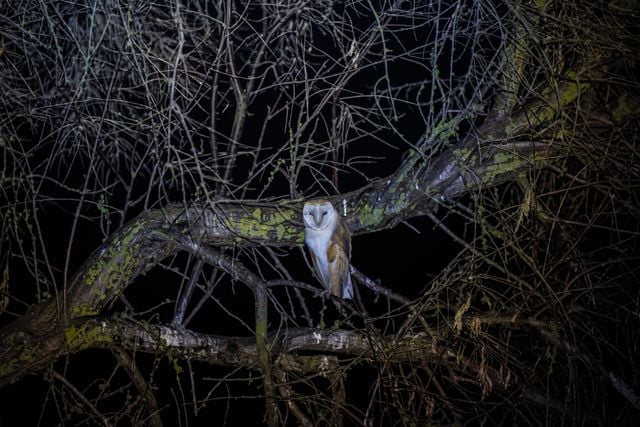
The Barn Owl does not hoot. Instead it produces a long, harsh, rasping shriek, an eerie scream that has fueled folklore for centuries and that accounts for a large share of “what is screaming at night” questions. This is the sound to suspect when a piercing screech rings out over farmland or open country in the dark.
Pale and heart-faced, the Barn Owl looks gentler than the Great Horned Owl, and the glow of its white underside is sometimes visible as it drifts low across a field by moonlight. It is a strictly nocturnal hunter, present year-round across much of North America, and it favors open farmland, grassland, and marsh edges where it hunts rodents.
Burrowing Owl
Scientific name: Athene cunicularia

Burrowing Owl sound:
(Recording source: David Ricardo Rodriquez-Villamil, XC524489, www.xeno-canto.org/524489)
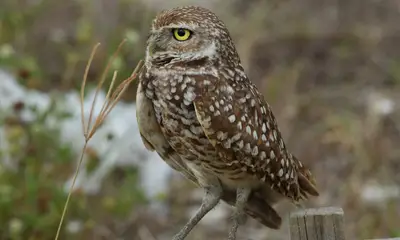
The Burrowing Owl gives a soft, cooing two-note call, often written as coo-coooo, along with a striking rasping alarm call that mimics the buzz of a rattlesnake, an apparent bluff to deter intruders at the burrow.
This small, long-legged owl is a scarce resident of open country in the western United States. Unusually for an owl, it lives underground, digging its own burrows or adopting those abandoned by prairie dogs and ground squirrels. It is active by day as well as by night and is most often seen perched on a low mound, scanning open ground for insects and small rodents. For more western species, see our Colorado owl sounds guide.
Barred Owl
Scientific name: Strix varia

Barred Owl sound:
The Barred Owl has perhaps the most quotable call of any North American owl, a resonant series usually described as who cooks for you, who cooks for you all. Pairs also engage in raucous, cackling duets that can sound almost like laughter echoing through wet woodland.
Originally a bird of eastern North America, the Barred Owl has expanded its range steadily westward over the past century. It favors mature forest near swamps and rivers and readily accepts large nest boxes placed in old trees. For more on this and other owl voices, see our guide to Florida owl sounds.
Long-eared Owl
Scientific name: Asio otus

Long-eared Owl sound:
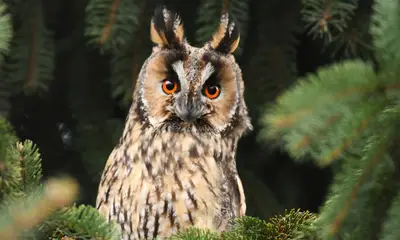
The Long-eared Owl is elusive and easily overlooked, and its breeding call is a correspondingly understated sound: a low, evenly spaced hoo repeated softly through the night. Near the nest, the species can also produce a variety of barks, whines, and squeals.
This slender, well-camouflaged owl breeds across northern North America and moves farther south in winter. It roosts in dense wooded cover and hunts small rodents over adjacent open grassland. Like other owls, it flies almost silently thanks to soft fringes on its flight feathers, allowing it to surprise prey in the dark. Telltale signs of a roost include long ear tufts and accumulations of pellets and droppings beneath conifers near grassy areas.
Short-eared Owl
Scientific name: Asio flammeus

Short-eared Owl call:
The Short-eared Owl is among the quieter owls away from the breeding grounds, but displaying males give a soft, pulsing series of voo-voo-voo notes, and both sexes produce raspy, barking calls when agitated.
This is a highly migratory owl. Although it breeds in only parts of the northern United States, it is seen widely across the country outside the breeding season. It hunts more often in daylight than most owls, coursing low over open ground, which makes it one of the easier owls to observe. Look for it over farmland, airfields, marshes, and fallow land.
Eastern Screech-Owl
Scientific name: Megascops asio

Eastern Screech Owl sound:
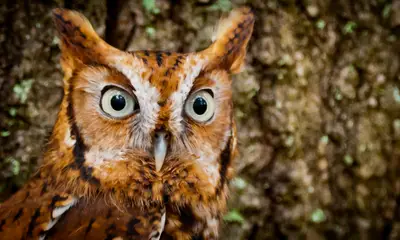
Despite its name, the Eastern Screech-Owl rarely screeches. Its two characteristic sounds are a descending, horse-like whinny that falls in pitch, and an even-pitched trill, or tremolo, that the pair uses to stay in contact (Ritchison et al., 2020). Neither resembles the raspy scream of a Barn Owl, a useful point when sorting out nighttime mystery sounds.
This small owl, which occurs in both rufous and gray color morphs, has adapted well to human landscapes and is regularly found in parks, large gardens, and golf courses across the eastern half of the United States, where it is present year-round. It nests in tree cavities, takes a varied diet of insects, worms, and small vertebrates, and readily accepts nest boxes, so a well-placed box can sometimes draw one to a backyard.
Western Screech-Owl
Scientific name: Megascops kennicottii

Western Screech Owl sound:
The Western Screech-Owl sounds distinctly different from its eastern counterpart. Its main call is a series of short, hollow whistles that accelerate toward the end in a pattern often likened to a bouncing ball coming to rest (Cannings et al., 2020). It also gives a paired “double trill.”
Widespread through the western United States and active year-round, this adaptable owl has settled comfortably into parks and backyard gardens alongside more remote woodland. It nests in tree cavities, takes a broad diet of insects and small animals, and, like the eastern species, will use nest boxes. Listeners in the desert southwest can compare it against other after-dark voices in our roundup of night birds in Arizona.
Northern Saw-whet Owl (Aegolius acadicus)
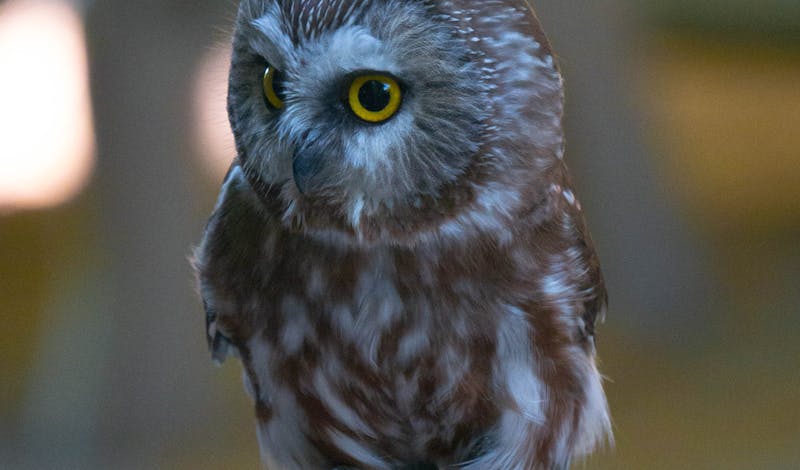
The Northern Saw-whet Owl produces one of the most hypnotic of all owl sounds, a long, monotonous series of evenly spaced toots, often compared to a truck backing up or a saw being sharpened, which is the source of its name. The notes can continue for minutes on end during the late winter and early spring breeding season.
One of the smallest owls in North America, scarcely larger than a sparrow in body, it breeds across the northern United States, Canada, and the western mountains, and disperses more widely in winter. It is strictly nocturnal and so well hidden by day that many birders know it only by voice.
Other Nocturnal and Twilight Callers
A few birds outside the four main groups are well worth knowing, because their voices regularly puzzle listeners after dark.
American Woodcock (Scolopax minor)
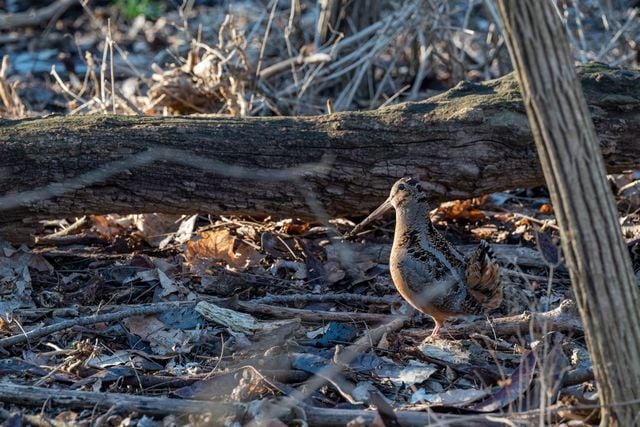
The male American Woodcock performs one of the great spectacles of early spring twilight. From the ground he gives a buzzy, nasal peent, then launches into a high spiraling flight during which air through his outer wing feathers produces a musical twittering, before he tumbles back to earth and begins again.
A plump, long-billed shorebird of damp woodland edges and old fields, the woodcock is most vocal at dusk and dawn in the eastern half of North America. The display continues through the dusk hours and resumes before first light.
Limpkin (Aramus guarauna)
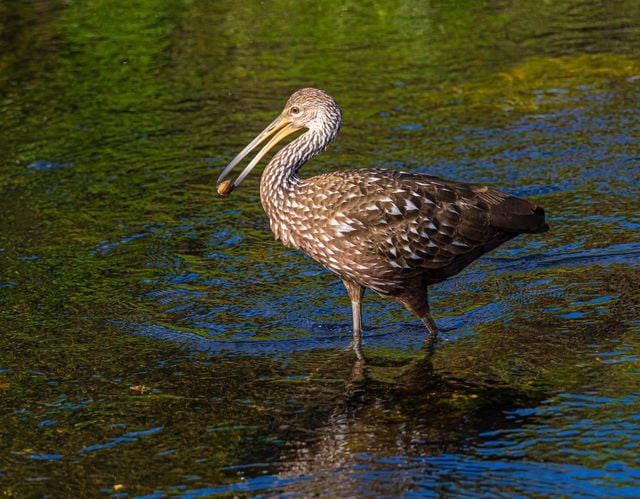
The Limpkin delivers a loud, wailing, almost human scream that carries across wetlands at night and routinely alarms people unfamiliar with it. The piercing cry has earned the bird a place in regional folklore as a “crying bird.”
A long-legged brown wader that specializes in eating apple snails, the Limpkin is most associated with the marshes and swamps of Florida and the Gulf Coast, though it has been recorded farther north in recent years as its range has shifted. Its nocturnal screaming is a defining, and startling, sound of southern wetlands.
Night Birds and Conservation
Listening for night birds is more than a pleasant pastime. It has become a meaningful way to help monitor species that are otherwise hard to survey.
The nightjars give the clearest example. The Eastern Whip-poor-will has declined substantially, by roughly 69% across eastern North America since 1970 according to summaries published by the Maine Nightjar Monitoring Project, and the Common Nighthawk has fallen steeply across much of its range as well. These birds belong to a wider group of aerial insectivores, birds that feed on flying insects, that have shown long-term declines linked to insect loss, habitat change, and shifting climate (NH Audubon, 2023).
The encouraging part is that the same calls that make these birds hard to see also make them easy to count. Volunteer surveys such as regional nightjar monitoring routes, along with everyday eBird checklists, turn a night spent listening into useful data. Reducing unnecessary outdoor lighting, protecting open and wetland habitats, and putting up nest boxes for cavity-nesting owls all give night birds a measure of support close to home.
Quick Reference: Common Night Sounds and Their Likely Source
| What you hear | Most likely bird |
|---|---|
| Deep, soft, rhythmic hooting | Great Horned Owl |
| Who cooks for you phrase | Barred Owl |
| Harsh, rasping scream | Barn Owl (or a red fox, which is not a bird) |
| Descending horse-like whinny | Eastern Screech-Owl |
| Accelerating “bouncing ball” whistles | Western Screech-Owl |
| Steady, monotonous toots | Northern Saw-whet Owl |
| Endless three-note whip-poor-will | Eastern Whip-poor-will |
| Rolling chuck-will’s-widow | Chuck-will’s-widow |
| Buzzy peent overhead, with diving boom | Common Nighthawk |
| Loud, wailing, human-like scream | Limpkin (southern wetlands) |
| Long, varied medley of repeated phrases | Northern Mockingbird |
| Abrupt barking quawk from a flyover | Black-crowned Night-Heron |
Frequently Asked Questions
What birds sing at night?
The birds that sing at night throughout North America are most often Northern Mockingbirds. Mockingbirds singing at night are usually young male birds trying to attract a mate. They sing at night most of the year, except during the fall.
In addition to mockingbirds, other common birds that sing at night are nightjars and owls. Finally, Yellow-breasted Chats also sing at night, and these birds are common summer visitors throughout large parts of North America.
Other birds that occasionally chirp at night are the American Robin, Western Meadowlark, and Killdeer. It is thought that some of these birds chirping at night have developed their behavior to avoid the noise of cars and other human sounds that are prevalent during the day in urban areas.
What bird makes a screaming sound at night?
The most common avian source of a screaming sound after dark is the Barn Owl, which gives a long, harsh, rasping shriek rather than a hoot. In the south, the Limpkin produces a loud wailing scream over wetlands. Worth noting: red foxes also scream at night and are very often mistaken for a bird.
What bird hoots at night?
Several owls hoot, but the deep, soft, rhythmic hoot most people picture belongs to the Great Horned Owl. The Barred Owl gives the distinctive who cooks for you, who cooks for you all, while the Long-eared Owl offers a quieter, evenly spaced low hoot.
Why does the Eastern Screech-Owl not screech?
Despite its name, the Eastern Screech-Owl makes a descending whinny and an even trill rather than a true screech. The name is misleading, and the rasping screech many people imagine is far more typical of the Barn Owl.
What bird sings all night long in spring?
In spring, a bird that sings continuously through the night is most often an unpaired male Northern Mockingbird advertising for a mate. Yellow-breasted Chats and several nightjars also call persistently after dark during the breeding season.
Which night bird calls sound like their own name?
Many nightjars are named for their calls. The Eastern Whip-poor-will chants whip-poor-will, the Chuck-will’s-widow gives a rolling chuck-will’s-widow, and the Common Poorwill repeats a soft poor-will.
Conclusion
The voices of the night belong to a small but remarkable cast: nocturnal songbirds, the cryptic nightjars, the barking night-herons, a full chorus of owls, and a few memorable outliers such as the woodcock and the Limpkin. What unites them is that they are creatures of darkness and twilight, known to most of us first, and sometimes only, by sound.
Learning these calls changes the experience of being outdoors after sunset. A sound that once seemed eerie or anonymous becomes a familiar neighbor, and a single night of attentive listening can reveal which species share your patch of the continent. Because many of these birds are difficult to see and, in the case of the nightjars, in real need of monitoring, every careful listener contributes to a fuller picture of nocturnal bird life.
If you would like to keep exploring after dark, our regional guides to night birds in California and night birds in Arizona take the same approach, state by state.
Sources
- Ritchison, G., F. R. Gehlbach, P. Pyle, and M. A. Patten (2020). Eastern Screech-Owl (Megascops asio), version 1.0. In Birds of the World, Cornell Lab of Ornithology.
- Cannings, R. J., T. Angell, P. Pyle, and M. A. Patten (2020). Western Screech-Owl (Megascops kennicottii), version 1.0. In Birds of the World, Cornell Lab of Ornithology.
- Da Silva, A., M. Valcu, and B. Kempenaers (2015). Light pollution alters the phenology of dawn and dusk singing in common European songbirds. Max Planck Institute for Ornithology.
- NH Audubon (2023). Aerial Insectivores, State of New Hampshire’s Birds.
- Maine Nightjar Monitoring Project, Maine Natural History Observatory.