
Tropical and Exotic Bird Symbolism: Meaning Behind 30 Species
From rainforest canopies to remote island habitats, tropical and exotic birds carry symbolism shaped by the cultures that live alongside them. This guide covers the meaning behind 30 species rarely seen in a backyard feeder, from the flightless Kiwi and Cassowary to jewel-toned species like the Quetzal and Honeycreeper. Jump to any species below.
Jump to a Species
- Barbet
- Bee-eater
- Cassowary
- Emu
- Hoatzin
- Honeycreeper
- Hoopoe
- Hornbill
- Kagu
- Kakapo
- Kea
- Kiskadee
- Kiwi
- Motmot
- Oilbird
- Ostrich
- Potoo
- Quetzal
- Roller
- Seriema
- Sunbird
- Takahe
- Toucan
- Umbrellabird
- Whip-poor-will
- Currawong
- Fantail
- Lyrebird
- Bellbird
- Tui
Barbet Meaning and Symbolism
A Coppersmith Barbet hammered out its metallic “tuk…tuk…tuk” call from a treetop in Delhi with such mechanical regularity that I genuinely checked my phone to see if a nearby construction site had started up again. The short answer Barbets are associated with persistence and industriousness across Africa and Asia, symbolism drawn directly from the bird’s real call, a repetitive, almost machine-like note that in several barbet species can continue for hours with barely a pause, giving the bird its onomatopoeic common names in multiple languages. A bird that sounds like a trade The Coppersmith Barbet’s call so closely resembles a metalworker’s hammer striking metal that its common name across several regions directly references the trade, and in parts of South Asia the bird’s relentless calling during hot afternoons became a recognizable, almost seasonal soundmark rather than tied to any single myth. The biology behind the myth Barbets excavate their own nest cavities in dead wood using their heavy bills, more like woodpeckers than most other perching birds, and that same bill lets them handle fruit that other frugivores can’t crack open, making them important seed dispersers for certain fig species. The repetitive call is a real endurance feat, produced by rapid, sustained muscle contractions that researchers have measured at well over a hundred notes per minute in some individuals. Something to carry with you The barbet’s folk reputation as tireless and mechanical isn’t exaggeration for effect — the call really does function almost like a metronome, and the bird can sustain it at a pace few other songbirds attempt.
Bee-eater Meaning and Symbolism
Watching a European Bee-eater catch a wasp in midair, then beat it against a branch and rub its rear end against the bark before swallowing, answered a question I hadn’t even thought to ask about how exactly a bird eats something that can sting back. In short Bee-eaters are associated with grace under danger and precision, symbolism grounded in a real and slightly startling behavior: the bird deliberately de-stings its prey by rubbing the venom sac against a perch before eating, a skill that has to be learned rather than performed correctly on the first try. A jewel that hunts danger Across the bee-eater’s range in Europe, Africa, the Middle East, and Asia, its iridescent plumage and aerial hunting style made it a visually celebrated bird in regional art and folklore, often treated as a symbol of summer’s arrival tied to its migratory pattern. Beekeepers, less charitably, have historically viewed the species as a pest for the obvious reason. The biology behind the myth Young bee-eaters get stung occasionally while learning the de-venoming technique, and researchers have documented the skill improving measurably with practice. Bee-eaters also nest in tunnels dug into sandy riverbanks, sometimes in colonies of hundreds, a very different lifestyle from the exposed perching most people associate with such brightly colored birds. A closing thought The bee-eater’s symbolism as a graceful risk-taker holds up under scrutiny — this is a bird that eats venomous prey for a living and had to practice getting it right, which is a more literal daredevil story than most animal folklore manages.
Cassowary Meaning and Symbolism
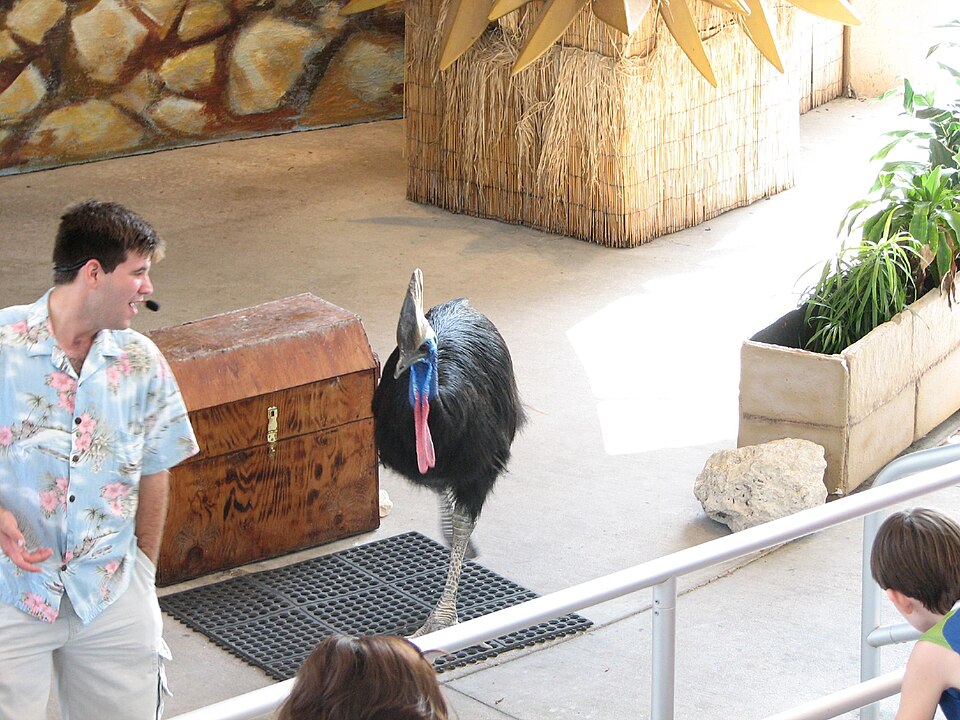
Rangers in tropical North Queensland warn visitors to keep a respectful distance from cassowaries with a seriousness usually reserved for large predators, and after learning what those birds are actually capable of, the warning stops sounding like an overreaction. Cutting to it Cassowaries are associated in the traditions of several Papua New Guinean and Aboriginal Australian communities with danger, power, and ancestral significance, symbolism grounded directly in the bird’s real physical capability and its central ecological role in the rainforests it inhabits. A bird considered genuinely dangerous, with good reason Cassowaries are widely described as the most dangerous bird in the world, standing up to six feet tall, capable of running around 30 miles per hour, and equipped with a dagger-like inner toe claw capable of causing serious injury when the bird feels cornered or threatened, a reputation earned through documented incidents rather than exaggeration. An essential, irreplaceable seed disperser Beyond the danger, cassowaries play an outsized ecological role: they’re one of the only animals large enough to swallow and disperse the seeds of dozens of rainforest tree species with fruit too large for other animals to eat, making the bird what ecologists call a keystone species — entire sections of rainforest depend on cassowaries passing their seeds intact through the digestive system. Putting it together The cassowary’s fearsome reputation and its cultural significance both trace back to the same real fact: this is a bird whose size and role in its ecosystem are genuinely disproportionate to what most people picture when they hear the word “bird.”
Emu Meaning and Symbolism
A trip to Australia’s outback once put me face to face with an emu that was, without exaggeration, taller than I expected any bird to be while standing at eye level with a person, and the sheer improbability of that size is a big part of why the emu carries the symbolic weight it does. At a glance Emus hold deep significance in many Aboriginal Australian traditions, appearing in creation stories and represented in the night sky itself by the dark, dust-lane constellation known as the Emu in the Sky, symbolism rooted in the bird’s central place in the Australian landscape long before European contact. A bird written into the sky itself Rather than being marked out by stars the way most Western constellations are, the Emu in the Sky is traced by the dark dust lanes of the Milky Way, a shape recognized across many different Aboriginal language groups across the continent and used in some traditions to track seasonal timing, including when actual emus were laying eggs on the ground below. A genuinely strange parenting arrangement Emu biology adds its own twist to the symbolism: males, not females, incubate the eggs and raise the chicks essentially alone, sitting on a clutch for around eight weeks without eating, drinking, or defecating, losing a significant portion of their body weight in the process — one of the more extreme examples of paternal care found in any bird. Where this leaves us The emu’s cultural significance runs deep enough to be written directly into the night sky, and the bird backs that significance up with one of the most physically demanding parenting strategies in the animal kingdom.
Hoatzin Meaning and Symbolism
A boat guide on a tributary of the Amazon once pointed out a Hoatzin perched awkwardly in a riverside tree and, before I could ask anything, told me to smell the air — the bird gives off a strong manure-like odor, which is how it earned its most memorable local nickname. The gist Hoatzins don’t carry old mythology so much as a modern reputation for being one of the strangest birds alive, symbolism built entirely on a set of genuinely bizarre traits found in almost no other living bird species. A digestive system borrowed from a cow Hoatzins are the only birds known to digest food through foregut fermentation, the same basic process cows and other ruminants use, breaking down leaves with the help of bacteria in an enlarged crop before the food even reaches the stomach, a process that produces the strong odor behind the bird’s common nickname, “stinkbird.” Chicks with claws on their wings Even stranger, Hoatzin chicks are born with functional claws on the leading edge of each wing, which they use to climb back into the nest tree after dropping into the water to escape predators, a trait almost unheard of in modern birds and often compared to Archaeopteryx, one of the earliest known bird ancestors. Where this leaves us The Hoatzin’s strange reputation is entirely deserved on the biology alone — a bird that digests leaves like a cow and raises chicks equipped with climbing claws needs no folklore at all to seem thoroughly alien.
Honeycreeper Meaning and Symbolism
A Green Honeycreeper flashed turquoise against dark rainforest leaves in Costa Rica, and a guide mentioned almost in passing that the males and females look like entirely different species, which turned out to be one of the milder surprises this family of birds had in store. Quick answer Honeycreepers are associated with abundance and rapid transformation, symbolism grounded in one of the most dramatic evolutionary stories in ornithology, a small group of Hawaiian finch ancestors that diversified into dozens of radically different forms once they reached the isolated islands. An entire ecosystem from one bird The Hawaiian honeycreepers are frequently cited alongside Darwin’s finches as a textbook case of adaptive radiation, with ancestral finches arriving in Hawaii millions of years ago and diversifying into forms with bills shaped for nectar, seeds, insects, and snails, some species now extinct and others, like the scarlet ʻiʻiwi, carrying deep cultural significance in Native Hawaiian featherwork and chant. The biology behind the myth Genetic studies confirm that dozens of honeycreeper species, wildly different in bill shape and diet, descended from a single finch-like ancestor in a strikingly short evolutionary window by ornithological standards. Sadly, more than half of known honeycreeper species are already extinct, largely due to introduced mosquito-borne avian malaria, making the surviving species an active conservation priority rather than a settled success story. Where this leaves us The honeycreeper’s symbolism of dramatic transformation is scientifically literal — this is one of evolution’s fastest, most visible diversification events, playing out on a chain of islands small enough to walk across in a day.
Hoopoe Meaning and Symbolism
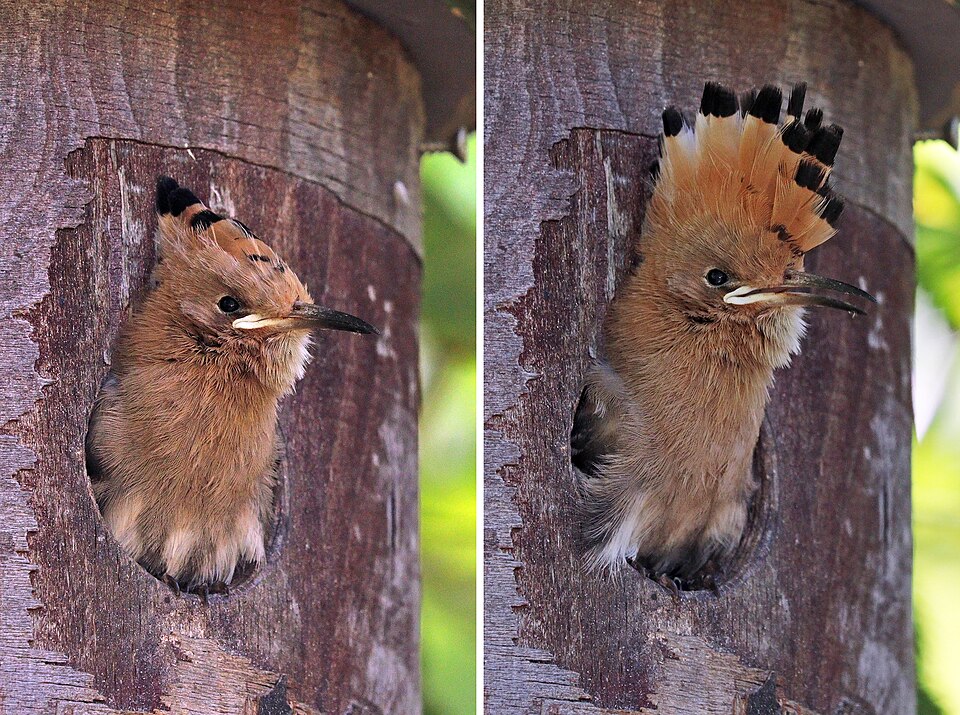
I watched a Hoopoe fan its crest open and shut like a hand of cards while probing a lawn in southern Spain, and understood immediately why a bird that looks that theatrical ended up in scripture and royal legend rather than just another field guide entry. The quick take Hoopoes are associated with royalty, wisdom, and messages between worlds, symbolism drawn from the bird’s starring role in the Quran and Persian poetry, reinforced by a genuinely unusual crest that erects and folds like a fan and a foul-smelling defense secretion real enough to have earned it an unglamorous nickname in several languages. King Solomon’s messenger In the Quran, the Hoopoe serves as Solomon’s messenger to the Queen of Sheba, and in Persian literature it guides the birds through the Conference of the Birds as a figure of wisdom and spiritual leadership. Ancient Egyptians carved hoopoes into hieroglyphs and temple walls, associating the bird with virtue. The biology behind the myth That crown-like crest is made of black-tipped feathers the bird can raise into a full fan when excited or alarmed, then collapse flat when it’s relaxed. Less majestically, nesting females and chicks produce a foul-smelling secretion from their preen gland that deters predators, which is where the bird’s less flattering folk nicknames come from. The bigger picture The Hoopoe’s reputation as royalty’s messenger sits oddly next to its reputation, in some European folk traditions, as an omen of war or death — proof that even a bird this visually spectacular can carry contradictory meanings depending on who’s watching.
Hornbill Meaning and Symbolism
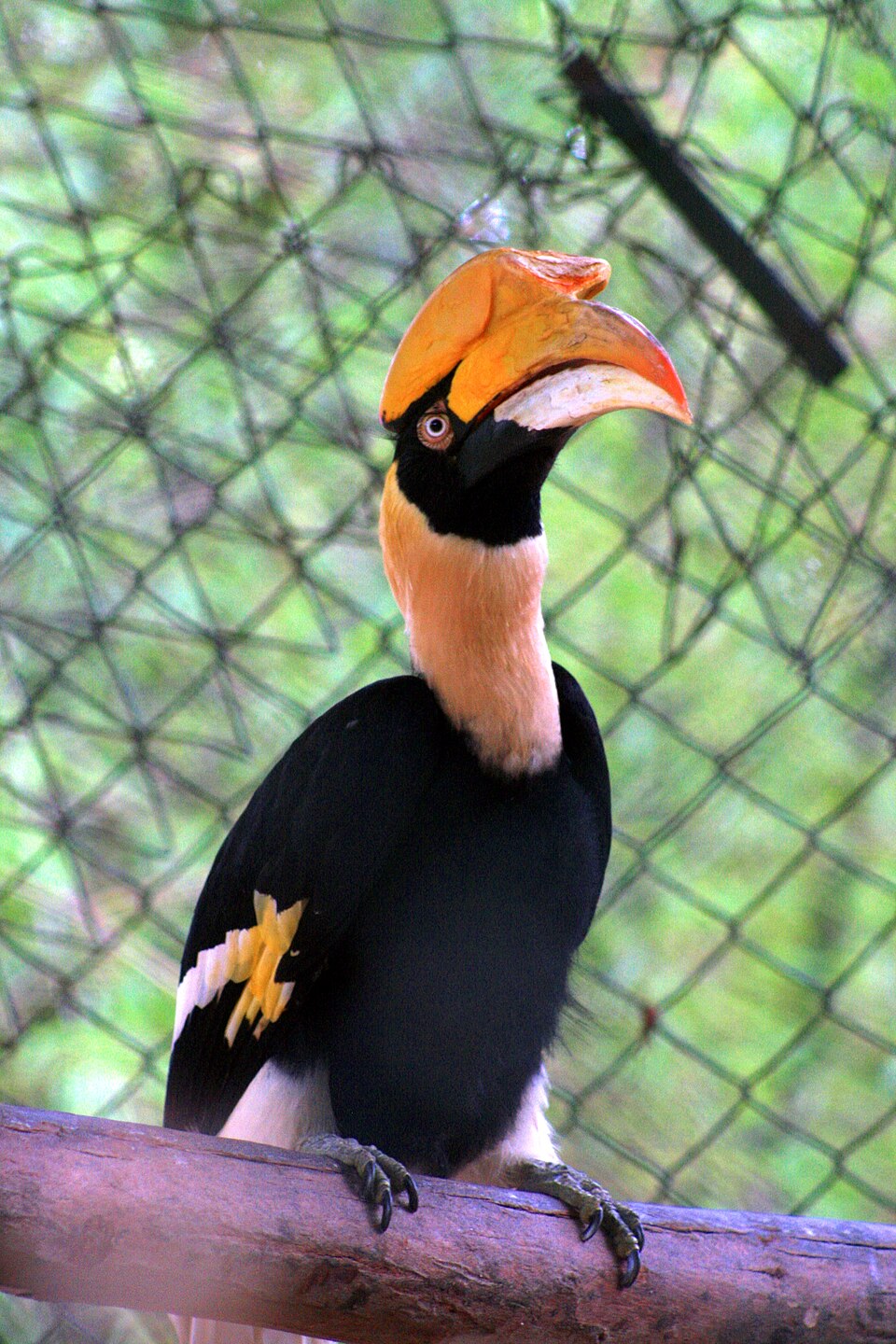
A forest guide in Borneo pointed out the whooshing sound of a Great Hornbill’s wingbeats long before we saw the bird itself, a sound so loud and mechanical that early European naturalists reportedly mistook it for a passing steam engine. In short Hornbills are associated with fidelity, guardianship, and monogamous devotion across many Asian and African cultures, symbolism grounded in one of the bird world’s strangest real behaviors: the female seals herself into a tree cavity with mud and droppings for weeks, dependent entirely on the male to feed her through a narrow slit. A marriage sealed in mud In several Southeast Asian and African traditions, hornbills appear in wedding symbolism and tribal headdresses as emblems of lifelong partnership, since a hornbill pair that loses one bird to death or captivity is often said to mate for life or not at all. Some indigenous groups in Borneo consider the hornbill a spirit messenger connecting the human and divine worlds. The biology behind the myth The self-sealing nest isn’t metaphor — it’s documented behavior across many hornbill species, a defense against snakes and monkeys that could otherwise raid the nest. The male hornbill’s massive, often colorful casque atop the bill isn’t just decoration either; in several species it acts as a resonating chamber, amplifying calls across dense forest canopy. A closing thought The hornbill’s fidelity myth is one of the rare cases where folklore undersells the biology rather than exaggerating it — the actual nesting arrangement is stranger and more extreme than most cultural retellings capture.
Kagu Meaning and Symbolism
New Caledonia’s Kagu is sometimes called a “ghost of the forest” by local guides, a nickname that makes immediate sense once you see the bird’s pale gray plumage moving almost silently through dense understory in low light. What it comes down to Kagus are treated in New Caledonia as a powerful national symbol of the island’s unique and fragile biodiversity, symbolism rooted in the bird’s status as a living relic found nowhere else on Earth and its near loss to introduced predators. A bird from a genuinely ancient lineage The Kagu is the sole surviving member of its family, with genetic studies suggesting its closest living relatives are separated by tens of millions of years of independent evolution, making it one of the more evolutionarily isolated bird species alive, essentially its own branch on the entire bird family tree. Flightless because it never needed to fly Having evolved in isolation on New Caledonia with no native ground predators, the Kagu is largely flightless and defenseless against introduced dogs, cats, and rats, a vulnerability that pushed the species to the edge of extinction in the twentieth century before intensive conservation efforts, including a dedicated predator-control program, pulled the population back from the brink. Where this leaves us The Kagu’s symbolic weight in New Caledonia isn’t sentimental branding — it’s a genuinely ancient, one-of-a-kind species whose entire evolutionary strategy of assuming no ground predators existed proved catastrophically wrong the moment humans arrived with pets.
Kakapo Meaning and Symbolism
Learning that the Kakapo is a flightless, nocturnal parrot that can weigh up to nine pounds and lives for potentially sixty years or more sounds like a joke stacked on top of another joke, and yet every single detail turns out to be exactly true. At a glance Kakapos are a powerful symbol in New Zealand of both extreme vulnerability and hard-won conservation hope, symbolism built on the species’ status as the world’s only flightless parrot and one of its most intensively, individually managed critically endangered birds. A breeding strategy built around a tree most people have never heard of Kakapo breeding is tied directly to the mast-fruiting cycle of the rimu tree, which produces abundant fruit only once every two to four years, meaning kakapos often skip breeding entirely in off years, a genuinely unusual reproductive strategy that conservationists now actively track and manage using supplementary feeding to encourage breeding attempts. A population small enough to know by name The entire global Kakapo population, once down to just over 50 individuals, is now closely enough monitored that conservation staff know each living bird individually by name, tracking their health, breeding, and movements on isolated predator-free islands, a level of individual attention almost unheard of for any wild bird species. The takeaway The Kakapo’s symbolic weight as both a cautionary tale and a conservation success story is earned on hard numbers — a species that came within a hair of extinction and now survives specifically because every remaining individual is tracked, named, and actively protected.
Kea Meaning and Symbolism
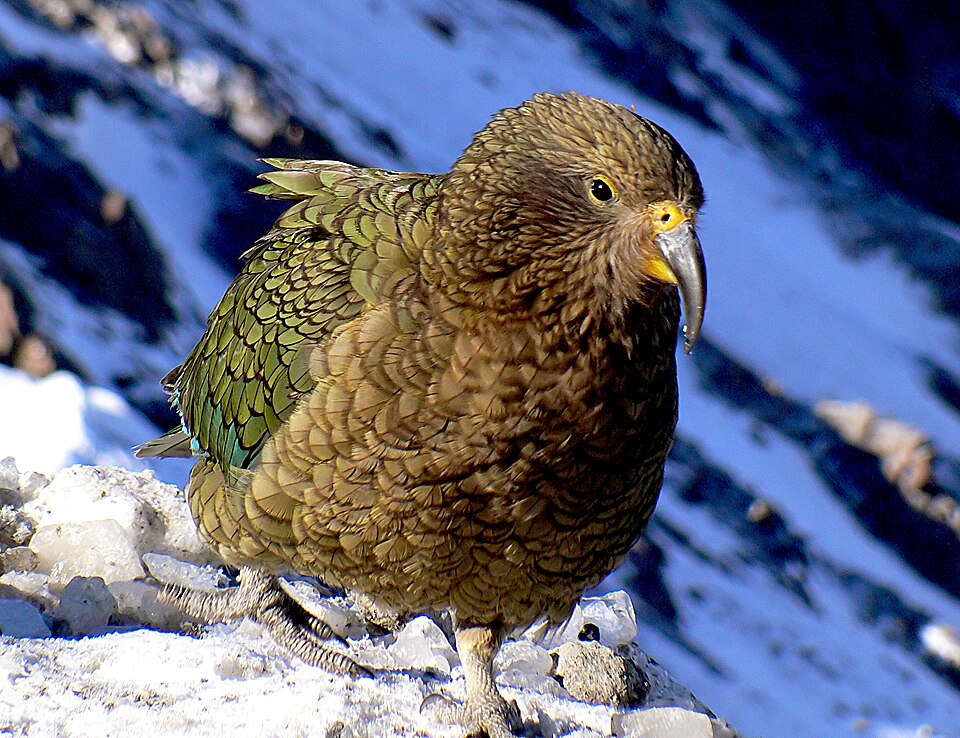
A Kea once methodically dismantled the rubber window seal on a parked car at a New Zealand ski field while a small crowd of tourists watched, seemingly more curious than destructive, which is more or less the exact reputation this bird has earned across the entire country. Quick answer Keas are associated with mischief, intelligence, and reckless curiosity, symbolism built on genuinely well-documented problem-solving behavior and a notorious, almost compulsive habit of investigating and dismantling human objects. Intelligence that’s been formally tested Keas, the world’s only alpine parrot, have been the subject of extensive cognitive research showing they can solve multi-step physical puzzles, understand statistical probability well enough to predict outcomes, and even cooperate in groups to access food, placing them among the most cognitively sophisticated birds studied by researchers. A reputation for destruction that’s really just curiosity That same intelligence, combined with a naturally exploratory temperament, is exactly what drives Keas to pry apart windshield wipers, rubber seals, and backpacks left unattended at ski fields and mountain car parks, behavior locals regard with a mix of exasperation and genuine local pride in having, as they often put it, the naughtiest bird in the country. Where this leaves us The Kea’s mischievous reputation is backed by real cognitive research — a parrot smart enough to problem-solve at a genuinely impressive level, which also happens to mean it’s smart enough to take your car apart out of pure curiosity.
Kiskadee Meaning and Symbolism
The first time I heard a Great Kiskadee shout its own name from a fence post in south Texas, loud and unmistakable, I laughed out loud — it really does sound like it’s yelling “kis-ka-dee” at anyone within earshot. What it comes down to Kiskadees are associated with boldness and outspokenness across Latin America, symbolism built directly on the bird’s genuinely fearless personality, since it will chase hawks, snatch food off outdoor tables, and defend its territory against birds many times its size. A name earned by shouting it In several Latin American countries the bird’s common name is a direct phonetic transcription of its call — bienteveo in Spanish-speaking regions roughly translates to “I see you well,” and local folklore treats the kiskadee as an alert, watchful presence rather than a shy songbird, an image reinforced by how openly it perches in plain sight rather than hiding in cover. The biology behind the myth Kiskadees are flycatchers, but unusually omnivorous ones, eating insects, small fish plucked from water like a kingfisher, fruit, and even other birds’ nestlings when the opportunity arises. That aggressive reputation is backed by real behavior — kiskadees are documented mobbing raptors many times their size, diving and calling until the larger bird leaves the area. What to make of it The kiskadee’s folklore as a bold, watchful announcer isn’t an exaggeration dressed up for a good story. The bird genuinely behaves like it’s guarding the neighborhood, which is probably why so many cultures across its range independently landed on the same interpretation.
Kiwi Meaning and Symbolism
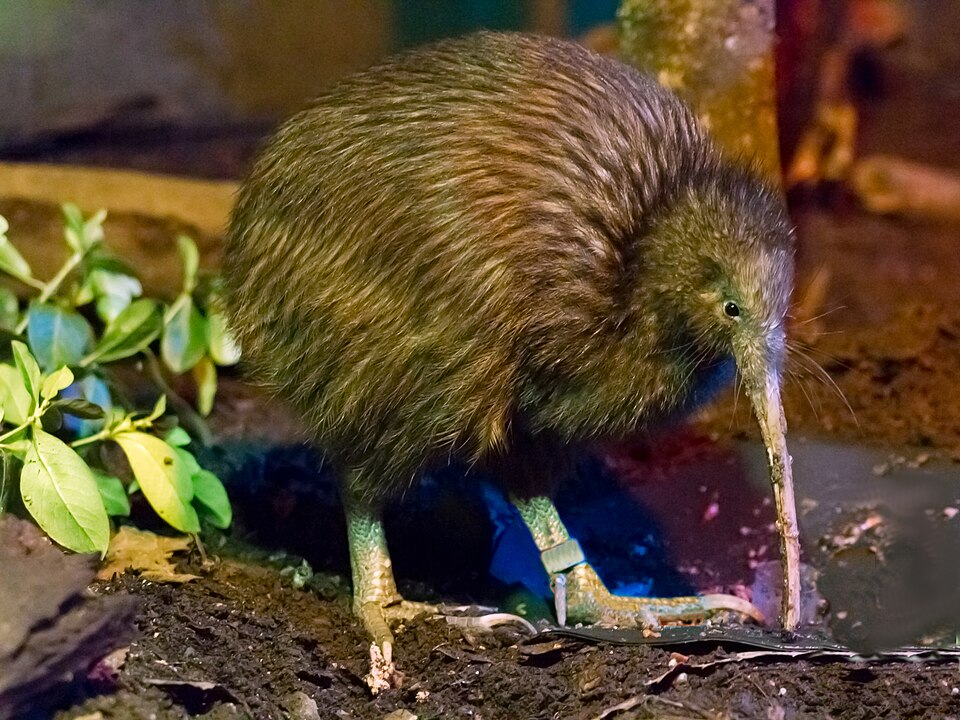
It’s a strange thing to realize that most New Zealanders go their whole lives without ever seeing a wild kiwi, given how completely the bird has come to represent the country itself, appearing on currency, sports jerseys, and as the informal national nickname for citizens. Quick answer Kiwis are the national symbol of New Zealand, representing resilience, uniqueness, and a kind of quiet national identity, symbolism built on the bird’s status as a flightless, nocturnal, deeply unusual species found nowhere else on Earth. A bird built almost backwards Kiwis break nearly every rule of typical bird biology: they’re flightless, nocturnal, have nostrils at the tip of the bill rather than the base (unique among birds), rely primarily on smell rather than sight to find food, and lay eggs that can weigh up to a fifth of the female’s entire body weight, one of the largest egg-to-body-size ratios of any bird species alive. A symbol adopted from a position of near-total obscurity Kiwis are so reclusive and rarely seen, even by New Zealanders, that their adoption as the country’s defining national symbol says as much about identity and pride as about direct familiarity — a genuinely unique, endangered, and almost mythically shy animal chosen precisely because there’s nothing else quite like it anywhere in the world. A closing thought The kiwi’s status as a national symbol rests on real, almost backwards biology rather than visibility — a bird most citizens have never personally seen still managed to become their most recognizable national emblem.
Motmot Meaning and Symbolism
A Turquoise-browed Motmot sat perfectly still on a fence wire in the Yucatan, swinging its long racket-tipped tail back and forth like a pendulum, and I watched it for a full five minutes before it moved anywhere else. Bottom line Motmots are associated with patience, timekeeping, and quiet vigilance across Mesoamerica, symbolism built on the bird’s real, rhythmic tail-wagging display, a metronome-like motion so distinctive that it gave rise to the regional nickname “clock bird” in several Spanish-speaking countries. The bird that built its own clock In Mayan-descended communities across the motmot’s range, the bird’s unhurried, almost ceremonial stillness between tail-swings earned it associations with patience and watchfulness, distinct from the frantic energy of most small tropical birds. Its habit of perching motionless in the open, rather than hiding, also made it one of the more reliably visible rainforest birds to spot. The biology behind the myth That racket tail isn’t grown that way — the bare shaft develops when weakly attached barbs fall off through normal preening and wear, meaning the bird partially shapes its own signature feature. Research on the pendulum-like wag suggests it functions as a predator-deterrent signal, telling a watching cat or snake that it’s already been spotted and pursuit is pointless. One more thing The motmot’s reputation as a patient, watchful timekeeper is grounded in a real, unusually deliberate behavior — few birds communicate “I see you” as literally and calmly as a motmot swinging its tail at a predator in the underbrush.
Oilbird Meaning and Symbolism
Standing at the mouth of a cave in Trinidad known to house thousands of Oilbirds, the sound alone, a dense, overlapping chorus of harsh clicks and screeches echoing out of total darkness, was enough to make the whole cave feel genuinely haunted before I ever saw a single bird. Bottom line Oilbirds are associated in parts of South America and the Caribbean with caves, darkness, and the supernatural, symbolism built on the species’ unique status as the only nocturnal, cave-dwelling fruit-eating bird in the world, navigating total blackness using echolocation. A bird that navigates like a bat Oilbirds are one of the only bird species known to use echolocation, producing sharp clicks and interpreting the returning echoes to navigate through the pitch-black caves where they roost by the thousands, a sensory adaptation otherwise almost exclusively associated with bats and a small number of other cave-dwelling animals. A name that comes from a grim historical use The species’ common name comes from the historical practice of harvesting extremely fat Oilbird chicks and rendering them down for oil used in lamps and cooking, a practice that once threatened breeding colonies before conservation protections were put in place, leaving behind a name that still reflects that difficult history. One more thing The Oilbird’s eerie cave-dwelling reputation is grounded in a genuinely rare sensory adaptation — one of the only birds on the planet that navigates the way a bat does, echoing through absolute darkness by sound alone.
Ostrich Meaning and Symbolism
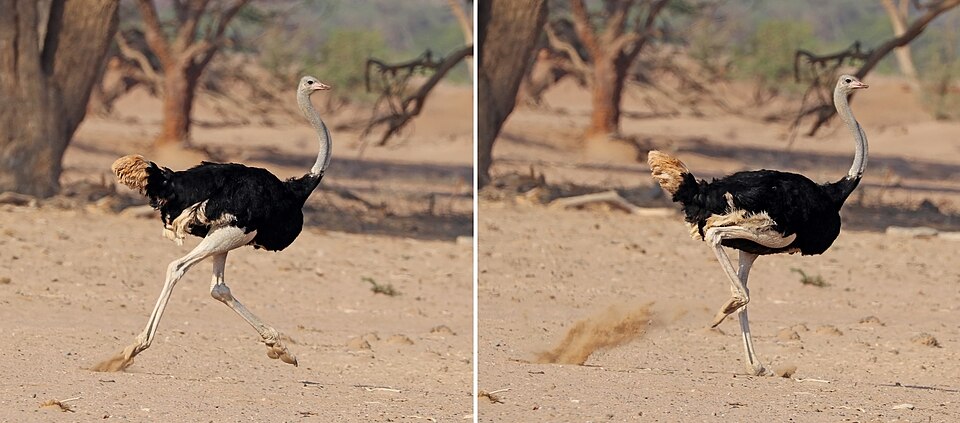
I got to stand near an ostrich enclosure at a wildlife park once and was struck by how little it resembled the cartoon version I’d grown up with — no head buried in sand, just an enormous, alert animal tracking every movement around it with what looked like genuine wariness. The “ostriches hide from danger by burying their heads” idea turns out to be one of the most persistent wrong facts in popular culture, and untangling where it came from says more about ancient misreading than about the actual bird. In short Ostriches are widely associated (incorrectly) with avoidance and denial through the popular “head in the sand” idiom, while in ancient Egyptian tradition they carried a very different and more accurate symbolic meaning tied to truth, justice, and balance. The “head in the sand” myth, debunked Ostriches never bury their heads in sand to hide from danger; the myth most likely originated from ancient observers watching ostriches lower their heads to the ground to turn and check on eggs buried in a shallow nest scrape, or from the bird lying flat with its neck extended along the ground as a genuine predator-avoidance strategy that, from a distance, could resemble a buried head. Roman writer Pliny the Elder recorded a version of this misunderstanding roughly 2,000 years ago, and it has persisted in Western culture ever since despite being straightforwardly false — an ostrich that actually buried its head in sand would suffocate almost immediately. Ancient Egypt’s very different reading: the feather of truth In ancient Egyptian belief, the ostrich feather was directly associated with Ma’at, the goddess (and broader concept) representing truth, justice, balance, and cosmic order.
Potoo Meaning and Symbolism
A photo of a Potoo perched upright on a broken tree stump, eyes closed, body angled to look exactly like an extension of the wood itself, circulated online for years specifically because most people who saw it assumed it was a Photoshopped stump with a face drawn on. In short Potoos are associated online and in parts of Latin American folklore with mystery and an almost unsettling stillness, symbolism built entirely on camouflage so effective that it regularly convinces observers the bird isn’t real at all. Camouflage that’s nearly perfect Potoos perch upright on broken branches or stumps during the day, holding perfectly still with cryptic, bark-patterned plumage and even a notched bill shape that mimics a broken branch tip, a combination of posture, coloring, and shape so effective that potoos are frequently walked past within a few feet without being noticed at all. Eyes built to watch even while closed Potoos take camouflage a step further with small slits in their eyelids, allowing them to keep partial visual awareness of their surroundings even while their eyes appear fully closed, an adaptation that lets the bird maintain its motionless disguise while still monitoring for approaching threats or prey. A closing thought The potoo’s eerie, almost fake-looking reputation is entirely earned — a bird whose camouflage is so complete that “is this actually real” is a perfectly reasonable first reaction, eyelid slits and all.
Quetzal Meaning and Symbolism
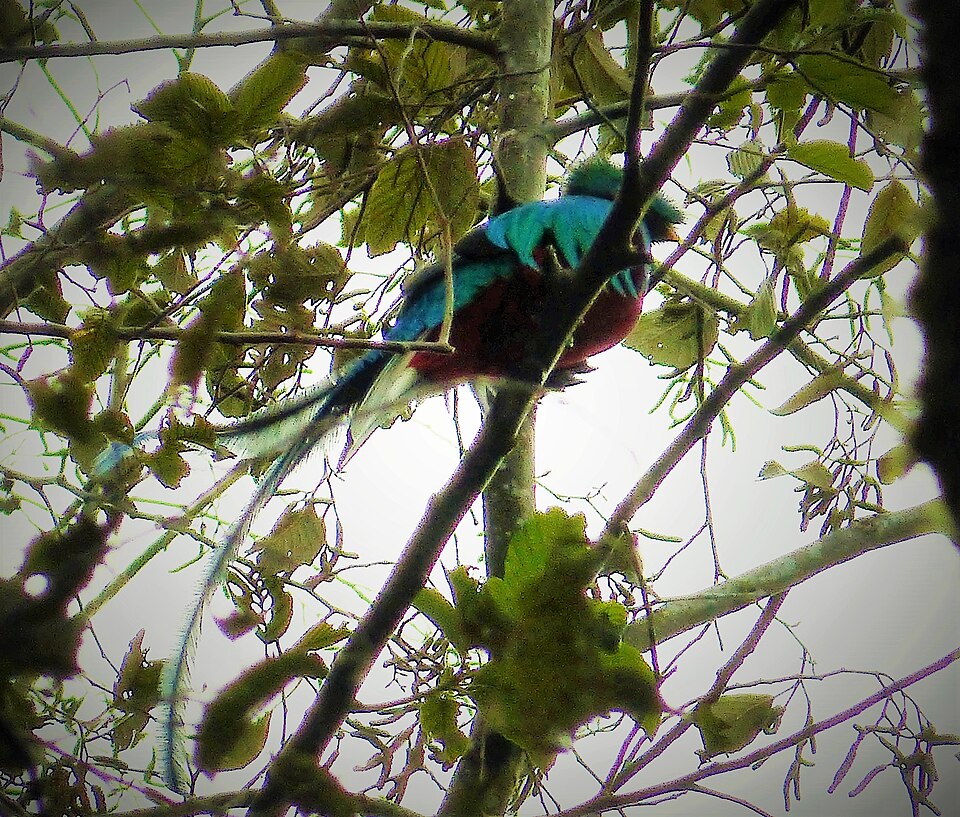
A guide in the Guatemalan highlands once told me that spotting a Resplendent Quetzal on your first try was supposed to mean good luck for the whole trip, and then looked almost embarrassed when I actually saw one twenty minutes later, its tail streamers trailing behind it like green ribbons in slow motion. Quick answer Quetzals are associated with freedom, divinity, and refusal to be caged, symbolism built directly on Mesoamerican reverence for the bird and on a real physiological fact: quetzals kept in captivity have historically died rather than adapt, which fed the legend that the bird cannot survive without liberty. A god’s feathers, a doomed cage To the Maya and Aztec, the quetzal was tied to Quetzalcoatl, the feathered serpent god, and its tail feathers were more valuable than gold, reserved for royalty and priests. Killing a quetzal was a capital offense in some Mesoamerican cultures; instead, the birds were caught, plucked of their long tail coverts, and released to regrow them. The biology behind the myth Those iridescent tail streamers aren’t true tail feathers but elongated upper tail coverts that can reach three times the bird’s body length, structural color rather than pigment, which is why they shift between emerald and gold depending on the light. Quetzals nest in old woodpecker holes in cloud forest trees and feed heavily on wild avocados, swallowing the fruit whole and regurgitating the pit, making them one of the forest’s more important seed dispersers. Putting it together The quetzal’s reputation as an uncageable symbol of freedom isn’t just poetic license. Modern aviculturists confirm the birds are notoriously difficult to keep in captivity, stressed by confinement in ways many other tropical birds are not.
Roller Meaning and Symbolism
A European Roller dropped from a wire like a stone, then pulled up at the last second in a flash of turquoise and chestnut, and I understood in that one second why “rolling” ended up as this bird’s entire name and reputation. The quick take Rollers are associated with dramatic reversal and showmanship, symbolism built directly on the bird’s tumbling, acrobatic courtship display, where the male climbs steeply and then plunges while rocking side to side, the literal roll the species is named for. A bird known for one move In parts of its range across Europe, Africa, and Asia, the Roller’s flashing blue plumage made it a striking, easily recognized presence in open country, and in some regional folk traditions its erratic tumbling flight was read as a kind of wild joy or unpredictability rarely attributed to birds that mostly just perch and wait. The biology behind the myth That rolling flight is a genuine, energetically costly display performed almost exclusively during breeding season, thought to demonstrate flight skill and fitness to a potential mate. Rollers hunt like shrikes in some ways, watching from an exposed perch and dropping onto insects and small reptiles, but their color rivals any tropical species despite living in comparatively plain temperate and savanna habitat. The bigger picture The Roller’s reputation for sudden, showy reversal isn’t metaphorical stretching — the display is a real, physically demanding acrobatic routine, and the bird’s name is one of the more literal in ornithology.
Seriema Meaning and Symbolism
Watching a Red-legged Seriema repeatedly slam a captured snake against the ground with sharp, deliberate strikes, I understood immediately why paleontologists studying this bird’s closest extinct relatives describe an entire lineage of flightless “terror birds” using almost exactly the same word: predatory. In short Seriemas are associated in parts of South America with fierce, focused predation, symbolism grounded in the bird’s real hunting technique and its scientifically significant relationship to an extinct group of giant flightless predatory birds. A living link to an extinct group of giants Seriemas are considered the closest living relatives of the extinct Phorusrhacidae, commonly called “terror birds,” a group of large flightless predators that dominated parts of South America for millions of years, making the much smaller modern seriema one of the best available windows into how those ancient predators may have hunted. A hunting technique built around repeated impact Seriemas kill snakes, lizards, and other prey by grabbing them in the bill and repeatedly slamming them against the ground or a rock, a technique that stuns or kills prey through blunt trauma rather than through any specialized venom or crushing bite, a genuinely primitive-looking hunting method for a bird still alive today. Where this leaves us The seriema’s fierce reputation is backed by a real evolutionary connection to some of the largest predatory birds that ever lived, and by hunting behavior that looks, in the wild, like a small-scale echo of exactly that ancient lineage.
Sunbird Meaning and Symbolism
A Malachite Sunbird flashed emerald and violet in a South African garden and vanished before I could get my camera up, which is more or less the entire sunbird experience distilled into ten seconds. The short answer Sunbirds are associated with joy, fleeting beauty, and vibrancy, symbolism drawn almost entirely from color rather than myth, since much of Africa and Asia treats the sunbird as a visual metaphor for happiness precisely because the iridescence is so hard to pin down or hold onto. Africa and Asia’s answer to the hummingbird Sunbirds fill roughly the ecological role hummingbirds fill in the Americas, feeding on nectar with long curved bills, though the two groups aren’t closely related and arrived at similar lifestyles independently. Because sunbirds mostly perch to feed rather than hover, and because their colors depend entirely on the angle of light, the same bird can look drab brown one moment and blazing metallic the next. The biology behind the myth That shifting color is structural, produced by microscopic feather layers that interfere with light rather than by pigment, the same mechanism behind hummingbird iridescence and peacock feathers. Sunbirds also pierce the base of long tubular flowers to steal nectar without pollinating, a behavior called nectar robbing that puts them in real ecological tension with the plants they feed on. Something to carry with you The sunbird’s symbolism of joy that flickers and disappears is almost literally true — the color itself only exists from certain angles, which may be the most honest metaphor for happiness any bird has ever accidentally provided.
Takahe Meaning and Symbolism
The Takahe was declared extinct for nearly fifty years before a small population was rediscovered in a remote New Zealand valley in 1948, a genuine back-from-the-dead story that still shapes almost everything the bird has come to represent. The quick take Takahes are a powerful national symbol of hope and conservation success in New Zealand, symbolism built directly on the bird’s documented rediscovery after being presumed extinct and the decades-long recovery effort that followed. A rediscovery that reads like a legend After the last confirmed sightings in the late 1890s, the Takahe was officially considered extinct until naturalist Geoffrey Orbell tracked down a surviving population in the isolated Murchison Mountains in 1948, a rediscovery significant enough that it remains one of the most celebrated conservation moments in New Zealand’s history. A recovery still actively in progress Since that rediscovery, intensive breeding programs, predator control, and habitat management have slowly grown the population from a few hundred birds to several hundred more spread across managed sanctuaries and a small number of wild sites, a genuine, ongoing recovery rather than a single dramatic rescue followed by neglect. The bigger picture The Takahe’s symbolism as a national emblem of hope rests on a documented, real historical event — a species written off as extinct that was found alive and has been actively, carefully brought back ever since.
Toucan Meaning and Symbolism
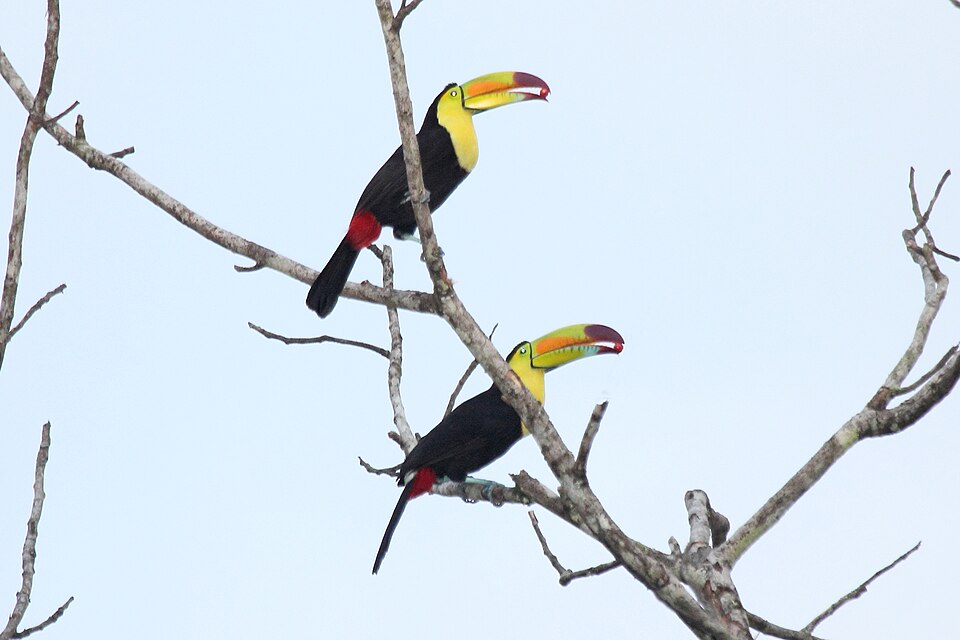
I always assumed a toucan’s bill had to be heavy given how enormous it looks relative to the rest of the bird, and it turns out that assumption is backwards enough to be one of the more genuinely surprising facts in ornithology — that huge bill is astonishingly light, and figuring out why explains most of what toucans have come to symbolize across the cultures that actually live alongside them. The quick take Toucans are associated with communication, resourcefulness, and vibrant vitality in various Central and South American Indigenous traditions, symbolism drawn largely from their oversized, colorful bill and its surprisingly practical, multi-purpose function. The bill is a temperature-regulation marvel, not just decoration A toucan’s bill, despite its enormous visual size (up to a third of the bird’s total body length in some species), is composed of a lightweight keratin sheath over a mostly hollow, bone-strut interior, making it remarkably light for its size. Research using thermal imaging has found that toucans use their bill as a highly effective radiator, adjusting blood flow to release excess body heat, particularly useful for cooling down after activity or during warm tropical days — making the bill function similarly to how an elephant uses its ears, just executed through an entirely different anatomical structure. A genuinely versatile tool, not just a display feature Beyond temperature regulation, the bill’s size and slight serration let toucans reach and pluck fruit from branches too thin or distant to approach directly, extending their effective reach considerably compared to a proportionally smaller-billed bird.
Umbrellabird Meaning and Symbolism
A Long-wattled Umbrellabird inflated a strange, dangling throat pouch and raised a crest that flopped forward over its bill like an actual umbrella, and I genuinely laughed out loud at how much the bird looked like it was wearing a costume rather than displaying real anatomy. Quick answer Umbrellabirds are associated with strangeness and theatrical courtship in the forests of Central and South America, symbolism built entirely around two genuinely bizarre physical features: an umbrella-like crest that shades the bill, and in some species, an elongated wattle used to amplify booming courtship calls. A bird built for one performance Local communities across the umbrellabird’s Amazonian and Central American range have long recognized the bird for its startling appearance and its deep, resonant call, a sound produced at leks where multiple males gather to display and compete for female attention, a courtship system shared with several other cotinga relatives but rarely this visually strange. The biology behind the myth That trailing wattle in the Long-wattled Umbrellabird is partially hollow and works as a resonating chamber, allowing the male to produce a startlingly deep, low-frequency boom for an animal of its size, audible over long distances through dense forest. The crest, meanwhile, is thought to serve both as a visual display structure and literal sun protection, an unusually practical secondary function for a feature this ornamental. Last thought The umbrellabird’s reputation as one of the strangest-looking birds in the Americas holds up to direct observation — between the resonating wattle and the built-in sunshade crest, very little about this bird’s appearance needed exaggeration to become memorable.
Whip-poor-will Meaning and Symbolism
Camping in the Appalachians as a kid, I remember lying awake listening to a whip-poor-will repeat its own name over and over from somewhere in the dark woods, sometimes more than a hundred times without a break, and understanding for the first time why older folk traditions treated the sound as something more than ordinary birdsong. The quick take Whip-poor-wills are associated in American folklore with omens of death and the supernatural, symbolism drawn from their eerie, relentlessly repetitive nighttime call and their near-total invisibility as a camouflaged, strictly nocturnal bird. A call almost too persistent to feel natural The whip-poor-will’s namesake call, a clear three-syllable phrase repeated over and over, sometimes hundreds of times in a single unbroken sequence, has a persistence that feels almost deliberate in a way most birdsong doesn’t, and older Appalachian and broader American folk traditions sometimes interpreted a whip-poor-will calling near a house as a sign that someone inside was about to die, with the bird supposedly capable of catching a departing soul. A bird built to be heard and never seen Whip-poor-wills are almost perfectly camouflaged against leaf litter and tree bark, sleep through the day, and hunt insects at night largely by sound and low-light vision, meaning the vast majority of people who’ve heard one calling from the darkness have never actually laid eyes on the bird responsible — a gap between sound and sight that folklore is always happy to fill in on its own terms. The bigger picture The whip-poor-will’s death-omen reputation comes from a genuinely unsettling combination: a call persistent and eerie enough to feel intentional, paired with a bird so well hidden that almost no one who hears it ever actually sees it.
Currawong Meaning and Symbolism
The first time a Pied Currawong’s call rang out across a Sydney park, a loud, ringing “curra-wong” that gave the bird its name, every smaller bird in the area went silent within seconds, which told me everything about the local pecking order. What it comes down to Currawongs are associated with dominance and seasonal change across eastern Australia, symbolism grounded in the bird’s real ecological role as a bold, opportunistic predator whose seasonal movement between highlands and coast Aboriginal communities used as a practical signal of shifting weather. A voice that changes the neighborhood In several Aboriginal traditions from southeastern Australia, currawong movements between mountain and lowland habitat were read as a genuinely useful indicator of coming seasonal change, tied to real, observable migration timed to food availability rather than abstract belief. European settlers, encountering the bird’s loud calls and glossy black plumage, folded it into a more generic folklore of ill omen common to many black-feathered birds worldwide. The biology behind the myth Currawongs are aggressive nest predators, taking eggs and nestlings from smaller birds, a real behavior that has made them a documented factor in some urban and suburban songbird declines as their populations boomed alongside human development. Their intelligence rivals other corvid-adjacent species, including some observed tool use and clearly opportunistic foraging around human settlements. What to make of it The currawong’s reputation as a dominant, disruptive presence in the local bird community isn’t folklore overreach — its expanding range and nest-predation habits are actively studied by Australian ecologists as a real pressure on smaller native species.
Fantail Meaning and Symbolism
A New Zealand Fantail followed me down a forest trail for a solid ten minutes, flitting from branch to branch just a few feet away, fanning its tail open and shut the entire time, and a local birder later told me this wasn’t unusual at all — the birds do this on purpose. At a glance Fantails are associated in Māori tradition with both curiosity and, more ominously, death, a dual symbolism grounded in the bird’s genuinely fearless habit of following people and large animals closely, a behavior with a real ecological explanation rather than any actual supernatural intent. A messenger with two meanings In Māori mythology, the piwakawaka (fantail) appears in the story of Māui’s fatal attempt to gain immortality, where the bird’s laughter is blamed for waking the goddess Hine-nui-te-pō and causing Māui’s death, which is part of why an indoor fantail sighting has traditionally been treated as an omen. At the same time, the bird’s habit of investigating people up close made it, in a completely different register, a folk symbol of cheerful curiosity. The biology behind the myth The fantail’s tendency to closely follow humans, and historically to follow larger animals, is real, opportunistic behavior — it’s chasing insects disturbed by the movement of a larger body through the undergrowth, not showing any particular interest in the person or animal itself. That same fan-shaped tail, spread constantly in flight, provides exceptional maneuverability for snatching insects out of the air in tight, fast turns. The takeaway The fantail’s two conflicting reputations, cheerful escort and death omen, both trace back to the same real behavior seen through different cultural lenses, a rare case where one documented habit generated opposite folklore rather than one myth needing a biological explanation.
Lyrebird Meaning and Symbolism
The first time I heard an audio recording of a Superb Lyrebird perfectly reproducing a camera shutter, a car alarm, and another bird’s call in the space of about thirty seconds, I assumed it was an edited compilation. It wasn’t — that’s just what the bird does. Quick answer Lyrebirds are associated in Australian culture with mimicry, artistry, and even deception, symbolism built directly on documented vocal mimicry abilities considered among the most sophisticated found in any animal. An imitator without a real limit Superb Lyrebirds have been recorded accurately reproducing the calls of dozens of other bird species, chainsaws, camera shutters, car alarms, and construction equipment, incorporating these sounds into elaborate courtship displays performed atop a specially built mound while fanning an ornate, lyre-shaped tail, a combination of visual display and vocal mimicry that researchers consider one of the most complex in the animal kingdom. A tail that gave the bird its name and its symbolism The male’s tail, fanned forward and shimmering during display, resembles the ancient Greek lyre closely enough to give the species its common name, and that pairing of an ornate visual instrument with virtuoso vocal mimicry has made the lyrebird a recurring symbol of artistry and performance in Australian art and design, appearing on currency and in numerous nature documentaries built specifically around the bird’s vocal range. The bigger picture The lyrebird’s reputation as nature’s ultimate mimic and performer rests on documented recordings, not exaggeration — a bird genuinely capable of reproducing almost any sound in its environment, delivered from beneath a tail built like an instrument.
Bellbird Meaning and Symbolism
Captain Cook’s crew reportedly described the dawn chorus of New Zealand Bellbirds and Tuis together as sounding like the pealing of distant, perfectly tuned bells, a comparison that has stuck to the Bellbird specifically ever since and still shapes how the bird gets talked about today. What it comes down to Bellbirds are associated in New Zealand with clarity, purity of sound, and an almost otherworldly musicality, symbolism built entirely around a genuinely bell-like, resonant song documented by some of the earliest European visitors to the country. A sound that impressed even sailors used to silence at sea Historical journal accounts from early European voyages describe the combined dawn chorus of Bellbirds and Tuis in terms usually reserved for musical instruments rather than birdsong, a reaction that says as much about the song’s genuine tonal clarity as it does about how rare that kind of layered natural sound was for sailors who’d spent months at sea. A population that collapsed and partly recovered Bellbirds disappeared entirely from parts of the North Island in the nineteenth and early twentieth centuries, likely due to introduced predators and disease, before slowly recovering in many areas over the past century, meaning the bird’s clear, bell-toned song has itself gone through a documented period of near-silence followed by a genuine partial return. What to make of it The Bellbird’s reputation for musical purity isn’t a modern romanticization — it’s a description that’s held up consistently from eighteenth-century ship’s logs to present-day birding guides, applied to a song that really does sound like tuned bells.
Tui Meaning and Symbolism
A Tui once sang from a flowering flax bush in a Wellington garden for nearly ten minutes straight, cycling through what sounded like a dozen completely unrelated sounds, wheezes, clicks, bell-like notes, and phrases that seemed to be genuine imitations, and I realized afterward that “unrelated” was actually the entire point. The short answer Tuis are treated across New Zealand as a cherished, quintessentially native bird and something close to an unofficial cultural mascot, symbolism built on a genuinely unusual song structure and on the bird’s status as one of the country’s most visible and vocal native honeyeaters. A song built from two voice boxes Tuis produce their extraordinary vocal range partly because, like many songbirds, they have a syrinx capable of generating two independent sounds simultaneously, but the Tui pushes this further than most, mixing bell-like tones, mechanical clicks, and wheezy notes into a single erratic performance, with some individuals also mimicking other birds and even human-made sounds. A white throat tuft doing double duty The small tuft of curled white feathers at the Tui’s throat, which gave the bird its old nickname “parson bird” for its resemblance to a clergyman’s collar, sits above iridescent blue-green-black plumage that only reveals its color in direct light, making the bird look almost entirely black from most angles and genuinely striking from others. Something to carry with you The Tui’s beloved status in New Zealand rests on real vocal complexity, a bird capable of producing genuinely strange, non-repeating sound sequences that make it instantly recognizable the moment it starts singing.
Sources
Species identification and behavior details are cross-checked against the Cornell Lab of Ornithology’s All About Birds, the National Audubon Society, and eBird.


