23 Types Of BIRDS OF PREY In Georgia (ID Guide With Photos)
A neighbor in Georgia once asked me about a bird of prey she’d seen at her feeder, and it turned into a longer conversation than either of us expected — here’s the short version.
Identifying raptors in the Peach State is not as easy as it might seem, since there are many birds of prey that regularly occur in Georgia.
To help you identify the bird you saw, we’ll cover the most common birds of prey of Georgia in this article.
What are the types of birds of prey in Georgia?
The 23 types of birds of prey found in Georgia are:
- Red-tailed Hawk
- Sharp-shinned Hawk
- Cooper’s Hawk
- Red-shouldered Hawk
- Broad-winged Hawk
- Northern Harrier
- Swallow-tailed Kite
- Mississippi Kite
- Bald Eagle
- Golden Eagle
- Osprey
- American Kestrel
- Peregrine Falcon
- Merlin
- Turkey Vulture
- Black Vulture
- Great Horned Owl
- Barn Owl
- Long-eared Owl
- Short-eared Owl
- Barred Owl
- Eastern Screech-owl
- Northern Saw-whet Owl
Note that this list includes both diurnal birds of prey (hawks, eagles, falcons, harriers, and vultures), as well as nocturnal birds of prey (owls).
While many of these birds of prey are found all year in Georgia, a number of them only occur in the state only during the breeding season in summer.
Yet other raptor species are winter visitors to Georgia, and a few are vagrants that only rarely occur in the state.
Now let’s dive into the details, and take a closer look at each of these raptors in Georgia:
Hawks
Red-tailed Hawk
Scientific name: Buteo jamaicensis
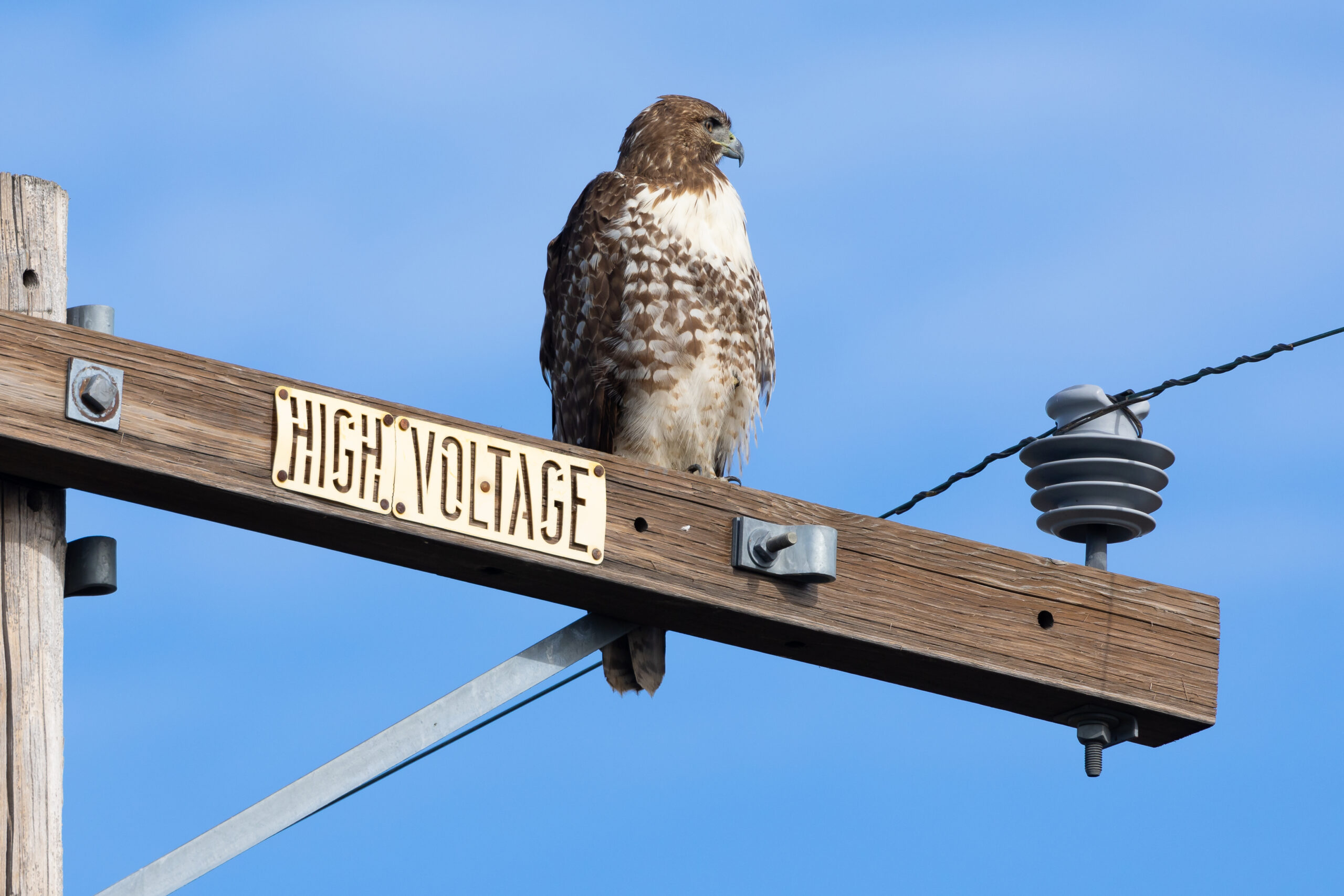
With a wingspan of up to 52 in (4.5 ft), the Red-tailed Hawk is one of the larger species of hawks in Georgia.
It has variable coloration, ranging from dark brown to almost entirely white, but can be readily recognized by its rusty red tail.
This large hawk is common in open grassland and also in cities. It is most often seen perched on roadside posts or fences, waiting for prey.
The Red-tailed Hawk is a common bird in Georgia, and this hawk can be found year-round throughout the Peach State.
This bird of prey feeds on rodents and other small animals that it catches by swooping down from its perch when they venture out into the open.
Sharp-Shinned Hawk
Scientific name: Accipiter striatus
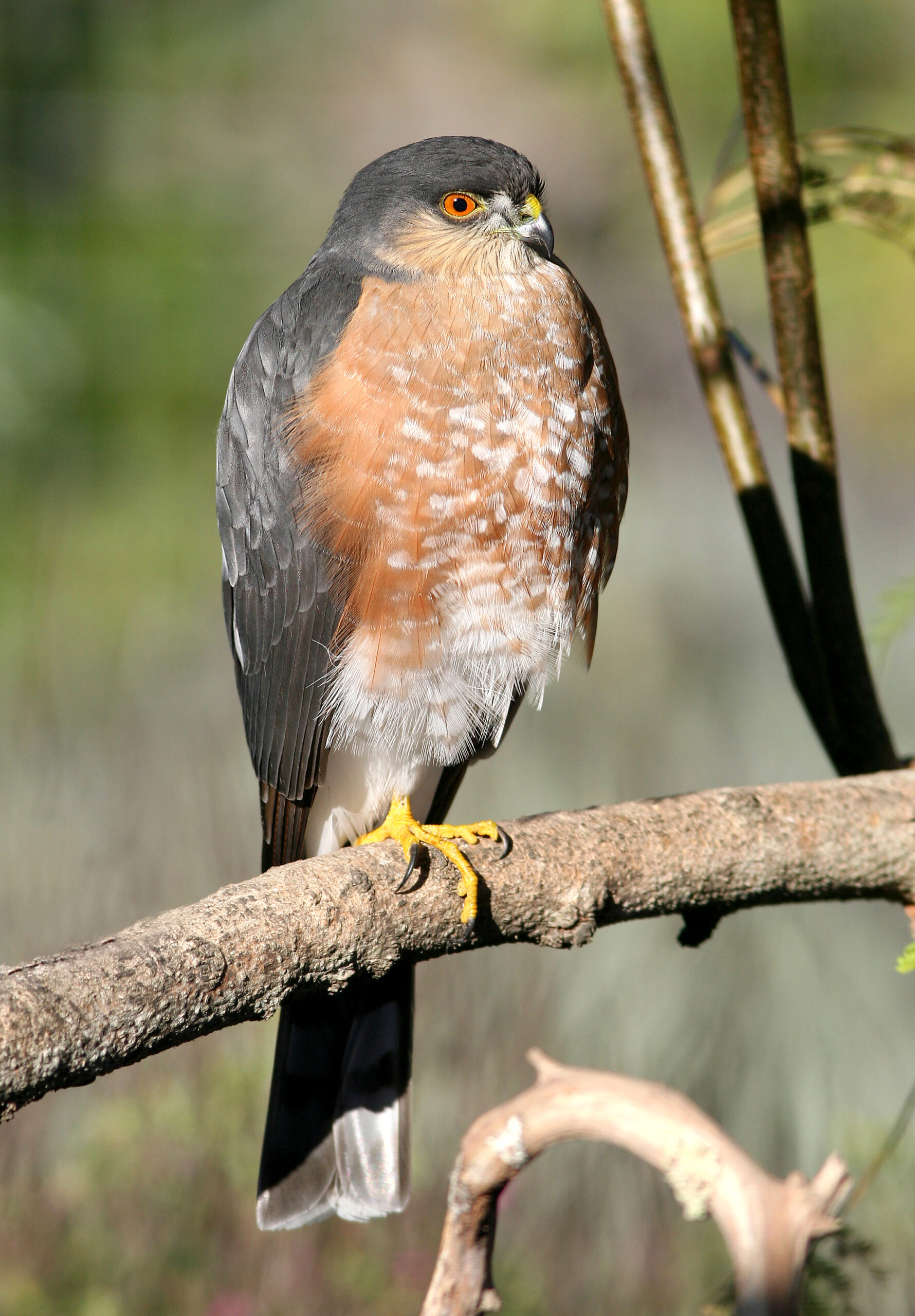
From the largest to the smallest hawk on the list, the sharp-shinned hawk is most commonly seen stalking song birds, making them a regular sight in backyards in the state.
With blue-gray wings and back, and with orange feather patterns on their chests, these hawks are recognizable by their small size, agility, and long tail.
Sharp-Shinned Hawks are breeding birds in northernmost Georgia, and during winter they are joined by individuals that migrate south from Canada, which can be seen all over the state.
Cooper’s Hawk
Scientific name: Accipiter cooperii
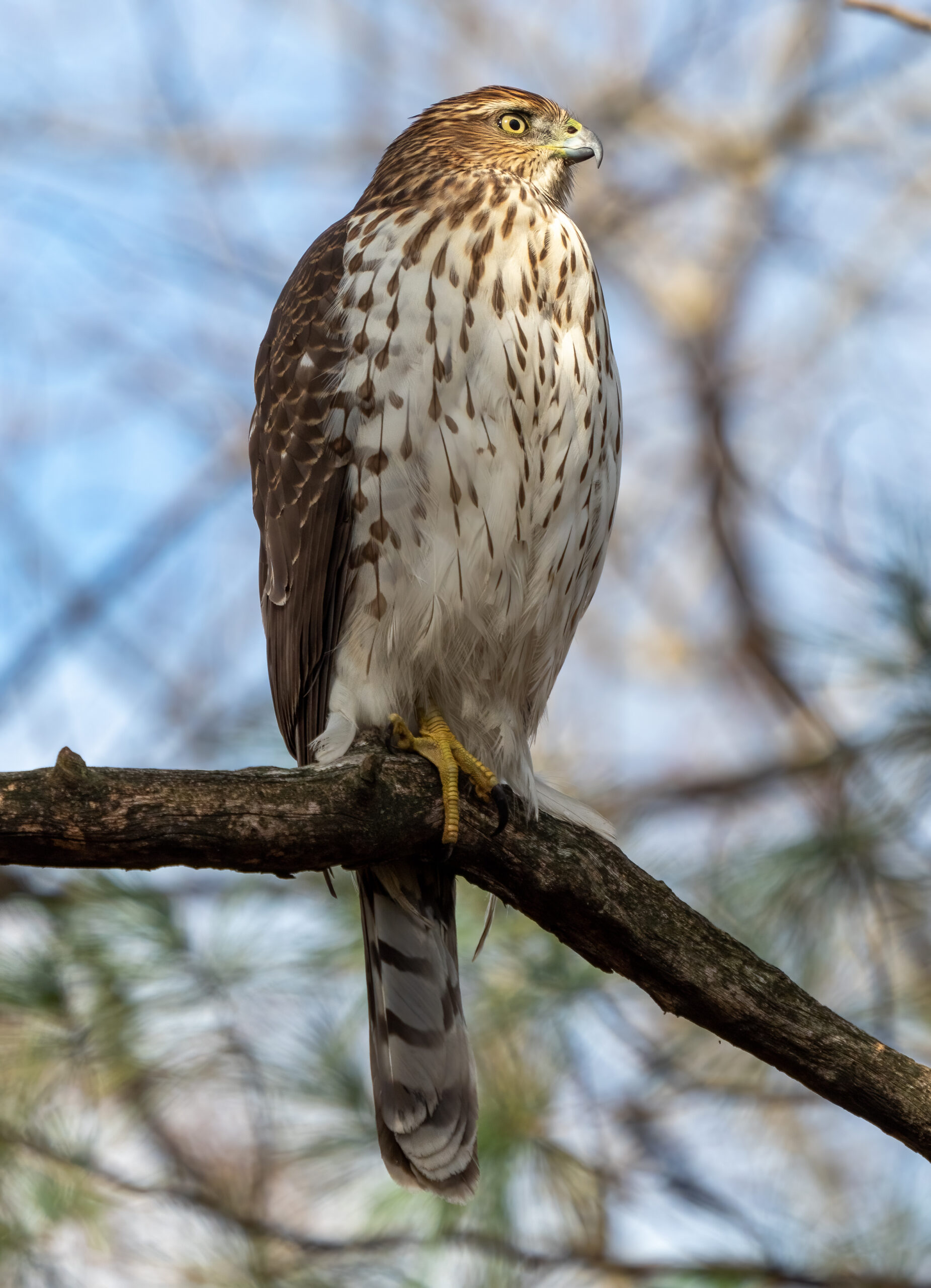
This little Georgia hawk is agile and skillful when it comes to catching small birds in flight. Sometimes it will even take species that are larger than itself.
Male Cooper’s Hawks have reddish-orange bars on their underside, while their upperparts are grayish-blue. The piercing eyes are vermillion red.
You’re most likely to notice the orange coloration on the chest and underside of a Cooper’s Hawk if you can observe it perched on a branch.
The long banded tail and small, rounded wings of the Cooper’s Hawk make it possible for this bird of prey to perform sharp turns and quick maneuvers in the thick foliage of dense forests and shrubs.
While Cooper’s Hawks were originally shy woodland raptors, they are now commonly found in urban areas such as Atlanta and Savannah, where they hunt doves and songbirds.
It is not unusual for a Cooper’s Hawk to show up around bird feeders, where it tries to surprise and ambush feeding songbirds with a lightning fast dash from a hidden perch.
It is a summer visitor in the northern parts of Georgia, but it can be found year-round in southern Georgia.
Red-shouldered Hawk
Scientific name: Buteo lineatus
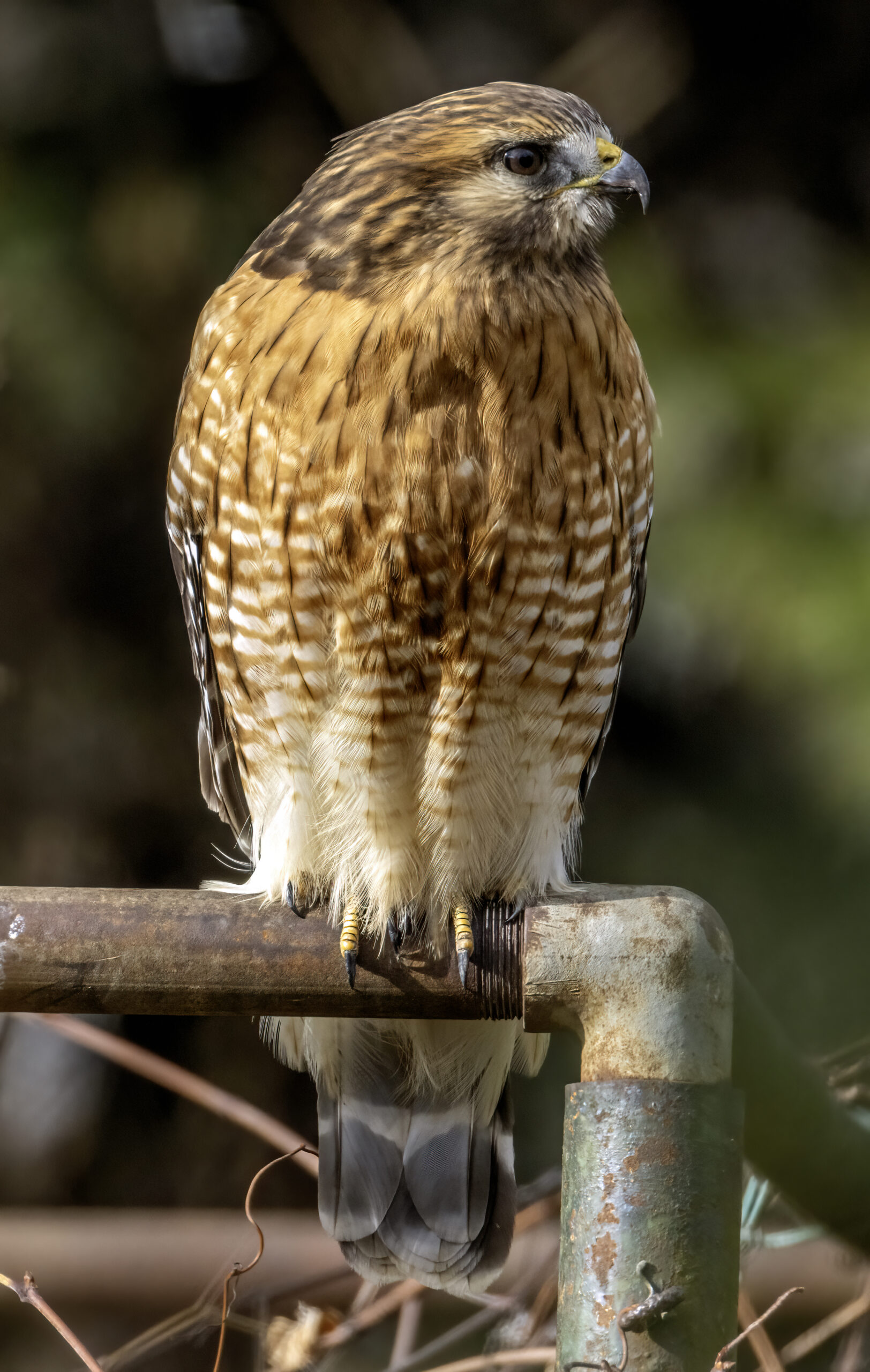
The Red-shouldered Hawk has two distinct populations – one in the eastern US, and another in California and Mexico.
The two populations are separated by more than 1000 miles, and thus rarely mix.
In Georgia the Red-shouldered Hawk is found in lowland forests throughout the state. It favors mature woods interspersed with water.
The northern Georgia population of the Red-shouldered Hawk is migratory, while the southern population is non-migratory.
In fact, adult hawks stay in their nesting territories all year round in south Georgia.
Broad-winged Hawk
Scientific name: Buteo platypterus
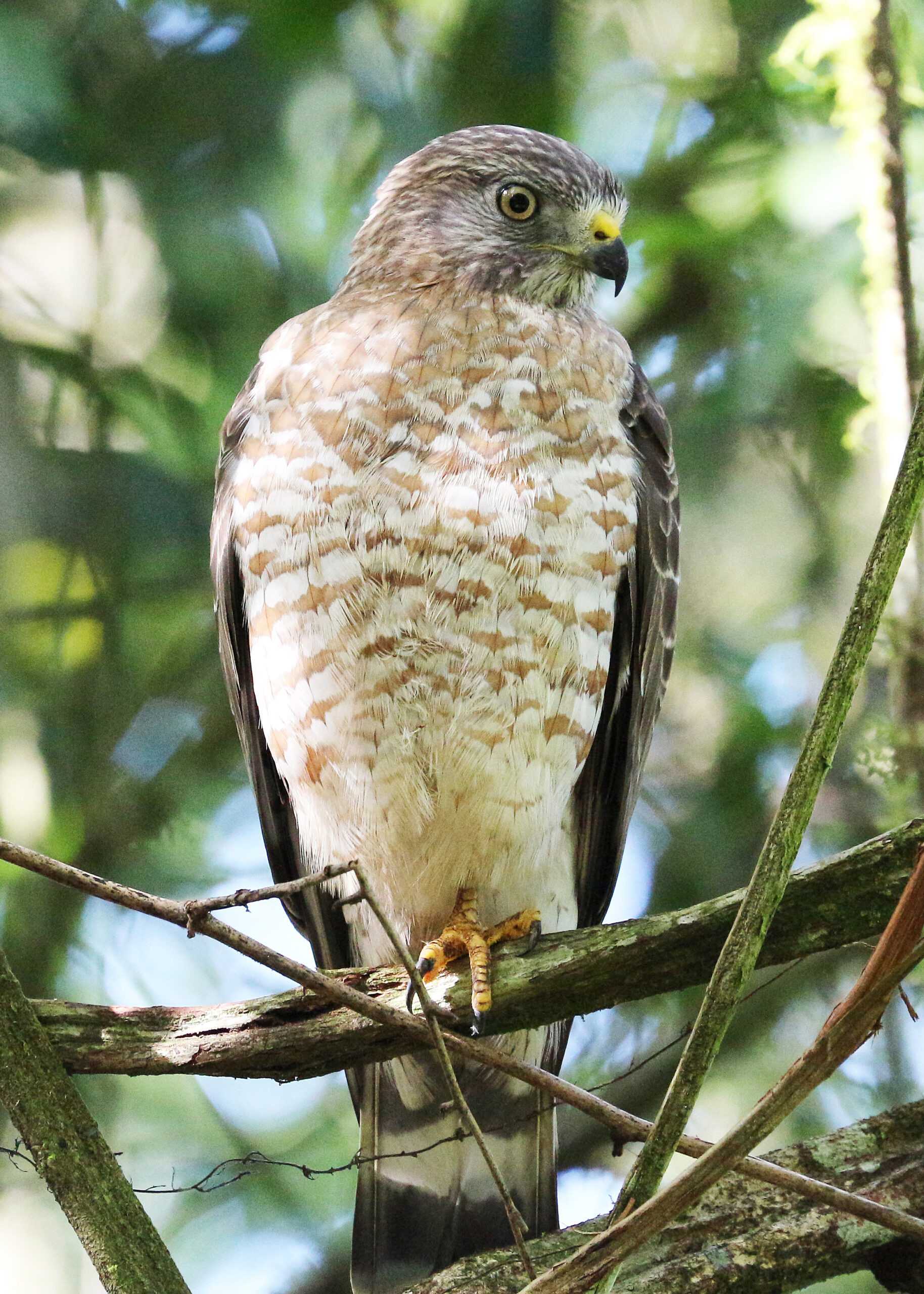
The Broad-winged Hawk is a long distance migratory species that spends the winter in South America.
During fall migration, it’s not uncommon to see flocks (also known as “kettles”) of Broad-winged Hawks soaring together to take advantage of thermal currents on their way south.
The Broad-winged Hawk is a common breeding bird throughout Georgia.
The preferred habitats of these medium-sized birds are extended forests, where the best way to detect them is by listening to their whistling call.
Harriers
Northern Harrier
Scientific name: Circus hudsonius
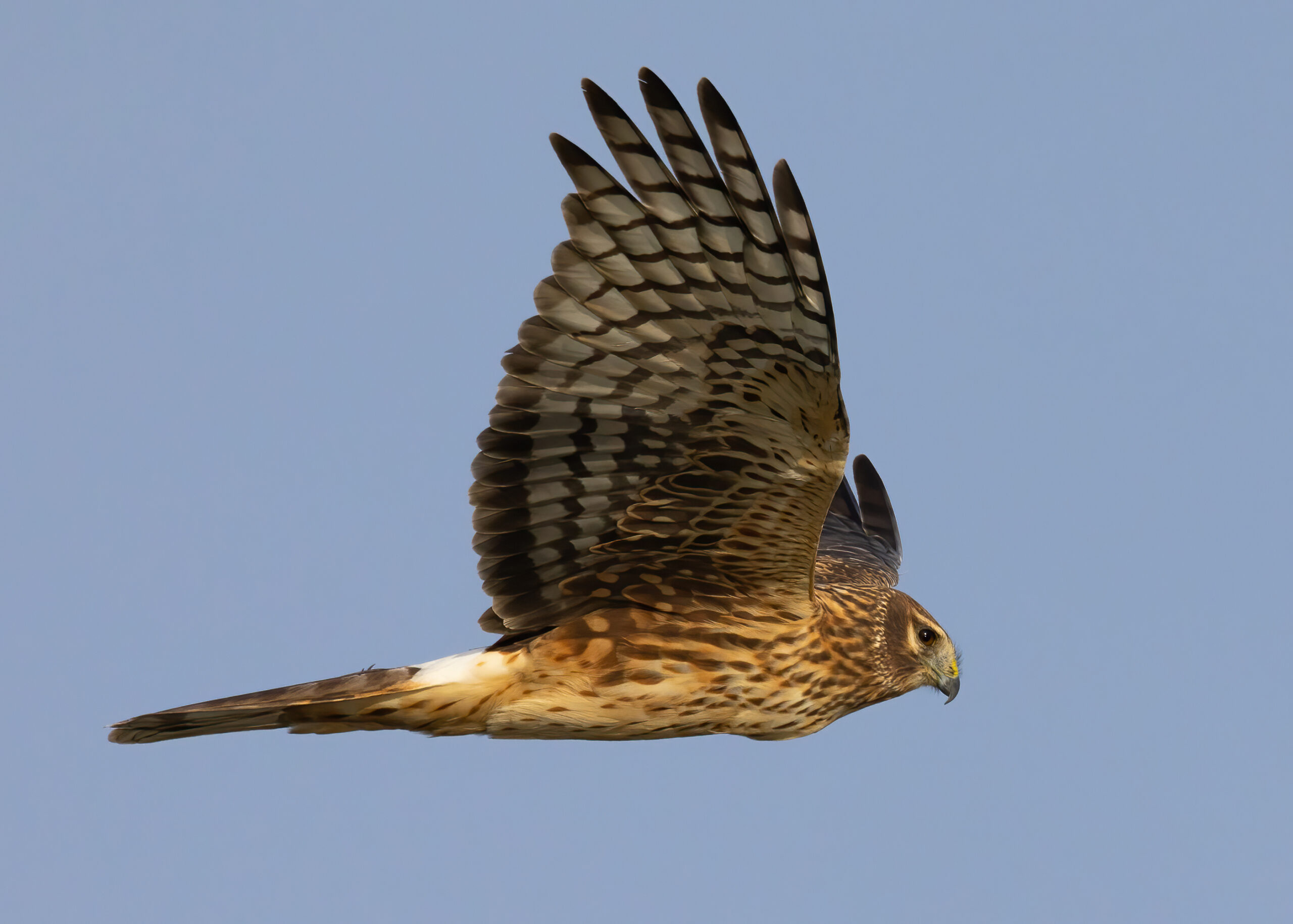
The Northern Harrier has its breeding grounds in the northern parts of North America, but spends the winter in the southern USA and Central America.
This harrier is a regular winter bird in Georgia from October through April, and frequents open grassland and marshes as its habitat of choice.
Harriers are easily identified by their behavior. Their foraging tactic is to fly slowly close to the ground, in order to pounce on any rodent caught in the open outside its burrow.
Kites
Swallow-tailed Kite
Scientific name: Elanoides forficatus
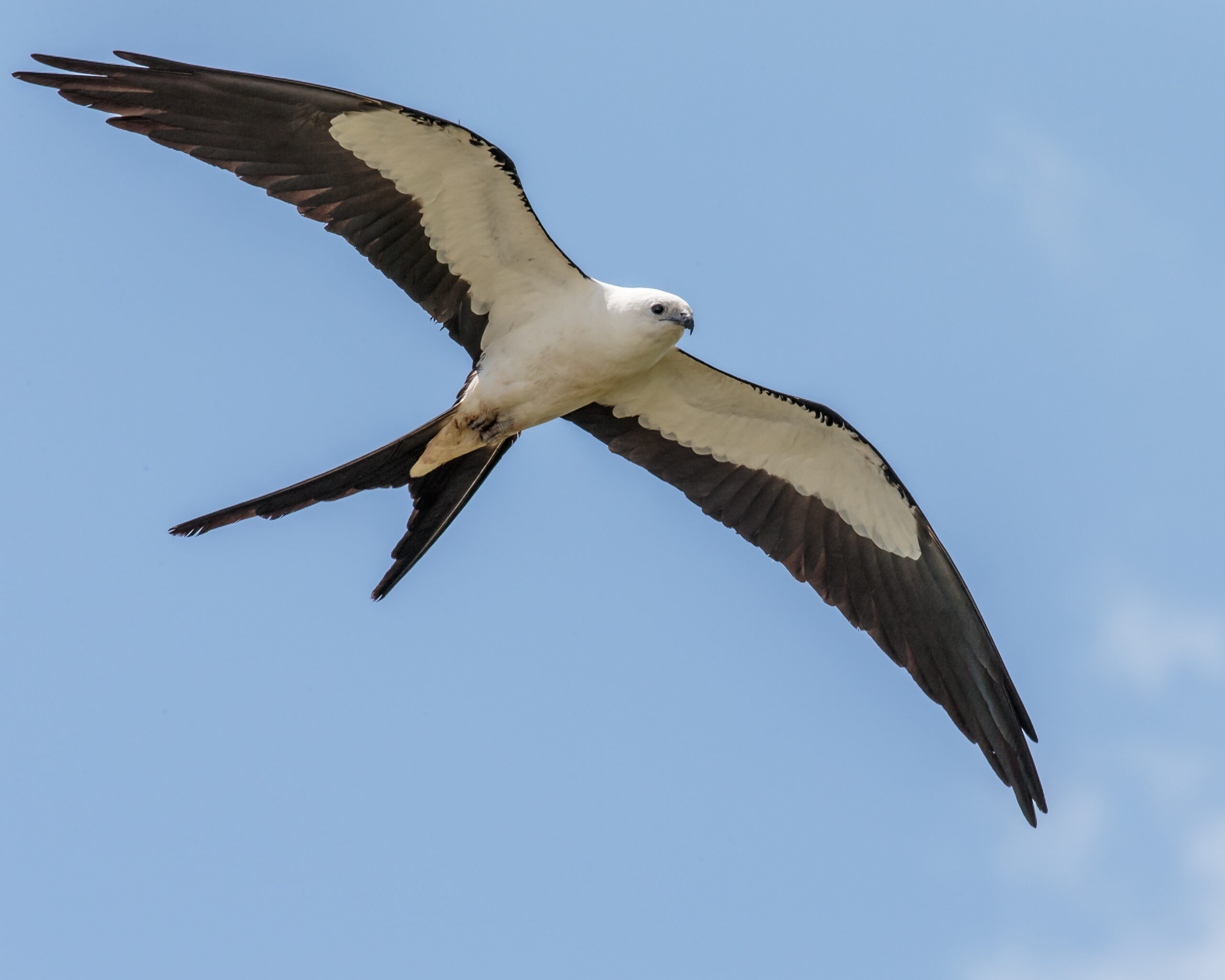
The Swallow-tailed Kite is a rare breeding bird in southern Georgia, and the local population of these elegant Georgia raptors is estimated to be about 200 nesting pairs.
This impressive bird of prey is easy to identify in flight, due to the combination of its bright white underparts with its deeply forked tail.
The rear margins of the wings and the tail are black. When perched on a tree, its white head and chest contrast with the dark grayish black upperside.
Similar to other kites, this bird is a skilled aerial hunter and capable of catching insects in flight. Its preferred food are small snakes, lizards, rodents, and insects.
This beautiful raptor migrates south to Central and South America to spend the winter.
Mississippi Kite
Scientific name: Ictinia mississippiensis
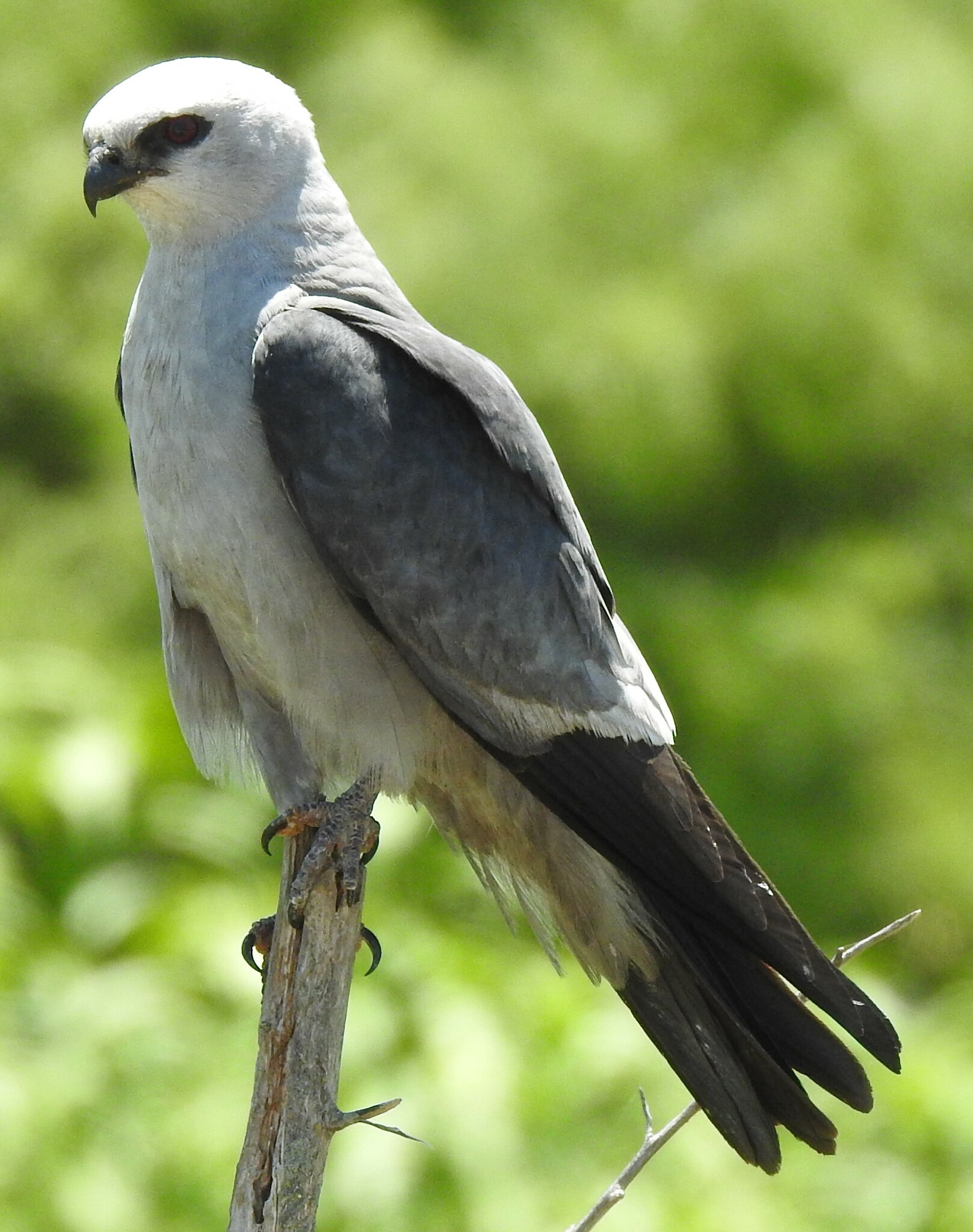
The Mississippi Kite is a sleek raptor with pointed wings resembling those of a falcon. It is a skilled aerial hunter that often hovers and then swoops down to catch flying insects on the wing.
It is a breeding bird in southern Georgia, where it can be seen between April and September.
This kite is a social bird, and several pairs can often be encountered nesting together in small colonies, and can also be seen foraging together.
It’s preferred habitat are wet woodlands, as well as urban habitats such as golf courses or playing fields.
Eagles
Bald Eagle
Scientific name: Haliaeetus leucocephalus
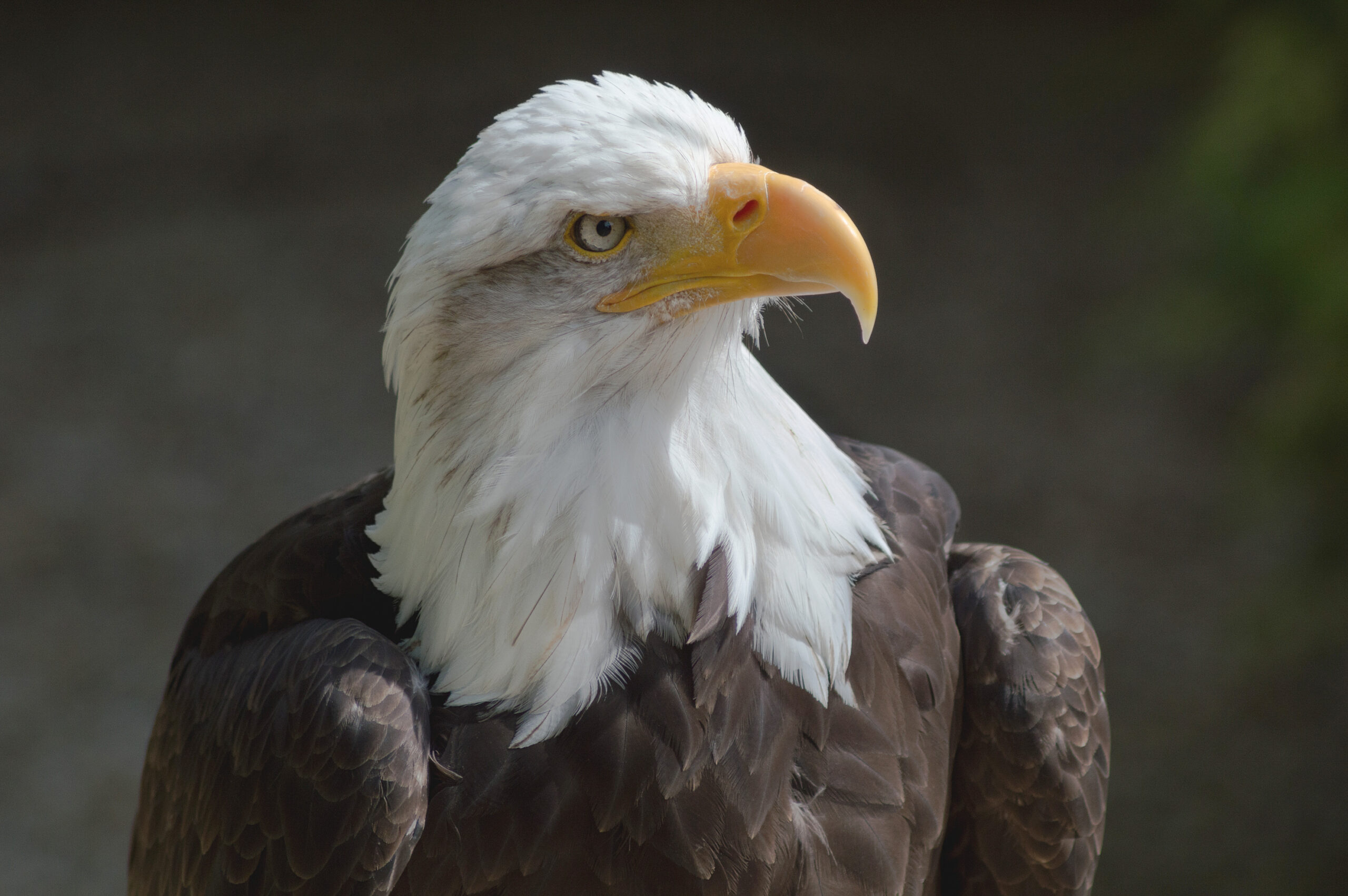
With a wingspan of up to 8 feet, the Bald Eagle is a very large raptor in the Peach State, and this eagle is impossible to miss if you spot it soaring overhead.
Apart from its size, the Bald Eagle is also one of the most easily recognizable birds in Georgia, due to its white head and tail, which contrast sharply with the uniformly dark brown body.
Juvenile Bald Eagles are dark brown all over, with light irregular streaks all over the body, as well as a buff white belly.
This huge bird of prey breeds near large bodies of water in southern Georgia, and also winters throughout the state outside of the breeding season.
Bald Eagles spend a lot of their time soaring on thermal currents with their wings held flat. They eat small mammals, fish, and birds, although a big part of their diet consists of carrion.
Golden Eagle
Scientific name: Aquila chrysaetos
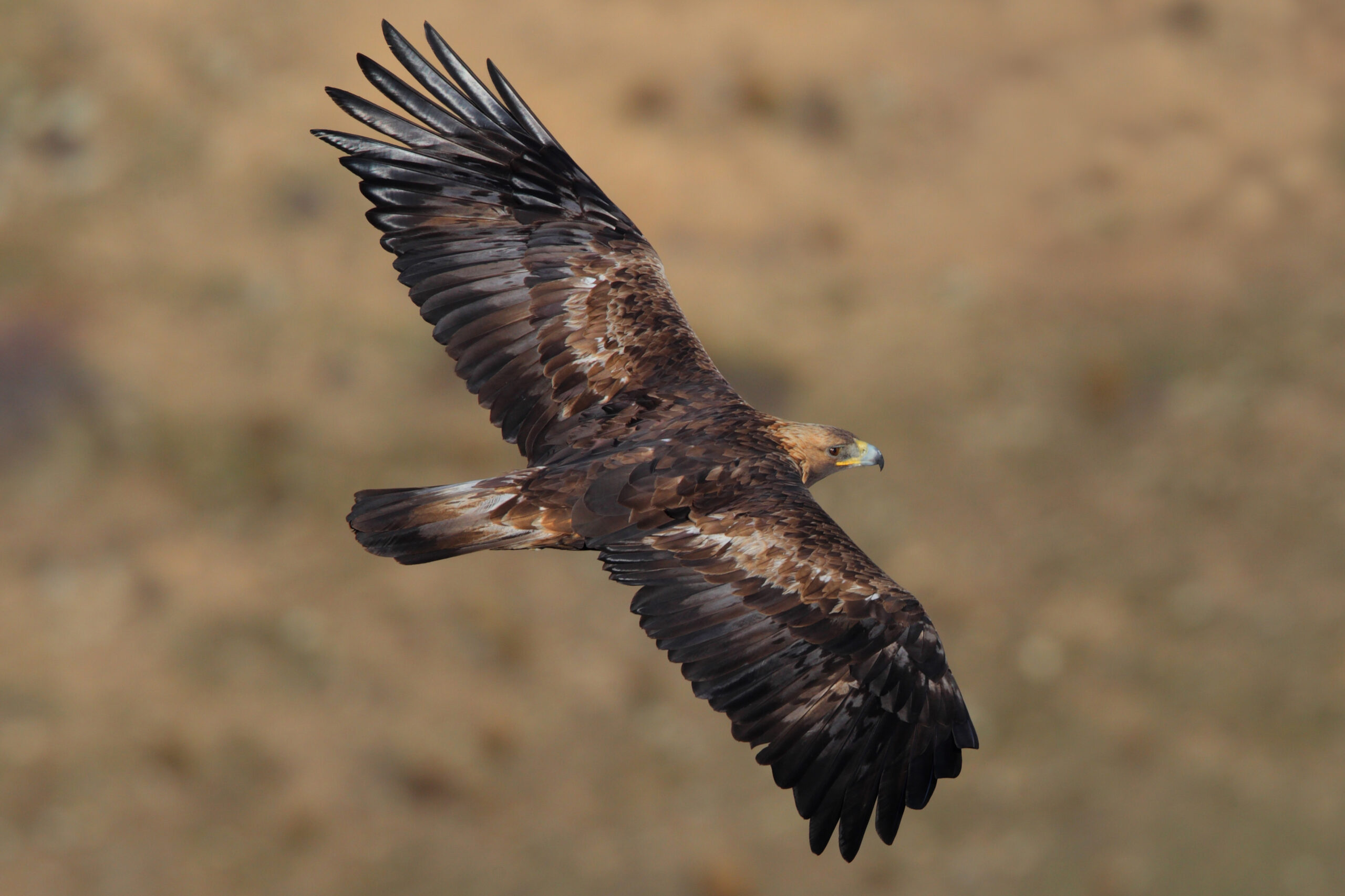
The Golden Eagle is one the most impressive eagle species in North America, and is a breeding bird in the western states of the USA.
In Georgia state, the Golden Eagle is a rare visitor that can be seen outside of the breeding season.
Golden Eagles can be distinguished from Bald Eagles by their lack of white coloration on their heads.
The Golden Eagle is one of several circumglobal raptor species, and can be found in both the New World and the Old World.
Osprey
Scientific name: Pandion haliaetus
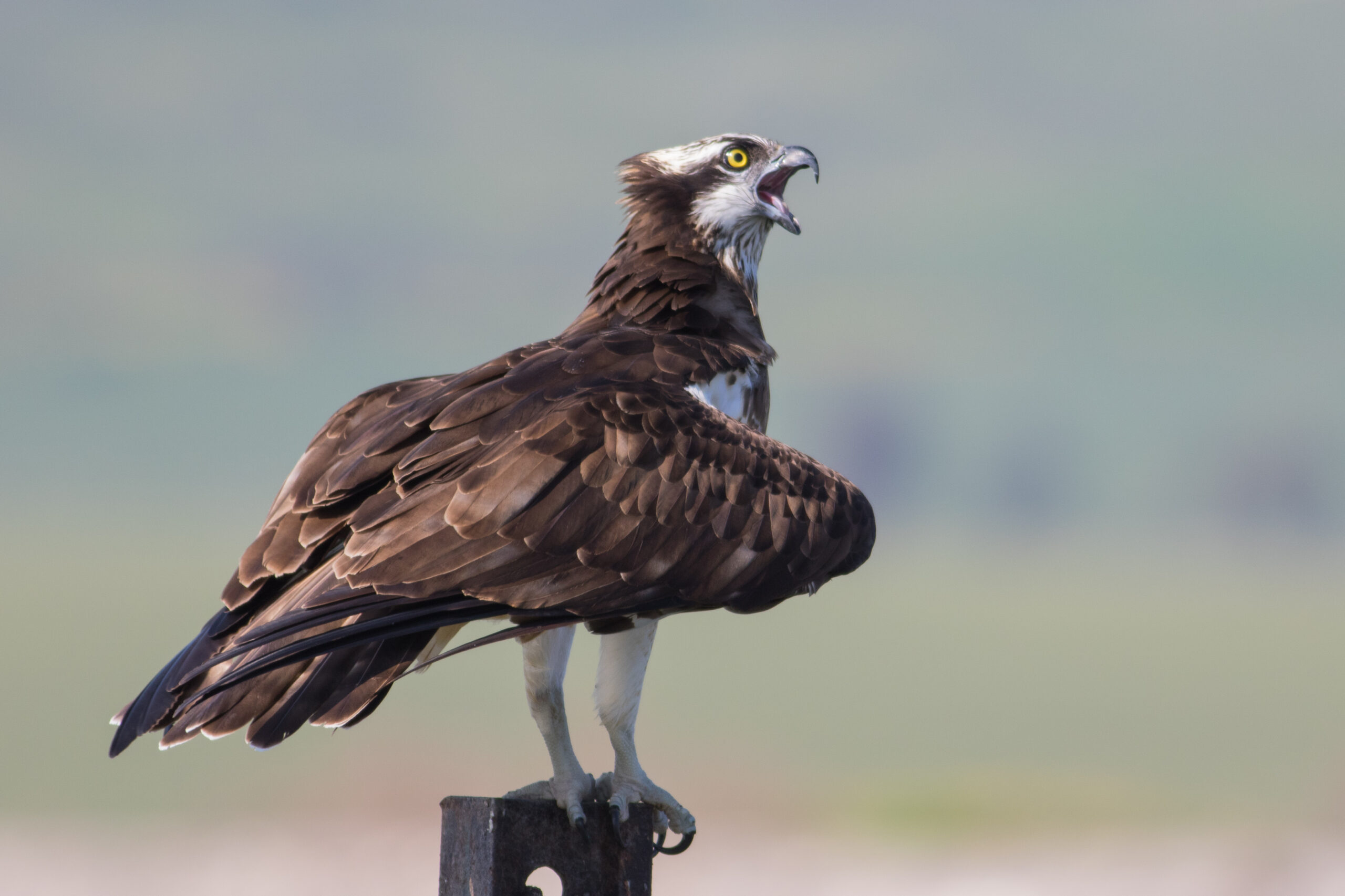
While the Osprey is technically not an eagle, it has a wingspan of up to 69 in (5.5 ft), and resembles an eagle in size.
It is usually easy to identify the Osprey due white belly and chest, which contrast with its blackish gray upperparts and black wrist patches on its lower wings.
This large Georgia bird is the only bird of prey species that plunges into water in order to catch fish, often becoming entirely submerged as it attempts to grab a fish with its feet.
Due to their style of hunting, Ospreys are almost always found close to a body of water, except during migration, when they will cross areas without water.
The Osprey is a regular breeding bird in Georgia, where it can be seen from April through late September. It is most common along the shores of lakes in Georgia, and along the coast it nests on channel markers, dead snags, and barrier islands such as Cumberland Island and the Altamaha River delta.
Falcons
American Kestrel
Scientific name: Falco sparverius
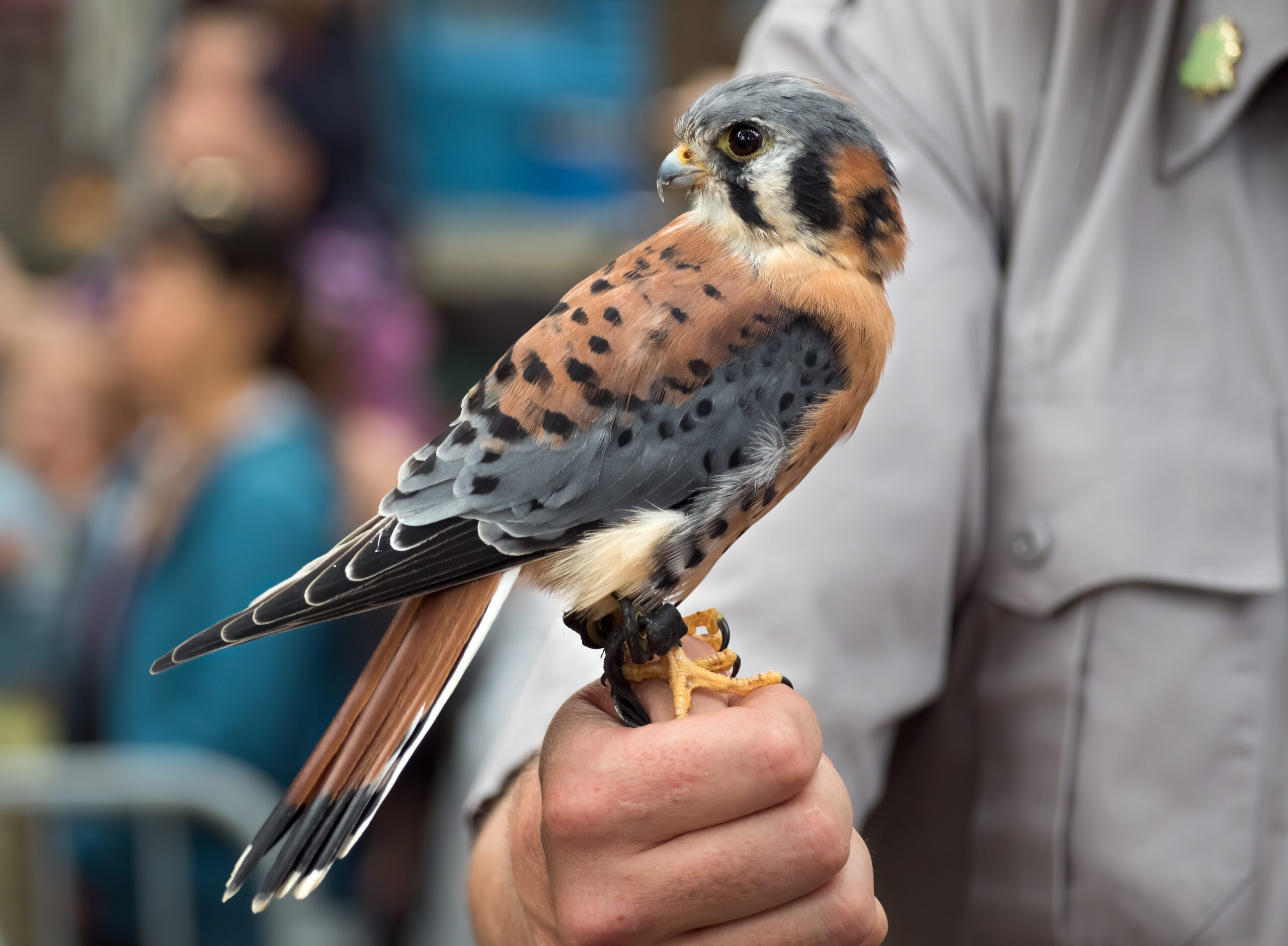
The American Kestrel is not only the smallest falcon in North America, but also one of the most common raptors.
Male American Kestrels are very colorful, and sport rufous orange upperparts and and tail, as well as blue gray wings with dark pointed tips.
The male also has a reddish orange cap on its crown, as well as a dark mustache and dark bar behind the eye.
Female American Kestrels are more pale in their coloration, but also have rufous orange upperparts.
When foraging for food, it likes to hover over open fields and meadows, or to hunt small animals from a perch such as a telephone pole or tree branch.
After it spots a rodent or other small animal, the American Kestrel dives down to grab it with its talons.
The most commonly taken prey during the spring and summer months are insects and worms, while rodents and small birds predominate during the colder months.
It likes to nest in abandoned Woodpecker holes, as well as crevices in buildings. Also accepts nesting boxes installed by humans.
The American Kestrel is a migratory raptor in the northern parts of its range, while it is a year-round resident in more southern parts. In Georgia, it is a summer visitor.
Peregrine Falcon
Scientific name: Falco peregrinus
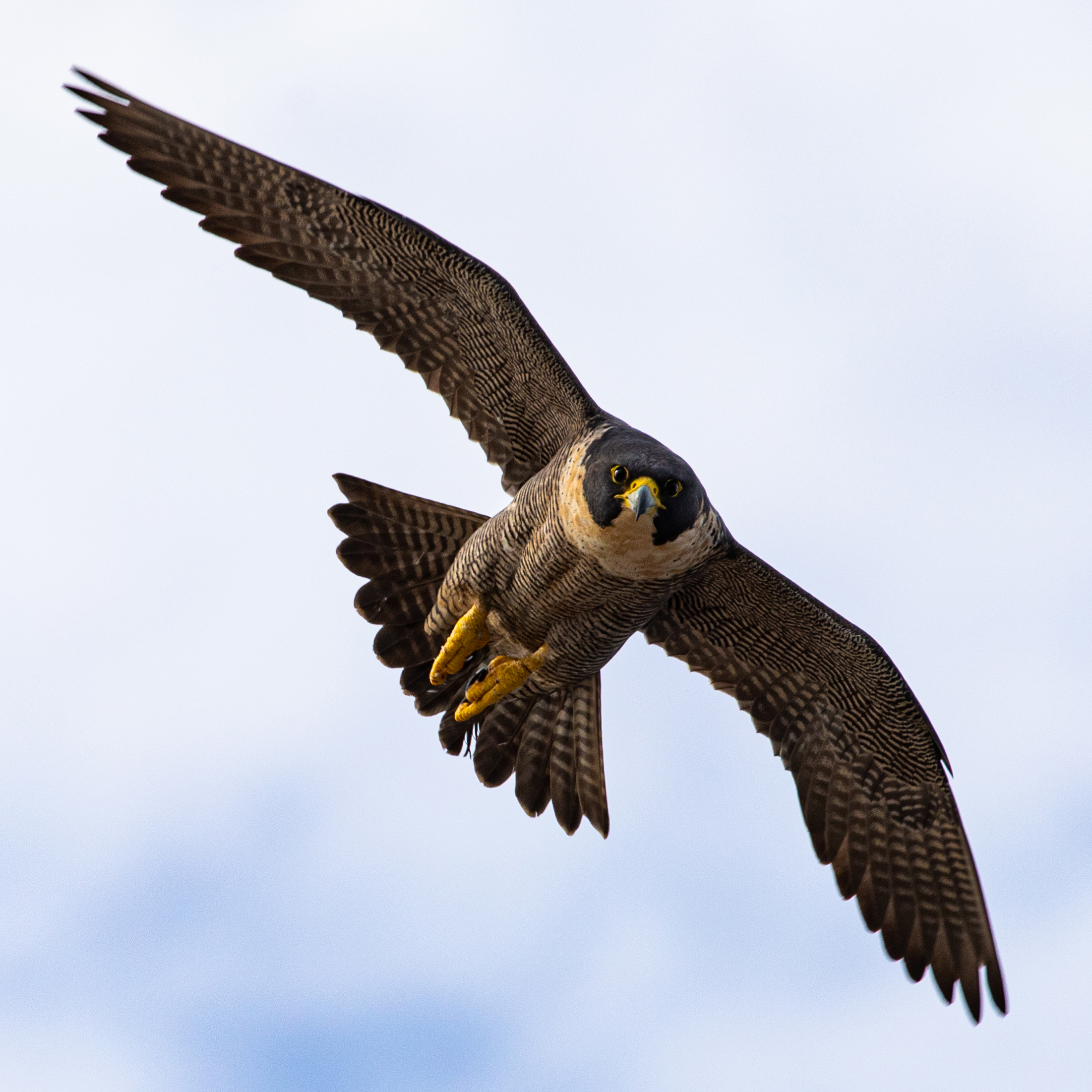
The Peregrine Falcon is the fastest animal in the world. Unbelievably, this falcon can dive from the sky at speeds reaching more than 200 mph.
This makes it perhaps the most accomplished Georgia bird of prey on this list. However, unlike other raptors, Peregrine Falcons feed almost exclusively on birds.
This dietary preference made them highly susceptible to the eggshell-thinning effects of the pesticide DDT, leading to a catastrophic population decline of peregrines in the 1960s and 70s.
But since DDT was made illegal, the Peregrine Falcon population has recovered from its previous decline, and this beautiful raptor is once again a regular sight in Georgia, especially in the eastern parts.
Merlin
Scientific name: Falco columbarius
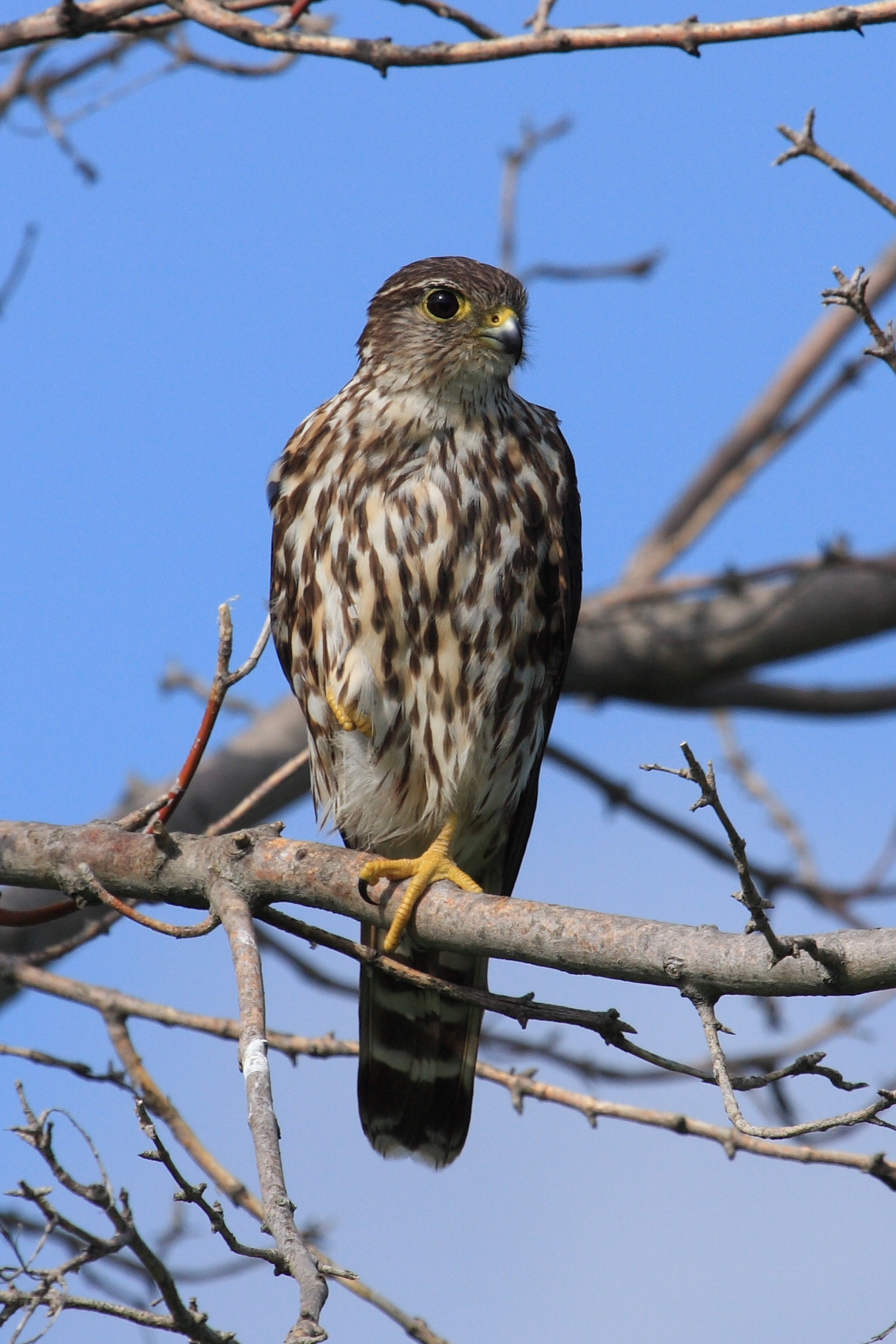
The Merlin is a breeding bird of the far north, where it is most common in Canada and Alaska, as well as a few locations in northern US states.
However, it is a highly migratory species, and regularly occurs in southern Georgia during the winter months.
The Merlin is a tiny falcon that is similar in size to a sharp-shinned hawk, and is most often seen flying at low altitude over open ground as it tries to flush out small birds.
The preferred winter habitat of Merlins is open areas that are adjacent to water, such as seashores, tidal flats, rivers, and lakeshores.
The Merlin is increasingly becoming adapted to urban habitats, and is also encountered in city parks, golf courses, and cemeteries.
Vultures
Turkey Vulture
Scientific name: Cathartes aura
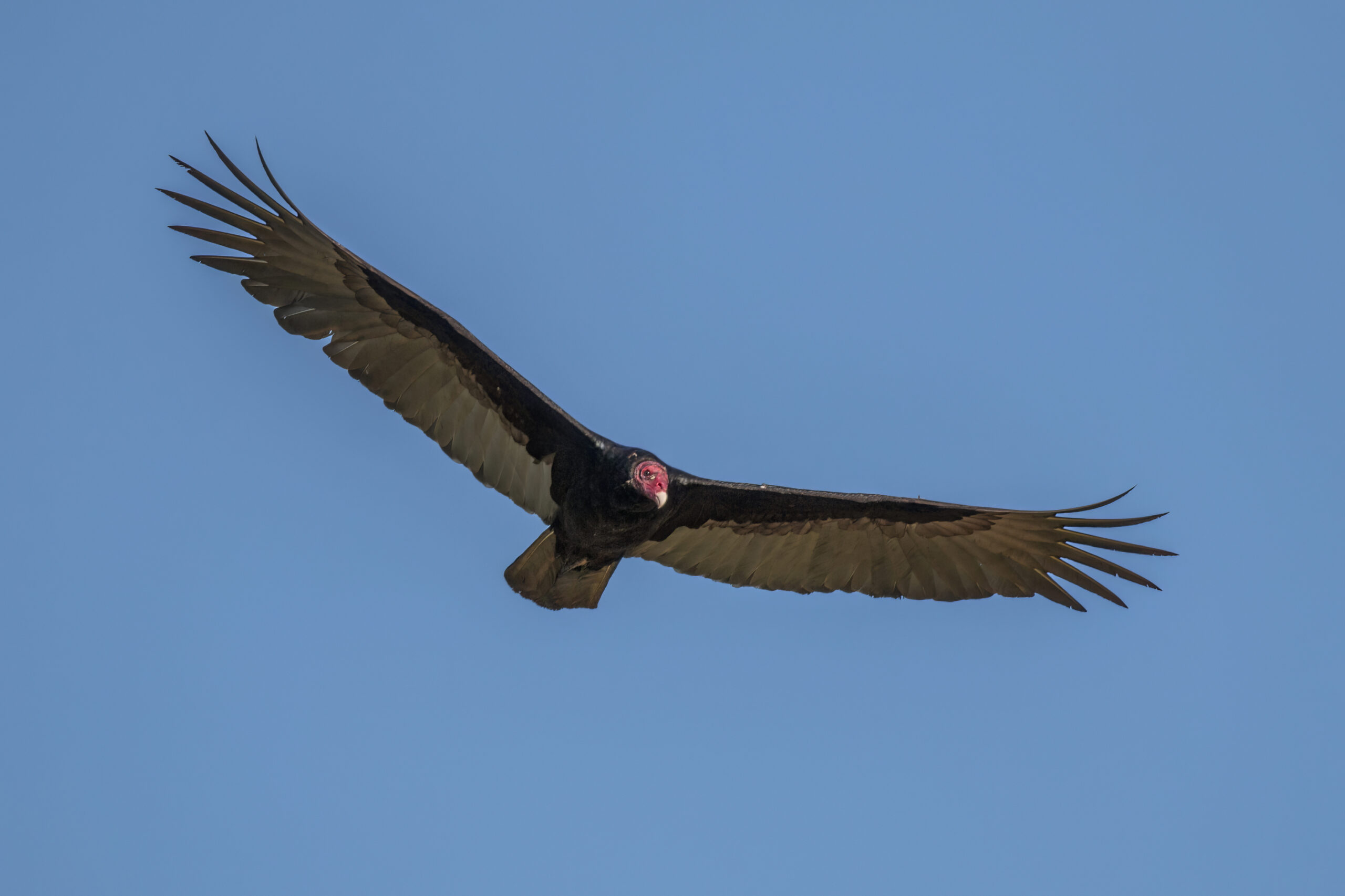
The Turkey Vulture is the largest vulture species that lives in Georgia, and can reach a wingspan of up to 6 feet.
It is a big black raptor with a red-colored head, and dark gray rear margins on their wings, which can be seen in flight.
A soaring Turkey Vulture is easily identifiable due to the fact that it holds its wings in an upright V shape, and has light wingtips.
This big raptor is a summer visitor and breeding bird in Georgia, where it favors open country interspersed with woodland.
Similar to other vulture species, this raptor is specialized in feeding on carrion, and will often congregate in flocks around roadkill.
While Turkey Vultures look superficially similar to Black Vultures, the latter are only rarely observed in Georgia.
Black Vulture
Scientific name: Coragyps atratus
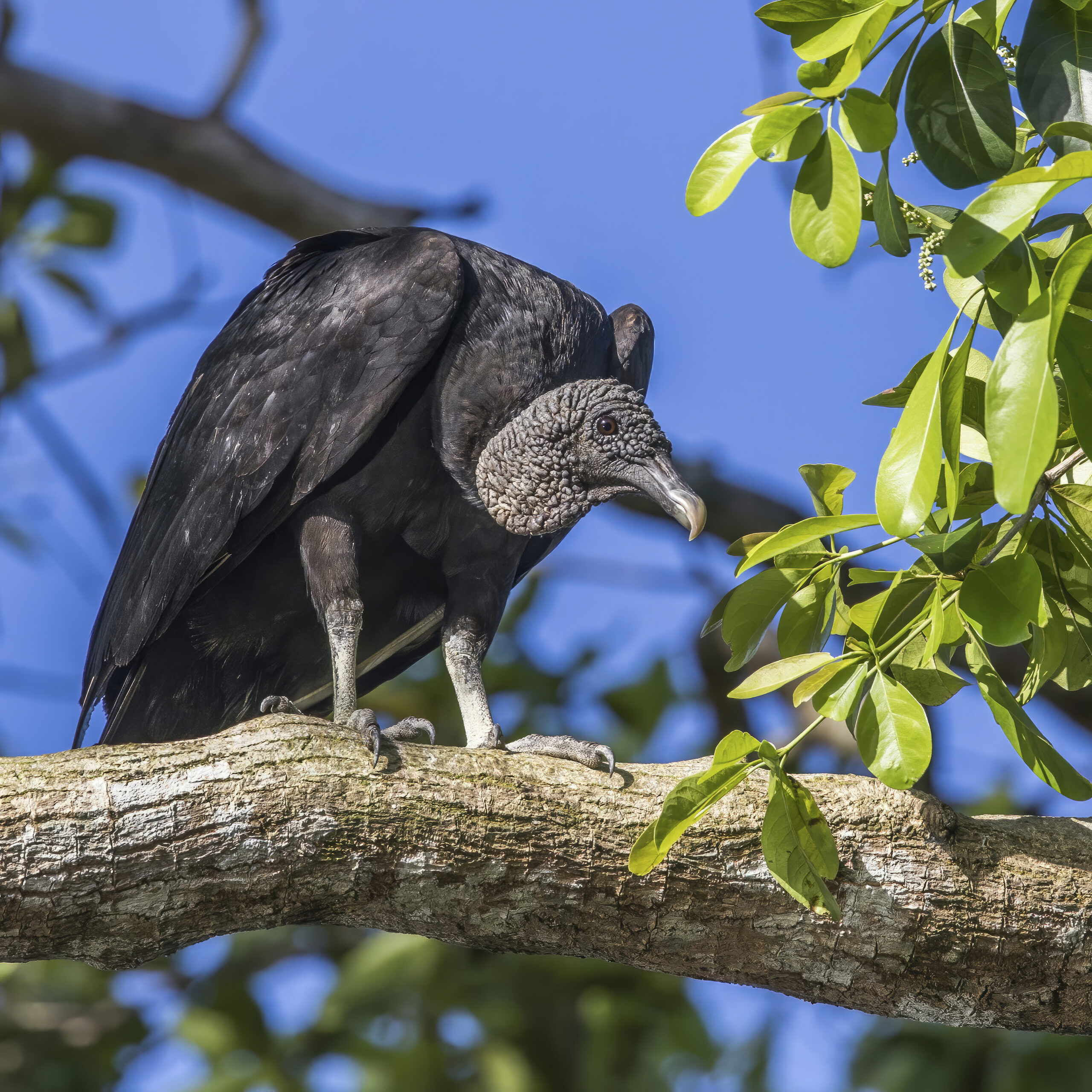
Black Vultures are regular breeding birds in Georgia (though not as common as Turkey Vultures), and can be seen in the state all year round.
These vultures are almost entirely black, except for white wing tips that can be seen from below. They have a naked head with wrinkled, dark skin.
Adult Black Vulture pairs remain in their breeding territories year-round.
In contrast to Turkey Vultures, Black Vultures don’t have a keen sense of smell. Because of this, they often use Turkey Vultures as “scouts” to find roadkill, and then intimidate the smaller vulture species to chase away from the carrion.
Related: What are the types of black birds in Georgia?
Owls
Great Horned Owl
Scientific name: Bubo virginianus
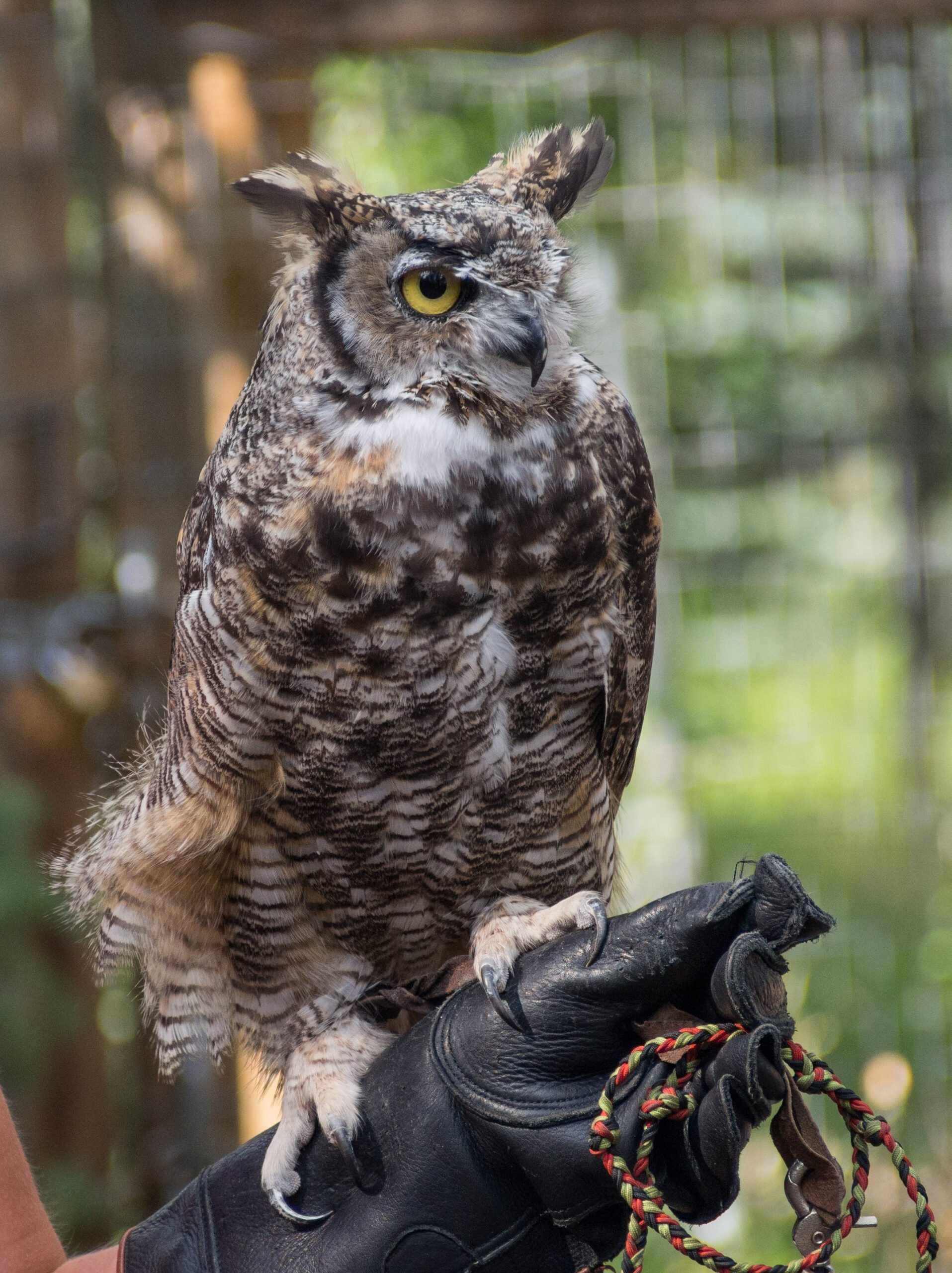
With a wingspan up to 4 feet, the Great Horned Owl is the largest owl species breeding in Georgia.
It is a large brown-colored bird with two ear tufts (also called horns) and big yellow eyes.
In Georgia this owl starts its nesting very early in the year, laying its eggs in January or February.
It is almost entirely nocturnal, and can hunt in complete darkness by relying on its keen sense of hearing.
It can be seen in Georgia year-round, and can be found in a wide variety of habitats, from woodlands to suburban areas.
The Great Horned Owl doesn’t build its own nest, but instead occupies the nests of other large birds, such as Georgia herons or raptors.
This owl is a fierce hunter, catching birds up to the size of ducks, and mammals up to the size of squirrels, rabbits, and even young foxes.
Barn Owl
Scientific name: Tyto alba
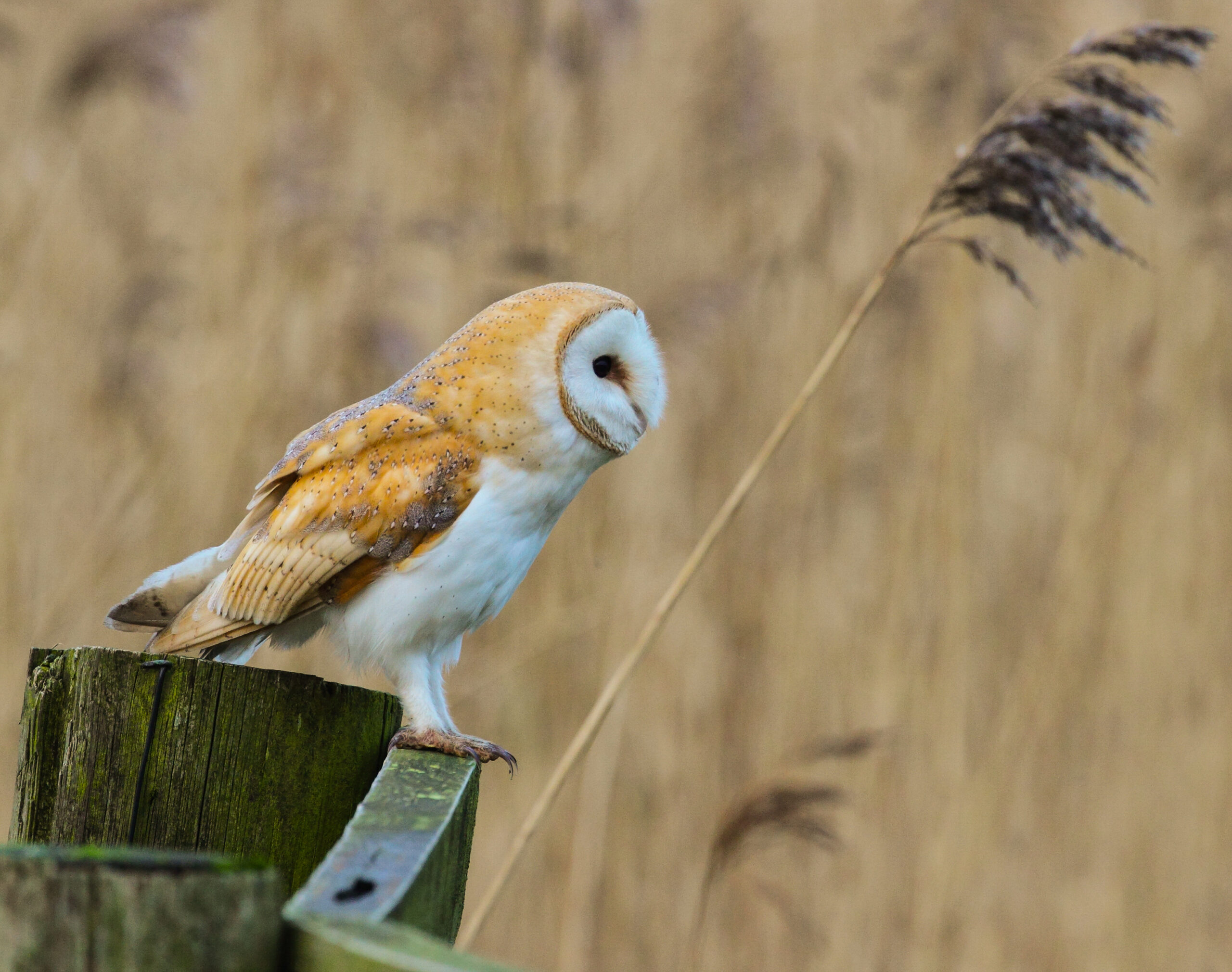
Somewhat softer and less intense-looking than the Great Horned Owl, Barn Owls are characterized by their white coat of feathers, and their “friendlier” appearance.
Armed with exceptional night vision, Barn Owls are strictly nocturnal raptors and therefore hard to spot. However, they can be readily identified by their characteristic screeching calls.
And if you do spot one flying overhead by the light of the moon, you may be able to see the glow of their white underside.
These owls are present in Georgia all year round, and favor open areas and farmland as their hunting grounds.
Long-eared Owl
Scientific name: Asio otus
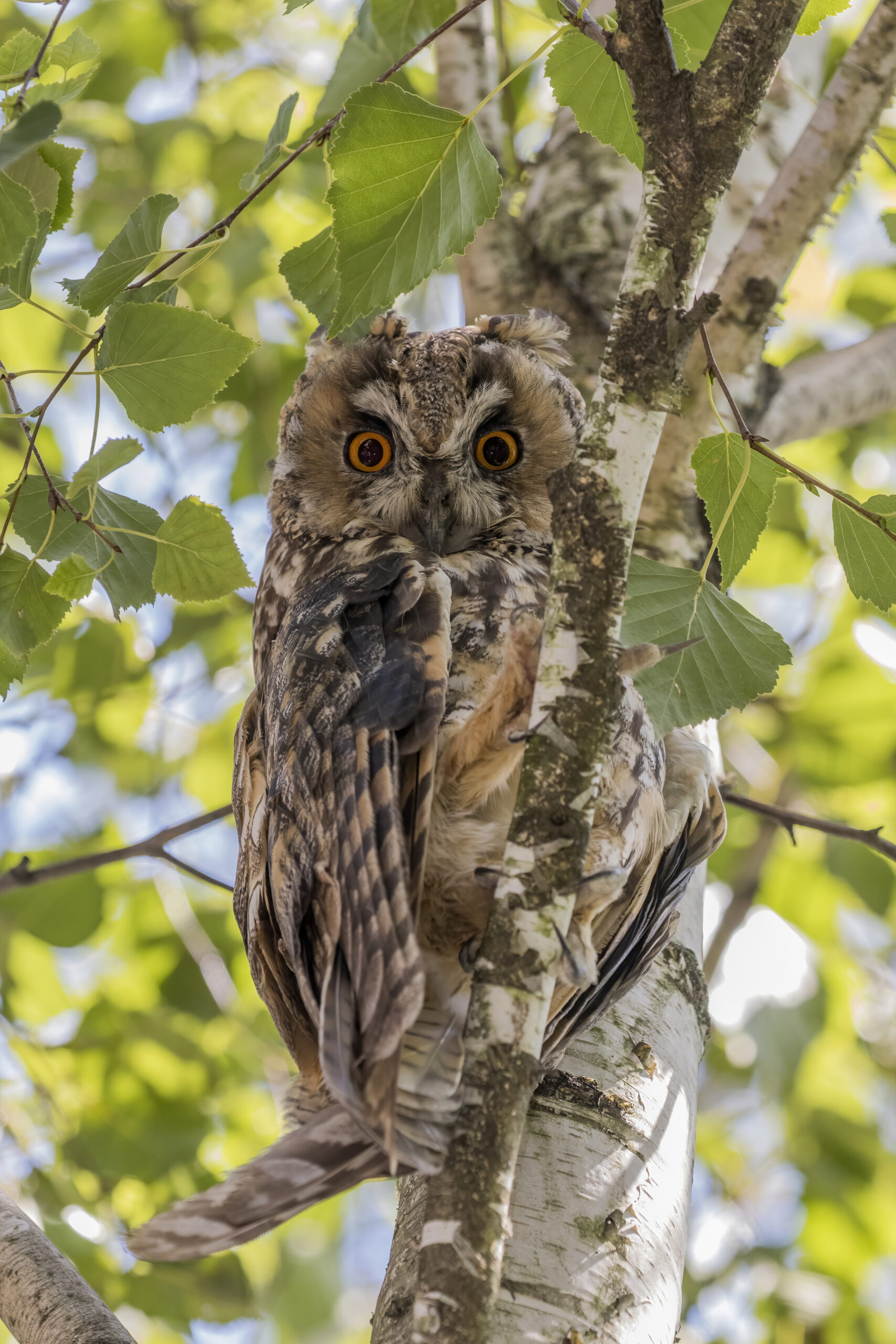
These well-camouflaged, elusive owls are smaller than the aforementioned species. They are winter visitors in Georgia that can be seen in the state from October through March.
They use their favored habitat of dense wooded areas to prey on the small rodents and animals that call the nearby grasslands their home.
Similar to other owl species, Long-eared Owls can fly completely silently due to fringes on their flight feathers.
Together with their keen sense of hearing, this enables them to catch prey by surprising it in the dark of the night.
But despite their best efforts to remain hidden, these owls can be identified by their long, low hoots.
Another great characteristic for identifying these owls is by their elongated tufts of feathers on the ears, and their droppings found underneath conifer trees close to grassy areas.
Short-eared Owl
Scientific name: Asio flammeus
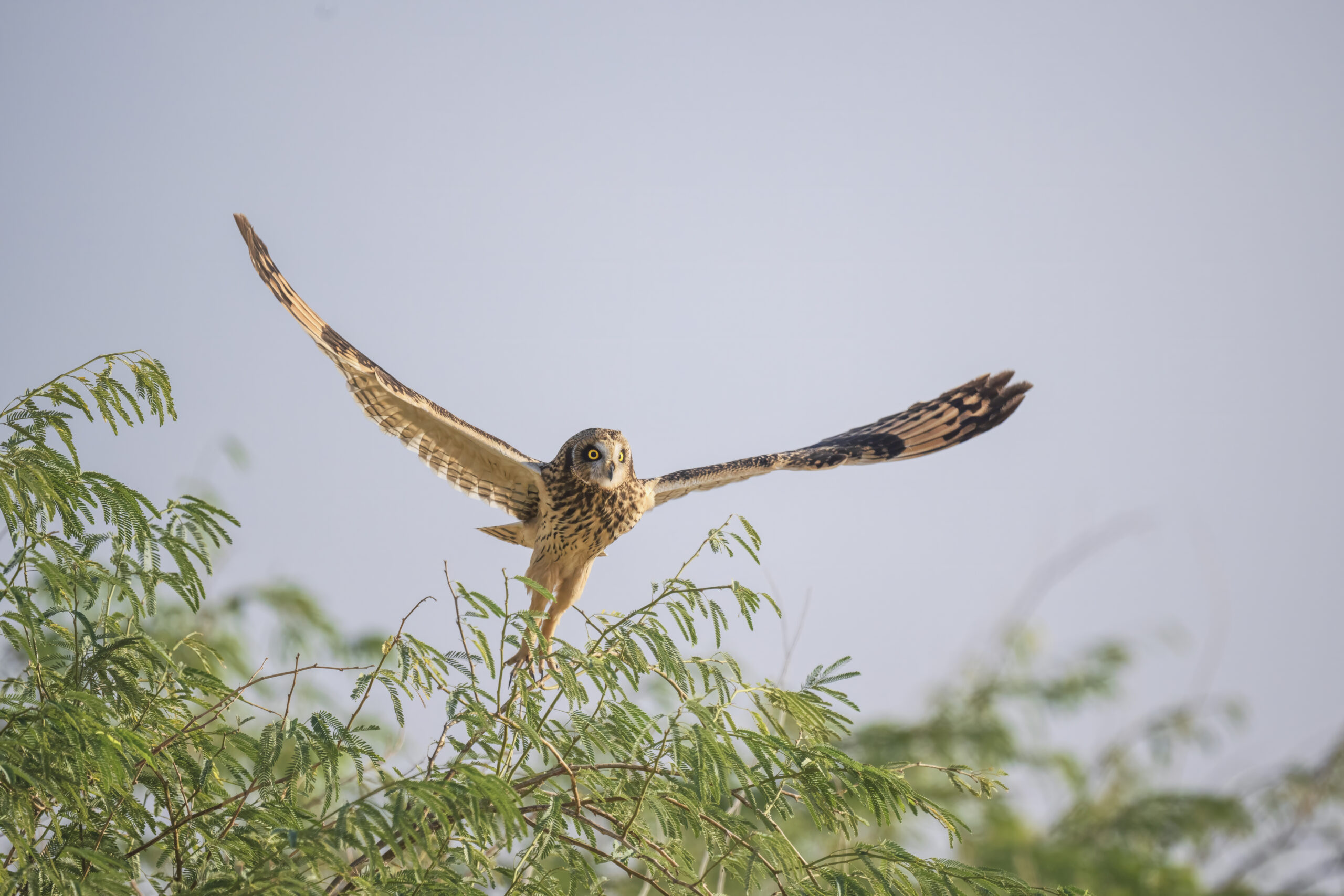
The Short-eared Owl is a highly migratory owl species that breeds in northern states and Canada, but spends the winter in southern states, including Georgia.
Short-eared Owls are more often observed hunting in daylight than other owls species.
Together with their hunting tactic of flying low over the ground in open areas, this makes them relatively easy to spot.
You can encounter these owls in Georgia in any kind of open landscapes, including farmland, airports, and fallow land.
Barred Owl
Scientific name: Strix varia
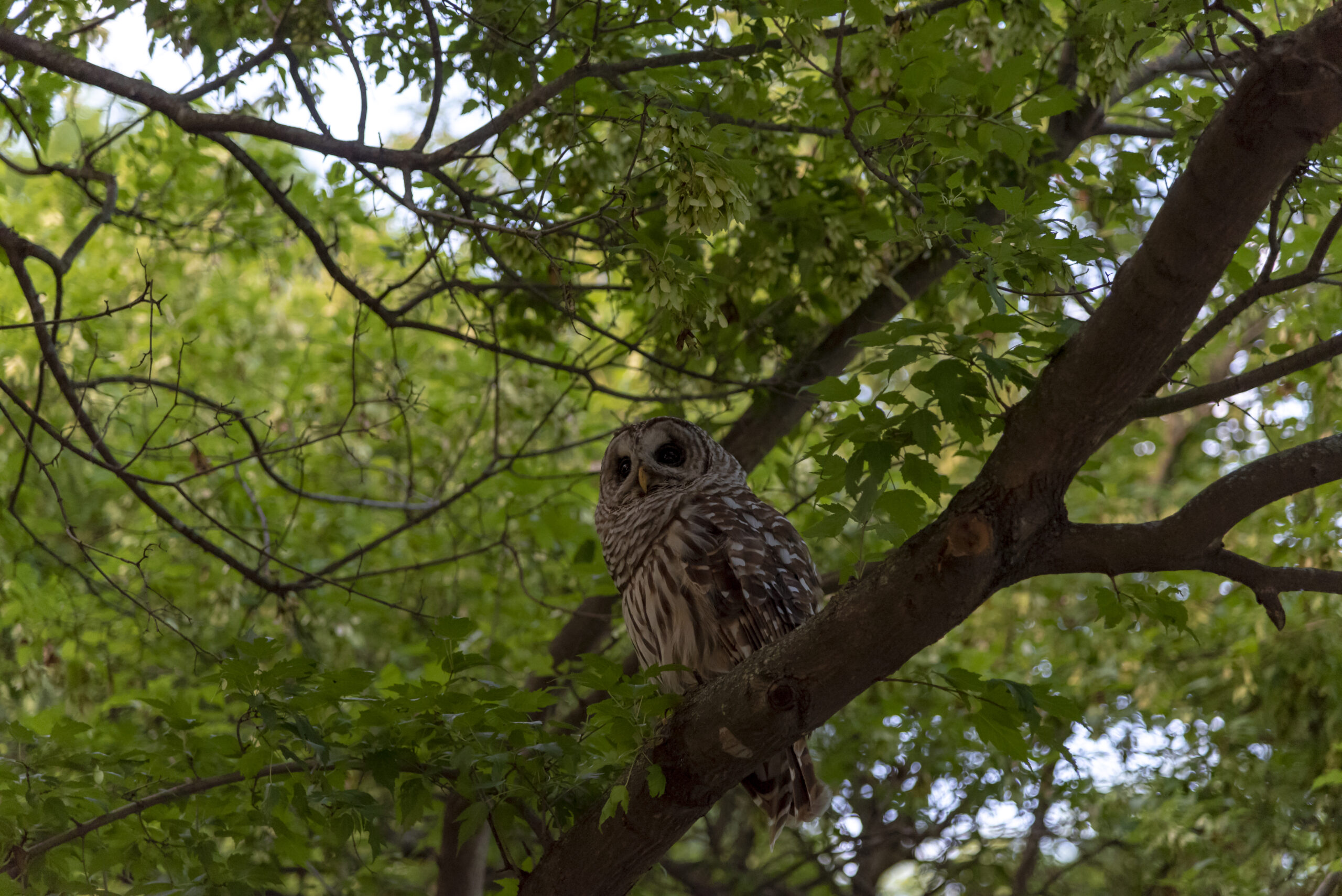
The Barred Owl was originally a bird of eastern North America, but it steadily expanded its range westwards over the past century.
This owl now has breeding populations in the Pacific Northwest. In Georgia, it can be encountered throughout the state where there are suitable habitats.
Similar to other owls, the Barred Owl is easiest to find by listening for its characteristic hooting call.
Their preferred habitat is mature forest and forests bordering swamps, including the cypress-lined waterways of the Okefenokee Swamp in southeastern Georgia, one of the best places in the state to hear their classic “who-cooks-for-you” hooting after dark. They readily accept nest boxes that are set up in old trees.
Eastern Screech-Owl
Scientific name: Megascops asio
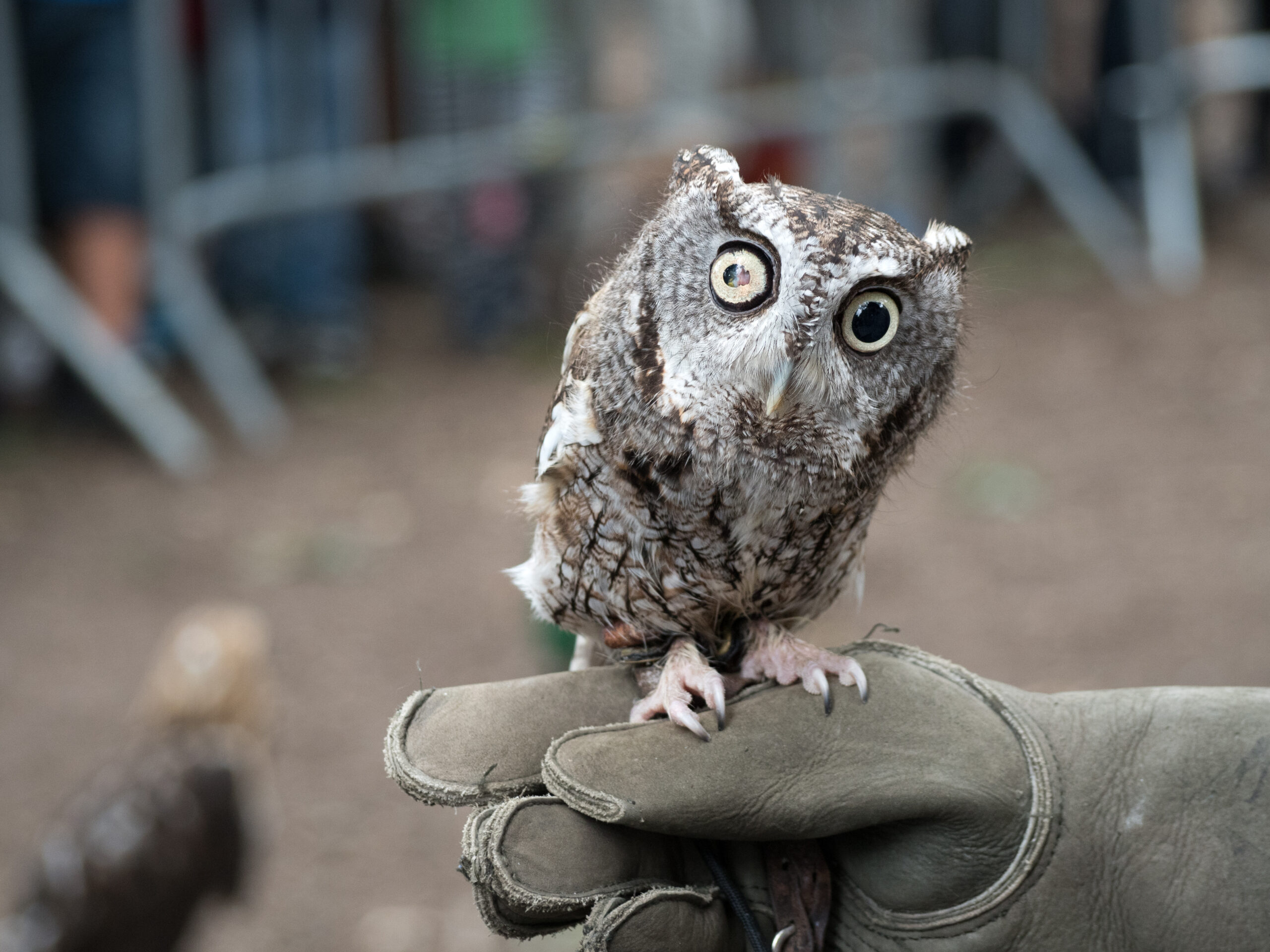
Originally birds of open woodlands, Eastern Screech-Owls have adapted very well to urban habitats, and are regularly found in parks, large gardens, and golf courses.
They breed in tree cavities, and are best identified by their characteristic series of accelerating hoots.
These Georgia owls are common throughout the state, and can be seen all year round.
They have a very varied diet, which includes any type of small animal ranging from worms to insects, rodents, and reptiles.
Eastern Screech-Owls readily accept artificial nesting cavities, which means you can attract them to your backyard by setting up nest boxes.
Northern Saw-whet Owl
Scientific name: Aegolius acadicus
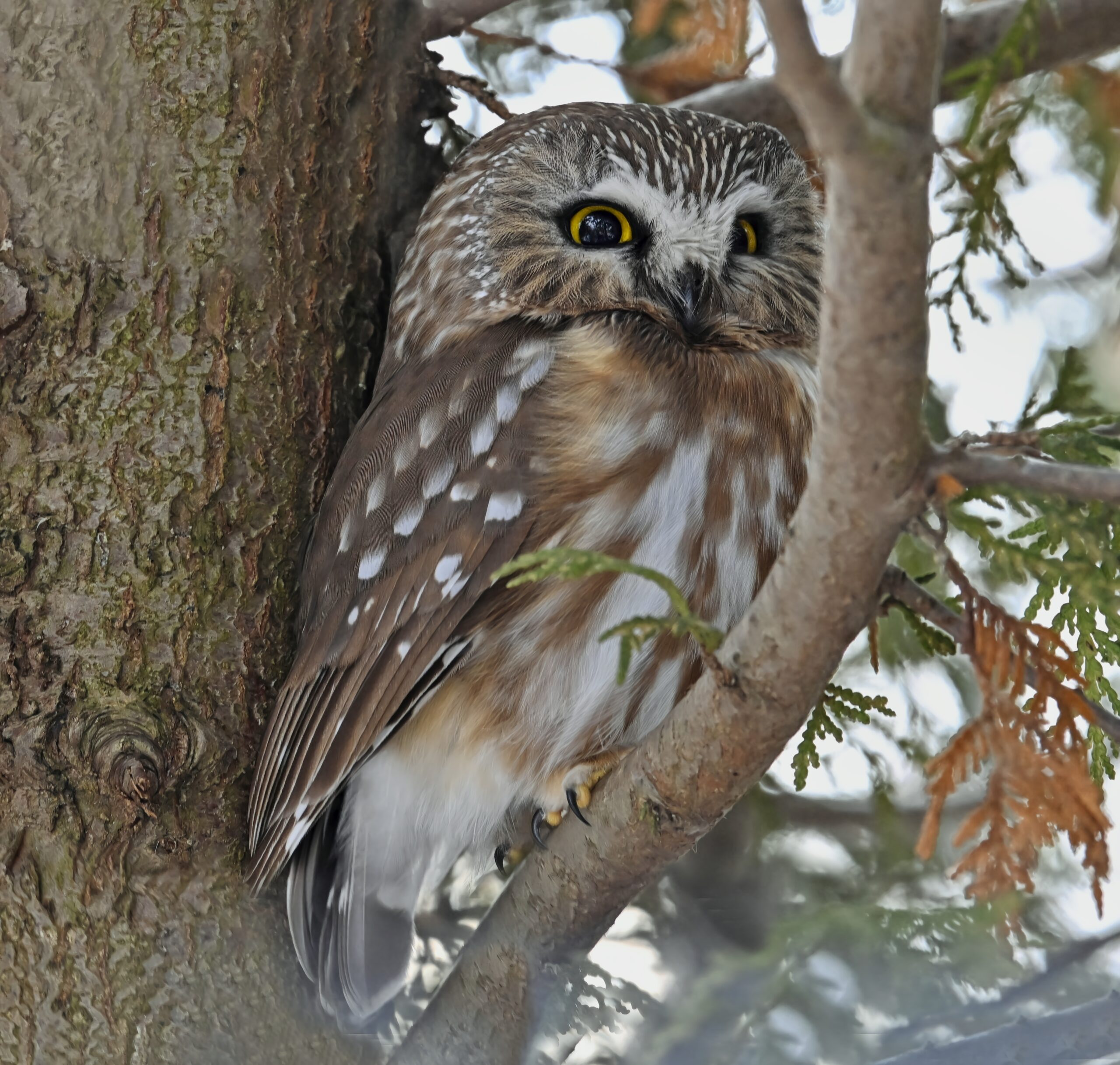
This is another small owl species that’s hardly larger than a pint. The Northern Saw-whet Owl is a winter visitor in Georgia, and is more commonly found in the northern counties.
These owls are hard to see, but they are easy to detect if you listen for their characteristic too-too-too call at night.
They build their nest in tree cavities, but also readily accept man made nest boxes. So if you have a large garden with mature trees, it’s worth putting up a nest box well before the nesting season.
Conclusion
And there we have the most common raptors in Georgia.
The varied habitats of Georgia are home to more than 400 different species of birds, and birds of prey make up a significant proportion of this rich avifauna.
Ranging from hawks to eagles, vultures, falcons, and owls, these birds of prey play a vital role as apex predators.
Raptors are paramount to maintaining balanced rodent and small wildlife populations, as well as helping to dispose of animal carcasses with scavenging.
If you enjoyed this article, check out our guide to the yellow birds in Georgia.