
Backyard Birds in Maine: A Field Guide to the Species at Your Feeder
On foggy June mornings on lakes in western Maine, the long, wavering call of a Common Loon often carries across the water before the fog has even lifted enough to see it. It’s one of those sounds that doesn’t translate well to words — equal parts eerie and beautiful — and it’s about as close to a signature sound as Maine has. Loons aren’t backyard birds, but that sound says a lot about what birding here feels like: quieter, colder, and shaped by water and spruce forest at every turn.
A state built for winter feeders
Maine has the coldest average winters in the Northeast outside of far northern New England, and that has a direct effect on what shows up at a backyard feeder. Birds here need calories to get through long, cold nights, which is why suet, black oil sunflower seed, and high-fat mixes are staples rather than extras. A well-stocked feeder in a Maine winter isn’t just a nice hobby — for the birds visiting it, it can be a genuine lifeline.
The state bird: small, tough, and everywhere
Maine’s official state bird is the Black-capped Chickadee, and it’s a fitting pick for a cold-weather state. Chickadees survive brutal winter nights by dropping their body temperature into a controlled state of hypothermia and by caching thousands of individual seeds in the fall, each one remembered by location for months. They’re also some of the friendliest birds you’ll meet at a feeder — patient enough that many Maine birders eventually train them to eat straight from an open hand.
Common feeder visitors
Alongside chickadees, a typical Maine yard sees Blue Jays, White-breasted and Red-breasted Nuthatches working head-first down tree trunks, Dark-eyed Juncos scratching for fallen seed under the feeder in winter, and Downy and Hairy Woodpeckers on the suet. Some winters bring irruptions of Pine Siskins, Evening Grosbeaks, or Common Redpolls — northern finches that move south in large numbers when food is scarce further north, turning an ordinary feeder into a temporary flock of birds you might not see again for years.
Beyond the backyard: puffins and the coast
Maine’s identity as a birding destination owes a lot to its coastline. Offshore islands like Eastern Egg Rock and Machias Seal Island host some of the only nesting Atlantic Puffin colonies in the continental United States, the result of a decades-long restoration project that started in the 1970s after hunting and egg-collecting had wiped them out. They’re not feeder birds by any stretch, but for anyone birding in Maine even casually, a summer puffin cruise out of a coastal town is close to a rite of passage — and a reminder of how much bird life is within reach just past the tree line.
A note on native plants
Feeders help, but Maine’s short growing season means native berry- and seed-producing shrubs — winterberry, chokeberry, native asters — matter more here than in milder climates, since they carry birds through the stretch between when feeders often run low and when insects return in spring. A few native plantings near the feeder area tend to keep a yard active well past the point when a lot of neighbors’ yards have gone quiet.
Winter Feeding Notes
Maine’s long, cold winters make feeder placement and fat content more important than in milder climates. High-fat foods — suet, black oil sunflower seed, and peanuts — give birds the calories needed to survive overnight temperatures that regularly drop well below freezing, and a feeder positioned near dense conifer cover gives visiting birds a place to shelter between feeding bouts. Water can be harder to provide in winter than food, since standing water freezes; a heated birdbath is one of the few reliable ways to offer liquid water through a Maine winter and often draws species that otherwise skip a yard entirely.
Irruptive finches — Evening Grosbeak, Red Crossbill, Pine Siskin, and Purple Finch among them — make Maine’s winter feeder activity harder to predict than in states with more stable resident populations. A season with heavy visitation from northern finches is typically driven by a poor cone crop further north in Canada, pushing birds further south in search of food, rather than anything specific to an individual yard’s feeder setup.
Common Loon
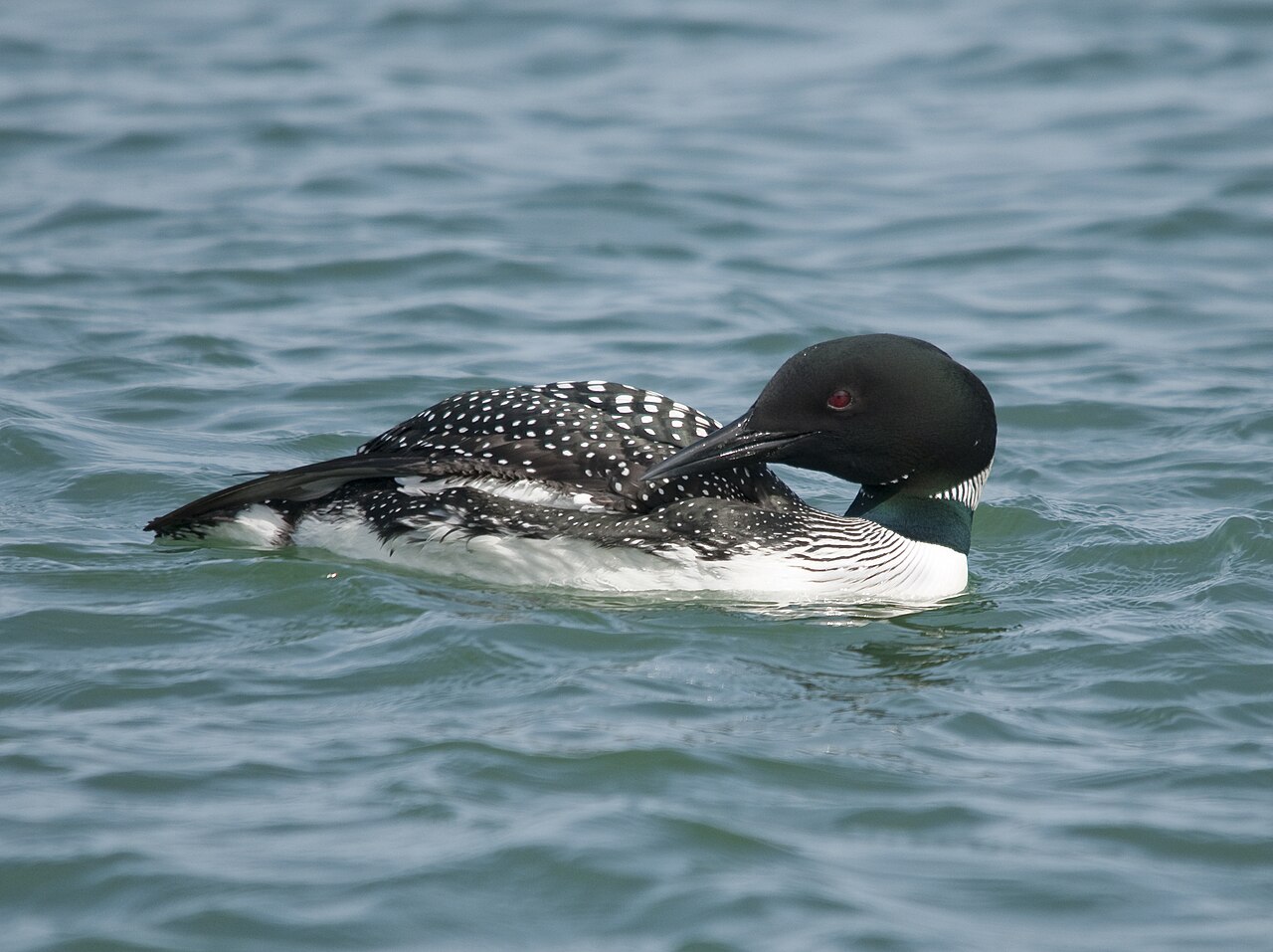
Maine’s most iconic bird and a strong candidate for the most recognizable call in North American birding — a long, wavering wail used to communicate across open water, along with a laughing tremolo given when alarmed. Common Loons breed on clear, undeveloped lakes throughout Maine, diving up to 200 feet for fish and requiring long, open stretches of water to take flight, since their dense bones and rearward-set legs make them poor at both walking and taking off. Maine holds one of the largest loon populations in the eastern United States, and shoreline development and lead fishing tackle remain the two biggest threats to the population.
Black-capped Chickadee
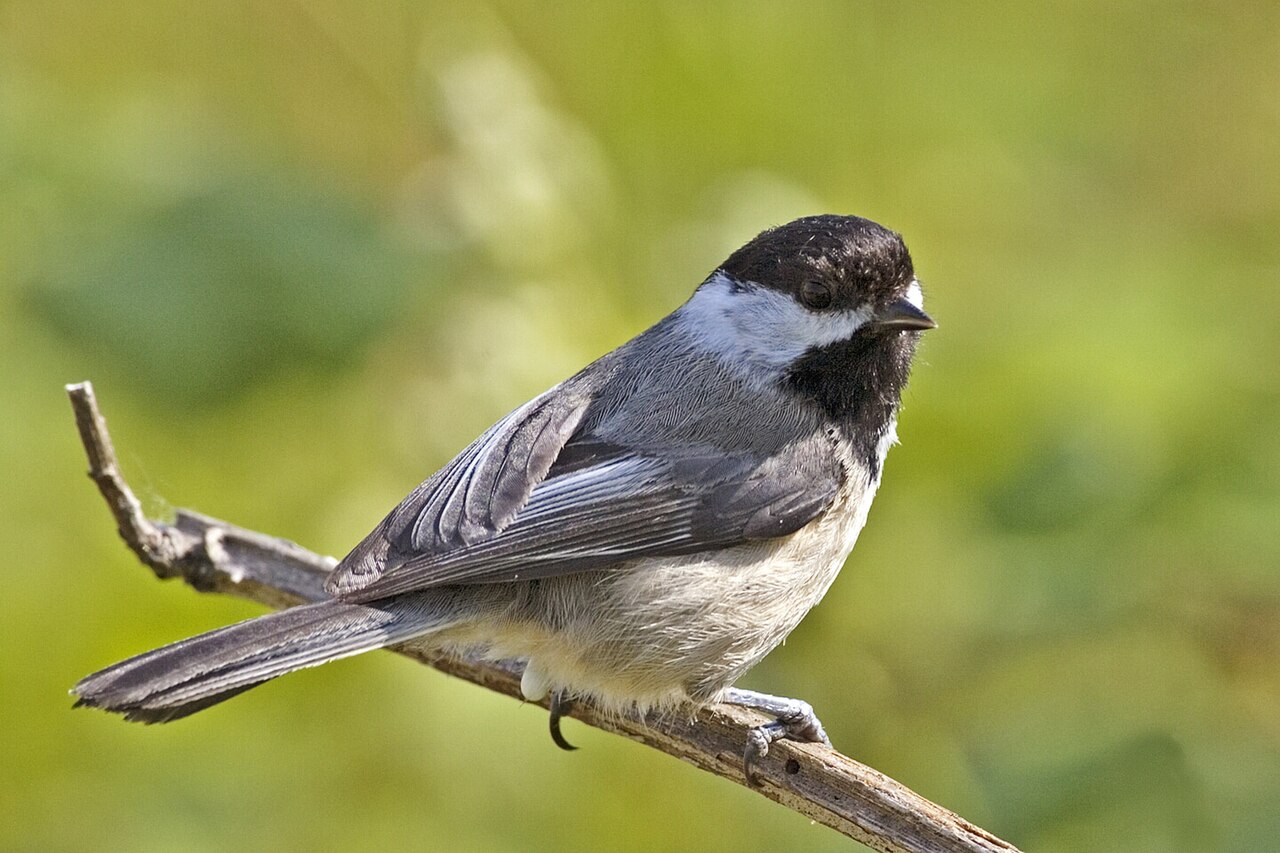
Maine’s state bird, small and unmistakable with a black cap and bib against white cheeks. Black-capped Chickadees are non-migratory and among the most cold-hardy songbirds in North America, able to lower their body temperature at night into a controlled state of hypothermia to conserve energy through brutal winter nights. They cache thousands of individual seeds each fall across a wide territory and rely on spatial memory to relocate them through winter, a memory feat tied to seasonal growth in the hippocampus. Chickadees are among the easiest birds to attract to a Maine feeder, readily taking sunflower seed, suet, and peanuts.
Atlantic Puffin
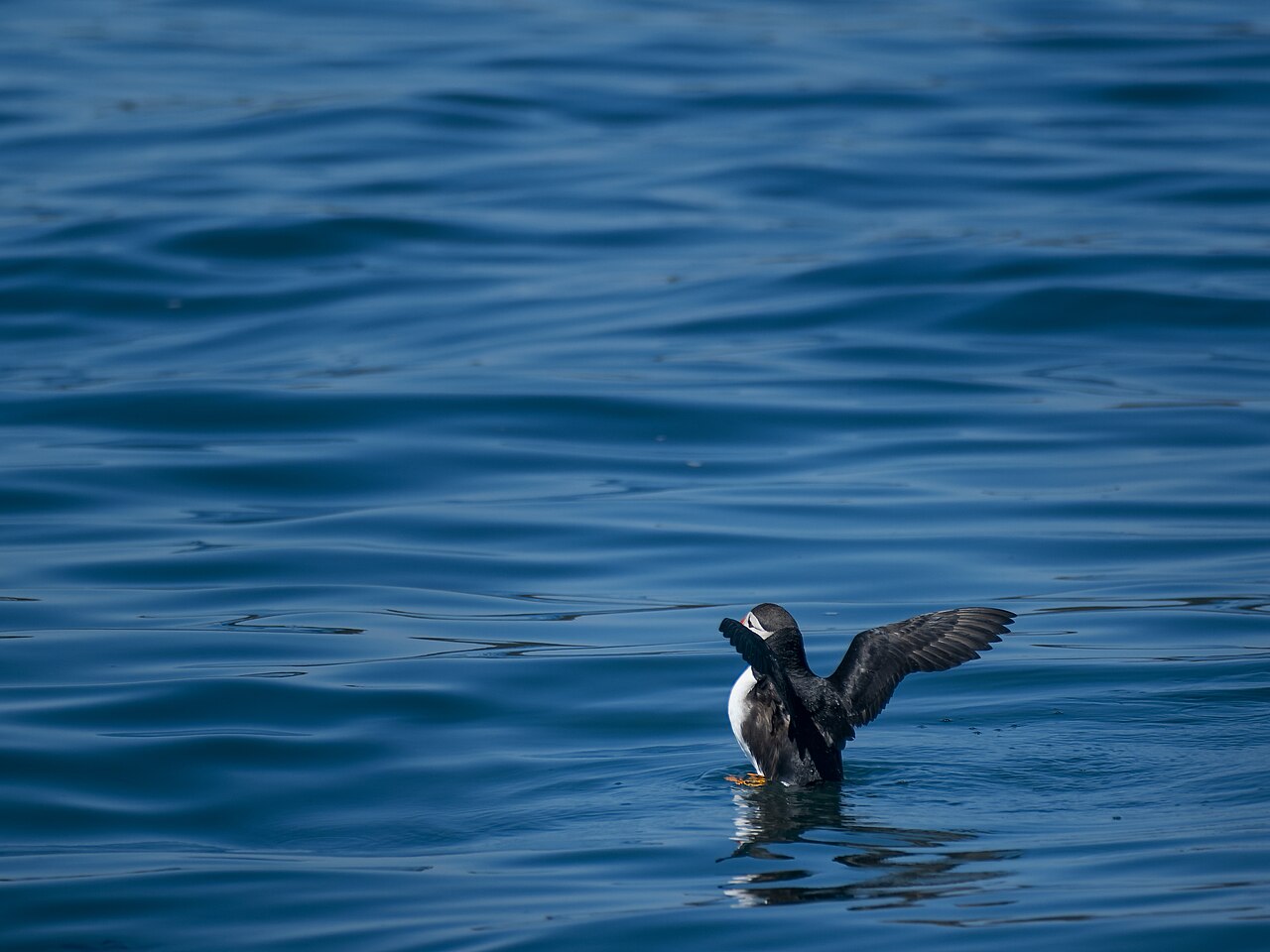
Maine holds the southernmost nesting colonies of Atlantic Puffin in the United States, on a handful of offshore islands including Eastern Egg Rock and Matinicus Rock, following a decades-long restoration effort by the National Audubon Society’s Project Puffin starting in the 1970s after the species had been extirpated from Maine by hunting. Puffins nest in burrows on remote islands, spend most of the year far out at sea, and are not visible from the mainland or from any backyard — seeing one requires a dedicated boat tour to a nesting island during the short summer breeding window.
Boreal Chickadee
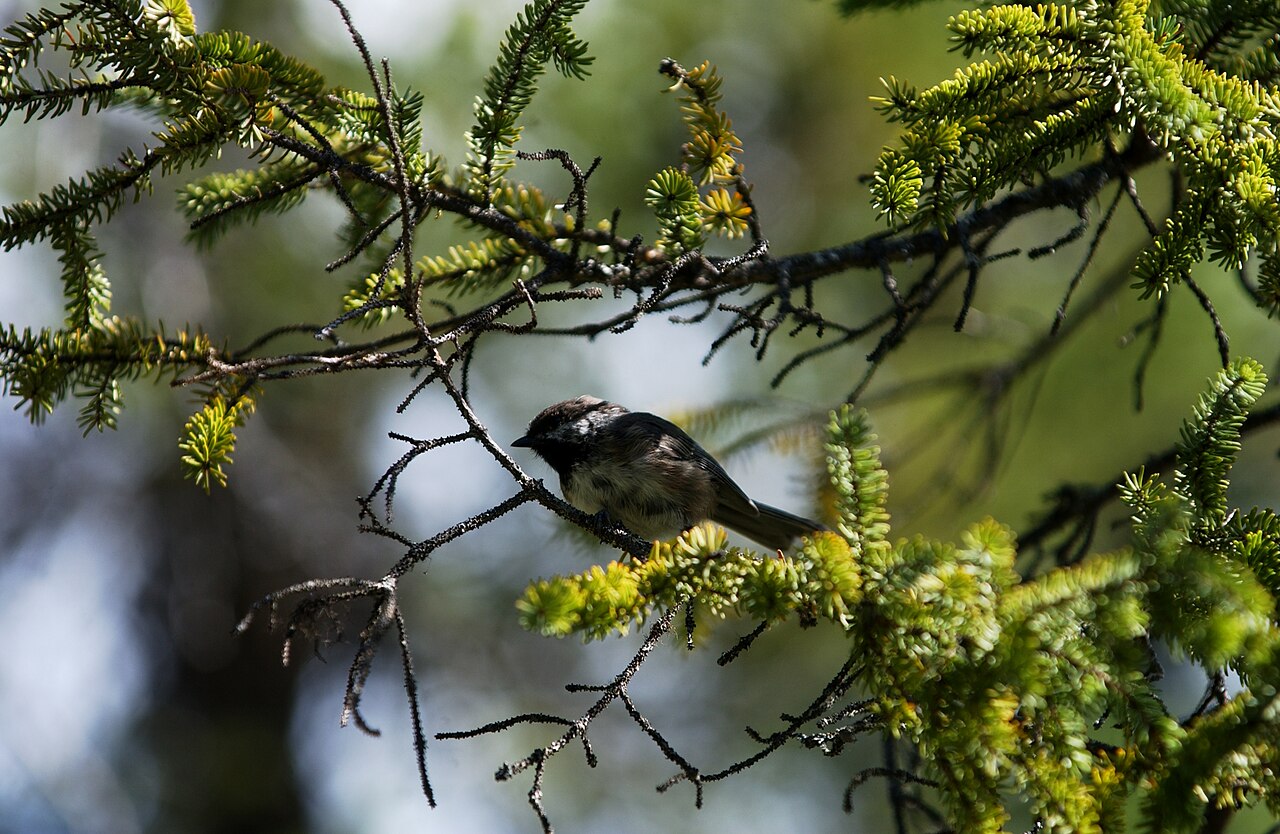
A browner, duskier relative of the Black-capped Chickadee, restricted to spruce-fir forest in Maine’s northern and mountainous regions. Boreal Chickadees are far less common at feeders than their black-capped cousins and considerably harder to find, since they tend to stay within dense conifer cover rather than venturing into open or residential areas. Birders specifically seeking this species typically travel to higher-elevation spruce forest in northern or western Maine, where small resident populations persist year-round.
Purple Finch
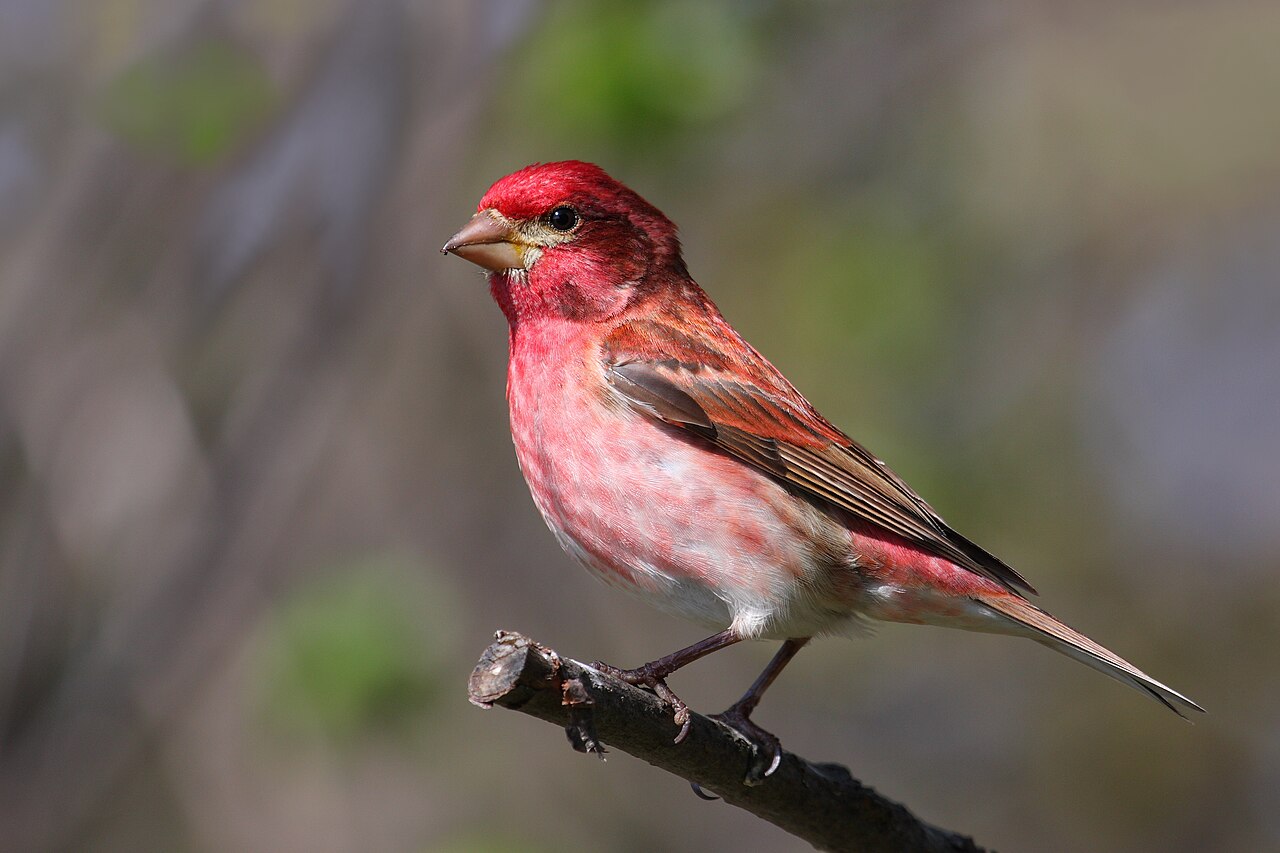
Maine’s state bird was nearly the Purple Finch before the Black-capped Chickadee was chosen, and the species remains a common feeder visitor across the state. Males are washed in a raspberry-red color often described as looking dipped in juice rather than solidly colored, while females are streaky brown and can be confused with House Finches. Purple Finches favor sunflower seed at platform and tube feeders and are somewhat irruptive, meaning their numbers in a given winter depend heavily on conifer seed crops further north in Canada.
Evening Grosbeak
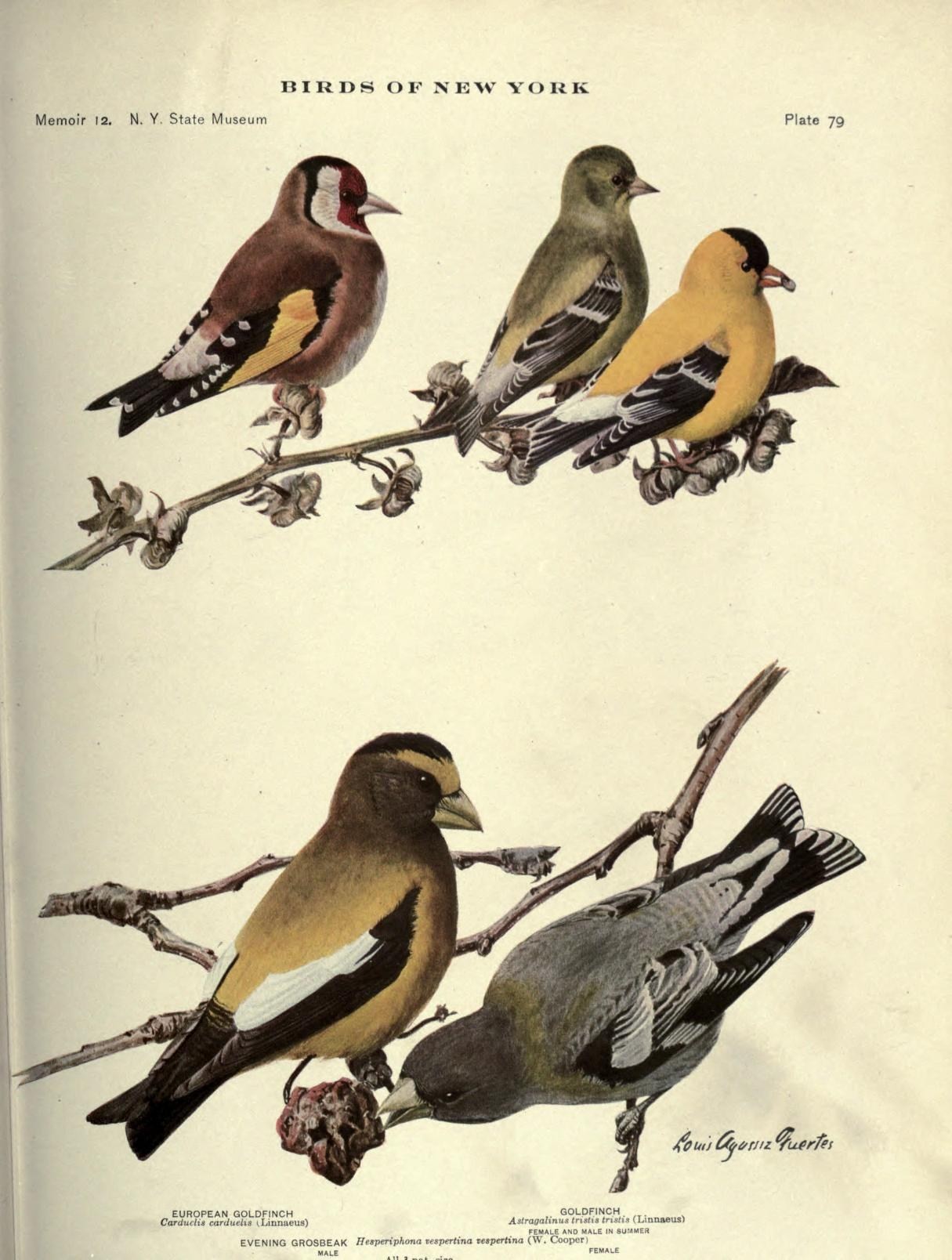
A large, striking finch with a massive pale bill built for cracking seeds, and males show a bold yellow-and-black pattern that makes them easy to identify at a feeder. Evening Grosbeaks were far more common across Maine in the mid-20th century, and their numbers have declined substantially since, likely tied to changes in spruce budworm outbreaks, a major food source, and shifts in northern forest composition. They still appear at Maine feeders in irruption years, arriving in noisy flocks that can empty a sunflower seed feeder within a day.
Ruffed Grouse
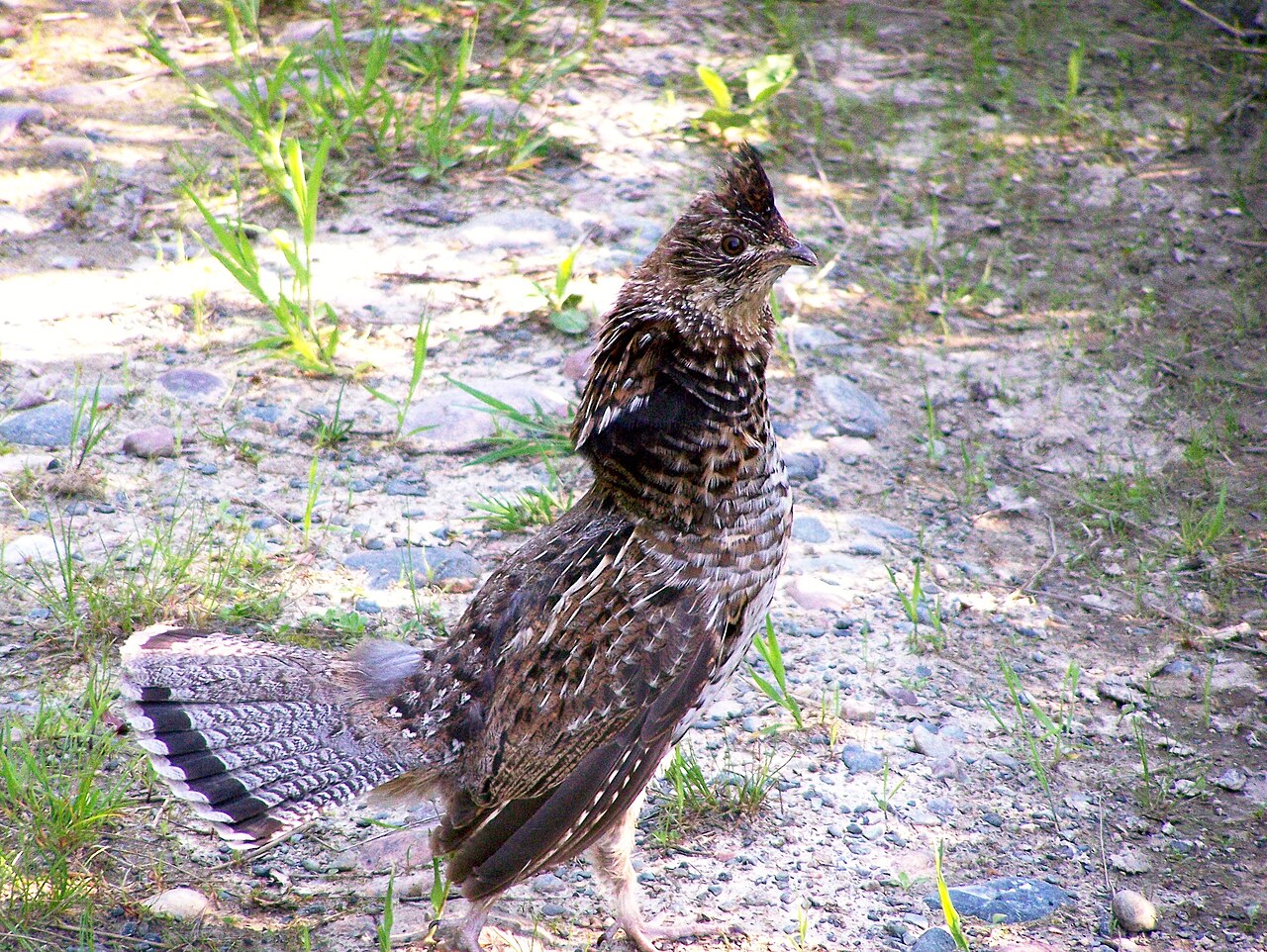
A chicken-sized forest bird best known for the male’s drumming display, a rapid low thumping produced by beating the wings against the air rather than any surface, used to establish territory in spring. Ruffed Grouse are common across Maine’s mixed and deciduous forest but are secretive and camouflaged, more often heard than seen, and they explode into flight with a startling burst of noise when flushed at close range. They are not feeder birds but frequently appear at forest edges bordering rural yards, especially where young, regenerating woodland is nearby.
Snowy Owl
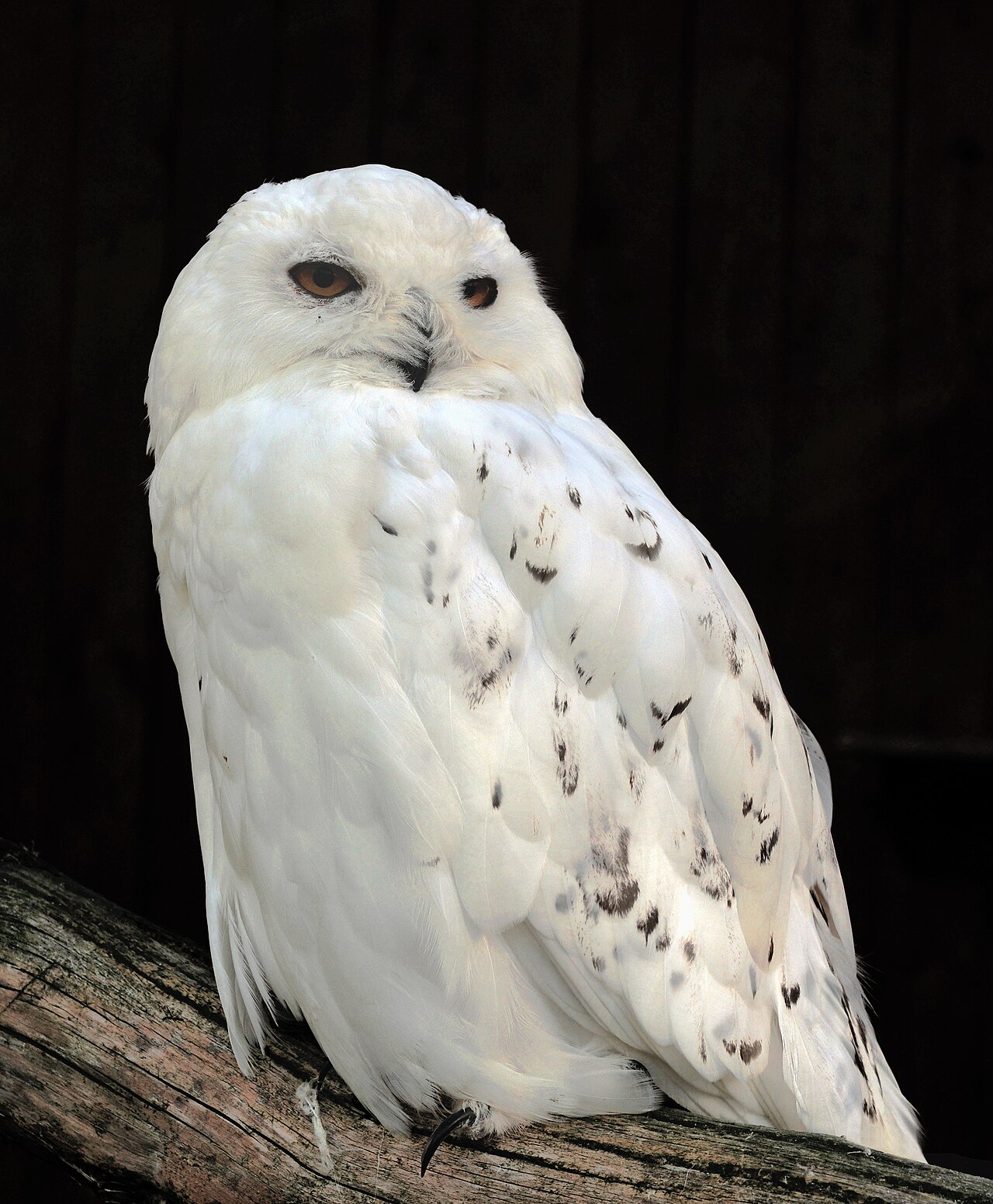
A large white owl that breeds on the Arctic tundra and moves south into Maine in variable numbers each winter, a movement tied to lemming population cycles further north rather than simple cold-weather migration. Snowy Owls favor open habitat that resembles tundra, including coastal dunes, airports, and large open fields, where they hunt during the day rather than exclusively at night like most owls. They are not backyard birds, but open rural and coastal properties in Maine occasionally host one perched conspicuously on a fence post or rooftop through the winter months.
Bicknell’s Thrush
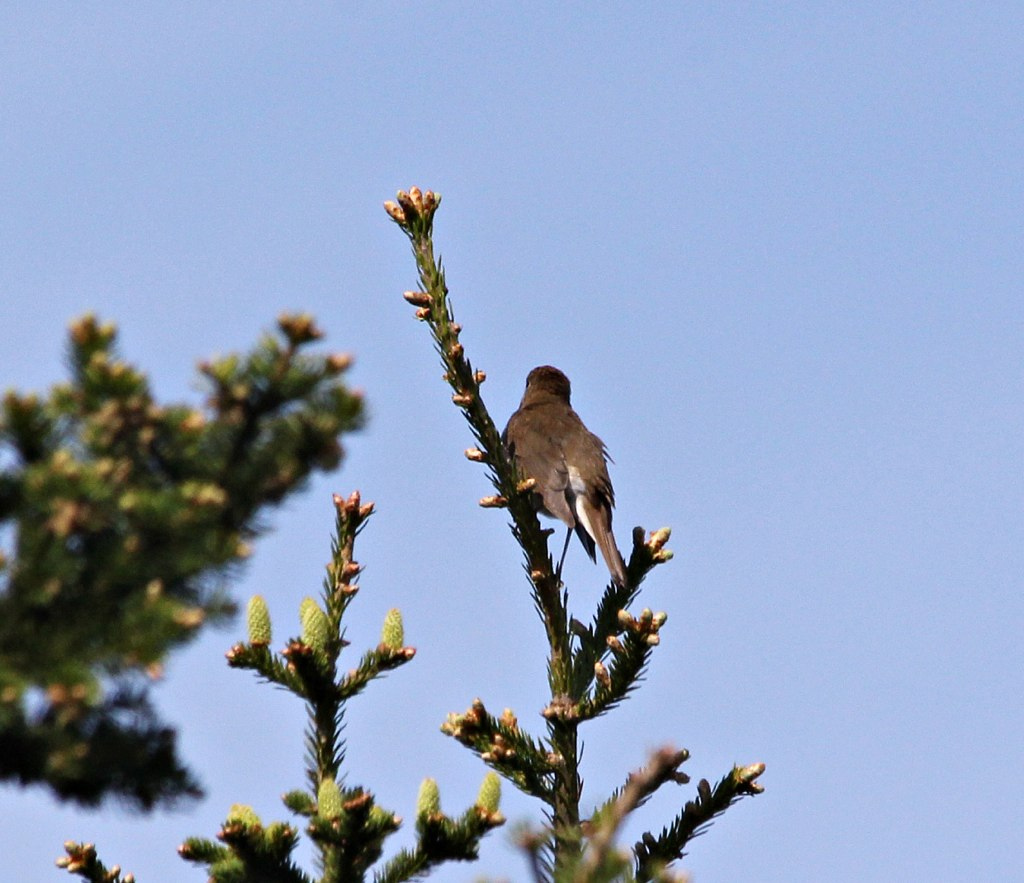
One of the rarest and most range-restricted songbirds in eastern North America, breeding only in dense, stunted spruce-fir forest above roughly 3,000 feet on a small number of Maine’s higher mountains, including sections of the Appalachian Trail corridor. The species was only formally separated from the more widespread Gray-cheeked Thrush in the 1990s. Bicknell’s Thrush winters almost entirely in the mountains of the Dominican Republic, and habitat loss on both ends of its range has made it a conservation priority. It is not a yard bird under any circumstances, requiring a high-elevation hike during the narrow breeding season to have any chance of encountering one.
Red Crossbill
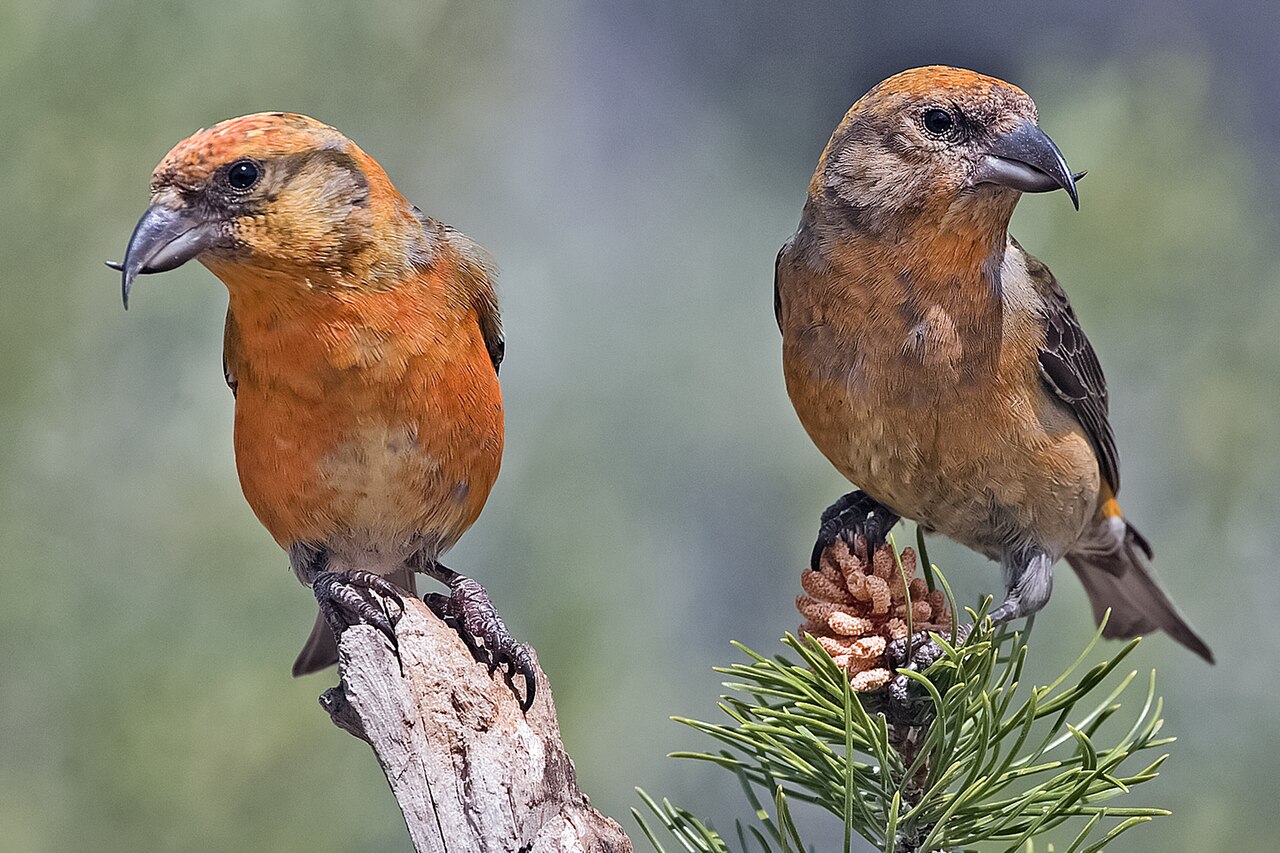
A finch with a bill that crosses at the tip, an adaptation purpose-built for prying seeds out of unopened conifer cones. Red Crossbills are nomadic, following cone crop abundance rather than any fixed migratory schedule, and can breed at almost any time of year, including the dead of winter, if food supply allows. Maine’s extensive spruce and pine forest makes it one of the more reliable states in the Northeast to encounter them, though flocks can disappear from an area entirely if the local cone crop fails. They occasionally visit feeders offering black oil sunflower seed near conifer stands.
Pine Siskin
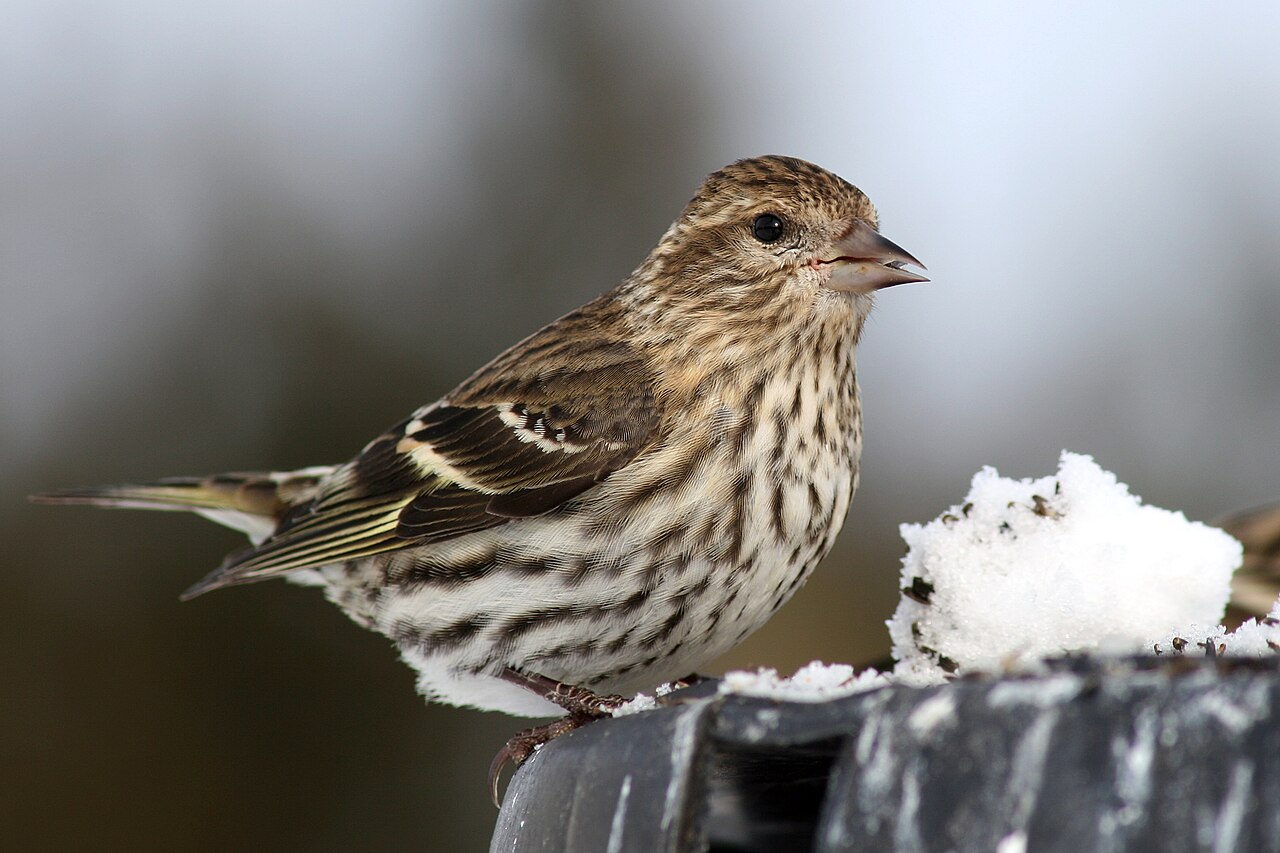
A small, heavily streaked finch with touches of yellow in the wings and tail, closely related to goldfinches. Pine Siskins are irruptive like several other northern finches, appearing at Maine feeders in large, noisy flocks some winters and being nearly absent in others, depending on seed crops across the boreal forest. They favor nyjer and sunflower chips at tube feeders and often flock with American Goldfinches, requiring a careful look at the streaking pattern to tell the two apart.
Spruce Grouse
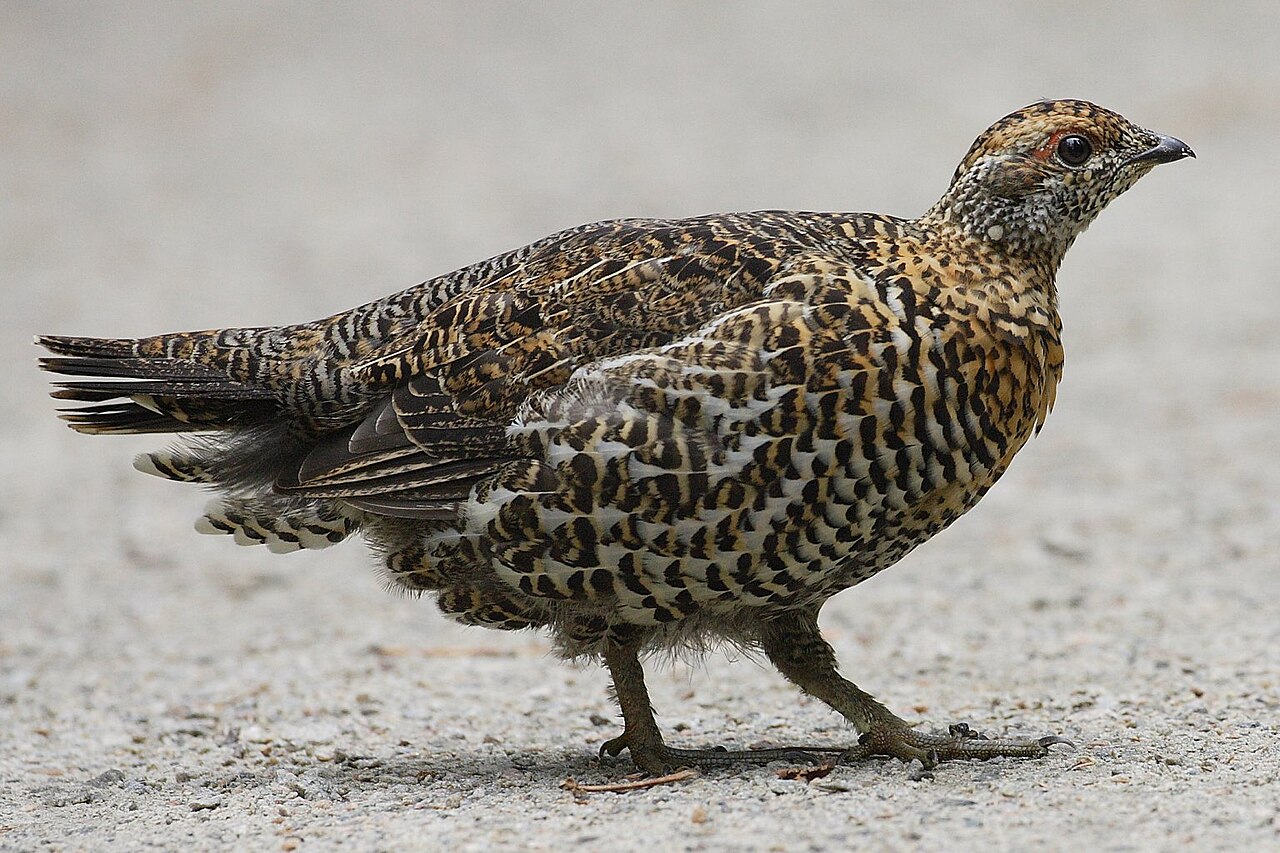
A dark, heavily patterned grouse of Maine’s northern boreal forest, often called a “fool hen” for its unusually tame behavior around humans, a trait shaped by having few historical predators that approach on foot. Spruce Grouse feed almost entirely on conifer needles in winter, an extremely low-nutrition diet that requires a specialized digestive system to process. They are non-migratory and stay within a small home range year-round, restricted in Maine to the northern and eastern parts of the state where extensive spruce-fir forest remains intact.
American Black Duck
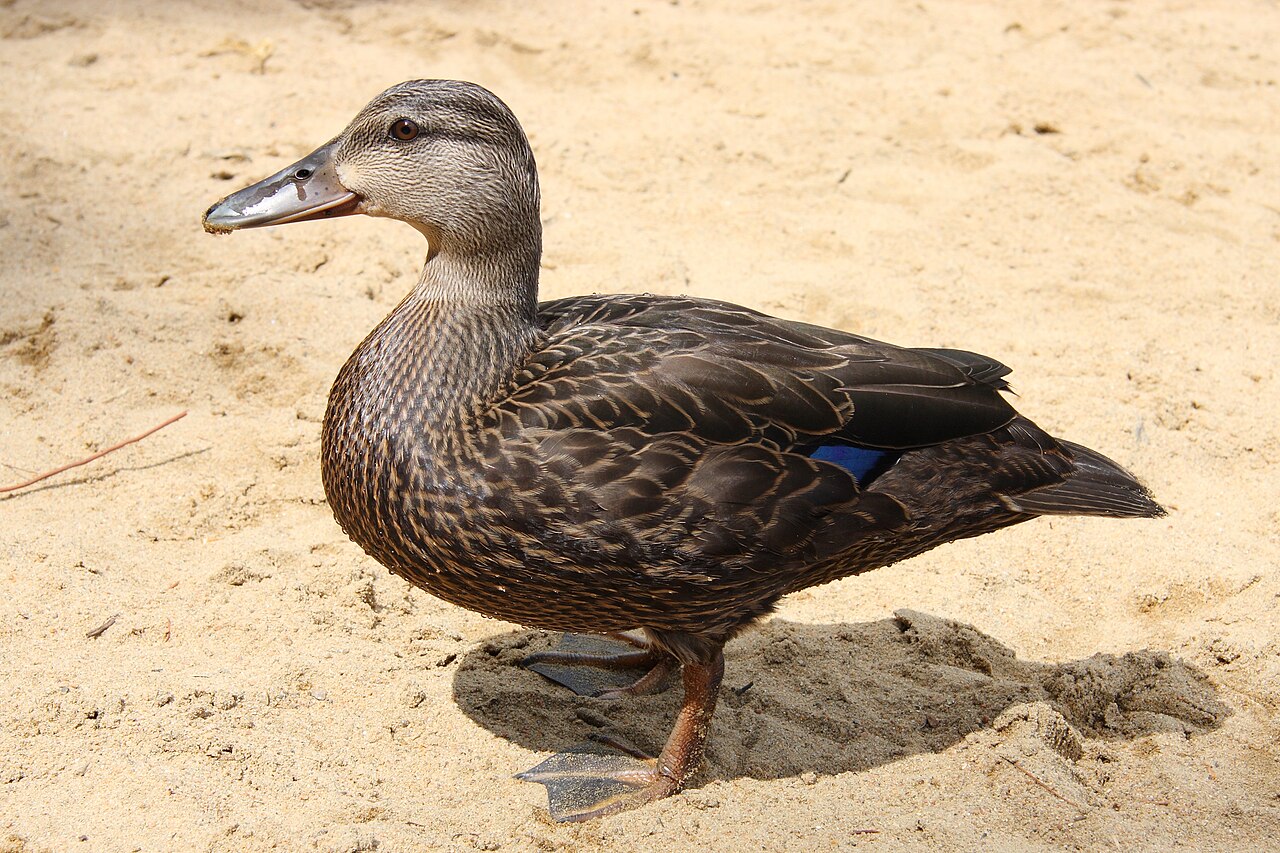
A dark, dusky-brown dabbling duck closely related to the Mallard, common on Maine’s coastal marshes, rivers, and inland wetlands. American Black Ducks have declined significantly since the mid-20th century, partly due to habitat loss and partly due to hybridization with the more aggressive and range-expanding Mallard, which has become a genuine conservation concern for maintaining pure Black Duck populations. Maine remains one of the species’ strongholds along the Atlantic Flyway, and they are a common sight on open water even through the colder months when many other waterfowl have moved further south.
Common Eider
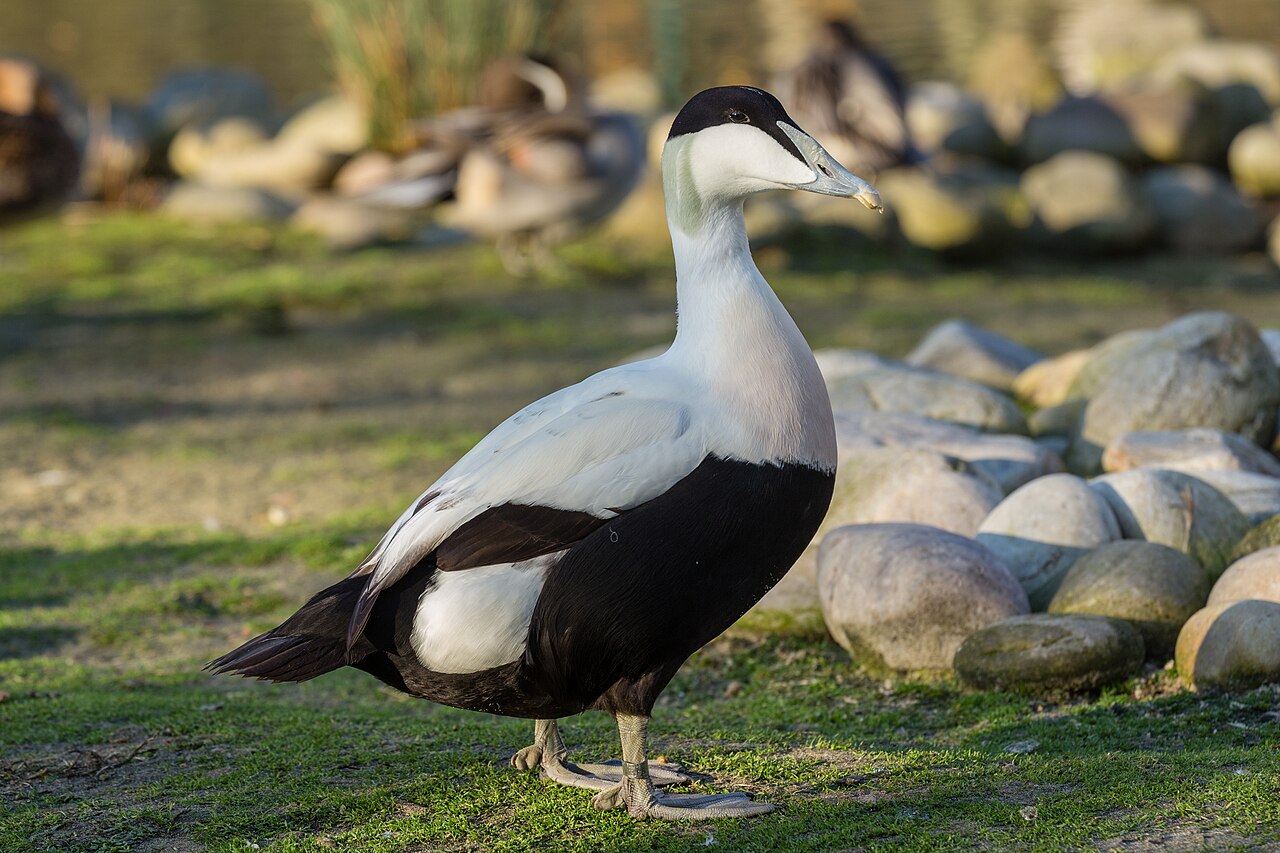
North America’s largest sea duck, breeding in colonies on Maine’s offshore islands and wintering in large rafts along the state’s rocky coastline. Male Common Eiders are strikingly patterned in black and white with a pale green nape, while females are mottled brown, providing camouflage on the nest. Eider down, prized for its insulating properties, has historically been harvested from abandoned nest linings in parts of the species’ range, though not commercially in Maine today. They are strictly coastal and marine, diving for mussels and other shellfish, and are a common sight from headlands and coastal roads rather than inland yards.
Getting Started
A sunflower seed feeder, a suet cage, and a heated birdbath cover most of what’s useful for a Maine yard through the colder months. Spring and early summer open up possibilities that don’t exist in winter, including species tied to specific habitat — Bicknell’s Thrush on high mountain ridgelines, Atlantic Puffins on offshore nesting islands reachable only by boat — that require deliberate trips rather than backyard patience. For birds that do come to feeders, Maine’s chickadees, finches, and grouse are present and identifiable across all four seasons, making winter, often considered the slow season elsewhere, one of the more reliable times to watch here.
Maine’s range of habitat — boreal spruce forest in the north, rocky coastline and offshore islands, and hardwood forest further south — means the state supports species with almost no habitat overlap within a single day’s drive: a Bicknell’s Thrush on a fogbound mountain summit, an Atlantic Puffin on a treeless offshore rock, and a Black-capped Chickadee at a suburban feeder in Portland. That range is unusual for a state Maine’s size, and it’s the main reason a single backyard list here can include birds that, in most other states, would require entirely separate trips to see.
Sources
Species identification, range, and behavior details are cross-checked against the Cornell Lab of Ornithology’s All About Birds, the National Audubon Society, eBird’s Maine regional data, and the Maine Department of Inland Fisheries and Wildlife.


