
Backyard Birds in Louisiana: A Field Guide to the Species at Your Feeder
A Louisiana bayou at sunrise is loud in a way that surprises first-time visitors: egrets lift off the cypress knees in white sheets, Pileated Woodpeckers hammer away somewhere in the tupelo, and a Brown Pelican can glide past close enough to hear its wingbeats over the water. Louisiana backyards, especially anywhere near the coast or a bayou, borrow a little of that same energy. Feeder birds here typically come with a wetland soundtrack.
Why Louisiana backyards feel different
Louisiana sits at the base of the Mississippi Flyway, one of the busiest migration corridors in North America, and its climate is humid subtropical almost everywhere in the state. That combination means two things for anyone with a feeder: a huge volume of birds passing through twice a year, and a resident cast that leans toward species built for heat, humidity, and standing water. If your yard backs up to a marsh, a bayou, or even a drainage ditch with cattails, you’re effectively next door to some of the richest wetland habitat in the country.
The state bird: an unusual choice
Louisiana is one of the few states whose official state bird isn’t a songbird at all — it’s the Brown Pelican, and it’s on the state flag and seal. That choice has real history behind it: Louisiana’s pelican population collapsed almost entirely by the 1960s from pesticide poisoning, and the state ran one of the most successful reintroduction efforts in American conservation, relocating birds from Florida through the 1970s and 1990s. Seeing pelicans working the coast today, diving bill-first for fish, is a small everyday reminder of that comeback.
Common feeder visitors
Away from the water, a typical Louisiana backyard feeder draws a familiar Southern mix: Northern Cardinals holding territory year-round, Carolina Wrens singing far louder than their size suggests, Blue Jays working sunflower seed with their usual bluster, and Carolina Chickadees flitting in and out in pairs. Ruby-throated Hummingbirds show up reliably from spring through fall and linger later into the year here than in most northern states, since Louisiana’s mild winters mean a handful sometimes stick around instead of migrating all the way to Central America.
The real showstopper, if you’re lucky enough to attract one, is the Painted Bunting. Adult males look almost unreal — blue head, green back, red underside — and they favor brushy edges and weedy patches more than manicured lawns. A feeder stocked with white millet near cover gives you the best odds of one dropping in during late spring or summer.
If you’re near water
Anyone within sight of a bayou, marsh, or retention pond gets a second layer of birds most backyards never see: Great Egrets and Snowy Egrets standing motionless in the shallows, Anhingas drying their wings on a fallen log, and herons working the edges at dawn and dusk. Roseate Spoonbills, with their improbable pink color and spoon-shaped bill, turn up in coastal parishes often enough that longtime residents barely blink at them — but they’re one of the more startling sights for a first-time visitor.
Feeding through the heat
The biggest practical challenge in a Louisiana yard isn’t cold, it’s humidity. Seed spoils faster here than it does up north, and mold in a wet feeder can make birds sick. Cleaning feeders every couple of weeks, choosing a spot with some airflow, and switching to smaller amounts of fresh seed more often will do more for your yard than any special mix. Hummingbird feeders need the same attention — nectar can ferment within days in summer heat, so a rinse-and-refill every three or four days is worth the habit.
Feeding Birds in a Wetland Climate
Louisiana’s humidity and heat change the calculus for feeder maintenance more than most guides account for. Seed spoils and grows mold faster here than in drier climates, so smaller quantities refilled more often work better than a large hopper feeder left to sit. Suet can soften and spoil in summer heat, and a no-melt or summer-blend suet cake holds up considerably better from late spring through early fall. Standing water is rarely the draw it is in drier states, since Louisiana yards are often already close to natural water, but a clean, elevated birdbath still pulls in species that won’t visit a seed feeder, including several of the wetland birds on this list when a yard backs onto marsh or bayou habitat.
Mosquito control is worth factoring in too. Standing water that isn’t actively used by birds — clogged gutters, unused plant saucers, old tires — breeds mosquitoes fast in Louisiana’s climate, while a birdbath that’s dumped and refreshed every two to three days stays clean enough to avoid the problem and keeps attracting birds rather than pests.
Brown Pelican
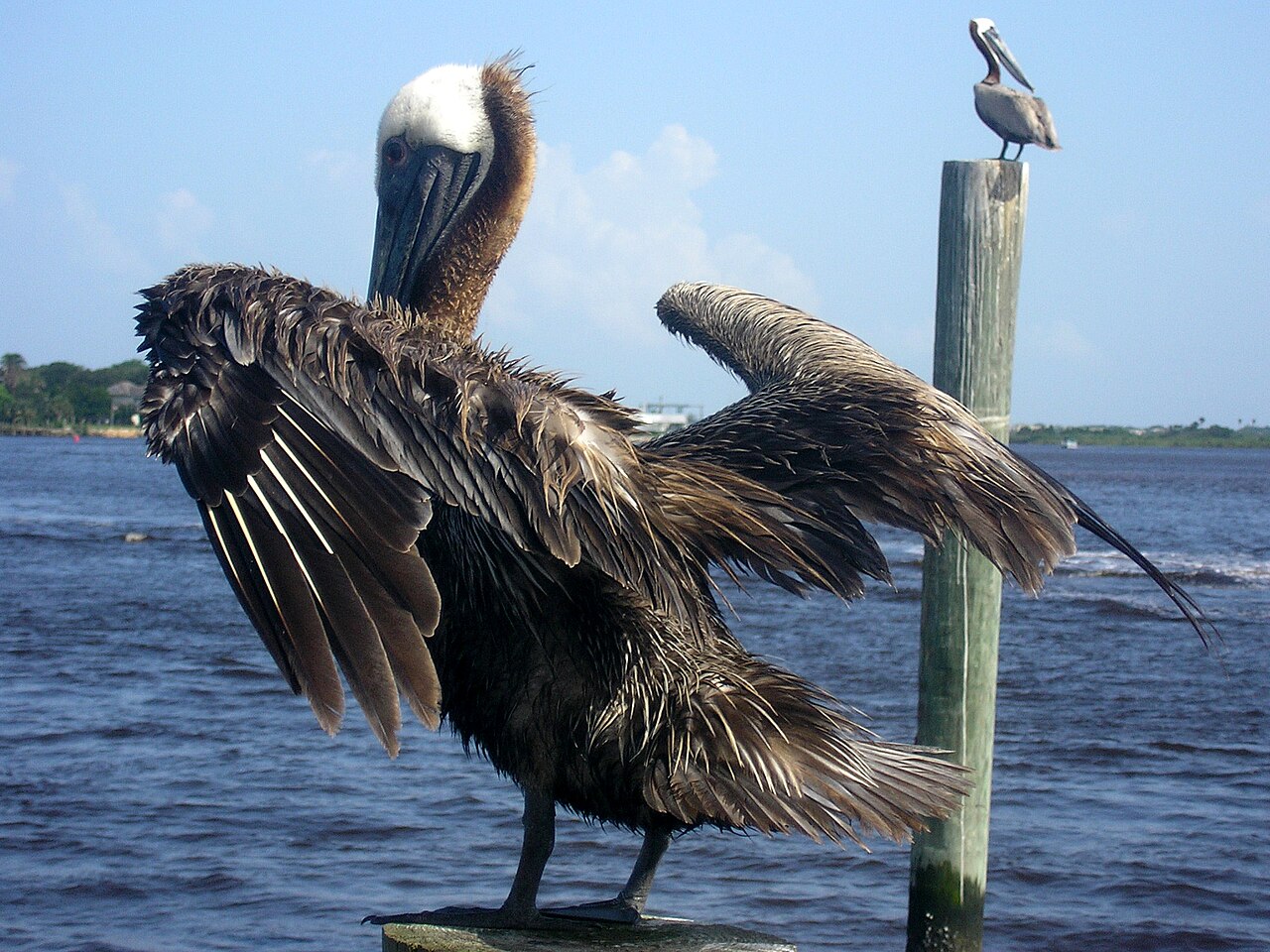
Louisiana’s state bird and a genuine conservation success story. The species nearly disappeared from the state by the 1960s due to pesticide-related eggshell thinning, and Louisiana ran one of the country’s most sustained reintroduction efforts, relocating birds from Florida through the 1970s and again in the 1990s after Hurricane-driven habitat loss. Brown Pelicans are coastal and estuarine birds rather than typical feeder visitors, most often seen gliding low over open water or plunge-diving for fish, but yards along the coast or near large water bodies can see them pass regularly overhead.
Pileated Woodpecker
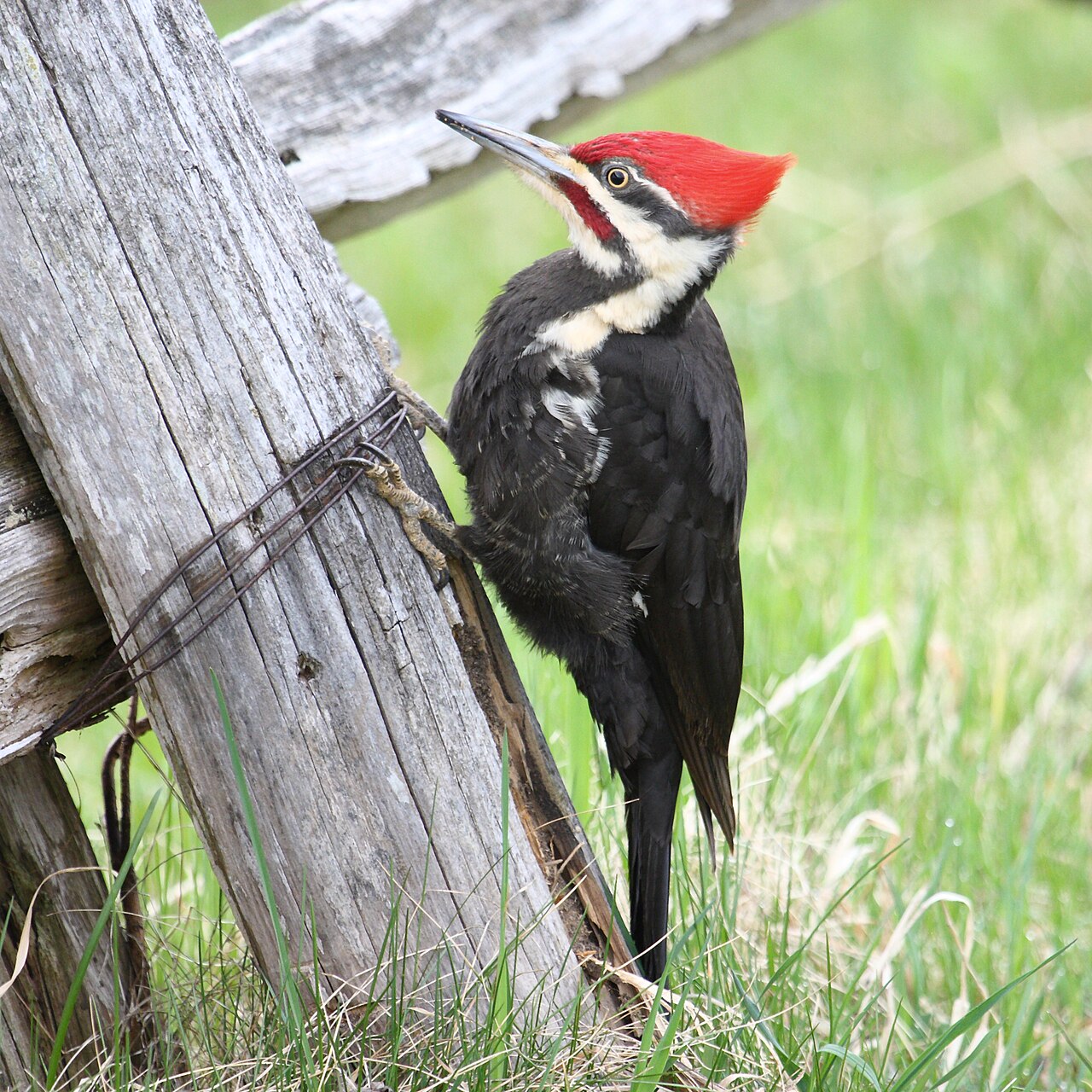
The largest woodpecker regularly found in North America, roughly the size of a crow, black-bodied with a flaming red crest and bold white stripes down the neck. Pileated Woodpeckers favor mature bottomland hardwood forest and cypress-tupelo swamp, both common across Louisiana, and they excavate large rectangular holes while foraging for carpenter ants and beetle larvae in dead wood. Suet feeders mounted near tree cover are the most reliable way to draw one into a yard, and their loud, ringing call carries well beyond the property line.
Painted Bunting
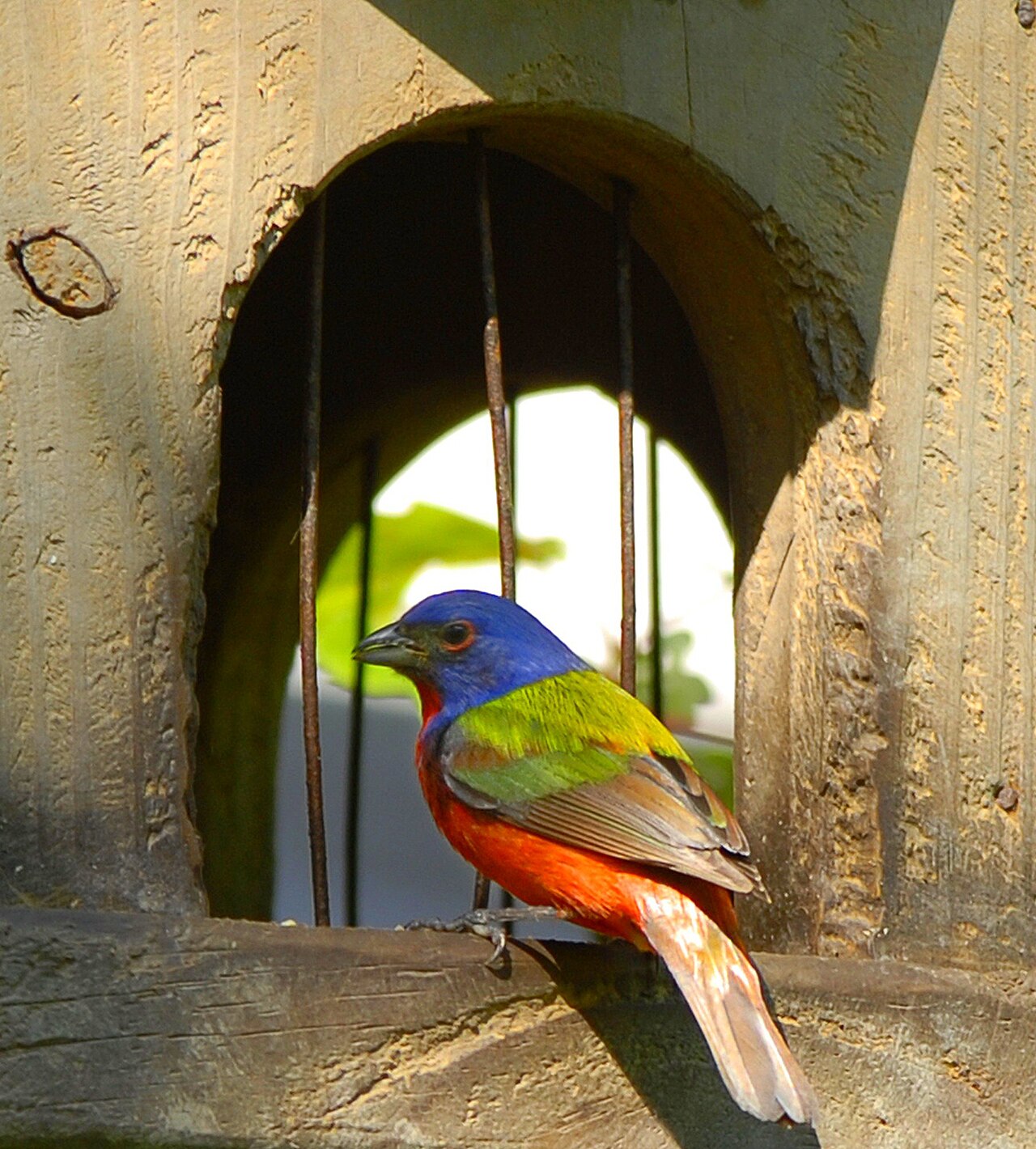
Frequently described as the most colorful songbird in North America — males combine a blue head, red underparts, and a green back in a combination that looks almost artificial. Painted Buntings breed across southern Louisiana in brushy edges, thickets, and overgrown fields, arriving in spring and departing by early fall. They favor white proso millet at platform or ground feeders over sunflower seed, and dense shrub cover nearby makes a yard far more likely to hold one, since the species is naturally shy and quick to retreat into cover.
Brown-headed Nuthatch
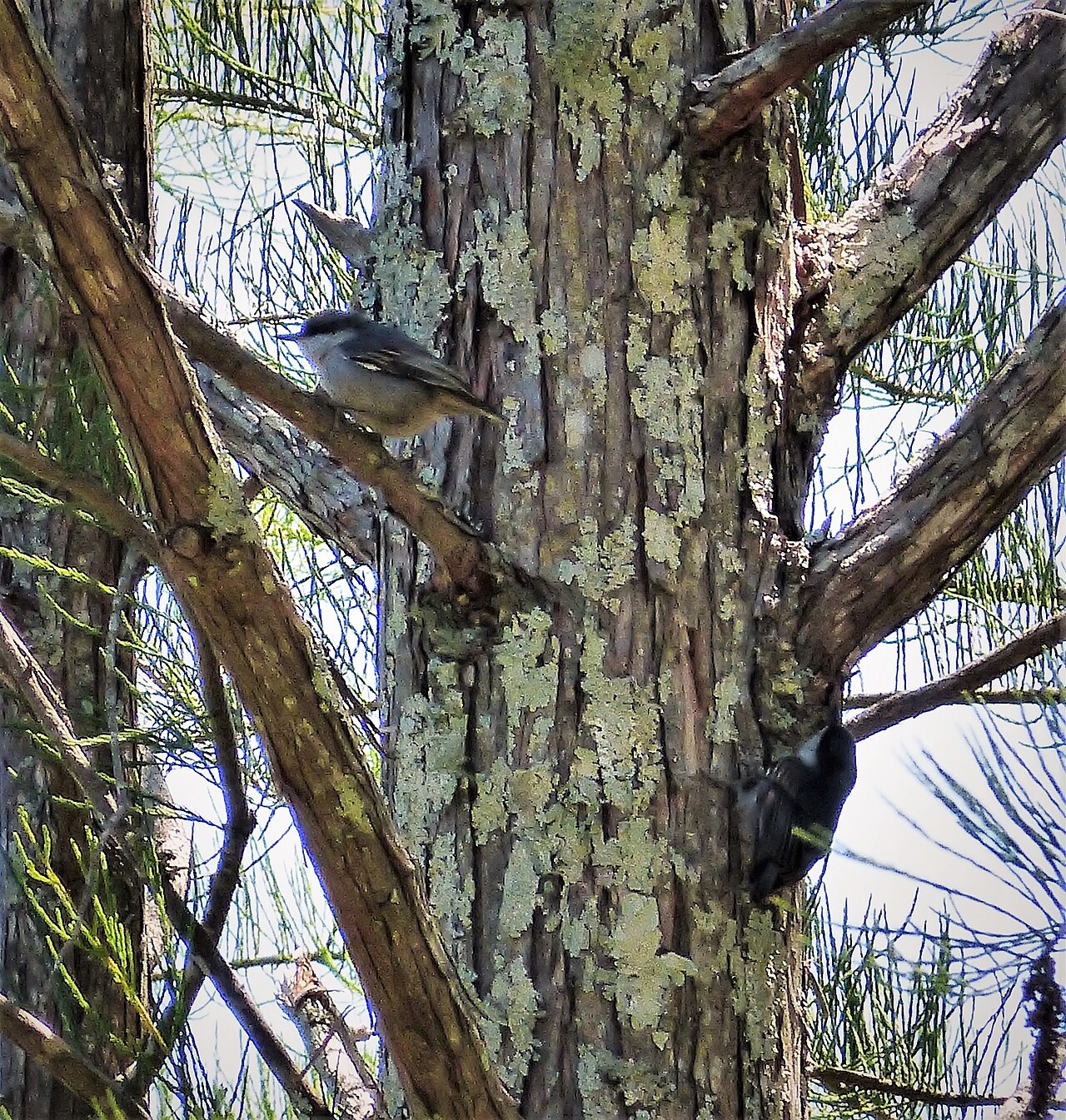
A small, active bird tightly associated with mature pine woodland, common across much of Louisiana’s pine belt. Brown-headed Nuthatches travel in small family groups, moving head-first down tree trunks in the nuthatch style while giving a distinctive squeaky-toy call. They are one of the few North American birds known to use tools, occasionally prying bark off with a wood chip held in the bill to expose insects underneath. Suet and sunflower seed at feeders near pine trees will usually attract them where pines are present nearby.
Anhinga
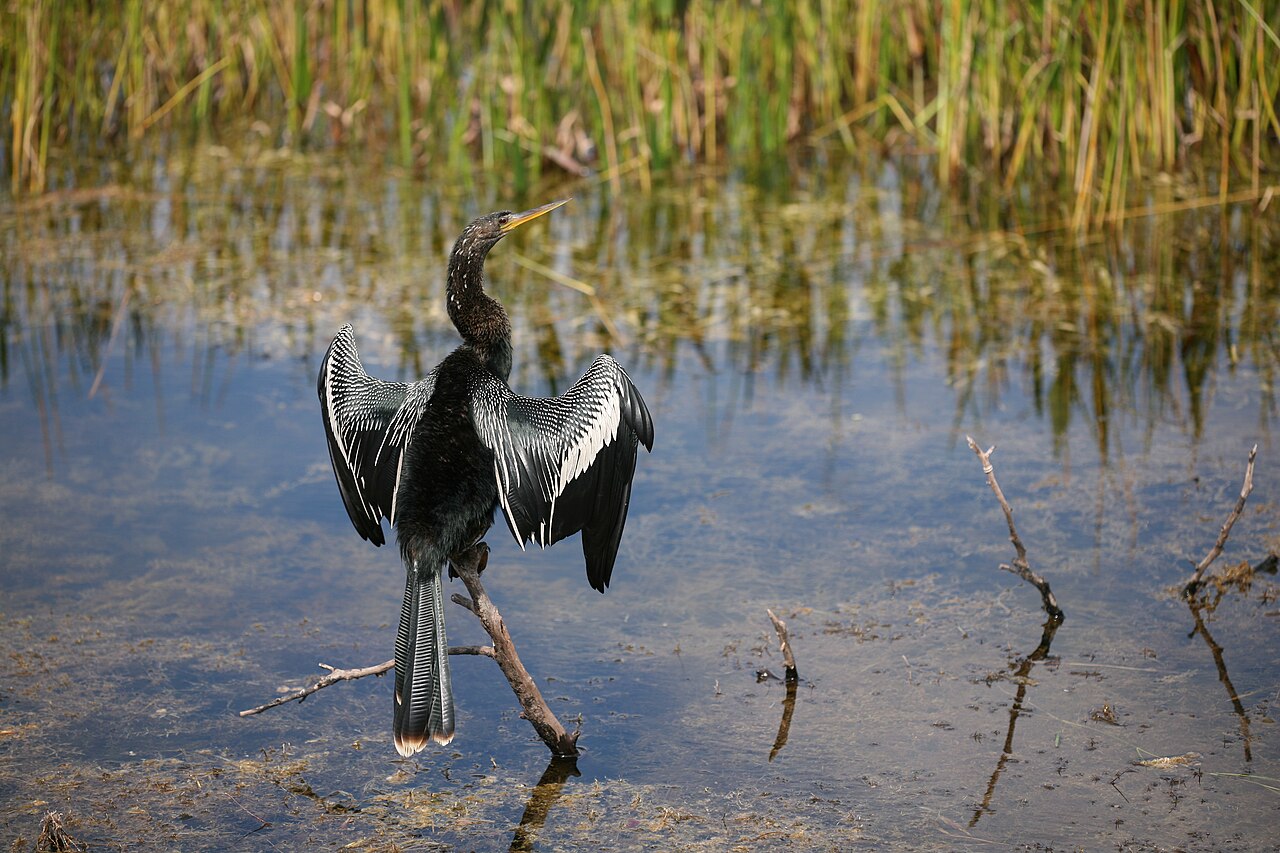
A snake-necked waterbird common on Louisiana’s bayous, swamps, and drainage canals, often seen perched with wings fully spread to dry after swimming, since its feathers lack the waterproofing most waterbirds rely on. Males are glossy black with silver-white wing patches; females have a tan head and neck. Anhingas swim low in the water with just the head and neck visible, spearing fish underwater with a rapid thrust of the bill. They are not feeder birds, but any yard backing onto a bayou, pond, or slow-moving waterway in Louisiana has a good chance of hosting one on a regular perch.
Roseate Spoonbill
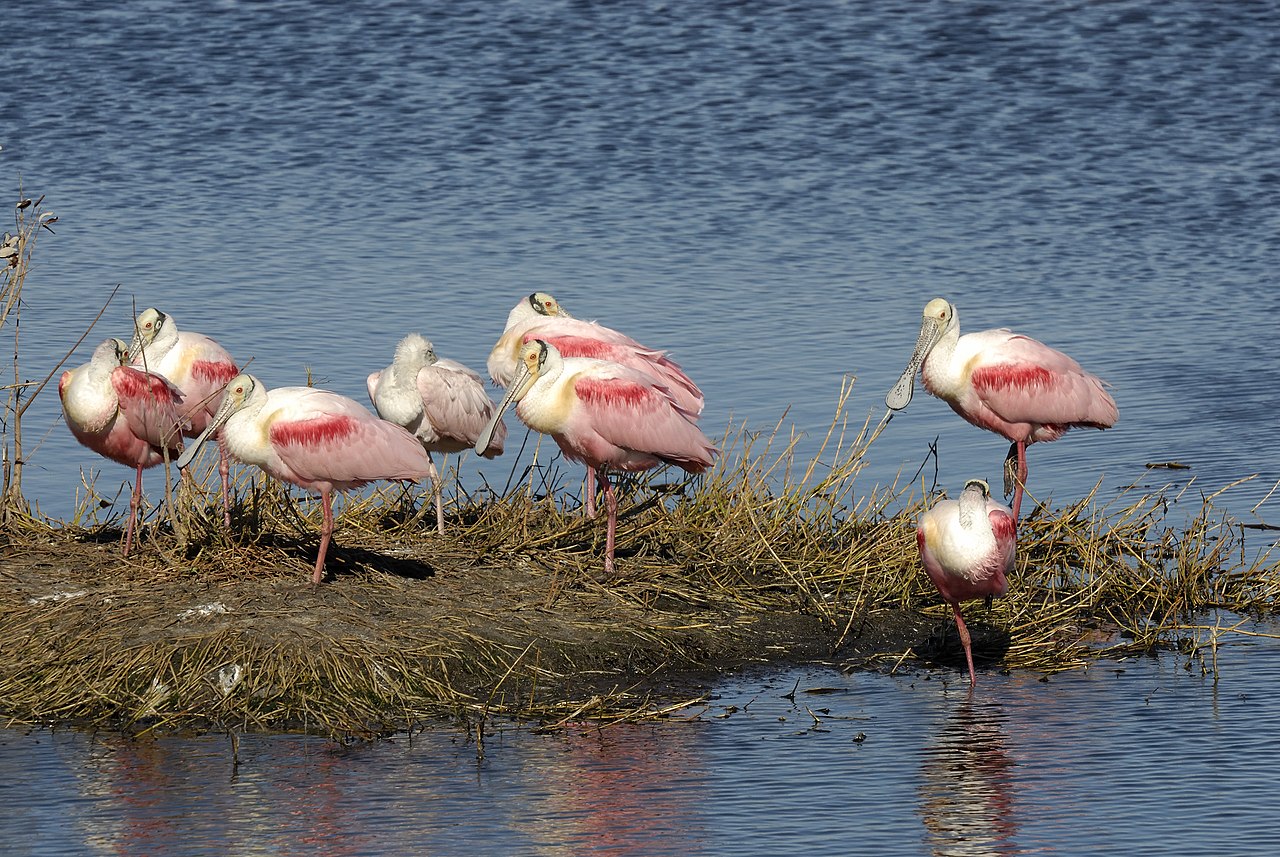
An unmistakable pink wading bird with a flattened, spoon-shaped bill used to sweep side-to-side through shallow water, filtering out small fish and crustaceans. The pink coloring comes from carotenoid pigments in its diet, the same source responsible for flamingo coloration. Roseate Spoonbills nest in coastal Louisiana colonies, often alongside herons and egrets, and their numbers have expanded northward into the state’s wetlands in recent decades. They are wetland specialists rather than feeder visitors, but are increasingly reported from yards adjoining marsh or shallow coastal water.
Carolina Wren
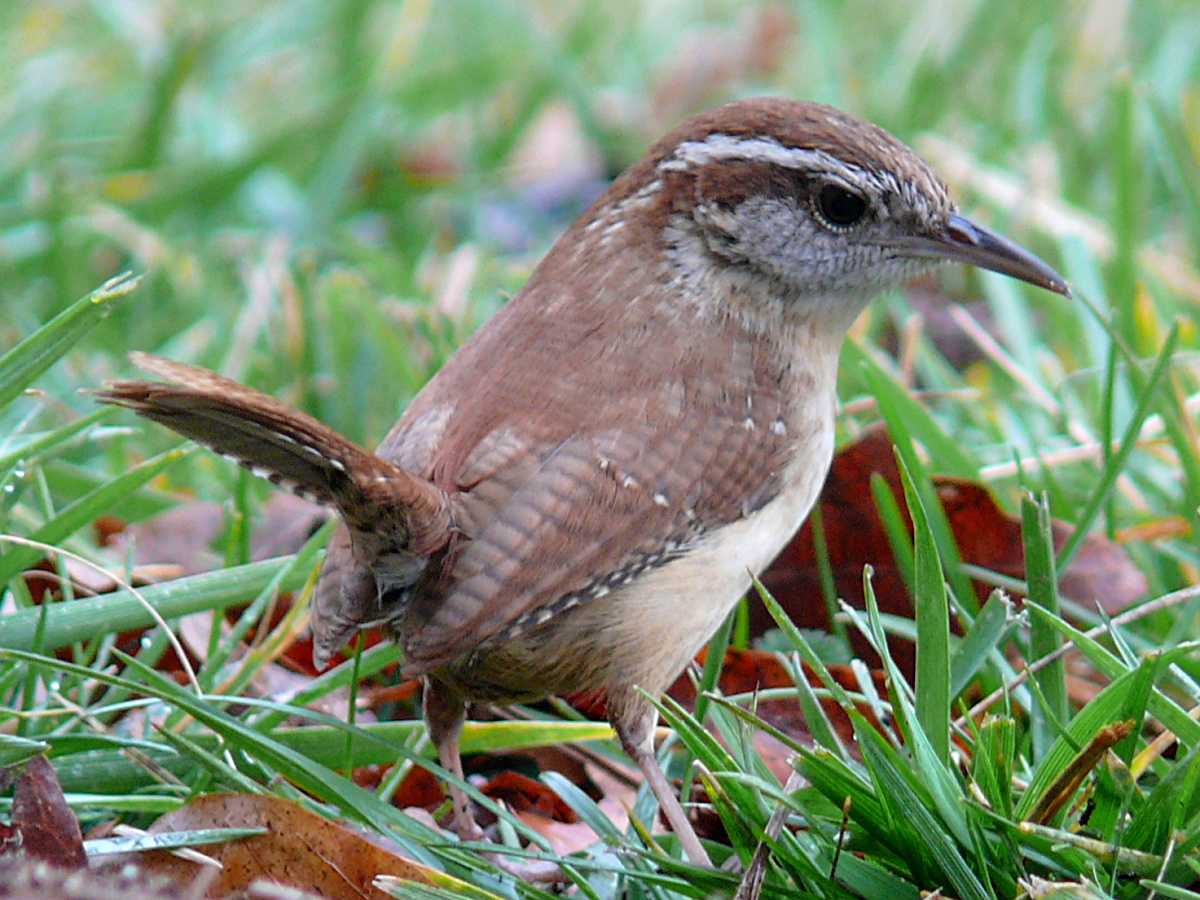
A small, reddish-brown bird with a bold white eyebrow stripe and a voice far louder than its size suggests — its teakettle-teakettle-teakettle song is one of the most commonly heard sounds in Louisiana yards year-round. Carolina Wrens are non-migratory and stay paired through the year, foraging low in brush piles, under porches, and around woodpiles for insects and spiders. They will visit suet feeders readily and often nest in unconventional spots close to houses, including hanging planters, mailboxes, and open garages.
Yellow-crowned Night-Heron
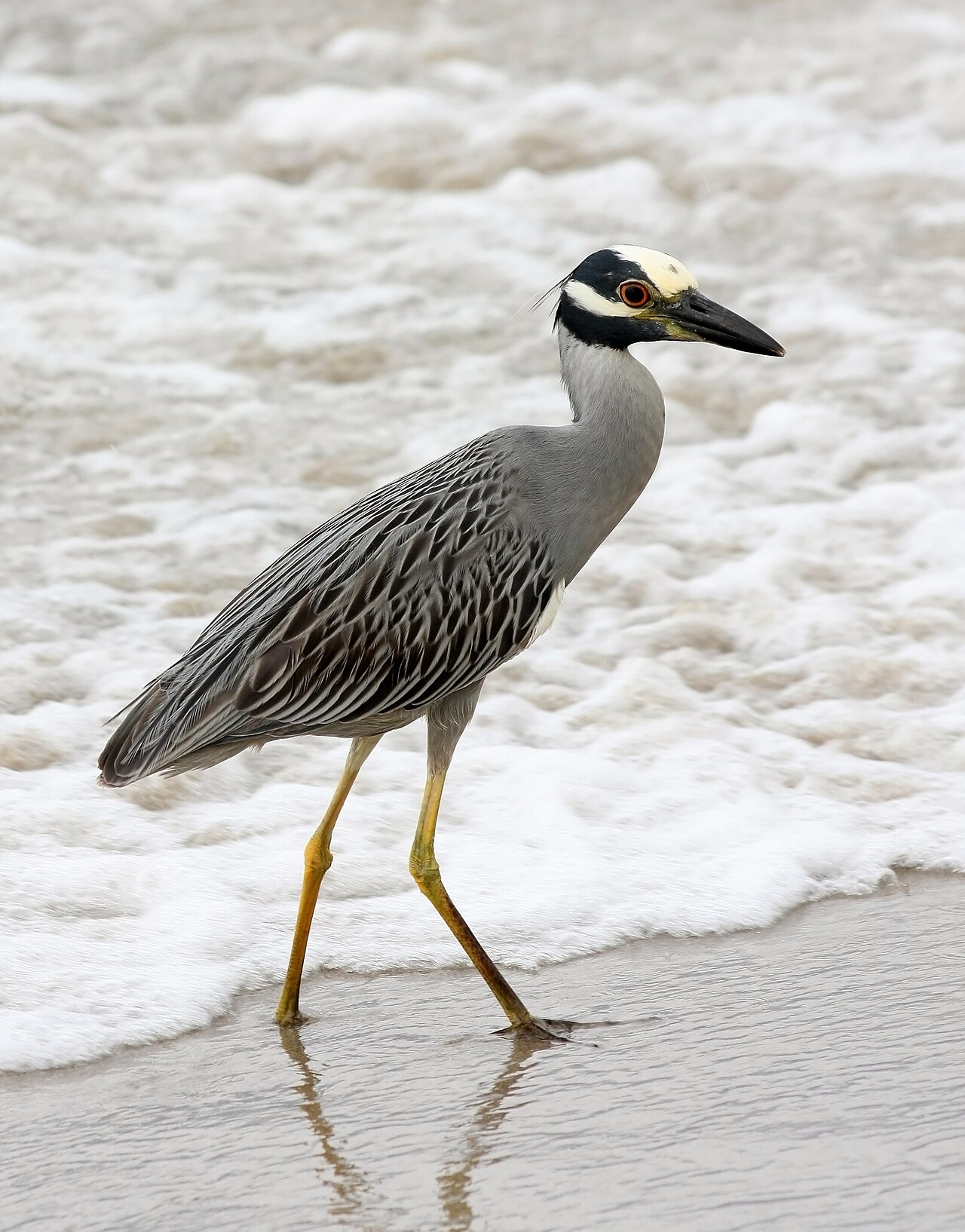
A stocky, gray-bodied heron with a black-and-white face pattern and a pale yellow crown patch, most active at dusk and after dark despite the name suggesting otherwise. Yellow-crowned Night-Herons specialize in crustaceans, particularly crayfish and crabs, which makes them common in Louisiana’s ditches, canals, and residential drainage areas, not just remote wetlands. Suburban populations have grown in many Gulf Coast cities as the birds have adapted to urban water features, and they are increasingly reported roosting in yard trees near any standing water.
Prothonotary Warbler
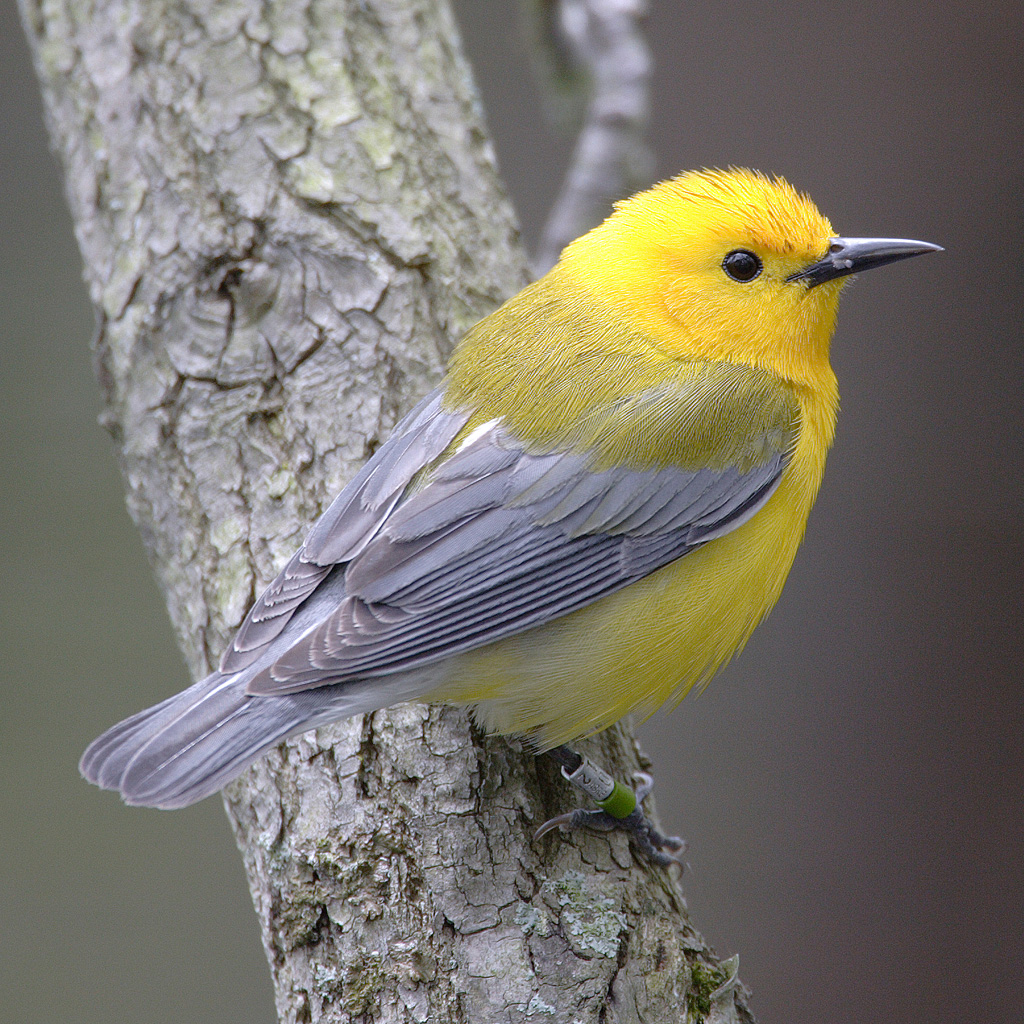
A brilliant golden-yellow warbler with blue-gray wings, named for the bright robes once worn by papal clerks. It is one of only two North American warblers that nest in tree cavities rather than open cups, and Louisiana’s flooded bottomland forests and cypress swamps provide exactly the dead-wood cavities and standing water it needs. The species will readily use nest boxes placed over or near water, a technique widely used by conservation groups tracking its population, which has declined with the loss of forested wetland habitat across its range.
Great Egret
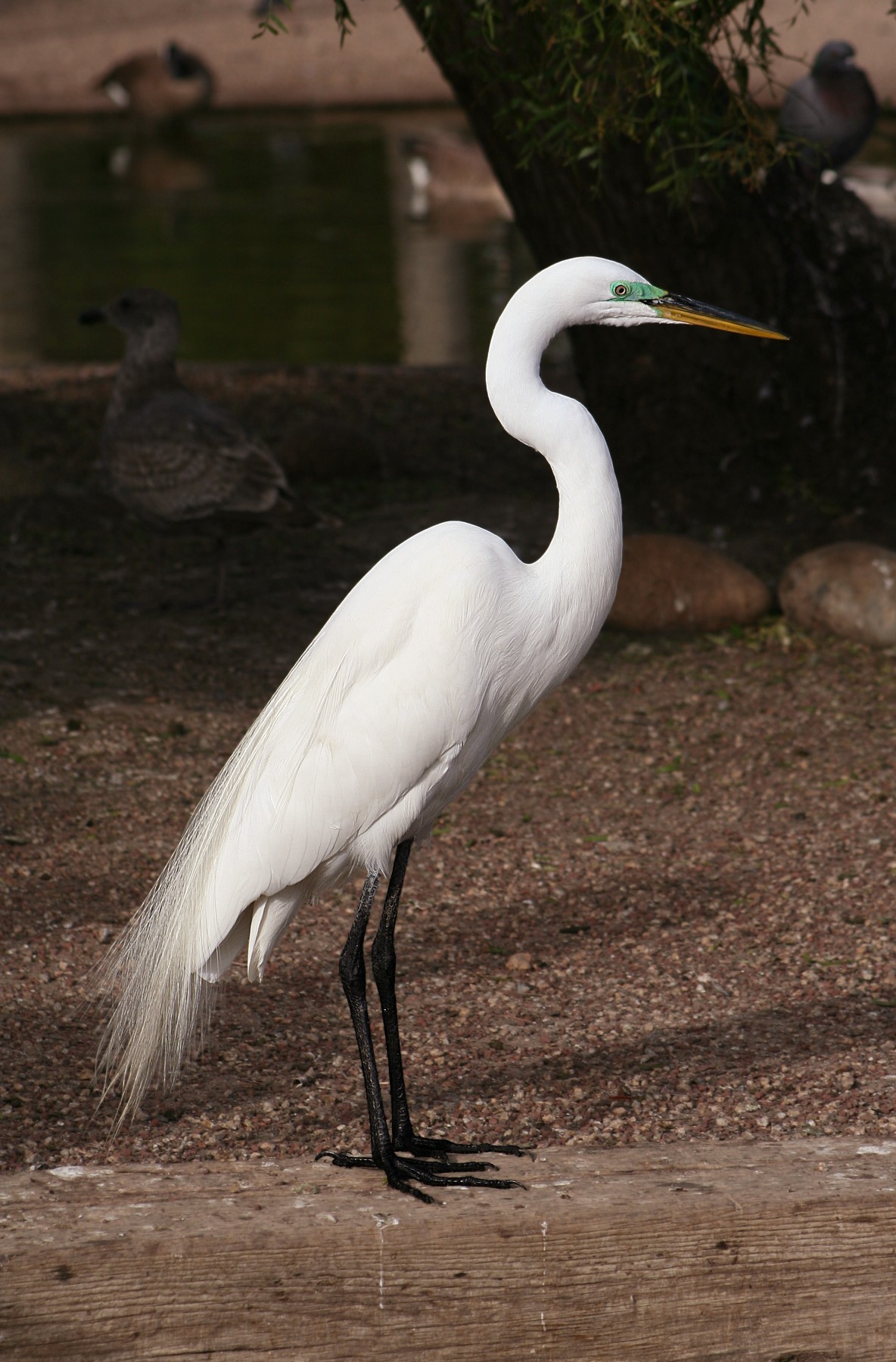
A tall, all-white wading bird with a yellow bill and black legs, common along Louisiana’s marshes, bayous, and drainage canals. Great Egrets were hunted nearly to extinction in the late 1800s for their breeding plumes, used in the hat trade, and the resulting conservation backlash helped launch the modern Audubon Society. Populations have since recovered substantially. They hunt by standing motionless in shallow water before striking at fish, frogs, and large insects, and are a near-constant sight in any Louisiana neighborhood with a pond, ditch, or wetland edge nearby.
Swallow-tailed Kite
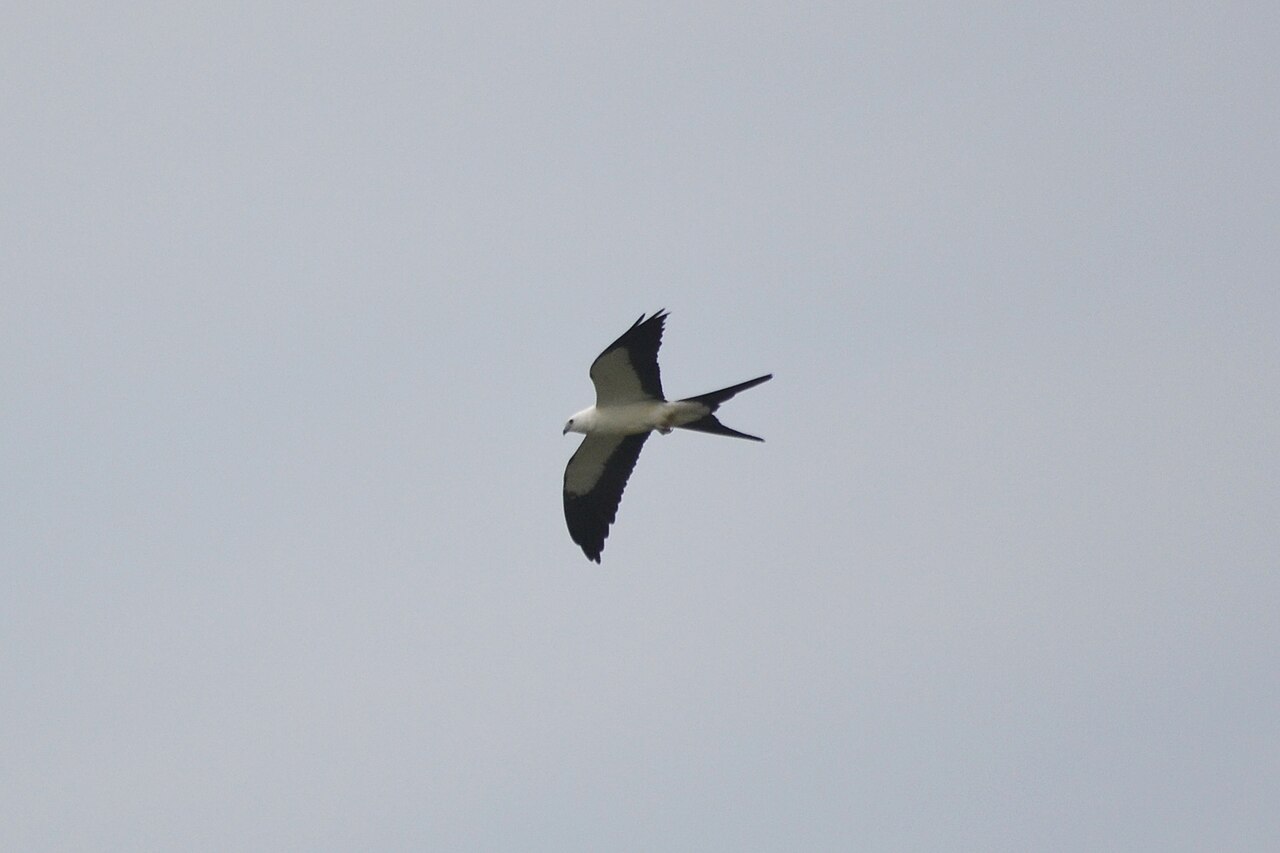
One of the most graceful raptors in North America, black and white with a deeply forked tail and a flight style closer to gliding than flapping. Swallow-tailed Kites spend the breeding season in Louisiana’s forested wetlands and bottomland hardwoods, often near rivers and swamps, before making an extraordinary migration to South America each fall. They feed almost entirely in the air, snatching dragonflies, wasps, and small lizards on the wing, and are occasionally seen drinking by skimming water directly off a pond’s surface without landing. They are not feeder birds, but rural and semi-rural yards near forested wetlands in southern Louisiana have a real chance of seeing one overhead in summer.
Least Bittern
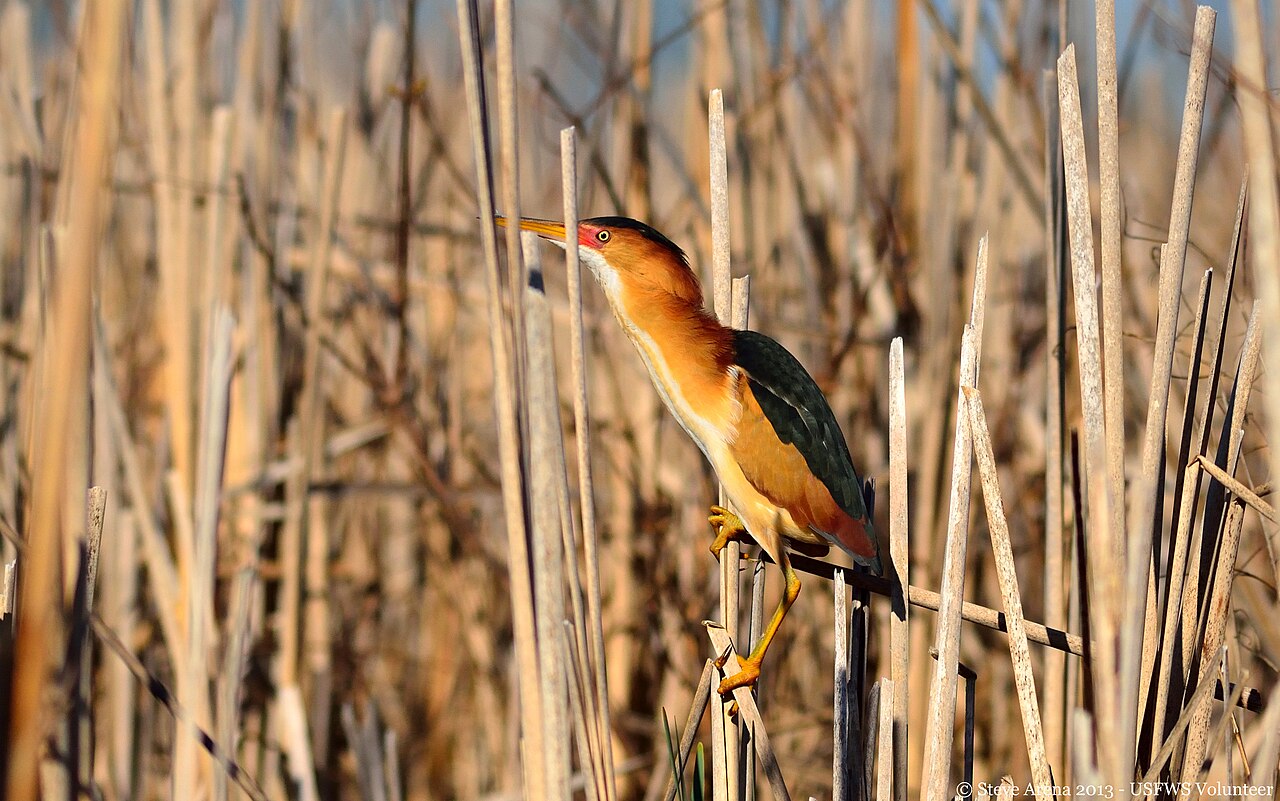
The smallest heron in North America, buff and black with a streaky pattern that provides near-perfect camouflage against marsh reeds. Least Bitterns are secretive by nature, gripping vertical marsh vegetation with specially adapted feet rather than perching horizontally, and they freeze with the bill pointed straight up when alarmed, blending almost completely into the surrounding cattails. They are common but rarely seen across Louisiana’s marshes and wetland edges, more often detected by their soft, cooing call than by sight. Yards backing directly onto cattail marsh occasionally host one at the water’s edge.
Louisiana Waterthrush
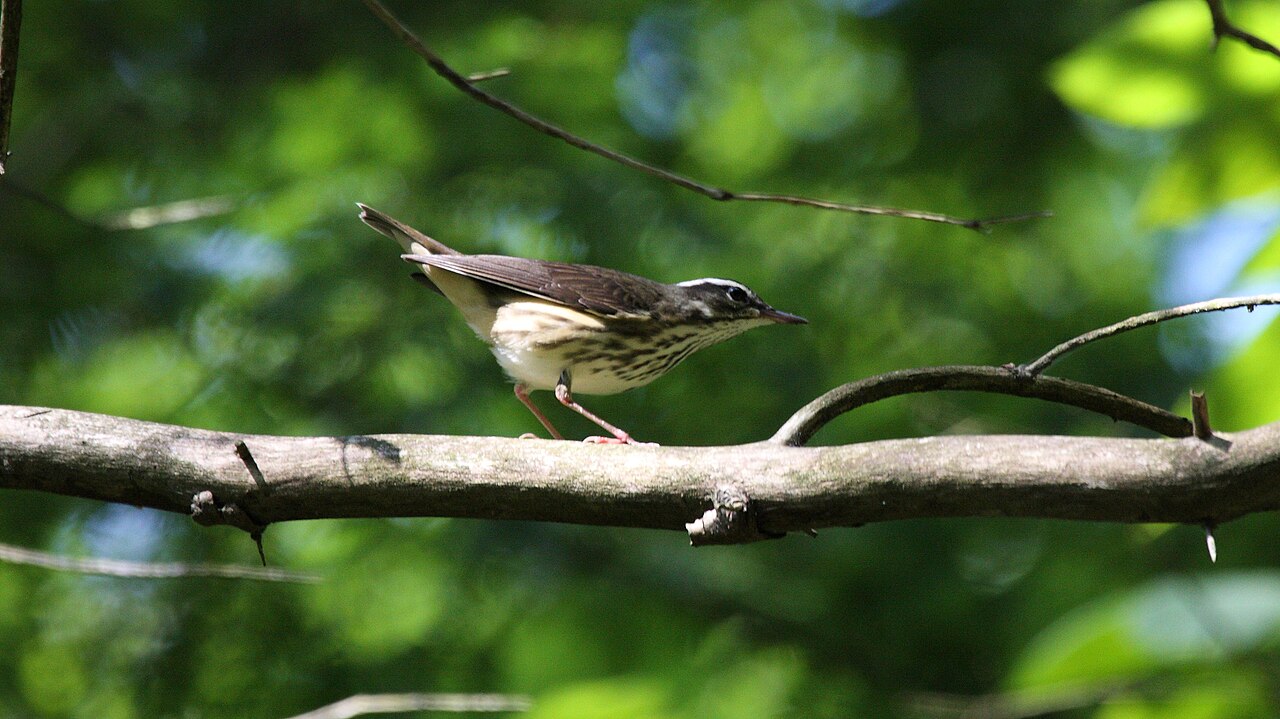
Despite the name, this warbler is found breeding across much of the eastern United States, but it was first described from a Louisiana specimen, which is how it kept the name. It is a streaky brown bird that looks more like a thrush than a warbler, with a habit of constantly bobbing its tail while walking along the edges of clear, fast-moving streams. Louisiana Waterthrushes are among the earliest spring migrants to arrive and are considered a strong indicator of stream water quality, since they require clean, well-oxygenated water with healthy insect life to feed on. They are not feeder or yard birds in the typical sense, but wooded properties along spring-fed creeks in the northern part of the state may host one during migration.
Red-cockaded Woodpecker
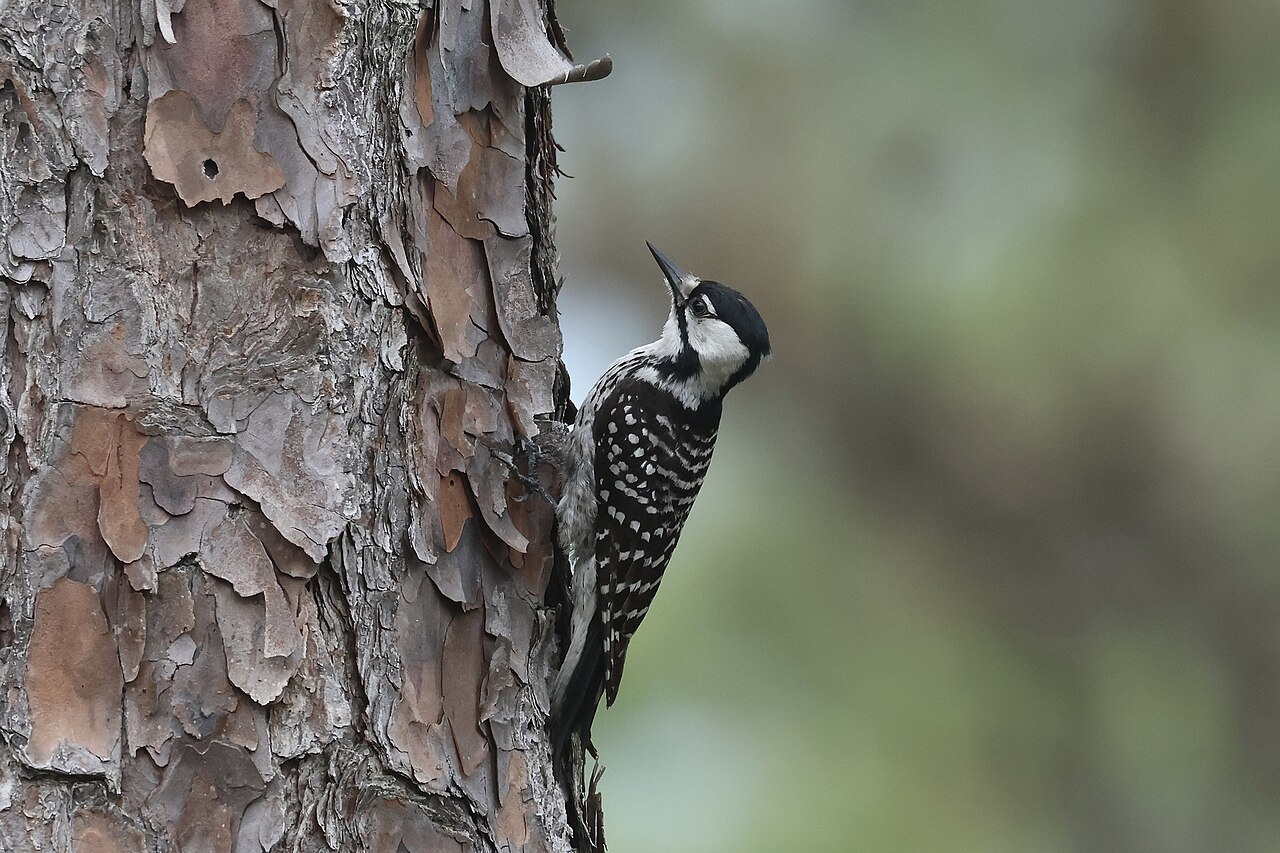
An endangered species tied almost exclusively to old-growth longleaf pine forest, a habitat that has shrunk dramatically across the Southeast, including Louisiana, due to logging and fire suppression. Unlike most woodpeckers, it excavates nest cavities exclusively in living pines, a process that can take years, and it drills small resin wells around the cavity entrance so that sticky sap deters climbing predators like rat snakes. Red-cockaded Woodpeckers live in cooperative family groups, with young from previous years often helping raise new broods. They persist in a handful of managed pine forest tracts in Louisiana, including Kisatchie National Forest, and are not a yard or feeder species.
Getting Started
A basic seed feeder, a suet cage, and attention to the calendar cover most of what’s needed to see this list over a season. Spring and fall bring the heaviest movement through the Mississippi Flyway, when migrants pass through even yards with modest cover, while the resident wetland species — herons, Anhingas, Brown Pelicans near the coast — are present year-round for anyone near water. Painted Buntings and Prothonotary Warblers are the two most sought-after summer arrivals, and both respond well to yards that leave some brushy or wooded edge intact rather than clearing every corner.
Louisiana’s mix of coastal marsh, cypress swamp, bottomland hardwood, and remnant longleaf pine means a single parish can host species that would otherwise require a cross-country trip to see together — a Roseate Spoonbill and a Red-cockaded Woodpecker are found in the same state, sometimes within a short drive of each other. That habitat diversity is the real throughline of this list: what shows up in a given yard depends less on generic backyard-bird advice and more on which of Louisiana’s ecosystems that yard happens to sit closest to.
Sources
Species identification, range, and behavior details are cross-checked against the Cornell Lab of Ornithology’s All About Birds, the National Audubon Society, eBird’s Louisiana regional data, and the Louisiana Department of Wildlife and Fisheries.

