Backyard Birds in Wyoming: A Field Guide to the Species at Your Feeder
Drive almost any two-lane road across central Wyoming in late May and one sound follows the car for miles: a Western Meadowlark on a fence post, flute-like and oddly complicated, repeating a phrase that no two birds seem to sing quite the same way. Wyoming has fewer people than any other state and more sagebrush than almost any of them, and both of those facts show up at the backyard feeder. Yards here are small islands of seed and water in a very large, very dry, very windy landscape, and the birds treat them accordingly.
A state where elevation does the sorting
Wyoming’s average elevation is a little over 6,700 feet, second only to Colorado, and that single number explains most of what a feeder here attracts. A yard in Cheyenne at 6,000 feet on the high plains gets a different cast of birds than a yard in Jackson at 6,200 feet against the Tetons, and a cabin feeder at 9,000 feet in the Bighorns gets a third set again. Elevation, not latitude, is what shuffles the deck. It also means birds move vertically rather than just north and south: species that nest high in the mountains in July often drop into valley yards in December, which is why Wyoming feeder lists can change dramatically between seasons without any bird traveling more than a few dozen miles.
The state bird: the sound of a Wyoming roadside
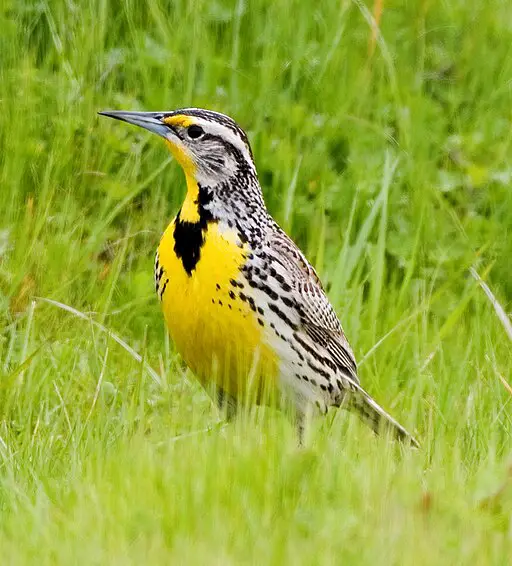
Wyoming’s state bird is the Western Meadowlark, which it shares with five other states, and no bird is more tied to the open country here. Meadowlarks are ground nesters in grassland and sagebrush, yellow-breasted with a sharp black V across the chest, and they sing from the highest perch available, which in Wyoming usually means a fence wire or a lone post. They are not feeder birds in the usual sense. But a rural Wyoming yard with grassland on at least one side will often have a meadowlark singing within earshot from April through July, and in hard winters they sometimes come in to feed on spilled seed at the edge of a driveway.
Common feeder visitors
The reliable core of a Wyoming feeder is House Finches, Black-capped and Mountain Chickadees depending on how high the yard sits, Dark-eyed Juncos on the ground in winter, Downy Woodpeckers and Red-breasted Nuthatches on the suet, and Black-billed Magpies patrolling everything with a lot of opinions. Mourning Doves clean up underneath. Some winters bring Pine Siskins in real numbers, and a yard with conifers within sight can pull in Clark’s Nutcrackers, which have the disconcerting habit of showing up, taking everything portable, and leaving.
Beyond the backyard: sagebrush and the Yellowstone edge
Wyoming’s national reputation comes from Yellowstone and Grand Teton, and the birding there is genuinely worth the trip: Trumpeter Swans on the Snake River in winter, White Pelicans on Yellowstone Lake, Osprey on almost every river bend. But the more distinctive habitat is less photographed. Wyoming holds a large share of the remaining sagebrush steppe in North America, and it supports a set of birds that exist almost nowhere else, including Sage Thrashers, Brewer’s Sparrows, and the Greater Sage-Grouse. Seedskadee National Wildlife Refuge in the southwest and the Laramie Plains lakes are two places where an ordinary morning of driving and stopping turns up birds that no amount of feeder-watching will produce.
A note on native plants
Wyoming yards fight wind and a short growing season more than they fight cold. Native shrubs that hold up to both, chokecherry, serviceberry, currant, and native rabbitbrush, do more for birds here than ornamental plantings that need constant water. A windbreak of native conifers on the prevailing-wind side of a yard is arguably the single most useful thing a Wyoming homeowner can do for winter birds, because shelter from wind matters as much as food when nighttime temperatures drop well below zero. Yards with a windbreak stay busy on days when exposed feeders sit untouched.
Winter Feeding Notes
Wyoming winters are cold, dry, and windy, and the wind is the part that catches people out. A feeder in the open can be effectively unusable to small birds on a 40 mph day even if it is full, so placing feeders on the lee side of a building or a dense shrub matters more here than the choice of seed. Black oil sunflower and suet carry most of the load from November through March. Water is the other limiting factor: much of the state is genuinely arid and open water freezes hard, so a heated birdbath often draws more species than a second feeder would. Winter feeder activity is also unpredictable in a way that frustrates newcomers, since irruptive finches like Pine Siskins arrive or skip a season based on conifer seed crops hundreds of miles away in Canada rather than on anything happening in the yard.
Western Meadowlark
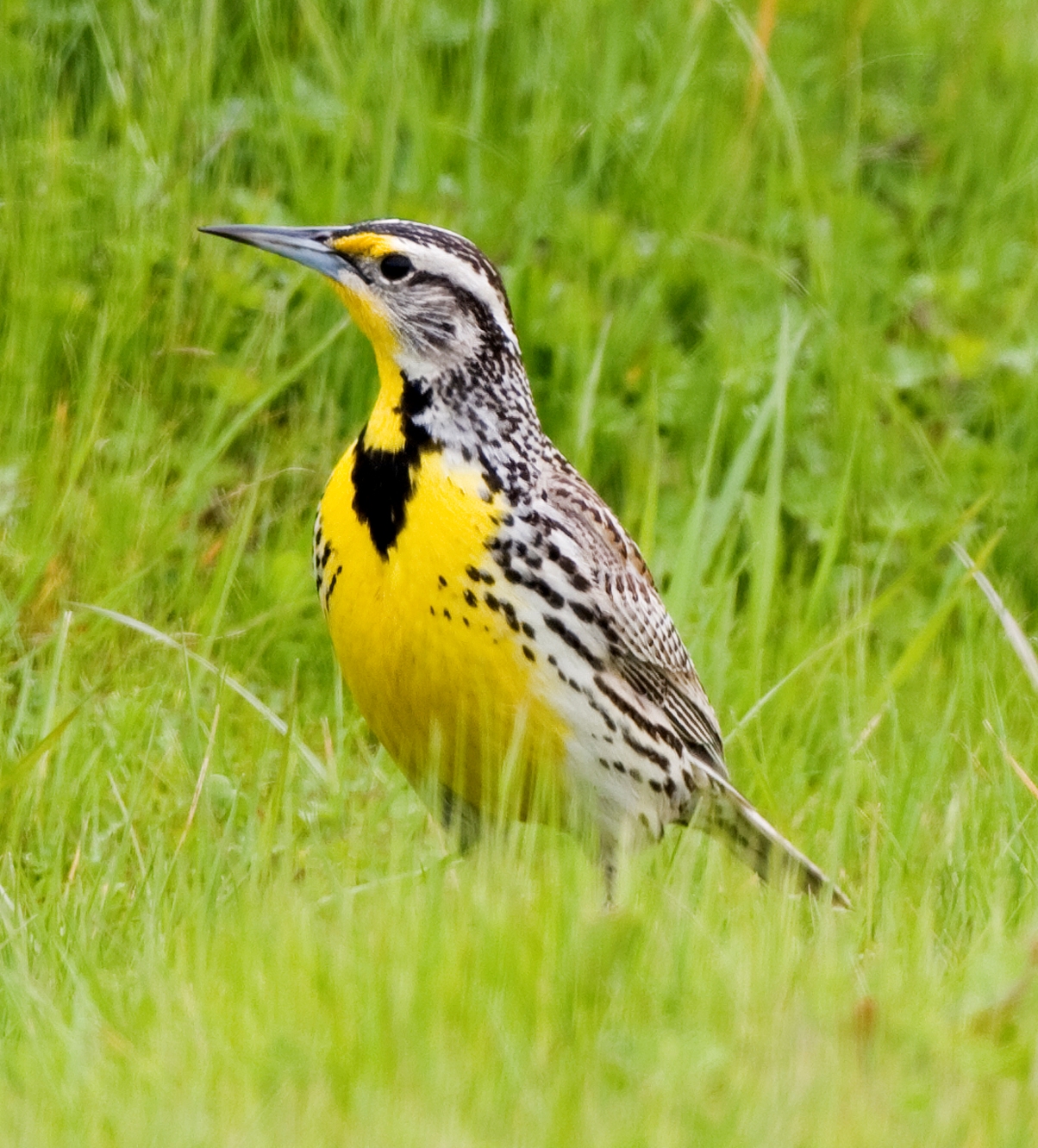
Wyoming’s state bird, and the one most people hear long before they see. The song is a descending series of liquid whistles, unmistakable once learned and genuinely difficult to describe, delivered from fence posts and sage tops across the state from early spring into midsummer. Western Meadowlarks are stocky, brown-streaked above and bright yellow below with a black chest band, and they nest on the ground in grassland, which makes them vulnerable to mowing and to conversion of native prairie. They forage by walking, probing for insects in summer and shifting to seeds and grain in winter, and a few linger in southern Wyoming through the cold months rather than moving south.
Mountain Chickadee
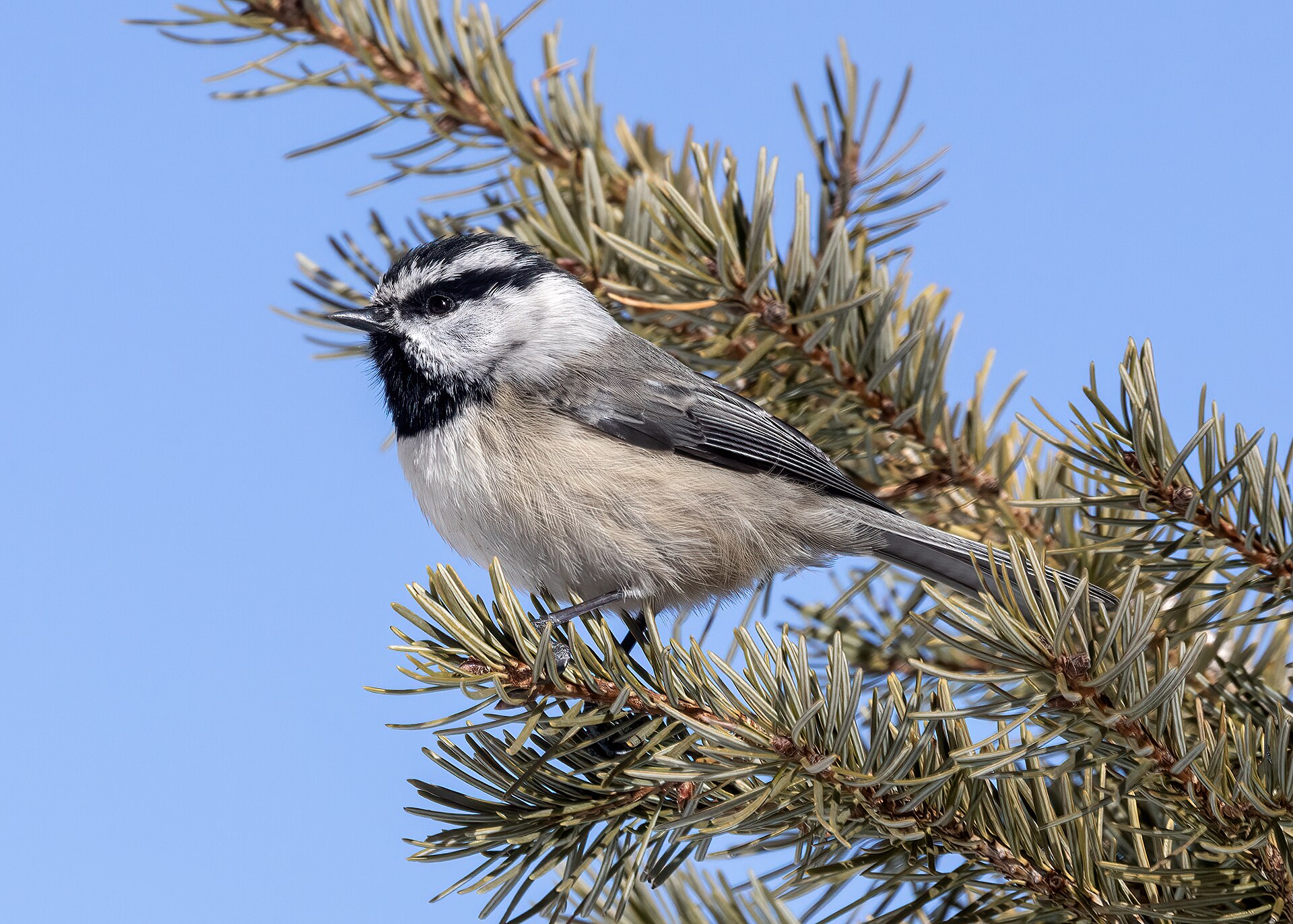
The chickadee of Wyoming’s higher country, separated from its black-capped cousin by a clean white eyebrow stripe that looks almost drawn on. Mountain Chickadees favor conifer forest, so yards near lodgepole, spruce, or ponderosa often get them while yards down in cottonwood valleys get Black-capped Chickadees instead, and some yards in between get both at once. They cache seeds heavily in autumn and are notably bold at feeders, often the first species to investigate a newly hung one. In winter they join mixed flocks with nuthatches and kinglets that move through a yard in a loose wave, all present for ten minutes and then gone.
Black-capped Chickadee
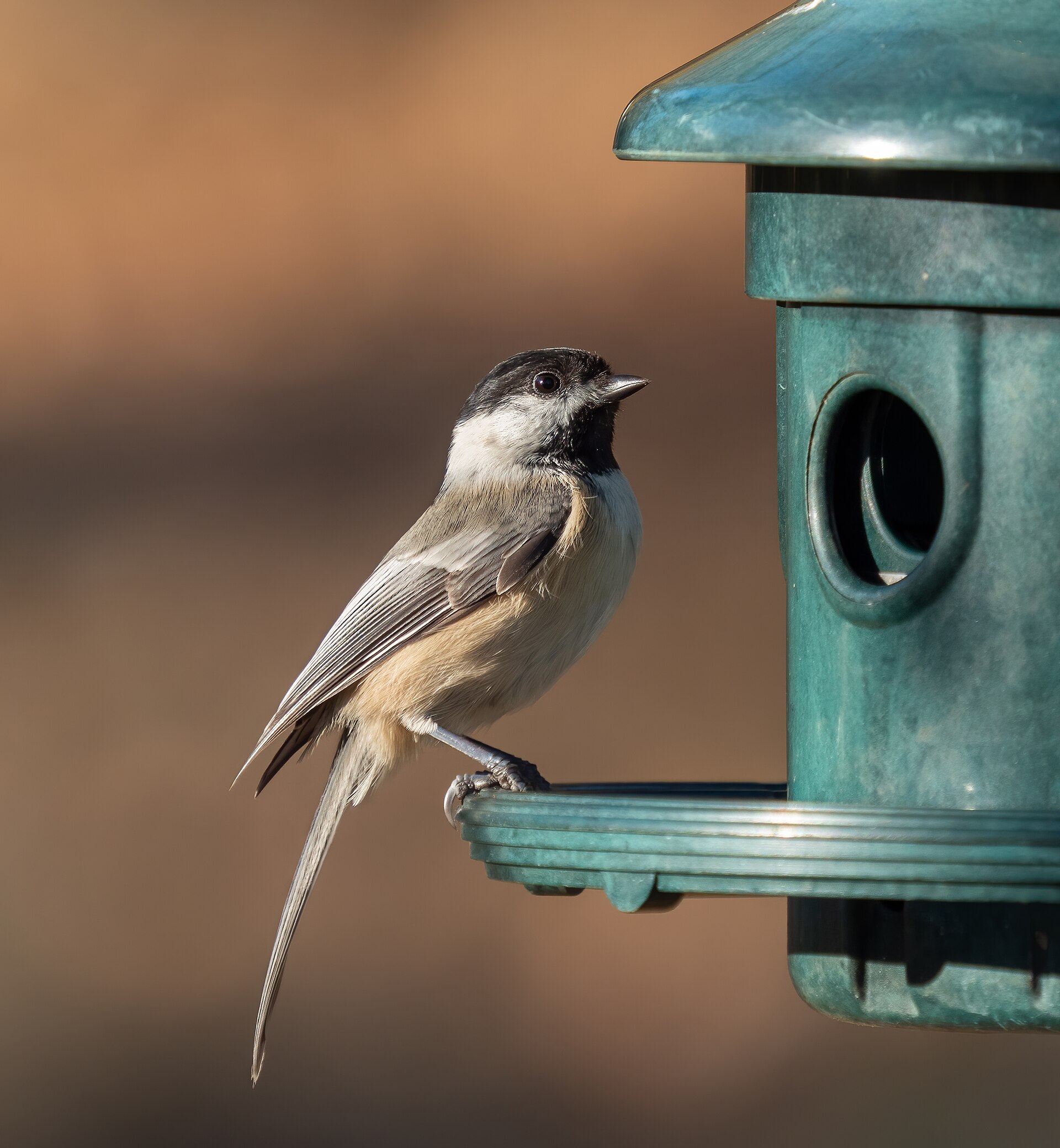
Wyoming’s lower-elevation chickadee, found in cottonwood river corridors, town neighborhoods, and aspen stands, and one of the most consistent feeder birds in the state. The black cap and bib with white cheeks are familiar to almost everyone, but the identification detail worth knowing in Wyoming is the lack of a white eyebrow, which is what separates it from the Mountain Chickadee at a shared feeder. Black-capped Chickadees survive cold nights by lowering their body temperature in a controlled way and by remembering the locations of thousands of individually cached seeds. They are also the species most likely to eventually take sunflower seed from an open hand.
House Finch
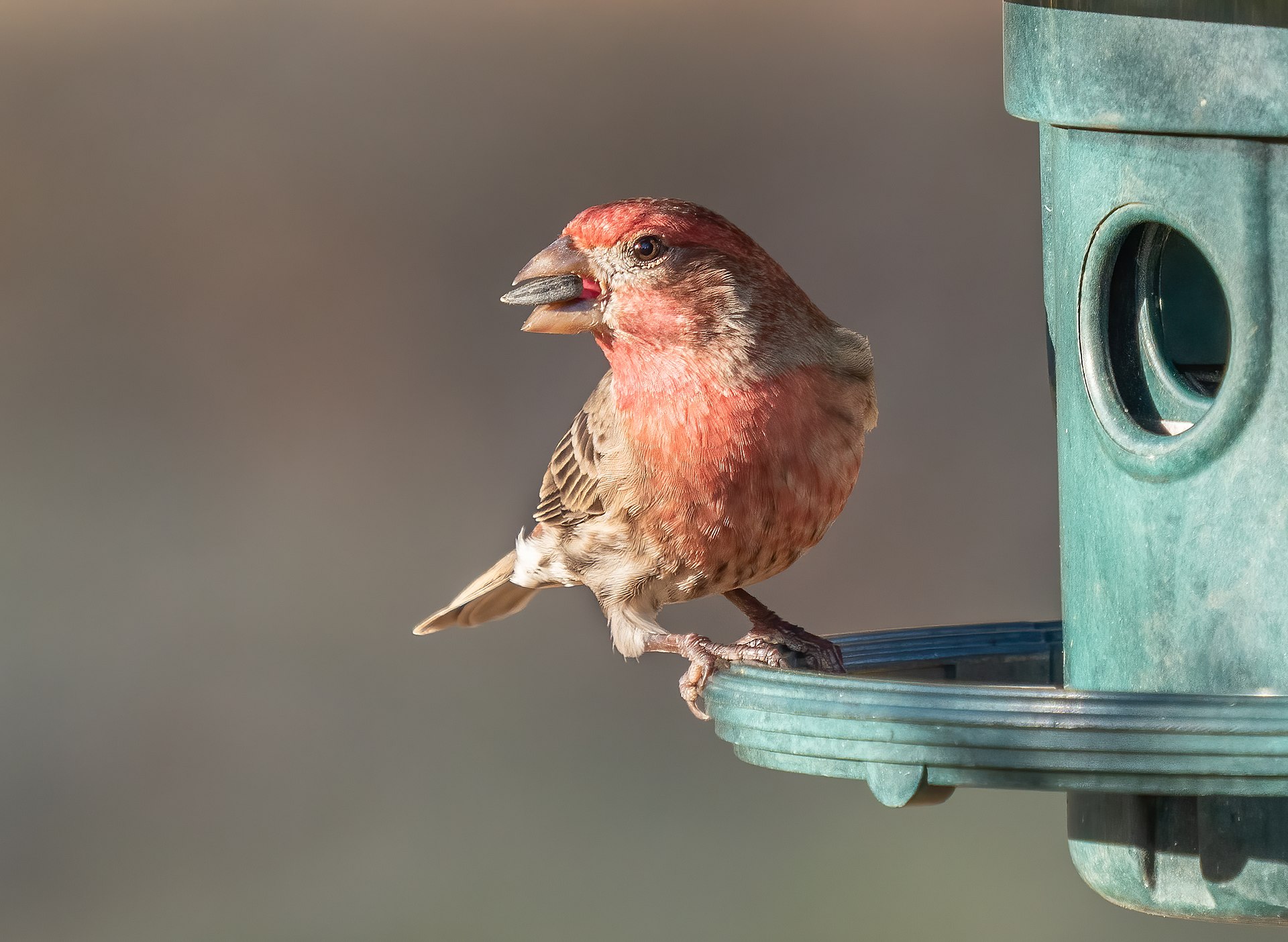
Probably the most numerous feeder bird in Wyoming towns, and the one most likely to arrive in a group of eight. Males show red on the head, throat, and upper breast, though the intensity varies from deep red to orange to nearly yellow depending on the carotenoids in the bird’s diet while the feathers grew. Females are plain brown-streaked and easy to mistake for a sparrow. House Finches eat almost entirely plant material, which is unusual for a songbird, and they will sit at a sunflower feeder for long stretches rather than grabbing a seed and leaving. Conjunctivitis spreads through House Finch flocks at crowded feeders, so a yard that hosts a lot of them needs the feeder cleaned more often than the owner would like.
Red-breasted Nuthatch
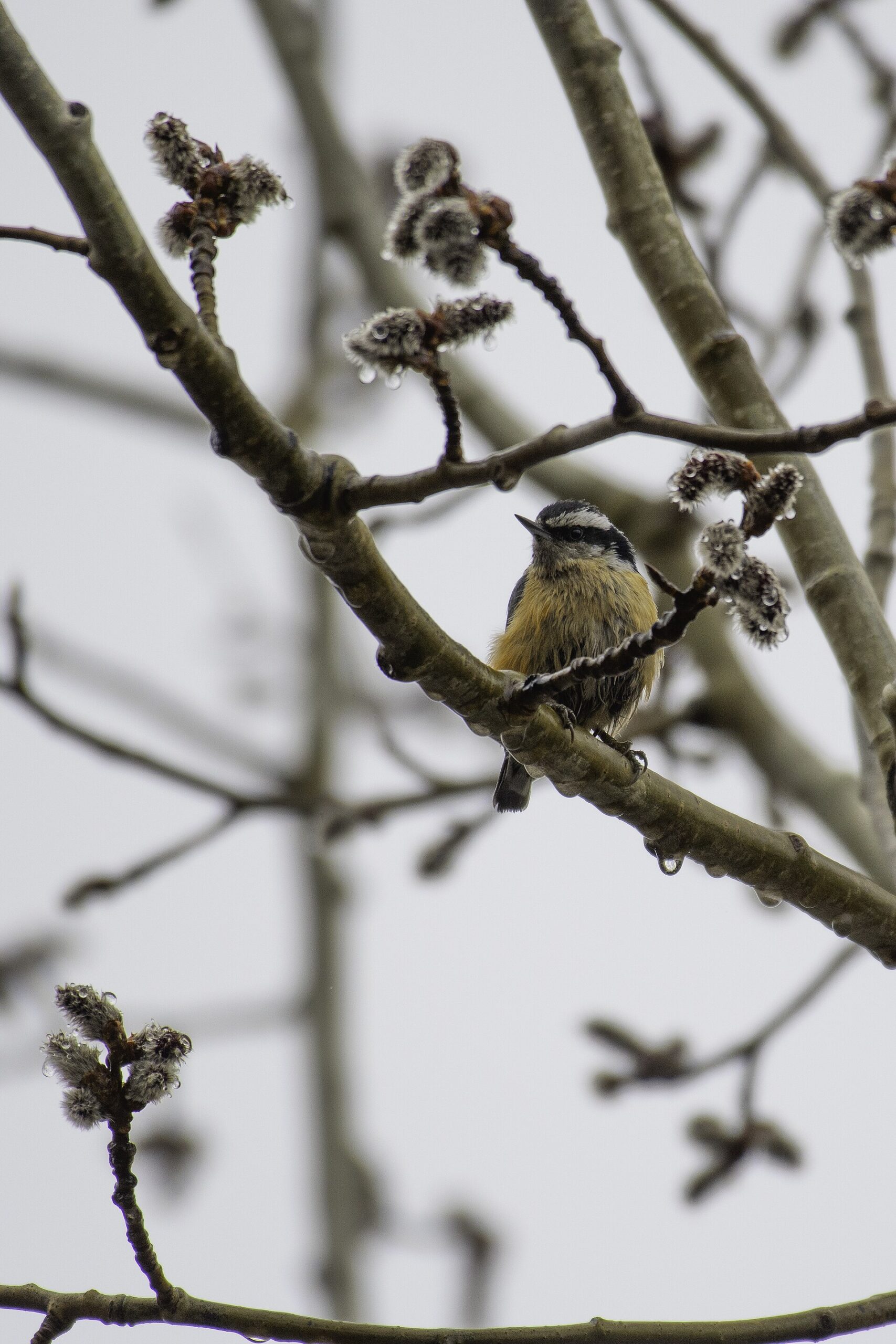
A small, compact conifer specialist with a rust-washed underside, a black cap, and a white eyebrow, working tree trunks in the head-down direction that no woodpecker uses. The call is a nasal, tinny note often compared to a toy horn, repeated steadily while the bird works. Red-breasted Nuthatches are irruptive in Wyoming, abundant in some winters and scarce in others depending on conifer cone crops further north, and they take suet and sunflower readily. They also wedge seeds into bark crevices and hammer them open, and they smear sticky conifer resin around their nest hole entrance, a habit that has no fully agreed-upon explanation.
Dark-eyed Junco
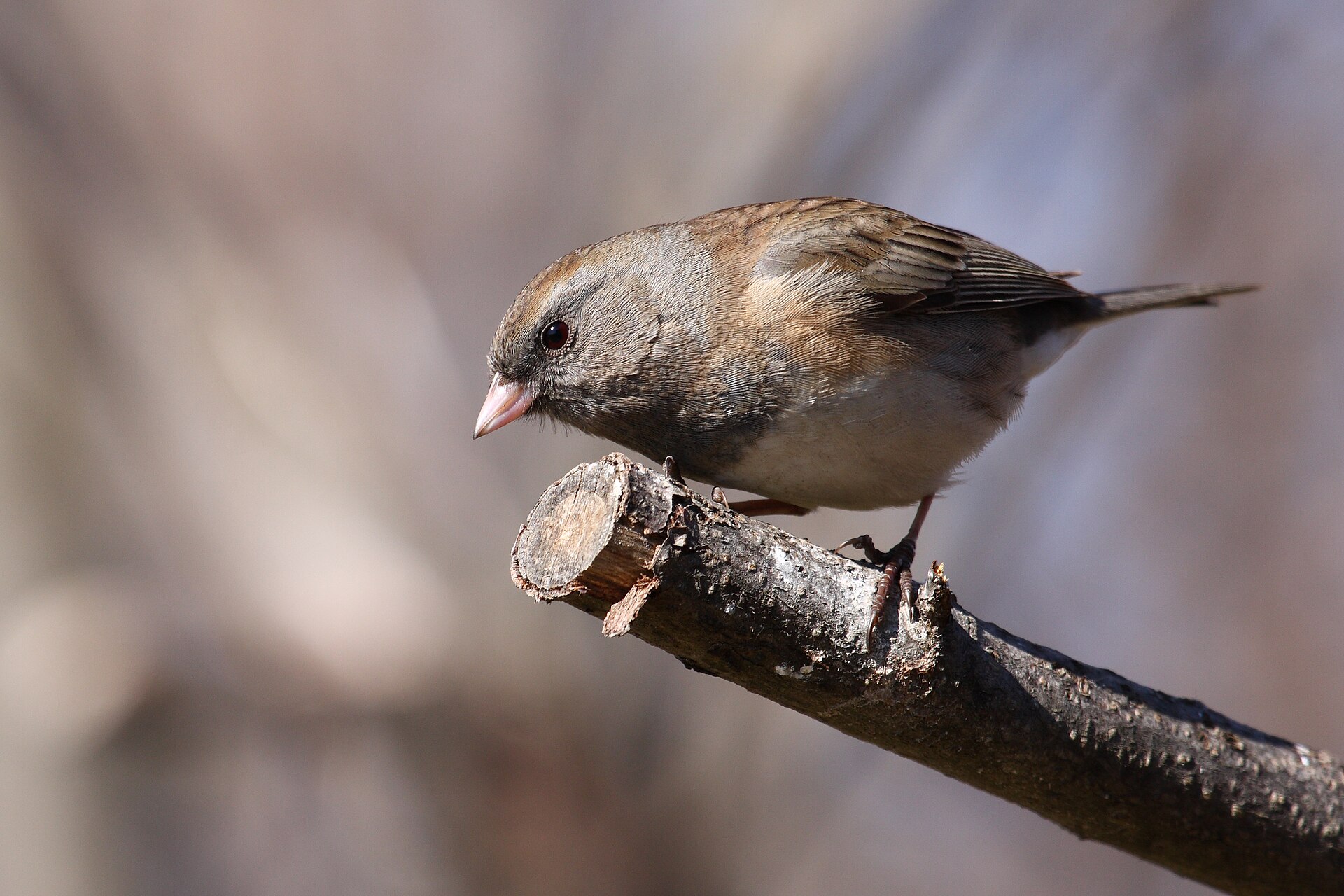
The classic Wyoming ground feeder in winter, scratching under the feeder in loose flocks and flashing white outer tail feathers when flushed. Wyoming sits at a crossroads for junco subspecies, and a single winter yard can hold slate-colored birds from the boreal north, Oregon juncos from the west, pink-sided birds that breed in the northern Rockies, and gray-headed birds from the south, which for years were treated as separate species and can still be told apart with a careful look. They prefer millet and cracked corn scattered on the ground over anything hanging, and most of them move upslope to breed in mountain forest as soon as the snow line retreats.
Downy Woodpecker
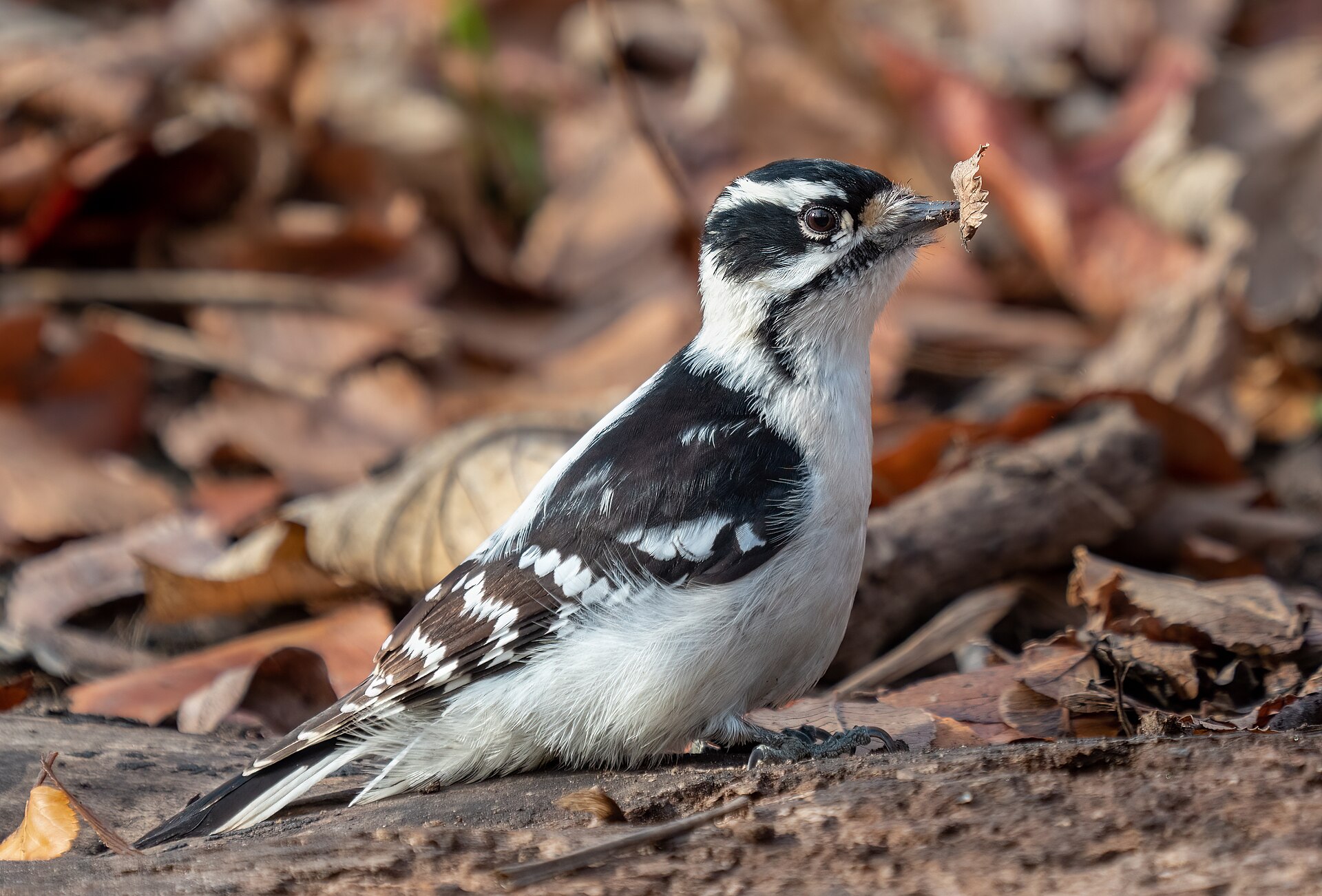
The smallest woodpecker in Wyoming and the one that shows up most often on a suet cage, at roughly the size of a sparrow with a stubby, almost undersized bill. Males have a red patch on the back of the head that females lack. Downy Woodpeckers work cottonwood and willow along rivers as well as town shade trees, taking insects from bark and often hanging upside down on thin branches that a larger woodpecker could not use. In winter they join the same roving mixed flocks as chickadees and nuthatches, and they drum on resonant surfaces in late winter as a territorial signal, which is why a metal chimney cap occasionally becomes a percussion instrument in February.
Black-billed Magpie
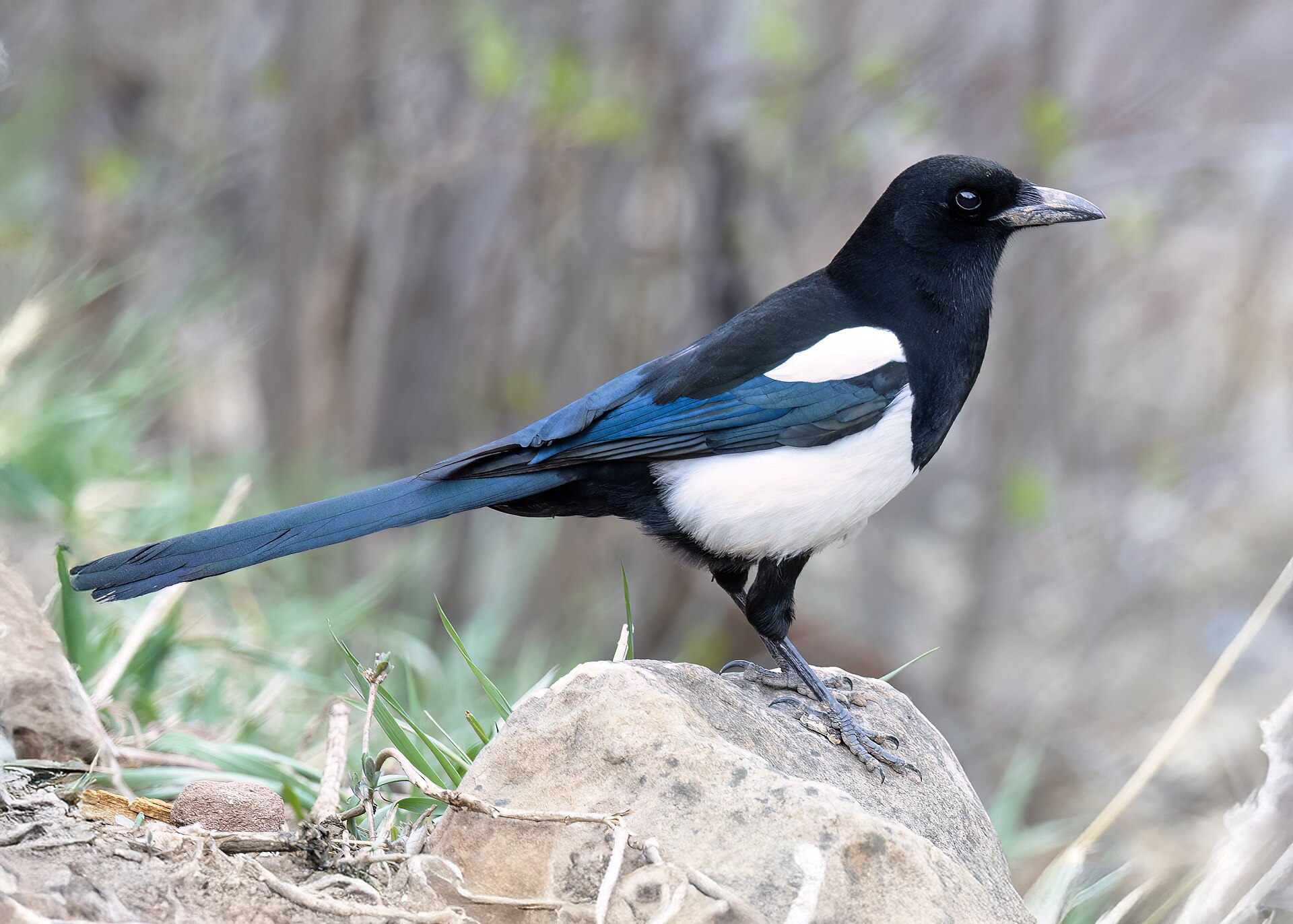
Few birds are more visibly Wyoming than the magpie: long-tailed, black and white with an iridescent green-blue gloss in good light, and impossible to overlook. Black-billed Magpies are corvids, with the intelligence that implies, and they are fixtures along highways, in ranch yards, and around any town where food is available. They build bulky domed stick nests that other species later reuse, and they are opportunistic to a fault, taking insects, carrion, eggs, and anything left out. Some people find them a nuisance at feeders. Others come to appreciate a bird sharp enough to recognize individual humans and hold the grudge.
Pine Siskin
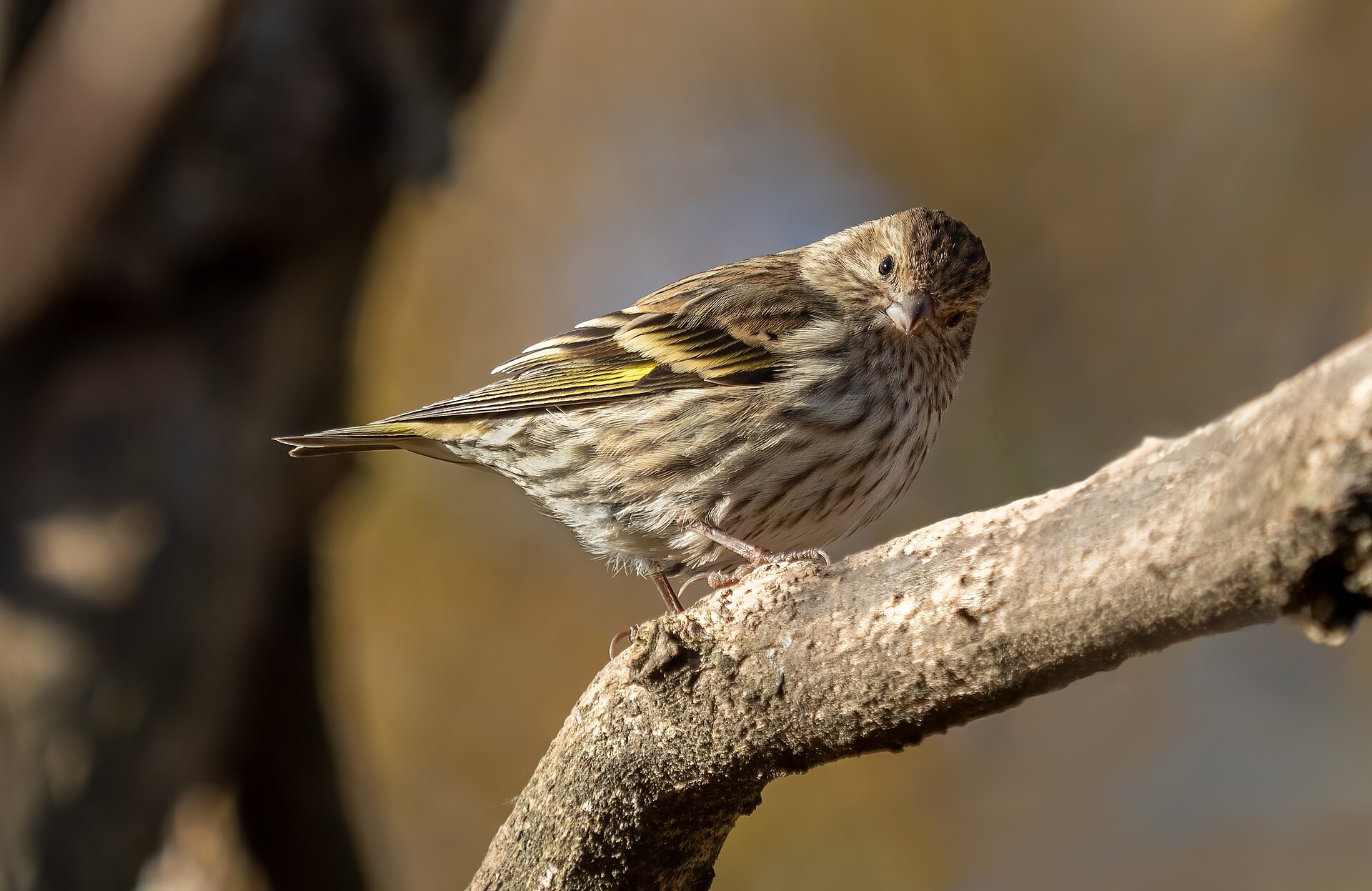
A small, heavily streaked finch with thin yellow edging in the wings and tail, and a wheezy rising call that sounds a bit like a question. Pine Siskins are among the most irruptive birds in Wyoming, arriving in flocks of dozens some winters and nearly absent in others, driven by conifer seed availability across the northern forests. They are aggressive out of proportion to their size at a nyjer or sunflower feeder and will hold a perch against much larger birds. In cold weather siskins can increase their metabolic rate substantially above what is typical for a bird their size and put on enough overnight fat reserves to survive temperatures far below zero.
Mourning Dove
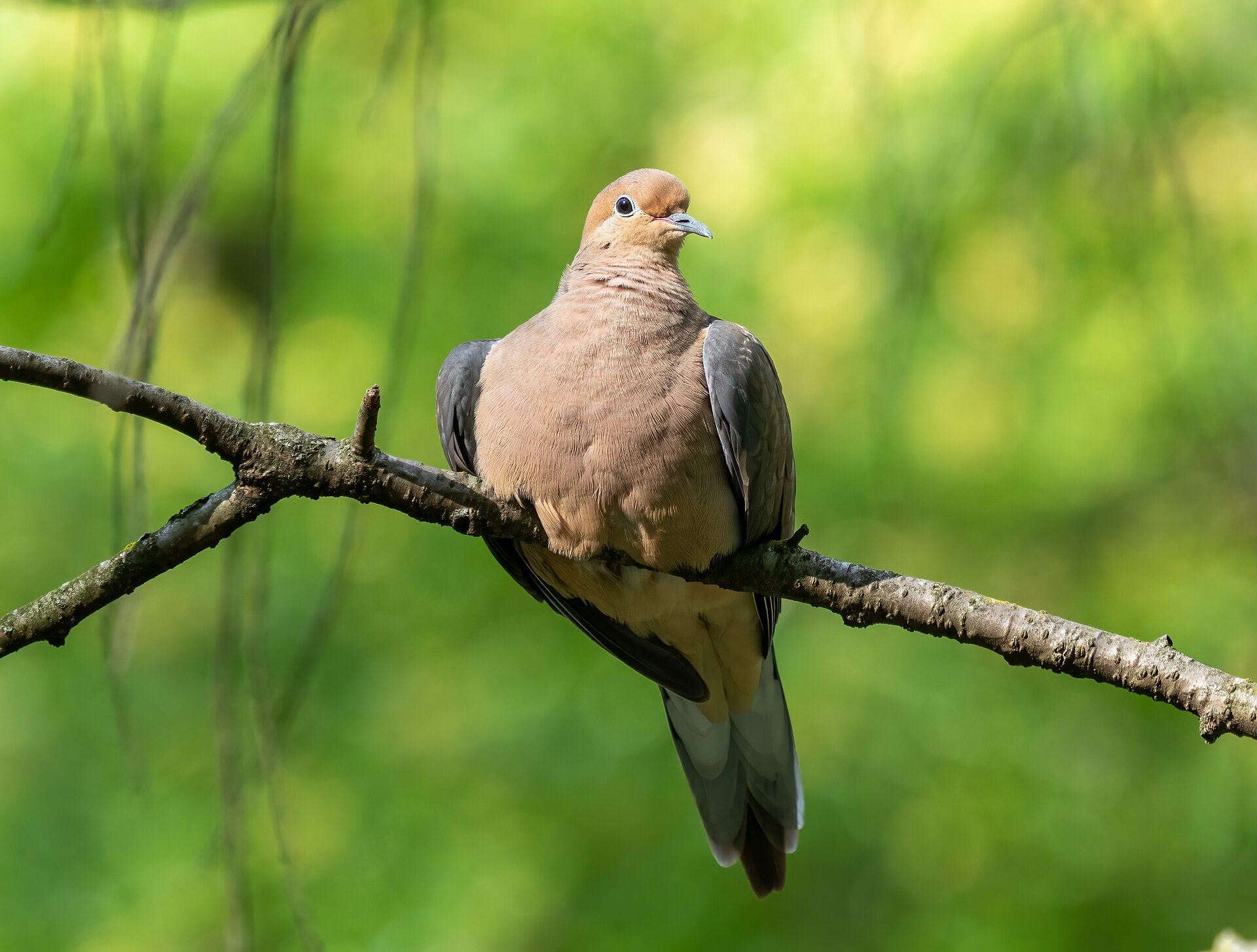
The soft, mournful cooing that gives this bird its name is one of the most common summer sounds in Wyoming towns, and it is regularly mistaken for an owl. Mourning Doves are slim, long-tailed, and buff-brown, with black spots on the wing and a distinctive whistling twitter from the wings on takeoff. They feed almost entirely on seeds picked from the ground, swallowing them whole into a crop and digesting them later, which is why a scattering of seed beneath the feeder often attracts more doves than the feeder itself does. Most Wyoming birds move south for winter, though small numbers stay where reliable food and shelter exist.
Clark’s Nutcracker
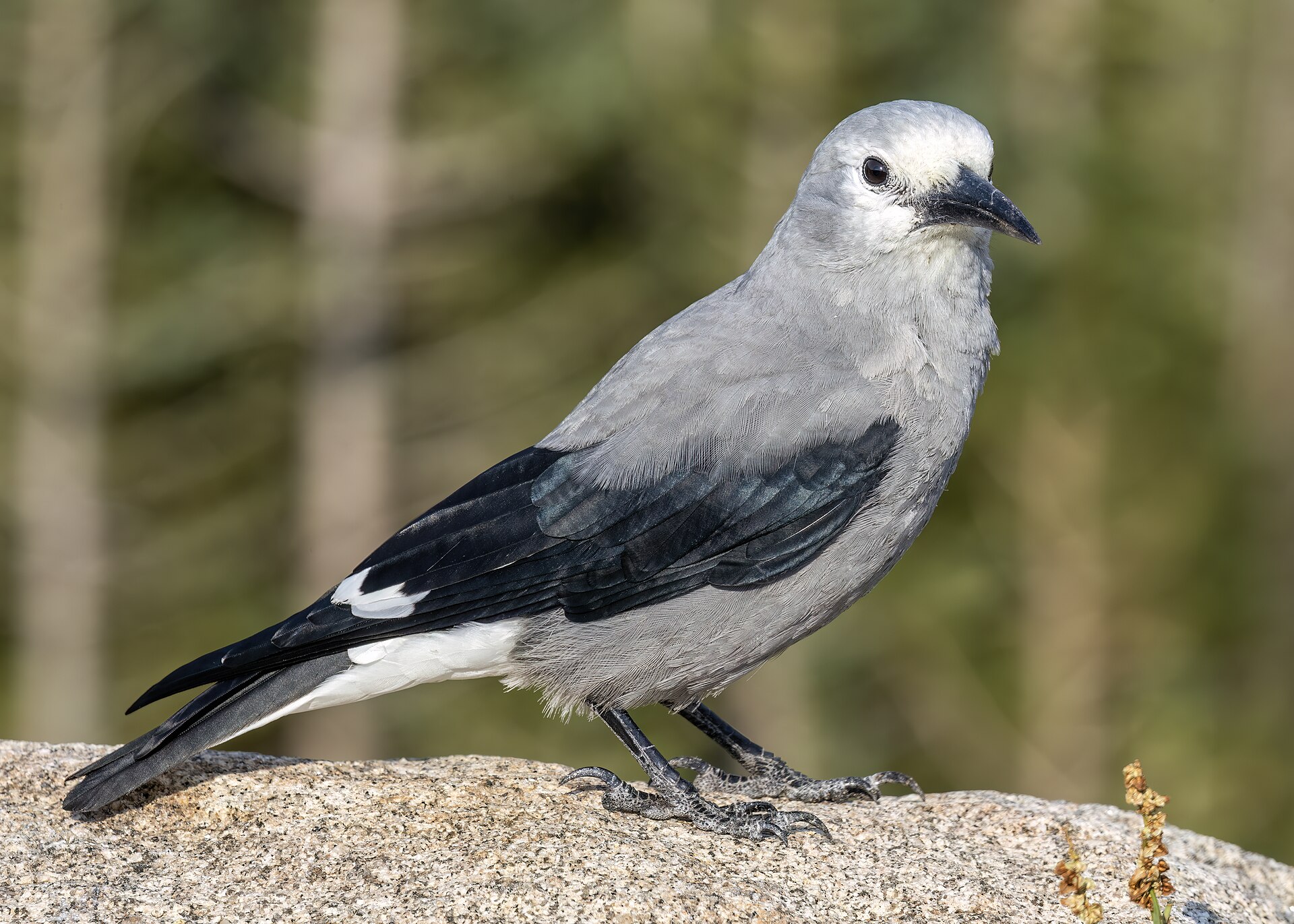
A pale gray corvid with black wings and a long, dagger-like bill, named for William Clark of the Lewis and Clark expedition, and one of the most remarkable birds in the Rockies. Clark’s Nutcrackers harvest pine seeds, primarily whitebark and limber pine, carry them in a pouch under the tongue, and bury them in thousands of separate caches across mountain slopes, then relocate those caches months later under snow using spatial memory that researchers still find hard to believe. Whitebark pine decline has made them a species of real conservation concern. At high-elevation Wyoming feeders they appear suddenly, take everything they can carry, and vanish upslope.
Sage Thrasher
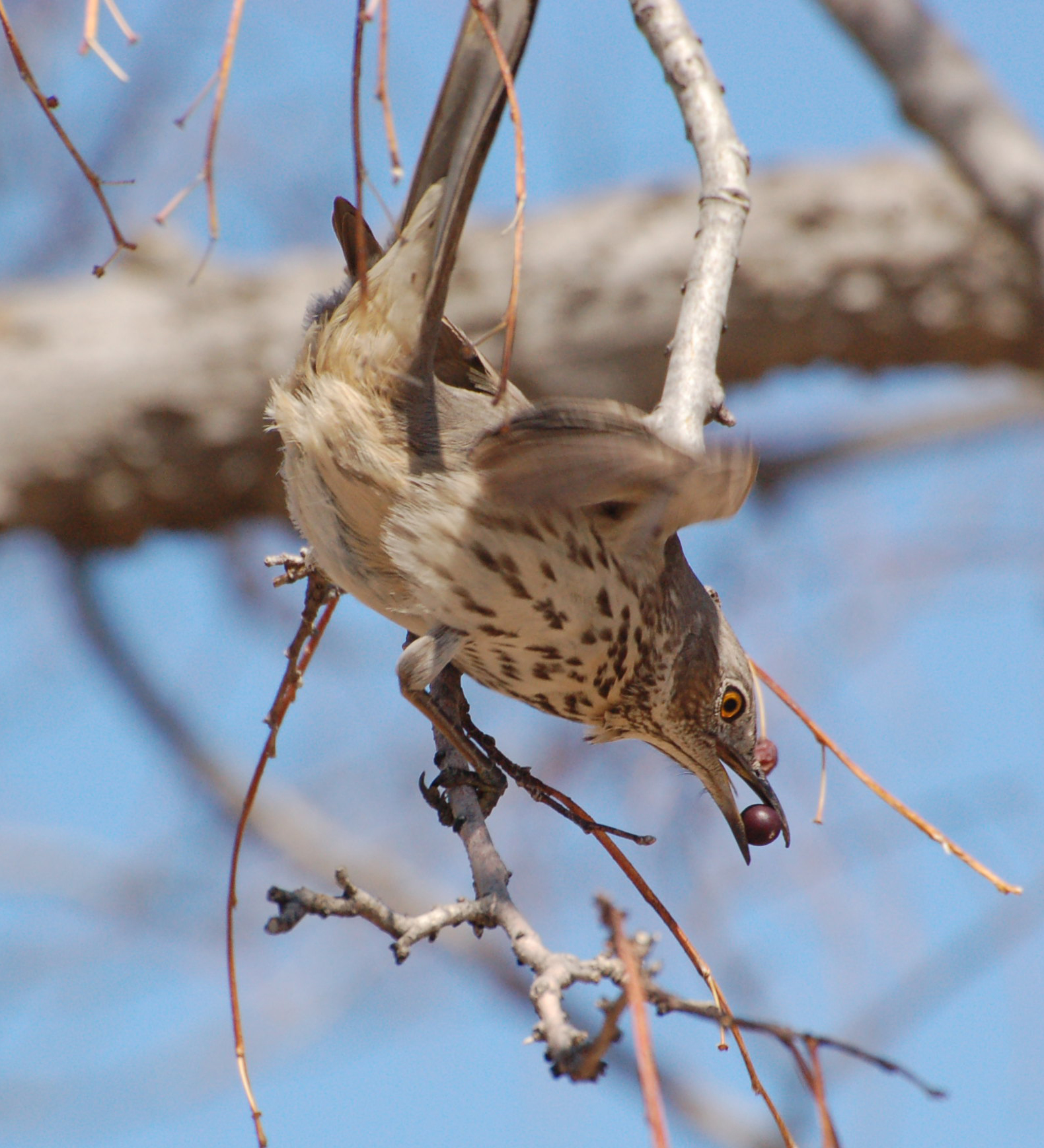
A sagebrush specialist and one of the birds that makes Wyoming’s most overlooked habitat worth stopping for. Sage Thrashers are gray-brown with a streaked breast, a pale eye, and a shorter bill than other thrashers, and in spring the male sings a long, rambling, warbler-like song from a sage top, sometimes for minutes without pause. They nest low in big sagebrush and depend on large, unbroken stands of it, which makes them sensitive to sagebrush loss from fire, conversion, and energy development. They are not feeder birds at all, but a spring morning in the Red Desert or on the Laramie Plains will usually produce several.
Greater Sage-Grouse
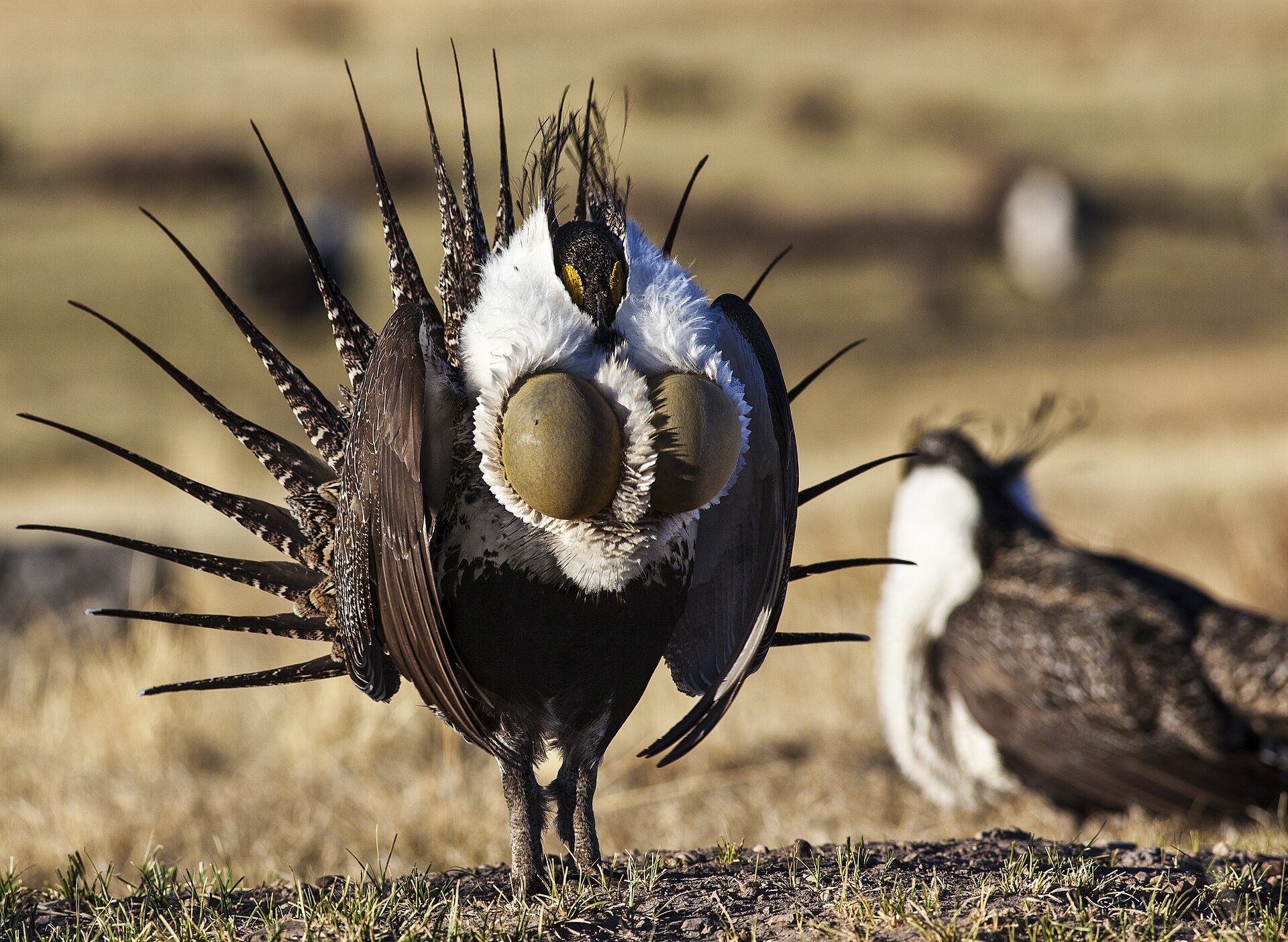
Wyoming holds a larger share of the world’s Greater Sage-Grouse population than any other state, which makes this bird as much a Wyoming responsibility as a Wyoming attraction. Males gather at traditional display grounds called leks before dawn in spring, fan spiky tails, inflate two yellow air sacs on the chest, and produce a bubbling, popping sound that carries across open ground for a surprising distance. Sage-grouse depend on sagebrush year-round, eating its leaves through winter when almost nothing else is available. Lek viewing is a genuine Wyoming experience, and it works best from a vehicle at a respectful distance, since flushing birds off a lek disrupts the breeding season the visit came to see.
Trumpeter Swan
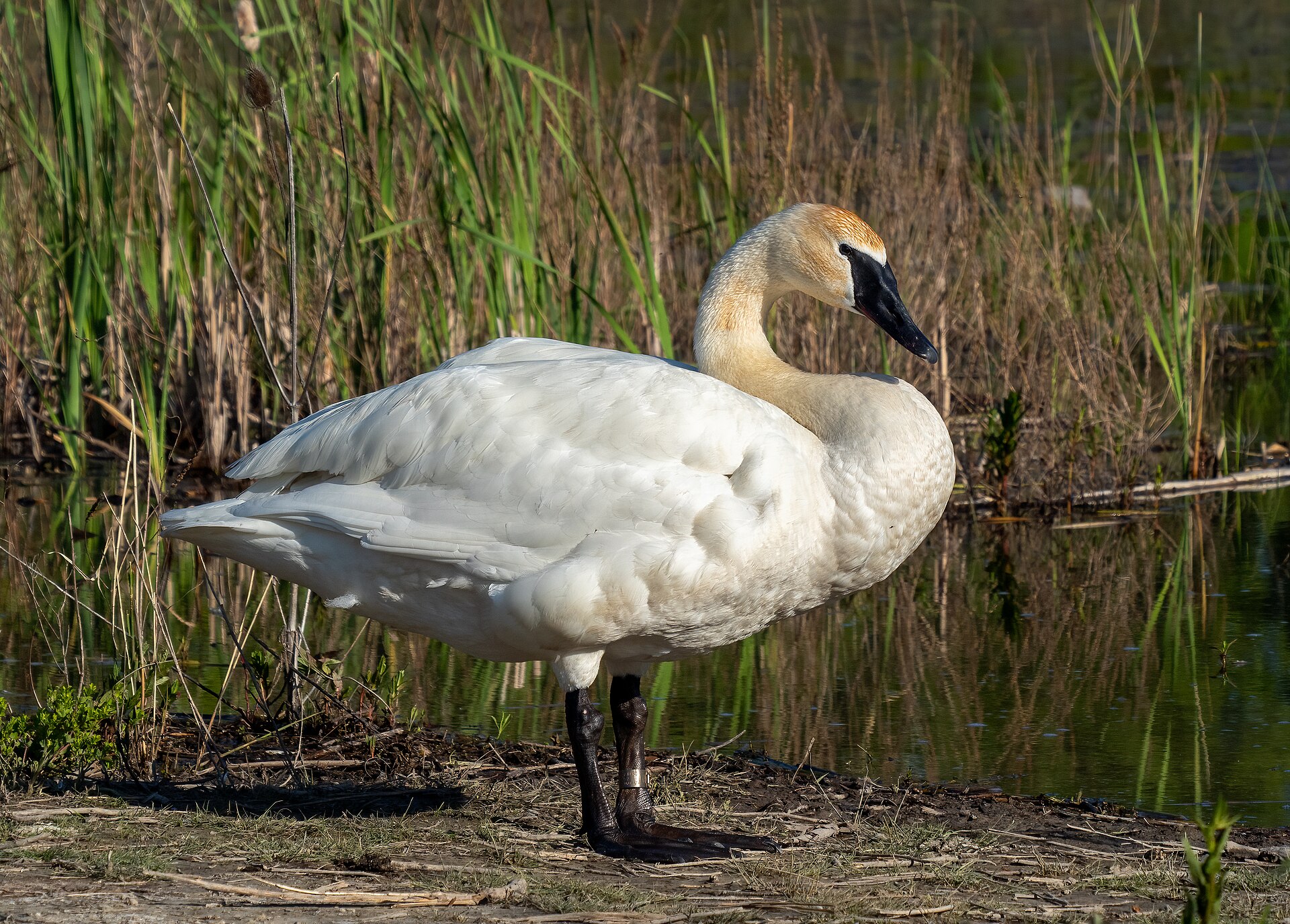
North America’s largest native waterfowl, and a conservation story that runs directly through Wyoming. By the 1930s Trumpeter Swans had been reduced to a few dozen known birds in the tri-state area around Yellowstone, and the population that survived there became the seed for recovery across much of the continent. Adults are entirely white with a black bill, and the call is a low, resonant honk closer to a horn than to the higher yelping of a Tundra Swan. In winter they concentrate on stretches of the Snake and Green rivers that stay open, which makes the Jackson area one of the more reliable places in the country to see them well.
Getting Started
A tube feeder with black oil sunflower, a suet cage, and a heated birdbath will cover most of what a Wyoming yard can realistically attract, and placing all three out of the prevailing wind will do more for the bird count than adding a fourth feeder. Ground-scattered millet brings in juncos and doves. Beyond that, the birds that define Wyoming are not feeder birds, and reaching them means deliberate trips: a sagebrush morning for thrashers and sparrows, a pre-dawn lek visit in April for sage-grouse, a winter drive along the Snake for Trumpeter Swans.
What makes Wyoming unusual for a birder is how little distance separates those habitats. A yard in Pinedale can have Mountain Chickadees on the suet while sagebrush steppe starts at the end of the road and alpine tundra sits within an hour’s drive. That compression is the real advantage of birding here, and it means a Wyoming list built over a single year tends to include species that birders in most states would have to plan separate trips to find.
Sources
Species identification, range, and behavior details are cross-checked against the Cornell Lab of Ornithology’s All About Birds, the National Audubon Society, eBird’s Wyoming regional data, and the Wyoming Game and Fish Department.