Backyard Birds in Idaho: A Field Guide to the Species at Your Feeder
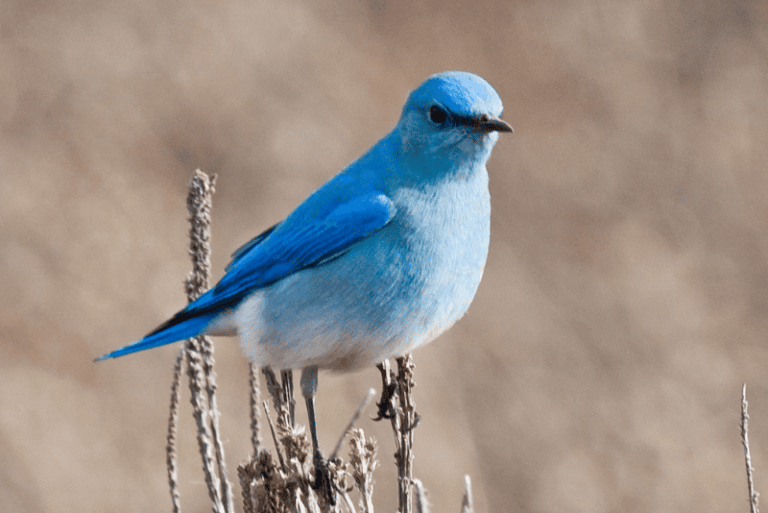
There is a moment on a spring morning in the Camas Prairie or along a fence line east of Boise when a bird flies across the road and the blue is so saturated it reads as a mistake. Mountain Bluebirds do that to people. Idaho picked well when it chose a state bird, and the choice says something about the state itself: this is a place where the ordinary backyard sits within sight of sagebrush flats, whitewater canyons, and mountains that hold snow into July, and the birds at the feeder reflect all three.
A state cut into strips by geography
Idaho is long and narrow, running from the high desert of the Snake River Plain in the south to the wet, cedar-heavy forests of the Panhandle in the north, and those two ends have less in common than most people expect. A yard in Twin Falls sits in arid sagebrush country with irrigation canals cutting through it. A yard in Coeur d’Alene, roughly 500 miles north, sits in forest that gets more than twice the annual precipitation. The result is that Idaho’s feeder birds are not one list but several overlapping ones, sorted by latitude, elevation, and how close a yard is to water. The Snake River corridor threads through the middle of it, pulling migrants along a route that concentrates birds in a state that is otherwise very dry.
The state bird: blue in a brown landscape
Idaho’s state bird is the Mountain Bluebird, and males are among the few North American birds whose color genuinely surprises people the first time. The blue is structural rather than pigmented, produced by the way feather microstructure scatters light, which is why the same bird can look brilliant in sun and nearly gray in shade. Mountain Bluebirds are cavity nesters and they hunt by hovering over open ground before dropping onto insects, a hunting style that sets them apart from the other two bluebird species. They rarely visit seed feeders, but they take readily to nest boxes, and Idaho has long-running bluebird trail projects where volunteers maintain boxes along rural roads. Putting up a properly sized box is the most realistic way to get the state bird into a yard.
Common feeder visitors
An average Idaho yard runs on House Finches, chickadees, and juncos. Which chickadee depends on elevation and tree cover: Black-capped in valley cottonwoods and town neighborhoods, Mountain Chickadee where conifers dominate, sometimes both. Red-breasted Nuthatches and Downy Woodpeckers take suet through the winter, Northern Flickers hammer at it in a way that empties a cage fast, and Black-billed Magpies handle anything left unattended. Steller’s Jays come down out of the forest in autumn with a lot of noise. Cassin’s Finches, which many visiting birders have never seen, are common enough here that Idaho feeder watchers sometimes assume they are just another House Finch.
Beyond the backyard: raptors and a river canyon
Idaho’s single most important contribution to American birding sits about twenty miles south of Boise. The Morley Nelson Snake River Birds of Prey National Conservation Area protects a large stretch of canyon and desert and holds one of the densest concentrations of nesting raptors anywhere on the continent, built on basalt cliffs that provide nest ledges and a ground squirrel population that provides the food. Prairie Falcons, Golden Eagles, Red-tailed Hawks, and several owl species nest there in numbers that are hard to grasp until you spend a March morning watching. Further north, the Kootenai River bottoms and Lake Coeur d’Alene draw waterfowl and, in winter, large numbers of Bald Eagles feeding on spawning kokanee salmon.
A note on native plants
Most of southern Idaho is high desert, and yards there succeed or fail on water. Native and drought-adapted plantings, serviceberry, chokecherry, currant, elderberry, and native rabbitbrush, produce fruit and attract insects without needing constant irrigation, and they hold up better than ornamental shrubs that wilt in July. In the Panhandle the problem reverses: yards there have moisture but are often shaded by tall conifers, and a small opening with native berry shrubs at the forest edge produces more bird activity than a feeder hung under dense canopy. In either half of the state, a yard that provides a reliable water source in summer will out-perform a yard that provides only seed.
Winter Feeding Notes
Idaho winters split along the same north-south line as everything else. The Snake River Plain gets cold, dry inversions where fog settles in the valley for weeks; the Panhandle gets heavier snow and milder temperatures. Both reward a simple setup: black oil sunflower in a tube feeder, a suet cage, and open water. Water is the underrated one, especially in the southern half of the state where natural sources freeze and the air is very dry, and a heated birdbath will often draw species that ignore seed entirely. Northern finches like Pine Siskins and Common Redpolls arrive in some winters and skip others depending on conifer seed crops in Canada, so a season with few finches usually reflects conditions hundreds of miles away rather than anything wrong with the feeder.
Mountain Bluebird
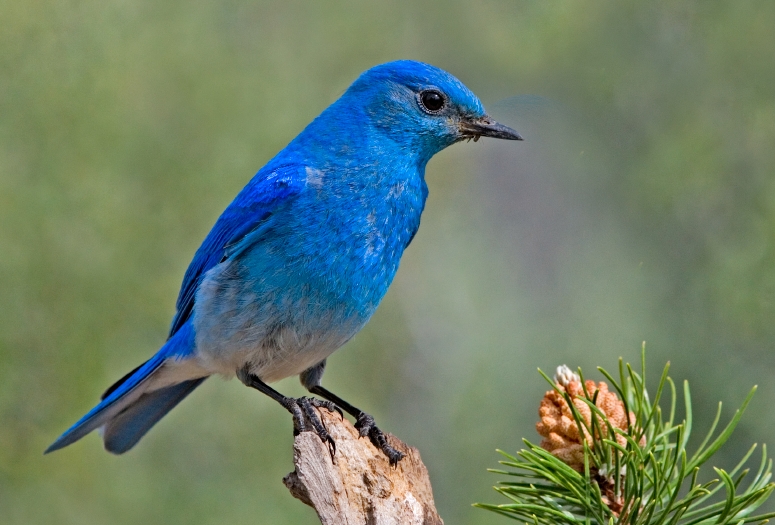
Idaho’s state bird, and the one that stops conversations. Adult males are an intense sky blue over the entire body with a paler belly; females are gray-brown with blue confined to the wings and tail, which makes them far less obvious and often overlooked entirely. Mountain Bluebirds nest in tree cavities and old woodpecker holes, and competition for those holes with European Starlings and House Sparrows is one reason volunteer-maintained nest box trails have mattered so much to the population. They hunt insects by hovering low over open ground, a behavior neither Eastern nor Western Bluebirds use as heavily, and they shift to juniper berries and other fruit in winter when insects disappear.
Black-capped Chickadee
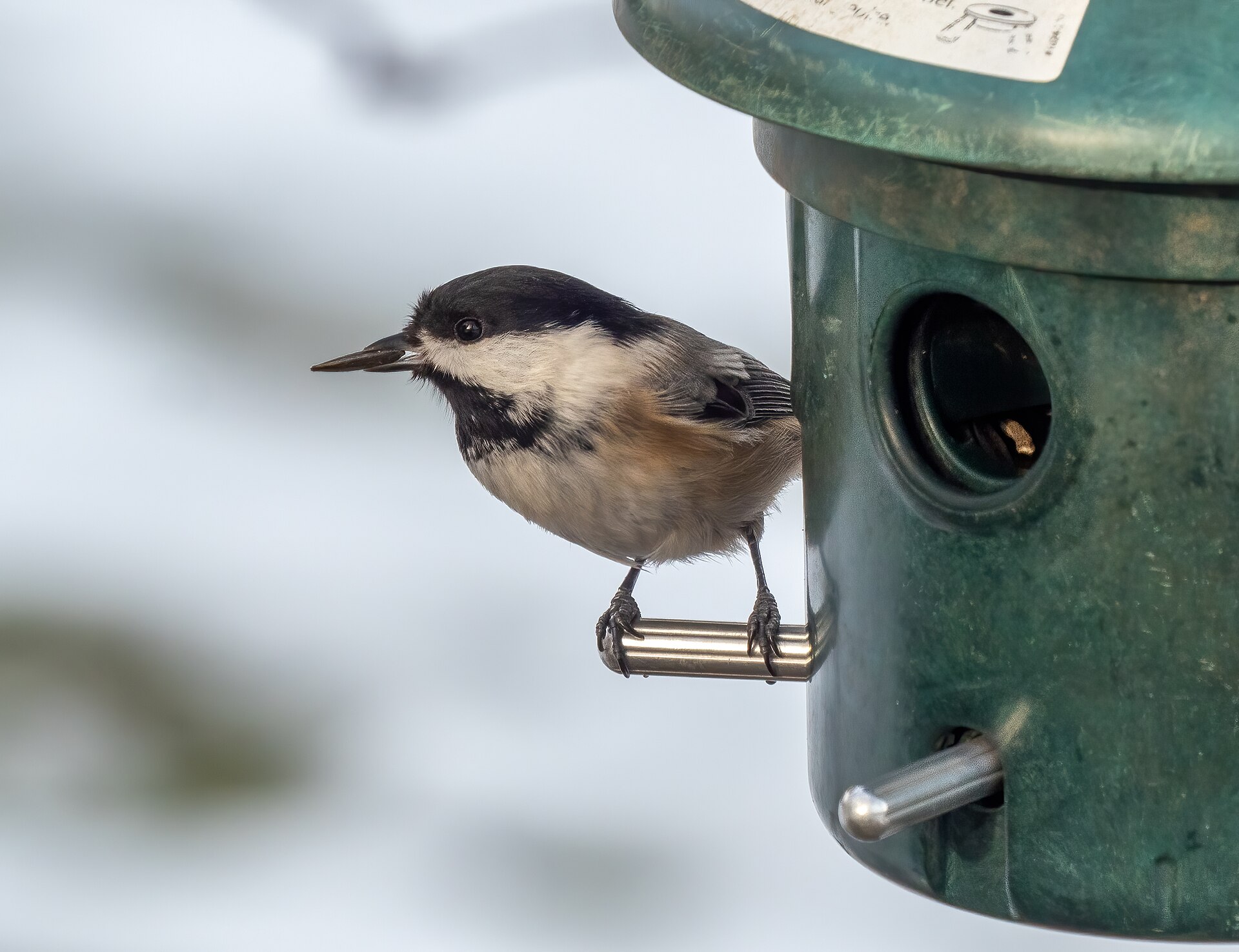
The valley chickadee in Idaho, common in cottonwood corridors, aspen, and town neighborhoods, and one of the most consistent birds at any feeder in the state. Black cap, white cheeks, black bib, and no white eyebrow, which is the detail that matters when a Mountain Chickadee is on the same feeder. Black-capped Chickadees cache thousands of seeds each autumn in separate hiding places and retrieve them months later, and they lower their body temperature at night in a controlled way to conserve energy through long cold periods. They are also usually the first bird to find a newly hung feeder and the last to abandon one in a storm.
Mountain Chickadee
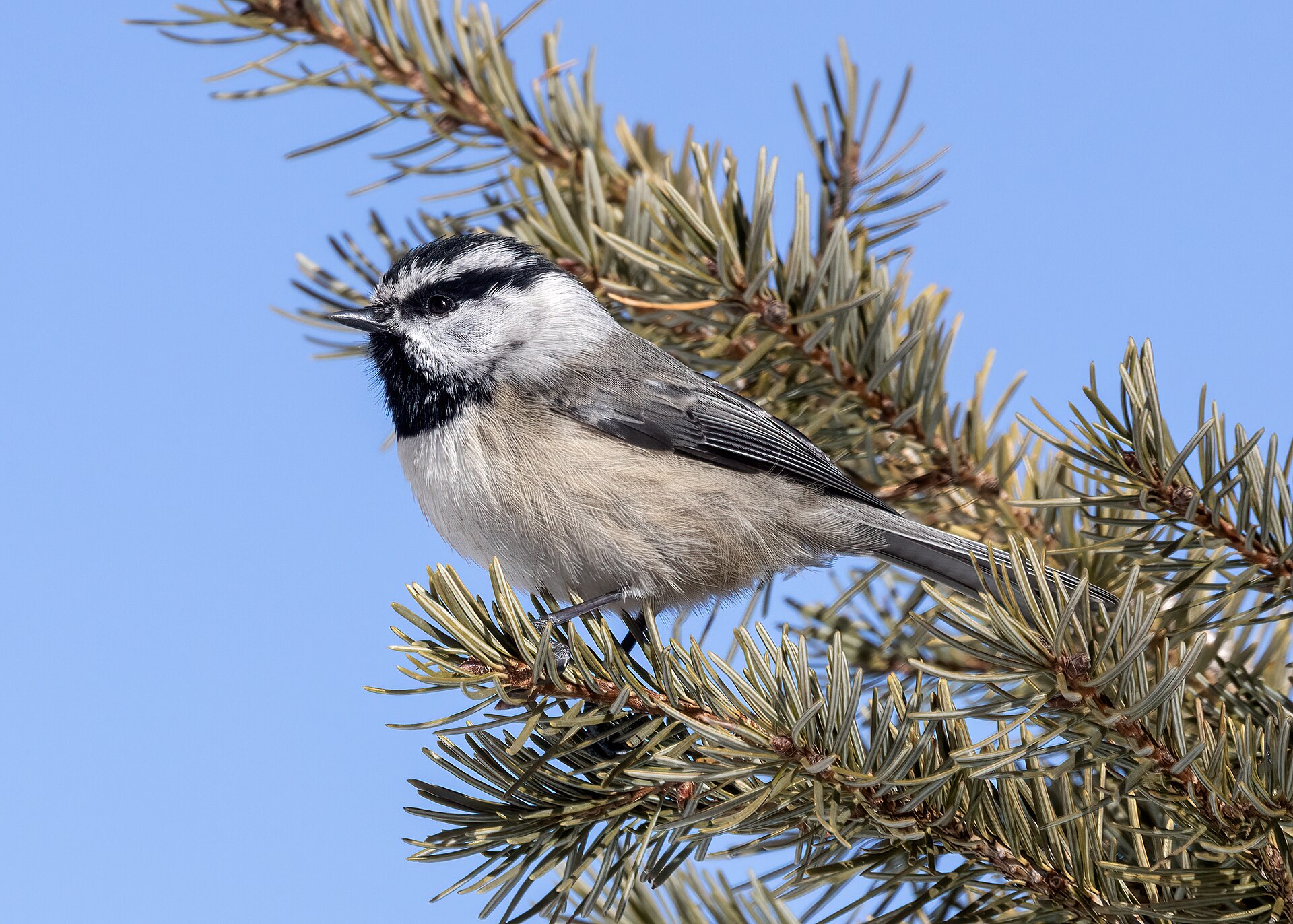
The conifer chickadee, and the one a yard gets if there are pines, firs, or spruce nearby. The clean white eyebrow stripe above the eye separates it from the Black-capped Chickadee at a glance once you know to look for it, and the song is a rougher, more buzzing version of the familiar chickadee phrase. Mountain Chickadees are common across Idaho’s forested elevations and often move downslope into valley yards in winter, which is why some Idaho feeders host one species in July and both in January. Like their relatives they cache food heavily and travel in mixed winter flocks with nuthatches, creepers, and kinglets.
House Finch
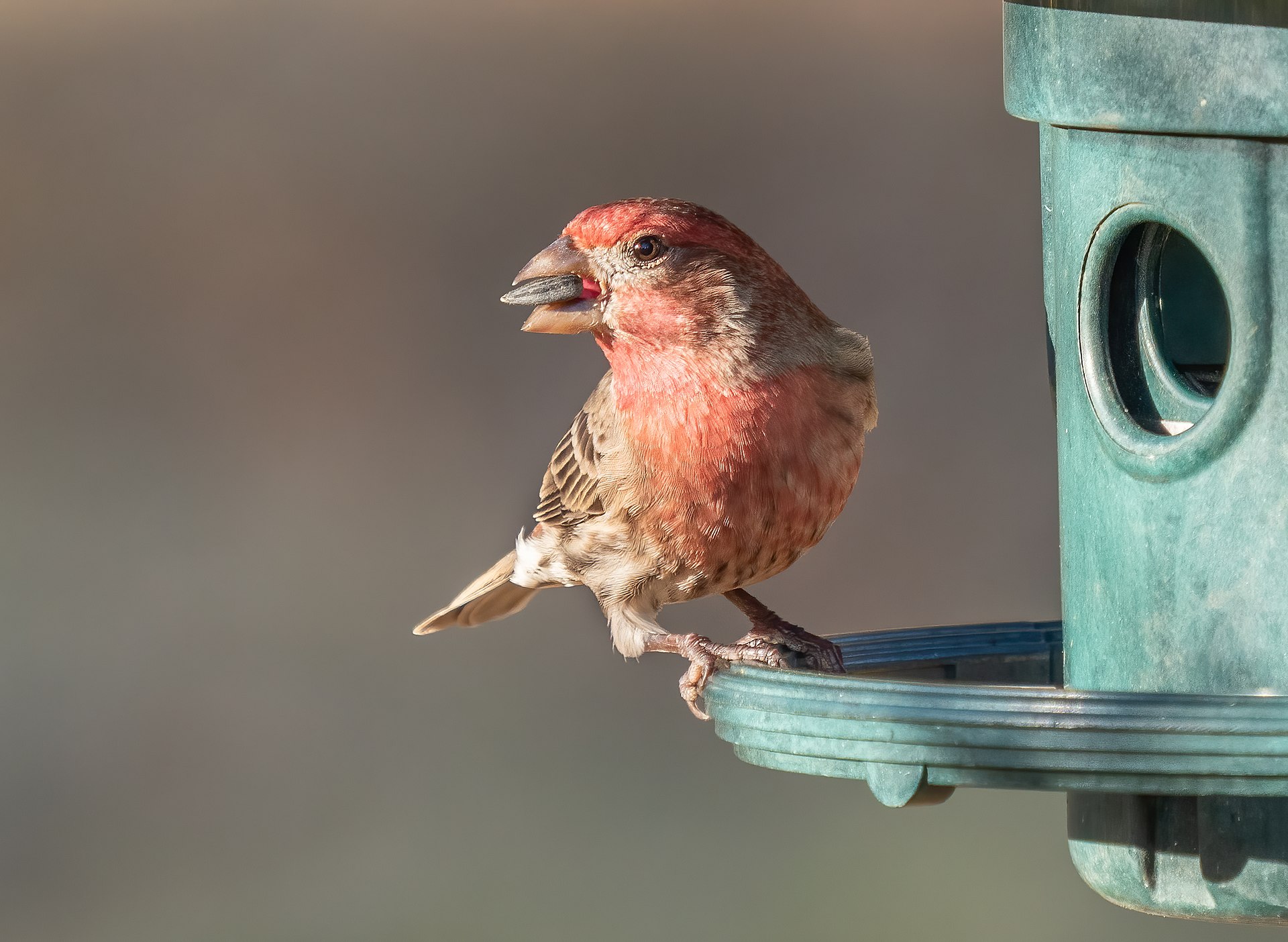
The workhorse of Idaho town feeders, usually present in groups and usually the most numerous bird in the yard. Males show red across the head, throat, and breast, with the shade running from deep red through orange to yellow depending on diet while the feathers were growing, which is why two males at the same feeder can look like different species. Females are plain brown and heavily streaked. House Finches are almost entirely vegetarian, feeding on seeds, buds, and fruit, and they perch and eat rather than grab and go. Because they crowd feeders, they are also the species most associated with conjunctivitis outbreaks, which makes regular feeder cleaning a practical necessity rather than good housekeeping.
Cassin’s Finch
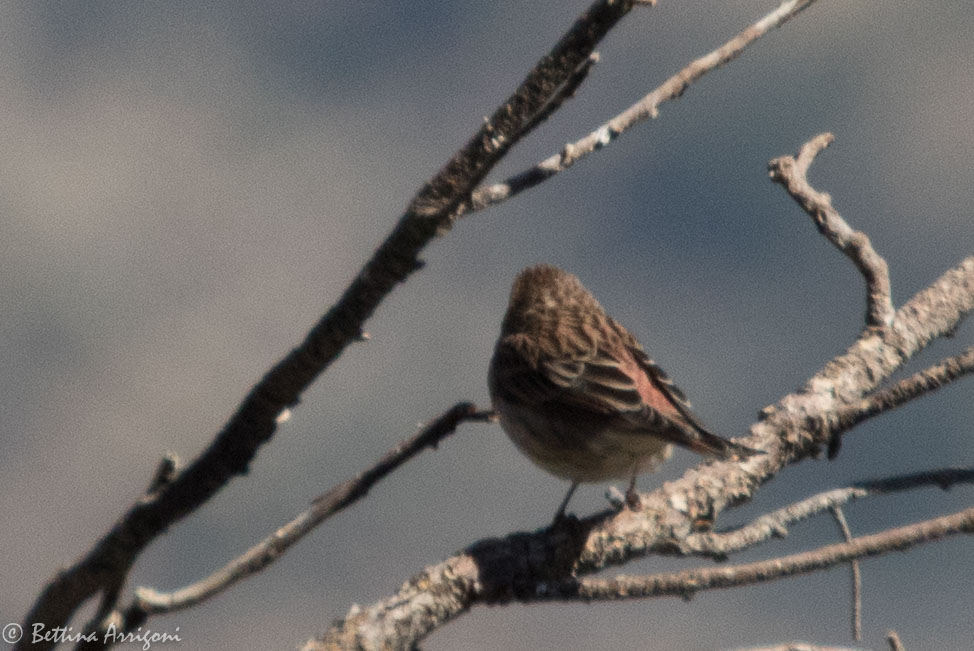
A western finch that Idaho birders take for granted and visiting birders travel to see. Males have a bright raspberry-red crown that contrasts against a browner nape and back, a paler, cleaner breast than a House Finch, and a longer, straighter-sided bill. Females are crisply streaked. Cassin’s Finches breed in mountain conifer forest and move around a lot outside the breeding season, so their presence at a feeder can be erratic from year to year. They feed heavily on conifer seeds and buds, and in Idaho they turn up at sunflower feeders most often in late winter and early spring as they work their way downslope.
Red-breasted Nuthatch
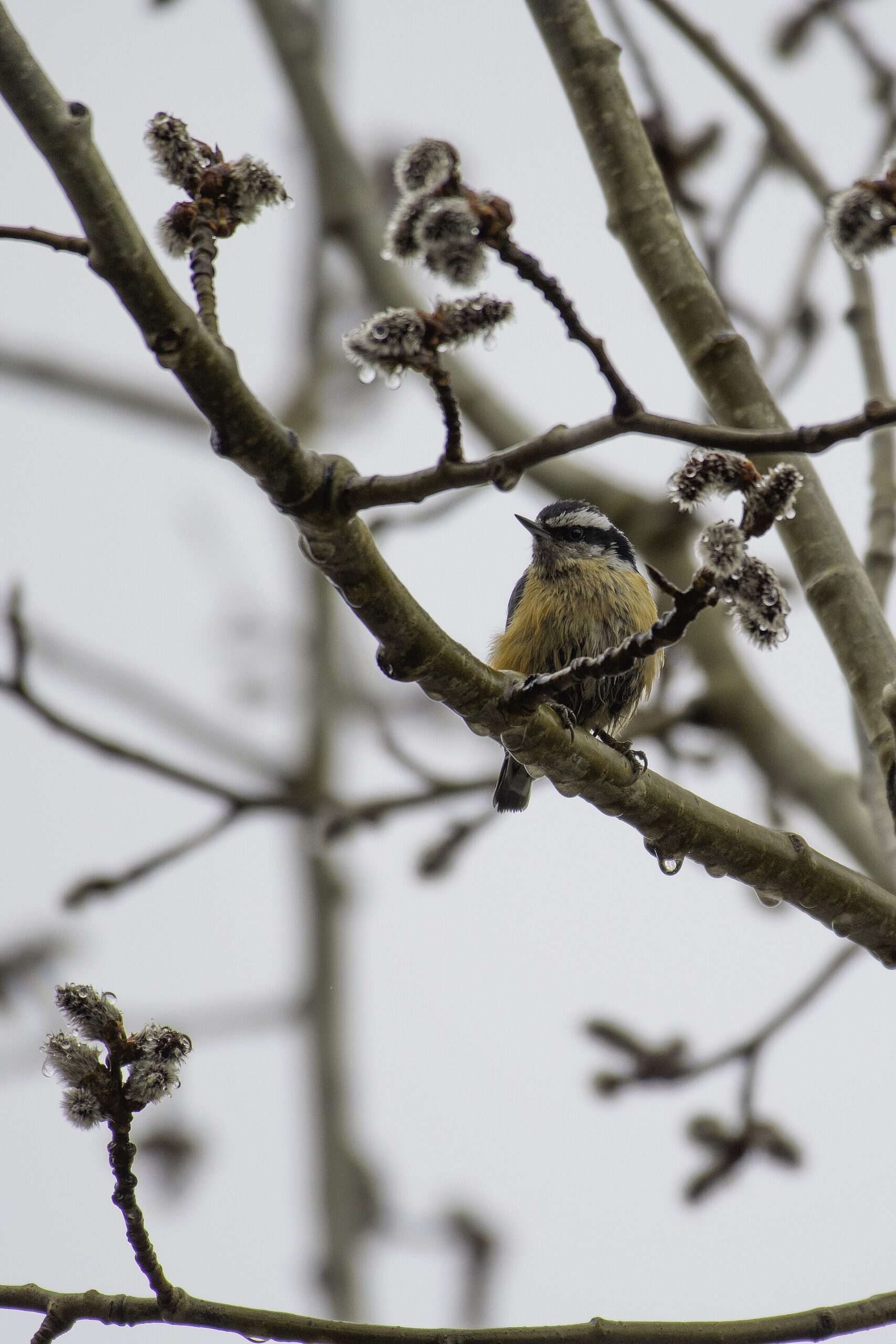
Small, short-tailed, and built like a wedge, with a rusty wash below, a black cap, and a white eyebrow, moving head-down along conifer trunks in a way that immediately separates nuthatches from everything else on the tree. The call is a nasal, repeated note that carries well through forest. Red-breasted Nuthatches are irruptive, abundant in Idaho in some winters and thin in others, and they take suet and sunflower seed steadily. They wedge seeds into bark crevices and hammer them apart, and they apply sticky conifer resin around their nest cavity entrance, a habit whose function is still debated.
Dark-eyed Junco
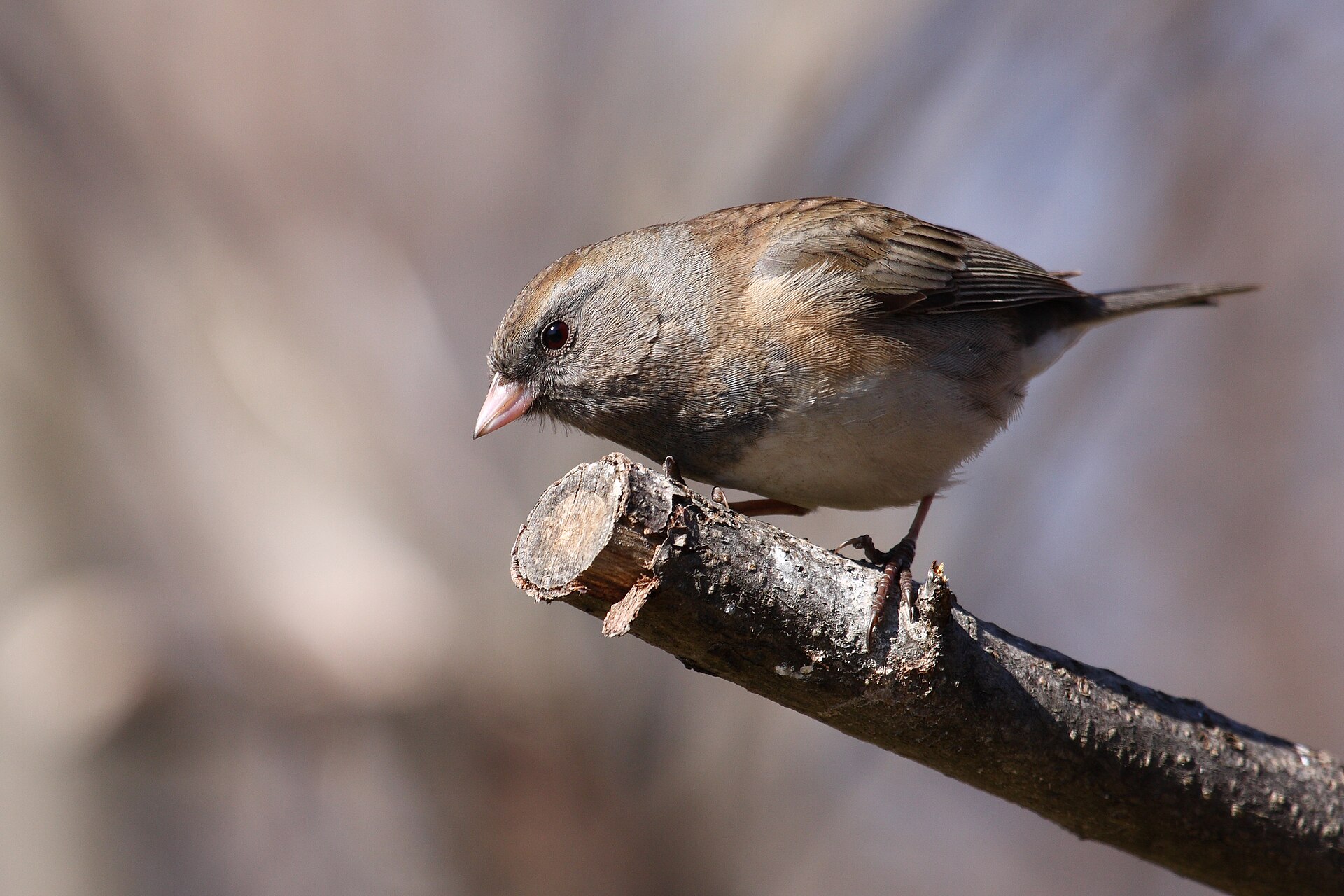
The ground bird of the Idaho winter yard, working under the feeder in flocks and flashing white outer tail feathers as it flies. Idaho is a good place to appreciate how variable this species is: Oregon juncos with dark hoods and warm brown flanks are the common breeding form, but winter yards also get slate-colored birds from the north, pink-sided birds from the northern Rockies, and occasionally gray-headed birds from the south. They prefer millet and cracked corn scattered on the ground over anything hanging. Most Idaho juncos breed in mountain forest and come down into valleys and towns only for the cold months.
Downy Woodpecker
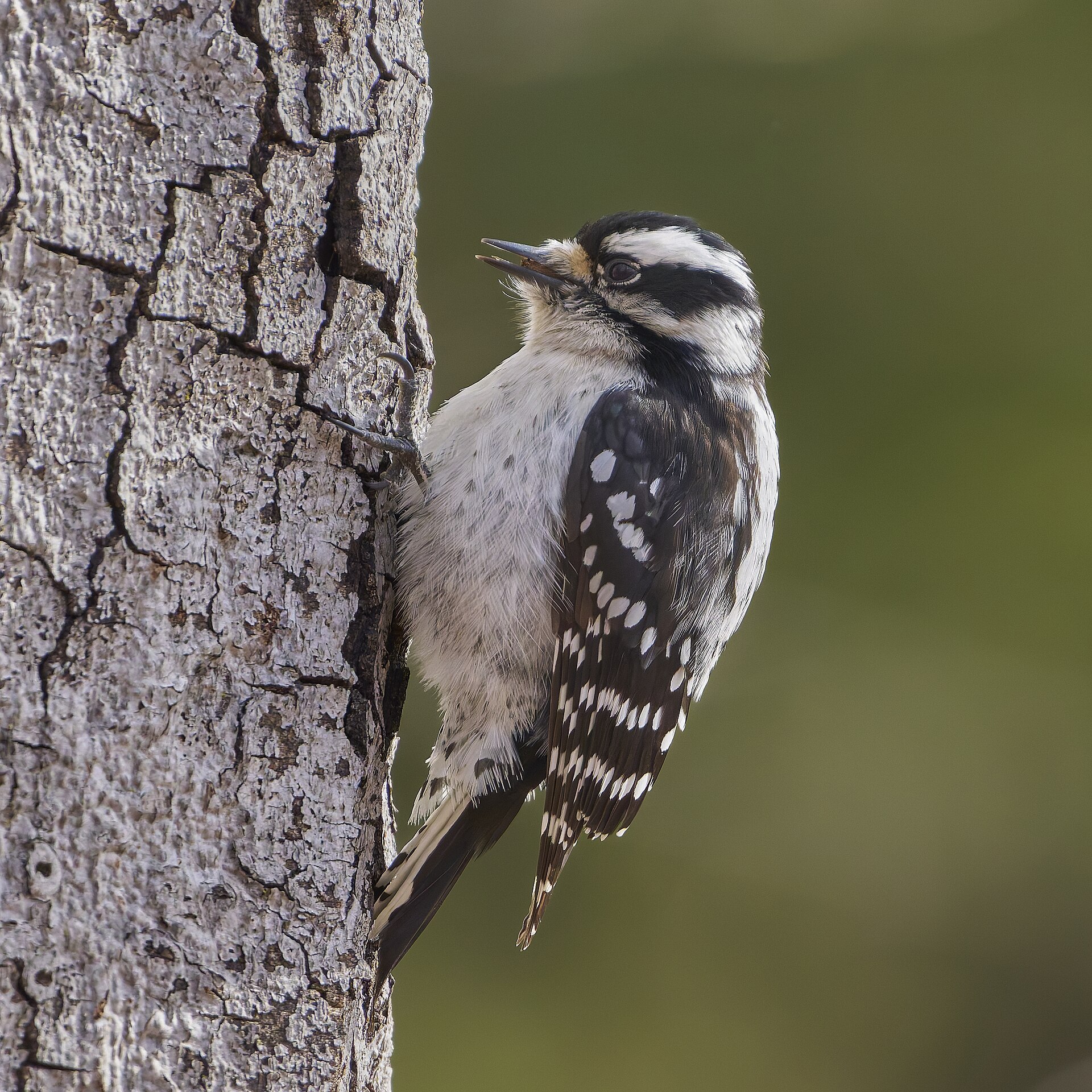
Idaho’s smallest woodpecker, roughly sparrow-sized, black and white with a short bill that looks slightly too small for the head. Males show a red patch at the back of the head. Downy Woodpeckers work cottonwood and willow along rivers, aspen stands, and town shade trees, taking insects from bark and often working thin outer branches that heavier woodpeckers cannot use. They are among the most reliable suet birds in the state and join the roving mixed flocks that chickadees lead through yards in winter. In late winter they drum on resonant surfaces as a territorial signal, which is how a gutter or chimney cap occasionally becomes part of the display.
Northern Flicker
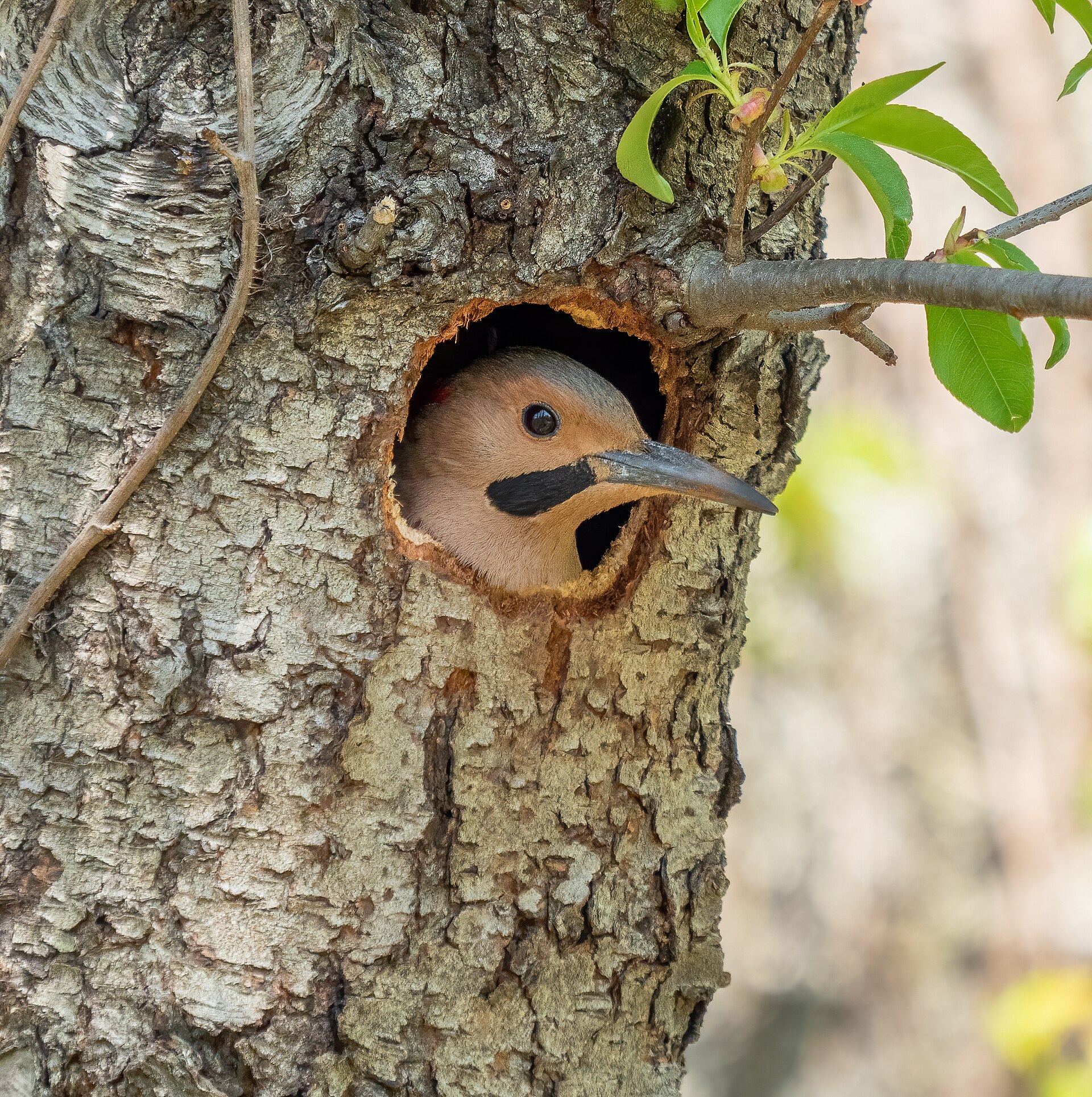
A large brown woodpecker with a black-barred back, a black chest crescent, and salmon-red underwings visible in flight, which is the form found across Idaho. Flickers are unusual among woodpeckers in feeding heavily on the ground, and ants make up a large part of the diet, which is why one is often seen hopping awkwardly across a lawn rather than clinging to a trunk. They visit suet aggressively and can empty a cage in a day or two. Flickers also drum on metal, and a spring flicker that discovers a house’s flashing or stovepipe will use it every morning until the territorial season passes.
Black-billed Magpie
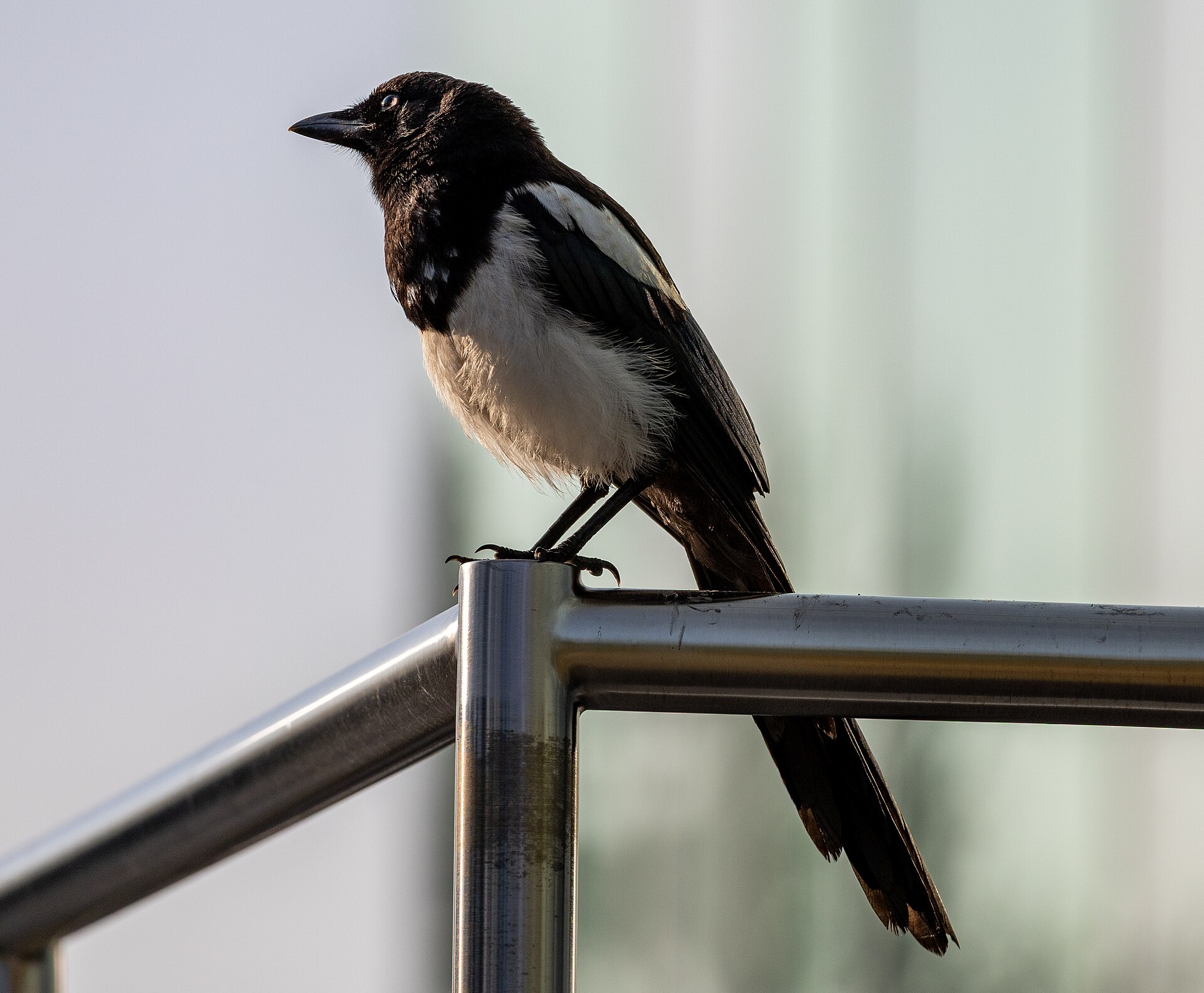
Long-tailed, black and white, with a green-blue iridescence that only shows in direct light, and one of the most conspicuous birds in southern Idaho. Black-billed Magpies are corvids and behave like it, caching food, investigating anything new, and recognizing individual people around a yard. They build large domed stick nests that later get used by other species, and their diet covers insects, carrion, eggs, fruit, and whatever is available, which makes them regular at feeders without ever quite being welcome there. Their reputation is mixed among yard owners, but the intelligence on display is genuinely worth watching.
Steller’s Jay
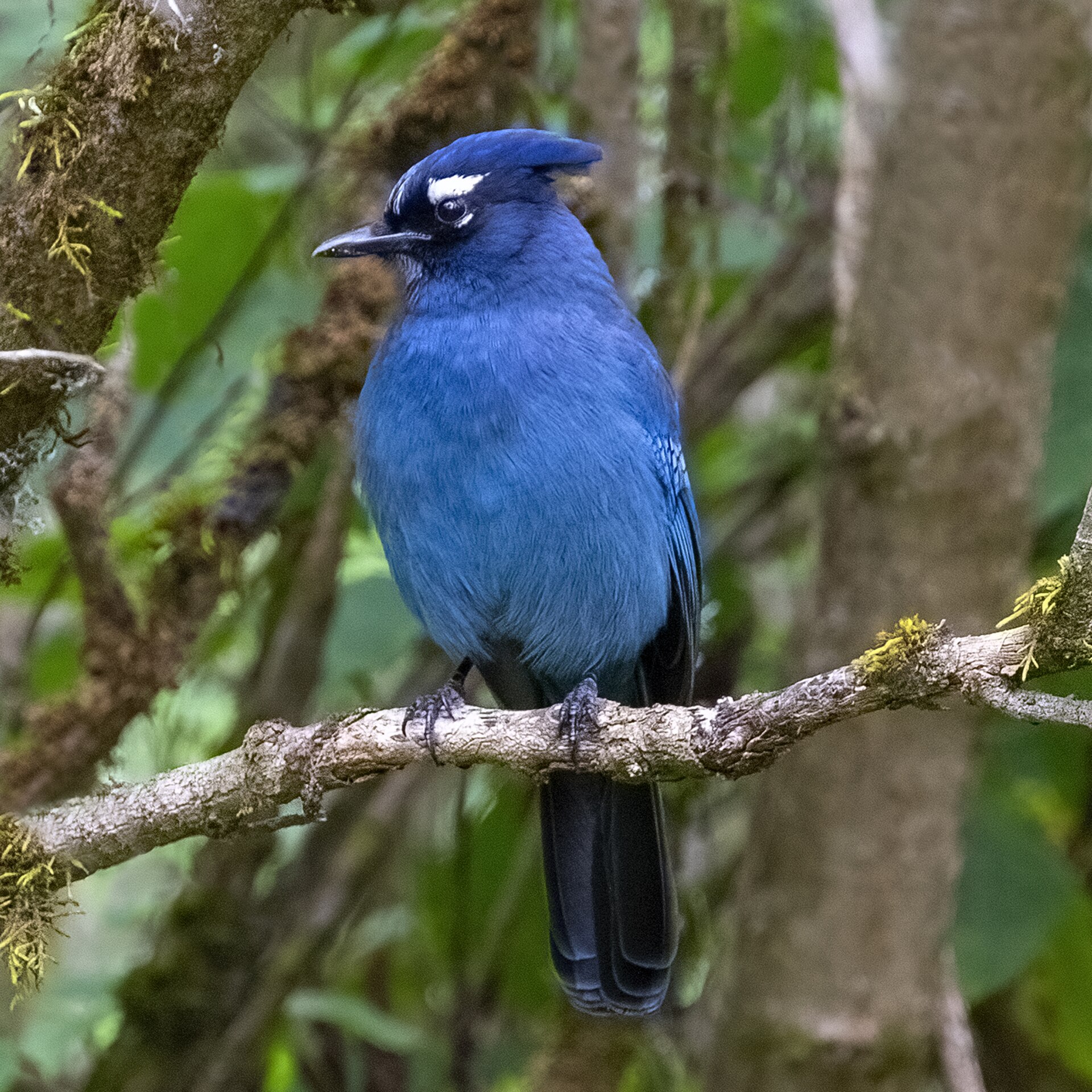
The dark, crested jay of Idaho’s conifer forests, deep blue on the body with a blackish head and a tall shaggy crest, and unmistakable once seen. Steller’s Jays are loud, bold, and excellent mimics, and they regularly imitate Red-tailed Hawk calls well enough to clear a feeder of smaller birds before dropping in themselves. They cache acorns and conifer seeds, take peanuts and sunflower in quantity, and move downslope into valley yards in autumn. A yard that backs onto forest anywhere in Idaho will eventually have them, usually announced well before they arrive.
Pine Siskin
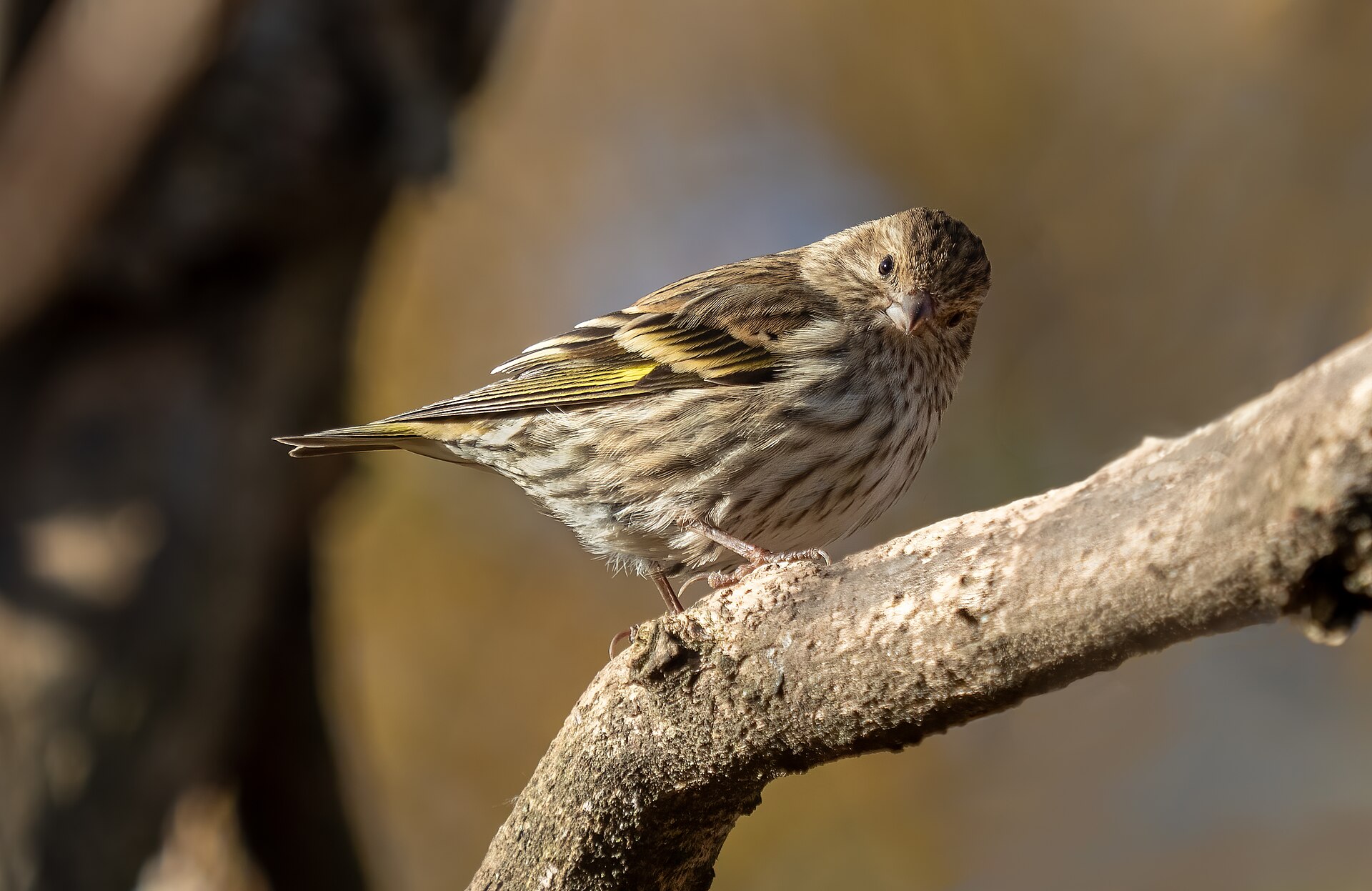
A small, sharply streaked finch with thin yellow edges to the wings and tail and a distinctive rising, wheezy call. Pine Siskins are among the most irruptive birds in Idaho, arriving in flocks of dozens in some winters and nearly absent in others depending on conifer seed crops across the northern forests. They are unusually aggressive at feeders for their size and will hold a nyjer or sunflower perch against much larger birds. Siskins can raise their metabolic rate well above the typical level for a bird their size and store enough overnight fat to survive nights far below freezing, which is how a very small bird gets through an Idaho January.
American Dipper
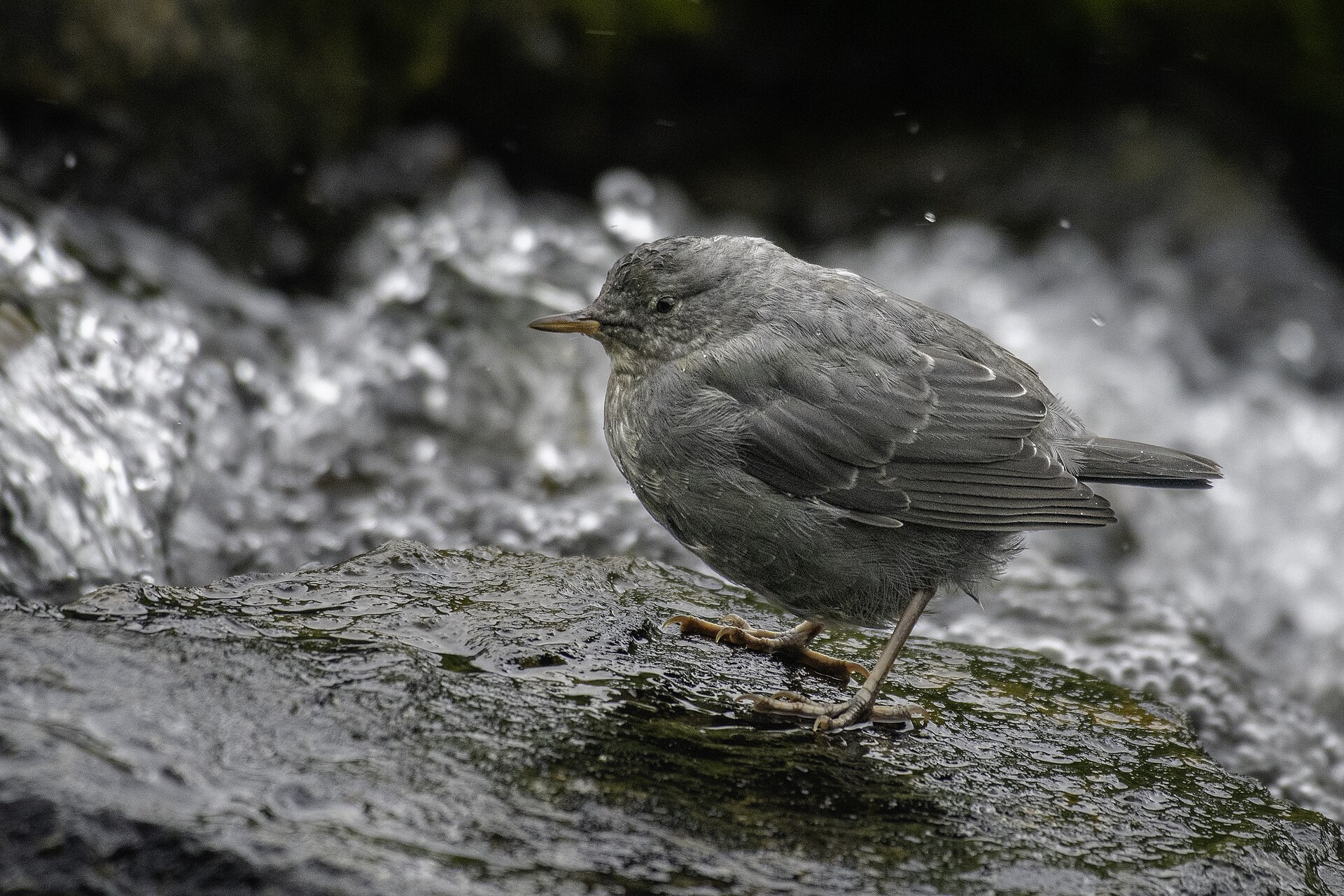
North America’s only truly aquatic songbird, and one of the best reasons to walk an Idaho creek in winter. Dippers are slate gray, chunky, and short-tailed, and they feed by walking directly into fast-moving water, submerging completely, and gripping the streambed to pick aquatic insect larvae off rocks. They have dense plumage, an oversized preen gland, and nasal flaps that close underwater. The bobbing motion that gives them their name is constant. Because dippers depend on clean, well-oxygenated streams, their presence is a reasonable indicator of stream health, and they hold territory on the same stretch of water year-round, singing on mid-winter days when little else does.
Calliope Hummingbird
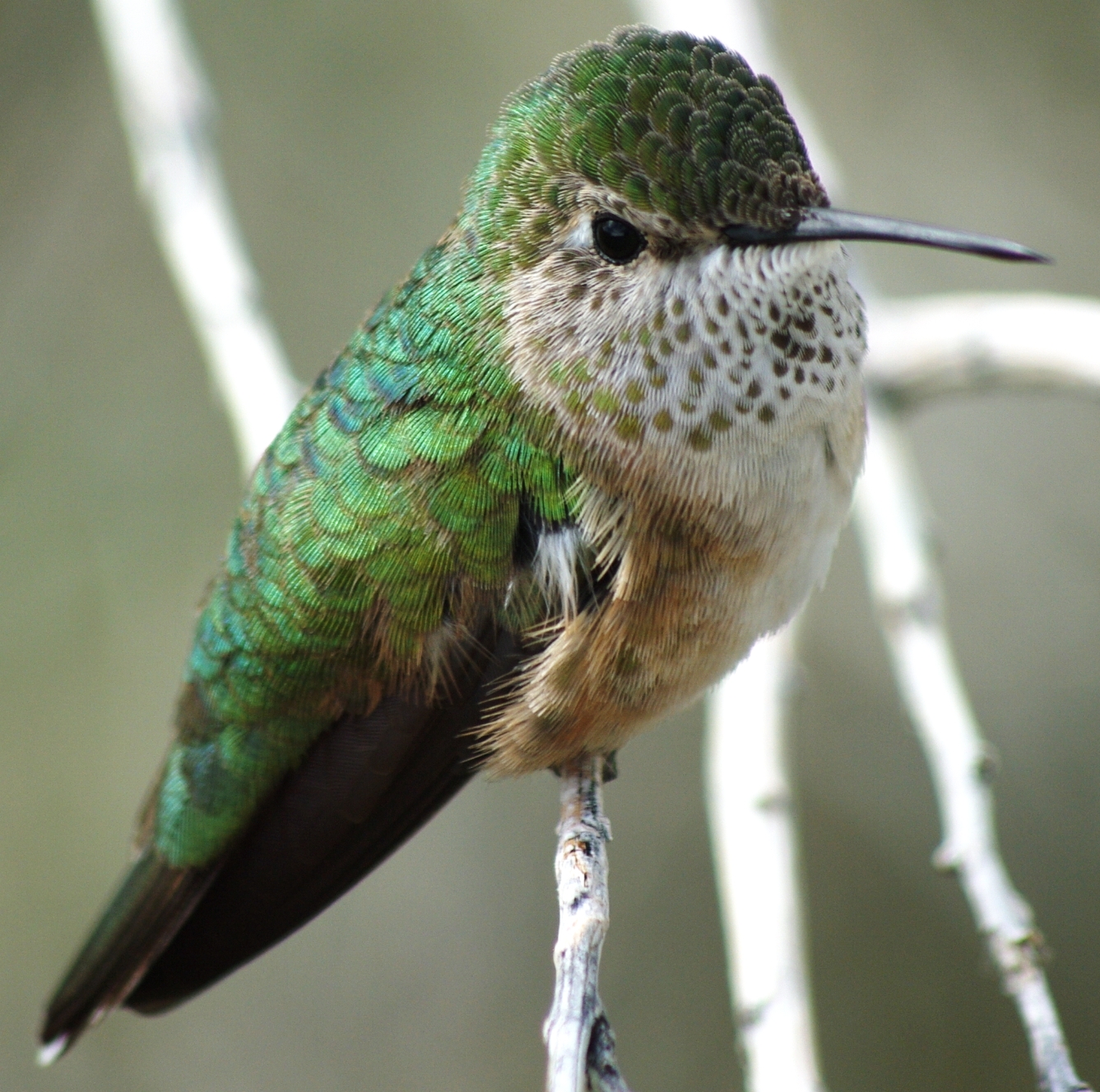
The smallest breeding bird in the United States and Canada, weighing about as much as a penny, and Idaho is squarely within its breeding range. Males have magenta throat feathers arranged in narrow streaks rather than a solid gorget, which fan outward during display flights. Calliope Hummingbirds nest in mountain meadows and open forest edges, often building on conifer branches and sometimes reusing the same nest site across seasons. Despite their size they migrate to Mexico and back each year. In Idaho they turn up at sugar-water feeders from roughly May through August, usually alongside Black-chinned and Rufous Hummingbirds, and the Rufous will try to run them off every time.
Getting Started
A sunflower tube feeder, a suet cage, a nyjer feeder for finches, and a water source will cover most of what an Idaho yard can attract through the year, with a sugar-water feeder added from May through August for hummingbirds. A properly built nest box is the one addition worth making deliberately, because it is the realistic path to hosting the state bird rather than just seeing one from the car. Millet scattered on the ground handles juncos and sparrows.
The birds that give Idaho its character, though, mostly require leaving the yard. American Dippers need a creek. Calliope Hummingbirds need mountain meadows in summer. The raptor concentrations in the Snake River canyon need a spring morning and a pair of binoculars. What makes birding here work is that these are not far apart: a single day’s driving out of Boise can cover sagebrush, river canyon, irrigated farmland, and mountain forest, which is why an Idaho year list tends to look like it was assembled from several different states.
Sources
Species identification, range, and behavior details are cross-checked against the Cornell Lab of Ornithology’s All About Birds, the National Audubon Society, eBird’s Idaho regional data, and Idaho Fish and Game.