Backyard Birds in Iowa: A Field Guide to the Species at Your Feeder
Iowa gets written off as corn, and anyone who has spent a February morning watching a dozen American Goldfinches in drab winter plumage crowd a nyjer feeder while a Bald Eagle circles over the river three miles away knows how incomplete that picture is. Roughly 85 percent of Iowa’s land is in agricultural production, which is a higher share than almost any other state, and that single fact shapes everything about birding here. What remains of native prairie and river-bottom timber does a lot of work for a lot of birds, and the backyard feeder ends up being genuinely important habitat rather than a hobbyist’s decoration.
A state defined by two rivers and what happened in between
Iowa sits between the Missouri River on the west and the Mississippi on the east, and both are major continental migration corridors. The Mississippi Flyway in particular funnels enormous numbers of waterfowl, shorebirds, and songbirds along the state’s eastern edge twice a year. Between those two rivers, the tallgrass prairie that once covered most of Iowa has been reduced to a very small fraction of its original extent, one of the most complete habitat conversions in North America. The birds that adapted to farmland and to towns did well. The grassland specialists did not, and that division explains most of Iowa’s bird conservation picture: a yard feeder in Des Moines can be busy all winter while Bobolinks and Henslow’s Sparrows quietly decline a few miles away.
The state bird: a bird that changes clothes
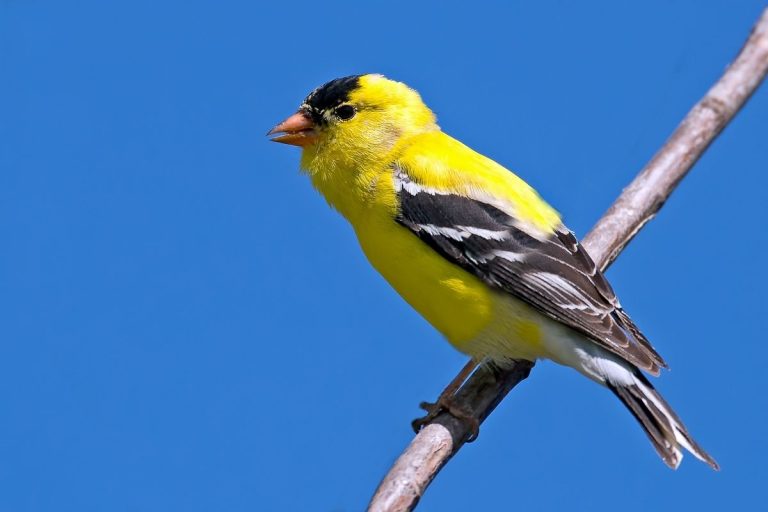
Iowa’s state bird is the American Goldfinch, chosen in 1933, and it is one of the better picks in the country because the bird is genuinely common and genuinely distinctive. Summer males are brilliant lemon yellow with a black cap and black wings. The same bird in January is a drab olive-buff that a lot of people fail to recognize as the same species at all, having molted completely out of the bright plumage. Goldfinches are strict vegetarians, feeding almost entirely on seeds, and they nest later than nearly any other Iowa songbird, often not until July, timing their broods to when thistle and milkweed down is available for nest lining. They stay in Iowa year-round, which means a nyjer feeder works twelve months a year.
Common feeder visitors
An Iowa feeder in winter is a reliable place to see a lot of birds at once. Northern Cardinals, Black-capped Chickadees, White-breasted Nuthatches, Blue Jays, House Finches, Downy and Red-bellied Woodpeckers, Dark-eyed Juncos on the ground, and Mourning Doves underneath make up the core, with American Goldfinches on nyjer throughout. American Robins are more of a spring-and-summer lawn bird, though flocks of them overwinter in Iowa more often than people expect when fruit holds on the trees. European Starlings and House Sparrows show up too, and a suet cage will draw both, which is the usual argument for a caged or upside-down suet feeder.
Beyond the backyard: prairie remnants and eagle rivers
Two kinds of Iowa birding are worth planning trips around. The first is grassland: Neal Smith National Wildlife Refuge near Prairie City, restored tallgrass prairie on former farmland, holds Dickcissels, Grasshopper Sparrows, Bobolinks, and Sedge Wrens in summer, and hearing a prairie full of Dickcissels is a different experience from reading about one. The second is winter along the Mississippi. When most northern water freezes, Bald Eagles concentrate below the lock and dam structures where the current keeps water open, and towns like Keokuk and Dubuque host dozens of eagles at a time in January. Iowa also sits on the Sandhill Crane’s expanding eastern range, and spring and fall bring large flocks of Snow Geese through the western river valleys.
A note on native plants
In a state this heavily farmed, a native planting in a yard does more proportional good than it would almost anywhere else. Native prairie forbs, coneflower, blazing star, compass plant, along with little bluestem and other native grasses, produce seed that goldfinches and sparrows use directly and support the insects that nesting birds feed to their young. Native shrubs and small trees, serviceberry, wild plum, gray dogwood, elderberry, provide fruit in late summer and autumn. Leaving coneflower and other seed heads standing through winter rather than cutting the garden back in October is one of the cheapest and most effective things an Iowa yard can do, because those stalks are food and cover at exactly the point in the year when both are scarce.
Winter Feeding Notes
Iowa winters are cold and often windy, with open farmland offering very little shelter, and that combination makes yard structure as important as yard food. A feeder set near dense shrubs or an evergreen gives small birds somewhere to retreat when a Sharp-shinned or Cooper’s Hawk comes through, which in Iowa is a regular event rather than an occasional one. Black oil sunflower, nyjer for goldfinches, and suet cover nearly everything. Ground-scattered cracked corn and millet handle juncos, doves, and the occasional pheasant that wanders in from a fencerow. Open water matters here too, since natural sources freeze solid for weeks. Feeder activity spikes sharply before winter storms as birds load up on calories, which is worth knowing when a feeder suddenly empties in a day.
American Goldfinch
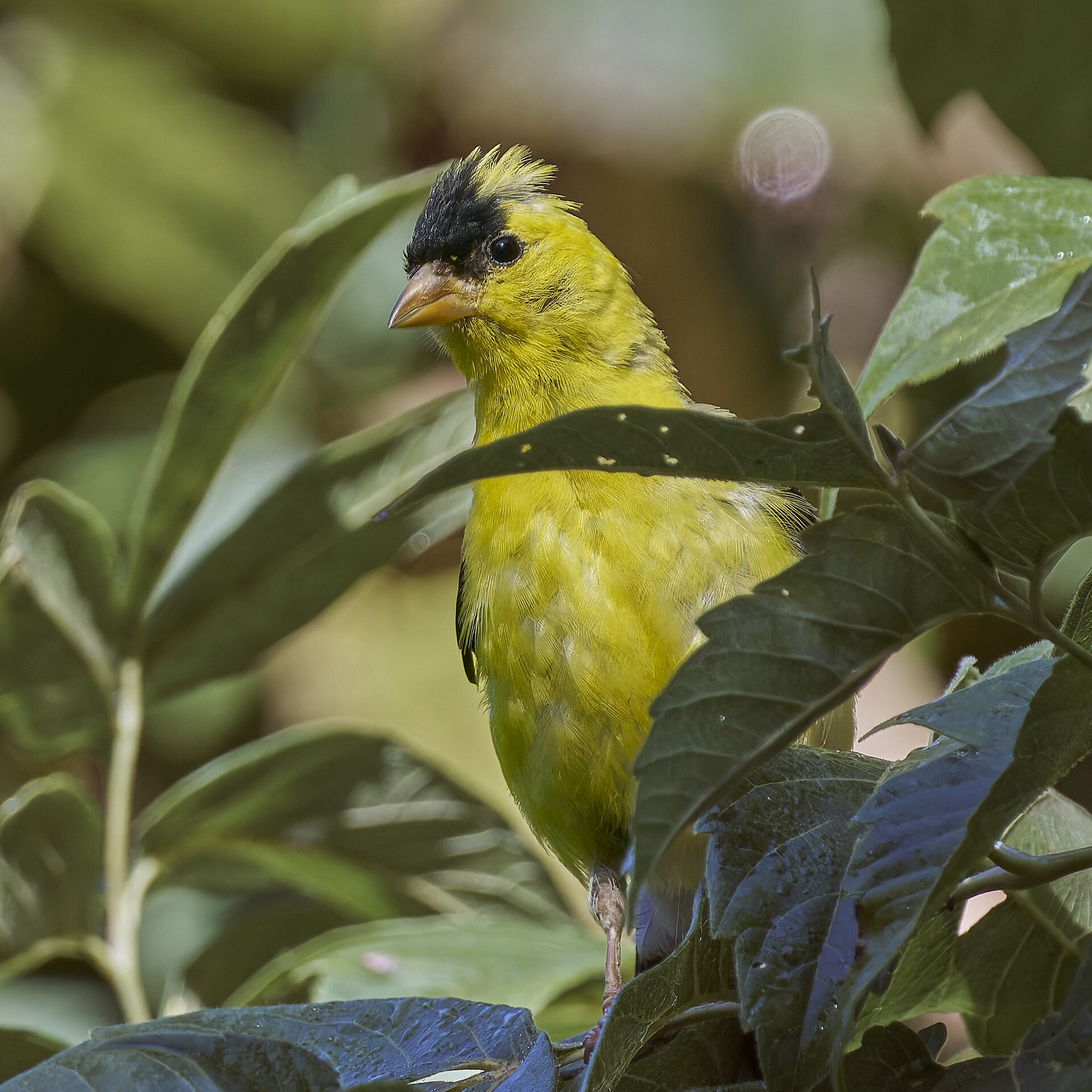
Iowa’s state bird and one of the few feeder birds whose seasonal change catches experienced watchers off guard. Breeding males are bright yellow with a black forehead patch and black wings marked with white; in winter both sexes fade to a dull olive-brown that looks like an entirely different bird. Goldfinches eat seeds almost exclusively, which is unusual enough that it appears to give them some protection from Brown-headed Cowbird parasitism, since a cowbird chick raised on a seed diet generally does not survive. They breed unusually late in the season, waiting for thistle and milkweed down, and they hold nyjer and sunflower feeders in tight, chattering groups through the coldest months.
Northern Cardinal
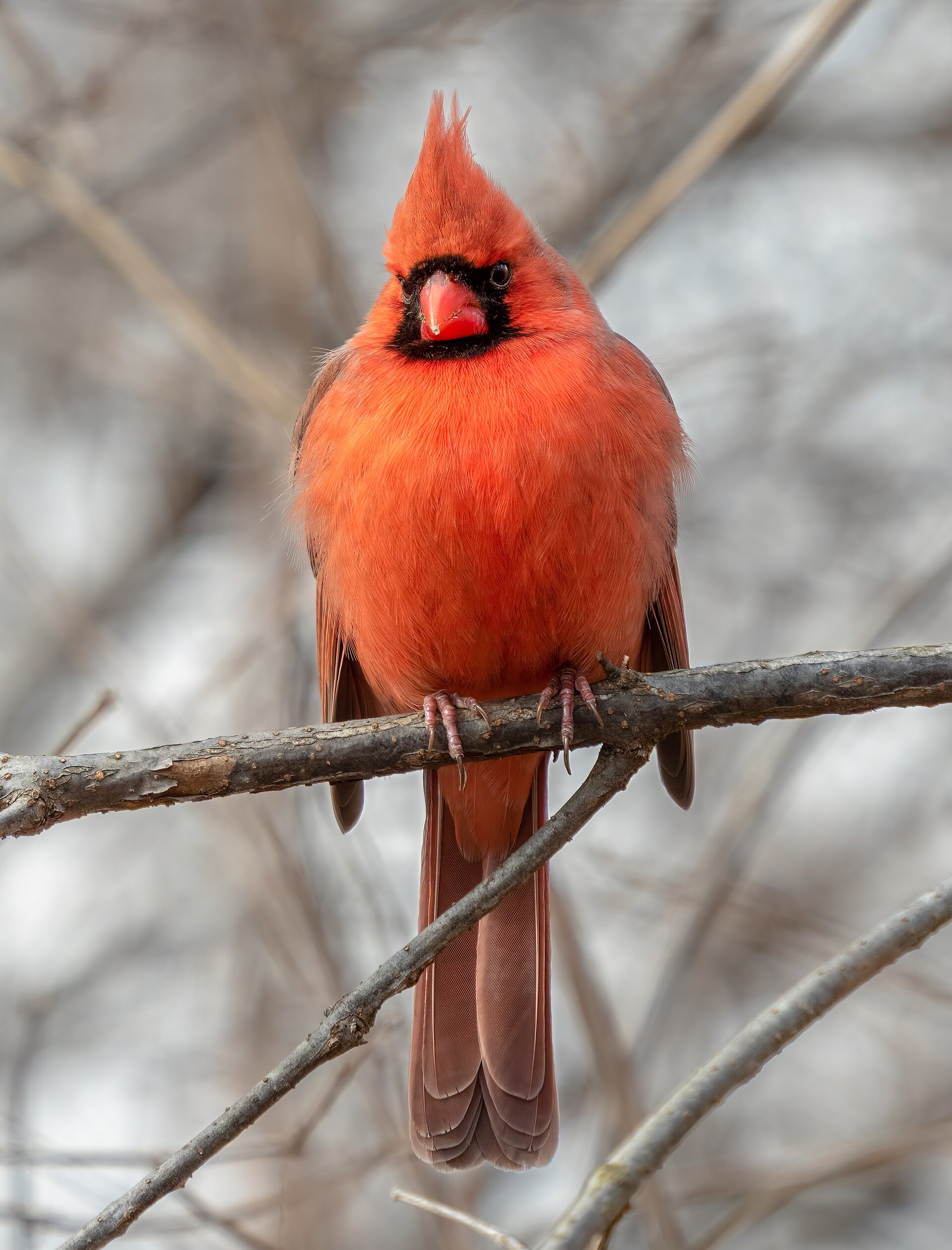
The bird most Iowans picture when they picture a feeder in snow, and the contrast of a bright red male against a white yard is a large part of why people start feeding birds at all. Females are a warm tan with red highlights in the wings, crest, and tail, and they sing, which is less common among North American songbirds than people assume. Cardinals are non-migratory, holding the same general territory year-round, and pairs often stay together through winter. They have heavy conical bills built for cracking seed and take black oil sunflower and safflower readily. They also feed at dawn and dusk more than most feeder birds, which is why a cardinal is often the first and last bird of the day.
Black-capped Chickadee
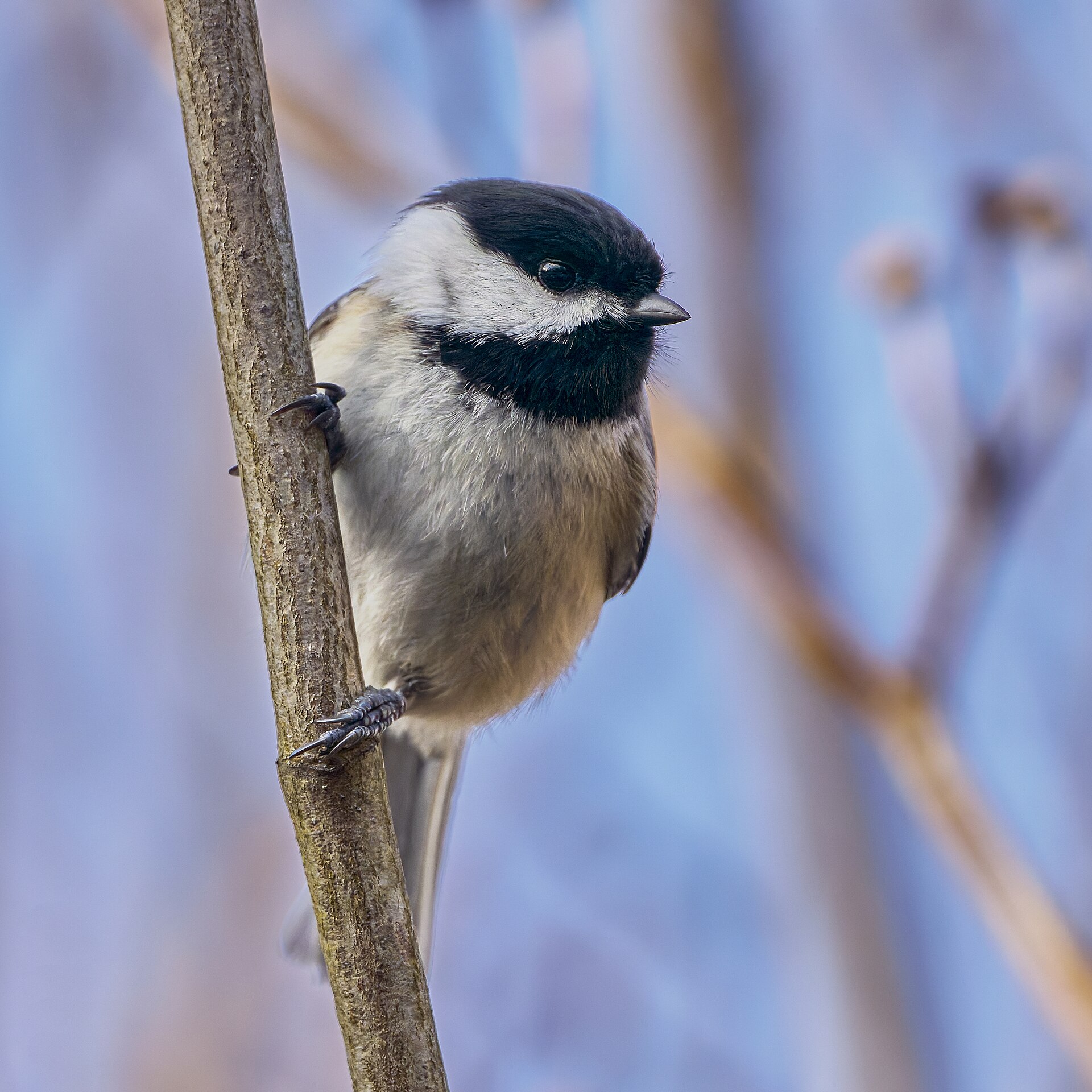
Small, black-capped, white-cheeked, and almost always the first bird to investigate a new feeder in an Iowa yard. Black-capped Chickadees take a single seed, carry it to a branch, hold it with their feet, and hammer it open rather than cracking it in the bill, which is why they seem to make many more trips than a finch does. They cache thousands of seeds each autumn in individual hiding places and recover them months later, and they survive cold nights by lowering their body temperature in a regulated way. They lead the mixed winter flocks that move through Iowa yards, with nuthatches, woodpeckers, and kinglets following.
White-breasted Nuthatch
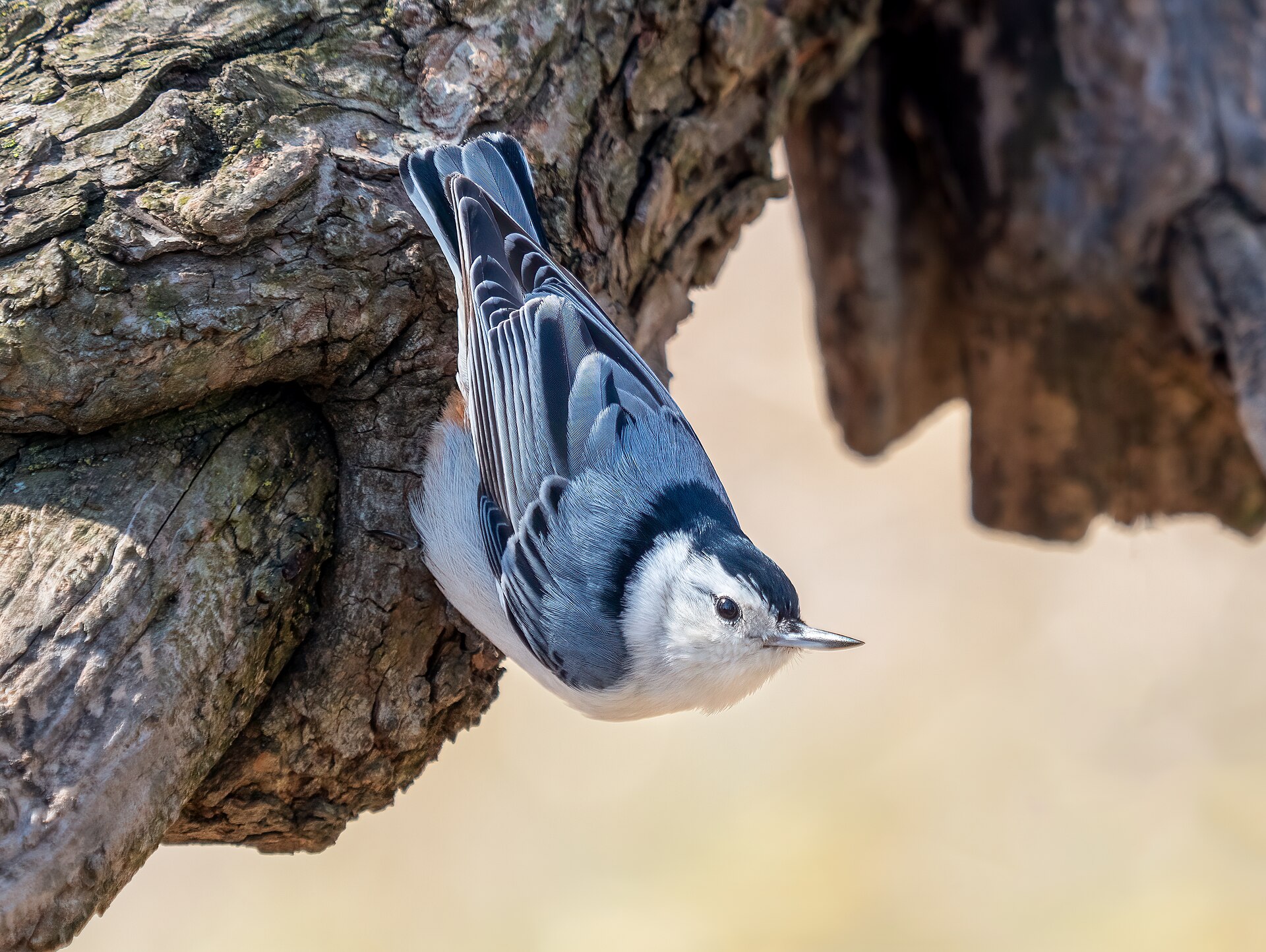
A compact, blue-gray bird with a clean white face and breast, a black cap, and no neck to speak of, working tree trunks head-downward in a way no other Iowa bird does. That upside-down foraging angle is not a quirk; it gives nuthatches a different view into bark crevices than woodpeckers and creepers get, which lets them find insects the others miss. They take sunflower seed and suet steadily and, like chickadees, wedge seeds into bark to open them. The call is a nasal, repeated yank that carries surprisingly far through winter timber. White-breasted Nuthatches are year-round residents in Iowa and hold territory as pairs even in the coldest months.
Downy Woodpecker
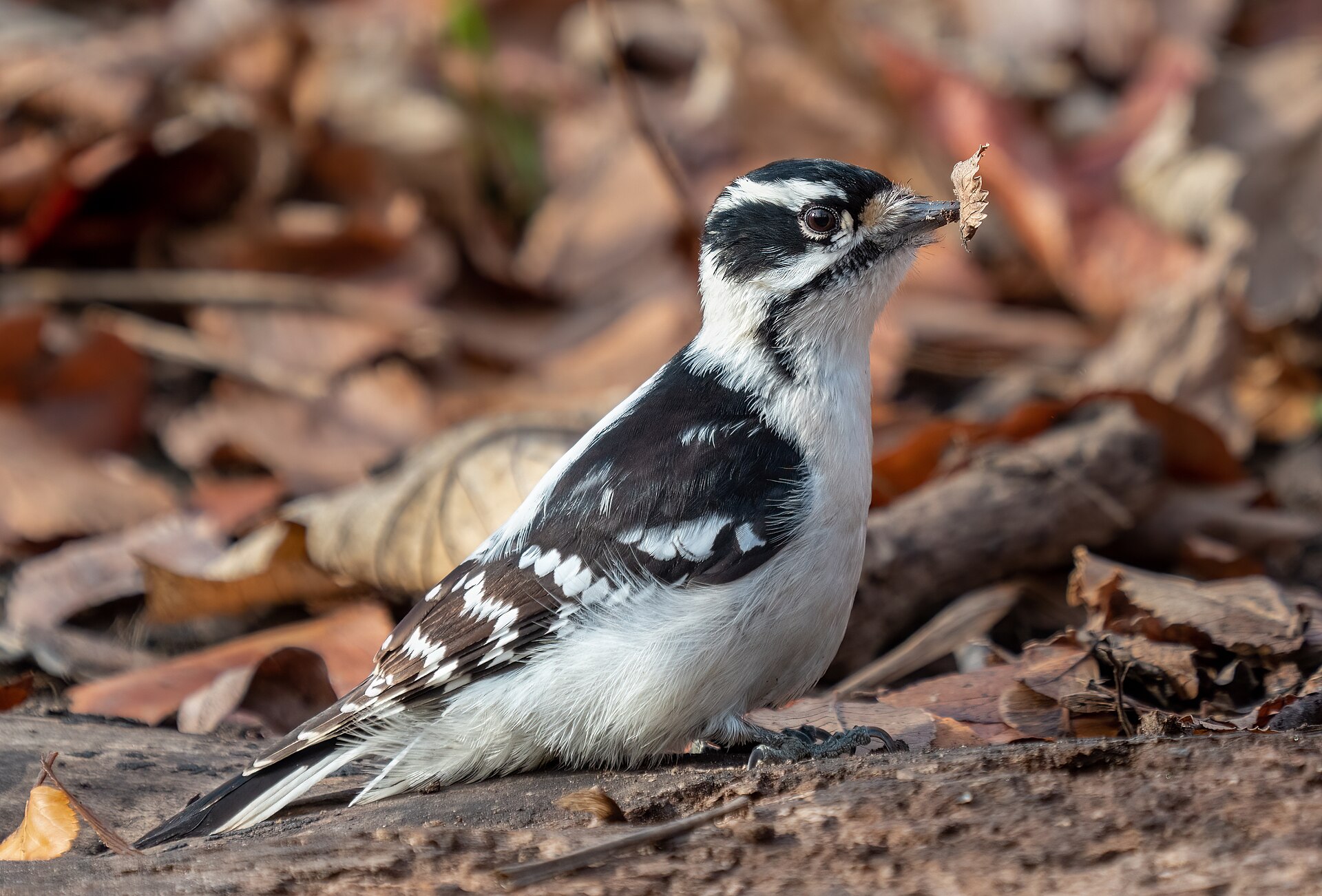
Iowa’s smallest woodpecker and the most frequent visitor to a suet cage, black and white with a stubby bill and, on males, a small red patch at the back of the head. It is easy to confuse with the larger Hairy Woodpecker; bill length relative to head size is the reliable difference, since a Downy’s bill looks distinctly undersized. Downy Woodpeckers work river-bottom timber, town shade trees, and even tall weed stems, taking insects and larvae from places heavier woodpeckers cannot reach. They join winter mixed flocks and drum on resonant surfaces in late winter, which is why a metal gutter sometimes becomes part of a territorial display in February.
Blue Jay
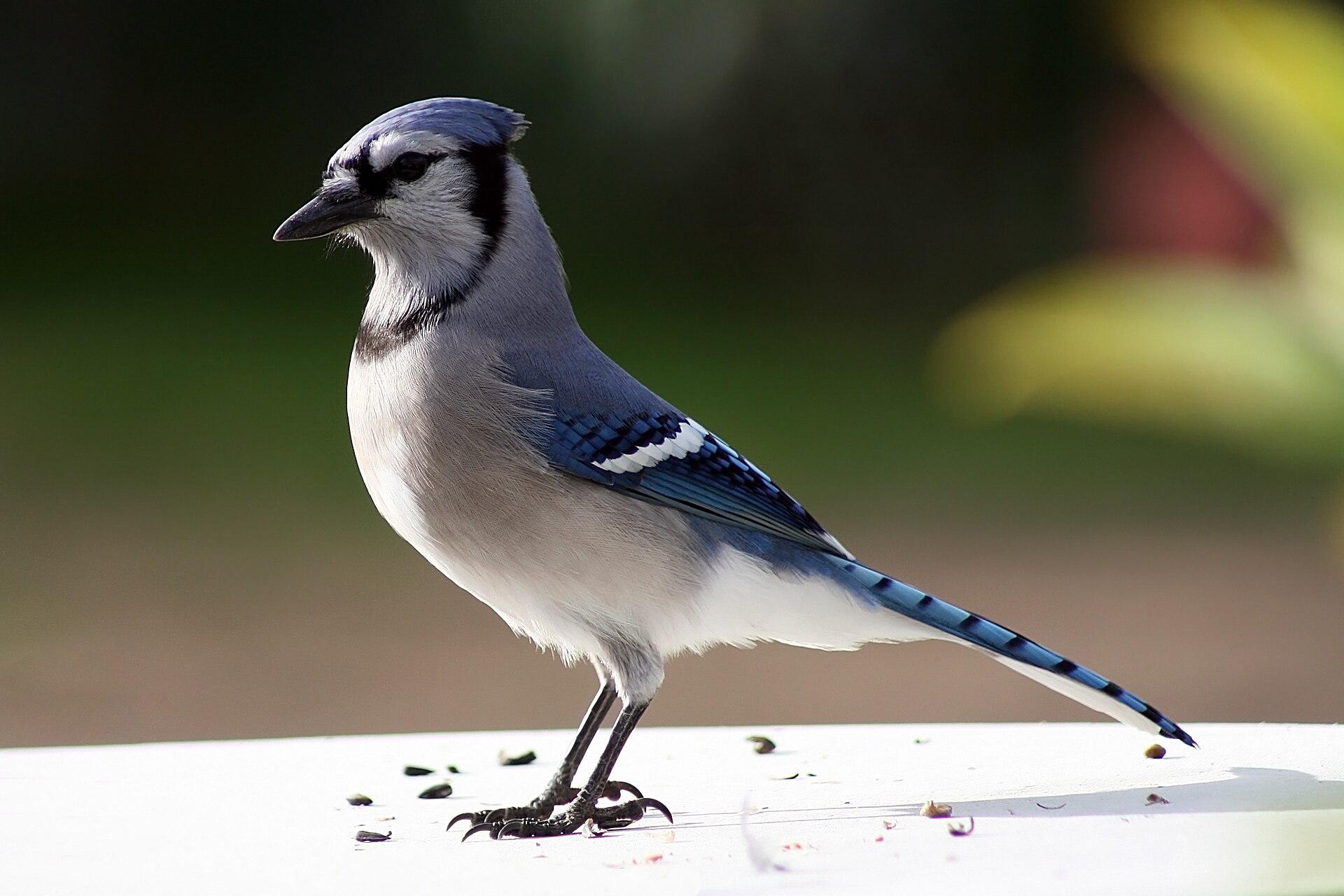
Loud, blue, crested, and impossible to ignore, Blue Jays are among the more polarizing birds at an Iowa feeder. They are corvids, with the intelligence that implies, and they cache acorns in the ground by the thousands, which makes them significant dispersers of oak across the state. They also imitate Red-shouldered and Red-tailed Hawk calls well enough to empty a feeder before landing, and they will drive smaller birds off a platform. On the other hand a jay’s alarm call is genuinely useful to every other bird in the yard when a real hawk arrives. They take peanuts, sunflower, and corn, and a whole peanut in the shell will occupy one for a while.
House Finch
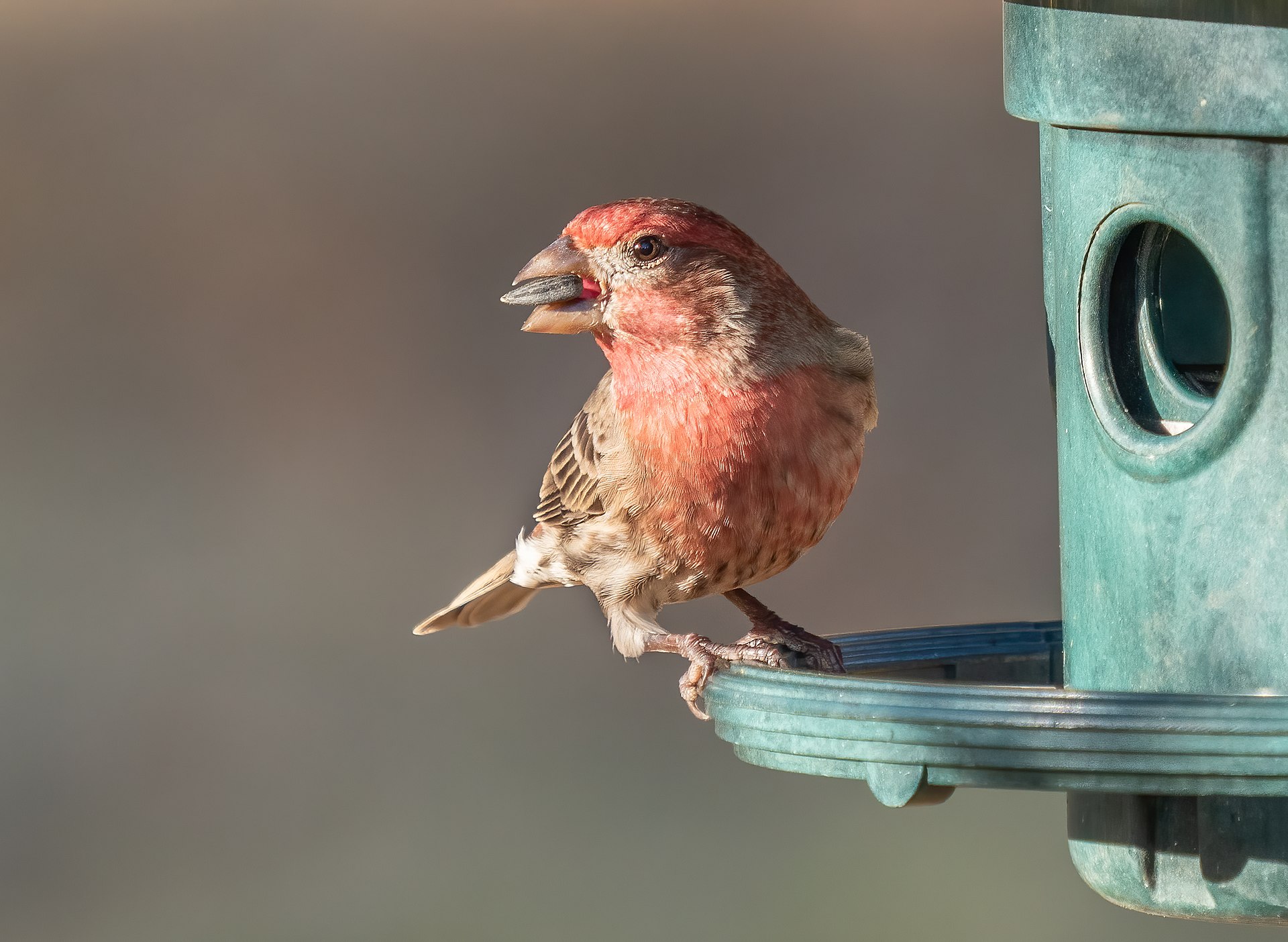
Common in Iowa towns and usually arriving in groups, House Finches are among the most numerous birds at suburban feeders. Males show red on the head, throat, and breast, with the intensity varying from deep red to orange to yellow depending on what the bird was eating while those feathers grew. Females are plain brown with blurry streaking and are regularly mistaken for sparrows. House Finches eat almost entirely plant material and will sit at a sunflower feeder for extended stretches rather than taking a seed and leaving. Because they feed in dense groups, they are the species most linked to conjunctivitis at feeders, which is the practical reason to scrub and dry a feeder regularly.
Dark-eyed Junco
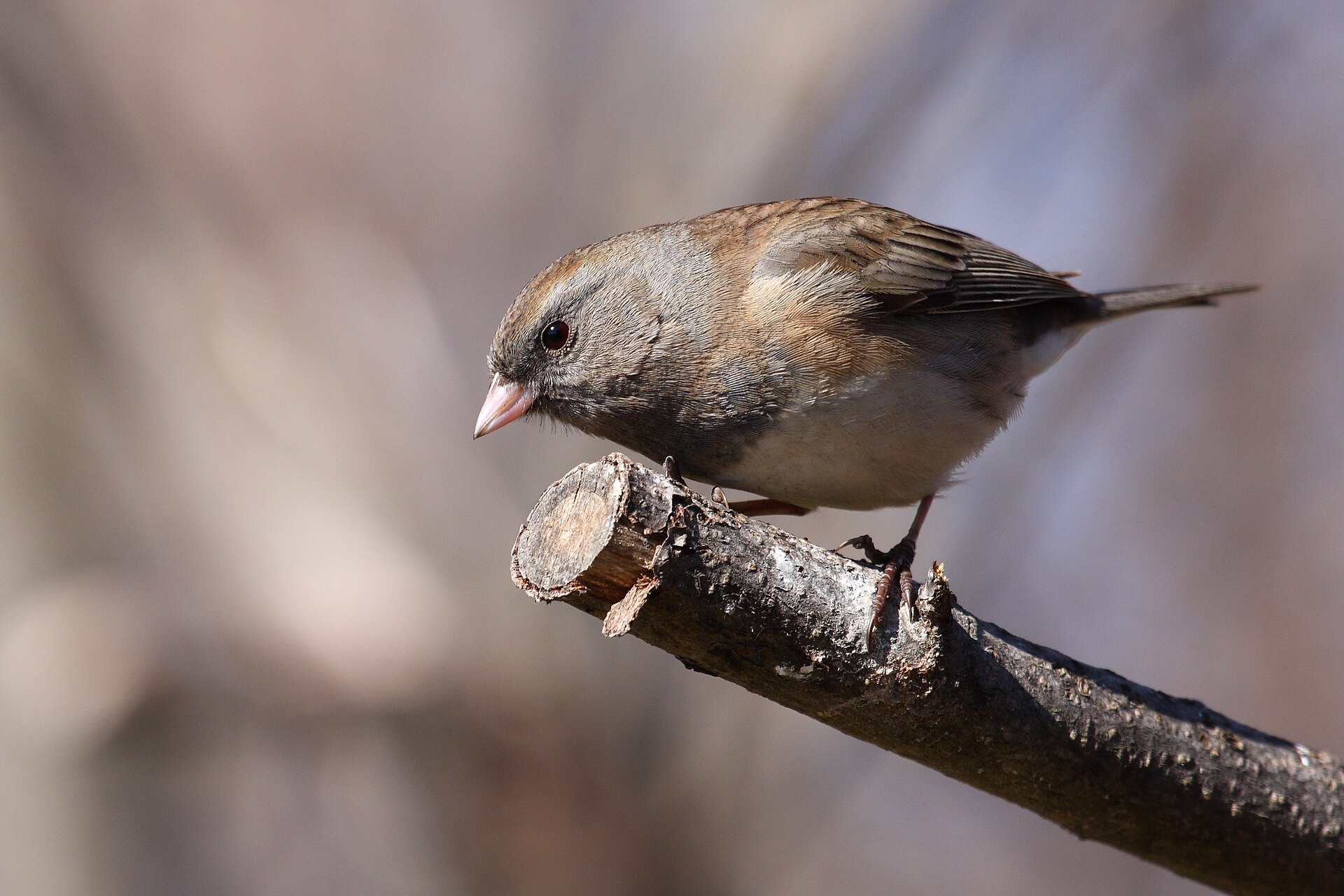
Known widely as the snowbird, and in Iowa that nickname is close to a calendar: juncos arrive in October and are largely gone by April. They are slate gray above with a clean white belly, a pale pinkish bill, and white outer tail feathers that flash when they flush. Iowa gets the slate-colored form, breeding in the boreal forest and Appalachians and wintering here in flocks. Juncos are ground feeders, scratching through fallen seed under the feeder and preferring millet and cracked corn scattered on bare ground or packed snow over anything hanging. A brush pile or dense shrub near the feeding area will noticeably increase how many use a yard.
Mourning Dove
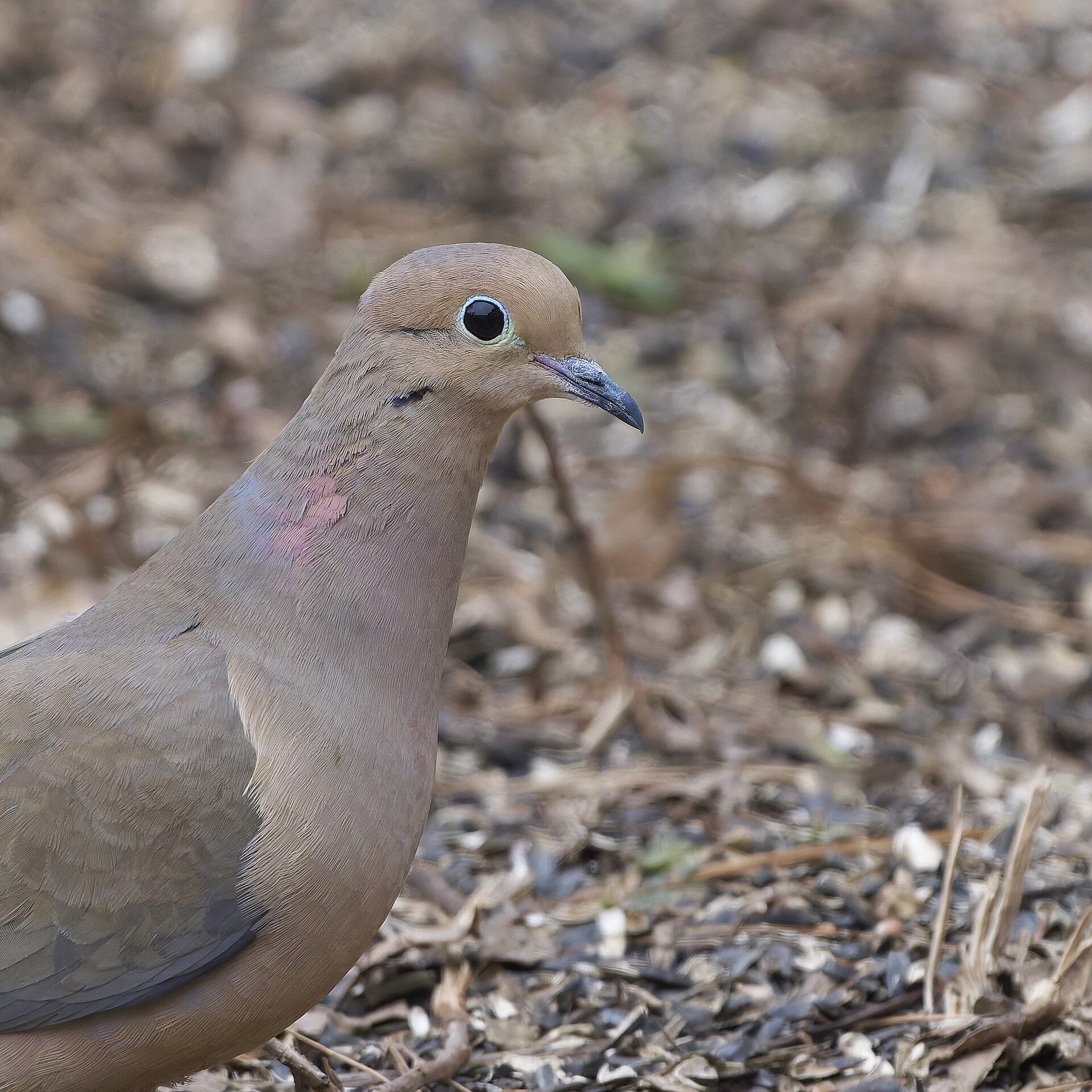
A slim, long-tailed, buff-brown dove whose soft cooing is one of the defining summer sounds of an Iowa neighborhood and is regularly mistaken for an owl. The wings produce a sharp whistling twitter on takeoff, which is a useful identification clue when the bird flushes before being seen well. Mourning Doves feed almost entirely on seeds picked off the ground, swallowing them whole into a crop and digesting them later, which is why a scattering of seed below the feeder brings in more doves than the feeder itself. They also feed nestlings on crop milk, a secretion produced by both parents, and they raise multiple broods across a long season.
Red-bellied Woodpecker
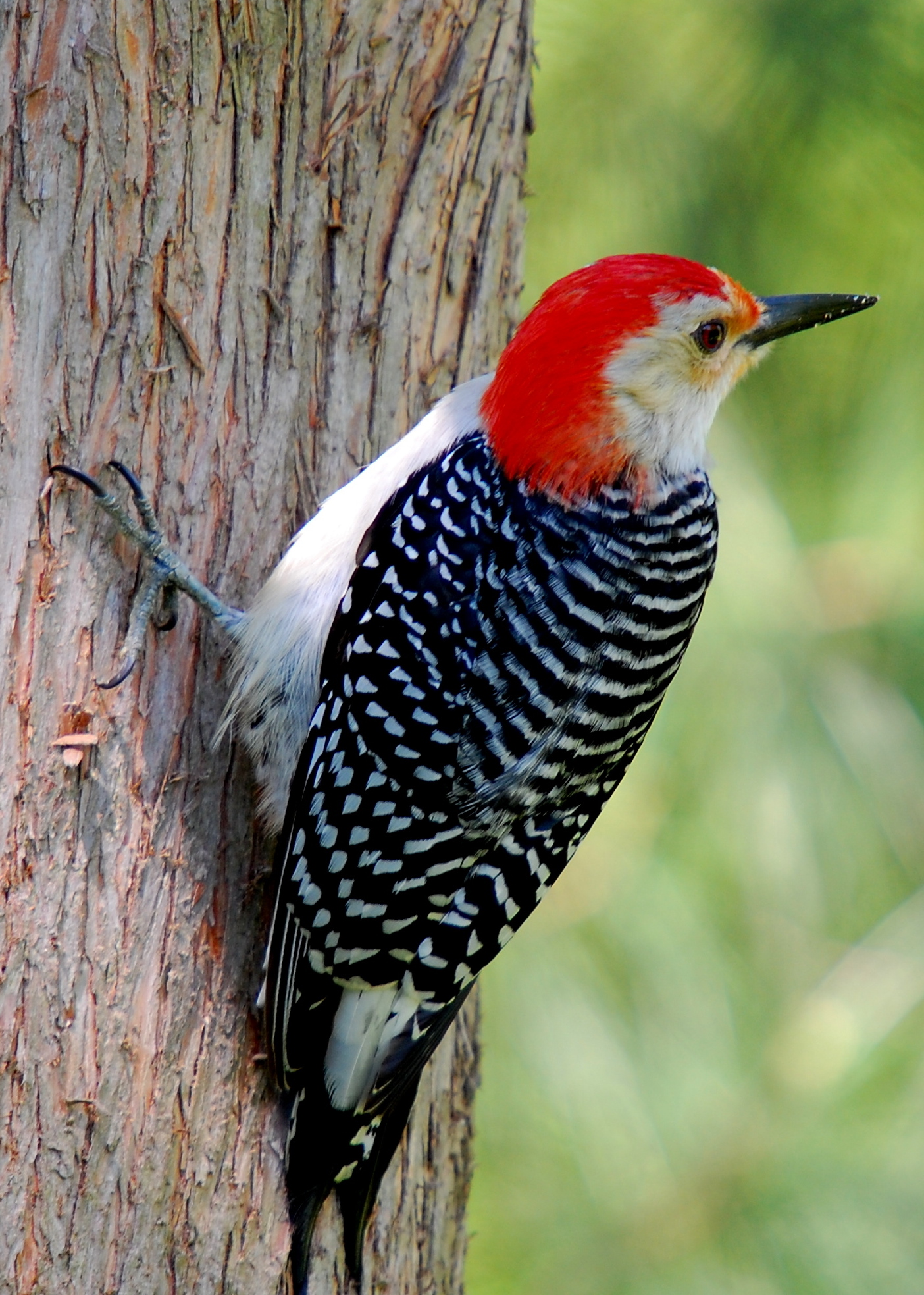
Badly named, since the red on the belly is a faint wash that is almost never visible, while the bright red running down the back of the head and neck is obvious. The back is boldly barred black and white in a pattern often described as zebra-like. Red-bellied Woodpeckers have expanded northward across Iowa over the past several decades and are now common where they were once mostly a southern bird. They take suet, sunflower, and peanuts, and they have an extremely long, barbed tongue used to extract insects from deep crevices. They also cache food in bark cracks and will defend a suet feeder against birds considerably larger than themselves.
American Robin
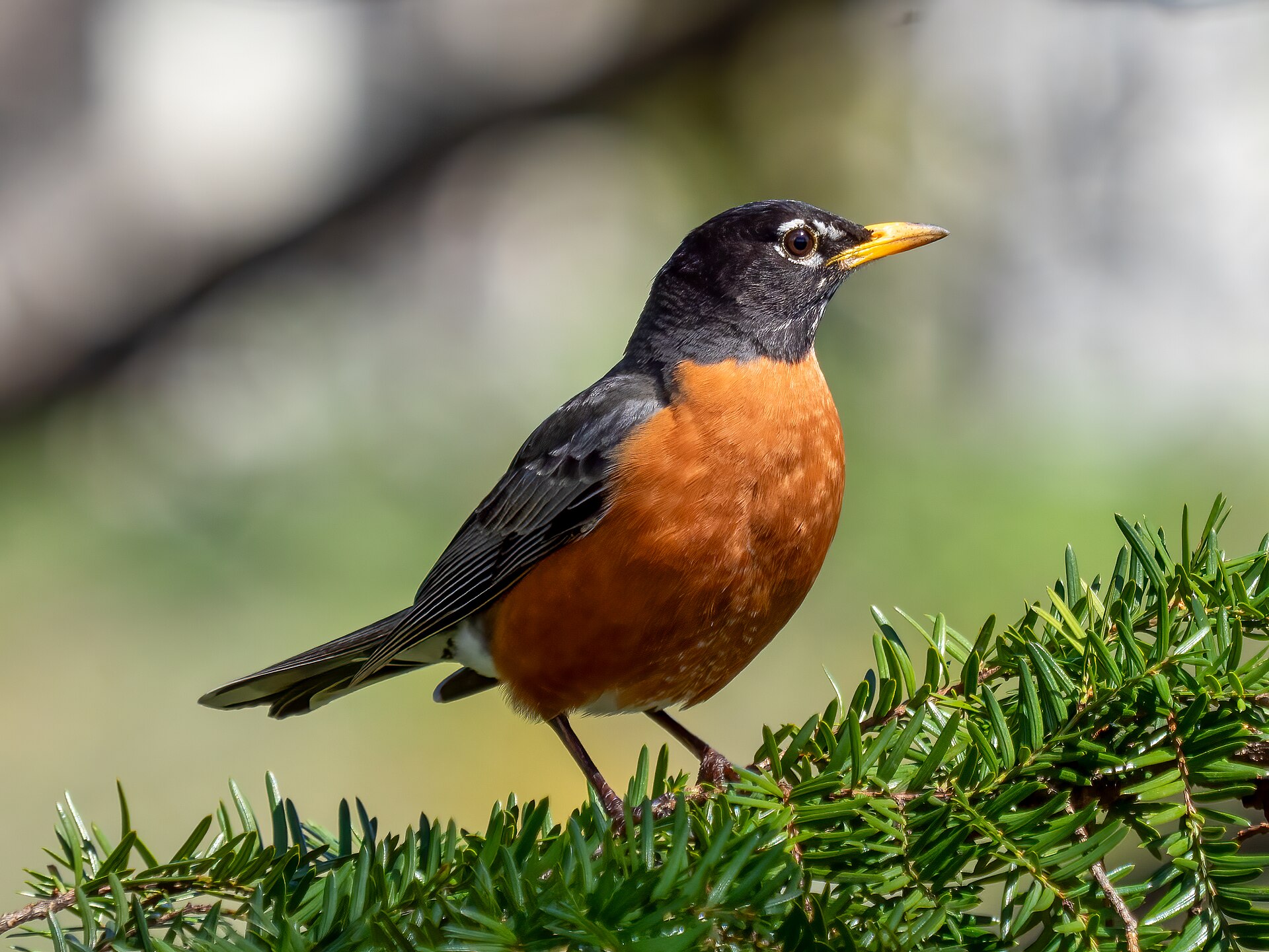
The classic lawn bird, orange-breasted with a dark gray back, and the species most people in Iowa treat as the official arrival of spring, though that reputation is somewhat undeserved. Flocks of robins overwinter in Iowa whenever fruit holds on crabapples, hackberry, and sumac, spending the cold months in timber and shrubby areas rather than on lawns, which is why they seem to vanish and then reappear. Robins hunt earthworms by sight and by detecting vibration, and the head-cocked pause on a lawn is the bird locating prey rather than listening in the usual sense. They rarely take seed but will come to fruit, mealworms, and water.
Ring-necked Pheasant
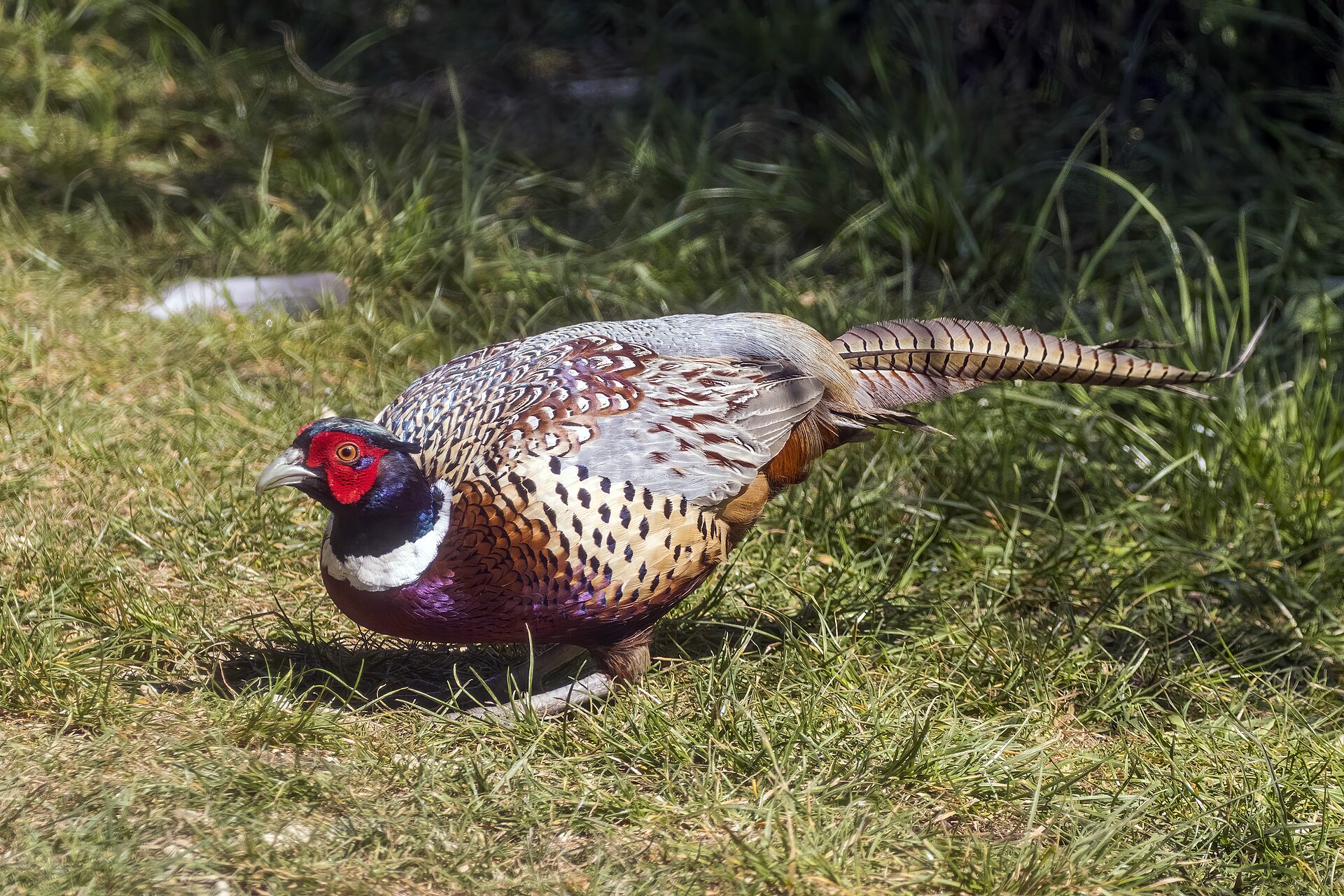
Not a native bird and not really a backyard bird either, but few species are more tied to Iowa’s rural identity. Introduced from Asia in the late 1800s and established in Iowa by the early twentieth century, Ring-necked Pheasants became the basis of a hunting tradition that shaped how the state thinks about farmland habitat. Males are spectacular, with an iridescent green head, red facial wattles, a white neck ring, and a long pointed tail. Populations have declined substantially with the loss of grassy nesting cover and fencerow habitat, and hard winters with deep snow hit them hard. A rural Iowa yard adjoining a grassy waterway or CRP field will sometimes get one walking in to feed on spilled corn.
Dickcissel
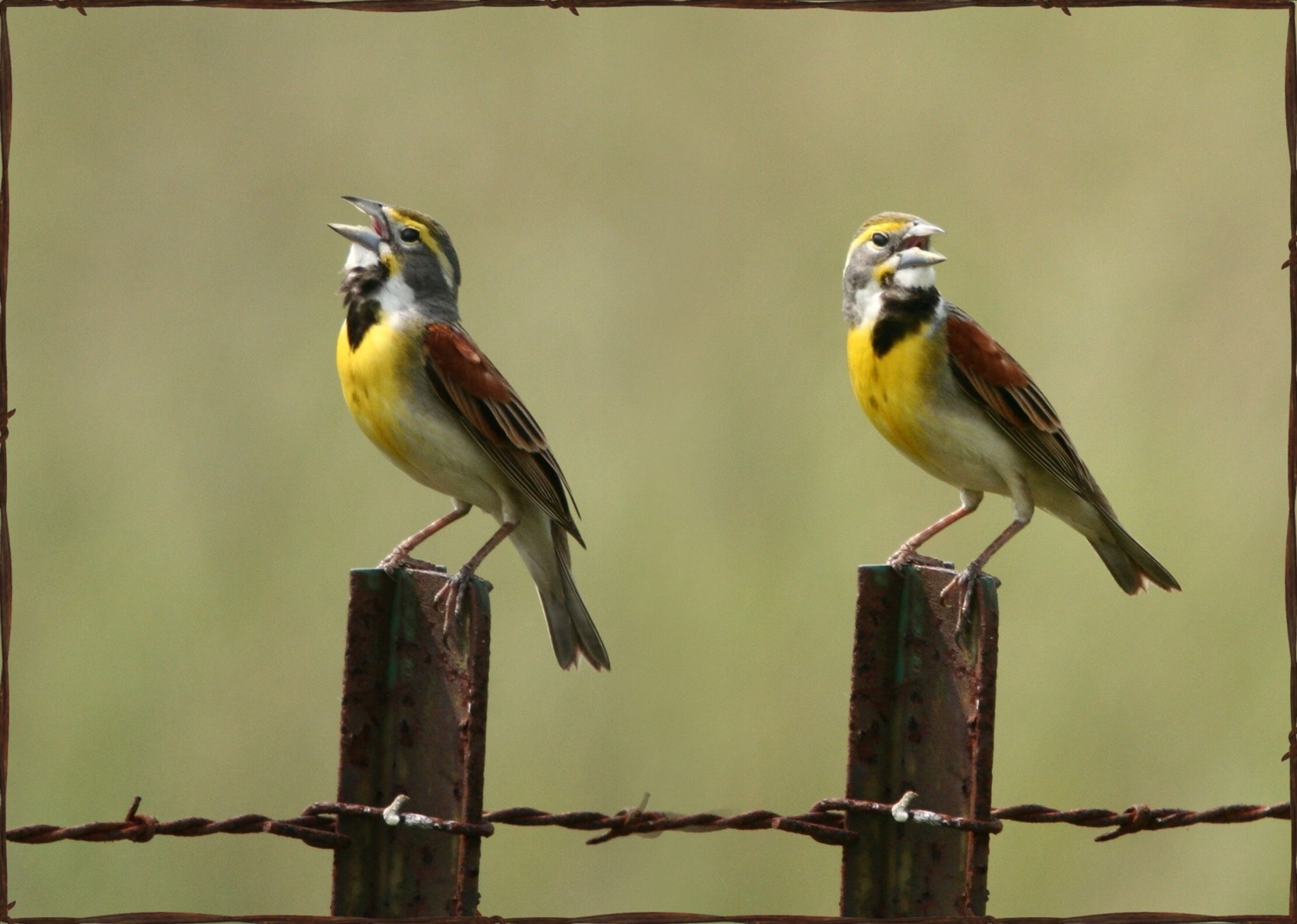
A grassland bird with a name taken directly from its song, a buzzy, insistent dick-dick-cissel repeated from a fence wire or a tall forb through the heat of a July afternoon when most other birds have gone quiet. Males have a yellow breast with a black V, a chestnut wing patch, and a heavy sparrow-like bill; females are plainer and easily overlooked. Dickcissels nest in hayfields, restored prairie, and weedy field margins, which makes them vulnerable to mowing during the nesting season. Their numbers in a given field can swing dramatically year to year. They winter in Central and South America in enormous flocks, and Iowa’s prairie restorations are among the better places in the country to hear a field full of them.
Bald Eagle
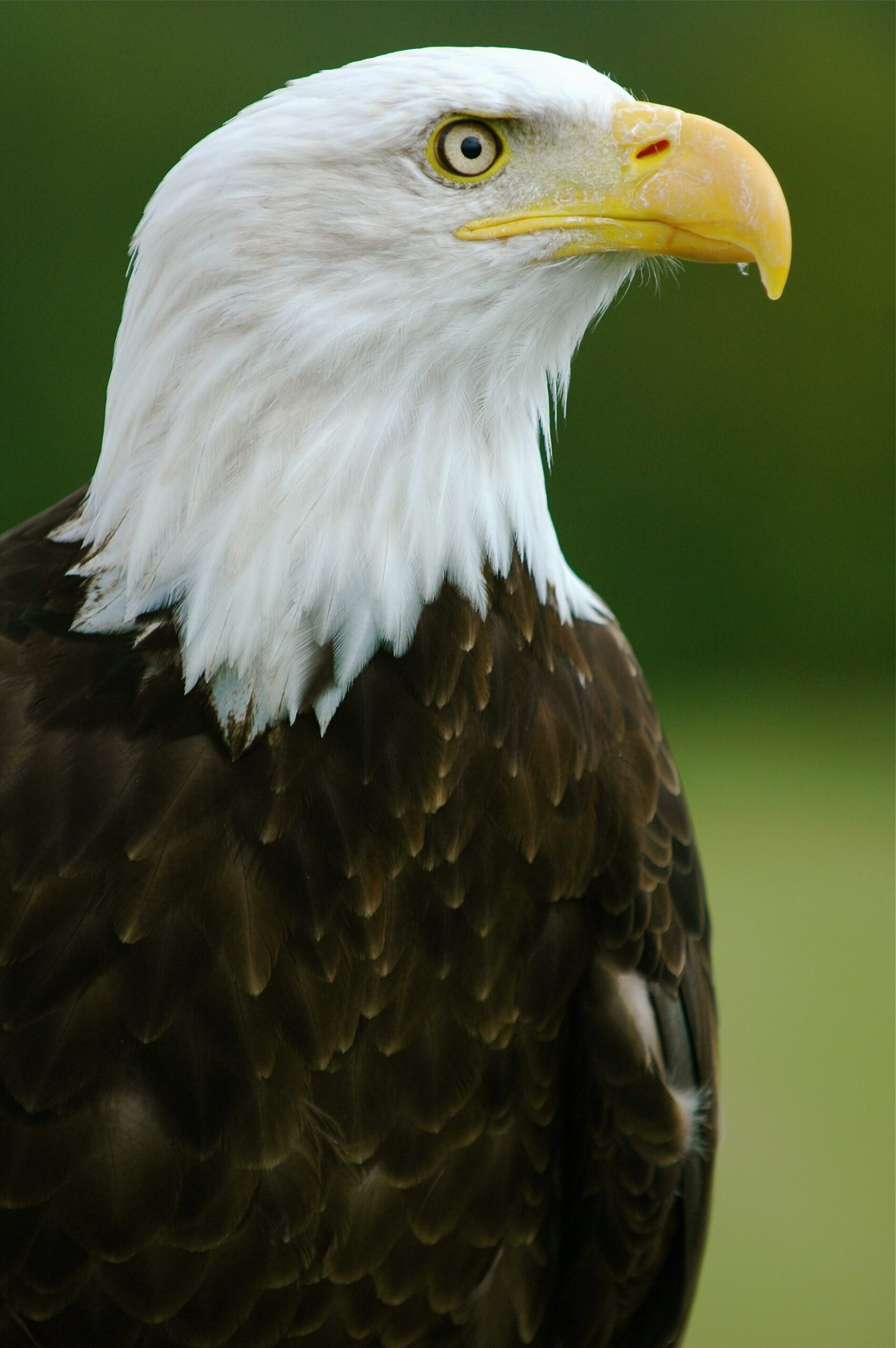
Iowa’s winter eagle concentrations along the Mississippi and Missouri rivers are among the most accessible in the country, and they represent a genuine recovery: Bald Eagles had essentially stopped nesting in Iowa by the 1970s and now nest in nearly every county. Adults are unmistakable with the white head and tail against a dark brown body, while immatures are mottled brown and white for their first four or five years and are regularly misidentified as hawks or even vultures. They take fish primarily, along with waterfowl and carrion, and they concentrate in winter wherever moving water stays open below dams. A January drive along the Mississippi in eastern Iowa can produce dozens in an afternoon.
Getting Started
A tube feeder with black oil sunflower, a nyjer feeder for goldfinches, and a suet cage will cover the great majority of what an Iowa yard attracts, and adding millet or cracked corn scattered on the ground brings in juncos and doves. Placing all of it within a short flight of dense cover matters more in Iowa than in wooded states, because open farmland gives small birds nowhere to go when an accipiter comes through. A water source, heated in winter, is the addition that most often produces species the seed never will.
The harder and more rewarding half of Iowa birding happens away from the yard. Restored prairie in summer for Dickcissels and Bobolinks, the Mississippi corridor in winter for eagles and waterfowl, the river valleys in March and October for migration. Iowa is often treated as flyover country by birders planning trips, and the truth is closer to the opposite: the state sits directly under one of the continent’s busiest migration routes, and the birds passing through are the same ones people drive a long way to see elsewhere.
Sources
Species identification, range, and behavior details are cross-checked against the Cornell Lab of Ornithology’s All About Birds, the National Audubon Society, eBird’s Iowa regional data, and the Iowa Department of Natural Resources.