
Backyard Birds in Missouri: A Field Guide to the Species at Your Feeder
Missouri is a state where two birding maps overlap. Draw a line of eastern forest birds spreading west and a line of prairie birds spreading east, and they cross somewhere around Columbia. A backyard in St. Louis gets Carolina Wrens and Tufted Titmice the way a yard in Kentucky would, while a farm in the far southwest corner can hear a Painted Bunting singing from a hedgerow in June and a Greater Prairie-Chicken booming on a spring morning a county or two away. Add the Ozark Plateau across the south and two of the continent’s largest rivers meeting just north of St. Louis, and a state that rarely shows up on birders’ bucket lists turns out to hold an unusual amount of variety for anyone watching a feeder.
Where the East meets the plains
Missouri’s birdlife follows its geography closely. The northern third was once tallgrass prairie and is now mostly farmland, with scattered prairie remnants and river-bottom timber. The Ozarks, covering much of the southern half, are old, heavily forested hills cut by clear spring-fed rivers, and they hold breeding warblers, Whip-poor-wills, and Wild Turkeys in numbers that feel closer to Appalachia than the Midwest. The Bootheel in the far southeast is flat Mississippi lowland with a distinctly Southern character. Tying all of it together are the Missouri and Mississippi rivers, whose confluence sits within sight of the St. Louis suburbs and which carry the Mississippi Flyway’s traffic straight through the state every spring and fall.
The state bird: blue on the fence post
Missouri adopted the Eastern Bluebird as its state bird in 1927, and it fits the state’s pastures and old fields almost perfectly. Bluebirds are cavity nesters that hunt insects by dropping from a low perch into short grass, which makes rural Missouri, with its fence lines, mowed edges, and scattered trees, close to ideal habitat. Like bluebirds everywhere in the East, they declined in the mid-twentieth century as House Sparrows and European Starlings took over nest cavities, and they recovered largely because people put up nest boxes. Missouri has a long tradition of bluebird trails along rural roads and in parks, and the species is now common across most of the state, with many birds staying through winter.
Common feeder visitors
A Missouri feeder in January is dependable. Northern Cardinals, Carolina Chickadees, Tufted Titmice, Blue Jays, White-breasted Nuthatches, Downy and Red-bellied Woodpeckers, and American Goldfinches make up the daily core, with Dark-eyed Juncos, White-throated Sparrows, and Mourning Doves working the ground underneath. Carolina Wrens come to suet and peanut feeders, and Eastern Bluebirds will visit for mealworms or suet crumbles in hard weather. In the far north of the state, Black-capped Chickadees take over from Carolinas, and the two species overlap and occasionally hybridize in a band across central Missouri, which makes chickadee identification there more interesting than most people expect. Summer brings Ruby-throated Hummingbirds to nectar feeders and Indigo Buntings to thistle and millet near the woodland edge.
Beyond the backyard: eagles, geese, and the last prairie chickens
Winter is Missouri’s big birding season, which surprises visitors. When lakes and rivers farther north freeze, Bald Eagles concentrate along the open water below dams on the Mississippi and at large reservoirs, and the Missouri Department of Conservation runs Eagle Days events each winter at sites such as Clarksville and Lake of the Ozarks. Loess Bluffs National Wildlife Refuge in the northwest corner, formerly called Squaw Creek, hosts huge numbers of Snow Geese in late fall and early spring along with eagles following the flocks. Riverlands Migratory Bird Sanctuary in West Alton, near the confluence, is one of the best places in the Midwest for Trumpeter Swans, gulls, and waterfowl from December through February.
In spring, the rare highlight is the Greater Prairie-Chicken. Once found across the northern and western prairies, it is now listed as endangered in Missouri and survives only in small numbers on protected grasslands such as Dunn Ranch Prairie in Harrison County and Wah’Kon-Tah Prairie in the west, where birds translocated from other states have supplemented local flocks. Hearing males booming on a lek at dawn in April is one of the best reminders of what northern Missouri once sounded like.
A note on native plants
Missouri has an active native-plant culture, helped along by programs such as Grow Native!, and it pays off for birds. Purple coneflower, rattlesnake master, black-eyed Susan, and native asters and goldenrods produce seed that goldfinches, juncos, and sparrows work through all winter if the stalks are left standing. For fruit, flowering dogwood, serviceberry, American beautyberry in the south, spicebush, and eastern red cedar feed bluebirds, robins, and Cedar Waxwings from late summer into the cold months. Native oaks are the single most valuable yard tree in the state, supporting an enormous number of caterpillars during nesting season, and trumpet honeysuckle and native columbine give Ruby-throated Hummingbirds something to visit besides the feeder.
Winter Feeding Notes
Missouri winters swing more than most. A week in the fifties can be followed by an ice storm, and it is the ice and snow cover, not the cold alone, that sends birds to feeders in large numbers. Black oil sunflower in a tube or hopper feeder is the base, with suet or a peanut-and-suet dough for woodpeckers, wrens, and nuthatches. White millet or a mixed seed scattered on a platform or on cleared ground will bring juncos, White-throated Sparrows, and cardinals, which prefer to feed low. After an ice storm, when natural food is sealed under a glaze, a feeder can go from quiet to crowded within an hour. Keeping water open with a heated birdbath is worth the small effort, since frozen ground and ice-coated puddles leave birds with few options, and Eastern Bluebirds in particular come to water and to mealworms far more readily than to seed.
Eastern Bluebird
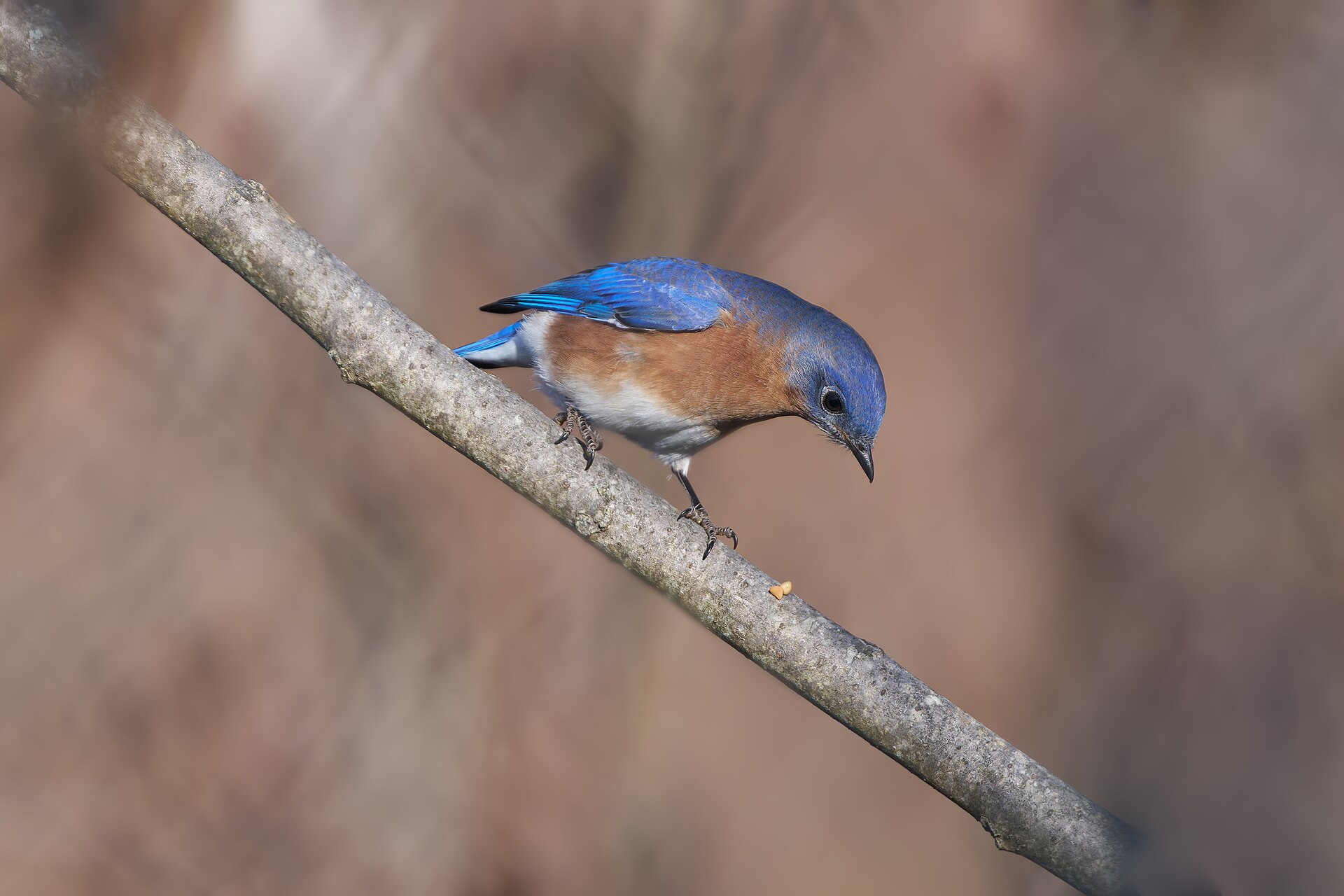
Missouri’s state bird is a small thrush with a sky-blue back and a rusty orange throat and breast on the male, a grayer, softer version of the same pattern on the female. Bluebirds hunt from a perch, dropping to the ground for crickets, beetles, and caterpillars, and in winter they shift to berries such as cedar, sumac, and dogwood. They nest in cavities and readily take nest boxes placed on a post in open ground, ideally facing away from prevailing winds and fitted with a predator guard. Many Missouri bluebirds do not migrate, and small winter flocks moving along fence rows are a common sight in the Ozarks. At a feeder they are more likely to take mealworms or suet than seed.
Northern Cardinal
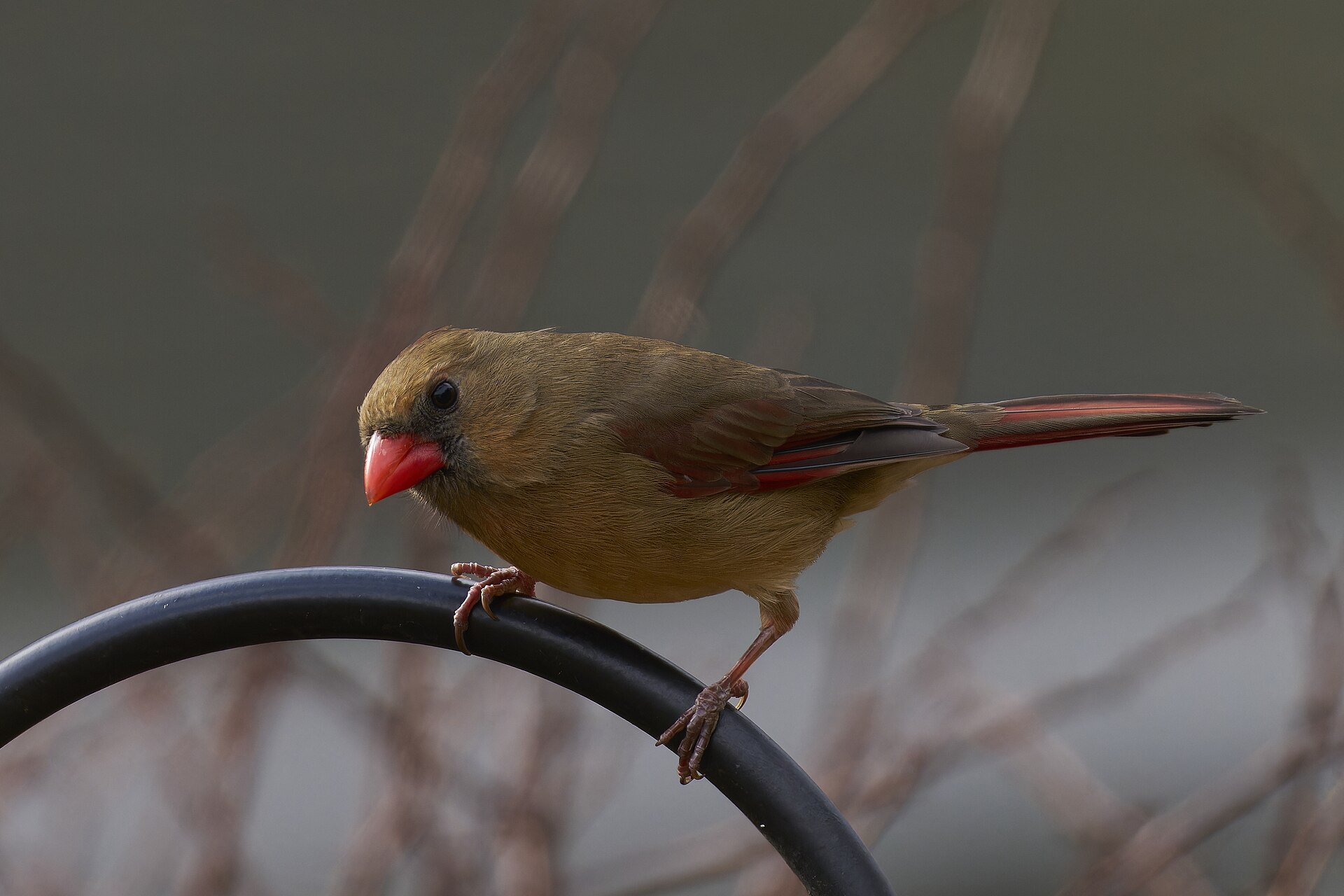
The cardinal is probably the most frequently reported feeder bird in Missouri, present in every county in every month. Males are entirely red with a black face, while females are warm brown with red in the wings, tail, and crest, and both carry the heavy orange-red bill built for cracking seeds. Cardinals are among the earliest singers of the year, with males whistling from treetops on mild February mornings. They prefer to feed on platform feeders or on the ground rather than clinging to tubes, and they are most active at dawn and dusk, often the first and last birds at a feeder. Dense shrubs near the feeding station give them cover and nesting sites.
Carolina Chickadee
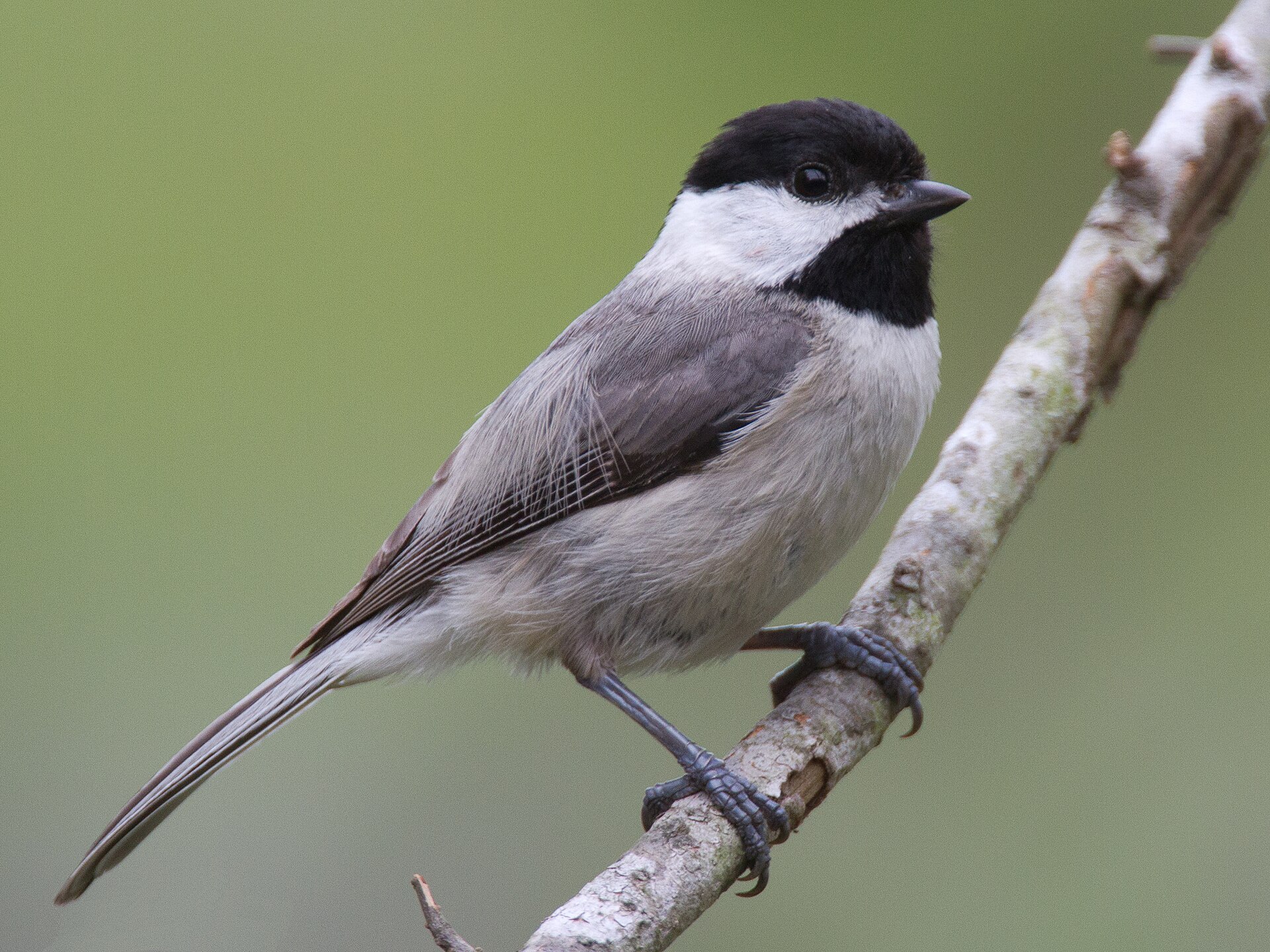
Across most of Missouri, the chickadee at the feeder is the Carolina, not the Black-capped. The two look nearly identical, black cap and bib, gray back, white cheeks, but the Carolina is slightly smaller, has less white edging in the wing, and sings a four-note whistled song rather than the Black-capped’s two-note one. The ranges meet in a narrow band across the middle of the state, where the two hybridize and can be genuinely impossible to separate by sight. Carolina Chickadees are cavity nesters, will use a small nest box, and are loyal feeder visitors, taking one sunflower seed at a time to a nearby branch and hammering it open against the bark.
Tufted Titmouse
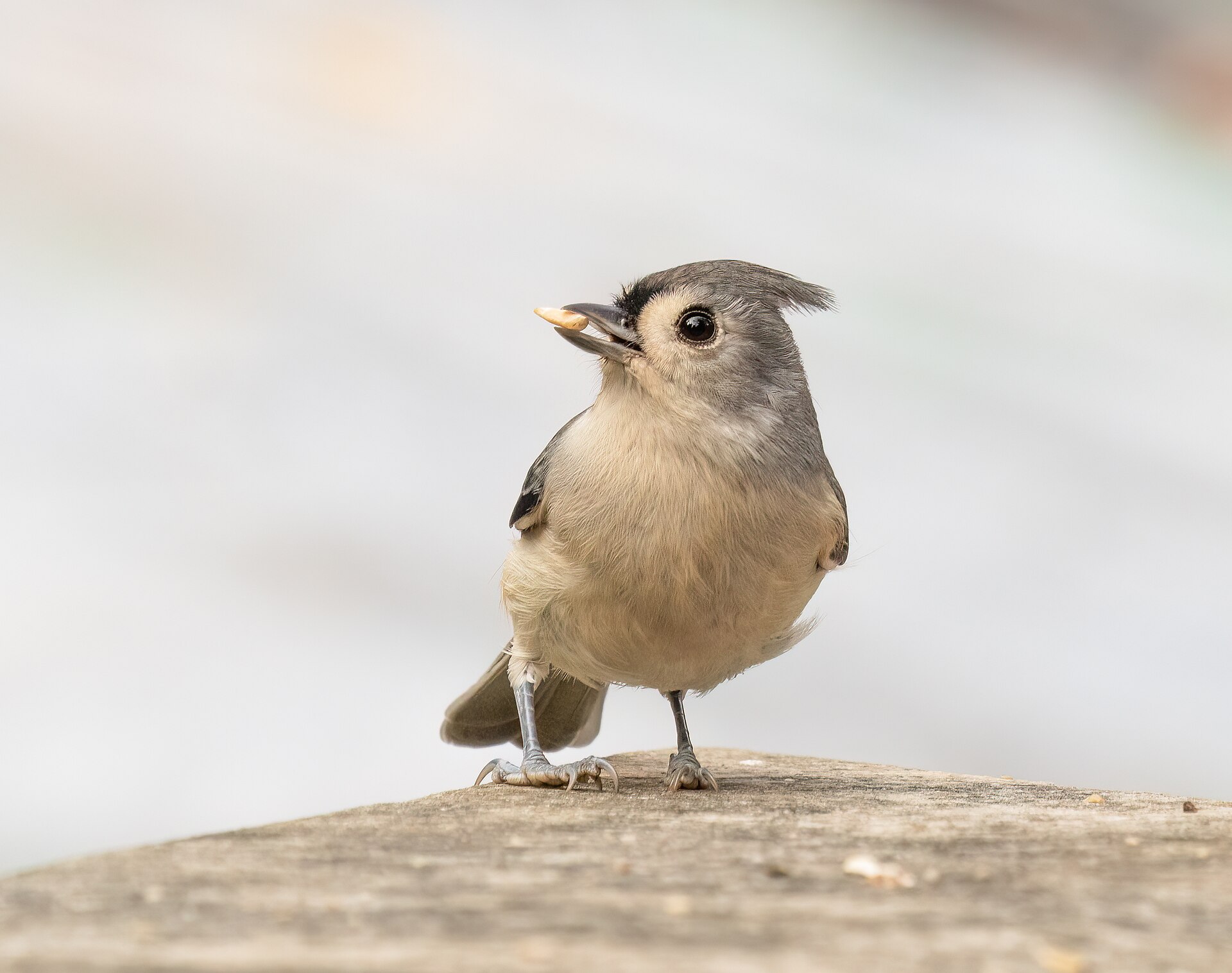
A small gray bird with a pointed crest, large dark eyes, and a rusty wash along the flanks, the Tufted Titmouse is a year-round resident across all of Missouri. Titmice often travel with chickadees in mixed winter flocks and behave much the same way at a feeder, grabbing a seed and flying off to open it. They also cache food, tucking seeds into bark crevices to eat later. The loud, clear “peter-peter-peter” song is one of the most common sounds in Missouri woods from late winter onward. Titmice nest in natural cavities and old woodpecker holes and are known to pluck hair from sleeping mammals, and sometimes from people, to line their nests.
Carolina Wren
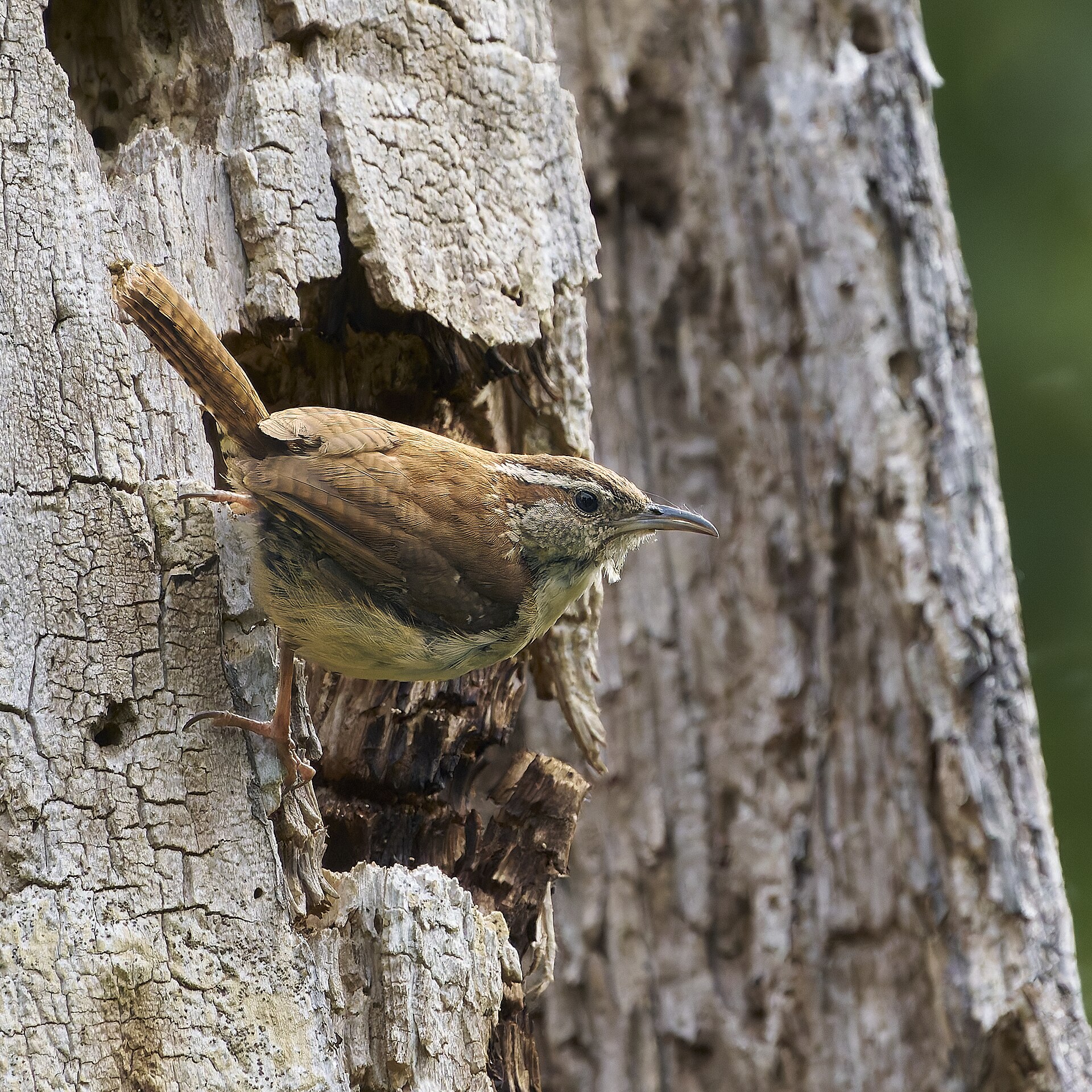
The Carolina Wren is a small, round, rich brown bird with a bold white eyebrow and a cocked tail, and it is far louder than its size suggests. Its rolling “teakettle-teakettle-teakettle” song carries across neighborhoods all year, and pairs stay together on their territory through winter. Carolina Wrens are sensitive to prolonged snow and ice, and Missouri populations drop after severe winters and then rebuild over a few mild years. They are insect eaters at heart but come readily to suet, peanut pieces, and mealworms, especially in cold weather. They nest in odd places, flowerpots, mailboxes, open sheds, and old boots are all on the list.
Red-bellied Woodpecker
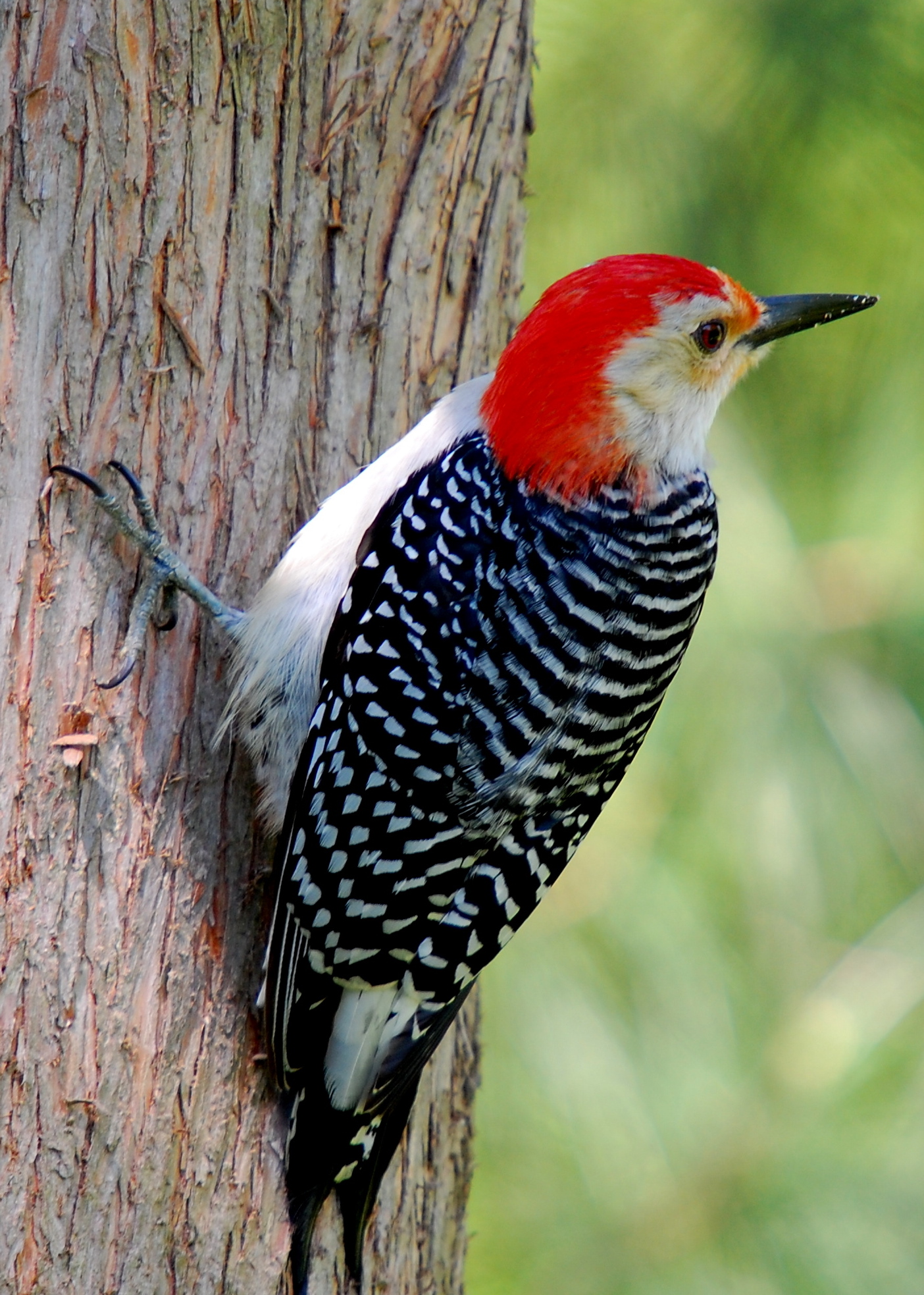
The name confuses almost everyone, because the most visible color on this woodpecker is the red cap and nape, not the belly, which carries only a faint pinkish wash. The back is barred black and white in a ladder pattern, and the rolling “churr” call is a constant sound in Missouri woodlots. Red-bellied Woodpeckers are common in towns and suburbs, where they take suet, peanuts, and sunflower, and they are known to wedge large seeds and nuts into bark crevices to crack them. They are aggressive enough at feeders to push smaller birds aside and occasionally raid other birds’ nests, but they are also one of the most entertaining regular visitors a yard can have.
Downy Woodpecker
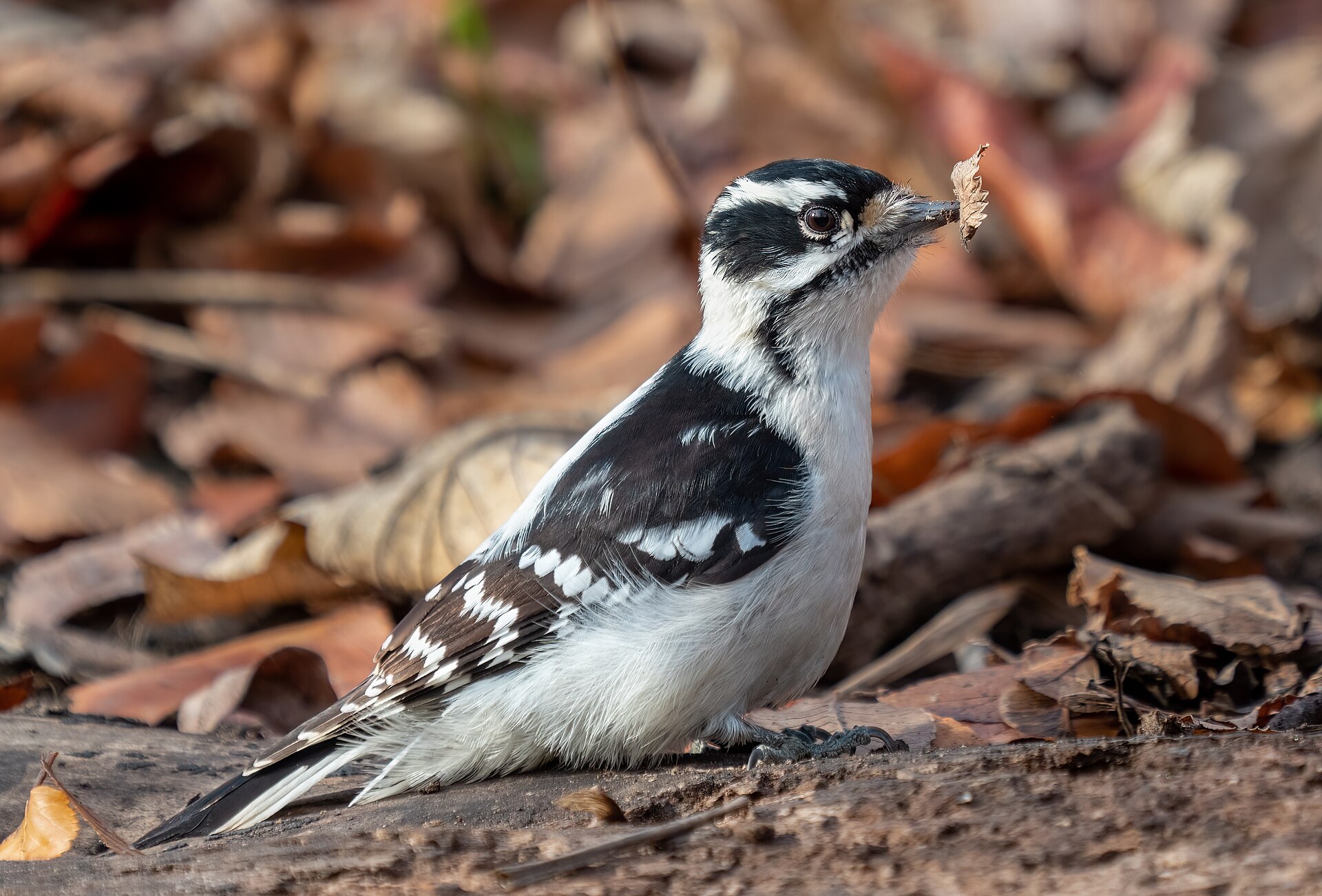
The smallest woodpecker in North America is also one of the most common feeder birds in Missouri. Downies are black and white with a white stripe down the back, and males have a small red patch on the back of the head. They look almost identical to the larger Hairy Woodpecker, and the easiest way to separate them is the bill, which on the Downy is short, much shorter than the head is deep. Downies feed on insects in bark and on weed stems such as goldenrod galls in winter, and they are regular at suet and at sunflower feeders. They will also sip from hummingbird feeders in summer when they can manage the perch.
Blue Jay
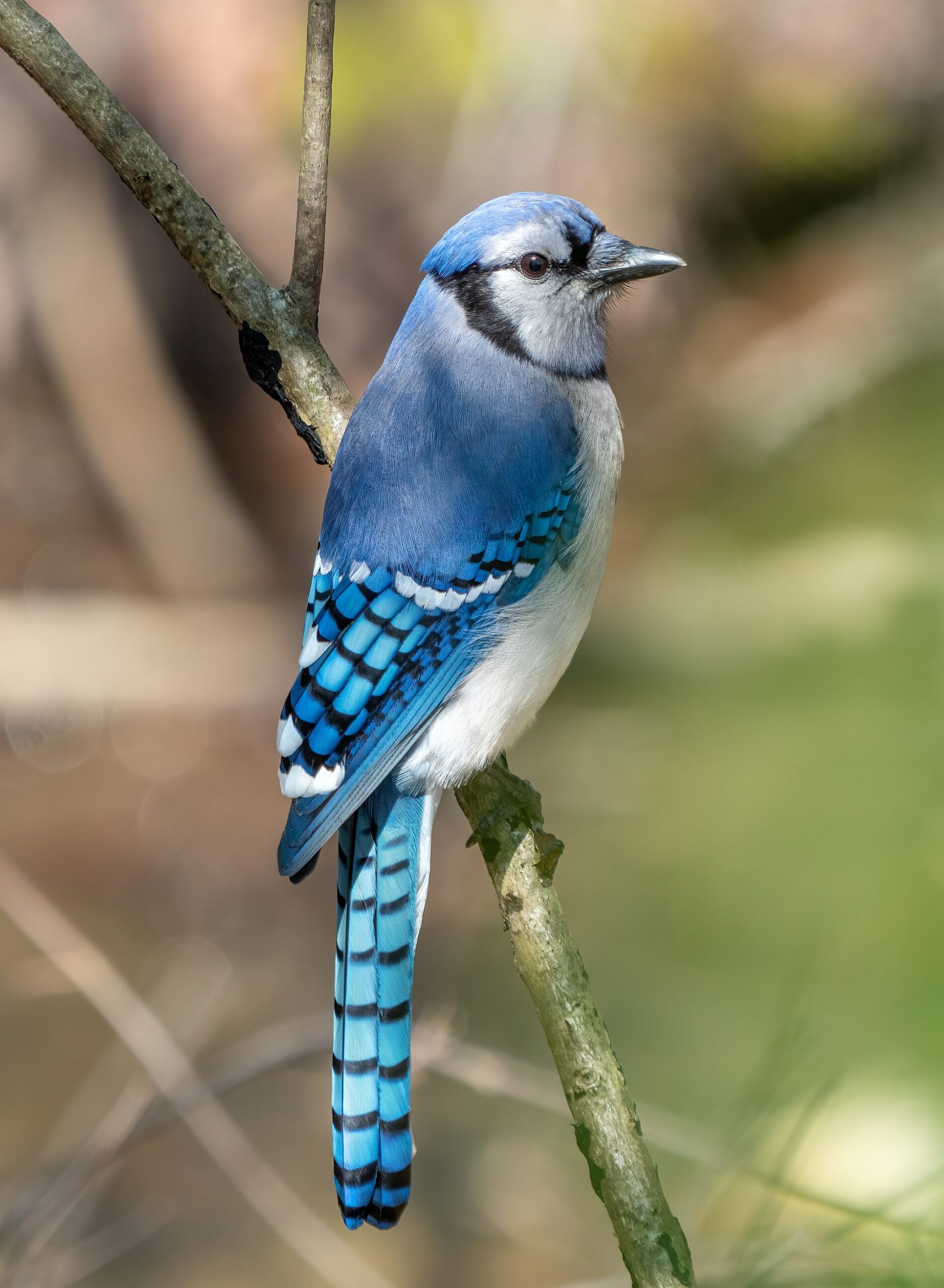
Blue Jays are loud, intelligent, and somewhat polarizing at feeders, where they can clear out a tray of peanuts in minutes. They are crested, bright blue above with black and white in the wings and tail, and grayish white below with a black necklace. Jays carry acorns and bury them for later, and because they forget a share of them, they are credited with helping oaks spread across the landscape after the last ice age. Some Missouri Blue Jays migrate and some stay, and large loose flocks can be seen moving south along the rivers in late September and October. They are also skilled mimics, and a convincing Red-shouldered Hawk call from a jay fools birders regularly.
American Goldfinch
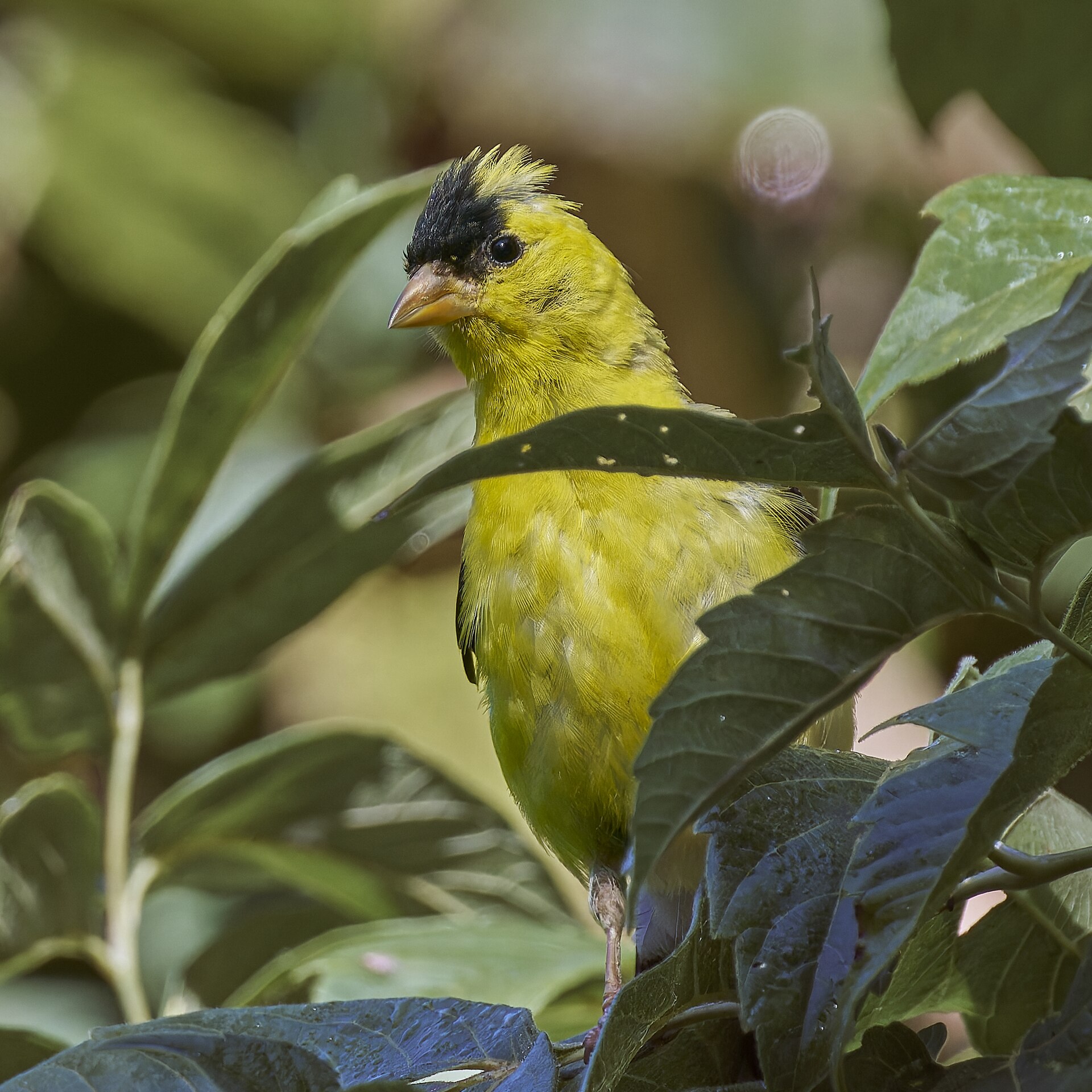
Goldfinches are year-round residents in Missouri, but they look like two different birds depending on the season. In summer, males are bright lemon yellow with a black cap and black wings, while in winter both sexes turn a drab olive-brown with wing bars. Goldfinches are among the latest nesters of any songbird in the state, often waiting until July, when thistle and other composites produce the seed and fluffy down they depend on. At feeders, they go for nyjer and sunflower hearts in tube feeders, and flocks of twenty or more are common in winter. A patch of coneflowers left standing will often draw them in by late summer.
Dark-eyed Junco
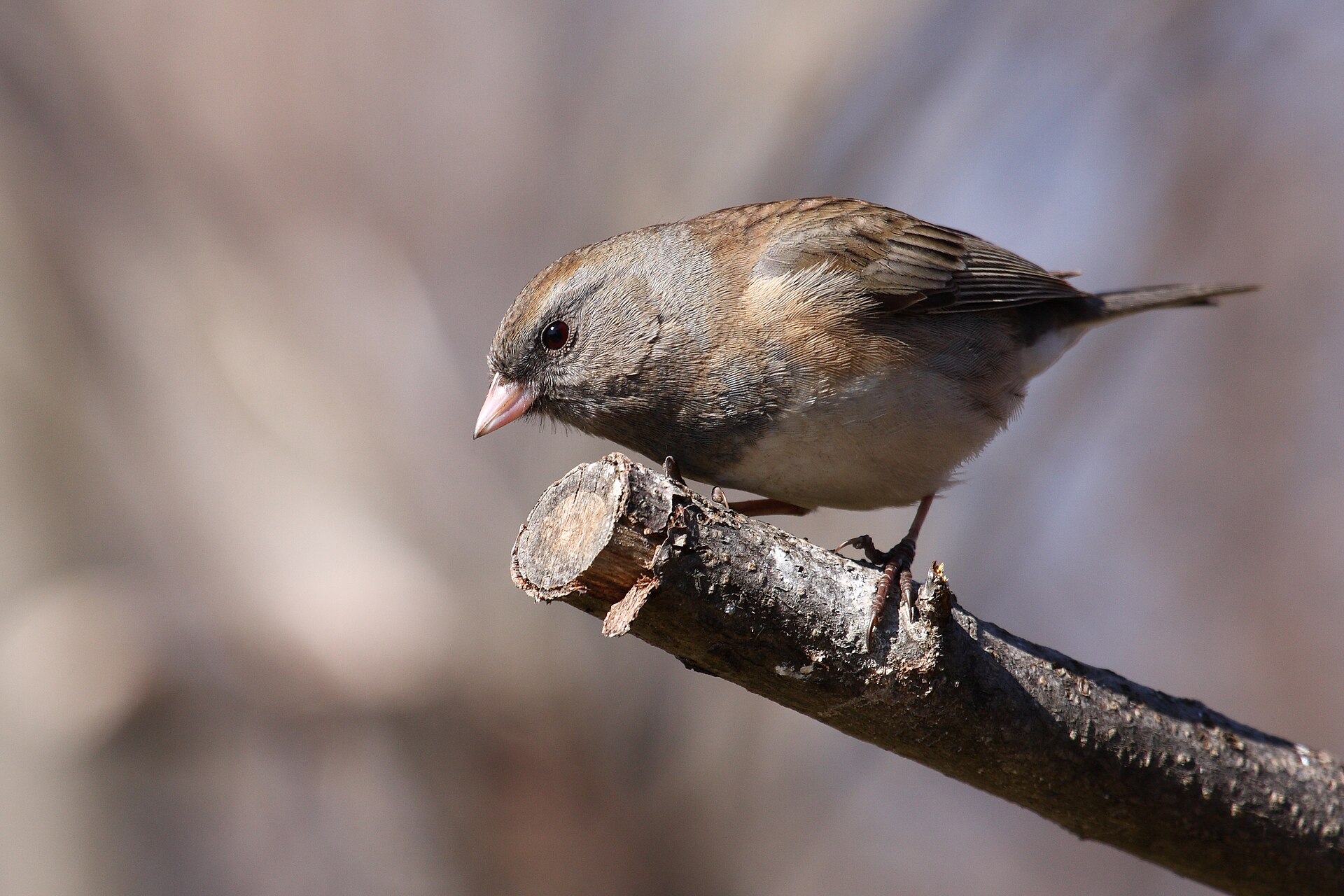
Juncos are the classic winter sparrow of Missouri, arriving in October and leaving by April, and the folk name “snowbird” fits their timing well. The birds seen here are mostly the slate-colored form, dark gray above and white below, with a pale pink bill and white outer tail feathers that flash when they fly. Juncos feed on the ground in small flocks, scratching through leaf litter and snow for seeds, and they strongly prefer millet or mixed seed scattered on the ground or a low platform. They often appear under feeders just before a snowstorm and seem to arrive in greater numbers when the weather turns bad.
Ruby-throated Hummingbird
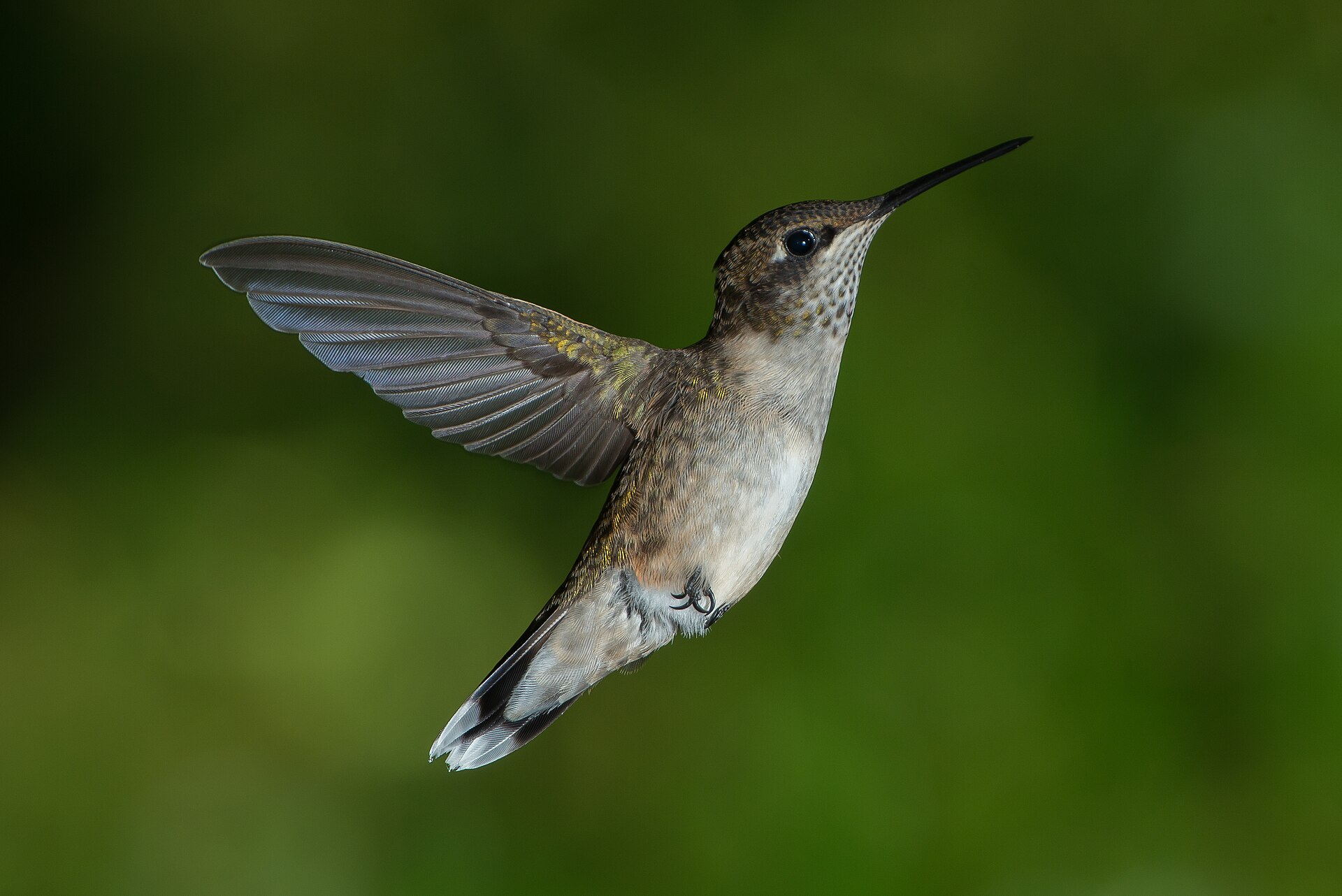
The only hummingbird that nests in Missouri arrives in April and stays until late September, with a noticeable surge of migrants passing through in late August and early September. Males have an iridescent ruby-red throat that looks black in poor light; females and young birds have white throats and green backs. Ruby-throats spend winter in Central America and many cross the Gulf of Mexico during migration. A simple sugar-water mix of one part white sugar to four parts water, without dye, is all a feeder needs, and changing it every few days in hot weather keeps it from spoiling. Red native flowers such as trumpet honeysuckle and cardinal flower bring them in as well.
Indigo Bunting
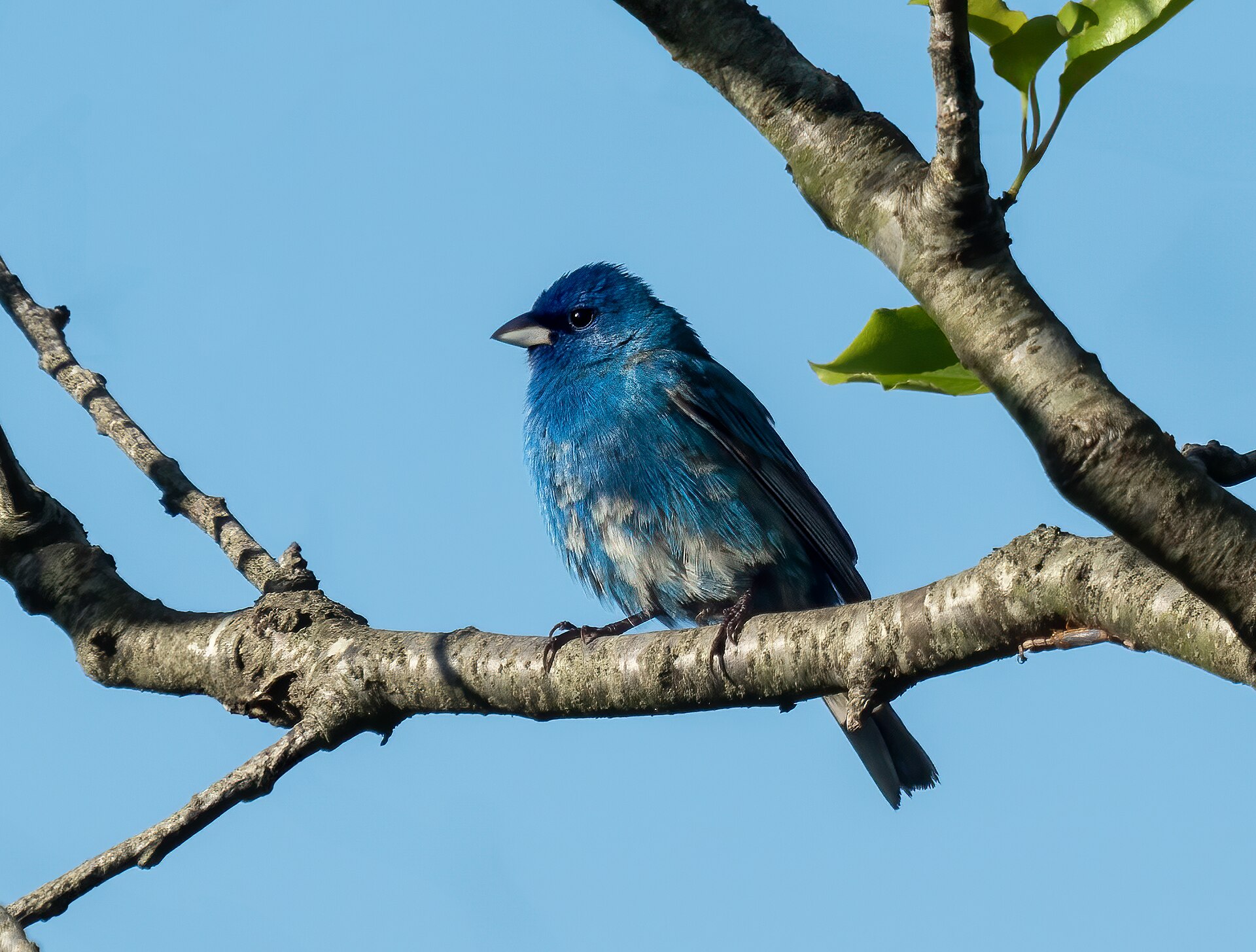
Indigo Buntings are one of the signature summer birds of Missouri’s field edges, power line cuts, and roadside thickets. Breeding males are a deep, electric blue that turns almost black in shadow, while females are plain warm brown and easy to overlook. Males sing a rapid, paired song from exposed perches through the hottest parts of summer, when most birds have gone quiet. They eat insects in the breeding season and seeds the rest of the time, and they visit feeders with nyjer or small seed, particularly in spring. In southwest Missouri, the closely related and spectacularly colored Painted Bunting also breeds in brushy areas, a reminder of how close the state sits to the southern plains.
Bald Eagle
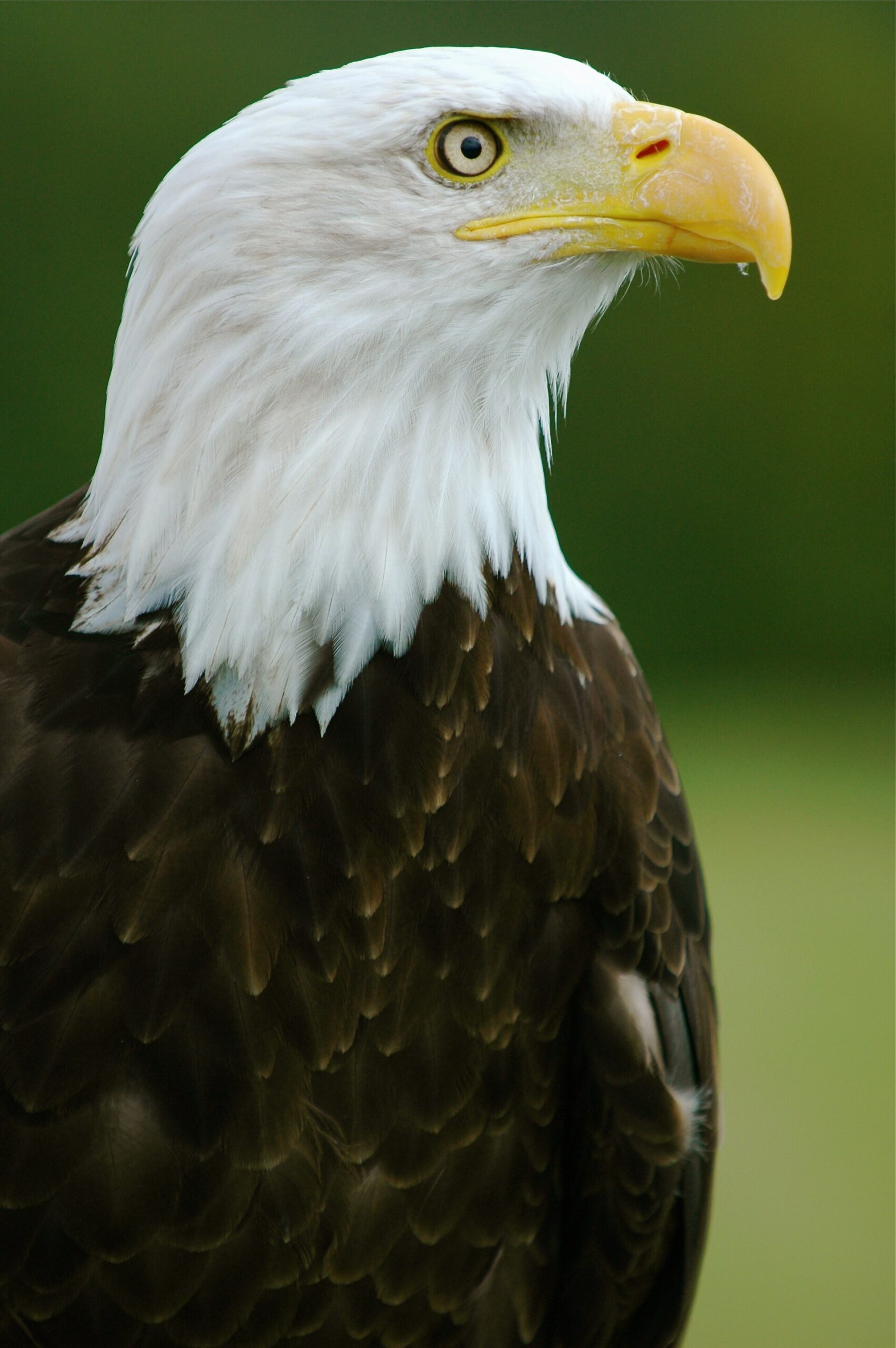
Few Missouri birds represent a bigger recovery. Bald Eagles had nearly disappeared as nesting birds in the state by the mid-twentieth century and now nest along rivers and reservoirs across much of Missouri. Winter is when they are most visible, with birds from farther north gathering wherever moving water stays open and fish are easy to catch. Adults have the familiar white head and tail, while younger birds are mottled brown and white for several years and often get mistaken for hawks. The Missouri Department of Conservation’s Eagle Days events and the lock and dam areas along the Mississippi are the most reliable places to see them in good numbers.
Greater Prairie-Chicken
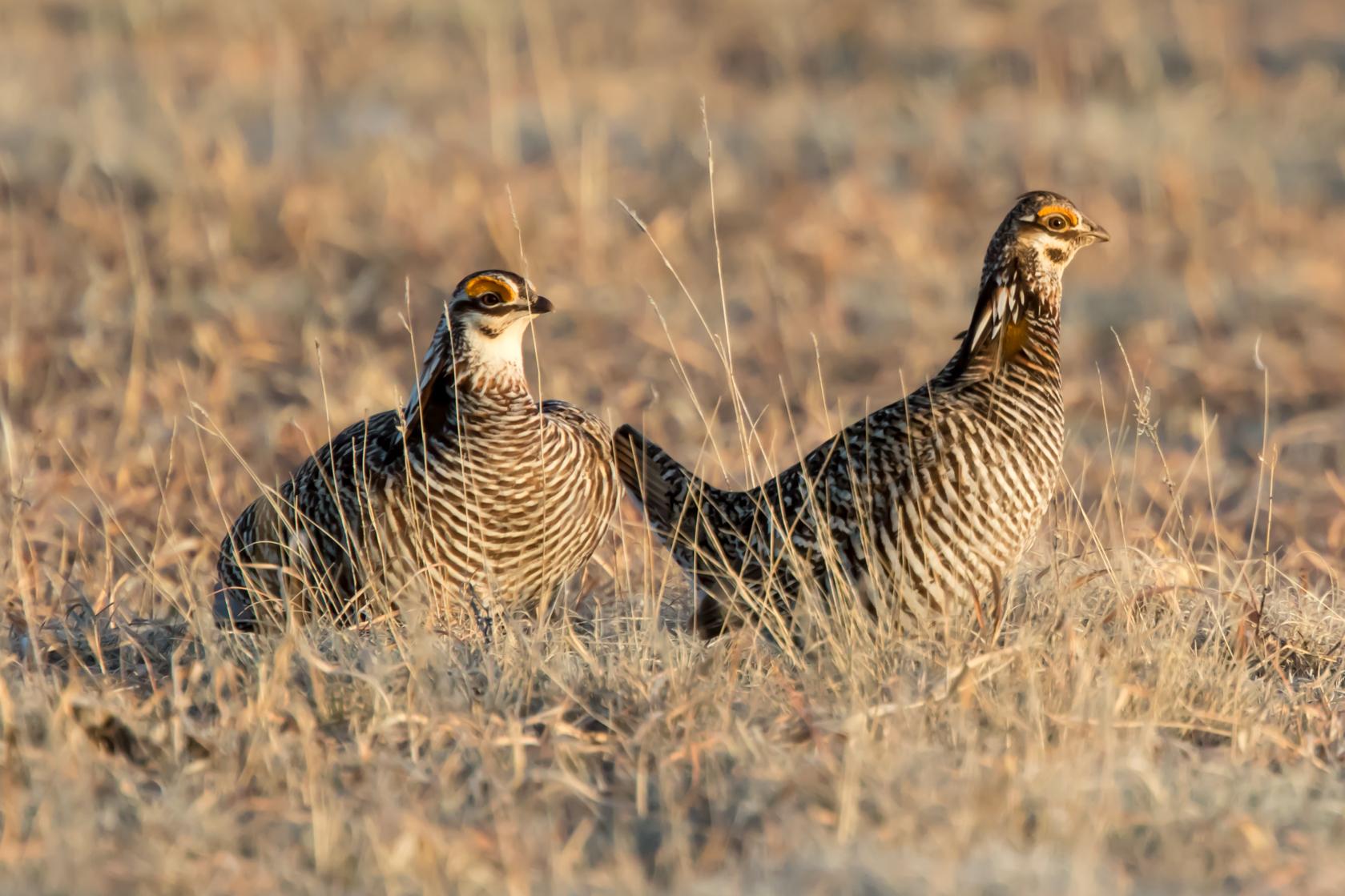
A stocky grassland grouse with barred brown plumage, the Greater Prairie-Chicken is famous for its spring courtship display. Males gather on traditional booming grounds, raise their long neck feathers, inflate orange air sacs on the sides of the neck, and produce a low, hollow booming sound that carries across open prairie at dawn. The species once ranged widely across northern and western Missouri and has declined dramatically as native prairie was converted to cropland. It is now state-listed as endangered, with small populations managed on protected grasslands. Anyone hoping to see one should go through organized viewing opportunities rather than approaching a lek, since disturbance during the display season can affect breeding.
Getting Started
A tube or hopper feeder with black oil sunflower, a suet cage, and some millet scattered on the ground will cover most of what a Missouri yard draws, from cardinals and titmice to juncos and woodpeckers. A nyjer feeder adds goldfinches year-round, and a dish of mealworms is the most direct way to get Eastern Bluebirds close to the house. Place feeders near shrubs or small trees so birds have cover to retreat to, and add a nest box on a post in open ground in late winter, before bluebirds begin looking for sites in March. A heated birdbath in winter and a shallow dish in summer bring in birds that never touch seed at all.
Beyond the yard, a Missouri birding year has a natural rhythm: eagles and swans on the big rivers in January, prairie-chickens and Snow Geese in early spring, warblers in the Ozark hollows in late April and May, buntings on every roadside in June, and the long hummingbird and shorebird migrations in late summer. A state that sits at the crossroads of forest and prairie, north and south, rewards people who pay attention to where they are standing.
Sources
Species identification, range, and behavior details are cross-checked against the Cornell Lab of Ornithology’s All About Birds, the National Audubon Society, eBird’s Missouri regional data, and the Missouri Department of Conservation.


