Backyard Birds in Washington: A Field Guide to the Species at Your Feeder
Washington is really two states for birds, and the Cascade Range is the line between them. West of the mountains, rain falls most of the year, Douglas-fir and western redcedar crowd right up to suburban lots, and a Seattle or Olympia feeder in January can be busy with Varied Thrushes, Chestnut-backed Chickadees, and an Anna’s Hummingbird guarding a nectar feeder in the drizzle. East of the crest, the rain drops off sharply, and within a couple of hours of driving the forest gives way to ponderosa pine and then to open shrub-steppe, with a completely different cast of birds. Very few states pack that much contrast into such a short distance, and a Washington yard’s bird list depends more on which side of the Cascades it sits than on almost anything else.
Rain shadow birding
The wet western side, including the Puget Sound lowlands and the Olympic Peninsula, is dominated by conifer forest and mild, damp winters in which snow rarely lasts at low elevation. That combination supports a winter bird community that surprises visitors from the East: hummingbirds, towhees, wrens, and thrushes stay put all winter, and feeders run at full activity from October through March. The eastern side, with hot, dry summers and cold winters, holds sagebrush and grassland specialists, plus the pine and larch forests of the northeast corner where Red Crossbills, Pygmy Nuthatches, and Cassin’s Finches become regulars. The Columbia River and its dams cut across the whole eastern half, and the reservoirs and irrigated farmland of the Columbia Basin draw large numbers of waterfowl in winter.
The state bird: the willow goldfinch
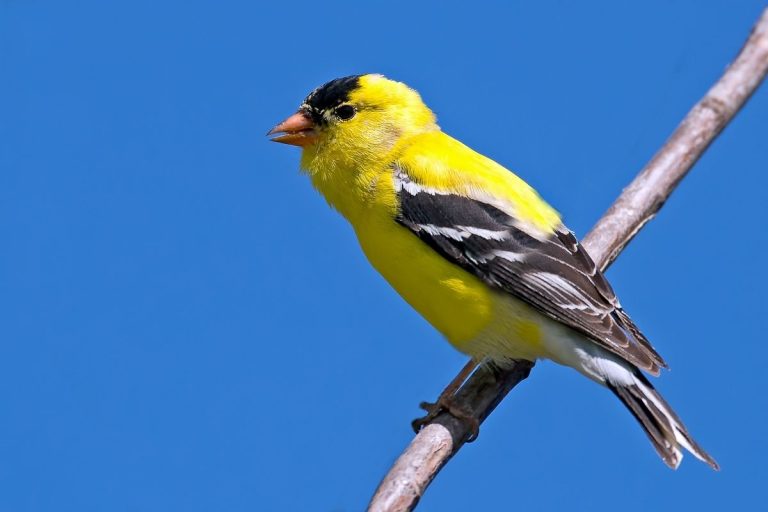
Washington’s state bird is the American Goldfinch, adopted by the legislature in 1951 under the older name “willow goldfinch.” The choice has a small history attached: Washington schoolchildren had voted for the Western Meadowlark back in 1931, but because several other states had already claimed the meadowlark, the legislature eventually settled on the goldfinch instead. It turned out to be a fair pick for a state this varied, because goldfinches live on both sides of the Cascades. Summer males are brilliant yellow with black caps and wings, and winter birds are a muted olive-brown. Goldfinches are strictly seed eaters and among the latest nesters in the state, waiting for thistle and other late-summer plants to go to seed before raising young.
Common feeder visitors
On the west side, the everyday feeder crowd is Black-capped and Chestnut-backed Chickadees, Dark-eyed Juncos of the “Oregon” form, Spotted Towhees and Song Sparrows on the ground, Steller’s Jays, Red-breasted Nuthatches, Downy Woodpeckers and Northern Flickers at suet, House Finches, Pine Siskins in some years, and flocks of Bushtits working through the shrubs. Anna’s Hummingbirds are present all year, and Varied Thrushes come down from the mountains in cold snaps. East of the Cascades, feeders see Black-capped and Mountain Chickadees, California Quail, Red-breasted and White-breasted Nuthatches, Cassin’s Finches, and in winter, flocks of Evening Grosbeaks and occasional Gray-crowned Rosy-Finches in the high country.
Beyond the backyard: geese, swans, and the flats
The best-known birding spectacle in the state happens every winter on the Skagit and Samish flats north of Seattle. Snow Geese arrive in huge numbers from their breeding grounds on Wrangel Island in the Russian Arctic, and flocks in the tens of thousands feed in farm fields and rise all at once when an eagle passes overhead. Trumpeter and Tundra Swans winter in the same fields, and the flats are also well known for wintering raptors, including Bald Eagles, Rough-legged Hawks, Short-eared Owls, and Peregrine Falcons. Farther south, the Billy Frank Jr. Nisqually National Wildlife Refuge near Olympia has a long boardwalk out into the estuary where shorebirds and waterfowl gather. On the east side, the Columbia National Wildlife Refuge and the shrub-steppe around the Potholes region hold Sagebrush Sparrows, Burrowing Owls, and in spring, Sandhill Cranes passing through the basin.
A note on native plants
On the wet side, native shrubs do an enormous amount of work for birds. Red-flowering currant blooms in late winter just as Anna’s and the first Rufous Hummingbirds need it; salal, evergreen huckleberry, Oregon grape, and serviceberry provide fruit; and native conifers give cover and host insects year-round. Leaving leaf litter under shrubs gives towhees, Song Sparrows, and Varied Thrushes somewhere to forage. On the dry side, native plants suited to low water, including bitterbrush, rabbitbrush, serviceberry, and native bunchgrasses, support both insects and seed-eating birds without irrigation. In either region, a yard with layered vegetation, from ground cover up through shrubs to trees, will hold far more birds than a lawn with a feeder in the middle.
Winter Feeding Notes
West-side winters are more wet than cold, and the main feeder challenge is keeping seed dry and clean rather than dealing with deep snow. Tube feeders with drainage holes and covered hoppers work better than open trays, which turn to mush in rain. When an arctic outflow brings a rare hard freeze to Puget Sound, keeping hummingbird feeders from freezing becomes important, since Anna’s Hummingbirds rely on them heavily in cold snaps; many people rotate two feeders or use a clip-on warmer. Pine Siskins are especially prone to salmonellosis outbreaks at crowded feeders, and in outbreak years the Washington Department of Fish and Wildlife has asked residents to take feeders down temporarily. Regular cleaning with a dilute bleach solution, and spacing feeders apart, are the best everyday defense. East-side winters are colder and snowier, and black oil sunflower, suet, and open water become much more valuable there once the ground freezes.
American Goldfinch
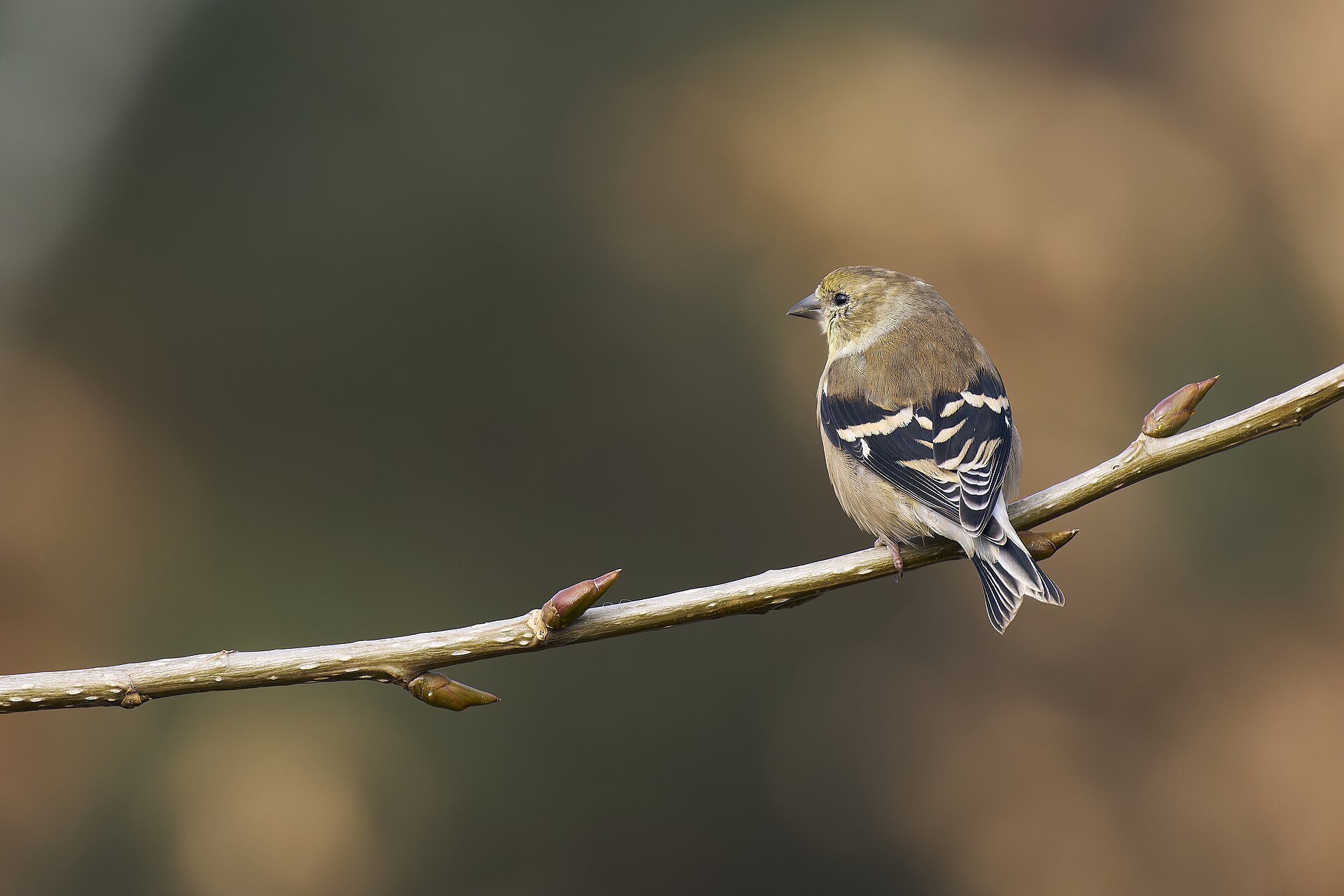
Washington’s state bird is a small finch that changes dramatically with the season. Breeding males are bright yellow with a black forehead and black wings with white bars, females are softer olive-yellow, and in winter both turn a dull brownish olive that many people do not connect with the summer bird. Goldfinches feed almost entirely on seeds, favoring thistle, dandelion, sunflower, and alder cones, and they nest late, often in July. At feeders, they take nyjer and sunflower hearts from tube feeders, and flocks can be large in winter. On the west side, Lesser Goldfinches are increasingly common as well, especially in the southern Puget Sound area.
Black-capped Chickadee
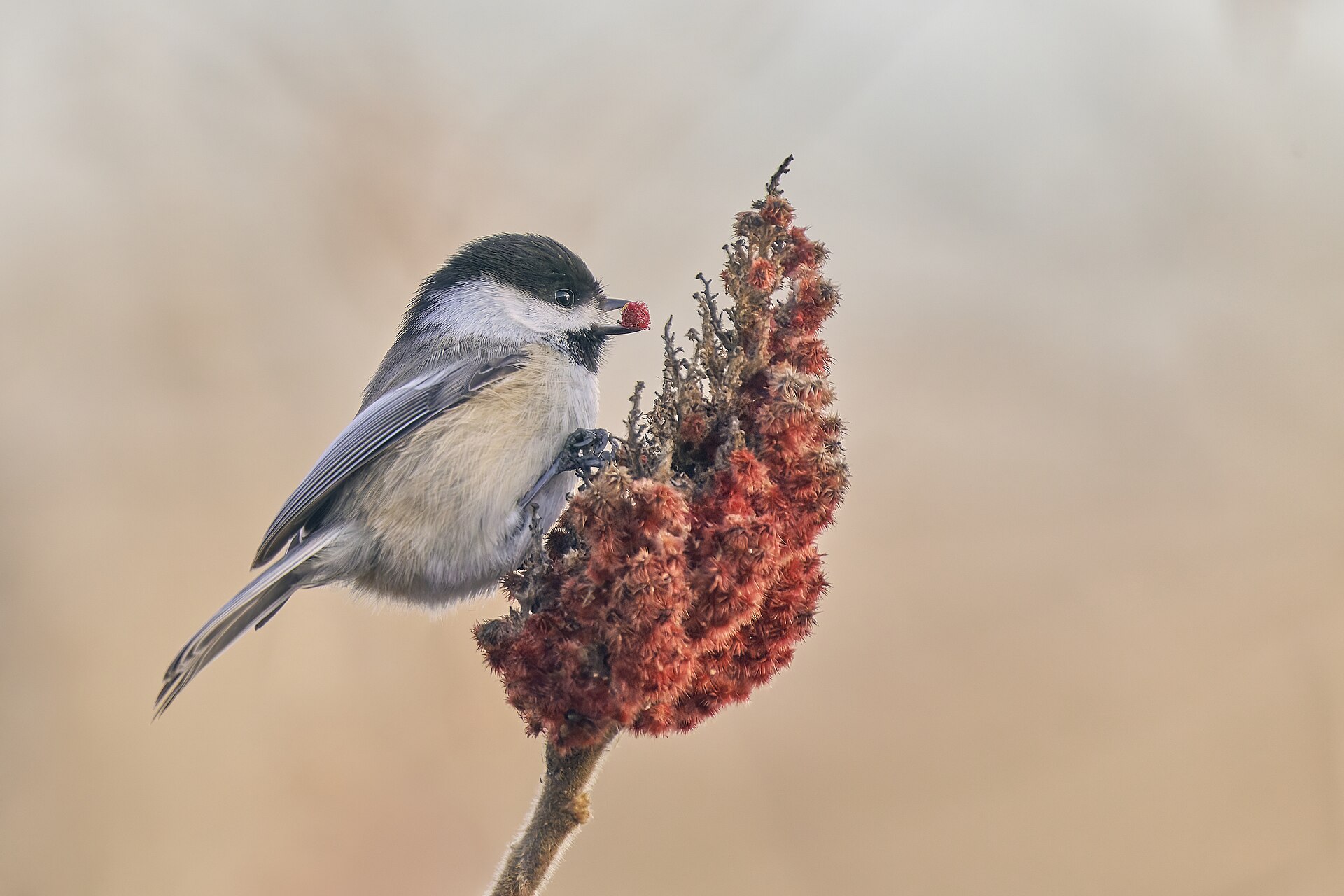
The Black-capped Chickadee is found across nearly all of Washington, from lowland suburbs to eastern river valleys. It has a black cap and bib, white cheeks, a gray back, and buffy flanks, and it is one of the boldest birds at any feeder, often the first to find a new one. Chickadees store thousands of seeds each fall in bark and moss, and research has shown they can remember many of those locations for weeks. They are cavity nesters that will use a small nest box with a 1 1/8-inch entrance hole. Their “chick-a-dee-dee-dee” call changes with the level of threat, and other species listen to it as an alarm.
Chestnut-backed Chickadee
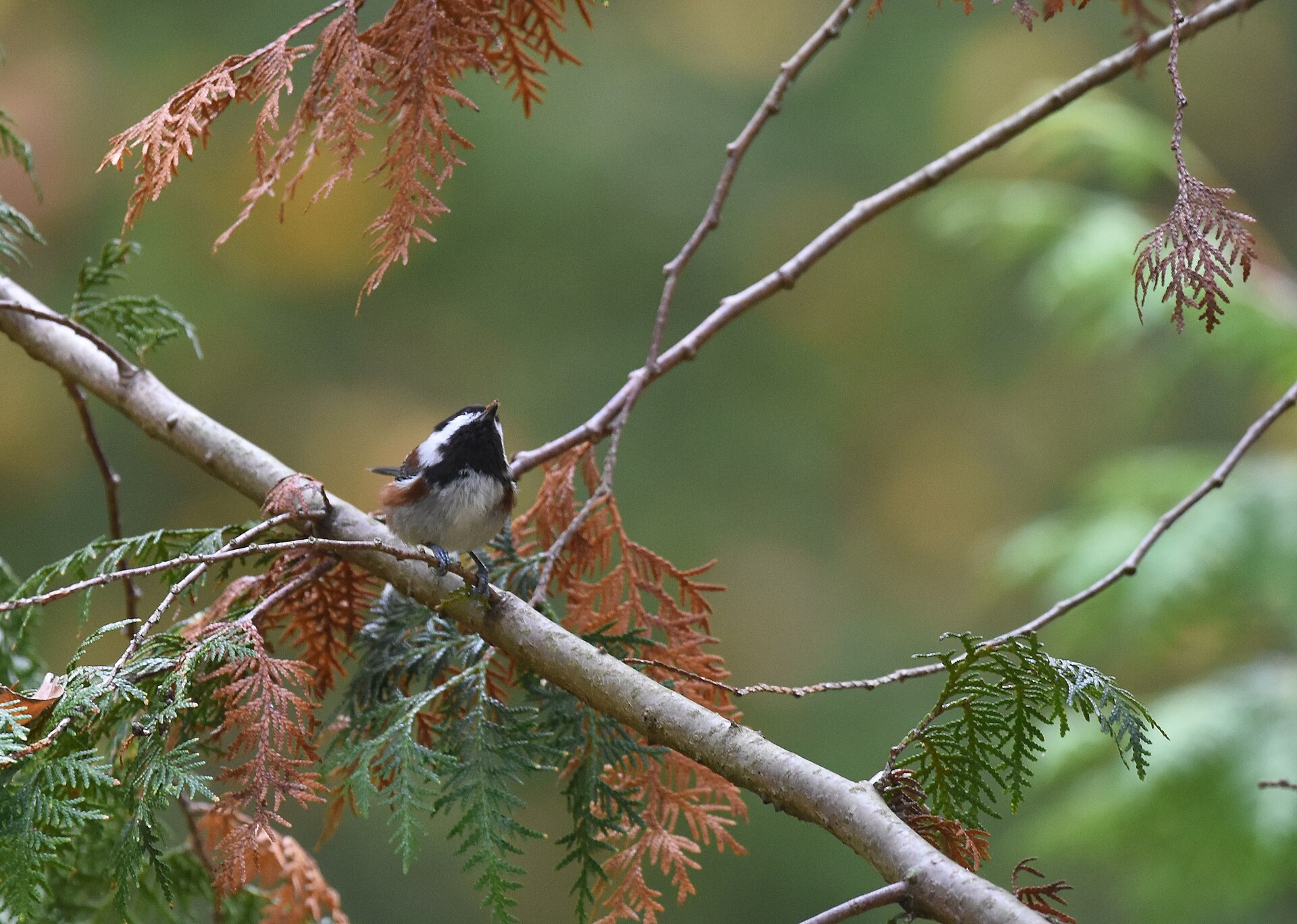
This is the chickadee of the Pacific Northwest’s wet conifer forests, and west-side Washington is the heart of its range. It has the typical chickadee pattern but with a rich chestnut back and flanks, and it tends to forage higher in conifers than the Black-capped. The two species often travel together in mixed winter flocks and visit the same feeders. Chestnut-backed Chickadees have a buzzier, huskier voice than their black-capped cousins. They are strongly tied to Douglas-fir, hemlock, and cedar, and a yard with mature conifers is much more likely to hold them. They nest in cavities and will use nest boxes placed in or near conifer cover.
Dark-eyed Junco
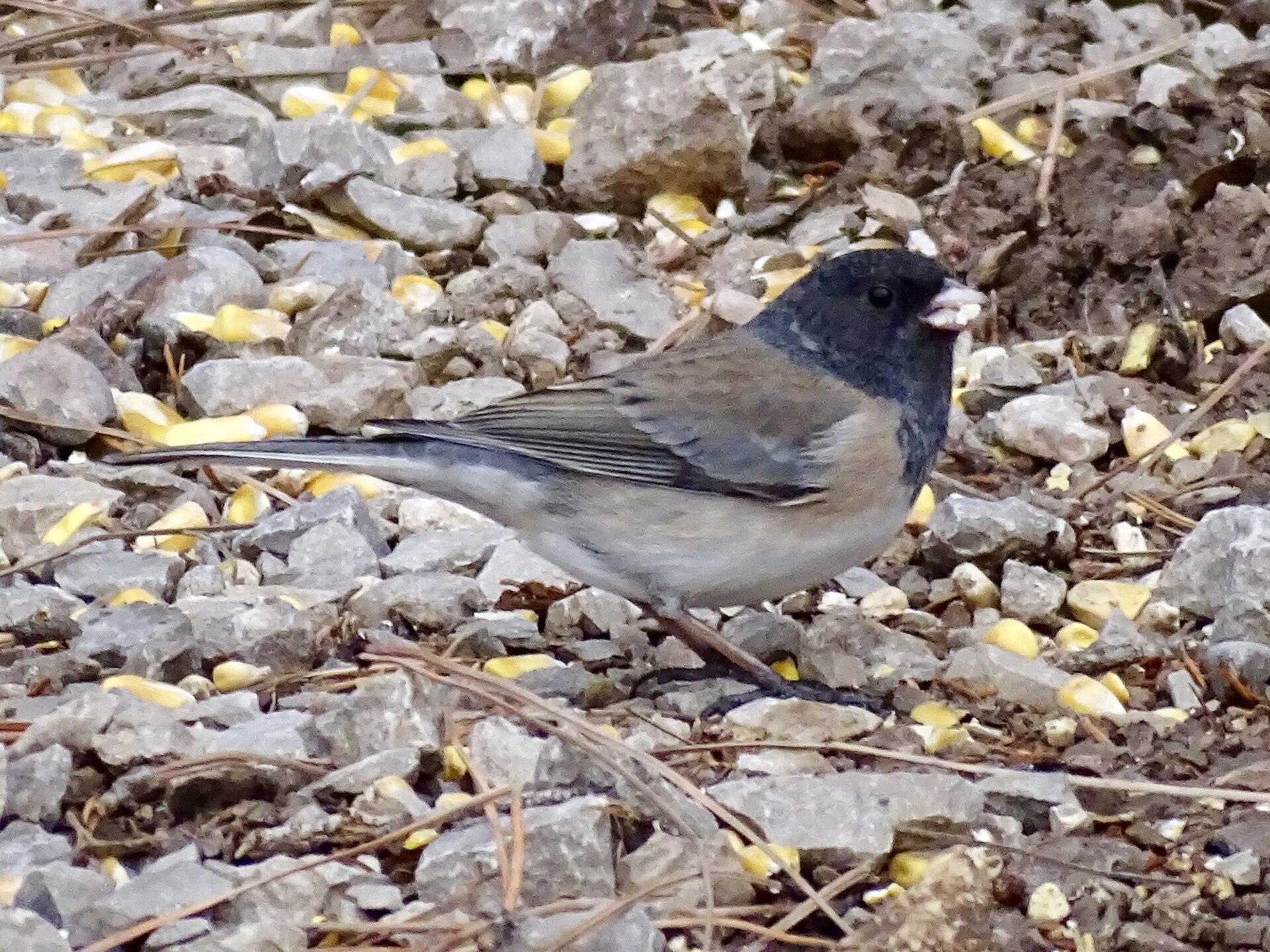
Washington’s juncos are mostly the “Oregon” form, which has a blackish hood, a brown back, and pinkish-buff sides, quite different from the plain gray slate-colored juncos of the East. They are all one species, and the variation is regional. Juncos are ground feeders that hop and scratch for seeds under feeders, and they are among the most common winter birds in the state. West of the Cascades, many breed in lowland parks and suburbs as well as in the mountains, so a Seattle yard can have juncos year-round. White outer tail feathers flash when they flush, and the sharp “tsik” call is one of the most common sounds of a Washington winter garden.
Spotted Towhee
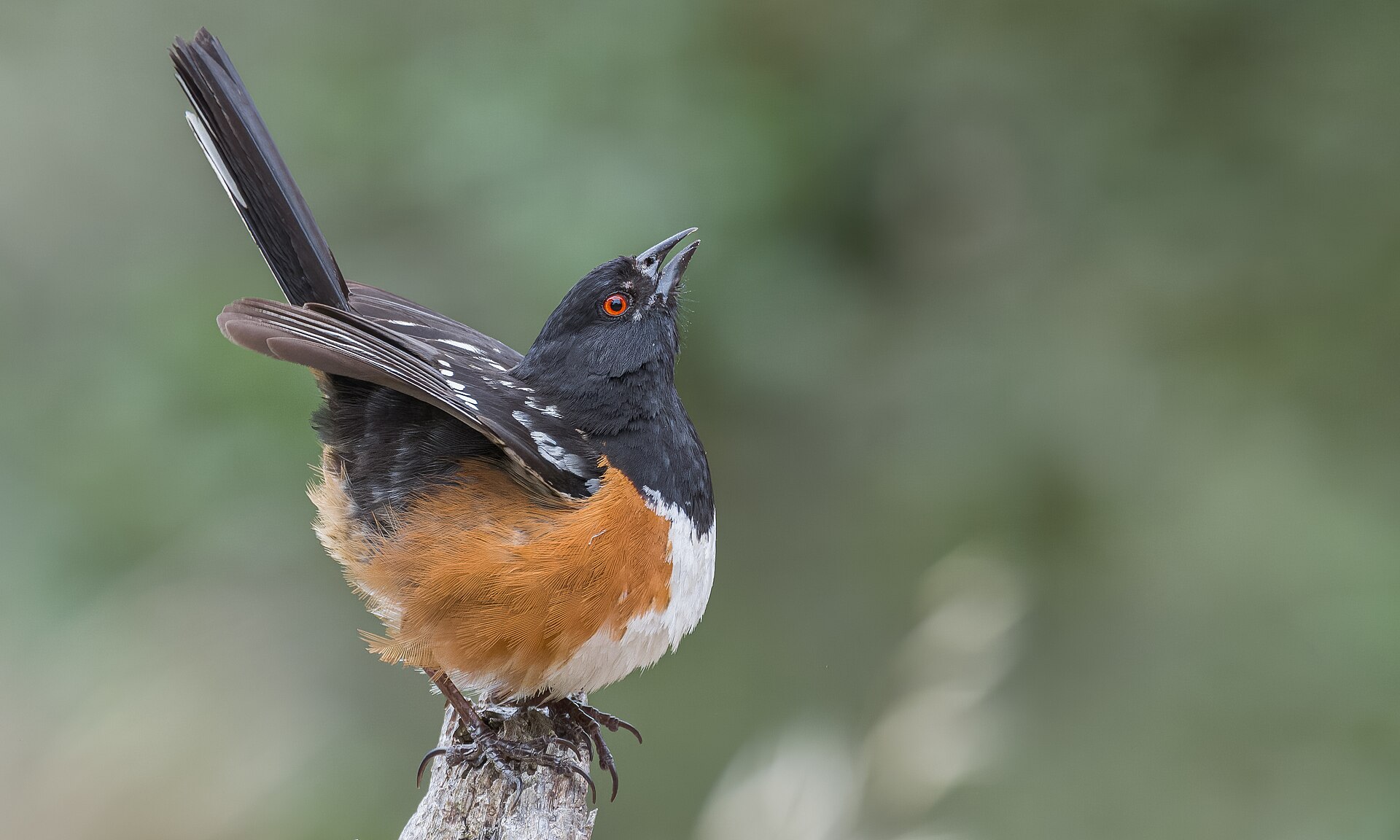
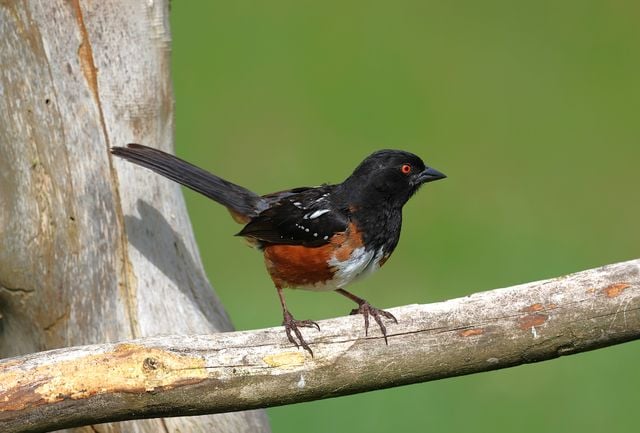
A large, handsome sparrow, the Spotted Towhee has a black hood and back covered with white spots, rufous flanks, a white belly, and red eyes. It spends most of its time on the ground in dense shrubs, scratching through leaf litter with a two-footed backward hop that makes a surprising amount of noise. The call is a rising, catlike “mew,” and it is often heard long before the bird is seen. Towhees are common year-round on the west side and in brushy areas east of the mountains. They come readily to seed scattered under shrubs or on a low platform, especially millet and sunflower chips.
Steller’s Jay
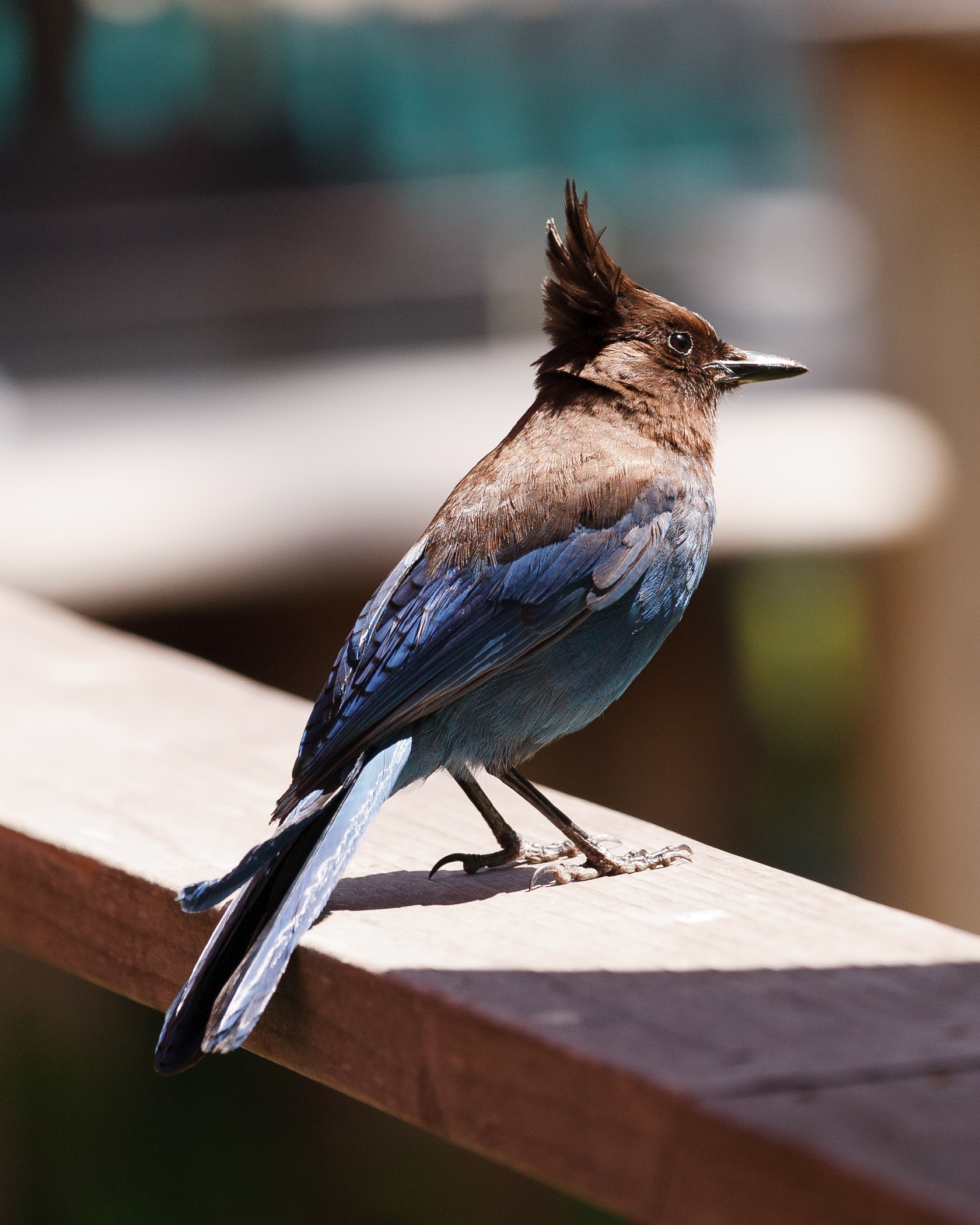
Steller’s Jay is the dark, crested jay of Northwest forests, with a sooty black head and crest, a deep blue body, and fine pale streaks on the forehead. It is loud, bold, and quick to find peanuts, and a feeder near conifers will attract them almost anywhere in western Washington and in the forested east. Steller’s Jays eat seeds, nuts, berries, insects, and occasionally eggs and nestlings, and they cache food in the fall like other jays. They are also accomplished mimics and often imitate Red-tailed Hawks. Whole peanuts in the shell are the most reliable way to bring them in, and watching them work out how many they can carry at once is part of the fun.
Anna’s Hummingbird
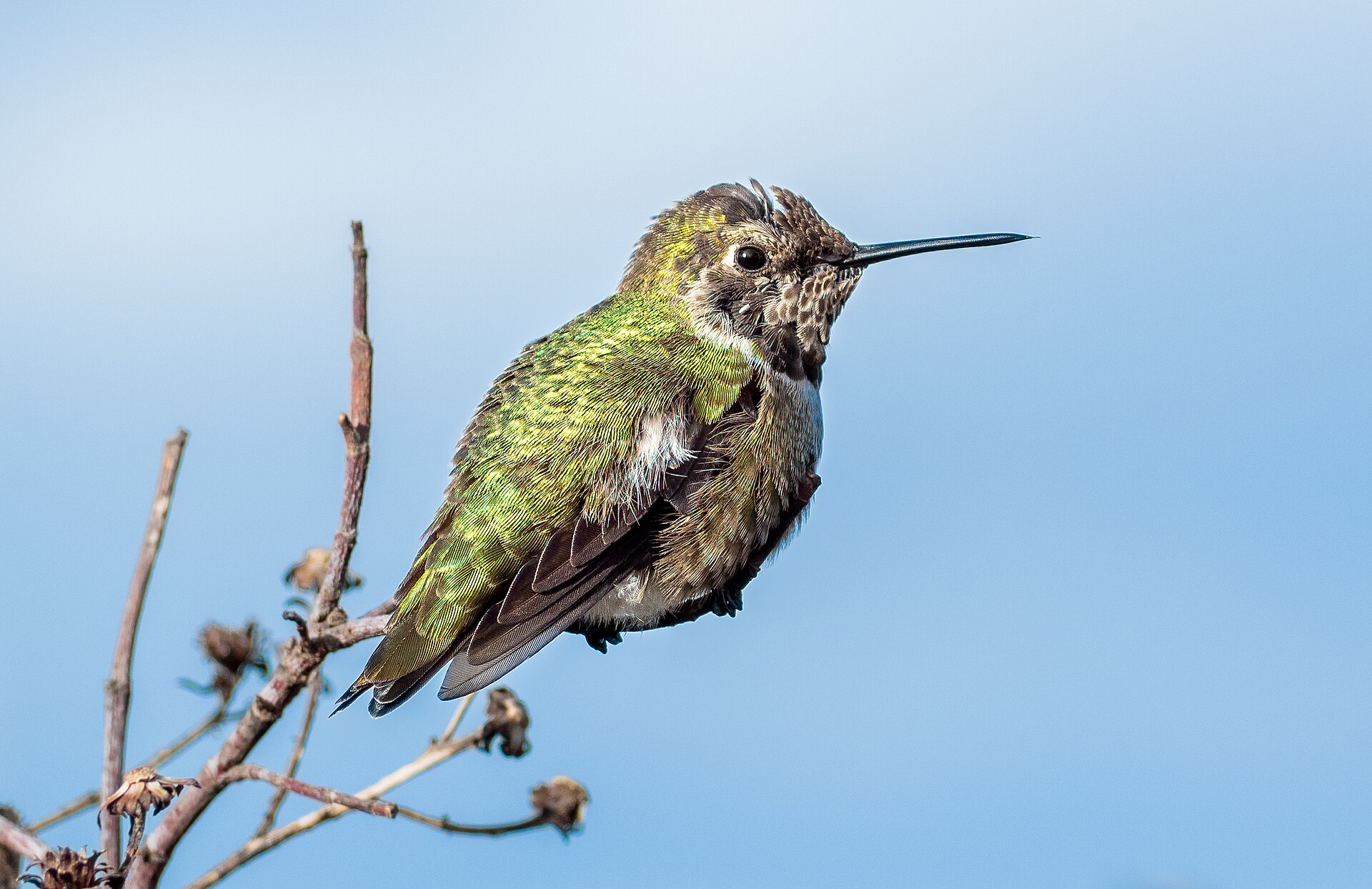
Anna’s Hummingbird was not a Washington bird at all until the 1960s, when it began expanding north from California. It is now a year-round resident across the Puget Sound lowlands and increasingly elsewhere, helped by winter feeders and ornamental plants. Males have an iridescent rose-pink crown and throat that flash in sunlight, and they perform steep diving displays that end in a sharp chirp made by the tail feathers. Anna’s Hummingbirds survive cold nights by entering torpor, lowering their body temperature and metabolism, and they depend heavily on feeders during freezes. A standard 1:4 sugar-to-water solution kept from freezing is one of the most valuable things a west-side yard can provide in winter.
Bushtit
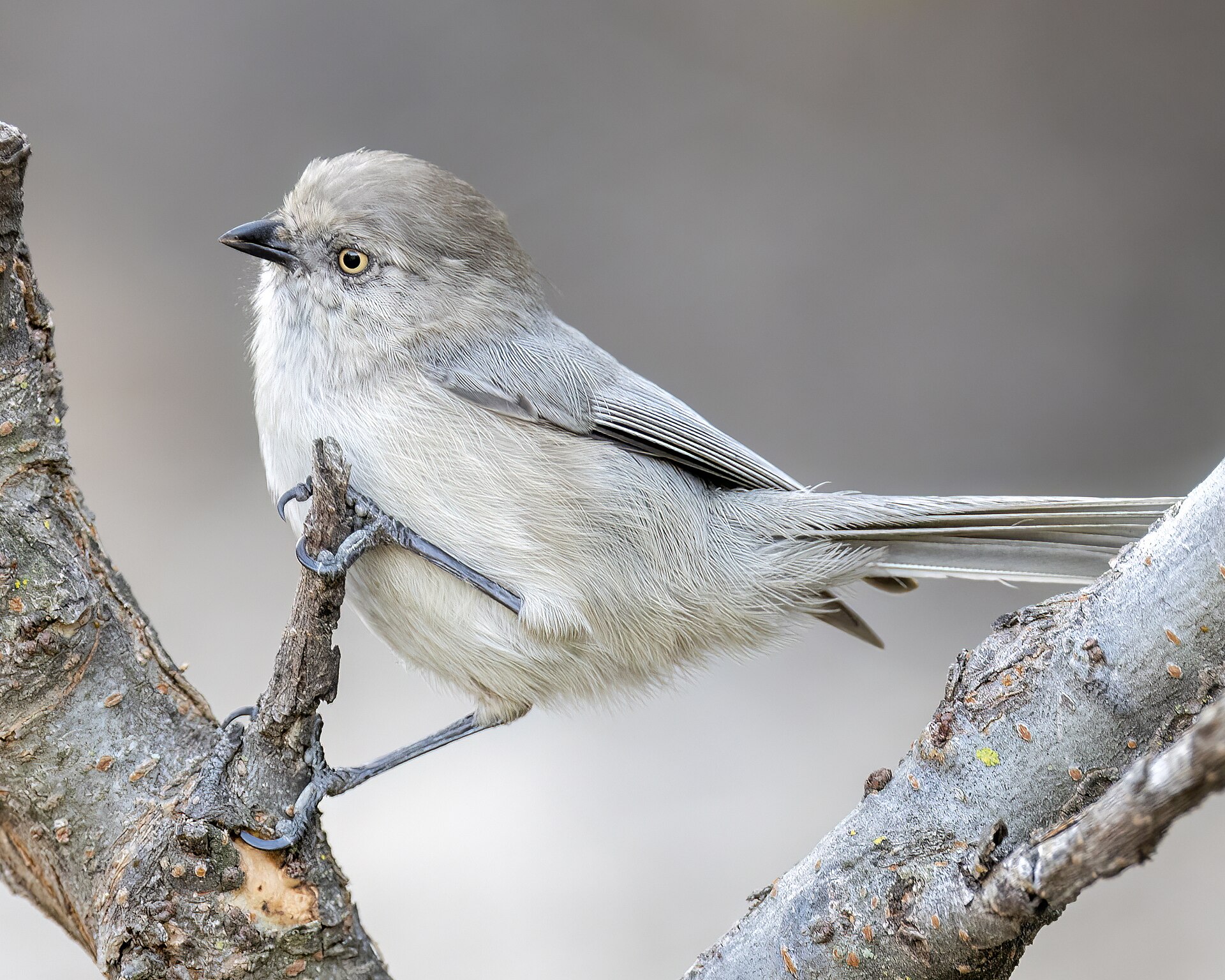
Bushtits are tiny, plain gray-brown birds with long tails that travel in chattering flocks of a dozen to forty or more, moving through shrubs and small trees in a constant stream. They eat mostly tiny insects and spiders and are regular visitors to suet feeders, where a whole flock can land at once and leave just as quickly. Males have dark eyes and females have pale yellow eyes, one of the few easy ways to tell them apart. Their nests are remarkable woven hanging pouches up to a foot long, built from moss, lichen, spider silk, and plant fibers. On cold nights, whole flocks huddle together to conserve heat.
Red-breasted Nuthatch
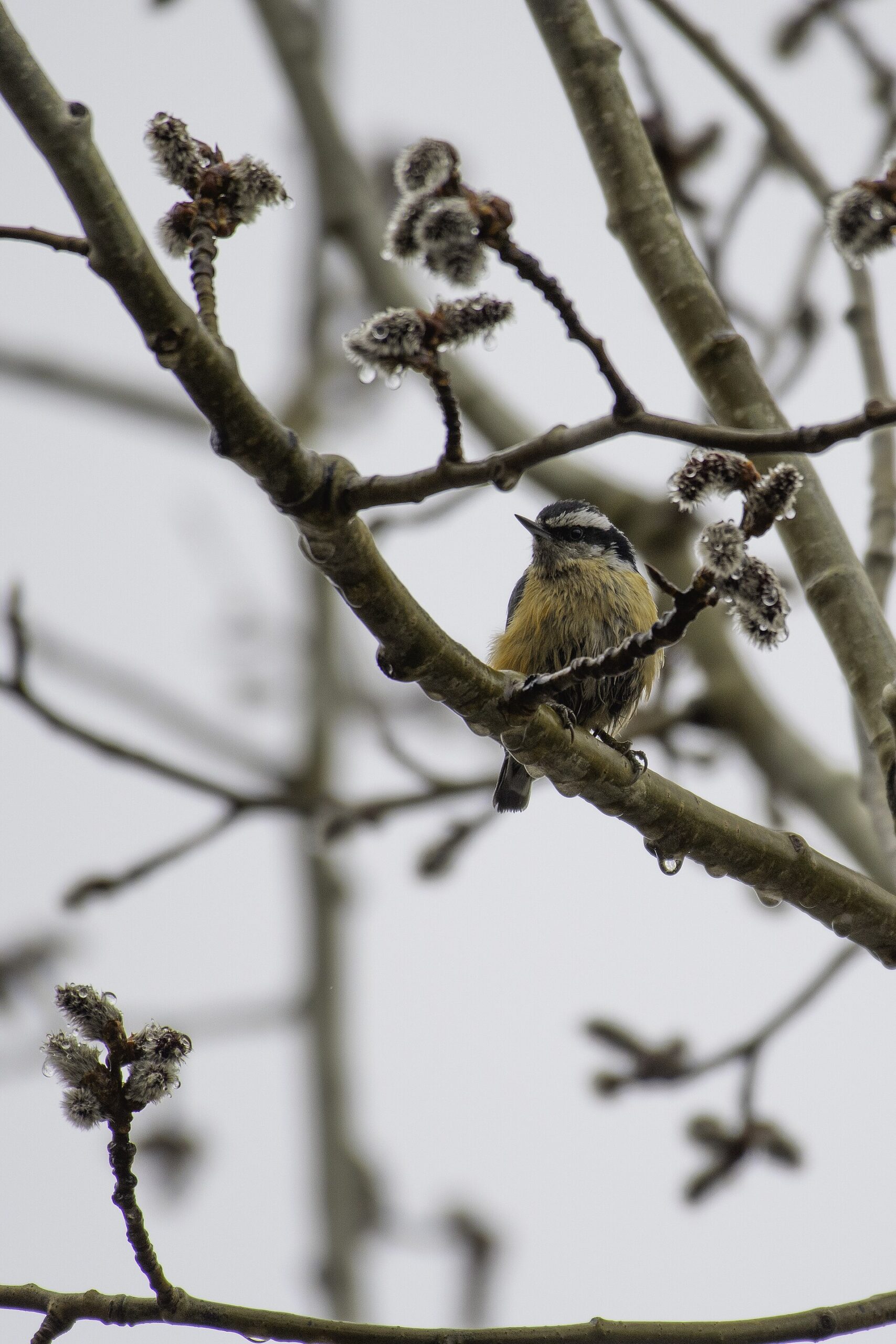
The Red-breasted Nuthatch is a small, compact bird with a black cap, a bold white eyebrow, a black eye line, a blue-gray back, and rusty underparts. It creeps headfirst down tree trunks and conifer branches, and its nasal “yank-yank” call sounds like a tiny toy horn. It is strongly tied to conifers, which makes it common across most of forested Washington. Red-breasted Nuthatches take sunflower and suet at feeders, usually grabbing one seed and flying off to wedge it in bark. Around nest holes, they smear conifer resin, likely to deter predators and competitors, and populations irrupt south in some winters when cone crops fail up north.
Northern Flicker
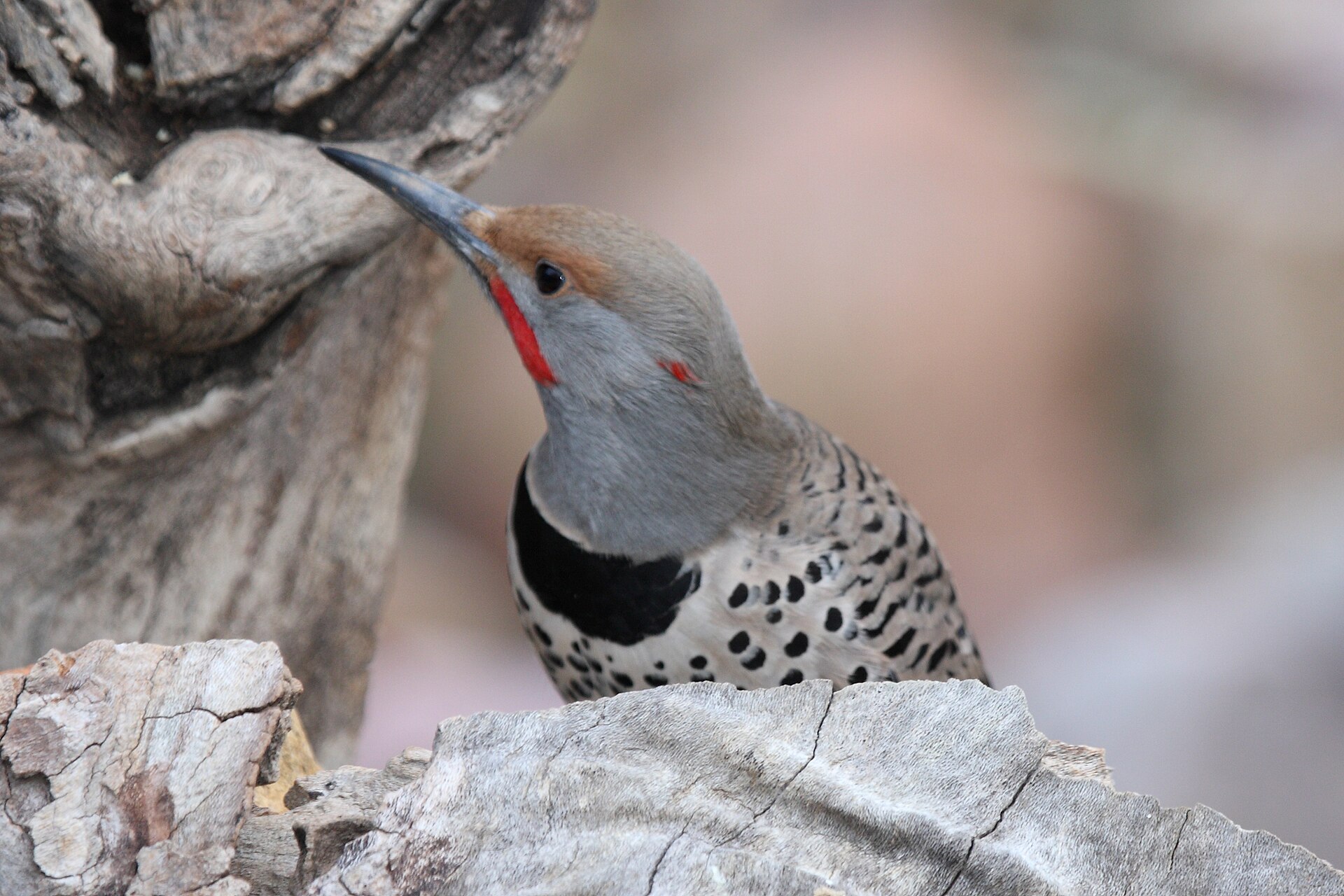
The flicker is a large, brown woodpecker that spends much of its time on the ground, probing for ants, and Washington’s birds are the “Red-shafted” form, with salmon-red under the wings and tail. Flickers have a barred brown back, a black crescent on the chest, a spotted belly, and a white rump that shows clearly in flight. Males have a red mustache stripe. They are common year-round across the state and visit suet feeders regularly, especially in winter. Flickers are notorious for drumming on metal chimney caps and gutters in spring, which is a territorial advertisement rather than a search for food.
Varied Thrush
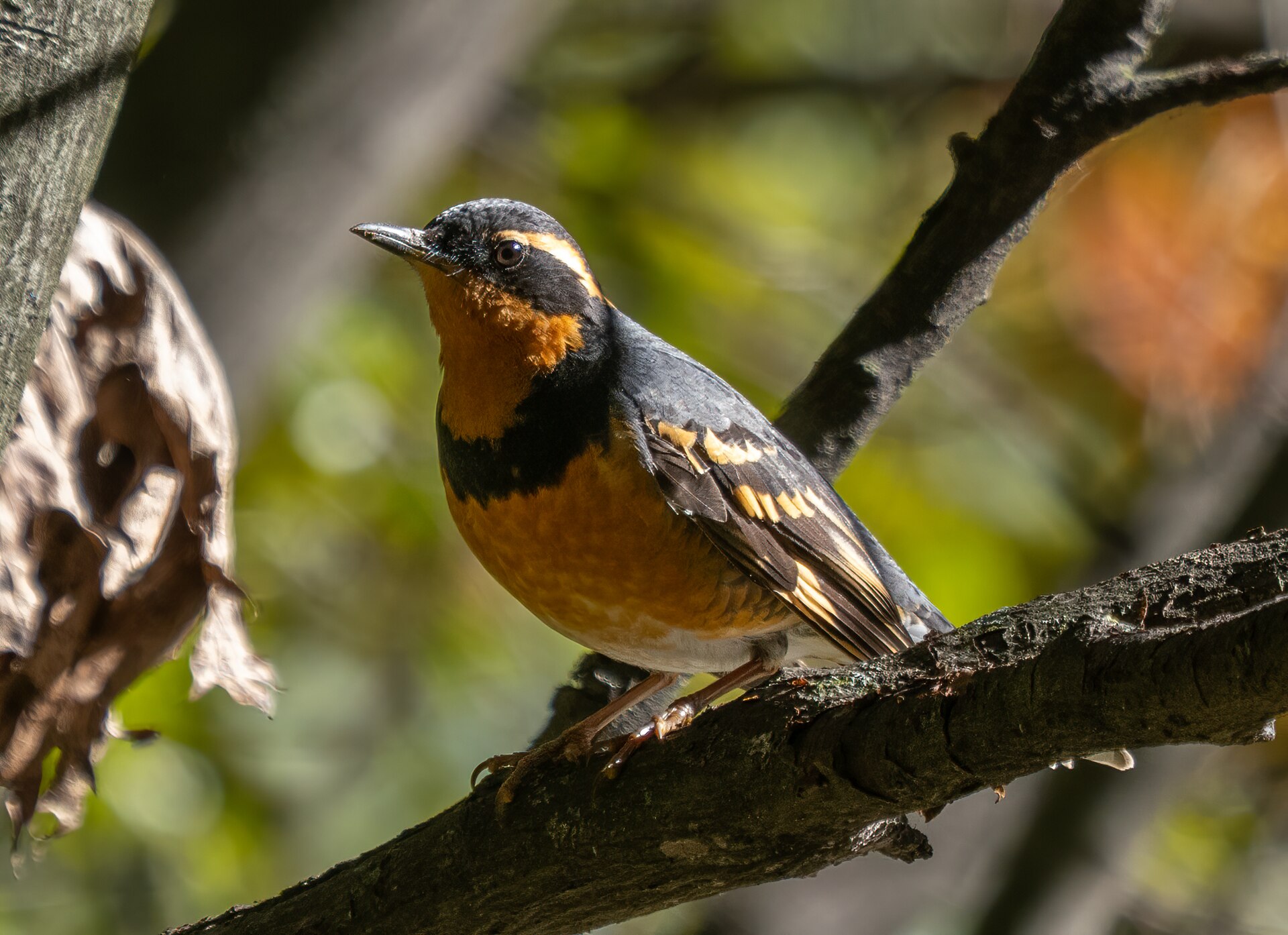
The Varied Thrush is one of the most distinctive birds of the Pacific Northwest, a robin-sized thrush with a slate-gray back, orange eyebrow and wing bars, an orange throat and breast, and a bold black breast band. It breeds in dark, wet conifer forests, and its song, a single long, eerie, buzzy whistle on one pitch, followed by another on a different pitch, is one of the defining sounds of the Northwest woods. In winter, especially during cold snaps and snow in the mountains, Varied Thrushes descend into lowland yards, where they forage on the ground under shrubs and feeders for fallen seed, berries, and fruit. Scattering seed or chopped apples under dense cover brings them in.
Song Sparrow
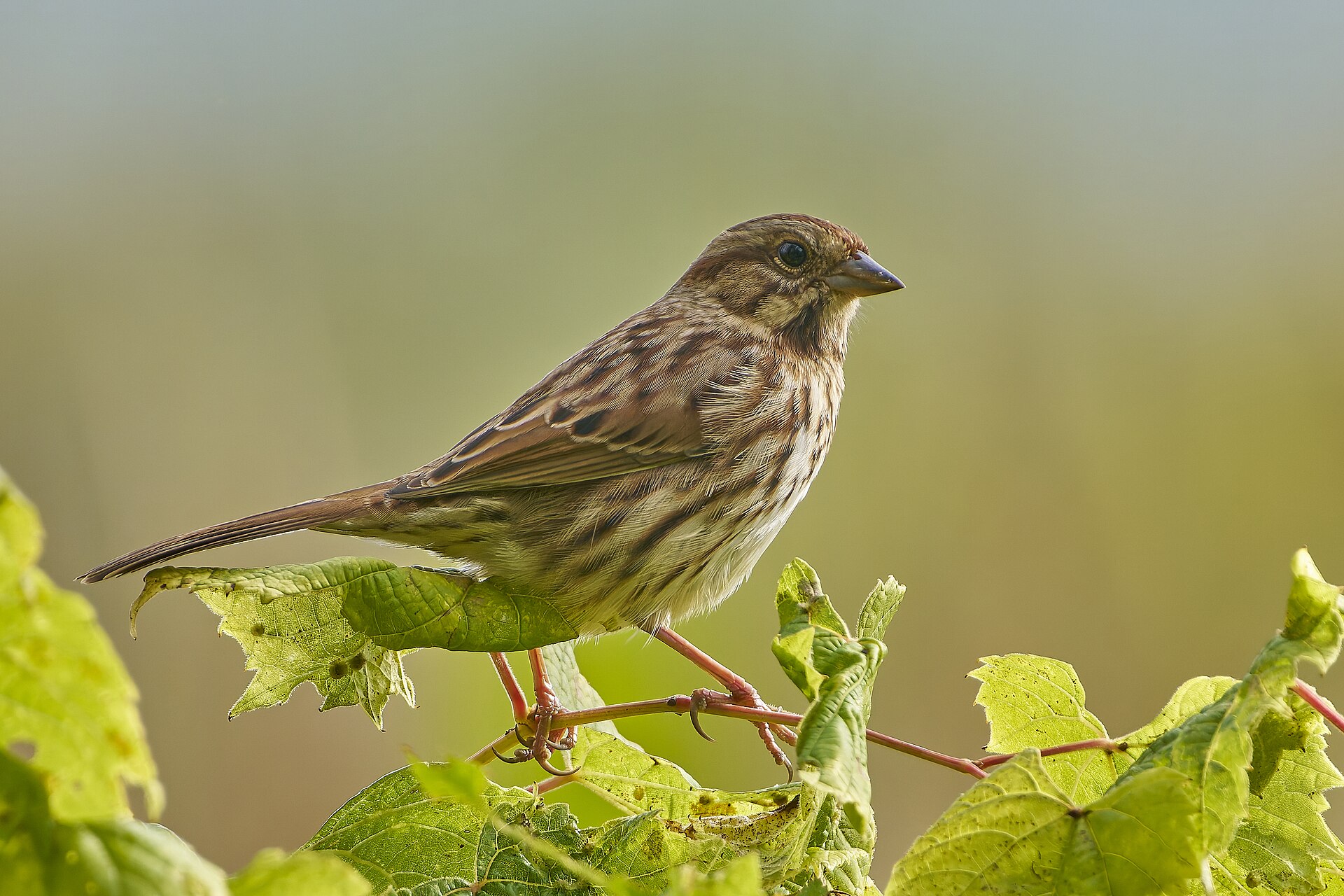
Song Sparrows in western Washington are notably darker and richer in color than those in the East, a good example of how birds in wet climates tend to be more heavily pigmented. They are streaky brown with a central breast spot, and they pump their tails as they fly between shrubs. As the name suggests, males sing throughout much of the year, a varied song beginning with a few clear notes and ending in a jumble. Song Sparrows are common year-round in brushy yards, wetland edges, and parks, and they feed on the ground under feeders. They are one of the first birds to sing in late winter, often on mild days in February.
Pine Siskin
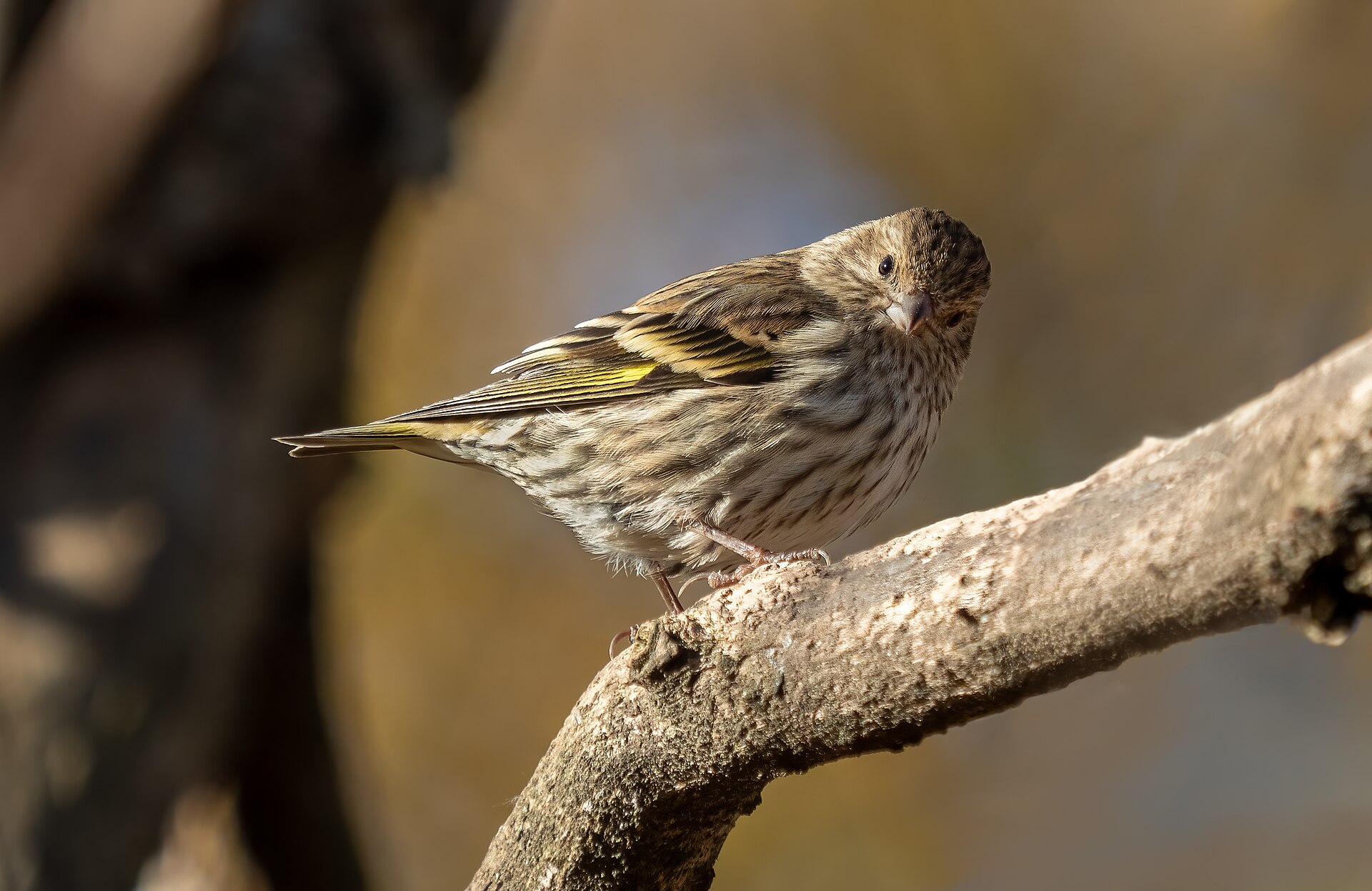
Pine Siskins are small, heavily streaked brown finches with sharp, thin bills and flashes of yellow in the wings and tail. They are nomadic, moving around in large flocks in response to conifer seed crops, so a feeder can have hundreds one winter and none the next. When they arrive, they take over nyjer and sunflower heart feeders and can be surprisingly aggressive with each other. Their buzzy, rising “zreeee” call is distinctive. Because they gather in dense flocks, siskins are particularly vulnerable to salmonellosis at dirty feeders, so cleaning feeders often and taking them down during outbreaks, as state wildlife officials have recommended in past years, helps protect them.
Snow Goose
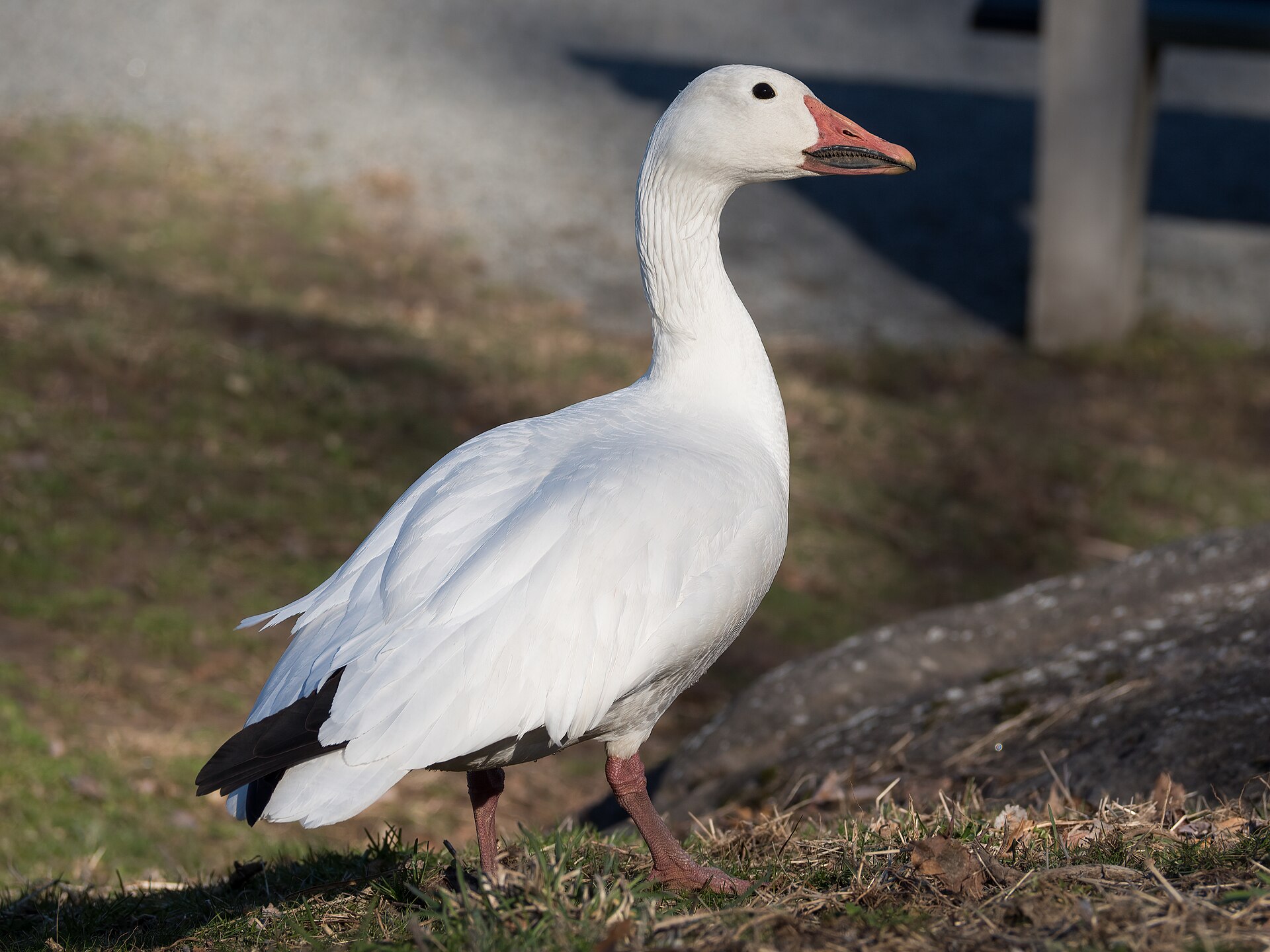
Snow Geese are white geese with black wing tips and pink bills, and each winter the Skagit and Samish flats host a large population that breeds on Wrangel Island in the Russian Arctic. Flocks feed on waste crops and marsh plants in farm fields and rise in huge swirling masses when disturbed, a sight and sound that draws visitors from all over the region. Some birds split time between the Skagit and the Fraser River delta in British Columbia over the course of the winter. The best viewing is typically from November through February along the county roads of Fir Island and around the Skagit Wildlife Area, and watching from the car helps avoid flushing the flocks.
Getting Started
For a west-side yard, a covered hopper or tube feeder with black oil sunflower, a suet cake for Bushtits, nuthatches, and woodpeckers, a nyjer feeder for goldfinches and siskins, and a hummingbird feeder kept up all year will bring in most of the regular species. Scatter some seed under shrubs for towhees, juncos, and Song Sparrows, and on cold days, for Varied Thrushes. East of the Cascades, the same basics work, with more emphasis on open water in winter and on quail-friendly ground feeding. Cleaning feeders every week or two, especially in wet weather, is important in both regions.
Beyond the backyard, a Washington birding year might include Snow Geese and swans on the Skagit in winter, Rufous Hummingbirds and warblers returning in spring, shrub-steppe and mountain birds in summer, and seabirds and shorebirds along the coast in fall. The Cascades divide the state in two, and learning both halves is what makes birding here so rewarding.
Sources
Species identification, range, and behavior details are cross-checked against the Cornell Lab of Ornithology’s All About Birds, the National Audubon Society, eBird’s Washington regional data, and the Washington Department of Fish and Wildlife.