Backyard Birds in Oregon: A Field Guide to the Species at Your Feeder
Oregon has a junco named after it, a state bird that has become hard to find in the valley where most Oregonians live, and a desert refuge in the southeast corner that ranks among the great bird places in the West. It is a state that rewards anyone willing to look past the rain. A feeder in Portland or Eugene in February will be busy with Oregon Juncos, Golden-crowned Sparrows, and an Anna’s Hummingbird that has not left all winter, while four hours east, past the Cascades and across the high desert, Sandhill Cranes are dancing in flooded meadows at Malheur. Few states have such different bird worlds so close together.
Oak valleys, conifer mountains, and high desert
Oregon’s birdlife follows three broad landscapes. West of the Cascades, the Willamette Valley and the Rogue and Umpqua valleys to the south were once a mosaic of prairie, wetland, and Oregon white oak savanna, and the birds that depend on oak, including Acorn Woodpeckers, White-breasted Nuthatches of the slender-billed western form, and California Scrub-Jays, remain part of the valley’s identity. The Coast Range and Cascades are dominated by conifer forest, home to Steller’s Jays, Chestnut-backed Chickadees, Varied Thrushes, and Red-breasted Sapsuckers. East of the Cascades, the country dries out into ponderosa pine and then into sagebrush, juniper, and alkali lakes, where the bird community looks more like Nevada or Idaho than like the Oregon most visitors picture. A yard’s location among these three zones sets much of what will come to its feeders.
The state bird: a meadowlark in a changing valley
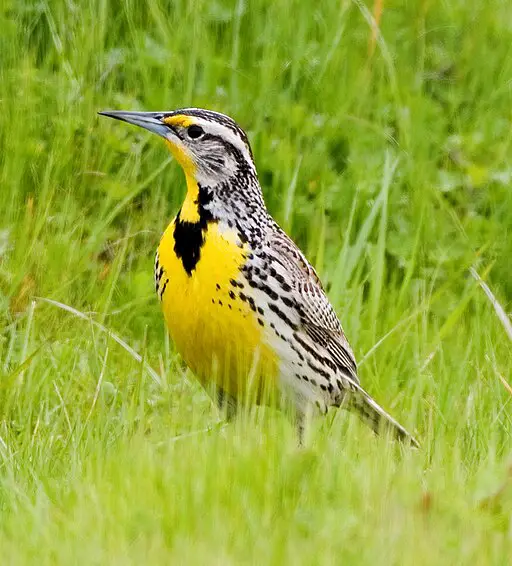
Oregon chose the Western Meadowlark as its state bird in 1927, after a vote by schoolchildren organized through the Oregon Audubon Society. It is a stocky, ground-dwelling songbird of open grassland, yellow below with a black V on the breast, and its bubbling, flute-like song is one of the classic sounds of the rural West. The irony is that meadowlarks have become scarce in the Willamette Valley, where urban growth and the loss of native prairie and pasture have squeezed out the open grassland they need. East of the Cascades, in the sagebrush, grassland, and farm country, they are still common and easy to hear from spring through summer. Their decline in the valley has made them a symbol for grassland restoration efforts in western Oregon.
Common feeder visitors
On the west side, a winter feeder typically draws Dark-eyed Juncos of the “Oregon” form, Black-capped and Chestnut-backed Chickadees, Spotted Towhees, Song Sparrows, Golden-crowned and White-crowned Sparrows, House Finches, Lesser and American Goldfinches, Steller’s Jays or California Scrub-Jays depending on how much conifer or oak is nearby, Red-breasted Nuthatches, Bushtits at suet, Downy Woodpeckers and Northern Flickers, and Anna’s Hummingbirds at nectar feeders year-round. Varied Thrushes appear in cold snaps. East of the Cascades, feeders see Mountain Chickadees, California Quail, Pygmy Nuthatches in the pines, Cassin’s Finches, Evening Grosbeaks in some winters, and more hawks cruising past.
Beyond the backyard: Malheur and the cranes
Malheur National Wildlife Refuge in Harney County, established in 1908, is Oregon’s most famous birding destination. The refuge’s marshes and wet meadows sit in the middle of the high desert and draw large numbers of waterfowl, shorebirds, and Sandhill Cranes in spring. The Harney County Migratory Bird Festival in April is built around that migration, with Snow and Ross’s Geese, Tundra Swans, and cranes feeding in the flooded fields around Burns. Closer to the population centers, Sauvie Island near Portland hosts wintering Sandhill Cranes, geese, and raptors, and Fern Ridge Reservoir near Eugene is well known for waterbirds and migrants. On the coast, Haystack Rock at Cannon Beach holds nesting Tufted Puffins in late spring and early summer, and the Klamath Basin on the California border is famous for its wintering Bald Eagles.
A note on native plants
West of the Cascades, native shrubs and trees are the backbone of a bird-friendly yard. Red-flowering currant blooms in late winter just in time for Anna’s and early Rufous Hummingbirds; Oregon grape, serviceberry, salal, and evergreen huckleberry produce fruit; and Oregon white oak, if there is room for one, supports a remarkable number of insects and acorn-eating birds. Leaving leaf litter under shrubs gives towhees, sparrows, and thrushes somewhere to forage. East of the mountains, drought-tolerant natives such as bitterbrush, rabbitbrush, serviceberry, and native bunchgrasses feed birds without extra water. Layered plantings, with ground cover, shrubs, and taller trees, will hold far more birds than a lawn with a single feeder.
Winter Feeding Notes
West-side winters are mild and wet, which means the biggest challenge is keeping seed dry. Covered hoppers and tube feeders with drainage work better than open trays, which turn into a soggy mess. Clean feeders regularly, since mold and disease spread quickly in damp conditions, and be alert for sick finches and siskins during salmonellosis outbreaks, when taking feeders down for a few weeks is the right move. When a hard freeze does hit the valleys, keep a hummingbird feeder from freezing, since Anna’s Hummingbirds depend on it heavily. East of the Cascades, winters are colder and snowier, and open water from a heated birdbath, black oil sunflower, and suet become much more important once the ground freezes.
Western Meadowlark
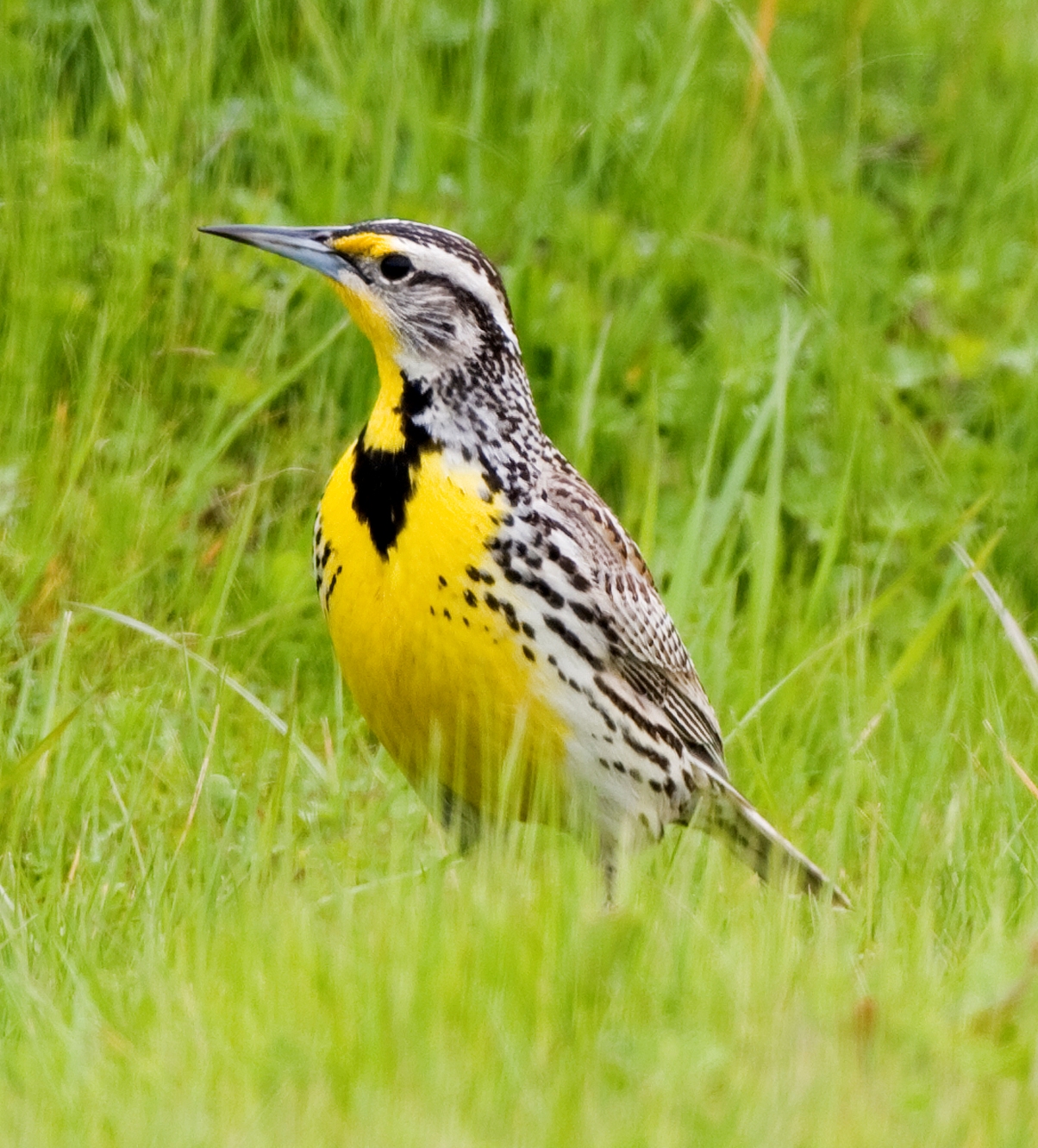
Oregon’s state bird is a chunky, short-tailed songbird of grasslands and farm fields, with a streaky brown back, bright yellow throat and belly, and a black V across the chest. It is usually seen singing from a fence post, telephone wire, or sagebrush top, and its rich, bubbling song is one of the most recognizable sounds of eastern Oregon in spring. Meadowlarks feed on insects in summer and seeds in winter, walking along the ground in short grass. They nest on the ground in grassy cover, often weaving a partial roof of grass over the nest. They rarely visit feeders, but a rural yard near open country may have them singing from the fence line.
California Scrub-Jay
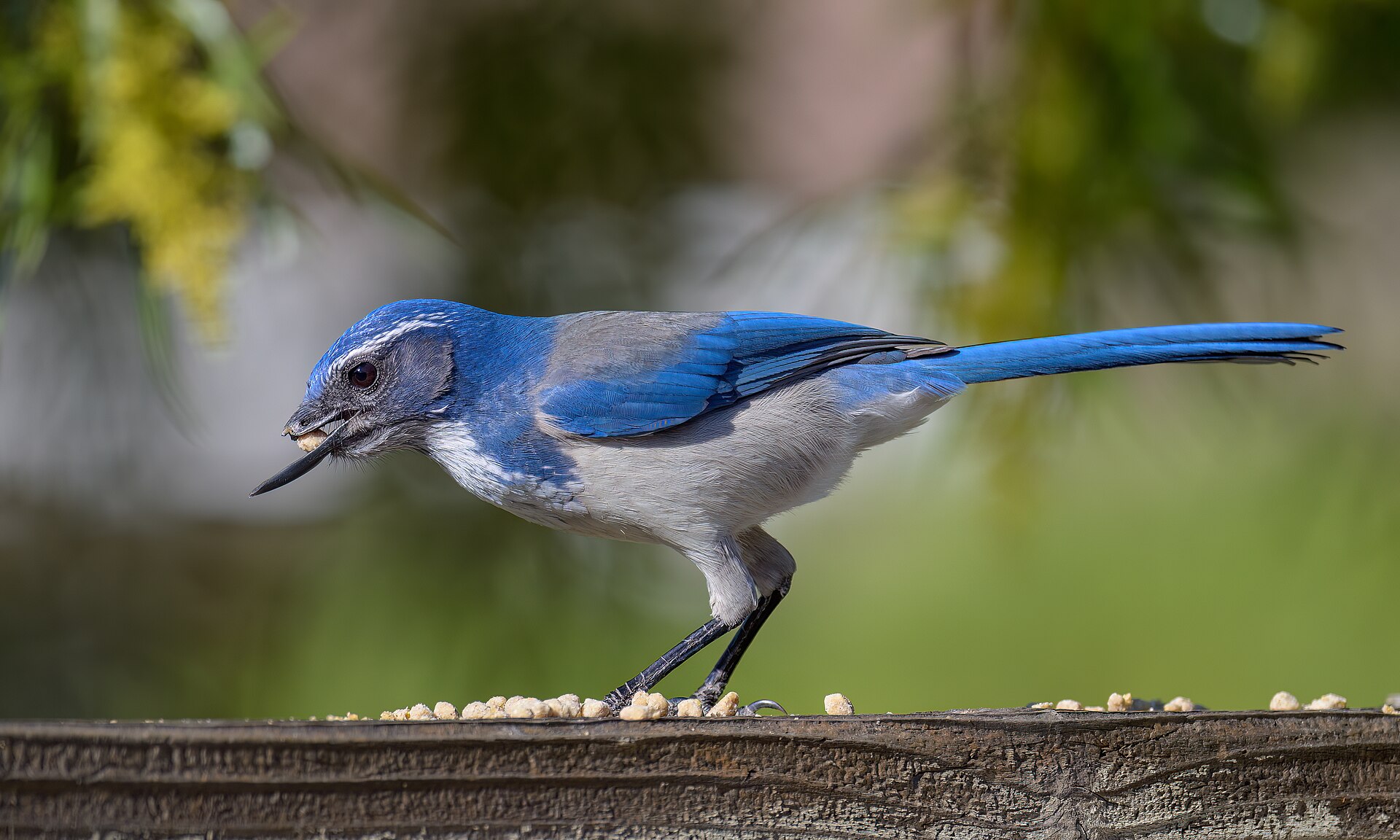
This long-tailed, crestless jay is blue above with a brownish-gray back and a pale gray underside with a partial blue necklace. It is common in the oak and suburban habitats of the Willamette, Umpqua, and Rogue valleys, and its range has been expanding northward over recent decades. California Scrub-Jays are bold, noisy, and clever, caching thousands of acorns each fall and returning to many of them later. At feeders, they go straight for peanuts and sunflower, and they are fast to take advantage of anything left out. Their harsh, scolding call is one of the most common sounds in a valley neighborhood.
Steller’s Jay
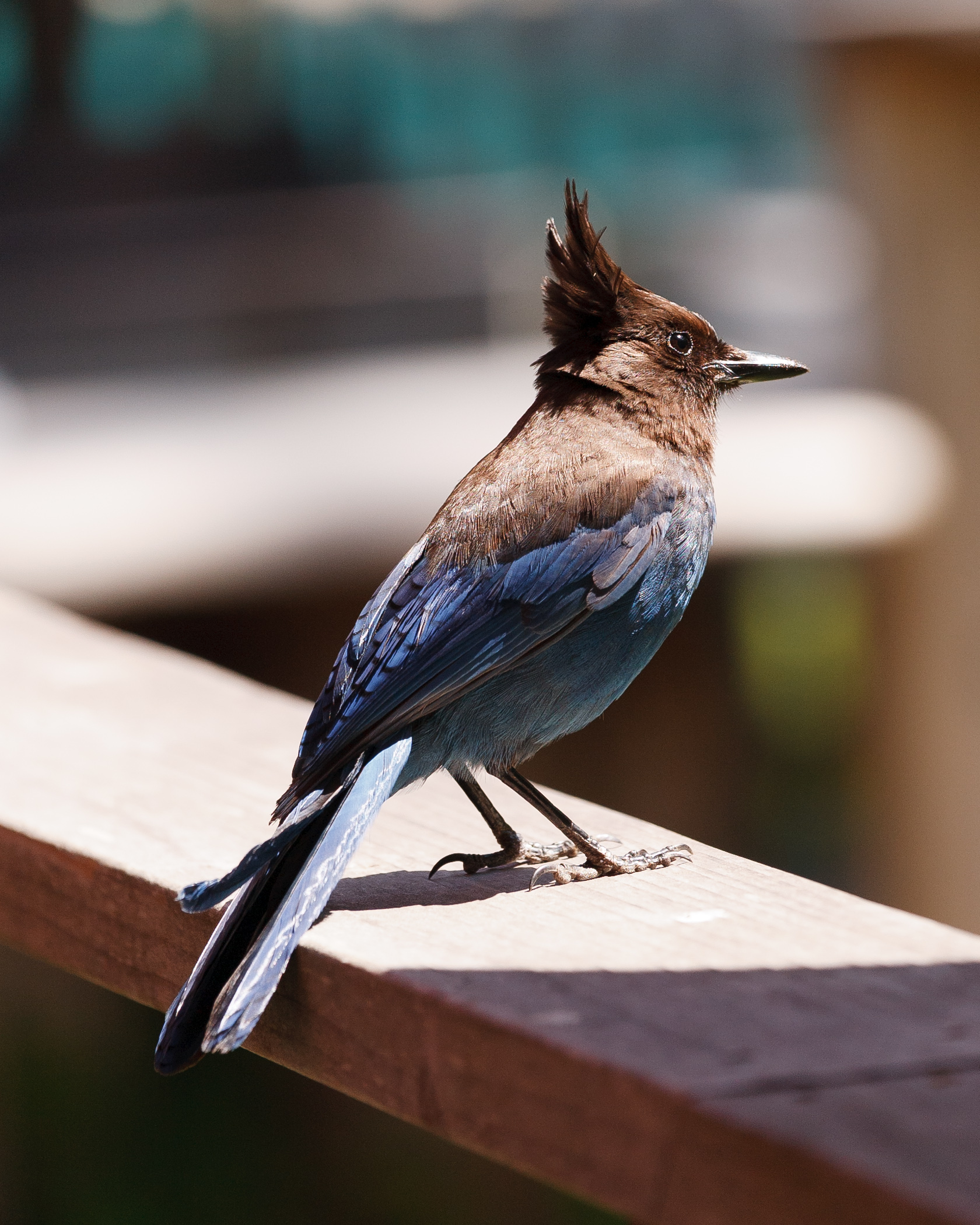
Steller’s Jay is the dark, crested jay of Oregon’s conifer forests, with a black head and crest, a deep blue body, and pale streaks on the forehead. It replaces the California Scrub-Jay in forested areas, and a yard near Douglas-fir or pine is likely to have them rather than scrub-jays. Steller’s Jays are opportunists, eating seeds, nuts, berries, insects, and occasionally eggs and nestlings. They love peanuts in the shell and will often carry off several at once. They are also skilled mimics, and their imitations of Red-tailed Hawks can be startlingly accurate.
Dark-eyed Junco
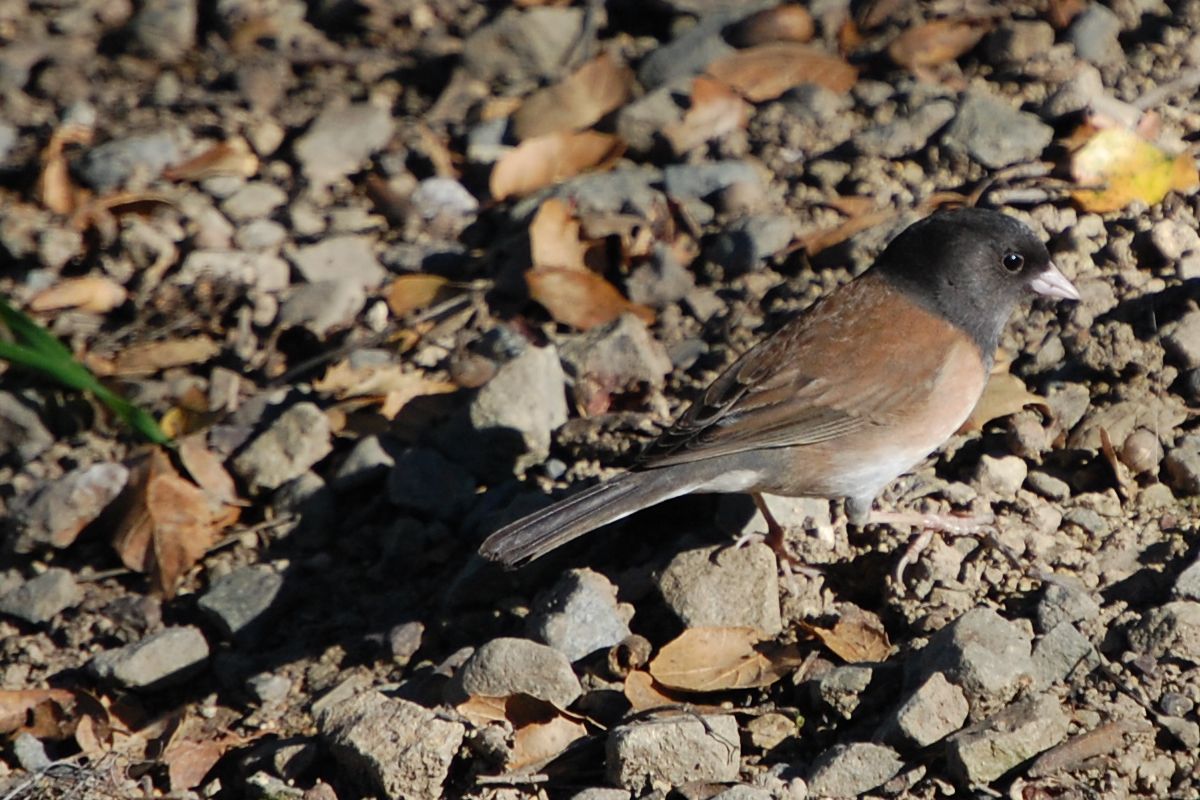
The “Oregon Junco” is the form of the Dark-eyed Junco found across most of the West, and it takes its name from the old Oregon Country, where the first specimens described to science were collected in the 1830s. Males have a black hood, brown back, and pinkish-buff sides, while females are paler with a gray hood. They are common winter birds at feeders across the state and nest in forests and some suburban areas, particularly in the Cascades and Coast Range. Juncos feed on the ground, scratching for seeds, and they strongly prefer millet or mixed seed on a platform or on the ground. White outer tail feathers flash when they fly.
Spotted Towhee
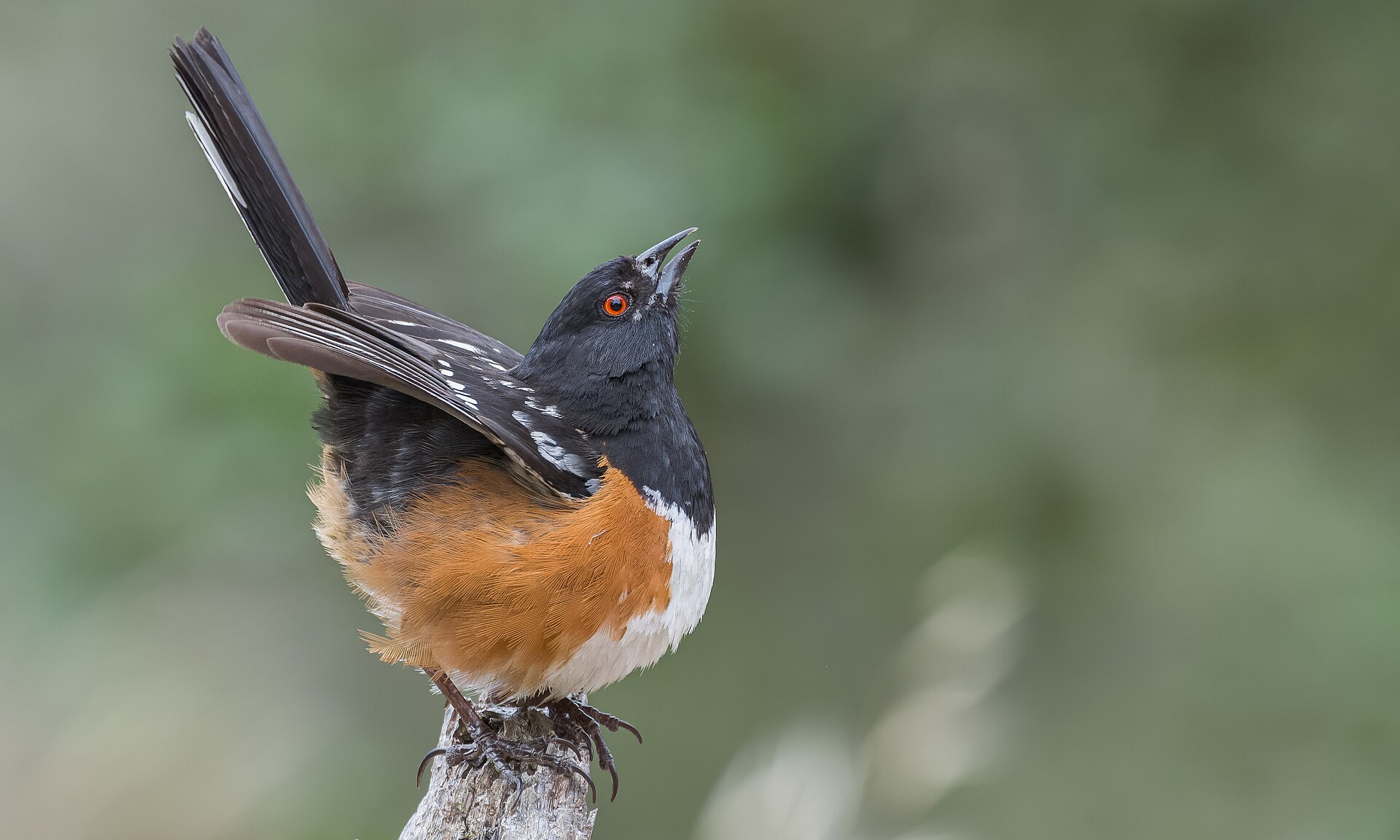
A large, handsome sparrow with a black hood and back spotted with white, rufous sides, and red eyes, the Spotted Towhee is a year-round resident of brushy areas throughout western Oregon and many parts of the east. It spends most of its time on the ground under dense shrubs, scratching through leaf litter with a noisy two-footed hop. Its mewing call is often heard before the bird is seen. Towhees are regular under feeders, where they pick up spilled seed, and they will come to millet or sunflower chips on a low tray placed close to cover.
Black-capped Chickadee
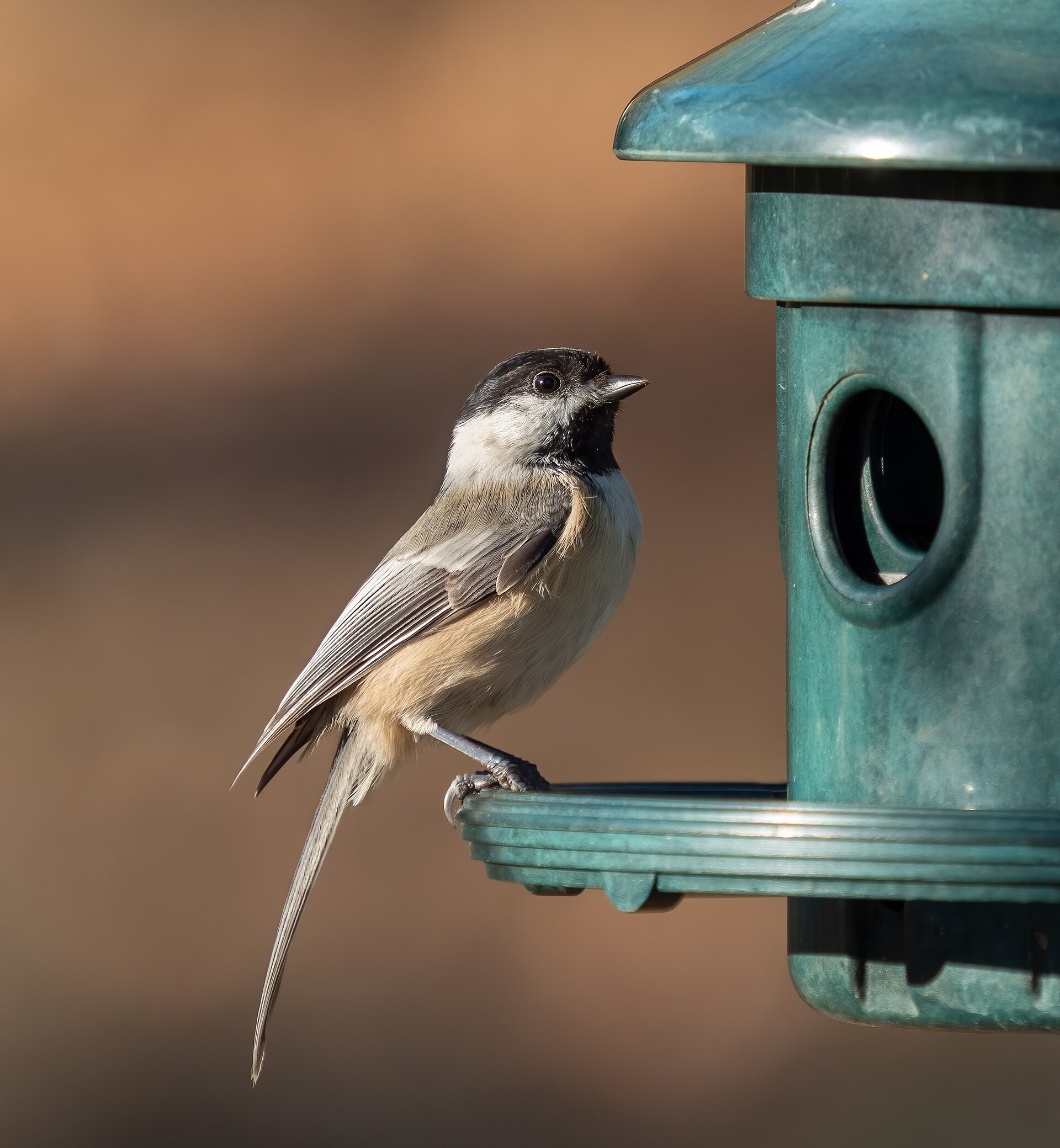
The Black-capped Chickadee is a year-round resident across much of Oregon, especially in lowland suburbs and river valleys. It has a black cap and bib, white cheeks, a gray back, and buffy sides, and it is one of the boldest feeder birds, often the first to find a new feeder. Chickadees cache seeds each fall and remember many of their hiding spots. They nest in cavities and will use a small nest box. In the forests, the Chestnut-backed Chickadee often joins them in mixed flocks, and east of the Cascades the Mountain Chickadee, with its white eyebrow, is common in pine forests.
Anna’s Hummingbird
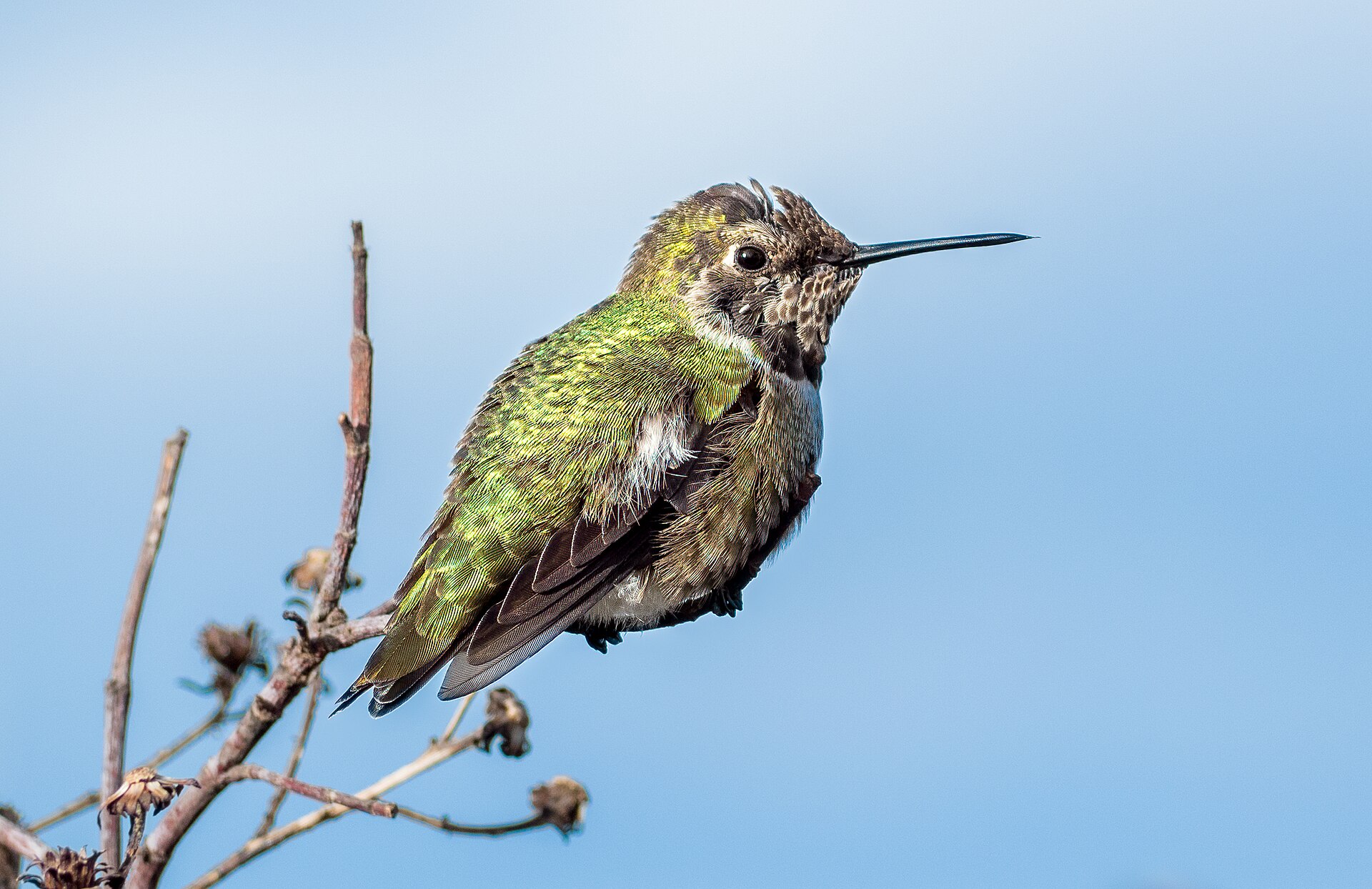
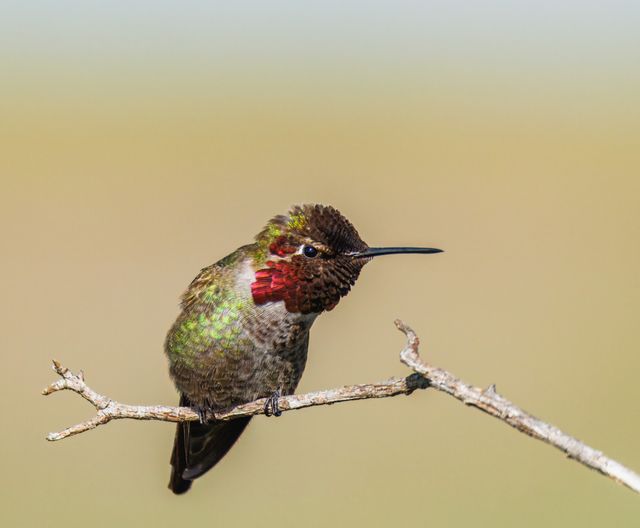
Once a California bird, Anna’s Hummingbird has expanded north and is now a common year-round resident in western Oregon. Males have iridescent rose-red crowns and throats that flash in the light, and they perform dramatic diving displays in winter and spring, ending each dive with a loud chirp produced by the tail feathers. Anna’s survive cold nights by going into torpor, and they rely heavily on nectar feeders in winter. Keep a feeder with a 1:4 sugar-to-water solution available year-round, and during freezes, rotate feeders or use a heater to keep the nectar from freezing solid.
Rufous Hummingbird
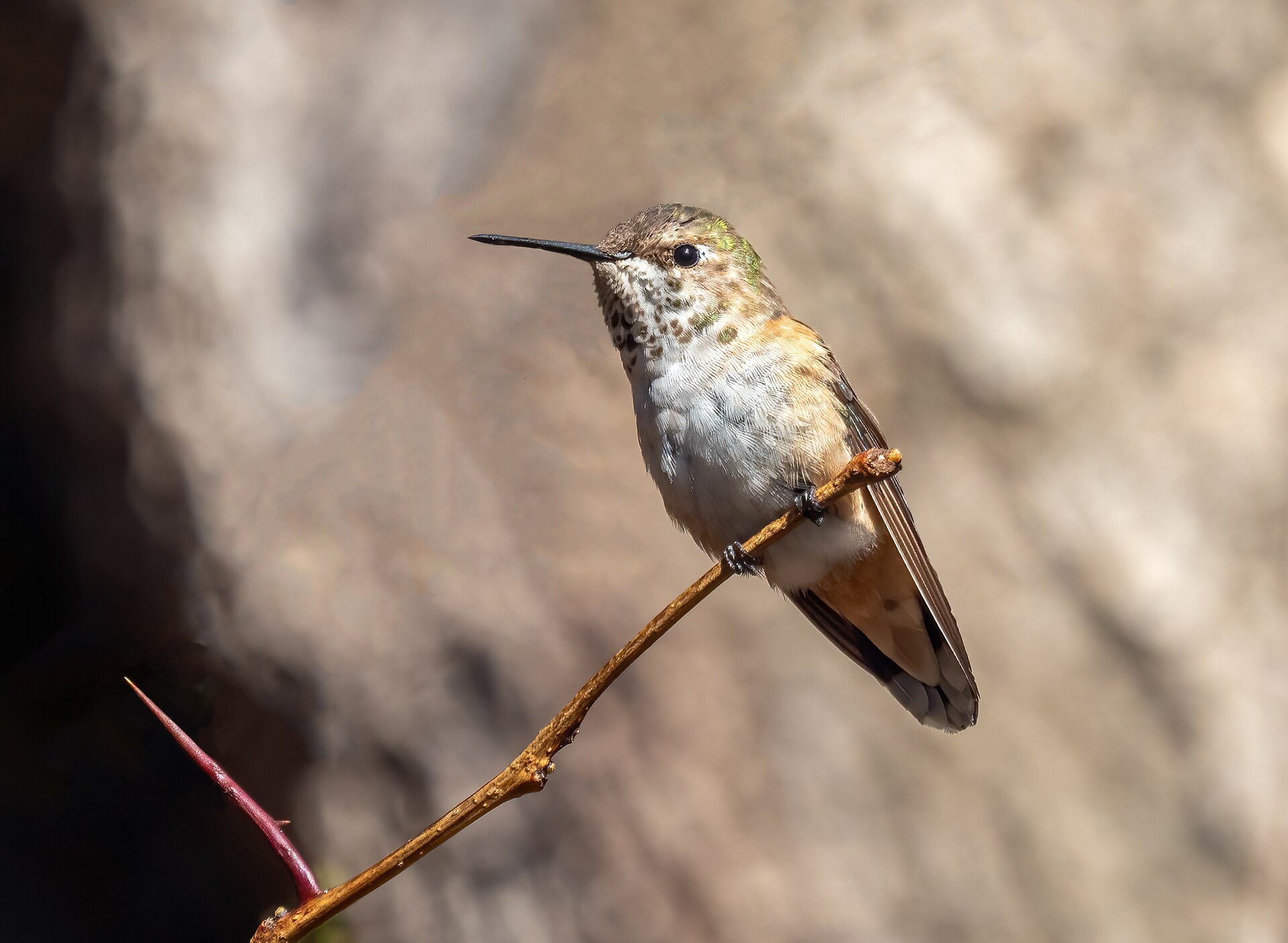
The Rufous Hummingbird is one of the earliest migrants to arrive in western Oregon, with males showing up in February and March as red-flowering currant blooms. Males are bright orange-rufous with an iridescent orange-red throat, and they are famously aggressive, chasing other hummingbirds away from feeders and flowers. Rufous Hummingbirds breed in the forests of the Coast Range, Cascades, and farther north, and they make one of the longest migrations of any bird relative to body size, traveling in a loop to Mexico and back. Their numbers have declined noticeably in recent decades.
Lesser Goldfinch
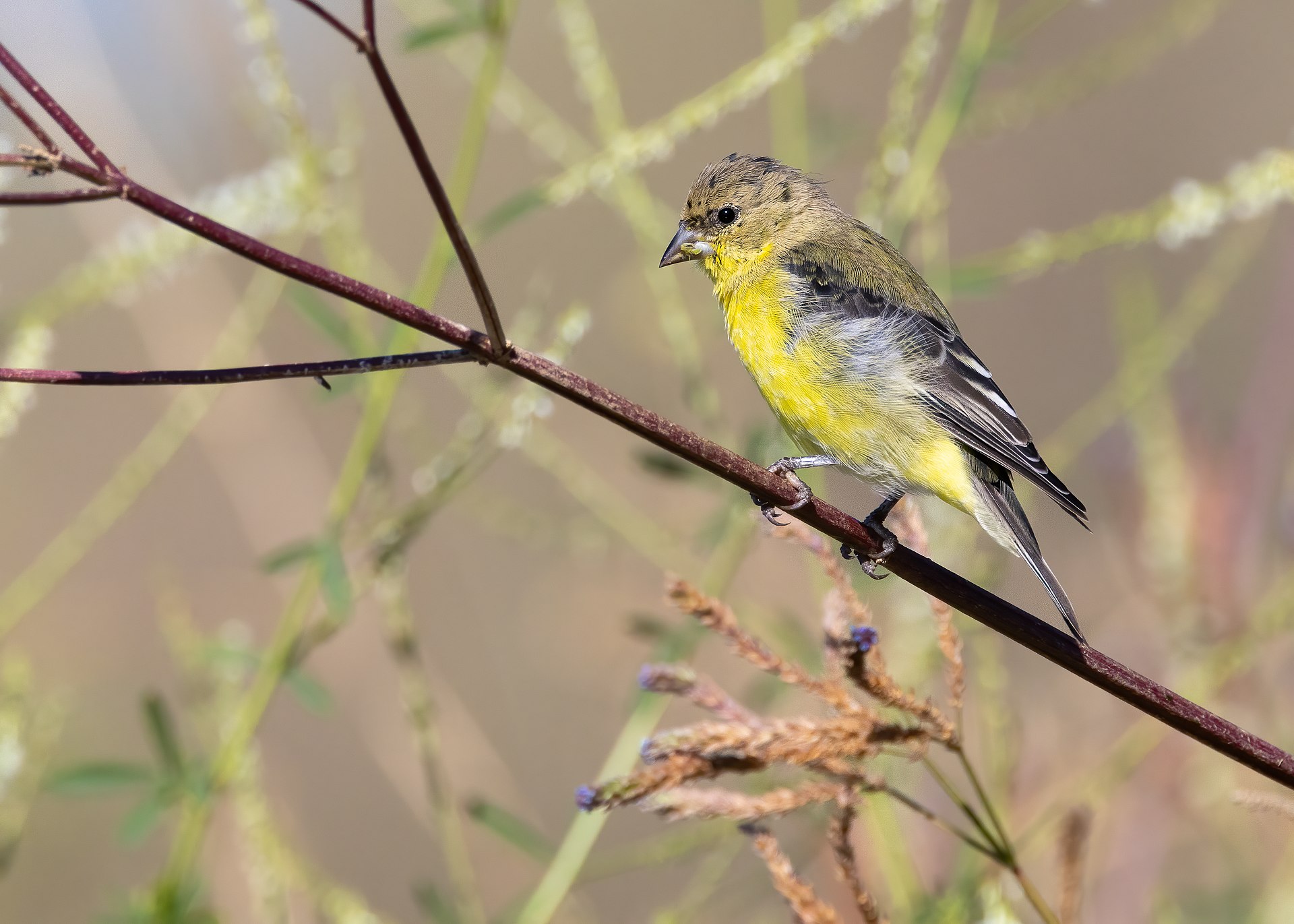
The Lesser Goldfinch is a small finch with a bright yellow underside and a greenish back, and males have a black cap. It has been expanding northward in western Oregon and is now common in the Willamette, Umpqua, and Rogue valleys, often in the same flocks as American Goldfinches. Lesser Goldfinches eat seeds from sunflowers, thistles, and other plants, and they are regulars at nyjer and sunflower heart feeders. Their song is a jumble of twittering notes that often includes imitations of other birds, and they are among the most common finches at valley feeders.
Bushtit
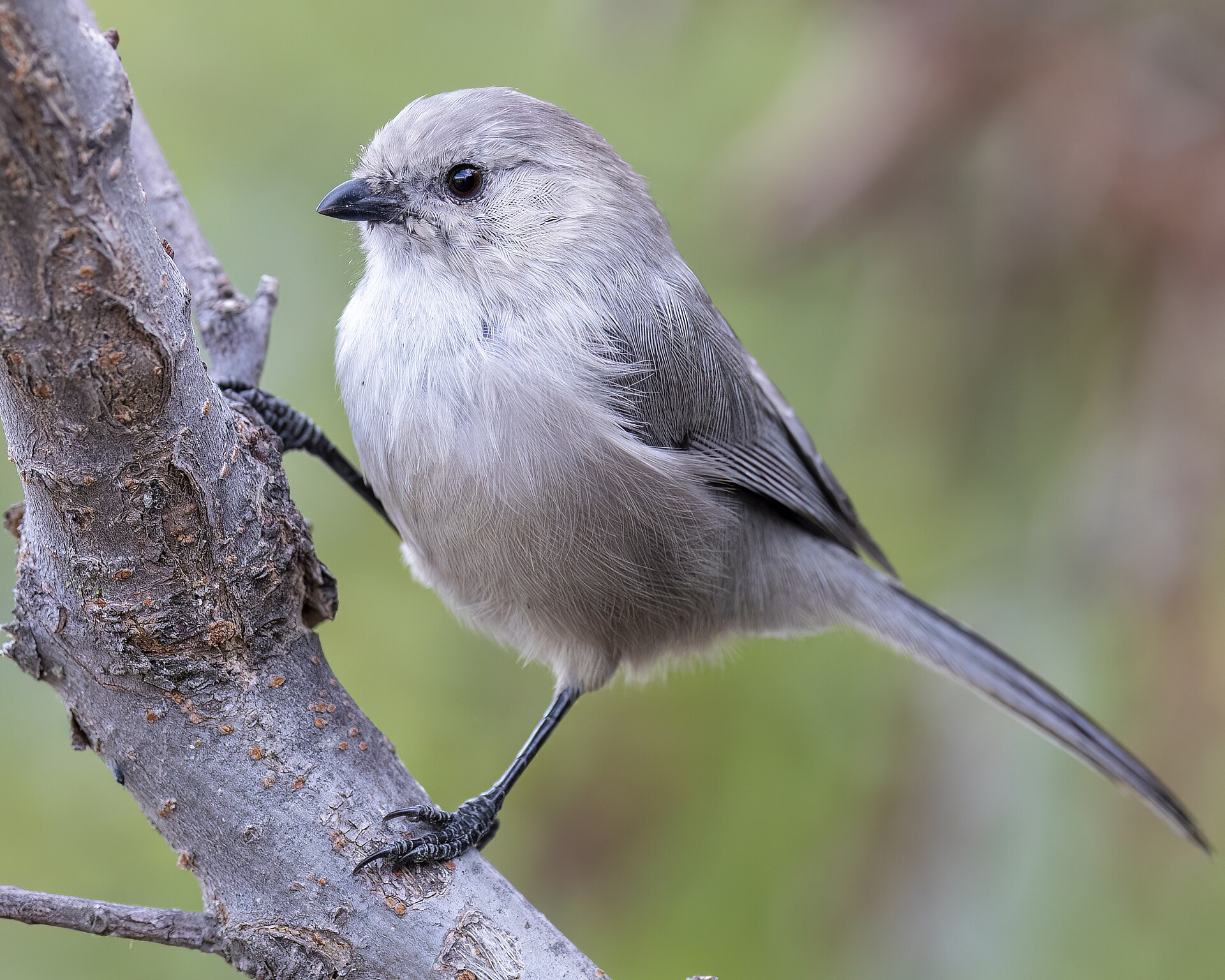
Bushtits are tiny, drab gray birds with long tails that travel in flocks of a dozen to forty or more, constantly calling to one another with soft twitters. They move through shrubs and trees gleaning tiny insects and spiders, and they often descend on suet feeders all at once, covering the feeder for a minute before moving on together. Males have dark eyes and females pale eyes. Bushtits build hanging, sock-like nests woven from moss, lichen, and spider silk, often up to a foot long. On cold nights, flocks huddle together in dense clusters to stay warm.
Acorn Woodpecker
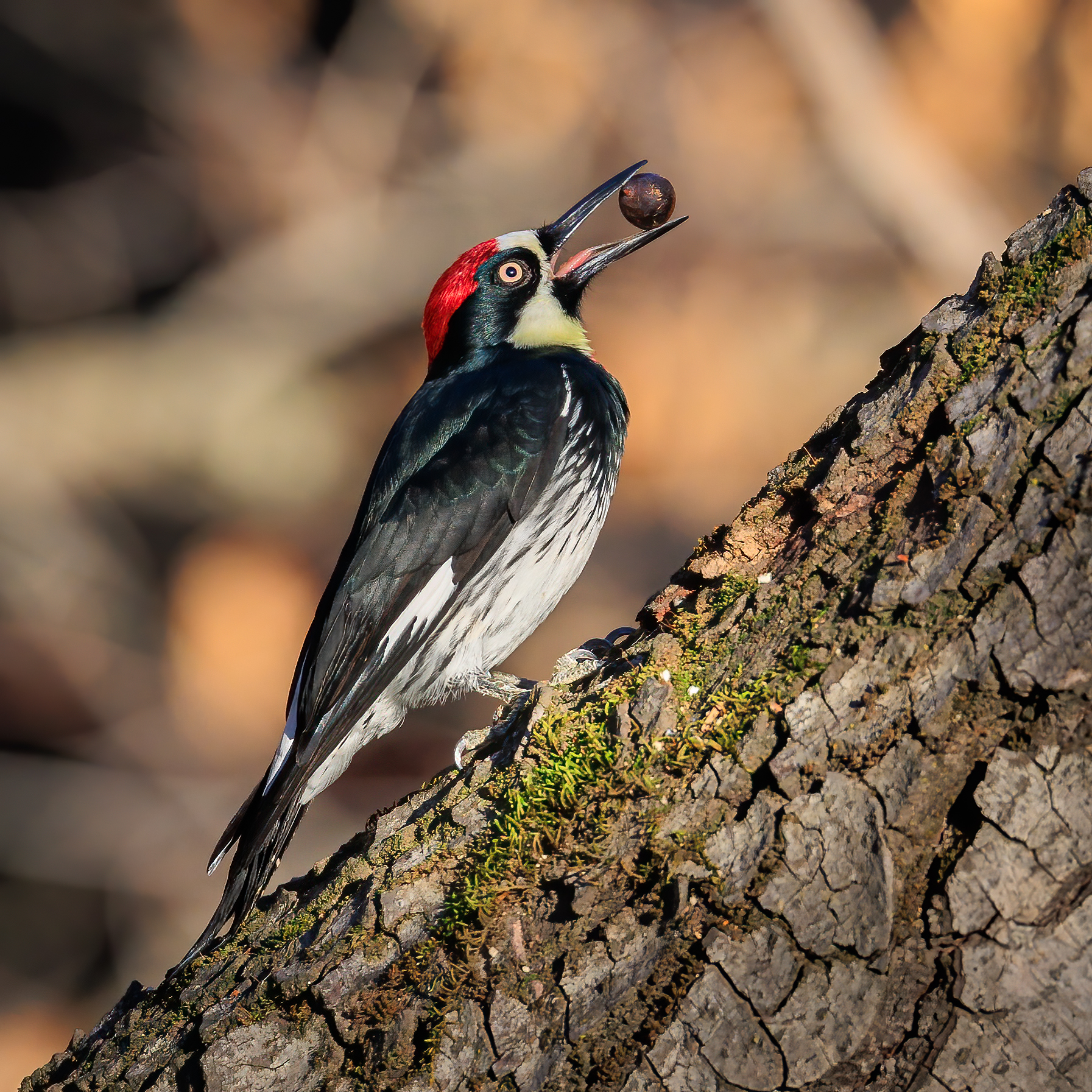
The Acorn Woodpecker is one of the most distinctive birds of Oregon’s oak woodlands, a clownish black-and-white woodpecker with a red cap, a white face, and staring pale eyes. It lives in family groups that work together to store thousands of acorns in holes drilled into a single tree, often called a granary tree. The groups defend their granary and cooperate in raising young, a social system that has made them a classic subject of behavioral research. In Oregon, Acorn Woodpeckers occur mainly in the oak woodlands of the southwest and in the Willamette Valley, and they will visit suet and sometimes nectar feeders.
Red-breasted Sapsucker
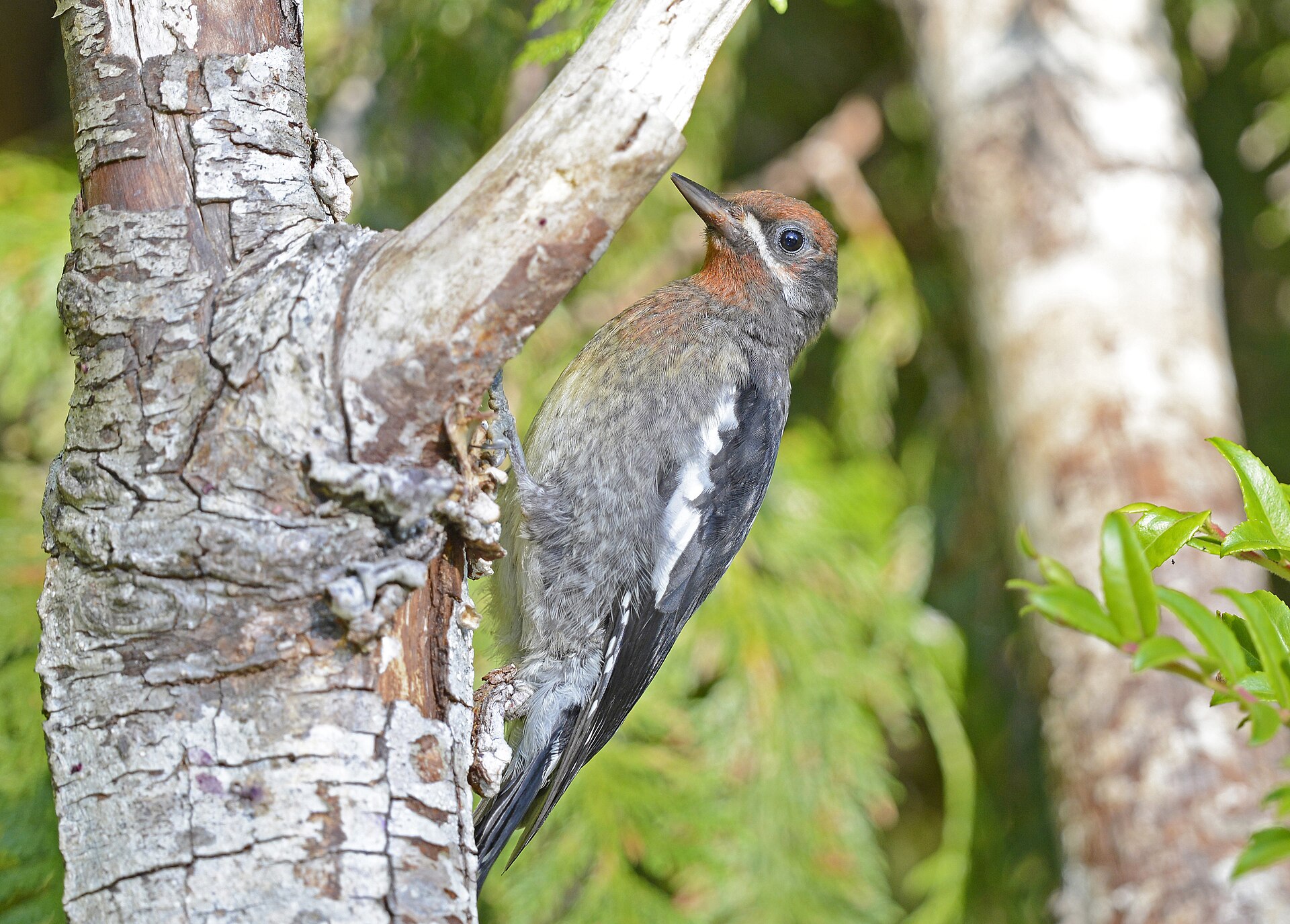
The Red-breasted Sapsucker is a medium-sized woodpecker with an entirely red head and breast, a black back with white barring, and a white wing patch. It lives in forests on the west side of the Cascades and in the Coast Range, and it drills neat horizontal rows of small holes in trees to feed on sap and the insects attracted to it. Those sap wells are also used by hummingbirds, warblers, and other birds, making sapsuckers an important part of the forest community. They sometimes visit suet feeders in winter and will occasionally drink from hummingbird feeders.
Golden-crowned Sparrow
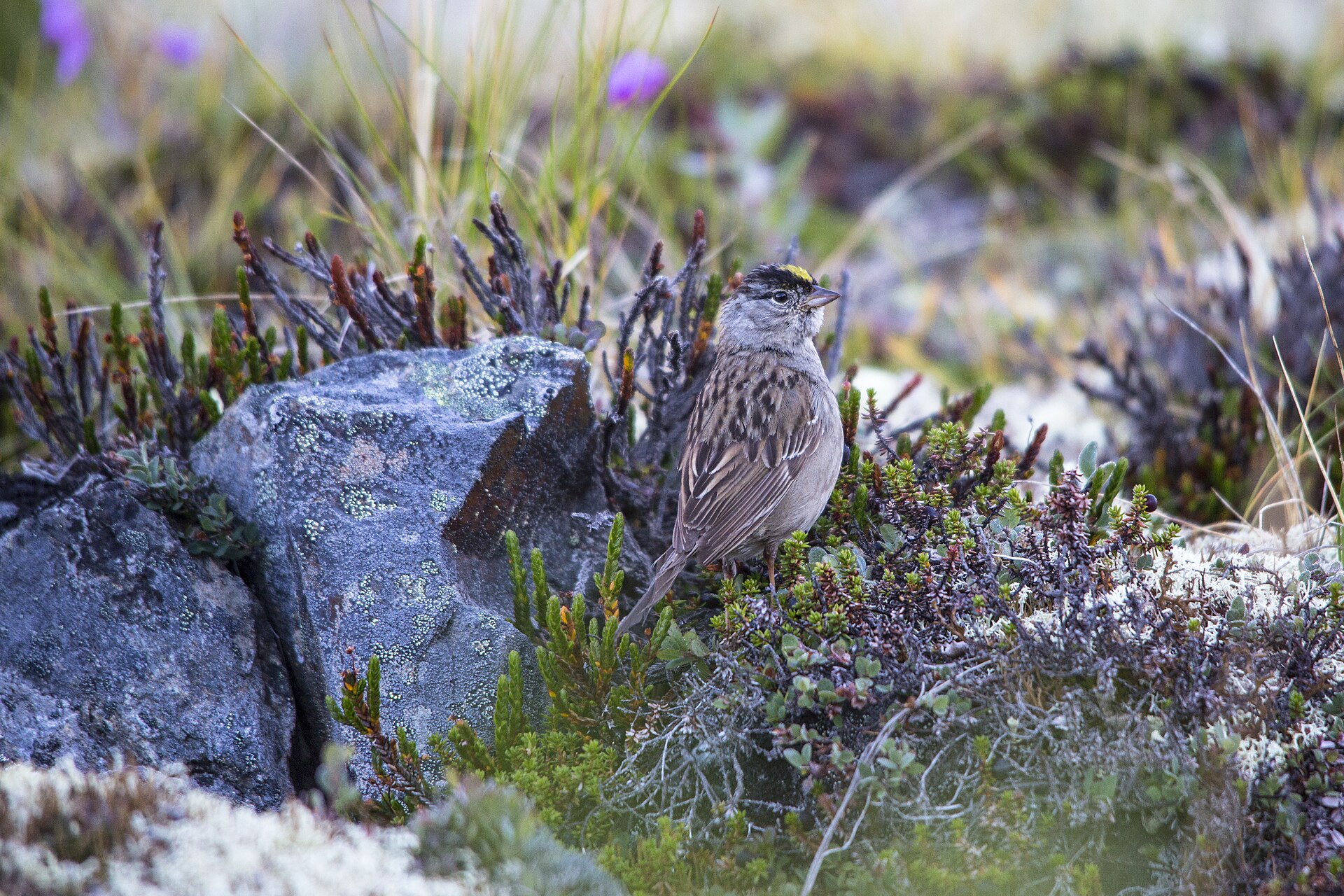
The Golden-crowned Sparrow is a large sparrow that winters in western Oregon, arriving in September and leaving in April or early May. Adults have a golden-yellow crown stripe bordered by thick black stripes and a gray face, while younger birds are duller. Their mournful, three-note whistled song, often remembered as “oh dear me,” is a distinctive sound of Oregon winters and early spring. Golden-crowned Sparrows forage on the ground in flocks, often with White-crowned Sparrows, and they visit feeders for millet and mixed seed scattered under shrubs.
Sandhill Crane
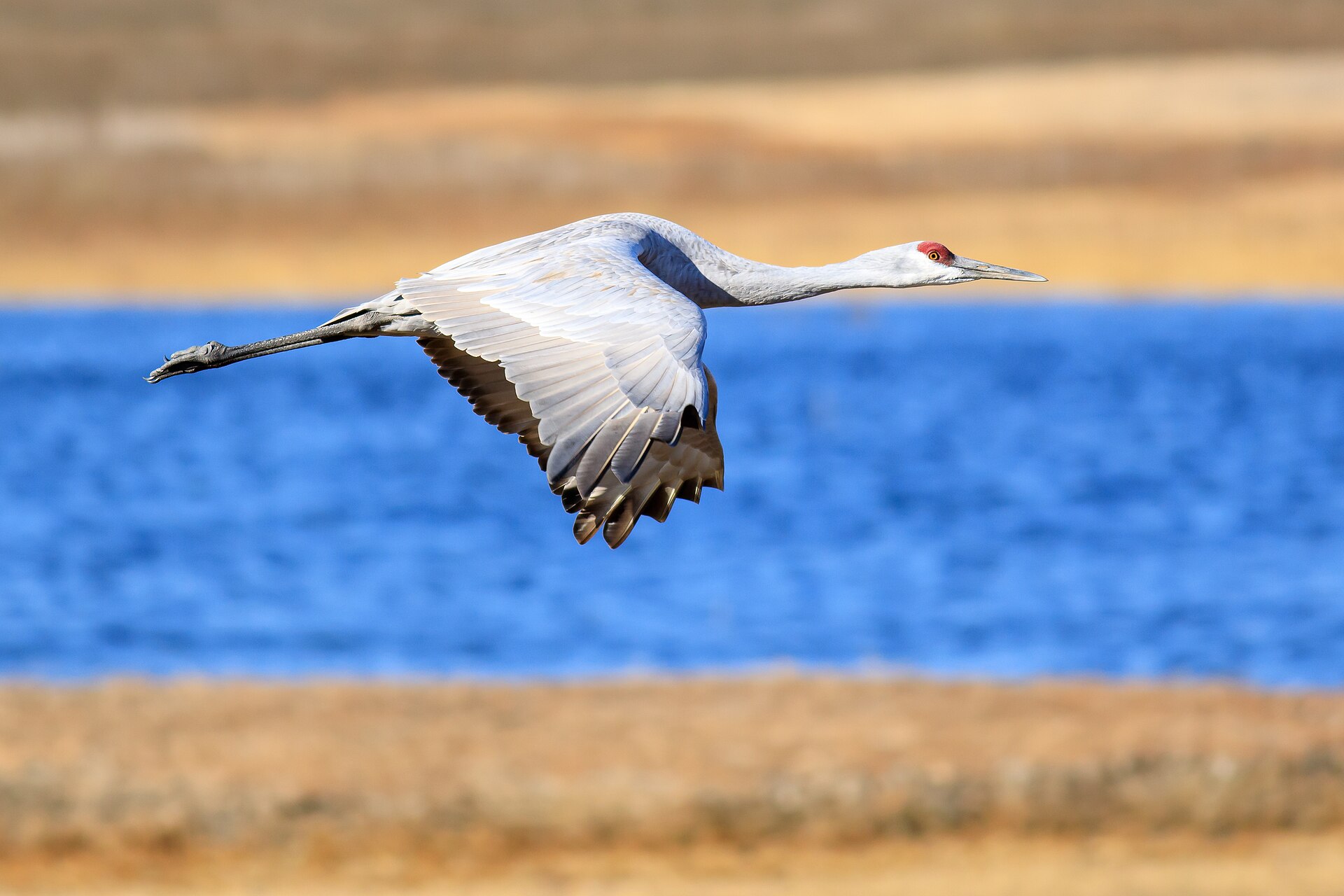
Sandhill Cranes are tall, gray birds with red foreheads, long necks, and long legs, and their rattling, bugling calls carry for miles. In Oregon, they breed in eastern wetlands and meadows, including the Malheur and Klamath regions, and large numbers migrate through in spring and fall. Sauvie Island near Portland and the Willamette Valley host wintering flocks, and Malheur’s spring gatherings are a highlight of the Harney County Migratory Bird Festival. Cranes perform elaborate dances, leaping, bowing, and tossing vegetation, which strengthen pair bonds and are a spectacular sight in the spring marshes.
Getting Started
A covered hopper or tube feeder with black oil sunflower, a suet cake, a nyjer feeder for goldfinches, and a hummingbird feeder kept up year-round will bring in most of the common west-side species. Scatter millet or mixed seed under shrubs for juncos, towhees, and Golden-crowned Sparrows. East of the Cascades, open water and ground feeding for quail matter more. Keep feeders clean and dry, and plant native shrubs to provide shelter and natural food. A small brush pile in a corner of the yard gives sparrows and towhees extra cover.
Beyond the backyard, Oregon offers a wide birding year: cranes and waterfowl at Malheur in spring, puffins and seabirds on the coast in summer, migrant songbirds and shorebirds in fall, and eagles, geese, and wintering sparrows in the valleys. With three very different landscapes, the state rewards people who travel and explore beyond the yard.
Sources
Species identification, range, and behavior details are cross-checked against the Cornell Lab of Ornithology’s All About Birds, the National Audubon Society, eBird’s Oregon regional data, and the Oregon Department of Fish and Wildlife.