Backyard Birds in Michigan: A Field Guide to the Species at Your Feeder
Michigan is two states pretending to be one, and its birds make that obvious fast. A feeder in suburban Detroit in January looks a lot like one in Ohio: cardinals, titmice, a Red-bellied Woodpecker hammering at the suet. Drive five hours north, cross the Mackinac Bridge, and a feeder in the Upper Peninsula might have Evening Grosbeaks, Pine Siskins, and a Canada Jay working the woodpile, with snow on the ground until April. Wrap both halves in more freshwater shoreline than any other state in the country, and the result is a place where a single backyard list can shift a good deal depending on which side of the Straits it was written on.
Water on three sides, forest on top
Almost everything about birding in Michigan comes back to the Great Lakes. Lakes Michigan, Huron, Superior, and Erie border the state, and migrating songbirds, hawks, and waterbirds that do not like crossing open water get funneled along the shorelines and around the ends of peninsulas. That is why places like Tawas Point on Lake Huron and Whitefish Point on Lake Superior can fill up with birds on a good May morning while inland woods a few miles away feel quiet. The southern Lower Peninsula is farm country with hardwood woodlots, river corridors, and a lot of suburbs. Heading north, the land turns sandy and piney, and by the Upper Peninsula it is largely boreal-edged forest of spruce, fir, aspen, and northern hardwoods, with far more trees than people.
The state bird: the robin on the lawn
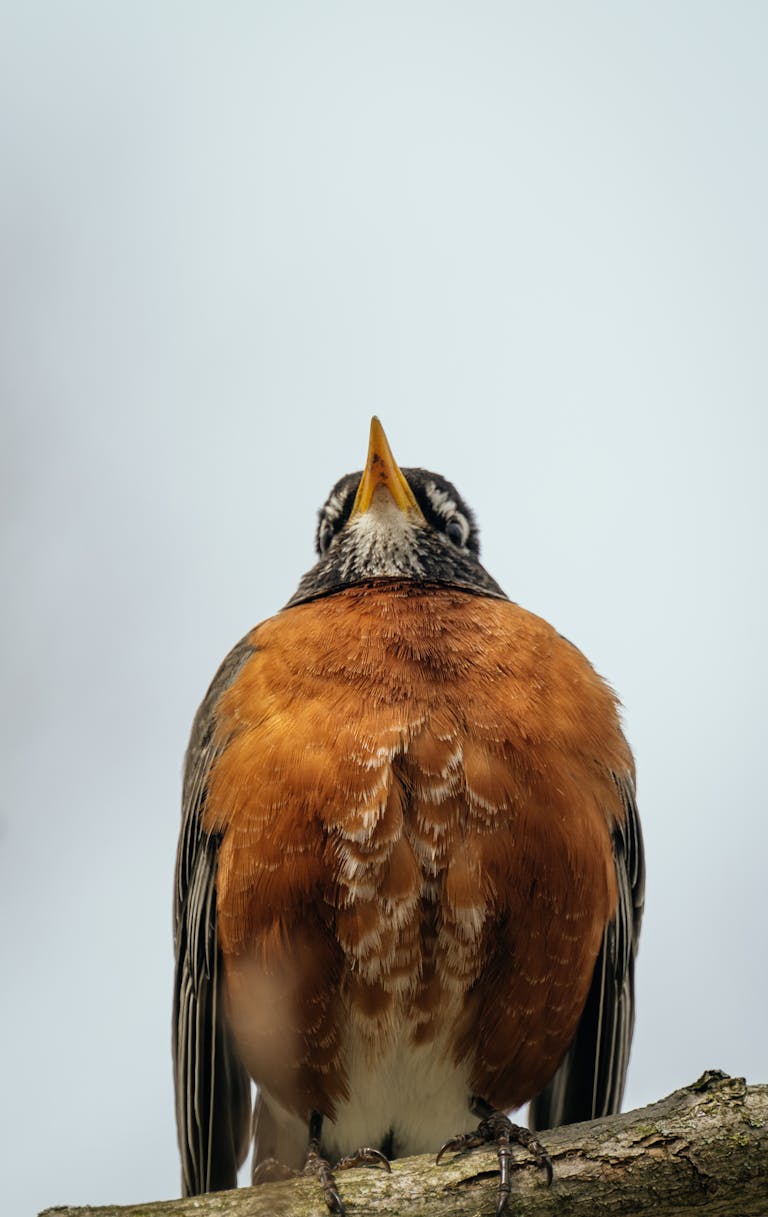
Michigan named the American Robin its state bird in 1931, after a vote that was partly a popularity contest, and it is hard to argue with the choice. Robins nest in nearly every town in the state, sing before dawn from April through July, and are the bird most people picture when they think about spring arriving. What surprises a lot of Michiganders is that plenty of robins never leave. They stop singing, gather in flocks, and move into wooded areas and neighborhoods with fruiting trees such as crabapple, mountain ash, and hawthorn, so they seem to vanish for the winter when they have only changed their habits. The “first robin of spring” in March is often just a robin that has come back out onto the lawn.
Common feeder visitors
Across the southern half of the state, a typical winter feeder draws Black-capped Chickadees, Northern Cardinals, Blue Jays, White-breasted Nuthatches, Downy and Hairy Woodpeckers, Red-bellied Woodpeckers, American Goldfinches, House Finches, Dark-eyed Juncos, and Mourning Doves, with Tufted Titmice getting more common the farther south a yard sits. North of roughly Clare and Gladwin, Red-breasted Nuthatches become regular, titmice and cardinals thin out, and in some winters Pine Siskins, Common Redpolls, and Evening Grosbeaks arrive in numbers. Spring changes the mix again. Rose-breasted Grosbeaks show up in early May, Ruby-throated Hummingbirds return about the same time, and orioles come to oranges and grape jelly for a few weeks before they settle into nesting.
Beyond the backyard: cranes, raptors, and a warbler that came back
Two of the best birding spectacles in the state happen in fall and spring, and neither requires special gear. In October, thousands of Sandhill Cranes gather at night roosts in south-central Michigan, most famously around the Baker Sanctuary near Bellevue, which was Michigan Audubon’s first sanctuary. The cranes fly in at dusk calling in rolling, wooden-sounding bugles, and Michigan Audubon holds a CraneFest nearby to mark it. In spring, Whitefish Point in the eastern Upper Peninsula becomes one of the better hawk and owl migration sites in the Midwest, with raptors piling up at the tip before crossing Lake Superior into Canada.
Then there is the Kirtland’s Warbler, which may be the most Michigan bird of all. It nests almost entirely in young jack pine stands in the northern Lower Peninsula, and by the early 1970s the population had fallen to fewer than 200 singing males. Decades of habitat management, including planting and harvesting jack pine on a rotation and controlling Brown-headed Cowbirds that parasitized the warbler’s nests, brought the species back far enough that it was removed from the federal endangered species list in 2019. It still depends on active management, and seeing one singing from a knee-high pine near Grayling or Mio in June is a pilgrimage for a lot of birders.
A note on native plants
For birds, a Michigan yard with serviceberry, native dogwoods, winterberry holly, and a few oaks will do more over a year than any feeder. Oaks in particular support hundreds of caterpillar species, and caterpillars are what chickadees, warblers, and grosbeaks feed their young in June. Leaving coneflower and goldenrod standing through winter gives goldfinches and juncos seed heads to pick at, and a brush pile at the back of the lot will hold sparrows, wrens, and cardinals on a cold morning. Crabapples are worth planting too, mostly because they give those overwintering robins and the occasional flock of Cedar or Bohemian Waxwings a reason to stop.
Winter Feeding Notes
A Michigan winter is long, and in the north it is serious. Black oil sunflower is the backbone of any feeder here, and suet matters more than it does in milder states because woodpeckers, nuthatches, and chickadees are burning through fat reserves every night. A heated birdbath is one of the best additions a northern yard can make, since open water can be scarcer than food from December to March. Evening Grosbeaks are erratic: in some winters a Marquette or Houghton feeder will have dozens, and in others none at all, depending on cone and seed crops across Canada. When they do come, they eat sunflower at a remarkable rate and can empty a hopper by noon. Keep feeders clean, and if sick-looking finches appear, take the feeders down for a couple of weeks and scrub them before putting them back up.
American Robin
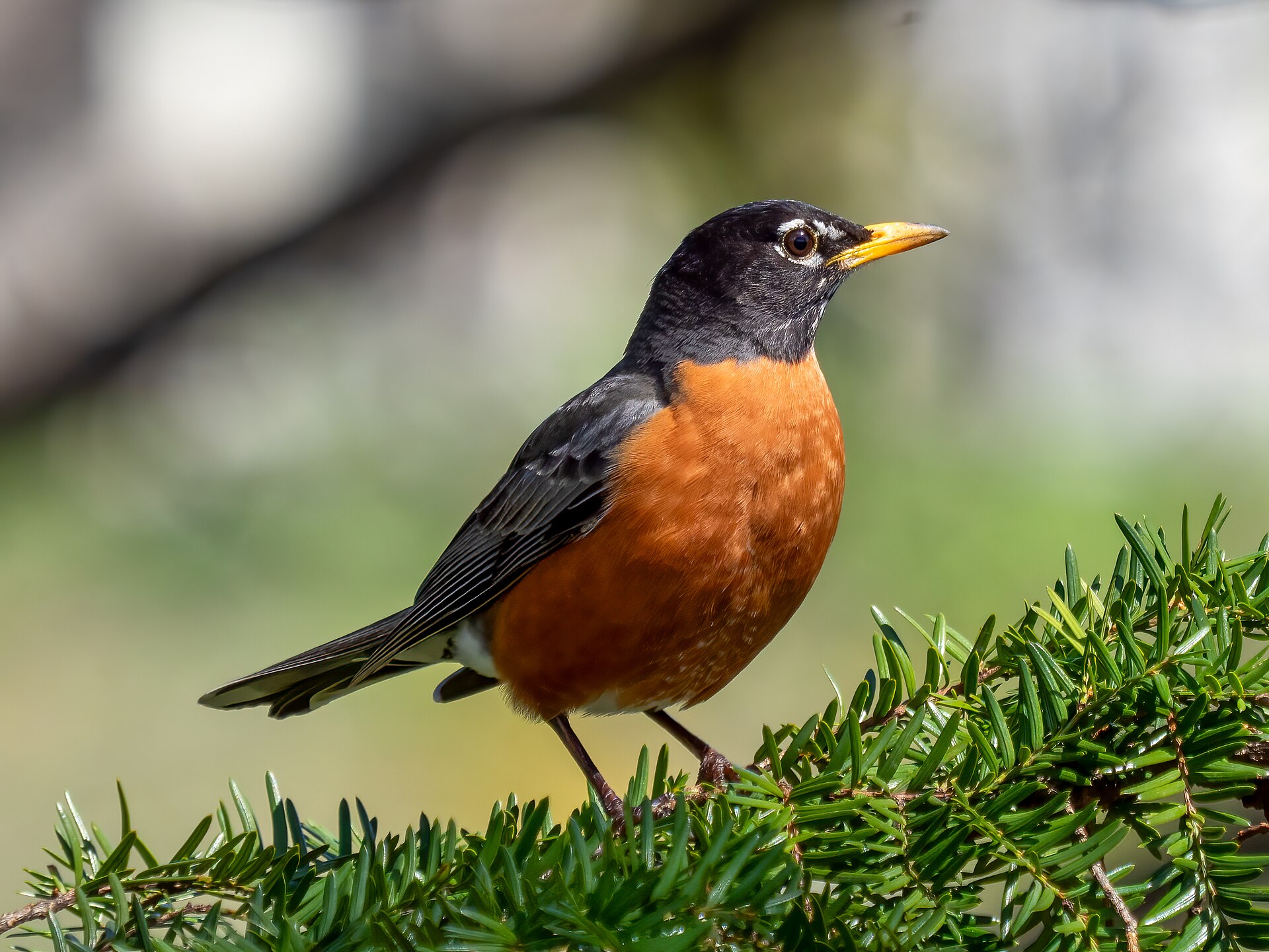
Michigan’s state bird is a big thrush with a brick-orange breast, a gray-brown back, and a yellow bill, and it is one of the most familiar birds in the state. Robins run across lawns in short bursts, stop with the head cocked, and pull up earthworms, and that tilt is about looking, not listening. They build mud-lined cup nests in trees, on porch lights, and under eaves, and pairs often raise two or three broods between April and August. Robins rarely eat seed, so they are not really feeder birds, but a heated birdbath in winter or a tray of chopped apples and raisins will bring them in. In the Upper Peninsula most leave for the season, while in the south many stay.
Black-capped Chickadee
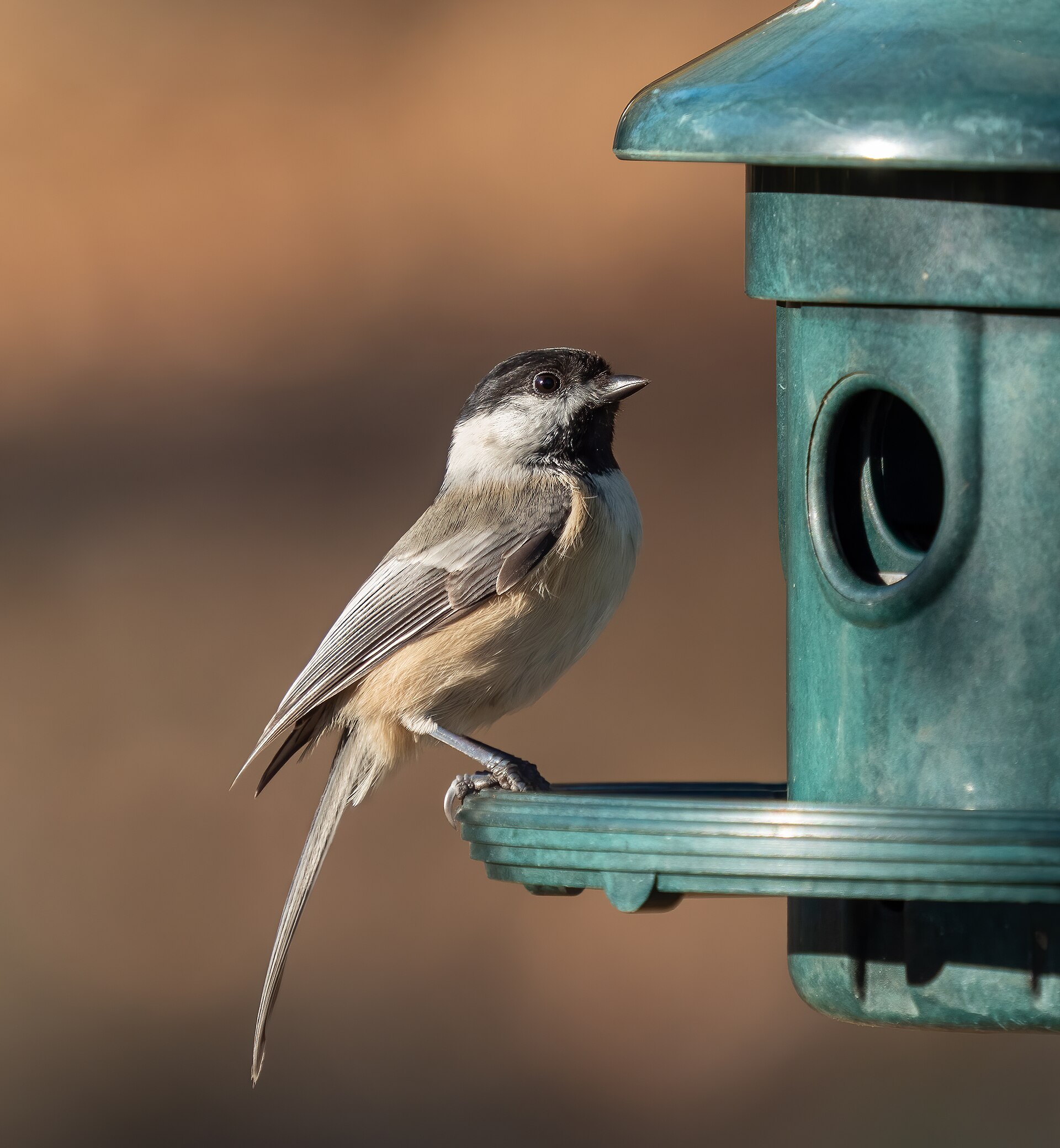
If there is one bird that defines a Michigan feeder, it is probably this one. Black-capped Chickadees are tiny, round, and fearless, with a black cap and bib, white cheeks, and buffy flanks, and they are present in every county all year. They take a single sunflower seed at a time, carry it to a branch, and hammer it open, and they hide thousands of seeds across their territory in fall and remember where they put a surprising share of them. The two-note “fee-bee” song starts on sunny days in late winter. With some patience, and a still hand full of seed, chickadees are one of the few Michigan birds that can be coaxed to land on a person.
Northern Cardinal
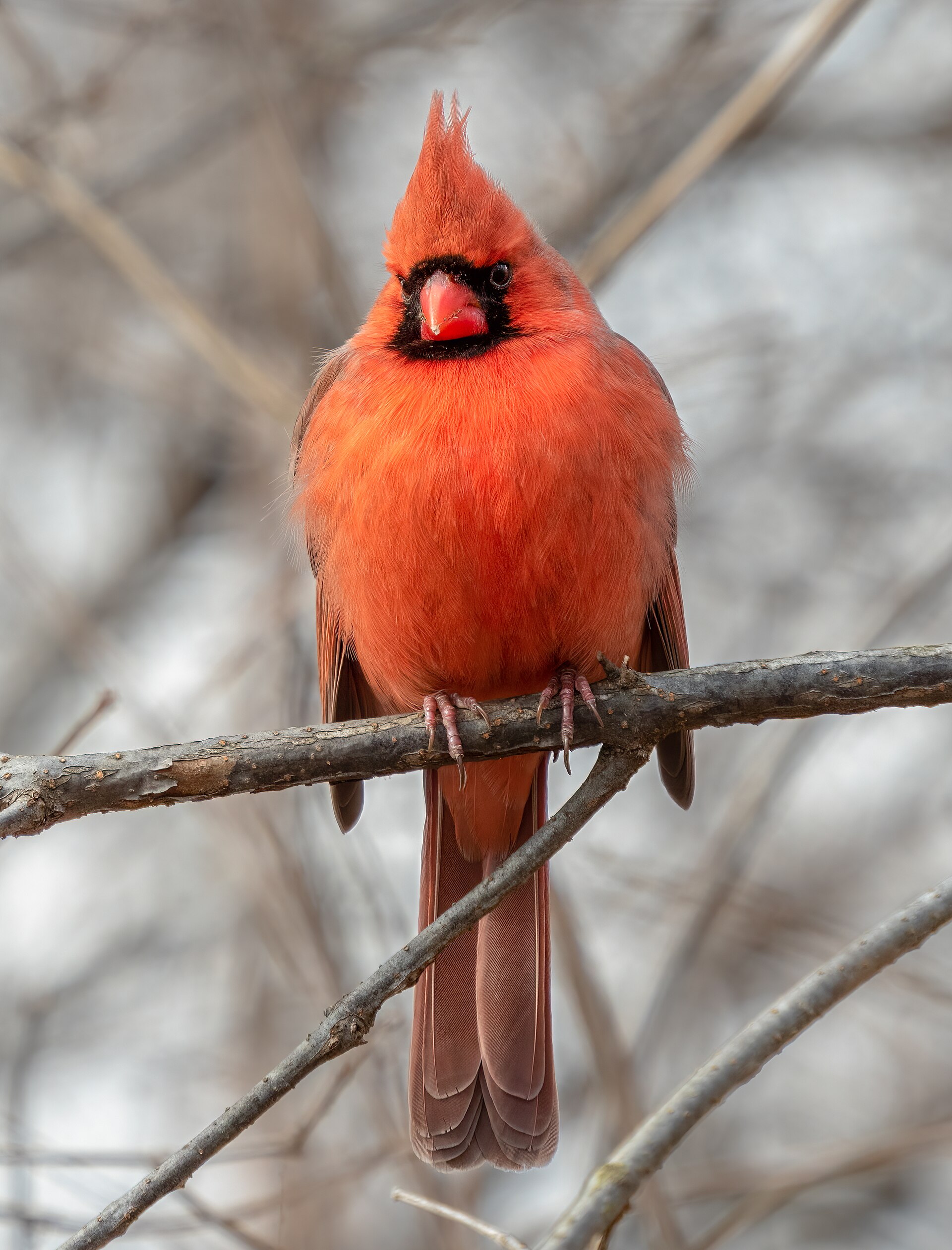
Cardinals were a southern bird a century ago and spread north through Michigan during the 1900s, helped along by suburbs, shrubby edges, and bird feeders. They are now common across the Lower Peninsula and have pushed into parts of the Upper Peninsula, though they get scarcer the farther north a yard sits. Males are bright red with a black face, females a warm tan with red highlights, and both have a thick orange bill. Cardinals like to feed on platform feeders or on the ground, favor sunflower and safflower, and are usually the first birds at a feeder in the morning and the last at dusk. Dense evergreens or shrubs nearby help keep them around.
Blue Jay
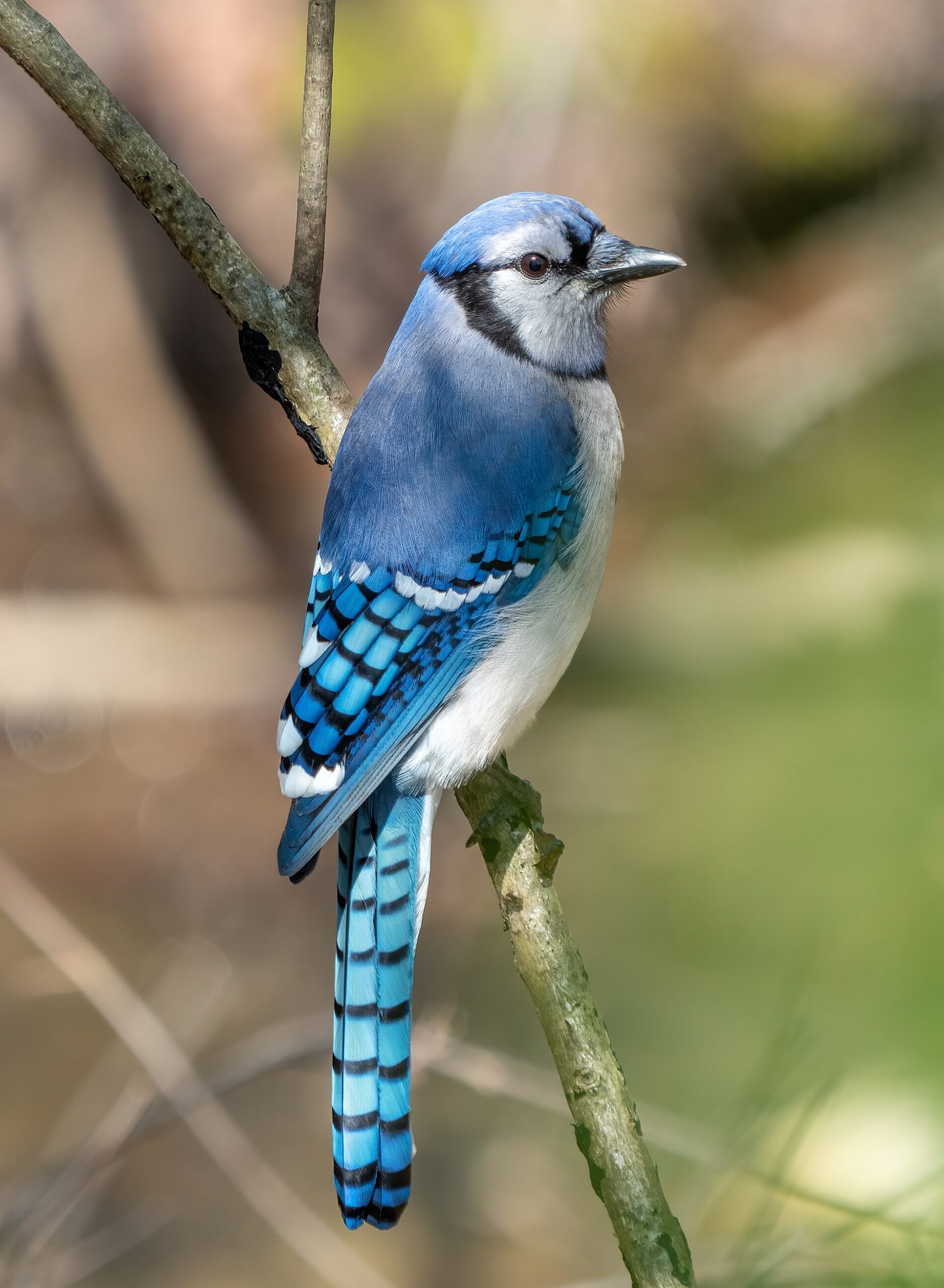
Blue Jays are loud, smart, and easy to spot, with a blue crest, black necklace, and white wing and tail patches. In Michigan they are year-round residents, though some birds migrate, and in late September and early October loose flocks of jays can be seen streaming along the Lake Erie and Lake Huron shorelines. At feeders they favor peanuts in the shell and large sunflower seed and often stuff several into their throat pouch before flying off to cache them. They mimic Red-tailed and Red-shouldered Hawk calls well enough to fool experienced birders. Jays have a reputation as bullies, but they are also the first to sound an alarm when a hawk or cat shows up.
White-breasted Nuthatch
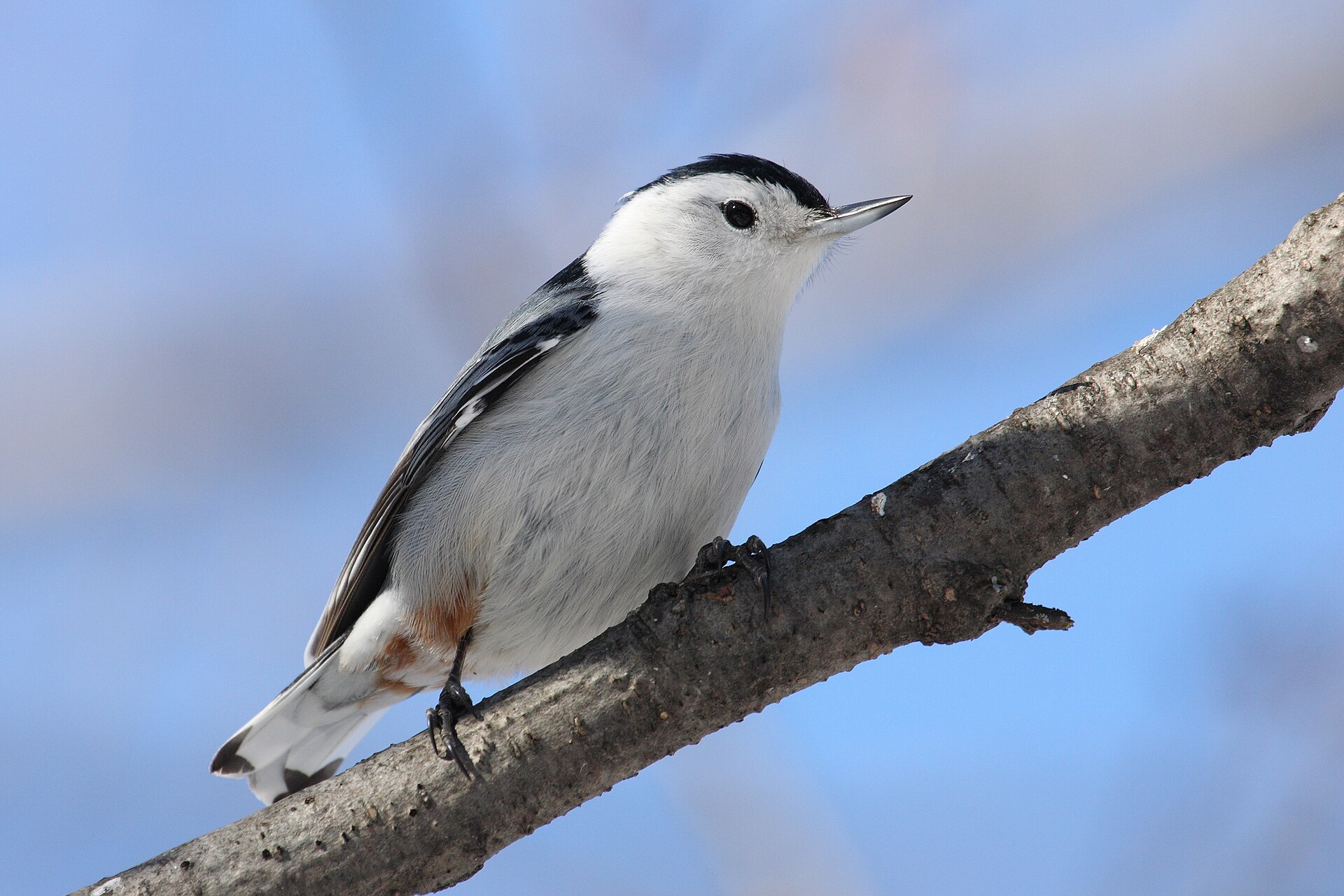
This is the bird that walks headfirst down a tree trunk. White-breasted Nuthatches are blue-gray above, clean white below, with a black cap and a faint rusty wash under the tail, and they give a nasal “yank-yank” call that is one of the most common winter sounds in Michigan woods. They are paired year-round and defend a territory together, so a yard usually has the same two birds coming in day after day. They love sunflower and suet and will also wedge seeds into bark and hack them open with their bill, which is where the name “nut-hatch” comes from. They nest in natural cavities and old woodpecker holes in mature hardwoods.
Red-breasted Nuthatch
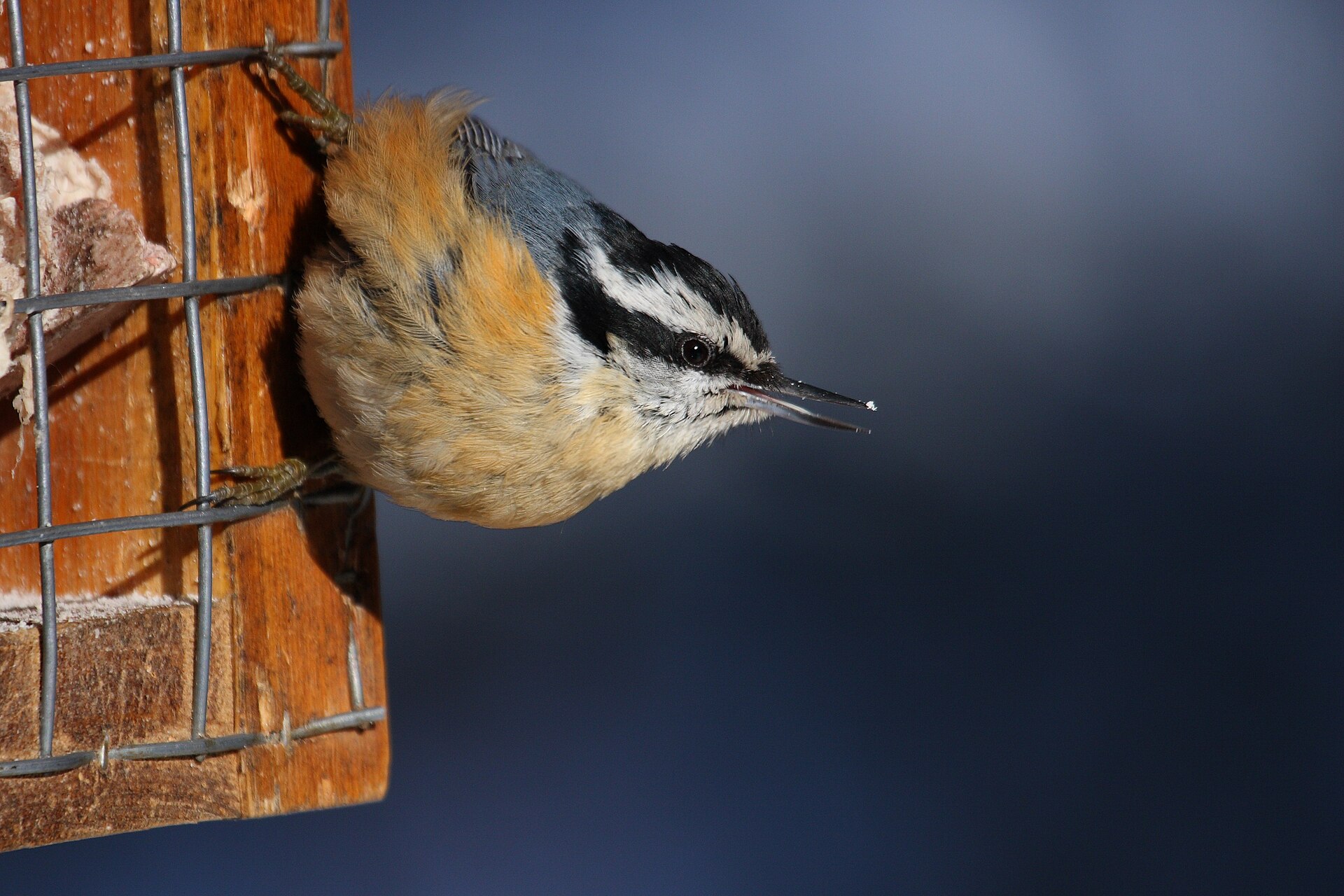
Smaller and busier than its white-breasted cousin, the Red-breasted Nuthatch has a bold black eye stripe, a white eyebrow, and rusty underparts. It is a bird of conifers, common year-round in the northern Lower Peninsula and the Upper Peninsula, and in some winters it moves south in large numbers when the northern cone crop fails, turning up at feeders in Lansing and Ann Arbor. The call is a tinny “ank-ank” that sounds a bit like a toy horn. Red-breasted Nuthatches smear pine resin around the entrance of their nest cavity, apparently to keep out predators and competitors, and they fly straight in to avoid getting stuck themselves.
Downy Woodpecker
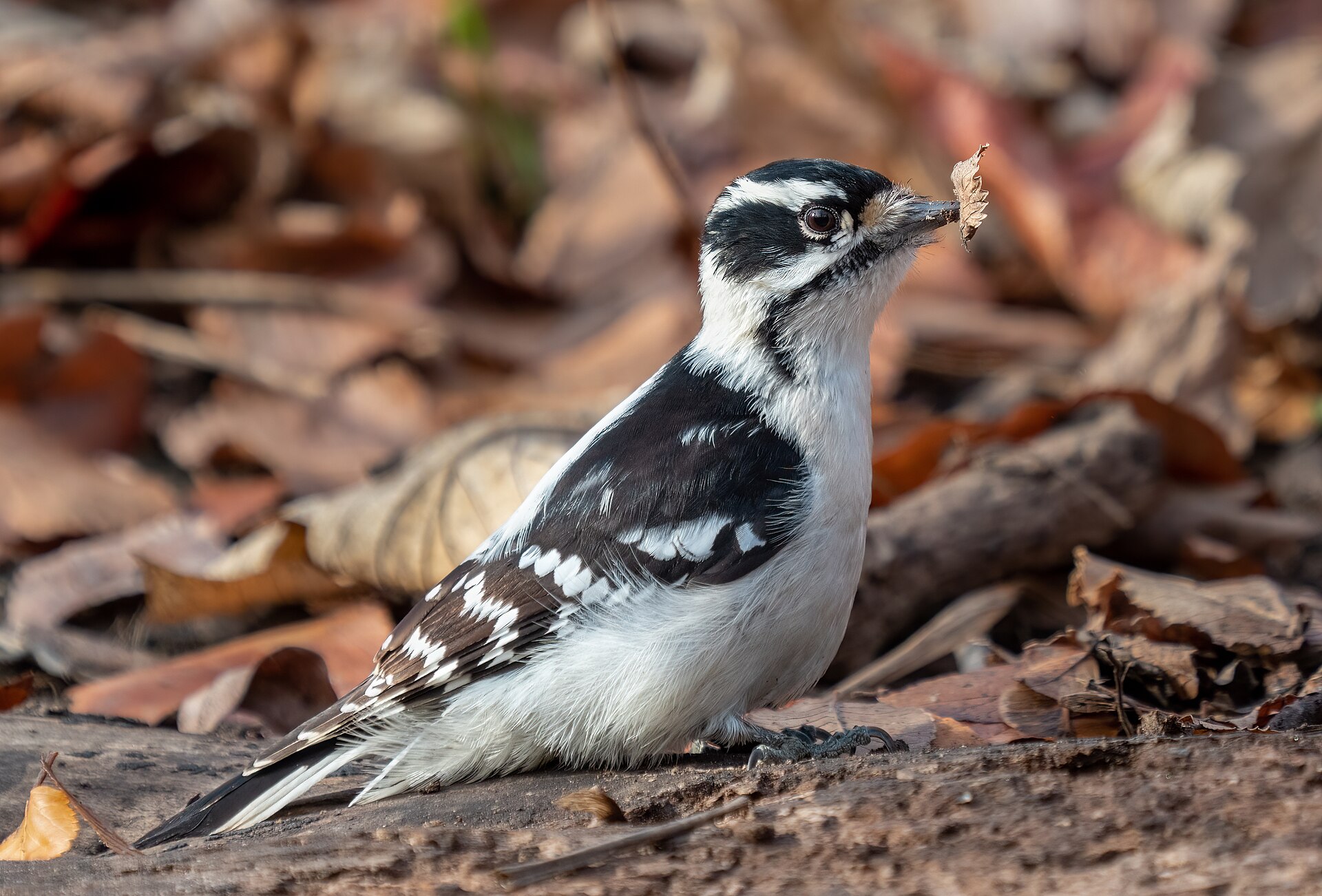
The Downy is the smallest woodpecker in North America and almost certainly the most common one at Michigan feeders. It is black and white with a white stripe down the back, and males carry a small red patch on the back of the head. It looks almost exactly like the larger Hairy Woodpecker, and the best way to tell them apart is the bill: short and stubby on the Downy, nearly as long as the head on the Hairy. Downies take suet, sunflower hearts, and peanuts, and in winter they pick insect larvae out of goldenrod galls and weed stems. They are small enough to use hummingbird feeders in summer if they can manage the perch.
American Goldfinch
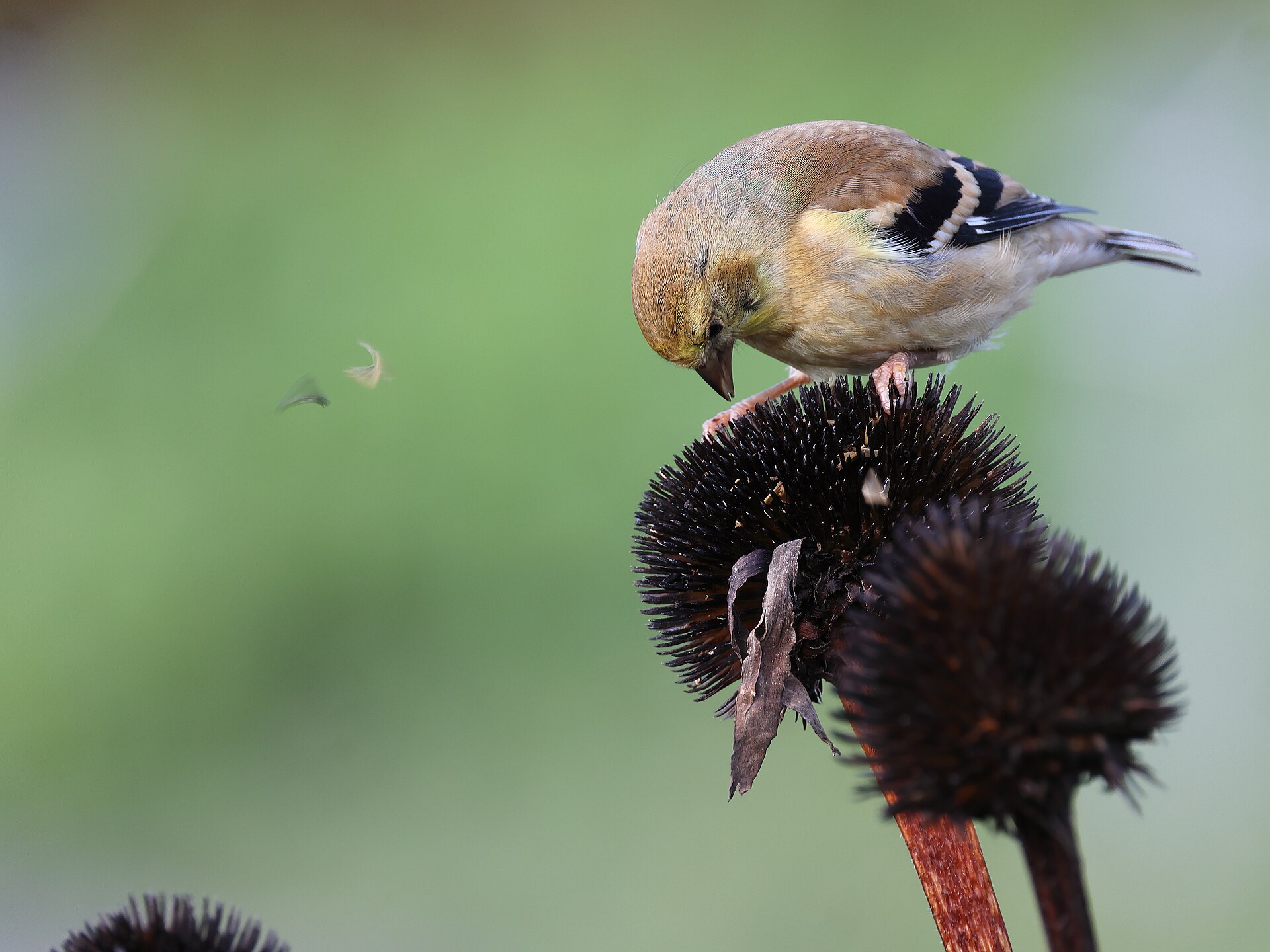
In June a male goldfinch is lemon yellow with a black cap and wings, and in January the same bird is a drab olive-tan that most people would not recognize. Goldfinches molt twice a year and are present in Michigan all year, though winter flocks move around a lot. They nest late, often not until July or August, timing their breeding to the peak of thistle and other seed crops, and they line their nests with thistle down. At feeders they prefer nyjer and sunflower hearts, and a tube with small ports will keep them feeding without much competition from bigger birds. Their bouncing, roller-coaster flight and “po-ta-to-chip” call are easy to learn.
Dark-eyed Junco
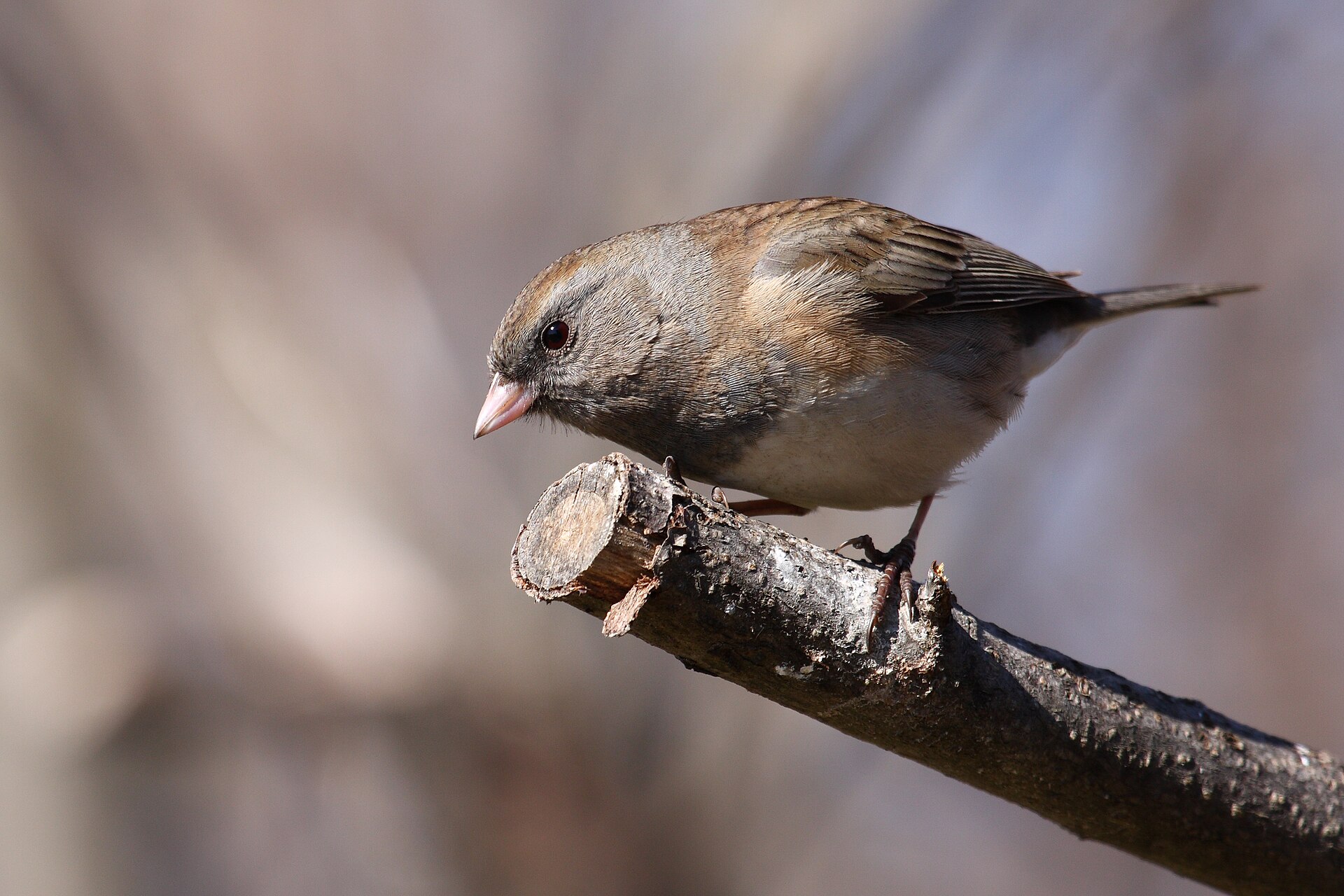
Juncos are the gray, round-headed sparrows that show up under Michigan feeders in October and stay until April, which is why many people call them snowbirds. They are slate gray above with a white belly and flash white outer tail feathers when they fly. Most of the ones at southern Michigan feeders breed in Canada, though juncos also nest in the northern forests of the Upper Peninsula. They prefer to feed on the ground, picking up millet and cracked corn that falls from the feeders above, and they move in small flocks with a clear pecking order. A light scatter of seed under a shrub on a snowy morning can bring in a dozen or more.
Rose-breasted Grosbeak
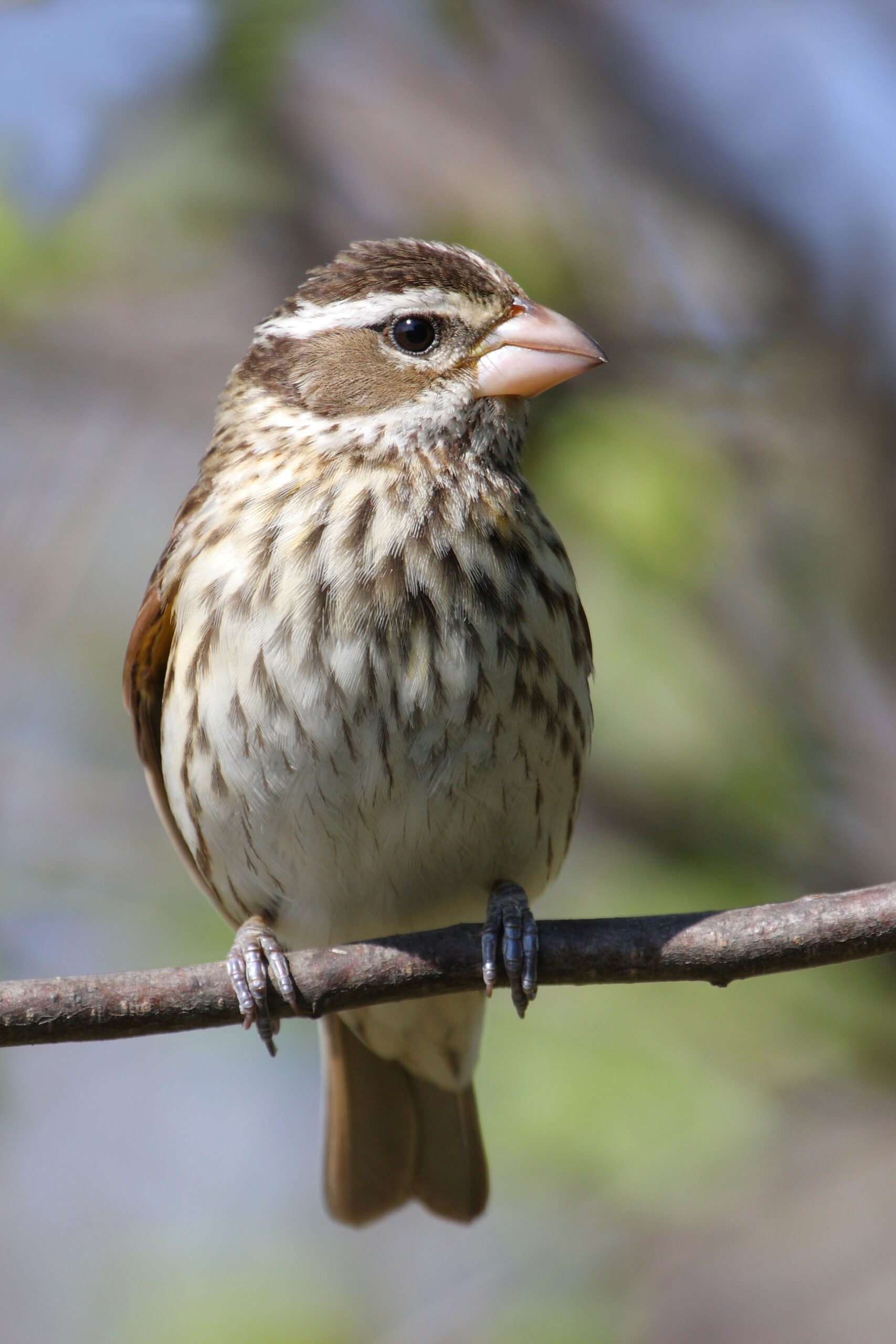
For many Michigan backyard birders, the first male Rose-breasted Grosbeak of spring is the highlight of the year. He is black and white with a bright rose-red triangle on the chest and a big pale bill, and he usually turns up in the first or second week of May. Females are streaky brown with a strong white eyebrow and look like oversized sparrows. Grosbeaks breed in deciduous woods across the state and will visit sunflower feeders through the nesting season. The song is a rich, robin-like warble, often described as a robin that has taken voice lessons, and males share incubation duties, sometimes singing quietly from the nest itself.
Ruby-throated Hummingbird
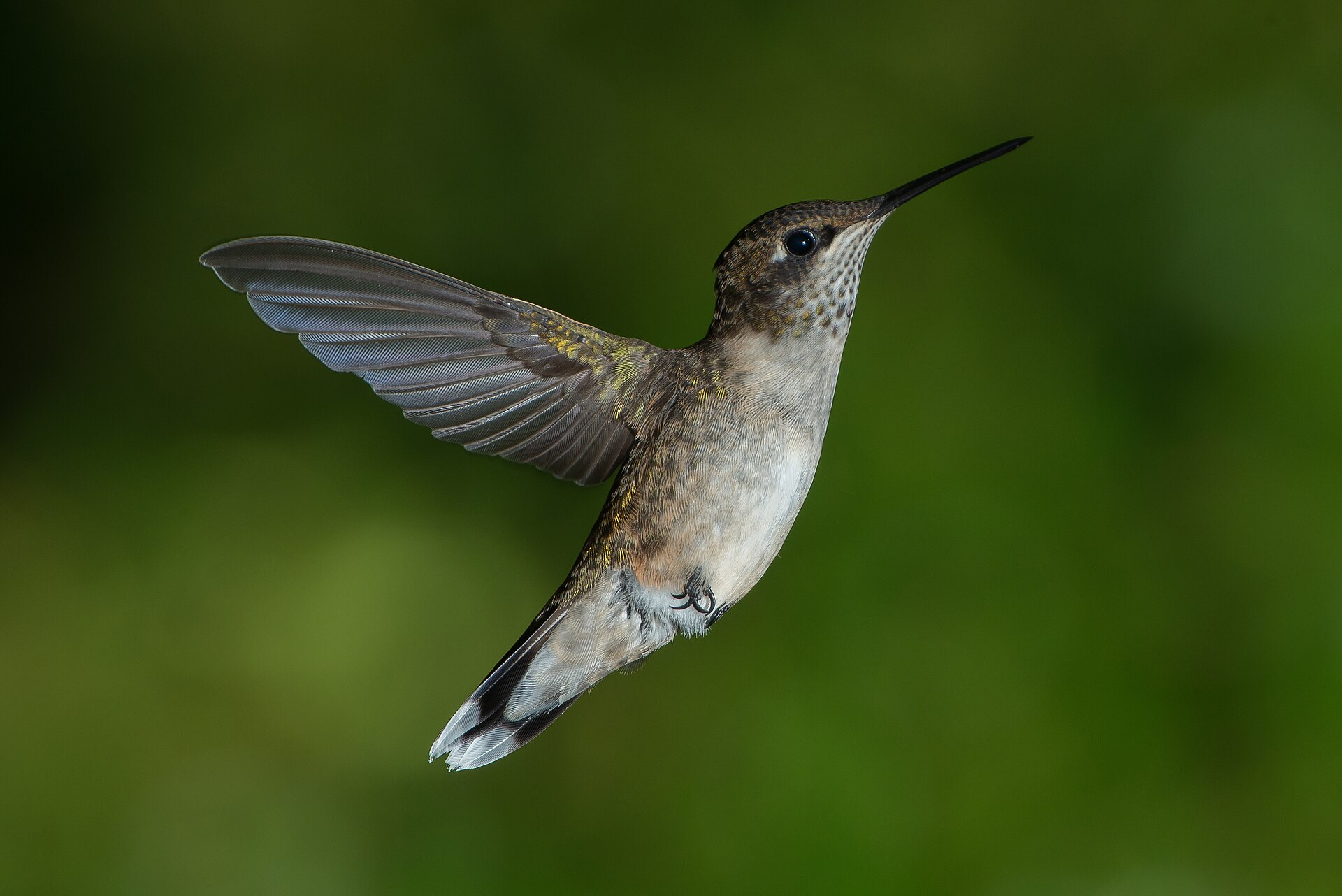
The only hummingbird that breeds in Michigan arrives in late April or early May and leaves by late September. Males have an iridescent throat that looks ruby red in good light and black in shade, while females have white throats. Many of them fly nonstop across the Gulf of Mexico during migration, which is remarkable for a bird that weighs about as much as a penny. A feeder filled with one part white sugar to four parts water, changed every few days in hot weather, will attract them, as will native flowers such as bee balm, cardinal flower, and wild columbine. There is no need for red dye in the nectar.
Evening Grosbeak
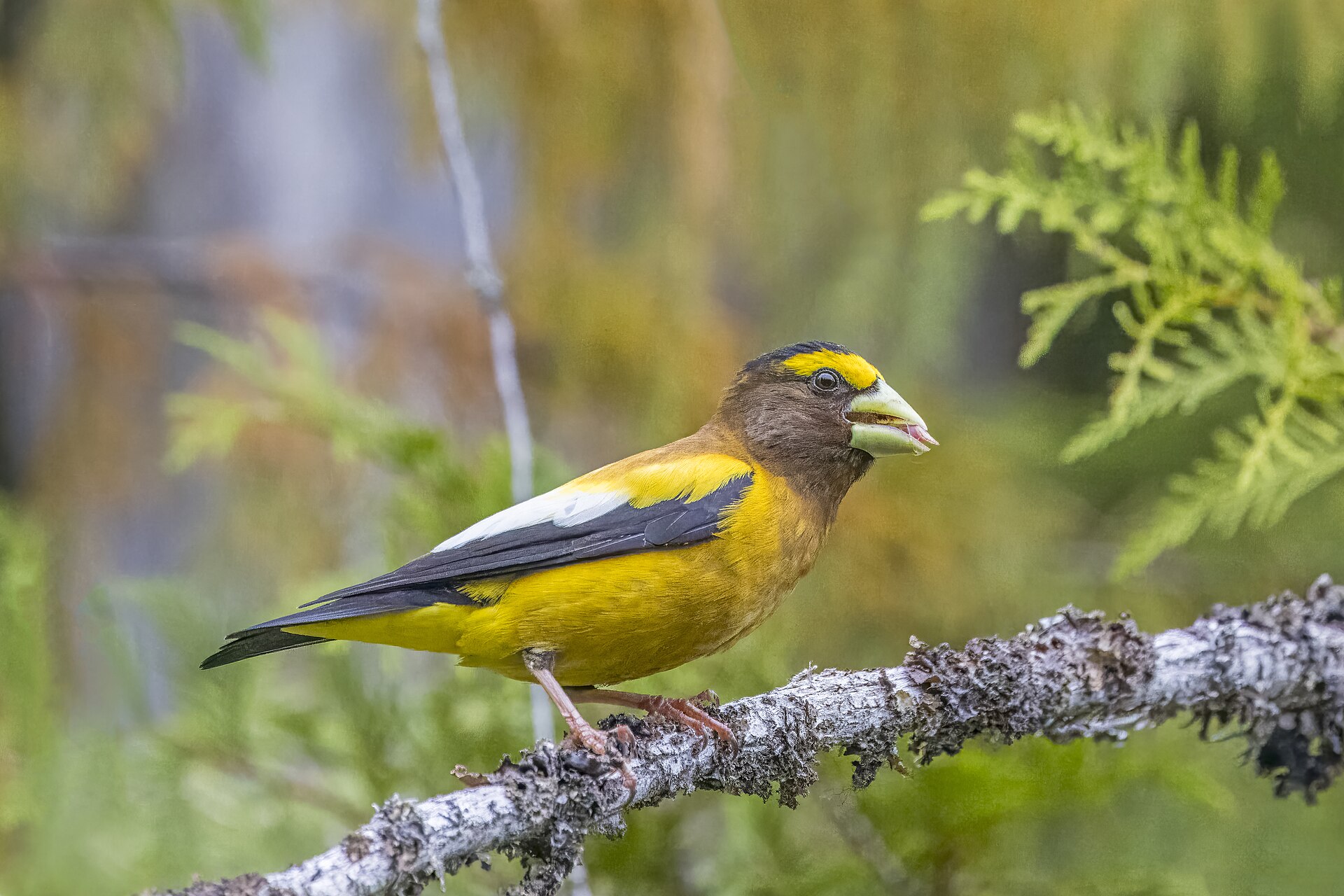
A flock of Evening Grosbeaks at a feeder is hard to forget. Males are mustard yellow and brown with a bold yellow eyebrow, black wings with big white patches, and a pale, heavy bill the color of green ivory. Once a regular winter visitor across much of Michigan, the species has declined steeply across its range since the 1980s, and today it is mostly a bird of the Upper Peninsula and the northern Lower Peninsula, where it still breeds in mixed forest. In irruption years it can wander farther south. Evening Grosbeaks go through black oil sunflower at a rate that surprises people, and they are noisy, sociable, and very much worth the cost.
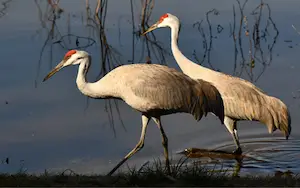
Sandhill Crane
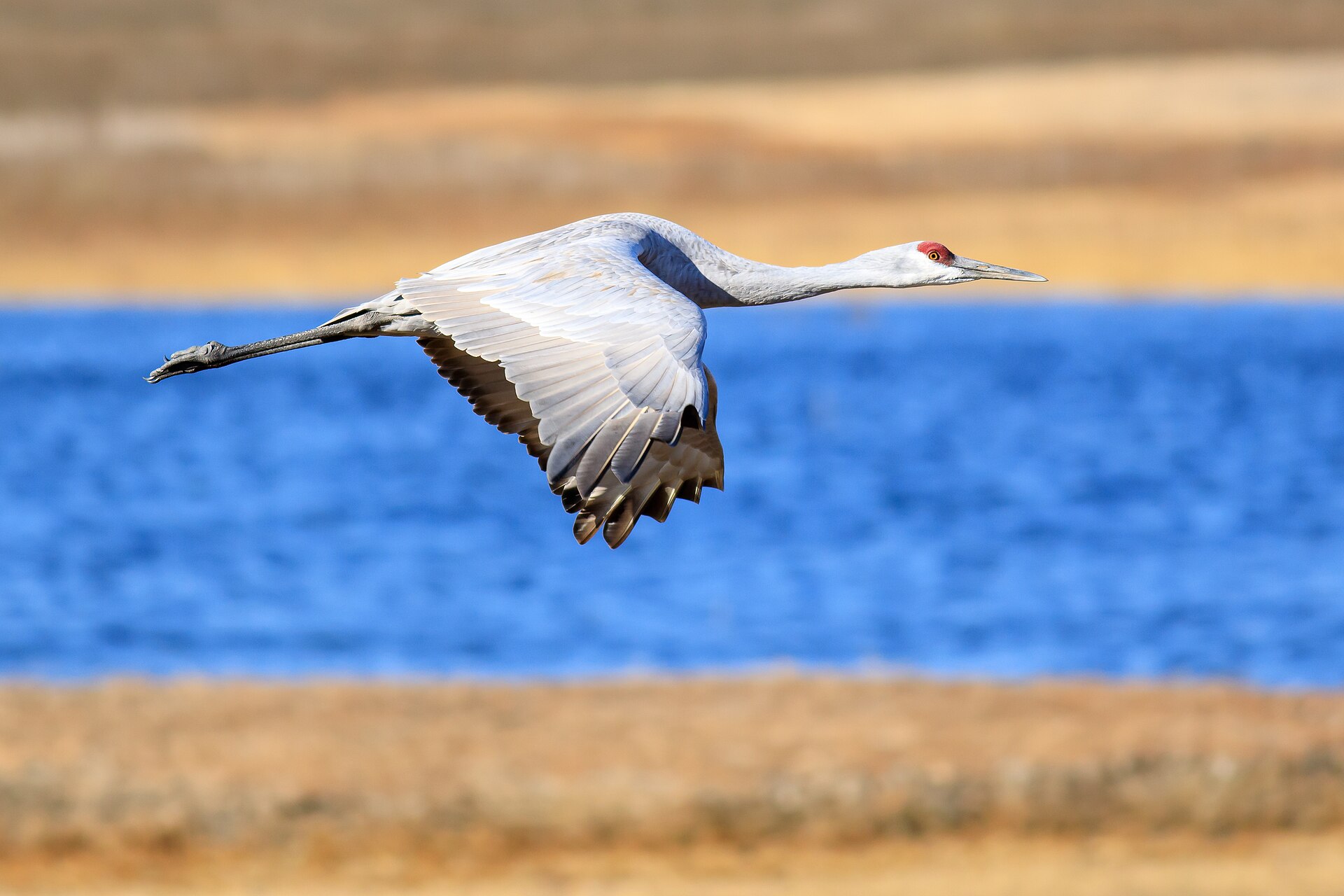
Sandhill Cranes are tall, gray birds with a red forehead patch, often stained rusty from preening with iron-rich mud. They were rare in Michigan in the early 1900s and have made a strong comeback, now nesting in wetlands and wet fields across much of the state. Pairs call together in loud, rattling duets that carry for more than a mile, and in fall they gather in large flocks before migrating south. Cranes are not feeder birds, but they occasionally wander into rural and suburban yards to eat spilled grain, and feeding them is discouraged because it makes them bold around people and roads. The October staging near Bellevue is the best place to see them in numbers.
Kirtland’s Warbler
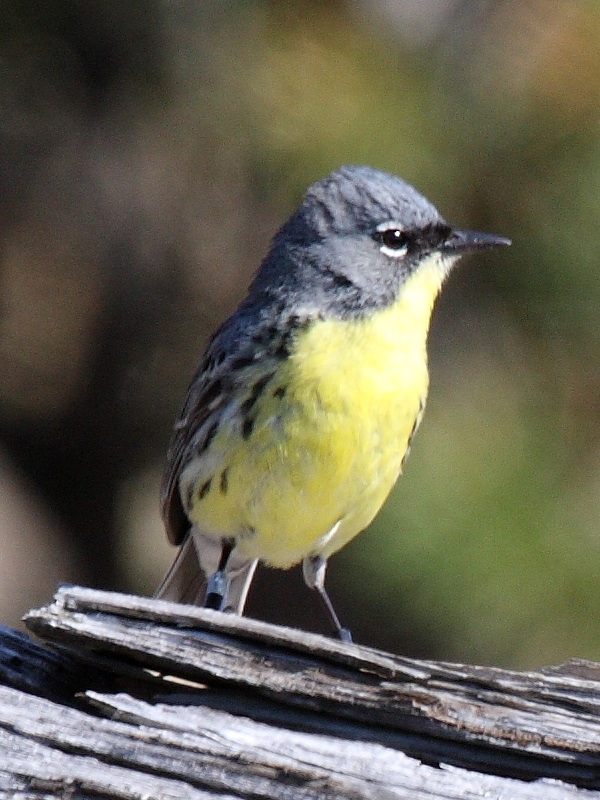
The Kirtland’s Warbler is a gray-backed, yellow-breasted songbird with a broken white eye-ring and a habit of pumping its tail, and it is one of the rarest and most particular nesters in North America. It breeds almost only in dense stands of young jack pine, roughly 5 to 20 years old, growing on sandy soil in the northern Lower Peninsula, with smaller numbers now in the Upper Peninsula, Wisconsin, and Ontario. It winters in the Bahamas. This is not a backyard bird, but it belongs in any honest list of Michigan birds because the state’s conservation work is the reason it still exists. Guided tours near Grayling in late spring are the respectful way to see one.
Getting Started
For most Michigan yards, a tube or hopper feeder with black oil sunflower, a suet cage, and a nyjer feeder will cover the core birds: chickadees, nuthatches, woodpeckers, cardinals, jays, and goldfinches. Add a ground tray or a light scatter of millet for juncos and sparrows, a hummingbird feeder from late April to late September, and an orange half for orioles in May. Put feeders within about ten feet of cover or right up against a window to reduce collisions, and plan on a heated birdbath if the yard is north of Grand Rapids or Saginaw, where water can be scarce for months.
Timing matters more in Michigan than in most places. The best week of the year for many backyard birders is somewhere in the middle of May, when grosbeaks, orioles, hummingbirds, and the first warblers all land within days of each other. October brings sparrows, kinglets, and the crane flights. In the north, winter is the season to watch for finches, and in a good year a feeder in the Upper Peninsula can have birds that people in Detroit may go years without seeing.
Sources
Species identification, range, and behavior details are cross-checked against the Cornell Lab of Ornithology’s All About Birds, the National Audubon Society, eBird’s Michigan regional data, and the Michigan Department of Natural Resources.