Backyard Birds in Arizona: A Field Guide to the Species at Your Feeder
Visitors to Tucson are sometimes woken before sunrise by a sound that resembles a small dog barking somewhere in the yard. It usually turns out to be a Gambel’s Quail, perched on top of a saguaro’s dead arm and sounding off to the rest of the covey scattered below. The sound rarely matches what people picture when they think “desert,” and that mismatch between expectation and reality is basically the whole story of Arizona backyard birding.
Arizona has one of the longest bird lists of any state in the country, which surprises people who assume desert means empty. It doesn’t. It means a different, in many ways richer, set of birds than almost anywhere else in the US.
Why Arizona has such an unusual bird list
The state’s elevation range does most of the work — from below 100 feet in the low desert near Yuma to over 12,000 feet on the San Francisco Peaks, with “sky island” mountain ranges rising out of the desert floor like isolated forested peaks surrounded by a sea of cactus and scrub. Each sky island supports species you’d expect in the Rockies or even Canada, stranded on mountaintops hundreds of miles from where that habitat is continuous. Add the summer monsoon, which triggers a second breeding season for some desert species, and Arizona’s bird community behaves less like a single state and more like several stacked on top of each other.
The state bird: Cactus Wren
Arizona’s choice reflects its landscape directly — the Cactus Wren is North America’s largest wren, and it builds football-sized, football-shaped nests wedged deep into the spiniest parts of cholla cactus, using the plant’s own defenses as protection from predators. Its call is a harsh, mechanical-sounding chatter, often compared to a car engine that won’t quite turn over, and it’s one of the most vocal, visible birds in any Sonoran Desert backyard.
Regulars at an Arizona feeder
Gambel’s Quail
A desert quail with a distinctive forward-curving head plume, usually moving through yards in coveys of a dozen or more rather than alone. Chicks can leave the nest and start feeding themselves within hours of hatching, a strategy that works well in a landscape where standing around too long tends to attract predators.
Curve-billed Thrasher
A gray-brown bird with a sharply downcurved bill built for flipping over debris and probing soil for insects, and a loud “whit-wheet” call that carries across a desert yard. It’s one of the most consistently present birds in Sonoran Desert landscaping, at home in the same spiny cholla and prickly pear that most other species avoid.
Verdin
One of the smallest birds in North America, a tiny gray bird with a yellow head, building distinctive ball-shaped stick nests that it uses year-round — one for breeding, and separate ones purely for roosting overnight, an unusual level of nest-building effort for a bird that weighs about as much as a few paperclips.
House Finch
Present across the state at nearly every elevation people live at, and especially reliant on backyard water sources during the driest, hottest stretches of an Arizona summer.
More hummingbird species than anywhere else in the US
Arizona hosts more hummingbird species than any other state, largely because of its position at the northern edge of ranges that are mostly Mexican and Central American. Southeastern Arizona’s canyons, especially around places like Madera Canyon and the Chiricahua Mountains, regularly turn up 10 or more species in a single season — Anna’s Hummingbird and Broad-billed Hummingbird are common in Phoenix and Tucson backyards year-round or during migration, while rarer specialties draw birders from across the country to the state’s southeastern corner specifically to see them.
Woodpeckers built for cactus, not trees
Gila Woodpecker
A desert woodpecker that excavates its nest cavity directly into the trunk of a saguaro cactus rather than a tree. The cactus seals the wound with scar tissue, forming a hardened cavity called a “saguaro boot” that can outlast the cactus itself and gets reused by a whole chain of other species — owls, flycatchers, and more — long after the original woodpecker moves on.
An owl small enough to fit in your hand
Elf Owl
The smallest owl in the world, barely larger than a sparrow, and a species that depends almost entirely on old Gila Woodpecker cavities in saguaros for nesting. It arrives in Arizona each spring, hunts insects almost exclusively, and is covered in more depth along with the state’s other nighttime callers in the guide to night bird sounds and the Arizona night birds guide.
Birds of prey, including a social hunter
Arizona’s raptors are covered in the Southwestern birds of prey guide, and the state’s hawks with distinctively marked tails get their own coverage in the guide to hawks with striped tails.
Harris’s Hawk
One of the only raptor species in the world known to hunt cooperatively in family groups, sometimes flushing rabbits with a coordinated approach more typical of pack-hunting mammals than birds. Common across the Sonoran Desert, it’s frequently seen perched in stacks — multiple birds standing on top of one another on a single saguaro or utility pole.
The bird everyone already knows the name of
Greater Roadrunner
Arizona’s most culturally famous bird, and mostly accurate to its cartoon reputation as a fast, ground-dwelling hunter — roadrunners can reach speeds around 20 miles per hour chasing lizards, snakes, and even small rattlesnakes across open desert. Unlike most desert birds trying to conserve water, roadrunners have a gland near their eyes that excretes excess salt, letting them get more of their water needs directly from prey rather than drinking.
What this means for backyard birding in Arizona
Setting Up a Desert-Friendly Backyard
Feeding birds in Arizona comes with a few problems most feeder guides don’t cover, because most feeder guides aren’t written for 110-degree summers. Sugar water for hummingbirds ferments fast in the heat — plan on changing it every two to three days in summer, even if the feeder still looks full, or you risk feeding birds spoiled nectar. Seed can go rancid faster too, so smaller feeders refilled more often beat one giant hopper that sits half-full for weeks. Water matters more here than almost anywhere else in the country; a shallow birdbath, kept clean and refreshed, will often pull in more species than any feeder, especially from late spring through the worst of summer when natural water sources dry up. Placing feeders and baths near mesquite, palo verde, or any structure with real shade gives birds somewhere to retreat between visits, and it keeps you from watching an empty feeder baking in direct sun all afternoon.
Timing your own watching matters too. Desert birds are dawn-and-dusk animals for good reason, and activity at a feeder or bath drops off hard by mid-morning in summer and doesn’t pick back up until the sun starts to lose its edge in the evening. If you only have twenty minutes to sit outside with coffee, the first hour after sunrise will show you more birds than any other window in the day.
Gambel’s Quail
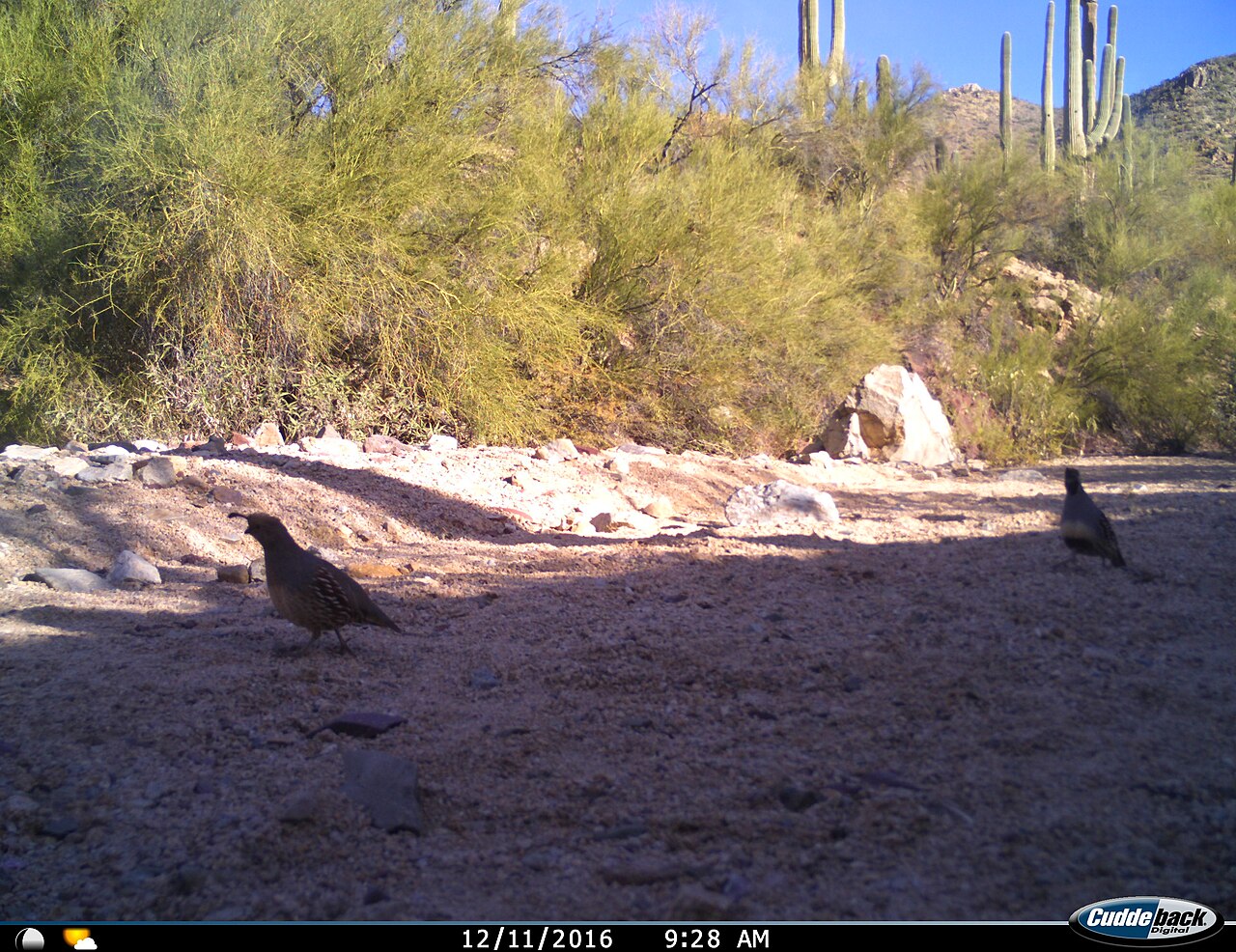
This is the bird that opens this guide, and for a lot of new Arizona residents it’s the first backyard bird they can put a name to, mostly because it’s impossible to ignore. Gambel’s Quail move in family groups called coveys, sometimes twenty or more birds at once, and they’d rather run than fly — you’ll see them dash across a yard in a tight line, single file, low to the ground. The male has a black teardrop-shaped plume that flops forward off his forehead, a black face outlined in white, and a chestnut cap. Females are plainer gray-brown but have the same comical topknot. They’re ground feeders, so a low platform feeder or just scattered millet works better than a hanging tube feeder they can’t use. Nesting happens on the ground too, often tucked against a cactus base, and broods of a dozen or more tiny chicks trailing behind a parent are a common early-summer sight in Tucson and Phoenix yards alike.
Cactus Wren
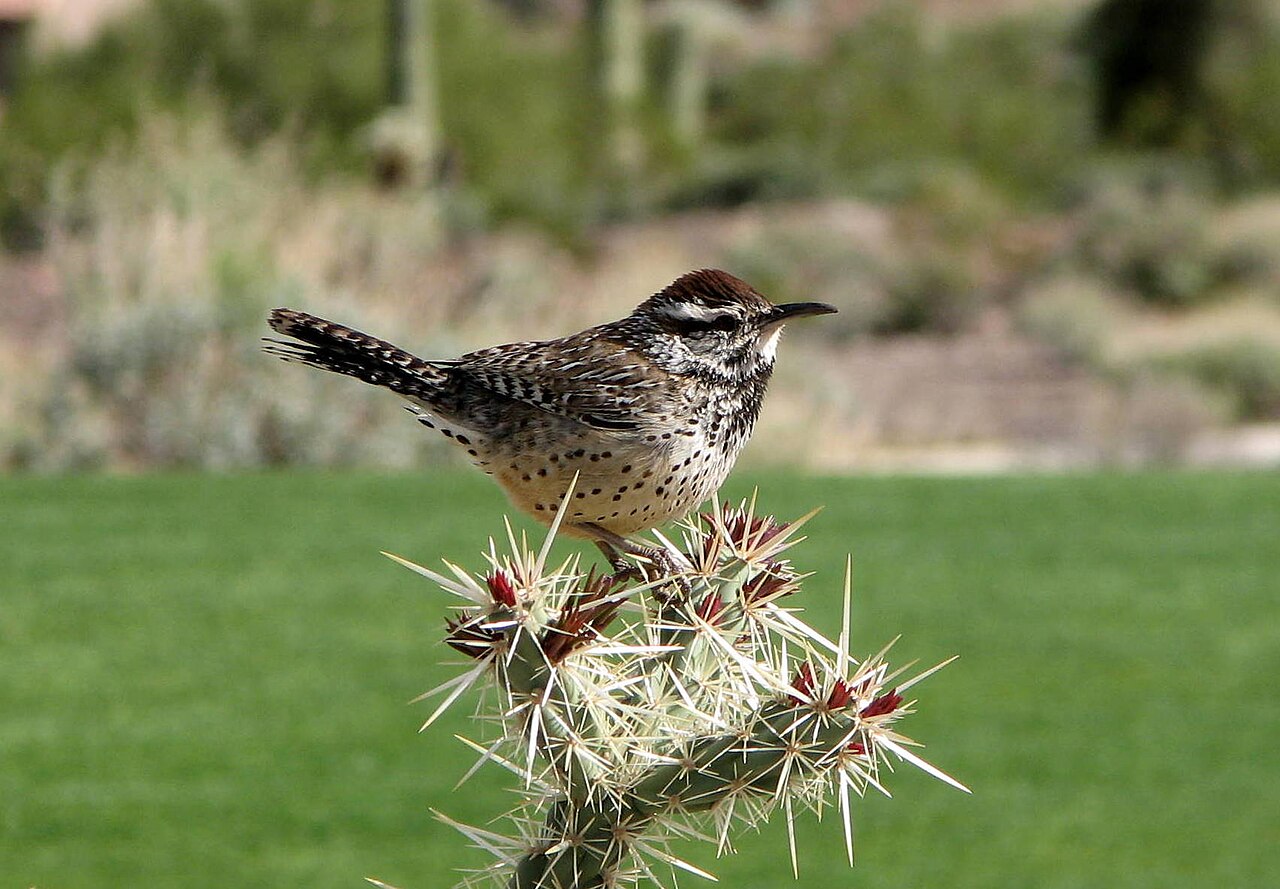
Arizona’s state bird, and once you’ve heard one you won’t mistake it for anything else — a dry, mechanical char-char-char-char that sounds more like an old car trying to start than a song. It’s the largest wren in the US, heavily spotted and barred in brown and white, with a bold white eyebrow stripe. Cactus Wrens build football-sized nests of dried grass wedged into the arms of a cholla or saguaro, spines and all, and they’ll keep several nests going through the year — some for raising young, others just as roosting spots to sleep in overnight. They’re not shy about backyards with any kind of desert landscaping, and they’ll investigate suet feeders, though they’re just as happy gleaning insects off patio furniture.
Anna’s Hummingbird
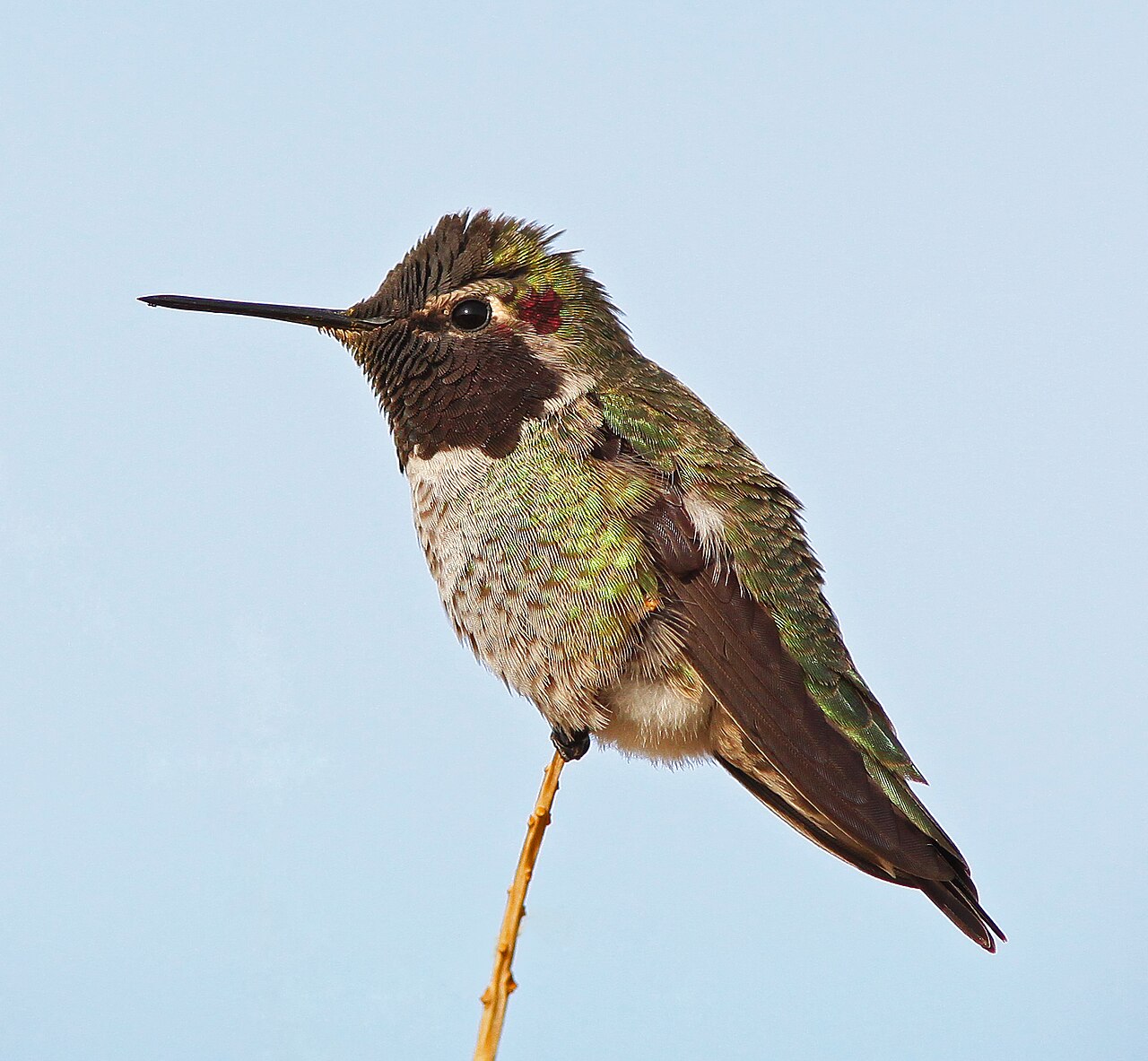
The hummingbird most likely to stay in an Arizona yard year-round instead of migrating through. Males have an iridescent rose-pink throat and crown that can look black or even purple depending on the angle of light — you have to catch it flashing to appreciate it. Anna’s Hummingbirds are also one of the few hummingbird species that sing, a scratchy, buzzy little song delivered from an exposed perch, usually the highest dead twig they can find. A feeder with a 4-parts-water-to-1-part-sugar mix, changed every few days in summer heat, will usually keep one coming back. Males perform a dramatic courtship dive in late winter, climbing fifty feet or more before diving straight down and pulling up with a sharp chirp made by their tail feathers, not their voice.
Costa’s Hummingbird
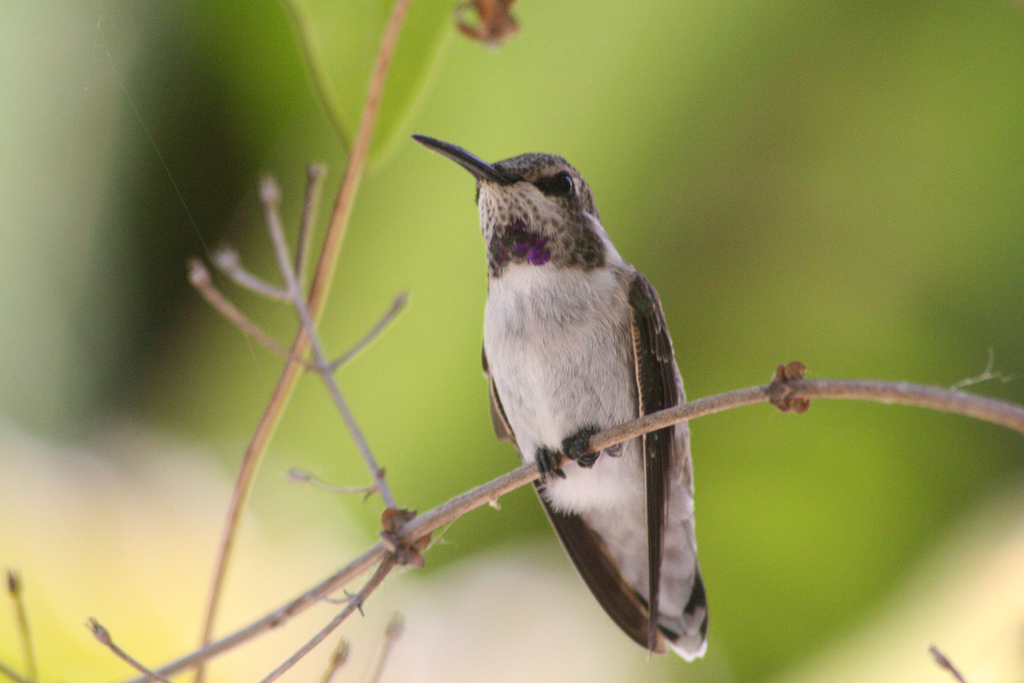
A true desert specialist, smaller and more compact than Anna’s, with a violet-purple gorget that sweeps out and down past the throat like a mustache. Costa’s Hummingbirds are birds of the driest, scrubbiest parts of the state — low desert washes, ocotillo stands, anywhere with flowering shrubs like chuparosa and desert honeysuckle. They arrive in spring and many move to slightly higher, cooler ground once the real summer heat sets in. At a feeder they tend to be quieter and less aggressive than Anna’s, often getting bullied off by the larger species, so a second feeder placed away from the main one can help both hold territory.
Curve-billed Thrasher
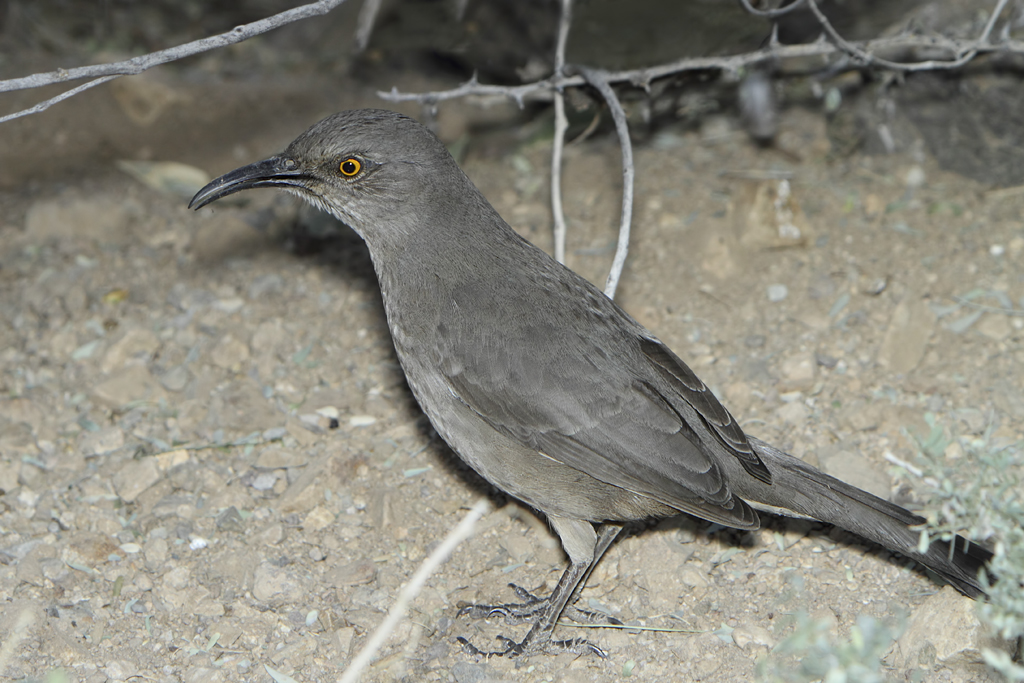
A gray-brown bird a bit bigger than a robin, with a long down-curved bill built for digging through leaf litter and soil for insects, and startling orange-red eyes once you get a close look. Curve-billed Thrashers are loud and confident in a yard, with a sharp whit-wheet call that carries well past the property line. They nest low in cholla cactus, which does a good job of keeping predators away, and they’ll dig through mulch and under shrubs more readily than they’ll visit a hanging feeder. Suet and mealworms on a ground or platform feeder are the best way to draw one in close.
Verdin
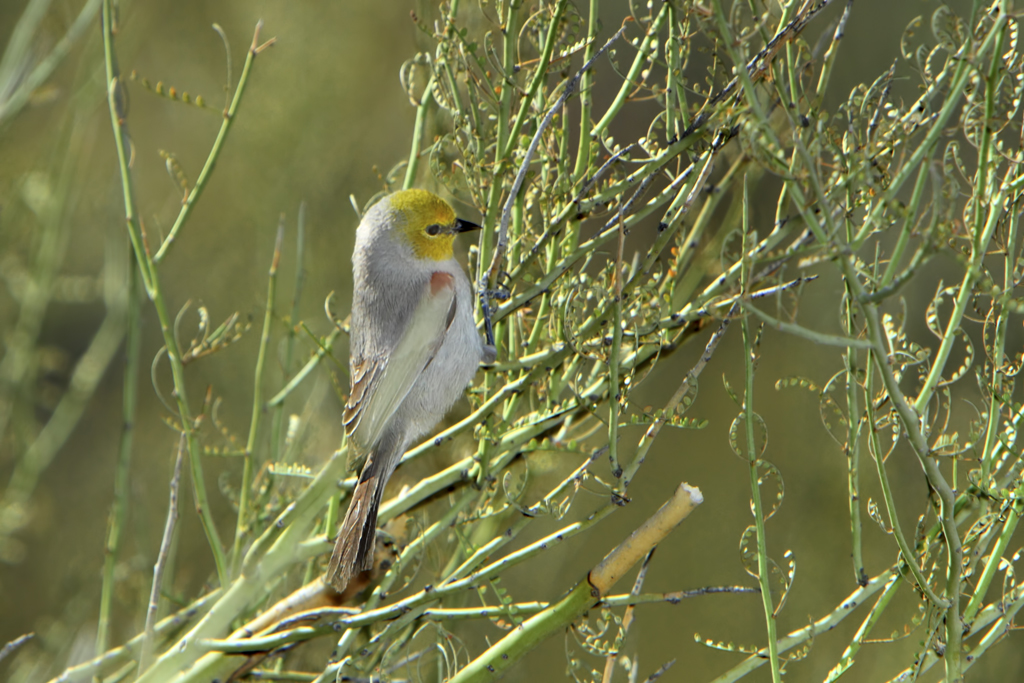
One of the smallest birds in Arizona, barely bigger than a hummingbird, gray overall with a yellow face and a small rust-colored shoulder patch on adults. Verdins are constant, restless little foragers, working through mesquite and palo verde branches for insects, and they build distinctive round, spiky nests of thorny twigs that are easy to spot once you know to look for them — they build several through the year, including winter roost nests separate from the breeding nest. They’re not big feeder visitors but will come to a sugar-water hummingbird feeder or suet, and they respond well to any yard with native, thorny desert shrubs left in place rather than cleared out.
Pyrrhuloxia
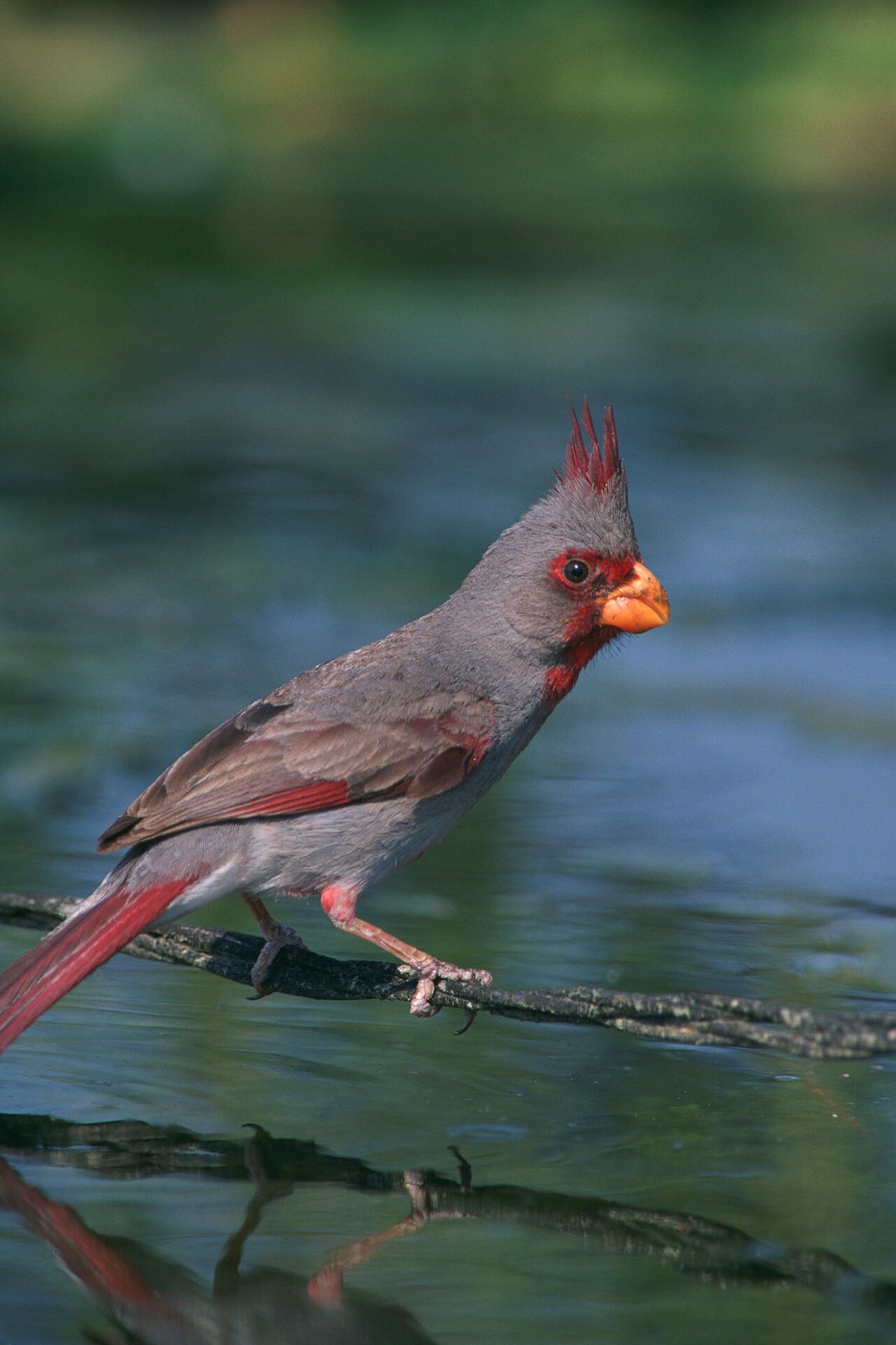
Often described as the desert’s version of the Northern Cardinal, and the resemblance is obvious once you see one — same crest, same stocky build, but a gray body instead of red, with red restricted to the face, crest tip, and a streak down the chest. The bill is a giveaway too: short, thick, and curved, almost parrot-like, built for cracking seeds. Pyrrhuloxias favor mesquite thickets and desert scrub and will readily come to a backyard seed feeder stocked with sunflower seed, especially in the cooler months when they range more widely in search of food. Pairs often stay together year-round rather than splitting up after breeding season.
Gila Woodpecker
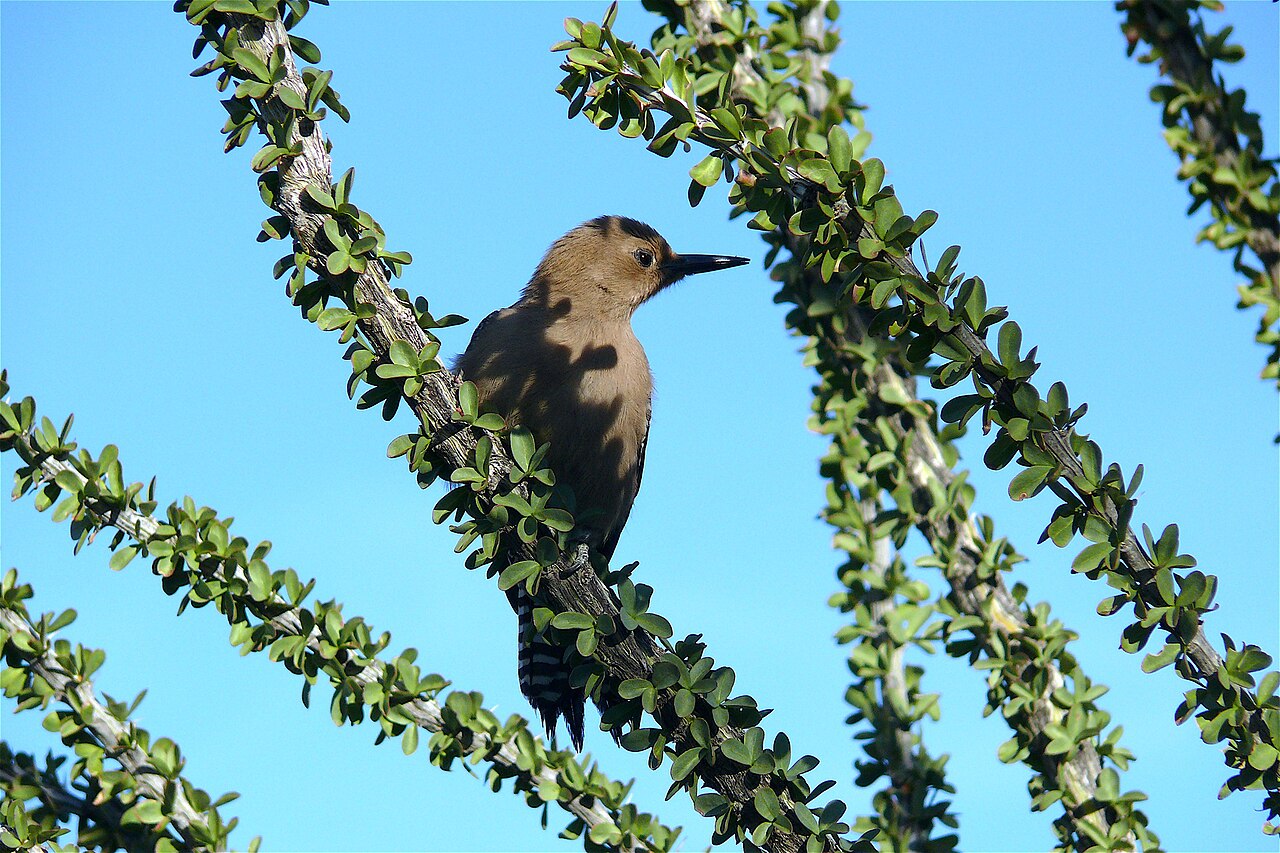
The default woodpecker of the Sonoran Desert, tan-brown overall with a black-and-white barred back and, on males, a small red cap. Gila Woodpeckers excavate nest cavities in saguaro cactus, and those holes don’t go to waste once vacated — elf owls, purple martins, and other cavity-nesting birds move in behind them, which makes this one species quietly responsible for a lot of the desert’s other bird life. They’re bold at feeders, taking suet, sugar water, and even oranges cut in half and set out on a platform, and their loud rolling call is one of the most common backyard sounds across low-desert Arizona towns.
Phainopepla
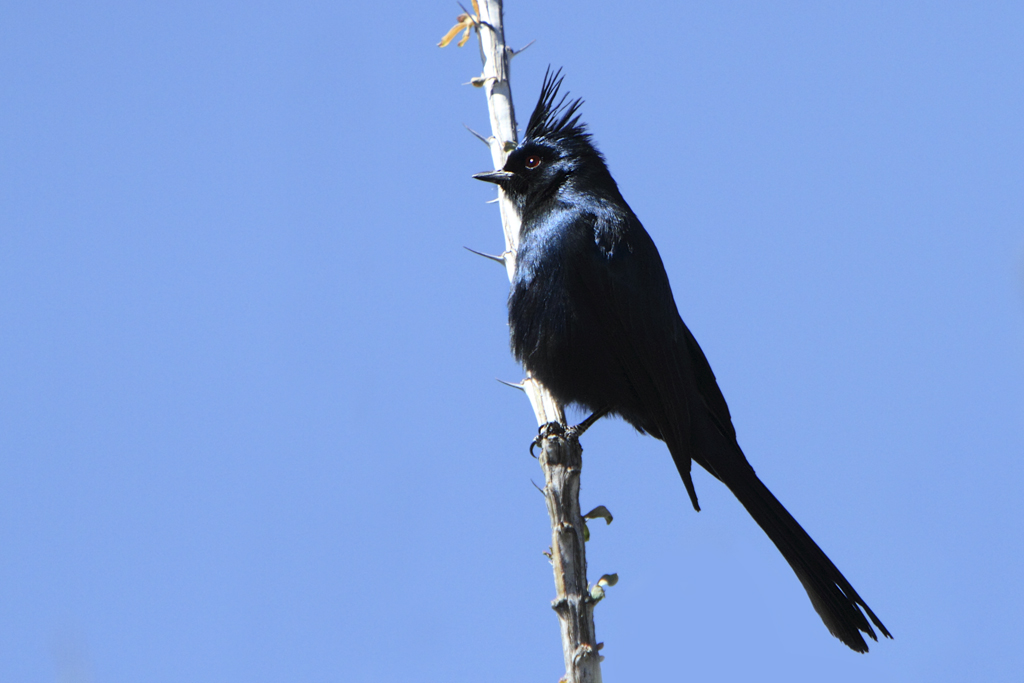
A striking, silky-plumed bird — glossy black males with a wispy crest and startling red eyes, grayer females with the same crest and eye color. Phainopeplas are closely tied to desert mistletoe, which grows as a parasite on mesquite and palo verde trees; the berries make up most of their diet for much of the year, and the birds return the favor by spreading mistletoe seeds to new trees. They perch conspicuously at the top of a tree or shrub, often alone, and will sally out to catch insects in mid-air. They’re less interested in typical feeders but will use a birdbath, and yards with mistletoe-infested mesquite nearby are far more likely to host one.
Abert’s Towhee
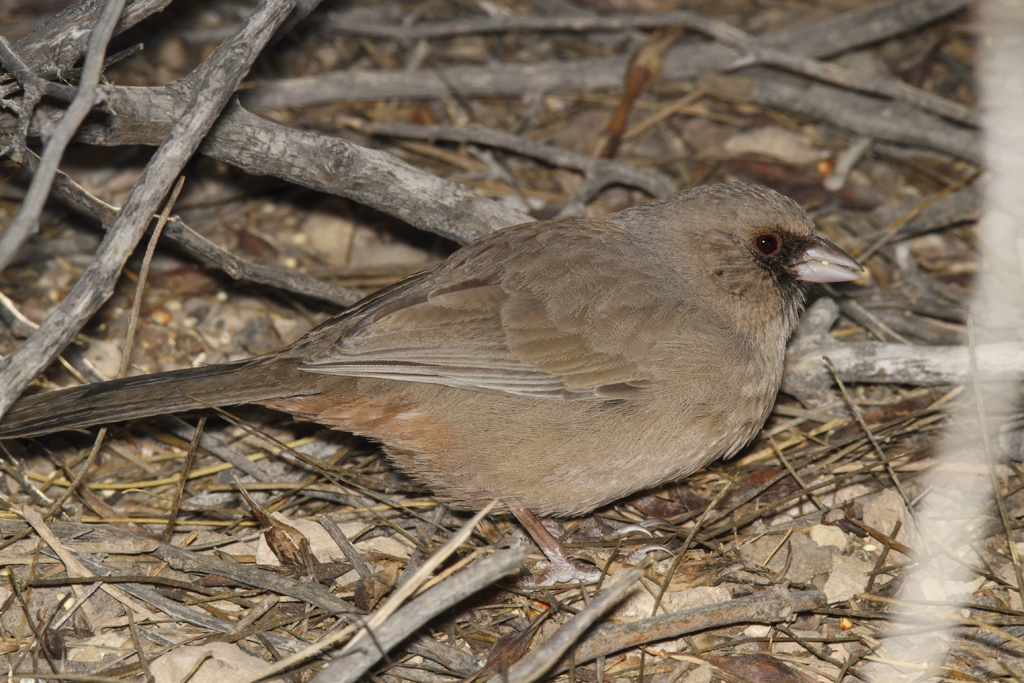
A plain-looking bird at first glance — overall grayish-brown with a black patch around the base of the bill — but one of the most reliably heard birds along any Arizona riparian corridor or well-planted yard. Pairs give a sharp, rising duet, one bird’s call chasing the other’s almost overlapping, usually from cover rather than out in the open. Abert’s Towhees are ground foragers through and through, scratching through leaf litter and mulch with both feet at once in a distinctive backward hop, and they do best in yards with dense shrubs or brush piles left intact rather than raked bare. They’ll take mixed seed scattered on the ground but rarely visit a hanging feeder, and they’re almost entirely restricted to the Sonoran and lower Colorado River desert, making them one of the more range-limited birds on this list.
Getting Started
None of this requires much equipment. A seed feeder, a hummingbird feeder, and a shallow dish of water will pull in most of the birds on this list within a season, especially if there’s any native desert vegetation nearby for cover. What it does take is a bit of patience with the schedule — showing up at 6 a.m. instead of 9 a.m., and treating July and August as a slower season rather than giving up on it entirely, since that’s exactly when water becomes the biggest draw of all. Regular observers report that after a few weeks of watching, most of these species become identifiable by call alone before they’re visible near the fence line.
Sources
Species identification, range, and behavior details in this guide are cross-checked against the Cornell Lab of Ornithology’s All About Birds, the National Audubon Society, eBird’s Arizona regional data, and the Arizona Game and Fish Department.