Warbler Birding in New York City’s Central Park
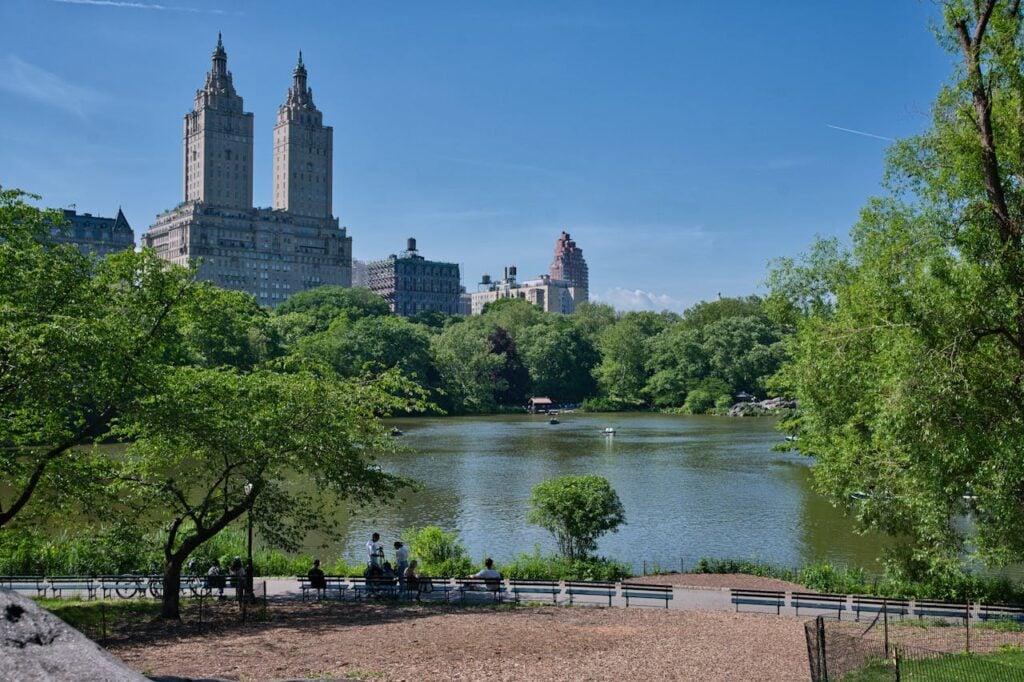
Central Park transforms into one of the United States best places to watch Warblers during migration seasons, with the second week of May representing the best time for spring migration when up to 100 species of birds can be observed in a single day. The park’s strategic position on the Atlantic Flyway creates the famous “Central Park Effect,” concentrating extraordinary numbers of migrating warblers into this 843-acre oasis surrounded by concrete and steel. Spring migration peaks from late April through mid-May, while fall migration extends from July through November with variable timing. Over 36 warbler species occur annually in the park, with dedicated birders routinely spotting 20+ species during optimal morning sessions.
This urban birding phenomenon results from Central Park’s role as a critical stopover along one of North America’s major migration corridors, combined with Frederick Law Olmsted’s brilliant landscape design that compressed diverse habitats—ponds, marshes, meadows, and mature forests—into less than 1.5 square miles. The concentration effect intensifies during weather-driven “fallout” events when storms force massive numbers of migrants to seek refuge simultaneously.
Spring migration reaches crescendo in early May
Spring warbler migration in Central Park follows a predictable chronology that has been documented for decades. Early April brings the hardy pioneers: Yellow-rumped, Pine, and Palm warblers arrive alongside Louisiana Waterthrush. The last week of April marks a critical transition as mid-spring migrants appear and the canopy begins leafing out, making detection more challenging but adding species diversity.
The first two weeks of May represent the unanimous peak period identified across ornithological sources, with the second week of May consistently cited as “the height of spring migration.” During this window, birders regularly encounter 25-30 warbler species in a single morning, with exceptional days yielding all 36+ annually occurring species. Blackpoll Warblers arrive in early May, with males appearing first and females signaling the end of peak migration as they pass through in late May.
Climate change is measurably affecting these patterns. Black-throated Blue Warblers now begin spring migration 5.5 days earlier than in the 1960s – approximately one day per decade advancement. The 2024 season experienced exceptionally early leaf-out, occurring 20 days ahead of long-term averages in some regions, creating potential mismatches between migration timing and peak insect abundance.
Weather dramatically influences day-to-day success. Optimal conditions include southerly winds, especially after periods of northerly winds, with the first or second day after wind shifts producing spectacular results. Light morning rain following warm front passage often triggers enhanced activity, while northerly winds and cold temperatures suppress movement.
Fall migration offers extended opportunities through November
Fall migration presents a more complex pattern than spring’s concentrated burst. The southbound journey begins surprisingly early, with Yellow Warblers departing in late July, followed by building numbers throughout August and September. Mid-September often marks the peak of fall migration, though this varies significantly by year and weather patterns.
Early November remains productive for dedicated warbler watchers, particularly for late-lingering species. Yellow-rumped Warblers continue as common migrants well into November, while Cape May Warblers can extend their stay into late November due to their unique ability to feed on sap from Siberian Elms – a feeding adaptation made possible by their tubular tongues. Some warbler species have been documented extending into early December during favorable conditions.
The fall migration period after August 20th typically includes Bay-breasted, Black-throated Blue, Cape May, Chestnut-sided, Common Yellowthroat, Connecticut, Golden-winged, Nashville, Orange-crowned, Ovenbird, Palm, Pine, and Yellow-rumped Warblers. Fall warblers present identification challenges as many species appear in subdued “confusing fall plumages” lacking the bold markings of spring breeding adults.
Ten signature warbler species define Central Park’s migration
Central Park’s warbler community includes several signature species that exemplify the diversity and timing patterns. Yellow Warblers arrive as early migrants in mid-to-late April, with males displaying bright egg-yolk yellow plumage and distinctive chestnut breast streaks. They prefer tall shrubs and woodland edges, particularly areas near the park’s water features.
Magnolia Warbler peak during May and September migration, reaching up to 19% of checklists during optimal periods. Males sport bold black “necklace” streaking and distinctive white-based, black-tipped tail patterns that make them favorites among birders. They favor dense vegetation and forest edges throughout the park.
Black-throated Blue Warbler demonstrate the climate change effects most clearly, with their migration now beginning 5.5 days earlier than historical norms. Males appear midnight blue with diagnostic white “handkerchief” wing patches, while females show more subtle brownish coloring with the same diagnostic white wing spot.
Blackburnian Warbler create excitement with males displaying brilliant orange throat and head markings. Their mid-May peak migration can extend into early June, as documented extensively in 2024 reports. They prefer tall trees and upper canopy, requiring birders to develop “warbler neck” from looking skyward.
Cape May Warbler earn recognition for their unique feeding adaptations and extended fall presence. Males show distinctive chestnut cheek patches and tiger-like breast streaking, while their specialized tubular tongues allow nectar feeding from sapsucker wells—enabling their late November appearances when other warblers have departed.
Prothonotary Warbler represent classic “overshoot” species, appearing regularly in mid-April as bright golden-yellow birds along water features. They favor the shaded northern shoreline of Central Park Lake and wooded areas near water, earning recognition as a spring highlight despite their relative rarity.
Pine Warbler arrive among the earliest migrants in February-March, with some maintaining year-round residence. They specialize in pine forests, making the Arthur Ross Pinetum their preferred habitat, and remain the only warbler species that regularly consumes seeds.
Northern Parula and Yellow-throated Warbler represent increasing southern species. Northern Parula show distinctive blue-gray backs with yellow-green patches and chestnut breast bands on males. Yellow-throated Warblers, rare but increasing, display gray upperparts with bright yellow throats and distinctive black triangles below the eye.
Common Yellowthroats round out the signature species with their distinctive black masks and loud “witchety-witchety-witchety” songs. They arrive in late April and breed through summer in the park’s dense low vegetation, marshes, and cattail stands.
The Ramble reigns supreme among birding locations
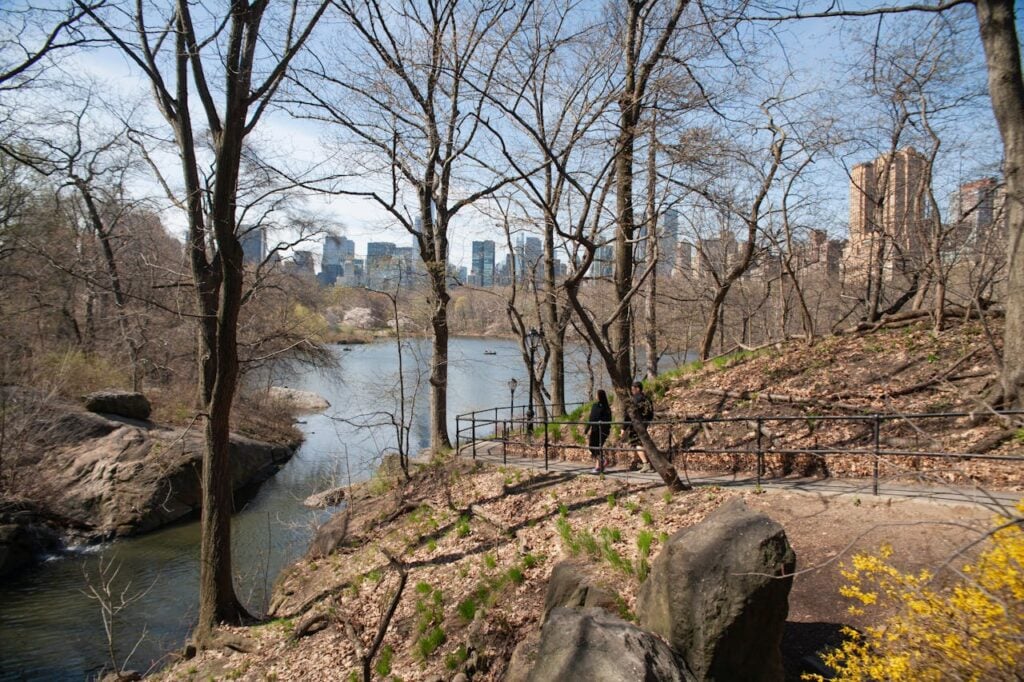
The Ramble stands as the world’s most famous urban warbler destination, encompassing 37 acres of naturally managed woodland between 72nd and 79th Streets. This area alone records 37+ warbler species annually, making it the park’s premier birding location. The artificial stream called “The Gill” provides essential drinking and bathing opportunities, creating close-up viewing opportunities that attract birders from around the globe.
Specific Ramble hotspots include the Upper Lobe, Willow Rock, Oven, Point, Azalea Pond, Summer House, and Tupelo Meadow. Termite hatch-outs in May create feeding frenzies as warblers gorge on these protein-rich insects, often allowing remarkably close approach distances as birds focus intensively on foraging.
Belvedere Castle offers a unique birding advantage with its elevated position eliminating “warbler neck” while providing 360-degree views of treetops. This location serves dual purposes as both a premier songbird location and the park’s primary raptor watching site, with over 10,000 raptors representing 15 species counted during single autumn seasons.
Strawberry Fields attracts early morning migrants with its long meadows bordered by tall oaks that catch first light. Dense tree stands regularly host warblers, tanagers, orioles, and grosbeaks, while shrubby areas attract thrushes and sparrows. The Balcony Bridge overlooks a ravine frequently used by birds for bathing.
North Woods encompasses 90 acres at the park’s northern end, offering large natural woodland with diverse habitat and fewer crowds than the Ramble. Great Hill can “swarm with warblers” on major migration days, while the Pool provides waterfowl viewing and warbler habitat in overhanging willows. Rocky outcroppings near the Block House offer valuable eye-level warbler views.
The Central Park Lake and Hernshead Peninsula create critical edge habitat where water meets woodland. Prothonotary Warblers favor the lake shore, while willows hanging over water often teem with warblers and flycatchers. The Reservoir attracts waterfowl with its 106-acre water body while surrounding oak trees become “dripping with warblers” during spring migration.
Atlantic Flyway funnels millions through Manhattan’s green oasis
The Atlantic Flyway extends from Greenland and Nova Scotia to Caribbean tropics, representing one of North America’s four major migration corridors. NYC sits directly within this superhighway, making Central Park a critical stopover for millions of migrants traveling thousands of miles between breeding and wintering grounds.
This geographic positioning creates the Central Park Effect—a phenomenon where the 843-acre park serves as a vital “green oasis” for birds navigating an urban landscape of 8.2 million people. When migrant birds travel northward over water overnight, they grow tired and hungry, seeking refuge at first light in the first available habitat.
Central Park’s designation as an Audubon Important Bird Area (IBA) reflects its critical role, with over 270 species documented and single spring days yielding over 100 species. Up to 30 warbler species may appear on optimal “wave” or “fallout” days when weather conditions ground large numbers of simultaneous migrants.
Urban challenges complicate this natural phenomenon. Light pollution kills an estimated 90,000+ migrating birds annually in NYC, leading to “Lights Out” campaigns during prime arrival periods from April 1 through June 1. NYC Local Law 15 now requires bird-safe building materials for new construction, while large migrating flocks routinely appear on nighttime radar scans at JFK Airport.
Diverse supporting cast enhances warbler migration spectacle
Warbler migration coincides with movements of numerous other species, creating comprehensive birding opportunities. Red-tailed Hawks maintain year-round residence, with the famous Pale Male lineage documented since 1994. Peregrine Falcons nest in the park and remain visible during migration periods, while Bald Eagles appear regularly during fall hawk migration with up to 10 per day recorded in September.
Cooper’s and Sharp-shinned Hawks peak from mid-September through early November, with over 100 Sharp-shinned Hawks possible during single exceptional days. These raptor movements often coincide with peak warbler activity, creating dynamic predator-prey interactions that add excitement to birding sessions.
Waterfowl and water birds contribute significantly to the migration spectacle. Wood Ducks appear regularly on Central Park Pond and other water bodies, while Great Egrets visit frequently. Ruddy Ducks serve as winter visitors, particularly at the Reservoir, alongside Northern Shovelers and other waterfowl species.
The supporting songbird cast includes White-throated Sparrows as the most numerous wintering sparrow throughout the park. Baltimore Orioles migrate commonly and nest around the Lake, while Rose-breasted Grosbeaks appear as spring migrants, often visiting the feeding station at Evodia Field. Scarlet Tanagers migrate regularly through wooded areas, adding brilliant red flashes to the spring canopy.
Dawn patrol yields optimal warbler encounters
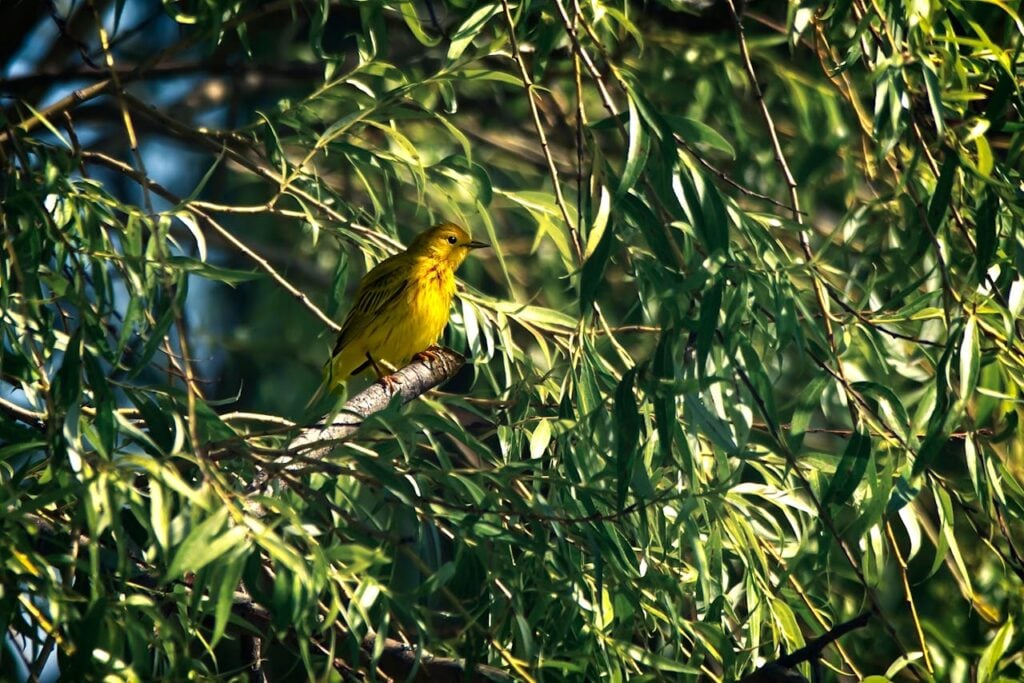
Early morning from dawn through 8 AM represents the optimal viewing window, with expert consensus stating “the earlier you get there the better.” Birds exhibit peak activity between dawn and 11 AM when they sing most actively and feed intensively before seeking shade during warmer midday hours.
Early timing provides multiple advantages beyond bird behavior. Human crowds remain minimal, lighting conditions optimize both viewing and photography, and the birding community concentrates its efforts during these hours, facilitating information sharing and learning opportunities. On prime migration days, dedicated birders routinely document 20+ warbler species during single morning sessions.
Late afternoon from 4 PM through sunset offers the second-best window with renewed bird activity and singing, though it proves less reliable than early morning sessions. However, during peak fallout days, “all day can be very good,” with patient birders finding close-up views of resting and bathing birds at water sources like The Gill stream throughout the day.
Weather conditions significantly influence optimal timing patterns. South winds, especially after periods of northerly winds, trigger major fallouts that can extend productive viewing throughout the day. Light morning rain often enhances bird activity levels, while the first or second day after wind shifts to southerly directions consistently produce peak opportunities.
Central Park Conservancy maintains premier warbler habitat
The Central Park Conservancy plays a crucial role in maintaining the habitat quality that makes Central Park exceptional for warbler watching. Over 400 species of native plants are maintained throughout the park, prioritizing bird- and pollinator-friendly species that produce insects and fruit at critical times during migration seasons.
Major restoration projects have enhanced warbler habitat significantly. The North Woods Ravine restoration (2017) and Hallett Nature Sanctuary restoration (2016) exemplify comprehensive approaches to native ecosystem management. The Dene Slope native meadow features 50+ species of native wildflowers and grasses, serving as habitat for birds, bees, butterflies and other wildlife.
Natural areas management focuses on four critical bird habitats: the Ramble, North Woods, Hallett Nature Sanctuary, and Dene Slope. Staff and volunteers regularly remove invasive plant species while maintaining “weedy, tangley, thickety habitat” for escape cover and nesting. Dead or dying trees are left as snags in woodland habitats to provide foraging opportunities for woodpeckers and nesting sites for cavity-dependent species.
Educational programming includes “Birding Basics Tours” led by expert Conservancy guides, seasonal programs during migration periods, and comprehensive resources on the park website. Partnerships with NYC Bird Alliance, American Museum of Natural History, and other organizations provide additional educational opportunities and guided walks.
Legendary experts define Central Park’s birding culture
Starr Saphir (1939-2013) established the template for accessible urban birding education through nearly 40 years of leading walks four times per week in Central Park. Known as “The Matriarch of Central Park,” she identified 259 different bird species in the park alone while maintaining detailed logs in 80+ notebooks. Her walks remained affordable ($3-8) and accessible, treating the park as her “office” and inspiring countless birders.
Deborah Allen continues this tradition as a professional photographer completing “The Birds of Central Park: Their Identification and History” for Columbia University Press. Recognized as “absolutely the best birder in Central Park for field marks and nuances of plumage,” she leads Friday walks from Conservatory Garden and partners with “Birding Bob” for regular programs.
Robert DeCandido PhD (“Birding Bob”) brings scientific expertise with his PhD in evolutionary biology and 25+ years of leading Central Park bird walks. His research extends from Central Park to international work in Thailand, Malaysia, Nepal, and Israel. He offers $10 walks with binocular rentals while publishing scientific and popular articles on Central Park birds and urban ecology.
Christian Cooper, author of “Better Living Through Birding: Notes from a Black Man in the Natural World” and host of National Geographic’s “Extraordinary Birder,” represents the new generation of prominent Central Park birders contributing to both conservation and cultural understanding of urban birding.
Prospect Park and Forest Park offer worthy alternatives
While Central Park leads NYC’s warbler watching destinations, Prospect Park (Brooklyn, 526 acres) and Forest Park (Queens, 538 acres) provide compelling alternatives with distinct advantages. Prospect Park supports nearly 270 bird species annually with possibility of 35 warbler species and peak spring days approaching 100 total species.
Prospect Park’s superior native plant focus creates better overall habitat quality, as the Prospect Park Alliance emphasizes native species over ornamental plantings. Key warbler locations include Vale of Cashmere, Rose Garden, and Midwood’s old-growth forest. The park experiences less crowding than Central Park while maintaining excellent subway accessibility.
Forest Park’s glacial “knob-and-kettle” landscape creates unique terrain with varied elevations and kettle ponds. The famous “Water Hole”—an ephemeral wetland—attracts diverse warbler species for drinking and bathing. With just over 200 species documented including 36 warbler species, Forest Park provides a more remote wilderness experience with mature oak and hickory overstory.
Central Park maintains supremacy through species diversity, accessibility, and birding community size, while Prospect Park offers superior habitat quality with good diversity and fewer crowds. Forest Park provides unique landscape features and secluded experiences for dedicated birders seeking alternatives to Manhattan’s intensity.
Climate disruption reshapes traditional migration patterns
Climate change effects on warbler migration extend beyond simple timing shifts to fundamental alterations in seasonal patterns. Fall migration seasons are lengthening with earlier start times and later end times, extending overall migration duration while spring migration advances steadily earlier.
Earlier spring “leaf-out” due to warming temperatures creates cascading effects on migration success. While earlier leaf-out correlates with earlier migration timing, it can create mismatches with peak insect abundance—the primary food source for migrating warblers. 2024 experienced exceptionally early leaf-out, occurring 20 days ahead of long-term averages in some regions.
NASA research reveals large-scale climate patterns thousands of miles away affect US bird migration variability, demonstrating the global interconnectedness of these phenomena. Sea level rise threatens coastal stopover habitats critical for migration, while habitat loss and development pressure increase the importance of urban parks as migration corridors.
However, weather patterns remain more influential for year-to-year variation than long-term climate trends. The 2024 spring migration was described as the “worst for warblers” with dramatically fewer reports compared to 2020-2023 averages, illustrating how specific weather events can override broader climate trends in determining annual migration success.
Urban birding presents unique challenges and extraordinary opportunities
Central Park’s urban setting creates distinctive birding challenges that require specific strategies and awareness. Heavy foot traffic, especially on weekends, can disrupt both birds and birding experiences, while cyclists on paved drives travel at high speeds, requiring constant vigilance for safety. Noise pollution from traffic and urban activity interferes with bird calls and natural communication.
Safety considerations become paramount in secluded areas like North Woods and Ramble, especially during later hours, making group birding advisable. Off-leash dogs in designated leash areas can disturb both birds and birders, while light pollution disrupts bird natural cycles and migration patterns throughout the urban environment.
However, the urban setting creates extraordinary opportunities unavailable in natural areas. Dense birding community provides rapid information sharing via Twitter hashtag #birdcp and real-time eBird reports. Excellent infrastructure including subway access, benches, restrooms, and snack carts makes extended birding sessions comfortable and accessible.
The “migrant trap” effect concentrates species far beyond what might be encountered in larger natural areas, with potential for 100+ species on exceptional days. Year-round accessibility and proximity to millions of potential birderscreates unmatched opportunities for education, inspiration, and conservation awareness in urban populations.
First-time warbler watchers need patience and proper preparation
Beginning warbler watchers should invest in 8×42 binoculars in the $150-300 range, with Nikon Prostaff P3, Vortex Diamondback, or Celestron Nature DX recommended as excellent starter options. The Sibley Field Guide to Birds of Eastern North America proves superior to photo guides for varying light conditions, while the free Merlin Bird ID app from Cornell Lab becomes essential for sounds and identification assistance.
Essential techniques include relaxing eyes and scanning for movement rather than constantly using binoculars, bringing binoculars to eyes without looking away from spotted birds, and noting bird shape, bill, markings, location, and behavior for identification. Learning bird sounds dramatically increases species detection, as auditory identification reveals several times more species than visual scanning alone.
Expectations should align with seasonal patterns and learning curves. Early to mid-May provides maximum warbler diversity, while fallout conditions after storms with specific wind patterns create spectacular viewing opportunities. “Warbler neck” from looking skyward represents an occupational hazard requiring breaks and use of elevated viewing spots like Belvedere Castle.
Weather awareness proves crucial for optimal timing. South winds, especially after periods of north winds, trigger major movements, while light morning rain often enhances activity levels. The learning curve can be steep, but starting with common species and gradually building identification skills leads to rewarding long-term engagement with this premier urban birding destination.
Conclusion
Central Park’s warbler migration represents one of North America’s most accessible and spectacular natural phenomena, where urban design genius meets ancient migration patterns to create extraordinary wildlife viewing opportunities. The convergence of optimal timing (second week of May), prime locations (especially the Ramble), expert guidance, and the Atlantic Flyway’s geographic influence produces experiences that rival any natural area for warbler diversity and abundance.
The Central Park Effect demonstrates how thoughtful urban planning and habitat management can create conservation value far exceeding expectations based on size alone. As climate change and habitat loss increase pressure on migratory species, urban parks like Central Park become increasingly critical as stopover sites and inspiration centers for future conservationists.
For both beginning and experienced birders, Central Park offers a unique combination of accessibility, diversity, community, and natural wonder that makes warbler watching not just a recreational activity, but a window into one of nature’s most remarkable phenomena occurring in the heart of America’s largest city.