Ohio’s geography does a lot of the work for raptor watchers: Lake Erie forms a natural funnel along the northern shore, the glaciated till plains in the west give way to Appalachian foothills in the southeast, and farmland covers most of what’s left in between. That mix supports a solid year-round and migratory raptor list, and this guide covers the species you’re most likely to actually encounter, with the field marks that separate confusingly similar ones.
Red-tailed Hawk
Scientific name: Buteo jamaicensis
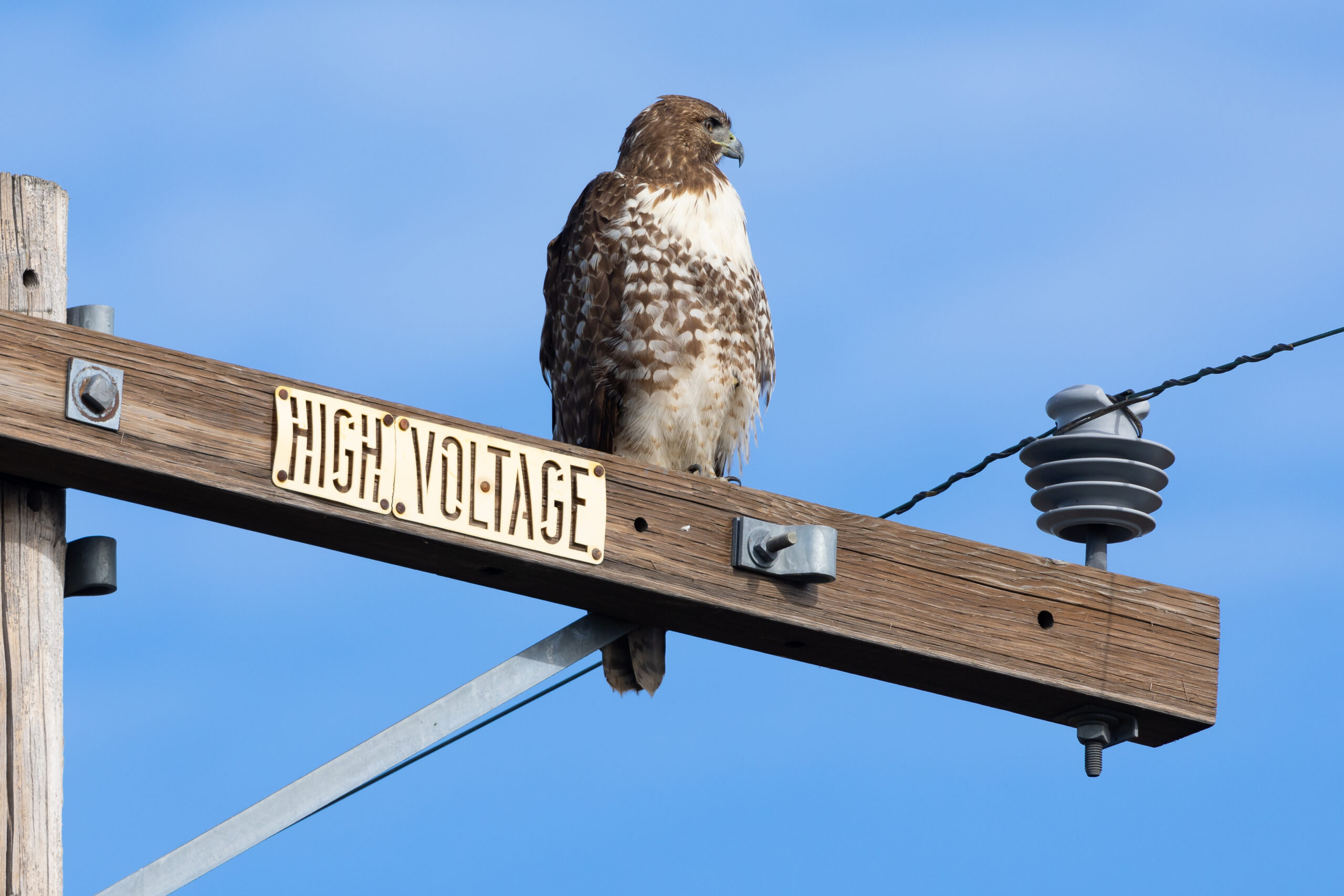
Ohio’s default hawk, and by far the easiest to find: scan any highway corridor through farmland and you’ll likely spot one perched on a light pole or fence post within a few miles. Adults run 45 to 65 cm (18 to 26 in) with a wingspan around 1.1 to 1.3 m (3.7 to 4.4 ft), and the field mark that works from a moving car is the brick-red tail. On a perched bird, check instead for a dark band of streaking across the belly, which stands out against an otherwise pale chest.
It’s a year-round resident statewide, equally comfortable over the flat farmland of western Ohio and the wooded hills of the Appalachian southeast. The call, a harsh descending kee-eeeeeer, is the sound almost every film and TV show misuses as a stand-in for eagles.
Red-shouldered Hawk
Scientific name: Buteo lineatus
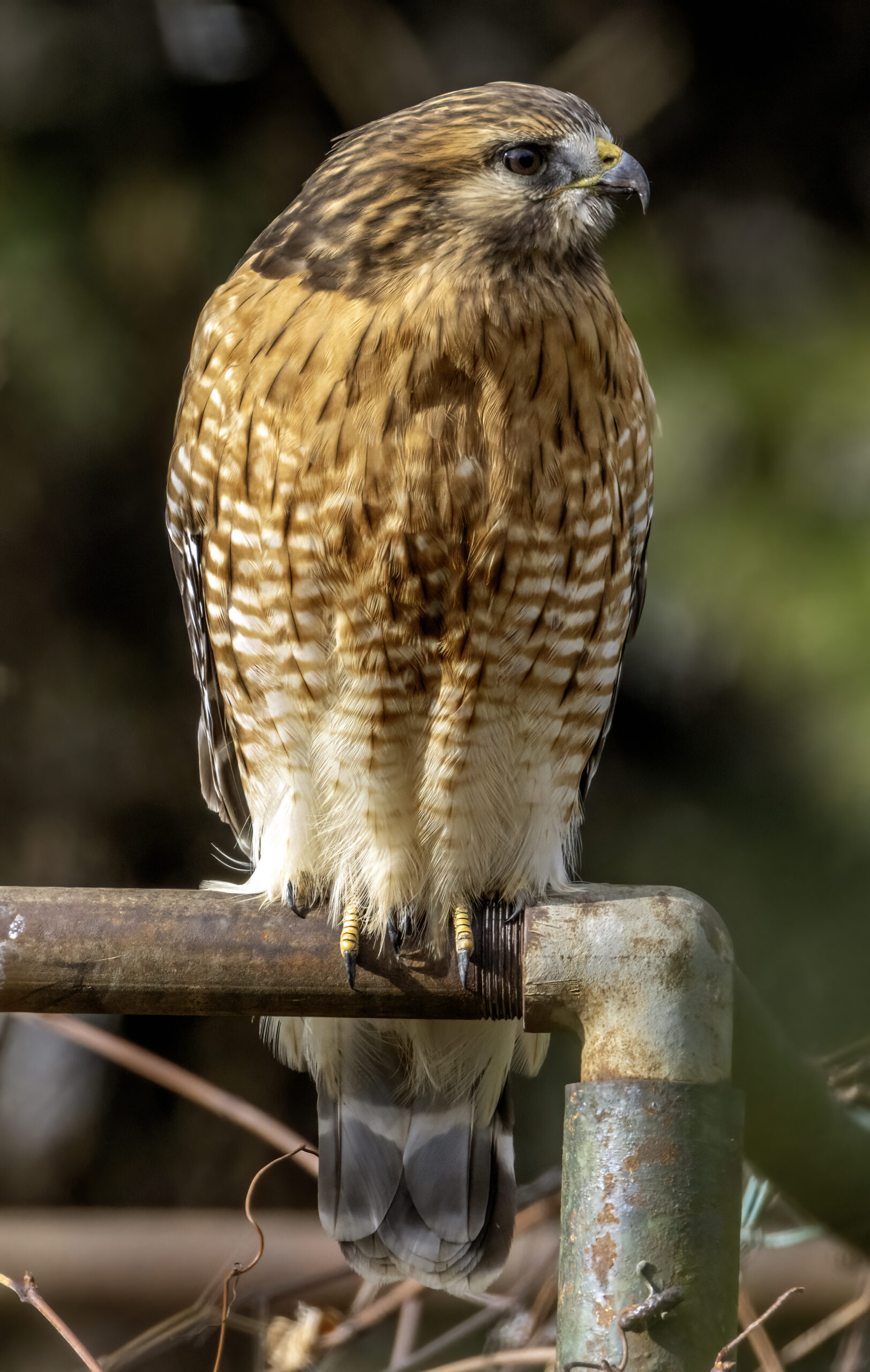
Ohio holds a solid breeding population of this forest-interior specialist, concentrated in the mature bottomland woods along rivers like the Scioto, Muskingum, and Cuyahoga rather than open country. At 38 to 47 cm (15 to 19 in) it’s noticeably smaller than a Red-tailed Hawk, with a rust-barred chest and, visible in flight, pale crescents near the wingtips. Its loud, repeated kee-yer call is so recognizable that Blue Jays mimic it, reportedly to clear feeders of competitors.
Unlike the Red-tailed Hawk, it rarely perches out in the open; most Ohio sightings start with the call from inside a wooded stretch rather than a clear view.
Sharp-shinned Hawk and Cooper’s Hawk
Scientific names: Accipiter striatus and Accipiter cooperii
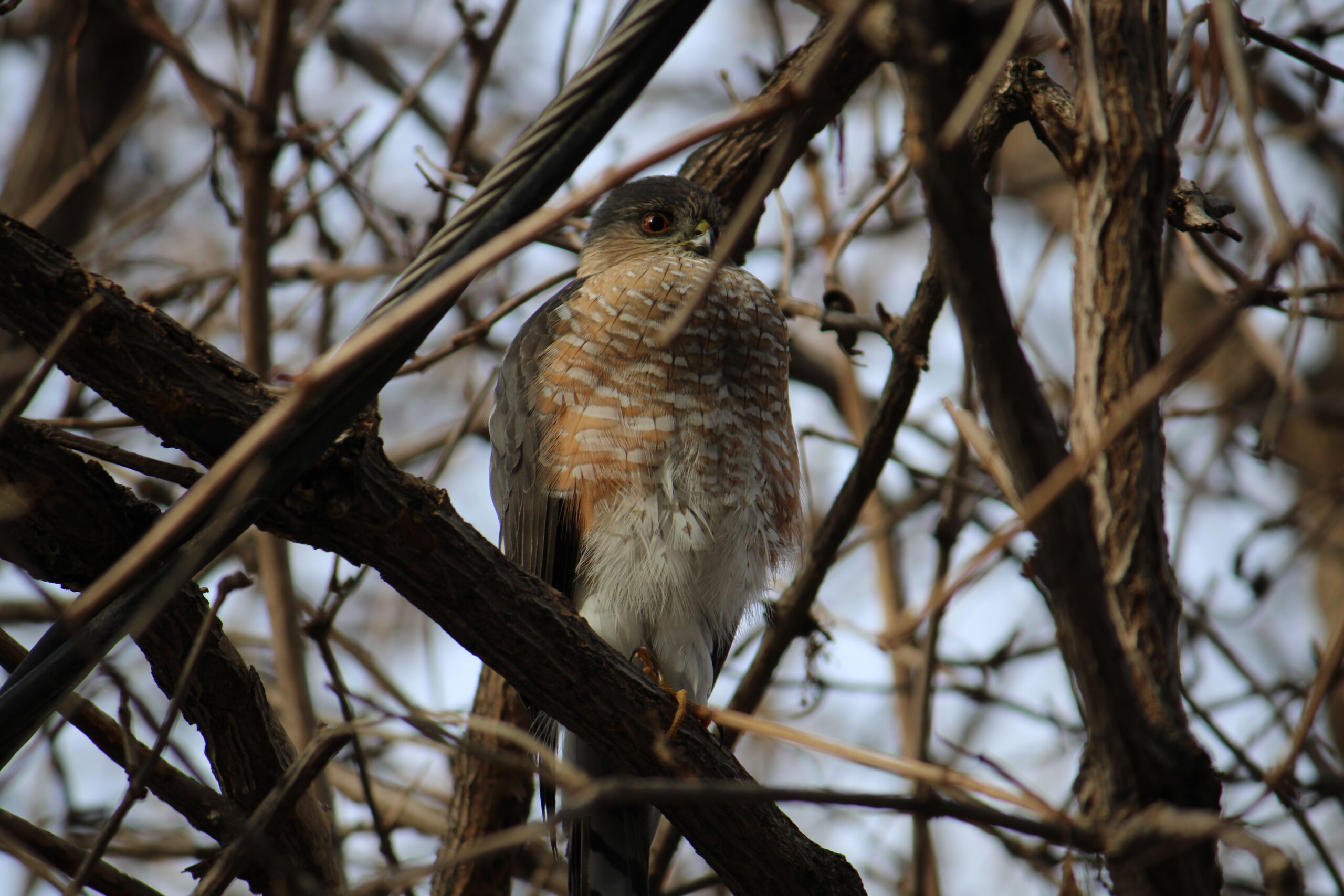
These are Ohio’s backyard feeder hawks, the ones that leave a scatter of feathers on the patio and a yard gone silent for twenty minutes. Size overlaps between the two species, so lean on shape instead: a Sharp-shinned Hawk has a small, rounded head that barely clears the wrists in flight and a squared tail tip, while a Cooper’s Hawk has a larger, blockier head that projects well forward and a rounded tail tip. Both breed in Ohio and are present year-round, with migrants from farther north passing through each fall.
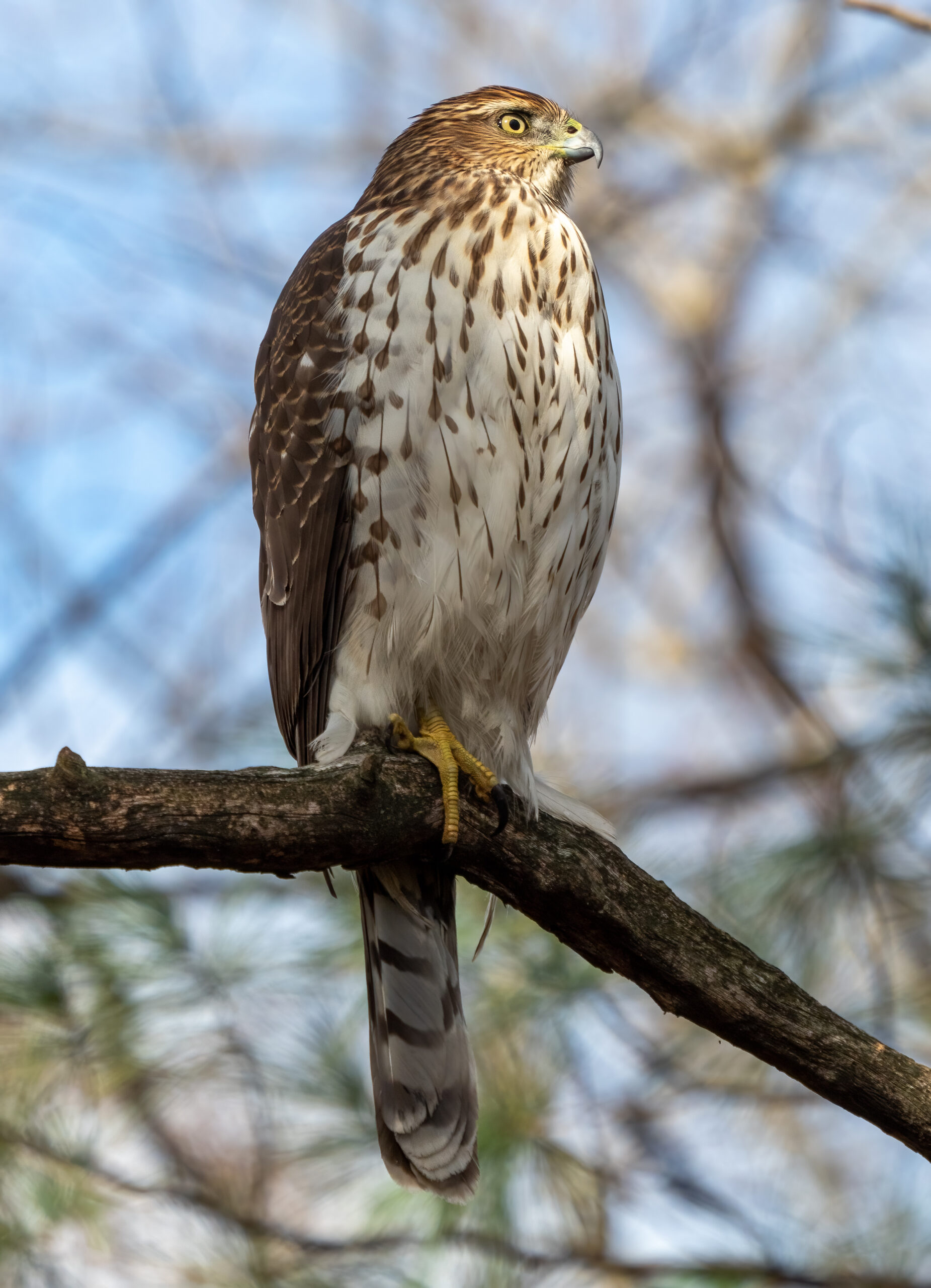
If you keep a feeder in Columbus, Cincinnati, or Cleveland, you’re more likely to host a Cooper’s Hawk than a Sharp-shinned, since Cooper’s Hawks have adapted especially well to suburban yards with dense shrub cover nearby.
Broad-winged Hawk
Scientific name: Buteo platypterus
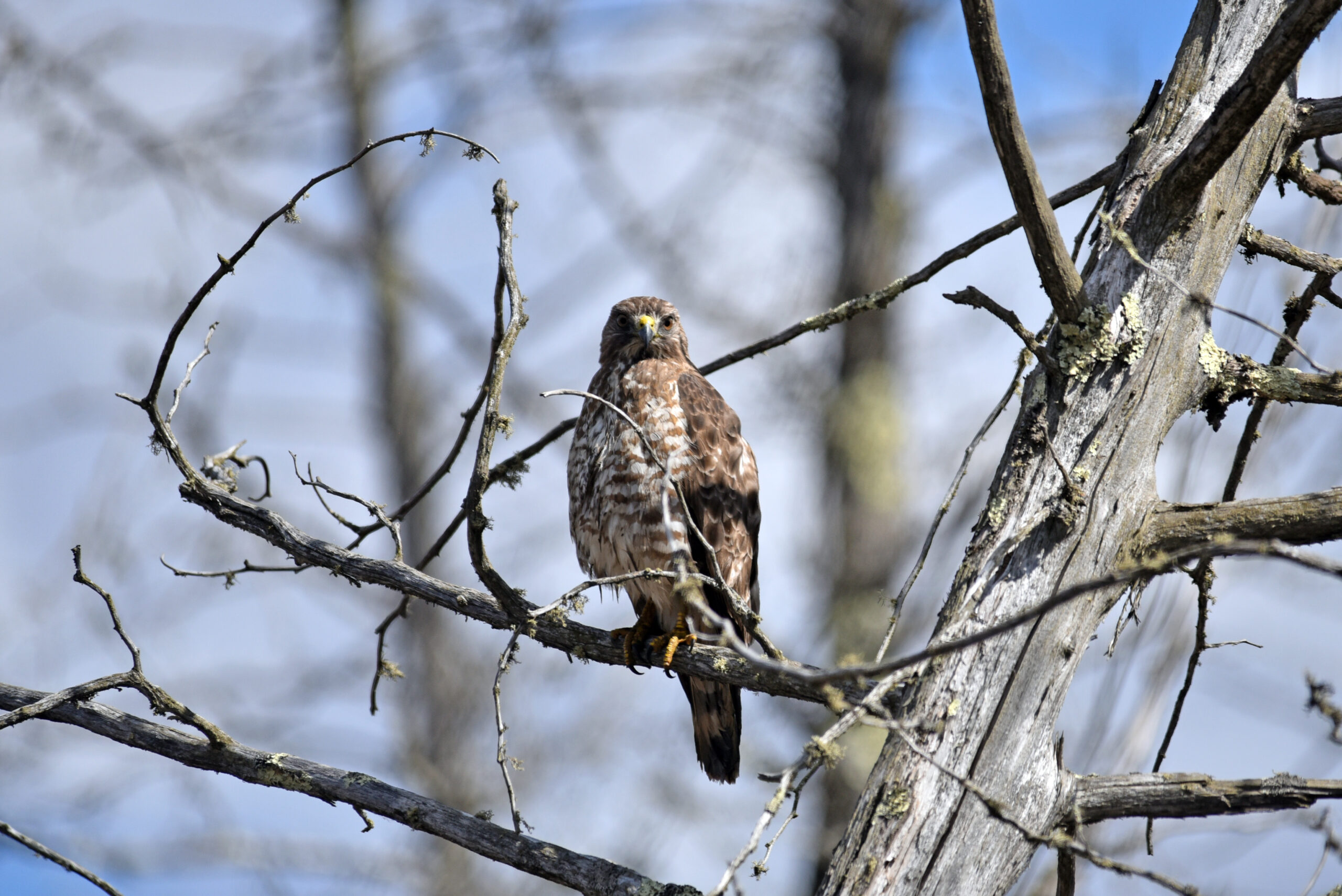
A compact Buteo, 34 to 44 cm (13 to 17 in), with bold black-and-white tail banding. It nests in Ohio’s forests through the summer, but the species is best known here for its migration: in mid-September, Broad-winged Hawks stop flapping almost entirely and ride thermals south in large circling flocks called kettles, often numbering in the hundreds over a single stretch of sky. Lake Erie’s shoreline and the ridges of southeastern Ohio both concentrate these flights, and local Audubon chapters typically post count updates during the peak window.
Outside that late-summer pulse, listen for a thin, high two-note whistle, quite different from the Red-tailed Hawk’s harsh scream.
Northern Harrier
Scientific name: Circus hudsonius
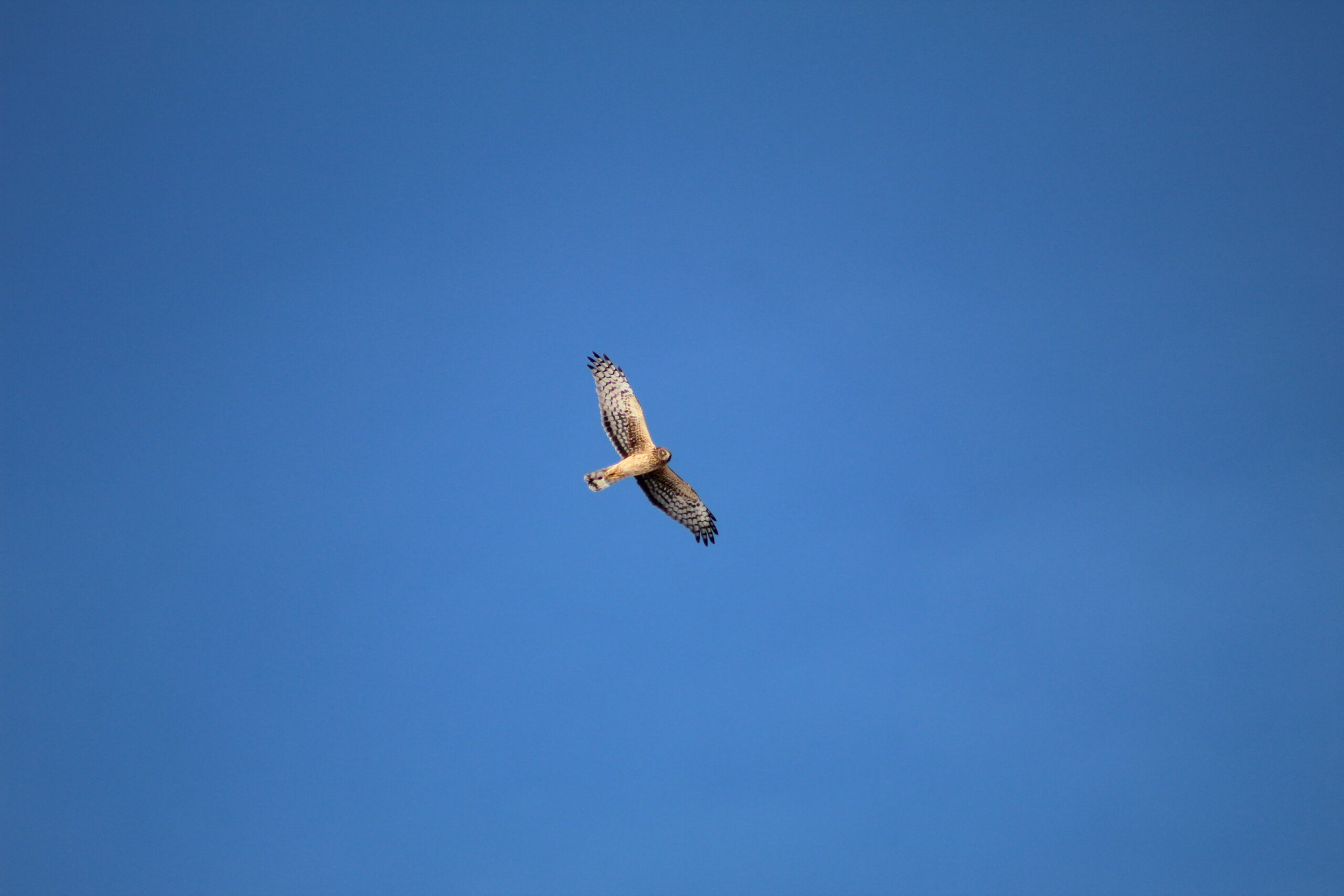
This is the hawk that flies like an owl hunts: a slow, low, tilting glide a few feet over open ground, wings held in a shallow V. At 41 to 50 cm (16 to 20 in), it’s built for marshland and open grassland rather than forest, which makes the wetland complexes along western Lake Erie, such as those near the Ottawa and Magee Marsh areas, some of the most reliable places in Ohio to find one. A bright white patch at the base of the tail is visible at a distance even when the bird is backlit, and its round, disk-shaped face (genuinely owl-like, and useful for pinpointing prey by sound in tall grass) is a good close-range check.
Males are pale gray above, females and immatures streaky brown, so the two sexes look almost like different species at a glance.
Bald Eagle
Scientific name: Haliaeetus leucocephalus
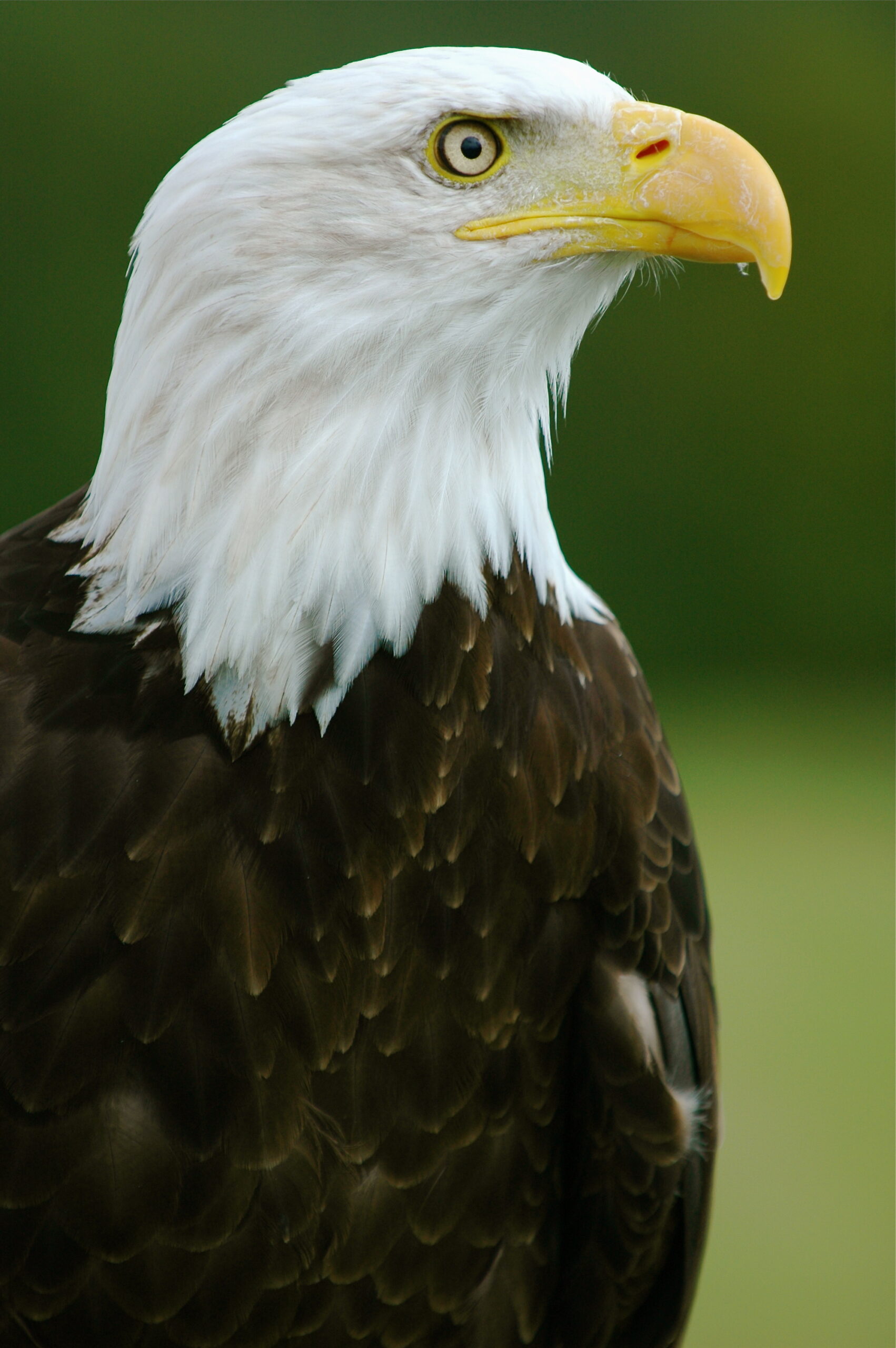
Ohio’s Bald Eagle story runs parallel to Pennsylvania’s: a single known nest left in the state by the early 1980s, and several hundred nesting pairs today, with the heaviest concentration along the Lake Erie shoreline and its marshes (Ohio Division of Wildlife). An adult is unmistakable at 70 to 90 cm (28 to 38 in) with a white head and tail against a dark brown body; immatures stay mottled brown for several years and get misidentified as Golden Eagles more often than any other Ohio raptor confusion.
Its actual voice, a thin chattering whistle, surprises people who expect the dramatic scream Hollywood dubs onto eagle footage. That sound belongs to the Red-tailed Hawk.
American Kestrel
Scientific name: Falco sparverius
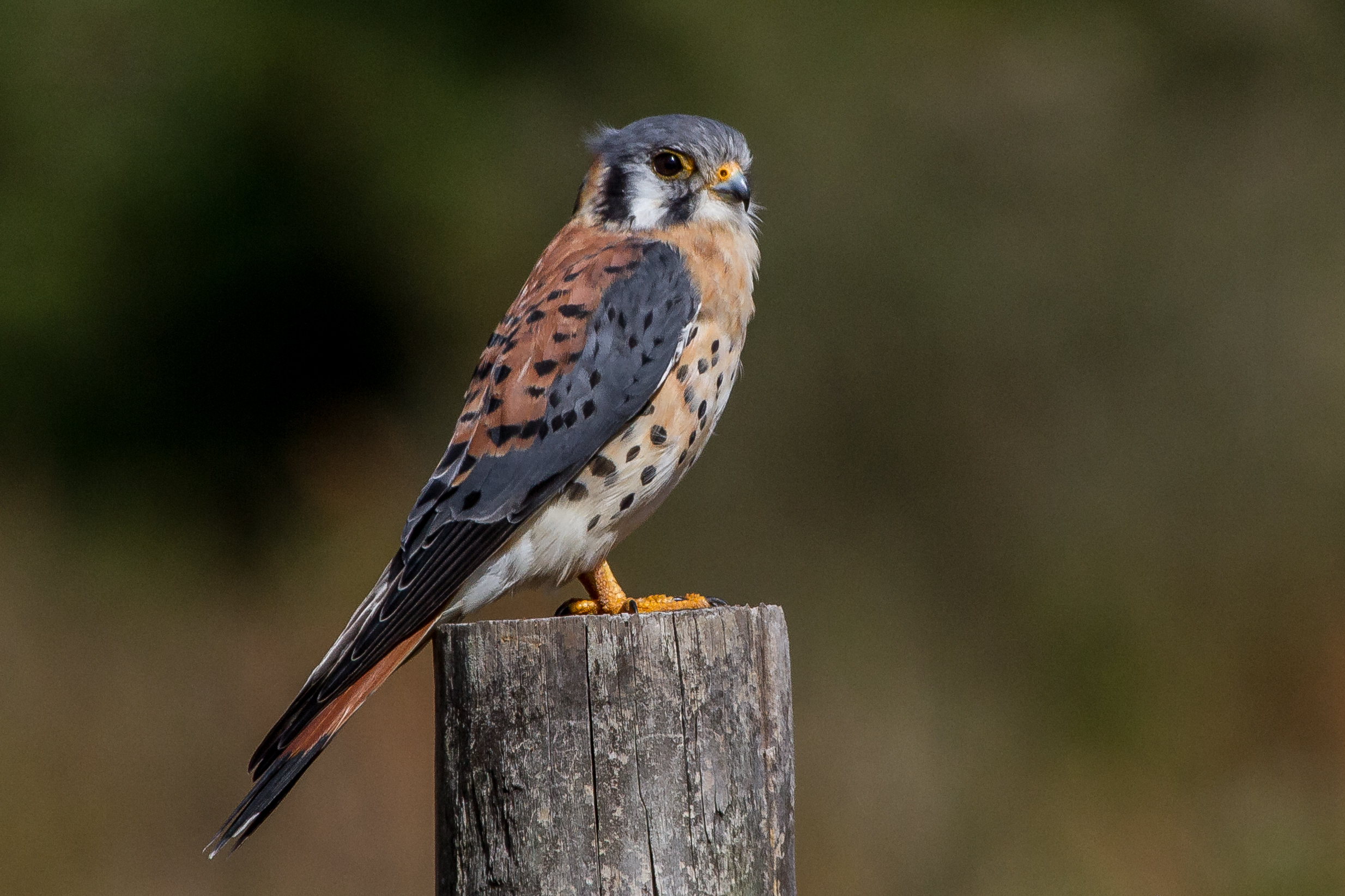
North America’s smallest falcon, around 22 to 31 cm (9 to 12 in), roughly the size of a Blue Jay, and the raptor most likely seen perched on a roadside wire over Ohio farmland. Males pair blue-gray wings with a rufous back and tail; females are rufous all over. Both sexes show two bold black stripes down the face, a pattern no other Ohio raptor shares, and both hover on rapidly beating wings while hunting, which alone separates a kestrel from anything else on this list.
Ohio’s breeding kestrel population has declined over recent decades, a trend tied to fewer standing dead trees with nesting cavities and the loss of open grassland habitat, so nest box programs in several counties now specifically target this species.
Peregrine Falcon
Scientific name: Falco peregrinus
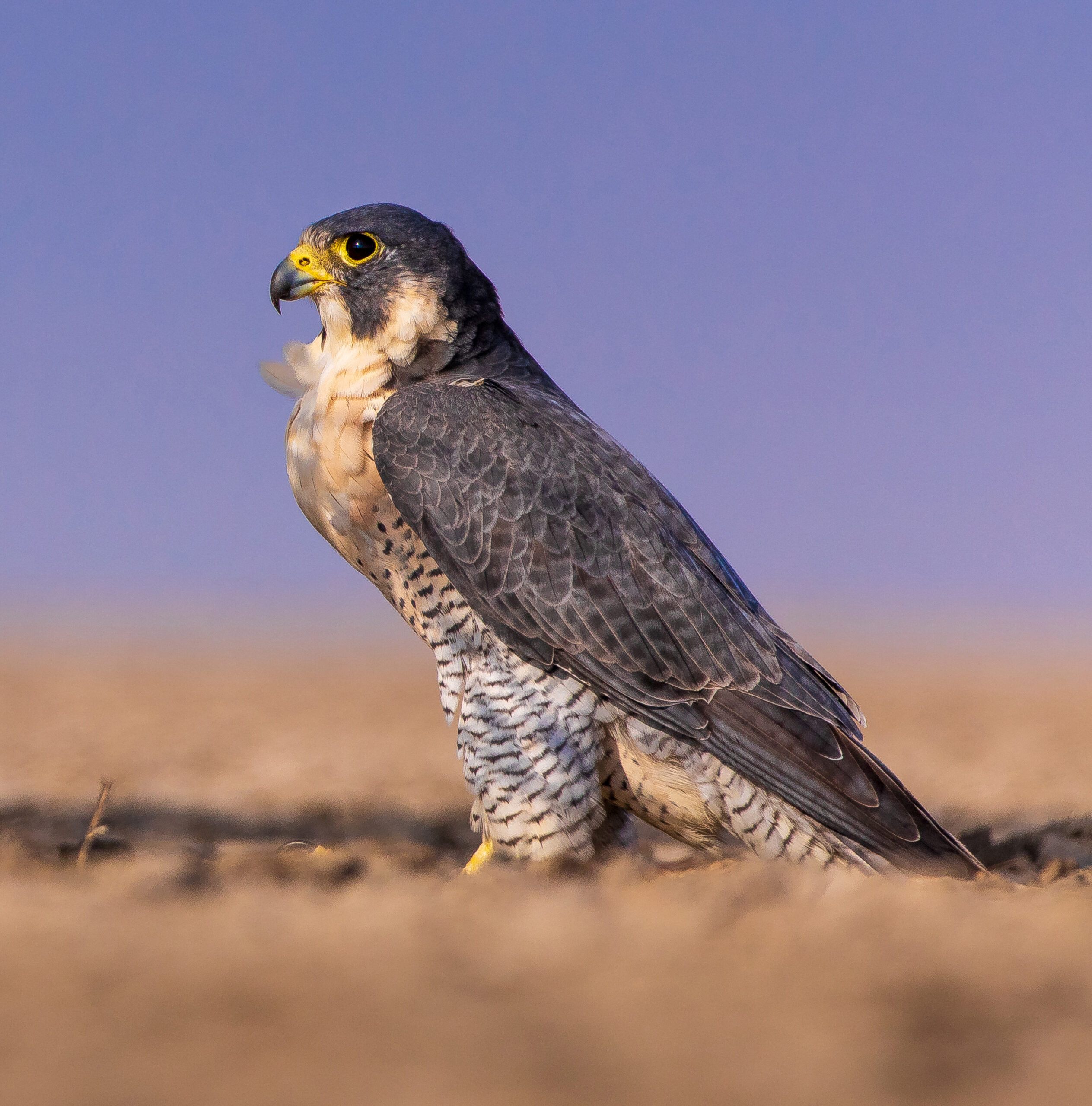
Eliminated east of the Mississippi by DDT by the 1960s, Peregrine Falcons have returned to Ohio mainly on tall buildings and bridges rather than the cliffs they originally nested on; Columbus, Cleveland, and Cincinnati all host monitored nest sites on downtown structures. Look for a dark hooded head extending below the eye, pointed wings, and a heavily barred belly; at 36 to 49 cm (14 to 19 in), it’s larger and noticeably faster-flying than a kestrel.
The hunting stoop, a near-vertical dive onto flying prey, usually pigeons in Ohio’s cities, can be the fastest movement of any animal on Earth. Near a nest, the call is a harsh, repeated kak-kak-kak.
Turkey Vulture and Black Vulture
Scientific names: Cathartes aura and Coragyps atratus
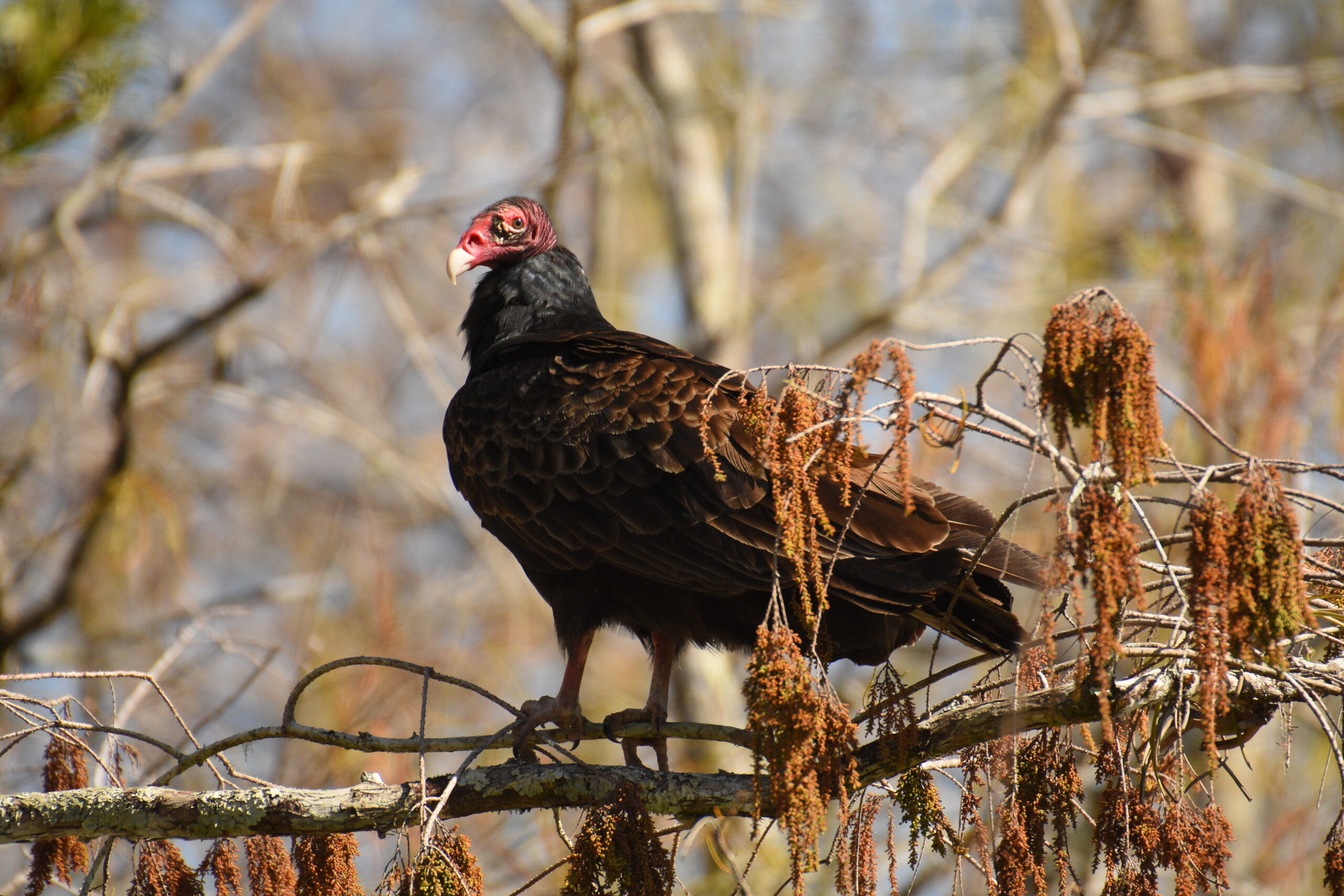
Turkey Vultures are common statewide and easy to pick out from a distance by flight style alone: they soar in a shallow V and rock unsteadily from side to side, rarely holding a flat, stable glide. Black Vultures are more concentrated in southern Ohio and fly with flatter wings and quicker, choppier wingbeats between glides. Up close, a Turkey Vulture’s bare head is red (gray on young birds) with a pale trailing edge visible across the whole underwing, while a Black Vulture’s head is gray and its underwing shows pale patches only near the wingtips.
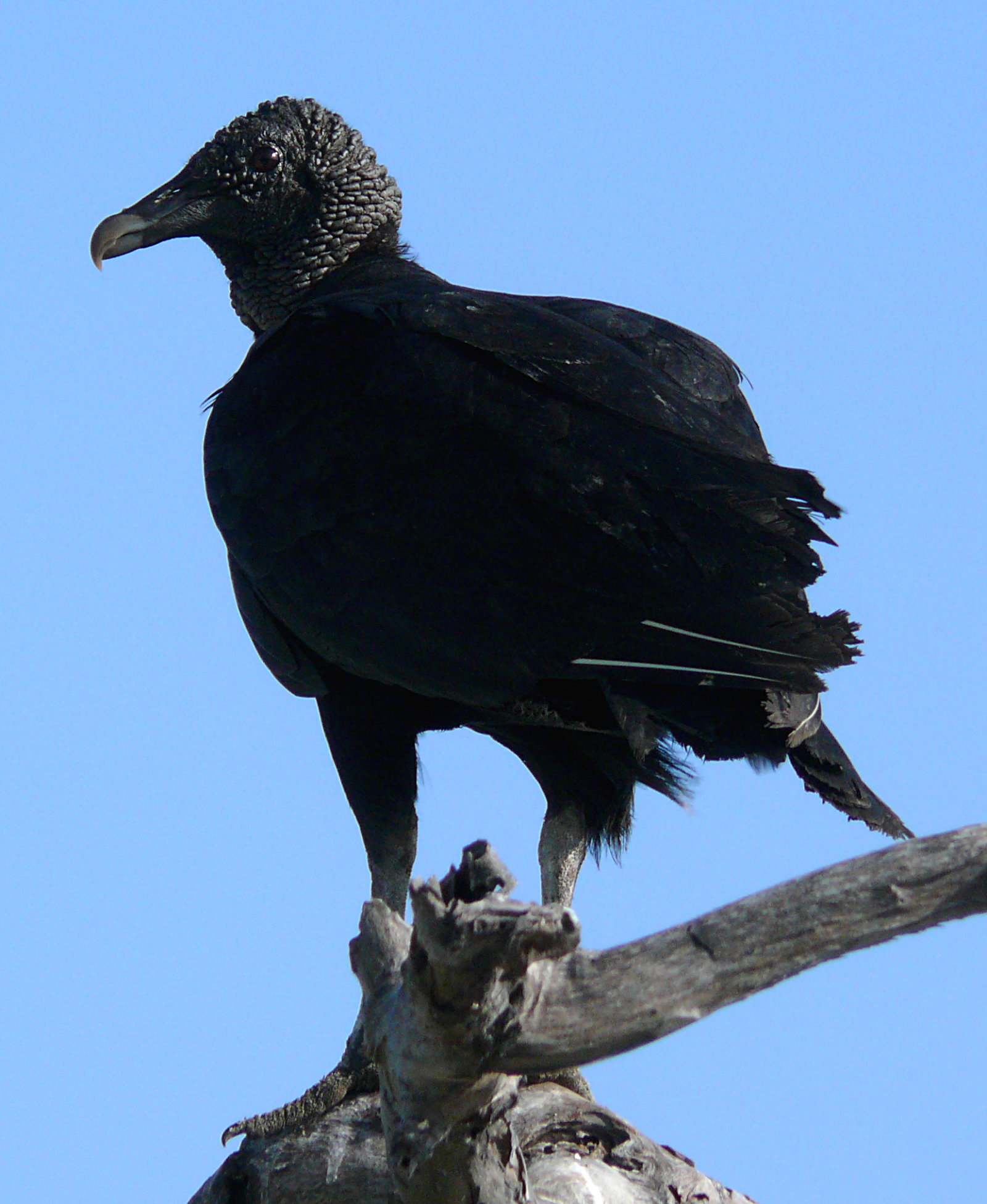
Turkey Vultures find carrion largely by smell, an unusual sense for a bird to rely on, which lets them locate food under forest canopy that a sight-hunting Black Vulture would miss entirely; the two species sometimes feed at the same carcass once the Turkey Vulture has found it.
When and Where to See Ohio’s Raptors
Western Lake Erie is the state’s single best raptor destination. The marshes around Ottawa National Wildlife Refuge and Magee Marsh hold breeding Bald Eagles and Northern Harriers through the warmer months, and the same shoreline funnels migrating hawks in fall, with Broad-winged Hawks peaking in mid-September and buteos, falcons, and eagles continuing to move through into November. Statewide, any clear day with a cold front and northwest winds tends to produce the most visible movement, since migrating raptors use the same rising air and tailwinds that make flying easier rather than fighting a headwind south.
More Ohio Birding Guides
For owls and other after-dark species, see our Ohio owl sounds guide. To sort out a hawk by tail pattern or belly color alone, our guides to hawks with striped tails and hawks with white bellies cover more plumage variations. For backyard species beyond raptors, see our Ohio backyard bird guide.
Frequently Asked Questions
What is the most common bird of prey in Ohio?
The Red-tailed Hawk. It’s a year-round resident statewide and the hawk most often seen perched along highways and farm fields.
Where can I see Bald Eagles in Ohio?
The Lake Erie shoreline holds Ohio’s densest concentration of nesting Bald Eagles, including the marshes around Ottawa National Wildlife Refuge, though the population has also rebuilt steadily at inland reservoirs across the state.
How do you tell a Sharp-shinned Hawk from a Cooper’s Hawk?
Head and tail shape are more reliable than overall size, since the two species overlap. A Sharp-shinned Hawk has a small, rounded head that barely clears the wrists and a square-tipped tail; a Cooper’s Hawk has a larger, blockier head and a rounded tail tip.
What hawk flies low over marshes with its wings in a V shape?
That’s almost certainly a Northern Harrier. Its low, tilting flight style over open marsh and grassland, combined with a white rump patch, is distinctive enough that it’s rarely confused with any other Ohio raptor once you’ve seen it.