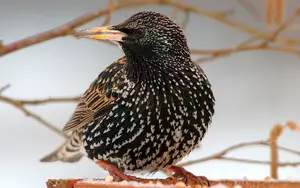
Winter Bird Feeding Guide: What to Offer, When, and Why
Anyone who has kept a feeder through a January cold snap knows the scene. It’s ten degrees, the sun is barely over the neighbor’s roof, and the chickadees are already there, taking turns at the tube feeder one seed at a time, as if somebody is holding a stopwatch. In a sense somebody is. A small songbird can spend a large share of its fat reserves just getting through one long, cold night, and the first hour of daylight is about putting that fuel back.
Winter feeding isn’t complicated. But a handful of choices make a real difference: which foods actually carry birds through cold weather, when to put them out, and which popular offerings mostly end up on the ground for the squirrels. This guide goes through the winter menu food by food, with the birds most likely to show up for each one, and then covers the timing, cleaning, and placement details that keep a busy winter feeder from doing more harm than good.
Why winter feeding matters (and what it doesn’t do)
The hard part of winter for a small bird usually isn’t the cold on its own. It’s the arithmetic. Days are short, so there are fewer hours to find food. Nights are long, so there are more hours to burn through it. Black-capped Chickadees handle this by letting their body temperature drop several degrees at night, a controlled hypothermia that saves energy, and by hiding thousands of seeds in fall to dig up later. Even with those tricks, a bird that weighs less than half an ounce goes to roost every night with very little margin.
Feeders help most at the extremes. A long-running study of chickadees in Wisconsin found that birds with access to feeders still got most of their daily food from wild sources, and that when the feeders were taken away they went back to natural foods without much trouble. Where feeders made the clearest difference was during the bitterest cold spells, when birds that could reach them survived the winter at noticeably higher rates. So the honest version goes like this. Backyard birds don’t become dependent on feeders. But a well-stocked one can be the thing that matters during an ice storm or a week of subzero nights.
Black-oil sunflower: the one seed to buy if you only buy one
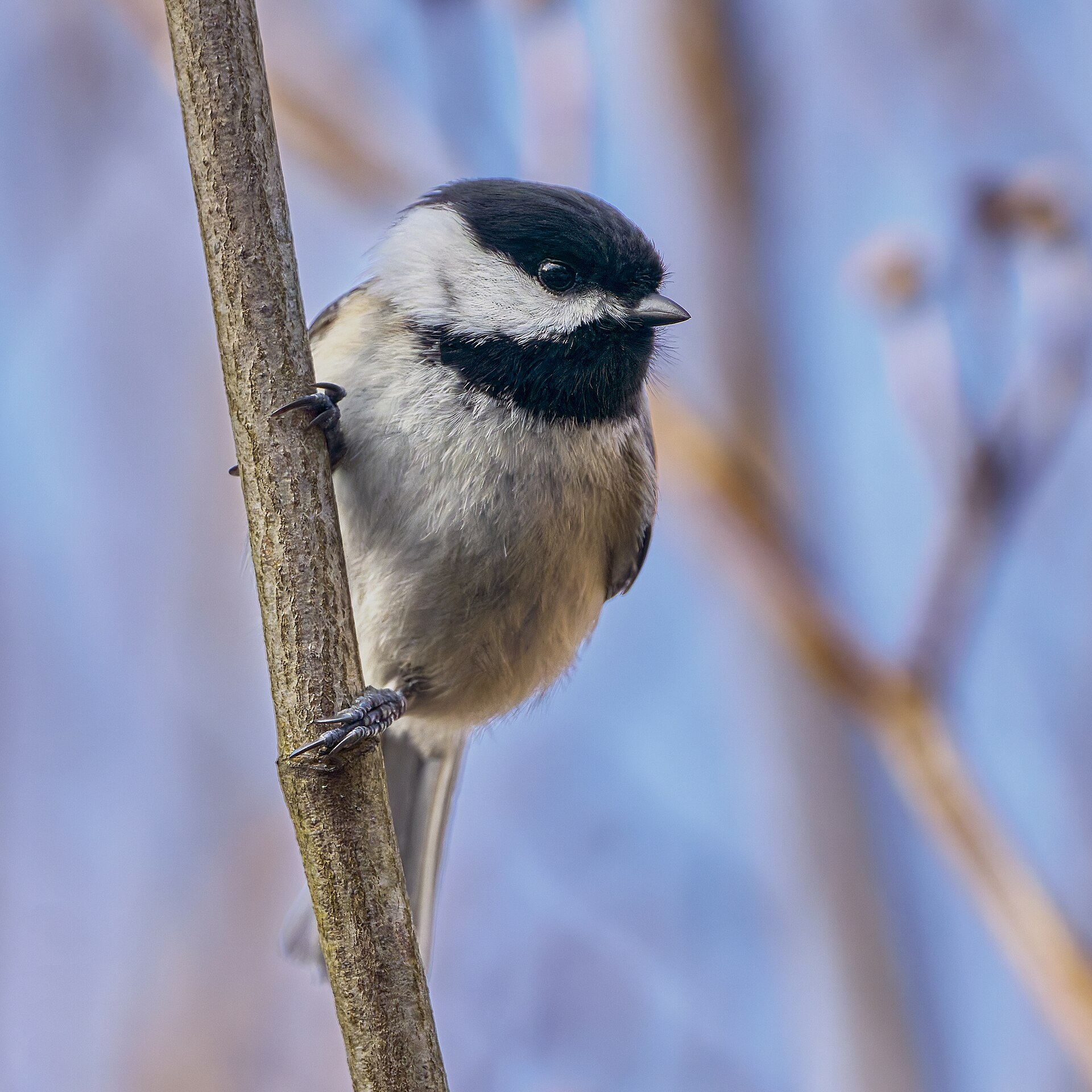
If the budget only stretches to one bag, it should be black-oil sunflower. The seeds are small, thin-shelled, and high in fat, which is exactly the combination winter birds are after. Chickadees, titmice, nuthatches, cardinals, finches, juncos, and even some woodpeckers take it readily. It is about as close as anything comes to a universal winter seed.
Chickadees have a habit worth watching for. One bird grabs a single seed, flies to a nearby branch, hammers it open against the bark, and comes straight back for another. That isn’t fussiness. A good share of those seeds are being tucked into bark crevices to eat later in the week.
Suet and fat: fuel for long nights
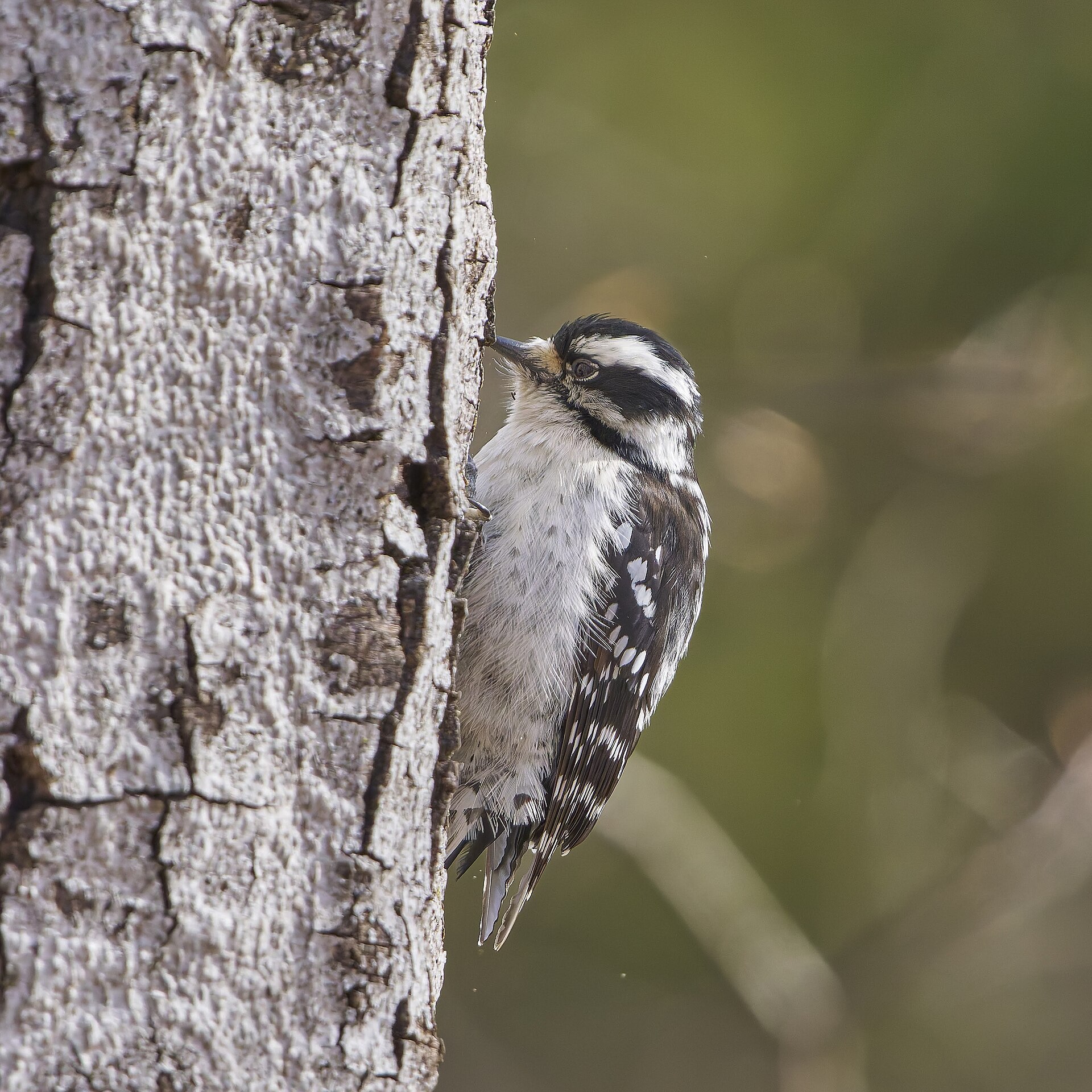
Suet is where winter feeding really parts ways with summer feeding. Rendered beef fat, often mixed with seed, cornmeal, or peanuts, packs more calories per bite than anything else on the menu, and it draws birds that rarely touch a seed feeder. Downy and Hairy Woodpeckers, Red-bellied Woodpeckers, nuthatches, chickadees, Carolina Wrens, and in wooded yards the occasional Pileated Woodpecker will all work a suet cage through the coldest months.
Cold weather is when suet behaves best. In summer heat it softens, spoils faster, and can mat into feathers, which is why many people take it down for the warm months or switch to no-melt doughs. In winter that problem mostly goes away. A plain wire cage hung against a tree trunk works fine, and a cage with a tail-prop board underneath gives the bigger woodpeckers something to brace against. Skip bacon grease and other cooking fats. They’re salty, they turn rancid quickly, and they smear onto feathers.
Nyjer and the finch feeder
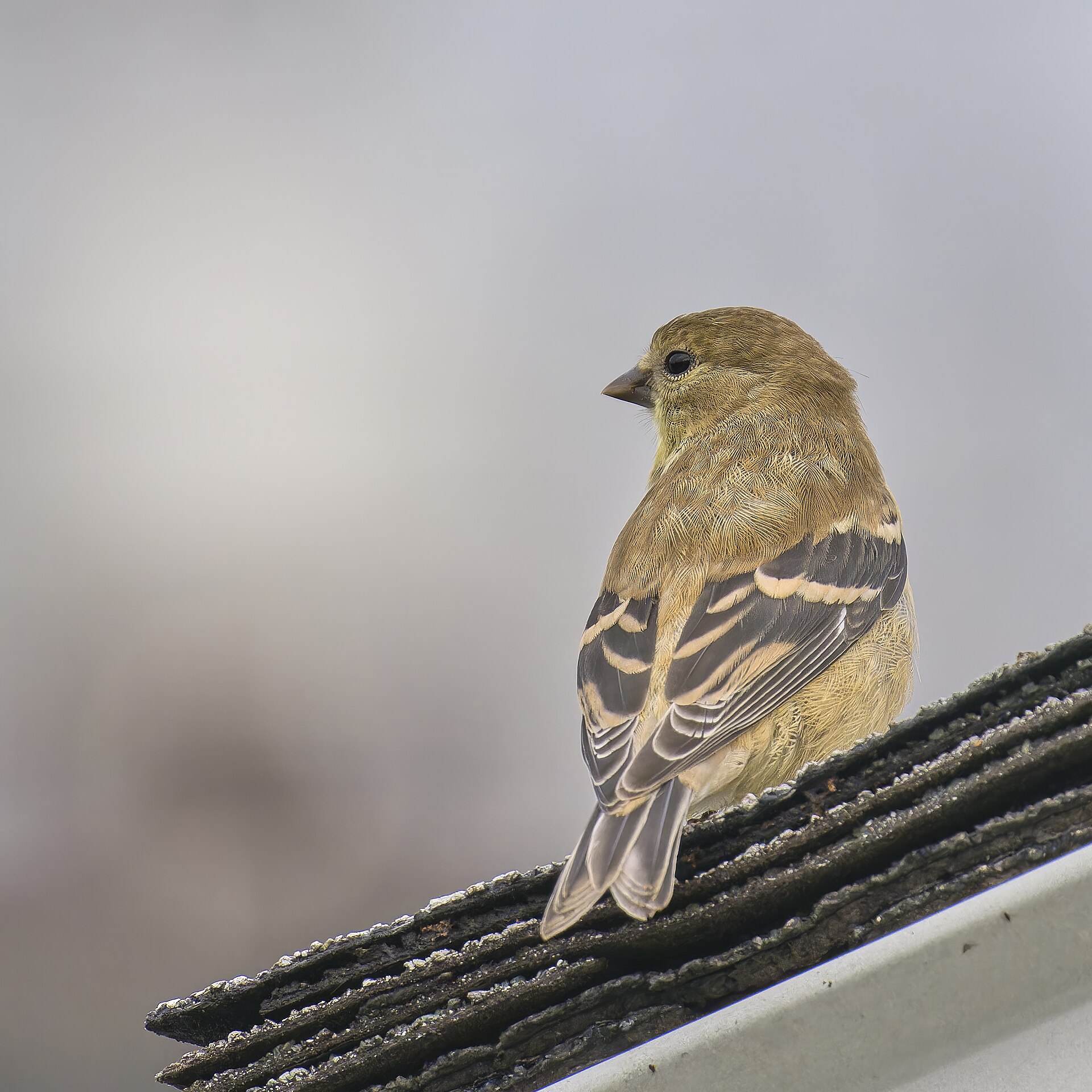
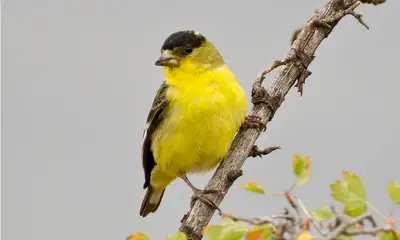
Across most of the country, American Goldfinches don’t leave in winter. They just change clothes. The lemon-yellow males of July molt into a dull olive-brown by fall, and plenty of people assume their goldfinches have gone south when the same birds are still at the feeder, just harder to recognize. Nyjer, often sold as “thistle” even though it isn’t related to the thistle plant, is a tiny black seed that goldfinches, Pine Siskins, and, in irruption years, Common Redpolls go after eagerly.
Nyjer has two quirks. It dries out and goes stale, and birds will quietly stop eating it when it does, so it’s better to buy small bags and keep them dry. It also needs its own feeder, either a tube with tiny ports or a mesh sock, because it pours straight through ordinary feeding holes. When goldfinches suddenly ignore a full nyjer feeder, old seed is the first thing to suspect.
Millet on the ground for sparrows and juncos
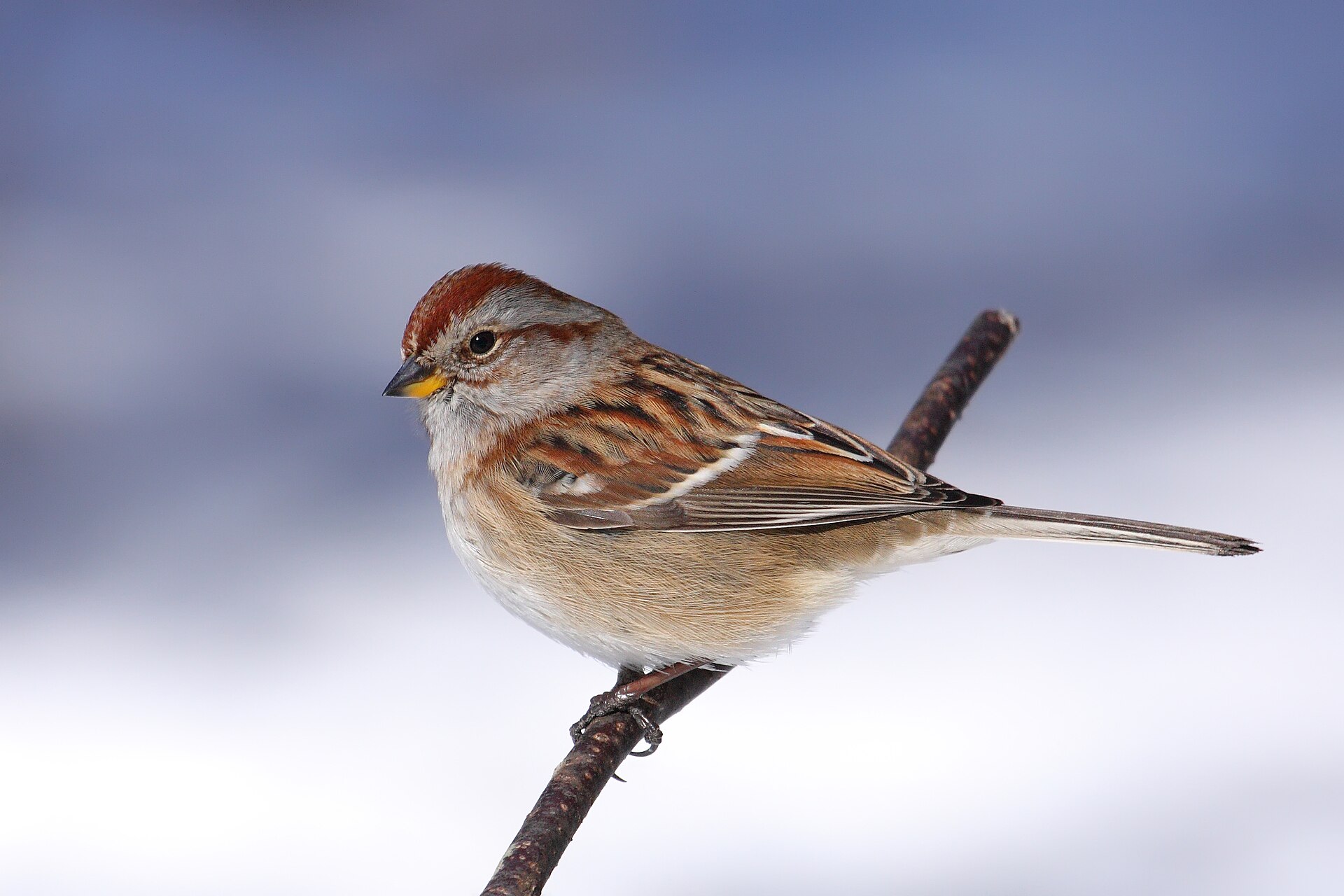
A surprising number of winter birds never use a hanging feeder at all. Dark-eyed Juncos, White-throated Sparrows, Song Sparrows, American Tree Sparrows, Mourning Doves, and towhees forage on the ground, scratching through leaves and snow. For them, white proso millet scattered on a cleared patch near shrubs, or set out on a low platform feeder, is the single most useful thing to offer.
American Tree Sparrows are a good example of a strictly winter visitor. They nest far to the north, out along the edge of the tundra, and drift into the northern and central states in late fall, often in small flocks mixed in with juncos. The field marks are a rusty cap, a plain gray face, a bill that’s dark on top and yellow underneath, and a single dark smudge in the middle of an otherwise clean breast.
Millet is also the backbone of cheap mixed birdseed, usually along with fillers like milo and red millet. Most feeder birds in the East simply kick the milo aside, so buying sunflower and millet separately usually works out cheaper in the long run.
Safflower for cardinals (and fewer squirrels)
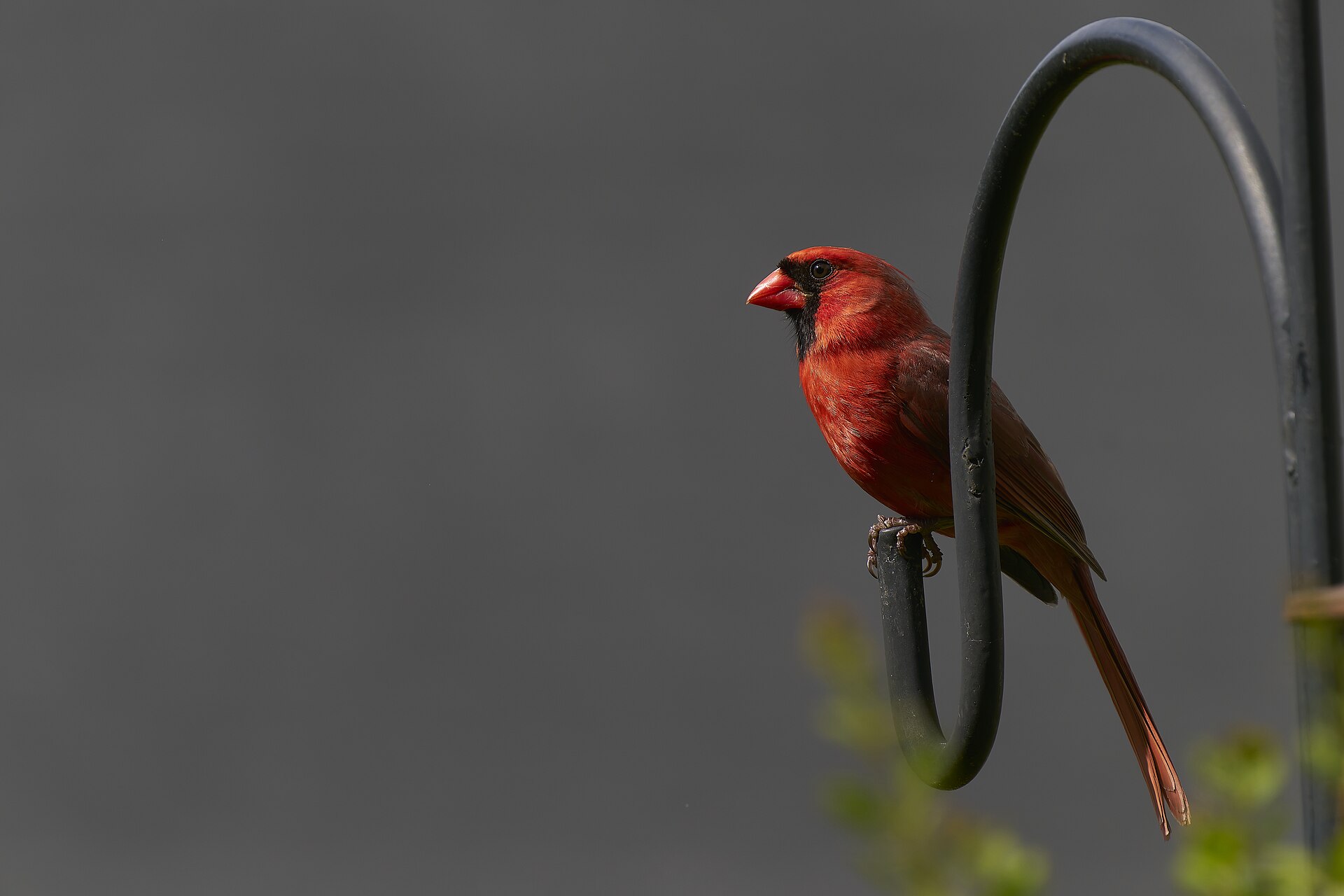
Safflower is a white, slightly pointed seed that Northern Cardinals take to readily. Its real advantage is what doesn’t like it. Many squirrels aren’t keen on safflower, and neither are grackles or starlings, so in yards where those three empty the feeder by noon, switching one hopper to safflower can tip things back toward cardinals, chickadees, titmice, and House Finches. Birds can take a week or two to accept it, so it helps to mix it with sunflower at first and shift the ratio gradually.
Cardinals tend to feed early and late, often the first birds at the feeder in the morning and the last at dusk, and they’re more comfortable on a platform or a hopper with a wide perch than on a small tube. A male cardinal on a snowy branch may be the most photographed winter bird in the country. It’s also a bird that sticks close to home. Cardinals don’t migrate, so the pair in the yard in January is very likely the pair that nested in the hedge in June.
Peanuts, shelled and unsalted
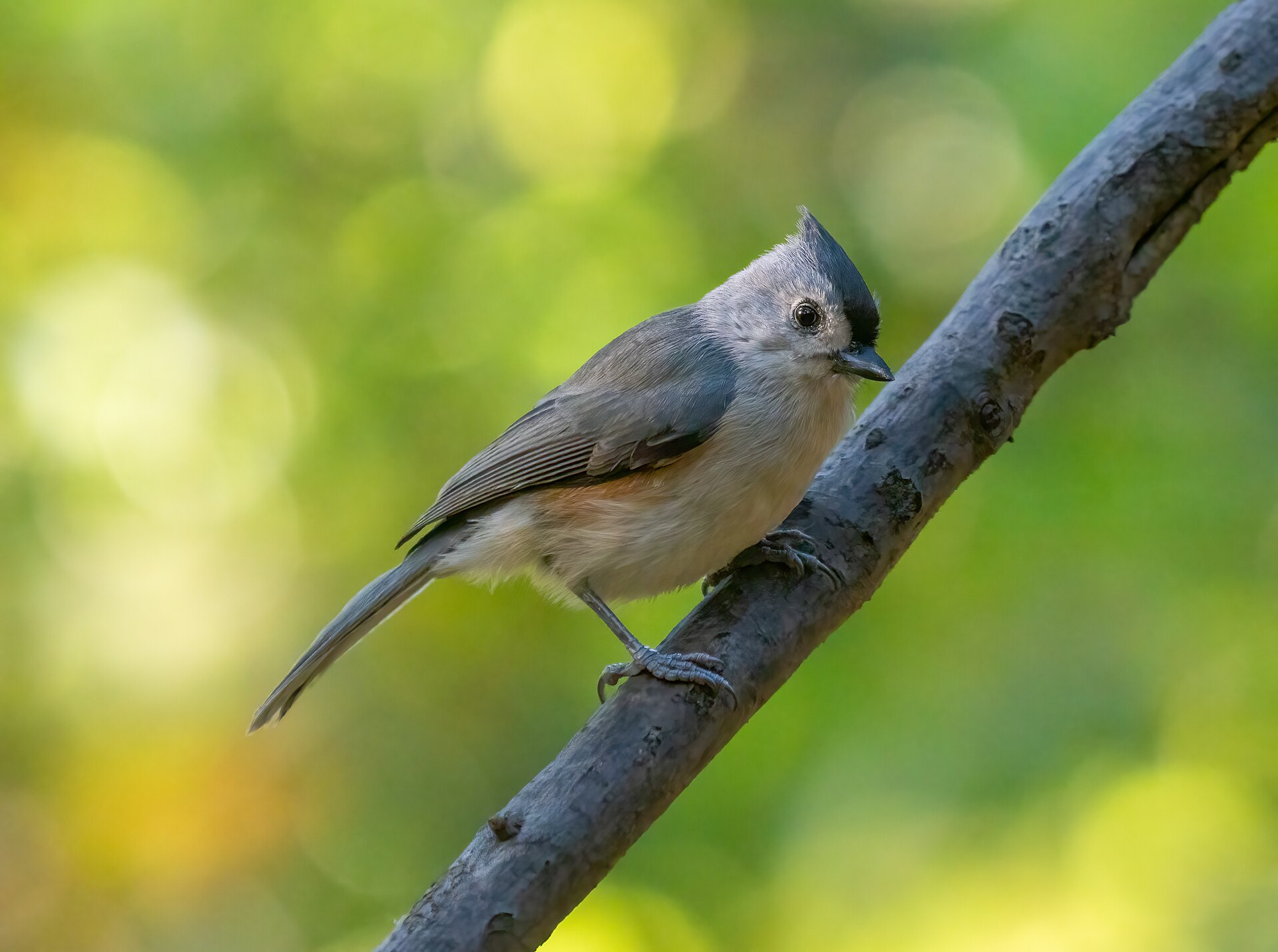
Peanuts are rich in fat and protein, and titmice, chickadees, nuthatches, woodpeckers, and Blue Jays all come for them. Offer them shelled and unsalted, either in a mesh feeder that lets birds peck off pieces without carrying a whole nut away, or chopped on a platform.
The one real caution with peanuts is quality. Moldy peanuts can carry aflatoxin, which is harmful to birds, so buy them from a source that sells them for wildlife or for people, keep them dry, and throw out anything that smells musty or looks discolored. A Tufted Titmouse carrying a peanut chunk to a branch, pinning it under its feet, and hammering away at it is one of the better reasons to keep a peanut feeder going.
Mealworms for the birds that skip seed
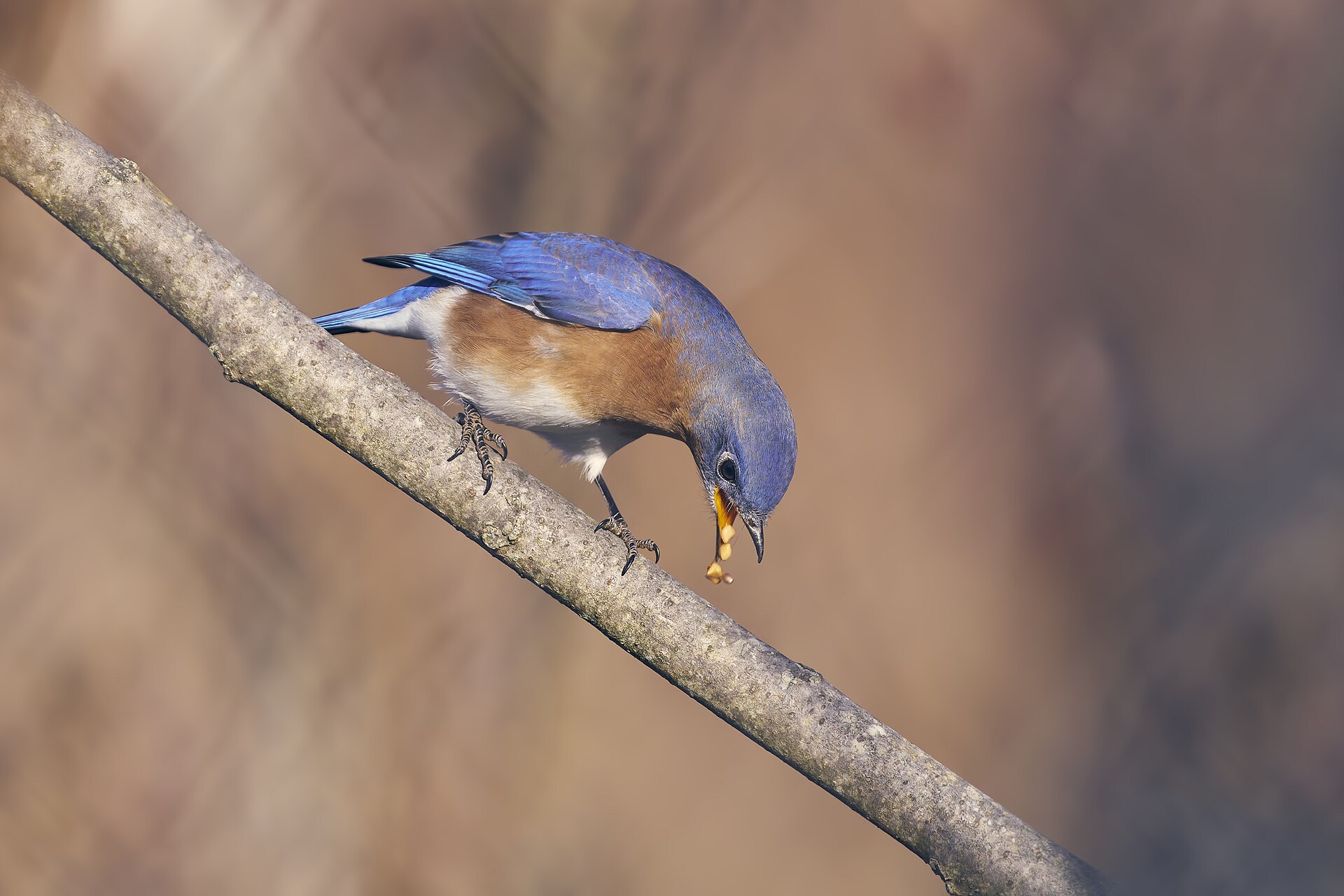
Eastern Bluebirds used to be thought of as summer birds across much of the North, but more of them now stay through the winter, especially where there’s open water and fruit nearby. They don’t eat seed. In winter they live mostly on berries such as sumac, holly, dogwood, and redcedar, and they will come to a dish of dried or live mealworms. Carolina Wrens, which also stay put all winter, share the taste for insects, and mealworms can bring them right up to the house.
Berries and the winter flocks
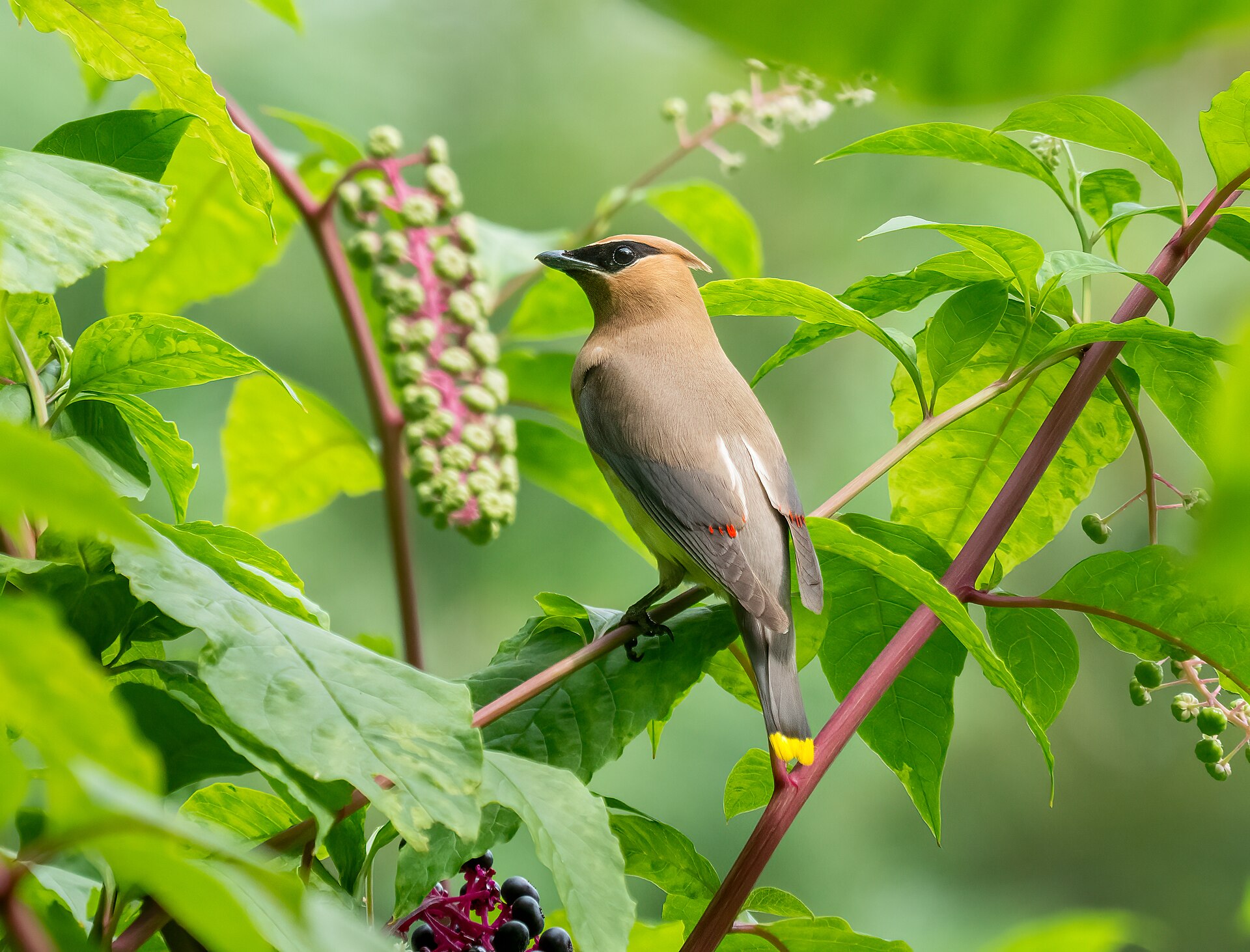
Some winter birds barely notice feeders at all. Cedar Waxwings travel in nomadic flocks, following fruit across the landscape, and a flock can strip a crabapple or a winterberry holly in an afternoon before moving on. American Robins do something similar. Plenty of robins stay in the northern states all winter, but they gather in flocks in wooded areas and around fruiting trees instead of hopping across lawns, so people tend to assume they’ve left.
Feeders won’t do much for these birds. Plants will. Winterberry, American holly, eastern redcedar, crabapples, hawthorns, sumac, and viburnums hold fruit well into winter, and they’re the closest thing to a feeder for waxwings, robins, bluebirds, and wintering Yellow-rumped Warblers.
Water: the most overlooked winter offering
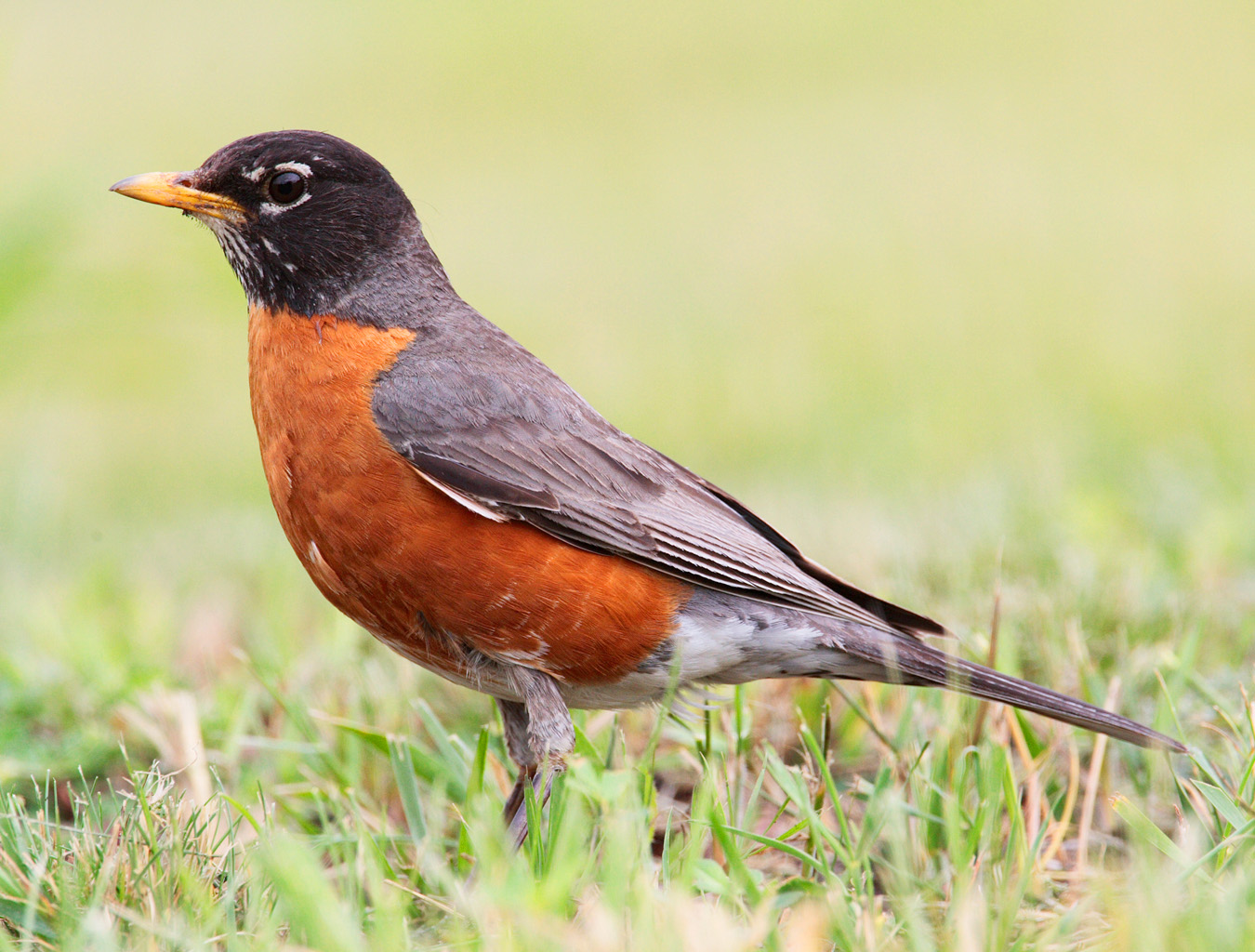
In a hard freeze, open water can be harder for birds to find than food. Birds still need to drink, and they bathe in winter too, which keeps their feathers clean enough to insulate properly. A heated birdbath, or a thermostatically controlled de-icer dropped into an existing bath, often brings in birds that never visit the seed feeders: robins, bluebirds, waxwings, and every so often a flock of something nobody expected. There’s a separate rundown of heated bird baths for winter for anyone shopping for one.
Keep the water shallow, an inch or two deep, and clean it regularly. Never add antifreeze, salt, or any other additive to keep it open, since those can poison birds or ruin their feathers. A spot near cover, but not right beside a shrub where a cat can wait, lets birds see trouble coming.
When to start, and when to stop
There’s no harm in starting early. Many people put feeders back up, or bring suet out, in October or November as temperatures drop, which is right when winter residents are settling into territories and learning where the reliable food is.
Once winter sets in, consistency matters more than volume. Birds won’t starve if a feeder runs dry for a day, but a full feeder is worth the most during a long cold snap and in the day before and after a big snow. Heavy snow buries ground food, so shoveling a small patch and scattering millet the morning after a storm helps the juncos and sparrows that can’t use a hanging feeder.
Bears are the main exception to all of this. In bear country, many state wildlife agencies ask people to keep feeders down from spring through late fall and put them up only once bears are denned, which in most northern states means roughly December through March. Anyone living where black bears roam should check their state agency’s guidance before hanging anything.
Keeping the feeder clean and safe
Crowded winter feeders can spread disease, especially salmonellosis among finches and siskins and the eye infection that shows up as crusty, swollen eyes in House Finches. A bird that is fluffed up, sluggish, or still sitting on the feeder after everything else has flushed is a signal to take the feeders down, clean them, and leave them empty for a week or two. Routine cleaning every couple of weeks in a dilute bleach solution, roughly one part bleach to nine parts water, followed by a good rinse and a full dry, heads off most problems.
Windows are the other big hazard. Feeders placed within about three feet of a window, or well away from the house, cause fewer serious collisions than ones in between, because birds either can’t build up speed or can see the glass for what it is.
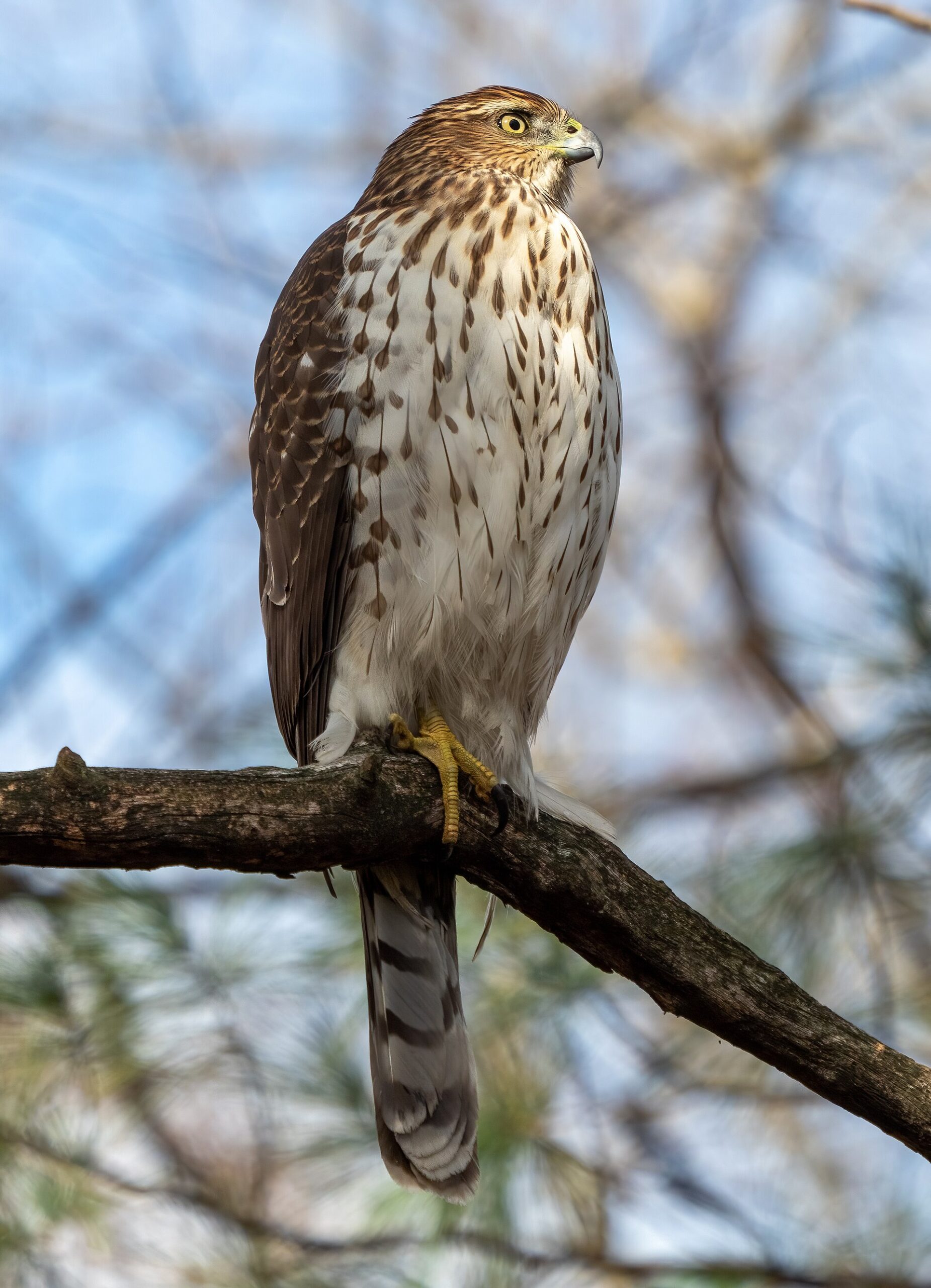
And then there are the hawks. A Cooper’s Hawk or Sharp-shinned Hawk working the feeder is part of the winter picture almost everywhere. It can be hard to watch, but it doesn’t mean anything has gone wrong. Hanging feeders within a short dash of dense shrubs or a brush pile gives small birds somewhere to dive, and the hawk usually moves on after a few days of slim pickings.
Getting Started
A practical winter setup for most yards looks like this: one tube or hopper of black-oil sunflower, one suet cage, a nyjer feeder if goldfinches are around, a scatter of millet on the ground near cover, and water if there’s any way to keep it open. That covers the great majority of birds likely to visit. Safflower, peanuts, and mealworms can come later, once the basics are steady and it’s clear which birds are actually showing up.
Then it’s worth keeping a few notes. Project FeederWatch, run by the Cornell Lab of Ornithology and Birds Canada, asks volunteers to count the birds at their feeders on a couple of days at a time from November through April, and that data helps track which species are increasing, declining, or shifting their winter range.
Sources
Feeding, behavior, and range details are cross-checked against the Cornell Lab of Ornithology’s All About Birds and Project FeederWatch, the National Audubon Society, and eBird seasonal occurrence data. Bear-season feeding guidance follows recommendations published by several state wildlife agencies; check your own state agency for local timing.