Birds That Stay Through Winter in the Northern US
By mid-November, a backyard in Minnesota or Vermont or northern Michigan gets noticeably quieter. The orioles are in Central America, the hummingbirds are somewhere along the Gulf, and the warblers that filled the treetops in May are long gone. What’s left can look thin at first glance. Then a chickadee calls from the spruce, a nuthatch answers from the oak, and a pair of cardinals drops onto the snow under the feeder, and it becomes clear that a good number of birds simply never left.
Those birds are worth a closer look, because staying put through a northern winter is a much harder trick than it appears. This guide covers the species most people in the northern tier of the US (roughly from the Dakotas east through the Great Lakes to New England) can expect to see between December and March, how each one gets through the cold, and where to look for them. A few are true year-round residents. A few others are winter visitors that come down from Canada and the Arctic, birds for which a snowy field in Ohio counts as heading south.
Staying versus leaving: how birds decide
Migration is mostly about food, not temperature. Birds that eat flying insects, nectar, or soft fruit have no choice in a northern winter, because those foods disappear. The birds that stay are the ones that can switch to something still available in January: seeds, dormant insects and their eggs tucked into bark, berries that hang on the branch, or other animals. Woodpeckers dig beetle larvae out of dead wood. Chickadees and nuthatches lean on seeds they hid in the fall. Grouse eat tree buds. Owls and hawks eat whatever moves.
Then there’s the physical side of it. Most of these birds grow a denser coat of feathers in the fall, fluff up to trap warm air, tuck their bills into their back feathers, and stand on one leg to keep the other warm. Bird legs and feet carry very little muscle and use a countercurrent arrangement of blood vessels, so warm blood heading down to the feet passes heat to cold blood coming back up. A chickadee standing on an icy perch isn’t nearly as uncomfortable as it looks.
Residents and winter visitors
It helps to sort northern winter birds into two loose groups. Residents, like the chickadee, the nuthatches, the woodpeckers, and the cardinal, hold roughly the same area all year, and many pairs defend the same patch of woods through winter. Winter visitors, like redpolls, Snow Buntings, and Snowy Owls, breed far to the north and show up in the northern states only between late fall and early spring. Some of those visitors are irregular, arriving in large numbers one year and barely at all the next, depending on how the seed crop or the lemming population did up north. Those irruption years are a big part of what makes northern winter birding interesting.
Black-capped Chickadee
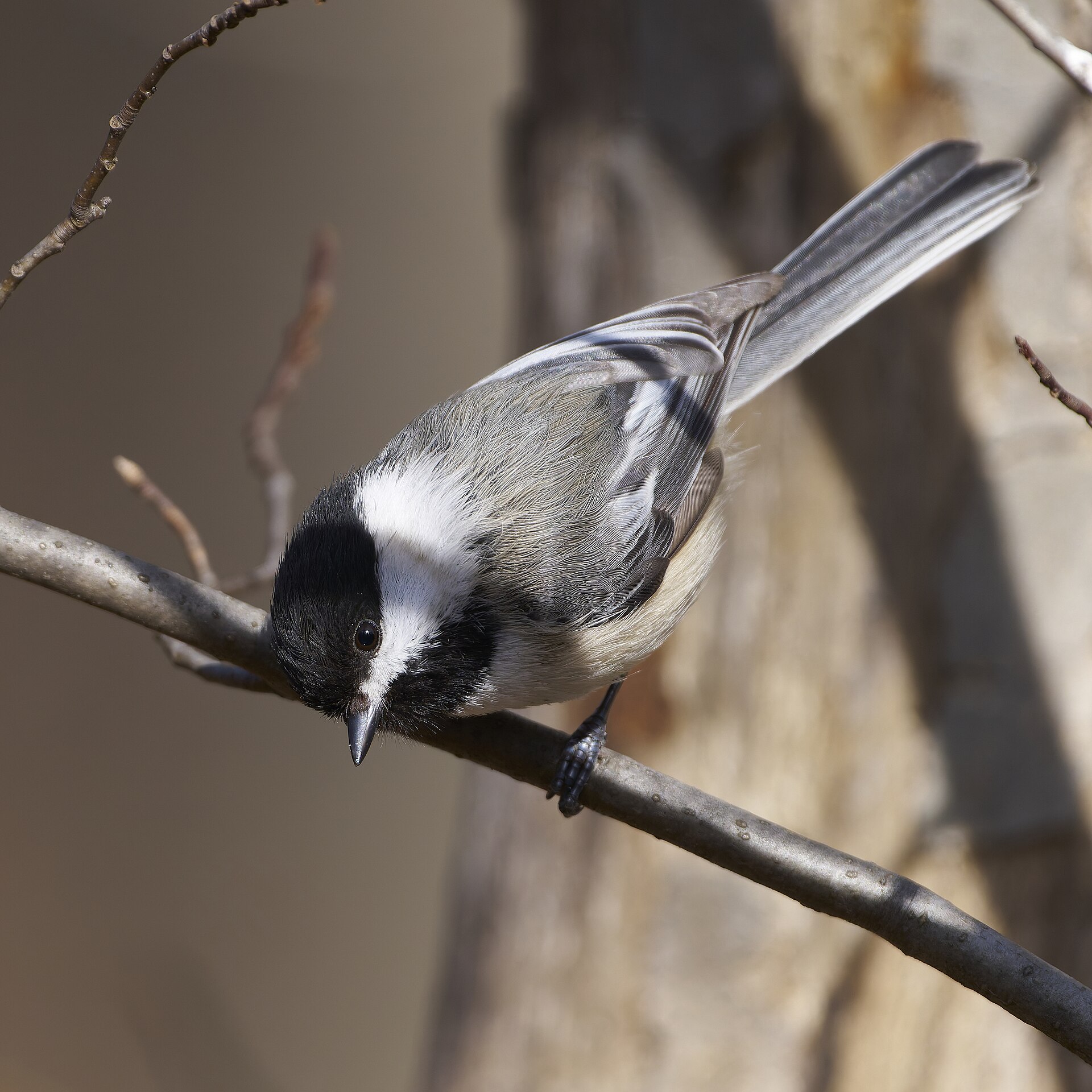
No bird better represents a northern winter than this one. A Black-capped Chickadee weighs less than half an ounce, and yet it stays through winters that regularly drop well below zero across Minnesota, Maine, and the Upper Peninsula. It manages partly through behavior. On cold nights it lets its body temperature drop several degrees into a controlled hypothermia that saves a surprising amount of energy, and it spends the fall hiding seeds and insects one at a time in bark crevices, curled leaves, and clumps of lichen.
Chickadees remember a remarkable number of those hiding spots. Research on the species has found that the part of the brain tied to spatial memory actually swells in autumn, when caching is at its peak. In winter they travel in small flocks that other species follow around, which is why a single chickadee call in the woods is often followed by a nuthatch, a woodpecker, and a kinglet or two. At feeders they take black-oil sunflower and suet, and they’re usually the first birds to find a new feeder at all.
Golden-crowned Kinglet
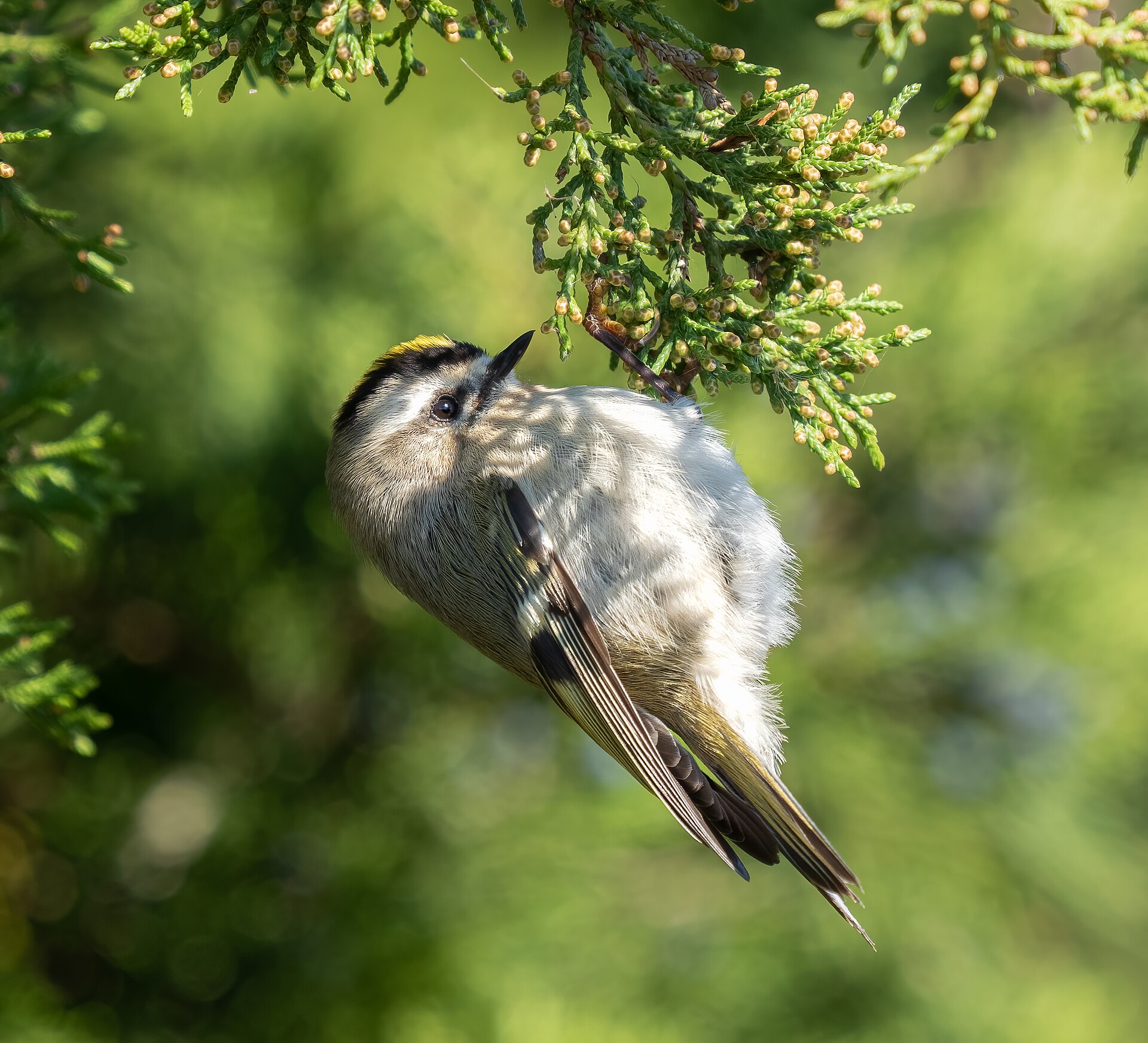
This is the bird that surprises people. Golden-crowned Kinglets are tiny, smaller than a chickadee, with a striped face and a bright yellow-and-orange crown stripe, and they spend the winter in conifers across the northern states and well up into Canada. The Cornell Lab notes they can survive nights of forty below in the boreal forest. Nobody is entirely sure how they find enough food, but they keep foraging through the coldest days on insect eggs, dormant caterpillars, and spiders picked from conifer needles, and they’re known to roost huddled together on cold nights.
They rarely come to feeders. The best way to find one is to stand still near a stand of spruce or hemlock on a calm winter morning and listen for a very high, thin see-see-see, often coming from inside a mixed flock of chickadees. Many birders with older ears can’t hear it at all, which is worth knowing before concluding there aren’t any around.
White-breasted Nuthatch
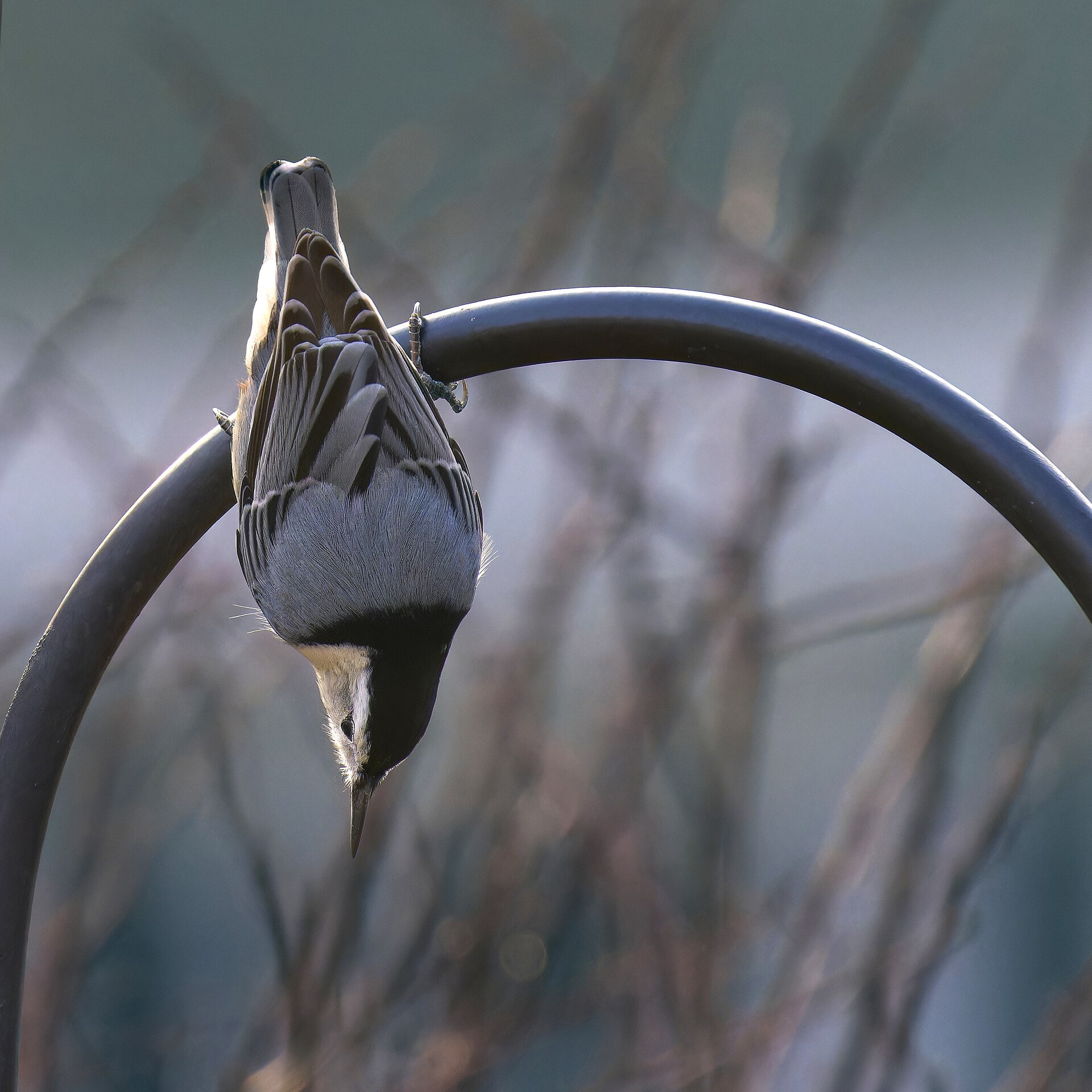
The nuthatch is the bird walking headfirst down the trunk. White-breasted Nuthatches are year-round residents almost everywhere in the northern states with mature hardwoods, and pairs generally stay together on the same territory through the winter. Like chickadees, they cache food in the fall, wedging seeds and nuts into bark and sometimes covering them with a flake of lichen or a bit of snow.
At a feeder they tend to grab one seed and leave, often wedging it into a crack in a nearby tree to hammer it open, which is where the name comes from. They love suet, sunflower, and peanuts. In winter, listen for their nasal yank-yank call, which carries well on cold, still days and often gives away a flock before anything else does. The smaller Red-breasted Nuthatch is a winter visitor in many northern yards too, but its numbers swing widely from year to year with the conifer seed crop.
Hairy Woodpecker
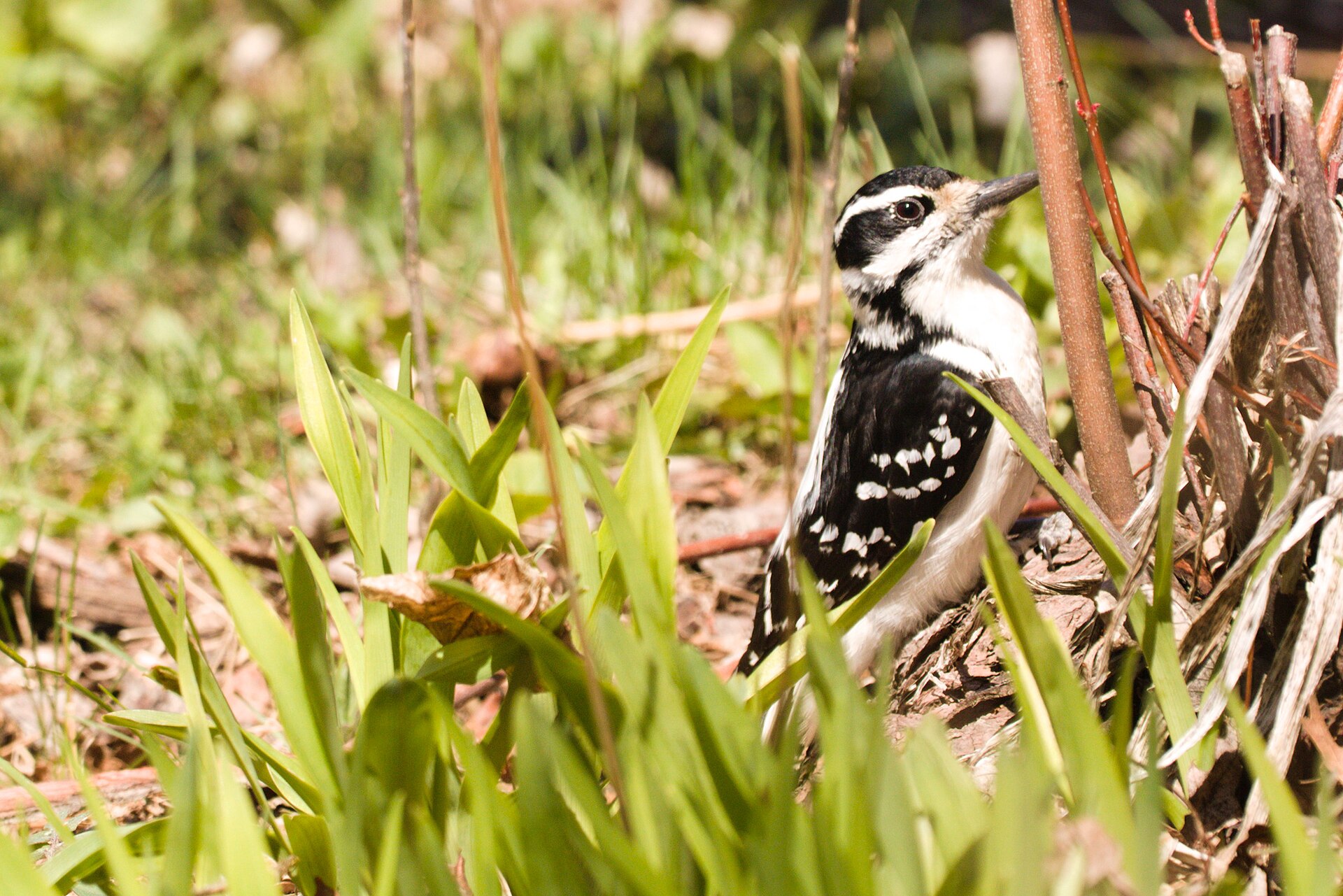
Hairy Woodpeckers look like a larger version of the Downy, and telling them apart is a rite of passage at a winter feeder. The quickest clue is the bill: on a Hairy, it’s nearly as long as the head, while a Downy’s bill is short and stubby. Hairies are also noticeably bigger in person and tend to be warier, landing on the far side of the suet cage and keeping an eye out.
They get through winter on wood-boring beetle larvae and other insects dug out of dead and dying trees, and they excavate their own roost holes to sleep in, which gives them a sheltered pocket out of the wind. A yard with a few standing dead limbs (where it’s safe to leave them) is more useful to a Hairy Woodpecker than any feeder. That said, they’re steady suet customers from November to March, especially during deep snow.
Pileated Woodpecker
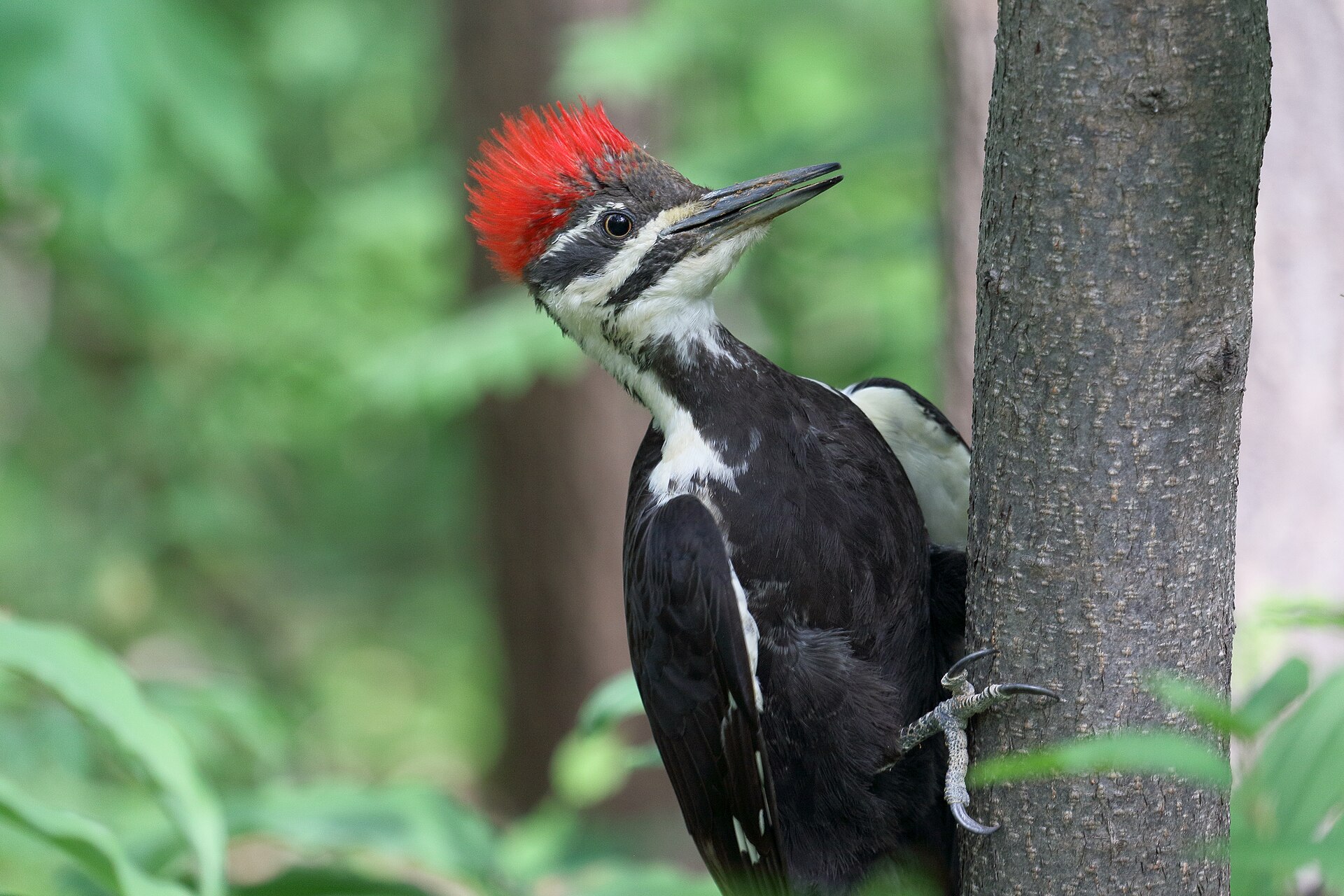
A Pileated Woodpecker at the suet feeder in January is the kind of sighting people remember for years. The bird is crow-sized, black with a bold white stripe down the neck and a tall red crest, and its loud, ringing call sounds like something from a jungle film. Pairs hold large territories year-round in mature forest, including wooded suburbs and parks across the northern states.
Winter food is mostly carpenter ants, which the woodpeckers reach by chopping deep, rectangular holes into trees, sometimes low enough on the trunk that the wood chips pile up on the snow. Fresh chips like that are the best sign that one is nearby. Pileateds do come to suet, especially a plain suet block hung against a tree trunk or a larger tail-prop feeder, though it may take a full season before one trusts a yard.
Northern Cardinal
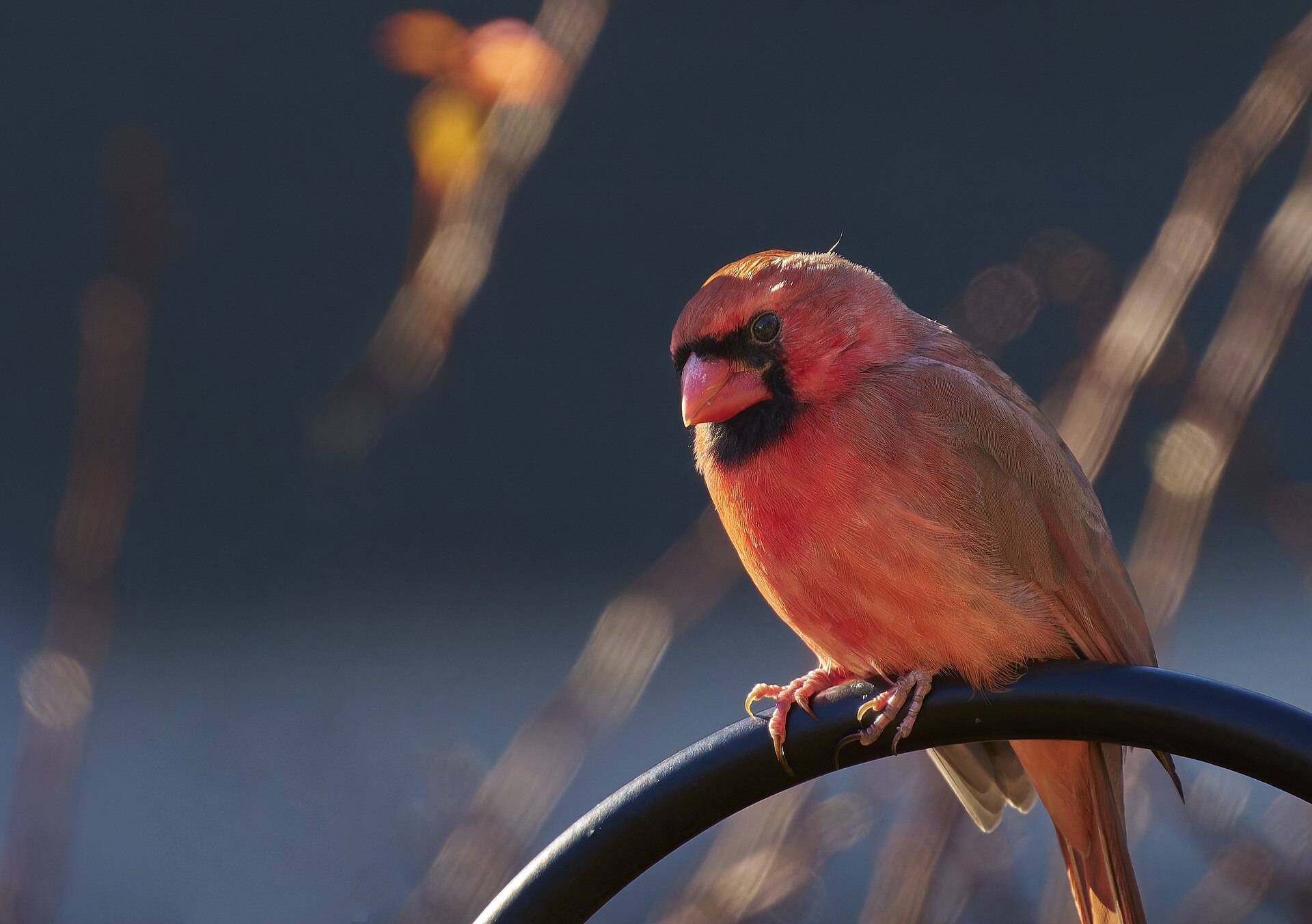
A red cardinal against fresh snow is about as classic as winter bird images get, and it’s easy to forget how recently that scene arrived in the North. A century ago, Northern Cardinals were uncommon or absent across much of New England, northern Michigan, and southern Ontario. Over the 20th century they spread steadily northward, and ornithologists generally credit some combination of a warming climate, the spread of shrubby suburban edges, and the explosion of backyard bird feeding.
Cardinals don’t migrate and don’t cache food, so they depend on finding seeds every day through the winter. They’re ground-feeders by preference, happiest on a platform feeder or picking up sunflower and safflower seeds scattered under dense cover. They’re often the first birds at the feeder at dawn and the last at dusk, and a group of six or eight together in the snow isn’t unusual in mid-winter, when territories relax and cardinals flock up loosely.
Ruffed Grouse
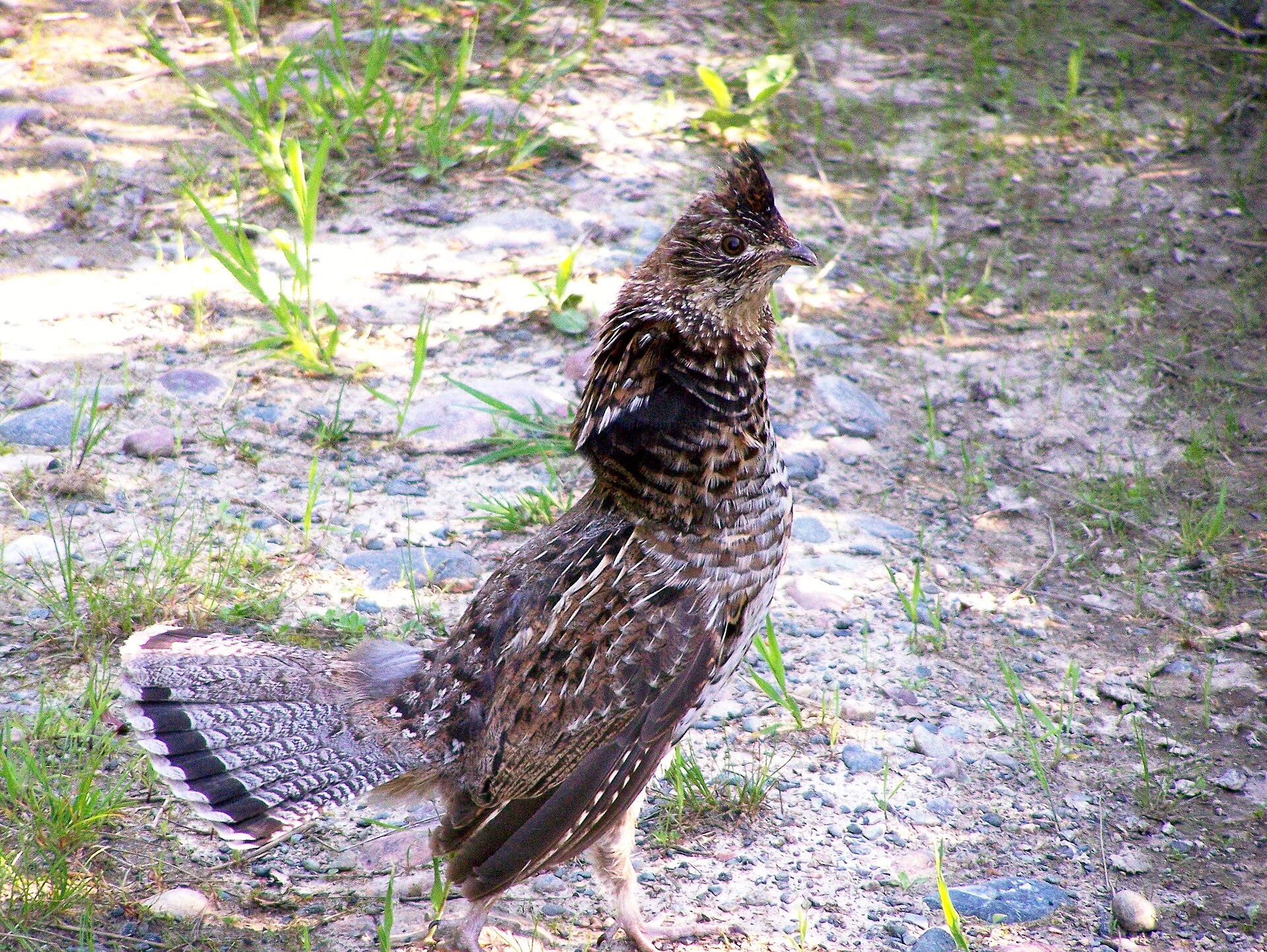
Ruffed Grouse are made for snow in a way that’s easy to miss. In the fall, they grow a fringe of small, comb-like projections along the sides of their toes, which work like built-in snowshoes for walking on top of soft drifts. And on very cold nights, a grouse will sometimes fly straight down into deep, powdery snow and burrow in, roosting under the surface where the temperature stays far milder than the air above. A walker who flushes one out of a snowbank at close range tends not to forget it.
In winter they eat mostly buds, especially aspen and birch buds, picked from the tips of branches at dusk. Ruffed Grouse are birds of young forest across the northern states from Minnesota and Wisconsin through Pennsylvania and New England, and they rarely visit yards unless the yard backs onto woods. Look for their tracks and the scattered bud scales under aspens after a fresh snowfall.
American Crow
Crows are so familiar that they get overlooked, but their winter behavior is one of the stranger sights in the northern states. Many crows that spread out to nest in spring gather in winter into huge communal roosts, often in towns and cities where it’s a little warmer, the lights help them spot predators, and there are fewer Great Horned Owls. Some northern cities host winter roosts numbering in the tens of thousands, with streams of birds flying in from the surrounding countryside every evening around sunset.
Some crows from the far north do shift south for the winter, while others stay put, so the crows in a given yard in January may or may not be the same birds as in July. They eat almost anything: waste grain, roadkill, garbage, and whatever falls under a feeder. Watching where the evening flights are headed is an easy way to find a local roost.
Common Redpoll
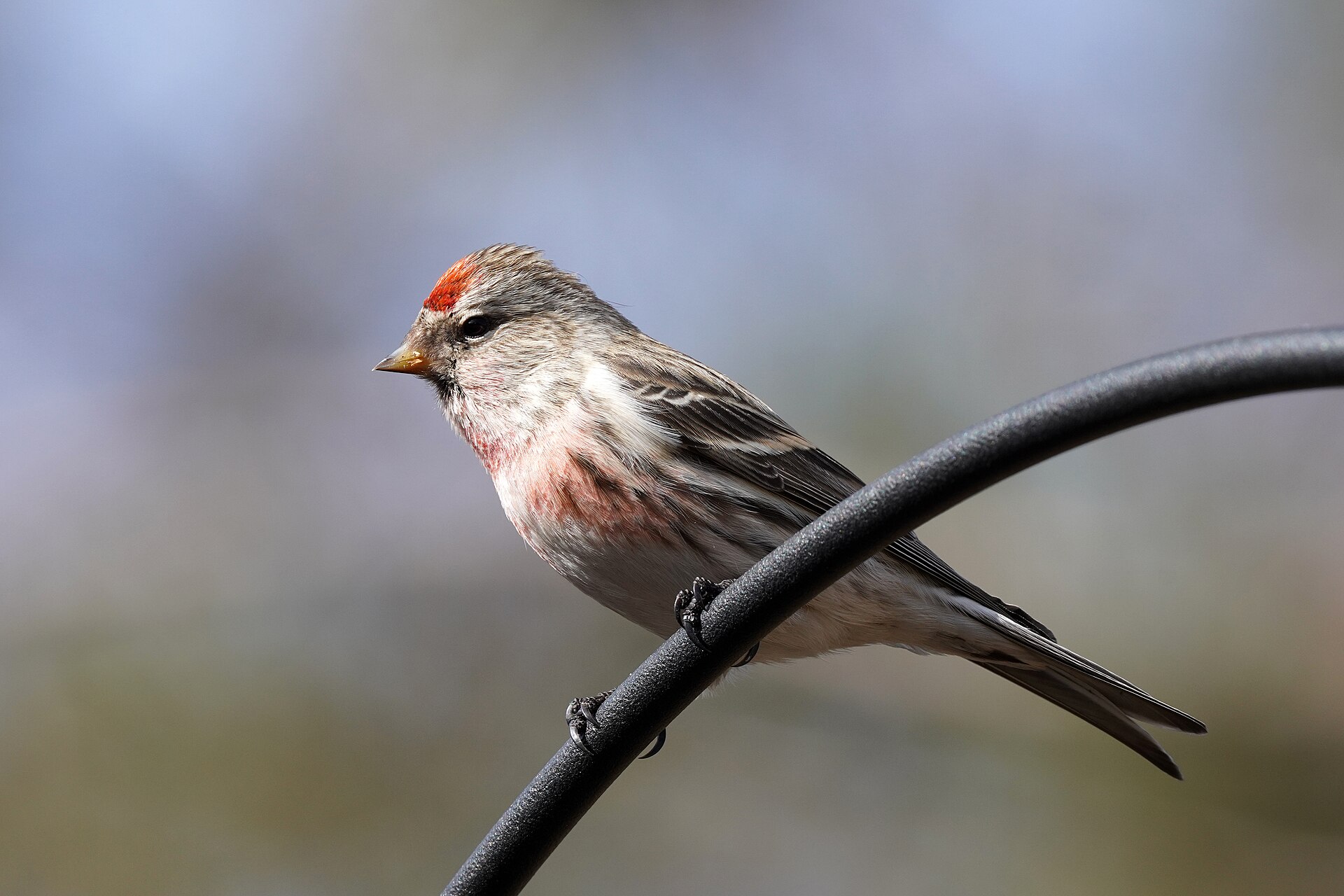
Redpolls are small, streaky finches with a red cap and a black chin, and they come down from the Arctic and subarctic in winters when the birch and alder seed crops up north have failed. Some years, northern feeders are mobbed by flocks of dozens or even hundreds. Other years there isn’t a single one. In 2024, the American Ornithological Society merged Common, Hoary, and Lesser Redpolls into a single species, simply called Redpoll, though many field guides and apps still use the older names.
They are among the hardiest songbirds anywhere, tolerating temperatures far below zero. One of their tricks is a small pouch partway down the esophagus that lets them stuff in extra seed quickly and digest it later, under shelter. At feeders they go for nyjer and fine sunflower chips, and they also like to feed on birch catkins and weed seeds poking out of the snow. When redpolls do show up, the Project FeederWatch counts for the region usually jump noticeably.
Snow Bunting
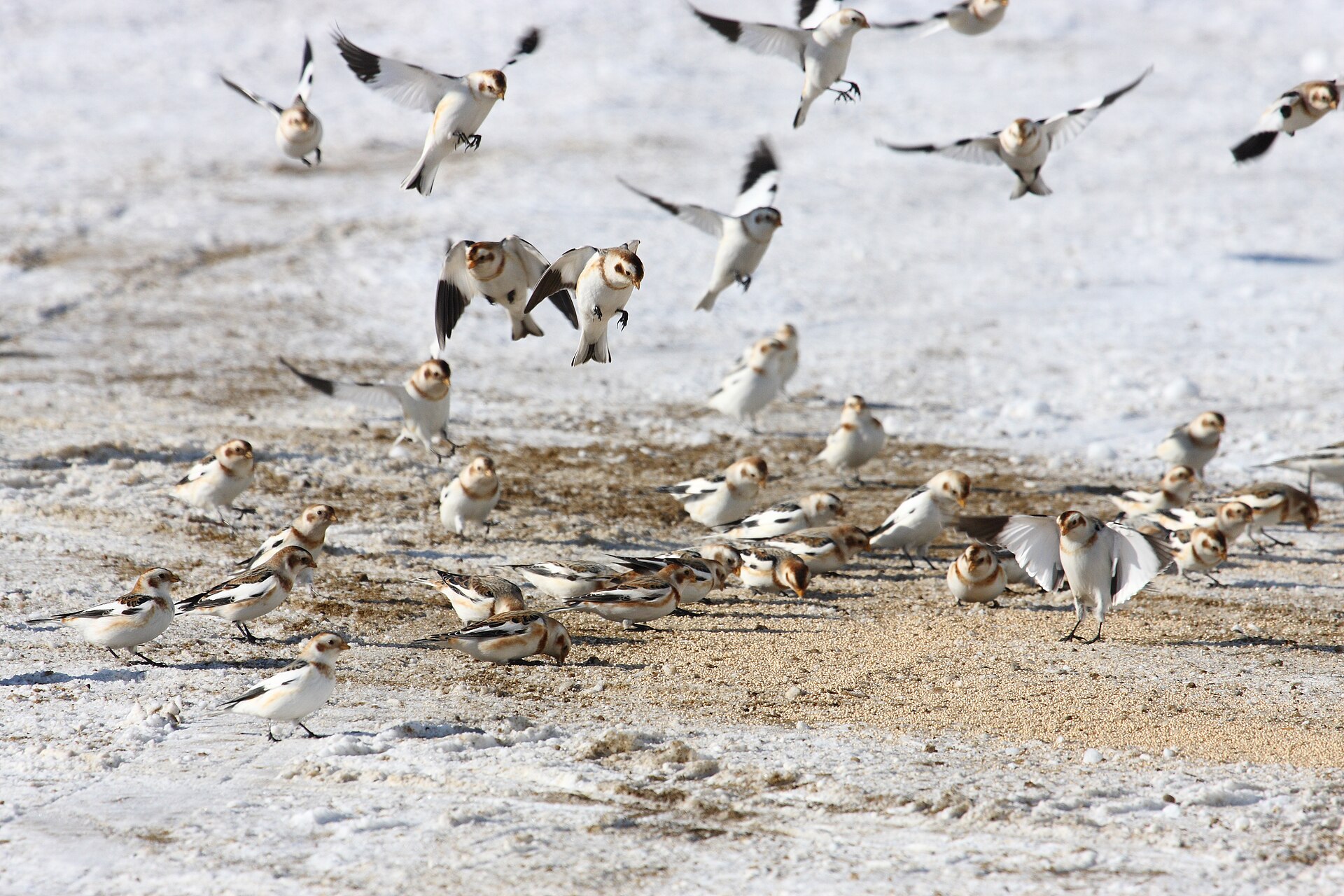
Snow Buntings breed on the Arctic tundra, farther north than almost any other songbird, and spend the winter in open country across the northern US. They aren’t feeder birds. Look for them in big plowed fields, along gravel roadsides after a snowfall, on lakeshore beaches, and around farm buildings. A flock lifting off a white field all at once, flashing large white wing patches, can look like a gust of snow blowing the wrong way.
In winter they’re tinged with warm buff and brown rather than the crisp black-and-white of their breeding plumage. They often travel with Horned Larks and Lapland Longspurs, so it pays to scan a roadside flock carefully. Places like the Lake Erie shoreline, Minnesota’s farm country, and the open coastal dunes of New England tend to be reliable from December through February.
Snowy Owl
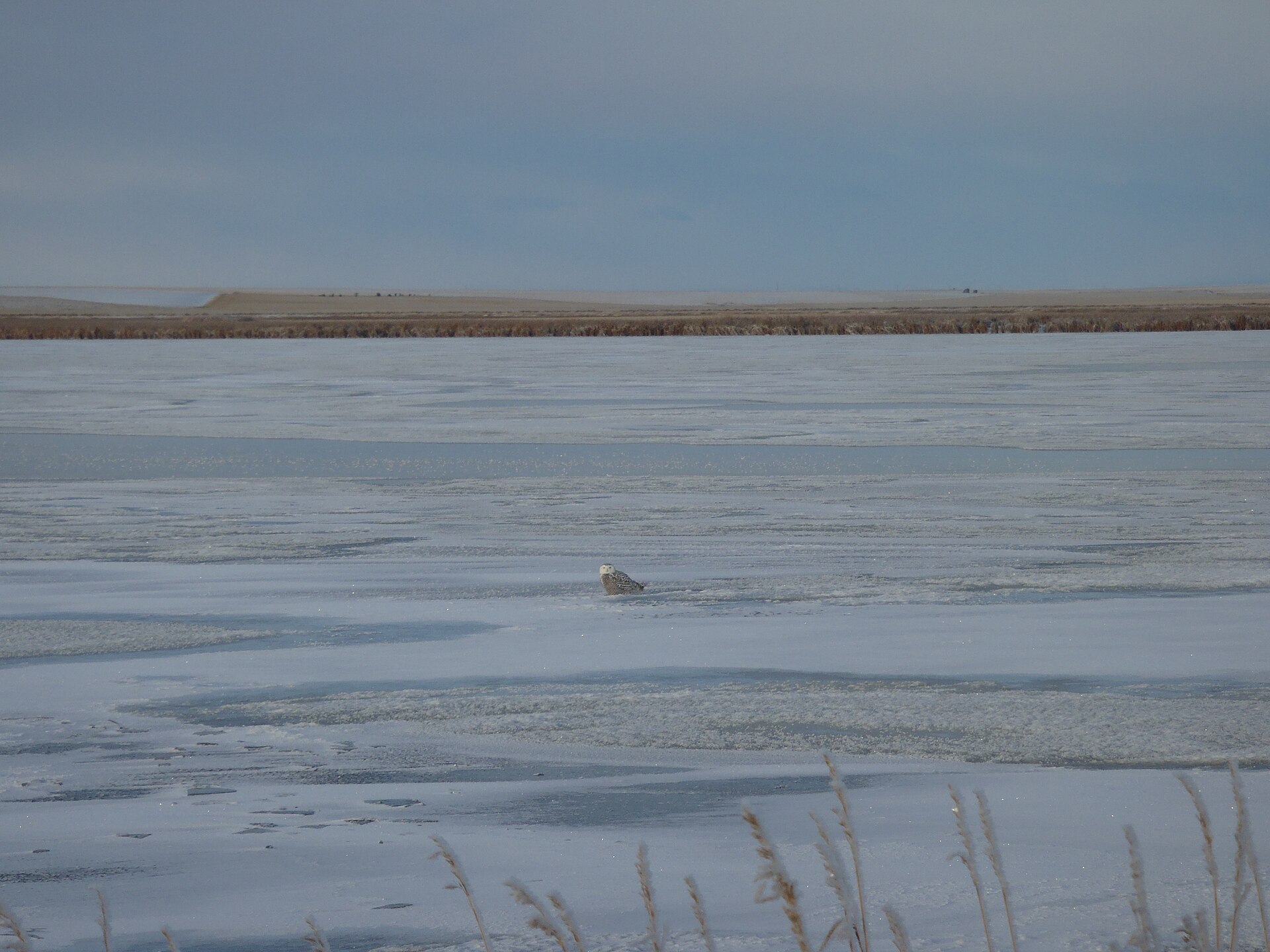
Every few winters, Snowy Owls push south from the Arctic in large numbers, and the northern states suddenly get a lot of attention from birders. The winter of 2013–14 was the famous one, with Snowy Owls turning up across the Great Lakes and the Northeast and individuals reaching much farther south. Many of the birds involved in these irruptions are young owls that had a good breeding season and then need to spread out to find hunting ground.
Snowy Owls favor wide-open places that resemble tundra: airfields, big farm fields, frozen lakes, and coastal beaches and breakwaters. They hunt during the day, often perching on a fence post or a low rise and scanning for rodents and waterfowl. If one turns up locally, the kindest thing is to watch from a distance with binoculars or a scope. A bird that keeps turning its head toward people or flushes repeatedly is being stressed at a time when it needs every calorie.
Helping winter birds where you live
Most northern winter residents don’t need much from people, but a few small changes make a yard a lot more useful to them. Leave seedheads standing on coneflowers, asters, and grasses through winter rather than cutting them back in fall. Keep a brush pile or dense evergreen shrubs near the feeders so small birds have somewhere to duck when a Cooper’s Hawk comes through. Native trees and shrubs that hold fruit into winter, such as winterberry, crabapples, and serviceberry, give robins and waxwings a reason to stick around. For the feeder side of things, our winter bird feeding guide goes through each food and which birds use it.
Water matters more than most people expect. Snow isn’t an easy substitute, because birds spend precious energy melting it. A heated birdbath, kept clean, can become the busiest spot in the yard on a cold day.
Getting Started
The easiest way to start learning winter birds is to pick one spot and watch it regularly. Fifteen minutes at the same window every morning in December teaches more than a long walk once a month. Note who comes, when, and how they behave on the coldest days compared with milder ones. Chickadees and nuthatches will become familiar quickly. Once they are, it’s much easier to notice the bird that doesn’t fit, such as a Hairy Woodpecker instead of a Downy or a redpoll mixed in with the goldfinches.
It’s also worth joining one of the big winter counts. The Audubon Christmas Bird Count runs from mid-December into early January and has been held every year since 1900. The Great Backyard Bird Count happens over a long weekend in February. Project FeederWatch runs from November through April. All three take beginners, and all three turn backyard sightings into data that researchers actually use. For the fall birds that come in before winter sets in, see our guide to what birds visit feeders in October.
Sources
Range, behavior, and natural history details are cross-checked against the Cornell Lab of Ornithology’s All About Birds and Project FeederWatch, the National Audubon Society and its Christmas Bird Count, eBird seasonal occurrence data for the northern states, and the American Ornithological Society’s checklist updates. For local timing and species lists, check your own state wildlife agency.