What Birds Visit Feeders in October: A Fall Migration Guide
There’s a particular morning in October that most people with a feeder will recognize, even if they’ve never put a name to it. The night before, a cold front slid through. The wind swung around to the north. And the next day the ground under the feeder is suddenly crawling with sparrows that weren’t there at breakfast the day before: a few Dark-eyed Juncos, a White-throated Sparrow scratching in the leaves, maybe a kinglet flicking through the shrubs by the fence. Nothing announced them. They came in overnight, a few thousand feet up, and dropped out of the sky at first light looking for food.
October is the month when a backyard feeder stops being a summer snack bar and turns into a refueling stop. The birds that nested nearby are leaving or settling in, the birds that nested far to the north are passing through, and the ones that will spend the whole winter at the feeder start showing up for the first time since spring. This guide walks through what changes, why it changes, and the thirteen species most likely to account for the “new bird at the feeder” moments this month across much of the United States.
Why October feels so different at the feeder
By the first week of October, most Ruby-throated Hummingbirds have left the northern states, and orioles, grosbeaks, and most warblers have gone with them. That’s the first half of the changeover. The second half is the arrival of short-distance migrants, the birds that nest in Canada or in the mountains and only travel as far south as they need to. Sparrows, juncos, kinglets, and a handful of finches make up the bulk of that wave, and a lot of them are seed eaters, which is exactly why feeders get busier just as the garden goes quiet.
The timing follows the weather more than the calendar. Most songbirds migrate at night, and they tend to move in big pulses on the nights after a cold front passes, when tailwinds from the north give them a free ride. Cornell Lab’s BirdCast project turns weather radar into nightly migration forecasts, and in a strong October week the maps can show hundreds of millions of birds aloft over the country on a single night. The practical takeaway for anyone with a feeder is simple: the morning after a clear, cold, north-wind night is the morning to look out the window.
Leave the leaves (and the seedheads)
A lot of the birds arriving in October are ground foragers, and they’re looking for exactly the kind of mess that tidy yards remove. A layer of fallen leaves under shrubs hides insects and spiders that kinglets, thrushes, and towhees depend on. Standing coneflowers, black-eyed Susans, goldenrod, and native grasses hold seed well into winter, and goldfinches and sparrows will work them over for weeks. Berry-bearing natives like dogwood, winterberry, viburnum, and eastern redcedar keep thrushes, waxwings, and Yellow-rumped Warblers around longer than any feeder can. If there’s one yard chore worth postponing until spring, it’s the fall cleanup.
October feeding notes
This is the month to change the menu. Sparrows and juncos prefer to feed on or near the ground, so a low platform feeder or a scatter of white proso millet on a cleared patch near cover will pull in far more of them than a tube feeder hung at eye level. Black oil sunflower stays the backbone of any feeding setup. Suet can go back out once afternoons stay cool enough that it won’t turn soft and rancid. And it’s a good month to put the hummingbird feeder back up for a second look before storing it: in the East, a hummingbird showing up in late October or November is often a western stray, and some of those stay put.
A quick caution for anyone in bear country. Black bears spend fall eating almost around the clock to fatten up before denning, and a feeder is an easy target. Several state wildlife agencies recommend holding off on seed feeders until bears have denned, usually well into November or December depending on the region.
Dark-eyed Junco
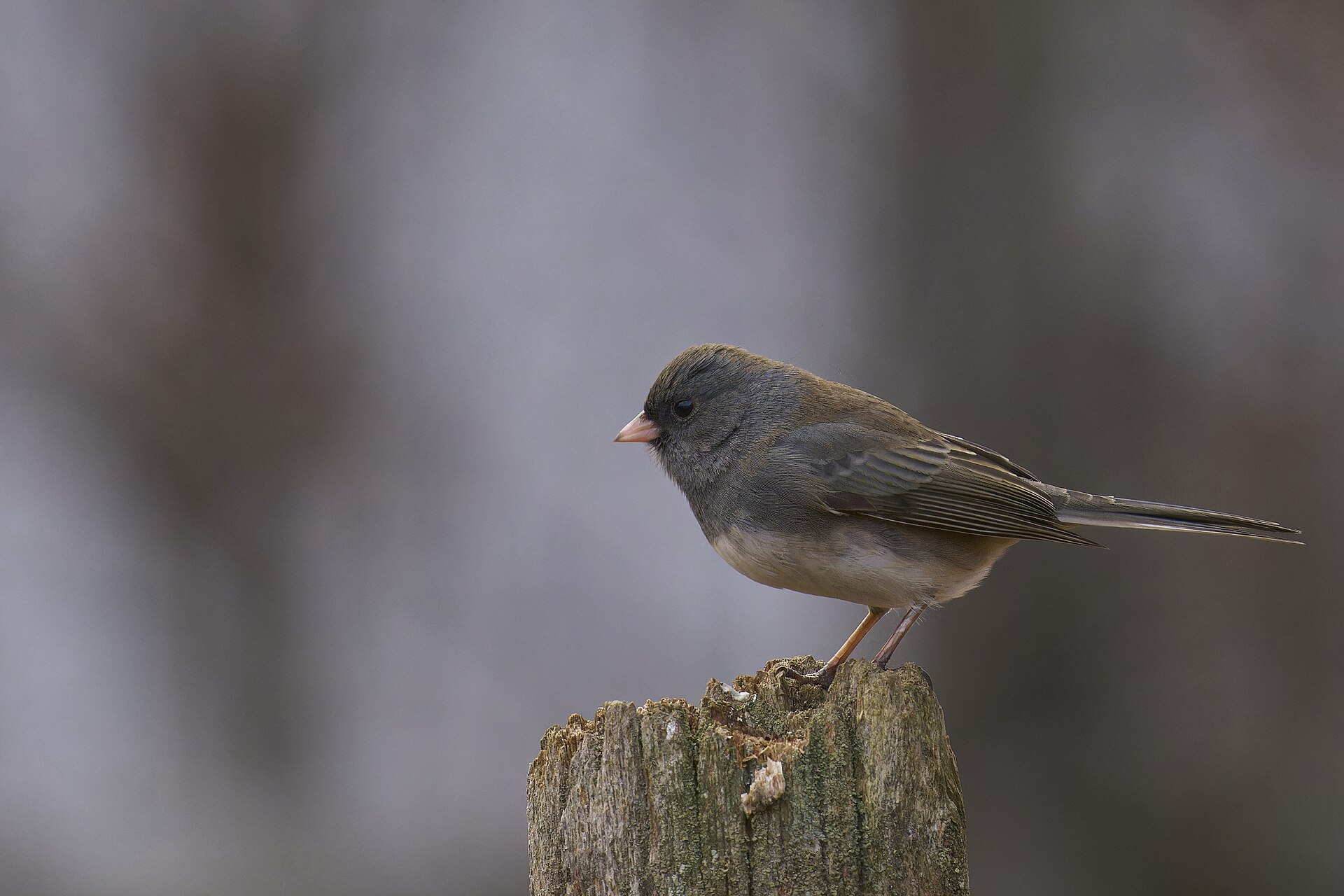
For a lot of people, the first junco of the fall is the real start of the feeder season. That’s where the old nickname “snowbird” comes from: in much of the country, juncos seem to arrive with the first cold snap and leave when spring arrives. They breed in Canada, the northern states, and the western mountains, and they spend the winter across almost the entire lower 48.
The easiest way to recognize one is the flash of white outer tail feathers as it flushes. Birds in the East are the slate-colored form, gray above with a clean white belly, while western yards get the brown-backed, black-hooded Oregon type and several other regional variations. Juncos are ground feeders through and through. They’ll hop around under a feeder picking up spilled millet and sunflower chips, and they rarely land on a hanging tube at all.
White-throated Sparrow
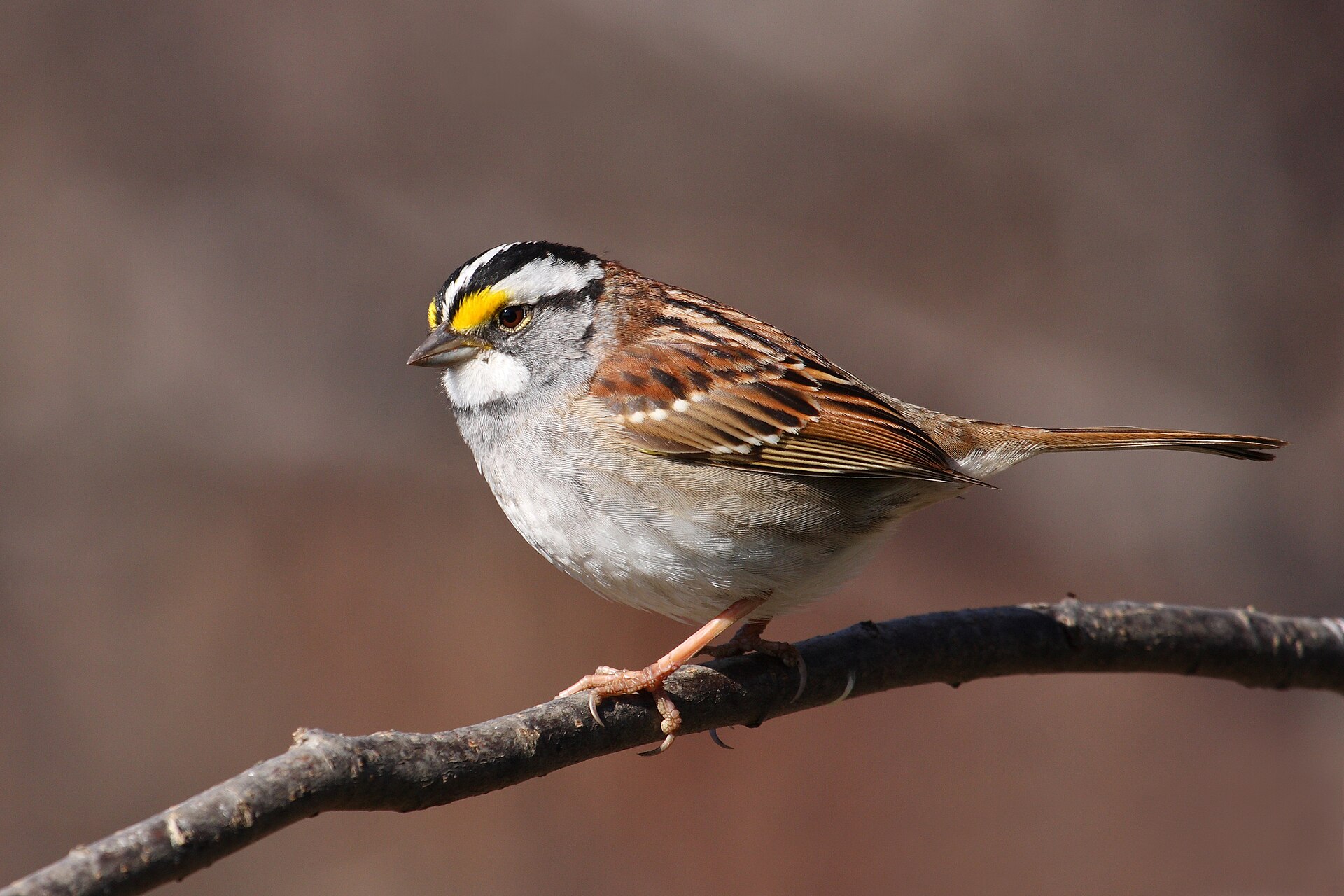
Anyone who has spent time in the North Woods in summer knows the song, a thin, whistled “Old Sam Peabody, Peabody, Peabody” (or “Oh sweet Canada” if you ask a Canadian). In October those same birds show up in backyards across the East, the Midwest, and the South, usually in small loose groups working through leaf litter under shrubs.
Look for the crisp white throat patch and a small spot of yellow in front of each eye. They come in two color forms, one with bright white head stripes and one with tan stripes, and the two forms tend to pair with each other, a quirk that has made this sparrow a favorite study species. Under a feeder they use a two-footed backward hop to kick leaves aside, a sound you’ll often hear before you see the bird. Millet and cracked corn on the ground near a brush pile is about as close to a guaranteed invitation as feeding gets.
White-crowned Sparrow
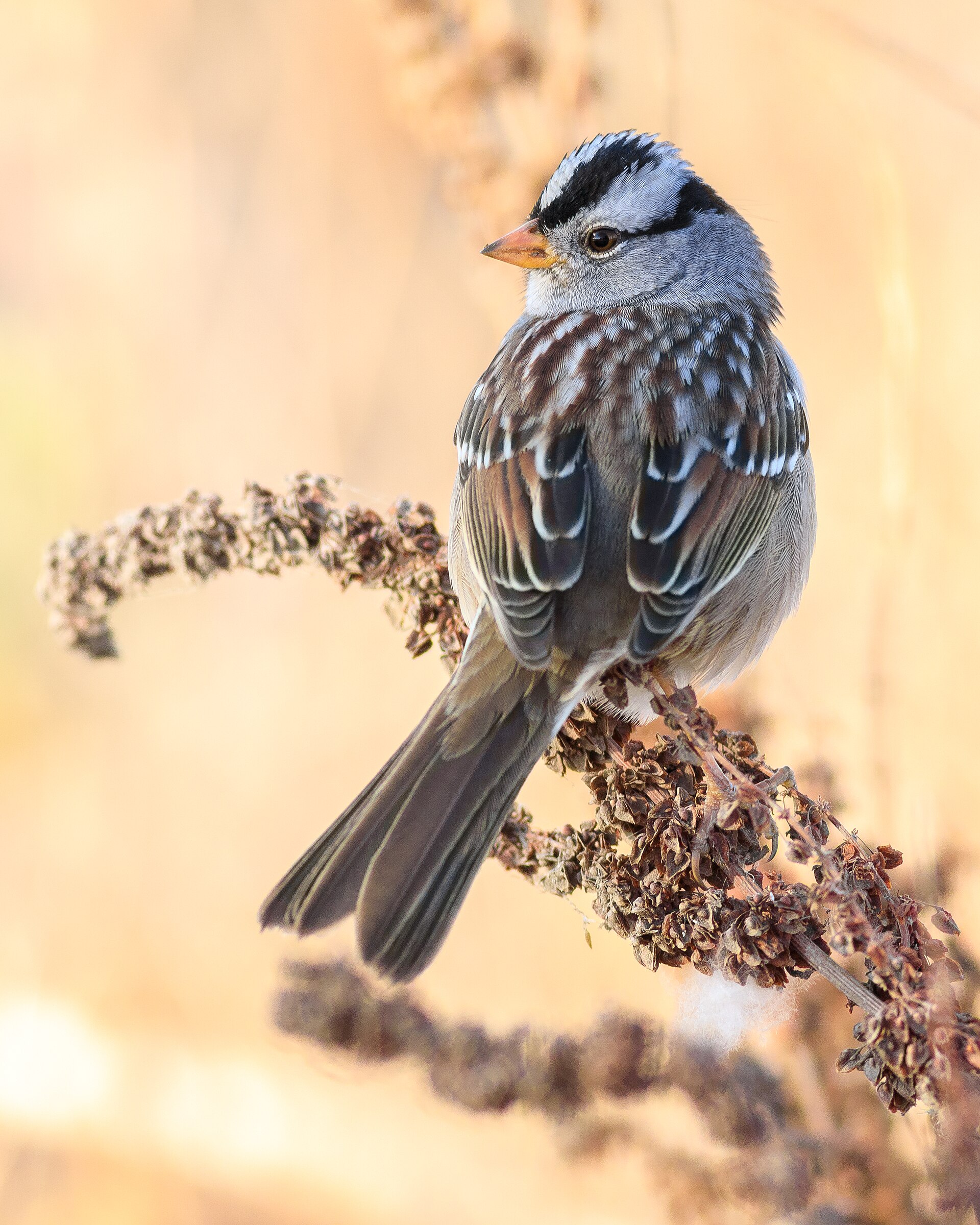
In the West and across much of the southern half of the country, the White-crowned Sparrow plays the same role the White-throated plays in the East: the bird that arrives in fall and makes the yard feel like a different place. Adults have a bold black-and-white striped crown and a pinkish or yellowish bill. First-winter birds, which make up a good share of October arrivals, have brown-and-tan head stripes instead, and they confuse a lot of people the first time.
They tend to travel in small flocks and like open ground with some cover nearby, such as lawn edges beside hedges or a patch of bare soil next to a shrub border. They’re less common in the Northeast in winter, where they’re more of a passing migrant, so a White-crowned in a New England yard in October is worth a second look.
Fox Sparrow
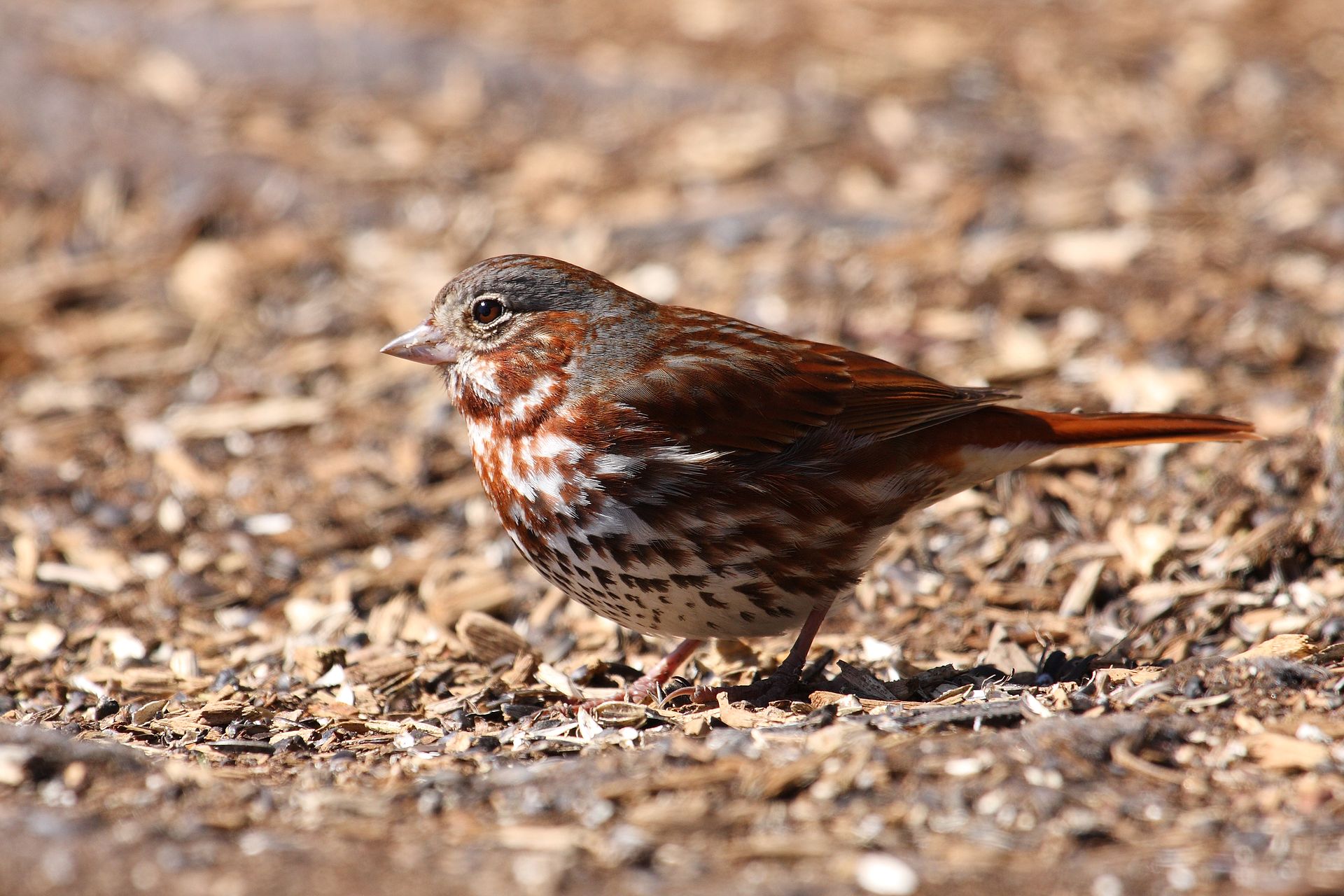
The Fox Sparrow is usually one of the last sparrows to arrive in fall, often in the final week of October or into November, and it’s worth waiting for. In the East, it’s a big, heavy-bodied sparrow washed in rich rusty red, with bold reddish spots running down a pale chest and a bright foxy tail. Western birds are darker and grayer, and some forms look almost chocolate brown.
Fox Sparrows forage with a vigorous double-footed scratch that sends leaves flying, and a single bird can clear a surprising patch of ground under a feeder. They prefer dense cover and don’t wander far from it. A brush pile or a thick shrub within a few feet of where seed is scattered makes a big difference in whether one sticks around for a day or for the whole winter.
Red-breasted Nuthatch
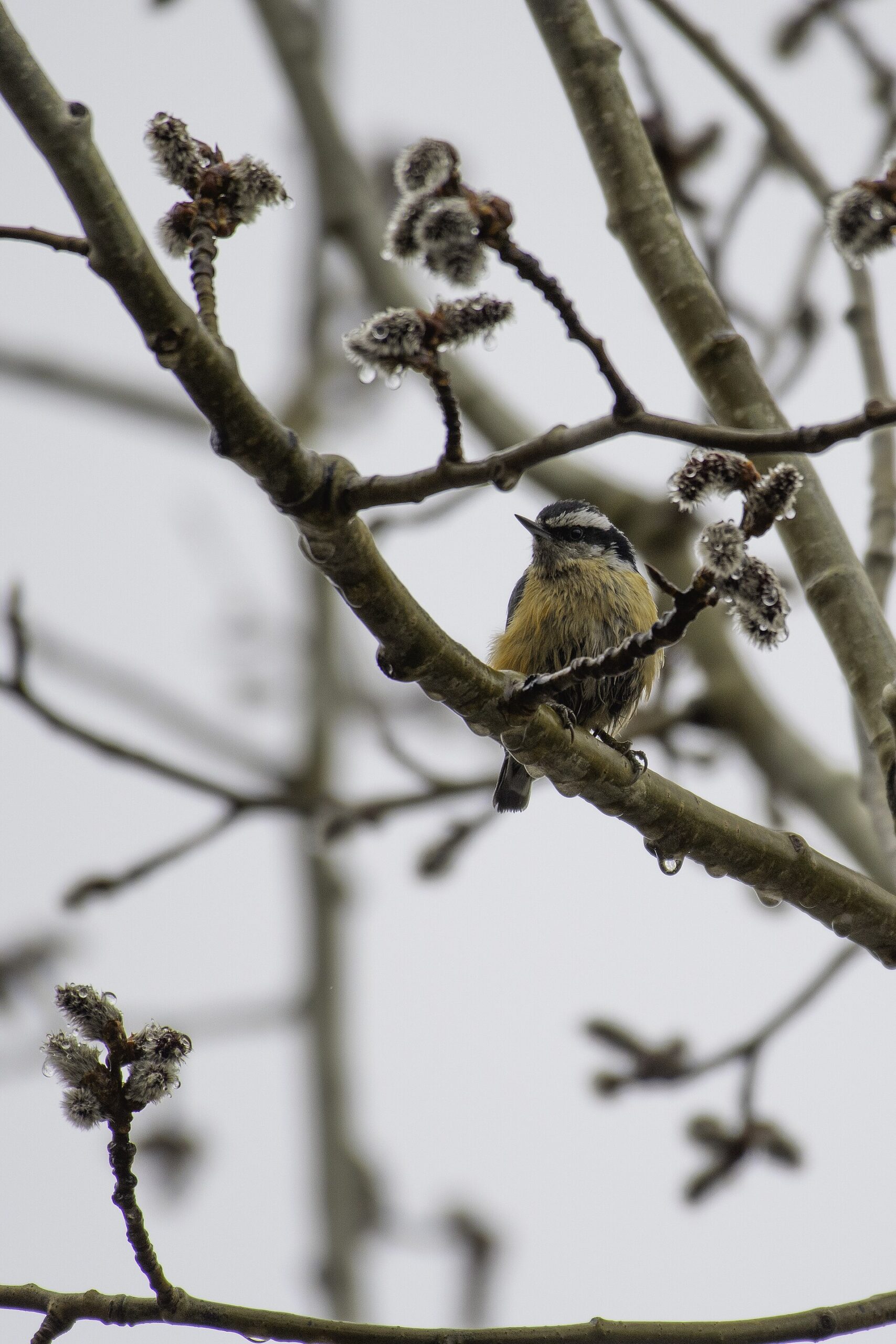
Some autumns there isn’t a Red-breasted Nuthatch for miles. Other autumns they’re at every feeder in the neighborhood. The difference comes down to cones: these little nuthatches depend on conifer seeds in the boreal and mountain forests, and in years when the cone crop fails, large numbers move south. Birders call these movements irruptions, and October is usually when you find out whether it’s an irruption year. The Finch Research Network publishes a winter finch forecast each fall that’s worth a look if you want to know which way this year is leaning.
They’re smaller and more compact than the familiar White-breasted Nuthatch, with a black eye line, a white eyebrow, and a rusty wash underneath. The call is a nasal, high-pitched “yank, yank,” often compared to a tiny tin horn. At feeders they grab a single sunflower seed or a bit of suet and fly off to wedge it into bark, then come right back for another.
Yellow-rumped Warbler
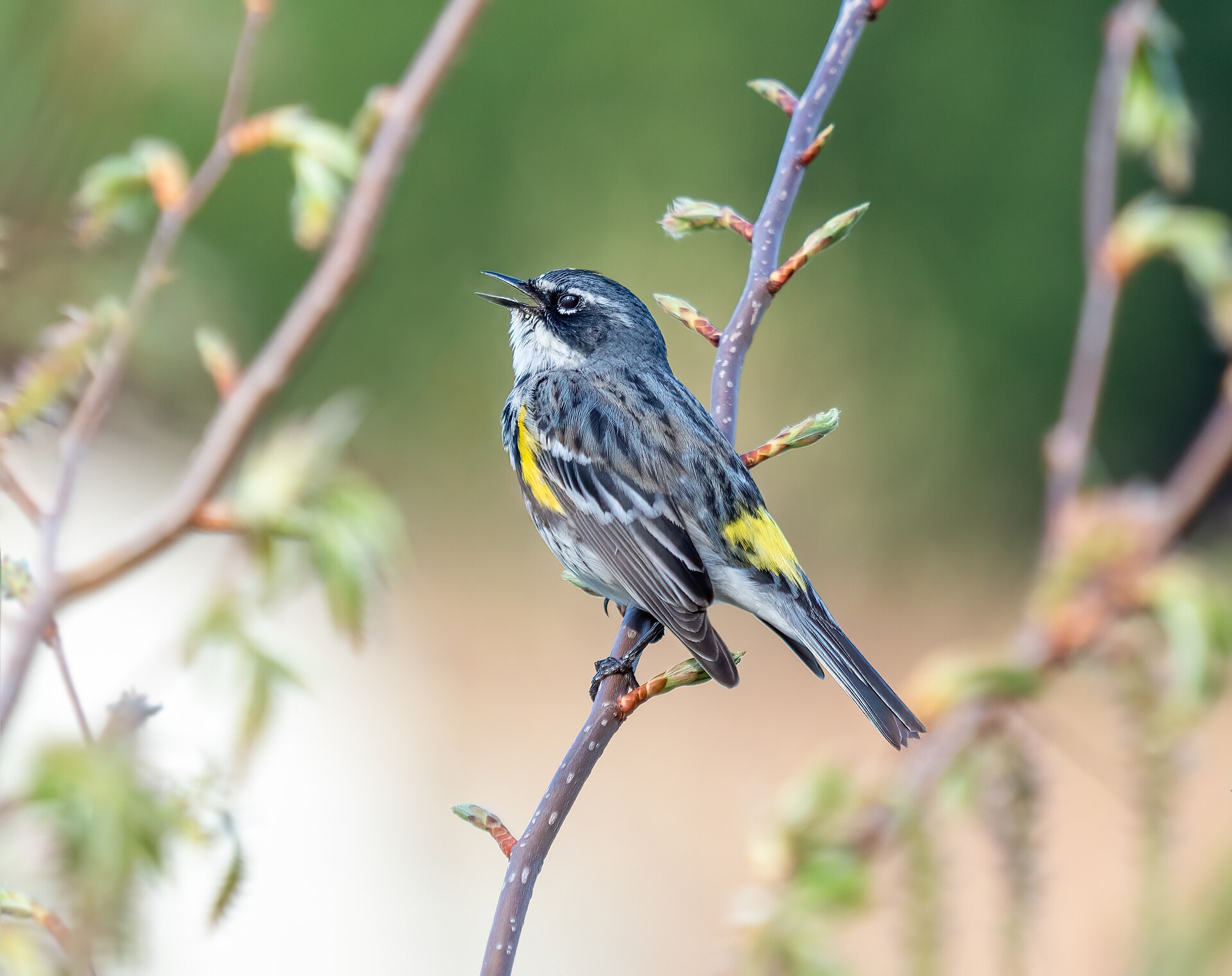
Most warblers are long gone by October, which makes the Yellow-rumped Warbler all the more noticeable. It’s the hardiest warbler in North America and the one most likely to be seen at a feeder, and birders affectionately call it the “butter-butt” for the bright yellow patch just above the tail.
Its trick is diet. Yellow-rumps can digest the waxy coating on bayberries and wax myrtle berries, something few other songbirds manage, and that lets them winter much farther north than other warblers, especially along the Atlantic coast. Fall birds are drab brownish-gray with streaking, but that yellow rump and small yellow side patches give them away. They’ll take suet, especially softer no-melt blends, and sometimes pick at mealworms.
Ruby-crowned Kinglet
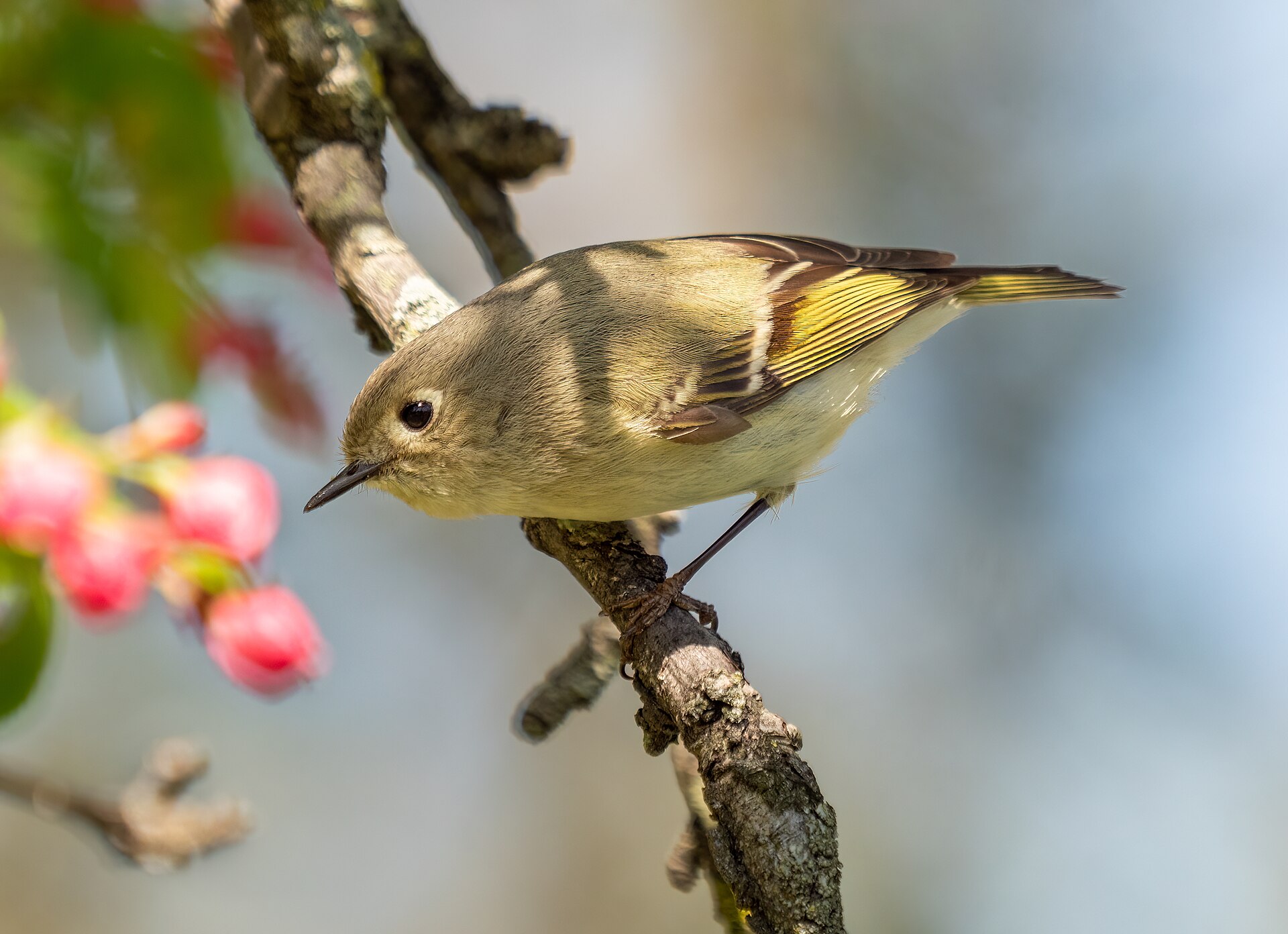
If a tiny olive-green bird in the shrubs keeps flicking its wings like it has somewhere to be, it’s almost certainly a Ruby-crowned Kinglet. They pass through much of the country in large numbers in October, and they’re hard to miss once you learn that restless wing-flick.
The ruby crown is the catch. It’s a small scarlet patch on the male’s head that usually stays hidden, flaring up only when the bird is excited or agitated. Most of the time you’ll see a plain little bird with a bold white eye ring and a white wing bar. Kinglets are insect eaters and don’t come to seed, but they’ll forage in shrubs near feeders, visit birdbaths, and occasionally pick at suet. A yard with some leaf litter and a few native shrubs will attract far more of them than any feeder.
Hermit Thrush
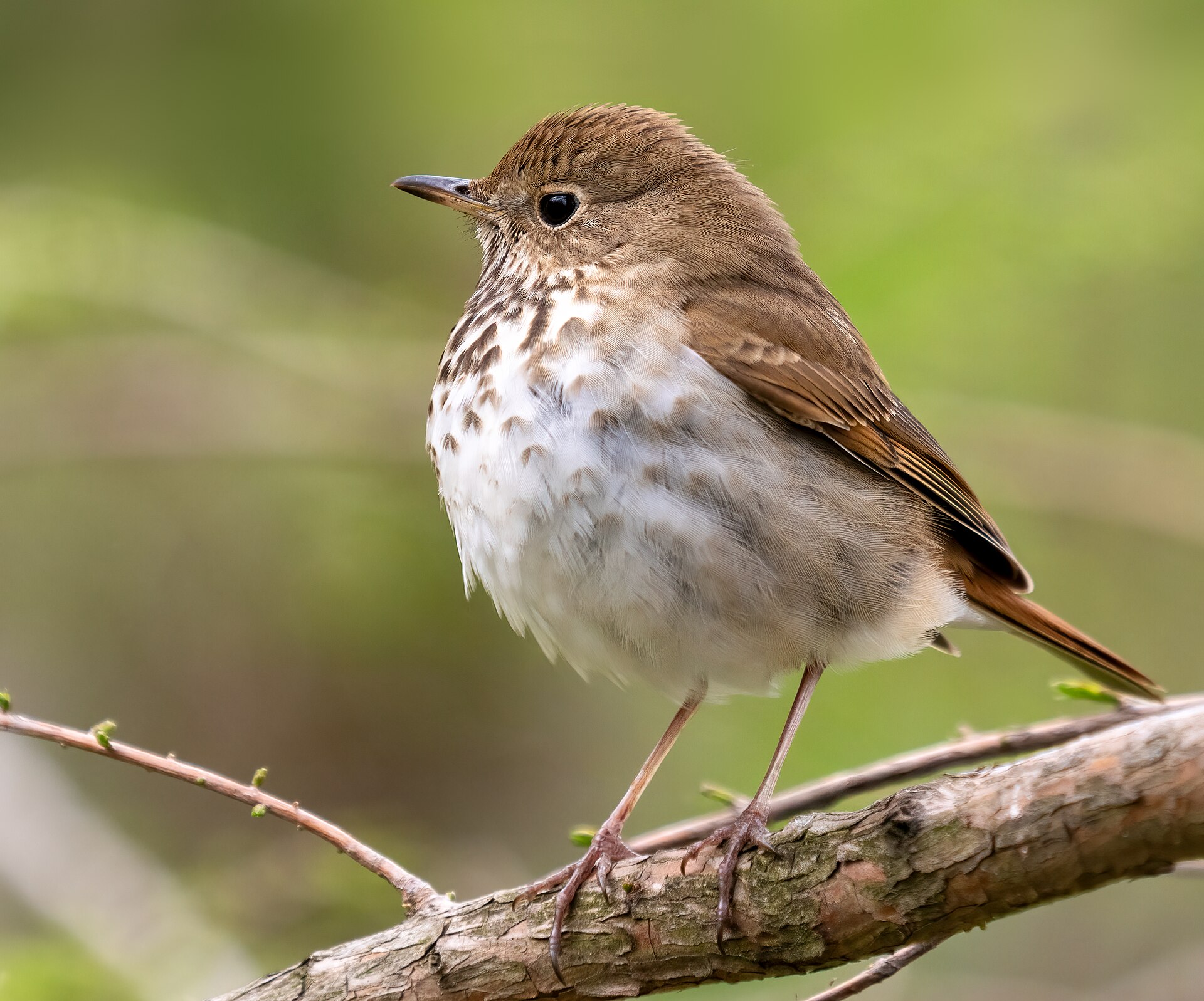
The Hermit Thrush is the brown thrush most likely to be seen in the United States in late fall and winter. Its relatives, Wood Thrush, Swainson’s Thrush, and Veery, head to the tropics, but Hermit Thrushes only go as far as the southern states and the Pacific Coast, and plenty of them pass through northern backyards in October on the way. It’s also the state bird of Vermont, chosen largely for its song, which many people consider the most beautiful in North America.
Look for a warm reddish tail that contrasts with a browner back, a spotted breast, and a habit of slowly raising the tail and dropping it again after landing. Hermit Thrushes rarely eat seed. What pulls them in is fruit and water, so a yard with dogwood, holly, winterberry, or sumac, plus a shallow birdbath, is the best way to catch one.
Pine Siskin
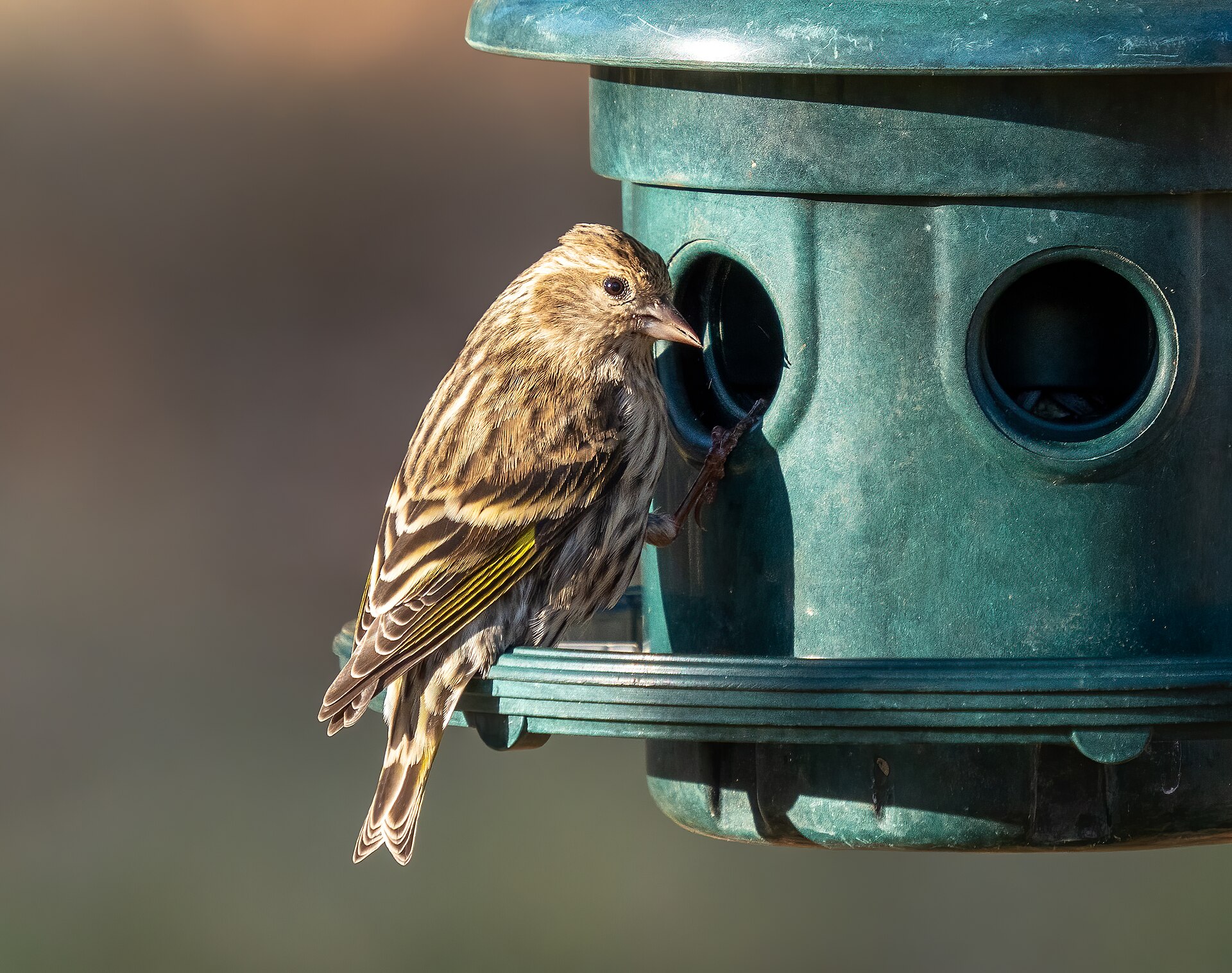
Pine Siskins are small, streaky, brown finches that look a little like a dusted-over goldfinch, until they flash the yellow stripes in the wings and tail. Like the Red-breasted Nuthatch, they’re irruptive: some winters bring huge flocks south, other winters almost none. When they do come, they tend to arrive in October and November, and they can empty a nyjer feeder in an afternoon.
They’re also a good reason to take feeder hygiene seriously. Siskins are especially vulnerable to salmonellosis, which spreads quickly when many birds crowd around dirty feeding ports. If you see a lethargic, fluffed-up siskin sitting on the feeder and not flying off, take the feeders down for a week or two, clean them with a dilute bleach solution, and rake up spilled seed underneath.
Purple Finch
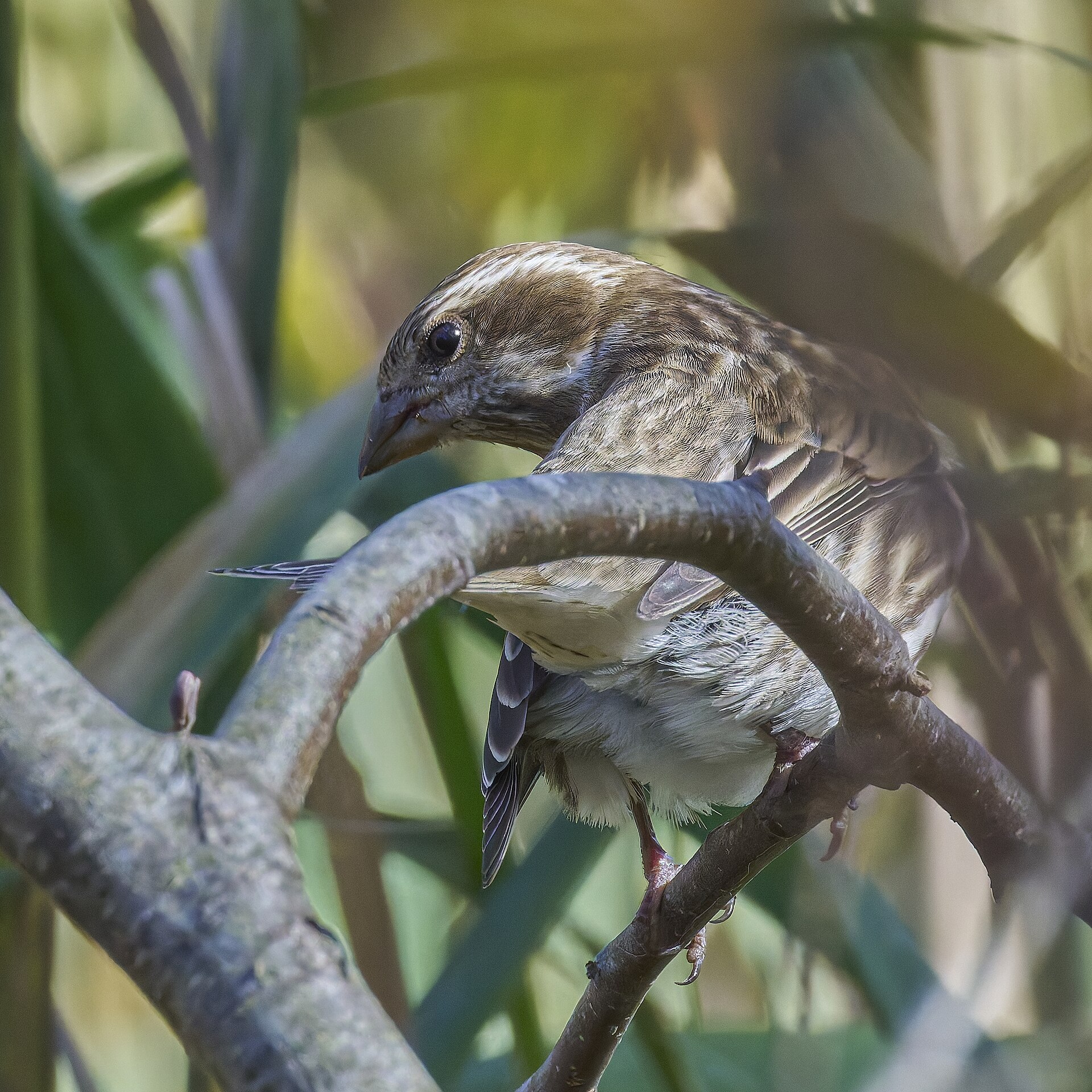
Roger Tory Peterson famously described the male Purple Finch as a sparrow dipped in raspberry juice, and it’s still the best description going. The rosy color washes over the whole head, back, and chest, which is how you tell it from the far more common House Finch, whose red is patchier and usually confined to the head and breast with brown streaks on the belly. Females are brown and heavily streaked, with a bold whitish eyebrow and a dark cheek.
Purple Finches breed across Canada, the Northeast, and the Pacific Coast, and in fall many drift south into the Southeast and the Midwest. Like other northern finches their numbers swing from year to year. Black oil sunflower is the best bet for drawing them in.
Blue Jay
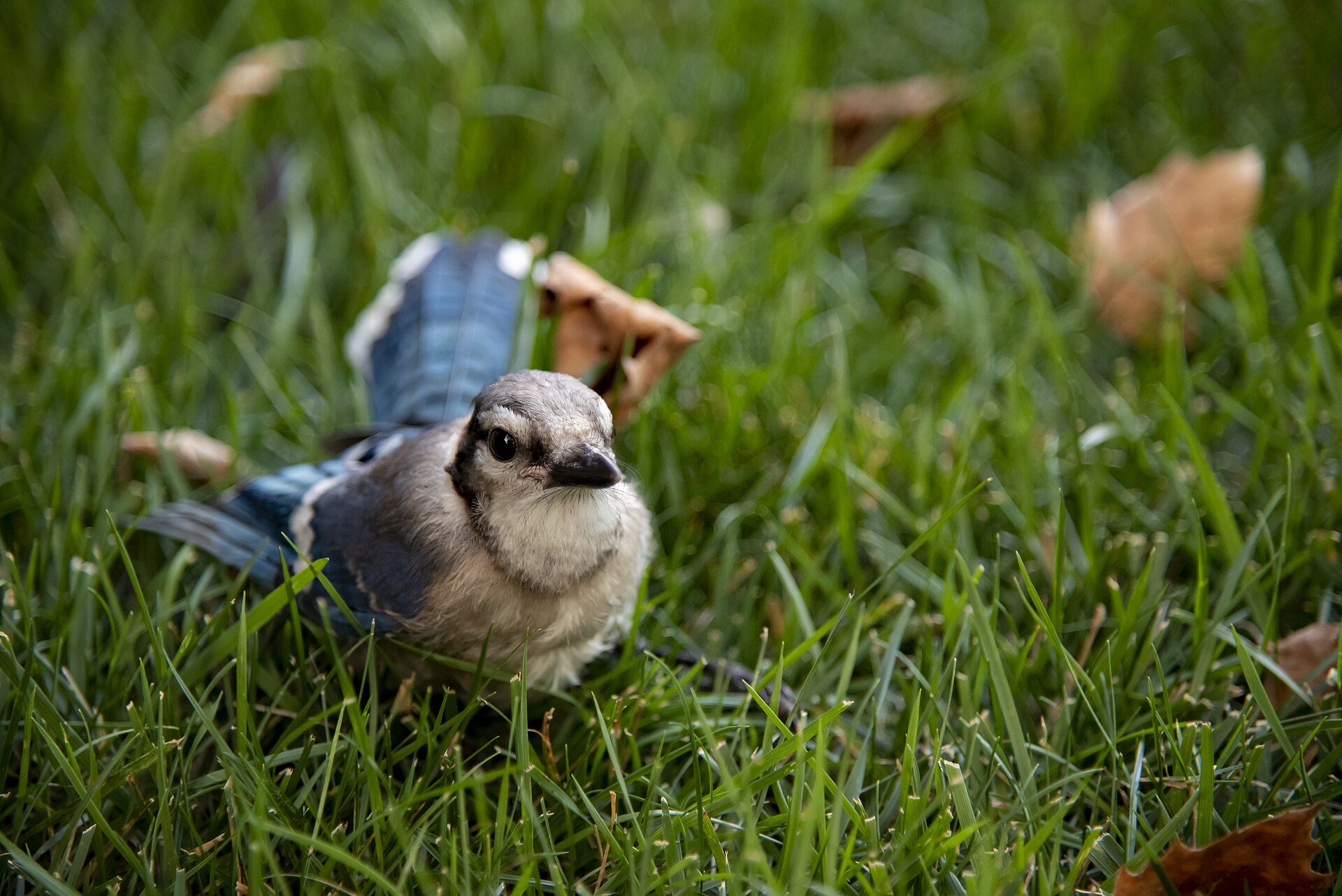
Blue Jays live in most eastern backyards year-round, so it can be easy to miss the fact that some of them migrate. In late September and early October, loose flocks of dozens or even hundreds move along the shorelines of the Great Lakes and the Atlantic coast, and on a good day hawk watchers count thousands. Why some jays migrate and others stay put, even within the same population, is still not fully understood.
October is also acorn season, and Blue Jays spend a lot of it carrying acorns off and burying them one at a time. The ones they forget sometimes sprout, and some researchers credit jays with helping oak forests spread north after the last Ice Age. At the feeder they’ll take whole peanuts in the shell, sunflower, and suet, and they’ll let the whole neighborhood know when a hawk is around.
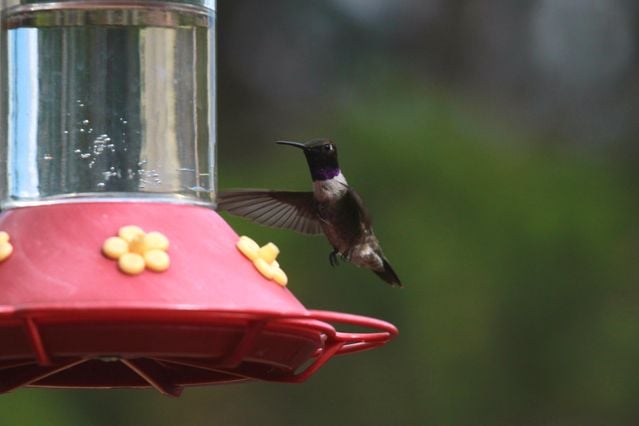
Rufous Hummingbird
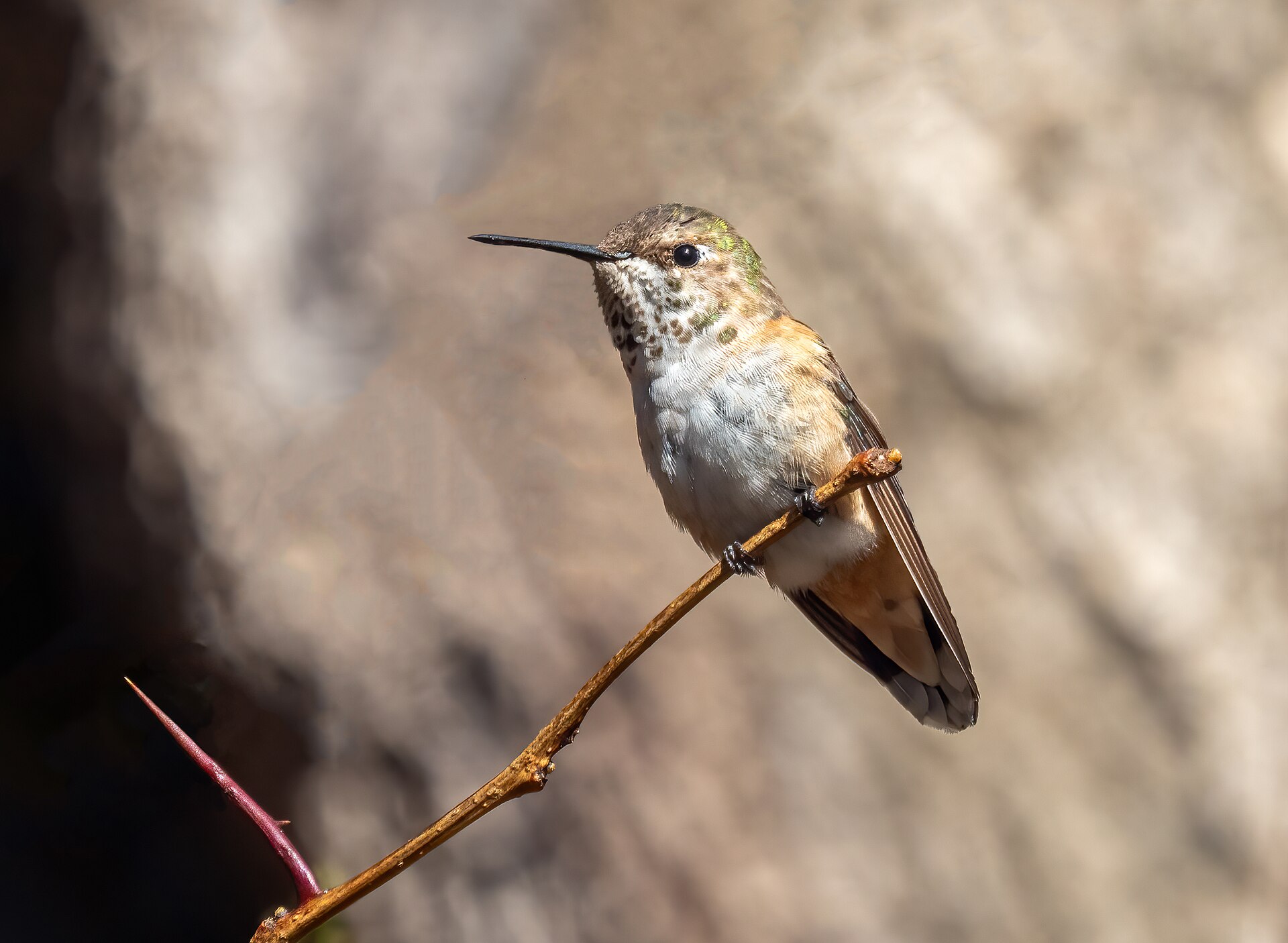
This is the reason to leave at least one hummingbird feeder up into late fall. The Rufous Hummingbird breeds as far north as southern Alaska and makes one of the longest migrations of any bird relative to its body size. In the West it’s a regular fall migrant. In the East and the Gulf states, a growing number of them turn up every fall and winter, and a hummingbird at an eastern feeder in November is more likely to be a Rufous than a lingering Ruby-throated.
Adult males are a fiery orange-copper with a glowing throat. Females and young birds are greener with orange on the sides and in the tail, and they can be tricky to separate from their close relative, Allen’s Hummingbird. A common rule of thumb is to keep the feeder clean and filled until about two weeks after the last hummingbird visit. If a late one does show up, local bird clubs and hummingbird banders are often glad to hear about it.
Yellow-bellied Sapsucker
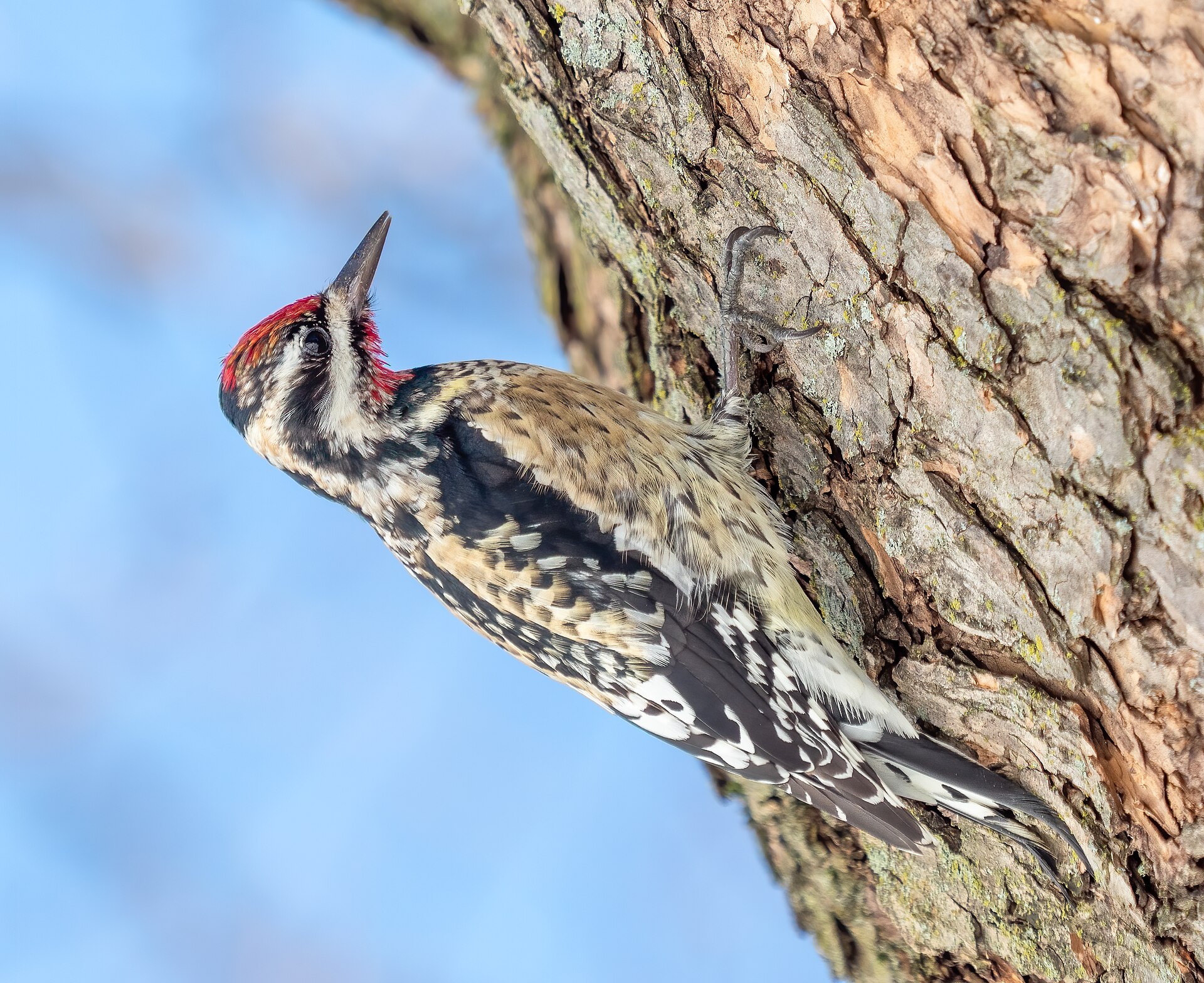
The Yellow-bellied Sapsucker is the one eastern woodpecker that’s truly migratory, and October is when many of them move through the Midwest and the Northeast on their way to the southern states. The sign they leave behind is easier to spot than the bird: neat horizontal rows of small holes drilled in the bark of birches, maples, and fruit trees. Those are sap wells. The sapsucker comes back to lap up the sap and the insects it attracts.
Look for a black-and-white woodpecker with a bold white stripe running down the folded wing, a red forehead, and, in males, a red throat. The yellow belly is often faint. Sapsuckers tend to be quiet in fall, sticking to one tree for long stretches. They visit suet now and then, but the best clue that one is around is a fresh row of sap wells on a favorite tree.
Getting Started
Setting up for October doesn’t take much. Keep one tube or hopper of black oil sunflower going as a base. Add a low platform feeder, or simply scatter white proso millet on a cleared spot near shrubs, for the juncos and sparrows that make up most of this month’s new arrivals. Put up a nyjer feeder if siskins or goldfinches are around, and bring suet back once the weather cools. A shallow birdbath, cleaned every few days, will pull in thrushes and kinglets that never touch seed.
Two smaller things matter more than they seem. First, clean feeders every couple of weeks, especially during a finch irruption. Second, deal with windows. Collisions peak during migration, and decals, screens, or exterior window film spaced a few inches apart cut them dramatically. Turning off unnecessary outdoor lights at night during migration helps too, and many cities now run fall Lights Out campaigns for exactly that reason.
Finally, keep a list. Logging October sightings in eBird or in a simple notebook turns a few weeks of feeder watching into a record of when each species arrives in your yard, and after a couple of years, it becomes surprisingly easy to predict the morning the juncos will show up.
Sources
Species identification, range, and behavior details are cross-checked against the Cornell Lab of Ornithology’s All About Birds, the National Audubon Society, eBird seasonal occurrence data, and BirdCast migration forecasts. Bear-season feeding guidance follows recommendations published by several state wildlife agencies; check your own state agency for local timing.