
Songbird Symbolism: Meaning Behind 26 Species
Songbirds carry some of the richest symbolic traditions in birdwatching culture — their calls have inspired poetry, folklore, and personal meaning across centuries. This guide gathers the symbolism of 26 songbirds and near-passerines in one place, from the familiar Nightingale and Meadowlark to lesser-known species like the Bobolink and Whydah. Jump to any species below.
Jump to a Species
- Bobolink
- Catbird
- Cuckoo
- Grackle
- Grosbeak
- Junco
- Kinglet
- Meadowlark
- Nightingale
- Nutcracker
- Oriole
- Phoebe
- Pigeon
- Skylark
- Starling
- Tanager
- Thrasher
- Towhee
- Vireo
- Wagtail
- Waxwing
- Weaver
- Whydah
- Bobwhite
- Roadrunner
- Shrike
Bobolink Meaning and Symbolism
A farmer friend once pointed out a male Bobolink singing over a hayfield and said, only half-joking, that the bird sounded like it was playing a tiny broken music box while flying backward through the sky. That bubbling, tumbling, almost mechanical song is really the whole basis of the bird’s charm. The short answer Bobolinks are associated with joyful abundance and the height of summer in grassland and farm country, symbolism rooted in the male’s ecstatic, tumbling flight song and in the bird’s genuinely enormous seasonal migration. A song built for a field, not a branch Unlike most songbirds, male Bobolinks often deliver their bubbling, R2-D2-like song during a fluttering display flight low over open grassland rather than from a fixed perch, a performance nineteenth-century poets including William Cullen Bryant wrote about specifically because it read as unrestrained celebration set loose over a hayfield. One of the longest migrations of any songbird Bobolinks winter in South American grasslands as far south as Argentina and breed in North American hayfields and prairies, a round-trip of roughly 12,000 miles each year, one of the longest migrations of any songbird in the Americas, made even more demanding by the species’ dependence on the exact kind of undisturbed grassland habitat that’s disappeared fastest to modern agriculture. Something to carry with you The Bobolink’s reputation for joy comes from a genuinely unusual singing style, an ecstatic flight display rather than a perch song, layered on top of an equally serious fact: this small bird crosses two continents every single year to keep that performance going.
Catbird Meaning and Symbolism
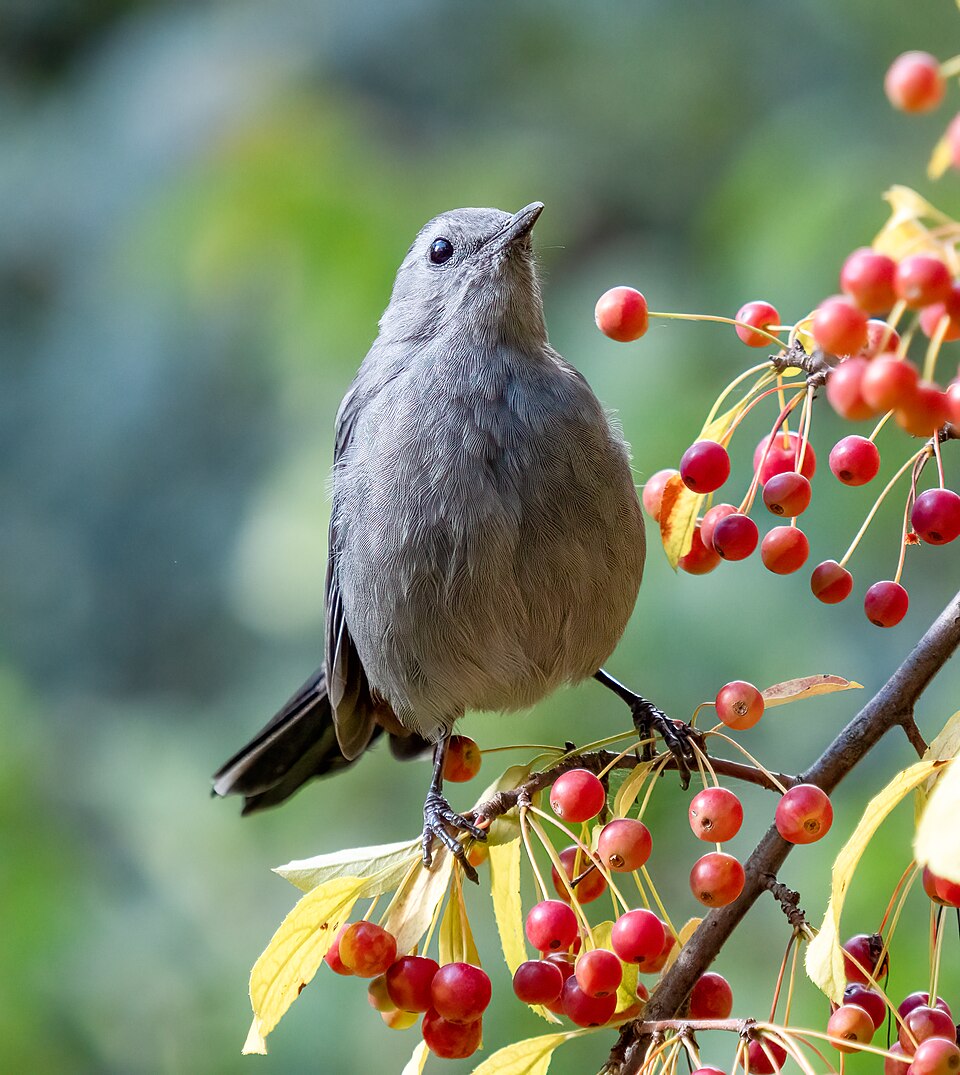
I once spent a full minute convinced a stray cat was hiding somewhere in a thicket behind my yard before I realized the mewing sound was coming from a gray bird sitting right out in the open. Gray Catbirds are named for exactly that trick, and the sense of being fooled by a bird pretending to be something else is really the root of their symbolism. Cutting to it Catbirds are loosely associated with mischief and vocal trickery, symbolism drawn from their catlike mewing call and their membership in the mimic thrush family, the same group that includes the mockingbird — birds built almost entirely around the ability to sound like something they’re not. An auditory shapeshifter Unlike the mockingbird, which strings together imitations of other species’ songs, the catbird’s signature move is its own invented mewing call layered in among a long, rambling, improvised song. In several Native American oral traditions, mimic thrushes in general were regarded as tricksters or shapeshifters precisely because their voices refused to stay fixed to one identity, blurring the line between what a listener heard and what was actually there. One of the few birds that fights back against cowbirds Catbirds also happen to be one of the rare host species with an effective defense against brood parasites: several studies have found gray catbirds recognizing cowbird eggs as foreign and ejecting them from the nest at unusually high rates, a genuine counter-move in an evolutionary standoff most other host species simply lose. Putting it together The catbird earns its reputation as a trickster honestly — a bird whose entire identity is built on sounding like something else, right down to the cat impression that gave it its name.
Cuckoo Meaning and Symbolism
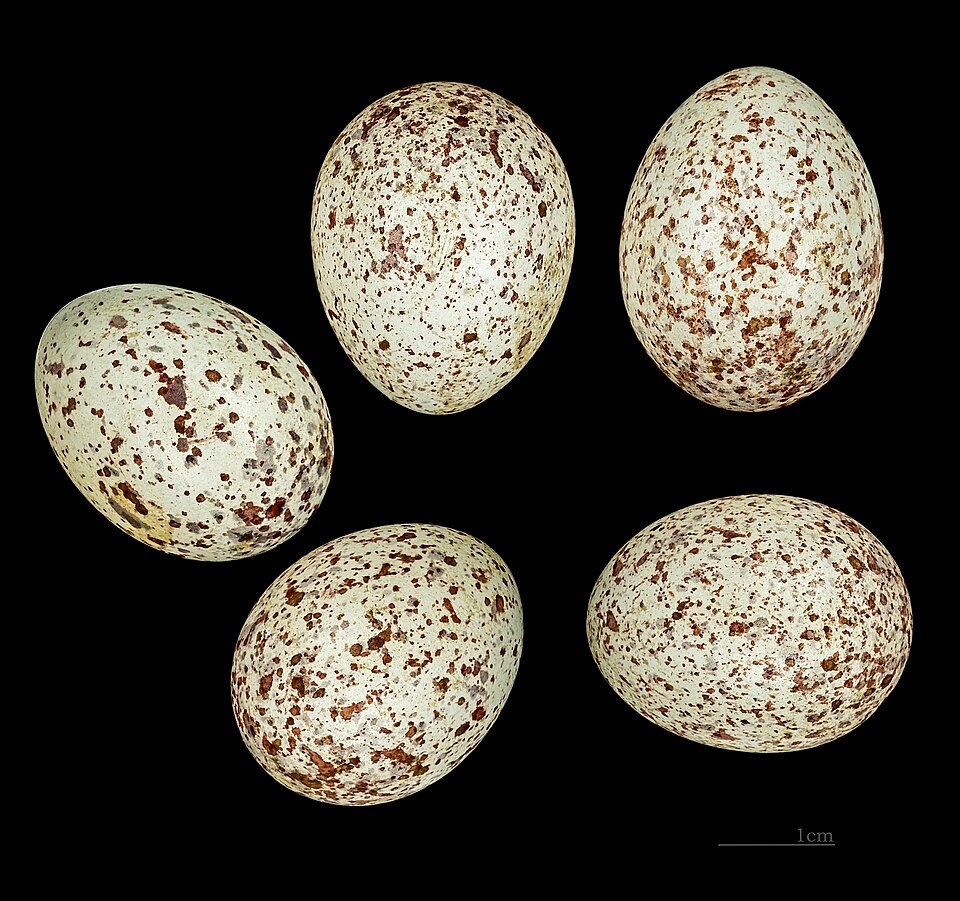
The first time I actually understood why cuckoo clocks exist, I was in a Bavarian gift shop listening to a demo model, and it clicked that the maker wasn’t inventing a cute sound — they were just recreating, almost exactly, the two-note call that had been announcing spring across Europe for as long as anyone could remember. That two-note “cuck-oo” turns out to carry a lot more cultural weight than its simplicity suggests. What it comes down to Cuckoos carry two very different reputations depending on which side of their biology you focus on: as a herald of spring and new beginnings in much of European folklore, and as a symbol of deception and unwelcome intrusion because of their notorious brood parasitism — laying eggs in other birds’ nests. The “spring herald” side Across much of Europe, the Common Cuckoo’s return each spring was historically one of the most reliable seasonal markers available, arriving with enough consistency that folk traditions in England, Germany, and elsewhere treated the first cuckoo call of the year as a genuine calendar event, sometimes marked in old almanacs and folk rhymes. Some traditions held that whatever you were doing when you heard the first cuckoo call would characterize your fortune for the rest of the year, or that the number of subsequent calls could predict how many years you had left to live or how soon you’d marry — entertaining folk math built entirely around this one bird’s arrival. The “deception” side, and it’s not exaggerated Unlike a lot of symbolic reputations built on misunderstanding, the cuckoo’s association with trickery is grounded in genuinely startling real behavior. Female Common Cuckoos lay their eggs in the nests of other species, and cuckoo chicks often hatch earlier than the host’s own eggs and physically push the host’s remaining eggs or chicks out of the nest — sometimes within hours of hatching, while still blind and featherless.
Grackle Meaning and Symbolism
A Common Grackle used to stand on my neighbor’s chimney every evening catching the last light in a way that made its supposedly “black” feathers flash iridescent blue, purple, and bronze, and it took me embarrassingly long to realize that was the same bird everyone complains about swarming parking lots in huge, noisy flocks. Grackles get almost no credit for how genuinely striking they look up close, mostly because people only notice them in the least flattering context: a hundred of them screaming in a Walmart parking lot. At a glance Grackles carry a mixed and largely underappreciated symbolic reputation: associated with adaptability and resourcefulness in some modern readings, but more often dismissed as a noisy nuisance, despite an iridescent appearance that rewards closer attention than most people give it. An appearance that gets dismissed at a distance From far away or in poor light, grackles read as simply “black birds,” lumping them visually with crows and other blackbirds in a way that erases what’s actually happening on their feathers. Grackle iridescence comes from microscopic structures in the feathers that refract light rather than pigment, the same optical principle behind a hummingbird’s throat color or a peacock’s tail — meaning the “plain black bird” reputation is really a failure of viewing conditions rather than an accurate read on the animal. A grackle in good direct light can show head and body colors shifting between blue, green, purple, and bronze depending on the angle. Genuine intelligence behind the “nuisance” reputation Common Grackles are known to use tools in captivity and the wild, including using bread as bait to lure and catch fish, and have been observed using their unusually long, keeled bill to saw open acorns rather than simply crack them — a specialized foraging technique among grassland and open-country songbirds.
Grosbeak Meaning and Symbolism
A Rose-breasted Grosbeak showed up at my feeder one spring looking almost too vivid to be real, a jet-black-and-white bird with a splash of rose-red across its chest so precise it looked painted on, and I understood immediately why the name “grosbeak,” French for “big beak,” felt almost like an afterthought next to that color. In short Grosbeaks don’t come loaded with deep mythology, but they carry a straightforward folk association with vividness and unexpected beauty, symbolism built on both their name, drawn from an unusually large, powerful bill, and their often strikingly colorful plumage. A name about function, a reputation about color “Grosbeak” describes a real anatomical feature shared across several unrelated finch and cardinal-family species: an oversized, heavily muscled bill built for cracking open tough seeds and pits that smaller-billed birds simply can’t manage, giving these birds access to a food source with less competition. A functional tool that happens to look ornamental That same heavy-duty bill, built purely for mechanical force, sits on species like the Rose-breasted and Black-headed Grosbeak that also happen to carry some of the most vividly patterned plumage in their family, an odd pairing of a purely practical adaptation with an appearance vivid enough that the bird’s common cultural association ended up being about color rather than about the bill that gave it its name. A closing thought The grosbeak is a rare case of a bird named for one genuinely important adaptation, a seed-cracking bill, while being remembered by almost everyone who’s actually seen one for something else entirely: color vivid enough to overshadow the very feature in its name.
Junco Meaning and Symbolism
Every year around the same week in late fall, a small flock of slate-gray birds with flashing white tail feathers shows up under my feeder, and every year I say the same thing out loud to no one: winter’s actually coming now. Dark-eyed Juncos have earned the nickname “snowbirds” for exactly this reason, and that seasonal timing is really the whole basis of their symbolism. At a glance Juncos are widely associated with the changing of seasons and a kind of understated humility, symbolism built on their habit of arriving in much of the lower United States right as winter sets in, paired with their plain, unassuming gray-and-white plumage. An arrival that doubles as a calendar Across a huge swath of the country, juncos breed in Canada and mountain forests farther north and only move into lawns, parks, and backyard feeders once temperatures drop, which is exactly why generations of people who never studied ornithology still learned to read their arrival as a seasonal signal, the same way some watch for the first frost or the first changed leaf. One of science’s favorite ordinary birds Despite their humble look, juncos are actually among the most heavily studied songbirds in evolutionary biology. A population that colonized the University of California San Diego campus in the 1980s has been tracked ever since, and researchers have documented it evolving shorter wings, reduced migratory urges, and other measurable changes within just a few decades — a rare, real-time look at evolution happening on a human timescale rather than a geological one. The takeaway The junco’s whole symbolic weight comes from timing rather than appearance — a plain little bird that happens to show up right when the season turns, which is more than enough to earn it a permanent spot in the folk calendar of winter.
Kinglet Meaning and Symbolism
A Golden-crowned Kinglet foraging in a snowy spruce once struck me as almost absurdly small to be surviving a night that was, by the weather report, well below zero, and it turns out that reaction was more scientifically accurate than I realized. At a glance Kinglets, among the smallest songbirds in North America, are associated with resilience disproportionate to size, symbolism built on genuinely remarkable cold tolerance packed into one of the tiniest bodies in the bird world. A tiny body built to survive real cold Golden-crowned Kinglets weigh roughly as much as two pennies yet regularly survive nights well below freezing in northern forests, a physiological feat researchers have linked to extremely efficient fat storage, fluffed insulating plumage, and huddling behavior, allowing an animal that small to hold onto enough body heat to make it through conditions that would kill most similarly sized creatures. A crown that’s easy to miss and hard to forget Both Golden-crowned and Ruby-crowned Kinglets carry a small, vivid patch of color on the crown, normally kept mostly hidden and flashed briefly during territorial displays or agitation, a tiny reveal that gave the whole genus its “king” name despite the birds being some of the smallest, least conspicuous species in the forest canopy. The takeaway The kinglet’s outsized reputation for toughness is backed by real physiology — one of the smallest songbirds on the continent routinely outlasting winter nights that seem, on paper, like they shouldn’t be survivable at that size.
Meadowlark Meaning and Symbolism
I grew up thinking the sound coming from the fence posts along my grandparents’ pasture every summer morning was just “prairie noise” until someone finally told me it had a name and a source — a Western Meadowlark, perched in plain sight, delivering one of the most flute-like, unmistakable songs of any grassland bird in North America. Once you can name a sound like that, you start noticing how many old stories were built around exactly that moment of recognition. What it comes down to Meadowlarks are widely associated with joyful communication and welcome messages in Native American tradition across the Great Plains, largely because of their extraordinarily clear, musical song and their visibility perched on fence posts and shrubs across open grassland. A messenger bird in Plains traditions Several Plains nations, including some Lakota and Blackfoot traditions, associated meadowlarks with communication and even specific messages, partly because the bird’s song was distinct enough that some traditions describe interpreting phrases or words within it — a form of folk mnemonic also documented with other strongly patterned bird songs elsewhere in the world (the white-throated sparrow’s “Oh sweet Canada Canada Canada” being a well-known English-language example of the same phenomenon). In some stories, meadowlarks were considered capable of understanding and relaying human speech, or delivering omens through the specific quality or timing of their song. Why the song is so distinctly “musical” to human ears The Western Meadowlark’s song is built from clear, flute-like notes that fall within a pitch range and rhythmic structure that human ears process as unusually melodic compared to the buzzy, complex songs of many other grassland songbirds. Each male meadowlark can have a repertoire of a dozen or more distinct song variations, and neighboring males are known to learn and even share song variants with each other, creating local “song dialects” across different populations — a form of cultural transmission that’s relatively unusual and well documented in this species specifically.
Nightingale Meaning and Symbolism
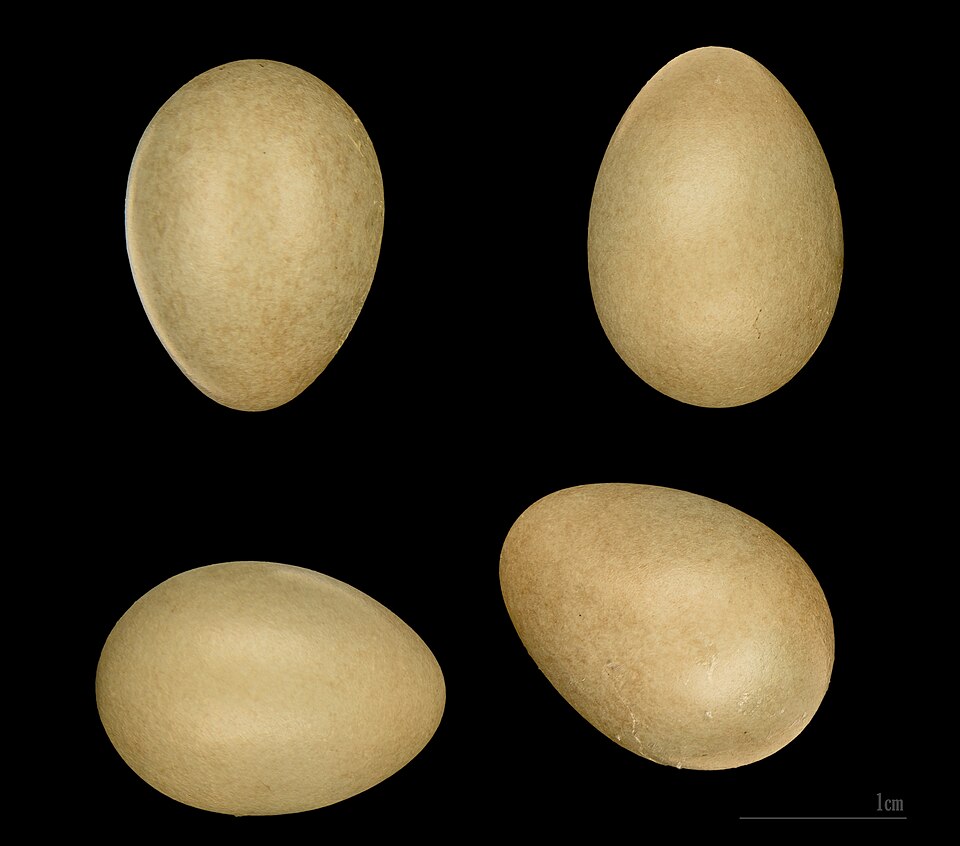
I once stayed up half the night in the English countryside trying to figure out what was singing outside my window, convinced it had to be some kind of speaker left on by accident — the sheer range and volume coming out of something I couldn’t even see felt impossible for a wild bird. It was a nightingale, and I understood immediately, in a very unscientific way, why poets have been losing their minds over this sound for roughly three thousand years. The short answer Nightingales are one of the most heavily mythologized songbirds in Western literature, symbolizing poetic inspiration, melancholy love, and bittersweet longing — almost entirely because of their extraordinarily complex, powerful nighttime song rather than their fairly plain brown appearance. A myth built on real heartbreak (sort of) The oldest and most influential nightingale story comes from Greek mythology: Philomela, transformed into a nightingale after a horrific betrayal by her sister’s husband, is doomed to sing an eternally mournful song. The story is genuinely brutal even by Greek mythology standards, but it stuck, cementing the nightingale’s song in Western literature as the sound of grief and loss rather than simple beauty. Ovid’s telling in the Metamorphoses spread this version widely across later European poetry. This grief association is why so much English poetry — Keats’ “Ode to a Nightingale” being the most famous example — treats the bird’s song as something achingly beautiful specifically because it carries sorrow, not despite it. Persian and Middle Eastern poetry: love, not grief A parallel and much more romantic tradition developed independently in Persian poetry, where the nightingale (bulbul) is depicted as hopelessly, endlessly in love with the rose, singing to a flower that can never love it back. This image became one of the central metaphors in classical Persian and Sufi poetry (Rumi and Hafez both used it extensively), representing a lover’s devotion to an unattainable or transcendent beloved — the nightingale’s song reframed as longing rather than sorrow.
Nutcracker Meaning and Symbolism
A ranger in the Rockies once told me that a single Clark’s Nutcracker I was watching bury seeds along a ridgeline would, over the course of one autumn, hide tens of thousands of them across dozens of square miles — and then find most of them again months later, buried under snow, using memory alone. I assumed she was exaggerating. She wasn’t. Quick answer Nutcrackers are associated with foresight, provision, and memory, symbolism drawn from Native American traditions of the Great Basin and Rocky Mountain regions and backed up by genuinely extraordinary real-world spatial memory documented by researchers. A memory that borders on the impossible Clark’s Nutcrackers cache an estimated 30,000 or more pine seeds each season, hiding small clusters in thousands of separate locations across a wide mountain landscape, then rely on spatial memory rather than smell or random searching to relocate a large share of those caches up to a year later, even after snow has completely buried the ground. It remains one of the most studied and most impressive memory feats documented in any animal, bird or otherwise. A bird whose habit keeps a whole ecosystem going Several Native American traditions in the bird’s mountain range associated the nutcracker with foresight and provision precisely because of its visible habit of stockpiling food ahead of winter. What those traditions couldn’t have known is just how ecologically important that hoarding turns out to be: whitebark pine, a keystone high-elevation tree, has cones that don’t open on their own, and depends almost entirely on nutcrackers caching and forgetting a portion of its seeds to reproduce at all. A closing thought The nutcracker’s folk reputation for foresight isn’t an exaggeration or a stretch — it’s a fairly literal description of an animal whose memory is good enough to single-handedly keep an entire mountain forest regenerating.
Oriole Meaning and Symbolism
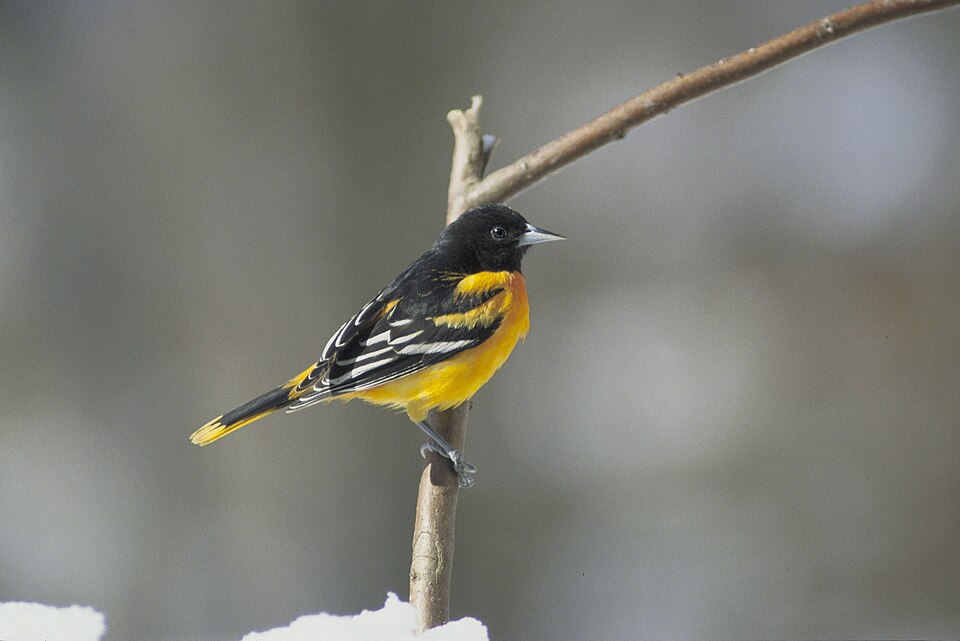
A pair of Baltimore Orioles found the orange halves I’d left out on a whim one spring, and within a day I had a bright flash of orange and black visiting the yard every morning like clockwork. I hadn’t done any real research beforehand — I just remembered someone mentioning orioles like oranges — and it worked well enough that I started paying a lot more attention to a bird I’d previously only associated with a baseball team. Quick answer Orioles are generally associated with passion, positive change, and renewed energy, symbolism drawn mostly from their vivid, fiery orange-and-black coloring and their arrival as one of the more eye-catching signs of full spring migration in the areas where they breed. Why bright color drives most of the symbolism Unlike birds with deep folklore rooted in specific myths or documented historical behavior, orioles carry relatively modern, color-driven symbolism — the vivid orange of a Baltimore Oriole or the equally striking colors of other oriole species reads immediately as warmth, energy, and vibrancy, without needing an elaborate backstory to explain the association. This is a similar pattern to finch and canary symbolism: strikingly colored birds tend to accumulate “positive energy” readings almost automatically, based purely on visual impact, in a way that duller-colored birds with more dramatic behavior (owls, ravens) don’t. An accidental but enduring cultural connection The Baltimore Oriole’s common name itself comes from an unrelated source: the bird’s orange and black coloring matched the family crest colors of Lord Baltimore, the colonial proprietor of Maryland, and the name stuck long before the bird had any symbolic reading attached to it. That name later became attached to Baltimore’s Major League Baseball team, giving the species an unusual amount of modern cultural visibility for a songbird that most casual observers might not otherwise easily identify by name.
Phoebe Meaning and Symbolism
An Eastern Phoebe has rebuilt a mud-and-moss nest on the same porch light fixture at my parents’ house for what is, at this point, more consecutive years than anyone in the family has kept precise count of, and that kind of site fidelity turns out to be exactly what the bird is known for. The gist Phoebes are associated with homecoming, faithfulness, and reliable return, symbolism built on the species’ well-documented tendency to return to the same nest site, sometimes the exact same structure, year after year. One of the first birds ever tracked for this reason John James Audubon is credited with conducting one of the first bird-banding experiments in North America specifically on Eastern Phoebes, tying silver thread to nestlings’ legs in 1804 and confirming that at least some of the same individuals returned to nest in the same location the following spring, an early proof of the site fidelity phoebes are still known for today. A name that comes straight from the call The phoebe’s raspy, two-syllable “fee-bee” call is distinctive enough that, like the bobwhite, the bird was simply named after its own song, a straightforward bit of onomatopoeia that made it one of the easier birds for early naturalists to identify by ear alone. Last thought The phoebe’s reputation for faithful return isn’t sentimental exaggeration — it’s backed by one of the earliest documented bird-banding studies in American ornithology, run specifically because the bird’s habit of coming back was already obvious enough to test.
Pigeon Meaning and Symbolism
I used to dismiss city pigeons as basically background noise — until I read about the WWII messenger pigeon program and realized the same species getting shooed off park benches everywhere had, within living memory, carried life-or-death communications across active battlefields with a reliability rate that stunned military planners. It’s strange to reconcile “bird nobody respects” with “animal that received actual military medals,” but pigeons have somehow managed to hold both reputations at once. In short Pigeons and doves are technically the same family (Columbidae), but pigeon symbolism specifically splits between two extremes: profound respect for loyalty, homing ability, and peace on one hand, and dismissal as a dirty, unremarkable “rat with wings” on the other — one of the widest reputation gaps of any bird in this series. The respected side: proven, life-saving loyalty Homing pigeons’ navigational ability is genuinely extraordinary and only partially understood even now — they can find their way home across hundreds of miles of unfamiliar terrain, likely using a combination of the sun’s position, magnetic field sensing, and even smell. That ability was exploited for message delivery going back to ancient Persia and Rome, and reached its most dramatic use during both World Wars, when pigeons like the famous Cher Ami carried critical messages through active combat, in Cher Ami’s case reportedly saving nearly 200 trapped American soldiers despite being shot and badly wounded mid-flight. Several messenger pigeons received formal medals for wartime service, an honor about as far as it’s possible to get from “rat with wings.” The dismissed side: an urban nuisance reputation The common city pigeon (Rock Dove) reputation took a sharp downturn once large urban populations, sustained partly by human food waste and partly by the fact that ledges on buildings closely mimic their natural cliff-nesting habitat, turned them into a visible, droppings-associated nuisance in most major cities.
Skylark Meaning and Symbolism
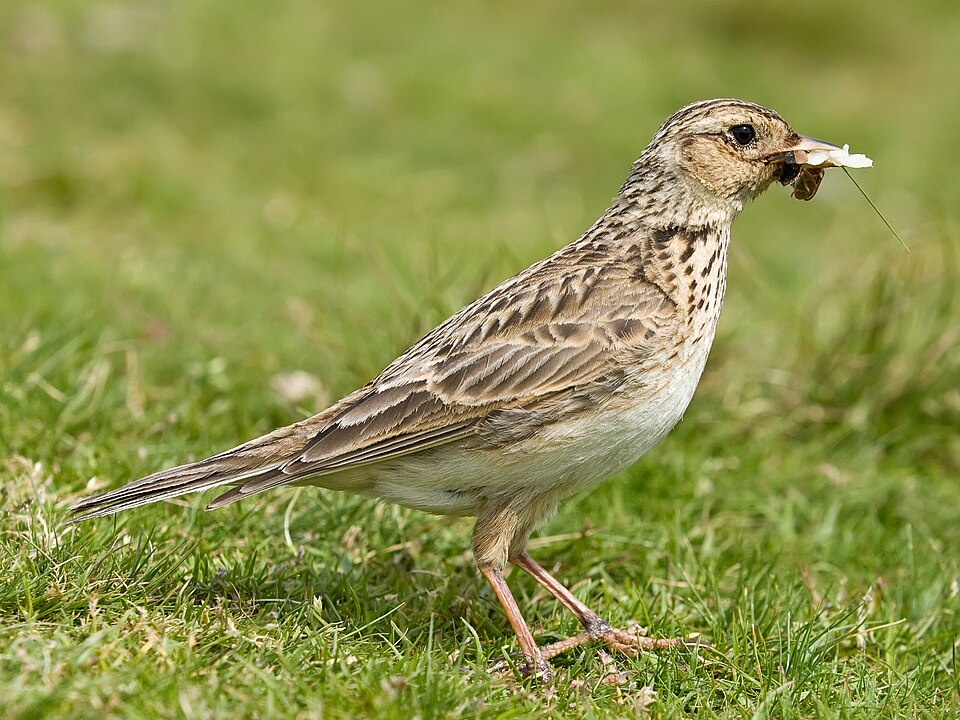
Percy Bysshe Shelley never actually saw the skylark he was writing about in his famous 1820 poem, at least not for most of it — the bird climbs so high while singing that it often disappears from view entirely, leaving only the song pouring down from an empty patch of sky. Cutting to it Skylarks are widely associated in English literary tradition with pure, unbounded joy and transcendence, symbolism built almost entirely around one specific and genuinely unusual behavior: singing continuously while climbing hundreds of feet straight up into open sky. A song built to outlast the sight of the singer Unlike most songbirds, which sing from a perch where they can be seen, skylarks perform extended, continuous song flights that can last several minutes and carry the bird several hundred feet into the air, often well out of sight of an observer on the ground. That combination, an invisible source producing an unbroken stream of song from directly overhead, is exactly what generations of English poets from Shelley to Wordsworth latched onto as a symbol of pure, disembodied joy. A song built for stamina, not just altitude The skylark’s song flight isn’t just high, it’s also remarkably long and complex, with individual flights sometimes running uninterrupted for close to an hour and incorporating hundreds of distinct phrases, a genuine feat of vocal and physical endurance that happens to look, from the ground, exactly like unbroken euphoria. Putting it together The skylark’s reputation for representing pure joy comes from a real and unusual piece of biology — a bird that sings its way out of sight and keeps singing anyway — rather than from any invented legend.
Starling Meaning and Symbolism
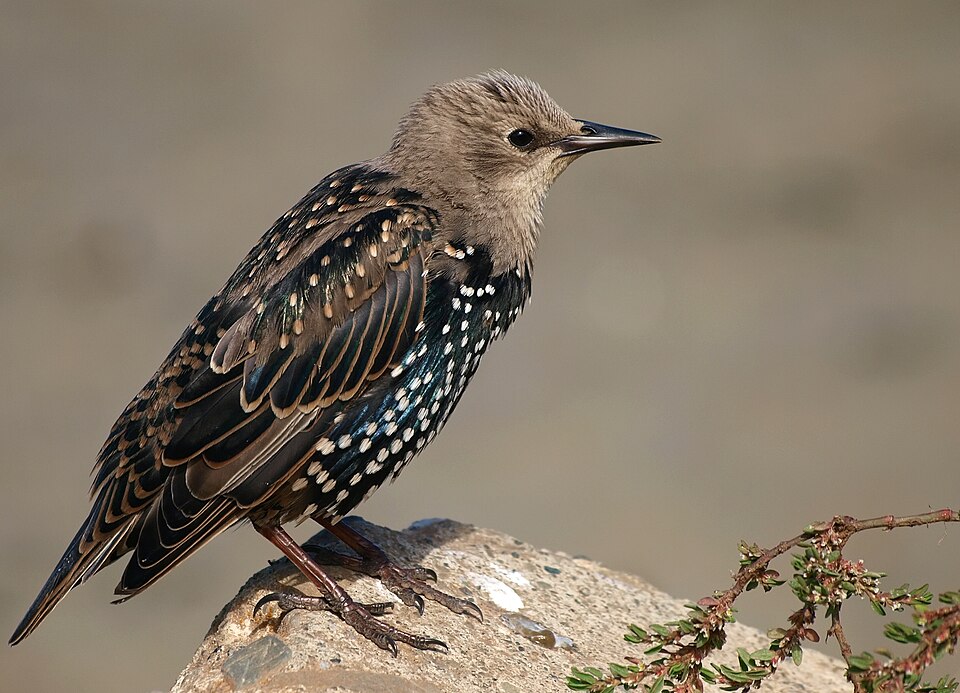
I watched a murmuration by accident once, driving home near a reservoir at dusk, and had to actually pull over because I couldn’t process what I was looking at — thousands of birds pouring through the sky in one continuous, liquid shape, folding and stretching like a single organism instead of a crowd of individuals. I’ve since learned that reaction is close to universal, and it’s most of the reason starlings carry the symbolic weight they do, despite being, individually, a fairly unremarkable bird. In short Starlings are widely associated with unity, communication, and collective strength, almost entirely because of murmurations — the massive, coordinated aerial displays thousands of starlings perform together at dusk, which have become one of the most striking examples of group behavior in the natural world. Why murmurations look so unsettlingly coordinated There’s no leader directing a murmuration. Research using high-speed cameras and computer modeling has found that each starling is tracking and responding to roughly its seven nearest neighbors, adjusting its speed and direction based on their movement in real time. That simple, local rule, repeated across thousands of individual birds simultaneously, produces the complex, flowing shapes without any single bird controlling the pattern — a phenomenon closer to how flocks of fish or even some physical systems behave than to coordinated group decision-making in the way humans usually picture it. The effect is genuinely one of the more compelling real-world examples of complex behavior emerging from simple individual rules, which is part of why murmurations get used as an example far outside ornithology, in fields studying networks, crowd behavior, and self-organizing systems. The likely function: safety in numbers, literally The leading explanation for why starlings murmurate is predator defense.
Tanager Meaning and Symbolism
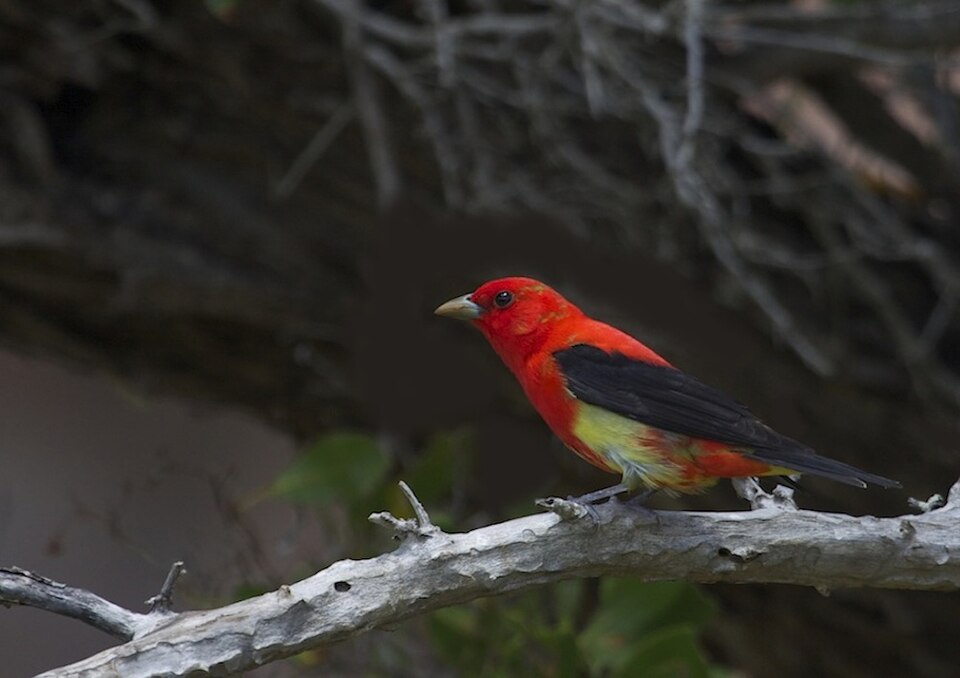
A Scarlet Tanager showed up in a maple tree in my backyard for exactly one morning during spring migration, and the color was so intensely, almost unnaturally red against the fresh green leaves that I assumed for a second I was looking at something injured or artificial. It vanished by afternoon, continuing north, and that brief, almost too-vivid appearance is basically the entire tanager experience distilled into one visit. The gist Tanagers are generally associated with fleeting beauty, vitality, and rare good fortune, symbolism drawn almost entirely from their intensely saturated color combined with a brief, easily-missed presence during migration in much of their range. Why “fleeting” is such a core part of the symbolism Many tanager species, including the Scarlet and Summer Tanagers common in the eastern United States, are neotropical migrants that pass through much of their breeding range only briefly, often staying hidden in dense forest canopy where their color is surprisingly easy to miss despite its intensity. Their appearance in a backyard or park is frequently a short, unrepeated event during a narrow migration window, which lines up naturally with a “rare gift” reading — the sighting itself feels valuable partly because it’s genuinely uncommon and unpredictable, not because of any specific myth attached to the species. The color is more chemically interesting than it looks Unlike blue structural colors (seen in Blue Jays or Indigo Buntings) or iridescent colors (seen in grackles or hummingbirds), a tanager’s red comes from actual pigments called carotenoids, obtained entirely through diet, similar to the mechanism described for House Finches elsewhere in this series. Male Scarlet Tanagers convert dietary carotenoids into a specific red pigment through a metabolic process that females appear to use as an honest signal of the male’s foraging ability and overall health, meaning the same intense color that reads symbolically as “vitality” is, quite literally, a visible marker of the bird’s physical condition.
Thrasher Meaning and Symbolism
I once watched a Brown Thrasher work through a single patch of leaf litter for a solid ten minutes, flinging debris in every direction with its bill like it was digging a trench, and it’s easy to see how a bird with that much violent enthusiasm for foraging ended up named after the motion itself. The quick take Thrashers don’t come loaded with ancient mythology, but they carry a genuinely earned reputation as one of North America’s greatest singers, symbolism rooted almost entirely in the astonishing size of their vocal repertoire rather than in folklore or legend. The name comes straight from its foraging style Brown Thrashers dig through leaf litter with sharp, sideways sweeps of the bill, thrashing dead leaves aside to expose insects, seeds, and small invertebrates underneath — a foraging technique distinctive enough that it gave the bird its common name centuries before anyone was studying its song in detail. The largest song repertoire of any North American bird And that song turns out to be remarkable: researchers estimate Brown Thrashers can learn upward of 3,000 distinct song types over a lifetime, more than double the repertoire of the famously talented Northern Mockingbird. As the official state bird of Georgia, the thrasher has become something of a regional point of pride specifically because of that vocal range — a genuinely rare case where a bird’s folk reputation and its measured biology line up almost perfectly. Where this leaves us The thrasher’s whole identity, name included, comes from two things it’s exceptionally good at: physically tearing through leaf litter to find food, and singing longer and more variedly than almost any other bird on the continent.
Towhee Meaning and Symbolism
The first time someone told me an Eastern Towhee’s call sounds like it’s saying “drink-your-tea,” I dismissed it as one of those cute birding mnemonics that doesn’t actually hold up. Then I heard one clearly for myself, rising note followed by a trilled “tea,” and I understood exactly why that folk translation has stuck around for so long. The gist Towhees don’t carry deep mythological baggage the way owls or ravens do, but they sit inside a much broader and genuinely old folk tradition: interpreting a bird’s call as a spoken message or piece of advice aimed at the listener, the same pattern behind names like the bobwhite and the white-throated sparrow’s “Old-Sam-Peabody.” Birds as accidental oracles Turning animal sounds into human phrases is a near-universal habit across folk traditions worldwide, and it says less about the bird than about how people process unfamiliar sound — we’re wired to hunt for language patterns even in noise, and a distinctive enough call practically begs to be assigned words. The towhee’s old folk name, “chewink,” is itself just another attempt at spelling out its call phonetically, this one closer to a scolding chip note than the tea-drinking song. A double-footed dig through the leaf litter Set the folklore aside and towhees have one genuinely distinctive real behavior: a signature “double-scratch,” hopping backward and kicking with both feet at once to fling leaf litter aside and expose the insects and seeds underneath, rather than scratching one foot at a time like most ground-foraging birds do. Last thought The towhee’s folksy “drink your tea” reputation is a small example of a much bigger human habit — hearing meaning and advice in birdsong — while the bird itself is busy doing something far less poetic: kicking through dead leaves with both feet at once.
Vireo Meaning and Symbolism
A Red-eyed Vireo once sang from the same stretch of forest canopy near my house for what felt like an entire afternoon, question-and-answer phrases repeated over and over with barely a pause, and I later learned that “over and over” wasn’t an exaggeration at all. What it comes down to Vireos don’t carry heavy mythology, but they’ve earned a quiet reputation among birders for tireless persistence, symbolism built almost entirely around the Red-eyed Vireo’s genuinely record-breaking singing endurance. A record that’s hard to overstate Researchers have documented individual Red-eyed Vireos singing more than 20,000 short phrases in a single day, delivered in a steady, unhurried question-and-answer rhythm from high in the leaf canopy where the bird itself is notoriously difficult to spot, which is exactly why “the preacher bird” became one of its old folk nicknames. A small, plain bird easy to overlook by design Vireos as a group tend toward plain olive and gray plumage and a habit of staying high and still in dense foliage, meaning most people who’ve spent hours listening to one have never actually laid eyes on the bird responsible, a mismatch between vocal presence and visual presence that’s fairly rare even among songbirds. What to make of it The vireo’s low-key reputation for persistence isn’t folklore dressed up after the fact — it’s a fair description of a bird that can genuinely out-sing almost anything else in the forest without ever needing to be seen doing it.
Wagtail Meaning and Symbolism
Watching a wagtail walk across a parking lot, its long tail pumping up and down with almost every single step, it’s hard not to read some kind of nervous energy into the motion, even though the bird is almost certainly just going about ordinary business. The gist Wagtails are associated in Japanese Shinto tradition with the creation of the world itself, symbolism drawn from a myth in which the tail-wagging motion taught the first deities how to conceive life, alongside a more universal folk fascination with the bird’s constant, rhythmic bobbing. A myth built around one specific motion In one Japanese creation myth, the deities Izanagi and Izanami are said to have learned how to procreate by watching a wagtail’s characteristic tail motion, giving the bird a surprisingly foundational role in that tradition’s cosmology considering how unremarkable the behavior looks at first glance. Across Europe, meanwhile, wagtails picked up a wide range of more everyday folk names built around the same motion, generally read as a sign of restlessness or watchfulness rather than anything divine. A real reason for all that bobbing Researchers still debate the exact function of the constant tail-wagging, but the leading theories involve flushing insect prey out of grass and signaling alertness to potential predators, meaning the behavior that inspired a creation myth on one continent is plausibly, on a purely practical level, a hunting and anti-predator tactic. Last thought The wagtail turned an ordinary, repetitive physical tic into the literal origin story of a religious tradition, which is a useful reminder of how little a behavior needs to look profound before people start reading profundity into it.
Waxwing Meaning and Symbolism
A flock of Cedar Waxwings descended on a berry-heavy holly tree outside my kitchen window one winter and stripped it almost bare in under an hour, passing berries to each other along a branch like they were sharing rather than competing, before moving on as a single unit to whatever tree was next. I’d never seen a bird flock behave with that much apparent coordination and courtesy, and it turns out that impression isn’t far off from what’s actually happening. Cutting to it Waxwings are widely associated with sharing, social harmony, and refined elegance, symbolism drawn from their genuinely documented berry-passing behavior and their smooth, sleek, almost formally “dressed” appearance. The berry-passing behavior is real and well documented Cedar Waxwings have been repeatedly observed passing berries down a perched line of birds beak to beak before one finally eats it, a behavior that also extends to courtship, where a male and female waxwing will pass a berry or petal back and forth several times before one consumes it, functioning as a kind of pair-bonding ritual. This isn’t universal to fruit-eating birds and stands out enough that waxwings are one of the more frequently cited examples of what looks, at least functionally, like generous or cooperative behavior in the bird world, distinct from the more competitive feeding scrambles typical of most flocking species. Why they look so distinctly “elegant” Waxwings have a smooth, sleek plumage with almost no visible feather texture from a distance, a pointed crest, a black mask, and small red, wax-like tips on their wing feathers (the source of the bird’s name) that look almost applied rather than grown. That combination of a uniform silhouette and precise, small color accents reads to human eyes as more “designed” or formal than the visual texture of most songbirds, which is likely why waxwing symbolism leans toward refinement and elegance rather than the wildness associated with more visually chaotic or dramatically patterned birds.
Weaver Meaning and Symbolism
I once stood under a single acacia tree in Namibia holding what looked like an entire haystack woven into the branches, and realized it was one sociable weaver nest, home to dozens of pairs, all built by birds barely bigger than a sparrow. Bottom line Weavers are associated with industriousness, community, and architectural skill, symbolism built entirely on real, observable behavior: male weavers construct elaborate hanging nests knot by knot, and several species build permanent shared apartment-block nests that can house a colony for generations. An engineer with feathers In parts of Africa, weaver nests are held up as folk examples of diligence and patience, since a male can spend hours tying and re-tying individual strands of grass, and if a female inspects his work and finds it unsatisfactory, he may tear the whole nest down and start over. The sociable weaver’s communal nest, meanwhile, is treated locally almost as a landmark, sometimes weighing more than a car and used by other species entirely. The biology behind the myth Weaver nest-building is a genuinely learned skill, not pure instinct — young males are measurably worse at it than experienced adults, and their technique visibly improves with practice, one of the clearer documented cases of skill development in a non-tool-using bird. One more thing The weaver’s reputation for tireless labor isn’t folklore stretched thin. Female mate choice based on nest quality means bad construction has a real reproductive cost, which is likely exactly why the skill evolved to be this elaborate in the first place.
Whydah Meaning and Symbolism
A male Pin-tailed Whydah flew past a South African garden trailing tail feathers nearly four times his body length, and the whole silhouette looked less like a bird and more like a kite someone had accidentally let fly with a living body attached. Cutting to it Whydahs are associated with extravagance and deception in equal measure, symbolism built on the male’s absurdly long breeding-season tail feathers grown purely for display, paired with the species’ real, documented habit of laying eggs in other birds’ nests for someone else to raise. Beauty built on borrowed labor Across sub-Saharan Africa, the whydah’s dramatic seasonal tail — grown fresh each breeding season and molted afterward — made it a locally recognized symbol of showy male display, while its brood-parasite lifestyle, laying eggs almost exclusively in the nests of specific finch species, gave it a less flattering reputation as a freeloader in regional folk observation. The biology behind the myth Unlike cuckoos, which trick unrelated hosts, whydahs are specialist parasites that mimic the specific begging calls, mouth markings, and even chick appearance of their one host species, a co-evolutionary relationship so precise that each whydah species is typically tied to just one finch host. The male’s extreme tail is pure sexual selection at work, offering no survival advantage and considerable flight cost, grown and shed on an annual cycle purely to attract mates. Putting it together The whydah’s reputation for beautiful excess paired with borrowed parenting isn’t an unfair caricature — both traits are real, extensively studied, and among the more extreme examples of their kind in the entire bird world.
Bobwhite Meaning and Symbolism
I grew up hearing a Northern Bobwhite calling from a fencerow behind my grandfather’s place every summer evening, and it took me years to realize the bird was, in the most literal sense possible, shouting its own name. “Bob-WHITE!” rings out across old fields and brushy edges all over the eastern and central United States, and that self-naming whistle is basically the entire reason this bird carries the symbolism it does. The short answer Bobwhites are widely associated with home, simple rural life, and a kind of quiet nostalgia, symbolism drawn almost entirely from that unmistakable two-note call and from the bird’s deep ties to Southern and Midwestern farm culture. A bird that calls out its own name Most folk bird names are guesses at what a call sounds like to human ears — the “bob-white” whistle is close enough to actual English words that early settlers just adopted it wholesale as the bird’s common name. That kind of direct, literal self-naming is rare enough among North American birds that the bobwhite became something of a local celebrity by sound alone, long before most people could pick one out of the underbrush by sight. The voice of the vanishing countryside For generations of farmers and quail hunters across the South and lower Midwest, that whistle became shorthand for a certain kind of rural summer evening — front porches, hedgerows, tobacco barns. The trouble is that bobwhite populations have collapsed by more than 80% since the 1960s as small farms consolidated and brushy field edges got mowed, sprayed, or paved over. The symbolism has shifted accordingly: what used to just mean “home” now carries an edge of nostalgia for a soundscape a lot of rural communities have quietly lost.
Roadrunner Meaning and Symbolism
I finally saw a Greater Roadrunner in the wild outside Tucson, and the thing that struck me wasn’t the speed everyone talks about — it was how it moved with this deliberate, almost swaggering confidence across open ground where a bird that size should logically be hiding from every hawk in the sky. Several Southwestern traditions read that exact confidence as a specific kind of protective power, and after watching one casually stroll past a resting Harris’s Hawk without much apparent concern, it’s not hard to see why. The short answer Roadrunners are widely associated with speed, courage, and protection from danger in Southwestern and Mexican folk tradition, most specifically tied to a widespread folk belief that roadrunner tracks can ward off evil spirits. The X-shaped track and its protective meaning A roadrunner’s foot has two toes pointing forward and two pointing backward (a trait called zygodactyl foot structure, shared with cuckoos, to which roadrunners are related), which makes its footprint an unusual X shape that doesn’t reveal which direction the bird was walking. In several Southwestern Indigenous traditions, including some Pueblo beliefs, this track was considered a protective symbol specifically because it could confuse evil spirits or ill intent trying to track a person, and roadrunner track patterns show up as protective motifs in some traditional art and were sometimes placed near homes for exactly that reason. Genuinely fast, and genuinely bold around predators The speed reputation isn’t exaggerated: Greater Roadrunners can run up to roughly 20 miles per hour, making them one of the fastest-running flying birds in North America, and they rely on this speed rather than flight (which they’re capable of but rarely use over distance) to both hunt and escape danger. More strikingly, roadrunners are documented predators of rattlesnakes, sometimes hunting them cooperatively in pairs, using rapid, precise strikes to the head while dodging the snake’s attempts to bite back — a genuinely dangerous hunting strategy that likely reinforced the bird’s reputation for courage well beyond ordinary bravado.
Shrike Meaning and Symbolism
A friend who studies grassland birds once showed me a fence line with several grasshoppers, a lizard, and a mouse all impaled neatly on the barbed wire, spaced out like some kind of grim inventory display, and told me a single Loggerhead Shrike had done all of it as a food cache. It’s one of the more unsettling things a songbird does, and once you know a shrike is responsible, that fence line reads less like a horror scene and more like a very organized, very small pantry. In short Shrikes are associated with vigilance, ruthless efficiency, and sometimes foreboding, symbolism drawn almost entirely from their genuinely unusual and visually striking habit of impaling prey on thorns, barbed wire, or sharp branches — behavior that earned them the nickname “butcher bird” across multiple cultures independently. Why shrikes impale their prey Shrikes are songbirds, not raptors, meaning they lack the strong grasping talons that hawks and owls use to hold prey while feeding or tearing it apart. Impaling prey on a thorn or barbed wire spike solves this problem by pinning the item in place, letting the shrike tear off pieces with its hooked bill the way a much larger bird of prey would use its feet. The behavior also functions as a genuine food cache, allowing a shrike to store extra prey (insects, small reptiles, rodents, and occasionally other small birds) for later, particularly useful during breeding season or in the resource-scarce grassland and shrubland habitats many shrike species favor. The “butcher bird” name, and why it emerged independently in multiple places Various shrike species have earned some version of “butcher bird” as a folk name across different countries and languages, a striking case of unrelated cultures independently landing on the same grim, practical description once they observed the same behavior.
Sources
Species identification and behavior details are cross-checked against the Cornell Lab of Ornithology’s All About Birds, the National Audubon Society, and eBird.


