
Birds of Prey Symbolism: Meaning Behind 8 Raptors
Birds of prey carry some of the oldest, most consistent symbolism in human culture — vision, power, judgment, and the uncomfortable line between life and death. Unlike backyard songbirds, raptors are rarely seen as gentle omens. A hawk overhead reads as a call to pay attention; a vulture circling reads as something closer to a warning. This guide brings together the meaning and symbolism behind eight raptors people actually encounter and ask about, each grounded in the real biology and mythology behind the reputation, not just the reputation itself.
Jump to a species
Hawk Meaning and Symbolism
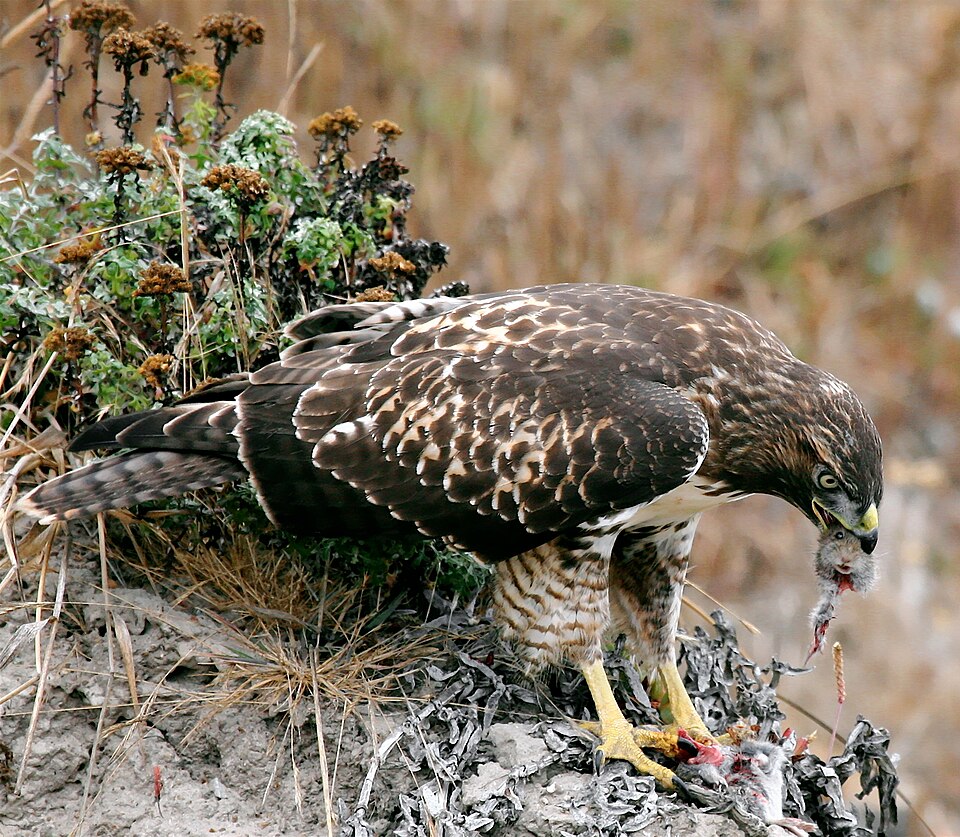
A Red-tailed Hawk circled directly over the highway I was driving on for a solid minute once, riding a thermal without a single wingbeat, and it was hard not to read something into the timing — I was on my way to a job interview I badly needed to go well. It went well, for what it’s worth, though I’ll admit that’s not exactly a controlled study.
The short version: vision, focus, and messages worth paying attention to
Hawks are widely associated with clear vision, sharp focus, and the ability to see the bigger picture — both literally and symbolically. A hawk sighting is often interpreted as a sign to pay closer attention to something in your life, or as confirmation that you’re seeing a situation clearly for the first time.
That symbolism lines up neatly with the bird’s actual biology. A hawk’s eyesight is estimated to be somewhere between four and eight times sharper than a human’s, letting it spot a mouse from hundreds of feet in the air. “Hawk-eyed” isn’t just a figure of speech — it’s a fairly literal description of one of the sharpest visual systems in the animal kingdom.
Messenger symbolism across cultures
In many Native American traditions, hawks are considered messengers between the earthly world and the spirit world, carrying prayers upward or bringing guidance down. Exactly which message a hawk sighting carries varies significantly between tribes and traditions — there’s no single universal interpretation, so it’s worth being cautious about treating any one reading as definitive.
In Ancient Egyptian mythology, the hawk (or falcon, depending on translation) was directly tied to Horus, the sky god associated with kingship and protection — one of the most powerful deities in the entire pantheon. That connection between hawks and authority, protection, and higher perspective shows up again and again across unrelated cultures, which is part of why the symbolism has proven so durable.
Why hawks specifically, and not just any raptor?
Part of it is simple visibility. Hawks are one of the easiest raptors to spot in daily life — soaring over highways, perched on telephone poles, hunting open fields at the edge of most cities and suburbs. Unlike owls (nocturnal and easy to miss) or eagles (less common in a lot of areas), hawks show up often enough that people build a real, repeated relationship with seeing them, which gives the symbolism something to attach to.
A hawk as a sign to take action
Unlike some bird symbolism that leans passive (a cardinal as comfort, a robin as hope), hawk symbolism often carries an active edge — a nudge to act decisively rather than just observe. That tracks with how a hawk actually hunts: patient scanning followed by a fast, committed dive once the target is spotted. The bird doesn’t hesitate once it’s decided, and a lot of the symbolic reading borrows that same energy.
One more thing
A hawk circles overhead because it’s hunting or riding a thermal to conserve energy, not because it’s timing a message for your job interview. But there’s something genuinely useful in the symbolism regardless — a reminder to slow down, actually look clearly at whatever’s in front of you, and then commit once you’ve seen it. That’s good advice whether or not a hawk had anything to do with it.
Eagle Meaning and Symbolism
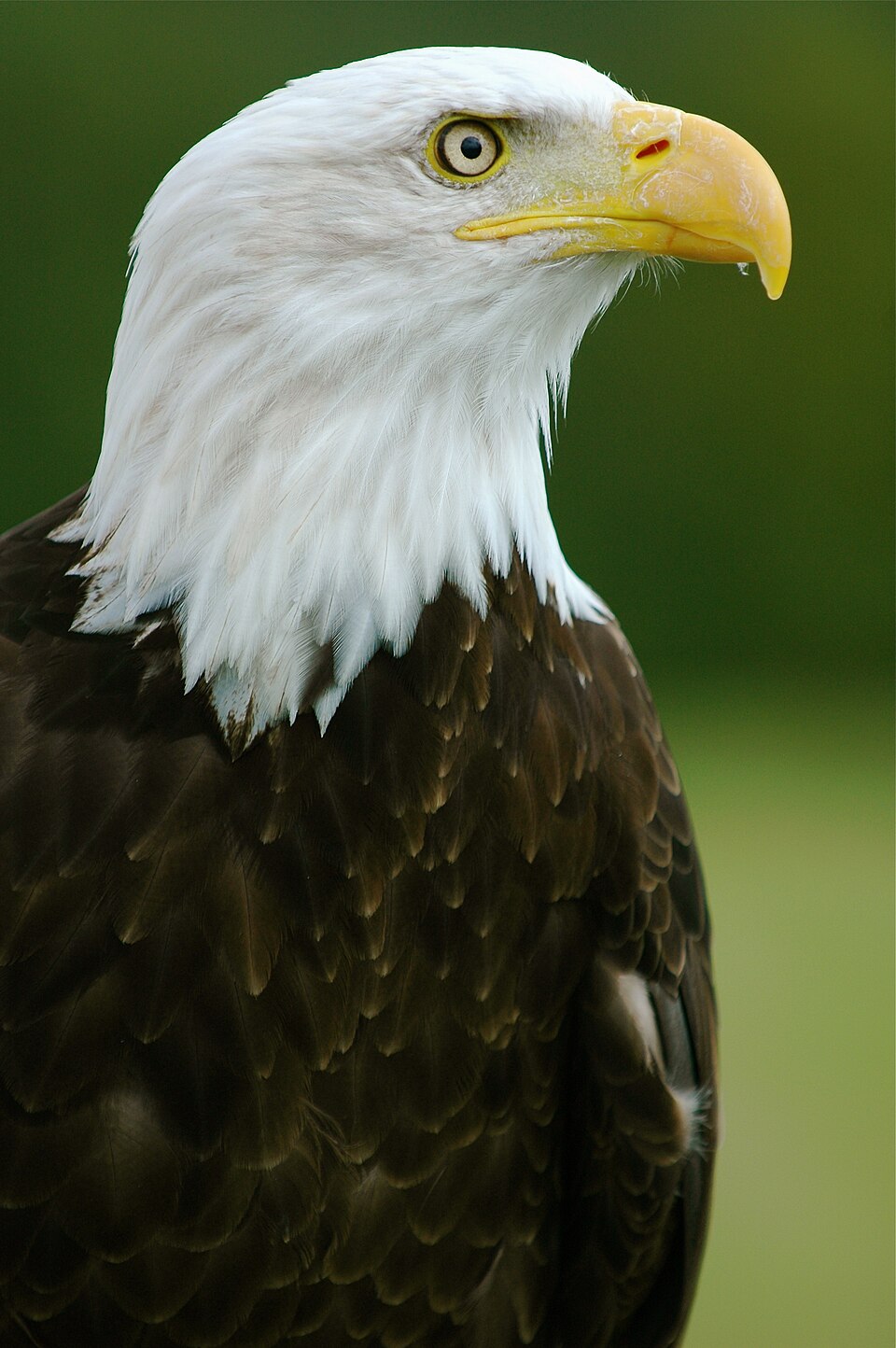
I saw my first wild Bald Eagle on a river trip in my twenties, and it’s genuinely one of those moments I still think about — there’s a reason this bird has been chosen, independently, as a symbol of power and freedom by cultures that never had any contact with each other.
The short version: power, freedom, and a connection to the divine
Eagles are almost universally associated with power, freedom, and a link between the earthly and the divine. Very few animals show up as a national or spiritual symbol across as many unrelated civilizations — Ancient Rome, Ancient Egypt, multiple Native American nations, and the modern United States, to name just a few — and that consistency says something about how the bird actually behaves and looks.
Why eagles specifically, out of all raptors?
Eagles are among the largest and most physically dominant birds of prey in most of the regions where they live, with wingspans that can top seven feet in some species. They also fly higher and more visibly than most other raptors, often soaring at altitudes that put them, quite literally, closer to the sky than almost anything else people can see with the naked eye. That combination of size, dominance, and altitude made eagles an obvious choice whenever a culture wanted a symbol for supreme power or a messenger to the heavens.
The Bald Eagle and the United States
The Bald Eagle became the national bird and symbol of the United States in 1782, chosen for its strength, long lifespan, and (somewhat controversially, even at the time — Benjamin Franklin famously preferred the turkey) its majestic appearance. The bird has appeared on the Great Seal of the United States ever since, and its “freedom” association in American culture is largely built on that specific national symbolism rather than older folklore.
Sacred status in Native American traditions
Eagles hold deeply sacred status in many Native American cultures, often considered the closest bird to the Creator because of how high they fly. Eagle feathers are treated with enormous respect and are traditionally earned through significant achievement or given as high honors — they’re not something casually collected, and eagle feather possession is legally regulated in the United States specifically to protect this cultural and religious significance.
The Bald Eagle’s real conservation story
It’s worth knowing that the Bald Eagle nearly went extinct in the lower 48 states by the 1960s and 70s, largely due to the pesticide DDT thinning eggshells to the point of failure. The species was removed from the U.S. endangered species list in 2007, following one of the most successful recoveries in American conservation history — which arguably adds a layer to the “resilience” symbolism that older folklore never anticipated.
Putting it together
An eagle overhead is hunting, patrolling territory, or simply riding a thermal, not delivering a message about your life. But it’s rare to find a symbol this consistent across so many independent cultures, and rarer still to find one whose real biology and real history — the size, the altitude, the near-extinction and recovery — actually backs up the mythology instead of undercutting it.
Owl Meaning and Symbolism
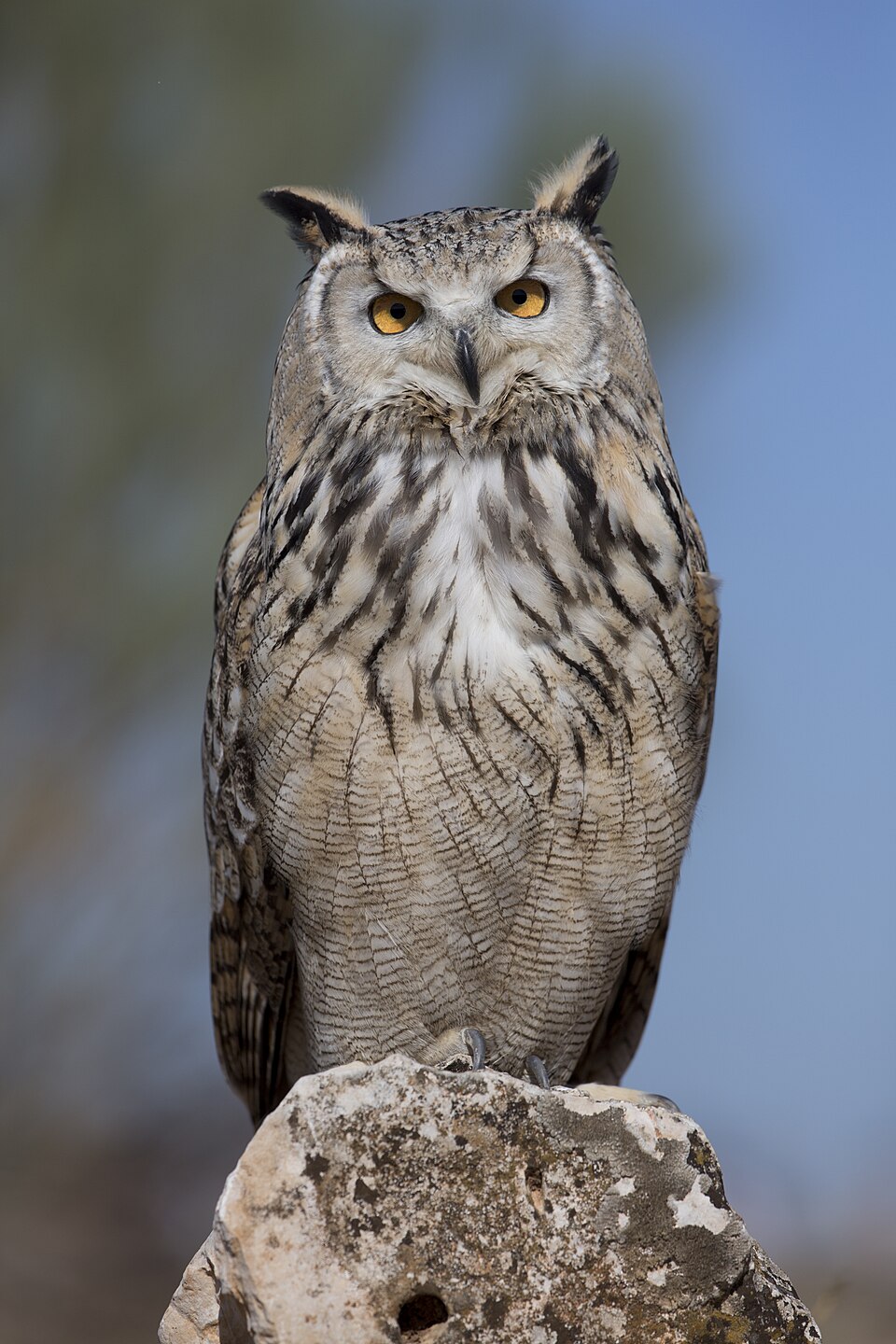
An owl called from the tree line behind my house almost every night for a week last October, and I’ll admit some part of me — the part that grew up on folklore, not the part that knows anything about Barred Owl territorial calls — found it a little unsettling. Owls carry more conflicting symbolism than almost any other bird, and it’s worth untangling why.
The short version: wisdom in the West, warning in a lot of other places
In modern Western culture, owls are almost universally shorthand for wisdom and intelligence — think of every cartoon owl wearing glasses, or Athena’s owl in Greek mythology. But that’s actually the minority view historically. Across a huge range of other cultures, owls have traditionally been associated with death, bad luck, or supernatural warning instead.
Where the “wisdom” association comes from
The wisdom symbolism traces back specifically to Ancient Greece, where the Little Owl was sacred to Athena, goddess of wisdom and strategy. Athenian coins were even stamped with an owl, and the association stuck hard enough that it’s still the dominant Western reading of the bird more than two thousand years later.
Why so many other cultures read owls as a bad omen
In a lot of Native American, African, and Middle Eastern traditions, hearing an owl call — especially near a home, or an unusual number of times — has historically been taken as a warning of death or approaching misfortune. Some of this almost certainly comes down to how owls actually behave: they’re nocturnal, mostly silent in flight thanks to specialized feather edges, and have forward-facing eyes and a head that rotates almost all the way around. To someone hearing an eerie call in the dark without seeing the source, that combination reads as genuinely uncanny even today.
It’s also worth noting that owls are natural predators of small rodents and, historically, sometimes lived near human settlements and graveyards where rodent populations were high — which may have reinforced a real-world association between owls and death long before any symbolic meaning was attached.
Owls as messengers and protectors
Not every non-Western tradition reads owls negatively. In some Native American cultures, owls are seen as protective spirits or messengers who deliver important warnings — not necessarily bad ones, but information the recipient needs to act on. Harry Potter’s owl messengers actually lean on a real, if less common, thread of owl-as-messenger folklore rather than inventing it from scratch.
So what does it actually mean if you hear one?
Realistically, it means an owl has a territory nearby and is either calling to a mate, defending that territory, or just going about its normal nightly business. Which symbolic tradition you lean on — wise messenger or death omen — says a lot more about which folklore you grew up around than about anything the owl is actually communicating. Either way, hearing one is a good excuse to grab a flashlight and see if you can spot it; most calls carry a lot farther than the bird itself does.
Falcon Meaning and Symbolism
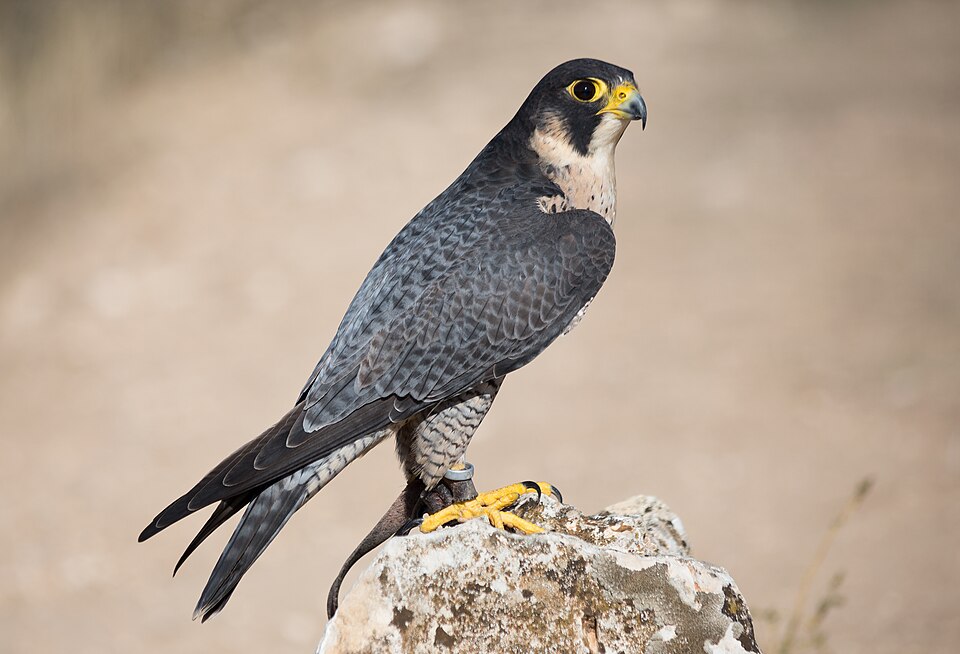
I watched a Peregrine Falcon fold its wings and drop out of the sky once, from a bridge over a river where a pair had taken up residence on a support tower, and it genuinely didn’t look real — the kind of speed that makes your brain assume you’re seeing a special effect rather than an animal. That single stoop, straight down onto a pigeon flying below, explains more about why falcons have been treated as symbols of nobility for thousands of years than any myth could.
Cutting to it
Falcons are widely seen as symbols of victory, focus, and noble or divine authority, tracing back to ancient Egypt (where the falcon-headed god Horus represented kingship itself) and continuing through medieval European falconry, where owning a trained falcon was a direct marker of social rank.
Egypt: the falcon as the literal image of a king
Horus, one of the most important gods in the Egyptian pantheon, was depicted with a falcon’s head, and pharaohs were considered his living embodiment on Earth — which meant falcon imagery wasn’t just associated with kingship, it functioned as kingship’s visual shorthand. The Eye of Horus, one of the most recognizable symbols to survive from ancient Egypt, is itself a stylized falcon eye, and was used as a protective and healing symbol believed to ward off harm. Few animals in any mythology get such a direct, unambiguous equation with supreme political and divine authority.
Medieval falconry: a bird as a class marker
By the medieval period in Europe, falconry had turned the birds themselves into a coded system of social rank. A 15th-century text called the Boke of St. Albans laid out (somewhat satirically, but the idea stuck in popular memory) which species of falcon or hawk was appropriate for which rank of person — a Gyrfalcon for a king, a Peregrine for an earl, a Merlin for a lady, and so on down the social order. Owning and flying a trained falcon wasn’t just a hobby; it was a visible, walking-around demonstration of where you stood, which is part of why falcon imagery became so tied up with nobility, precision, and control in European heraldry.
Why falcons specifically, and not just any bird of prey
Falcons earned this reputation partly through sheer performance. The Peregrine Falcon is the fastest animal on the planet, reaching speeds over 240 miles per hour in its hunting dive, called a stoop — a speed no other living creature approaches in level or diving flight. That combination of speed, precision targeting mid-air, and the visual drama of the stoop itself made falcons stand out even among other birds of prey that medieval and ancient observers had access to, giving them a reputation for singular focus and unmatched capability that other raptors didn’t quite earn in the same way.
Putting it together
The falcon’s reputation for authority and precision isn’t folklore stretching the truth — it’s one of the more literal cases in bird symbolism, where the actual physical performance (a 240 mph dive with lethal accuracy) genuinely backs up the legend built around it. Whether it’s a falcon-headed Egyptian god or a medieval earl’s prized Peregrine, the symbolism keeps landing on the same idea: total control, executed at speed.
Vulture Meaning and Symbolism

I used to feel a little uneasy watching Turkey Vultures circle over a field near my house — that slow, wobbling glide always seemed to be scouting for something dead. Then I actually looked into what they’re doing up there, and it flipped my whole read on the bird. They’re not omens. They’re the cleanup crew, and without them the fields I was standing in would smell a lot worse and carry a lot more disease.
Quick answer
Vultures carry one of the most divided reputations in the bird world: in most Western traditions they’re tied to death and bad omens, but in ancient Egypt, parts of Native American culture, and Tibetan Buddhism, they’re symbols of protection, motherhood, or spiritual transition — sometimes treated as sacred.
Why the West sees them as a bad omen
The association with death is the most literal explanation possible: vultures are scavengers, so seeing one circling almost always means something nearby has died. Ancient and medieval cultures across Europe read that visibility as an omen rather than a coincidence — if a vulture appeared, death must be near, rather than the more mundane truth that death had already happened and the vulture just noticed. Their bald, red heads (an adaptation for staying clean while feeding inside carcasses, not a stylistic choice) didn’t help the reputation, reading as grim rather than practical to people who didn’t know the reason behind it.
Egypt’s completely opposite view: the vulture as mother goddess
Ancient Egypt inverted the whole idea. The goddess Nekhbet was depicted as a vulture and represented protection, particularly of the pharaoh and of Upper Egypt, and vulture imagery shows up repeatedly in royal headdresses and funerary art as a maternal, protective symbol rather than a morbid one. Egyptians had observed that vultures fiercely guard and provision their young, and built an entirely different symbolic tradition around that observation instead of around the scavenging.
Some Native American traditions carried a related but distinct idea: because vultures were seen consuming the dead and yet showed no sign of illness, several groups viewed them as purifiers — creatures that could handle death directly and transform it into something clean, making them symbols of renewal rather than decay.
Tibet: vultures as literal spiritual transport
The most striking use of vulture symbolism isn’t metaphorical at all. In traditional Tibetan Buddhist “sky burial,” a deceased person’s body is placed on a mountaintop specifically for vultures to consume, based on the belief that the body is an empty vessel once the spirit has departed, and that offering it to vultures is both a practical necessity in a landscape without enough wood for cremation or soil for burial, and a final act of generosity. The vulture, in this context, is viewed as directly assisting the soul’s transition rather than desecrating the body — the opposite framing from nearly every Western tradition.
The biology that makes the “unclean” reputation backwards
Vultures are, if anything, one of nature’s better sanitation systems. Their stomach acid is extraordinarily strong — strong enough to destroy anthrax, botulism, and cholera bacteria that would sicken or kill most other animals — which is exactly why they can safely eat carrion that would spread disease if left to rot in the open. A vulture population decline in India in the 1990s (caused by a veterinary drug toxic to the birds) led to a documented rise in feral dog populations and rabies cases, because the carcasses vultures normally cleared were left to decompose and attract other scavengers instead. The birds people once feared as harbingers of death turned out to be actively preventing more of it.
Putting it together
A vulture overhead isn’t predicting anything — it’s doing a job that keeps disease from spreading, using a stomach that can neutralize pathogens most animals can’t survive. The Egyptian and Tibetan traditions that treat them as protective or even sacred aren’t the outliers here; they’re arguably the more accurate read on what the bird is actually doing.
Condor Meaning and Symbolism
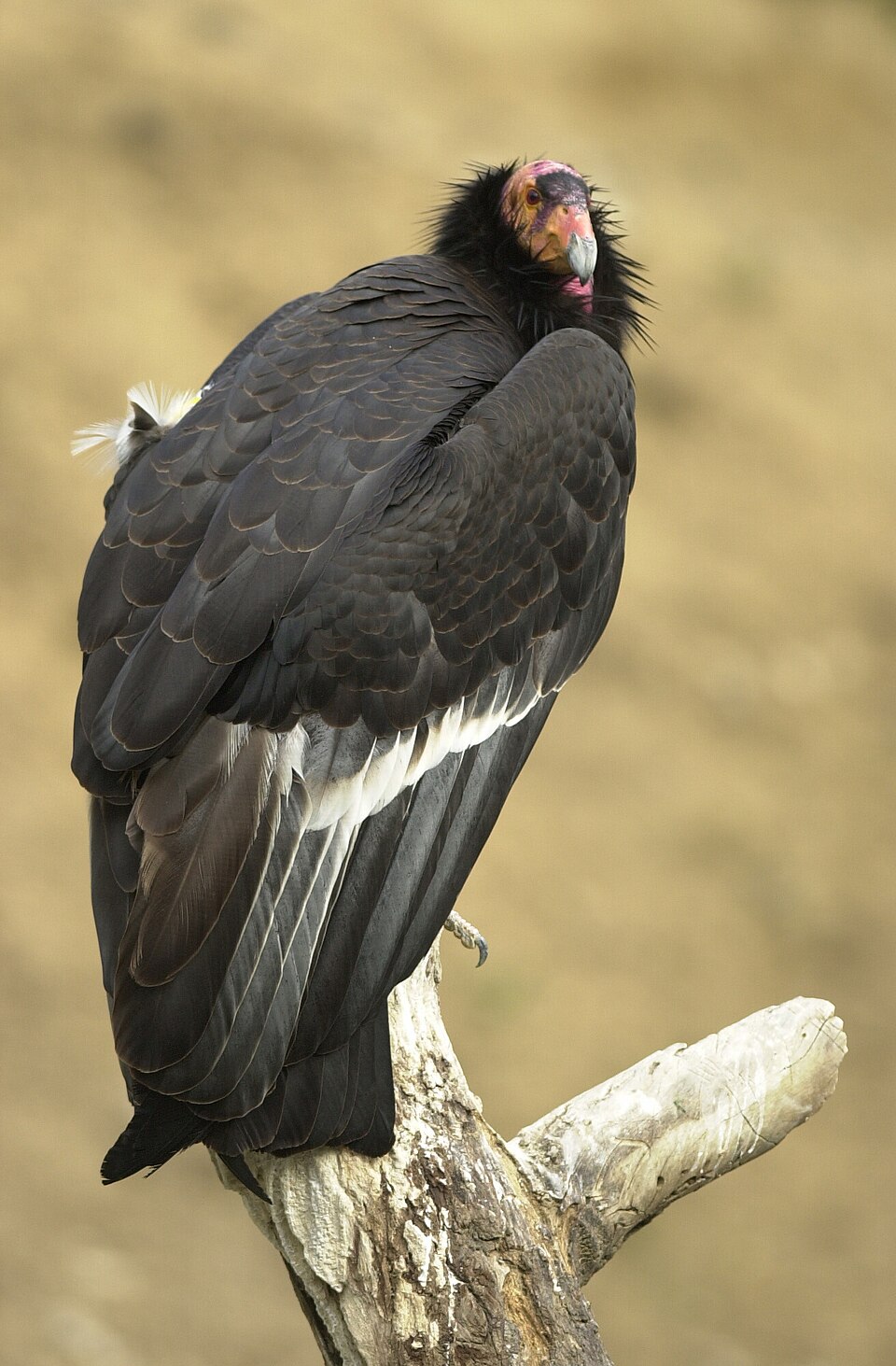
Seeing a California Condor in the wild is rare enough that when I finally watched one ride a thermal above a canyon in Big Sur, barely moving its enormous wings, a park ranger nearby actually stopped what she was doing to point it out to everyone in earshot. That reaction — treating one bird’s flight path as a genuinely notable event worth interrupting a workday for — is a small modern echo of a much older reverence that spans an entire continent.
Quick answer
Condors are widely regarded as sacred messengers between the earthly and spirit worlds in Andean and some North American Indigenous traditions, symbolism rooted in their enormous size, extraordinary altitude, and long association with death and renewal.
The Andean Condor as a bridge between worlds
In Andean cultures stretching from ancient civilizations to present-day traditions in Peru, Bolivia, Chile, and Argentina, the condor represents the upper world in a three-tiered cosmological structure (commonly alongside the puma representing the earthly world and the snake representing the underworld). The condor’s role as a spiritual messenger connecting the earthly and divine realms comes directly from its extraordinary flight capability — Andean Condors can soar at altitudes over 18,000 feet, higher than nearly any other bird, riding mountain thermals with barely any wingbeats over hours-long flights, behavior that made the bird an obvious symbol for reaching realms genuinely beyond ordinary human or animal experience.
Death, renewal, and the scavenger’s role
Like the vulture discussed elsewhere in this series, condors are scavengers, and several Andean traditions incorporated this directly into their symbolism rather than treating it as something to overcome: the condor’s role in consuming the dead was viewed as a necessary and even sacred part of the life-death-renewal cycle, helping return bodies to the earth and the spiritual cycle rather than representing something unclean or ominous. Some traditions specifically associated condors with helping guide souls to the afterlife, a role echoed in the Tibetan sky burial tradition described in the vulture entry, despite the two traditions developing independently on opposite sides of the world.
An extraordinary, and now critically threatened, flier
Both the Andean Condor and the California Condor are among the largest flying birds alive, with wingspans reaching roughly 10 feet, and both species have faced severe population crashes — California Condors were reduced to just 27 individuals in the wild by 1987 before an intensive captive breeding and reintroduction program brought numbers back into the hundreds. That near-extinction and ongoing recovery effort has added a modern, more literal layer to the condor’s ancient “life and renewal” symbolism: a species that nearly vanished entirely, brought back through direct human intervention.
Putting it together
The condor’s status as a sacred messenger isn’t an exaggerated read on an ordinary large bird — it’s built on a genuinely rare physical capability (soaring higher and farther with less effort than almost any other flying animal) and a scavenging role that multiple cultures, independently and continents apart, chose to treat as sacred rather than repulsive. Its recent brush with extinction and recovery gives that old “death and renewal” symbolism an unusually literal modern parallel.
Kestrel Meaning and Symbolism
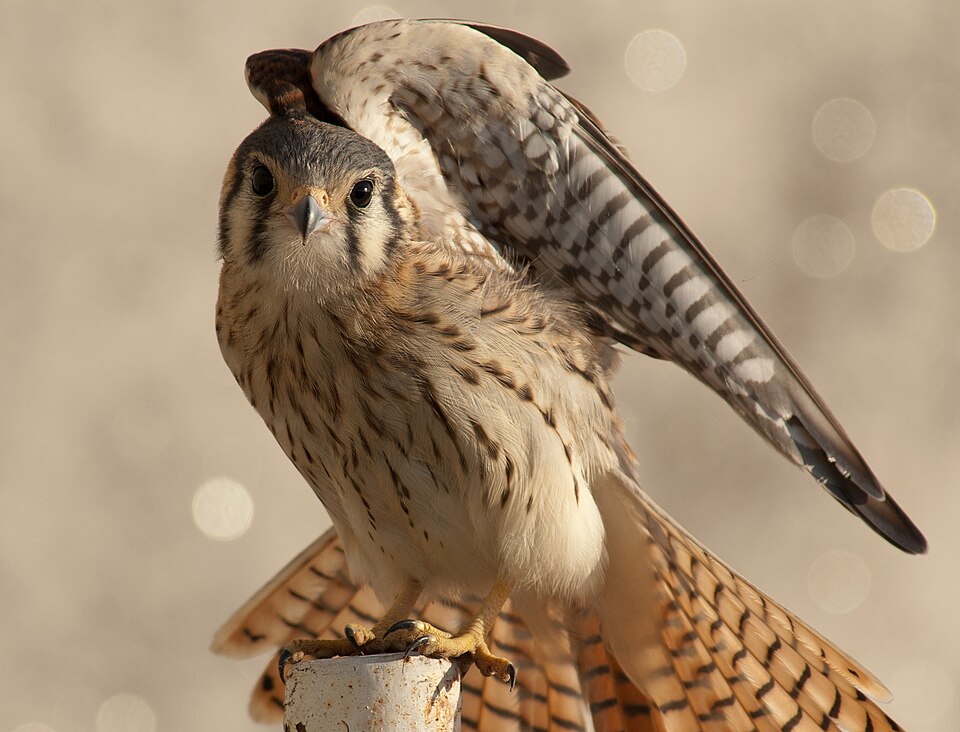
I spotted my first American Kestrel hovering over a highway median, of all places, holding almost perfectly still in the air with rapid, shallow wingbeats while it scanned the grass below for a vole. I remember thinking it looked less like a bird flying and more like a bird standing on an invisible ledge, and once you’ve seen that hover-hunting trick done well, it’s obvious why kestrels earned a reputation for pinpoint focus long before anyone understood the aerodynamics behind it.
The gist
Kestrels, the smallest falcons in most of their range, are symbolically associated with precision, independence, and freedom — a slightly different flavor of falcon symbolism than the “nobility and power” reading attached to larger falcons, rooted specifically in the kestrel’s small size, agility, and famous hovering hunting technique.
Small falcon, outsized reputation for skill
Because kestrels are noticeably smaller than Peregrines or Gyrfalcons, they never quite fit the “royal falconry” symbolism reserved for the biggest, most physically dominant birds of prey (the Boke of St. Albans, mentioned in the falcon entry in this series, assigned the kestrel to a servant or “knave,” reflecting its lower status in that rigid medieval hierarchy). Instead, kestrels picked up a different kind of respect: for skill and precision rather than raw power or size, tied directly to their extraordinary hovering hunting method, which doesn’t require the size or strength of a larger raptor to execute — only exceptional control.
How kestrel hovering actually works
Kestrel hovering, sometimes called “windhovering,” relies on the bird flying directly into the wind at a speed that exactly cancels out the wind’s push, allowing it to hold a fixed position over the ground for extended periods while scanning for prey with almost no visible drift. Research has also found kestrels can see in the ultraviolet spectrum, allowing them to detect the UV-reflective urine trails that voles leave behind, effectively letting the bird track fresh rodent highways invisible to the human eye. That combination — an aerodynamic trick requiring exact control, plus a sensory ability most people don’t even know exists — makes “precision” a genuinely earned symbolic association rather than a vague compliment.
Independence, and a modern conservation concern
Kestrels are also frequently associated with independence and self-reliance, partly because, unlike some cooperative hunting raptors, they’re solitary hunters relying entirely on their own skill and sensory abilities rather than group coordination. That symbolism has taken on a slightly more anxious edge in recent decades: American Kestrel populations have declined significantly across parts of their range since the 1960s, for reasons that remain only partly understood (pesticide effects, habitat loss, and competition for nest cavities are all suspected contributors), turning “independence” into something people increasingly want to actively support rather than just admire from a distance — largely through nest box programs similar to the ones that helped bluebirds recover.
Last thought
Kestrel symbolism earns its “precision” reputation about as literally as possible: a bird small enough to be ranked low in old falconry hierarchies compensates with an aerodynamic hunting trick and an ultraviolet sense most animals don’t have. If you ever catch one holding perfectly still in midair over a roadside, that’s not an easy trick — it’s one of the more genuinely impressive pieces of precision flying in the bird world.
Secretarybird Meaning and Symbolism
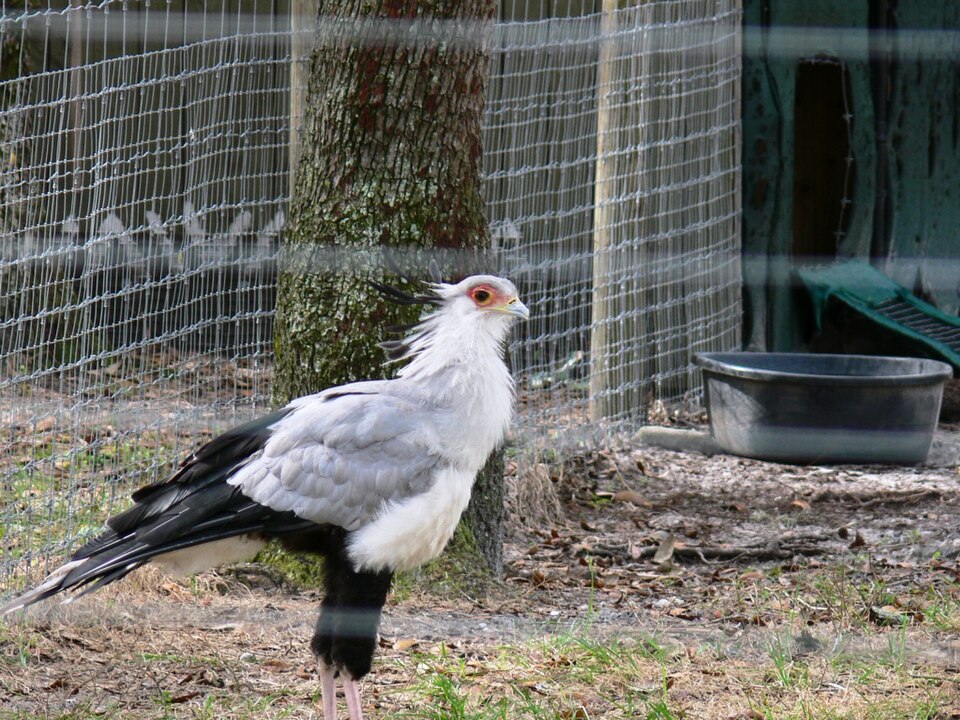
Watching a Secretarybird stomp a snake to death with rapid, precise kicks on the African savanna is one of those nature documentary moments that looks almost too deliberate and calculated to be real, and it turns out the behavior is exactly as lethal as it looks.
The gist
Secretarybirds are associated across parts of Africa with justice, protection, and precision, symbolism drawn from the bird’s real and remarkable hunting technique, along with its prominent place on national emblems including the coats of arms of Sudan and South Africa.
A kick with genuinely lethal force
Secretarybirds hunt venomous snakes on foot, delivering rapid stomping kicks that researchers have measured at forces up to five times the bird’s own body weight, applied in strikes lasting a fraction of a second, fast enough that the snake often has no opportunity to strike back before being killed or incapacitated.
A name that comes from an old wig joke
The bird’s odd common name likely comes from its crest of long quill-like feathers, which reminded European observers of the quill pens secretaries once tucked behind their ears, a fairly whimsical origin for a bird that also happens to be one of the more formidable ground-hunting raptors on the continent.
Last thought
The secretarybird’s reputation for precision and lethal justice is grounded in measured, documented kicking force — a bird whose national-emblem status rests on genuinely earned combat effectiveness rather than symbolic flattery alone.


