Backyard Birds in Colorado: A Field Guide to the Species at Your Feeder
In Colorado, the bird at the feeder depends less on which town you live in than on how high up it sits. A yard in Greeley or Pueblo, out where the plains begin, gets Blue Jays, House Finches, and in summer a few Western Kingbirds on the power lines. Drive an hour west and a few thousand feet up, and the same sunflower feeder draws Steller’s Jays, Mountain Chickadees, and Pine Siskins by the dozen. Go higher still, into the ski towns, and a February snowstorm can bring flocks of rosy-finches that nest on cliffs above timberline. Few states pack that much change into such a short drive, and it makes Colorado an easy place to get curious about birds.
Plains, foothills, and the high country
Colorado runs from about 3,300 feet on the eastern plains to more than 14,000 feet on its highest peaks. The eastern third is shortgrass prairie, broken by cottonwood-lined rivers like the South Platte and the Arkansas. The Front Range cities, from Fort Collins through Denver to Colorado Springs, sit right where the plains meet the foothills, which is why a Denver backyard can host both eastern and western species on the same day. Above that come ponderosa pine and Douglas-fir forests, then lodgepole, spruce, and fir, then alpine tundra. West of the Divide, the landscape dries out into piñon-juniper and sagebrush country around Grand Junction and the Western Slope, with a whole different set of birds.
That vertical layering also shapes migration. Many birds move up and down the mountains with the seasons rather than just north and south, so winter at a foothills feeder often means juncos and chickadees that spent the summer thousands of feet higher.
The state bird: the Lark Bunting
Colorado named the Lark Bunting its state bird in 1931. It is a bird of the eastern plains, not the mountains, which surprises some people who picture the state as all peaks and pines. In breeding season the male is jet black with big white wing patches, and he sings while fluttering up into the air and floating back down to the grass. The females and winter males are brown and streaky, more like a sparrow. Lark Buntings are uncommon in Front Range yards, but a drive out to Pawnee National Grassland in June can turn up dozens of singing males along the dirt roads. Most leave the state for the winter.
Common feeder visitors
At a typical Front Range feeder in winter, expect Black-capped Chickadees, House Finches, Dark-eyed Juncos of several different forms, Downy Woodpeckers, Northern Flickers, Red-breasted and White-breasted Nuthatches, and Blue Jays, which have spread west into Colorado’s cities over the last century. Black-billed Magpies are common in towns and open country, and Woodhouse’s Scrub-Jays visit yards near the foothills and on the Western Slope. Higher up, Steller’s Jays, Mountain Chickadees, Pygmy Nuthatches, Cassin’s Finches, and Pine Siskins take over. Hummingbirds arrive in April and May, and by midsummer feeders in mountain towns can be swarming with them.
Beyond the backyard: birds above timberline
Colorado has more alpine tundra than any other state outside Alaska, and a few birds live nowhere else in the lower 48 in such numbers. The White-tailed Ptarmigan stays above timberline all year, turning white in winter; people look for it on Guanella Pass and in Rocky Mountain National Park. The Brown-capped Rosy-Finch nests almost entirely in Colorado, on cliffs and snowfields above 11,000 feet. The state is also home to birds with very small ranges on the lower ground. The Gunnison Sage-Grouse lives only in southwestern Colorado and a sliver of Utah, and the Greater and Lesser Prairie-Chickens dance on leks on the eastern plains in spring. Colorado Parks and Wildlife runs viewing programs for some of these, and they are worth booking ahead.
A note on native plants
Water is the big limit for plants in Colorado, and native plants do the most with the least of it. Penstemons, scarlet gilia, and hummingbird mint (agastache) feed hummingbirds in summer. Rabbitbrush and native sunflowers produce seeds that finches and sparrows eat into the fall. Chokecherry, serviceberry, and wax currant give fruit for robins, waxwings, and towhees, and a juniper or two offers winter cover and berries. Planting a few of these in place of bluegrass also cuts down on watering, which matters in a dry state.
Winter Feeding Notes
Colorado winters swing hard. A foothills yard can go from 60 degrees to a foot of snow in a day, and feeders matter most right after a storm. Black oil sunflower and suet are the basics, and nyjer or sunflower chips will attract siskins and goldfinches. Water may be the single best thing to offer, since the air is dry and streams freeze; a heated birdbath will get as much traffic as a feeder. Colorado also has a lot of black bears, and Colorado Parks and Wildlife asks people in bear country to take feeders in from spring through fall, usually from around April to late November. Some mountain towns have rules about wildlife attractants, so it pays to check.
Lark Bunting
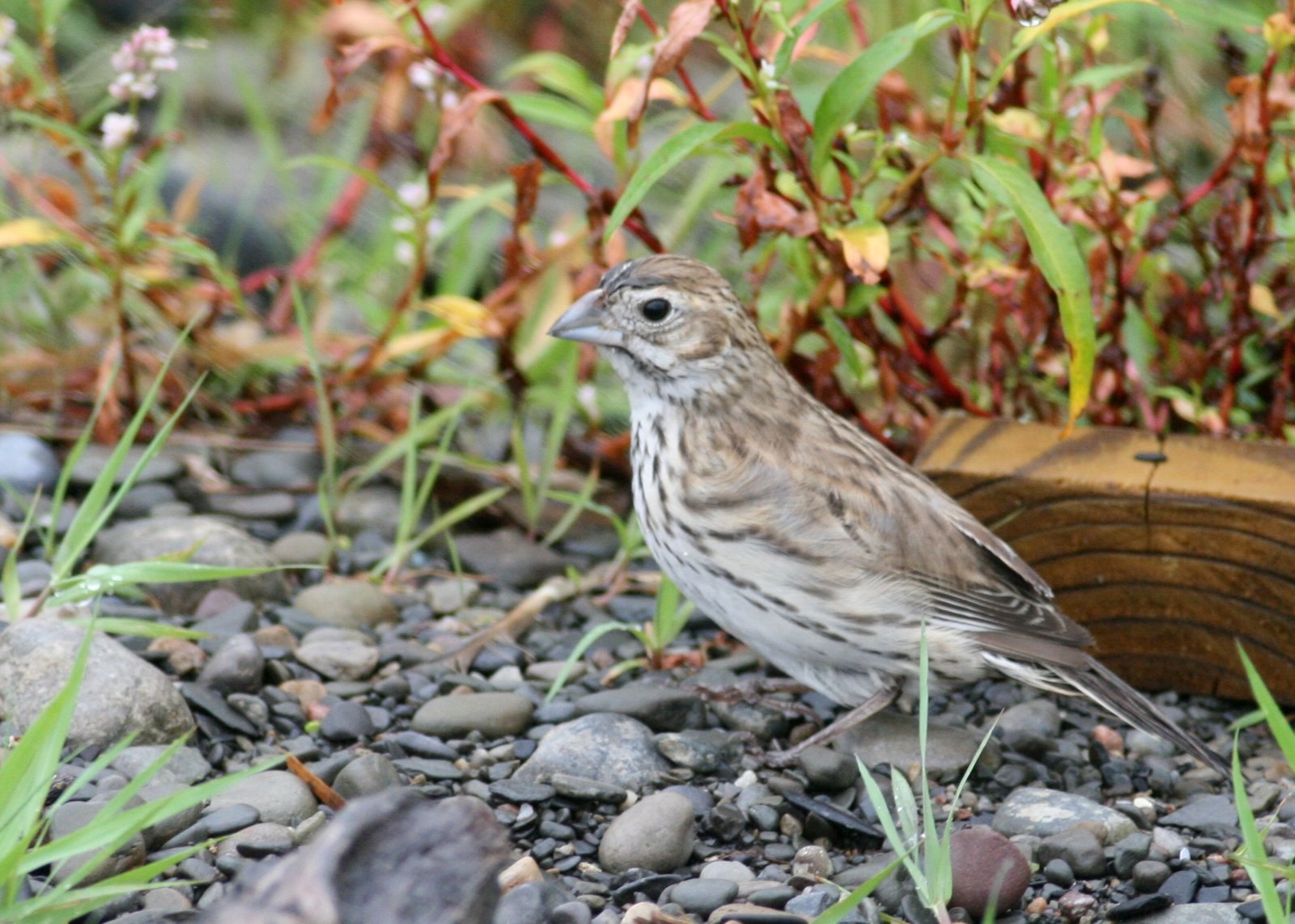
The Lark Bunting is a stocky, sparrow-sized bird with a thick, bluish bill. Breeding males are all black with bright white wing patches, while females and non-breeding males are brown, streaked, and show a pale wing patch. Lark Buntings nest on the shortgrass prairies of eastern Colorado, arriving in late April and May, and the males’ fluttering song flights are one of the sights of the plains in early summer. They do not often visit backyard feeders, but birds on the eastern plains will come to spilled seed. Colorado’s state bird since 1931.
Black-capped Chickadee
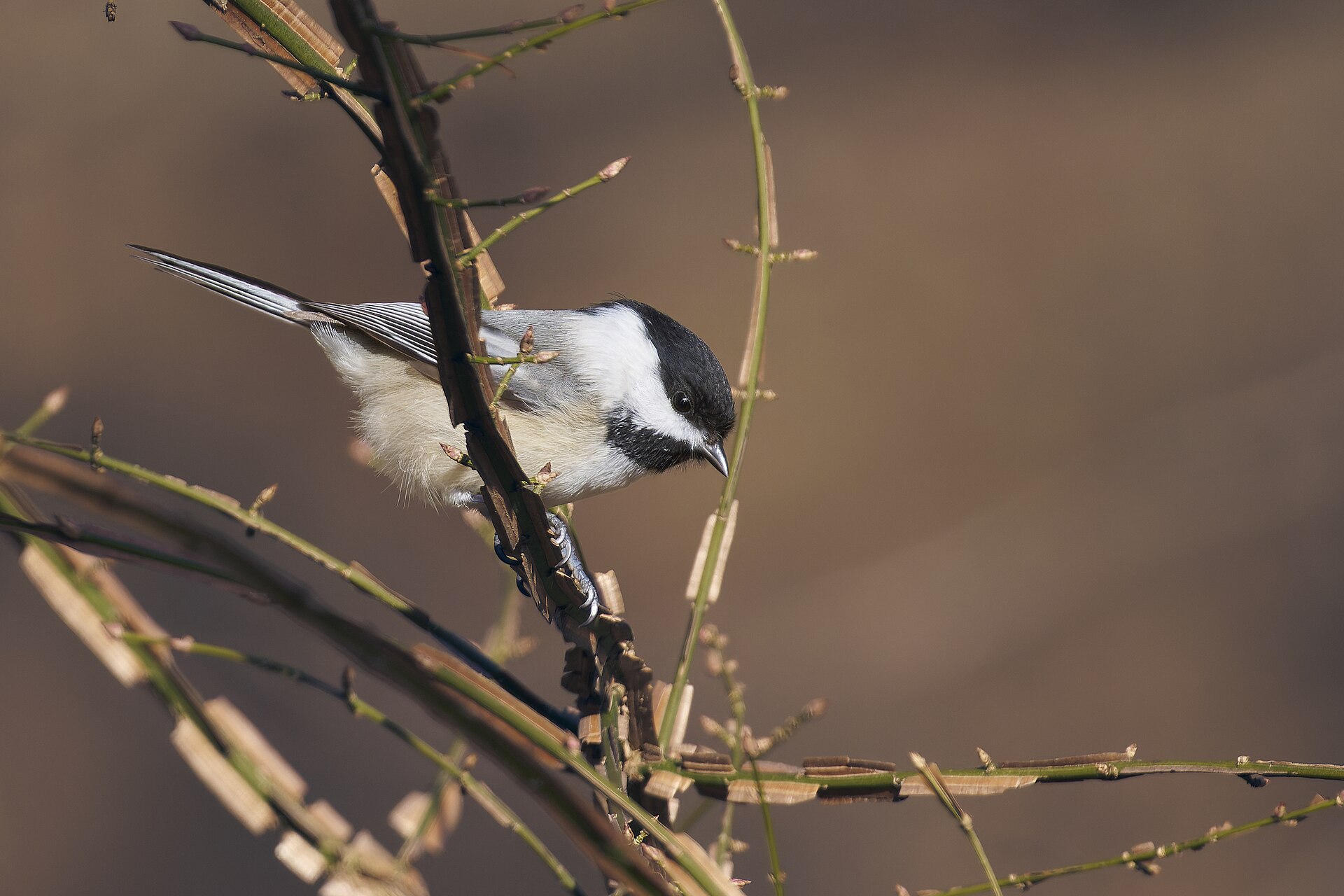
The Black-capped Chickadee is a small, round bird with a black cap and bib, white cheeks, and buff sides. In Colorado it is the chickadee of lower elevations: towns, cottonwood river corridors, and foothills canyons. It comes to feeders all year and is often the first bird to find a new one. Chickadees take one seed at a time and cache many of them to eat later. The easiest way to tell them from Mountain Chickadees, which can visit the same foothills feeders, is the face: Black-capped has a solid black cap with no white eyebrow.
Mountain Chickadee
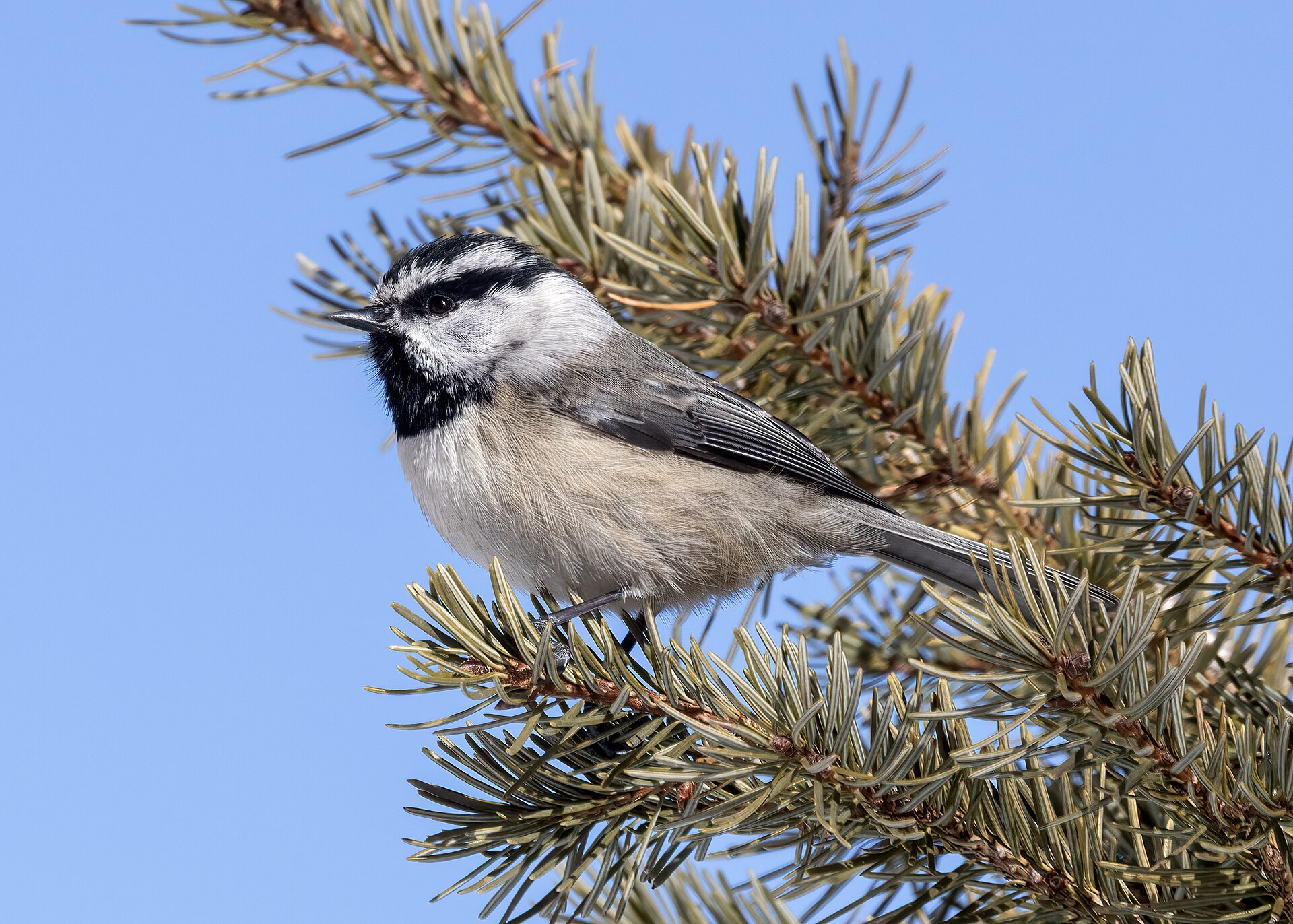
The Mountain Chickadee looks like a Black-capped Chickadee with a white stripe over each eye, giving it a slightly frowning expression. It lives in the conifer forests of Colorado’s mountains, from ponderosa pine up to spruce-fir, and is the common chickadee at feeders in mountain towns like Evergreen, Estes Park, and Breckenridge. In winter some move down into the foothills and even the edges of Front Range cities. Its song is a sweet, three-note whistle, and its call is a bit hoarser than a Black-capped’s. Sunflower seeds and suet will bring it in.
Steller’s Jay
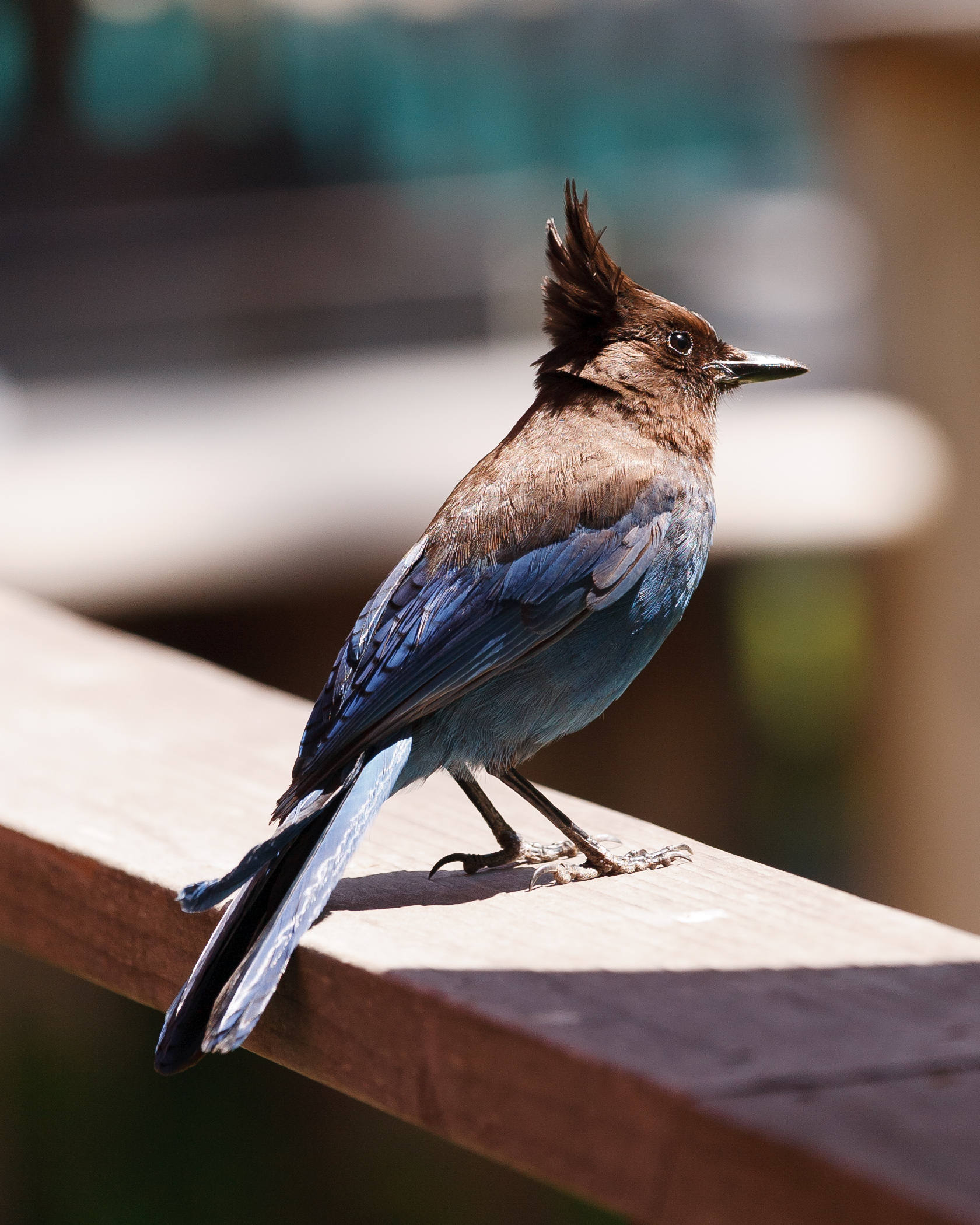
The Steller’s Jay is a dark, crested jay: sooty black in front and a deep blue on the wings and tail, with pale streaks on the forehead. In Colorado it lives in the mountains and foothills, especially in ponderosa pine forests, and it is a regular visitor to feeders and picnic tables in mountain towns. It can be noisy, with a harsh “shack-shack-shack” call, and it also mimics hawks. Steller’s Jays like peanuts, sunflower seeds, and suet. Some move down to the edges of the Front Range cities in winter, where they can turn up in the same yard as Blue Jays.
Woodhouse’s Scrub-Jay
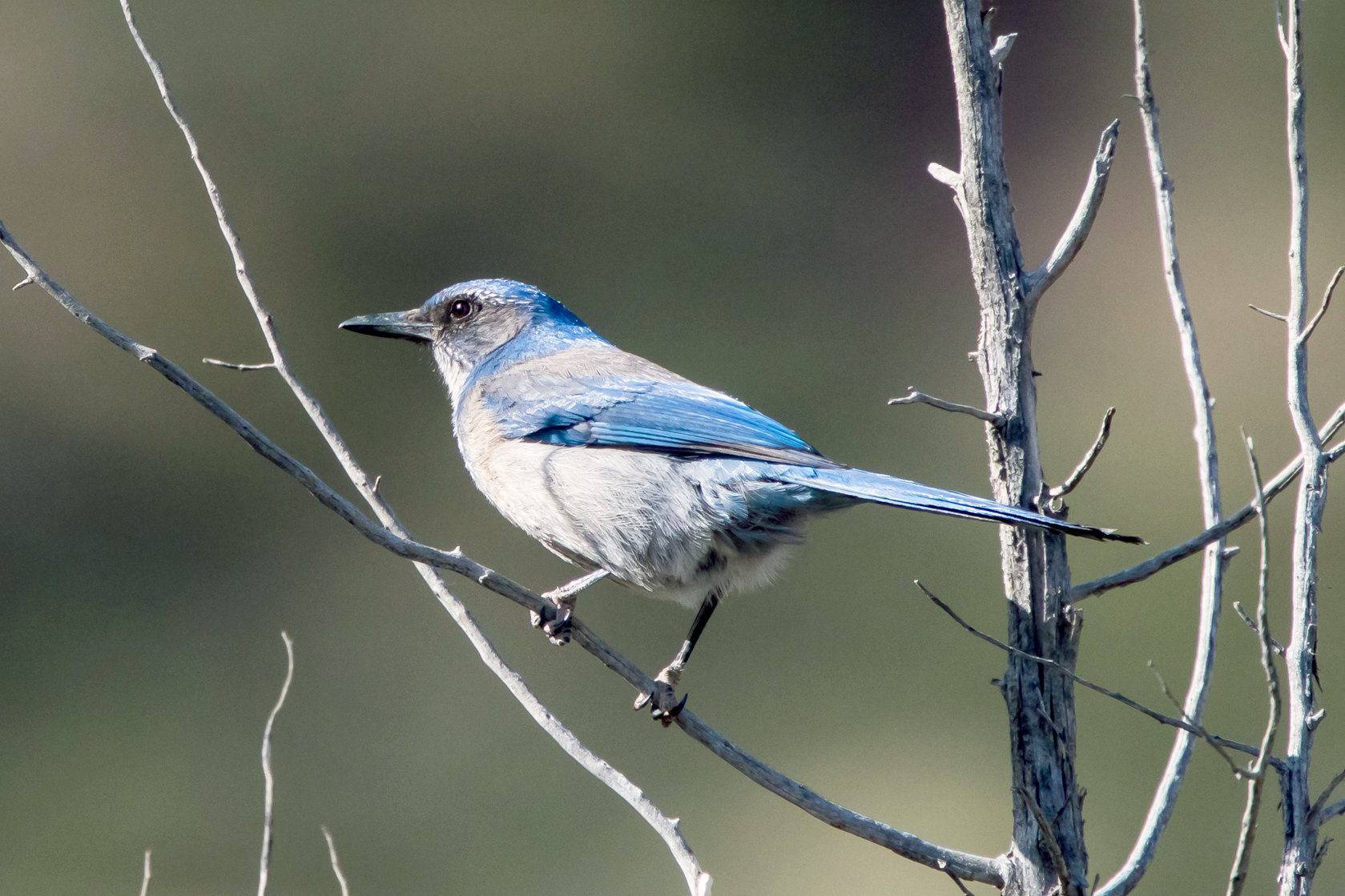
The Woodhouse’s Scrub-Jay is a slim, long-tailed jay without a crest, blue on the head, wings, and tail, with a gray-brown back and a dull gray belly. In Colorado it lives in scrub oak, piñon-juniper, and brushy foothills, including along the Front Range from Boulder to Colorado Springs and across the Western Slope. It is bold at feeders and especially fond of peanuts, and like other jays it caches food, burying acorns and piñon nuts to eat later. Its call is a raspy, rising “shreep” that carries a long way.
Black-billed Magpie
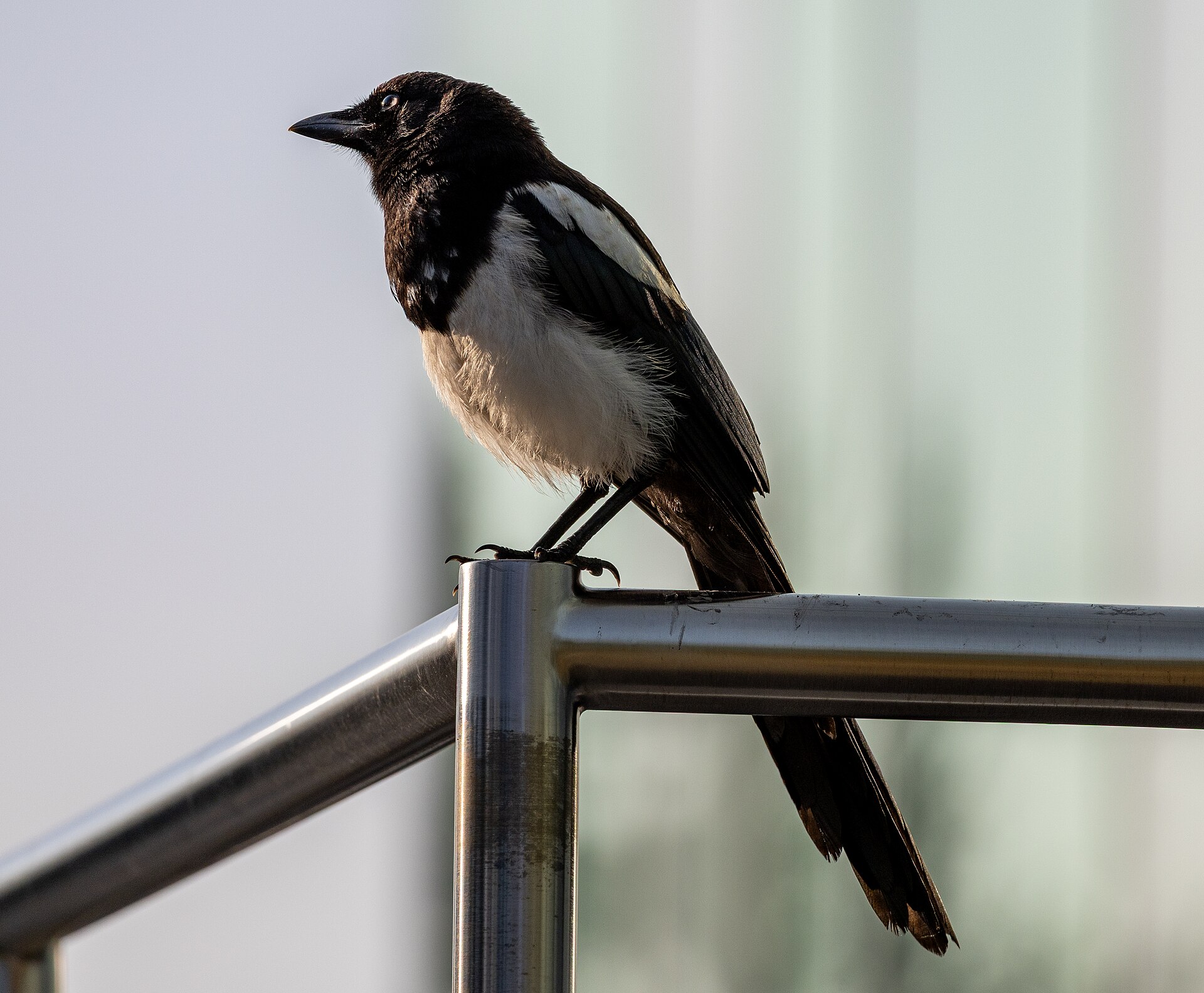
The Black-billed Magpie is hard to miss: a large, black-and-white bird with a very long, iridescent tail that flashes green and blue in the sun. It is common across most of Colorado in open country, farms, and towns, and builds big, domed stick nests in trees. Magpies are opportunists, eating insects, carrion, fruit, and anything left out, and they will visit a platform feeder for suet or scraps. They are social and often gather around a dead animal or a hawk they want to drive off. They can be noisy, but they are also some of the smartest birds in the yard.
Dark-eyed Junco
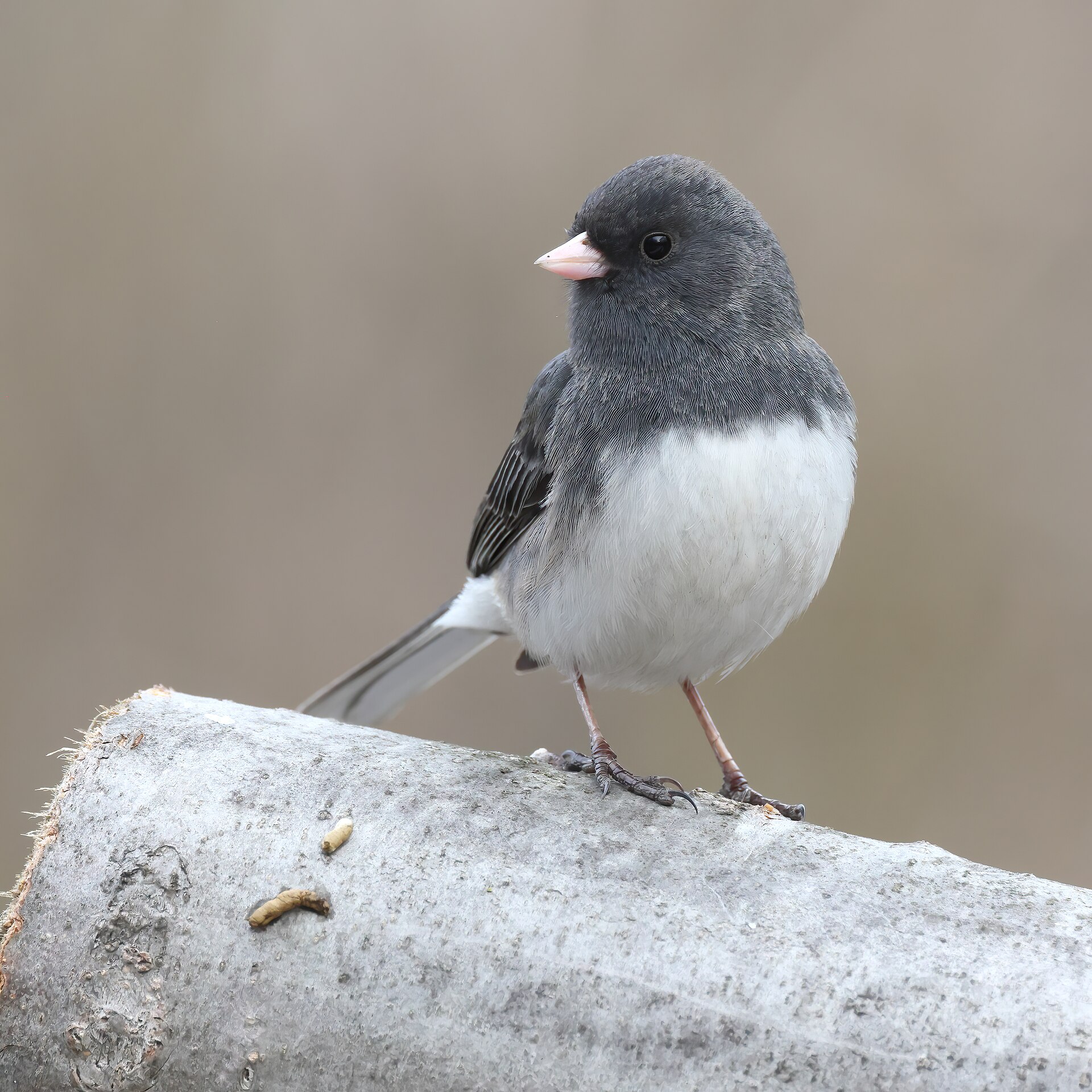
The Dark-eyed Junco is a sparrow-sized bird with a pale pink bill and white outer tail feathers. In Colorado it comes in several distinct forms: the “Gray-headed” junco, with a rusty back, nests in the mountains, while “Oregon,” “Pink-sided,” “Slate-colored,” and “White-winged” juncos all arrive in winter. A single Front Range feeder can host four or five of these types at once, which makes Colorado one of the best places in the country to study them. Juncos feed on the ground and like millet or mixed seed scattered under the feeders.
House Finch
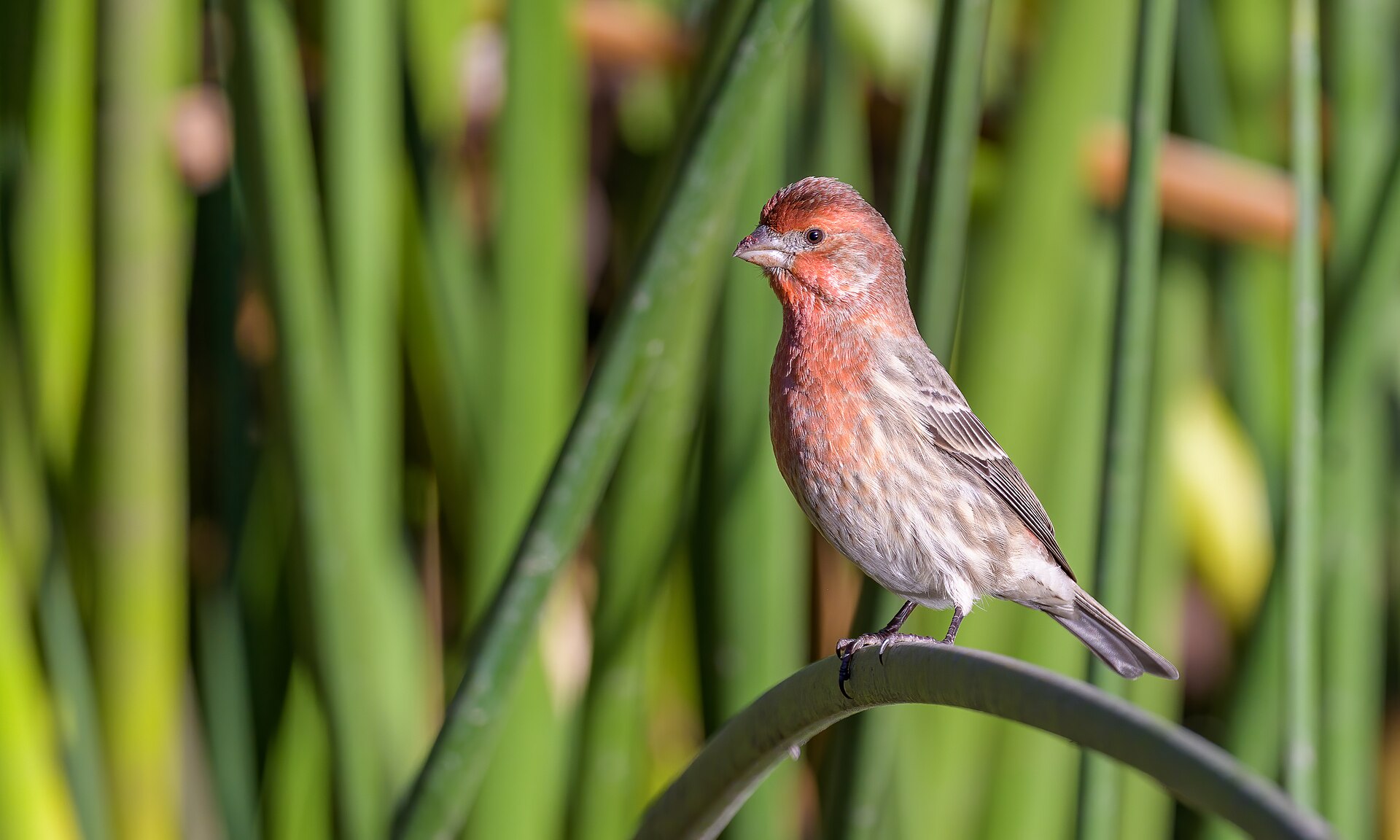
The House Finch is a small, streaky finch; the male has a red head and breast, and the female is plain brown with blurry streaks. It is native to the West and is one of the most common birds in Colorado’s towns and cities, where it nests in hanging plants, porch lights, and dense shrubs. House Finches come to nearly any seed feeder and will clean out a tube of sunflower chips in a day. They sometimes get an eye disease called mycoplasmal conjunctivitis, which causes swollen, crusty eyes; if you see it, take feeders down for a week and clean them well.
Pine Siskin
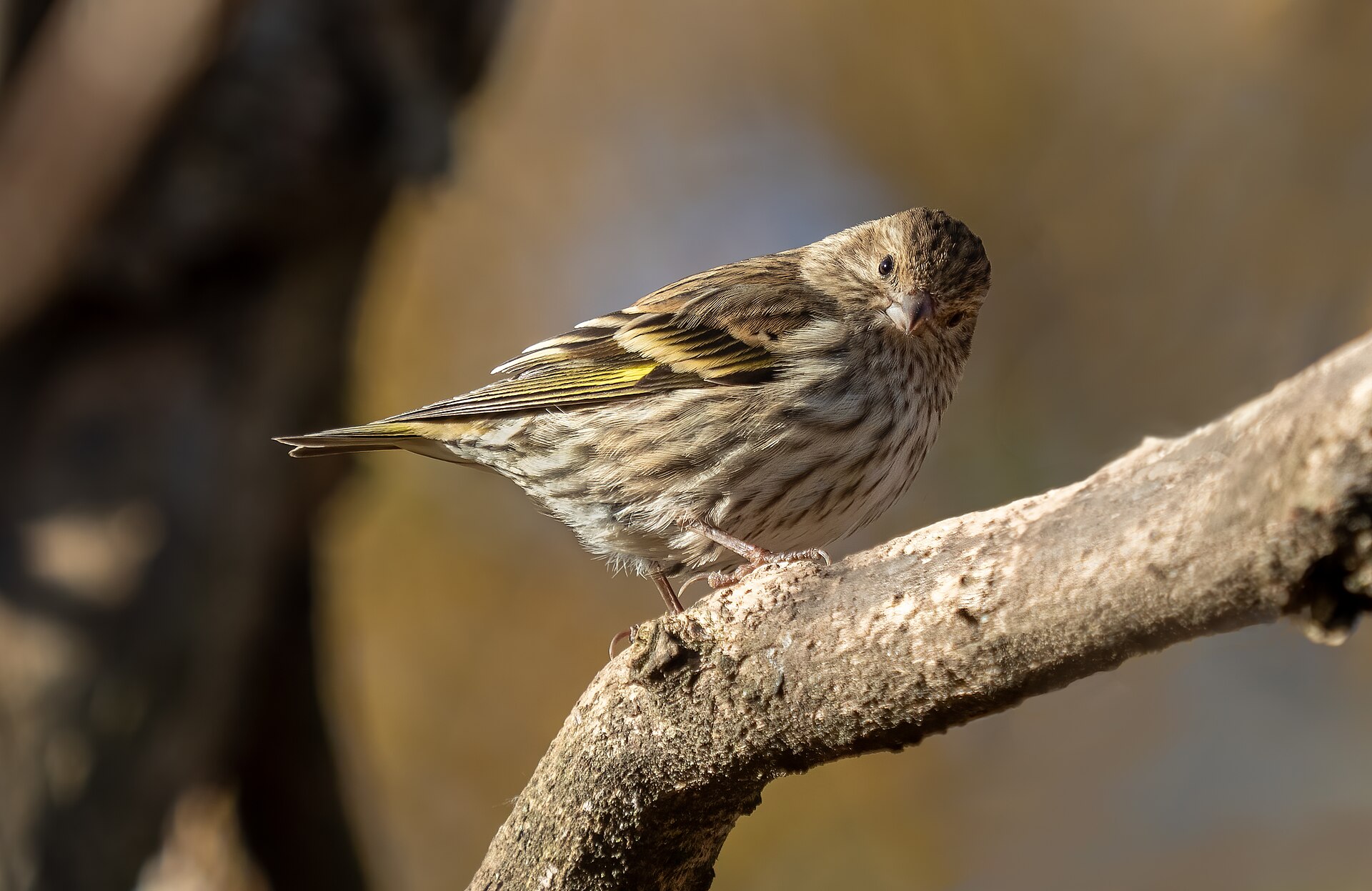
The Pine Siskin is a small, heavily streaked brown finch with a thin, pointed bill and flashes of yellow in the wings and tail. In Colorado it nests in mountain conifer forests and moves around a great deal in winter, showing up at feeders in large numbers one year and barely at all the next. Siskins love nyjer and sunflower chips and are aggressive for their size, flaring their wings at other birds. They are also prone to salmonella outbreaks at crowded feeders, so it helps to clean feeders often and spread them out when big flocks arrive.
Red-breasted Nuthatch
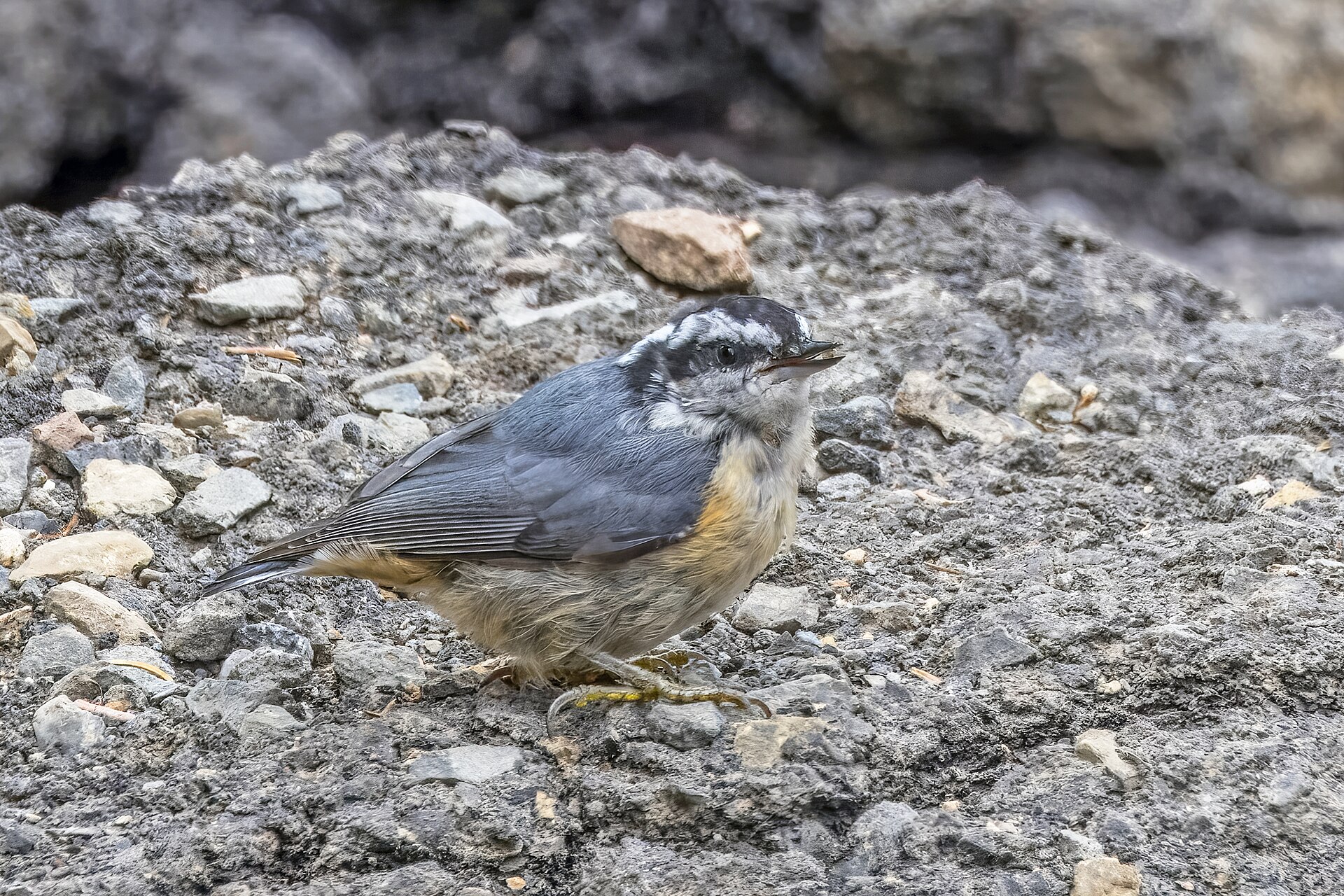
The Red-breasted Nuthatch is a small, compact nuthatch with a black cap, a black line through the eye, a white eyebrow, and rusty underparts. It lives in Colorado’s conifer forests and in spruces and pines planted in towns, and it can be found year-round in the mountains. In some winters many move down to lower elevations and visit feeders along the Front Range. Its call is a nasal, tinny “yank.” It creeps down trunks head-first and will take sunflower seeds and suet, often carrying them off to wedge into bark.
Northern Flicker
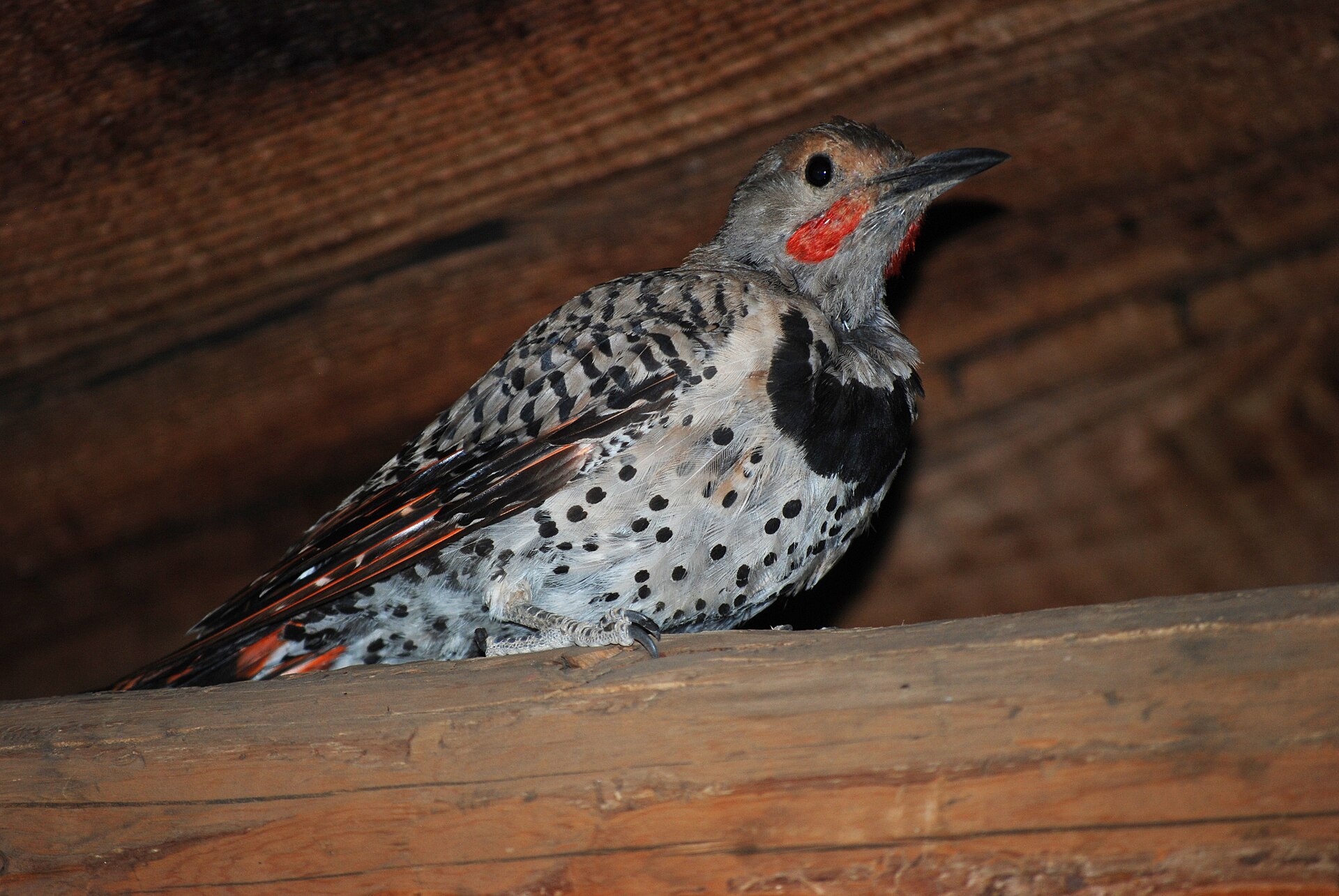
The Northern Flicker is a large, brown woodpecker with black bars on the back, black spots on the belly, and a black crescent on the chest. In Colorado most flickers are the “Red-shafted” form, with salmon-red under the wings and tail and, on males, a red whisker mark. Flickers spend a lot of time on the ground eating ants, and they are common in yards and parks across the state. They will come to suet feeders, especially in winter. In spring they can drum on gutters, chimney caps, and siding to announce their territory, which is not always popular with homeowners.
Broad-tailed Hummingbird
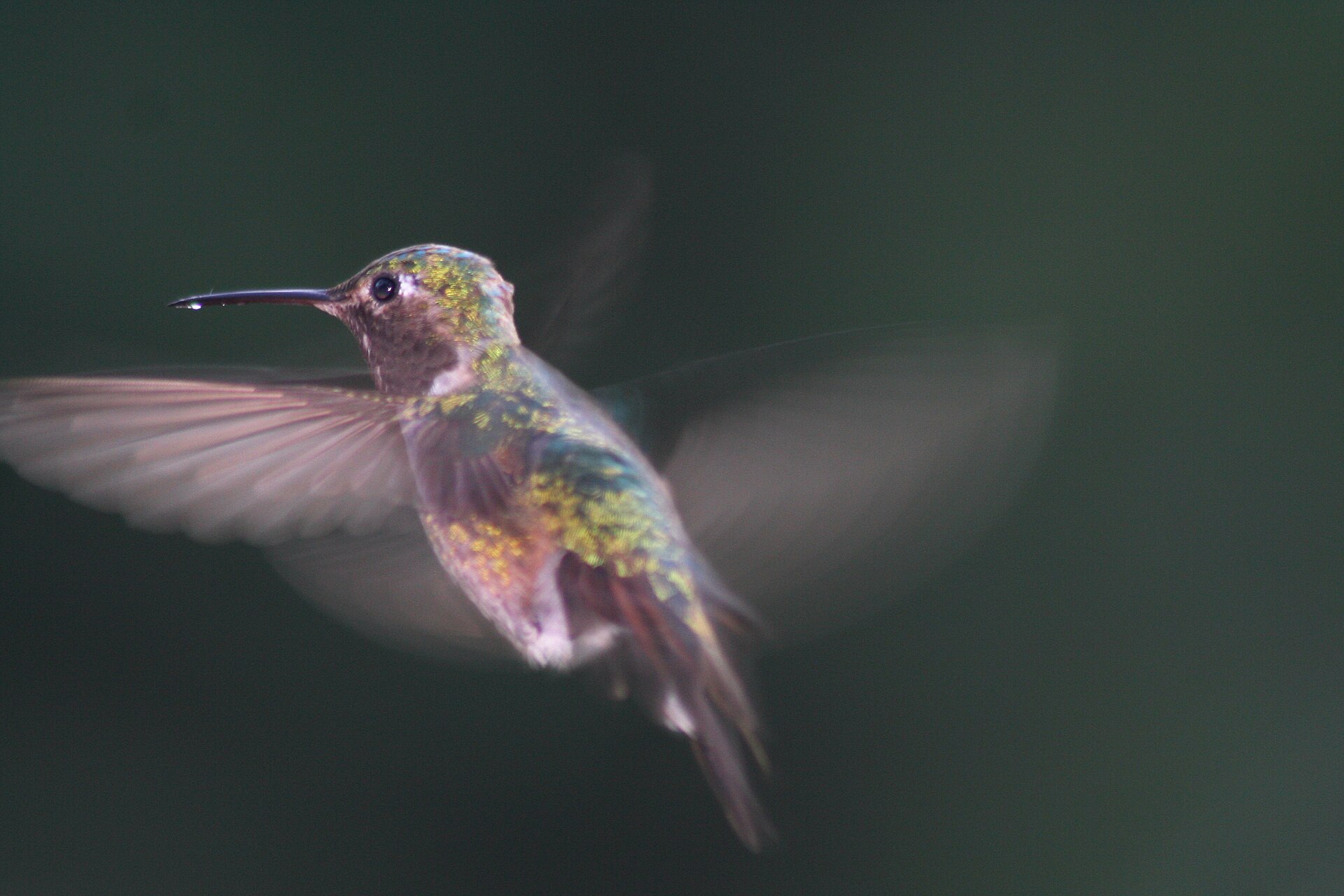
The Broad-tailed Hummingbird is the common breeding hummingbird of Colorado’s mountains and foothills. The male has a green back and a rose-red throat, and his wings make a loud, metallic trill in flight, often the first sign that one is nearby. Broad-tails arrive in April and May and nest in forests and mountain towns. They visit nectar feeders readily, and by July feeders are often shared with Rufous Hummingbirds passing through on migration. A simple sugar water mix of one part sugar to four parts water, changed every few days, is all they need.
Spotted Towhee
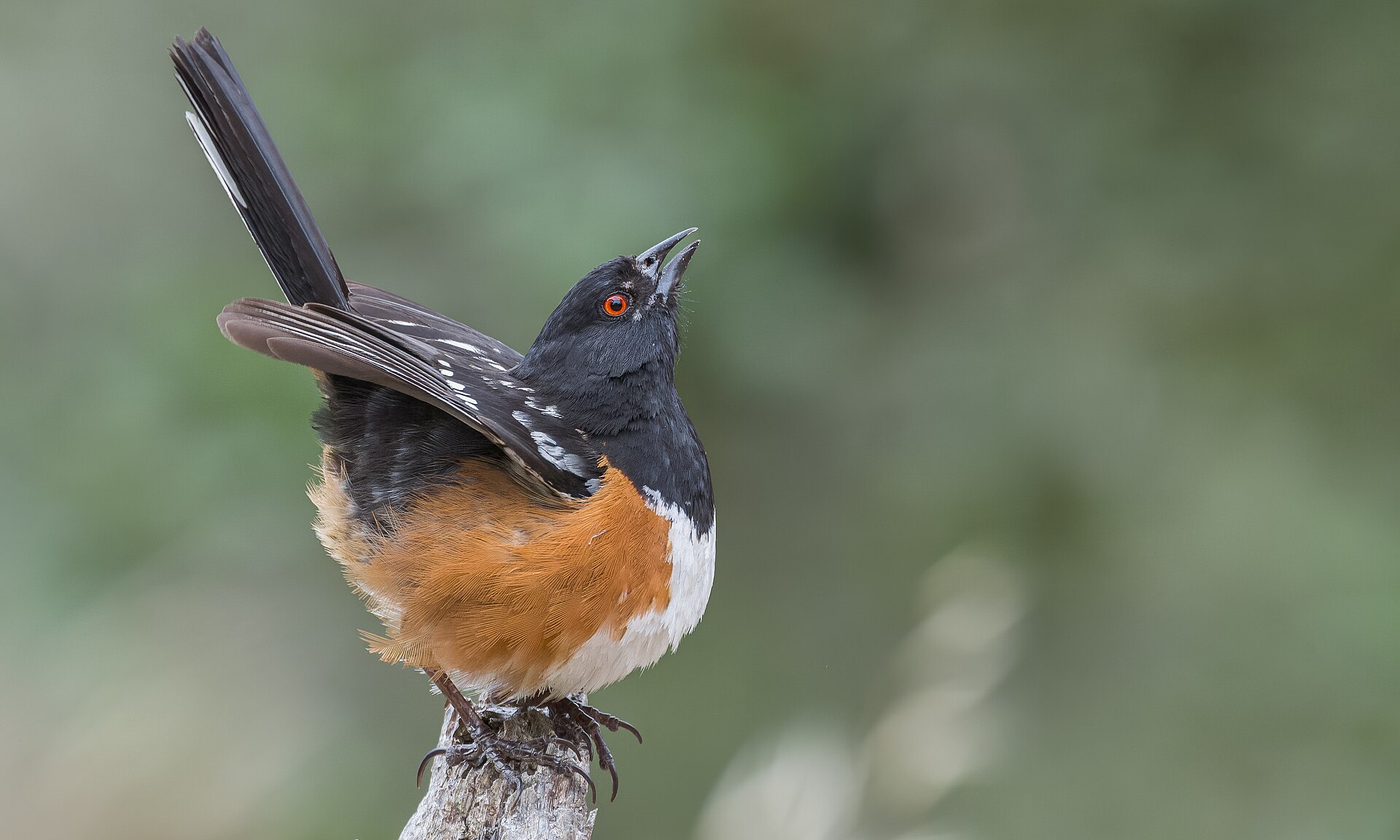
The Spotted Towhee is a large sparrow with a black hood and back, white spots on the wings, rusty sides, and a white belly, plus a bright red eye. In Colorado it is common in scrub oak, brushy foothills, and overgrown yards, and some stay through the winter at lower elevations. Towhees feed on the ground by hopping forward and kicking backward with both feet to scratch up leaf litter. They will come to seed scattered under feeders, especially if there is dense shrub cover nearby. Their call is a harsh, rising “mew.”
Brown-capped Rosy-Finch
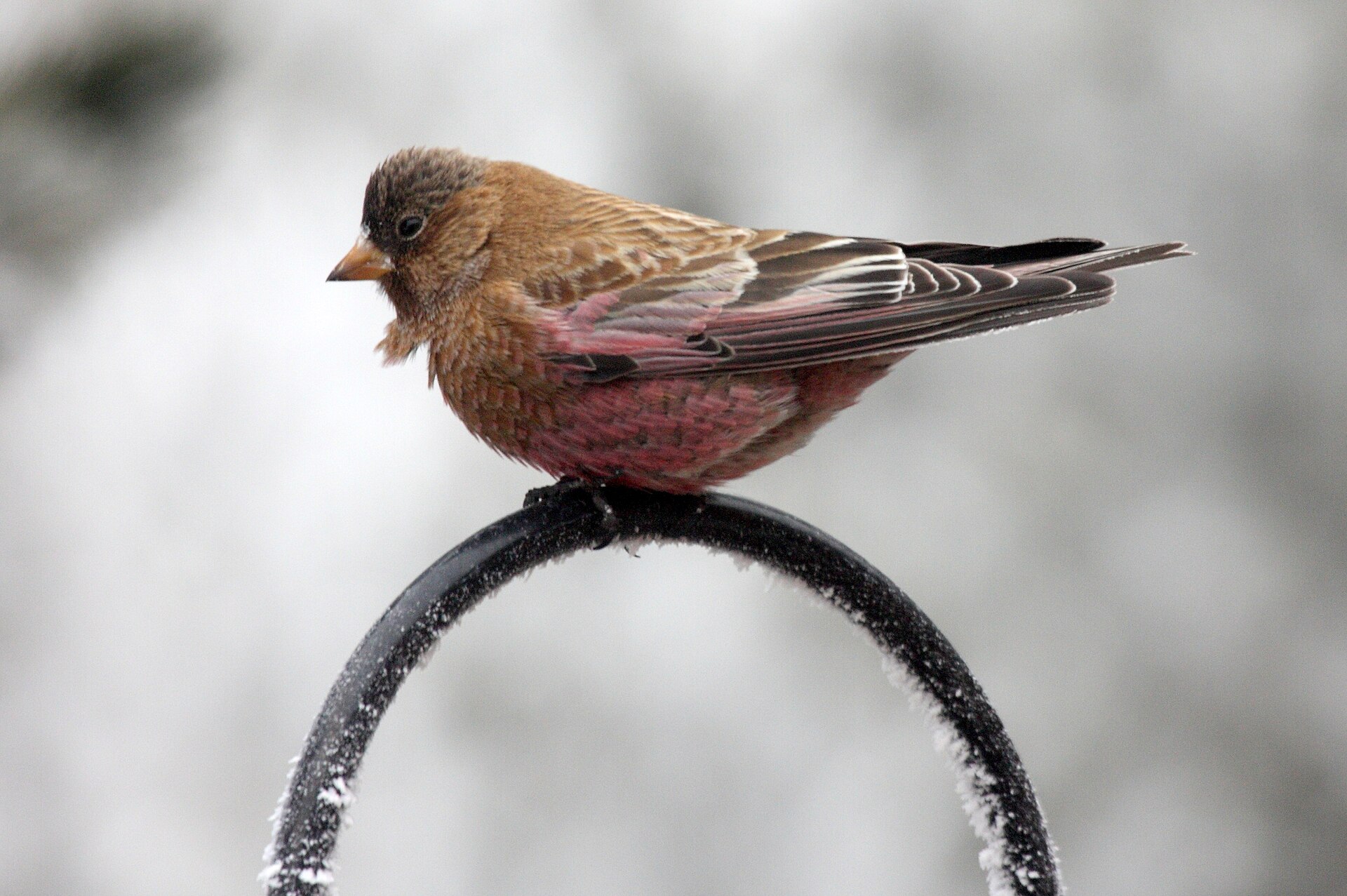
The Brown-capped Rosy-Finch is a medium-sized finch with a brown body, a pink wash on the belly and wings, and a darker brown cap. It nests on high cliffs and snowfields in Colorado’s mountains and has one of the smallest breeding ranges of any North American songbird, with almost all of it in Colorado. In winter it moves down to mountain valleys and towns, often in mixed flocks with Gray-crowned and Black Rosy-Finches, and can visit feeders during snowstorms. Seeing a flock of rosy-finches at a feeder is a special Colorado experience.
Getting Started
A good Colorado setup starts with a hopper or tube feeder of black oil sunflower, a suet cage, and a nyjer or sunflower-chip feeder for finches and siskins. Scatter some millet on the ground for juncos and towhees, and add a heated birdbath in winter. In summer, a hummingbird feeder is almost a must in the foothills and mountains. Put feeders near shrubs or trees so birds have cover, and either close to windows or far from them to reduce collisions. Clean them regularly, especially when siskins show up in big numbers. If you live in bear country, follow Colorado Parks and Wildlife’s advice and bring feeders in from spring through fall.
The state then rewards anyone willing to drive a little. Pawnee National Grassland for Lark Buntings in June, the foothills canyons for warblers in May, the high passes for ptarmigan, and the ski towns for rosy-finches in a snowstorm. It is a lot of ground to cover. Most people still start with a chickadee at the feeder, and in Colorado even that question depends on how far up the hill the house is.
Sources
Species identification, range, and behavior details are cross-checked against the Cornell Lab of Ornithology’s All About Birds, the National Audubon Society, eBird’s Colorado regional data, and Colorado Parks and Wildlife.