Backyard Birds in Wisconsin: A Field Guide to the Species at Your Feeder
Stand at the edge of a marsh in central Wisconsin on an October evening and the first thing you notice is the noise. Long before the birds are visible, a rolling, wooden bugling comes over the tree line, and then Sandhill Cranes drop out of the sky in loose lines, legs dangling, calling the whole way down. Aldo Leopold wrote about that sound from his shack near Baraboo in the 1940s, when cranes were close to gone from the state. They are not gone anymore. That comeback, plus a long, cold winter that sends northern finches down into town feeders, is a good summary of what makes backyard birding in Wisconsin different from its neighbors.
Two lakes, a lot of marsh, and a real northwoods
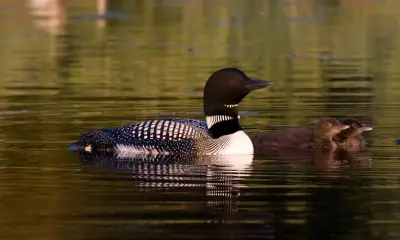
Wisconsin sits between Lake Michigan and Lake Superior, with the Mississippi River running down its western border. That puts the state squarely on the Mississippi Flyway and gives it two big Great Lakes shorelines that funnel migrating songbirds in spring and fall. Door County, the thumb of land sticking into Lake Michigan, and the lakefront parks in Milwaukee and Sheboygan can be crowded with warblers, kinglets, and thrushes on a good May morning. Inland, the south is farm country and oak savanna, with the glacial kettle lakes of the Kettle Moraine. The north is a different place altogether: a band of mixed pine, spruce, and hardwood forest dotted with thousands of lakes, where Common Loons nest and a winter feeder can pull in Evening Grosbeaks and Common Redpolls.
Then there is Horicon Marsh, northeast of Madison, the largest freshwater cattail marsh in the United States. In fall it fills with tens of thousands of Canada Geese, and it holds nesting Yellow-headed Blackbirds, rails, and herons through the summer. For a lot of Wisconsin birders it is the first “big” place they visit after the backyard gets them hooked.
The state bird: the American Robin
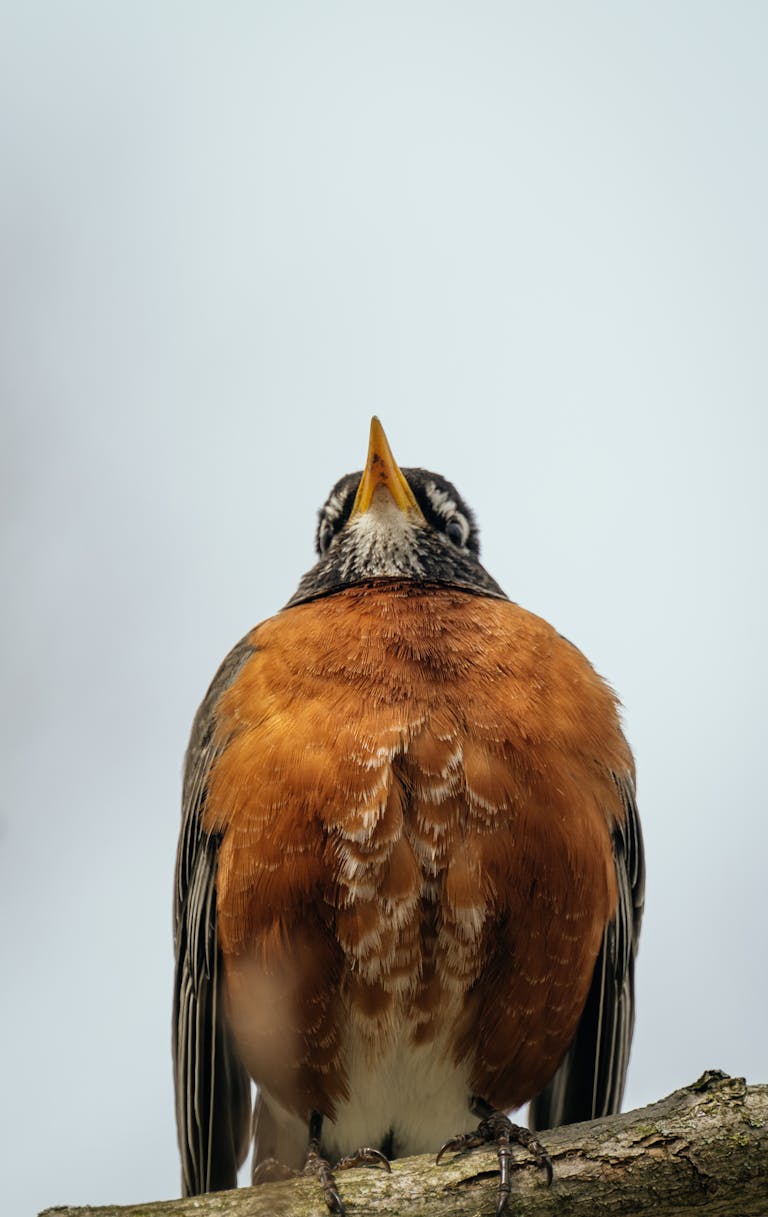
Wisconsin schoolchildren picked the American Robin in a vote in the 1920s, and the legislature made it official in 1949. It is an easy bird to overlook because it is everywhere, running across lawns and pulling up worms after a rain, but the robin has a Wisconsin twist. Plenty of robins never leave. They shift from worms to fruit in winter and gather in flocks around crabapples, mountain ash, and buckthorn thickets, so a flock of thirty robins in a snowy January yard is not a sign of an early spring, just a sign that someone planted the right trees.
Common feeder visitors
A typical Wisconsin winter feeder draws Black-capped Chickadees, White-breasted and Red-breasted Nuthatches, Downy and Hairy Woodpeckers, Blue Jays, Northern Cardinals, American Goldfinches, House Finches, and Dark-eyed Juncos, which arrive from Canada in October and scratch around under the feeders all winter. Red-bellied Woodpeckers have spread north over recent decades and now turn up in many northern counties where they were once scarce, and Tufted Titmice are common in the southern third of the state. In spring the mix changes fast: Rose-breasted Grosbeaks and Baltimore Orioles show up in early May, often the same week, and Ruby-throated Hummingbirds follow close behind.
Beyond the backyard: cranes, old and new
Sandhill Cranes were down to a small number of breeding pairs in Wisconsin by the 1930s, and today they nest in wet fields and marsh edges across much of the state. In fall they gather in big numbers before heading south; Crex Meadows near Grantsburg in the northwest is one of the best-known places to watch them come in at dusk in October. The International Crane Foundation in Baraboo, founded in 1973, works on all fifteen of the world’s crane species and is worth a visit on its own. Wisconsin is also home base for the eastern population of Whooping Cranes, the rarest crane in North America. Starting in 2001, young Whooping Cranes raised at Necedah National Wildlife Refuge were taught to migrate to Florida by following ultralight aircraft. The population is small and still fragile, but a pair of white cranes in a Juneau County field is a real possibility now.
A note on native plants
A lot of Wisconsin’s birds eat fruit and seeds as much as anything from a feeder, and native plants carry them through the lean weeks. Serviceberry, gray and red-osier dogwood, highbush cranberry, and native crabapples feed robins, waxwings, and thrushes, while coneflowers, black-eyed Susans, and native asters left standing into winter give goldfinches and juncos something to pick at. Oaks are the single best tree for insects, which is what nearly every songbird feeds its young. One trade-off worth mentioning: common buckthorn, the invasive shrub that fills many Wisconsin woodlots, does feed robins in winter, but the berries are poor food and the shrub crowds out better plants. Pulling it and replacing it with native dogwood or viburnum is a good long-term swap.
Winter Feeding Notes
Wisconsin winters are long, and feeders matter most in the stretch from December through early March when snow covers seeds on the ground. Black oil sunflower is the staple; suet is especially useful when the temperature drops below zero, and it will not spoil in the cold. Nyjer or a mix of nyjer and sunflower chips will hold goldfinches and, in a good year, flocks of redpolls and Pine Siskins. A heated birdbath is one of the most popular additions a Wisconsin backyard can make, since open water is hard to find in January. Keep a shovel handy for clearing a spot on the ground for juncos and sparrows after each snow, and watch for a Cooper’s or Sharp-shinned Hawk. A busy feeder in winter tends to attract one sooner or later.
American Robin
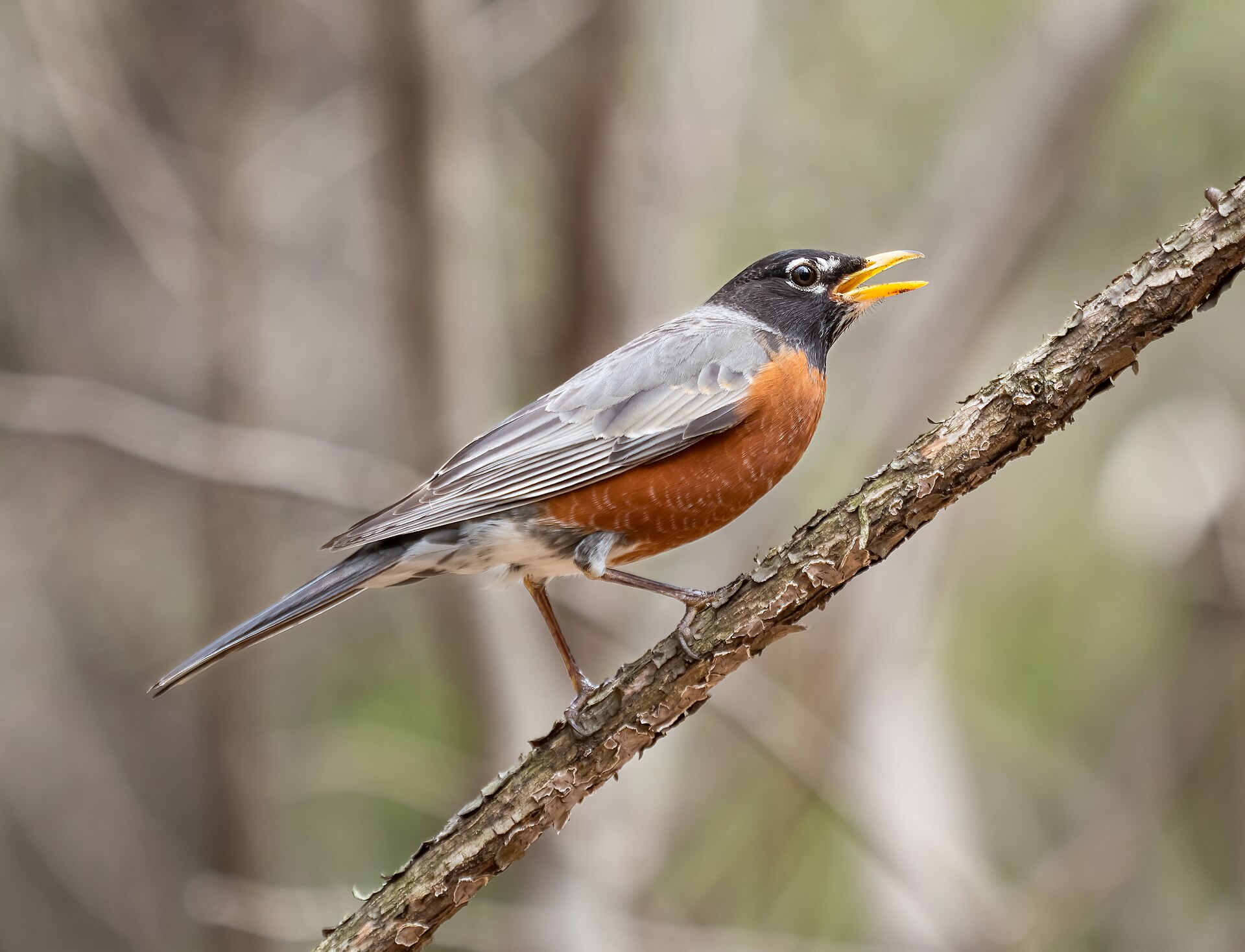
The American Robin is a gray-brown thrush with a warm orange breast, a yellow bill, and a broken white eye-ring. It is one of the first birds most Wisconsinites learn, and one of the first to sing in spring, often before dawn in late March. Robins do not usually eat seed, so they rarely use a standard feeder, but they will come to a birdbath year-round and will eat mealworms, chopped apples, or soaked raisins set out on a platform. In winter, look for them in flocks around fruiting trees rather than on lawns. Wisconsin’s state bird since 1949.
Black-capped Chickadee
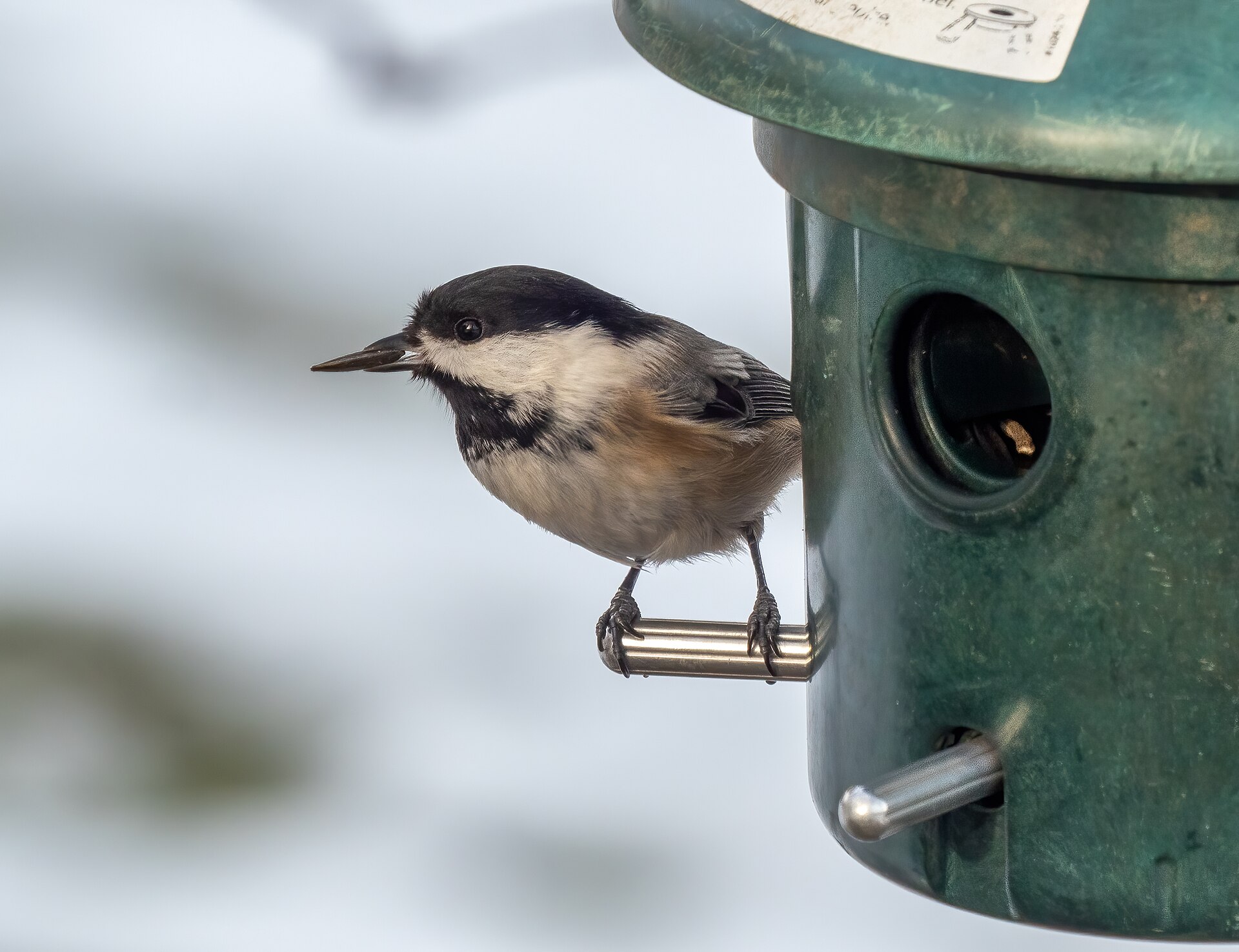
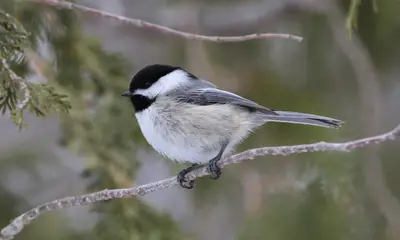
The Black-capped Chickadee is a small, round-headed bird with a black cap and bib, white cheeks, and gray back. It is the most reliable feeder bird in Wisconsin, found in every county and active in the worst weather. Chickadees take one seed at a time and fly off to eat it or hide it in bark crevices, which is why they seem to make endless trips. They survive cold nights by dropping their body temperature and shivering to stay warm. Black oil sunflower and suet are the best way to bring them in, and a patient person can train them to take seed from a hand.
Northern Cardinal
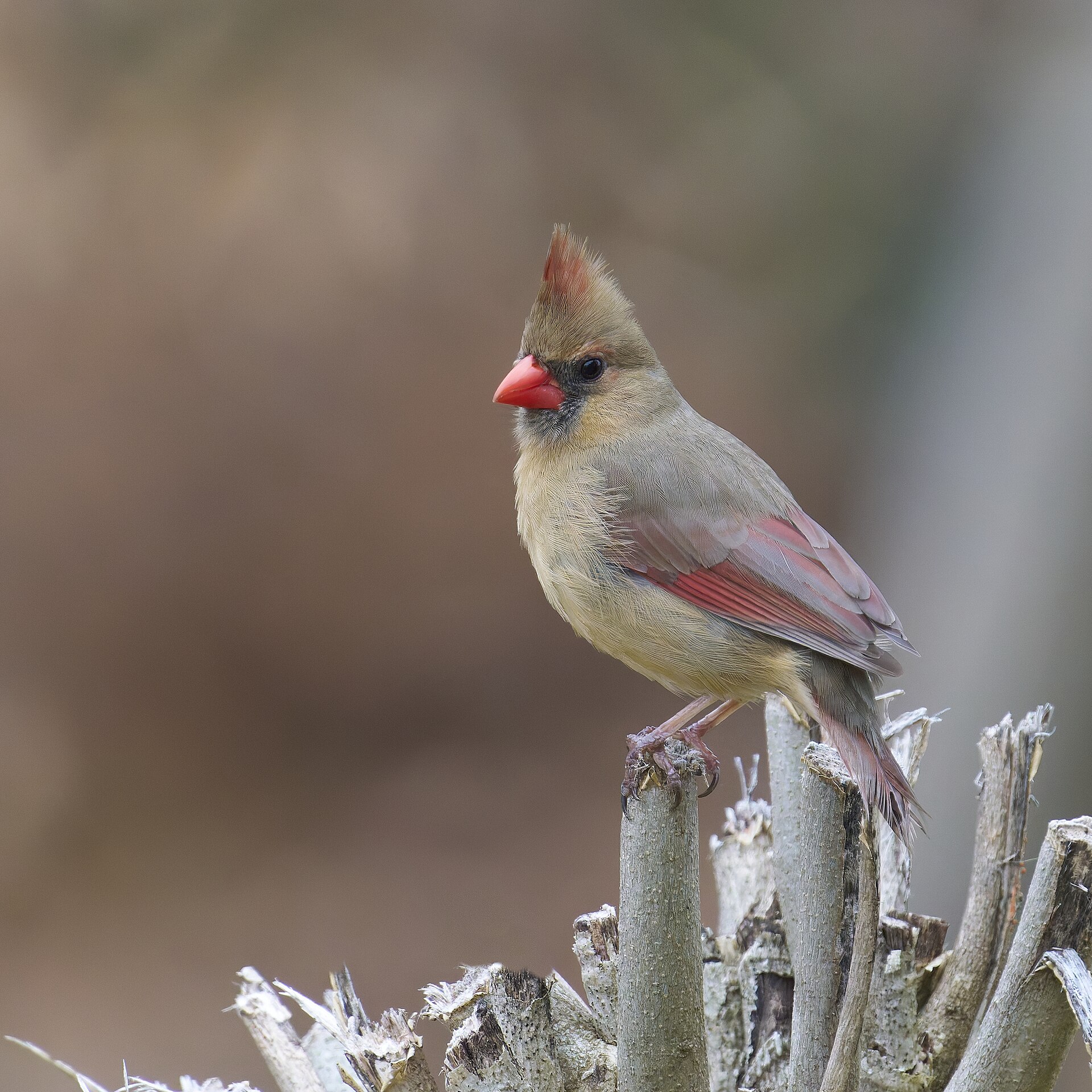
The Northern Cardinal needs little introduction: the male is bright red with a black face and a thick red bill, and the female is warm tan with red on the wings and crest. Cardinals were once mostly a southern Wisconsin bird, but they have spread north with the help of feeders and suburban shrubs and are now found through most of the state. They prefer to feed on platform or hopper feeders rather than small tubes, and they often visit in the last light of the day. Safflower seed is a good choice; cardinals eat it readily and many squirrels and blackbirds do not.
Blue Jay
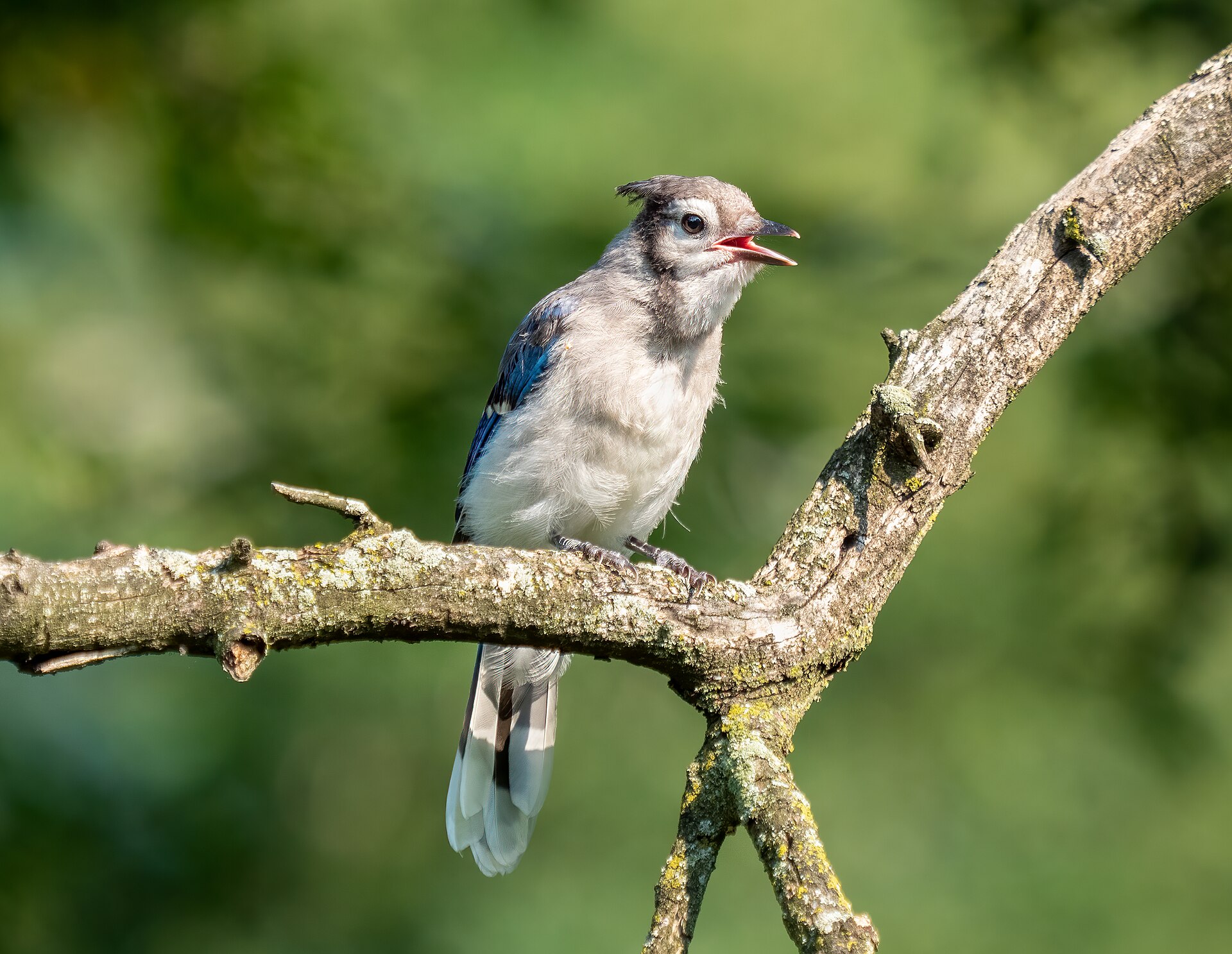
The Blue Jay is a loud, crested jay with bright blue upperparts, white underparts, and a black necklace. It is common year-round across Wisconsin, though some move south in fall, and big flocks can be seen migrating along the Lake Michigan shore in September. Jays love peanuts, both in the shell and shelled, and they carry acorns off to bury them, which helps oak trees spread. They also do a very good imitation of a Red-shouldered or Red-tailed Hawk, which can send the other birds at the feeder scattering. A platform feeder with whole peanuts is the easiest way to bring them close.
White-breasted Nuthatch
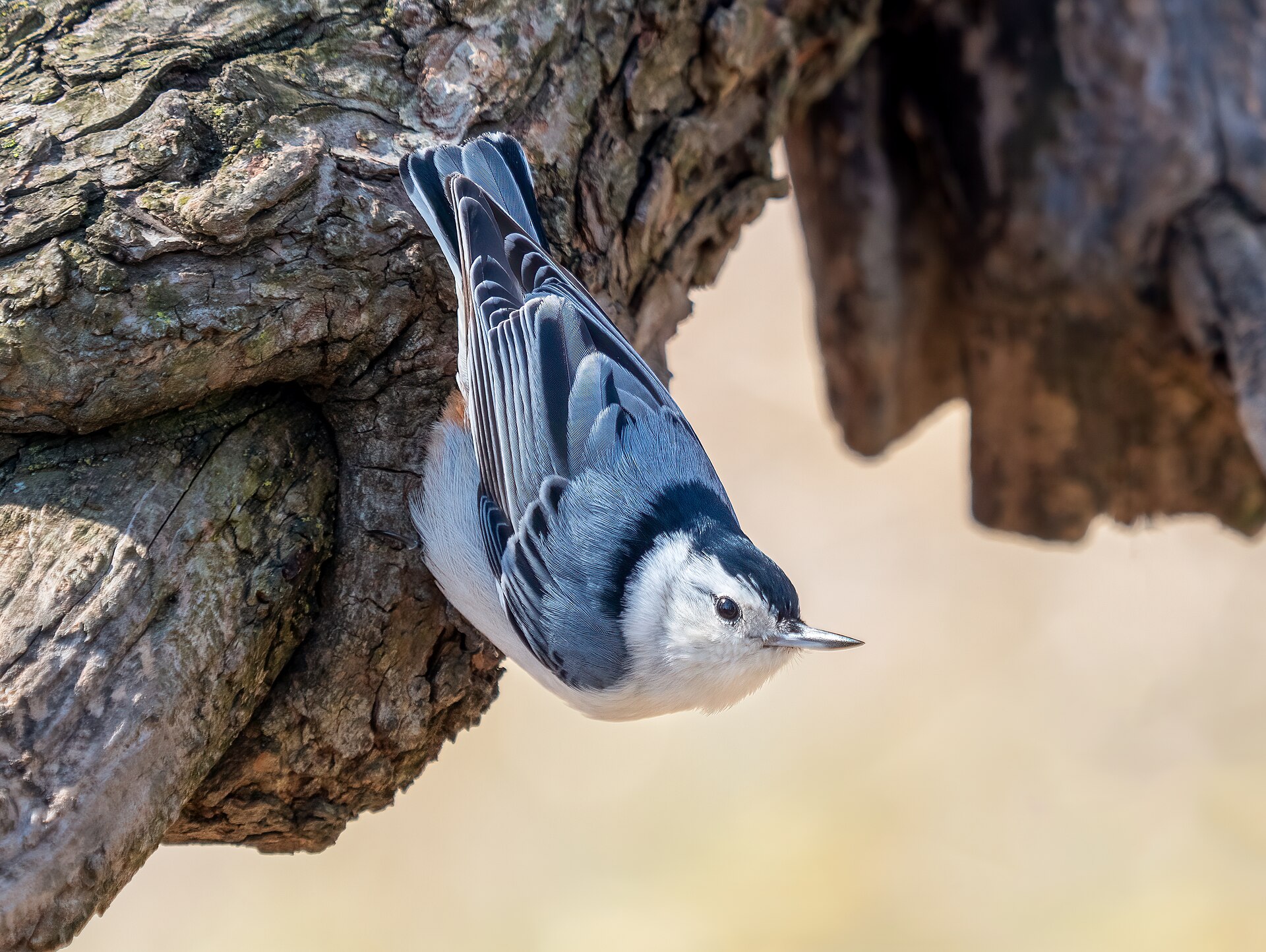
The White-breasted Nuthatch is a gray-backed bird with a white face and breast, a black cap, and a long, slightly upturned bill. It walks head-first down tree trunks, which no woodpecker does, and its nasal “yank-yank” call is a common winter sound in Wisconsin woods and yards. Nuthatches stay in pairs year-round and defend a territory. They like sunflower seeds, peanuts, and suet, and often wedge a seed into bark and hammer it open, which is where the name comes from. They are found statewide wherever there are mature deciduous trees, especially oaks.
Red-breasted Nuthatch
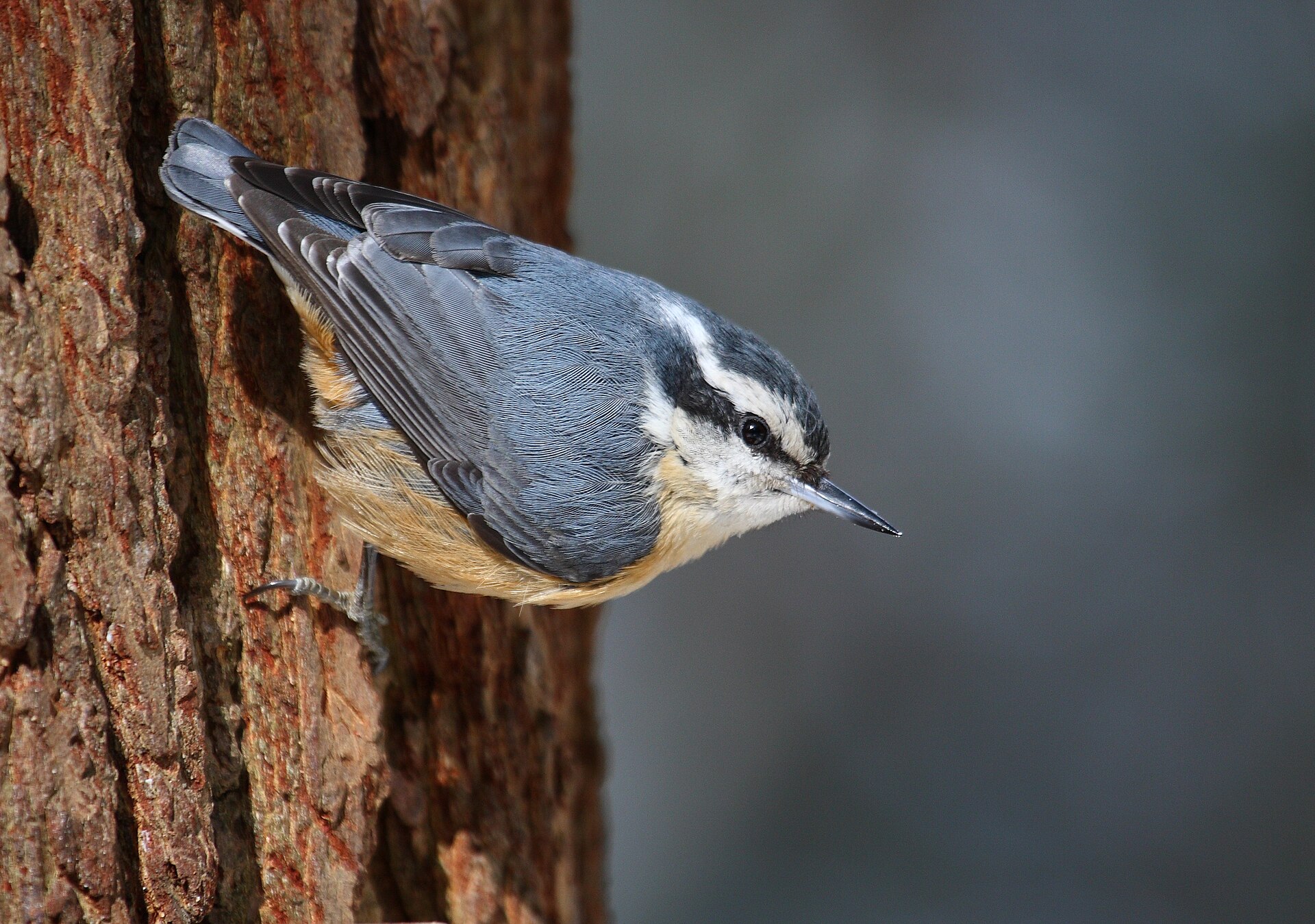
The Red-breasted Nuthatch is smaller than its white-breasted cousin, with a black eye-line, white eyebrow, and rusty-orange underparts. It nests in conifers in northern Wisconsin and in scattered pine plantings farther south. In some winters, when the cone crop fails farther north, large numbers move south and show up at feeders across the state; in other years they are hard to find. Their call sounds like a tiny tin horn. They are quick and busy at the feeder, grabbing a sunflower seed or bit of suet and zipping off to store it.
Downy Woodpecker
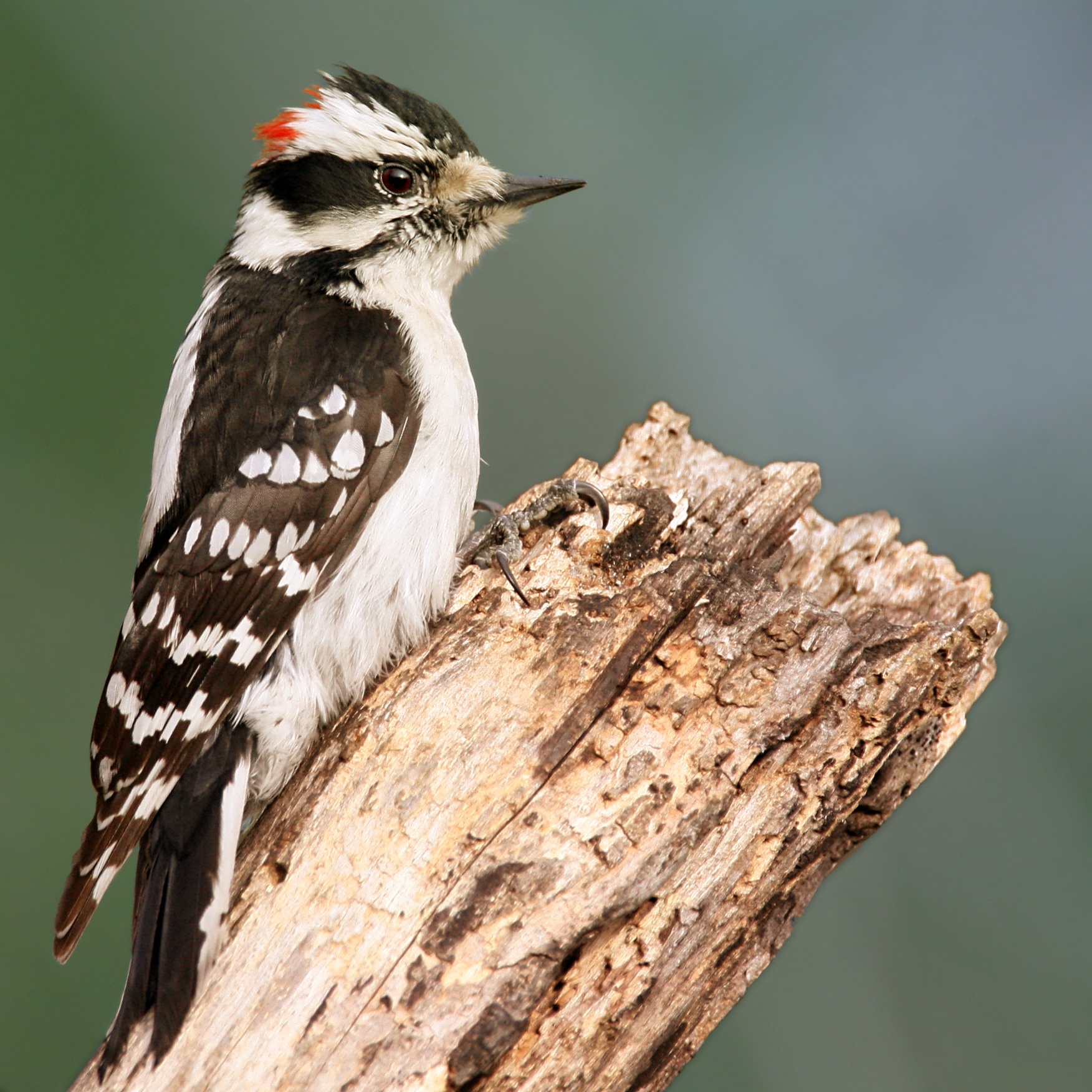
The Downy Woodpecker is the smallest woodpecker in Wisconsin, black and white with a white stripe down the back and, on males, a small red patch on the back of the head. It is common in yards, parks, and woodlots statewide and is often the first woodpecker to find a new suet feeder. It looks almost identical to the larger Hairy Woodpecker; the easiest clue is the bill, which on a Downy is much shorter than the head. Downies also forage on goldenrod stems in winter, picking out insect larvae from the galls.
American Goldfinch
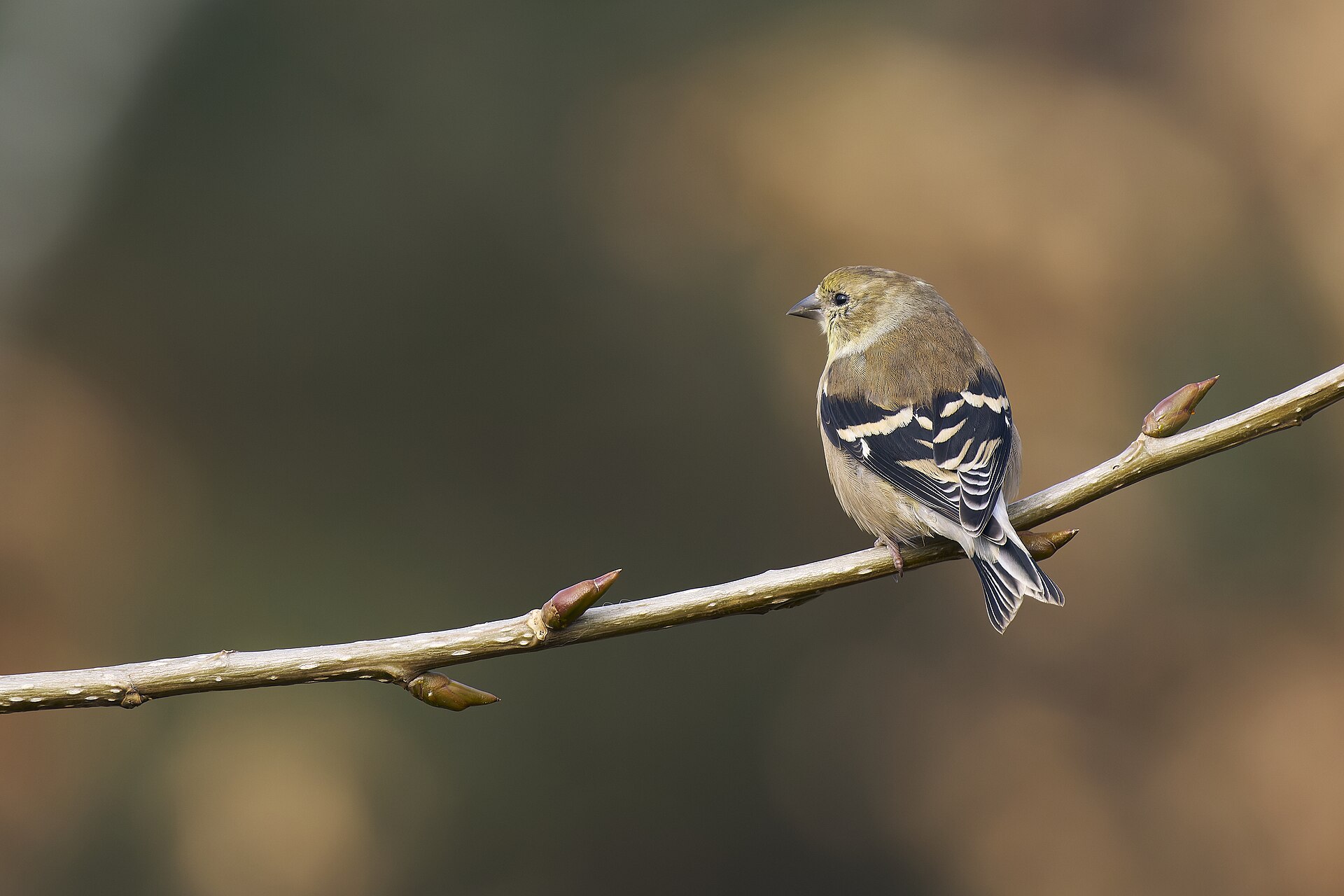
The American Goldfinch is a small finch with a short, conical bill. In summer the male is bright lemon yellow with a black cap and black wings; in winter both sexes turn a dull olive-brown, and many people assume the goldfinches have left when they are still at the feeder. Goldfinches nest late, often in July, after thistle and other plants have gone to seed. Nyjer and sunflower chips in a tube feeder are the easiest way to attract them, and letting coneflowers and native thistles stand in fall gives them natural food too.
Dark-eyed Junco
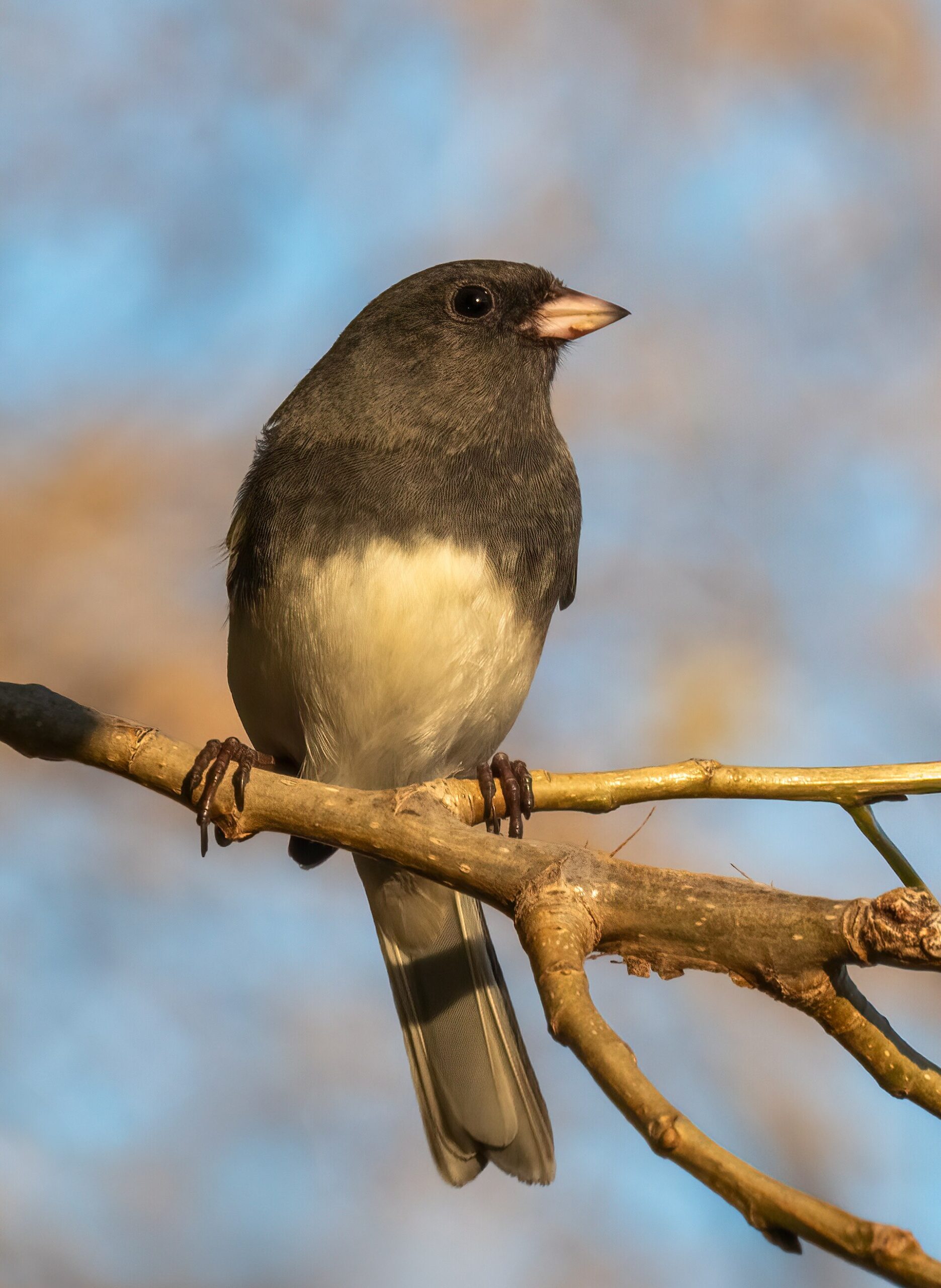
The Dark-eyed Junco is a sparrow-sized bird with a slate-gray hood and back, a white belly, and a pale pink bill. It flashes white outer tail feathers when it flies. In Wisconsin, most juncos arrive in October from breeding grounds in Canada and the far north of the state, and they stay until April. They are ground feeders, scratching under feeders and in leaf litter for seeds, and they often move in small flocks. Millet or a mixed seed scattered on the ground or on a low platform will bring them in, and they are one of the easiest birds to see after a fresh snow.
Rose-breasted Grosbeak
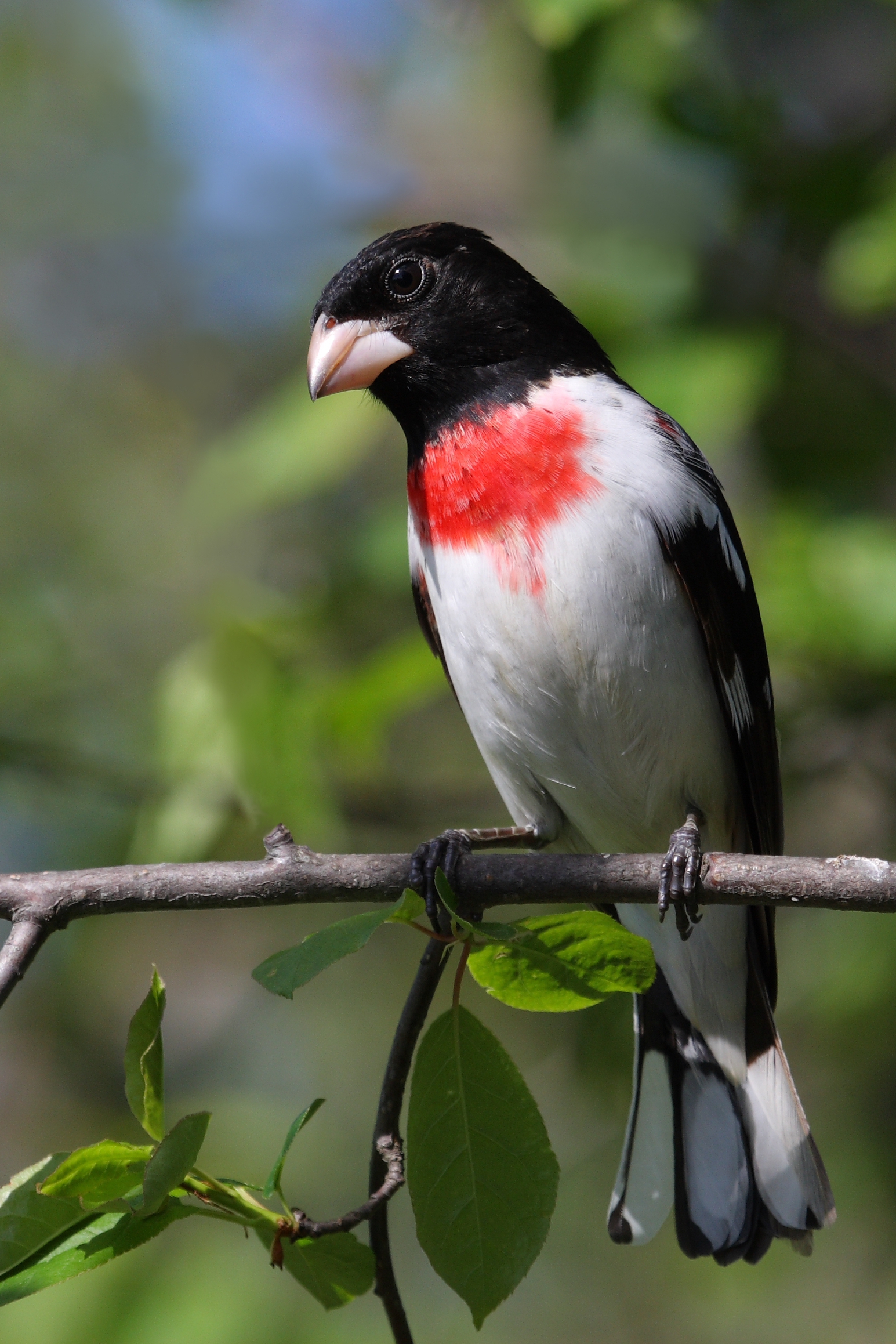
The Rose-breasted Grosbeak is a stocky songbird with a heavy, pale bill. The male is black and white with a bright rose-red triangle on the breast; the female is brown and streaked, with a bold white eyebrow, and looks a bit like a large sparrow. They arrive in Wisconsin in early May and nest in deciduous woods and leafy suburbs. For a week or two in spring they are regular at sunflower feeders, and then they move into the treetops and are heard more than seen. Their song sounds like a robin that has taken voice lessons, rich and sweet.
Baltimore Oriole
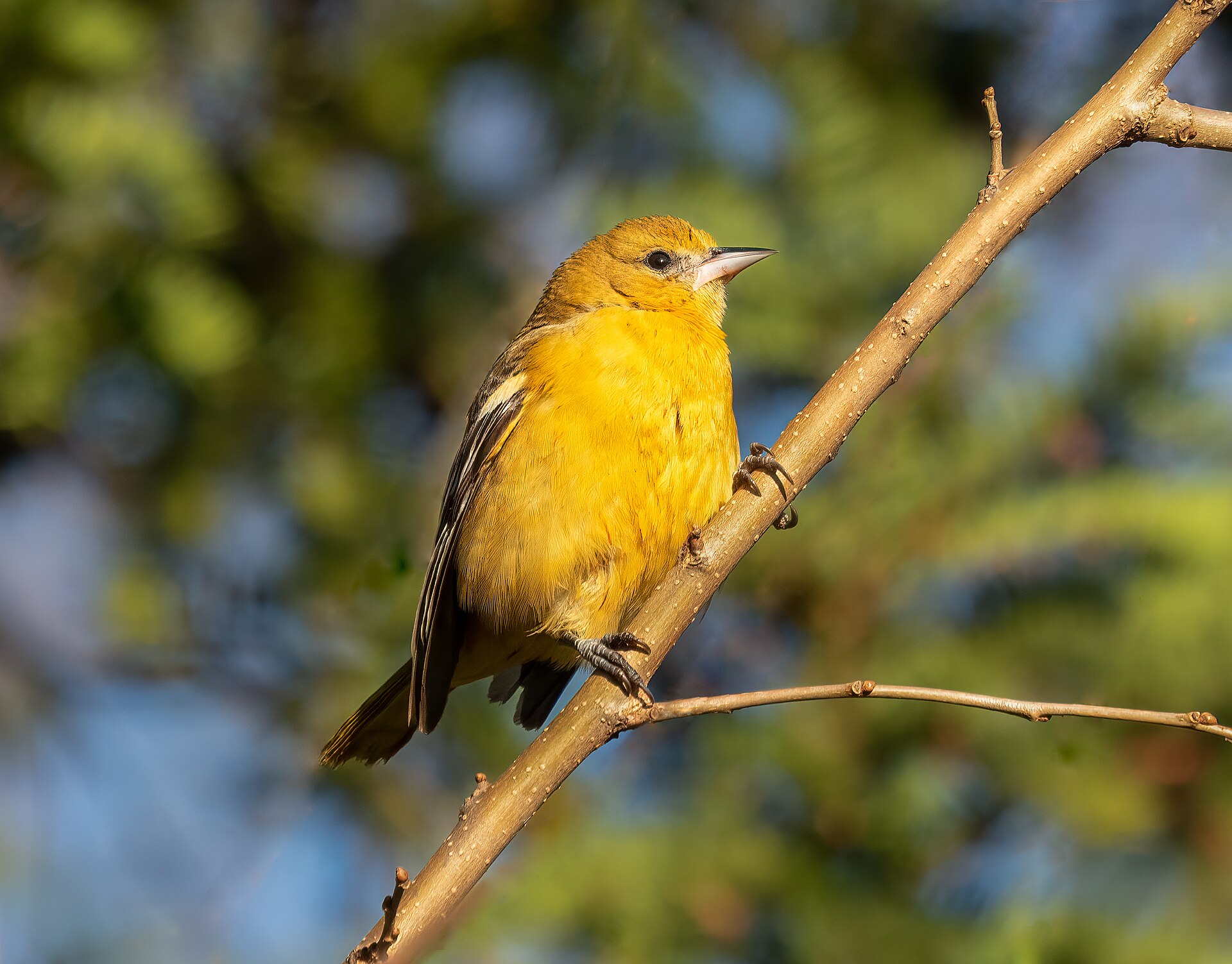
The Baltimore Oriole is a bright songbird: the male is flame orange with a black head and back, and the female is a paler yellow-orange with grayish wings. Orioles return to Wisconsin in early May and nest in tall shade trees, weaving hanging, sock-shaped nests at the tips of branches. They come readily to orange halves, grape jelly, and nectar feeders designed for orioles, especially in the first few weeks after they arrive, before insects are abundant. Their whistled song is one of the sounds of a Wisconsin spring, and the nests become easy to spot once the leaves drop in fall.
Common Redpoll
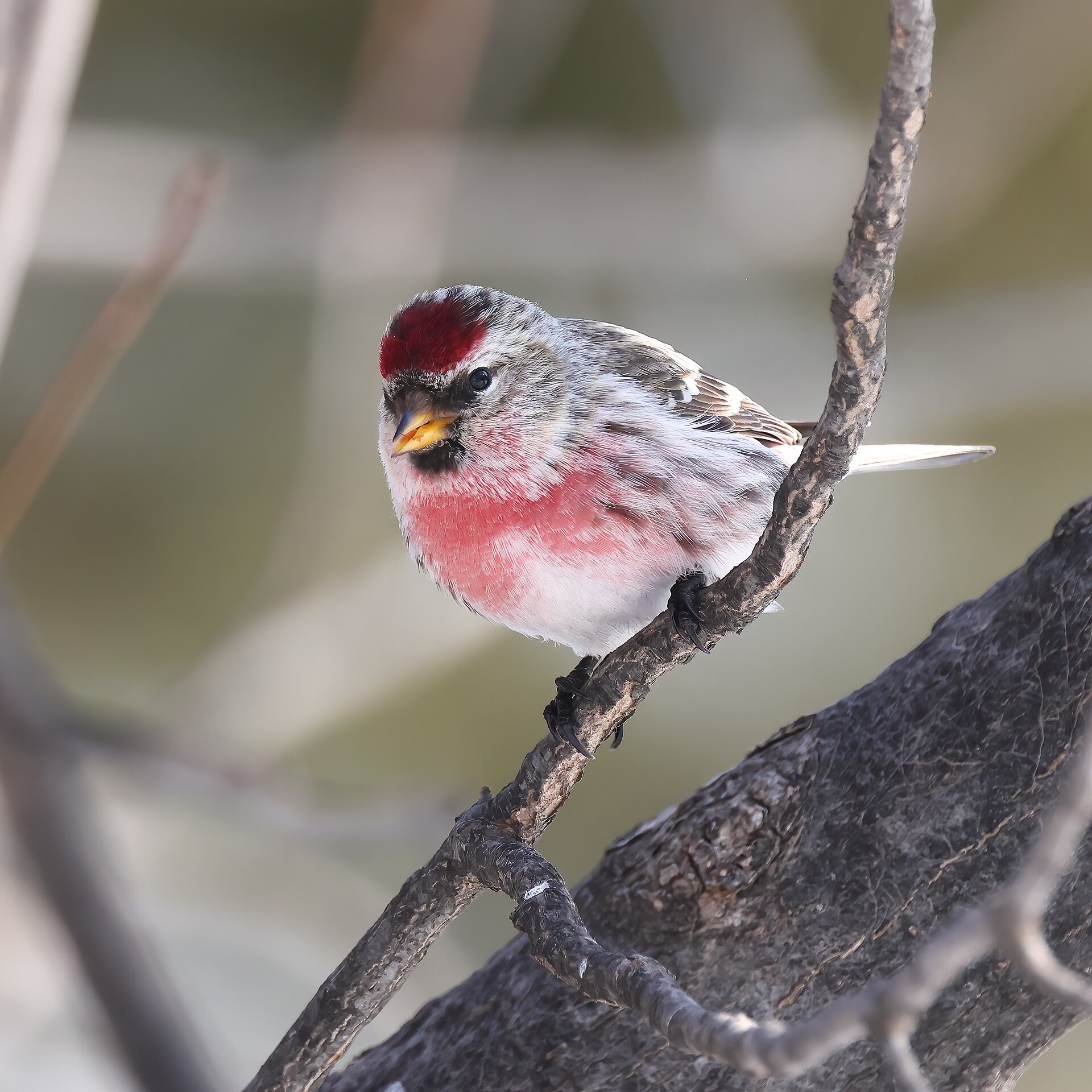
The Common Redpoll is a small, streaky finch with a red cap, a black chin, and, on males, a pink wash on the breast. It breeds in the far north and comes to Wisconsin only in winter, and the numbers vary a lot from year to year. In a big irruption year, flocks of dozens or even hundreds can descend on nyjer feeders, especially in the northern half of the state. They are remarkably tough, able to survive very cold nights, and they sometimes feed on birch catkins in yards. If redpolls show up, keeping the nyjer feeder full is the best way to keep them around.
Sandhill Crane
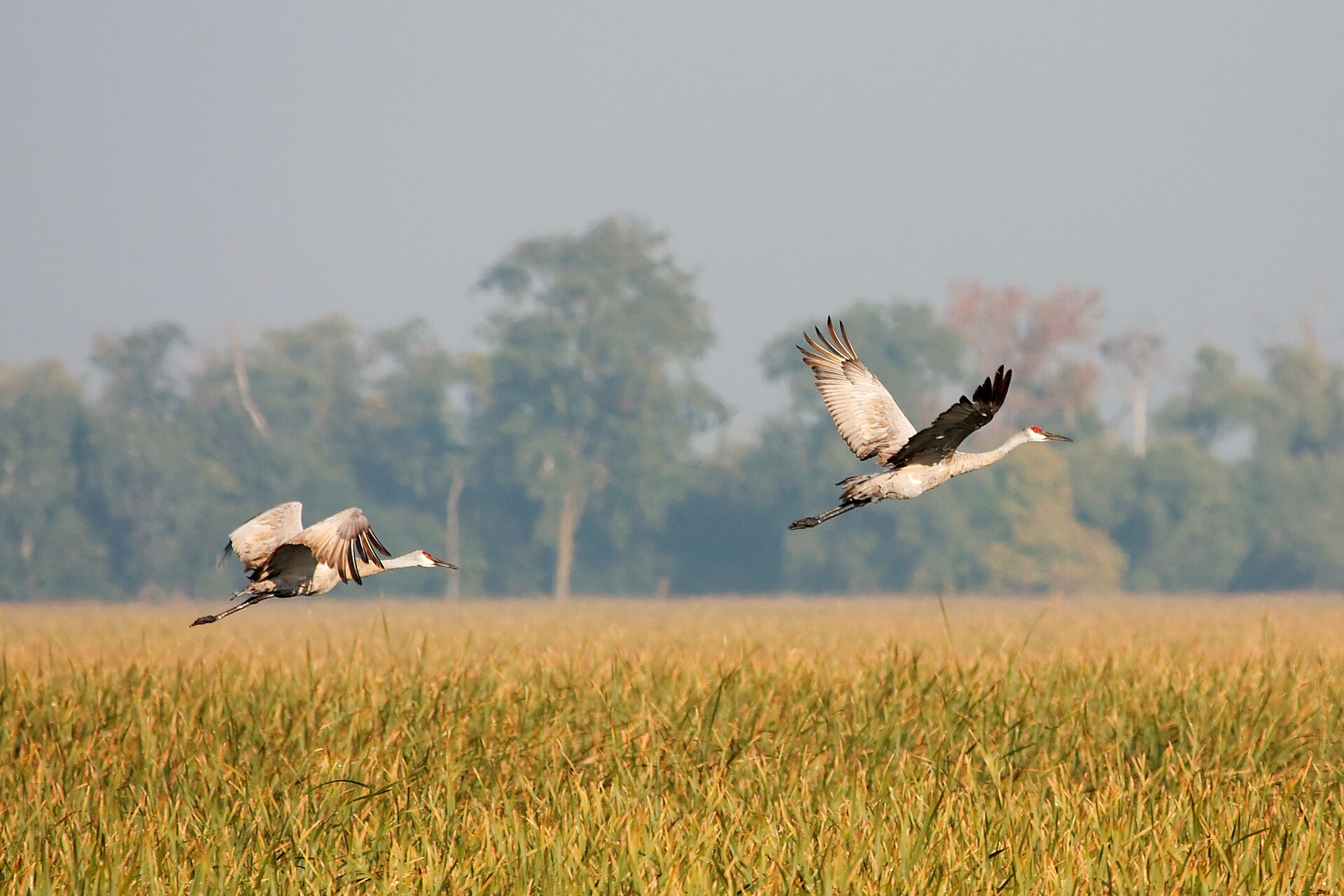
The Sandhill Crane is a tall gray bird with a red forehead, long neck, and long legs, often stained rusty from the iron-rich mud where it preens. It nests in marshes and wet fields throughout much of Wisconsin, arriving as early as March, and pairs perform dancing displays with leaps, bows, and wing flaps. Cranes are not feeder birds, though they sometimes walk into rural yards to eat spilled corn. Their loud, rattling call carries for miles. Crex Meadows, Horicon Marsh, and the fields around the Wisconsin River are good places to see them in fall.
Whooping Crane
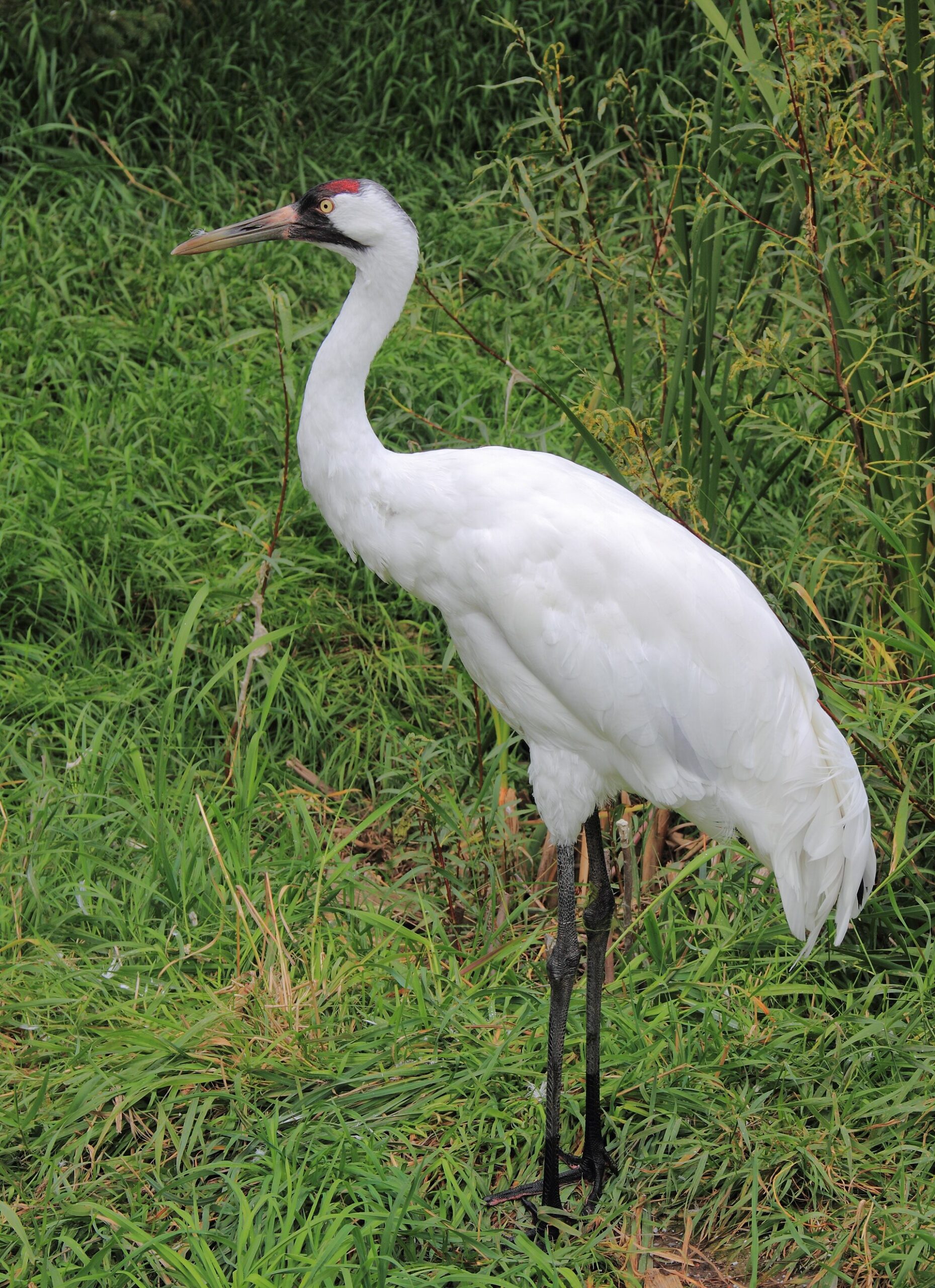
The Whooping Crane is the tallest bird in North America, pure white with black wingtips and a red crown. It is also one of the rarest, with only a few hundred birds in the wild. The eastern population, which breeds in Wisconsin and winters in the Southeast, was reintroduced starting in 2001 at Necedah National Wildlife Refuge, and a few of these birds now nest in central Wisconsin. Whooping Cranes sometimes travel with Sandhill Cranes. Anyone who spots one should keep a good distance, at least 200 yards, and report it to the Wisconsin DNR or the International Crane Foundation.
Getting Started
A simple Wisconsin setup starts with a tube or hopper feeder full of black oil sunflower, a suet cage, and a nyjer feeder for goldfinches and the occasional redpoll. Put some millet on the ground or on a low tray for juncos and sparrows, and add a heated birdbath once the ponds freeze. From May through September, a hummingbird feeder and a few orange halves will bring in the summer birds. Place feeders near shrubs or trees so birds have cover to escape hawks, and either within three feet of a window or well away from it to cut down on collisions. Clean feeders every couple of weeks, and more often in wet weather. In the north, where black bears are common, take feeders down from spring through fall.
From there, the state opens up. Door County in May, Horicon Marsh in fall, the cranes coming in at Crex Meadows in October, and the northern lakes where loons call all summer. Wisconsin rewards people who pay attention to the calendar. But most of that starts the same way, with a chickadee at the feeder on a gray December morning.
Sources
Species identification, range, and behavior details are cross-checked against the Cornell Lab of Ornithology’s All About Birds, the National Audubon Society, eBird’s Wisconsin regional data, and the Wisconsin Department of Natural Resources.