Backyard Birds in Pennsylvania: A Field Guide to the Species at Your Feeder
Pennsylvania is a woods state before it is anything else. Close to 60 percent of it is forest, and even the suburbs of Philadelphia and Pittsburgh have ridges of oak and tulip poplar running through them. That shows up at the feeder. A yard in State College or Scranton will have Black-capped Chickadees, White-breasted Nuthatches, and a Pileated Woodpecker banging on a dead oak somewhere behind the house, while a yard near Lancaster or York might hear Carolina Chickadees and Carolina Wrens, birds with a more southern accent. In between are the long, parallel ridges of the Appalachians, which every September carry one of the best-known hawk migrations in the world right over the heads of people raking their lawns.
Ridges, valleys, and a line through the chickadees
Pennsylvania’s geography is easy to see on a map. The Ridge and Valley region cuts across the middle of the state in long, folded mountains running northeast to southwest, and the Allegheny Plateau covers most of the north and west with big forests like the Allegheny National Forest and the “Pennsylvania Wilds.” The southeast is lower and warmer, with farm country, the Delaware and Susquehanna river valleys, and the Philadelphia metro area. Presque Isle, a sand spit on Lake Erie near the city of Erie, gives the state a small slice of Great Lakes shoreline and is one of its best spots for migrant songbirds and waterbirds. One quirk worth knowing: the ranges of Black-capped and Carolina Chickadees meet across the southern part of the state, and in that band the two species overlap and hybridize, so the chickadee at a feeder in Harrisburg can be surprisingly hard to name.
The state bird: a grouse, not a songbird
Pennsylvania chose the Ruffed Grouse as its state bird in 1931, a nod to the state’s forests and its long hunting tradition. It is an unusual pick, a chunky, mottled ground bird rather than a bright songbird, and most Pennsylvanians have never seen one up close. Anyone who has walked the woods in April has probably heard it, though: the male’s “drumming,” a low, accelerating thump made by beating his wings against the air while standing on a log, sounds like a small engine starting up somewhere in the trees. The grouse has declined across much of Pennsylvania over recent decades, and the Pennsylvania Game Commission has pointed to both loss of young forest and West Nile virus as likely factors.
Common feeder visitors
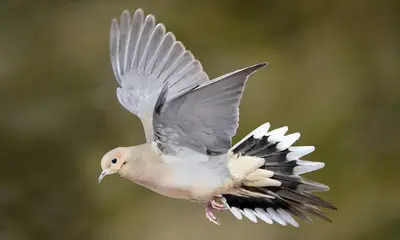
A typical Pennsylvania winter feeder draws Black-capped or Carolina Chickadees depending on location, plus Tufted Titmice, White-breasted Nuthatches, Northern Cardinals, Blue Jays, Downy, Hairy, and Red-bellied Woodpeckers, American Goldfinches, House Finches, and Mourning Doves, with Dark-eyed Juncos and White-throated Sparrows feeding on the ground. Carolina Wrens are now common through much of the state after spreading north over the last century, and Red-breasted Nuthatches and Pine Siskins show up in some winters. Spring adds Rose-breasted Grosbeaks, Baltimore Orioles, and Ruby-throated Hummingbirds, and many yards near woods get a Pileated Woodpecker at the suet from time to time.
Beyond the backyard: hawks on the ridge and geese on the lake
Hawk Mountain Sanctuary, near Kempton in Berks County, was founded in 1934 as the world’s first refuge for birds of prey, after conservationist Rosalie Edge bought the land to stop the shooting of migrating hawks there. Today its North Lookout is where many birders see their first big hawk flight. In mid-September, Broad-winged Hawks can pass by the thousands on the right day, circling up in thermals, while October and November bring Red-tailed Hawks, Golden Eagles, and accipiters. Other ridges, including Waggoner’s Gap near Carlisle, count hawks every fall too.
In late winter, Middle Creek Wildlife Management Area in Lancaster and Lebanon counties becomes a staging ground for migrating Snow Geese, with counts reaching well into the tens of thousands in some years, along with Tundra Swans and a variety of ducks. The peak is usually from late February into March, and seeing a big flock lift off the lake at once is one of the loudest natural events in the state.
A note on native plants
Oaks are the best tree a Pennsylvania birder can plant or protect. They host hundreds of caterpillar species, and those caterpillars feed the nestlings of nearly every songbird in the state, from chickadees to warblers. Serviceberry, black cherry, spicebush, flowering dogwood, and native viburnums give berries in summer and fall, and winterberry holly keeps fruit into winter for robins and bluebirds. Leaving perennials like coneflower, black-eyed Susan, and asters standing through winter gives goldfinches and juncos seed, and a brush pile or a patch of native shrubs gives sparrows and wrens cover from hawks. Removing invasive plants such as Japanese barberry and bush honeysuckle helps too.
Winter Feeding Notes
Pennsylvania winters vary a lot by region: Erie and the northern tier get heavy lake-effect snow, while Philadelphia gets milder, wetter weather. Black oil sunflower and suet are the most important foods statewide, and they cover chickadees, titmice, nuthatches, woodpeckers, and cardinals. Nyjer brings goldfinches and, in some years, Pine Siskins, and a tray of millet on the ground is a good way to attract juncos and sparrows. A heated birdbath will draw birds that never visit feeders, including robins and bluebirds. In bear country, which covers much of the state, the Game Commission recommends taking feeders down from spring until late fall, since bears will learn to raid them. In the Philadelphia suburbs, Cooper’s Hawks often hunt at feeders, so placing them near shrubs gives smaller birds a place to hide.
Ruffed Grouse
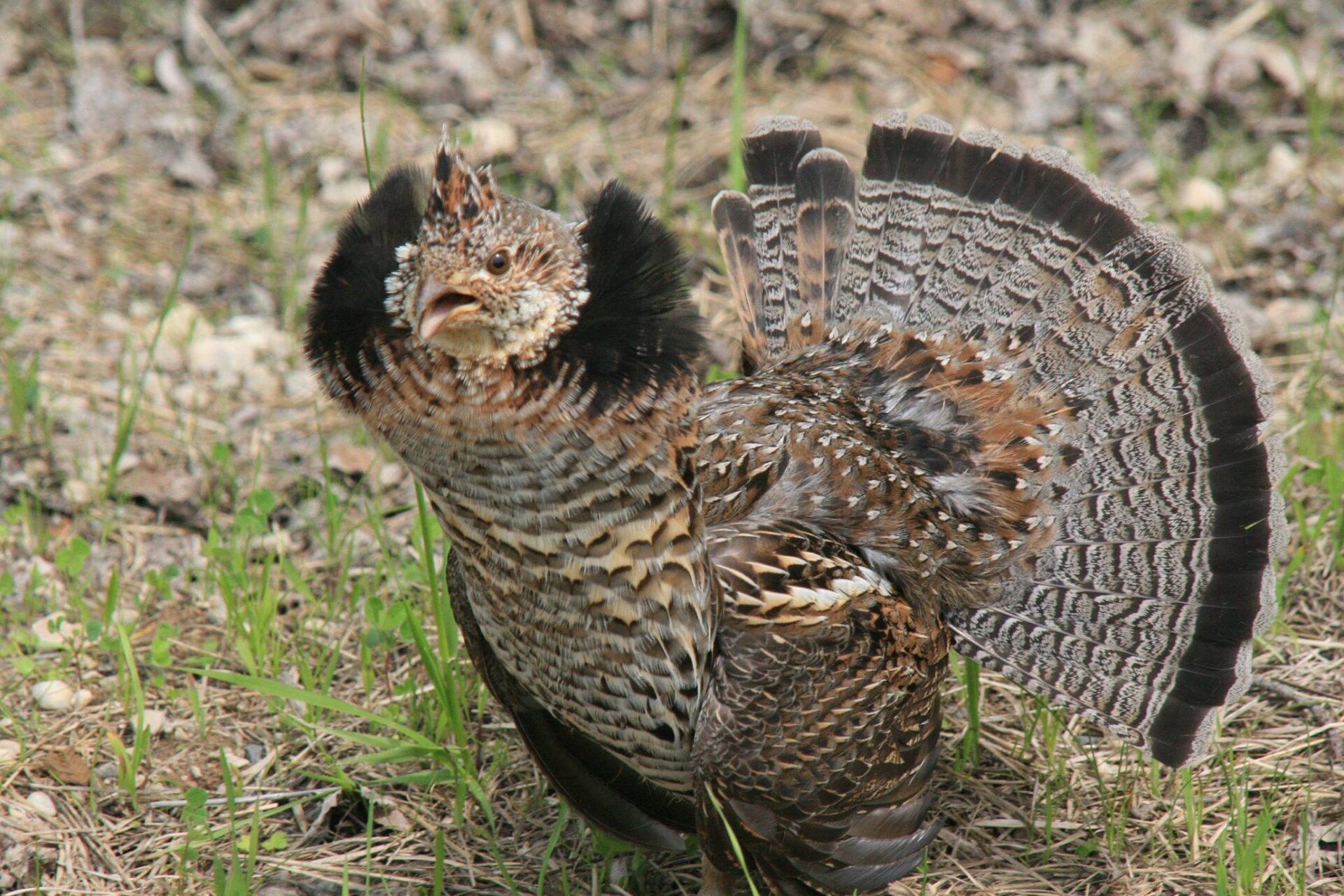
Pennsylvania’s state bird is a chicken-sized bird of the forest floor, mottled brown or gray with a fan-shaped tail crossed by a dark band near the tip, and dark “ruffs” on the sides of the neck that the male raises in display. Ruffed Grouse live in young, dense woods, often in areas that have been logged or burned within the last couple of decades, and they eat buds, leaves, berries, and insects. In winter they sometimes burrow into deep snow to stay warm overnight. They are not feeder birds, though a grouse will occasionally wander into a rural yard near the woods. The drumming males are most active in April and early May.
Black-capped Chickadee
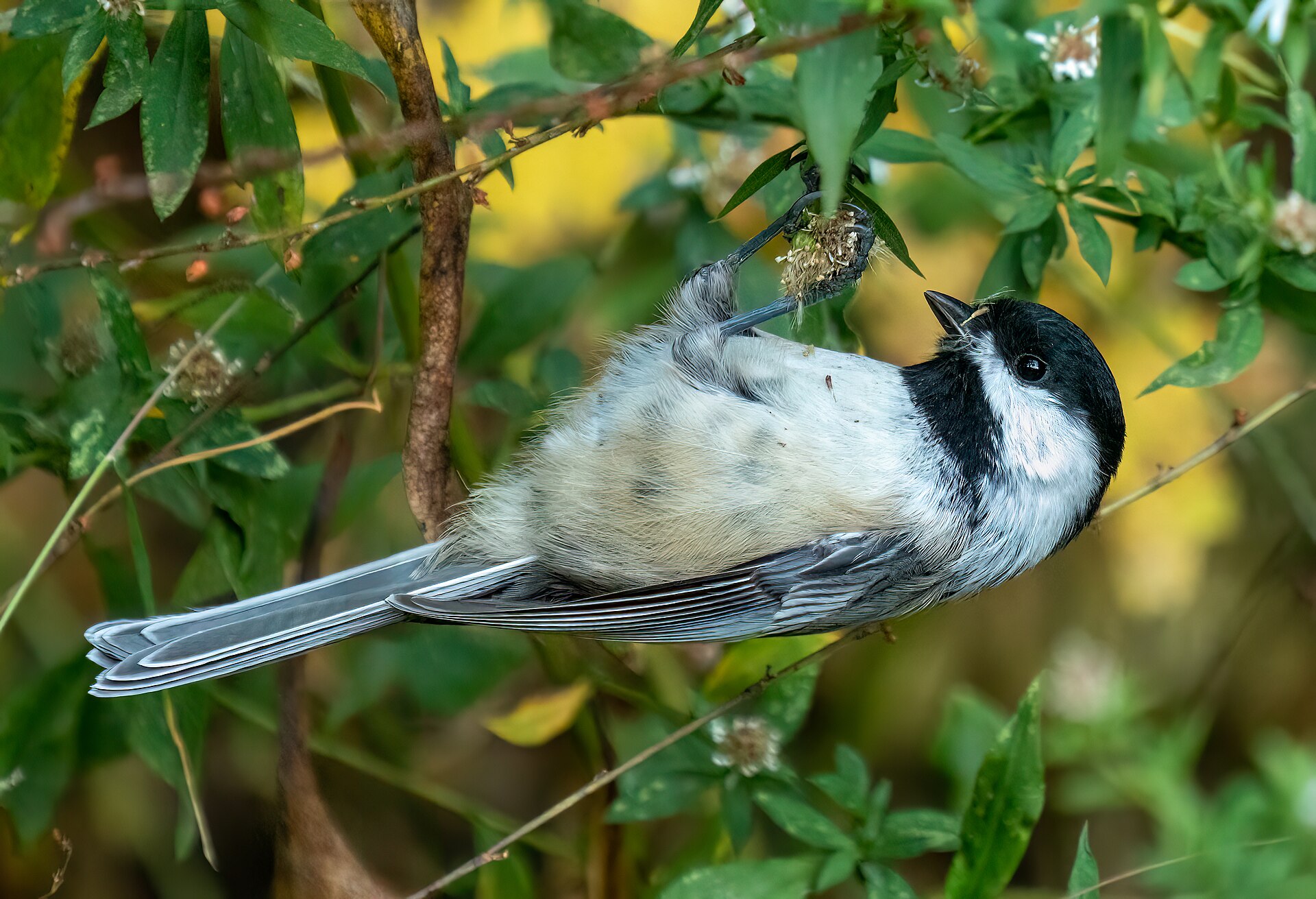
Across most of Pennsylvania, the chickadee at the feeder is the Black-capped, a tiny, round bird with a black cap and bib, white cheeks, gray back, and buffy sides. It is a year-round resident and one of the most common feeder birds in the state. In the southeast and parts of the southwest, the Carolina Chickadee takes over, and the two meet in a narrow band where they hybridize. The Black-capped’s song is a clear two-note “fee-bee,” while the Carolina sings four notes, though birds in the overlap zone sometimes sing both. Chickadees take one seed at a time and cache thousands in fall, and they respond fast to the alarm calls of other birds.
Northern Cardinal
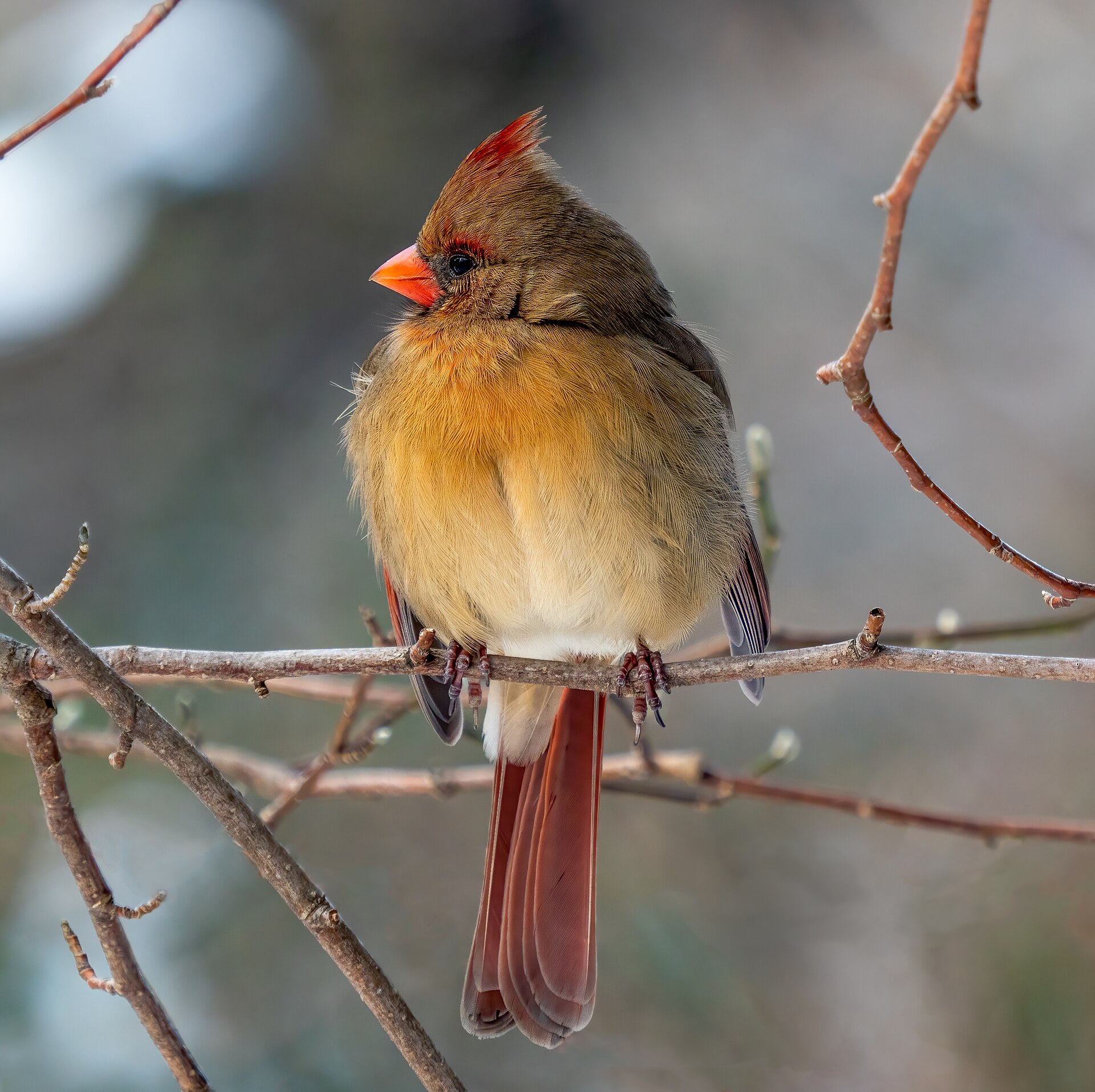
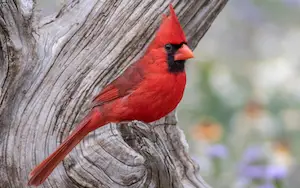
Cardinals are common across Pennsylvania today, but they were much scarcer in the northern part of the state a century ago. They spread north as forests were cleared, suburbs grew, and backyard feeding took off. The male is entirely red with a black face, and the female is soft brown with red in the wings and crest, and both have a thick orange-red bill. Cardinals prefer platform feeders or hoppers with a ledge and eat sunflower and safflower. They are usually the first birds at the feeder in the morning and the last at dusk. Males sing from treetops on mild days as early as late January, and pairs often stay together through winter.
Tufted Titmouse
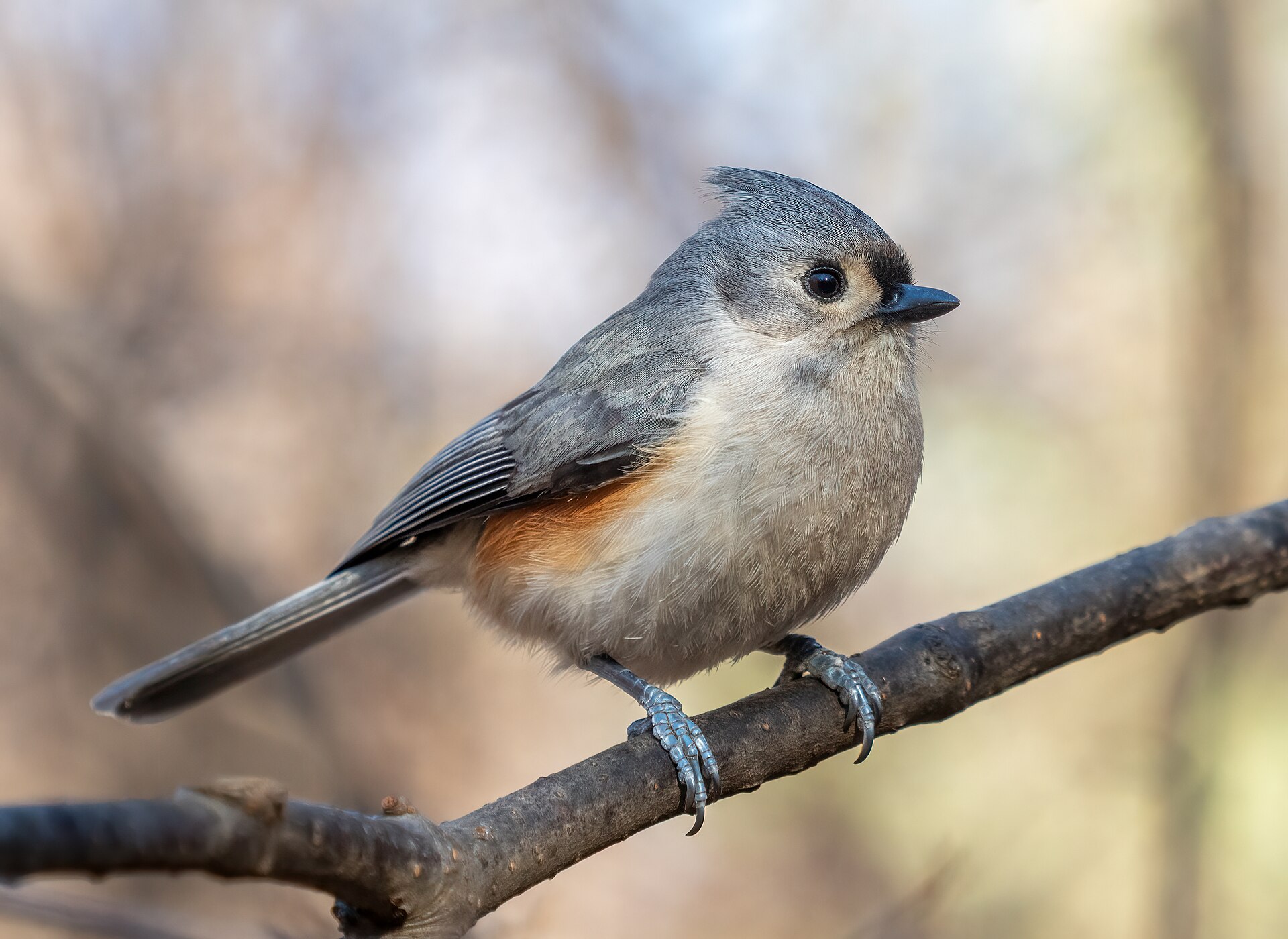
The Tufted Titmouse is a small gray bird with a pointed crest, large black eyes, and rusty flanks, and it is common throughout Pennsylvania. It is a year-round resident that often moves with chickadees in mixed winter flocks. At feeders it grabs one sunflower seed or peanut at a time and flies off to eat it or hide it in bark. The loud “peter-peter-peter” song starts in late winter and is one of the most common sounds in Pennsylvania woods in March. Titmice nest in natural cavities and old woodpecker holes and will use nest boxes. Like chickadees, they are bold around people and can be trained to take seed from a hand with patience.
White-breasted Nuthatch
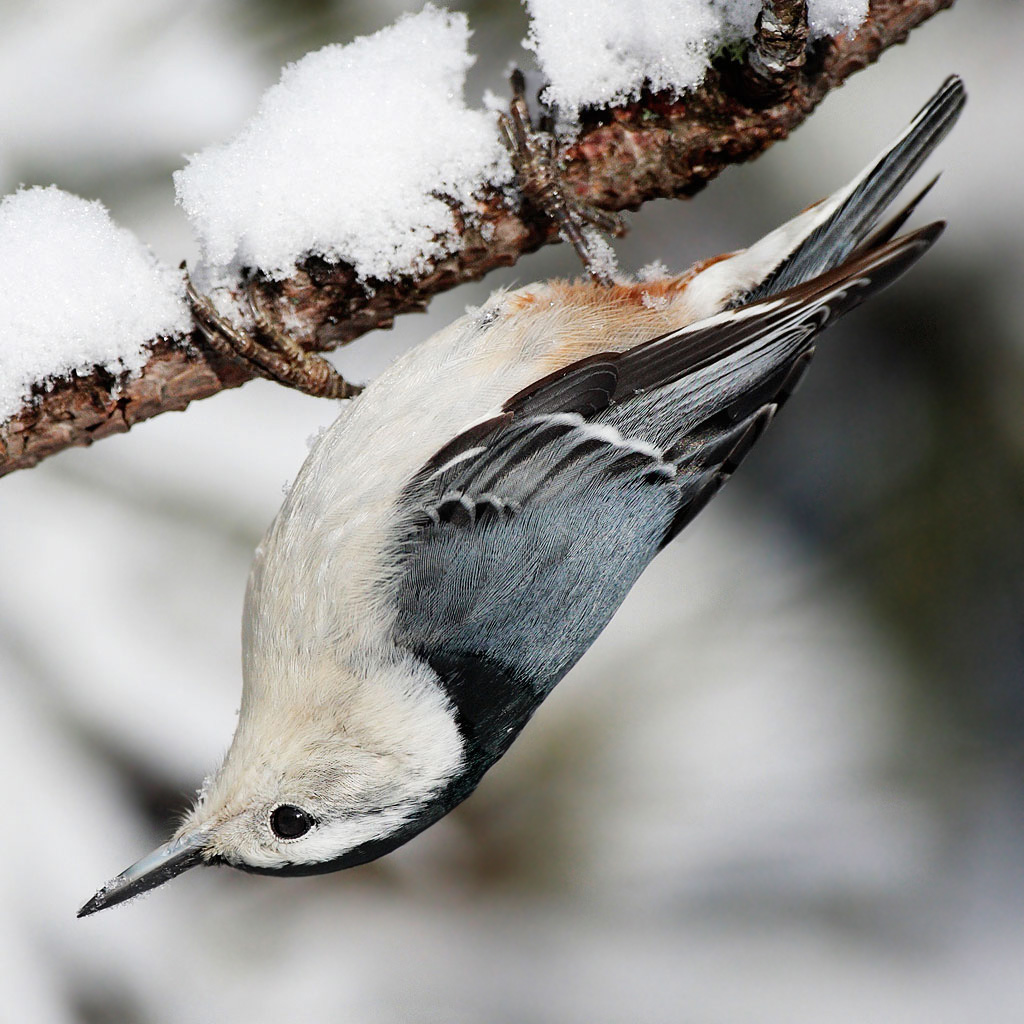
The White-breasted Nuthatch is a compact, blue-gray bird with a white face and breast, a black cap, and a short tail, and it is the bird most often seen climbing headfirst down a tree trunk. It lives in mature hardwoods across Pennsylvania and is a common feeder bird all year. Its call is a nasal “yank,” often repeated. Nuthatches are paired year-round and defend territories together, so the same two birds tend to come to a feeder daily. They take sunflower seeds, peanuts, and suet, and they will wedge seeds into bark and hammer them open. They also cache food, stashing seeds in crevices for later in the winter.
Downy Woodpecker
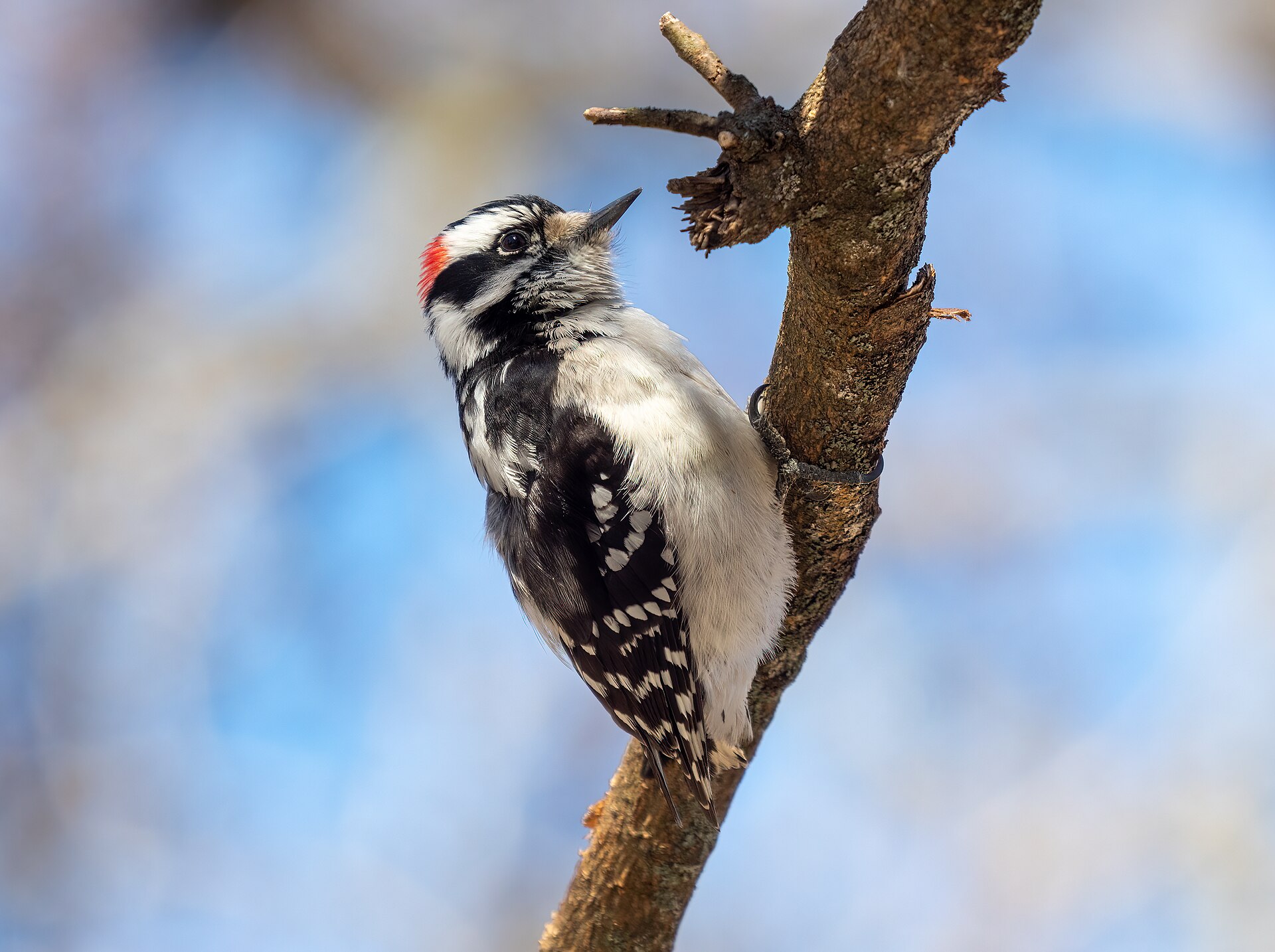
The smallest woodpecker in North America, the Downy is also one of the most familiar birds at Pennsylvania feeders. It is black and white with a white stripe down the back, and males have a small red patch on the back of the head. It looks almost identical to the Hairy Woodpecker, but it is smaller and has a much shorter bill, about a third of the length of its head. Downies eat insects from bark and weed stems, and at feeders they take suet, peanuts, and sunflower hearts. They are common in suburbs, parks, and woodlots statewide, and in spring the males drum on dead branches, gutters, and even metal signs to announce their territories.
Red-bellied Woodpecker
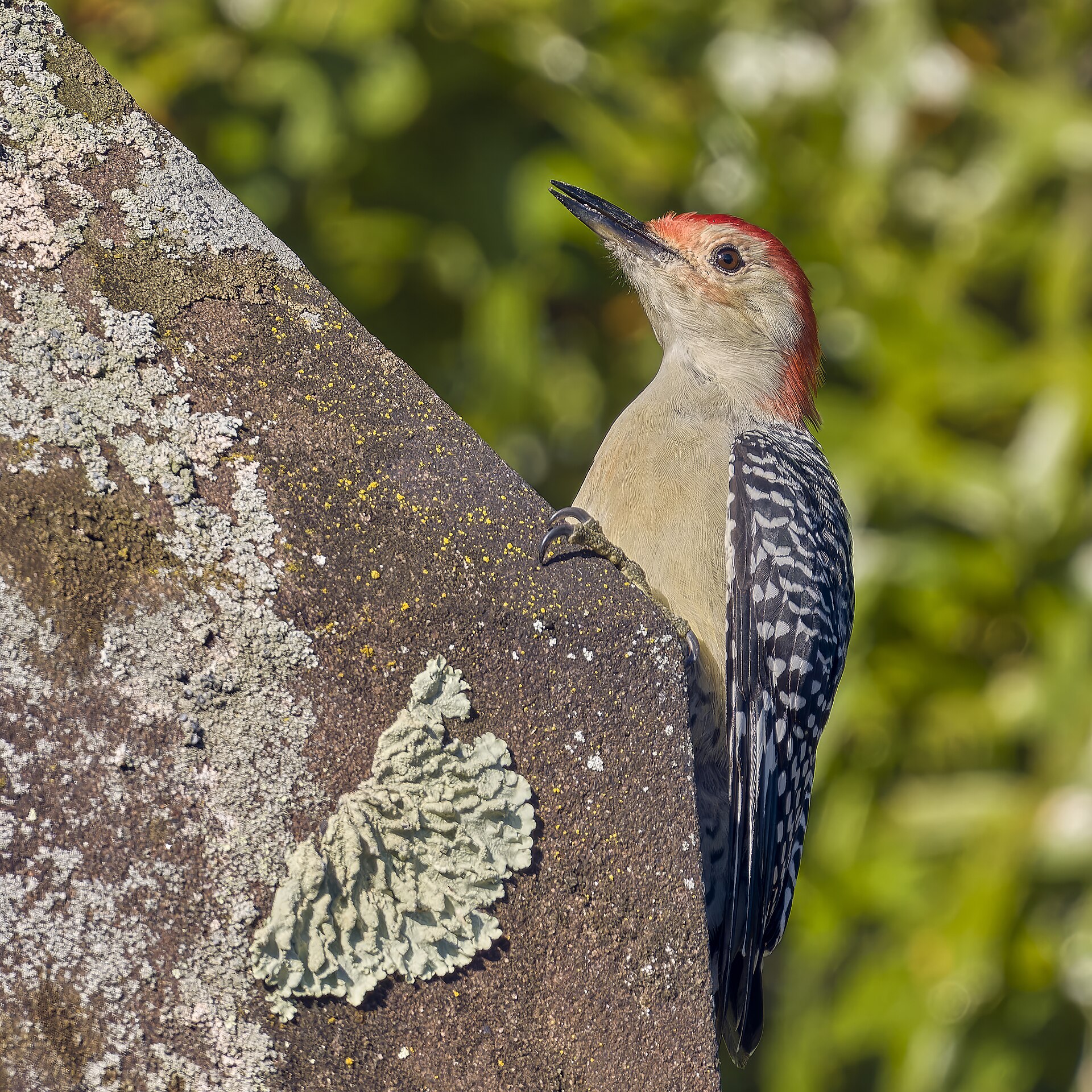
The Red-bellied Woodpecker has a bold red cap and nape, a black-and-white barred back, and a faint pinkish wash on its belly that is rarely visible. It was once mostly a southern bird, and it has spread north through Pennsylvania over the past several decades. It is now common in the south and increasingly common in the north. Red-bellieds eat insects, nuts, fruit, and seeds, and at feeders they take suet, peanuts, and sunflower. They often wedge large nuts into bark to break them open and store food in crevices. Their loud, rolling “churr” call is one of the most common sounds in Pennsylvania woodlots and suburbs.
Blue Jay
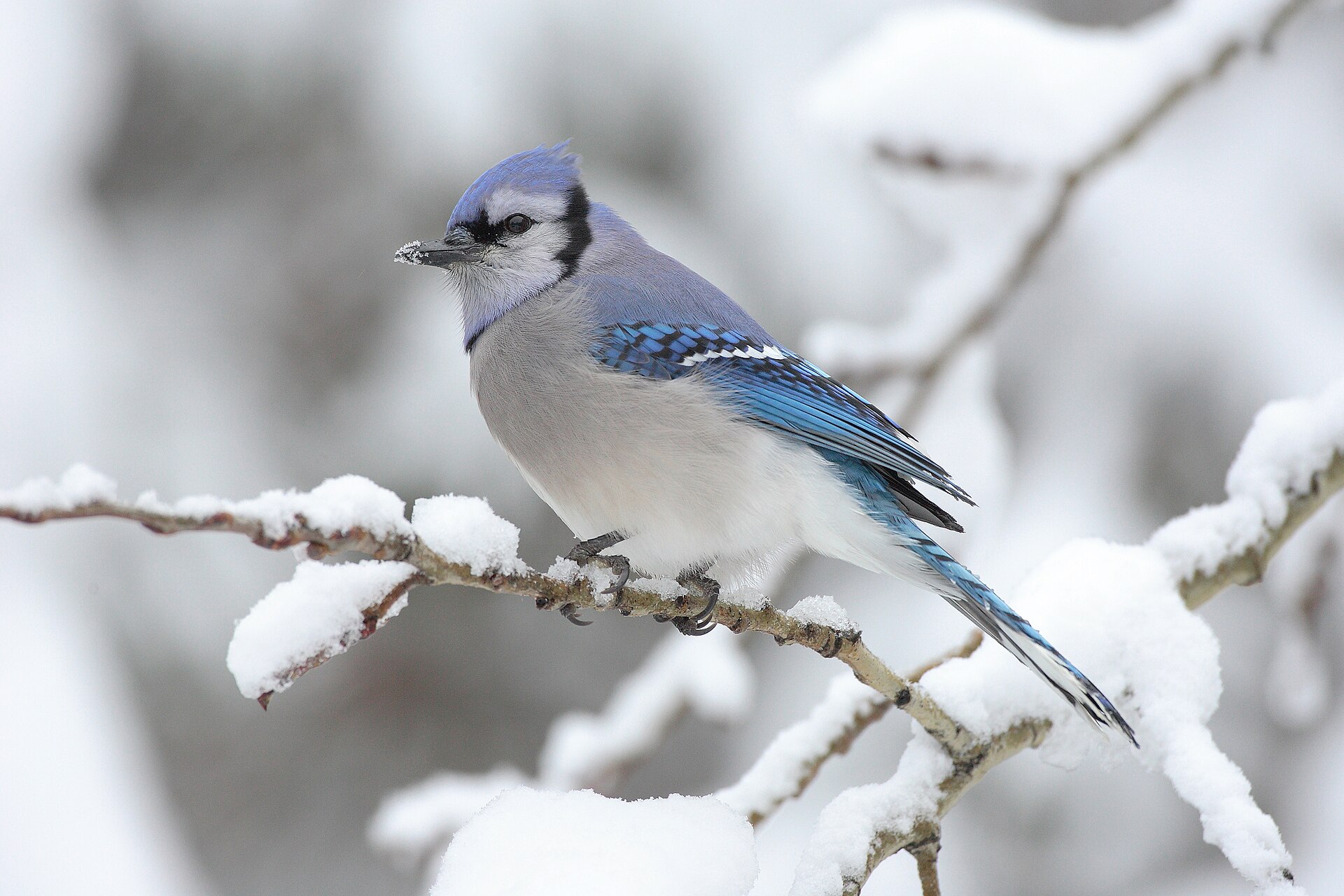
Blue Jays are big, loud, and colorful, with a blue crest, a black necklace, and white patches in the wings and tail. In Pennsylvania they are present year-round, though some migrate, and loose flocks of hundreds can be seen along the ridges in late September and early October, especially from hawk-watch sites. At feeders they favor peanuts and large sunflower seeds and often carry several at once in a throat pouch. Blue Jays bury acorns in fall, and because they do not recover all of them, they help oak forests spread. They mimic hawk calls, especially Red-shouldered and Red-tailed Hawks, and they are quick to mob predators such as owls and cats.
American Goldfinch
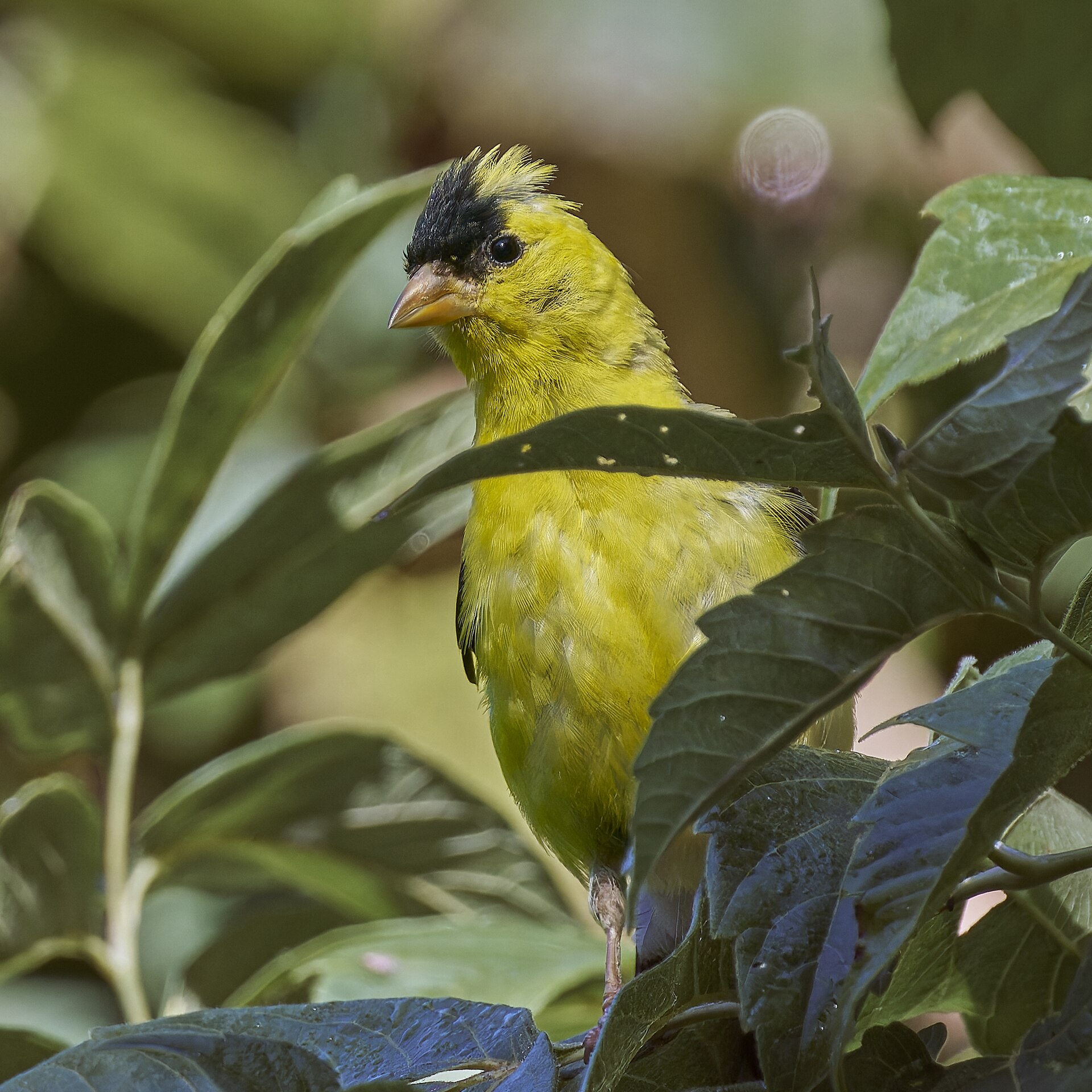
The American Goldfinch is a small finch that changes dramatically with the seasons. In summer the male is bright yellow with a black cap and black wings, and in winter he turns a dull olive-brown. Goldfinches are present in Pennsylvania all year and nest late, usually in July and August, when thistle and other plants go to seed. They line their nests with thistle down and feed their young almost only seeds. At feeders they prefer nyjer and sunflower hearts, and tube feeders with small ports work well. In flight they bounce up and down and often call “po-ta-to-chip,” which makes them easy to recognize even at a distance.
Dark-eyed Junco
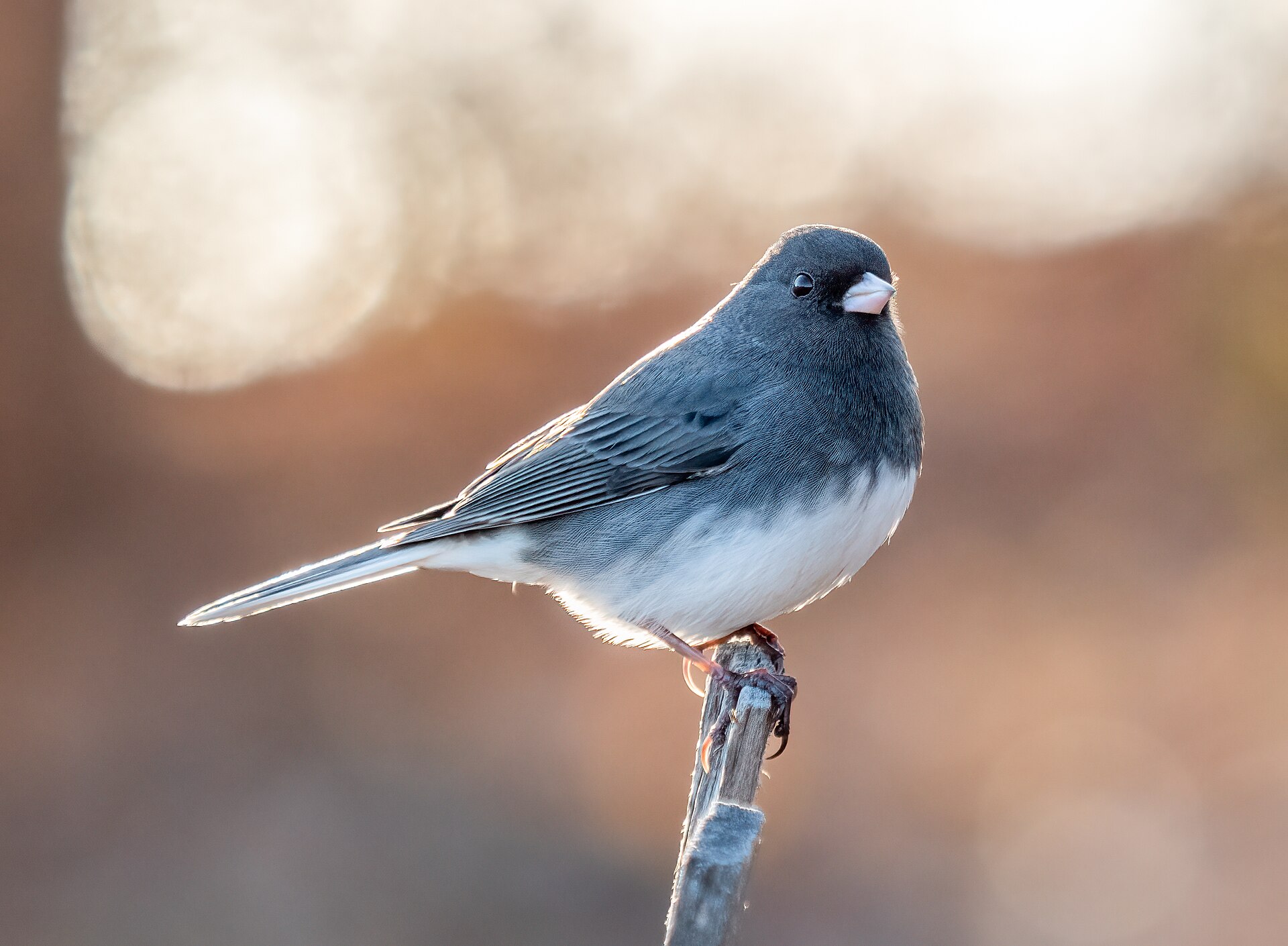
Dark-eyed Juncos are small gray sparrows with white bellies and white outer tail feathers that flash in flight. In most of Pennsylvania they are winter birds, arriving in October and leaving in April, and many people call them “snowbirds.” They also breed in the higher, cooler forests of the northern tier and the mountains. At feeders they prefer to eat on the ground, picking up millet and other small seeds that fall from above. Juncos travel in small flocks and have a clear pecking order, which often leads to short chases. Scattering seed under a shrub or near a brush pile will bring them close to the house on snowy mornings.
Carolina Wren
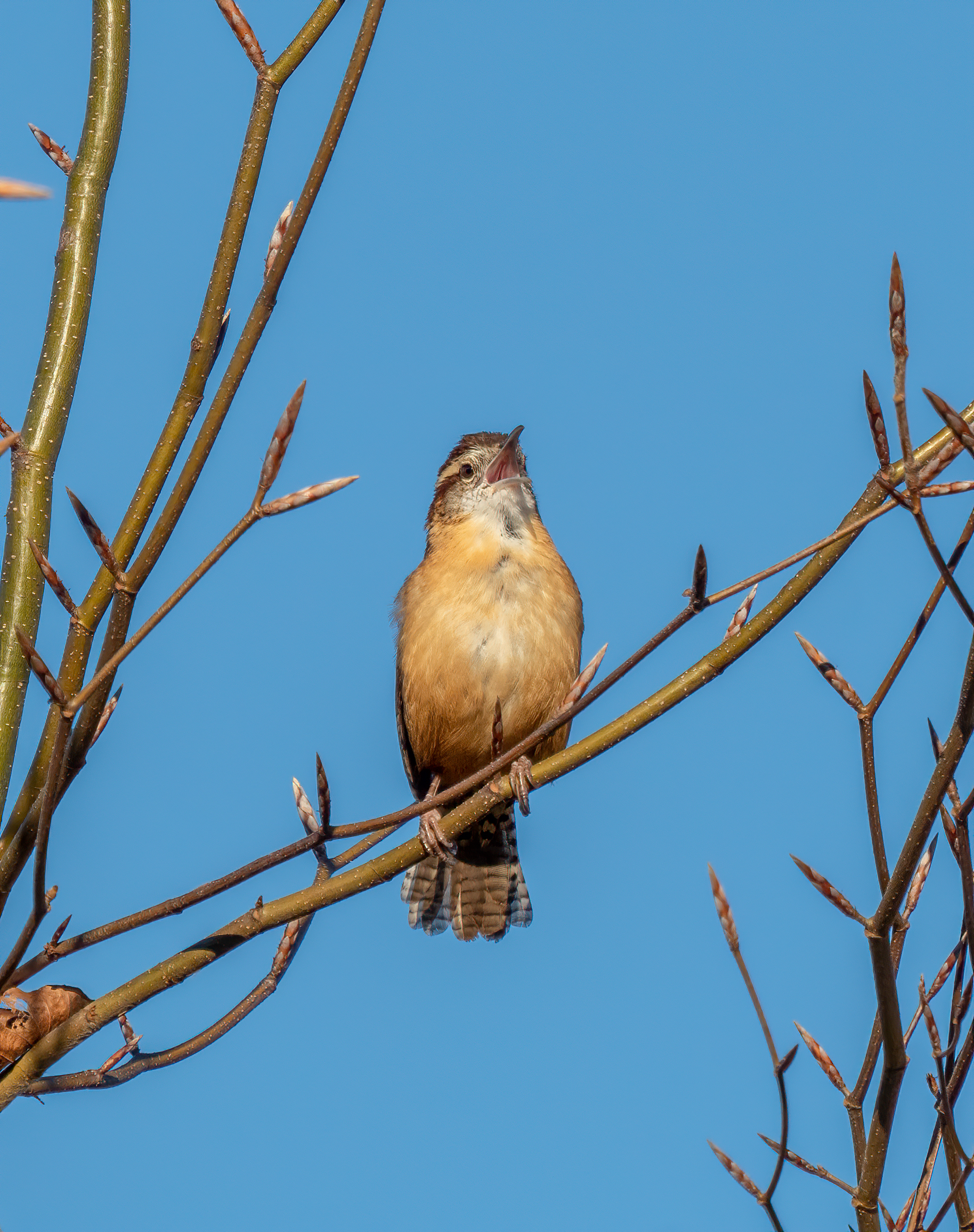
The Carolina Wren is a small, rich brown bird with a bold white eyebrow and a loud “teakettle-teakettle” song. It was once uncommon in Pennsylvania outside the south, but it has spread north over the past century, helped by milder winters and backyard feeders. Pairs stay together on territory year-round. Carolina Wrens are mostly insect eaters, but in winter they come to suet, peanut pieces, and mealworms. They nest in almost any sheltered spot, including garages, porches, hanging plants, and mailboxes. Populations can drop sharply after a hard winter with prolonged snow and ice, and then recover over a few mild years.
Ruby-throated Hummingbird
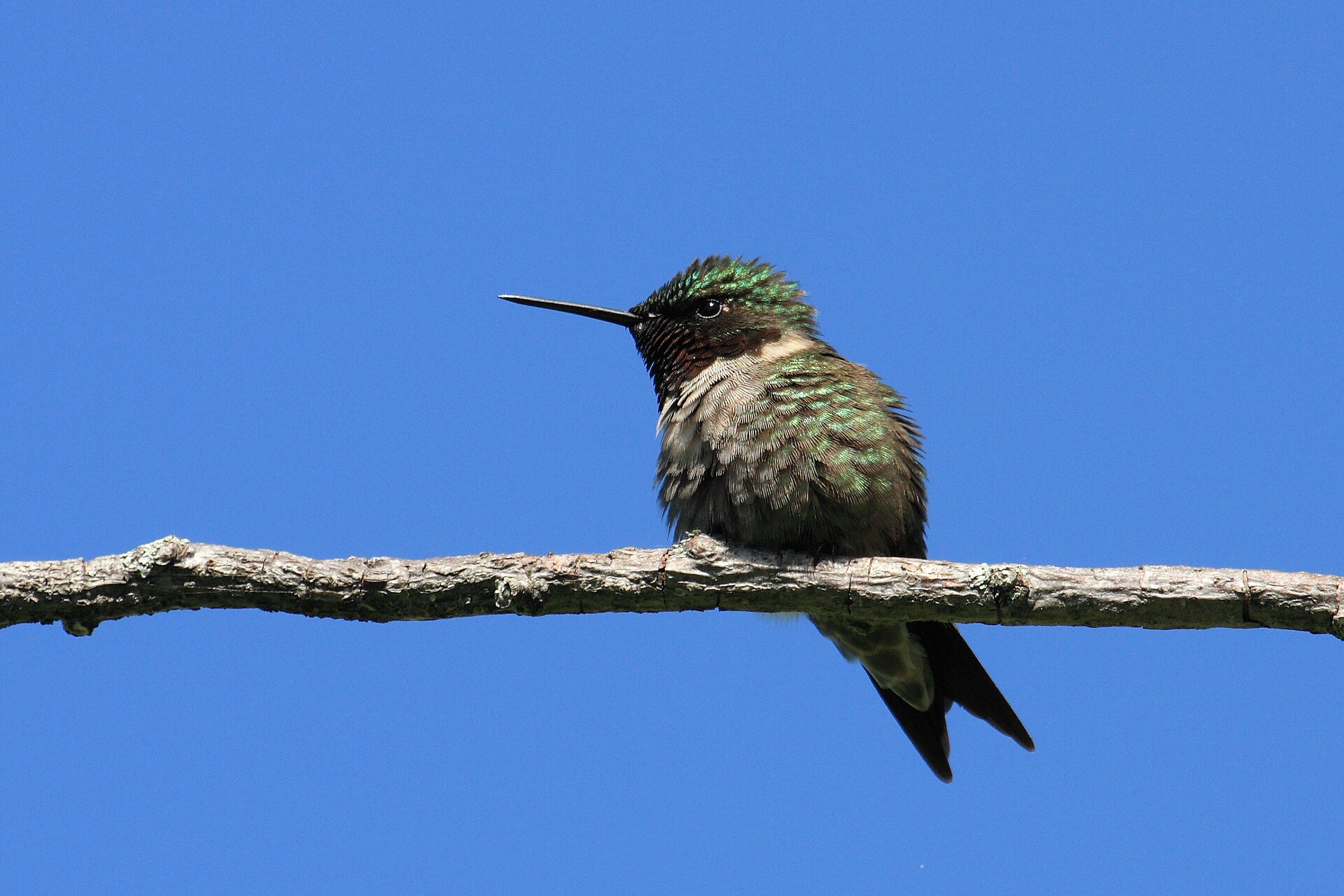
The Ruby-throated Hummingbird is the only hummingbird that regularly nests in Pennsylvania. It arrives in late April and early May and leaves by late September, with a few stragglers into October. Males have a throat that flashes ruby red in the right light, and females have white throats. Hummingbirds eat nectar and small insects, and they are drawn to red and orange tubular flowers such as bee balm, cardinal flower, trumpet honeysuckle, and jewelweed. A feeder with one part white sugar to four parts water, cleaned and refilled every few days, will bring them in. Red dye is not needed. Late August is often the busiest time.
Pileated Woodpecker
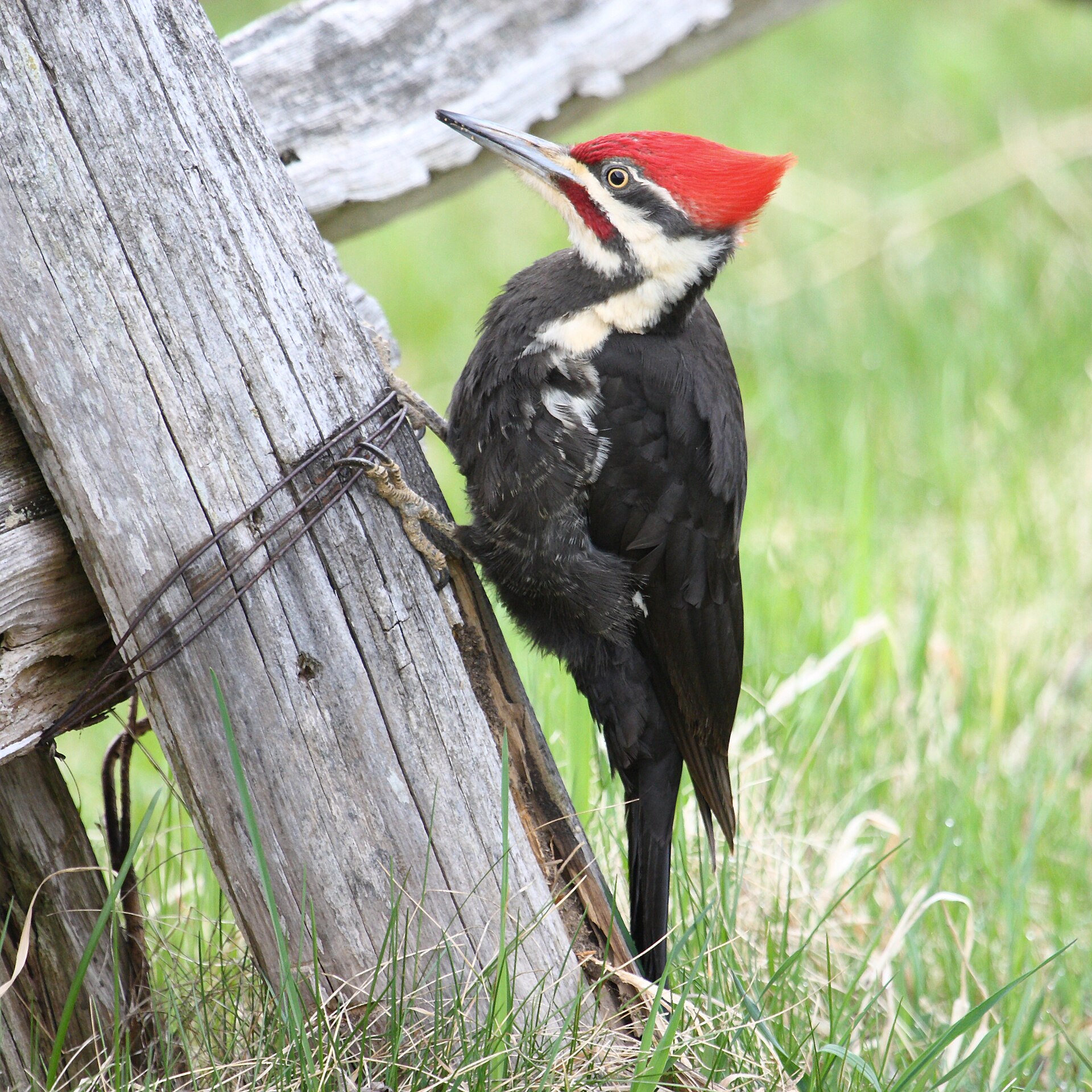
The Pileated Woodpecker is the largest woodpecker in Pennsylvania, nearly the size of a crow, with a black body, bold white stripes on the face and neck, and a bright red crest. It lives in mature forests across the state and has become more common in suburbs with big trees. Pileateds dig large, rectangular holes in dead trees and logs while searching for carpenter ants, their main food. Their loud, laughing call and heavy, slow drumming carry through the woods. They will visit suet feeders, especially in winter, and seeing one land at a feeder near the house is a highlight for many backyard birders. They also need big dead trees for nesting.
Broad-winged Hawk
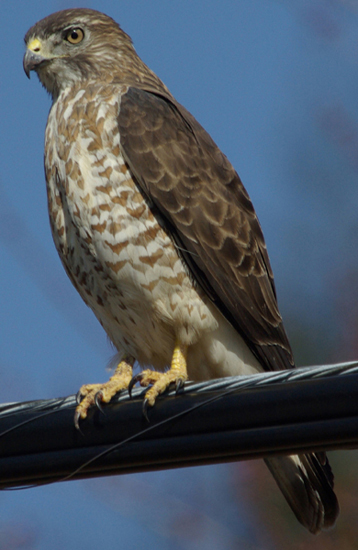
The Broad-winged Hawk is a small, stocky hawk with broad, white underwings edged in black and a tail with wide black-and-white bands. It nests in forests across Pennsylvania but is secretive in summer, and most people notice it only in September, when it migrates in huge numbers along the Appalachian ridges. On the best days at Hawk Mountain, thousands of Broad-wings pass in a few hours, circling together in thermals called “kettles” before gliding south. They spend the winter in Central and South America. The high, thin whistle of a Broad-winged Hawk is a common sound in Pennsylvania forests in May and June.
Getting Started
A basic Pennsylvania feeder setup starts with a tube or hopper feeder filled with black oil sunflower, a suet cage, and a nyjer feeder for goldfinches. Scatter some millet on the ground or on a low platform for juncos and sparrows, and add mealworms if wrens and bluebirds are nearby. A hummingbird feeder from late April through September and a few orange halves in May will draw summer birds. Put feeders near shrubs or trees so birds have cover, or within a few feet of a window to reduce collisions. In bear country, bring feeders in from April through November, and clean them every couple of weeks to prevent disease.
Beyond the yard, a Pennsylvania birding calendar almost writes itself: Snow Geese at Middle Creek in late February and March, warblers at Presque Isle and in the state forests in May, grouse drumming in the northern woods in April, and hawks along the ridges from late August through November. For most people, though, the real start is a chickadee at the feeder and the question of which kind it is.
Sources
Species identification, range, and behavior details are cross-checked against the Cornell Lab of Ornithology’s All About Birds, the National Audubon Society, eBird’s Pennsylvania regional data, and the Pennsylvania Game Commission.