Birds of Hawaii: A Complete Field Guide to the Birds of Maui
Maui supports a striking split between two worlds of birdlife: a small group of surviving native forest birds that cling to the high, lush rainforests of Haleakalā, and a large cast of introduced species that fill the lowland towns, resorts, and beach parks. Across the wider Hawaiian archipelago, roughly 338 bird species have been recorded, according to the Bishop Museum’s reference work on the birds of the islands, and the island of Maui holds a distinctive share of them, including endemic birds and several honeycreepers found nowhere else on Earth.
That contrast is the heart of the Maui birding experience, and it rewards bird lovers of every level. The crimson ʻiʻiwi sipping nectar at 2,000 meters and the calm zebra dove walking between restaurant tables at sea level tell the same island story from opposite ends of an elevation gradient, a story shaped like nowhere else among the main Hawaiian Islands. This guide orients you to what you are likely to see, where, and when, then points you toward deeper guides for owls, honeycreepers, waterbirds, and more.
Key Takeaways
- Hawaii’s official state bird is the nēnē, or Hawaiian goose (Branta sandvicensis), the rarest goose in the world and best seen on Maui inside Haleakalā National Park.
- Roughly 338 bird species have been recorded across the Hawaiian Islands, per the Bishop Museum monograph (2017), and Maui hosts a distinctive subset spanning native forest birds, endangered waterbirds, migrants, and many introduced species.
- Maui’s surviving native forest birds, including the ʻiʻiwi and Kiwikiu (Maui parrotbill), are now largely restricted to high-elevation forest above the range of disease-carrying mosquitoes.
- The single best place to see native forest birds on Maui is Hosmer Grove in Haleakalā National Park, while Keālia Pond National Wildlife Refuge is the top spot for endangered waterbirds.
- The most common birds in Maui’s lowland towns are introduced species, especially the common myna, zebra dove, and the two cardinals.
Maui Birds at a Glance
The table below lists the species profiled in this guide along with several additional birds you may encounter. Native and endemic Hawaiian birds should never be fed; for those species the final column notes their natural forage rather than feeder food.
| Species | Scientific name | Size | When present | Where to find | Diet and feeder note |
|---|---|---|---|---|---|
| Nēnē (Hawaiian Goose) | Branta sandvicensis | Medium goose | Year-round | Haleakalā NP, upcountry | Grasses and berries; never feed |
| ʻIʻiwi | Drepanis coccinea | Small honeycreeper | Year-round | High forest, Hosmer Grove | ʻŌhiʻa nectar; never feed |
| ʻApapane | Himatione sanguinea | Small honeycreeper | Year-round | High forest, Hosmer Grove | ʻŌhiʻa nectar; never feed |
| Hawaiʻi ʻAmakihi | Chlorodrepanis virens | Small honeycreeper | Year-round | Forest, mid to high elevation | Nectar and insects; never feed |
| Maui ʻAlauahio | Paroreomyza montana | Small honeycreeper | Year-round | Hosmer Grove, Waikamoi | Insects; never feed |
| Kiwikiu (Maui Parrotbill) | Pseudonestor xanthophrys | Small, stocky | Year-round | East Maui wet forest (rare) | Insect larvae; never feed |
| ʻĀkohekohe (Crested Honeycreeper) | Palmeria dolei | Larger honeycreeper | Year-round | East Maui high forest (rare) | ʻŌhiʻa nectar; never feed |
| Pueo (Hawaiian Short-eared Owl) | Asio flammeus sandwichensis | Medium owl | Year-round | Open upcountry, Haleakalā | Rodents and birds; never feed |
| Aeʻo (Hawaiian Stilt) | Himantopus mexicanus knudseni | Slender wader | Year-round | Keālia Pond, Kanahā Pond | Aquatic invertebrates; never feed |
| ʻAlae keʻokeʻo (Hawaiian Coot) | Fulica alai | Medium waterbird | Year-round | Keālia Pond, Kanahā Pond | Aquatic plants; never feed |
| ʻAukuʻu (Black-crowned Night-Heron) | Nycticorax nycticorax hoactli | Stocky heron | Year-round | Wetlands, ponds, shorelines | Fish and chicks; never feed |
| Kōlea (Pacific Golden-Plover) | Pluvialis fulva | Medium shorebird | Fall through spring | Lawns, fields, shorelines | Invertebrates; never feed |
| Zebra Dove | Geopelia striata | Small dove | Year-round | Towns, parks, resorts | Seeds; ground feeder |
| Spotted Dove | Spilopelia chinensis | Medium dove | Year-round | Towns, gardens, roadsides | Seeds; ground feeder |
| Northern Cardinal | Cardinalis cardinalis | Small songbird | Year-round | Gardens, parks, tree cover | Seeds; platform and hopper |
| Red-crested Cardinal | Paroaria coronata | Small songbird | Year-round | Lawns, resorts, beach parks | Seeds and insects; ground |
| Common Myna | Acridotheres tristis | Medium songbird | Year-round | Towns, parking lots, fields | Omnivore; scavenges |
| Warbling White-eye | Zosterops japonicus | Tiny songbird | Year-round | Gardens, parks, forest edge | Nectar and insects; flowers |
| Java Sparrow | Lonchura oryzivora | Small finch | Year-round | Lawns, feeders, towns | Seeds; ground and feeders |
| Cattle Egret | Bubulcus ibis | Medium egret | Year-round | Pastures, wetlands, fields | Insects; not desirable to attract |
| Saffron Finch | Sicalis flaveola | Small finch | Year-round | Resort lawns, grassy parks | Seeds; ground feeder |
| Rose-ringed Parakeet | Psittacula krameri | Medium parakeet | Year-round | Lowland Maui, locally | Fruit and seeds; crop pest |
| Hawaiian Petrel (ʻuaʻu) | Pterodroma sandwichensis | Seabird | Breeding season | Burrows high on Haleakalā | Squid and fish at sea; never feed |
Why Maui Holds the Birdlife It Does
Maui’s avifauna is shaped by two forces above all others: extreme isolation and dramatic elevation. The Hawaiian Islands are among the most remote land masses on the planet, and the birds that reached them naturally arrived across thousands of kilometers of open ocean. From a small number of colonists, evolution produced an extraordinary outcome. Hawaii’s honeycreepers are frequently cited as one of the most spectacular examples of adaptive radiation in birds, with more than 50 species evolving from a single finch-like ancestor into nectar sippers, seed crackers, and bark probers, as the Maui Forest Bird Recovery Project describes. Fossil evidence shows the islands once held even greater diversity, much of which was lost after the arrival of humans and the mammals and diseases that came with them.
Unlike a mainland state, Maui does not sit along a continental flyway. Instead it functions as an oasis in the Central Pacific. Long-distance migrants such as the Pacific golden-plover travel between Alaskan and Siberian breeding grounds and Pacific wintering sites, and a rotating cast of ducks and shorebirds from North America and Asia stop at Maui’s wetlands during the cooler months, as the U.S. Fish and Wildlife Service notes for Keālia Pond.
Elevation does the rest. Maui rises from sea level to the 3,055 meter (10,023 foot) summit of Haleakalā, stacking habitat zones one above the other: coastal wetlands and dunes, dry lowland scrub, ranchland and gardens upcountry, and cool, wet native forests near the top. That vertical sweep is also a refuge line. Non-native mosquitoes that carry avian malaria and avian pox cannot reproduce well in cold air, so Hawaii’s disease-vulnerable native forest birds have survived mainly in intact native forests at higher elevations, while the lower elevations belong largely to introduced species. These forest ecosystems, and the elevation map that organizes them, are the key to understanding where Maui’s birds live today.
The State Bird: The Nēnē
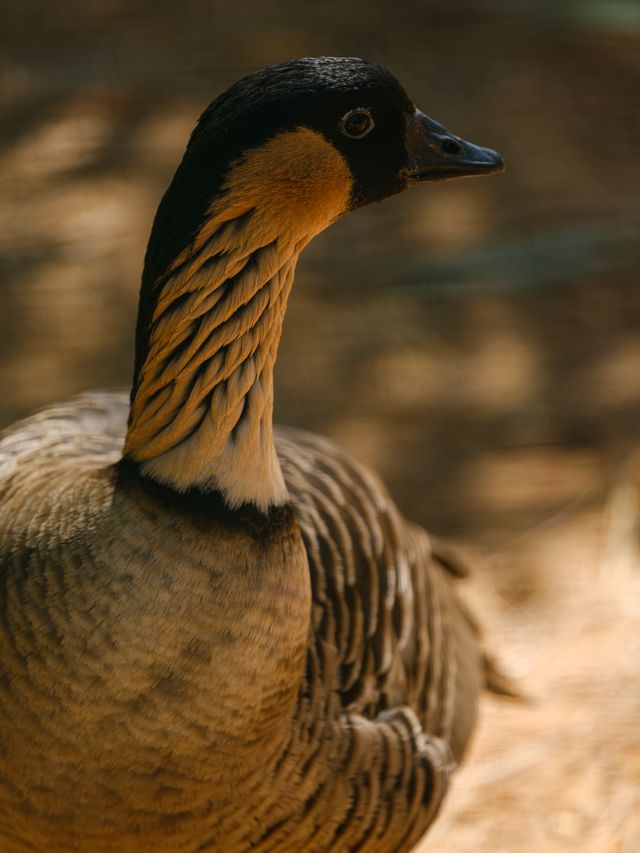
Hawaii’s state bird is the nēnē, or Hawaiian goose (Branta sandvicensis), a medium-sized goose found only in the Hawaiian Islands and recognized as the rarest goose in the world. The Hawaii Territorial Legislature designated it the official state bird of Hawaii in 1957, and Maui is one of the best islands to see it, particularly within Haleakalā National Park.
The nēnē descended from the Canada goose (Branta canadensis) and adapted to life far from water, with longer legs and reduced webbing between the toes that help it walk across rough lava, as the Hawaii Division of Forestry and Wildlife describes. Adults are mostly dark brown and sepia with a black face and crown, buff cheeks, and a pale, deeply furrowed neck.
The species is a landmark conservation story. By the 1950s, hunting, habitat loss, and introduced predators had reduced the nēnē to roughly 30 wild birds, according to Cornell Lab of Ornithology. A long captive-breeding and reintroduction effort, begun in Hawaii and at the Wildfowl Trust in Slimbridge, England, pulled the species back from the brink. A 2022 statewide survey estimated about 3,862 nēnē, per Pacific Rim Conservation, and the U.S. Fish and Wildlife Service reclassified the bird from endangered to threatened in 2019, a change that took effect in January 2020. On Maui, nēnē graze near the Haleakalā park entrance, along the summit road, and around the crater rim, and they should never be fed human or pet food.
Native Forest Birds
Maui’s native forest birds are the island’s avian crown jewels, and most are now confined to high-elevation rainforest on the windward slopes of Haleakalā. The accessible introduction to this world is Hosmer Grove, where ʻiʻiwi, ʻapapane, Hawaiʻi ʻamakihi, and Maui ʻalauahio can often be found among flowering native trees. The two rarest species, the Kiwikiu and the ʻĀkohekohe, survive deeper in protected forest and are very seldom seen. For a full treatment of the honeycreeper family and the threats they face, see our dedicated Maui forest bird guide.
ʻIʻiwi (Drepanis coccinea)
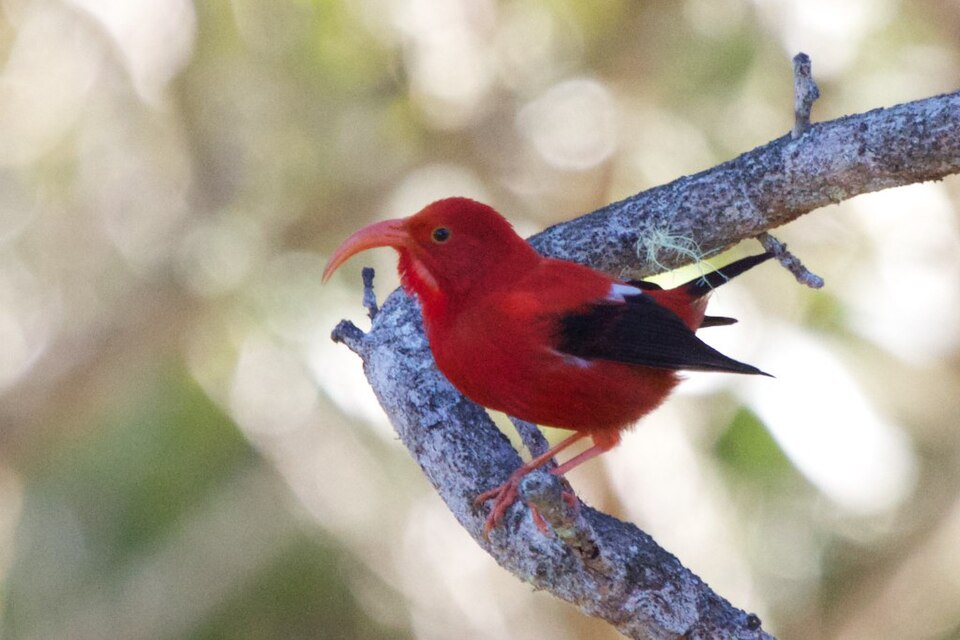
The ʻiʻiwi is perhaps the most iconic of the surviving Hawaiian honeycreepers, a brilliant vermilion bird with black wings and tail and a long, deeply curved salmon-pink bill built for probing tubular flowers. It measures roughly 15 centimeters (6 inches). The curved bill and scarlet plumage are diagnostic, and juveniles are mottled green and orange.
ʻIʻiwi move noisily through the canopy of mountain forests, often traveling long distances in search of blooming ʻōhiʻa (Metrosideros polymorpha), which they pollinate, and supplementing flower nectar with small insects, as the Hawaii Division of Forestry and Wildlife notes. The species is now largely restricted to forest above the range of malaria-carrying mosquitoes and is highly vulnerable to that disease, with research indicating a single infective bite is frequently fatal. On Maui, Hosmer Grove and the Waikamoi area offer the best chances. The voice is a complex run of gurgles, creaks, and reedy notes, sometimes likened to a rusty hinge. The ʻiʻiwi also holds a treasured place in Hawaiian culture: Native Hawaiians prized its scarlet feathers for the capes and helmets of Hawaiian royalty, and the bird remains a powerful emblem of the islands.
ʻApapane (Himatione sanguinea)
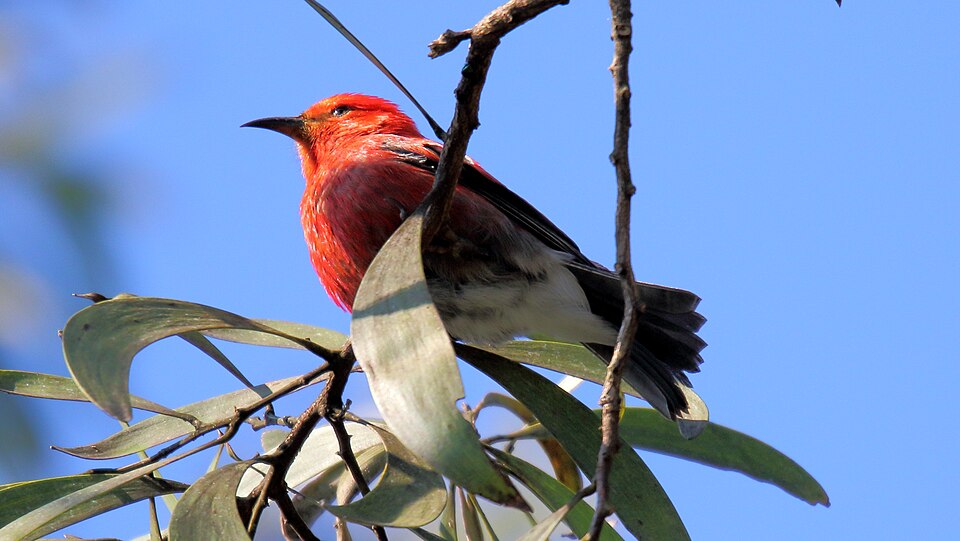
The ʻapapane is the most abundant and widespread native Hawaiian forest bird and the honeycreeper visitors are most likely to encounter on Maui. It is a small, bright crimson bird measuring about 13 centimeters (5.1 inches) and weighing 14 to 16 grams (0.5 to 0.56 ounces), with black wings and tail and distinctive white feathers under the tail and on the lower belly, according to published descriptions of the species.
ʻApapane forage actively in the canopy of flowering ʻōhiʻa, drinking flower nectar and serving as important pollinators, and they are among the most vocal forest birds, singing frequently and even in flight. Young birds are a duller yellow-brown and molt into full crimson over about two years. Adults often perch in a tail-up posture that flashes their white undertail. Along with the Hawaiʻi ʻamakihi, the ʻapapane is one of only two native Maui forest birds currently considered of least concern, as the Hawaii Division of Forestry and Wildlife reports, making it a genuine conservation bright spot. Look and listen for flocks wherever ʻōhiʻa is in bloom at Hosmer Grove and along upper-elevation trails.
Hawaiʻi ʻAmakihi (Chlorodrepanis virens)

The Hawaiʻi ʻamakihi is a small, active, olive-green to yellow-green honeycreeper roughly 11 centimeters (4.3 inches) long, with a short, slightly down-curved bill. The Maui population is one of several island forms. Among native forest birds it is unusually adaptable, taking nectar, small insects, and fruit, and this generalist diet has helped it persist where more specialized species have declined.
Crucially, the ʻamakihi is one of the few native forest birds showing signs of tolerance to avian malaria, and it can be found at lower elevations than most honeycreepers, alongside the ʻapapane as a species of least concern per the Hawaii Division of Forestry and Wildlife. That resilience makes it a species of real scientific interest. On Maui it is reliable at Hosmer Grove and in mid to high-elevation native forest, where its olive green plumage stands out against the foliage and its trilled song carries through the trees.
Maui ʻAlauahio (Paroreomyza montana)
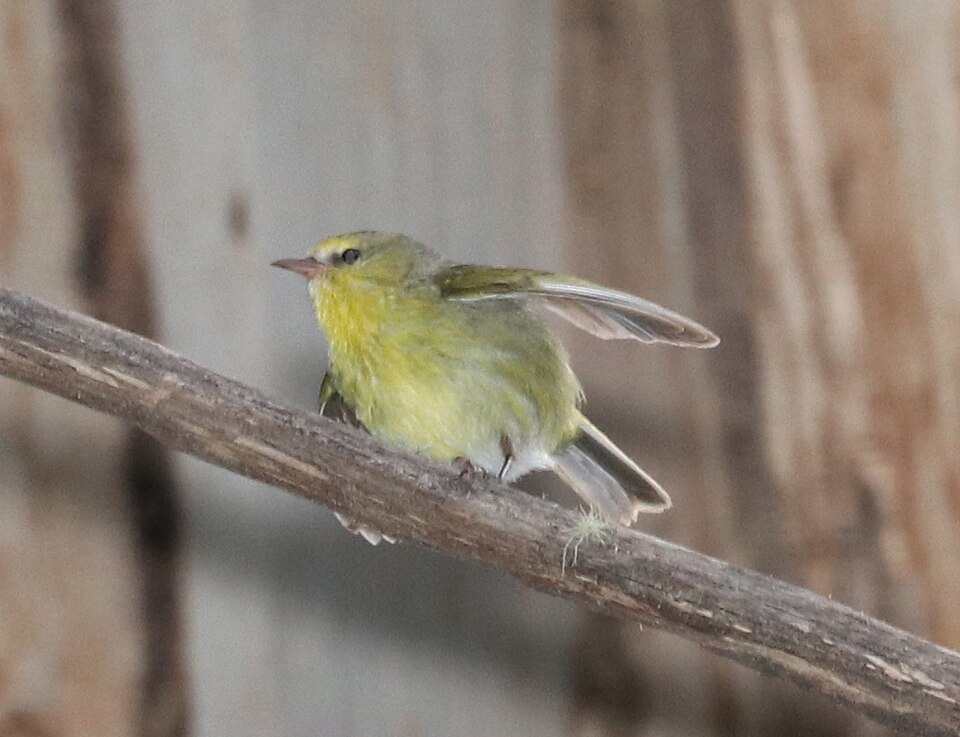
The Maui ʻalauahio, also called the Maui creeper, is a small, warbler-like honeycreeper endemic to Maui, roughly 11 centimeters (4.3 inches) long, with greenish-yellow plumage. As its English name suggests, it creeps along trunks and branches probing bark and foliage in search of insects, often in small family groups.
This species is assessed as Endangered on the IUCN Red List, in a 2016 evaluation, owing to its very small and contracting range, although it is not listed under the U.S. Endangered Species Act and remains locally common within its limited east Maui range. It persists in the same high-elevation forests that shelter the island’s other natives. It is, however, one of the more findable Maui endemics for patient birders, and it can be located at Hosmer Grove with some effort and within The Nature Conservancy’s Waikamoi Preserve. Its presence in mixed foraging flocks alongside ʻiʻiwi and ʻapapane makes upper Haleakalā the single richest place to appreciate Maui’s native birdlife. For more on the island’s endemics and their conservation, see our deeper forest bird guide.
Kiwikiu, or Maui Parrotbill (Pseudonestor xanthophrys)

The Kiwikiu, or Maui parrotbill, is one of the most endangered birds in the United States, a stocky honeycreeper endemic to Maui with a short tail and a heavy, parrot-like bill. It measures about 14 centimeters (5.5 inches) and weighs 20 to 25 grams (0.71 to 0.88 ounces), and is olive-green above and yellow below with a bright yellow eyebrow stripe, as the Maui Forest Bird Recovery Project describes.
The stocky Kiwikiu uses its powerful bill to split branches and pry open bark in search of insects, chiefly beetle and moth larvae. Fewer than 200 individuals are thought to remain, restricted to a small area of high-elevation wet forest on the windward slopes of Haleakalā within the Hanawī Natural Area Reserve, the national park, and Waikamoi Preserve. The original Hawaiian name was lost, and the Hawaiian Lexicon Committee created the name Kiwikiu in 2010, combining a reference to its curved beak with its secretive nature, as the National Park Service recounts. The bird is essentially never seen by casual visitors.
ʻĀkohekohe, or Crested Honeycreeper (Palmeria dolei)
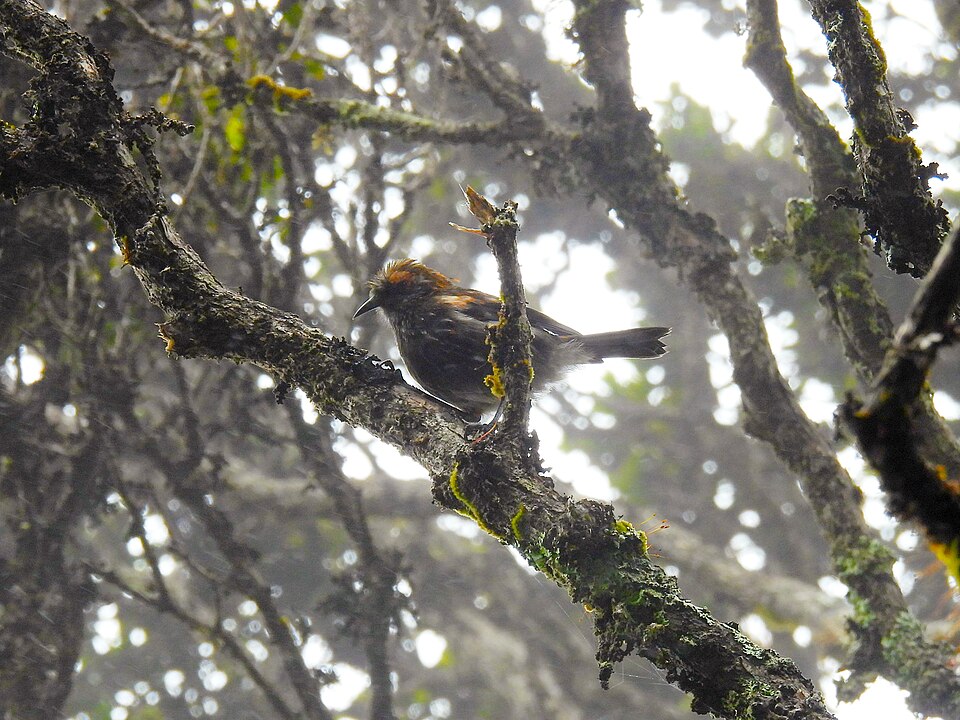
The ʻĀkohekohe, or crested honeycreeper, is one of the largest surviving honeycreepers and is endemic to Maui. It is a striking dark bird flecked with orange and gray, with a distinctive tuft of pale feathers above the bill that gives the species its English name. It measures roughly 18 centimeters (7 inches).
This endangered bird is aggressive at flowering ʻōhiʻa, defending nectar sources against other honeycreepers, and it plays an important role as a pollinator of native trees. Fewer than 2,000 individuals are thought to remain, confined to wet forest high on the windward side of Haleakalā, according to the National Park Service. Like the Kiwikiu, it is exceedingly rare and should not be expected even at Hosmer Grove. Its survival, alongside that of the Kiwikiu, is the central focus of forest bird recovery on Maui and the reason for the urgent mosquito-control work now underway in its range.
Birds of Prey
Maui has fewer raptors than a typical mainland location, and the island’s signature bird of prey is in fact an owl. The Hawaiian hawk, or ʻio, is endemic to the Big Island and is not part of Maui’s resident avifauna, so visitors hoping for a daytime raptor on Maui are most likely seeing the pueo.
Pueo (Hawaiian Short-eared Owl) (Asio flammeus sandwichensis)
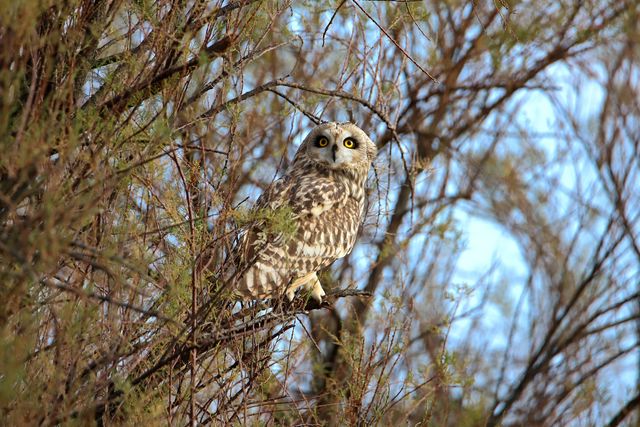
The pueo is the endemic Hawaiian subspecies of the short-eared owl, a medium-sized, ground-nesting owl with mottled brown and buff plumage and a rounded head. Unlike most owls, the pueo is frequently active by day, and it is often seen coursing low over its open natural habitat with slow, moth-like wingbeats as it hunts rodents and small birds.
On Maui, the pueo turns up over the grasslands and shrublands of upcountry and the open slopes of Haleakalā, including areas near Hosmer Grove, as regional birding accounts note. The pueo holds deep cultural significance in Hawaiian tradition, where it is regarded by many families as an ʻaumakua, or ancestral guardian. Maui’s other commonly seen owl, the barn owl, is an introduced species and is more often encountered at night in lowland and agricultural areas. For a fuller treatment of the island’s owls, see our Maui owls guide.
Water and Wetland Birds
Maui’s wetlands concentrate some of the island’s most important birdlife, including endangered endemic waterbirds and wintering migrants. Keālia Pond National Wildlife Refuge, a coastal wetland of roughly 700 acres (280 hectares) between Kīhei and Māʻalaea, was established in 1992 specifically to protect the Hawaiian stilt and Hawaiian coot, and in the winter months it hosts more than 30 species of waterfowl and shorebirds, according to the U.S. Fish and Wildlife Service.
Aeʻo (Hawaiian Stilt) (Himantopus mexicanus knudseni)
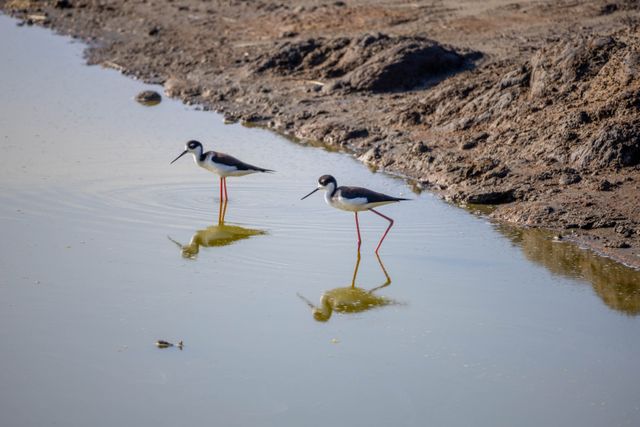
The aeʻo, or Hawaiian stilt, is the endemic Hawaiian subspecies of the black-necked stilt and one of the island’s signature wetland birds. It is a slender, elegant wader with black upperparts, a white face and underbody, and remarkably long pink legs that allow it to feed in deeper water than most shorebirds. Like other black-necked stilts, it stands and forages on strikingly long, thin legs. Its Hawaiian name means roughly “one standing tall.”
The aeʻo is endangered and is the most prevalent of the protected waterbirds at Keālia Pond, where it nests and feeds. It is highly vocal, defending nests and chicks with sharp calls and dive-bombing, and its alarm note is a rapid kik kik kik, as the U.S. Fish and Wildlife Service describes. Chicks crouch motionless and rely on camouflaged down when adults sound the alarm. The species is vulnerable to introduced mammalian predators and to cattle egrets, which take chicks. Keālia Pond and Kanahā Pond are the most reliable places to see it.
ʻAlae keʻokeʻo (Hawaiian Coot) (Fulica alai)
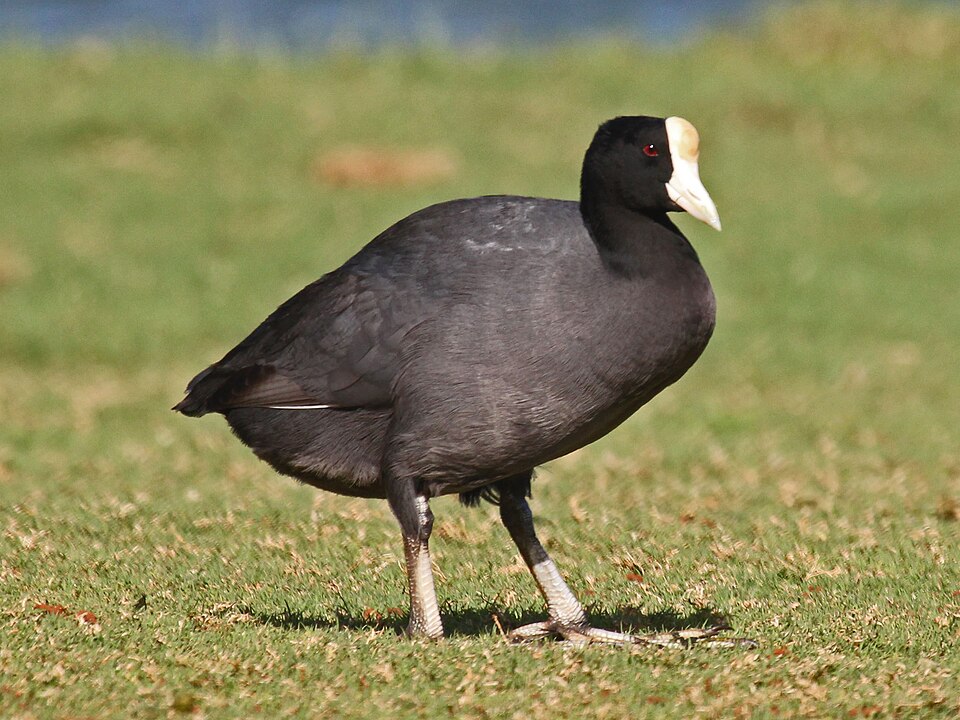
The ʻalae keʻokeʻo, or Hawaiian coot, is an endangered endemic waterbird and a year-round resident of Maui’s wetlands. It is a slate-gray, duck-like bird recognized by its white bill and prominent frontal shield, which contrasts sharply with the dark body, as the U.S. Fish and Wildlife Service notes. Some individuals show a red rather than white shield, adding to the variation visible at a single pond.
Coots swim and dive in open water, feeding on aquatic plants and small invertebrates, and they nest among emergent vegetation at the water’s edge. The species depends heavily on a small number of managed wetlands, which makes refuges like Keālia Pond essential to its survival. It shares that habitat with the aeʻo and, seasonally, with migratory ducks. The Keālia Coastal Boardwalk offers close, accessible viewing of both endangered waterbirds without disturbing them.
ʻAukuʻu (Black-crowned Night-Heron) (Nycticorax nycticorax hoactli)
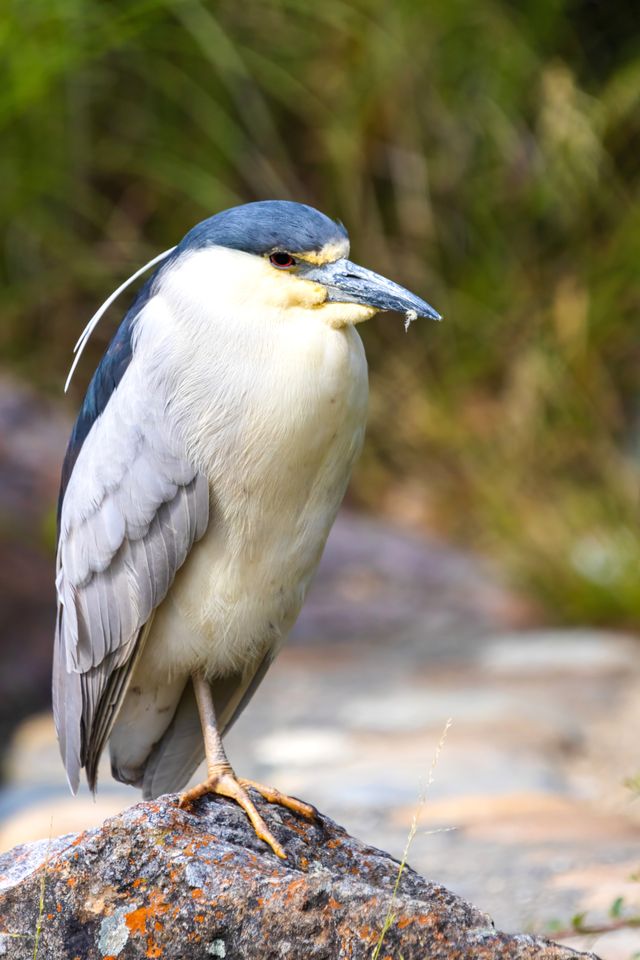
The ʻaukuʻu is the Hawaiian form of the black-crowned night-heron, a stocky, indigenous wading bird found around ponds, wetlands, and shorelines across Maui. Adults are handsome and distinctive, with a black crown and back, pale gray wings, a white underbody, and large red eyes. Juveniles are brown and heavily streaked.
Despite the name, the ʻaukuʻu is often active in daylight on Maui, standing patiently at the water’s edge before striking at fish, and it will also take the eggs and chicks of other waterbirds. It is regular at Keālia Pond and other wetlands, frequently seen hunched along levees and pond margins. Unlike the stilt and coot, the ʻaukuʻu is not endangered, but it is a genuine native bird and a satisfying find at any of the island’s managed wetlands.
Kōlea, or Pacific Golden-Plover (Pluvialis fulva)
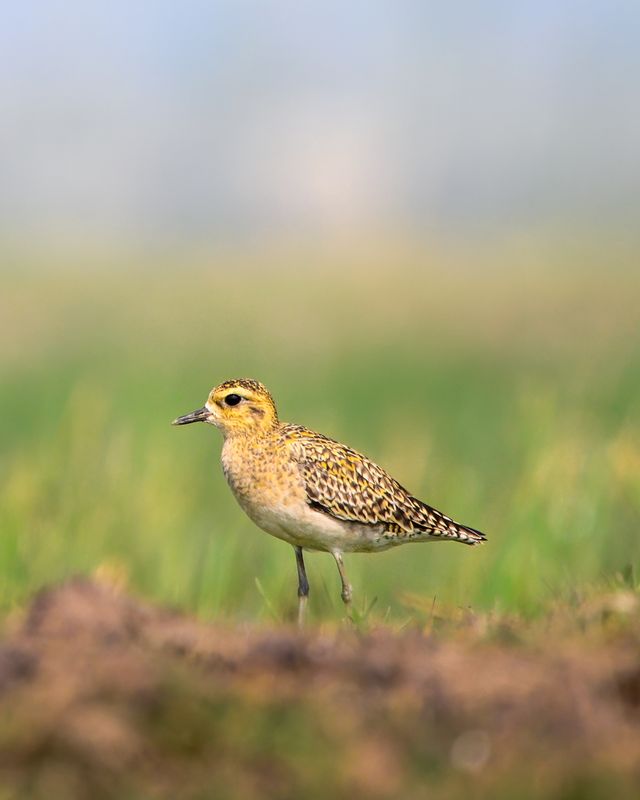
The kōlea, or Pacific golden-plover, is Maui’s most beloved migratory shorebird and a familiar sight on lawns, golf courses, parks, and shorelines from roughly August through April. It is a medium-sized, well-proportioned plover, mottled gold and brown above with a pale belly in its nonbreeding plumage; birds departing in spring molt into a dramatic black-faced breeding pattern.
The kōlea breeds in Alaska and Siberia and undertakes a long over-water migration to the Hawaiian Islands and beyond, as regional sources document. Individual birds famously return to the same patch of lawn year after year, and many Maui residents come to recognize a particular plover as their own. Although it nests on the ground far to the north, where males perform fluttering courtship displays over the tundra, on Maui it is a tame and approachable presence in everyday settings, making it the introduction many visitors get to the idea of Pacific bird migration. It is present at Keālia Pond and across the island in the cooler months.
Common Backyard and Lowland Birds
Here is the fact that surprises most first-time visitors: nearly all the birds you notice in Maui’s urban areas, resorts, and beach parks are introduced species, not native Hawaiian birds. These are the more common birds of the lowlands, while the native forest birds live high on the mountain. The lowland cast is a global mix of doves, finches, and songbirds brought to the islands over the past two centuries.
Zebra Dove (Geopelia striata)
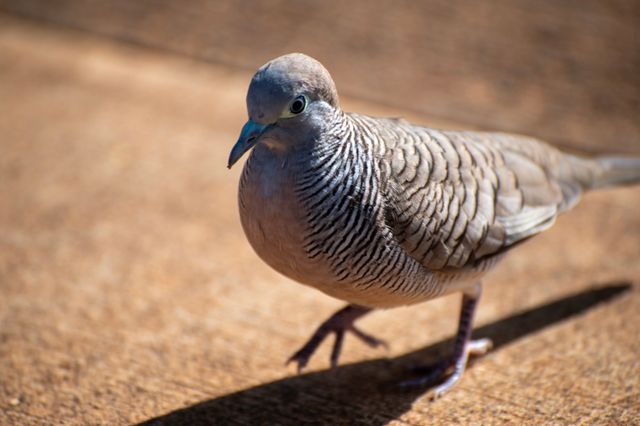
The zebra dove is the small, calm dove that walks beneath tables and beach chairs across Maui, often at very close range. It is a slender, fawn-gray bird about 20 to 23 centimeters (8 to 9 inches) long, with fine black-and-white barring across the breast and neck that gives the species its name. Its voice is a soft, rapid cooing.
Native to Southeast Asia, the zebra dove was introduced to the Hawaiian Islands in the early 1920s and is now one of the most abundant birds in every developed lowland area, as Cornell Lab of Ornithology documents. It forages on the ground for seeds, walks far more than it flies, and tolerates people more readily than almost any other bird on the island. It is frequently seen alongside the larger spotted dove. For visitors, the zebra dove is usually the very first Maui bird they meet.
Northern Cardinal (Cardinalis cardinalis)

The northern cardinal is the familiar red-crested songbird of the eastern United States, introduced to Hawaii and now common on Maui, especially in lowland areas with tree cover. The male is brilliant red all over with a black face and throat and a heavy orange-red bill, while the female is warm buff-brown with red tints and the same crest. It measures roughly 21 to 23 centimeters (8.3 to 9 inches).
On Maui the northern cardinal favors gardens, parks, and shrubby areas in tourist hubs such as Kāʻanapali, Lahaina, and Wailea, and it readily comes to seed at platform and hopper feeders. Its loud, clear, whistled song is a familiar sound in residential neighborhoods. Because Maui hosts more than one red-headed bird, the northern cardinal is most reliably separated from the red-crested cardinal by its entirely red body and black face, as opposed to the red-crested cardinal’s white underparts.
Red-crested Cardinal (Paroaria coronata)
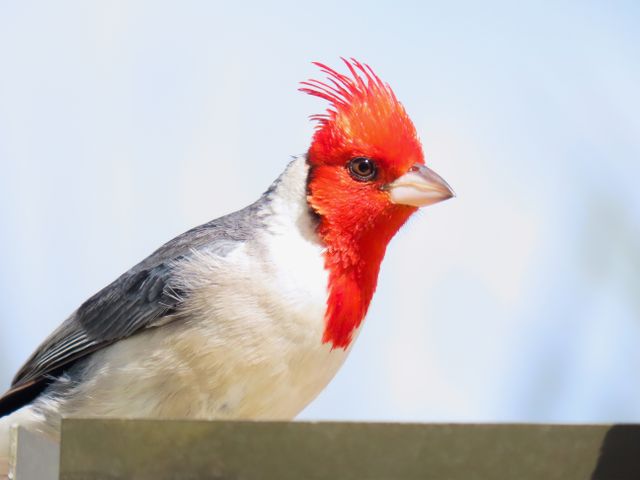
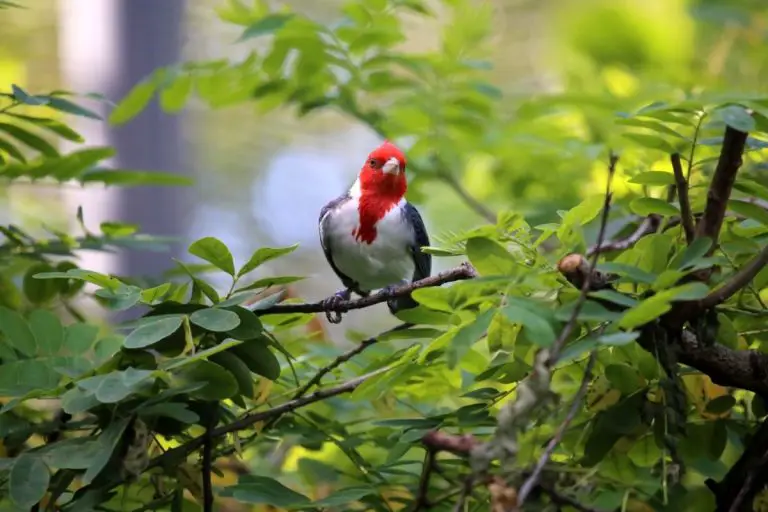
The red-crested cardinal is one of Maui’s most photographed lowland birds, instantly recognized by its flame-red head and tall pointed crest set against a clean white throat and breast, with a gray back and tail. Despite the name, it is not a true cardinal but a member of the tanager family, native to southern South America, which has earned it the local nickname Brazilian cardinal. It is roughly 19 centimeters (7.5 inches) long.
Introduced to the islands in the late 1920s, it now occupies lowland habitat across Maui and is especially visible foraging on resort lawns, beach park grass, and along coastal walks, as visitor field guides note. It feeds on seeds, insects, and fruit, takes readily to ground feeding, and is often seen in pairs with its crest bobbing as it forages. The sharp contrast of red, white, and gray makes it both one of the easiest Maui birds to identify and one of the most beautiful birds on any resort lawn.
Common Myna (Acridotheres tristis)
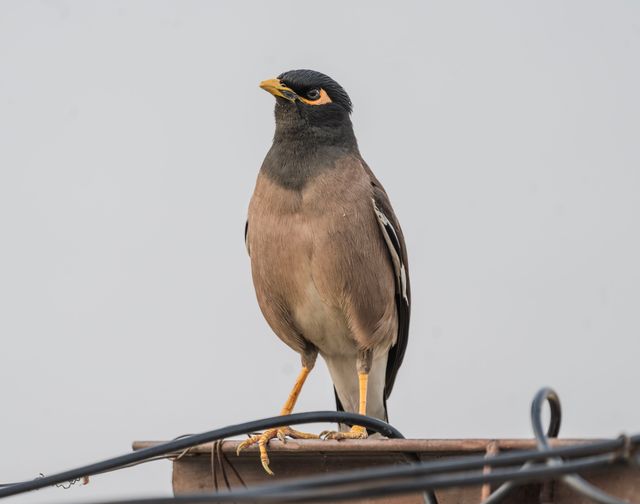
The common myna is among the most conspicuous birds on Maui, a bold, brown-bodied songbird with a black head, bright yellow eye patch and bill, and white wing flashes visible in flight. It measures roughly 23 to 25 centimeters (9 to 10 inches) and struts confidently on the ground around parking lots, restaurants, and lawns. These gregarious birds keep up a stream of various guttural chuckles, whistles, and scolds.
Introduced to Hawaii in the 1860s, originally in part for insect control, the myna is now ubiquitous in lowland areas and gathers in large groups at noisy communal roosts at dusk. It is a member of the starling family and an aggressive cavity nester, traits that can bring it into conflict with other birds. The species is widely regarded as one of the world’s most successful invasive birds. For visitors, the myna is unavoidable, and its raucous chattering is one of the defining sounds of a Maui morning in town.
Warbling White-eye (Zosterops japonicus)
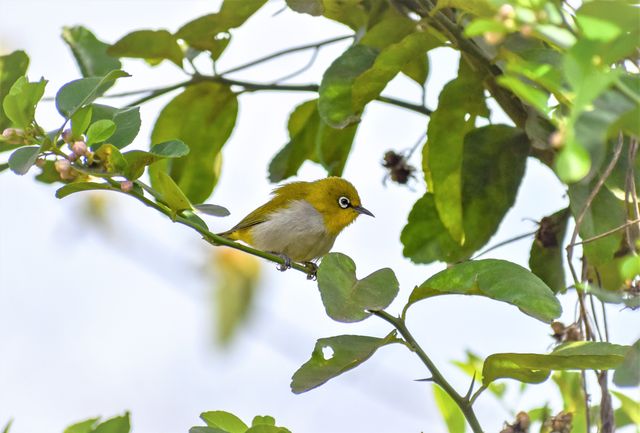
The warbling white-eye, long known in Hawaii as the Japanese white-eye or mejiro, is a tiny, energetic songbird about 11 centimeters (4.3 inches) long, bright yellow-green above with a bold white ring around each eye and a fine, pointed bill. It moves restlessly through foliage in small flocks, gleaning insects and visiting flowers for nectar, and it announces itself with a soft, melodic call.
Introduced to the islands in the late 1920s, the warbling white-eye is now one of the most numerous birds on Maui, found from coastal gardens up into native forest. It is frequently seen feeding at hibiscus and other blossoms in parks and yards, which makes it the introduced bird most likely to be confused with a native nectar feeder. It is also, unfortunately, implicated in the spread of avian disease and invasive plant seeds, and it competes with native birds, so its abundance is a mixed story for the island’s ecology.
Look-Alike Species
A few Maui birds are regularly confused with one another. The table below summarizes the most useful field marks for the island’s three most-mistaken pairs.
| Species | Most confused with | How to tell them apart |
|---|---|---|
| Northern Cardinal | Red-crested Cardinal | Northern cardinal is red over the whole body with a black face; red-crested cardinal has a red head and crest but white underparts and a gray back |
| Zebra Dove | Spotted Dove | Zebra dove is smaller with fine barring on the breast and walks underfoot; spotted dove is larger and browner with a spotted black-and-white neck patch |
| ʻApapane | ʻIʻiwi | ʻApapane is crimson with a short black bill and white undertail; ʻiʻiwi is brighter vermilion with a long, deeply curved pink bill and no white undertail |
What to See When
Maui’s tropical setting means many birds are present year-round, but the seasons still shape the birding, especially for migratory shorebirds and wintering waterfowl. The table below offers a general guide.
| Season | What to look for |
|---|---|
| Year-round | Native forest birds at high elevation, including ʻiʻiwi, ʻapapane, Hawaiʻi ʻamakihi, and Maui ʻalauahio; resident waterbirds aeʻo and ʻalae keʻokeʻo; nēnē in the national park; lowland introduced species in towns |
| Fall through spring (roughly August to April) | Migratory shorebirds including the kōlea, wandering tattler, ruddy turnstone, and sanderling; wintering ducks at Keālia Pond such as northern shoveler and northern pintail |
| Spring and summer (roughly April to July) | Peak nesting for the aeʻo at Keālia Pond, when parts of the refuge may close to protect nesting birds; honeycreeper activity tracks the ʻōhiʻa bloom in the high forest |
Notable Birding Locations on Maui
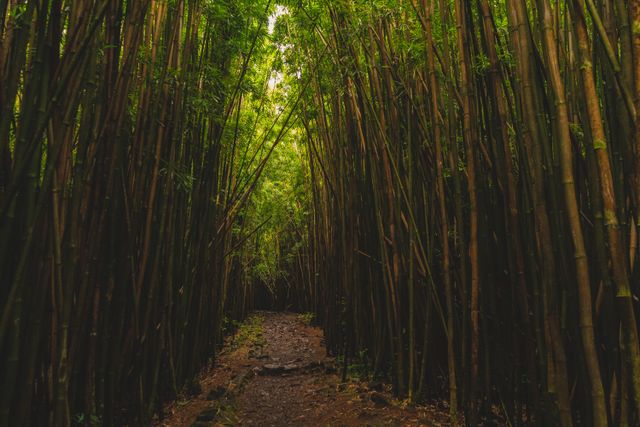
Maui rewards birders who are willing to move between elevations. The following are the best places to bird on the island, spanning sea-level wetlands and the cool spots in the native forests near Haleakalā’s summit; together they rank among the best spots for birdwatching in Hawaii.
Hosmer Grove, inside Haleakalā National Park, is the most accessible place to see native forest birds. This former experimental forest, high on the slopes of Haleakalā at nearly 2,130 meters (7,000 feet), reliably produces ʻiʻiwi, ʻapapane, Hawaiʻi ʻamakihi, and, with effort, the Maui ʻalauahio.
Haleakalā National Park more broadly, managed by the National Park Service, is essential for the nēnē, which grazes near the entrance and along the summit road, and for the pueo over open slopes. The park’s high forest is also the last stronghold of the Kiwikiu and ʻĀkohekohe, and seabirds such as the Hawaiian petrel nest in burrows high on the mountain.
Waikamoi Preserve, managed by The Nature Conservancy adjacent to the national park, protects critical native forest and offers some of the best honeycreeper habitat on the island, generally accessed through guided hikes.
Keālia Pond National Wildlife Refuge, between Kīhei and Māʻalaea, is the island’s premier wetland, with a coastal boardwalk and trails near the visitor center that offer close views of the aeʻo, ʻalae keʻokeʻo, ʻaukuʻu, and wintering migrants.
Kanahā Pond State Wildlife Sanctuary, on the north-central coast near Kahului, holds many of the same waterbirds as Keālia Pond, and the adjacent Kanahā Beach Park adds shoreline access for migrant shorebirds, making this a convenient stop close to the airport.
How to Support Birds in Your Yard
Attracting birds on Maui calls for a different approach than on the mainland, because conventional bird feeding mainly benefits introduced species and can help spread disease, while doing little for native birds. The most conservation-positive thing a Maui resident or visiting property owner can do is plant native and provide clean water rather than rely on seed feeders.
Native plants are the foundation. Choosing native flora, including ʻōhiʻa where conditions allow and native hibiscus, supports nectar feeders and insects in a way that aligns with the island’s ecology. A reliable, shallow source of clean water, refreshed regularly, benefits many birds and avoids the disease risks associated with crowded feeders.
If you do offer seed, your feeders will become busy feeder stops for doves, cardinals, finches, and mynas, all introduced species, so keep feeders and the ground beneath them clean to limit disease. Above all, never feed the nēnē or other native Hawaiian birds, including offering human or pet food, which is both harmful and, for protected species, prohibited. Keeping cats indoors and controlling rodents around your property also directly protects ground-nesting and native birds. For region-specific guidance, consult the Hawaii Division of Forestry and Wildlife.
Conservation on Maui
No discussion of Maui’s birds is complete without the conservation crisis facing its native forest species, and the ambitious effort now underway to confront it. Hawaii has lost more native birds than any other part of the United States, and Maui has felt that loss acutely. Centuries of habitat destruction, predation by introduced mammals, and avian disease drove the decline, and several Maui honeycreepers are now listed as threatened species or worse. In 2023, the U.S. Fish and Wildlife Service formally declared three Maui-area honeycreepers extinct: the Maui ʻākepa, the Maui nukupuʻu, and the pōʻouli, as the Maui Forest Bird Recovery Project records.
The central modern threat is avian malaria, spread by introduced mosquitoes. Hawaii’s native forest birds evolved with no exposure to the disease and little resistance to it, and for the ʻiʻiwi a single bite from an infected mosquito is frequently fatal, according to the Birds, Not Mosquitoes partnership. For decades, cool high-elevation forest offered a refuge where mosquitoes could not thrive, but warming temperatures driven by climate change are allowing mosquitoes to move upslope into the last strongholds of the Kiwikiu and ʻĀkohekohe. Both birds sit on the federal list of endangered species, and they are among Maui’s most imperiled native bird species, ranking high among the remaining species the U.S. Fish and Wildlife Service warns could vanish within years.
In response, state and federal agencies and conservation partners launched one of the most significant interventions in the islands’ history. After completing environmental review in 2023, the project began releasing laboratory-reared male mosquitoes carrying an incompatible strain of the natural bacterium Wolbachia. When these males mate with wild females, the eggs do not hatch, suppressing the mosquito population over time. The males do not bite and do not spread disease. The National Park Service reports that Haleakalā National Park and its partners began landscape-scale releases in November 2023, delivering capsules of male mosquitoes by drone and helicopter across remote forest. Alongside this work, partners continue habitat restoration, control of invasive species such as predatory mammals and hoofed ungulates, and captive breeding of the rarest honeycreepers. The outcome on Maui will help determine whether some of the world’s most distinctive birds survive the coming decades.
Frequently Asked Questions
What is the most common bird in Maui?
The most common birds in Maui’s lowland towns and resorts are introduced species, particularly the common myna, the zebra dove, and the two cardinals. Native Hawaiian birds are generally not part of everyday lowland birdlife and are mostly restricted to high-elevation forest. Visitors typically encounter mynas and zebra doves within minutes of arriving.
What is the state bird of Hawaii?
The state bird of Hawaii is the nēnē, or Hawaiian goose (Branta sandvicensis), designated the official state bird in 1957. It is found only in the Hawaiian Islands and is recognized as the rarest goose in the world. On Maui, it is best seen within Haleakalā National Park.
When do hummingbirds arrive on Maui?
There are no hummingbirds on Maui, or anywhere in Hawaii, as the family is not native to the islands and none has become established. The birds most often mistaken for hummingbirds are nectar-feeding songbirds such as the warbling white-eye and the native ʻiʻiwi and ʻapapane, which hover briefly at flowers. Visitors hoping to see nectar feeders should look for these species instead.
What is the largest bird on Maui?
Among regularly seen Maui birds, the nēnē is the largest resident landbird, a medium-sized goose. Larger seabirds, including albatrosses and the Hawaiian petrel, occur around the island and at high-elevation nesting sites, and large wading and water birds such as the black-crowned night-heron are present in wetlands. The nēnē, however, is the big bird most visitors will actually encounter.
Where can I see native Hawaiian birds on Maui?
The best place to see native forest birds on Maui is Hosmer Grove in Haleakalā National Park, where ʻiʻiwi, ʻapapane, Hawaiʻi ʻamakihi, and Maui ʻalauahio can be found. For endangered native waterbirds such as the aeʻo and ʻalae keʻokeʻo, visit Keālia Pond National Wildlife Refuge near Kīhei. Most native species are not found in lowland towns.
Are the red birds on Maui native?
The bright red birds most often seen in Maui’s lowlands, the northern cardinal and the red-crested cardinal, are both introduced species and are not native to Hawaii. The truly native red birds of Maui are honeycreepers, the crimson ʻapapane and the vermilion ʻiʻiwi, which live in high-elevation native forest rather than in towns and gardens.
Conclusion
Birding on Maui is really an exercise in reading the mountain. At sea level, an accessible cast of introduced doves, cardinals, finches, and mynas fills the towns and resorts, while the island’s endangered waterbirds hold on in protected wetlands like Keālia Pond. Climb toward Haleakalā’s summit and the story changes entirely, into a world of crimson honeycreepers, the rarest goose on Earth, and a handful of species found nowhere else, now defended by one of the boldest conservation efforts anywhere in the country.
That layered diversity is what makes Maui such a rewarding island for both casual nature lovers and serious birders. To go deeper, explore our companion guides to Maui’s native forest birds, the island’s owls, and its endangered waterbirds, and consider supporting the partners working to keep these irreplaceable birds in the sky.
Works Cited
- Hawaii Division of Forestry and Wildlife. “Native Birds of Hawaiʻi.” https://dlnr.hawaii.gov/wildlife/birds/
- Hawaii Division of Forestry and Wildlife. “Kiwikiu.” https://dlnr.hawaii.gov/wildlife/birds/kiwikiu/
- Hawaii Division of Forestry and Wildlife. “Nēnē.” https://dlnr.hawaii.gov/wildlife/birds/nene/
- Hawaii Division of Forestry and Wildlife. “ʻIʻiwi.” https://dlnr.hawaii.gov/wildlife/birds/iiwi/
- Maui Forest Bird Recovery Project. “Maui’s Native Birds.” https://www.mauiforestbirds.org/birds/
- Maui Forest Bird Recovery Project. “Kiwikiu.” https://www.mauiforestbirds.org/kiwikiu/
- National Park Service. “Time Is Running Out: Maui’s Forest Birds Will Go Extinct without Action.” https://www.nps.gov/articles/time-is-running-out-maui-s-forest-birds-will-go-extinct-without-action.htm
- National Park Service. “Haleakalā National Park: Resisting Climate-Enhanced Threats of Avian Malaria.” https://www.nps.gov/articles/000/hale-rad.htm
- U.S. Fish and Wildlife Service. “Saving Hawaii’s Forest Birds.” https://www.fws.gov/rivers/rivers/carp/project/saving-hawaiis-forest-birds
- U.S. Fish and Wildlife Service. “Keālia Pond National Wildlife Refuge: Species.” https://www.fws.gov/refuge/kealia-pond/species
- U.S. Fish and Wildlife Service. “Keālia Pond National Wildlife Refuge: About Us.” https://www.fws.gov/refuge/kealia-pond/about-us
- Birds, Not Mosquitoes. “The Incompatible Insect Technique.” https://www.birdsnotmosquitoes.org/iit
- Cornell Lab of Ornithology, All About Birds. “ʻIʻiwi.” https://www.allaboutbirds.org/guide/Iiwi/overview
- Cornell Lab of Ornithology, All About Birds. “Hawaiian Goose.” https://www.allaboutbirds.org/guide/Hawaiian_Goose/overview
- Pacific Rim Conservation. “Nēnē, the Hawaiian Goose.” https://pacificrimconservation.org/species-we-work-with/nene-hawaiian-goose/
- American Bird Conservancy. “Nēnē (Hawaiian Goose).” https://abcbirds.org/birds/nene-hawaiian-goose/
- Audubon. “Birding in Hawaii.” https://www.audubon.org/magazine/birding-hawaii
- Bishop Museum. “The Birds of the Hawaiian Islands: Occurrence, History, Distribution, and Status.” https://hbs.bishopmuseum.org/birds/rlp-monograph/