
Are Kiwi Birds Endangered? The Threats Facing New Zealand’s Flightless Icon and How They Are Being Reversed
Kiwi birds are threatened but not, at the species level, currently listed as endangered. As of the most recent IUCN Red List assessments, four of the five kiwi species are classified as Vulnerable and one is Near Threatened. Without active predator control, these flightless birds still decline by roughly 2 percent each year, driven mainly by introduced species.
Key Takeaways
- Around 68,000 kiwi remain across New Zealand today, down from an estimated 12 million before human settlement, according to Save the Kiwi (2026).
- Introduced predators are the main threat. Stoats cause roughly half of all kiwi chick deaths in many areas, while dogs, including both wild dogs and roaming household pets, are the biggest threat to adult kiwi, per New Zealand’s Department of Conservation.
- In areas without predator control, only about 5 percent of kiwi chicks survive to adulthood. Operation Nest Egg lifts that survival rate to around 65 percent.
- Conservation efforts are working. In 2017 the IUCN downlisted the North Island brown kiwi and the rowi from Endangered to Vulnerable, and in 2023 wild kiwi chicks hatched near Wellington for the first time in more than 150 years.
- The single most effective step for protecting this flightless bird is controlling dogs and containing cats near kiwi habitat, because both prey on kiwi.
Understanding the Question: Threatened, but No Longer “Endangered”
The kiwi (genus Apteryx) is New Zealand’s iconic national bird and one of the most recognisable flightless birds in the world. Because the decline of the kiwi has been so widely reported, many people assume that every species of kiwi is formally endangered. The accurate picture is more encouraging, and more nuanced.
The IUCN Red List, the global authority behind the endangered species list, currently assesses the five living kiwi species across two threat categories. Four species are listed as Vulnerable, and one, the little spotted kiwi, is listed as Near Threatened. None is presently classified in the higher Endangered or Critically Endangered categories. This was not always so. In 2017, after decades of coordinated conservation efforts, the IUCN downlisted the North Island brown kiwi and the rowi from Endangered to Vulnerable, a rare piece of good news in global bird conservation.
A note of caution accompanies that progress. New Zealand’s own national ranking system, the New Zealand Threat Classification System, is often stricter than the global IUCN scale because it measures risk within the country rather than worldwide. Some local wild kiwi populations, such as the Haast tokoeka in the South Island, remain nationally critical even though the wider species sits in a lower IUCN category. The message from both systems is the same. These flightless birds are not on the edge of extinction, but they survive today largely because New Zealanders are actively defending them.
About the Kiwi: A Singular Flightless Bird
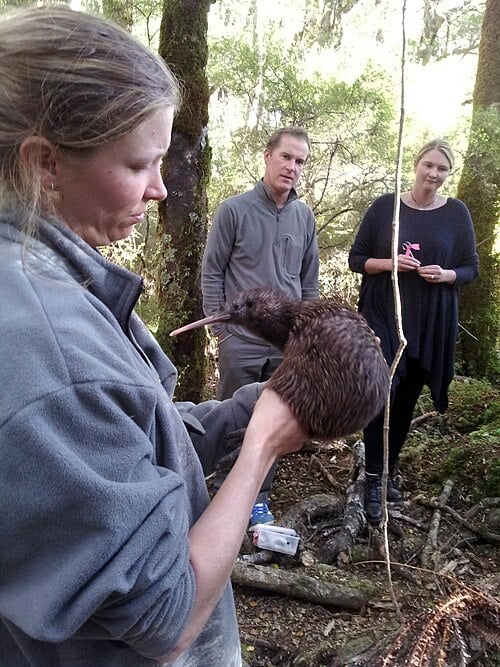
The kiwi is a nocturnal bird found in no other part of New Zealand’s wider region, and it is unlike any other flightless bird on Earth. Approximately the size of a domestic chicken, the kiwi carries only tiny wings, vestigial and hidden beneath shaggy, hair-like feathers, and it moves through the native forest on powerful legs. It is the only bird known to have nostrils at the tip of its long bill, a long beak it uses to probe the forest floor and leaf litter for earthworms, grubs, and other invertebrates by scent.
Kiwi biology shapes how vulnerable these birds are. A female kiwi lays an egg that can reach about 20 percent of her body size, one of the largest egg-to-body ratios of any bird, and in the brown kiwi the male kiwi performs most of the incubation over roughly 75 to 85 days. Kiwi nest in burrows, hollow logs, and dense vegetation on the ground, which leaves kiwi eggs and chicks exposed to introduced predators. Pairs typically raise very few young each year, and baby kiwis take three to five years to reach adult size, so kiwi numbers recover slowly even under good conditions.
Genetic research published in the journal Science in 2014 found that the kiwi’s closest relative is not the extinct moa of New Zealand, as scientists long assumed, but the elephant birds of Madagascar. Kiwi belong to the ratites, the group of flightless birds that also includes ostriches, emus, rheas, and cassowaries, yet the kiwi is the smallest of them all.
Why Kiwi Matter
Kiwi are far more than a national emblem. As nocturnal foragers of the forest floor, they turn and aerate soil while feeding and help regulate invertebrate populations, part of the web of processes that keeps native forest healthy. Where kiwi and other native birds thrive, it is usually a sign that the broader ecosystem, and the native wildlife within it, is recovering.
The bird also carries deep cultural significance. In New Zealand culture, and for the Māori people in particular, the kiwi is a taonga, a treasure, traditionally regarded as under the protection of Tāne Mahuta, atua of the forest. Kiwi feathers were once woven into prized ceremonial cloaks known as kahu kiwi. Kiwi are no longer hunted, feathers today are gathered only from birds that die naturally or in captivity, and many iwi now act as guardians of the species. The loss of this flightless bird would therefore be an ecological blow and a cultural one at the same time, which is why kiwi conservation matters so deeply for future generations.
The Threats
Kiwi evolved over millions of years on an island nation that had no ground-dwelling mammalian predators. That long isolation left them poorly equipped for the animals that arrived alongside people. The main threats below now shape kiwi survival across both the North Island and the South Island.
Introduced predators
Predation by introduced species is the single biggest driver of population decline. The threat splits by life stage. For chicks, the most dangerous predator is the stoat (Mustela erminea), a member of the weasel family brought to New Zealand by European settlers in the late 1800s to control introduced rabbits. Baby kiwis remain vulnerable to stoats until they reach about 1 to 1.2 kg (2.2 to 2.6 lb), the weight at which they can defend themselves with their powerful legs and claws. Ferrets and feral cats also take chicks, and in some unmanaged areas nearly every chick is killed before it can grow large enough to survive.
For adult kiwi, the greatest threat is dogs. Because kiwi have no keel on the sternum and lack the heavy chest muscles of flying birds, a single bite can be fatal. Both wild dogs and household pets are drawn to the kiwi’s strong scent and can kill a bird in seconds, which means even one uncontrolled dog can undo years of work in a release area.
Habitat loss and fragmentation
Historic loss of habitat cleared vast areas of the native forest that kiwi depend on. While much remaining natural habitat is now protected in reserves and national parks, the damage left many kiwi populations small and isolated. Small populations are more exposed to local extinction and to the genetic risks of inbreeding, which can reduce hatching success and long-term resilience. Continued habitat loss also pushes some birds into marginal country and closer to roads and human habitation.
Roads, traps, and other hazards
Where roads cross kiwi habitat, vehicle strike is a persistent risk, particularly at dawn and dusk when this nocturnal bird is active. Badly set possum traps can also injure or kill kiwi. These hazards rarely threaten a whole population on their own, but in small or recovering groups every adult lost matters.
Small populations, disease, and a changing climate
Naturally low genetic diversity, worsened by isolation, leaves some kiwi sensitive to disease and to reduced fertility. Conservation managers weigh these risks carefully when moving birds between sites. Climate change is an emerging pressure rather than a documented primary cause of decline. Shifting rainfall, temperature, and the timing of food availability may affect kiwi and their forests over the coming decades, and researchers continue to study how these flightless birds will adapt. Together, these factors remain among the major challenges facing kiwi recovery.
What Is Being Done
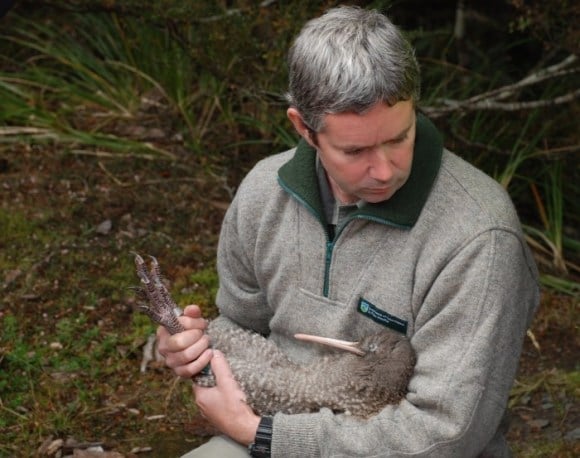
New Zealand runs one of the most sustained kiwi conservation efforts in the world, combining government agencies, iwi, scientists, local communities, and hundreds of community groups.
The framework is the national Kiwi Recovery Plan, first launched by the Department of Conservation in 1991 and now guided by the Kiwi Recovery Plan 2018 to 2028. In 2018 the government established the Save Our Iconic Kiwi funding package, with the goal of growing the estimated population of each of the five species of kiwi by 2 percent a year.
At the heart of the response is predator control. Community and agency trapping networks target stoats, ferrets, and other invasive species across large areas, and in remote terrain aerial operations using biodegradable 1080 suppress predators. Extensive monitoring, often using kiwi fitted with radio transmitters, has shown that kiwi are not at risk from correctly managed 1080 operations, and chick survival rises sharply where predators are held down.
A second pillar is Operation Nest Egg, run through the BNZ Save the Kiwi Trust in partnership with the Department of Conservation and Forest and Bird. Under the programme, kiwi eggs or young chicks are collected from the wild, hatched and raised in safe facilities or on predator-free islands, and released once they reach about 1,200 g (42 oz), the point at which they can fend off a stoat. A kiwi raised this way has roughly a 65 percent chance of reaching adulthood, compared with about 5 percent for a wild-raised chick. Predator-free offshore islands, including sanctuaries in the Hauraki Gulf, and fenced mainland reserves provide further safe havens and support habitat restoration. The little spotted kiwi, the smallest species, survives today almost entirely because a small founder group was moved to predator-free Kapiti Island early in the twentieth century, seeding the island populations that exist now.
The results of these conservation programs are real and worth stating plainly. The rowi, the rarest kiwi, had fallen to around 160 birds in 1995, but intensive management through Operation Nest Egg helped rebuild it to roughly 450 adults, contributing to its 2017 downlisting. In December 2021 the Department of Conservation removed the North Island brown kiwi from its national threatened species list, reclassifying it as not threatened, though with a conservation dependent caveat that makes clear the gains rely on continued predator control.
Perhaps the most vivid recent success is the Capital Kiwi Project near Wellington. Paul Ward, founder of the Capital Kiwi Project, helped lay a grid of about 4,600 stoat traps across roughly 24,000 hectares (59,000 acres) of hill country and, working with local iwi and landowners, reintroduced kiwi to land where they had been absent for more than a century. In 2023, wild kiwi chicks hatched in the hills southwest of Wellington for the first time in over 150 years. By 2026 the project had completed a founder translocation of 250 birds and reported wild-hatched chicks surviving past their most dangerous early months, allowing the wild kiwi population to begin sustaining itself. It is a working template that other communities and civic leaders are now studying.
How You Can Help
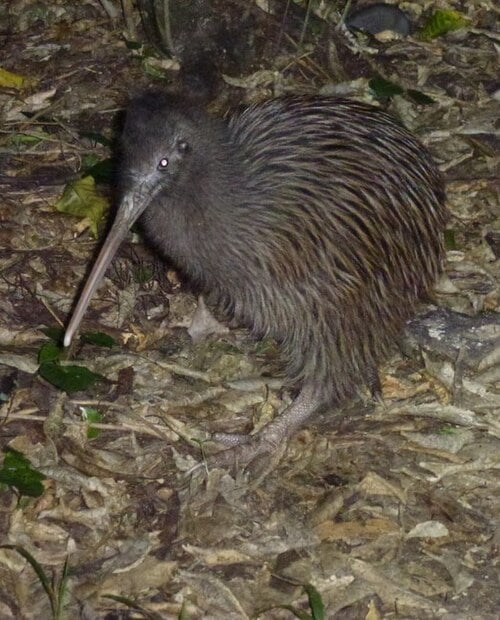
Kiwi recovery depends heavily on ordinary people, and the most useful actions are specific rather than symbolic.
Control your dog near kiwi habitat. Because dogs are the biggest threat to adult kiwi, keeping dogs leashed, contained at night, and enrolled in kiwi aversion training where it is offered directly protects breeding adults. This single behaviour has an outsized effect in and around release areas.
Contain your cat, especially after dark. Feral cats and roaming household pets prey on kiwi chicks and on the invertebrates kiwi rely on. Keeping pet cats indoors at night, or in a contained run, reduces that pressure and helps other native wildlife at the same time.
Support or join community groups running trapping projects. Sustained predator control is what allows chicks to reach a stoat-safe weight, so local trap lines and predator-free initiatives led by local communities are the backbone of kiwi recovery, and volunteers are always needed.
Drive carefully at dawn and dusk in kiwi country. Slowing down where roads pass through native forest lowers the risk of vehicle strike during the hours this flightless bird is most active.
Protect and restore native forest. Retaining mature native forest and planting native species rebuilds the leaf-litter habitat kiwi forage in and reconnects fragmented wild kiwi populations over time.
Back the organisations doing the work. Donating to or fundraising for groups such as Save the Kiwi channels support to the community projects delivering measurable population growth. If you want a simple starting point, our Pledge to Fledge commitments turn each of these actions into concrete habits.
The Five Kiwi Species at a Glance
The snapshot below reflects IUCN Red List assessments and published population estimates current as of early 2026. Because these figures are revised as new surveys are completed, treat them as a point-in-time summary and confirm the live status on the linked authorities.
| Species | IUCN status (assessment year) | Estimated population | Where found |
|---|---|---|---|
| North Island brown kiwi (Apteryx mantelli) | Vulnerable (2017) | Tens of thousands; the most numerous kiwi | North Island |
| Southern brown kiwi or tokoeka (Apteryx australis) | Vulnerable (2022) | Roughly 16,500 | South Island, including Stewart Island / Rakiura |
| Great spotted kiwi or roroa (Apteryx haastii) | Vulnerable (2022) | Roughly 9,000 to 10,000 | Northern South Island |
| Little spotted kiwi or kiwi pukupuku (Apteryx owenii) | Near Threatened (2022) | Roughly 1,500 | Predator-free offshore islands and fenced sanctuaries |
| Rowi or Okarito brown kiwi (Apteryx rowi) | Vulnerable (2021) | Roughly 350 to 450, the rarest kiwi | Okarito, South Island West Coast |
Frequently Asked Questions
Are kiwi birds endangered?
Kiwi are threatened but, at the species level, none is currently listed as endangered on the IUCN Red List. Four of the five species are classified as Vulnerable and one, the little spotted kiwi, as Near Threatened, as of the most recent assessments. Two species were downlisted from Endangered to Vulnerable in 2017 following successful conservation efforts.
What is the biggest threat to kiwi?
Introduced predators are the biggest threat. Stoats kill roughly half of all kiwi chicks in many unmanaged areas, and dogs, both wild dogs and roaming household pets, are the leading cause of death for adult kiwi, according to New Zealand’s Department of Conservation. Habitat loss and small, fragmented populations compound the pressure.
How many kiwi are left?
Around 68,000 kiwi remain across New Zealand, according to Save the Kiwi (2026). Those kiwi numbers are a steep fall from an estimated 12 million before human settlement, but populations under active predator control are now stable or growing, even as unmanaged kiwi populations continue to decline by about 2 percent a year.
What is the rarest kiwi species?
The rowi, or Okarito brown kiwi (Apteryx rowi), is the rarest species of kiwi, with roughly 350 to 450 birds confined to the Okarito area of the South Island’s West Coast. Once down to about 160 individuals in 1995, it has recovered through intensive management, including Operation Nest Egg.
Is the kiwi the only flightless bird in New Zealand?
No. New Zealand is home to several flightless birds, including the kākāpō, takahē, and weka, but the kiwi is the most famous and the country’s national bird. It is also the only bird in the world known to have nostrils at the tip of its long bill, which it uses to smell out food on the forest floor.
How can I help protect kiwi?
The most effective actions are controlling dogs and containing cats near kiwi habitat, supporting or joining community groups that run predator-trapping projects, driving carefully at dawn and dusk in kiwi country, and protecting native forest. These steps address the predation and habitat loss that drive kiwi decline.
Conclusion
So, are kiwi birds endangered? The honest answer is that they are threatened rather than endangered, and that the distinction exists only because of sustained conservation efforts. Four of the five species remain Vulnerable and one is Near Threatened, yet two were pulled back from the Endangered category in 2017, the rowi has climbed from about 160 birds to several hundred, and wild kiwi chicks are once again hatching on the hills above Wellington. The story of this flightless bird is not one of inevitable loss but of a decline being actively reversed, so long as predator control continues and dogs and cats are kept in check. That is where you come in. Controlling a dog, containing a cat, or joining a local trap line are small acts that, multiplied across a nation, are already helping New Zealand’s national bird hold its ground for future generations.
Works Cited
- Save the Kiwi. “Threats to kiwi.” https://savethekiwi.nz/about-kiwi/threats-to-kiwi/
- Save the Kiwi. “Kiwi population grows by 7,000.” https://savethekiwi.nz/kiwi-population-grows-by-7000-but-is-that-growth-about-to-go-backwards/
- New Zealand Department of Conservation. “Kiwi Recovery Plan 2018 to 2028” (Threatened Species Recovery Plan 64). https://www.doc.govt.nz/globalassets/documents/science-and-technical/tsrp64entire.pdf
- BirdLife International / IUCN Red List. “Apteryx mantelli” (North Island brown kiwi), 2017 assessment. https://www.iucnredlist.org/species/45353580/119177586
- BirdLife International / IUCN Red List. “Apteryx australis” (southern brown kiwi), 2022 assessment. https://www.iucnredlist.org/species/22678122/214272214
- BirdLife International / IUCN Red List. “Apteryx haastii” (great spotted kiwi), 2022 assessment. https://www.iucnredlist.org/species/22678132/214091794
- BirdLife International / IUCN Red List. “Apteryx owenii” (little spotted kiwi), 2022 assessment. https://www.iucnredlist.org/species/22678129/214096691
- BirdLife International / IUCN Red List. “Apteryx rowi” (rowi), 2021 assessment. https://www.iucnredlist.org/species/22732871/180757495
- CNN. “Two kiwi species no longer endangered in new Red List.” https://www.cnn.com/2017/12/05/world/kiwi-red-list-intl/index.html
- Mitchell, K.J. et al. “Ancient DNA reveals elephant birds and kiwi are sister taxa.” Science, 2014. https://doi.org/10.1126/science.1251981
- RNZ. “Wellington welcomes wild-born kiwi for first time in 150 years.” https://www.rnz.co.nz/news/national/503596/wellington-welcomes-wild-born-kiwi-for-first-time-in-150-years
- Smithsonian Magazine. “Wild Kiwis Born Near New Zealand’s Capital for the First Time in More Than 150 Years.” https://www.smithsonianmag.com/smart-news/wild-kiwis-born-near-new-zealands-capital-for-the-first-time-in-more-than-150-years-180983386/
- Visit Zealandia. “Kiwi Chicks Return to Wellington After 150 Years.” https://www.visitzealandia.com/news-stories/bringing-birds-back-to-wellington/

