Backyard Birds in North Carolina: A Field Guide to the Species at Your Feeder
North Carolina runs from mountains taller than anything else in the East down to barrier islands that barely rise above the tide, and its backyard birds shift with the elevation. A feeder in Boone in February can look almost northern, with juncos by the dozen and Red-breasted Nuthatches in a good year. A feeder in Wilmington the same week might have Pine Warblers on the suet, Brown-headed Nuthatches squeaking in the longleaf, and, if the owner is lucky, a green-and-gold female Painted Bunting picking millet off the patio. Between them sits the Piedmont, the rolling middle of the state where most people live, and where the classic Southern feeder crowd of cardinals, chickadees, titmice, and wrens is about as dependable as birds get.
Mountains, Piedmont, and coast
North Carolina’s three regions are distinct enough that birders tend to treat them almost as separate states. The mountains in the west, including Mount Mitchell, the highest peak east of the Mississippi, carry spruce-fir forest on the summits, and birds there such as Black-capped Chickadee, Red Crossbill, and Canada Warbler are at or near the southern edge of their ranges. The Piedmont is a patchwork of hardwood forest, pine, fields, and suburbs around Charlotte, Greensboro, and the Triangle. East of the fall line, the Coastal Plain flattens into pine savanna, blackwater swamps, farm fields, and huge sounds, and the Outer Banks jut far enough into the Atlantic that seabirds, shorebirds, and migrant songbirds pile up there in numbers that draw birders from across the country.
The state bird: a red bird for every county
North Carolina adopted the Northern Cardinal as its state bird in 1943, and it is one of seven states to have chosen it. It was an easy pick for a state where the cardinal lives in every county, in every season, from mountain coves to beach towns. Cardinals do not migrate and pairs often stay together through the winter, so the same male singing from a dogwood in February is likely the one that nested in the azaleas the summer before. In a state where so many birds come and go with the seasons, the cardinal is the constant, and it is often the first bird that gets someone in North Carolina to hang a feeder in the first place.
Common feeder visitors
Across the Piedmont and Coastal Plain, the everyday feeder list includes Northern Cardinal, Carolina Chickadee, Tufted Titmouse, Carolina Wren, Red-bellied and Downy Woodpeckers, House Finch, Mourning Dove, Blue Jay, and Eastern Bluebird, with Brown-headed Nuthatches and Pine Warblers wherever there are pines nearby. Winter adds Dark-eyed Juncos, White-throated Sparrows, Chipping Sparrows, American Goldfinches, Yellow-rumped Warblers, and Eastern Towhees scratching under the shrubs. In the mountains, Black-capped Chickadees replace Carolina at the higher elevations, and juncos stay all year. Ruby-throated Hummingbirds are the summer hummingbird statewide, though a small number of western hummingbirds, mostly Rufous, turn up at feeders every winter, which is a good reason to leave one nectar feeder up after the ruby-throats leave.
Beyond the backyard: swans, pines, and the Outer Banks
Winter is peak season for some of the state’s best birding. Tens of thousands of Tundra Swans spend the season in eastern North Carolina, and Lake Mattamuskeet and Pocosin Lakes National Wildlife Refuge are among the best places in the country to see them, along with Snow Geese and huge numbers of ducks. On the Outer Banks, Pea Island National Wildlife Refuge is good for shorebirds and waterfowl in almost any month, and pelagic trips out of Hatteras into the Gulf Stream find seabirds that are hard to see anywhere else off the East Coast.
Inland, the Sandhills region around Southern Pines holds one of the state’s signature birds, the Red-cockaded Woodpecker, which depends on old longleaf pine forest managed with regular fire. Weymouth Woods Sandhills Nature Preserve and the surrounding game lands are the places to look, and the birds’ nest trees are easy to spot because of the sticky resin wells the woodpeckers drill around the cavity entrance.
A note on native plants
A North Carolina yard with native hollies, flowering dogwood, serviceberry, wax myrtle, and a few oaks will feed more birds than seed alone. American holly and yaupon hold their berries into winter, which brings in robins, bluebirds, mockingbirds, and flocks of Cedar Waxwings, while wax myrtle is a big part of the Yellow-rumped Warbler’s winter diet near the coast. Coral honeysuckle, a native vine, is a better choice for hummingbirds than the invasive Japanese honeysuckle, and crossvine and trumpet creeper do well too. Leaving a strip of native grasses and some leaf litter gives towhees, thrashers, and sparrows somewhere to forage.
Winter Feeding Notes
North Carolina winters are mild compared with the Northeast, but a hard freeze or an ice storm can still stress birds, especially insect eaters like Carolina Wrens, bluebirds, and Pine Warblers. Suet and mealworms matter a lot during those spells. Many of the state’s best winter feeder birds, including Pine Warblers, Brown-headed Nuthatches, and Yellow-rumped Warblers, prefer suet and peanut butter mixes over seed, so a no-melt suet dough is worth offering. Chipping Sparrows and juncos favor millet on the ground, and goldfinches and Pine Siskins, which show up in some winters, go straight to nyjer. On the southern coast, a feeder with white millet placed near dense shrubs is the best way to draw a wintering Painted Bunting.
Northern Cardinal
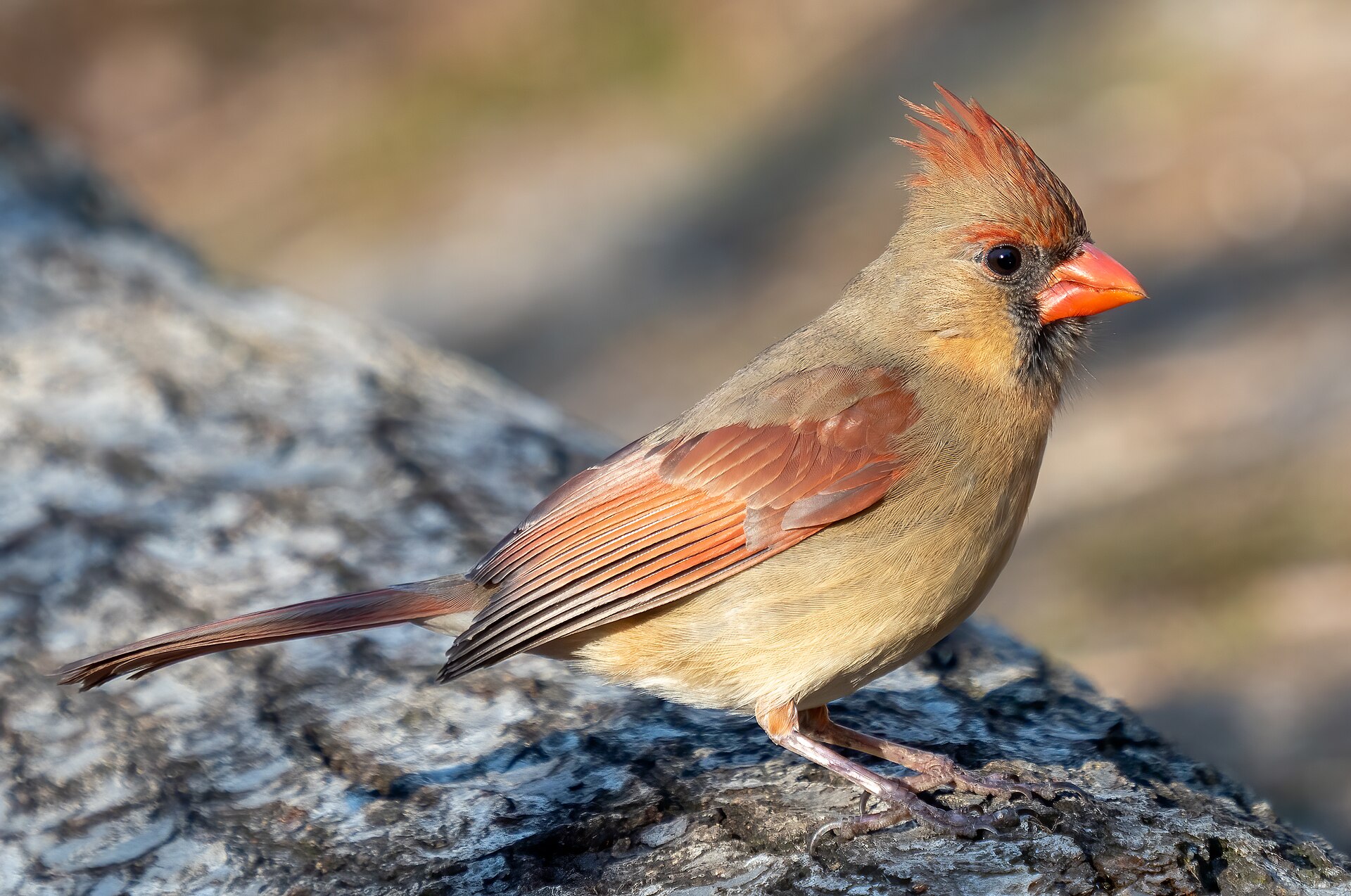
North Carolina’s state bird is present in every county and every month. Males are bright red with a black mask and a heavy orange-red bill, and females are warm brown with red in the crest, wings, and tail. Cardinals prefer platform feeders or hoppers with a ledge, and they like sunflower and safflower best. They nest low in thick shrubs and vines, often two or three times a season, and the male feeds the fledglings from the first brood while the female starts on the next. In late winter, males fight their reflections in windows and car mirrors, a sign that territories are being set up. Their clear whistled songs start as early as January.
Carolina Chickadee
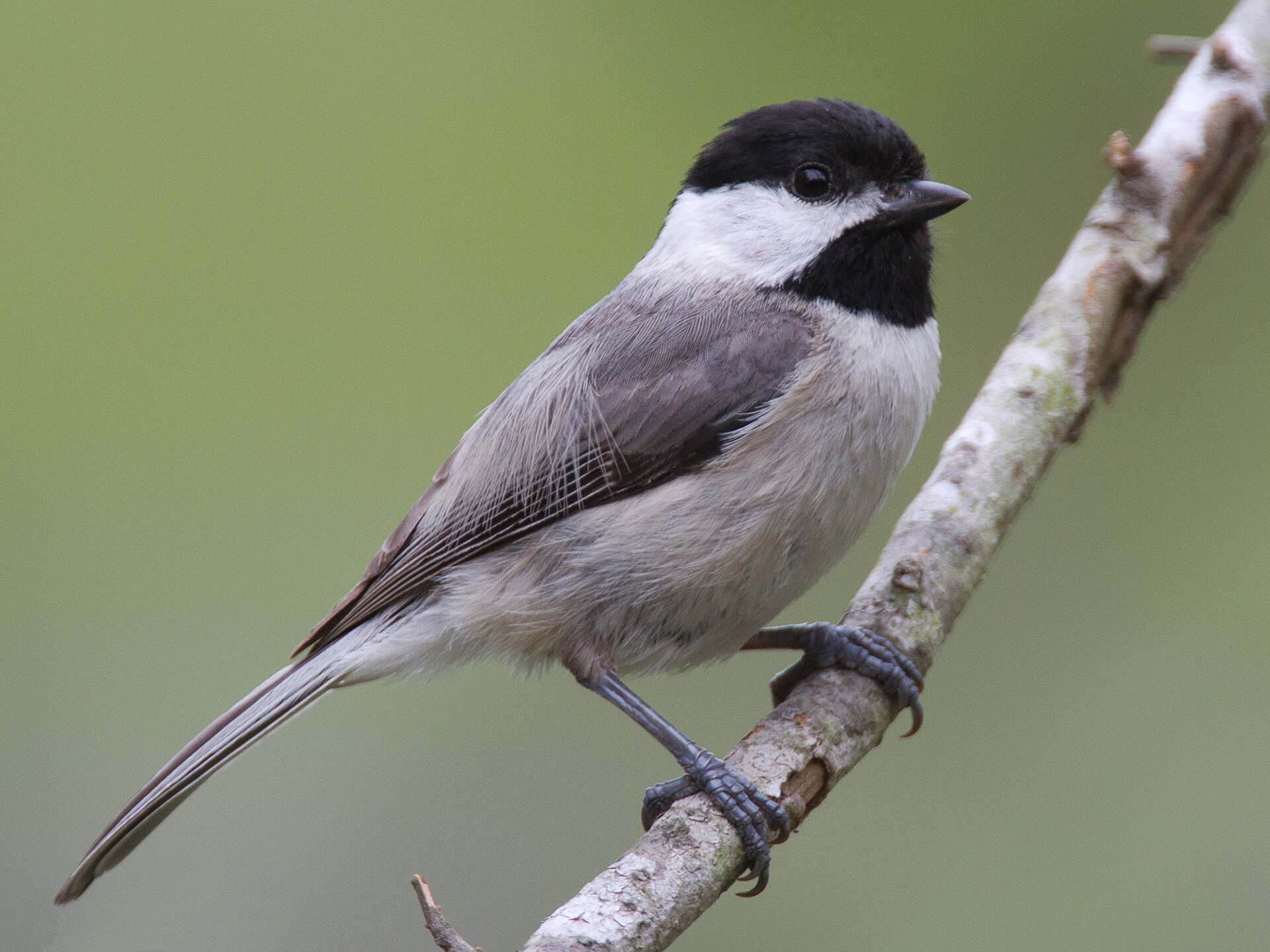
Named for the Carolinas, this small black-capped bird is a staple of feeders across the Piedmont and Coastal Plain. It is gray above and pale below, with a black cap and bib and white cheeks, and it is very hard to separate from the Black-capped Chickadee by looks alone. In North Carolina the easy rule is elevation: Carolinas in the lowlands and most of the mountains, Black-cappeds only on the higher peaks above roughly 4,000 feet. Carolina Chickadees sing a four-note “fee-bee-fee-bay,” take seed one piece at a time, and lead mixed winter flocks that often include titmice, nuthatches, kinglets, and warblers. They nest in small cavities and will use a nest box.
Carolina Wren
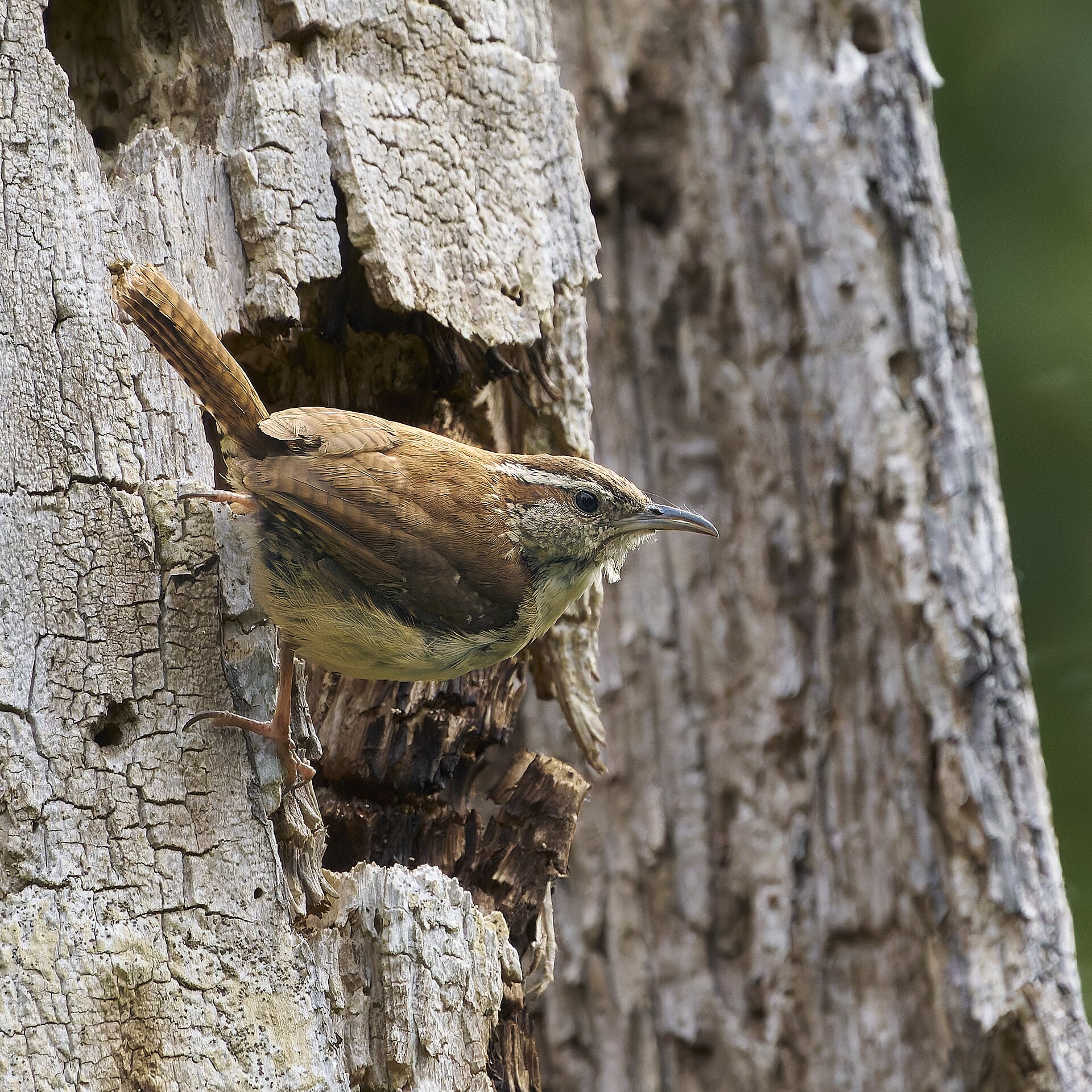
The Carolina Wren is a small, warm brown bird with a bright white eyebrow and a tail often cocked up, and it is one of the loudest songbirds in the state for its size. The “teakettle-teakettle-teakettle” song rings out year-round, and pairs stay on territory together for life. Carolina Wrens explore everything: porches, garages, hanging baskets, grills, and old boots are all regular nest sites. They are mostly insect eaters but will come to suet, peanut pieces, and mealworms, especially in winter. Populations dip after unusually harsh winters and bounce back after a few mild ones. In North Carolina they are common from the coast into the mountain valleys.
Tufted Titmouse
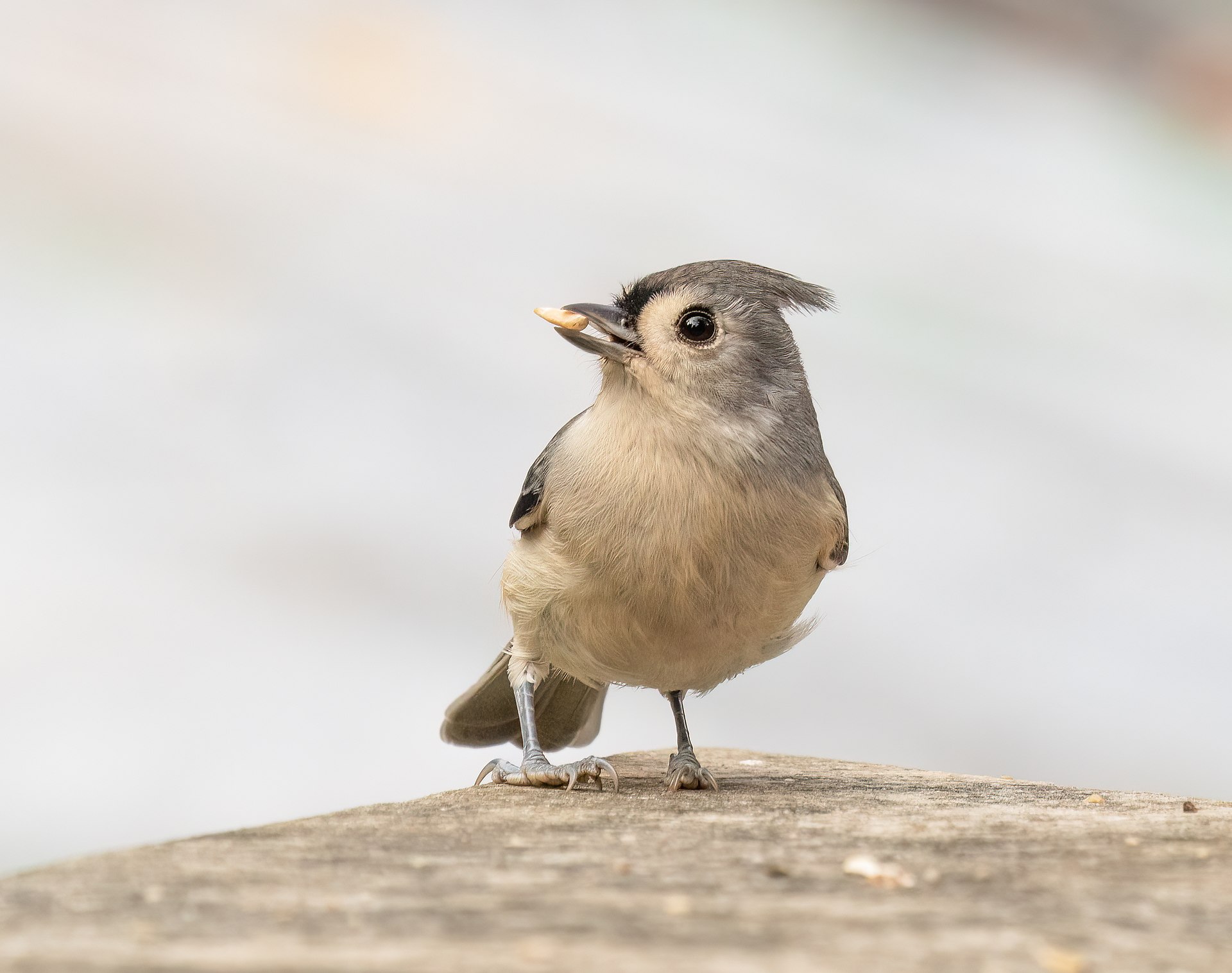
A small gray songbird with a pointed crest, big dark eyes, and a peachy wash on the flanks, the Tufted Titmouse is a year-round resident across North Carolina. It sounds loud and bossy for its size, and its “peter-peter-peter” song is one of the most common sounds in Piedmont woods from late winter onward. At feeders it favors sunflower seed and peanuts, grabs one item at a time, and flies off to eat or hide it. Titmice nest in tree cavities and old woodpecker holes, and they line their nests with soft material, including hair pulled from living animals. They often join chickadees in mixed flocks and follow their alarm calls closely.
Eastern Bluebird
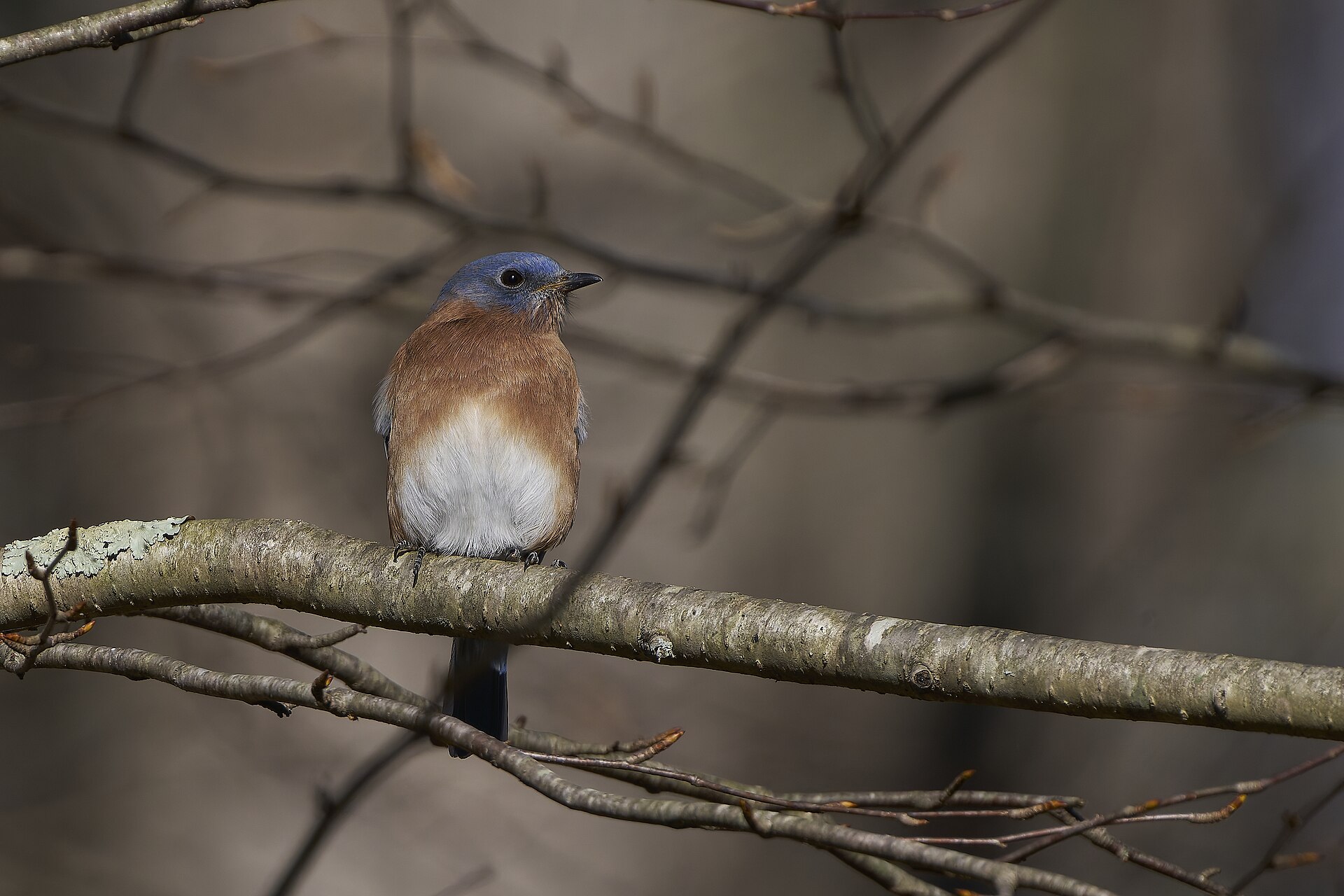
Eastern Bluebirds are one of the great conservation stories in the Southeast. They declined in the twentieth century as House Sparrows and starlings took over their nest cavities, and they came back largely because people put up nest boxes. North Carolina has a strong bluebird-trail tradition, and the species is now common in pastures, golf courses, parks, and open neighborhoods statewide. Males are deep blue with a rusty throat and breast, and females are a softer, grayer version. They nest from March through August and can raise two or three broods a year. At feeders they take mealworms and suet crumbles far more readily than seed.
Brown-headed Nuthatch
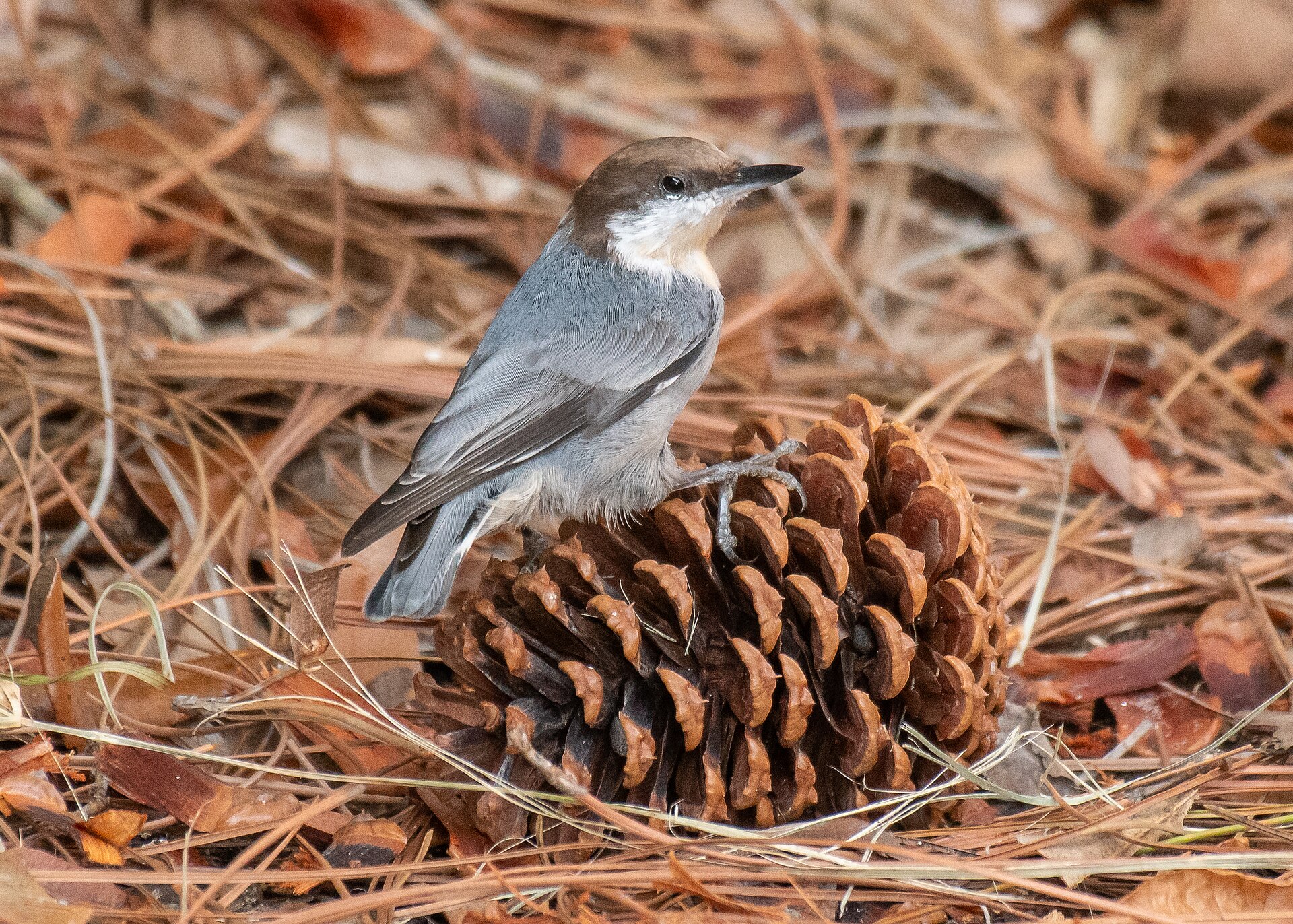
This tiny nuthatch is one of the true signature birds of the Southeast. It is blue-gray above with a soft brown cap and a small white spot on the nape, and its call is a squeaky, two-note sound often compared to a rubber duck. Brown-headed Nuthatches live in pine forests and pine-dominated neighborhoods, and they are common in the Coastal Plain and the eastern Piedmont. They travel in small family groups and are known to use a flake of bark as a tool to pry off other bark while searching for insects, one of very few songbirds known to use tools. They come to sunflower, suet, and peanuts, and they will nest in a small box with a one-inch hole.
Red-bellied Woodpecker
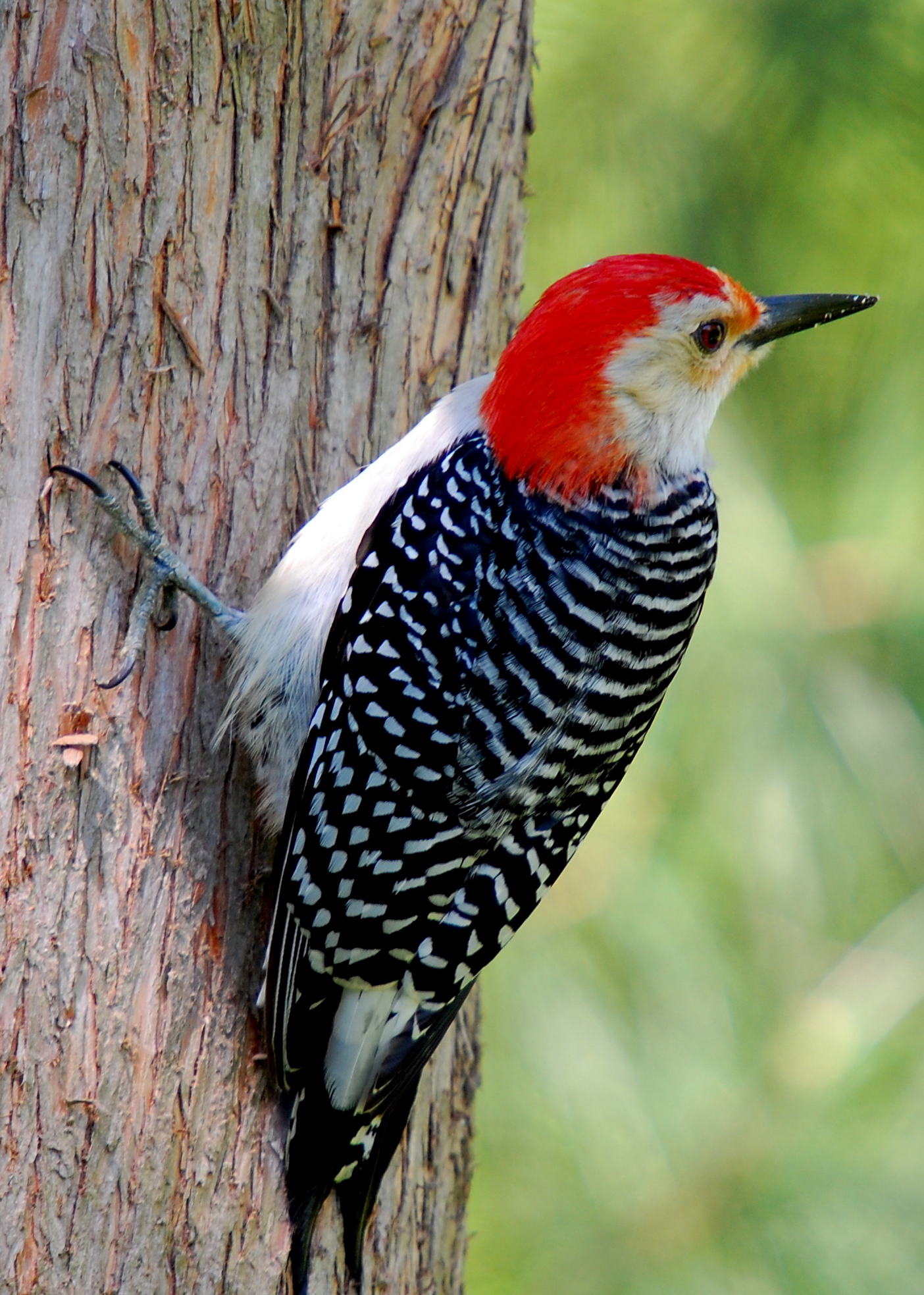
The Red-bellied Woodpecker has a bright red cap and nape, a black-and-white barred back, and only a faint pinkish blush on the belly that gives it its confusing name. It is common across North Carolina in woods, towns, and suburbs, and its rolling “kwirr” call is one of the most frequent sounds in a Southern yard. At feeders it takes suet, peanuts, sunflower seed, and fruit, and it often wedges large seeds or nuts into bark to crack them. Red-bellieds are bigger than the Downy and Hairy woodpeckers and can be bossy at the feeder. They will also sip from orange halves and sometimes hummingbird feeders in summer.
Pine Warbler
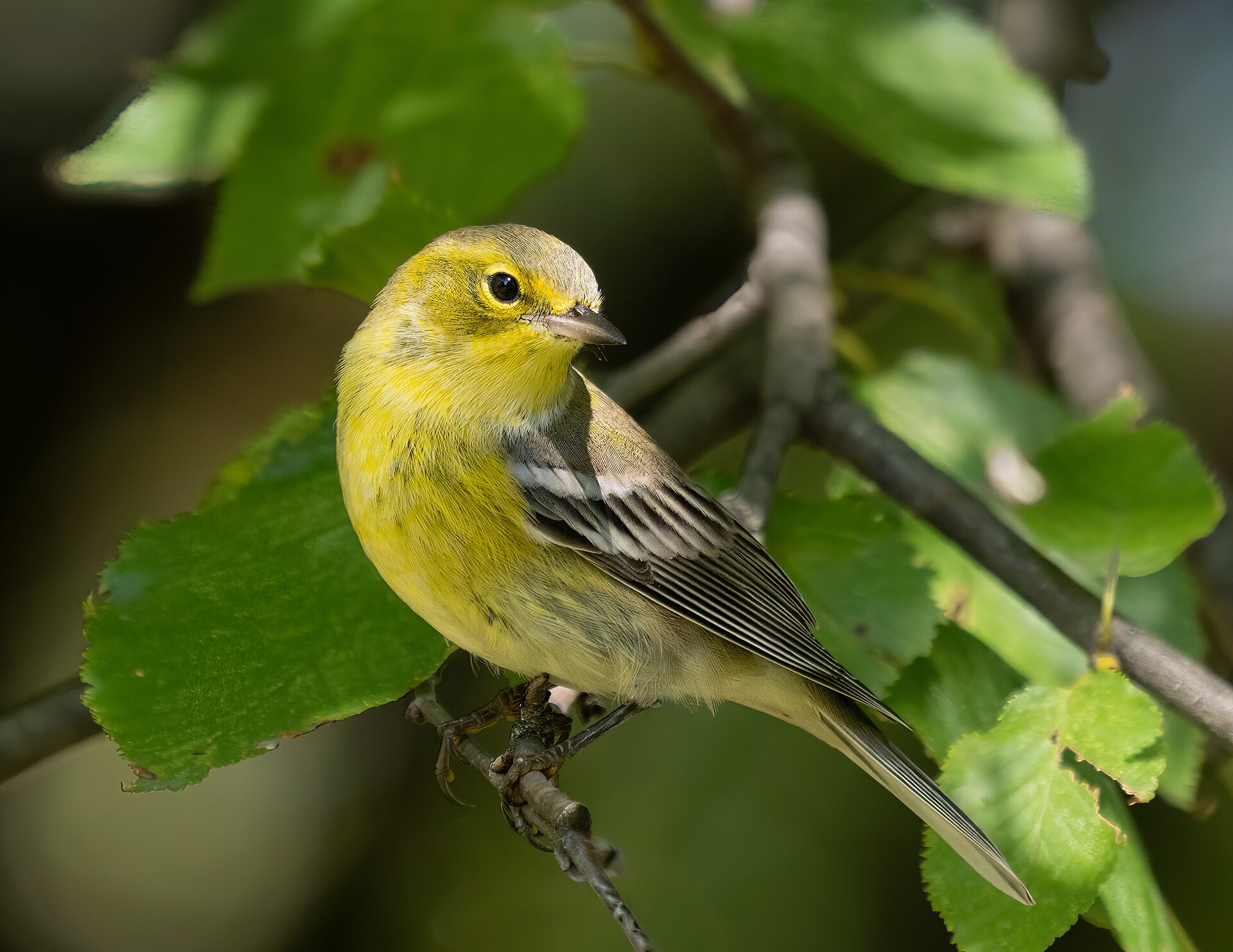
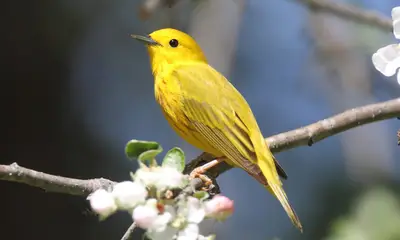
Most warblers pass through a yard in spring and fall without ever touching a feeder, but the Pine Warbler is the exception. It lives year-round in the pine forests of North Carolina’s Piedmont and Coastal Plain and is one of the few warblers that eats seeds, especially in winter. Males are yellow with olive backs, white wing bars, and faint streaking on the sides, and females and young birds are duller, sometimes grayish. Pine Warblers love suet and suet dough, and they will also take hulled sunflower seeds. Their song is a soft, musical trill that is easy to confuse with a Chipping Sparrow or a Dark-eyed Junco, and it starts early in the year.
Chipping Sparrow
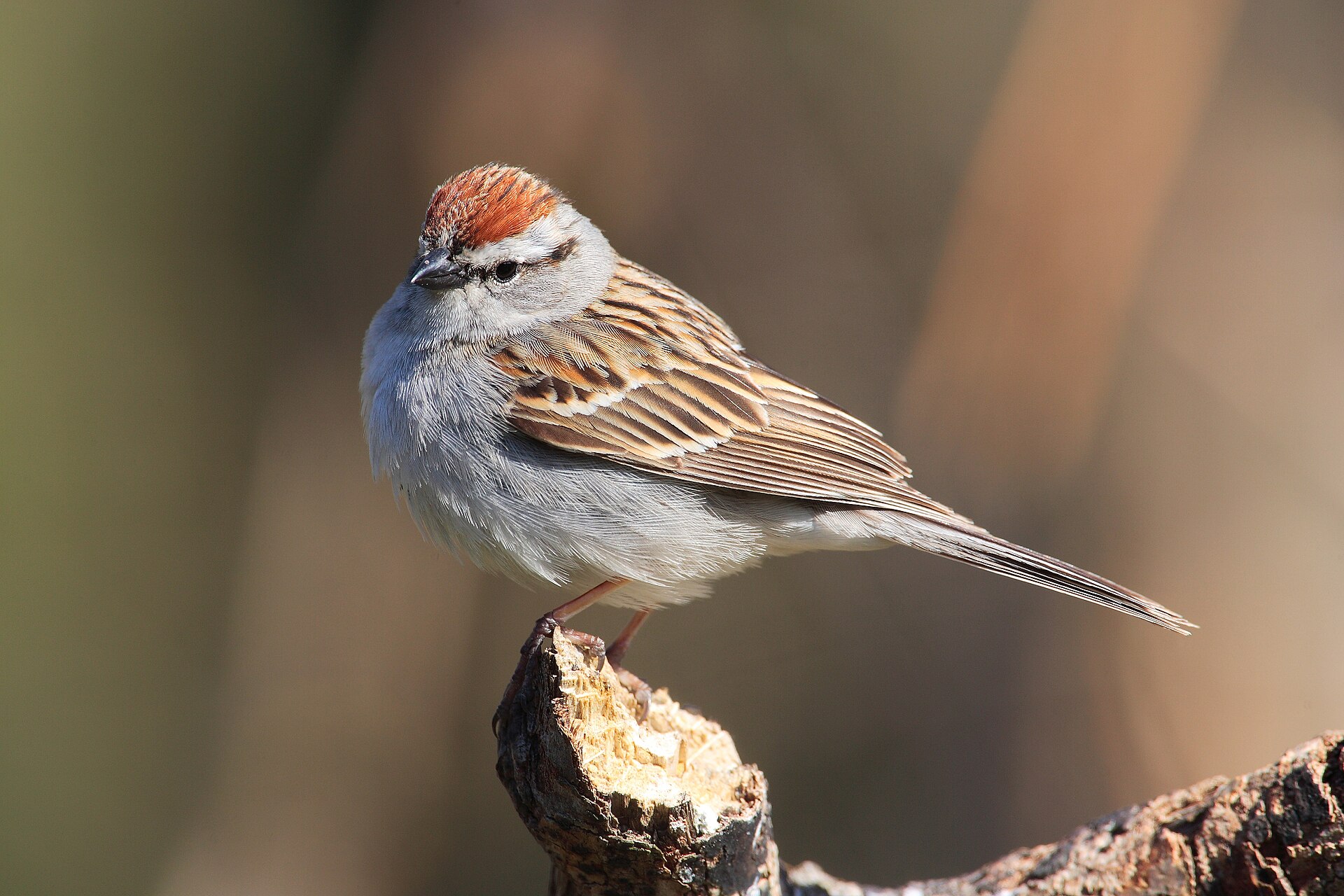
A small, slim sparrow with a rusty cap, a black line through the eye, and a clean gray breast in breeding season, the Chipping Sparrow is common across North Carolina. In winter it looks plainer, with a brown striped cap and a buffy face, and it gathers in flocks that feed on lawns and under feeders. Many of the Chipping Sparrows in the eastern part of the state in winter come from farther north, while summer breeders nest in shrubs and small trees across the state. Their song is a dry, mechanical trill on one pitch. They prefer to feed on the ground and will take millet, cracked corn, and small seeds that spill from feeders.
House Finch
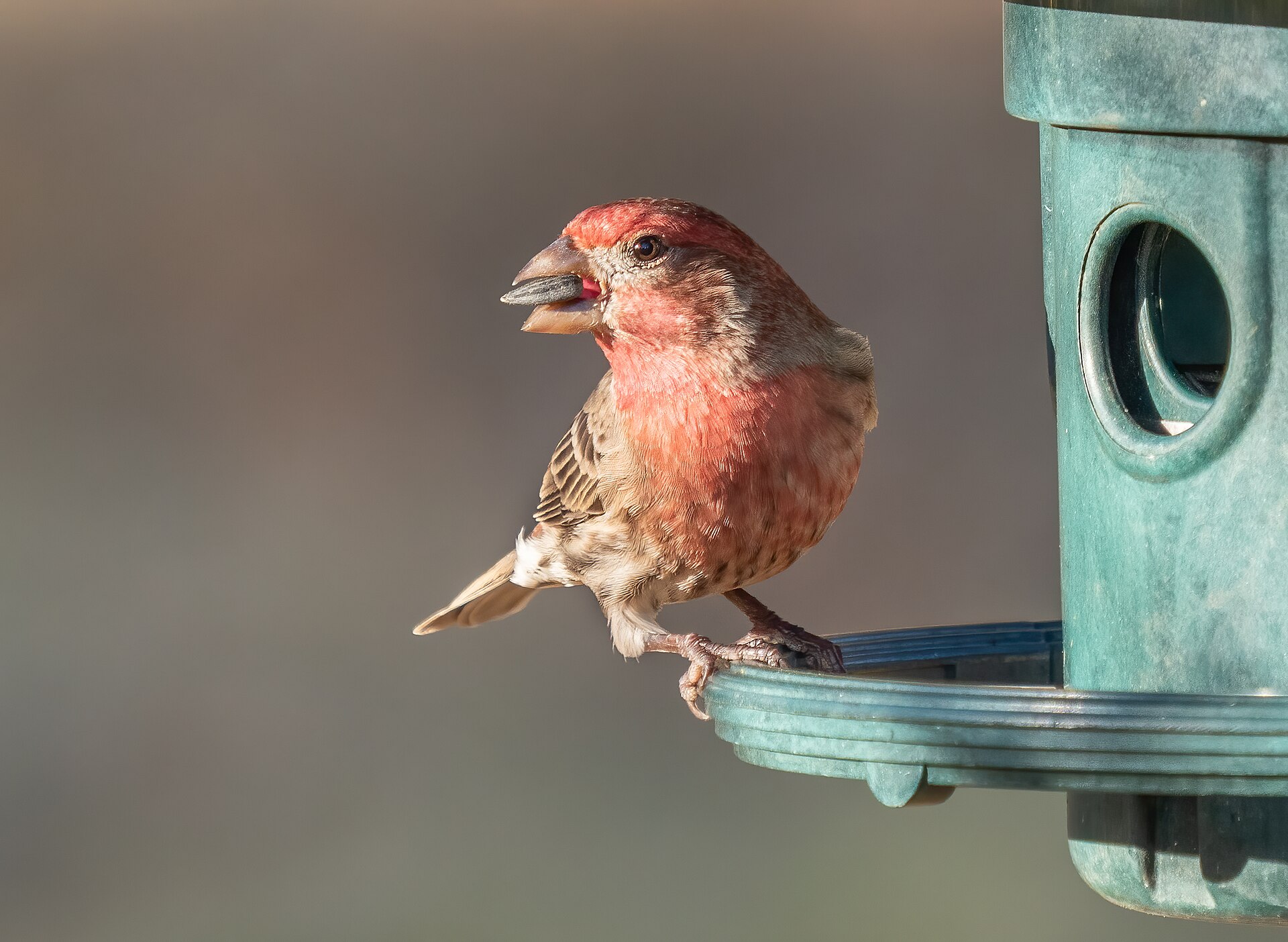
The House Finch is not native to the eastern United States. It was released on Long Island in the 1940s after pet shops stopped selling it illegally, and it spread down the coast and inland, reaching North Carolina in the 1960s and 1970s. It is now common at feeders across the state. Males have red on the head, breast, and rump, while females are streaky brown with no strong face pattern. House Finches are frequent visitors at tube feeders with sunflower seed and nyjer. They are also prone to a bacterial eye disease called mycoplasmal conjunctivitis, which causes swollen, crusty eyes, and regular feeder cleaning helps keep it from spreading.
Ruby-throated Hummingbird
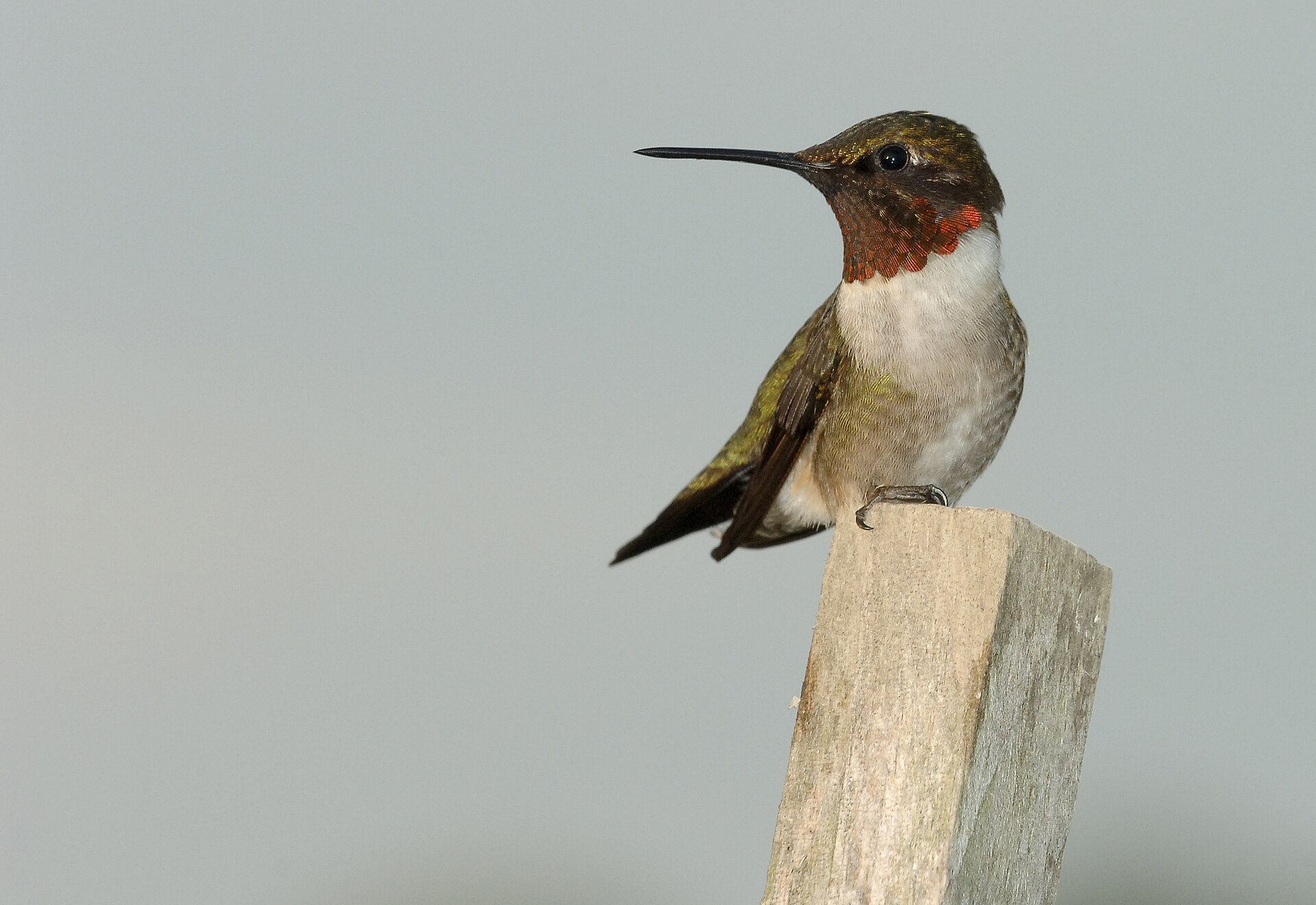
The Ruby-throated Hummingbird is the only hummingbird that nests in North Carolina, arriving in late March along the coast and in April farther inland, and leaving by early October. Males have a throat that looks bright ruby in good light and almost black in shade, and females have a white throat and white tips on the tail. A nectar feeder with one part white sugar to four parts water, changed every two or three days in summer heat, will attract them, and native flowers such as coral honeysuckle, cardinal flower, and red buckeye help a lot. Late summer, when migrants pass through, is often the busiest time at feeders.
Eastern Towhee
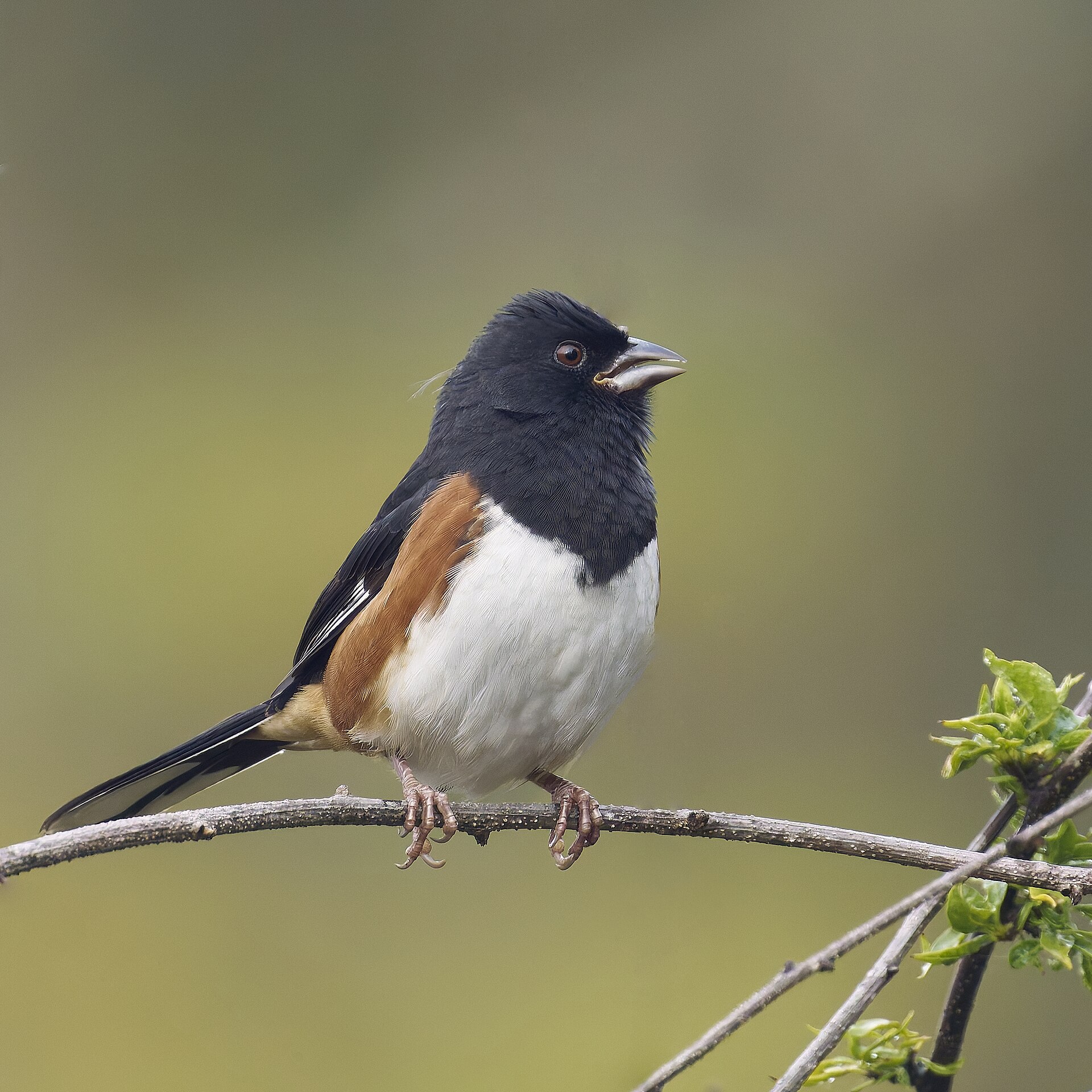
The Eastern Towhee is a big sparrow that spends most of its time scratching in leaf litter under shrubs, kicking with both feet at once. Males have a black head, back, and chest, rusty sides, and a white belly, and females have the same pattern in warm brown. Many towhees in the southeastern part of the state have pale, straw-colored eyes rather than the red eyes of northern birds. The song is often remembered as “drink-your-tea,” and the call is a clear “chewink.” Towhees rarely use hanging feeders but come readily to seed scattered on the ground, especially near dense cover. They are present year-round across most of North Carolina.
Painted Bunting
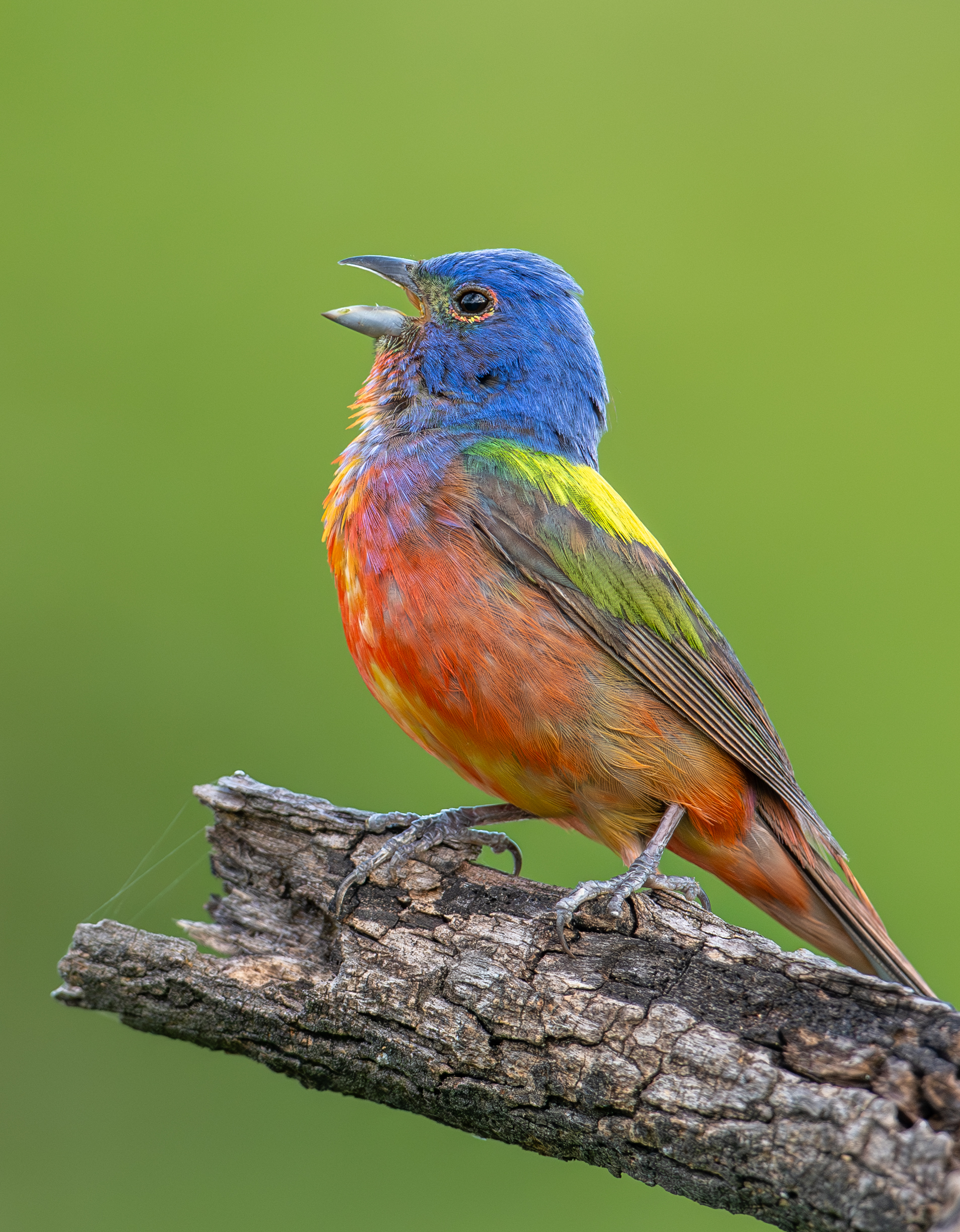
The male Painted Bunting may be the most colorful bird in North America, with a blue head, red underparts, and a lime-green back, and North Carolina sits at the northern edge of its East Coast breeding range. It nests in shrubby edges and maritime thickets along the southern coast, from about Morehead City south to the South Carolina line. Females and young birds are a bright, even green. A small number winter at feeders along the coast, and even in summer they will visit feeders with white millet placed near dense shrubs. They are shy, and adding cover close to the feeder helps. Painted Buntings are declining in parts of their range, partly because of habitat loss.
Red-cockaded Woodpecker
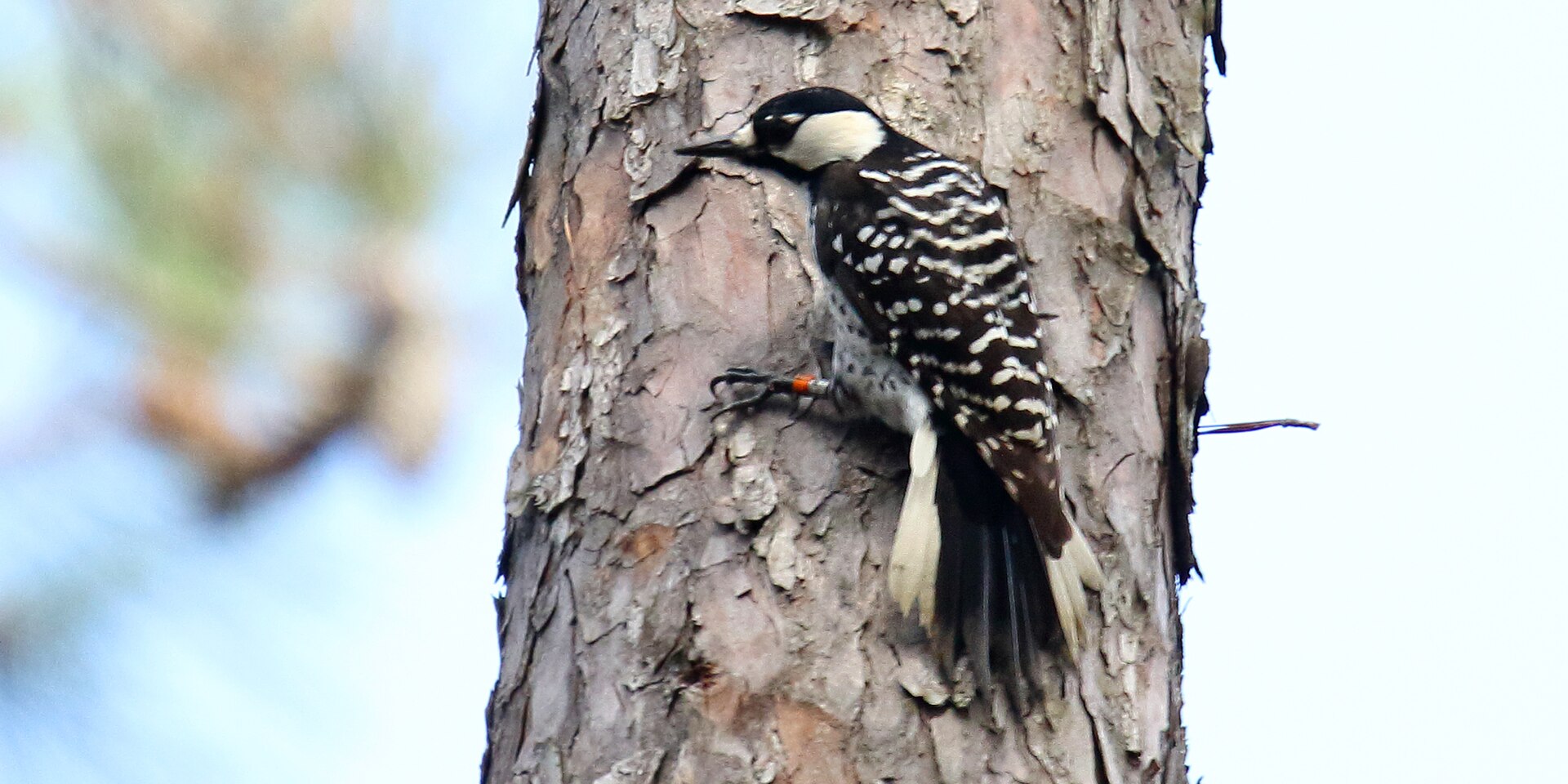
The Red-cockaded Woodpecker is a small black-and-white woodpecker with a large white cheek patch and a tiny red streak on the male’s head that is almost impossible to see in the field. It is the only woodpecker that excavates its nest cavities in living pines, usually old longleaf pines with heart rot, and it keeps the resin flowing around the cavity as a barrier against rat snakes. The species lives in family groups and was listed as endangered in 1970. It was reclassified as threatened in 2024 after decades of work on prescribed burning and artificial cavities. North Carolina’s Sandhills and coastal longleaf forests hold some of the largest populations remaining.
Getting Started
A feeder with black oil sunflower, a suet cage or suet dough, and a ground tray with white millet will cover most of what a North Carolina yard draws, from cardinals and chickadees to towhees and Chipping Sparrows. Add a nyjer feeder for goldfinches in winter, mealworms for bluebirds and wrens, and a hummingbird feeder from late March through October. If there are pines nearby, a small nest box with a one-inch entrance hole might attract Brown-headed Nuthatches, and a larger box on a post in open ground is a good invitation for bluebirds. Keep feeders near shrubs for cover and clean them every week or two, especially in humid summer weather.
The state rewards a bit of travel too. Swans and ducks in the east in winter, warblers in the mountains in spring, shorebirds and seabirds along the Outer Banks in late summer and fall, and Red-cockaded Woodpeckers in the Sandhills all year: it is hard to find another East Coast state with that much range in a single drive. But the Piedmont backyard, with its cardinals and wrens and a Brown-headed Nuthatch or two, is where most people start, and it is a good place to learn.
Sources
Species identification, range, and behavior details are cross-checked against the Cornell Lab of Ornithology’s All About Birds, the National Audubon Society, eBird’s North Carolina regional data, and the North Carolina Wildlife Resources Commission.