What Bird Screams at Night? 10 Birds That Shriek, Squawk, Whistle and Wail After Dark
A scream in the dark is one of the few bird sounds that makes people get out of bed and check the locks. It can be a long, ragged shriek from a field, a strangled bark from the treeline, a wailing cry from a swamp, or a rattling whinny right outside the bedroom window. Almost every time, the source turns out to be an owl, a heron, or a nocturnal shorebird going about its normal business, not a person in trouble.
The trouble is that “scream” covers a lot of ground. Different birds produce very different sounds, and the quickest route to a name is to start with the sound itself, the season, and the kind of place you were standing. This guide is organized that way. Ten North American birds are grouped by what they actually sound like, with a recording for each so you can compare against your memory, and a few notes on how to separate the lookalikes. For the complete list of night callers, including the hooters and nightjars, see our broader guide to sounds of night birds.
Quick guide: what did you hear?
- A long, harsh, raspy shriek, often from open country or around farm buildings: Barn Owl.
- A burst of whooping, cackling, cat-like screaming from woods or a swamp, usually in late winter or spring: Barred Owl.
- A loud, wild wail or scream from a Southeastern marsh or river edge: Limpkin.
- A short, hoarse bark or squawk, either from a perch or overhead at dusk: Great Horned Owl (bark) or Black-crowned Night-Heron (a flat “quok” in flight).
- A shrill, repeated “kill-deer” from a parking lot, field or flat roof: Killdeer.
- A descending, horse-like whinny or a steady purring trill: Eastern Screech-Owl.
- A nasal, buzzy “peent” overhead on a summer evening: Common Nighthawk.
- A clear, whistled phrase repeated again and again from woods: Eastern Whip-poor-will.
- A long string of different whistles, trills and imitations, with each phrase repeated several times: Northern Mockingbird.
- A single high scream in winter with no bird in sight: possibly a red fox, not a bird at all.
Screams and shrieks
These are the sounds behind most “someone is being attacked out there” reports. All three birds in this group are real contenders for a true scream, and the habitat usually tells them apart.
Barn Owl (Tyto furcata)
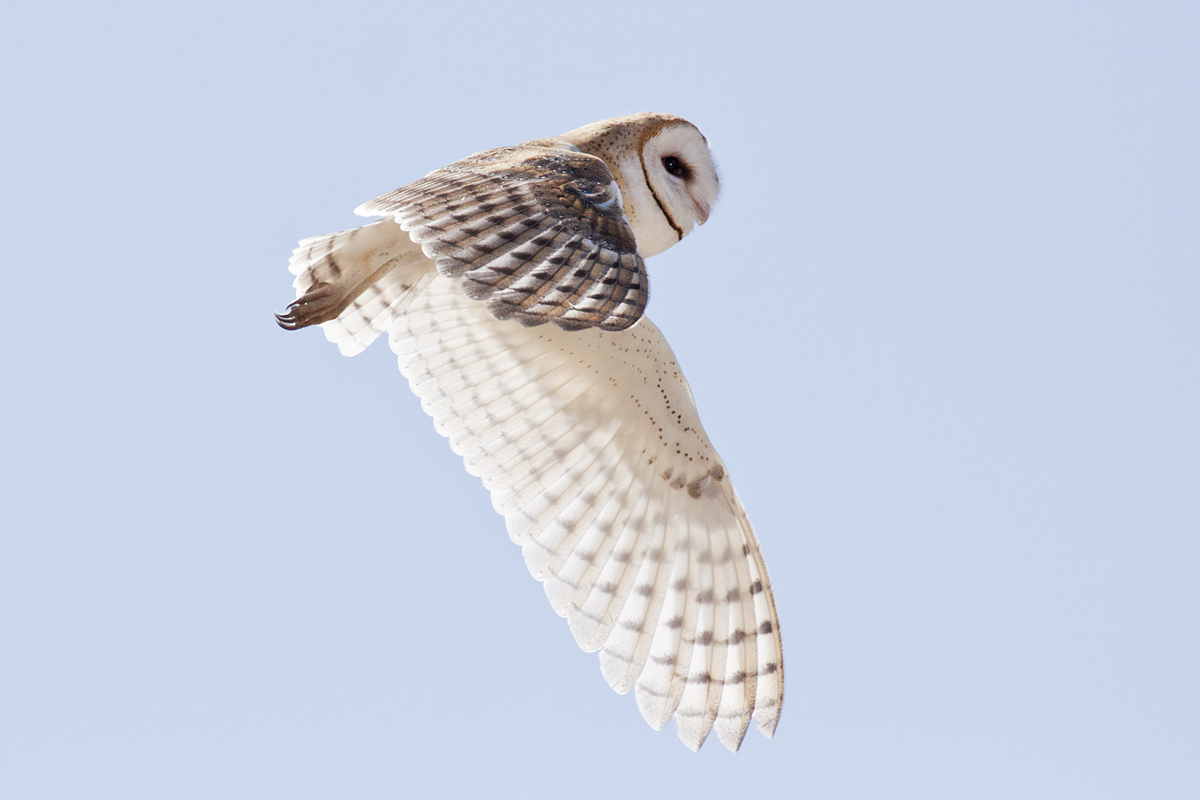
If a single bird deserves the title of “the owl that screams,” it is this one. The Barn Owl does not hoot. Its main call is a piercing, drawn-out, rasping shriek, often written as “shree,” and it is a good deal harsher and more sudden than anything else on this list. Both sexes use it. You hear it mostly from a flying bird, which is why it seems to move across the yard from one end to the other.
Listen for a single long note rather than a pattern. The call is not rhythmic, it does not rise and fall in a tidy phrase, and it has no musical quality at all. Cornered birds also hiss like a snake and snap their bills, but that is a close-range sound you are unlikely to hear from a house.
Where to expect it: open country such as fields, pastures, marsh edges, and the ground around old barns, silos and other roost sites, mostly after dark, and potentially in any season, since Barn Owls can breed almost any time of year when food is plentiful. This species has also been a familiar source of “ghost” stories in Britain for generations, where its screech was once taken as a weather omen.
Sound of American Barn Owl (a series of widely spaced harsh calls, recorded at dusk in Bogotá, Colombia):
Recording: Alexandra Liberato, XC611957, CC BY-SA 4.0, recorded in Colombia.
Barred Owl (Strix varia)
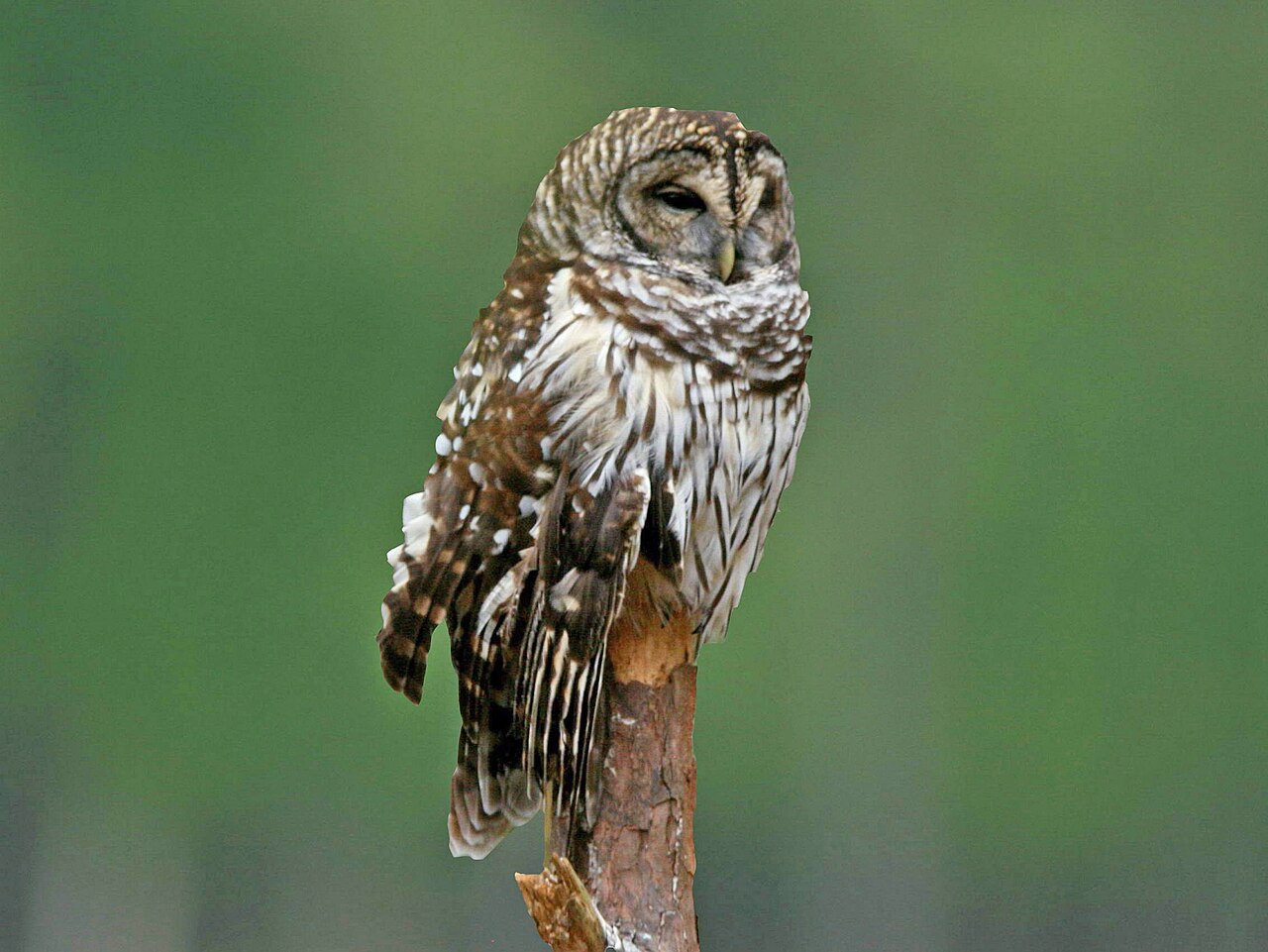
The Barred Owl’s familiar “who cooks for you, who cooks for you all” is the sound most people know. The scream people report comes from the other end of its repertoire. When pairs or neighbors call back and forth, the result can be a rolling mix of whoops, cackles, gurgles and cat-like screams, sometimes described as demonic laughter. Birders call this display “caterwauling,” and field guides treat it as unique among the large forest owls of the genus Strix.
It usually comes in bursts and often from more than one bird, which is the main giveaway. A single shriek followed by silence points elsewhere. A long, escalating, chaotic exchange with several voices overlapping is almost always Barred Owls. Calling peaks from roughly dusk to dawn, and it is most intense in late winter and early spring, from about late January in Florida to early April in Canada, though you can hear it in other months.
Where to expect it: mature, damp forest, wooded river bottoms and swamps across the eastern half of the continent, and increasingly in the Pacific Northwest. If you live near a creek with big old trees, this is the first owl to suspect.
Sound of Barred Owl (a pair caterwauling, recorded in north Georgia):
Recording: Michael & Katie LaTour, XC446889, CC BY-SA 4.0.
Limpkin (Aramus guarauna)
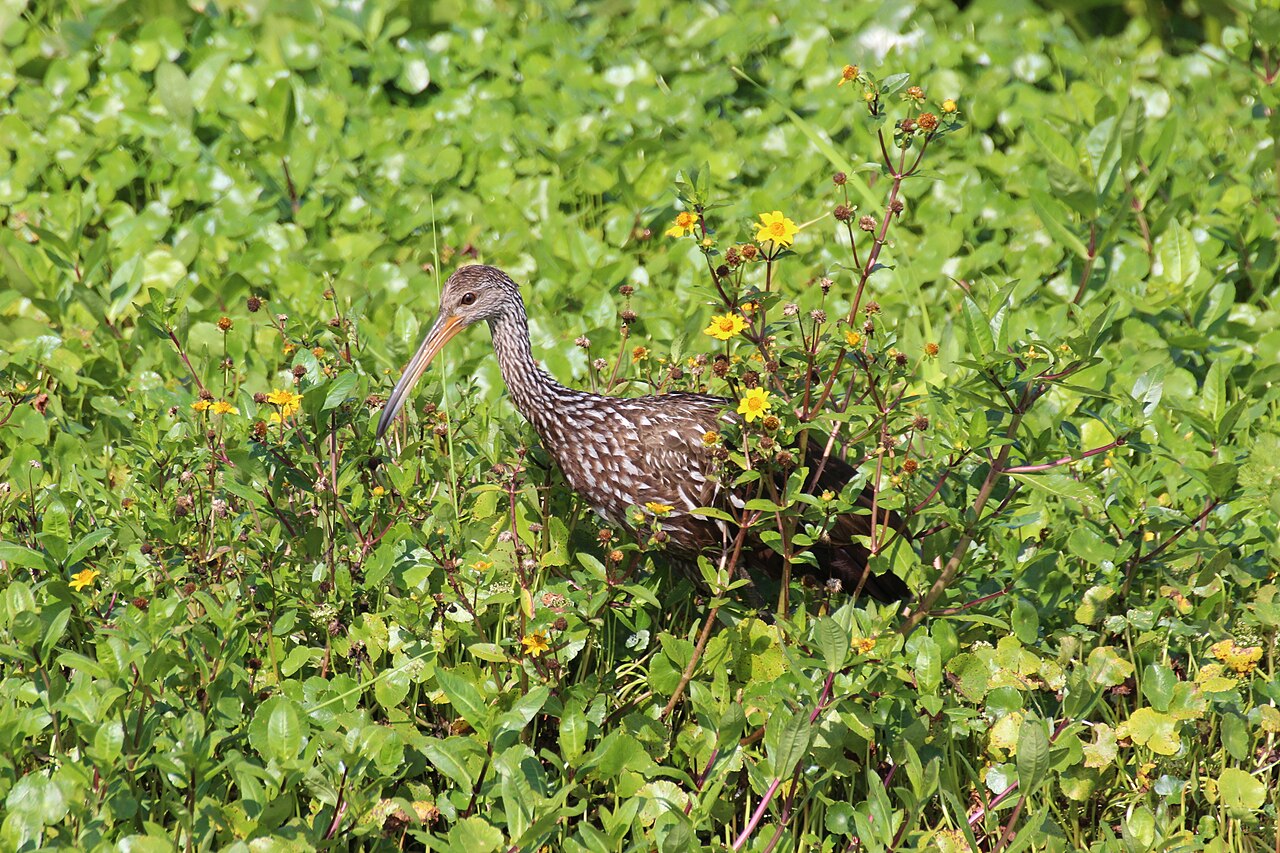
In the Southeast, a very good answer to “what is that screaming in the swamp” is a wading bird. The Limpkin gives a loud, wild wail with a rattling quality, written something like “kwEEEeeer,” and it is nicknamed the “crying bird” for good reason. It calls mostly at night and around dawn and dusk, which means many people know the sound long before they have ever seen the bird.
The Limpkin is a brownish, long-legged wader with a down-curved bill that feeds largely on apple snails, so it is tied to freshwater marshes, swamps and slow rivers. In the United States it is a Florida bird above all, with a population in Georgia’s Okefenokee Swamp, and reports have been appearing farther north in recent years. If you are outside that range, think of the Barred Owl first.
Sound of Limpkin (recorded at a marsh in Ecuador):
Recording: Niels Krabbe, XC250488, CC BY-SA 4.0, recorded in Ecuador.
Barks, squawks and “quoks”
Not every alarming night sound is a scream. A short, hoarse bark or a flat squawk, repeated at intervals, is a very different pattern, and it usually belongs to one of two birds.
Great Horned Owl (Bubo virginianus)
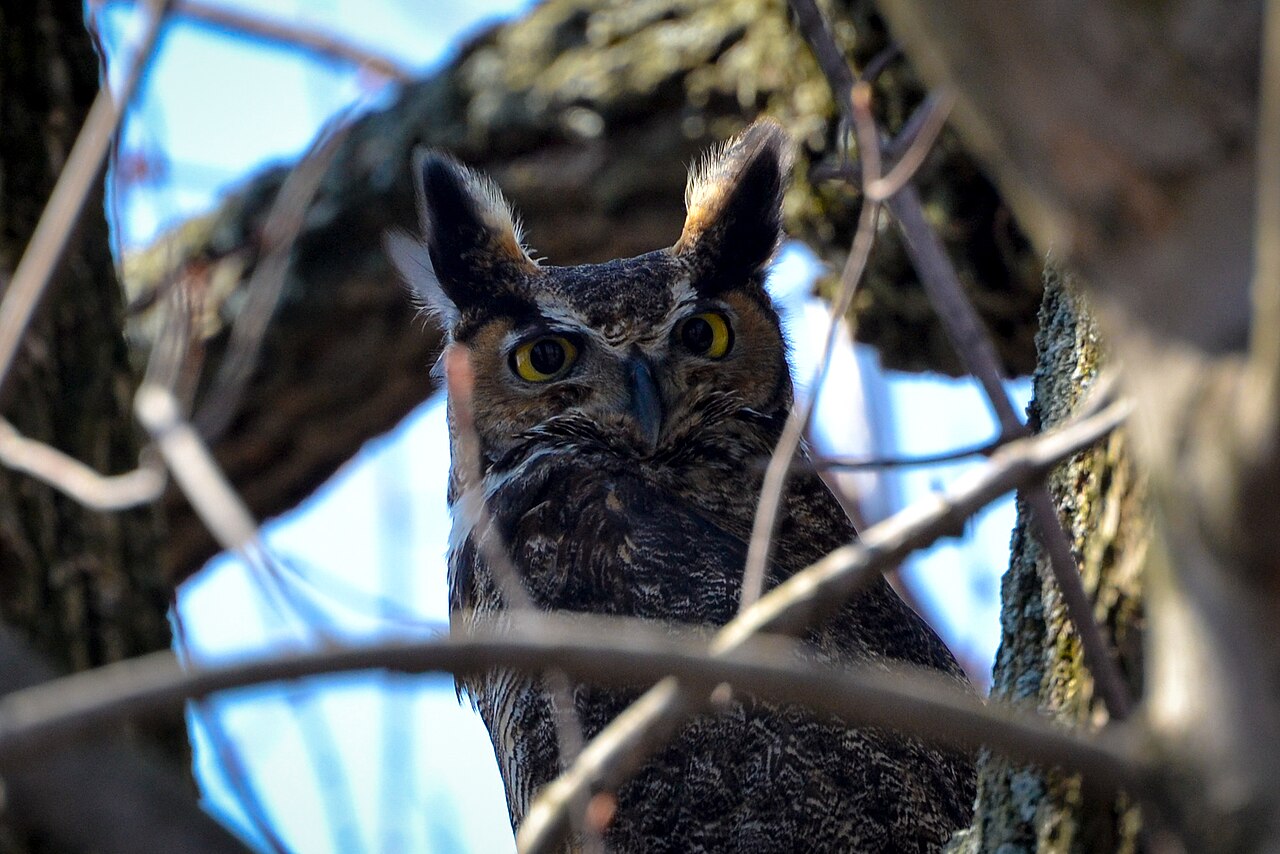
Everyone knows the deep, hooting “ho-ho-hoo hoo hoo” of the Great Horned Owl, and females pitch it higher than males. What catches people off guard is the rest of the repertoire: growls, laughing sequences, high yelps, cat-like meows, hawk-like cries, and hoarse barks. Young owls still in the nest add loud hissing or piercing screeches that are easy to mistake for a Barn Owl.
The bark is the one worth recognizing. On the recording below, the recordist described a pair living near a dry creekbed and oak woodland in California and said the barks were very likely from the female, repeating every five to ten seconds for at least twenty minutes, with no obvious cause. A steady bark at a regular interval from a tree is a strong hint of this owl, as is a response from a second bird with a deeper hoot. Territorial hooting peaks after midnight and fades around February or March, once egg-laying starts.
Where to expect it: nearly everywhere in North America, from forests and farms to suburban parks and golf courses.
Sound of Great Horned Owl (barking, recorded in California):
Recording: Jonas Katona, XC625518, CC BY-SA 4.0.
Black-crowned Night-Heron (Nycticorax nycticorax)
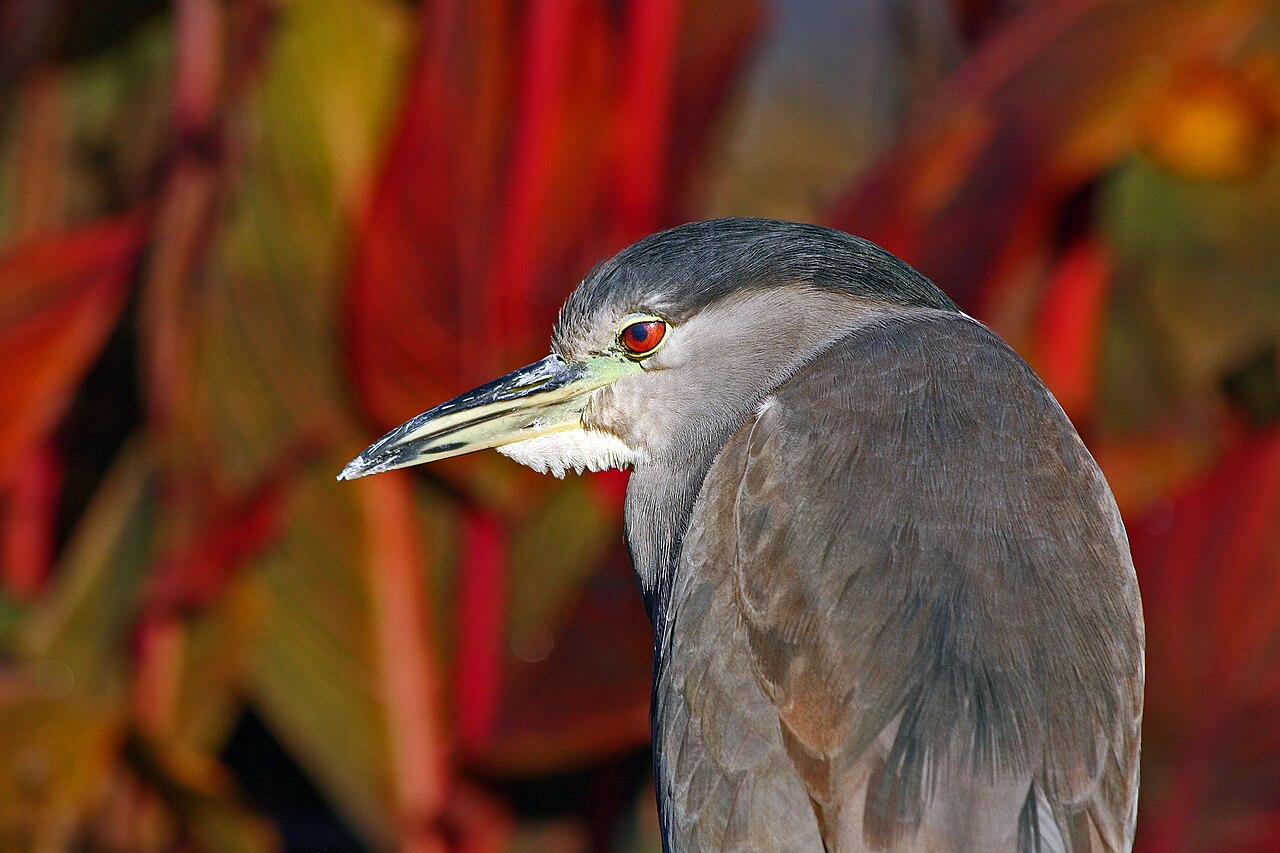
A bird that squawks at night over water is very often a night-heron. The Black-crowned Night-Heron gives a flat, hoarse “quok” (also written “woc” or “kwok”), and it is especially noisy around nesting colonies. Birds leaving the roost at dusk to feed often call in flight, and a few together can sound like a flight of tired crows with sore throats.
The bird itself is a stocky, short-necked heron that rests hidden in dense trees or shrubs by day and hunts at dusk and through the night, standing at the water’s edge and ambushing prey. The sound is a single short note, not a scream, but it is loud, unexpected and sounds like it should belong to something larger. Look for it around ponds, canals, marshes, harbors and even city park lagoons. For help separating it from the other herons, our guide to the types of herons covers the Yellow-crowned Night-Heron too.
Sound of Black-crowned Night-Heron (calls at a nesting colony):
Recording: Jonathon Jongsma, XC99573, CC BY-SA 3.0.
Shrill, repeated cries
Killdeer (Charadrius vociferus)
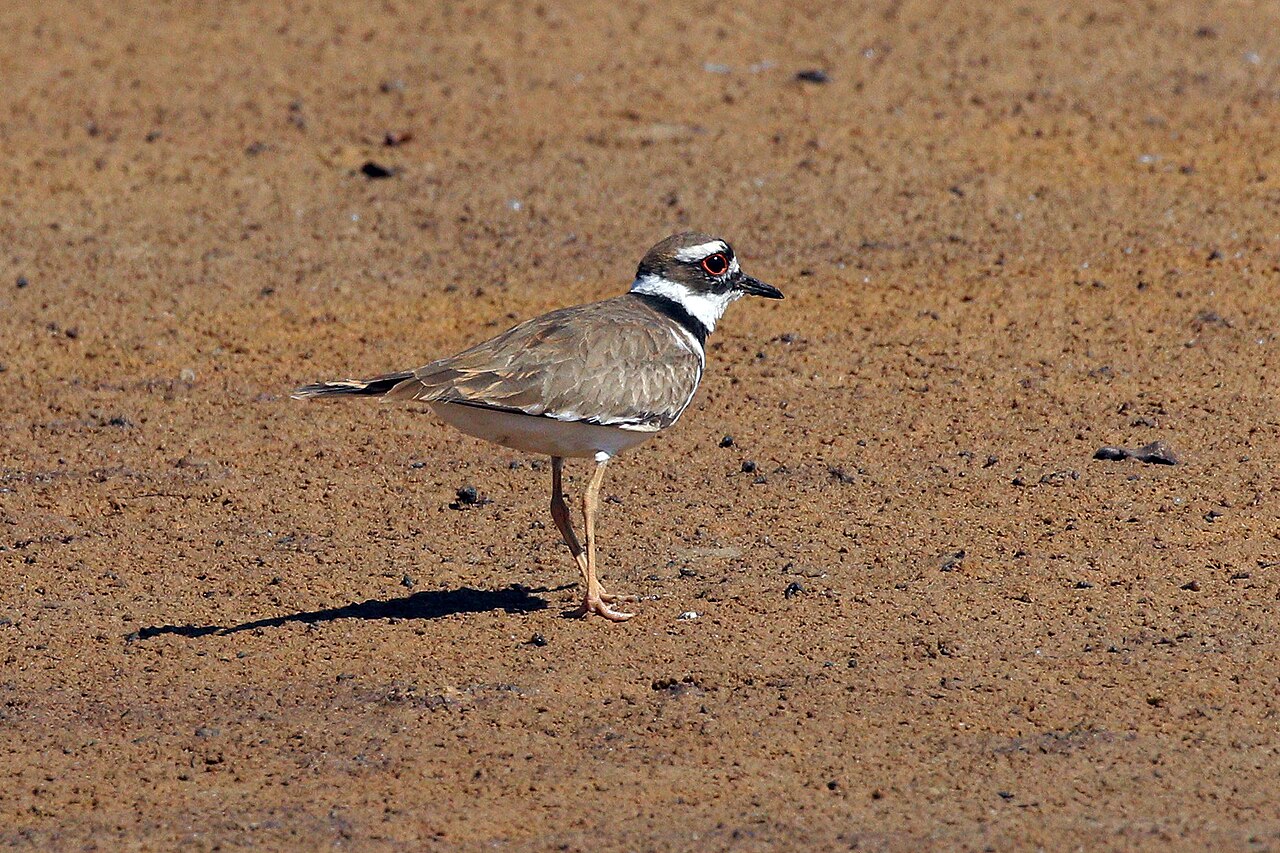
People do not think of a shorebird when they hear a screech after midnight, but the Killdeer has a loud, insistent voice, and it calls at night. Its name is a rough copy of the cry, a high, drawn-out “kill-deer” or “kee-deeyu,” and a disturbed bird breaks into a rapid “kee-di-di-di” or a long, fast trill. Night calling is more frequent around the full moon, when the birds also feed more actively.
This is the classic explanation for a piercing, repeating cry from a parking lot, a ball field or a gravel flat roof. Killdeer nest on bare ground, including gravel rooftops, and they are known for the broken-wing display that draws predators away from eggs. If you hear a high, anxious, repeating cry above a flat open surface in spring or summer, check for a plover with two dark bands across its chest before you worry about anything else.
Sound of Killdeer (a flock calling, recorded in Minnesota):
Recording: Jonathon Jongsma, XC62728, CC BY-SA 3.0.
Trills and whinnies
Eastern Screech-Owl (Megascops asio)
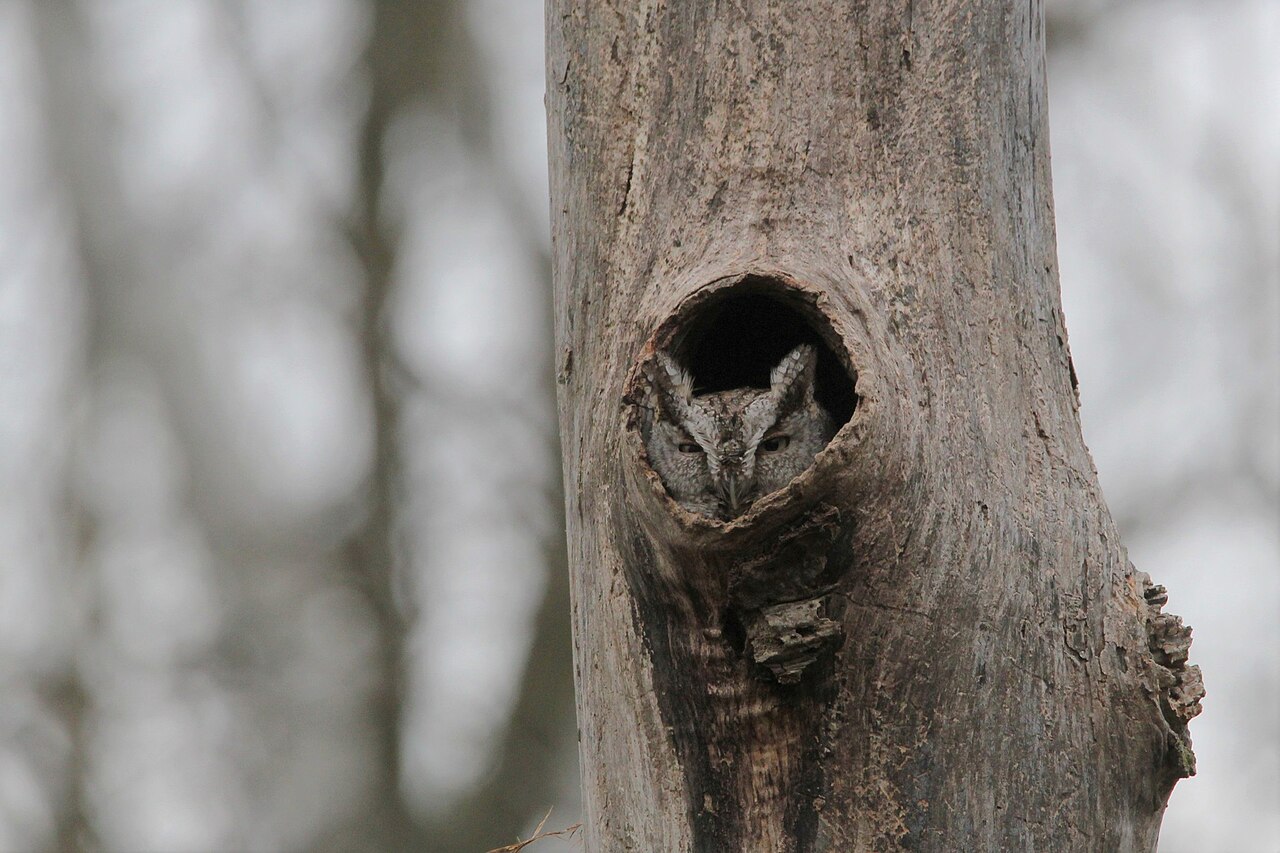
The name is a trap. Eastern Screech-Owls do not truly screech. Early settlers applied the word to the species anyway, but the sound is much softer and more musical than a shriek. The two calls to know are a descending, quavering whinny that sounds like a miniature horse, and a monotone, purring trill that runs for about three to five seconds on one pitch.
That trill is the one that fools people into thinking something small is in distress, because it is unexpectedly eerie from a bird you cannot see. Both calls are most common in spring, around the breeding season. Screech-Owls roost and nest in tree cavities and nest boxes, so look in older trees with holes in suburban yards, parks and woodlots.
In the West, Western Screech-Owls give a very different song, a series of short whistled notes that speed up like a bouncing ball. If the call is not a whinny or a steady trill, you may be hearing that species, or the Whiskered Screech-Owl in the Southwest.
Sound of Eastern Screech-Owl (the monotone trill, recorded in Minneapolis, Minnesota):
Recording: Jonathon Jongsma, XC75829, CC BY-SA 3.0.
Whistles, peents and endless songs
Plenty of people searching “what bird whistles at night” are not looking for a scream at all. These three species account for most of the whistling, buzzing and singing that keeps people awake on warm nights.
Common Nighthawk (Chordeiles minor)
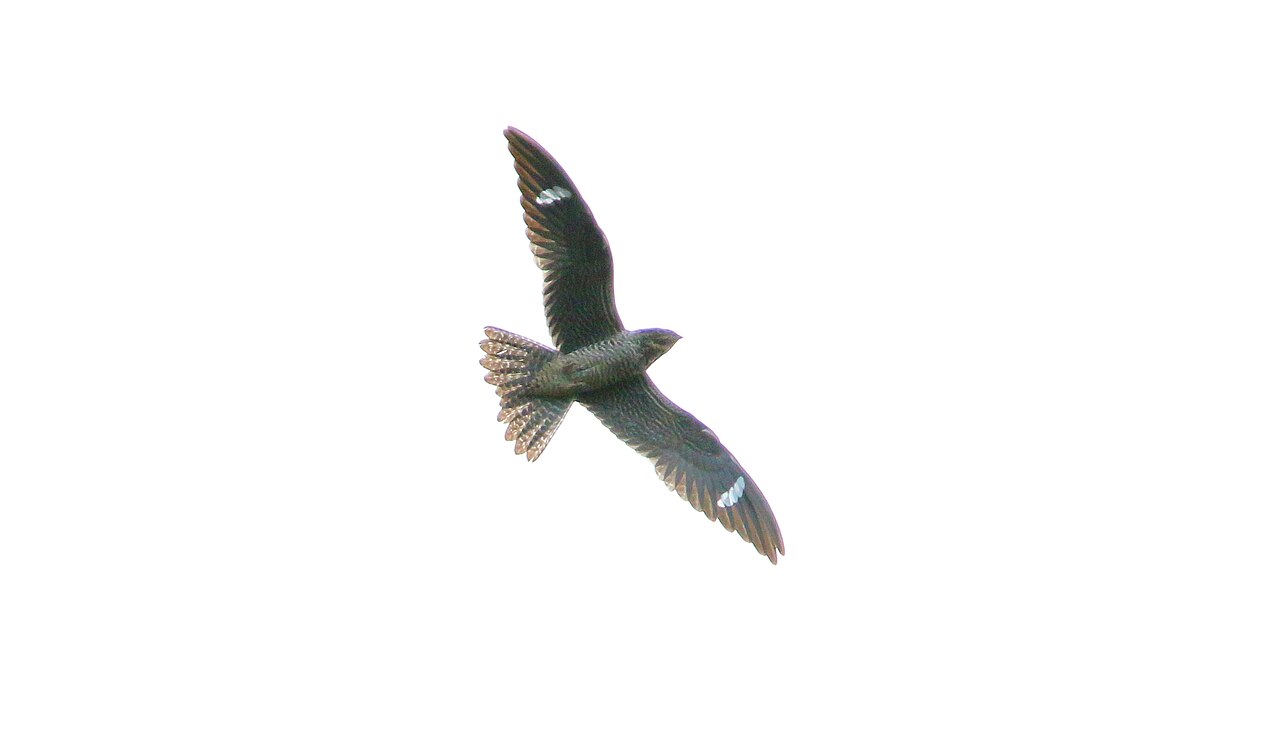
The nighthawk’s call is a nasal, buzzy “peent” given on the wing, and it is easy to hear across a city block. Nighthawks are most vocal in the first 30 to 45 minutes after sunset, and they hunt insects in the air at dusk and again at dawn. They also work around lights, which is why they turn up over stadiums, shopping centers and neighborhoods with street lamps.
Males make a loud “boom” in courtship dives, but that is the wind rushing through the wing feathers, not a voice. The bird is a long-winged, slim, dark flyer with a white patch near each wingtip, and it is more of a late-spring-through-summer sound across much of the continent, since it winters in South America. Nesting happens on open ground, including flat gravel rooftops in cities.
Sound of Common Nighthawk (flight calls, recorded in Honduras):
Recording: Oliver Komar, XC484751, CC BY-SA 4.0, recorded in Honduras.
Eastern Whip-poor-will (Antrostomus vociferus)
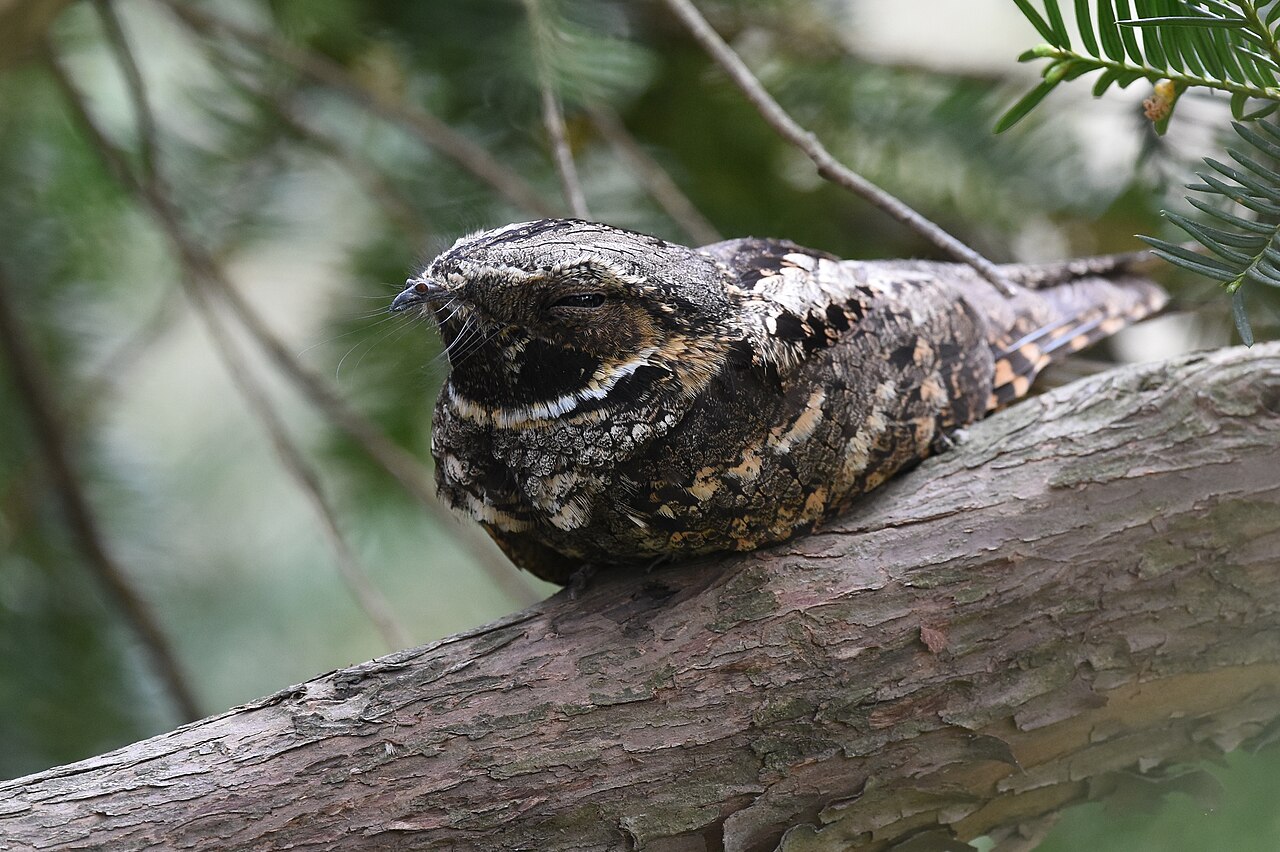
This is the whistling bird of the woods. It is named for its own song, a three-part phrase that it can repeat hundreds of times without a pause, usually at dusk, at dawn and on moonlit nights. The pattern is perfectly even, which makes it sound mechanical. It does not rise to a scream and it never gets harsh, but its sheer persistence drives some light sleepers to distraction.
Whip-poor-wills nest on the ground in open, dry woodland in the eastern United States and southeastern Canada, then migrate to the Southeast, eastern Mexico and Central America for the winter. They are heard far more often than seen, since their patterned plumage is superb camouflage on the forest floor. Our guide to why birds chirp at night explains more about why the nightjars call after dark.
Sound of Eastern Whip-poor-will (song, recorded in North Carolina):
Recording: steve, XC905500, CC BY-SA 4.0.
Northern Mockingbird (Mimus polyglottos)
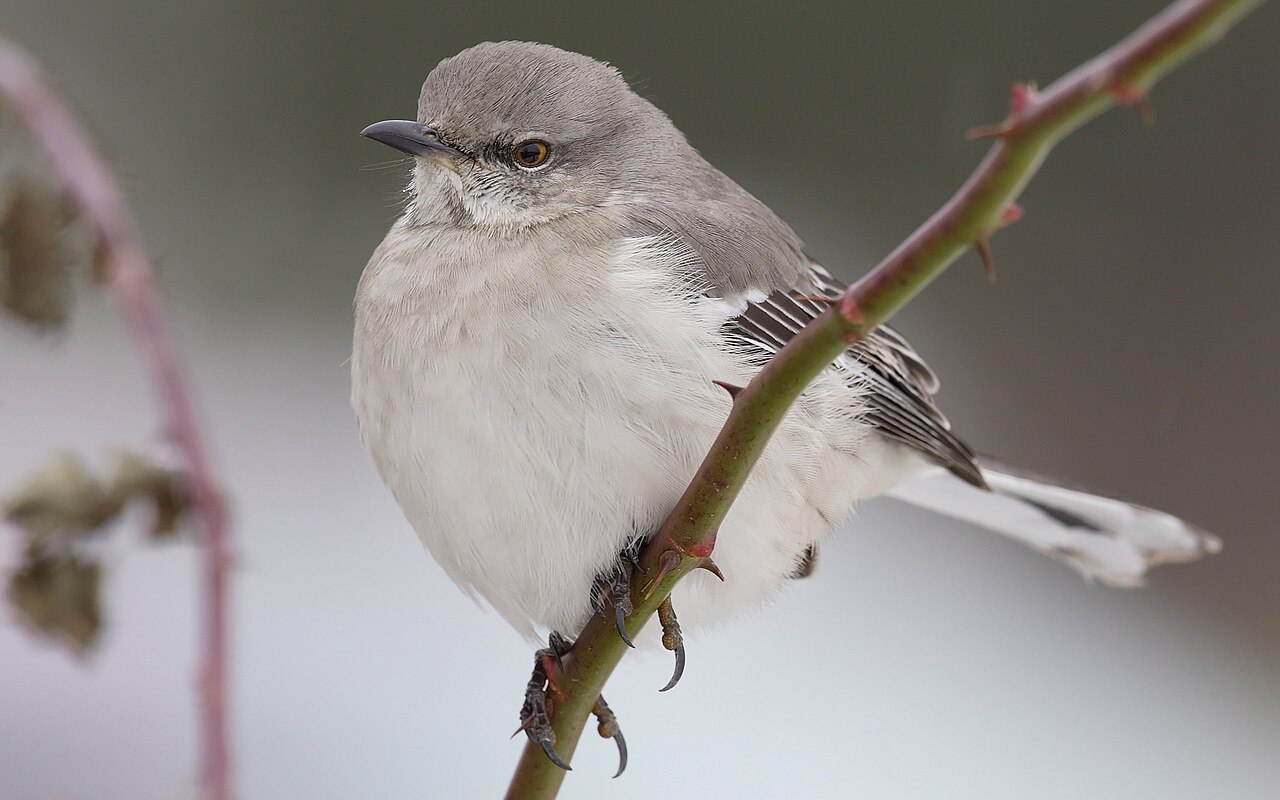
When a bird seems to be running through every sound in the neighborhood at 2 a.m., including a car alarm, a squeaky gate and three other birds, think mockingbird. Unmated males are the main night singers, and they sing more and from higher perches than mated males. A single bird can know somewhere between about 40 and 200 song types depending on where it lives, and the hallmark is that each phrase is repeated several times before it moves on.
That repetition is the key to telling it from other songsters. A Brown Thrasher also repeats phrases, but in pairs. A mockingbird’s string of three or four or more, mixing mimicry with clear whistles, is the one to remember. Singing begins in late winter and runs into the summer.
Sound of Northern Mockingbird:
Recording: steve, XC884705, CC BY-SA 4.0.
When it is not a bird
A bone-chilling single scream in the middle of winter, especially one from a field edge with nothing after it, is often a red fox. Vixens are widely reported to give a high, shrieking scream during the winter breeding season, and it is a classic source of “woman screaming” reports. If the sound comes once or twice, is very sharp, and you hear it in midwinter (breeding runs from about December in the South to as late as April in the far north), a fox is a reasonable first guess. Barn Owls and Barred Owls are still the more probable culprits if you hear more than one scream or hear it in other seasons.
By habitat and season
- Open fields, farms and grassland: Barn Owl (shriek), Great Horned Owl (bark or hoot), Killdeer (shrill cry).
- Mature forest, swamps and river bottoms: Barred Owl (caterwauling), Great Horned Owl, Eastern Screech-Owl.
- Freshwater marsh or swamp in Florida and the Southeast: Limpkin (wail), Barred Owl.
- Ponds, canals and wetlands: Black-crowned Night-Heron (“quok”), Killdeer.
- Cities, parking lots and rooftops in summer: Common Nighthawk (“peent”), Killdeer.
- Dry open woodland in the East: Eastern Whip-poor-will.
- Suburban backyards in spring: Northern Mockingbird, Eastern Screech-Owl.
- Late winter through early spring: peak season for Barred Owl and Great Horned Owl calling, and for red fox screams.
How to narrow it down
If a sound did not match anything above, a few details are enough to get most of the way to a name. Note the month and the time. Write the sound down in plain syllables, since “kwEEEeeer” is more useful than “weird screaming.” Count how long it lasted and whether it repeated at a steady interval. Record a short clip on your phone, even a poor one, because a pattern of calls is far easier to compare against reference recordings than a memory.
Pay attention to where the sound came from. One that moves across the sky is a flying bird such as a Barn Owl, a night-heron or a nighthawk. One that stays in a tree is an owl, a mockingbird or a whip-poor-will. A sound from flat ground in the open is likely a Killdeer or a nighthawk. If you are in one of the states with its own page, our guides to Texas owl sounds, Florida owl sounds and Michigan owl sounds list the local species by call, and there are matching pages for night birds in Florida and night birds in Texas.
Frequently asked questions
What bird screams at night?
The two most likely birds are the Barn Owl, which gives a long, harsh shriek, and the Barred Owl, whose caterwauling includes cat-like screams. In the Southeast, a Limpkin’s wail is another common answer. If it is a single scream in winter, it may be a red fox instead.
What bird squawks at night?
A hoarse squawk or “quok” over water at dusk or later is typically a Black-crowned Night-Heron. A short bark from a tree can be a Great Horned Owl.
What bird whistles at night?
The Eastern Whip-poor-will whistles its name over and over in eastern woods. Northern Mockingbirds mix whistles into long, varied songs, and Eastern Screech-Owls have a whinny and a soft trill.
What bird makes a loud screeching noise at night in my yard?
A Barn Owl is the best match for a true screech, especially if you live near open fields. In a suburban backyard with older trees, the Eastern Screech-Owl and the Great Horned Owl are more likely, though neither produces a classic screech except in unusual calls or from young birds.
Is it normal for owls to scream?
Yes. Owls produce a wide range of sounds, not just hoots. Barn Owls shriek as their main call, Barred Owls cackle and scream while they interact, and young Great Horned Owls give piercing screeches from the nest. None of these sounds mean a bird is hurt.
Why do birds make noise at night?
Owls, night-herons and nightjars are active after dark and use sound to defend territories and find mates. Others, like mockingbirds, sing when lights, quiet and breeding season combine. Our article Why Do Birds Chirp At Night? goes into more detail.
Looking for more? The full list of nocturnal callers, with scientific names and recordings, is in our guide to sounds of night birds.