Winter Birds in California: Who Arrives with the Rains, October to April
Winter in California doesn’t look much like winter anywhere else. In most of the lowlands it’s the rainy season, and the hills that were brown in August turn green by January. For a lot of birds, that makes it a destination. Sparrows from Alaska, thrushes from the Northwest, and warblers from the Canadian Rockies arrive from late September on and spend the next six months in yards and parks from Redding to San Diego.
This guide is about those months, roughly October through April. The year-round residents (California Towhees, scrub-jays, Black Phoebes, House Finches, the Oak Titmouse) are covered in the California backyard birds field guide. What follows are the birds that arrive with the first rains, along with two big winter spectacles that are worth a drive.
Three Californias in winter
California is long, steep, and split by mountains, so it’s easier to think of winter here as three separate seasons happening at once. Along the coast and in the coastal valleys, winter is mild and wet, and this is where the bulk of the backyard visitors in this guide settle in.
The Central Valley is the second California, and in winter it belongs to waterbirds. It sits squarely on the Pacific Flyway, and even after the loss of most of its historic wetlands, its managed marshes and flooded rice fields hold millions of ducks, geese, and cranes from October through February.
The third California is the high country. The Sierra and the southern mountains get real snow, and yards in places like Truckee or Big Bear keep a short list of hardy residents: Mountain Chickadees, Steller’s Jays, juncos, nuthatches. Many birds that summer up there simply move downhill, which is part of why the lowlands get so busy.
The state bird in winter
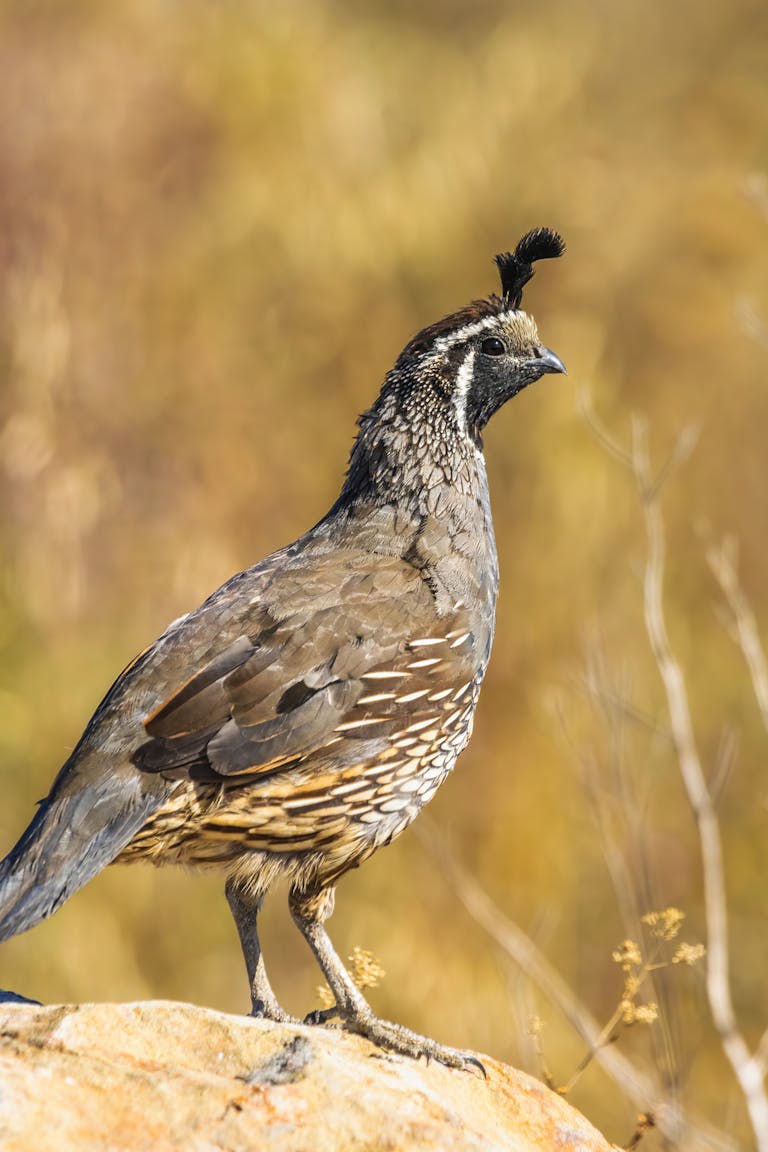
California Quail, named the state bird in 1931, don’t migrate, but fall and winter are when they’re easiest to see. After the breeding season ends, families merge into coveys that can number a few dozen birds, and a covey tends to work the same route through a neighborhood every morning and evening. Millet or cracked corn scattered near dense shrubs will bring a covey back to the same spot daily, walking in single file with the topknots bobbing.
Winter feeding notes for California
The general advice in the winter bird feeding guide holds up here, with a few California-specific points. White proso millet on the ground near shrubs brings in crowned sparrows, juncos, towhees, and quail, and black-oil sunflower covers most of the rest. Suet is more useful on the coast than people expect, because Townsend’s Warblers, kinglets, and Hermit Thrushes will all take it.
Hygiene matters more in California than almost anywhere else. Pine Siskins move into the state in large numbers some winters, and they’re prone to salmonellosis outbreaks that spread at crowded feeders. During the 2020–21 irruption the California Department of Fish and Wildlife asked residents to take feeders and birdbaths down for several weeks. If fluffed-up, lethargic finches appear, empty and disinfect everything and leave it down for a couple of weeks. The first-winter feeder setup guide covers the cleaning routine.
Hummingbird feeders should stay up all winter. Anna’s Hummingbirds don’t leave, and they nest in the middle of the rainy season. Change the sugar water every few days, even in cool weather.
For plants, a few natives carry most of the load. Toyon, the shrub sometimes called California holly, ripens its red berries in late fall and is stripped by waxwings, robins, and thrushes through the winter. Manzanitas bloom in the middle of winter, often from December on, and flowering currant follows in late winter. Both are important nectar sources for Anna’s Hummingbirds at a time when little else is in flower.
Golden-crowned Sparrow
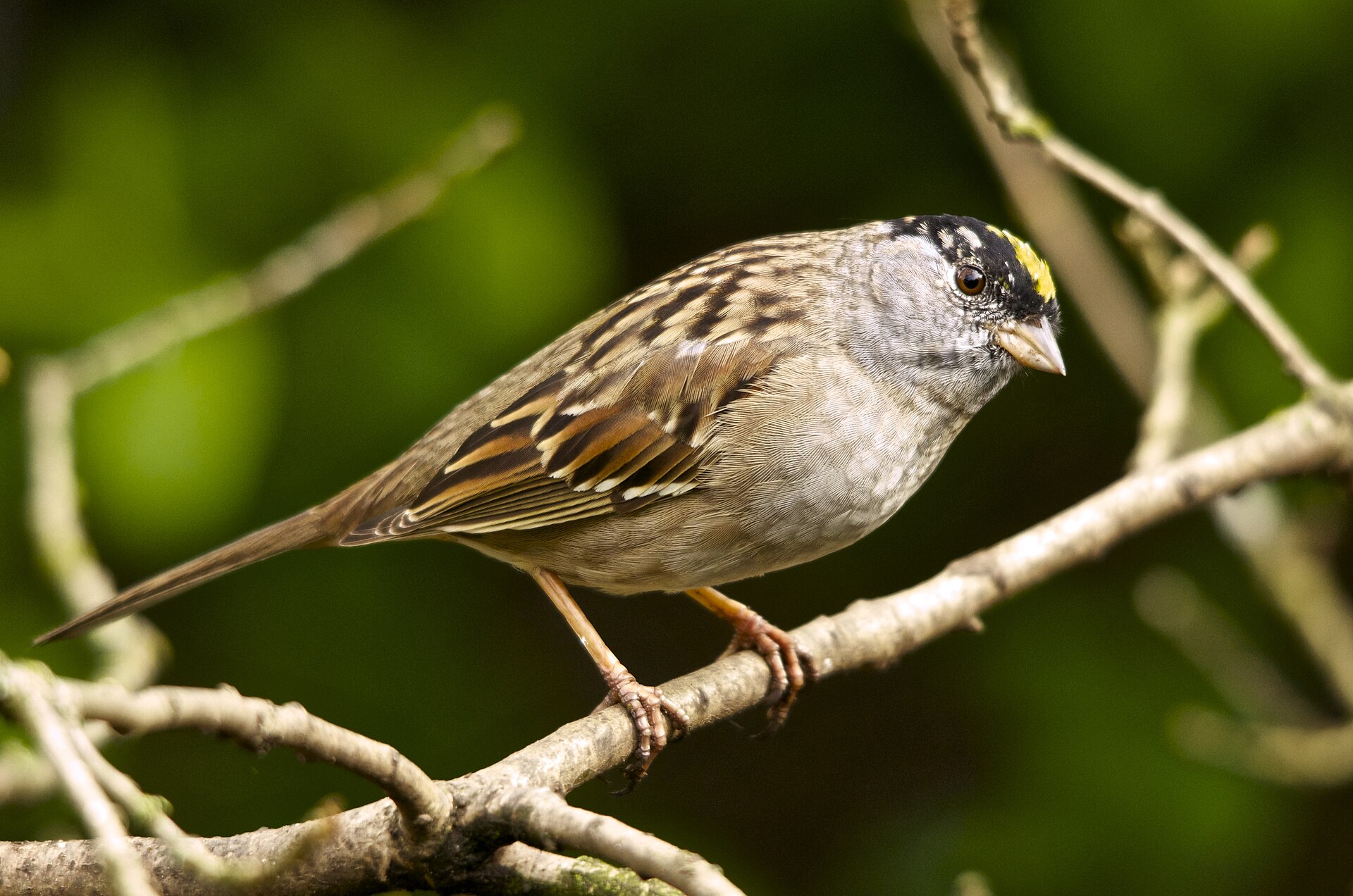
If one bird stands for winter in a California yard, it’s this one. A large sparrow, about 7 inches, with a plain gray-brown face and breast and a streaked brown back. In winter the crown shows a dull yellow patch at the front, sometimes faint on young birds. By April many adults have molted into breeding plumage, with a bright yellow forehead framed in black (the bird in the photo).
Golden-crowns breed in Alaska and western Canada and winter mainly along the Pacific coast. They arrive in late September and October, often travel with White-crowned Sparrows, and stay into early May. Listen for the song, a slow, falling three-note whistle that people describe as “oh dear me.” They feed on the ground near cover, take millet readily, and have a well-known taste for young garden greens.
Fox Sparrow
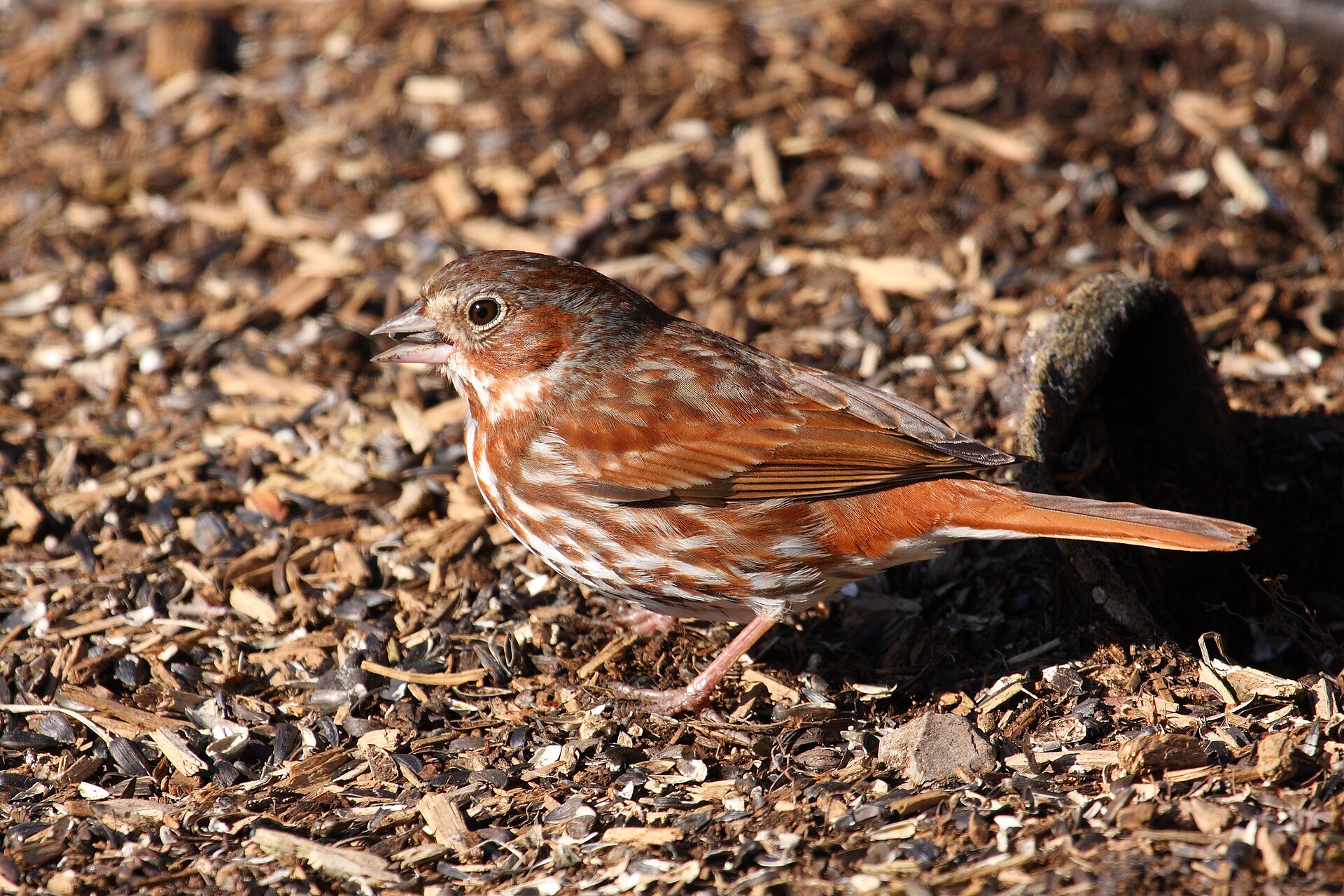
A big, chunky sparrow, 6.5 to 7 inches, with heavy spotting on the breast that often runs together into a dark central blotch. The bright rusty bird in the photo is the eastern “Red” form, which is rare in California. Most California birds are darker: chocolate-brown “Sooty” birds from the Northwest and Alaska, gray-headed “Slate-colored” birds, and the stout-billed “Thick-billed” form from the Sierra.
Whatever the form, the behavior is the same. Fox Sparrows feed under shrubs, kicking leaf litter backward with both feet in a noisy double-scratch, and they rarely move far from cover. A few will come out for seed scattered at the edge of a hedge or brush pile.
Hermit Thrush
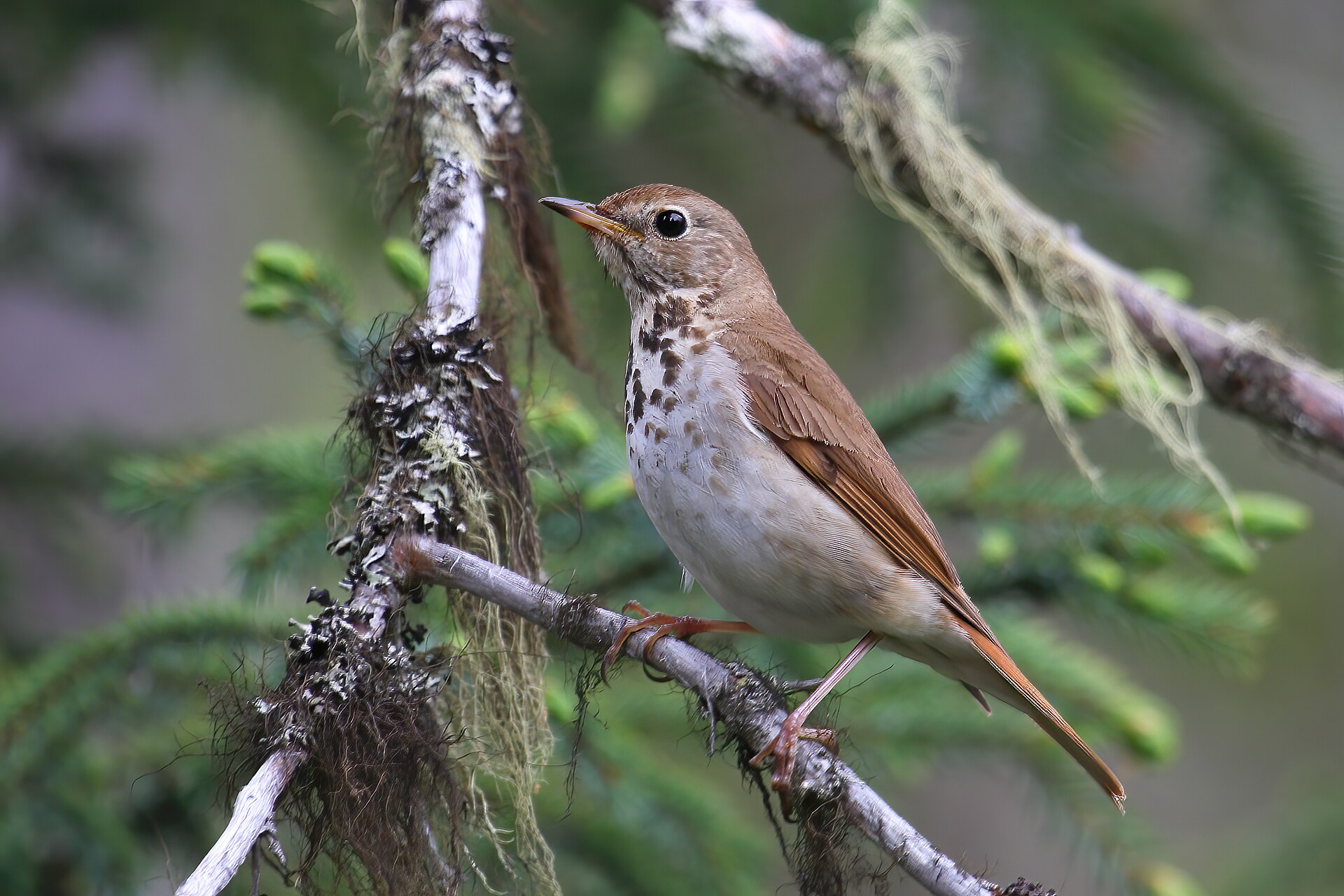
A slim brown thrush, about 6.5 inches, with a spotted breast, a thin pale eye-ring, and a reddish tail that contrasts with a duller back. The giveaway is the habit of slowly raising the tail and dropping it again while it perches. The call is a low “chup,” given from inside a shrub.
Hermit Thrushes breed in the mountains and northern forests and winter widely across California’s lowlands, including suburban yards with some shade and leaf litter. They eat insects on the ground and switch to toyon and pyracantha berries in cold, wet weather. A ground-level birdbath is often the best way to get a good look.
Varied Thrush
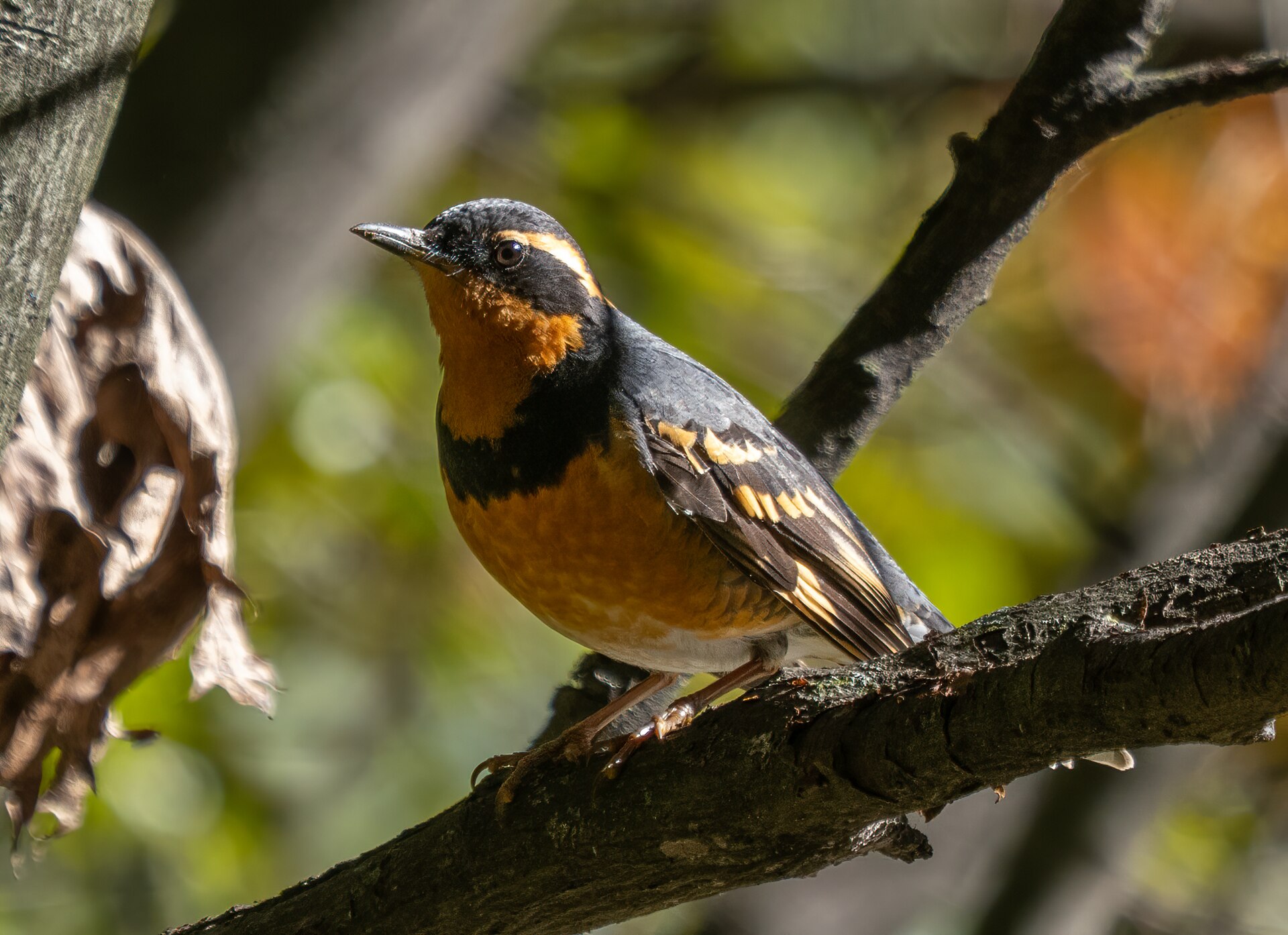
A robin-sized thrush that looks like a robin painted by someone with a different idea. Males are slate-blue above with a burnt-orange throat, eyebrow, and wingbars and a black band across the breast. Females have the same pattern in duller brown and orange. The song, heard mostly in the breeding season, is a single long buzzy whistle on one pitch.
Varied Thrushes breed in the dense, wet forests of the Pacific Northwest and the far north coast of California. In winter they spread south through the state’s forests, oak woodlands, and shaded yards, but how many arrive changes a lot from year to year. Some winters they’re scarce, in others common well south into the coast ranges. They feed on the ground, often under oaks and toyon, and are shy at first.
Ruby-crowned Kinglet
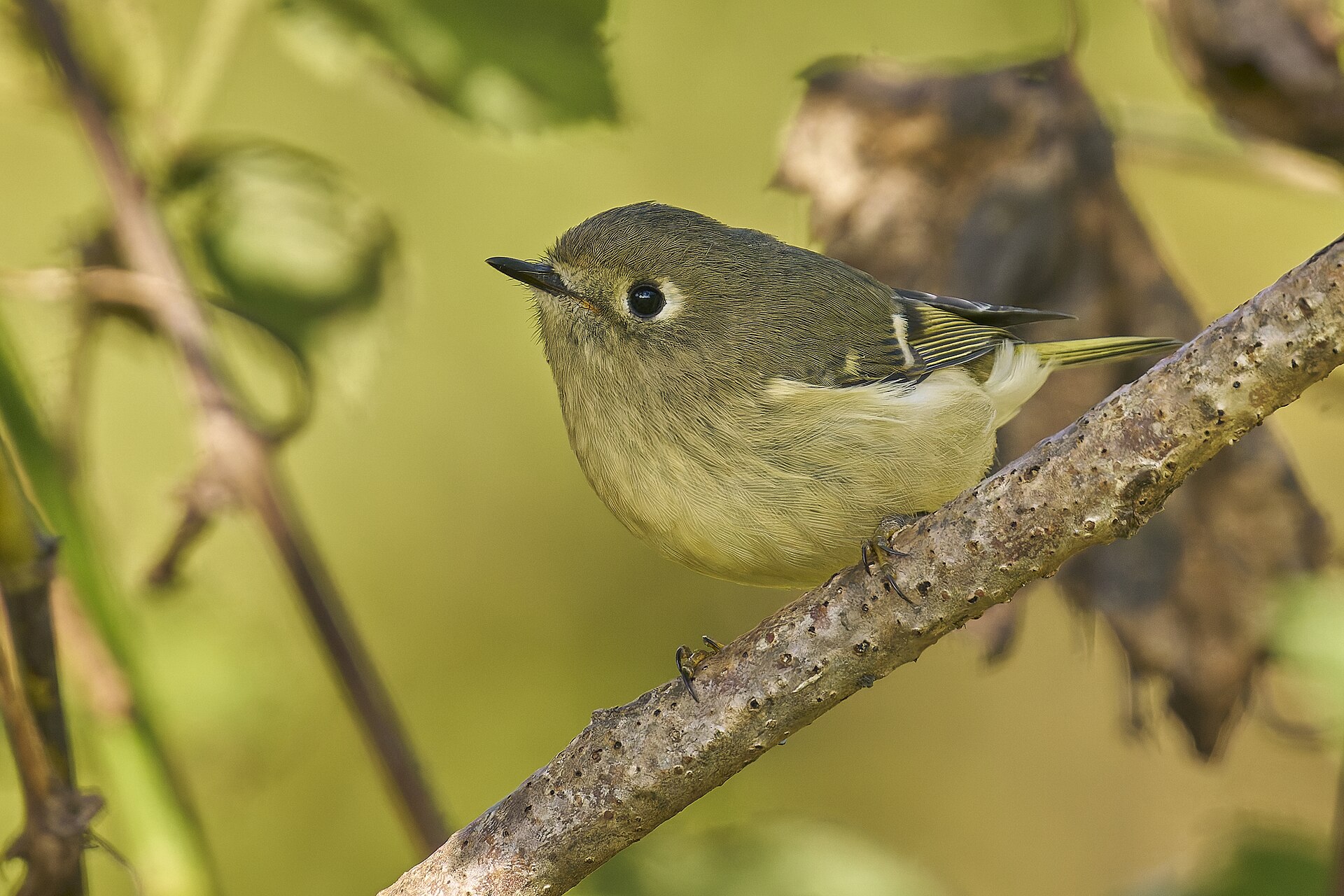
Tiny and restless, about 4 inches long, olive-green with a bold, broken white eye-ring and a white wingbar backed by a dark bar. The red crown patch stays hidden except when a male is excited. It flicks its wings almost constantly, and that nervous motion is often the first thing that gets noticed. The scolding call is a dry, chattering “ji-dit.”
Kinglets come down from mountain and northern forests to winter throughout California’s lowlands from about October to April. They travel in mixed flocks with chickadees, bushtits, and warblers and will pick at suet.
Townsend’s Warbler
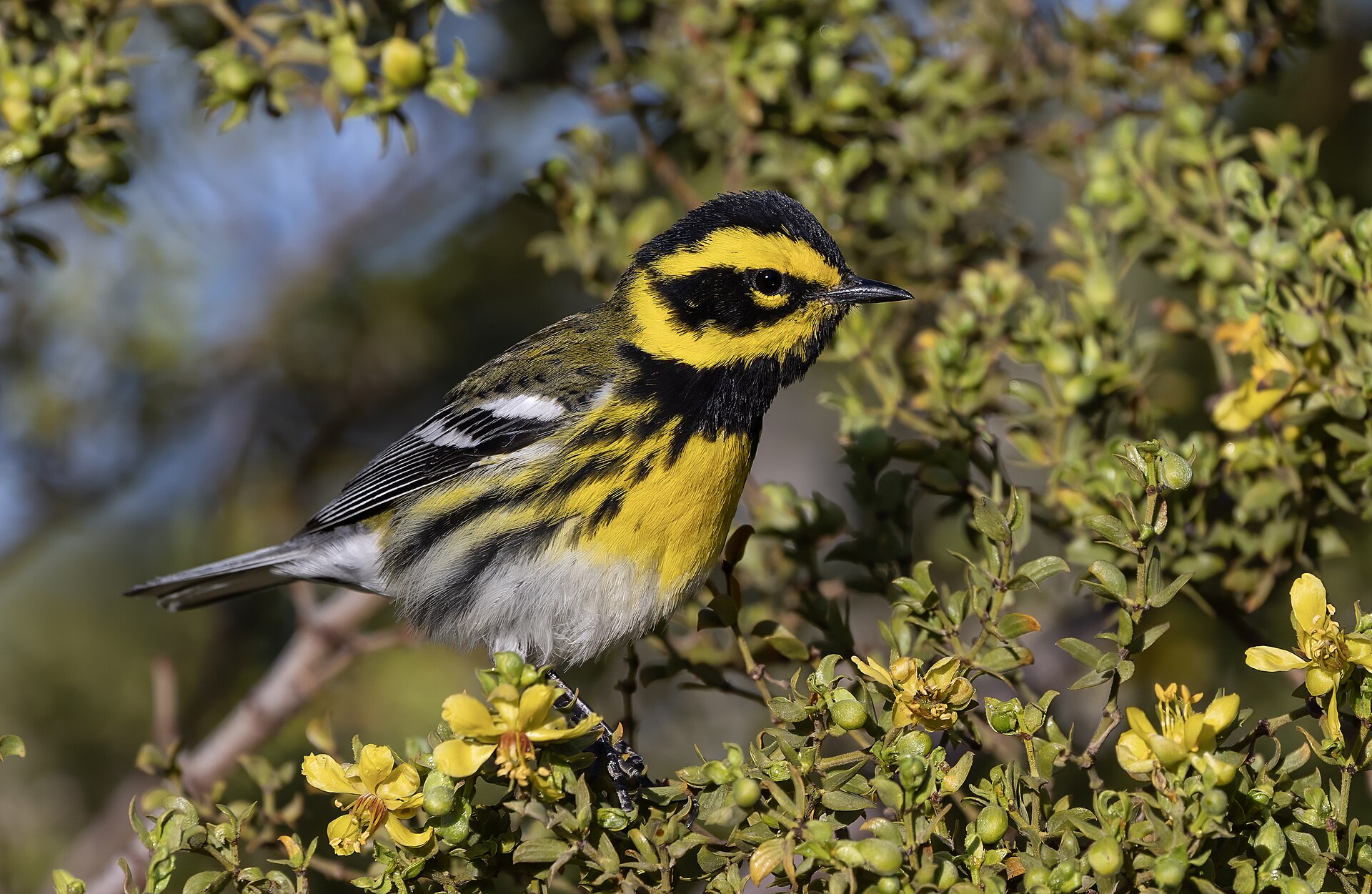
One of the best-looking birds that turns up in a California yard in January. A 5-inch warbler with a bold face pattern: a dark cheek patch outlined in bright yellow, a yellow breast streaked black on the sides, and two white wingbars. Males have a black throat. Females and young birds have less black but show the same yellow-framed face.
Townsend’s Warblers breed in conifer forests from Alaska to Oregon and Montana and winter in two separate areas: Mexico and Central America, and a strip along the Pacific coast that includes much of coastal California. Unlike most warblers, they come readily to suet feeders, and in the Bay Area and along the coast a suet cake is the most reliable way to get one into the yard.
Cedar Waxwing
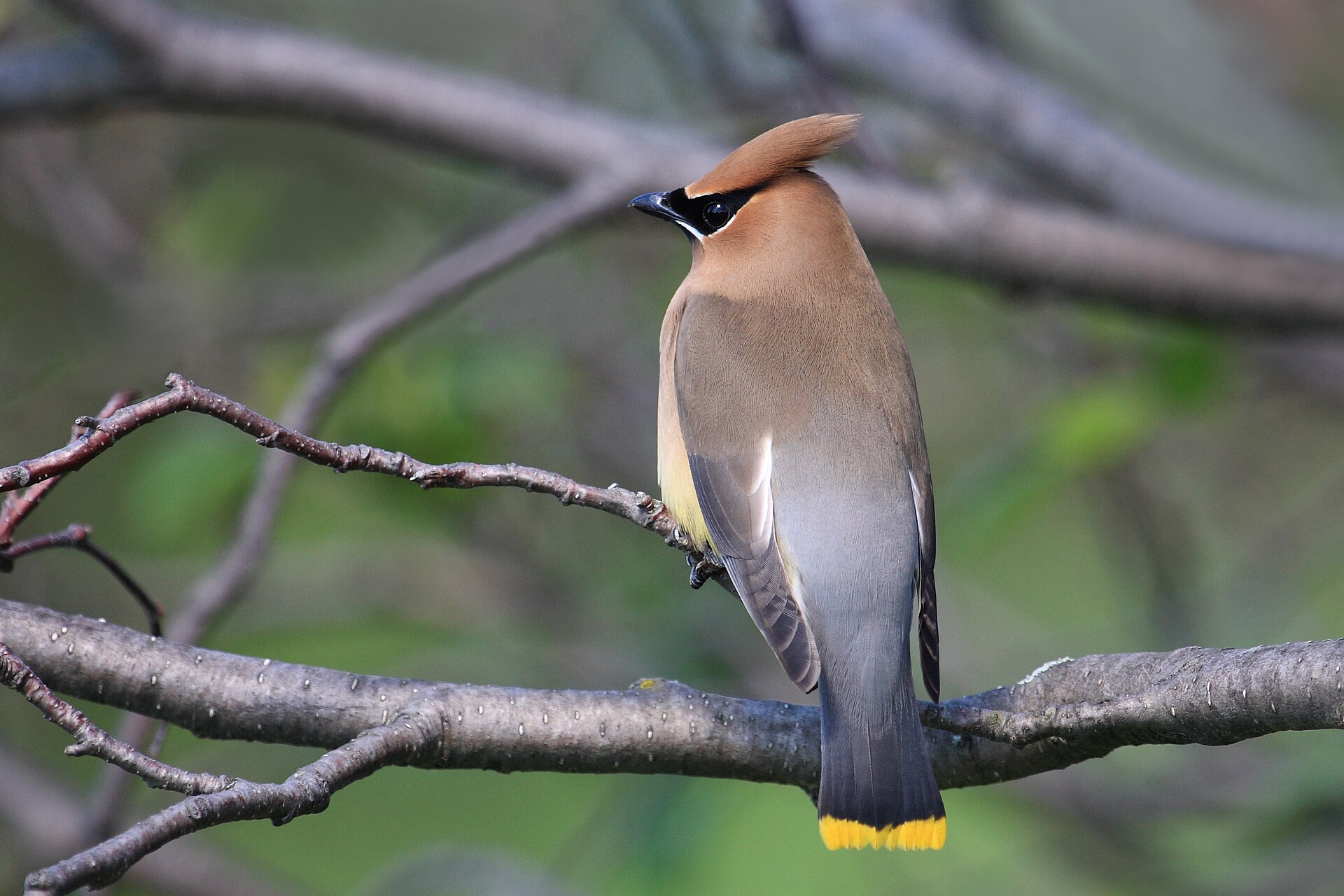
Sleek and crested, about 6 to 7 inches long, soft brown fading to gray with a black mask, a yellow band at the tip of the tail, and small waxy red tips on some wing feathers. Waxwings almost always move in flocks, calling with a thin, high whistle that’s easy to miss until the whole group lands at once.
In California they’re mostly winter visitors, and they go wherever the fruit is. A flock may strip a toyon or a pyracantha in a day and a half and then vanish for weeks. Fermenting late-season berries occasionally leave them visibly drunk. Many linger into May, after most other winter birds have left.
Red-breasted Sapsucker
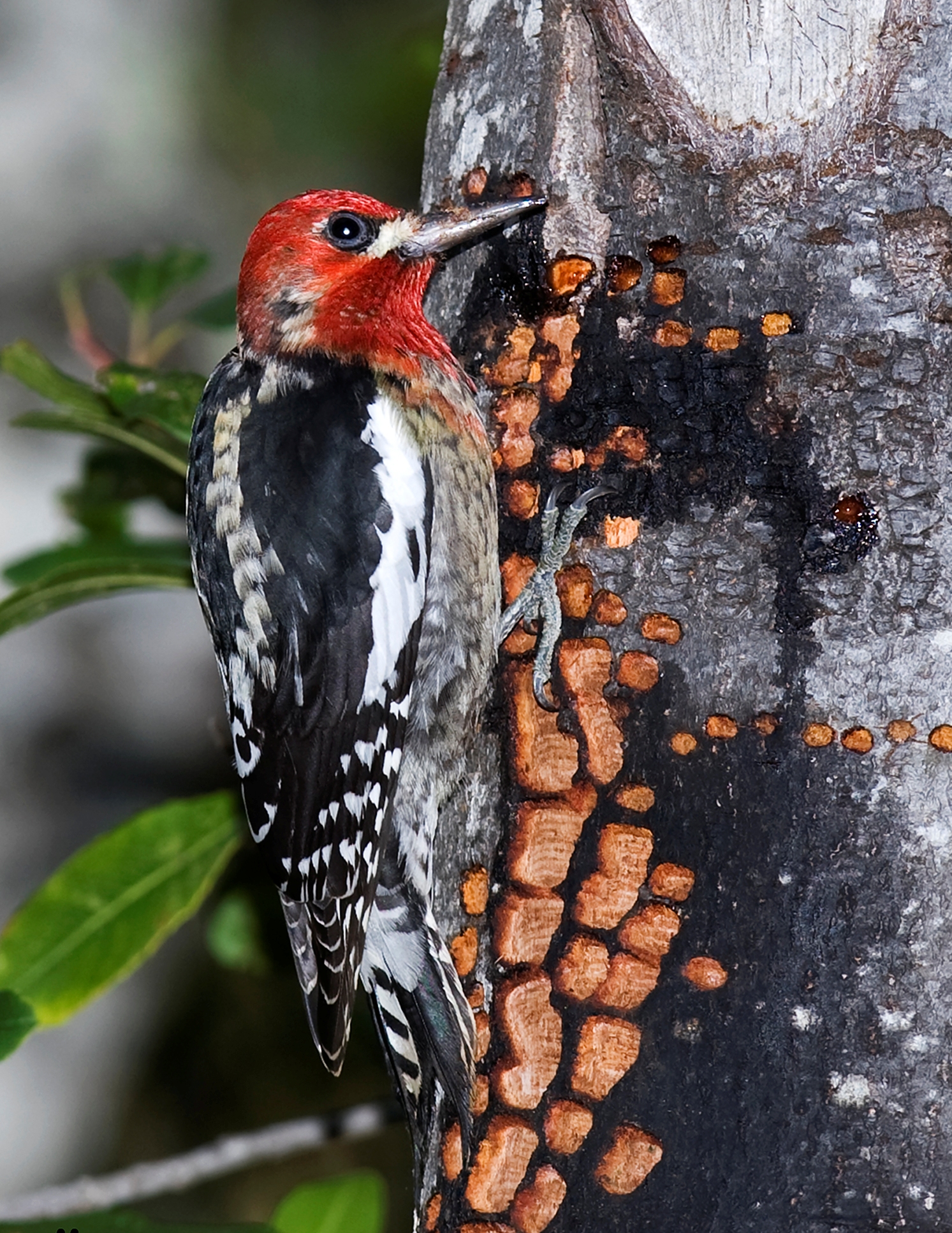
A medium-sized woodpecker, about 8 inches, with an entirely red head and breast, a black back mottled with white, and a long white stripe on the folded wing. There’s no other California woodpecker with that much red, though in the northeastern corner of the state it can mix with the closely related Red-naped Sapsucker.
Red-breasted Sapsuckers breed in the mountains and along the north coast and move into lowland towns and orchards for the winter. They drill neat rows of small holes in tree bark, then come back to drink the sap and eat the insects it traps. Anna’s Hummingbirds, kinglets, and warblers all use those sap wells, and the tidy rows of holes are often the first sign a sapsucker is around.
Anna’s Hummingbird
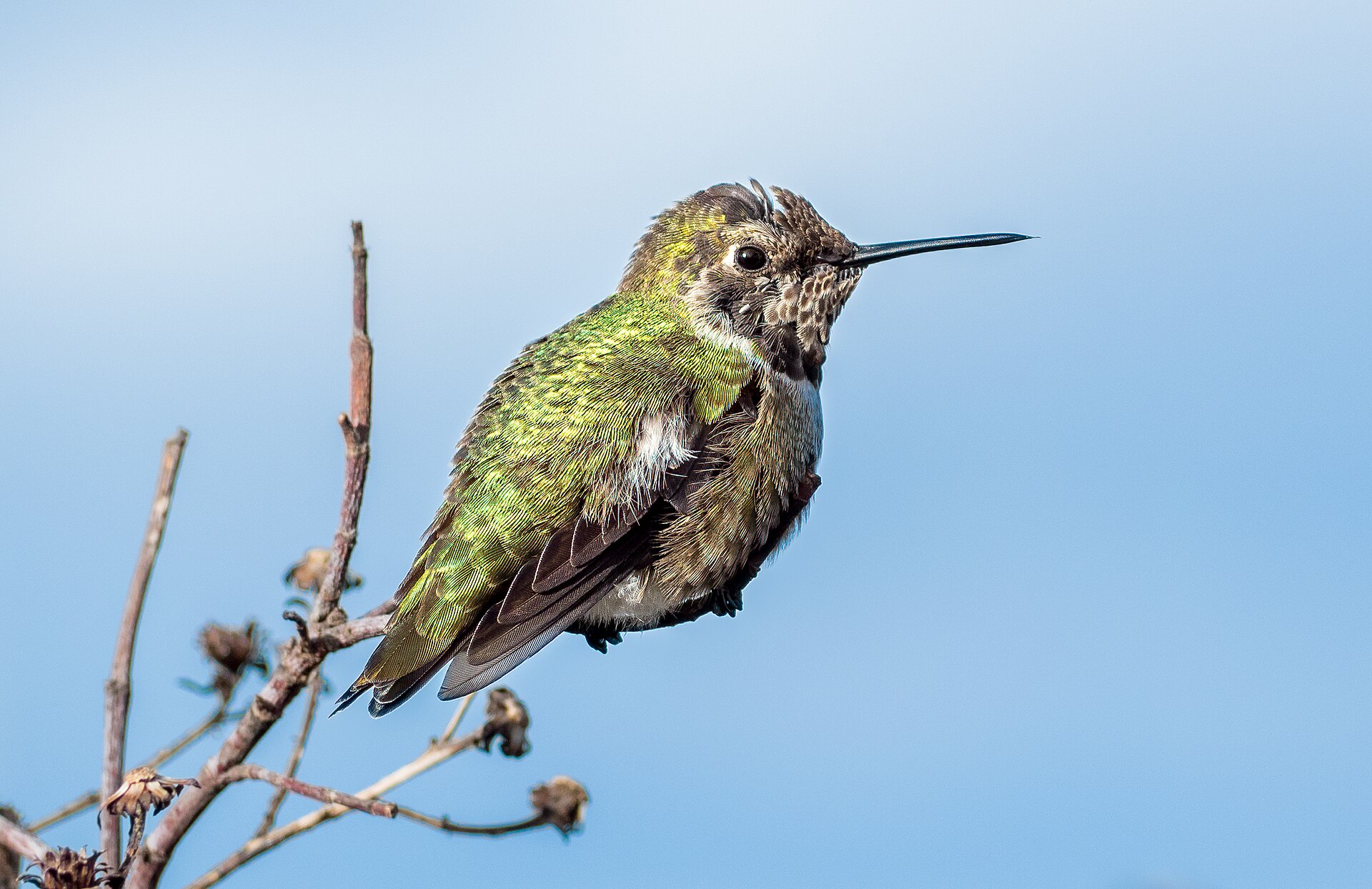
The hummingbird of a California winter. About 4 inches long, green above with grayish underparts. Males have a crown and throat of iridescent rose-pink that can look black until the light hits it. Females (as in the photo) are plainer, often with a small patch of pink feathers on the throat. Males also sing, a scratchy, squeaky song from an exposed perch.
Anna’s Hummingbirds live year-round across most of the state, and they start nesting in the middle of winter, with many females building nests from December onward. Males perform steep display dives that end in a sharp chirp made by the tail feathers. A clean feeder with a 1:4 mix of sugar and water, no dye, helps them through rainy cold snaps, along with winter-blooming manzanita, currant, and native sages.
Say’s Phoebe
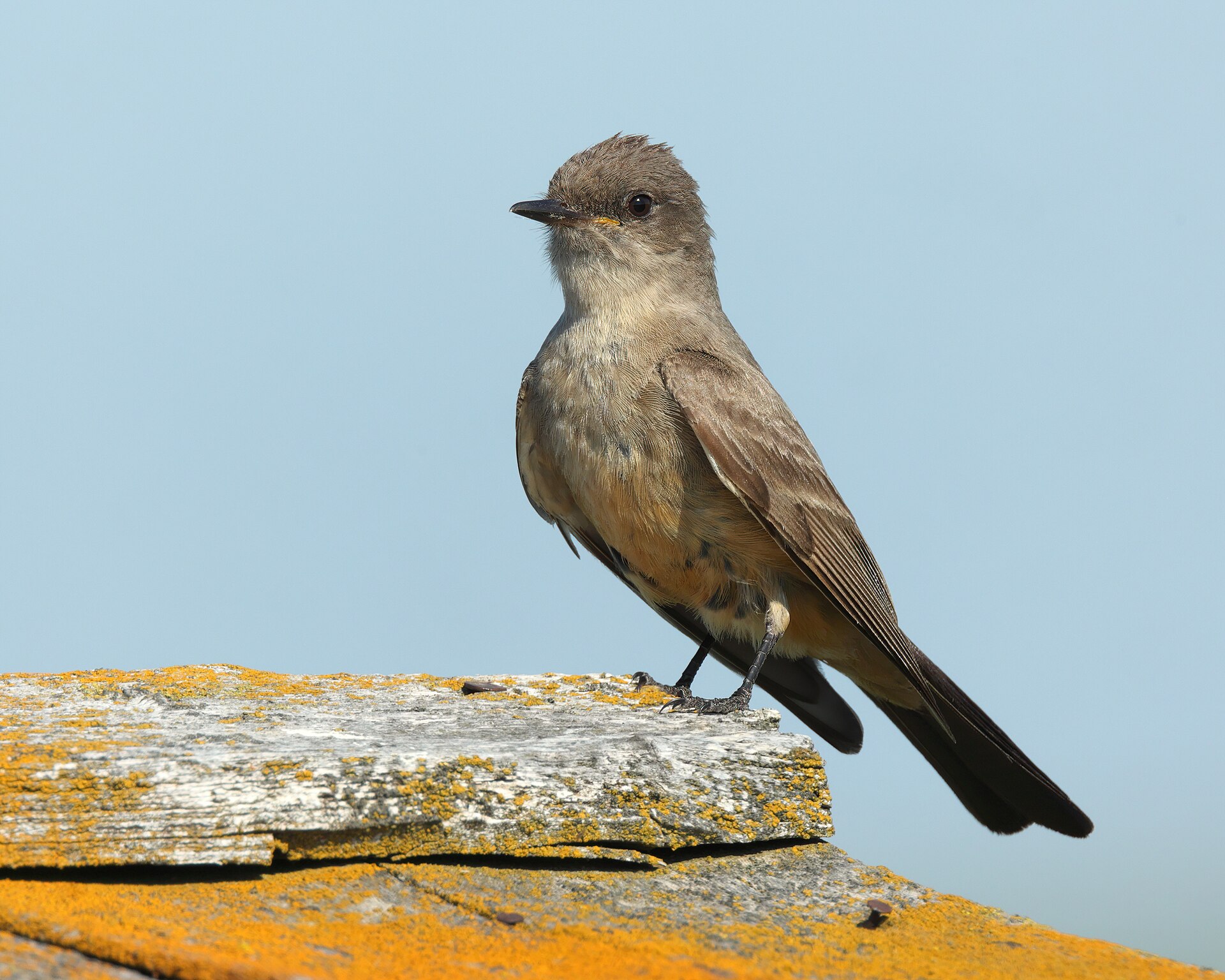
A soft, pale flycatcher about 7 inches long, gray-brown above with a dark tail and a peachy cinnamon belly. Like its relative the Black Phoebe, it pumps its tail while perched. The call is a thin, falling whistle, “pee-ur.”
Black Phoebes stay year-round near water, but Say’s Phoebes are mostly winter visitors to California’s lowlands, from the Central Valley farm country to coastal grasslands and the southern deserts. They hunt insects from low perches over open ground, like fence lines and vineyard edges, and don’t use feeders.
Sandhill Crane
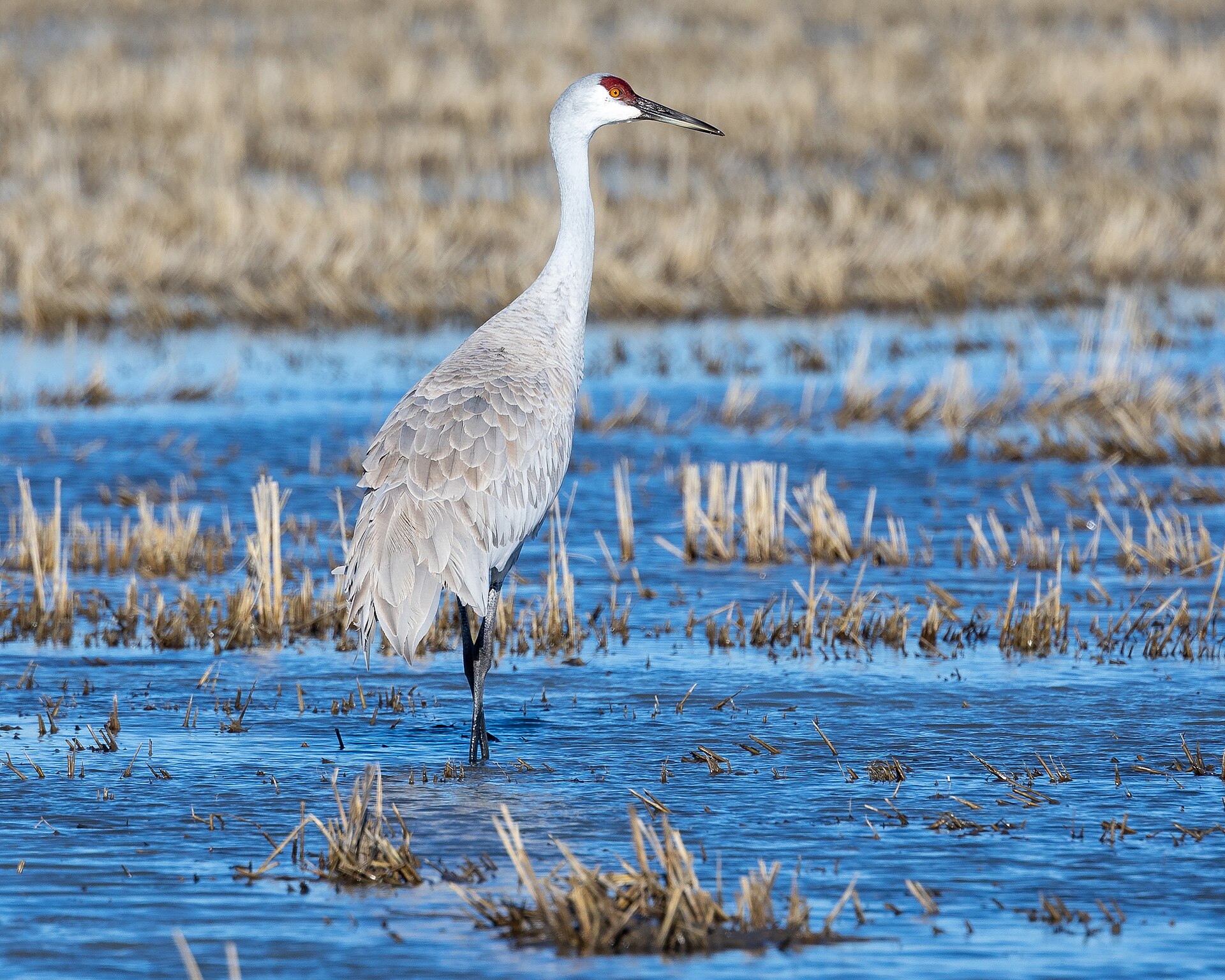
A tall gray crane, about 4 feet high, with a red forehead and long legs. The call is a rolling, wooden bugle that carries for miles, and it’s often heard before a flock comes into view.
Two subspecies winter in the Central Valley. The smaller Lesser Sandhill Cranes come from as far as Alaska and Siberia, and the larger Greater Sandhill Cranes nest in northeastern California, Oregon, and nearby states. The Greater Sandhill Crane is listed as threatened under California law. The cranes arrive in late September and October and stay until February or March, feeding in harvested fields by day. The best show is at dusk, when flocks fly back to roost in shallow water. The Woodbridge Ecological Reserve near Lodi and Cosumnes River Preserve are the classic viewing spots, and Lodi holds a Sandhill Crane Festival every November.
Snow Goose
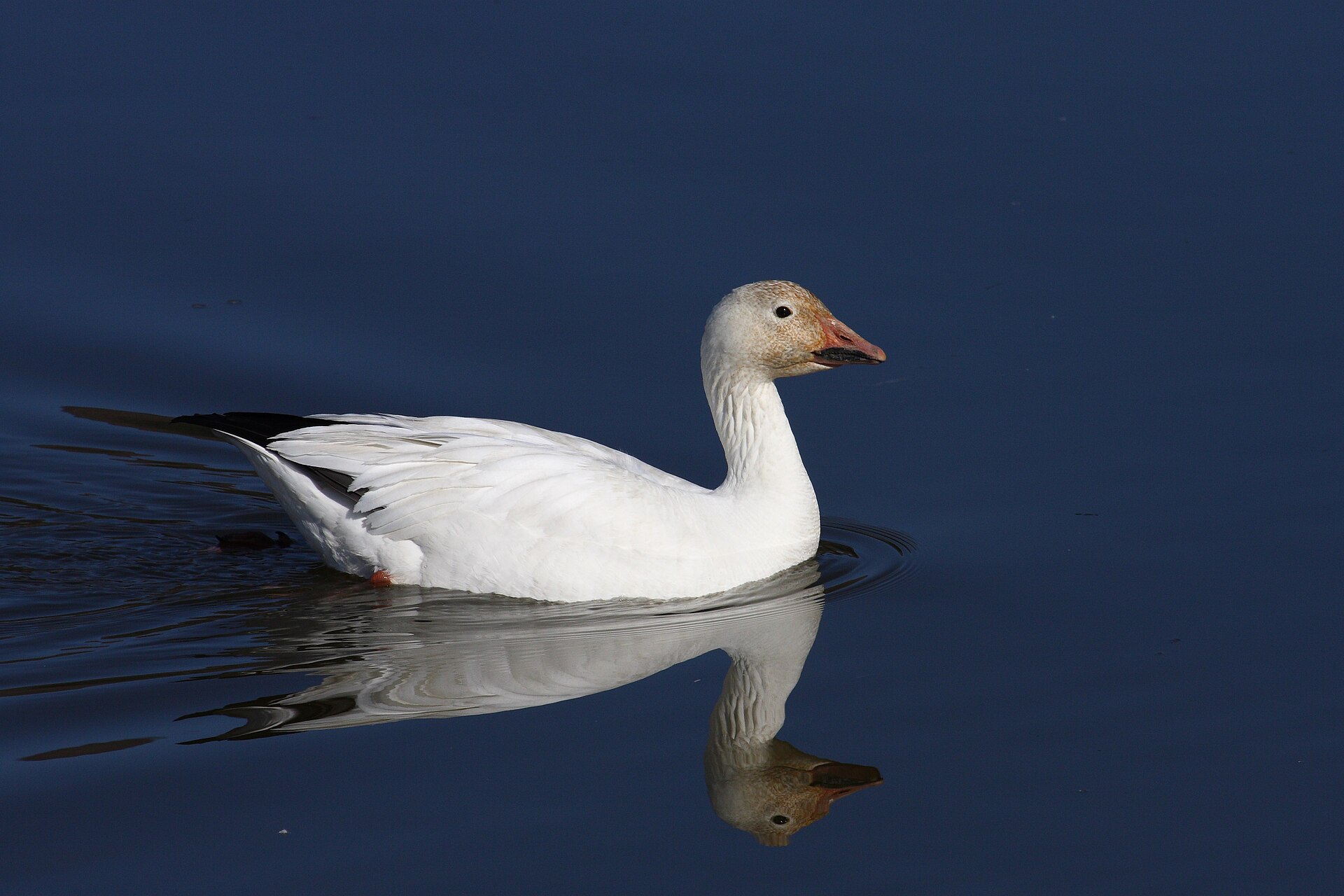
A white goose with black wingtips, about 28 to 31 inches long, with a pink bill that has a dark line along the edge known as the “grin patch.” The very similar Ross’s Goose is noticeably smaller, with a short, stubby bill and no grin patch, and the two often mix in the same flocks.
Snow Geese breed on the Arctic tundra and winter in enormous numbers in the Sacramento Valley, with smaller numbers in the Klamath Basin, the San Joaquin Valley, and the Imperial Valley near the Salton Sea. The auto tour route at Sacramento National Wildlife Refuge, a few miles south of Willows, is one of the easiest ways to see them close without leaving the car, and mid-November through January is the peak.
Getting started this winter
Timing is simple in California: most of these birds are in place by the end of October, so the first fall rain is a good cue to clean feeders and birdbaths and put out millet for the sparrows. Cover matters more than feeder count. Crowned sparrows, Fox Sparrows, and quail all want a shrub to dive into within a few feet of the seed, and a brush pile left in a back corner over winter will do more for them than another feeder. Cooper’s and Sharp-shinned Hawks hunt feeders all winter too; the California birds of prey guide covers them.
Counting is one of the best ways to learn winter birds. Project FeederWatch runs from November through April and asks for a couple of short counts a week. The Christmas Bird Count has dozens of count circles across California, and several of them regularly post some of the highest species totals in the country. For contrast, the guide to birds that stay through winter in the northern US covers what a snowbound feeder looks like, and the Texas winter birds guide shows how differently the same season plays out in the other big Sun Belt state.
Sources: Species descriptions and range information draw on the Cornell Lab of Ornithology’s All About Birds, the National Audubon Society’s Guide to North American Birds, eBird regional records for California, the California Department of Fish and Wildlife, and the U.S. Fish and Wildlife Service (Sacramento National Wildlife Refuge Complex).