First-Winter Feeder Setup: Seed, Suet, and Water
Most first feeders go up the same way. Someone buys a tube feeder and a bag of mixed seed at the hardware store in late October, hangs it from the nearest branch they can reach, and waits. Two weeks later the seed is still there, or it’s gone and the only visitor anyone has actually seen is a gray squirrel hanging upside down. By January the ports are clogged with wet, sprouting seed and the whole thing gets quietly retired to the garage.
Very little of that is about which seed was in the bag. It comes down to where the feeder hangs, how the seed stays dry, and whether there’s water nearby once the puddles freeze. This guide covers that layout and hardware for a first winter: where to put things, which few pieces of equipment matter, and the cleaning routine that keeps a busy feeder from spreading disease. If the question is more about which foods attract which birds, the winter bird feeding guide covers that in detail. Here, the focus is on building a station that still works in February.
Pick the window first, then the spot
It sounds backwards, but the best place to start is inside the house. Figure out which window gets used most on a winter morning: the kitchen window over the sink, the living room chair where the coffee happens, the desk in a home office. A feeder 40 feet out at the back of the lot can be perfect for the birds and invisible from the couch.
Once the window is chosen, look outward from it. The ideal spot has some cover nearby (a shrub, a small evergreen, a brush pile) that birds can dart into when a hawk passes, and it’s somewhere a person can reach easily in boots and a coat after a snowstorm. A feeder at the far end of a snowy yard tends to go unfilled in exactly the cold snaps when it matters most.
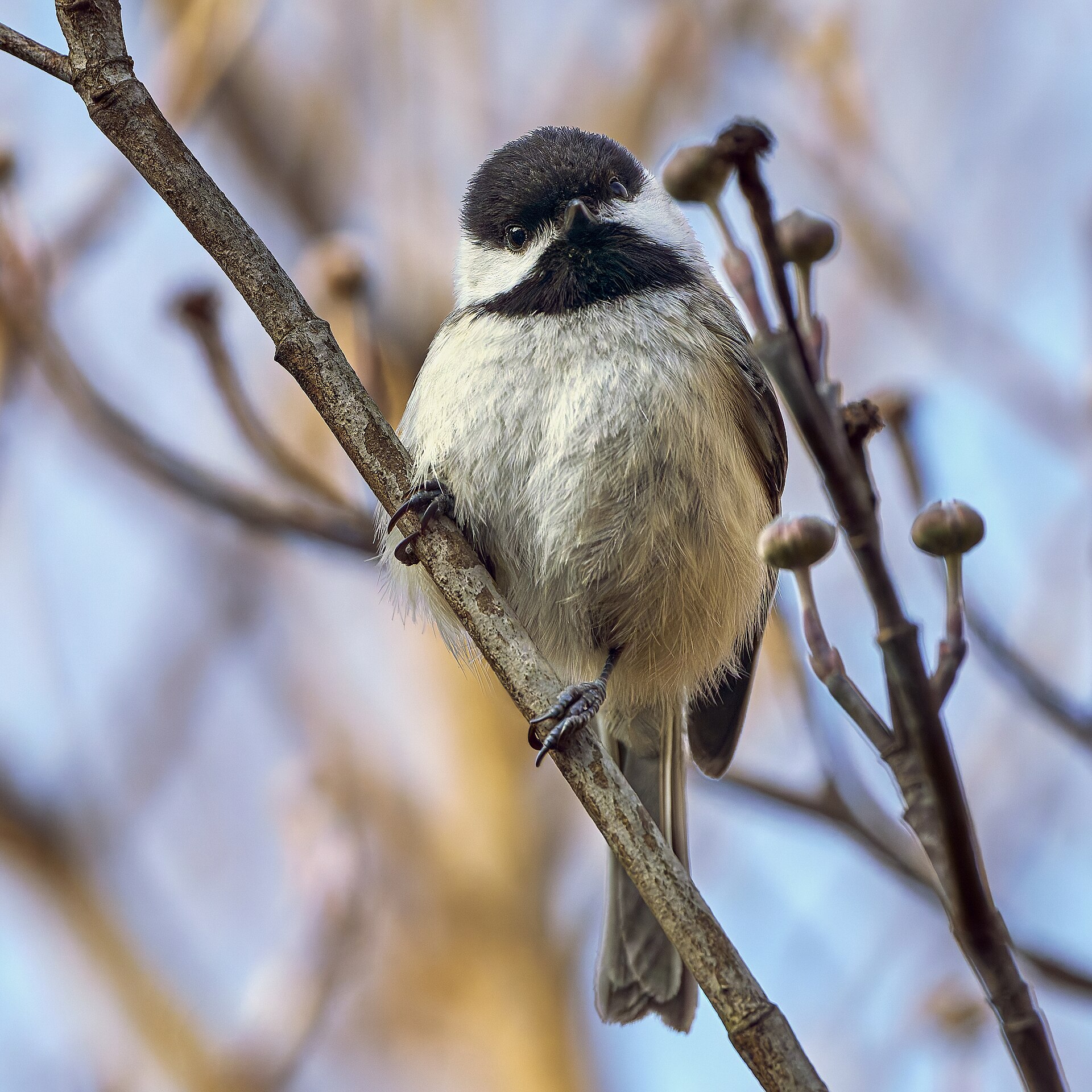
Black-capped Chickadees are usually the first birds to find a new station, often within a few days, and they’re a good test of placement. If chickadees are visiting but grabbing a seed and flying straight back into cover, the feeder is doing its job. If nothing shows up after two or three weeks, the spot is probably too exposed.
Distances that matter: windows, shrubs, and jumping squirrels
Three distances do most of the work, and they’re worth measuring.
Windows. The standard advice from the Cornell Lab and the American Bird Conservancy is to put feeders either closer than about 3 feet to a window or farther than about 30 feet. Very close, a bird flushing off the feeder can’t build enough speed to get hurt; far away, birds rarely fly toward the house at all.
Cover. Shrubs give birds a place to escape, but they also give cats a place to wait. About 10 to 12 feet between the feeder and the nearest dense shrub is a reasonable compromise: close enough for a quick dash, far enough that nothing can pounce from underneath.
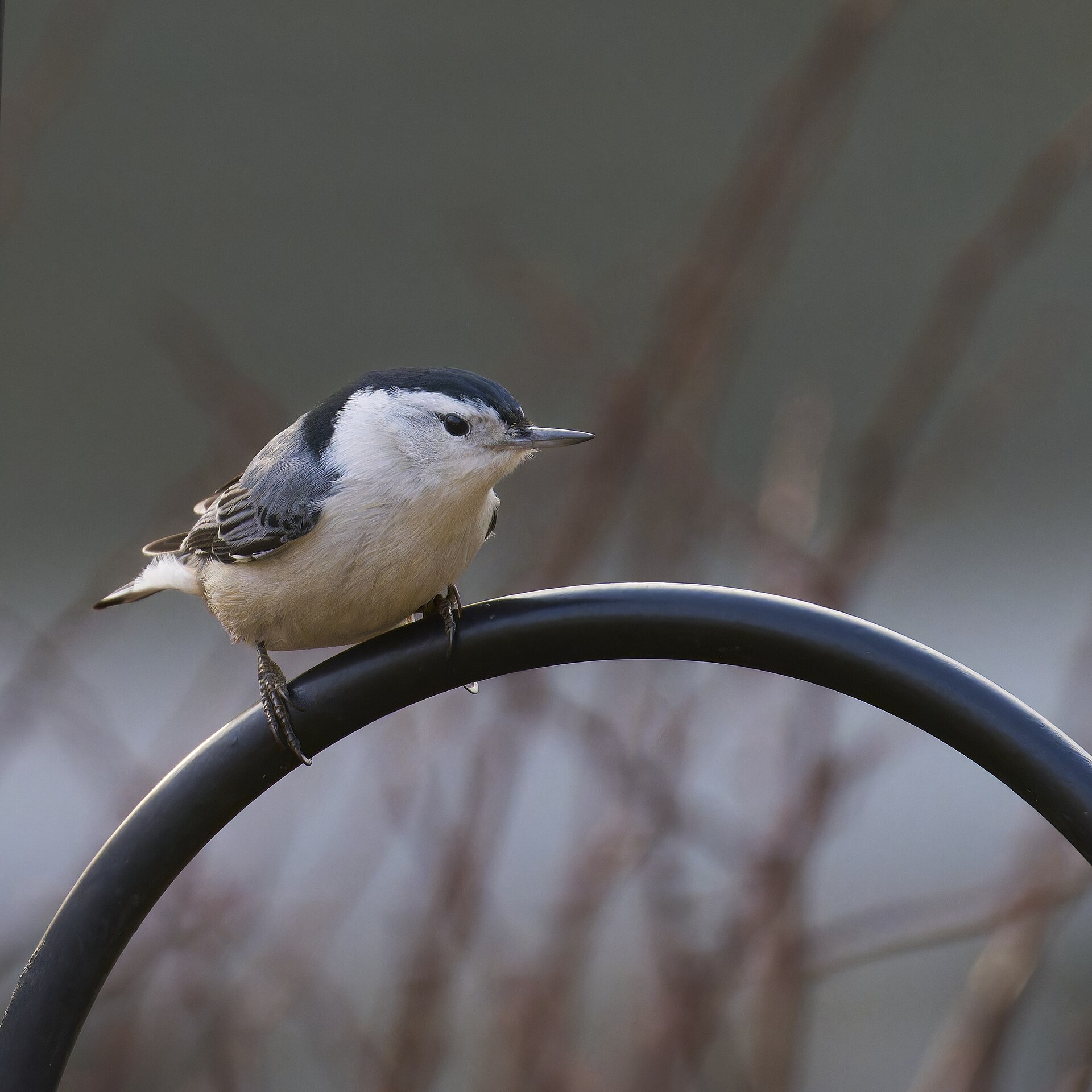
Squirrel launch points. Gray squirrels can jump a surprising distance sideways from a fence, deck rail, or tree trunk, and they drop down easily from overhanging branches. A pole-mounted feeder about 10 feet from anything a squirrel could launch from, with a baffle on the pole, stops most of them. White-breasted Nuthatches will happily use a pole out in the open as long as a tree is a short flight away.
The seed feeder: one good tube or hopper
A first winter doesn’t need five feeders. One well-made seed feeder, filled with black-oil sunflower, will bring in most of the common winter birds in the eastern and northern US: chickadees, titmice, nuthatches, cardinals, finches, and the occasional woodpecker.
The two practical choices are a tube feeder or a hopper. Tubes are easier to clean and keep seed drier, and the small perches suit chickadees, titmice, and finches. Hoppers (the little house-shaped feeders) hold more seed and give bigger birds like cardinals and jays a ledge to stand on, but rain and snow can blow in under the roof if the design is cheap. Either way, metal ports and a metal lid hold up to squirrel teeth, and a lid that opens without tools makes filling with gloves on far less miserable.
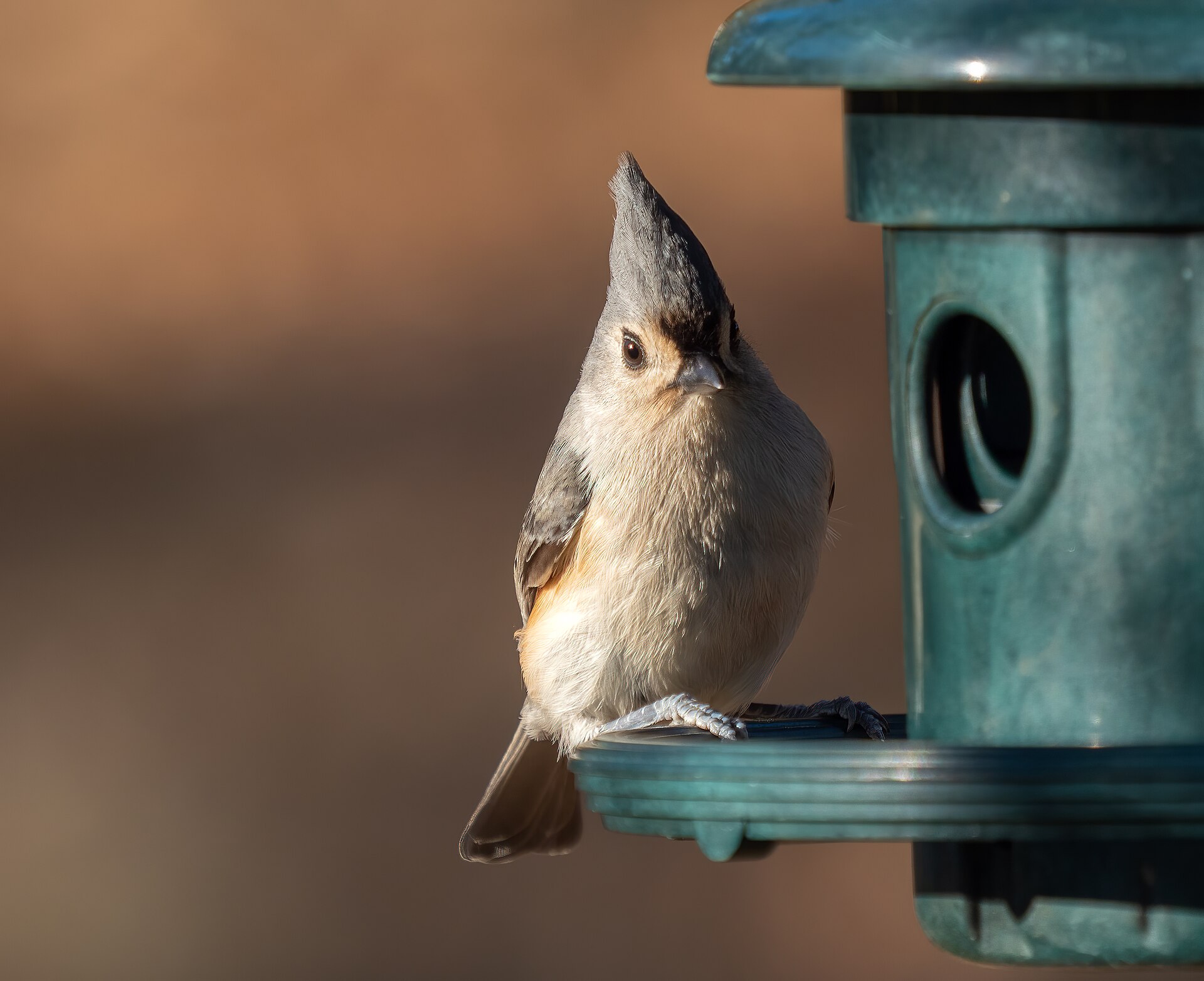
Tufted Titmice are a good example of who benefits from a sturdy tube. They take one seed at a time, hammer it open on a branch, and come right back. Many of those seeds get cached in bark crevices for later, which is part of why a feeder empties faster in early winter than people expect.
Suet: a cage, a tail prop, and the right kind of fat
Suet is the second piece of hardware worth buying, and in the north it may matter more than seed on the coldest days. A plain wire suet cage costs a few dollars and holds a standard square cake. That’s enough for Downy Woodpeckers, nuthatches, and chickadees.
For bigger woodpeckers, a tail-prop suet feeder (a cage mounted on a longer board that extends below it) makes a real difference. Woodpeckers brace with stiff tail feathers, and a swinging cage gives them nothing to brace against. Hairy, Red-bellied, and sometimes Pileated Woodpeckers will use a tail-prop feeder that they ignore in a plain cage.
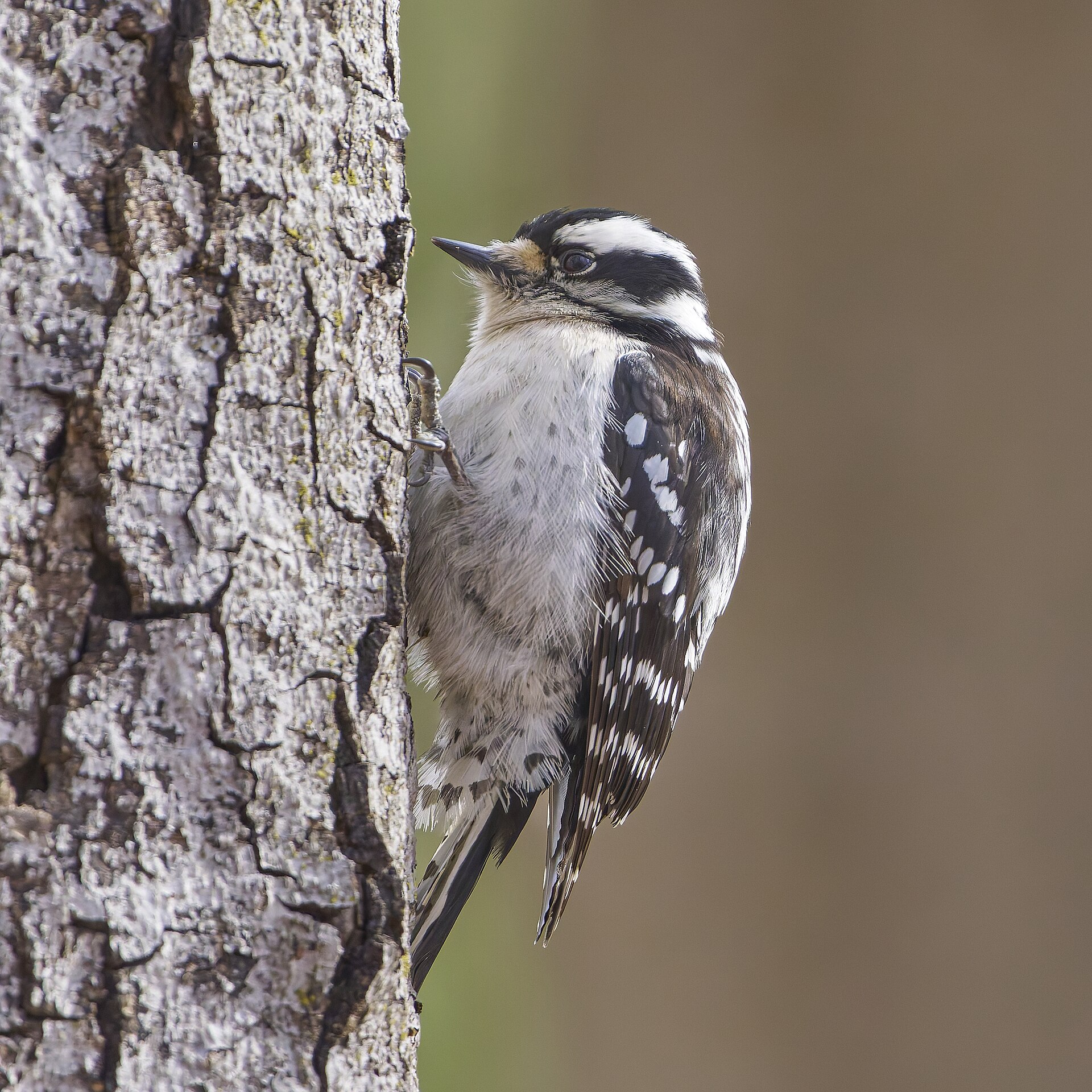
The fat itself matters too. Raw beef suet from a butcher works well in true winter cold but turns rancid quickly once temperatures climb, so it’s a December-to-February food. Commercial rendered cakes stay firm longer, and “no-melt” dough cakes made with flour or cornmeal stay usable into spring. Downy Woodpeckers, the most common woodpecker at North American feeders, will often visit a suet cage several times an hour once they’ve found it.
A low tray for the ground feeders
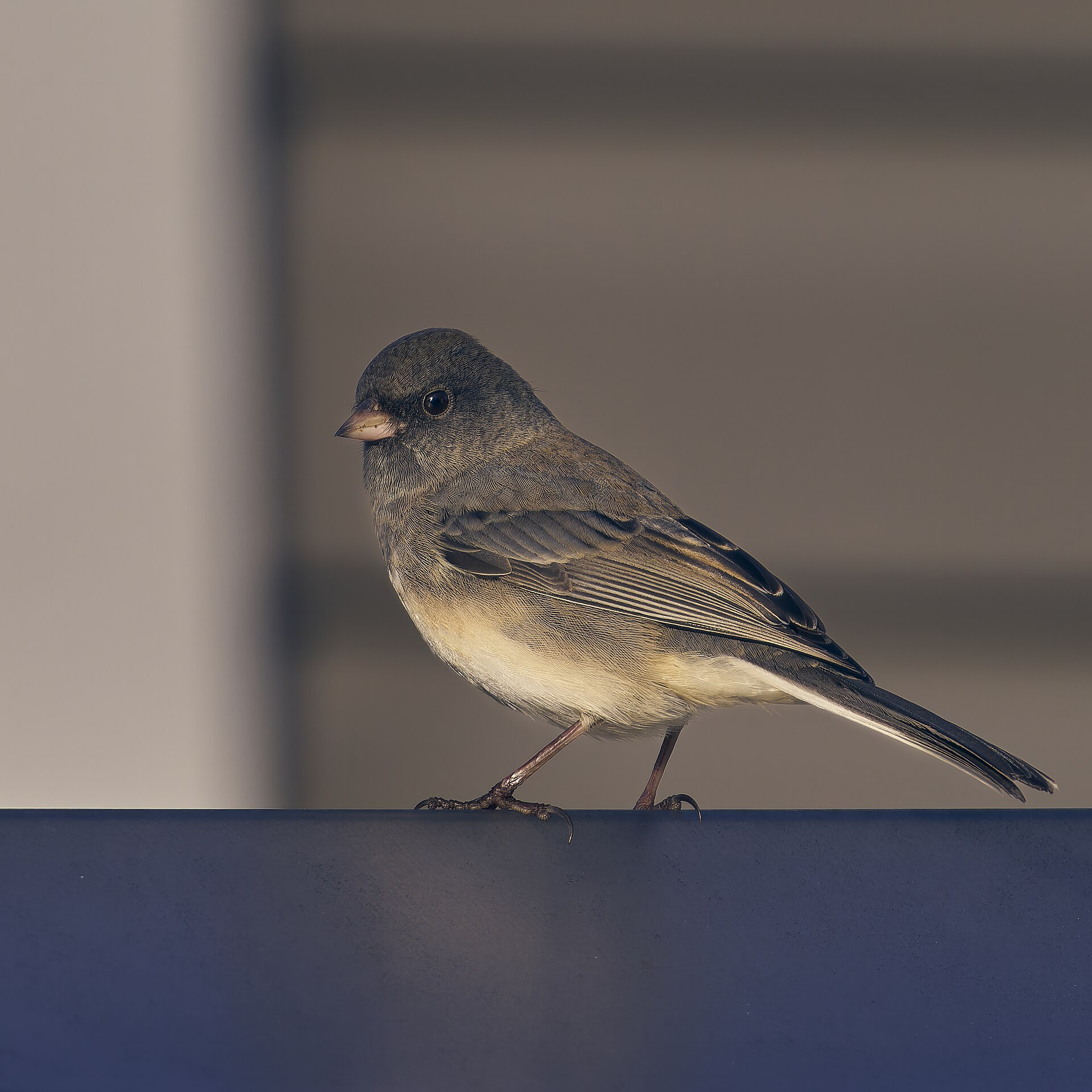
A lot of winter birds don’t use hanging feeders at all, or only reluctantly. Dark-eyed Juncos, White-throated Sparrows, American Tree Sparrows, Mourning Doves, and in many places cardinals all prefer to feed on or near the ground. Seed scattered on snow works, but it vanishes into slush and the leftovers draw rats.
A low platform tray with a mesh or perforated bottom solves most of that. It sits a few inches off the ground, drains melting snow, and can be tipped and brushed off in seconds. Put it near the main feeder to catch seed knocked down from above. White proso millet and a handful of sunflower chips cover nearly every species that will use it.
Juncos are the classic tray bird. They usually arrive in flocks in mid-to-late fall and settle into the same yards day after day. Clearing the tray after a snowfall often brings them in within minutes.
Water, the part most first setups skip
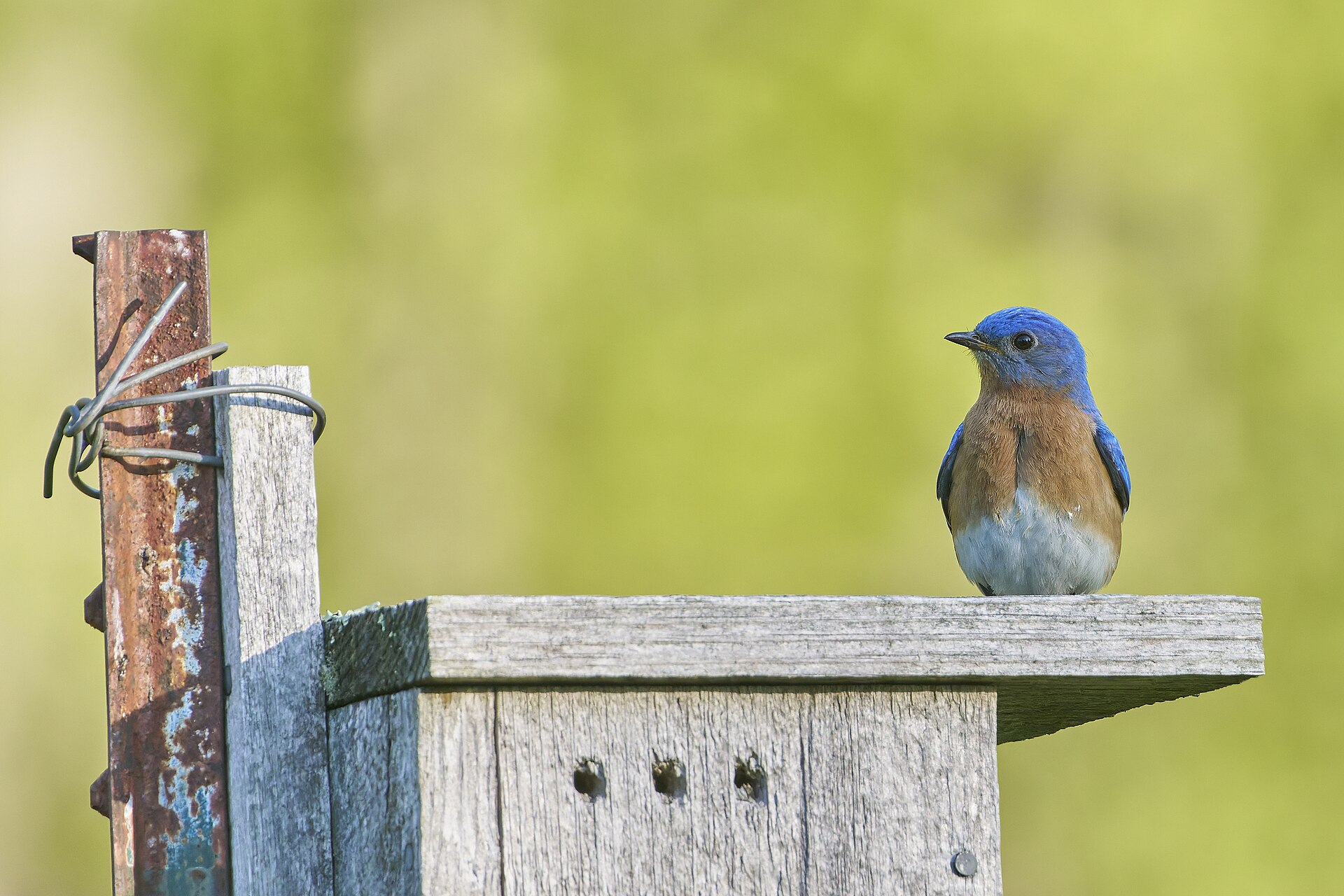
Fresh water brings in birds that never touch a seed feeder, and once the ground freezes it can be harder for birds to find than food. Eastern Bluebirds, robins, and Cedar Waxwings live on fruit in winter and will come to reliable water in a yard that offers them nothing else.
A heated bird bath is the simplest answer. Most have a thermostat that only runs the heater near freezing. Look for one with a shallow basin, about 1 to 2 inches deep at most, and a textured surface so birds don’t slip. The site has a separate roundup of heated bird baths for winter for anyone comparing models.
Two rules are non-negotiable. Never add antifreeze, salt, or glycerin to keep water open. Those additives harm birds and can damage the feathers’ insulation. And place the bath somewhere it can be refilled from the house without dragging a hose across a frozen yard, because in sub-zero stretches the water level drops fast.
Keeping seed dry through snow and ice
Wet seed is the most common way a first winter setup fails. Snow drifts into hopper roofs, freezing rain glazes the ports, and then a thaw turns the bottom inch of a tube into a damp, moldy plug. Moldy seed can carry aflatoxins and other fungi that make birds sick, so it isn’t a cosmetic problem.
A clear plastic weather dome or squirrel baffle mounted above a hanging feeder sheds most snow and rain. After a storm, knock snow off the lid and tray, and if the seed at the bottom of a tube has clumped, empty it rather than topping off over it. At home, seed should be stored in a metal can with a tight lid, somewhere cool and dry. A garage works; a plastic bin in a shed invites mice.
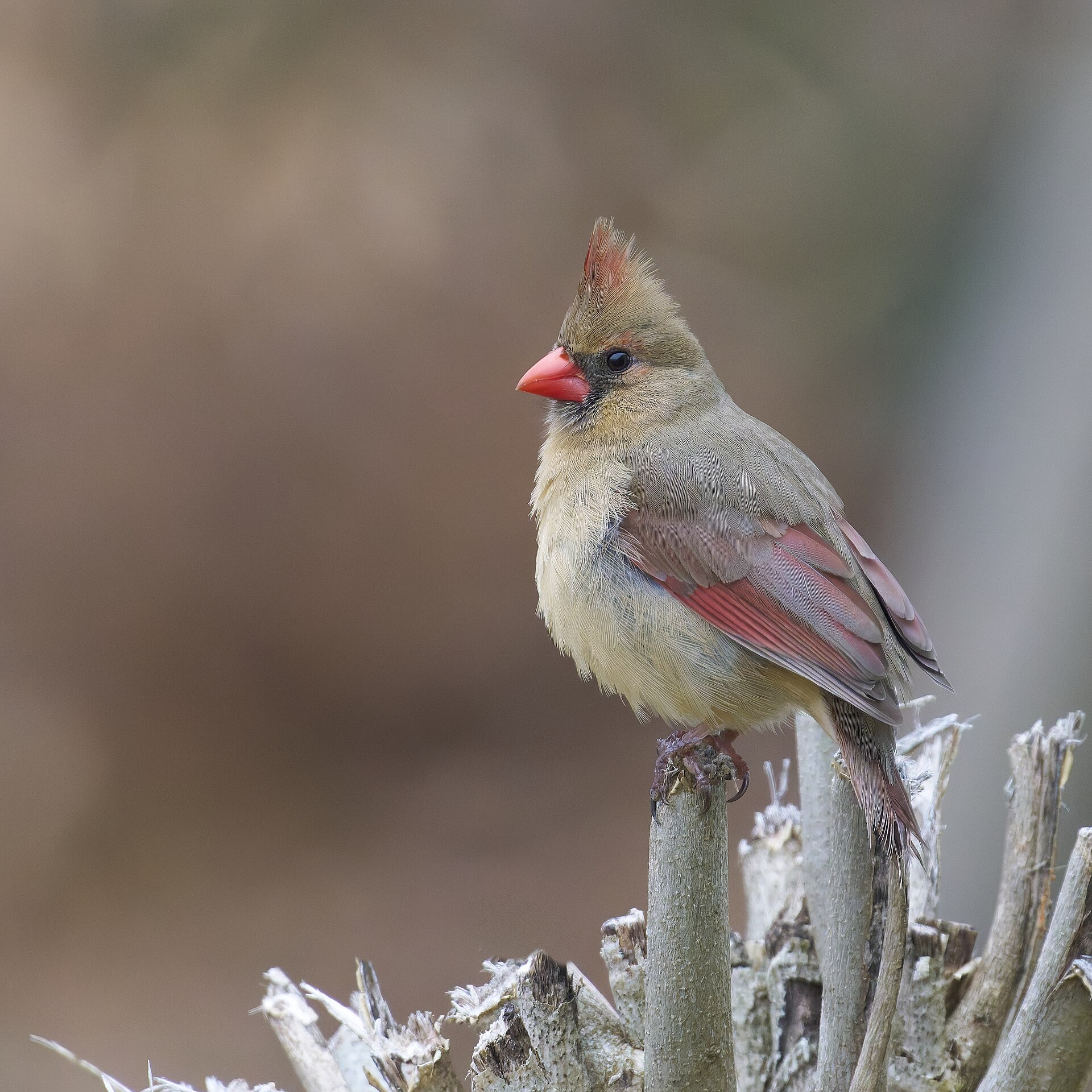
Northern Cardinals are worth keeping in mind here, because they’re one of the birds people most want to see and one of the first to give up on a feeder that’s hard to use. They like a wide, stable perch, feed most at dawn and dusk, and a hopper ledge or snow-cleared tray will hold them through the worst weeks.
Squirrels, jays, and sharing the space
Every feeder in squirrel country eventually becomes a negotiation. The baffle and the 10-foot rule handle most of it. Cone baffles go under a pole-mounted feeder with the bottom edge about 4 to 5 feet off the ground; dome baffles go above a hanging feeder. Weight-activated feeders that close the ports when something heavy lands are the other proven option, and the site’s guide to squirrel-proof bird feeders walks through which designs hold up.
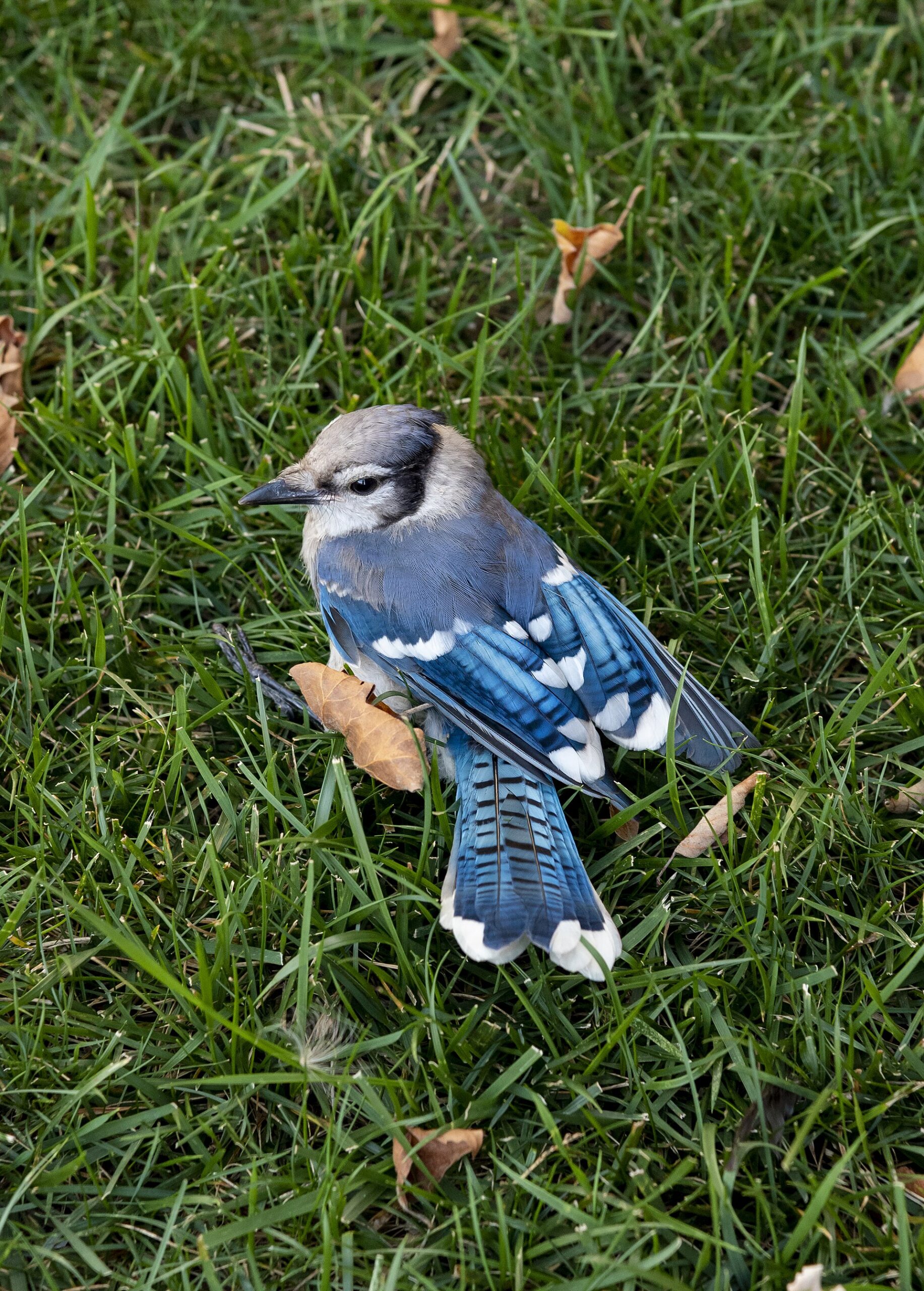
Blue Jays can clear a tray of peanuts quickly, but they’re native birds that cache huge numbers of acorns and help plant oak forests. Spreading food out works better than trying to exclude them. A second feeding spot a short distance from the first lets jays and smaller birds use the yard at the same time without constant standoffs.
The cleaning routine
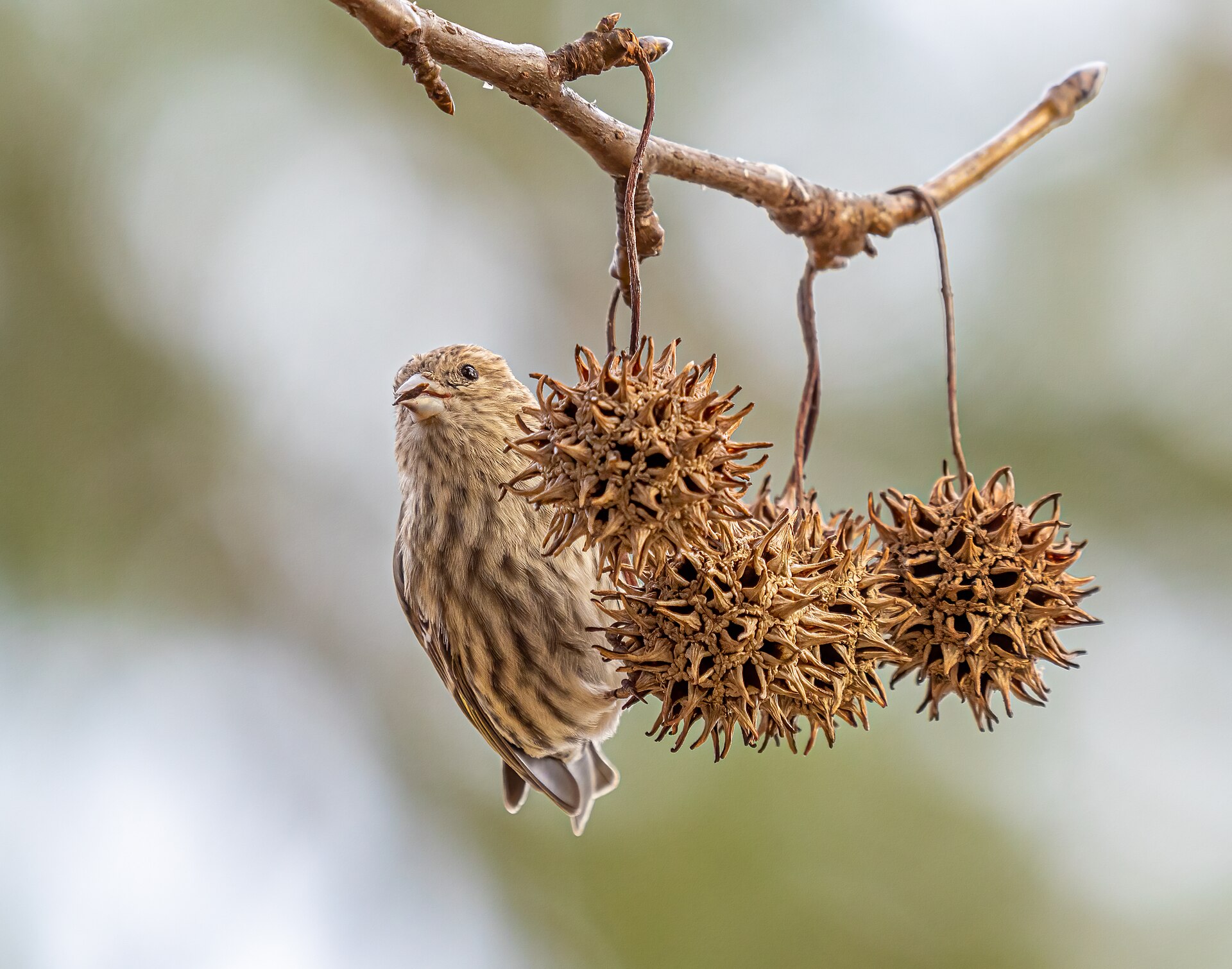
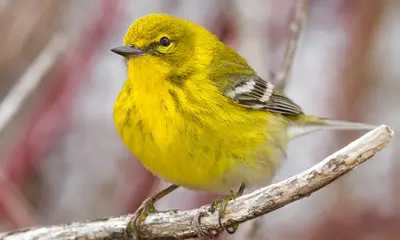
Feeders concentrate birds, and anything that concentrates birds can concentrate disease. Salmonellosis is the big one in winter, especially among Pine Siskins and other finches, and it spreads through droppings and contaminated seed. Finch eye disease (mycoplasmal conjunctivitis) is another.
A workable routine is to clean seed feeders about every two weeks, and more often in wet weather or if a lot of birds are using them. Take the feeder apart, scrub it with hot soapy water, soak it in a solution of one part bleach to nine parts water for about ten minutes, then rinse well and let it dry completely before refilling. Bird baths should be scrubbed and refilled every few days. Rake up the hulls under feeders now and then, too.
If sick birds show up (a siskin or goldfinch sitting fluffed and lethargic on the feeder, unwilling to fly, or a finch with swollen, crusty eyes), take all feeders down for at least a week or two, clean everything, and let the flock disperse. Pine Siskins are nomadic and irrupt in some winters, and a siskin year is exactly when the routine pays off.
The first few weeks: waiting for word to get around
A brand-new feeder can sit untouched for a while. In a yard that’s never had one, it can take a few days to a few weeks before the first regulars settle in. Putting the station up in October or early November, before the hard cold, gives the local flocks time to find it.
A few things speed it up. Scattering a little sunflower on the tray or on top of the snow makes the food visible from the air. And chickadees, once they find a feeder, tend to bring the rest of the mixed winter flock (titmice, nuthatches, kinglets, Downy Woodpeckers) along behind them.
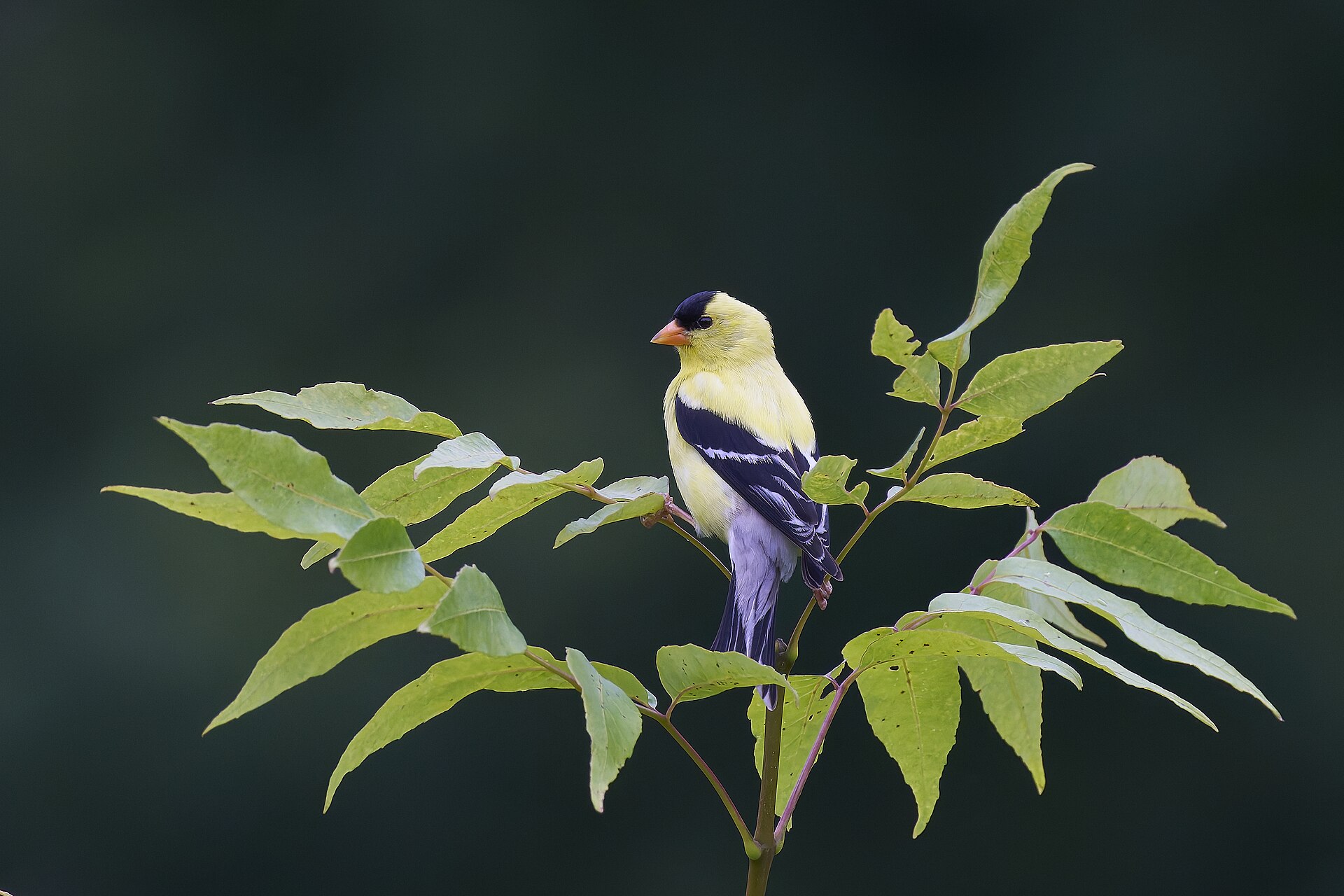
Goldfinches are often part of the second wave. In winter they look nothing like the lemon-yellow males of July: they molt into a drab olive-brown plumage in the fall, and many first-time feeder owners don’t realize the plain little finches on the tube in January are the same species. They tend to arrive in a group, all at once.
Getting Started
For anyone setting up a first winter station, a short shopping list covers almost everything: one tube or hopper feeder with metal ports, a pole with a baffle (or a dome baffle if the feeder hangs from a branch), a wire suet cage, a low mesh-bottom tray, a heated bird bath with a shallow basin, a bag of black-oil sunflower, a few suet cakes, a small bag of white millet, and a metal can with a lid for storage.
Set it up by mid-November if possible, close to a window that actually gets used and either within 3 feet or beyond 30 feet of the glass. Fill sparingly at first, clean every couple of weeks, clear snow off the tray after storms, and keep a notebook or phone note of who shows up and when.
Once the station is running, it can also feed into real science. Project FeederWatch, run by the Cornell Lab and Birds Canada, asks participants to count feeder birds on a couple of days a week from November through April, and the data feeds directly into research on winter bird populations. Feeder watchers inside a Christmas Bird Count circle can also report their yard on count day, and the guide to birds that stay through winter in the northern US covers who to expect.
Sources
Setup and safety guidance in this article draws on feeder and bird-feeding resources from the Cornell Lab of Ornithology (All About Birds and Project FeederWatch), window-collision recommendations from the American Bird Conservancy, the National Audubon Society’s backyard bird-feeding advice, eBird regional data on winter feeder species, and disease and feeding guidance published by state wildlife agencies, including outbreak notices on salmonellosis in finches.