Winter Birds in Texas: What Arrives at Feeders from November to March
Up north, winter is the season when bird feeding gets hard. In most of Texas it works the other way around. The summer heat breaks sometime in October, the first real norther pushes through, and within a few weeks the yard fills with birds that spent the summer in Canada, the Rockies, or the boreal forest. For a lot of Texas backyards, November through March is the busiest stretch of the year.
This guide is about those months specifically. If you want the year-round residents (cardinals, Carolina Wrens, the doves, the mockingbird on the fence), the Texas backyard birds field guide covers them in detail. What follows are the birds that arrive with the cold, plus a few winter visitors that make Texas worth a road trip in January.
One state, several winters
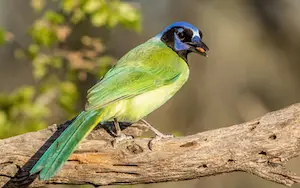
It helps to remember how big the place is. Amarillo can sit under snow while Brownsville is in shirtsleeves, and the birds sort themselves out accordingly. Dark-eyed Juncos and Harris’s Sparrows are common winter birds across the Panhandle and the northern half of the state and get scarce toward the coast. Down in the Lower Rio Grande Valley, winter is when the feeding stations at Santa Ana National Wildlife Refuge and Bentsen-Rio Grande Valley State Park are at their best, with Green Jays, Plain Chachalacas, and Great Kiskadees joined by wintering warblers and sparrows from the north.
The Gulf Coast gets the big birds. Rice fields and prairies around Katy, El Campo, and the coastal refuges fill with geese, and the salt marshes around Aransas National Wildlife Refuge hold the only naturally migrating flock of Whooping Cranes left on Earth. Out west, the playa lakes of the South Plains and Panhandle are where Sandhill Cranes gather by the thousands.
The mockingbird in winter
The state bird doesn’t leave, but it does change its behavior. In fall and winter, Northern Mockingbirds (Texas adopted it in 1927) set up feeding territories around berry-producing shrubs, and males and females often defend separate ones. A mockingbird chasing waxwings off a yaupon holly in December is guarding the food it plans to live on until spring. Planting more than one fruiting shrub, spaced apart, gives the other birds a chance.
Winter feeding notes for Texas
The general rules in the winter bird feeding guide apply here, with a few Texas wrinkles. Black-oil sunflower and white proso millet will cover most of the visitors below; the sparrows and juncos prefer millet scattered on the ground or on a low platform. Nyjer in a finch feeder brings in goldfinches and, in some winters, Pine Siskins.
Suet is worth offering, but a warm spell can turn a standard cake soft and rancid in a few days. No-melt suet dough holds up much better in a 75°F January afternoon. Water matters as much as food, both in dry winters and during hard freezes. The February 2021 freeze is still the example people bring up: insect-eating birds like bluebirds, warblers, and Hermit Thrushes showed up at feeders in large numbers, and a heated or regularly refreshed birdbath made a real difference that week.
Leave hummingbird feeders up. Texas gets a steady trickle of wintering hummingbirds, and Texas Parks and Wildlife has long asked people to report them. Bring the feeder inside on nights that drop below freezing and put it back out at first light.
For plants, the native winter-fruit shrubs do the heavy lifting: yaupon holly, possumhaw, American beautyberry (its berries often hang on into early winter), hackberry, and Texas persimmon. Turk’s cap keeps flowering until the first hard frost and feeds late hummingbirds.
Whooping Crane
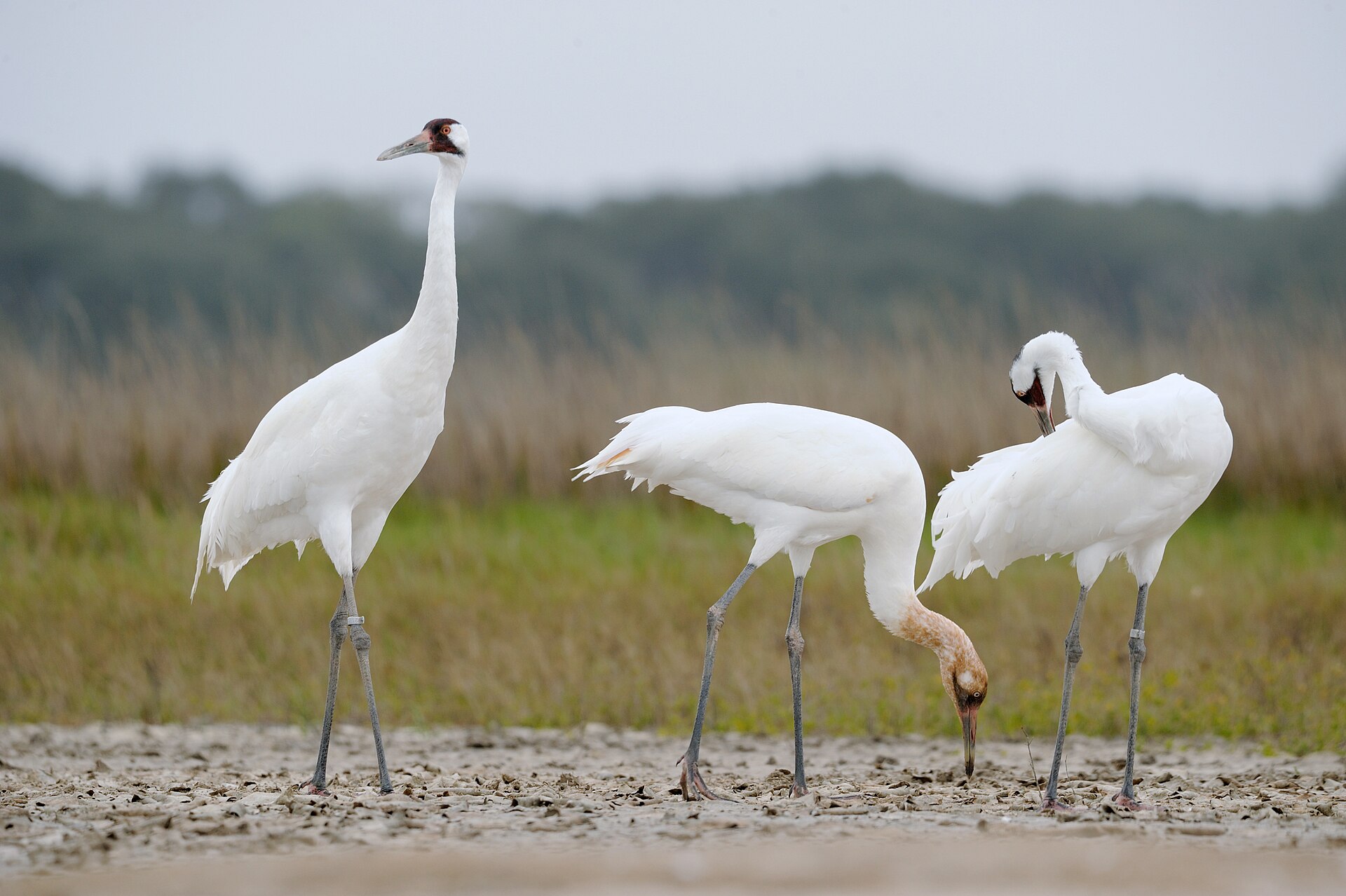
The tallest bird in North America, standing close to five feet, with a wingspan of around seven feet. Adults are white with black wingtips that show only in flight, plus a red crown and a black “mustache.” Young birds are washed with rusty brown through their first winter.
Every fall this flock flies roughly 2,500 miles from Wood Buffalo National Park in Canada to the coastal marshes in and around Aransas National Wildlife Refuge, arriving from late October into December and leaving again in late March and April. The flock was down to about 15 birds in 1941; it now numbers in the hundreds, still a small enough figure that every hard winter gets watched closely. Family groups and pairs defend marsh territories and feed heavily on blue crabs and the fruit of Carolina wolfberry.
The refuge’s observation tower is one option; the winter boat tours out of Rockport and Fulton usually get much closer.
Sandhill Crane
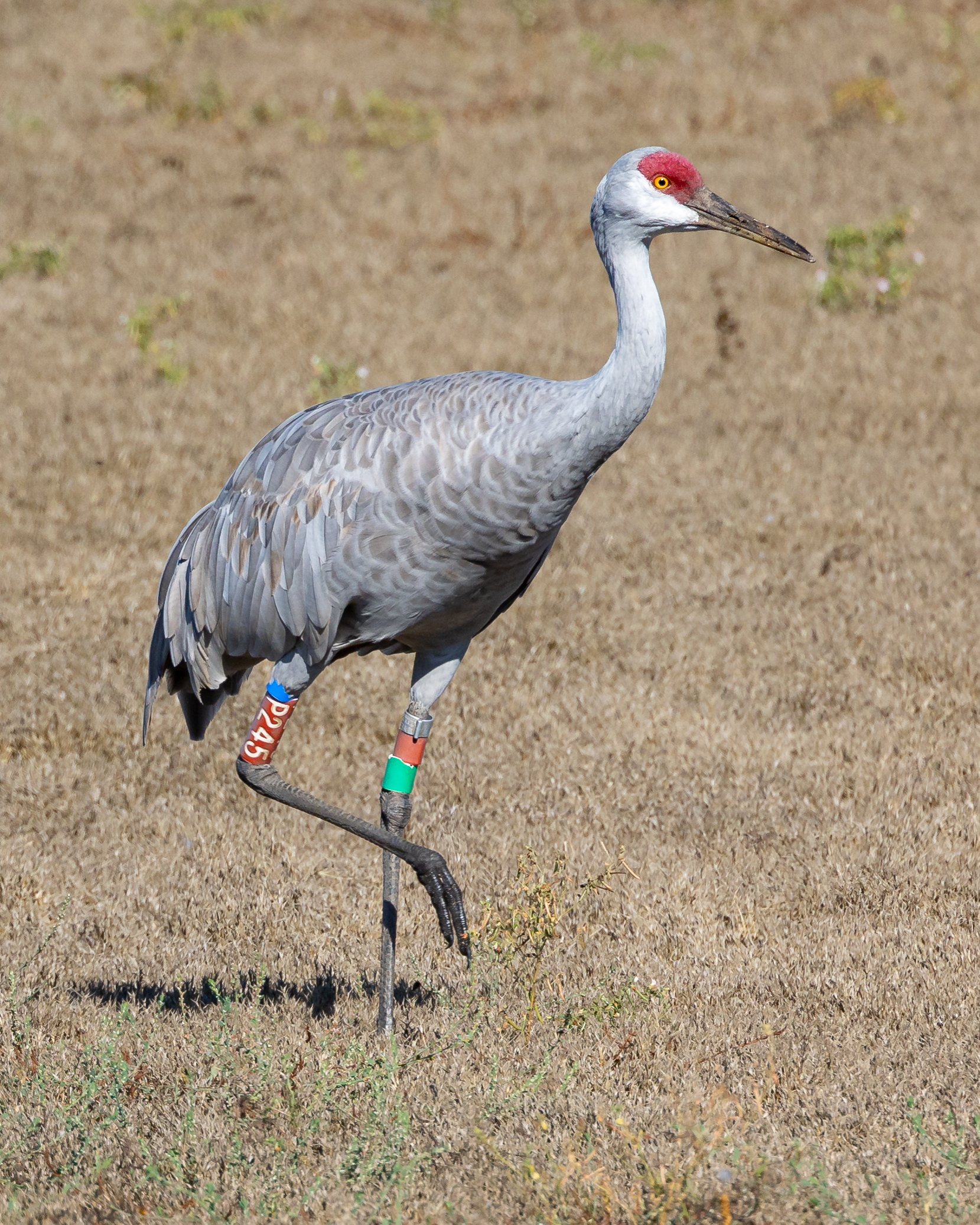
Gray, about four feet tall, with a red forehead patch. In winter many adults look rusty on the body, which is stain from iron-rich mud worked into the feathers during preening. The call is the giveaway, a rolling, wooden rattle that carries for a mile or more and often comes from birds too high to see.
Sandhill Cranes winter across much of Texas, but the biggest gatherings are on the South Plains and in the Panhandle, where flocks roost in the shallow water of playa lakes at night and fan out to feed in harvested grain fields during the day. Muleshoe National Wildlife Refuge has long been one of the best-known roost sites, with numbers peaking in December and January.
Harris’s Sparrow
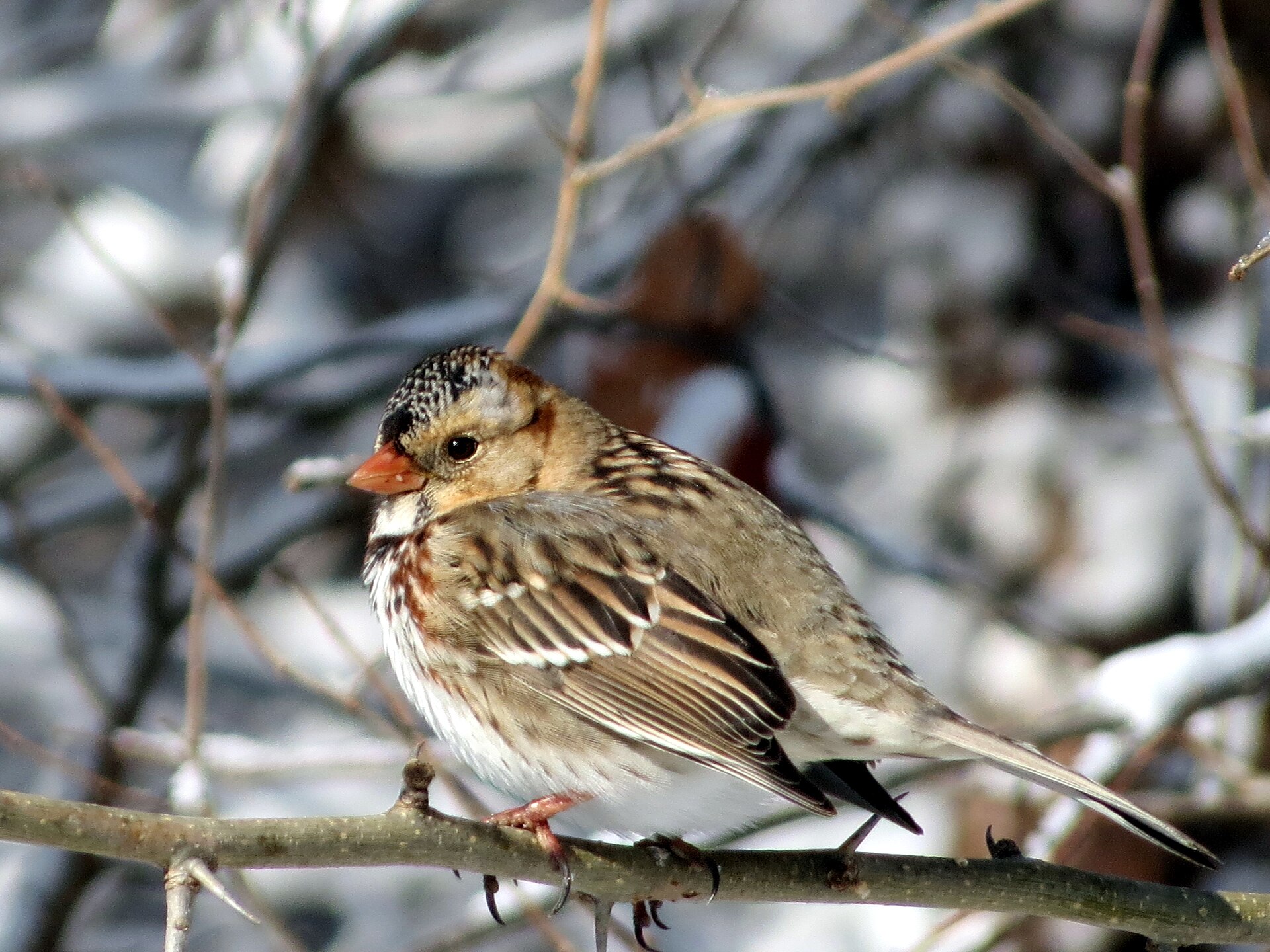
The largest sparrow in North America, at about 7.5 inches, and one of the most range-restricted. It breeds only at the edge of the Canadian tundra and winters in a narrow band down the middle of the Great Plains, and north-central Texas sits right in that band. The Dallas–Fort Worth area, the Cross Timbers, and the counties toward the Red River are prime territory.
Look for a heavy-bodied sparrow with a bright pink bill. Adults in winter show a black crown, face, and bib on a buffy-brown head; first-winter birds have less black and a whitish throat bordered with dark streaks. They forage on the ground under feeders and along brushy edges, usually mixed in with White-crowned Sparrows and juncos, and white millet scattered near a brush pile is the surest way to bring them in.
White-crowned Sparrow
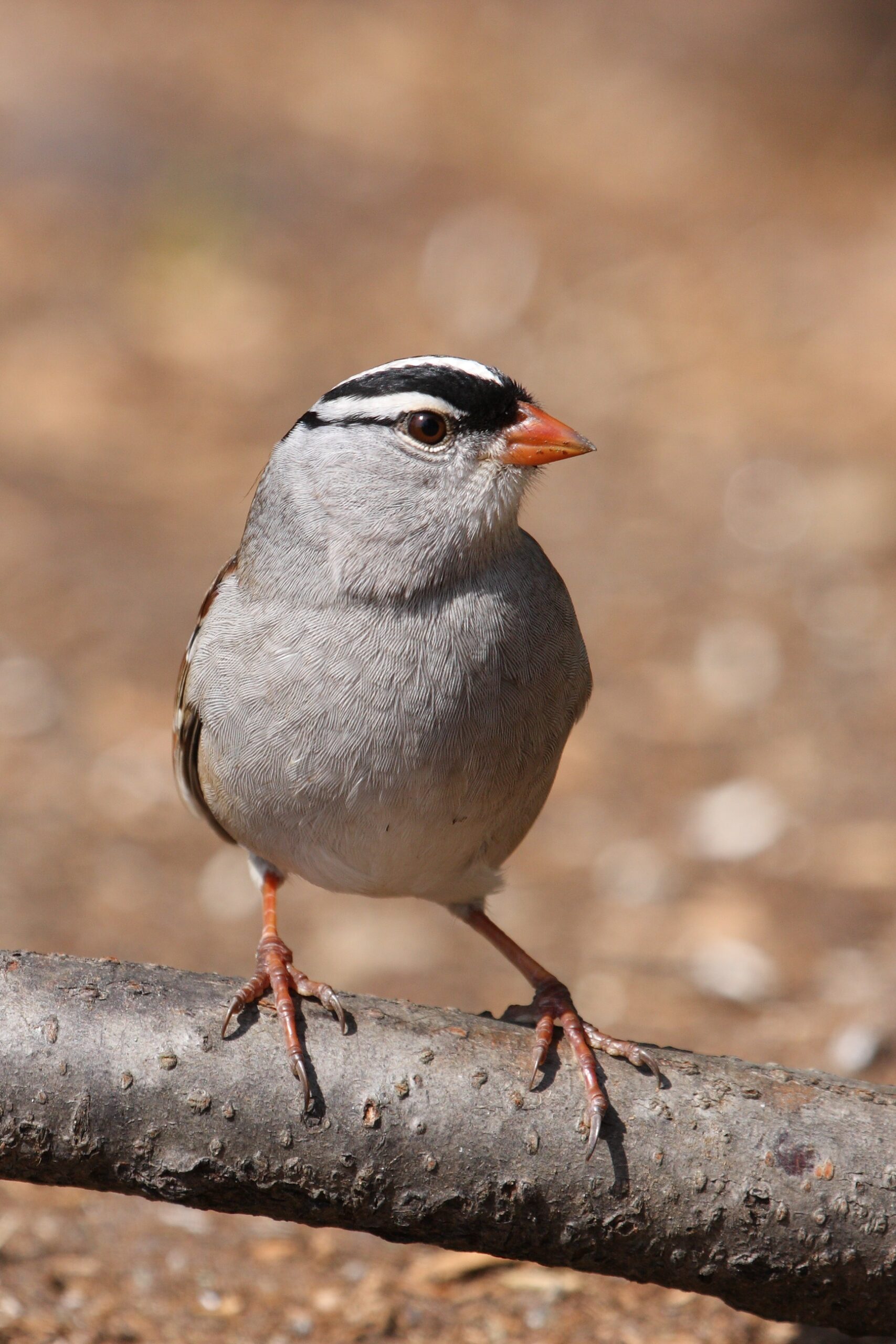
Adults are easy: bold black-and-white stripes on the crown, a clean gray face and breast, and a pinkish-orange bill. Birds in their first winter wear the same pattern in brown and tan instead of black and white, which confuses plenty of people in November. Length runs about 6 to 7 inches.
This is one of the most widespread wintering sparrows in Texas, especially in the western two-thirds of the state, and it arrives in October. Flocks scratch for millet under feeders and dart back into cover at the first shadow of a hawk. Males often start singing in late winter, weeks before they head north.
Yellow-rumped Warbler
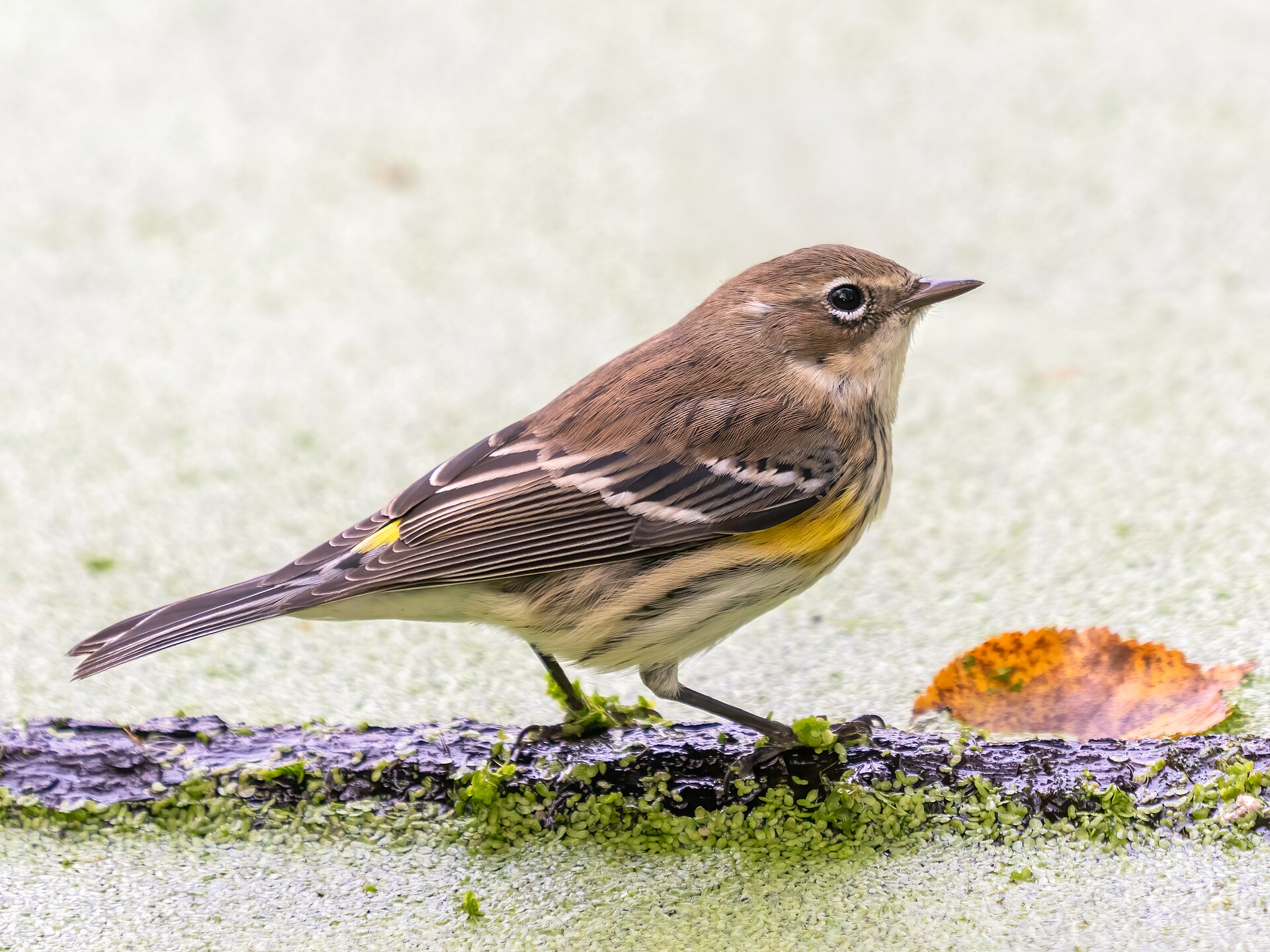
The most common wintering warbler in Texas and the one most likely to show up at a feeder. In winter plumage it is a fairly plain brown-streaked bird, about 5 to 5.5 inches long, with one dependable mark: a bright yellow patch on the rump, flashed every time it flies. Yellow patches at the sides of the breast help too. The call note is a dry, flat “chek.”
Two forms winter in the state. “Myrtle” birds, with a white throat, are the norm in the east and along the coast. “Audubon’s” birds, with a yellow throat, are more common in West Texas. Both will eat suet, peanut butter mixes, and chopped fruit, and they switch to wax myrtle and poison ivy berries when insects run short.
Orange-crowned Warbler
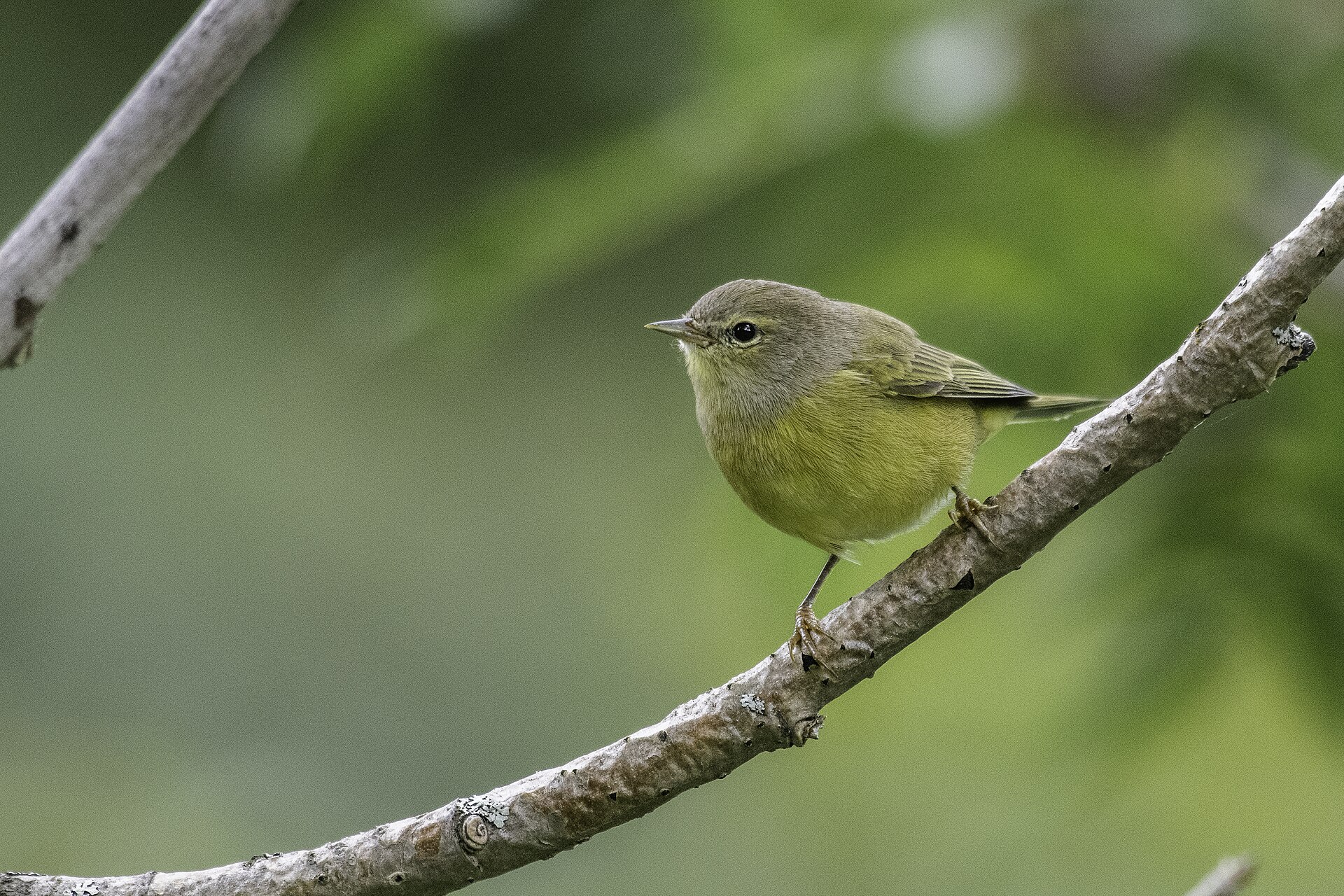
Probably the plainest bird on this list, and that is how to recognize it: an olive-gray warbler about 5 inches long with faint, blurry streaks on a yellowish breast, a thin dark line through the eye, and no wingbars. The orange crown patch in its name is almost never visible in the field.
Texas is one of the core wintering areas for this species, and it is common in yards from the Hill Country to the coast. Orange-crowned Warblers are known for visiting suet feeders and, in mild weather, sipping from hummingbird feeders and sapsucker wells.
Ruby-crowned Kinglet
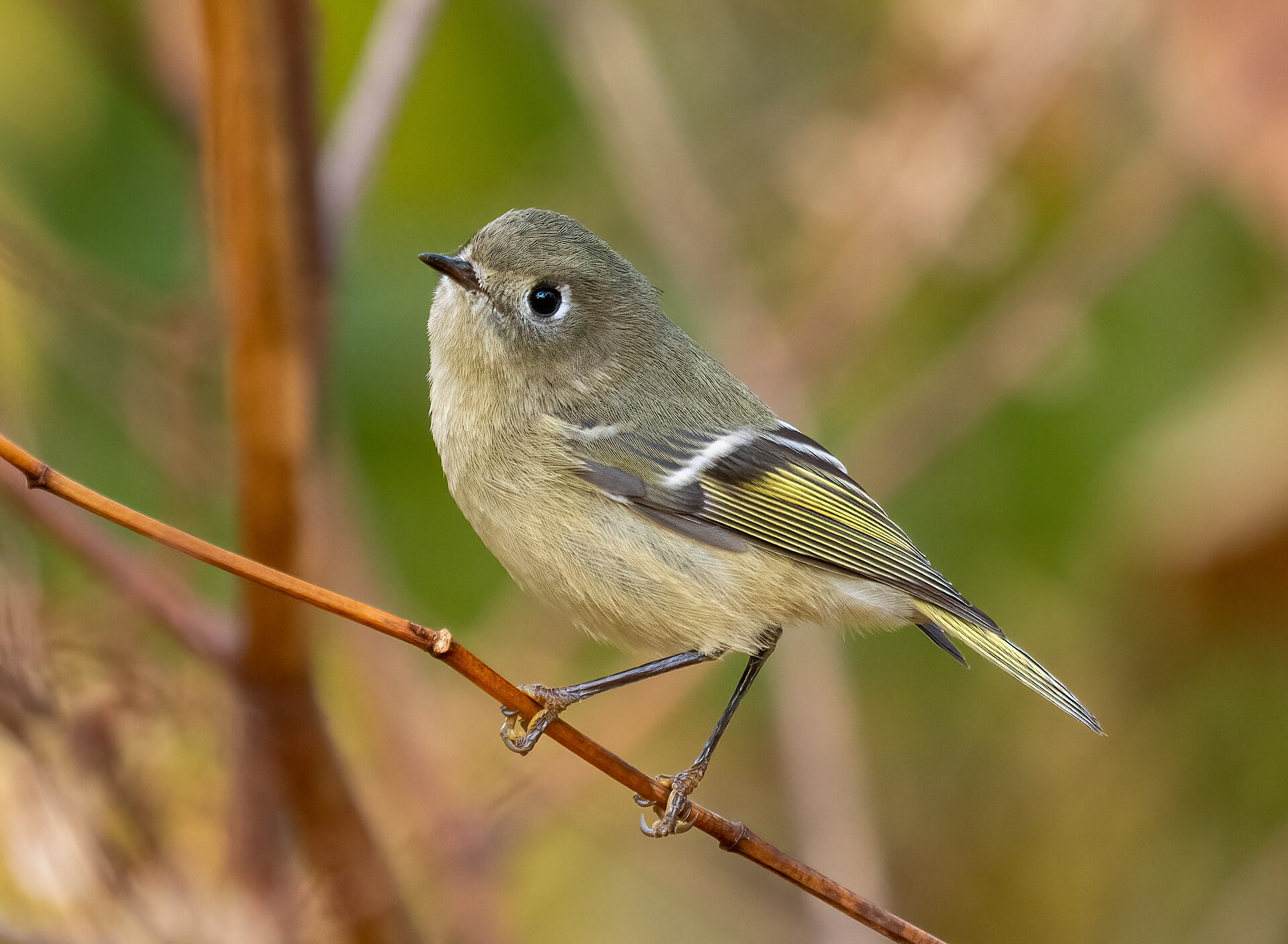
Barely 4 inches long, olive-green, with a bold broken white eye-ring and a white wingbar set off by a dark patch behind it. The red crown in its name stays hidden most of the time and only shows when a male is agitated. The constant wing-flicking is often the first thing that gets noticed.
Kinglets arrive in Texas in October and stay through April, working through live oaks, cedar elms, and shrubs for insects and spider eggs. They travel with the mixed winter flocks led by chickadees and titmice. They take suet occasionally, and especially during cold snaps.
Cedar Waxwing
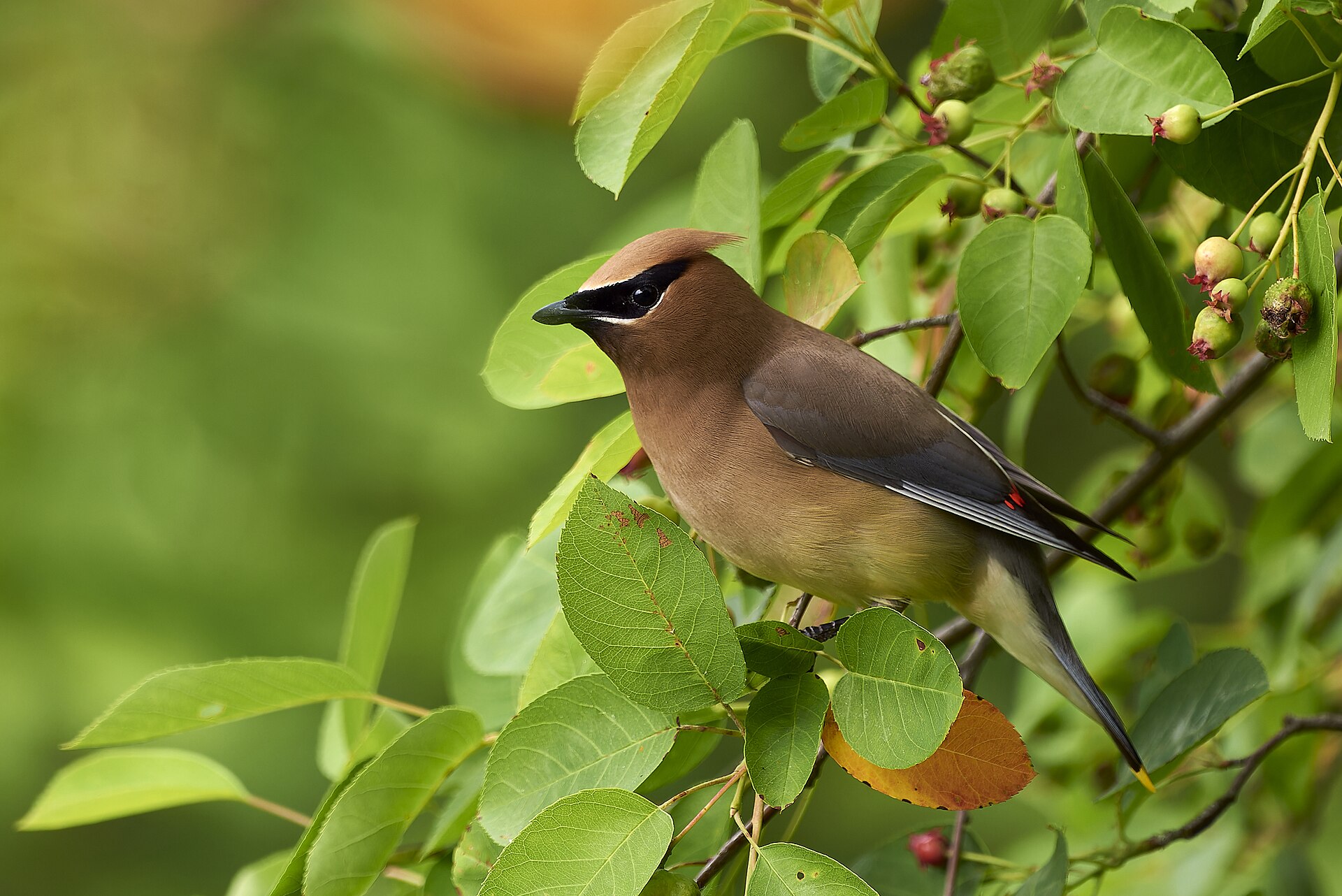
Sleek, crested, and soft brown fading into gray, with a black mask, a yellow tip to the tail, and small red waxy tips on some wing feathers. Length is about 6 to 7 inches. Flocks move together and give a thin, high, lisping whistle that is easy to miss until there are fifty birds overhead.
Waxwings are nomadic in Texas, appearing wherever fruit is plentiful and then disappearing for weeks. They strip yaupon, possumhaw, hackberry, and juniper berries, which is where the mockingbird conflicts start. They also linger late, often into May, after most other winter visitors have gone.
Rufous Hummingbird
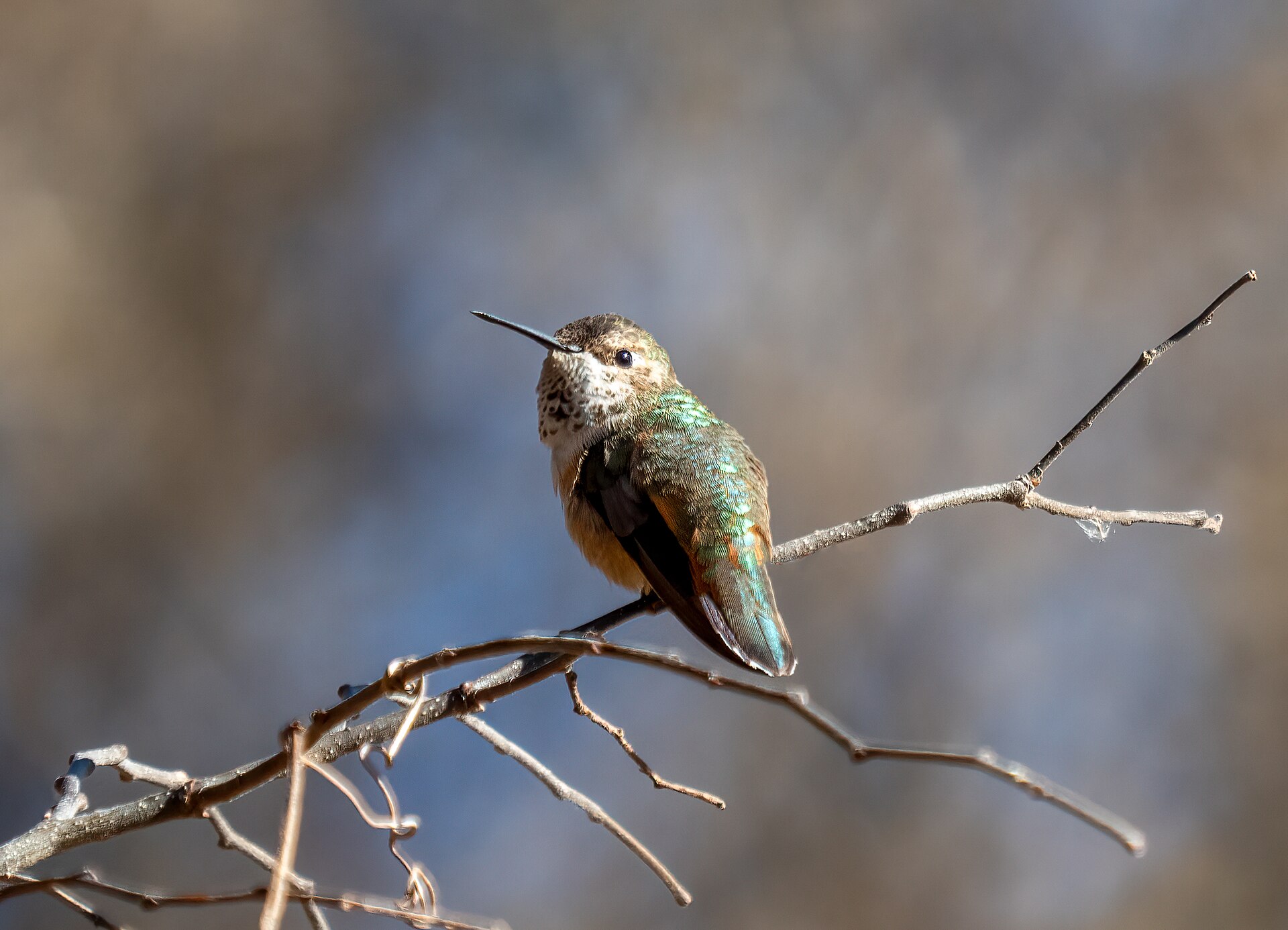
A small, about 3.5-inch hummingbird. Adult males are bright orange-rufous on the back, sides, and tail with a glowing orange-red throat. Females and young birds, which make up most winter reports, are green above with rufous on the flanks and at the base of the tail and a spot of orange in the center of the throat.
Rufous Hummingbirds breed as far north as Alaska, and a share of them winter along the Gulf Coast and across the Southeast instead of in Mexico. They are the most frequent wintering hummingbird in Texas yards outside the Valley, where Buff-bellied Hummingbirds also stay year-round. Some green-backed females can’t be safely separated from the very similar Allen’s Hummingbird without a close look at the tail feathers, which is one reason banders ask to hear about winter hummingbirds. A clean feeder with fresh 1:4 sugar water is all they need.
American Goldfinch
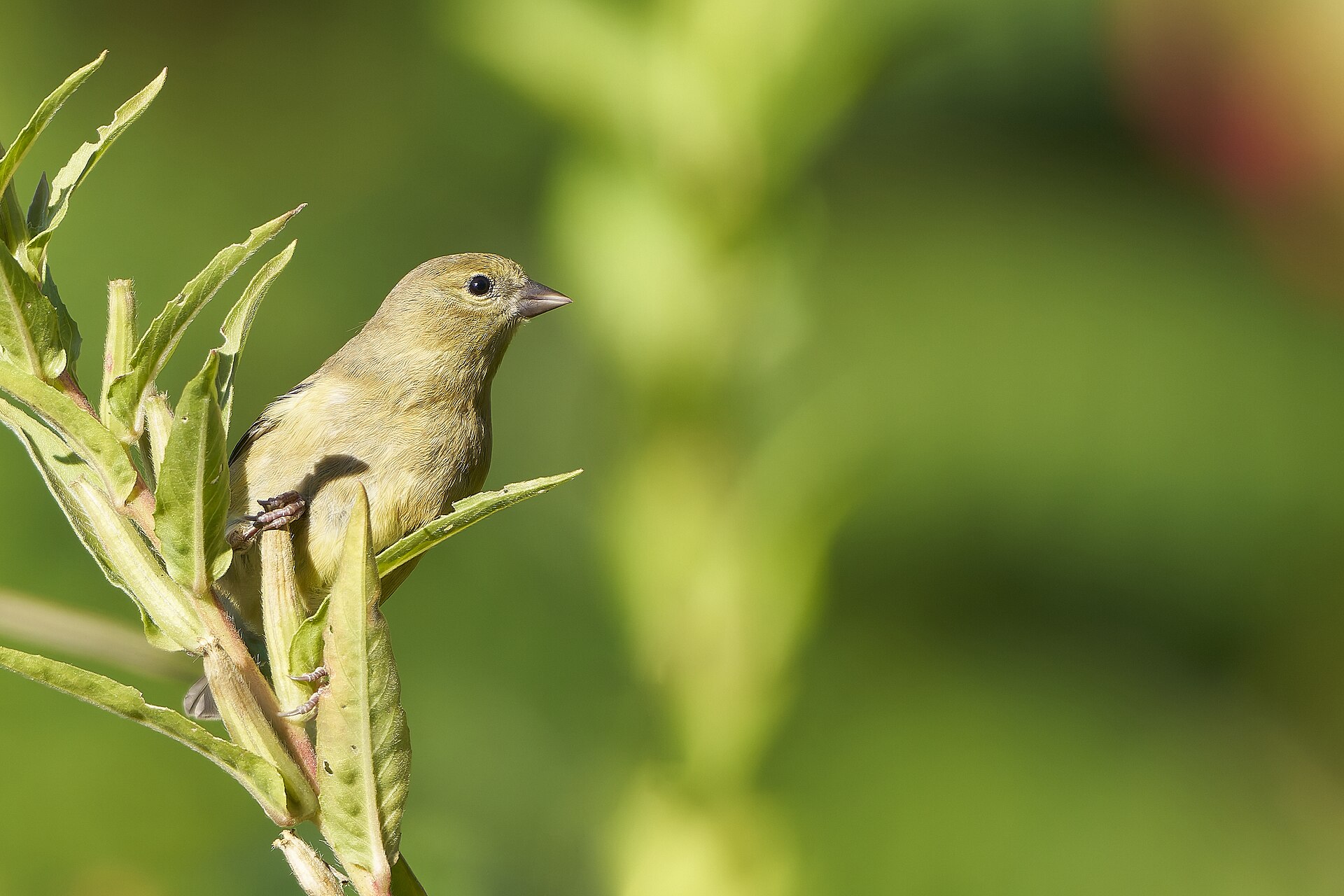
Few people recognize goldfinches the first time they see them in Texas, because the bright yellow summer birds of the North arrive here in drab winter plumage: olive-brown above, buffy below, with black wings and clear pale wingbars. They are about 4.5 to 5 inches long and give a bouncy, rising “per-chic-o-ree” call in flight.
Goldfinches winter across nearly all of Texas, showing up in November and sometimes staying into April and early May. By then many males have molted back into bright yellow. Nyjer and sunflower chips in a tube feeder are the standard offering, and a busy feeder can host dozens at once.
Spotted Towhee
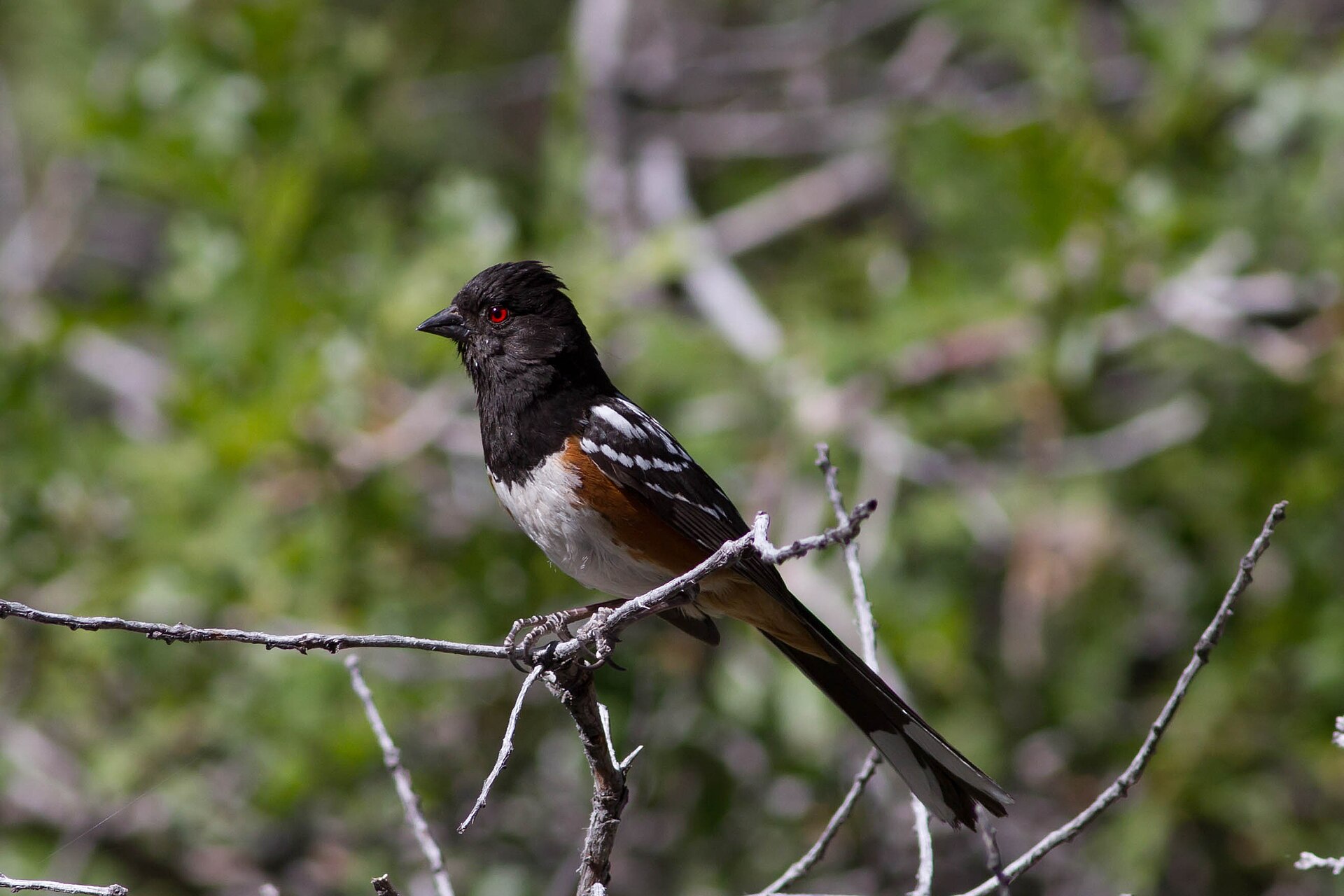
A big, long-tailed sparrow, about 7 to 8 inches, with a black hood, rufous sides, a white belly, red eyes, and white spots across the back and wings. Females look similar but with a duskier brown-black hood. The habit to watch for is the double-scratch: a quick hop forward and back that rakes through leaf litter with both feet.
Spotted Towhees winter through much of central and western Texas and are a staple of Hill Country yards with brushy edges. In East Texas the similar Eastern Towhee, which lacks the white back spots, is the more likely towhee. Both come out from cover for millet and cracked corn scattered on the ground, and both stay close to shrubs.
Dark-eyed Junco
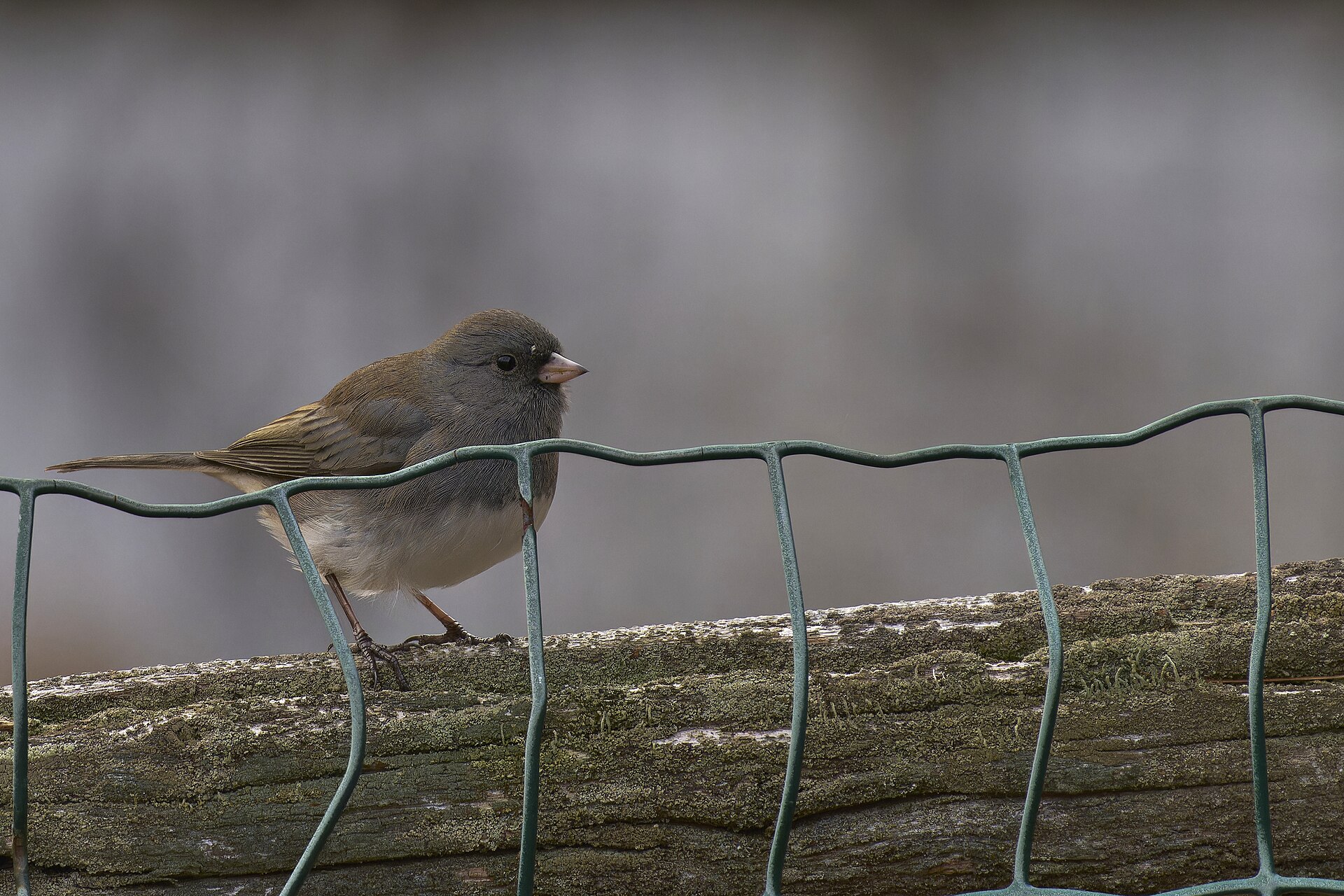
A small, round sparrow about 6 inches long with a pale pink bill and white outer tail feathers that flash as it flies. Texas gets several forms. Gray “Slate-colored” Juncos are the standard bird in the east and center of the state, and pink-sided “Oregon” and gray-headed forms turn up more in the Panhandle and the Trans-Pecos.
Juncos are common winter visitors in the northern half of Texas and become less regular to the south and along the coast. They feed on the ground in small flocks, often with the sparrows above, and their arrival in November is a reliable sign that the season has turned.
Getting started this winter
Timing matters more in Texas than in most states. Most of these birds trickle in from mid-October through November, so the best time to fill feeders and clean birdbaths is right after the first strong cold front. Ground-feeding sparrows and towhees need cover within a short dash, so a brush pile or a shrub border a few yards from the seed is worth more than a second feeder. The first-winter feeder setup guide covers placement and cleaning in detail.
Counting the birds is a good way to learn them. Project FeederWatch runs from November through April and takes nothing more than a couple of watch periods a week, and the Christmas Bird Count has dozens of circles across Texas that welcome beginners. Readers in the northern states can compare notes with the birds that stay through winter up north, many of which are the same species that spend the season here.
Sources: Species descriptions and range information draw on the Cornell Lab of Ornithology’s All About Birds, the National Audubon Society’s Guide to North American Birds, eBird regional records for Texas, Texas Parks and Wildlife Department, and the U.S. Fish and Wildlife Service (Aransas National Wildlife Refuge).