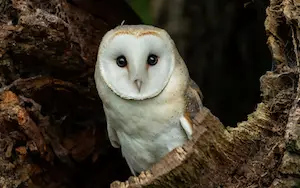
No state in the country has a longer raptor species list than Texas, and it’s not close. The Rio Grande Valley brings tropical species that barely cross the border, the central flyway funnels migrants from the entire middle of the continent, and the Panhandle and Hill Country add western specialties on top of that. This guide focuses on the species a visiting birder is actually likely to find, with the field marks that separate the easy-to-confuse ones.
Red-tailed Hawk
Scientific name: Buteo jamaicensis
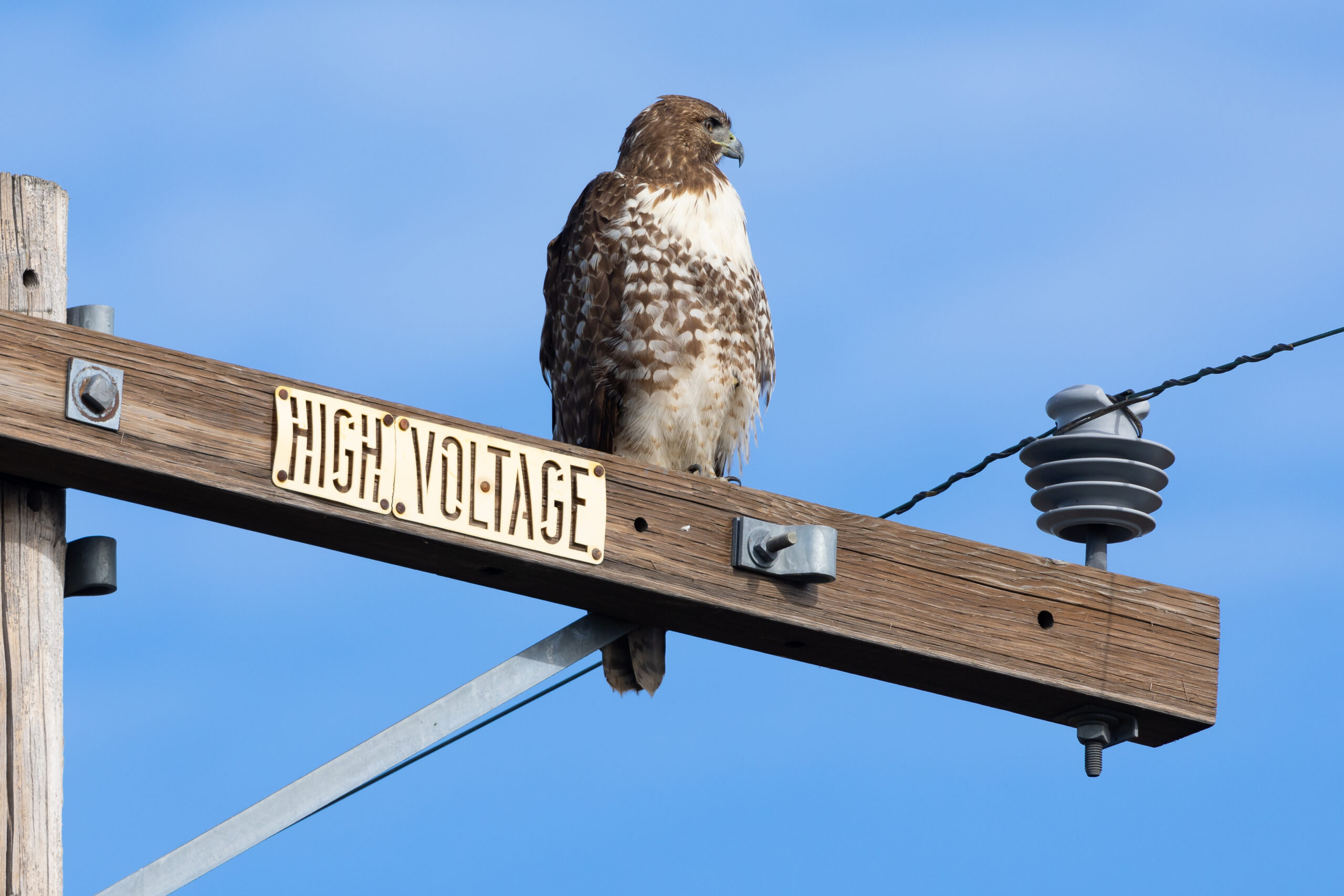
Texas’s default hawk, found statewide year-round and perched on fence posts and highway poles from the Panhandle to the Valley. Adults run 45 to 65 cm (18 to 26 in) with a wingspan around 1.1 to 1.3 m (3.7 to 4.4 ft), and the brick-red tail is the mark that works at highway speed. Texas also hosts the darker Harlan’s Hawk subspecies as a winter visitor, which can lack the red tail entirely and throws off birders expecting the classic look.
White-tailed Hawk
Scientific name: Geranoaetus albicaudatus
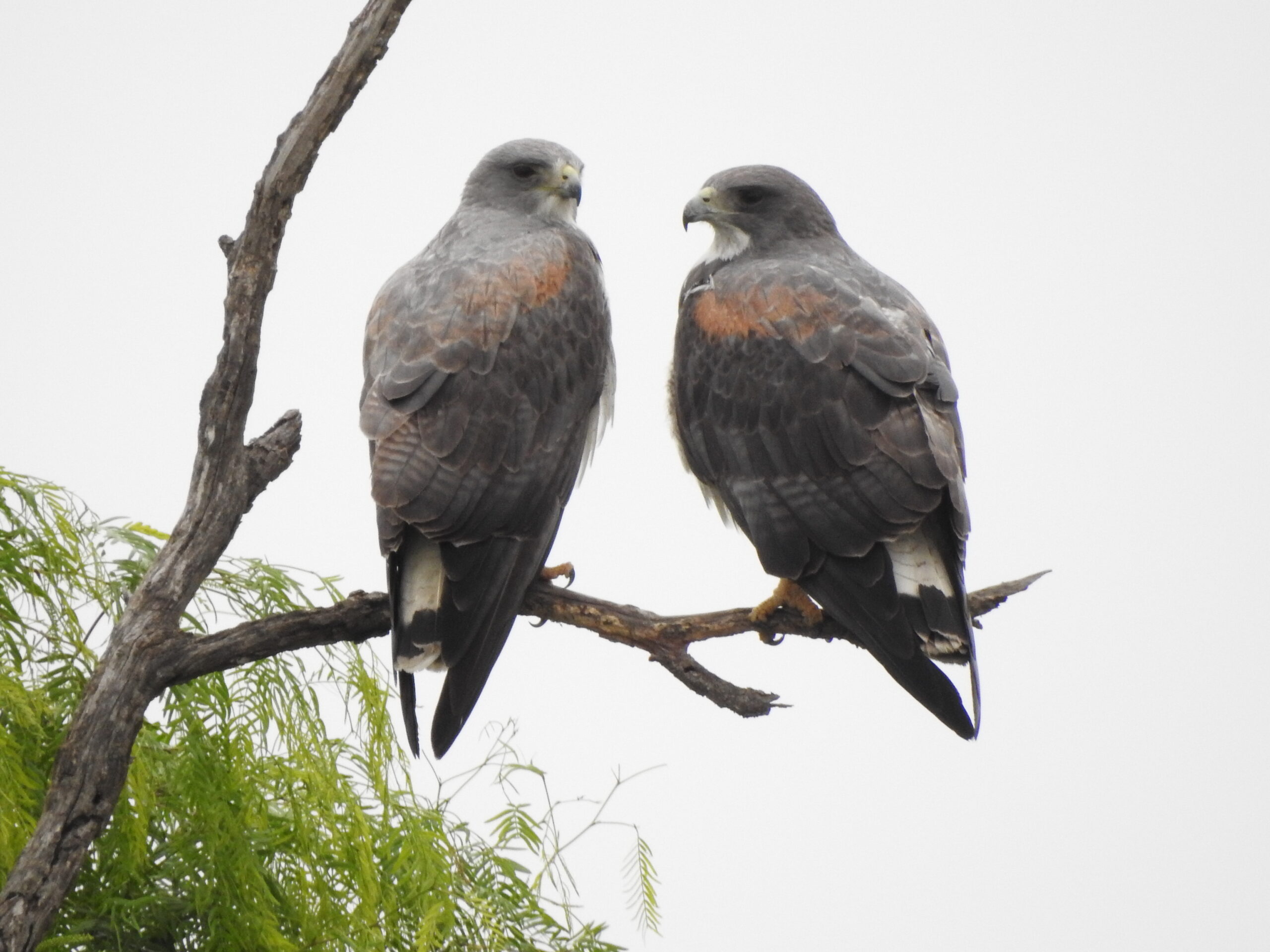
This one is a south Texas specialty, essentially unavailable anywhere else in the country outside the coastal prairie and brushland south of San Antonio. A gray-backed adult shows a short white tail crossed by a single black band, broad wings, and a habit of hanging motionless into the wind over open grassland while hunting, almost kite-like for a bird this size. It’s a year-round resident where it occurs, so a sighting isn’t tied to any particular season.
Harris’s Hawk
Scientific name: Parabuteo unicinctus
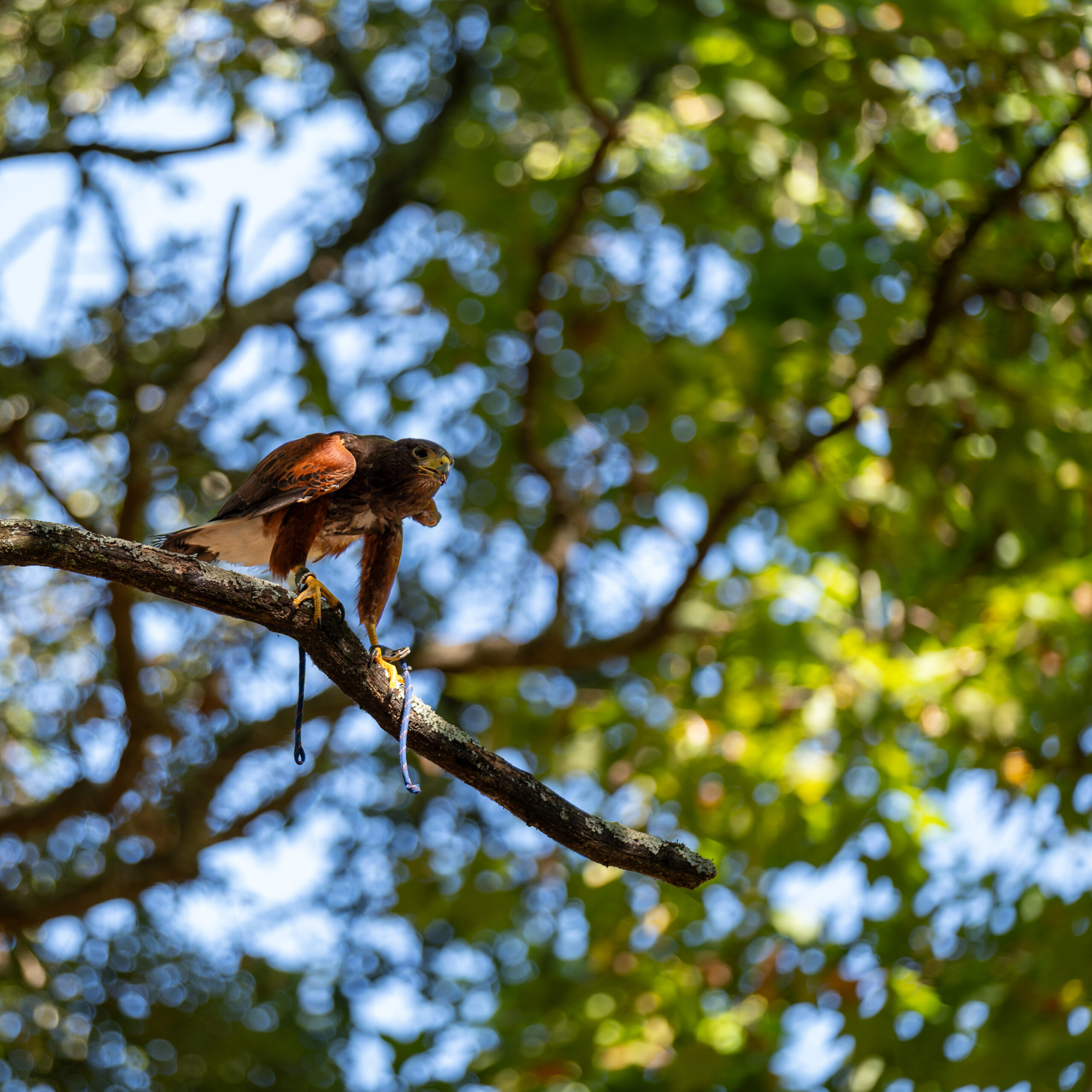
Dark chocolate-brown overall with chestnut shoulders and thighs and a white band at the base and tip of the tail, the Harris’s Hawk stands out behaviorally as much as visually: it’s one of the only raptors in the world that hunts cooperatively in family groups, with two or three birds flushing and cornering prey together. South and central Texas hold the core U.S. population, and it’s a year-round resident in brushy, semi-arid country, often seen stacked two or three to a single utility pole.
Swainson’s Hawk
Scientific name: Buteo swainsoni
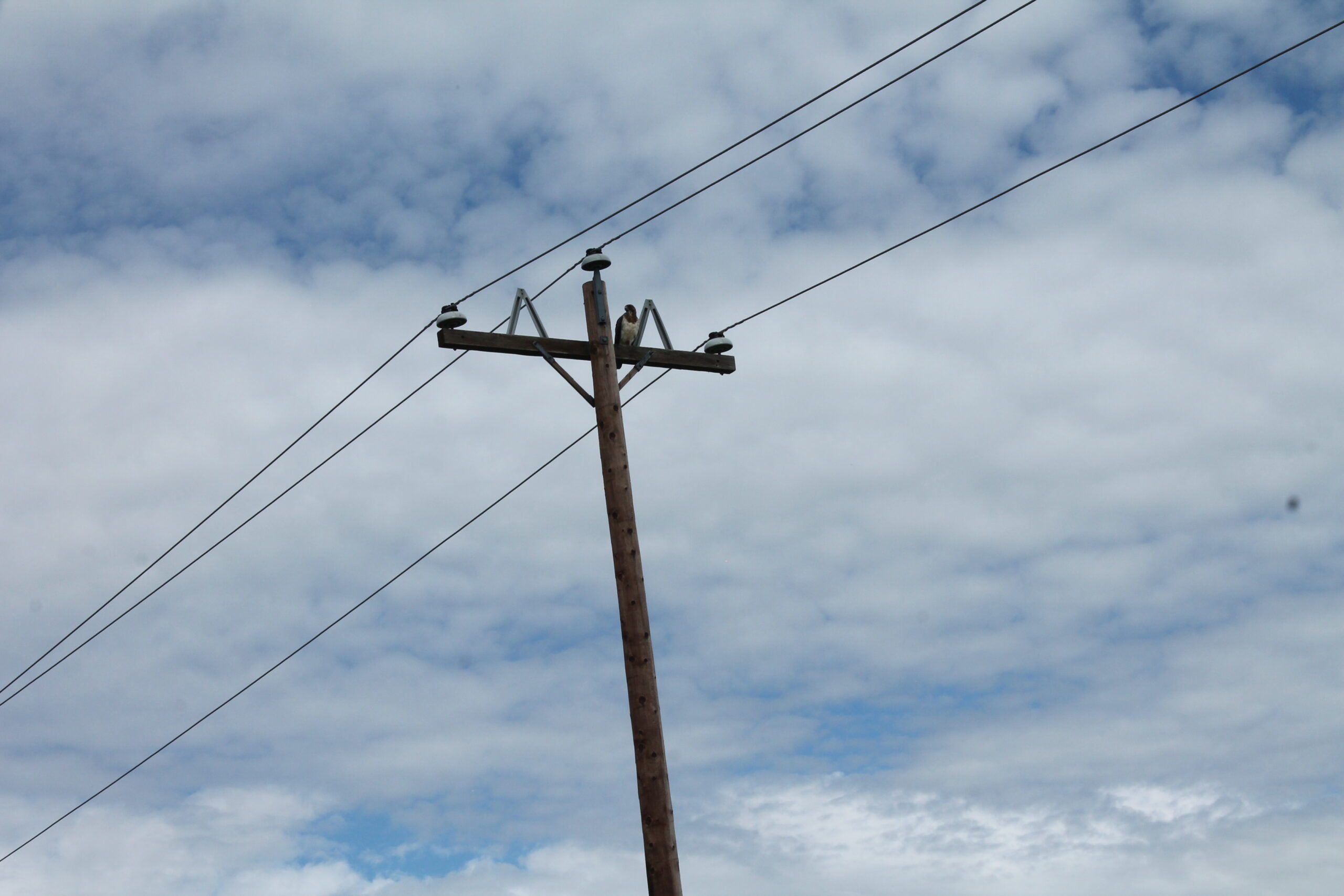
A long-winged Buteo of the open plains, typically showing a dark bib across the chest that cuts off sharply from a pale belly, though color morphs range from this classic light pattern to birds that are almost entirely dark brown. Swainson’s Hawks breed across the Texas Panhandle and High Plains in summer, then undertake one of the longest migrations of any American raptor, wintering in Argentina. Fall migration through Texas can produce genuinely large kettles, especially along the coast.
Crested Caracara
Scientific name: Caracara cheriway
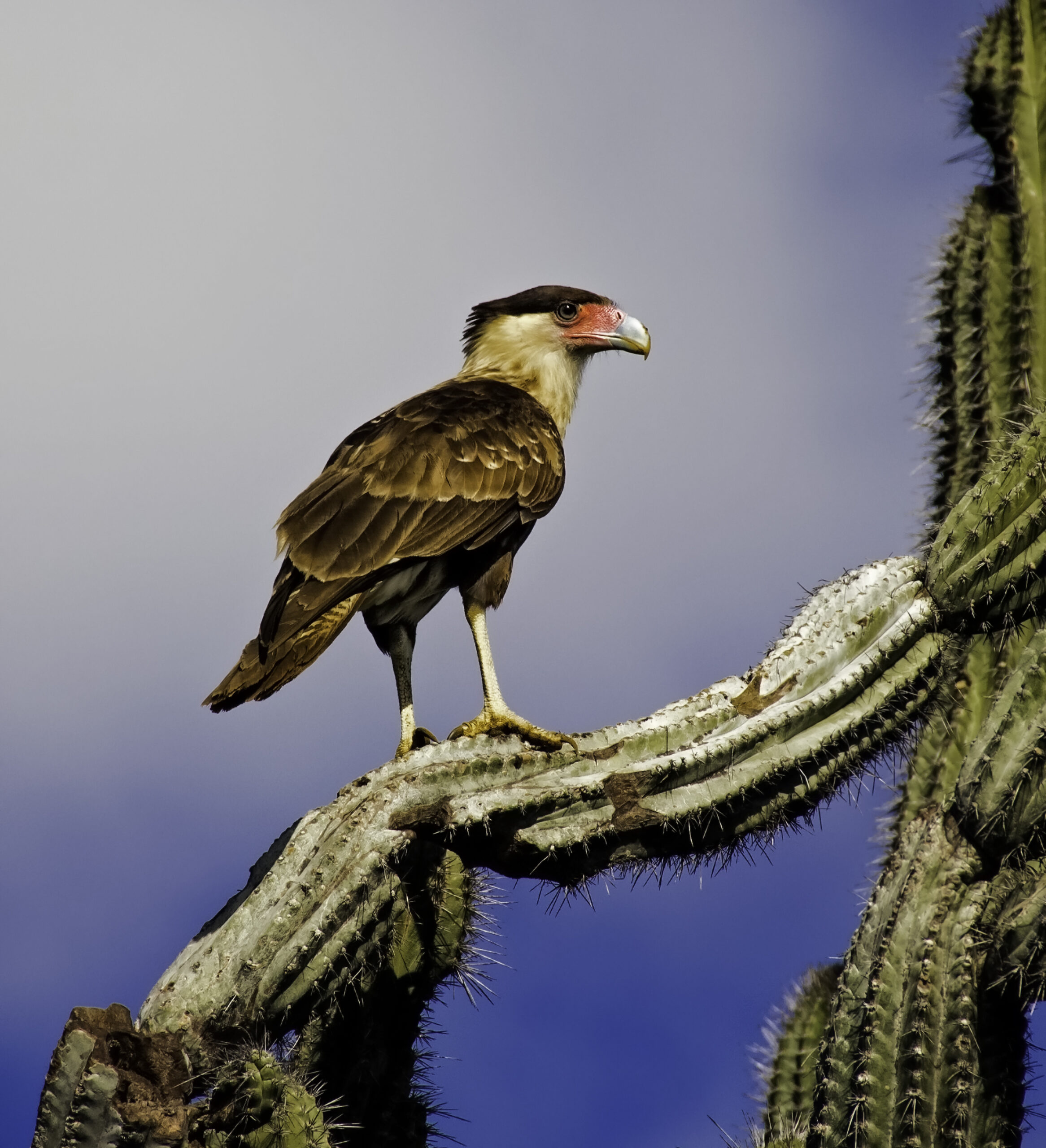
Technically a falcon by lineage, but nothing about its lifestyle reads that way: long-legged, bare-faced with orange-to-red skin, a black cap, and a habit of walking on the ground scavenging carrion alongside vultures rather than hunting on the wing. It’s a year-round resident of south and central Texas brushland and prairie, and the sight of one striding across a pasture, often near a roadkill a Turkey Vulture is also working, is a reliable south Texas experience rather than a rare one.
Mississippi Kite and White-tailed Kite
Scientific names: Ictinia mississippiensis and Elanus leucurus
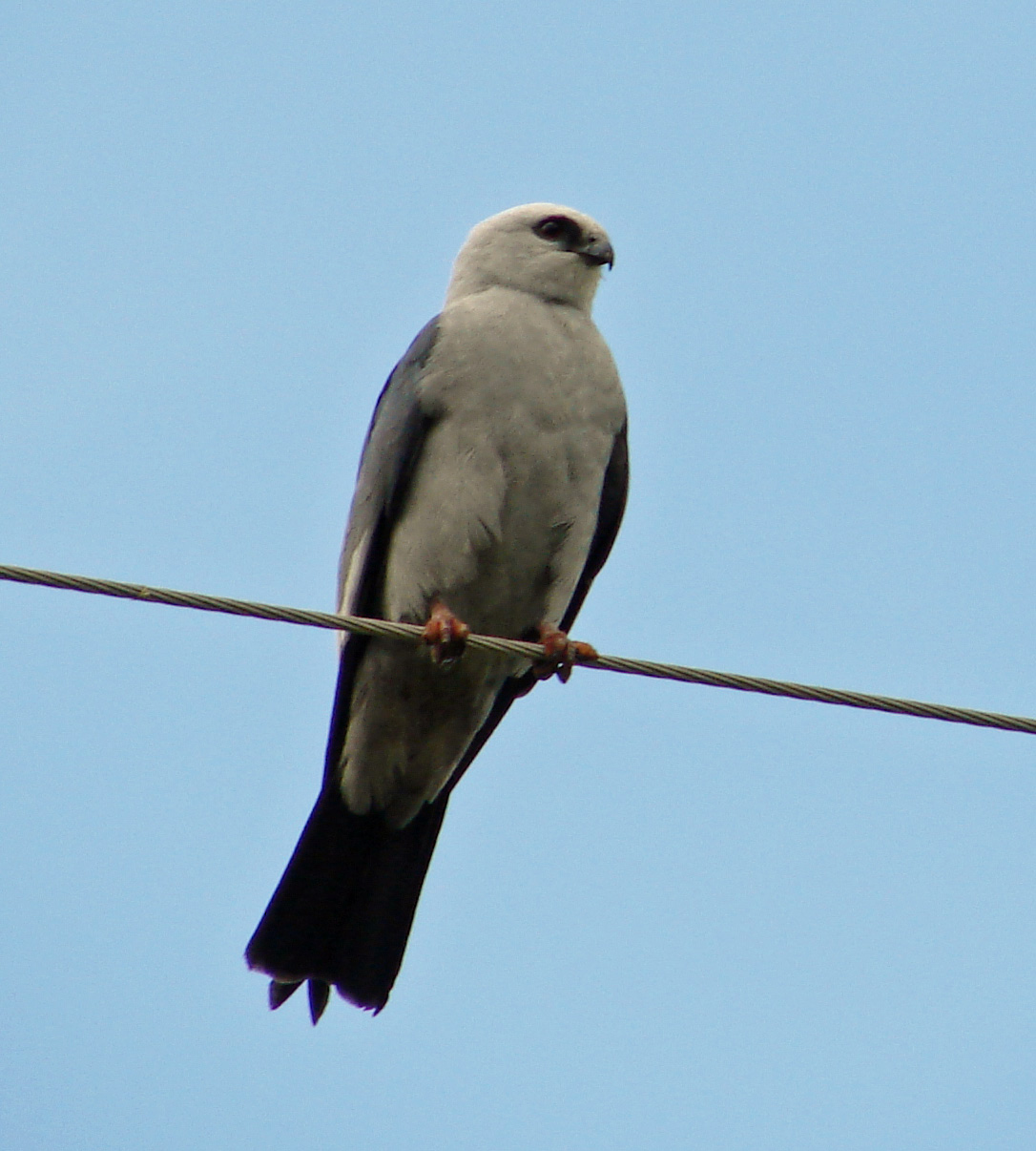
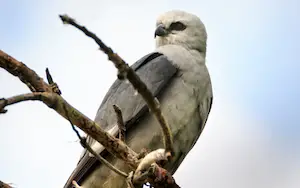
These two kites occupy different habitats and hunt differently, which makes them easy to tell apart once you know what to look for. The Mississippi Kite is pale gray overall with a darker tail, breeds colonially in shelterbelts and urban trees across much of Texas in summer, and catches large flying insects on the wing with acrobatic, swallow-like flight.
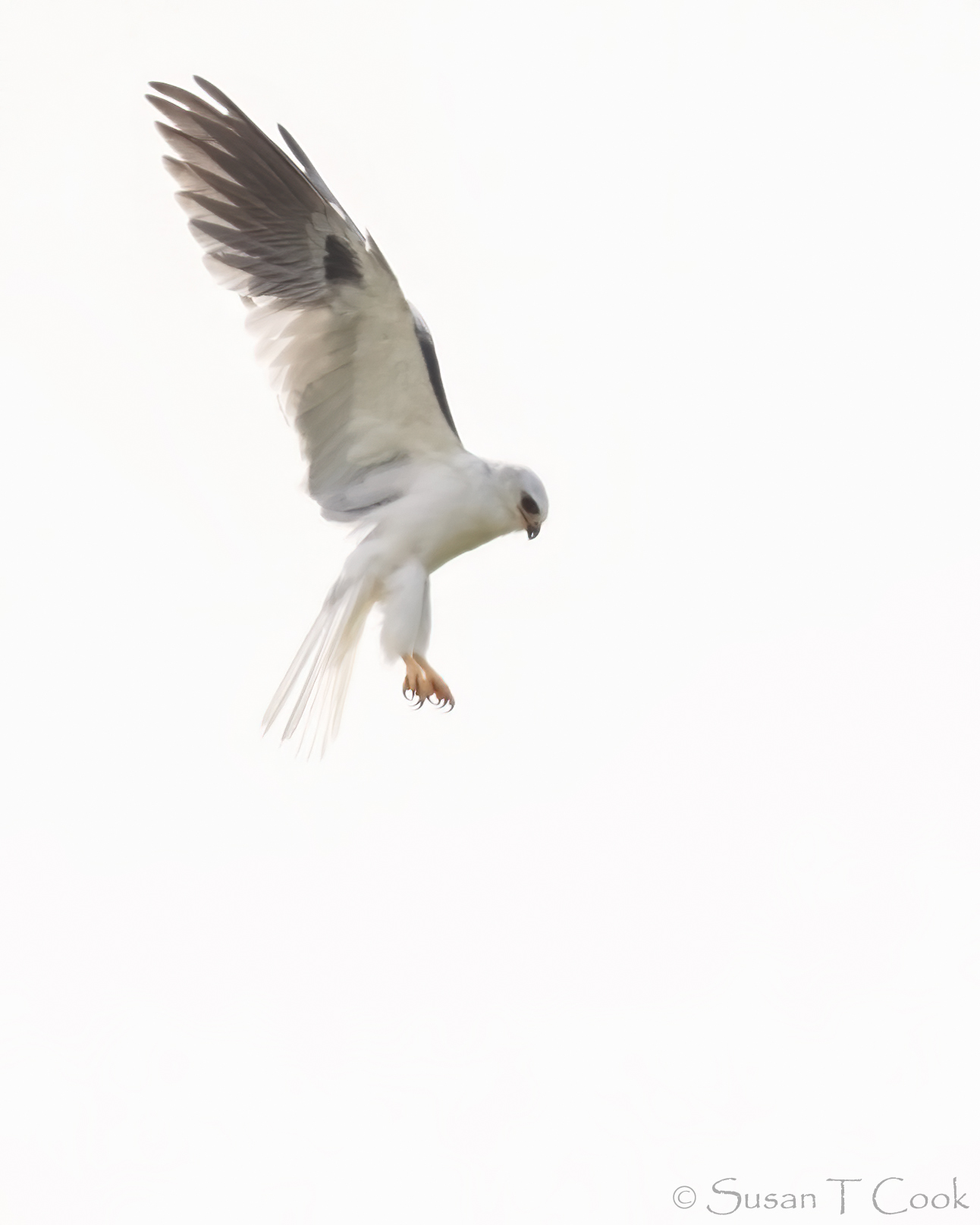
The White-tailed Kite is nearly all white with black shoulder patches, hunts rodents over open grassland by hovering in place on rapidly beating wings, and is a year-round resident concentrated along the coastal prairie rather than the kite you’ll see over a city neighborhood.
Bald Eagle
Scientific name: Haliaeetus leucocephalus
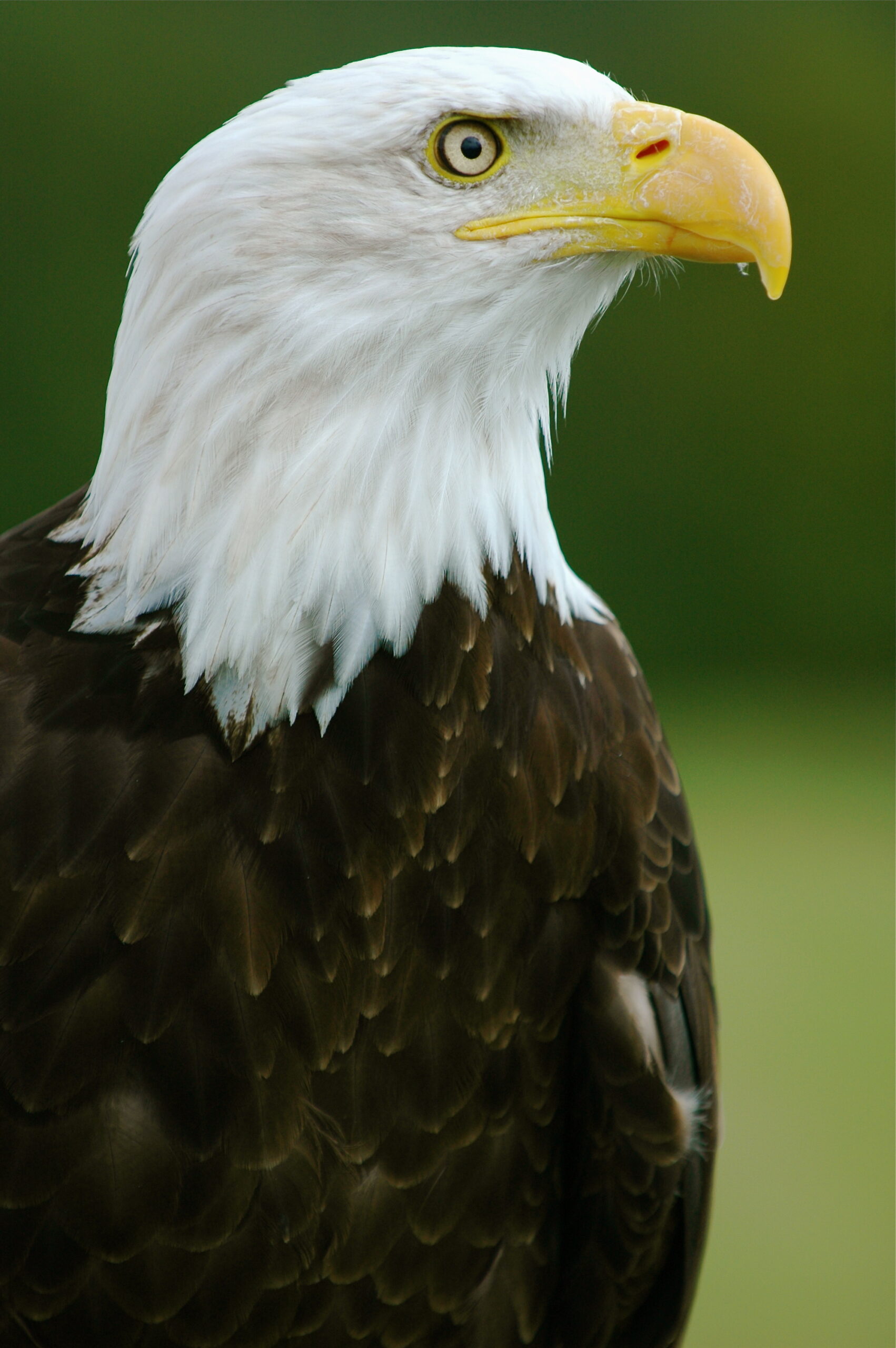
Texas sits a little differently from most states here: rather than a growing year-round breeding population, Bald Eagles mainly nest along East Texas reservoirs and rivers in winter, with numbers highest from November through March and far fewer birds present in the heat of summer. An adult shows the unmistakable white head and tail against a dark brown body at 70 to 90 cm (28 to 38 in); immatures stay mottled brown for several years and are the birds most often mistaken for Golden Eagles, which are rare in Texas outside the far west.
American Kestrel and Peregrine Falcon
Scientific names: Falco sparverius and Falco peregrinus
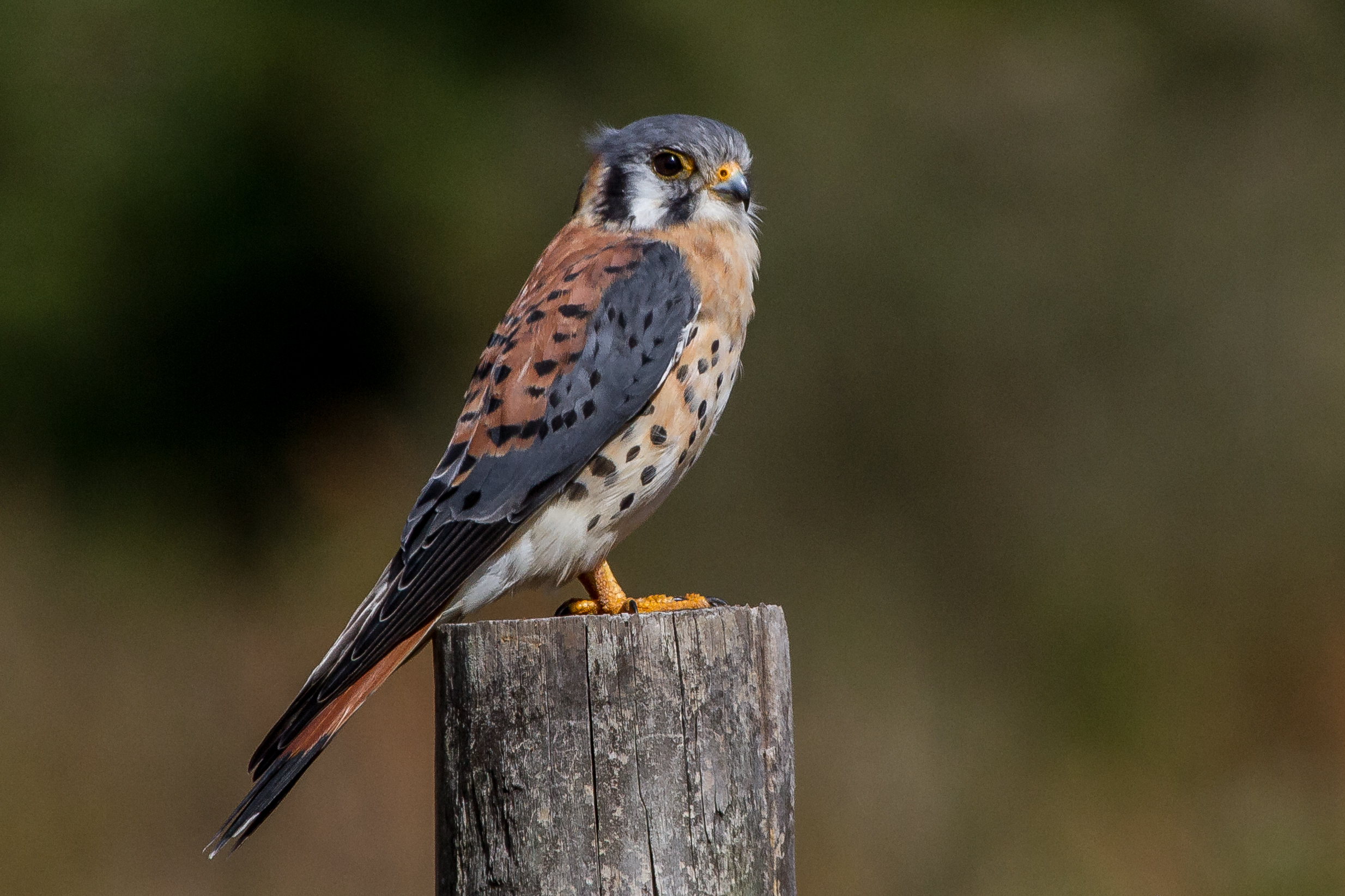
The American Kestrel, North America’s smallest falcon at 22 to 31 cm (9 to 12 in), is a year-round Texas resident easily spotted hovering over roadside grass on rapidly beating wings, with blue-gray wings and a rufous back on males and an all-rufous back on females.
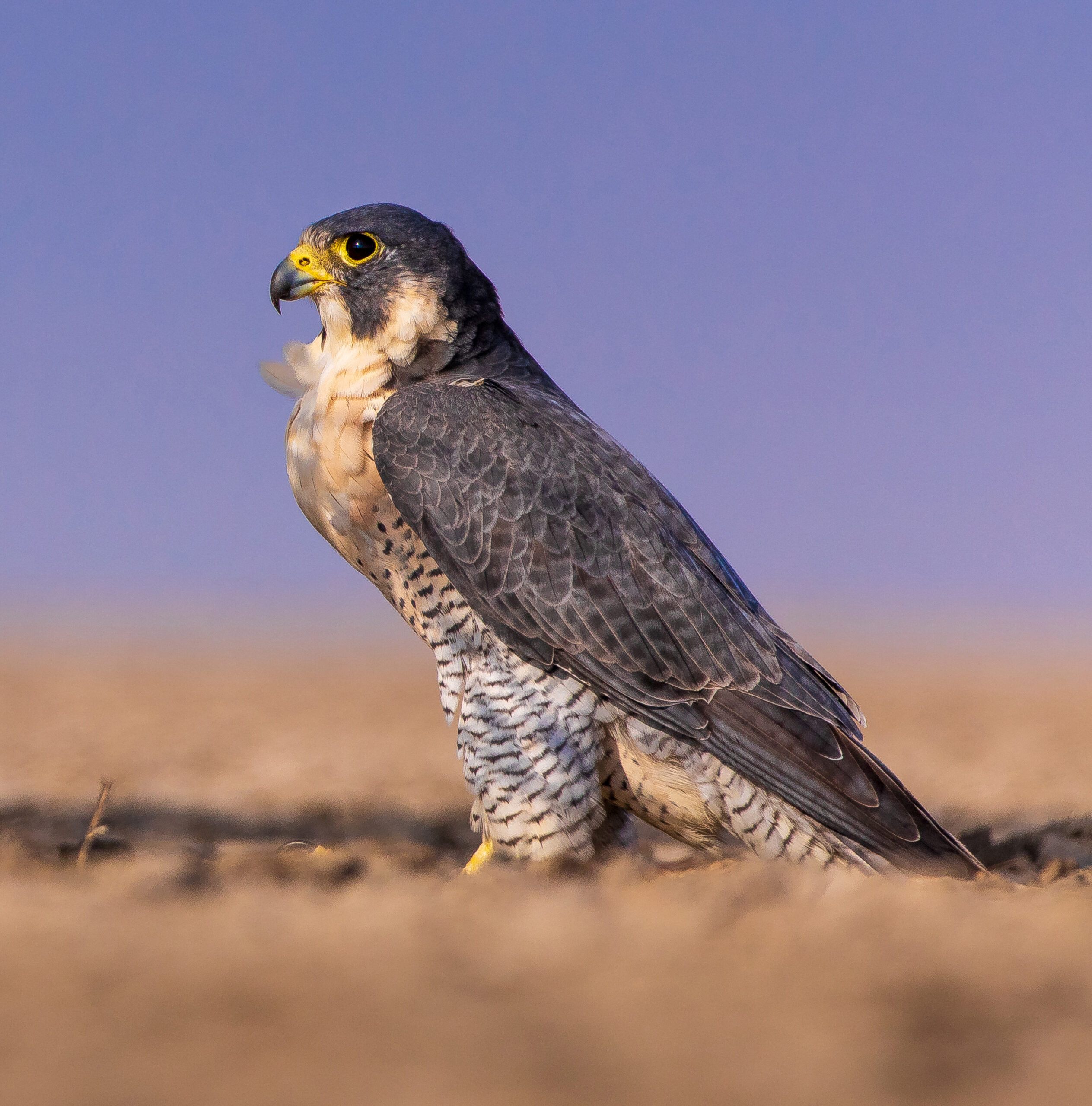
The Peregrine Falcon is larger at 36 to 49 cm (14 to 19 in), shows a dark hooded head and heavily barred underparts, and passes through Texas in especially large numbers during fall migration along the coast, in addition to a small resident population on downtown buildings in cities like Austin and Houston.
Turkey Vulture and Black Vulture
Scientific names: Cathartes aura and Coragyps atratus
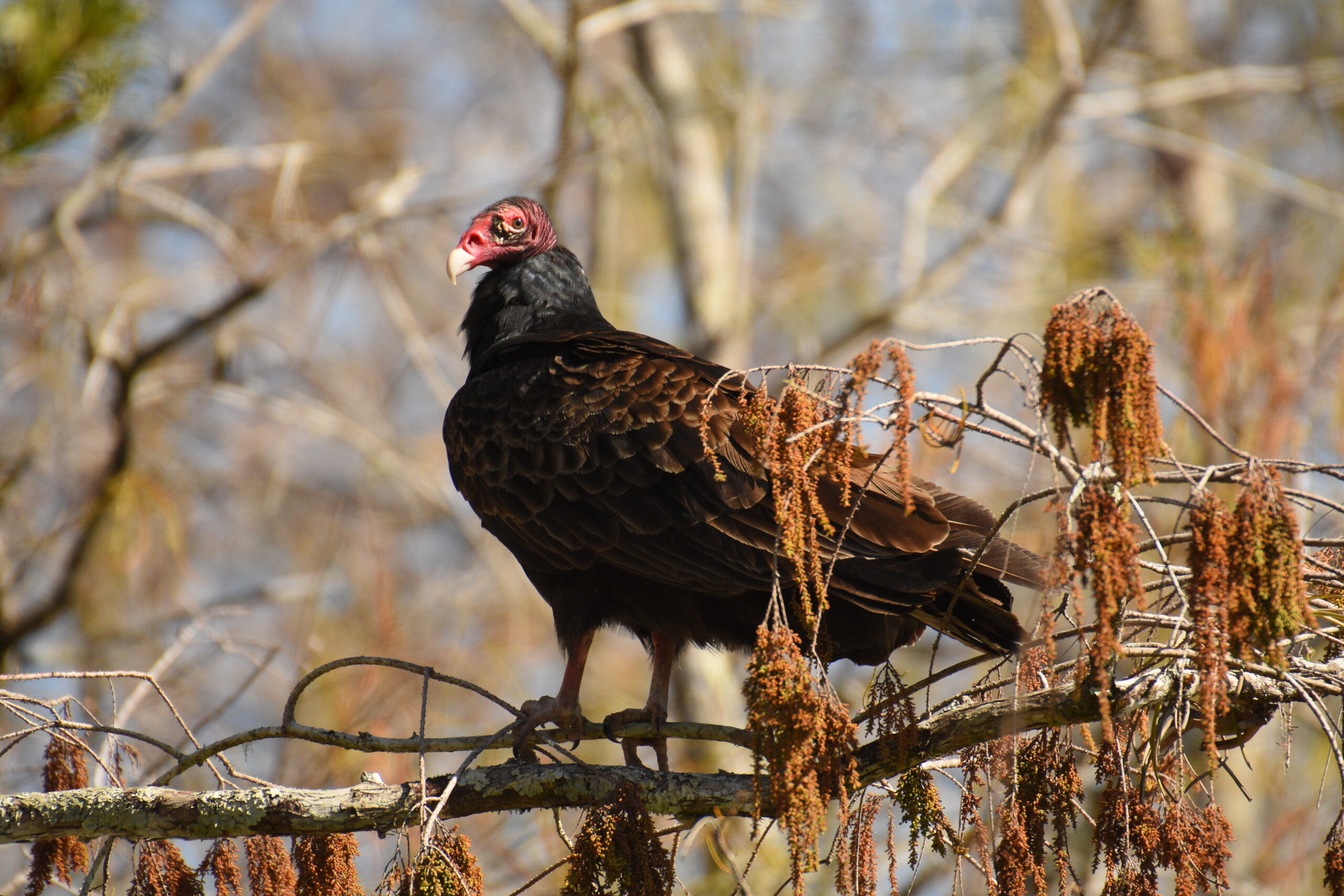
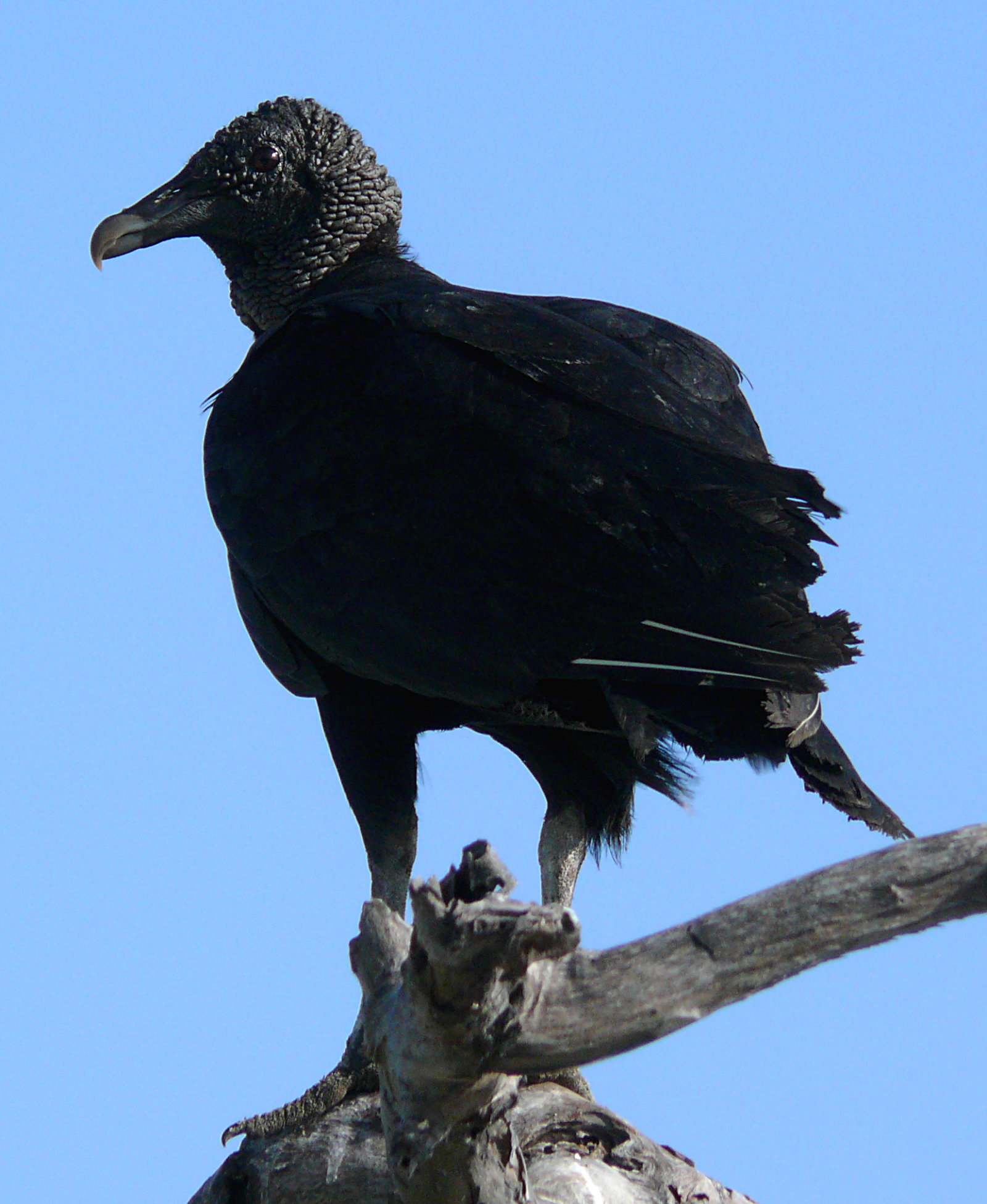
Both vultures are common and year-round across Texas, and flight style separates them fastest: a Turkey Vulture soars in a shallow V and rocks unsteadily from side to side, while a Black Vulture holds flatter wings with quicker, choppier beats between glides. Up close, the Turkey Vulture’s bare head is red with a pale trailing edge visible across the whole underwing, while the Black Vulture’s head is gray with pale patches only near the wingtips.
When and Where to See Them: Hazel Bazemore Park
Texas’s single best raptor migration spectacle happens just northwest of Corpus Christi, at Hazel Bazemore County Park. The park sits on the Coastal Bend funnel where migrating raptors crossing the Gulf coastline concentrate into a narrow corridor, and during the annual HawkWatch count, held roughly from late August through early November, observers there have recorded single-day totals in the hundreds of thousands of migrating Broad-winged Hawks and Swainson’s Hawks passing overhead. Peak flights typically come in the last two weeks of September, when both species move through together in enormous kettles, often visible as moving dark columns against the sky rather than individual birds.
Beyond the big migration push, the Rio Grande Valley farther south stays productive for specialty residents like the White-tailed Hawk, Harris’s Hawk, and Crested Caracara year-round, since none of those three depend on migration timing the way the Hazel Bazemore flight does.
More Texas Birding Guides
For owls and other after-dark species, see our Texas owl sounds guide. To sort out a hawk by tail pattern or belly color alone, our guides to hawks with striped tails and hawks with white bellies cover more plumage variations. For backyard species beyond raptors, see our Texas backyard bird guide.
Frequently Asked Questions
What is the best place to see hawk migration in Texas?
Hazel Bazemore County Park near Corpus Christi, during its HawkWatch count from late August through early November. Peak flights of Broad-winged and Swainson’s Hawks typically come in the last two weeks of September.
What is the bird that walks on the ground and looks like a hawk in Texas?
That’s almost certainly a Crested Caracara. It’s a falcon relative that walks and scavenges on the ground like a vulture, with a bare orange face and black cap, and it’s a common year-round resident of south and central Texas.
Are Bald Eagles in Texas year-round?
Not evenly. Texas’s Bald Eagles concentrate along East Texas reservoirs mainly as winter residents, with numbers highest from November through March and far fewer birds present in summer.
What hawk hunts in family groups in Texas?
The Harris’s Hawk, one of the only raptors in the world known to hunt cooperatively, with two or three birds flushing and cornering prey together. It’s a year-round resident of brushy south and central Texas.