Winter Birds in Montana: Waxwings in Town, Rosy-Finches on the Wind, November to March
Montana winters have a reputation, and most of it is earned. Snow can come in September and still be falling in May, and on the plains east of the mountains the wind rarely lets up. A lot of birds leave. The meadowlarks thin out and the bluebirds head south. But the birds that replace them are some of the best of the year. Flocks of Bohemian Waxwings strip the mountain ash trees in town. Redpolls and rosy-finches drop in from the north and the high country. Rough-legged Hawks sit on fence posts along every county road. For people who like winter birds, Montana is one of the better places in the Lower 48 to be in January.
This guide covers the cold months, roughly November through March. The birds that live in Montana all year, along with the summer species, are in the Montana backyard birds guide. What follows are the birds that make a Montana winter its own, from the feeder to the frozen fields.
Two Montanas in winter
The Continental Divide splits the state, and the two sides get very different winters. West of the Divide, in Missoula, the Bitterroot, the Flathead Valley, and Kalispell, the weather comes mostly off the Pacific. It’s gray and snowy, but the cold is usually more steady than brutal, and the river valleys hold open water and thick conifer forest close to town. Feeders there see a mountain mix: chickadees of two kinds, nuthatches, Steller’s Jays, and in some years big flocks of finches coming down from the slopes.
East of the Divide, Montana opens up into the Great Plains, and winter there is a different animal. Arctic air pours south out of Canada with almost nothing to stop it. Rogers Pass, northwest of Helena, holds the record for the coldest temperature ever measured in the Lower 48, 70 below zero in January 1954. Then a chinook can roll down off the Rocky Mountain Front and push the temperature up 40 or 50 degrees in a few hours. In January 1972, the town of Loma went from 54 below to 49 above in a single day. Birds out on the prairie live with that whiplash. Most of what winters there are tough, open-country species: Snow Buntings, Horned Larks, Gray Partridge, Sharp-tailed Grouse, and the hawks and owls that hunt them.
The state bird in winter
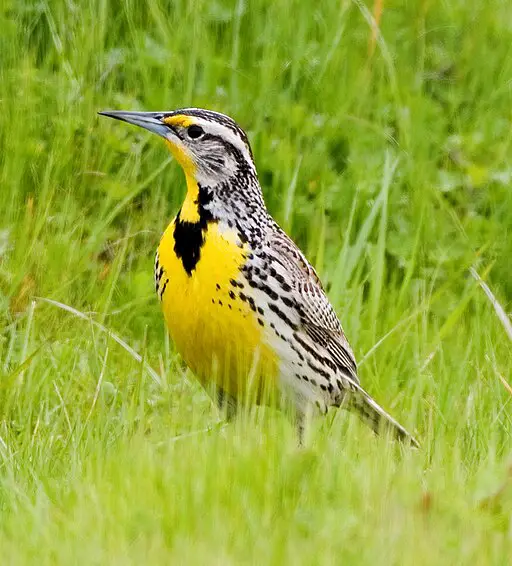
Montana schoolchildren picked the Western Meadowlark in a 1930 vote, and the legislature made it official in 1931. It’s a fair choice for a state with this much grassland, and the bubbling song is one of the sounds of a Montana spring. In winter, though, the meadowlark is harder to find. Many leave for the southern plains. The ones that stay tend to gather in small flocks in the lower, milder valleys and in the southern and eastern parts of the state, feeding in stubble fields and along roadsides where the snow has blown thin. A meadowlark singing on a fence post in late February, with snow still on the ground, is one of the more reliable signs that the season is turning.
Winter feeding notes for Montana
The basics in the winter bird feeding guide apply here, with a few Montana twists. Black-oil sunflower carries most feeder birds through the season. Nyjer in a tube feeder is the best bet for redpolls and Pine Siskins in the years they show up. Suet is a real help in deep cold, and in a Montana winter it never melts. Juncos, tree sparrows, and the occasional rosy-finch flock prefer seed scattered on the ground or on a low platform, ideally on a spot that’s been shoveled clear.
Water is the thing most yards lack. Once the creeks and ditches freeze, a heated bird bath can be the busiest spot in the yard, and on a sunny day at ten below it will draw birds that never touch the seed.
Bears are the big caveat. Black bears live across western Montana and grizzlies range well out onto the plains along the Rocky Mountain Front. Montana Fish, Wildlife and Parks recommends feeding birds only in the heart of winter, after bears have gone into their dens, and taking feeders down by spring. Several towns, Missoula among them, have rules about bird feeders and other bear attractants. People in bear country should check the local rules before hanging anything.
Native shrubs do a lot of the feeding without any help. Rocky Mountain juniper, chokecherry, serviceberry, buffaloberry, snowberry, and wild rose all hold fruit or hips into winter. The mountain ash and crabapple trees planted in so many Montana towns are what bring in the waxwing and grosbeak flocks.
Bohemian Waxwing
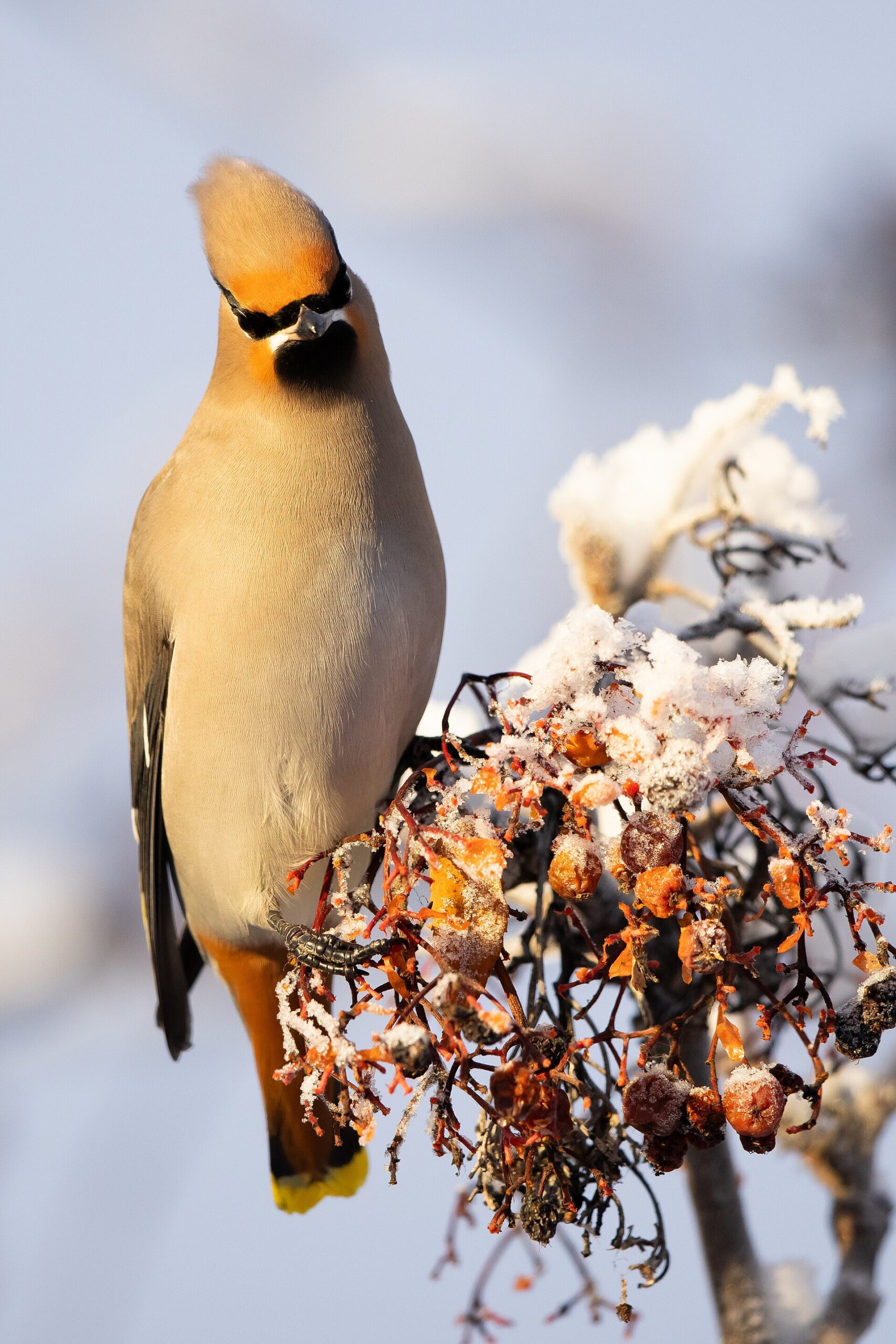
If there’s a signature winter bird for Montana towns, this is it. Bohemian Waxwings nest in the boreal forests of Canada and Alaska and come south in winter, sometimes in flocks of several hundred. They move through Missoula, Helena, Bozeman, and Great Falls looking for fruit, and a mountain ash or crabapple tree loaded with berries can be stripped in an afternoon. They look like a larger, grayer Cedar Waxwing, with a rusty patch under the tail and white and yellow marks on the wings.
The flocks are noisy, with a high, buzzy trill, and they’re restless. A group will sit in the top of a cottonwood, drop all at once into a fruit tree, feed for a few minutes, and lift off again. Numbers swing a lot from one winter to the next, depending on fruit crops farther north.
Common Redpoll
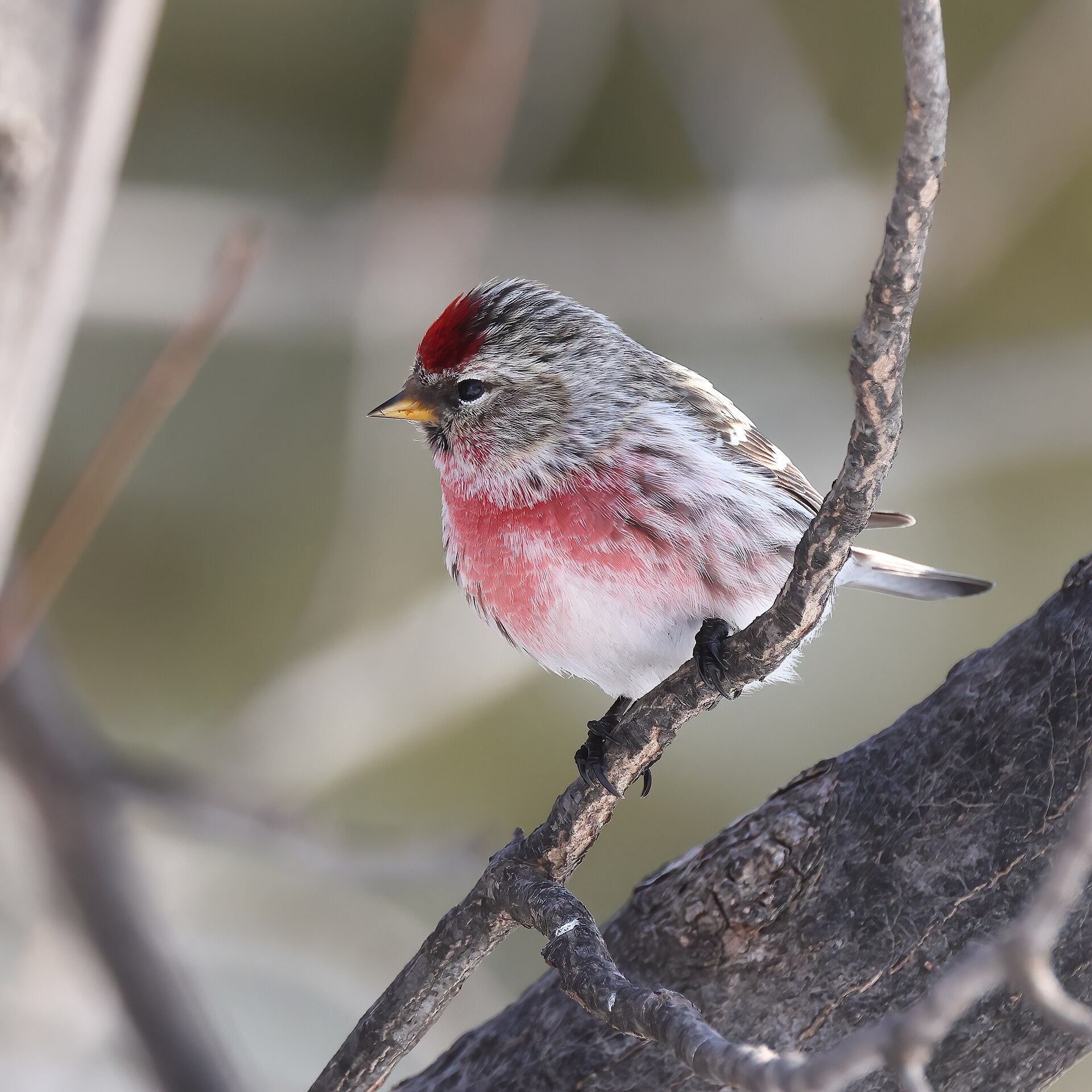
A small, streaky finch with a red cap, a black chin, and in the males a pink wash on the breast. Redpolls come down from the far north in some winters and barely show up in others, and a good redpoll year can bring dozens to a single nyjer feeder. (In 2024 the American Ornithological Society combined the Common and Hoary Redpolls into one species, now called simply Redpoll, so the paler, frostier birds sometimes mixed into the flocks are now considered the same species.)
They’re remarkably cold-hardy for something so small. Redpolls can store seeds in a pouch in the throat and burrow into snow to roost on the coldest nights. At the feeder they’re tame and busy, often feeding on the ground underneath with juncos and siskins.
Pine Grosbeak
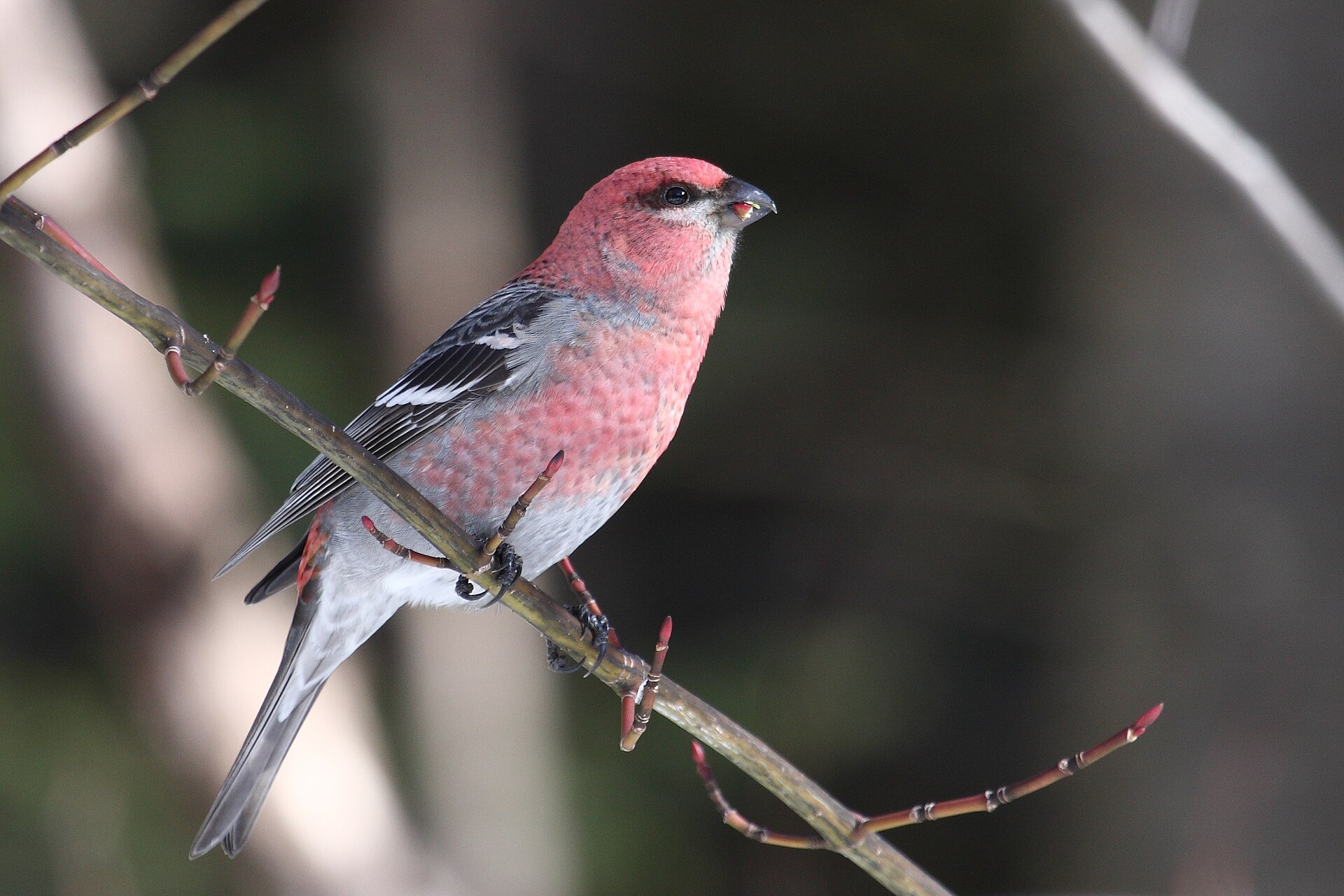
A big, plump, slow-moving finch of the mountain conifer forests. Adult males are rosy red with gray sides and white wing bars. Females and young birds are gray with a yellowish or russet head and rump. Pine Grosbeaks live in Montana’s high country all year, and in winter they often come down into the valleys and towns, especially when the fruit crop in town is good.
They’re known for being tame. A flock feeding on mountain ash or crabapples will sometimes let a person walk almost underneath the tree. At feeders they take sunflower seed, usually from a platform rather than a tube.
Evening Grosbeak
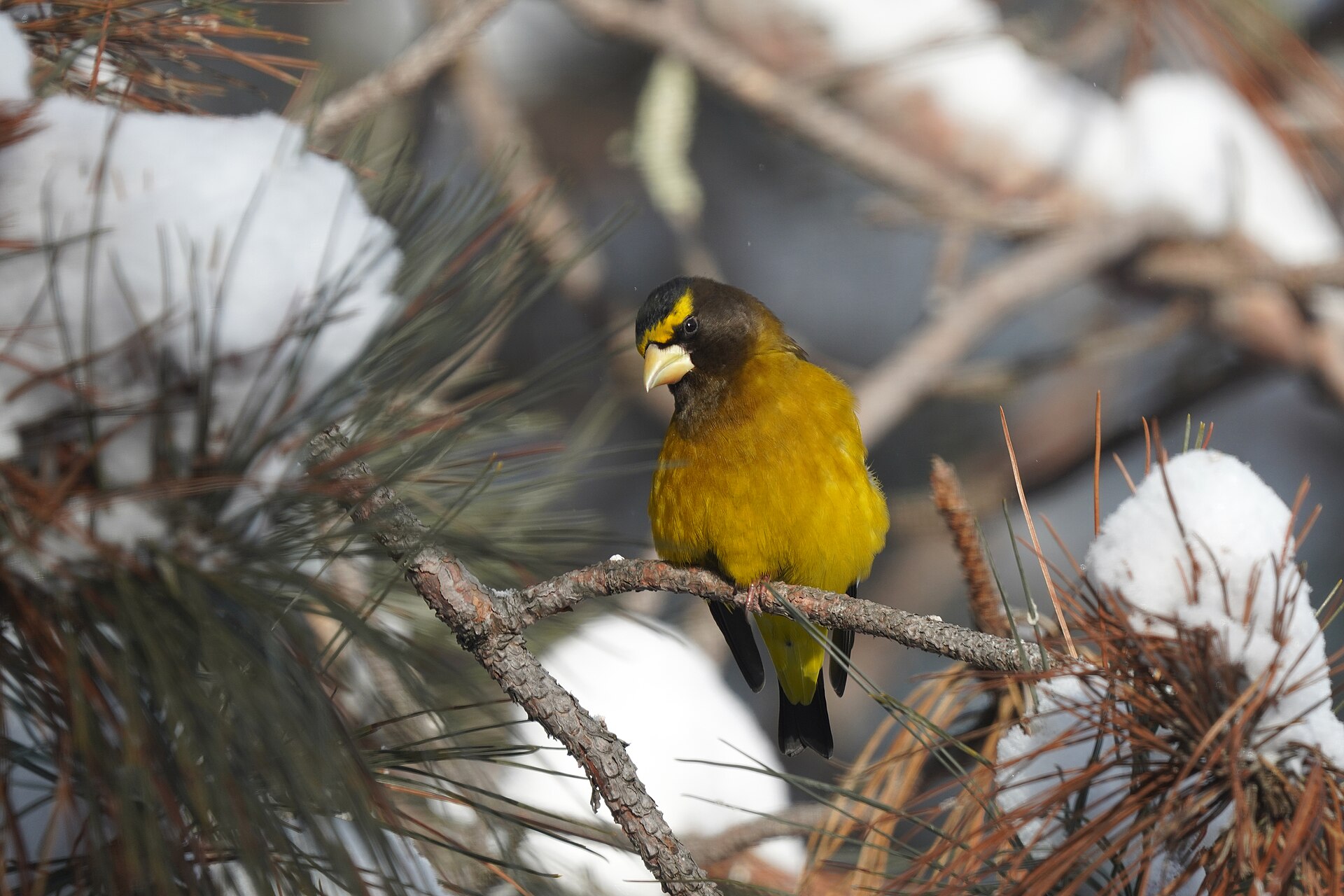
A heavy-billed, gold, black, and white finch that arrives in noisy groups and goes through sunflower seed quickly. Males have a bright yellow eyebrow and a pale, almost greenish bill in late winter. Evening Grosbeaks breed in conifer forests in western Montana, and in winter they wander, turning up at feeders in mountain towns for a few weeks and then moving on.
The species has declined across North America over the past few decades, so a flock at a Montana feeder is a good day. They like a big platform feeder with plenty of room, and they’ll often stay put through a cold spell if the seed holds out.
Gray-crowned Rosy-Finch
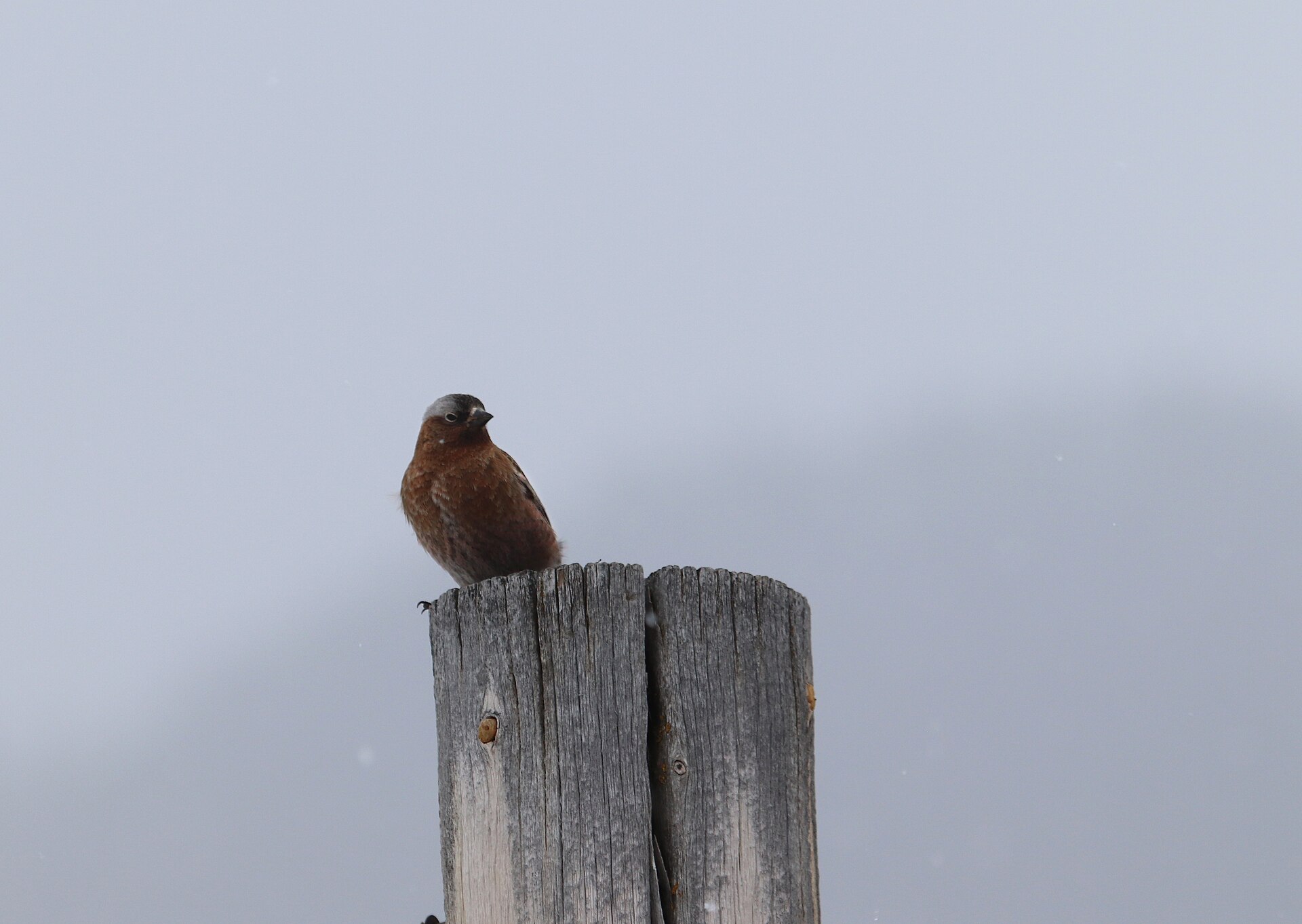
This is one of the most interesting winter birds in Montana, and also one of the least predictable. Gray-crowned Rosy-Finches nest above treeline on alpine cliffs and snowfields, among the highest-nesting birds in North America. In winter they come down to lower elevations in tight, swirling flocks, feeding on weed seeds in open country and sometimes at feeders in towns near the mountains.
They’re brown birds with pink on the wings and belly and a gray band at the back of a black crown. In southwestern Montana they can be mixed with Black Rosy-Finches, which are darker. Rosy-finches tend to choose ground feeding over hanging feeders, so a scatter of seed on a cleared spot of snow is the best way to attract them. A flock can show up for a few days, leave, and come back after the next storm.
Snow Bunting
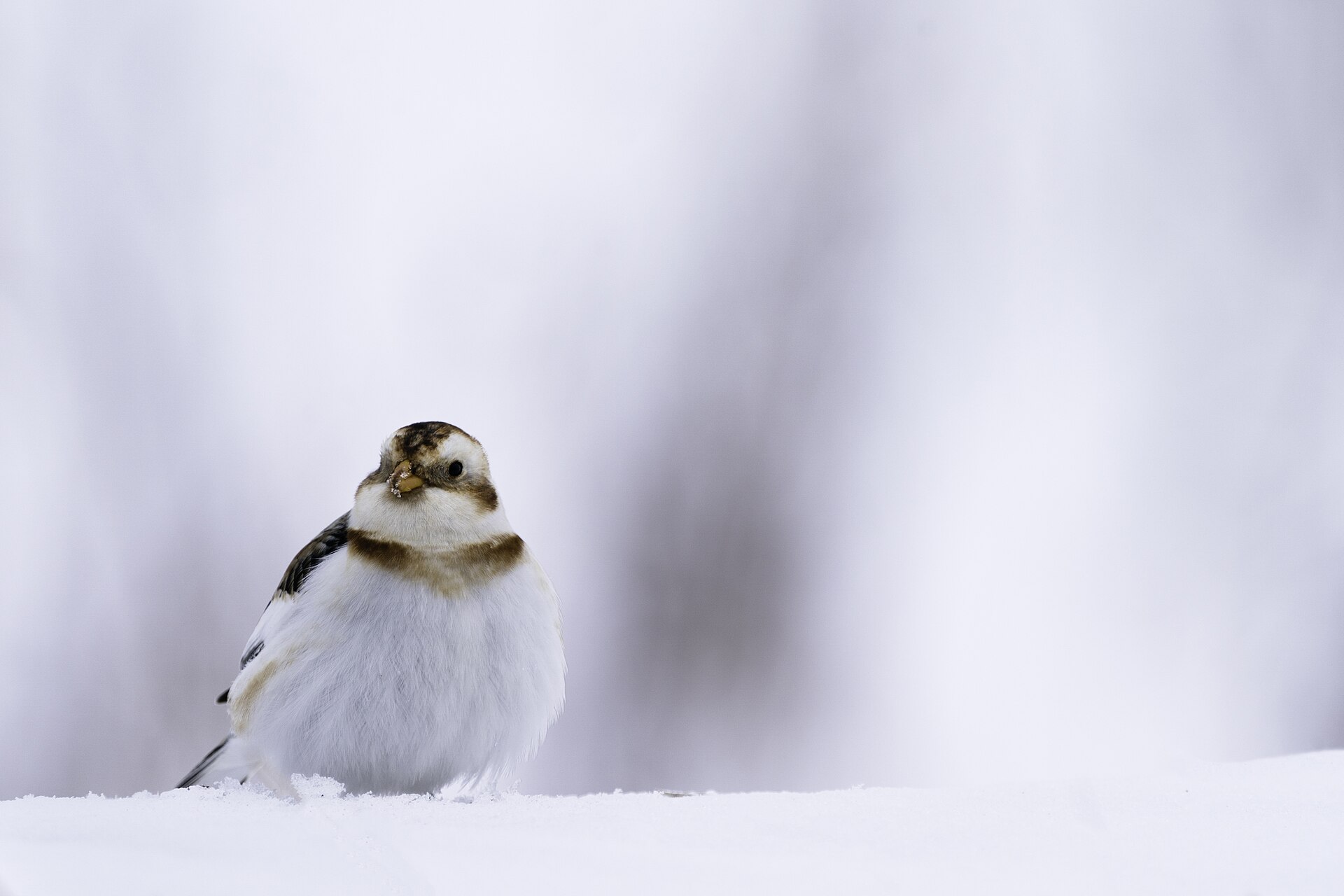
Out on the plains and in the big open valleys, a flock of what looks like blowing snow often turns out to be Snow Buntings. They nest in the high Arctic and winter across the northern prairies, feeding on weed seeds along roads and in stubble fields. In winter they’re white below, with warm buff and brown on the head and back, and big white wing patches that flash in flight.
Snow Buntings are rarely backyard birds unless the yard backs onto open farmland. They’re mostly found by driving rural roads after a snow, where flocks feed on the gravel shoulders with Horned Larks and sometimes Lapland Longspurs.
American Tree Sparrow
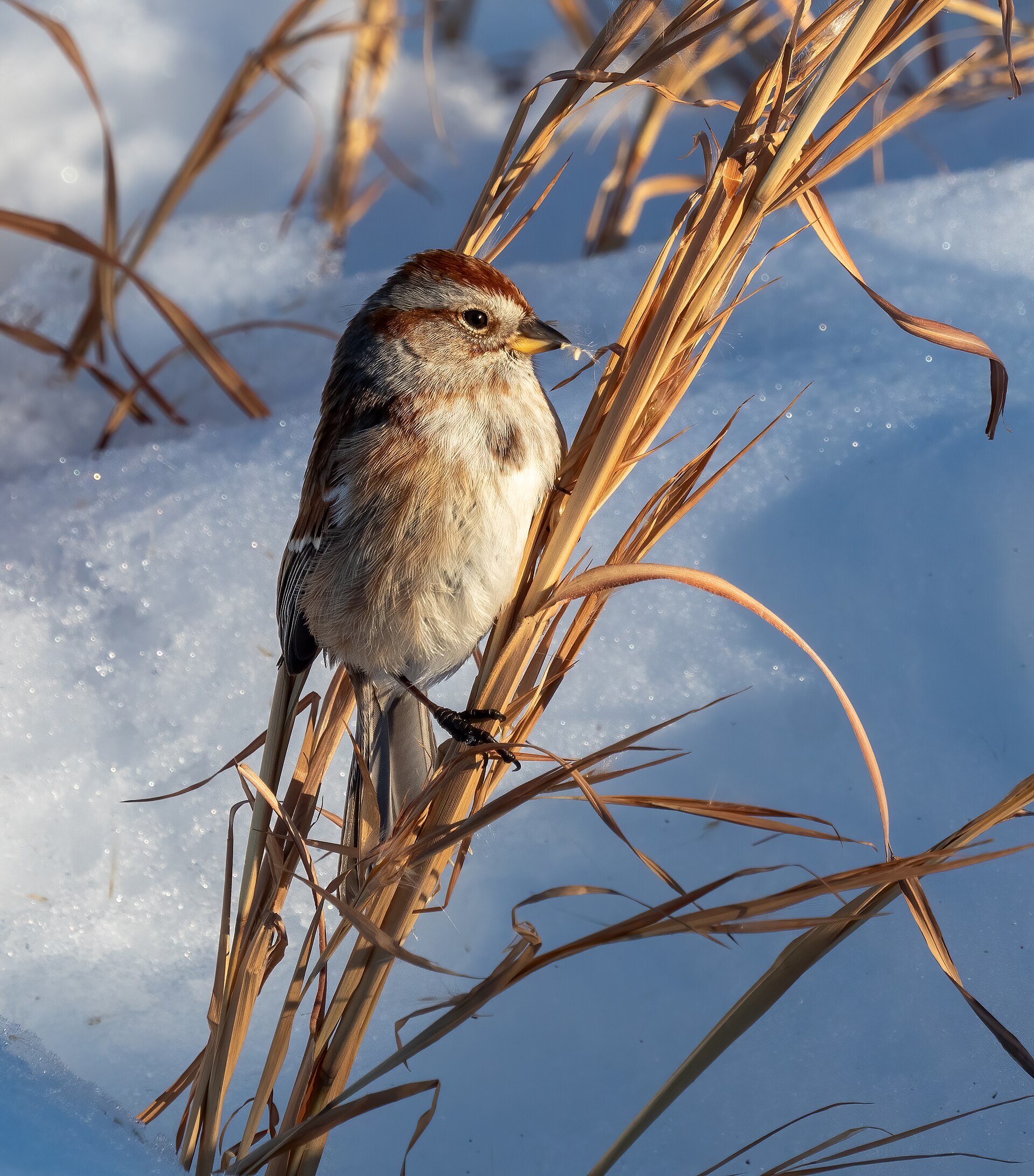
A winter sparrow from the tundra edge, the American Tree Sparrow has a rusty cap, a gray face with a rusty eye line, and a small dark spot in the center of a plain gray breast. The bill is two-toned, dark on top and yellow below. They winter in brushy fields, shelterbelts, and weedy fencerows across much of Montana, especially on the eastern side.
At the feeder they stay low, picking up millet and small seed on the ground or on a low platform. They often travel with juncos.
Townsend’s Solitaire
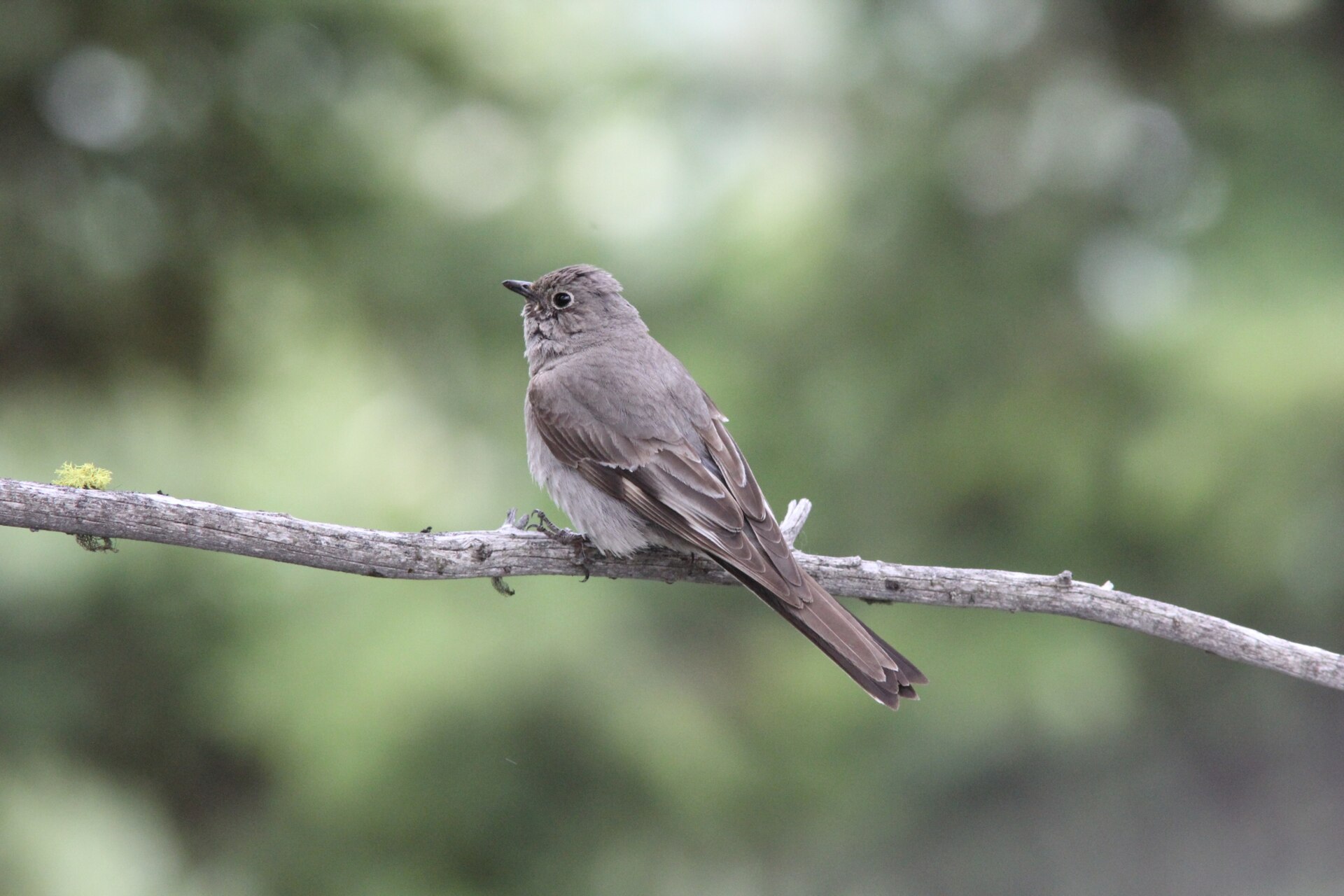
A slender gray thrush with a white eye ring, buff wing patches, and white outer tail feathers. Townsend’s Solitaires nest in the mountains and come down in winter to slopes and canyons with juniper. Each bird defends a stand of juniper berries through the winter, chasing off robins, waxwings, and other solitaires, and a single bird can return to the same patch for months.
They also sing in winter, which few birds do. The song is a long, clear, warbling stream that sounds out of place on a cold January morning. Solitaires aren’t seed eaters, but yards with junipers near the foothills, around Helena, Bozeman, and Livingston, sometimes have one in residence all winter.
Black-billed Magpie
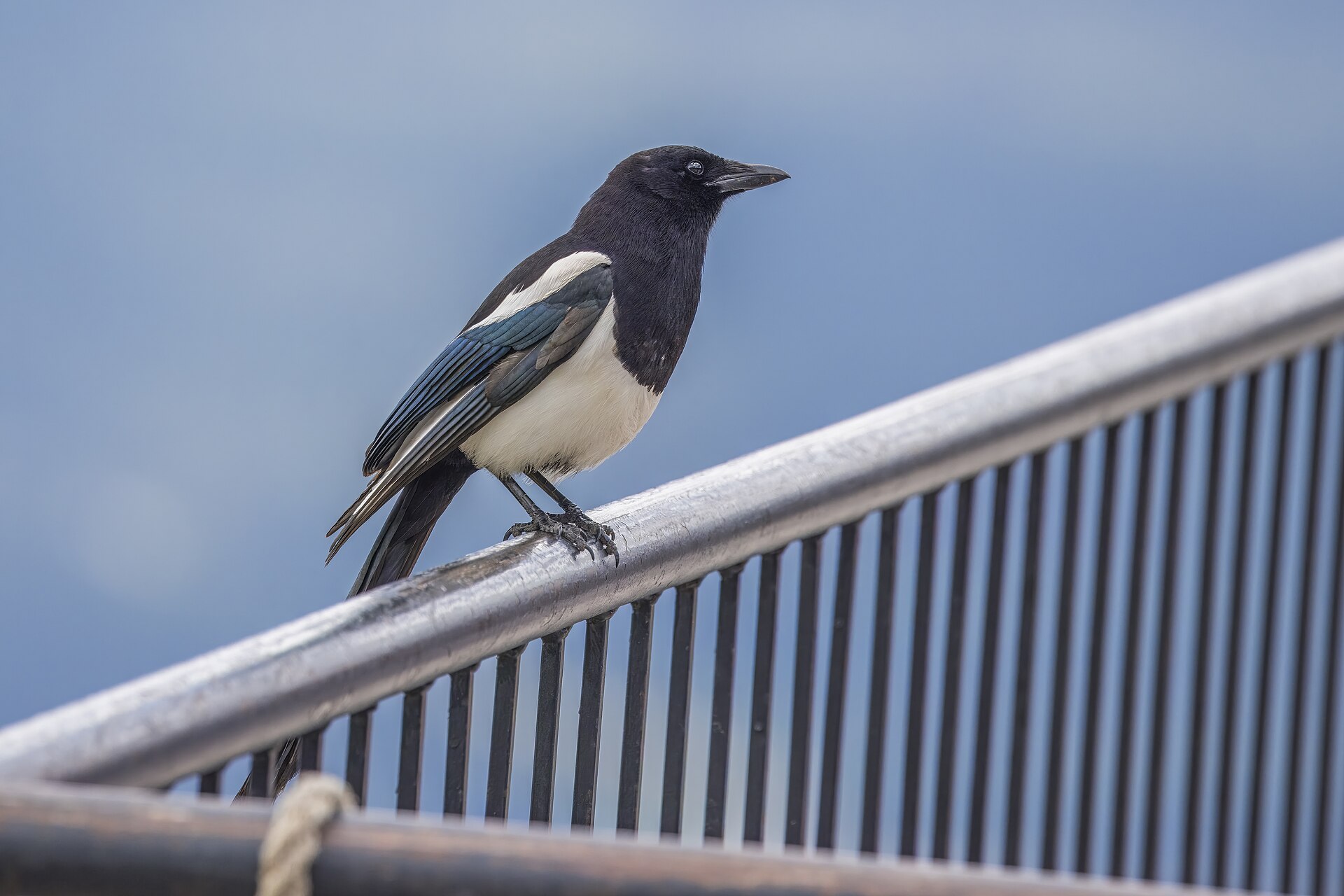
Black and white with a long, iridescent green tail, the Black-billed Magpie is a year-round Montana bird that is impossible to miss in winter. They’re common in towns, ranches, and river bottoms on both sides of the Divide. Magpies roost together in groups on cold nights and spread out to forage during the day, checking roadsides, livestock pens, and backyards for anything edible.
At feeders they go for suet, meat scraps, and peanuts, and they’re smart enough to learn feeding schedules quickly.
Mountain Chickadee
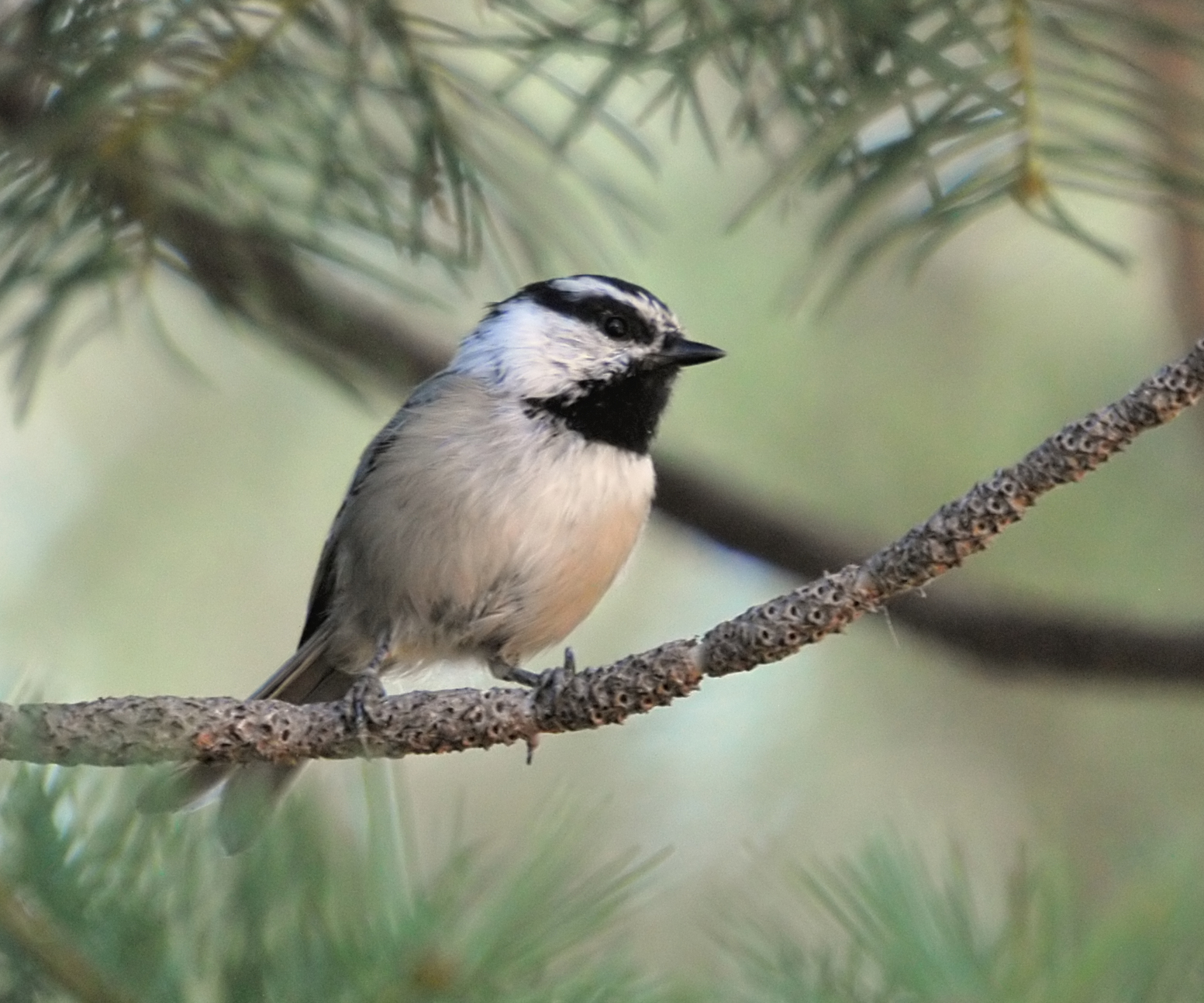
The Mountain Chickadee looks like a Black-capped Chickadee with a white eyebrow, and that white line through the black cap is the field mark to check. They live year-round in the conifer forests of western and central Montana, and in winter they come to feeders in mountain towns, often in the same flocks as Black-capped Chickadees, nuthatches, and kinglets.
Their call is a hoarser, slower version of the familiar chick-a-dee-dee. They’ll take sunflower seed, suet, and shelled peanuts, and they’ll use a nest box in spring if it’s placed in or near conifers.
Rough-legged Hawk
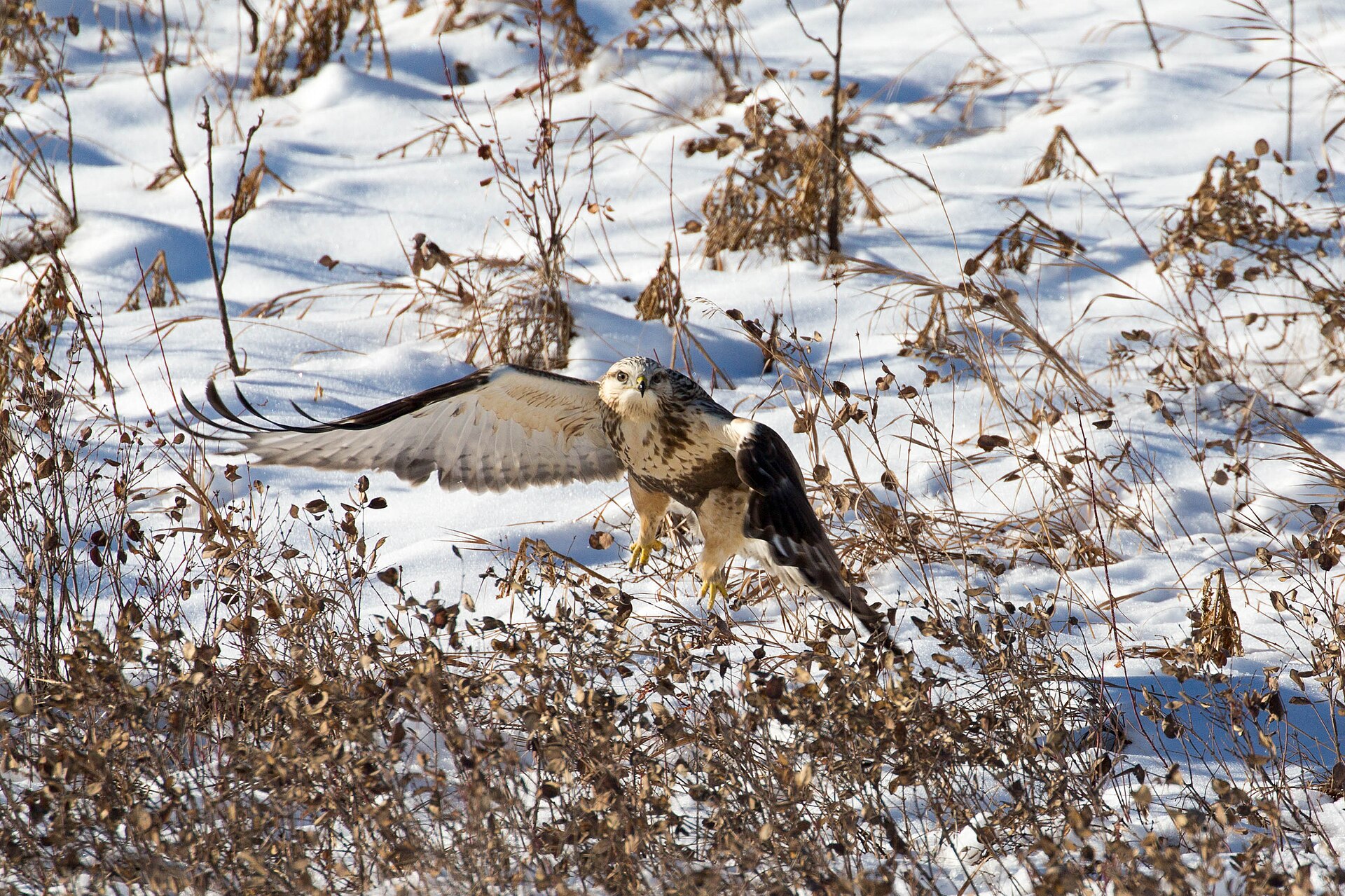
Rough-legged Hawks nest on the Arctic tundra and spend the winter on the northern plains, and in a good vole year Montana’s open country can have a lot of them. They sit on fence posts, power poles, and haystacks, or hover in place over a field on beating wings, the way a kestrel does. They’re a little larger and longer-winged than a Red-tailed Hawk, with feathered legs down to the toes.
Plumage varies a lot, from pale birds with a dark belly band and dark patches at the bend of the wing, to all-dark birds. A drive along the Hi-Line or through the valleys around Great Falls, Lewistown, or Billings on a winter day usually turns up a few. They often hunt alongside Northern Harriers, and in some winters Snowy Owls show up in the same fields.
Bald Eagle
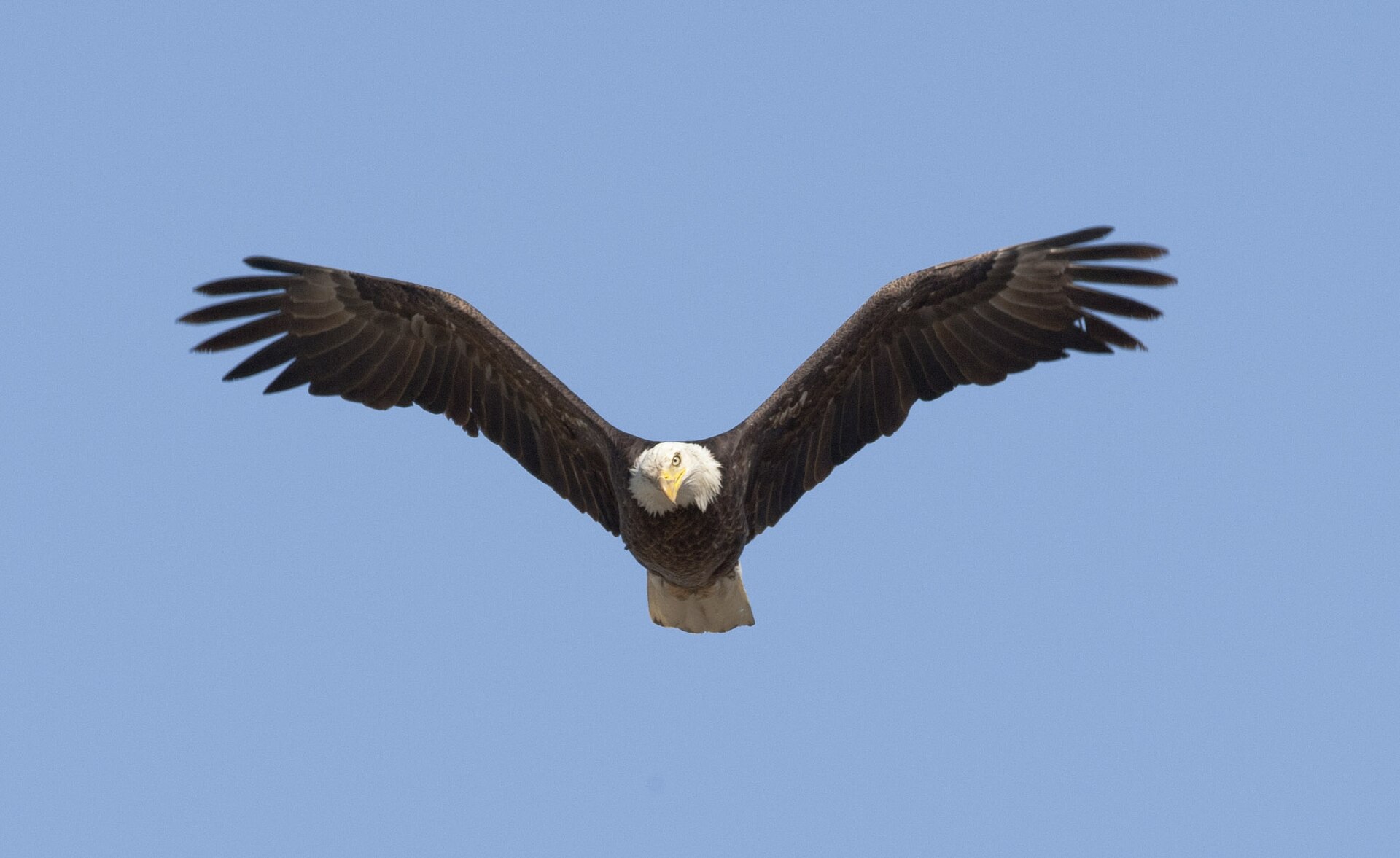
Bald Eagles nest along many of Montana’s rivers and lakes, and in winter they gather wherever there’s open water and food. Stretches of the Missouri River below the dams near Helena, the Clark Fork, the Bitterroot, the Yellowstone, and the shores of Flathead Lake all draw eagles. In the past, kokanee salmon spawning below Canyon Ferry Dam each fall drew hundreds of eagles. That run has varied a lot over the years, and the numbers vary along with it.
In late winter, eagles also feed on carrion in the open country and on ranches during calving season. Lee Metcalf National Wildlife Refuge in the Bitterroot and Benton Lake National Wildlife Refuge near Great Falls are both good places to look in winter. Young eagles are mottled brown and take about five years to get the white head and tail.
Getting started this winter
The best time to set up for winter in Montana is after the bears have gone to den, which in most of the state means late November or December. Clean the feeders, put up a tube of sunflower and one of nyjer, hang a suet cake, and scatter some millet on a shoveled patch for the ground feeders. A heated bird bath will probably do more than any of those. Cover helps too. A spruce, a juniper, or a dense shrub near the feeders gives small birds somewhere to escape the wind and the hawks.
For the open-country birds, pick a clear day after a fresh snow and drive the back roads. Rough-legged Hawks on the poles, Snow Buntings on the shoulders, and the occasional Snowy Owl on a haystack are all part of a Montana winter. For a broader look at what stays through the cold months farther east, see birds that stay through winter in the northern US.
Counting is one of the best ways to learn winter birds. Project FeederWatch runs from November through April and only asks for a couple of short counts each week from a home window. Montana also has dozens of Christmas Bird Count circles, from Kalispell and Missoula to Billings and the plains towns, and beginners are welcome on most of them.
Sources: Species descriptions and range information draw on the Cornell Lab of Ornithology’s All About Birds, the National Audubon Society’s Guide to North American Birds, eBird regional records for Montana, Montana Fish, Wildlife and Parks (including its bird feeder and bear guidance), the Montana Field Guide from the Montana Natural Heritage Program, and the U.S. Fish and Wildlife Service refuge pages for Lee Metcalf and Benton Lake. Temperature records are from the National Weather Service.