Winter Birds in Virginia: Swans on the Bay, Sparrows Under the Feeder, November to March
Winter in Virginia is easy to underrate. There’s no famous hawk flight, no warbler wave, and a lot of the season is just gray and damp. But by Thanksgiving the state has quietly filled up. Juncos are back under the feeders, White-throated Sparrows are whistling from the hedges, and out on the coast tens of thousands of swans, geese, and ducks have come down from the Arctic to spend the cold months on the Chesapeake Bay and the sounds behind the barrier islands. For a lot of northern birds, Virginia is the south.
This guide covers those months, roughly November through March. The birds that live in Virginia all year (cardinals, Carolina Wrens, Tufted Titmice, Carolina Chickadees, and the rest) are in the Virginia backyard birds guide. What follows are the winter arrivals, plus a few birds worth a drive to the coast on a cold, clear weekend.
From the mountains to the bay
Virginia is a long, tilted state. Mount Rogers in the southwest tops out above 5,700 feet, and the land steps down from there through the Ridge and Valley country, the Shenandoah Valley, the Blue Ridge, and the rolling Piedmont before flattening into the Coastal Plain, which most Virginians call Tidewater. Each of those has its own winter. Up in the Highlands and along the Blue Ridge, snow can sit for weeks and feeders see the same hardy mix as Pennsylvania. In the Piedmont around Charlottesville, Richmond, and the Northern Virginia suburbs, winter is mostly cold rain with a few snows and the occasional ice storm. Down in Hampton Roads and on the Eastern Shore, a hard freeze is an event, and the water birds are the main story.
That spread is the reason Virginia’s winter list is so long. Mountain birds slide down into the valleys, northern birds settle into the Piedmont, and the coast collects waterfowl from half the continent. Anyone with a feeder in Fairfax County and a free Saturday can see Tundra Swans and gannets the same weekend, if they don’t mind the drive to Virginia Beach.
The state bird in winter
Virginia adopted the Northern Cardinal as its state bird in 1950, sharing it with six other states. Cardinals don’t migrate, but they change in winter. The pairs that spent the summer chasing each other off territory loosen up and start traveling in small flocks, and a yard with good cover and a steady supply of sunflower seed can draw ten or fifteen at once. They tend to be the first birds at the feeder in the gray light before sunrise and the last ones there at dusk, which is when the red really stands out against a dull winter yard.
Winter feeding notes for Virginia
The general advice in the winter bird feeding guide applies here. Black-oil sunflower covers most species. A scatter of white millet on the ground, or on a low tray, is what pulls in juncos, White-throated Sparrows, and Fox Sparrows. Suet brings in woodpeckers, nuthatches, and on cold mornings a Yellow-rumped Warbler or two. In the Piedmont and Tidewater, damp weather is a bigger problem than deep snow. Wet seed clumps and molds in tube feeders within days, so smaller fills and a feeder with drainage holes help more than a huge capacity. The first-winter feeder setup guide goes into that.
West of the Blue Ridge, black bears are part of the picture. The Virginia Department of Wildlife Resources asks people in bear country to take feeders down once bears are moving around in spring and leave them down until the bears settle for the winter. In mild years, some bears stay active well into December, so it’s worth paying attention locally rather than going by the calendar.
Native plants carry a lot of birds through a Virginia winter. American holly, winterberry, eastern red cedar, flowering dogwood, and sumac all hold fruit into the cold months, and wax myrtle on the coast feeds huge numbers of Yellow-rumped Warblers and Tree Swallows. A brush pile in a back corner and a few seed heads left standing in the garden give the sparrows somewhere to be.
Dark-eyed Junco
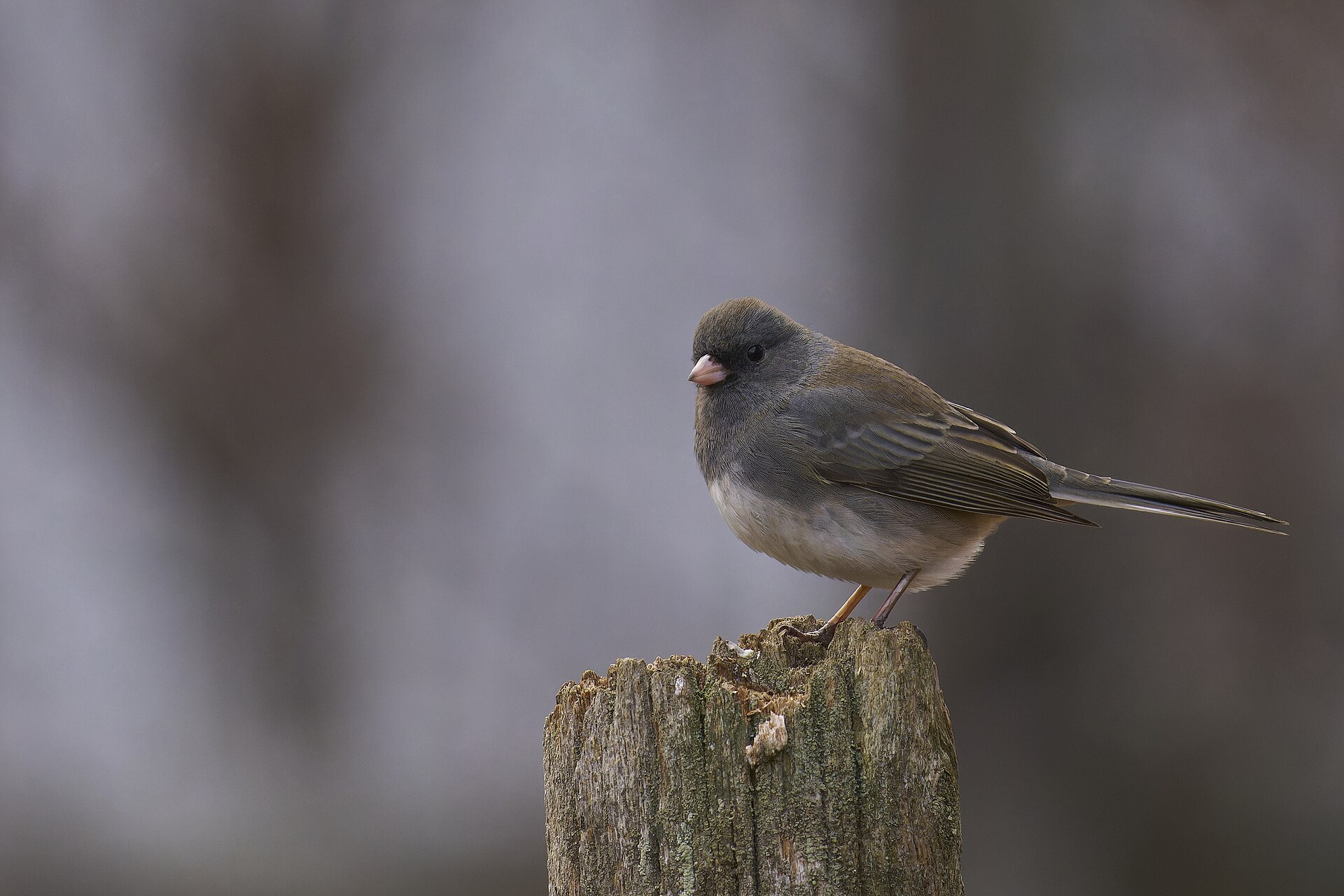
For many Virginia households, the first junco under the feeder is the real start of winter. They usually arrive in late October or early November and stay until April. Juncos are slate gray on top, white on the belly, with a pale pink bill and white outer tail feathers that flash when they fly off. They feed on the ground, in small flocks that work along the edge of a lawn or under a feeder, picking up dropped seed and millet. Juncos actually nest in Virginia’s high mountains, around Mount Rogers and along the higher parts of the Blue Ridge, but the birds that show up in suburban yards in winter are mostly visitors from farther north.
White-throated Sparrow
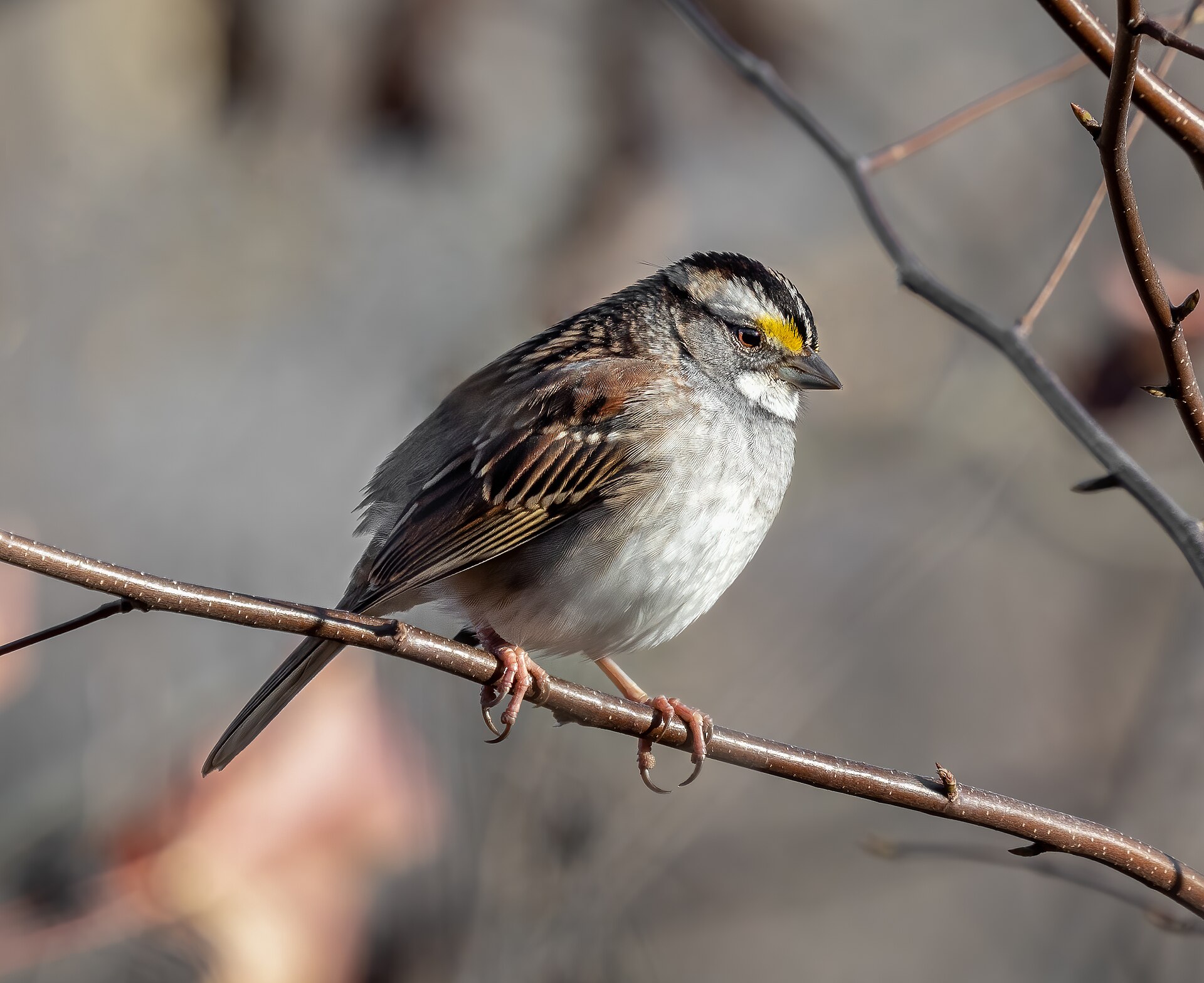
The whistled song of the White-throated Sparrow, a thin, falling oh sweet Canada Canada Canada, is one of the few bird songs regularly heard in a Virginia winter, especially on mild mornings later in the season. These sparrows come in two forms: one with bright white and black head stripes and a yellow spot in front of the eye, and one with tan and brown stripes. Both have the clean white throat. White-throats are common across the state from October to May and like brushy edges, hedges, and thickets. They’ll come to the ground below a feeder but seldom stray far from cover, so a feeder near shrubs gets far more of them than one out in the open lawn.
Fox Sparrow
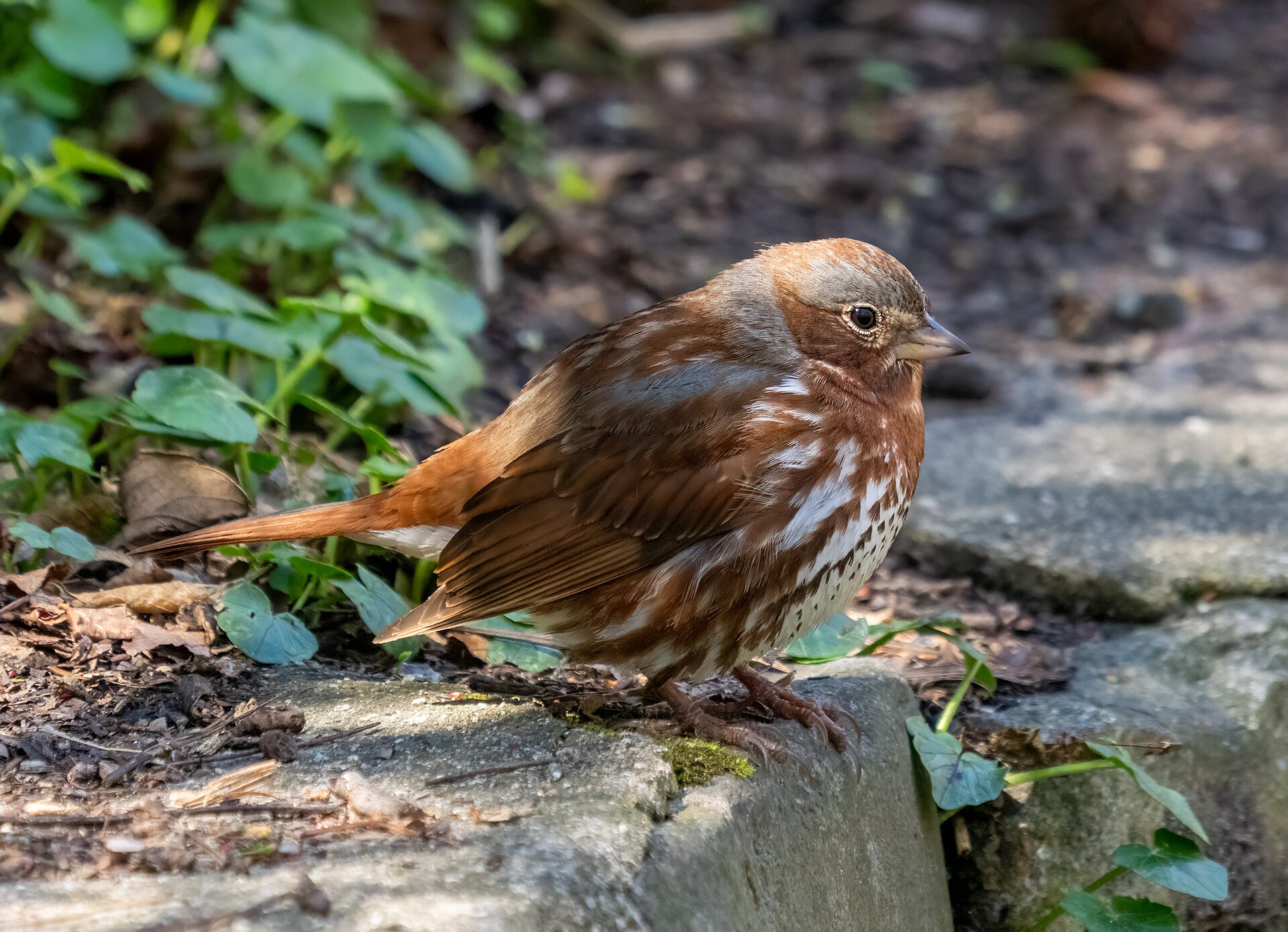
A big, rusty sparrow that kicks through leaf litter with both feet at once, the way a towhee does. The Fox Sparrows that winter in the East are the red form, with foxy rufous on the wings and tail and heavy rusty spots that merge into a blotch on the breast. They’re less common than White-throats and more tied to dense cover, and in many yards they turn up only after a snowfall, when the ground under the feeder is the easiest place to find food. Late winter, February into March, is often the best time to look for them, when birds that wintered farther south start moving back north through the state.
Hermit Thrush
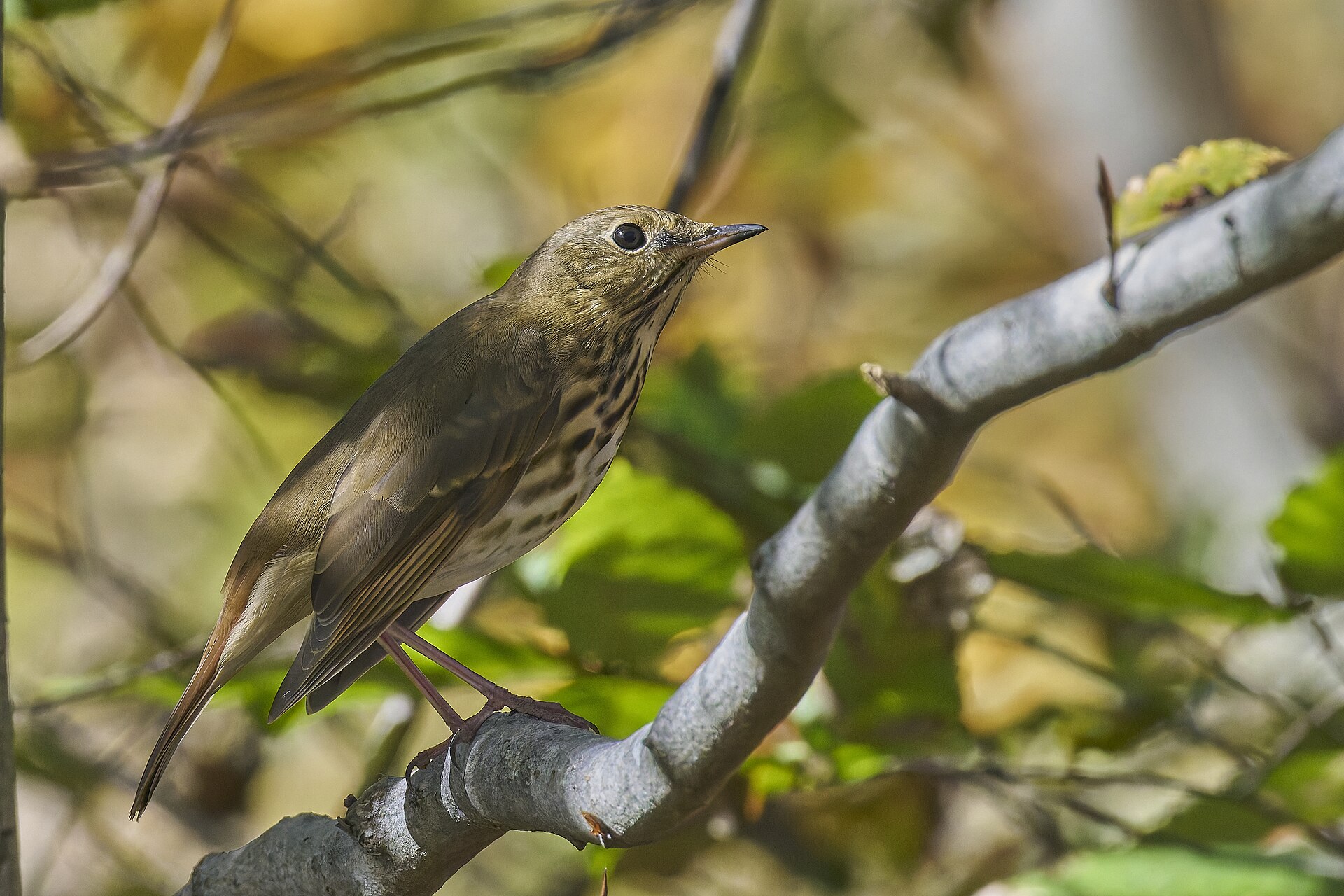
The only brown thrush likely to be seen in Virginia in winter. The Hermit Thrush is plain brown above, with a spotted breast and a reddish tail that it lifts slowly and then lowers, often right after landing. It doesn’t come to seed. In winter it lives on berries, especially holly, dogwood, cedar, and greenbrier, plus whatever insects it can find in the leaf litter. A yard with fruiting native shrubs is more likely to have one than a yard with a dozen feeders. Hermit Thrushes are quiet in winter, giving only a low chuck, and are easy to overlook in the woods unless you catch that tail motion.
Yellow-rumped Warbler
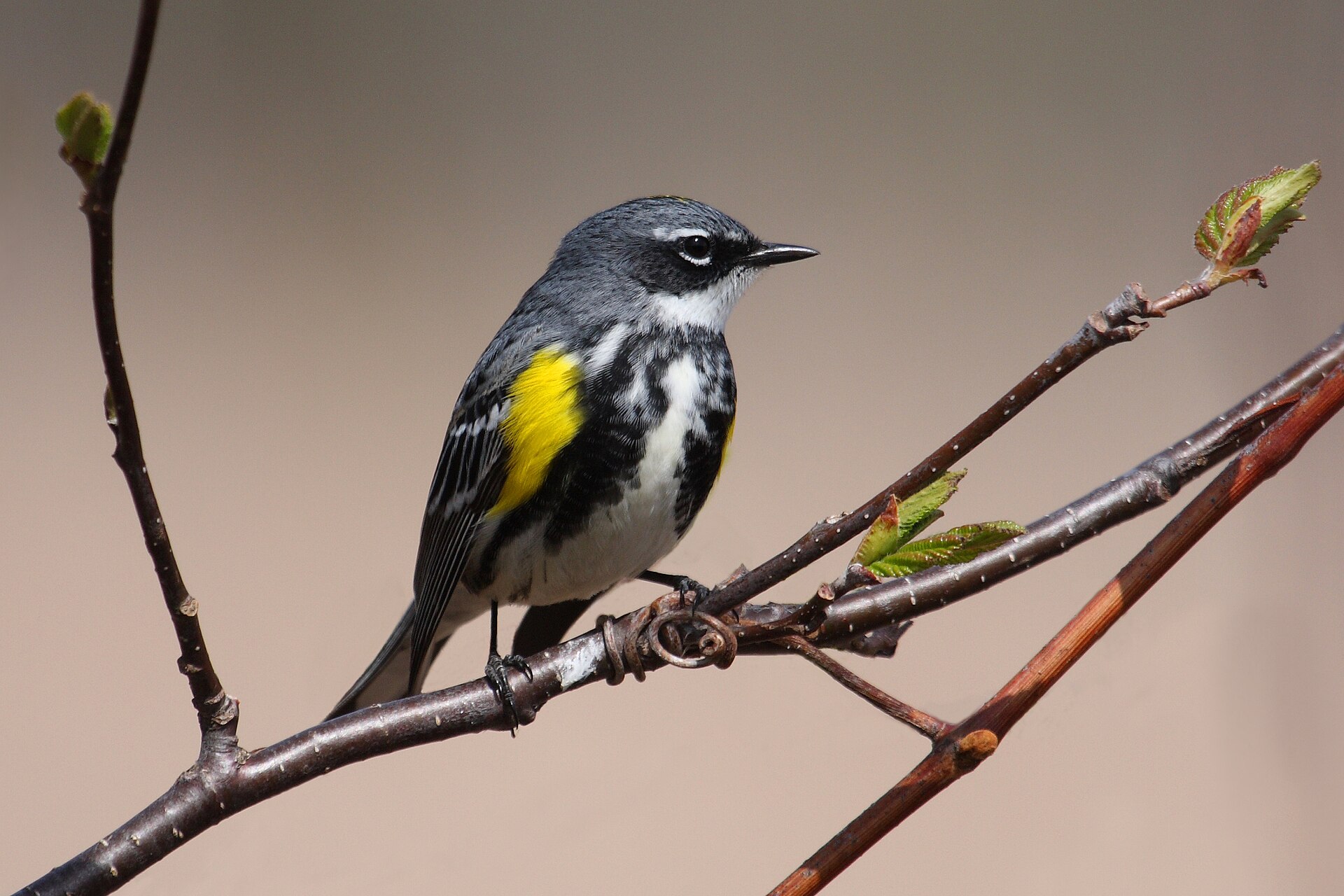
Nearly all the warblers leave Virginia by November. The Yellow-rumped Warbler is the exception, and in coastal Virginia it’s one of the most common birds of the winter. Its trick is digesting the waxy coating on wax myrtle and bayberry fruit, which most warblers can’t do, so it can stay where other insect-eaters can’t. The bird in the photo is in bright spring plumage. In winter they’re much duller, brownish with faint streaking, but they keep the bright yellow rump patch and a small yellow patch on each side. Listen for a sharp check call from shrubs. On cold mornings, Yellow-rumps will come to suet, and sometimes to peanut pieces.
Ruby-crowned Kinglet
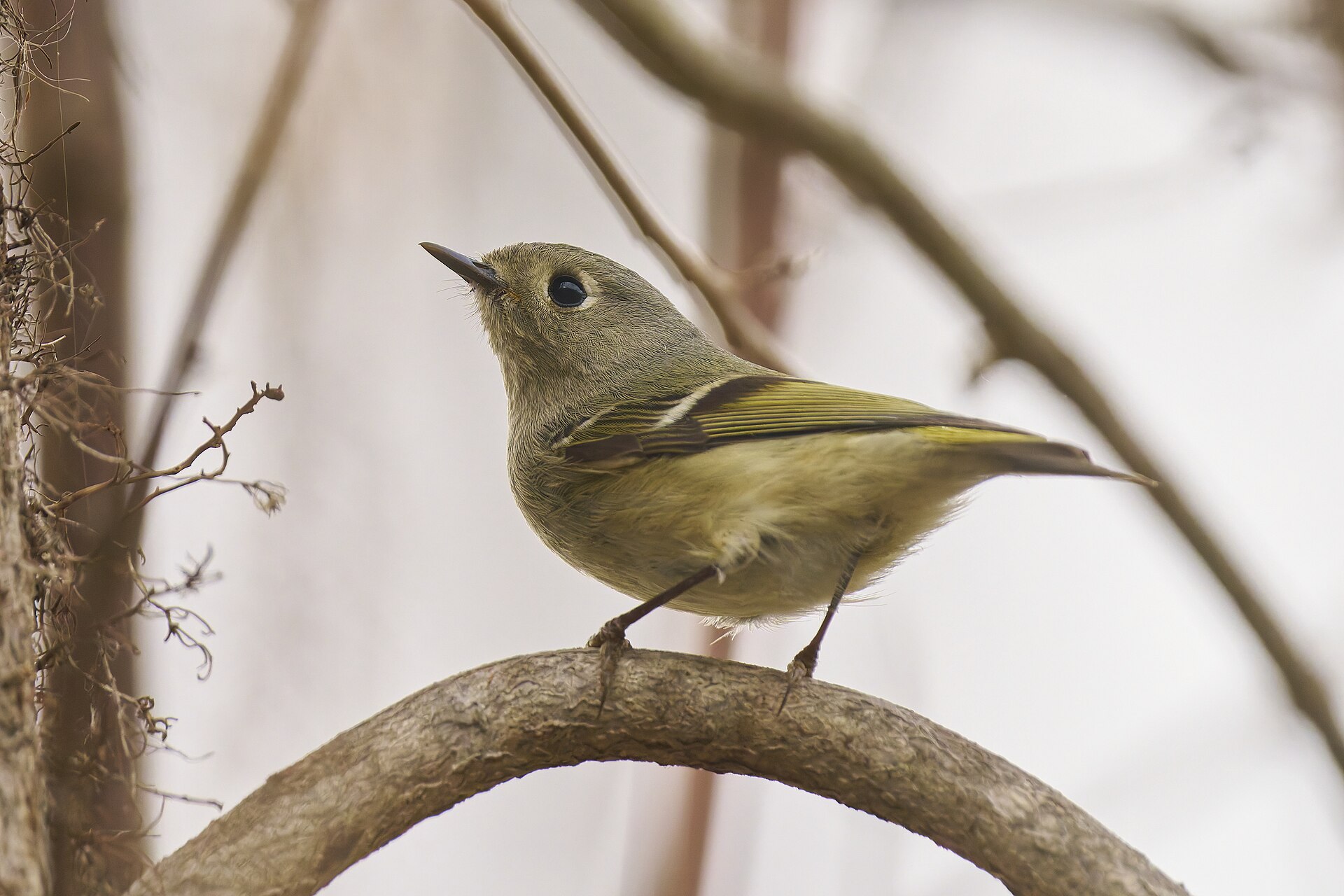
A tiny, olive-gray bird that never seems to sit still, flicking its wings constantly as it moves through shrubs and low trees. The male’s red crown patch is usually hidden, so the useful field marks are the bold white eye ring and the white wing bar with a dark band behind it. Ruby-crowned Kinglets winter across most of Virginia, more commonly in the Piedmont and on the coast than in the mountains. They eat tiny insects and spiders, and will sometimes pick at suet. In the cold months they often travel with chickadees, titmice, and Downy Woodpeckers, so when a mixed flock comes through the yard it’s worth a careful look.
Yellow-bellied Sapsucker
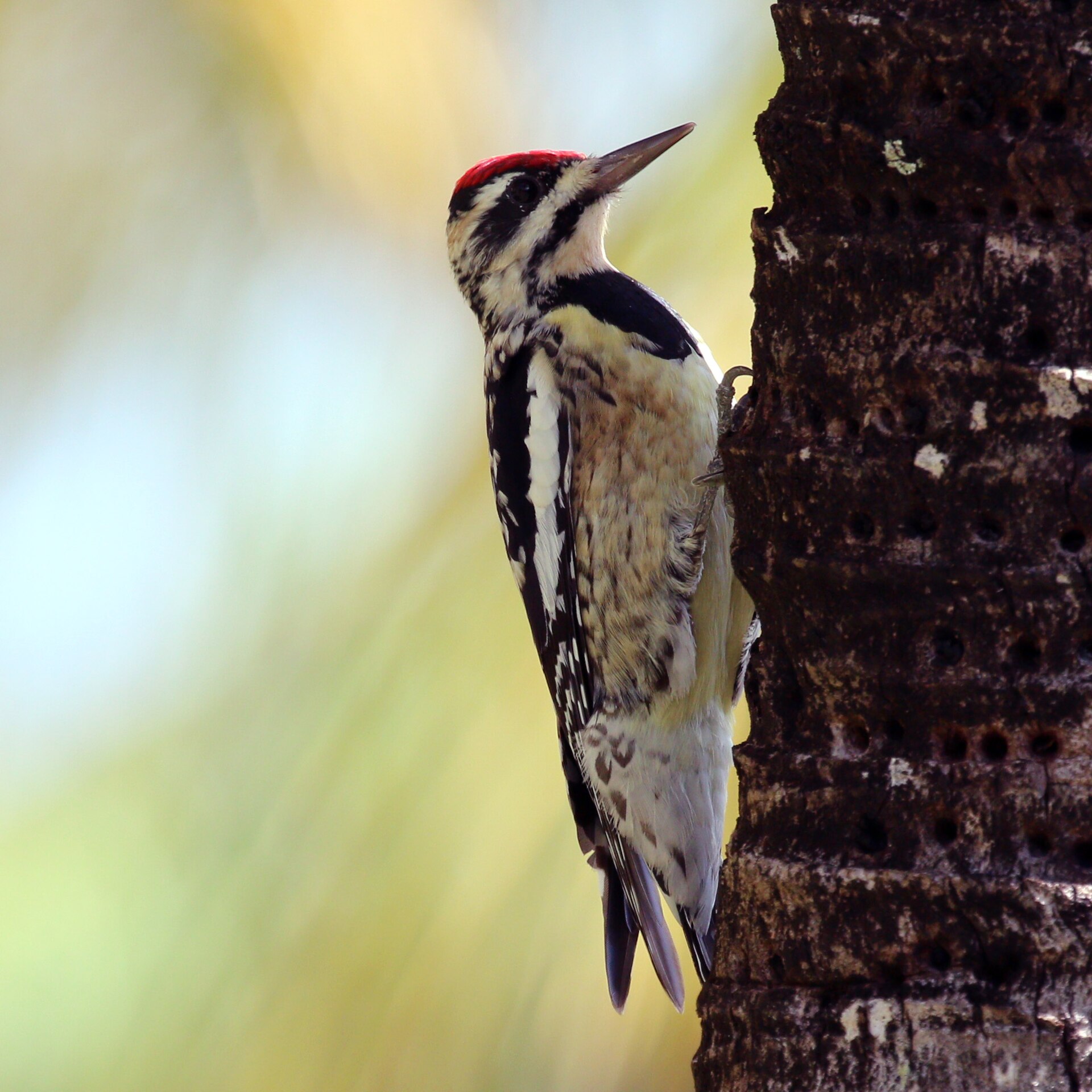
The neat rows of small holes found on a tree trunk in a Virginia yard are almost always the work of a Yellow-bellied Sapsucker. These woodpeckers drill wells in the bark and come back to drink the sap and eat the insects it draws. They winter throughout the state, from the mountains to the coast. Both sexes have a red forehead, a black-and-white face pattern, and a long white stripe along the folded wing. Males have a red throat, while females, like the one in the photo, have a white one. Sapsuckers don’t visit seed feeders much, but they will take suet and are often heard before they’re seen, with a nasal, mewing call.
Red-breasted Nuthatch
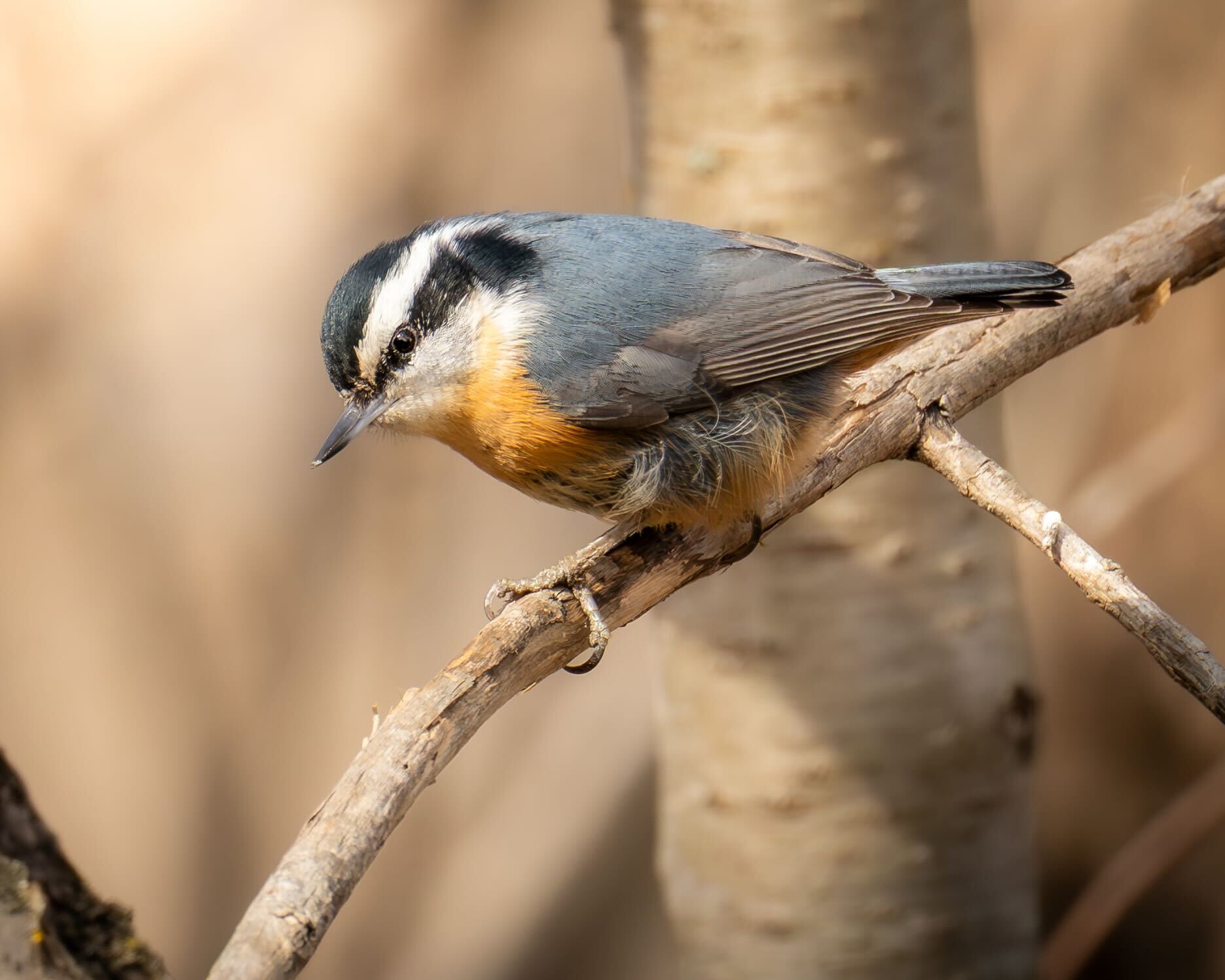
Some winters bring almost none. Others bring them to every feeder in the state. Red-breasted Nuthatches depend on cone crops in the northern forests, and in years when those crops fail, they push south in large numbers. They’re smaller than the White-breasted Nuthatch, with a black eye line, a white eyebrow, and rusty underparts, and their call is a nasal, tinny yank, like a toy horn. A small number nest in the high spruce and fir around Mount Rogers and Whitetop, but in most of Virginia they’re strictly winter visitors. Look for them in pines and cedars, and at feeders with sunflower seed or suet.
Tundra Swan
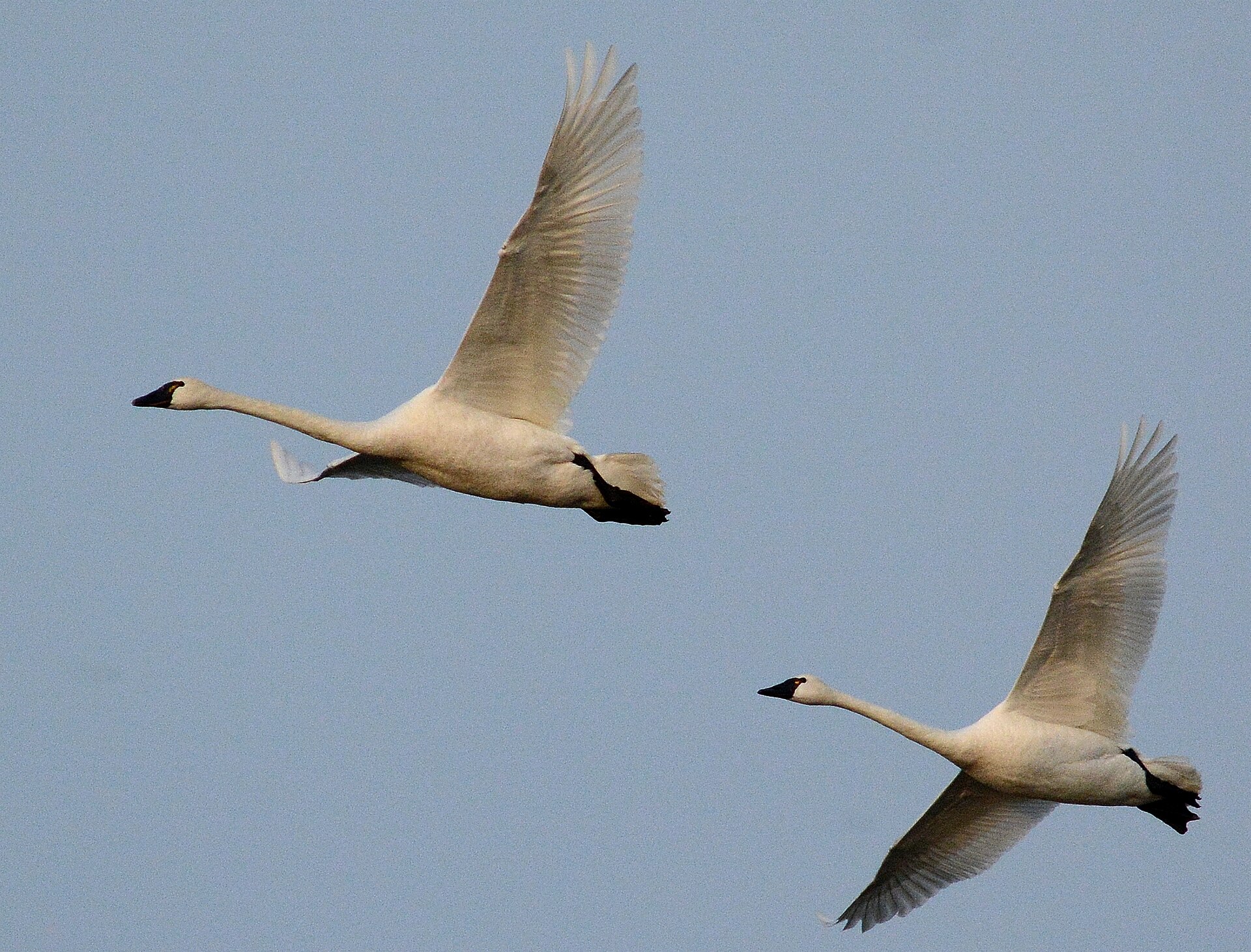
The swans that winter on the Chesapeake Bay and in the shallow sounds of southeastern Virginia come from the Arctic, from nesting grounds in northern Alaska and Canada. Tundra Swans usually arrive in November and leave by March. They’re large, all-white birds with black bills, and many adults have a small yellow spot in front of the eye. Their calls carry well, a high, musical, whooping sound that is often heard before a flock comes into view. Back Bay National Wildlife Refuge and neighboring False Cape State Park, south of Virginia Beach, are traditional places to see them, along with the shallow rivers and creeks of the Northern Neck and the Eastern Shore. They also feed in winter wheat and corn stubble near the water. The guide to water birds in Virginia covers more of the waterfowl.
Snow Goose
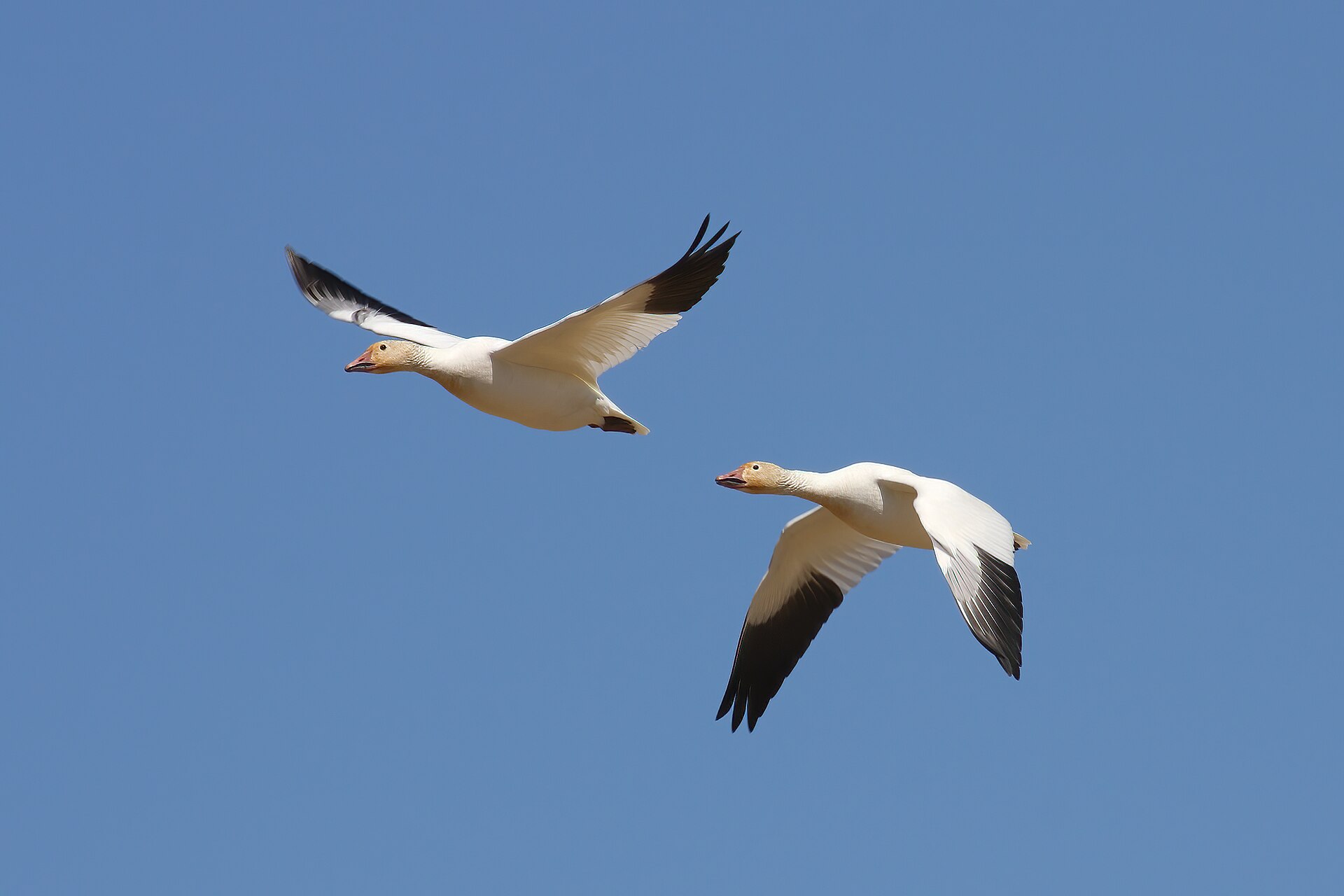
The Snow Geese that winter along the Virginia coast are mostly Greater Snow Geese, a larger subspecies that nests in the eastern Canadian Arctic and spends the winter along the Atlantic coast. They’re white with black wing tips and a pink bill marked with a dark grin patch. Flocks of thousands gather in coastal marshes and nearby fields, and when a flock lifts off together it sounds like an enormous crowd. Chincoteague National Wildlife Refuge, on the Virginia end of Assateague Island, is one of the best places in the state to see them, and Back Bay holds them too. A dark, blue-gray form exists, but on the Atlantic coast it’s much rarer than in the Midwest.
Northern Gannet
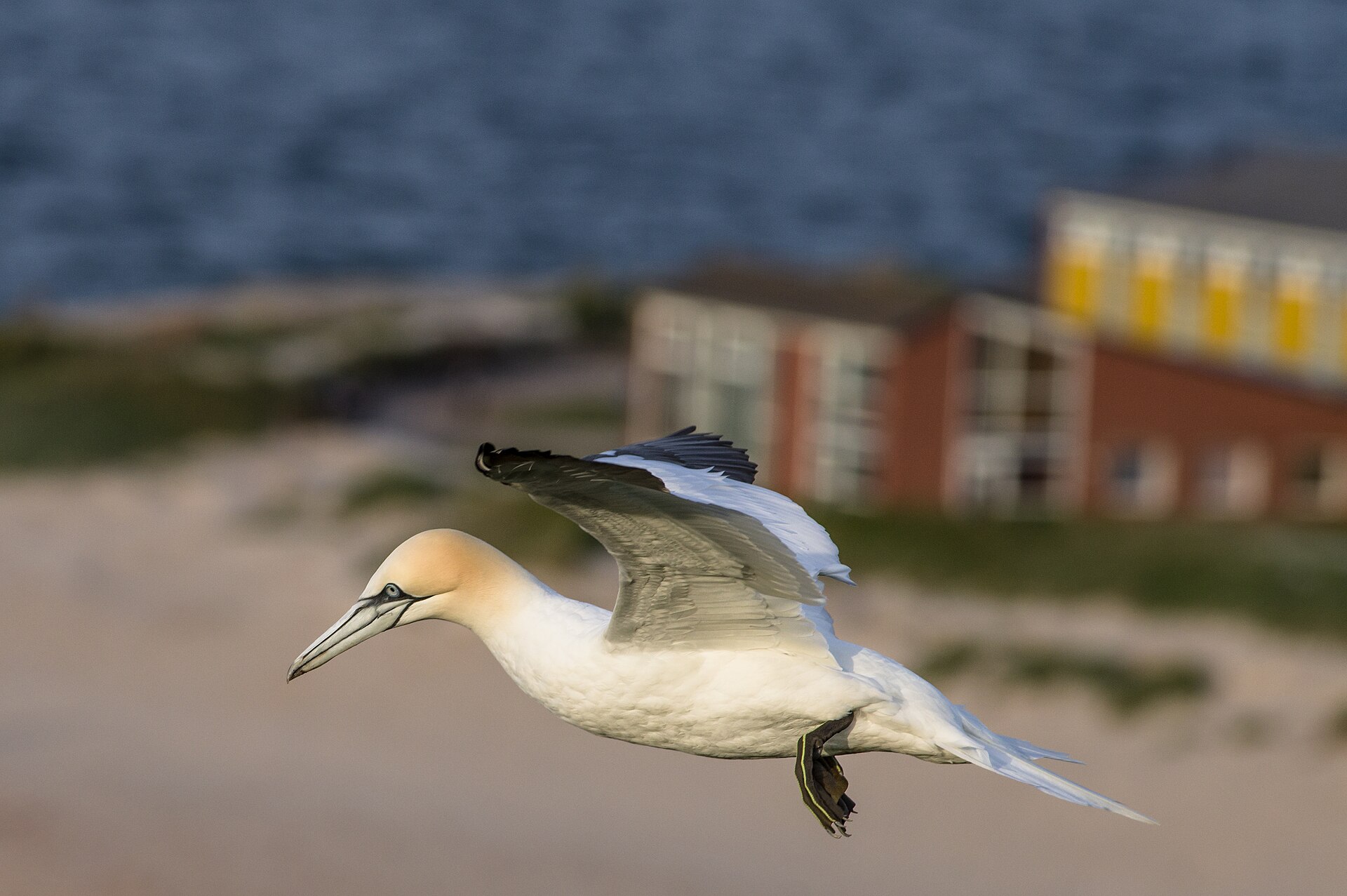
This one doesn’t come to feeders, and seeing it means a trip to the ocean, but it’s one of the most remarkable winter birds in Virginia. Northern Gannets nest on cliffs in eastern Canada and the North Atlantic, and many spend the winter off the mid-Atlantic coast. From the beach at Virginia Beach or at First Landing State Park on Cape Henry, on a good day, lines of big white seabirds with black wing tips can be seen gliding low over the water. When they find a school of fish, they fold their wings and plunge straight into the sea from a height of dozens of feet. Younger birds are mottled brown and gray and take several years to turn white. Late fall through early spring is the season, and a scope helps.
Bald Eagle
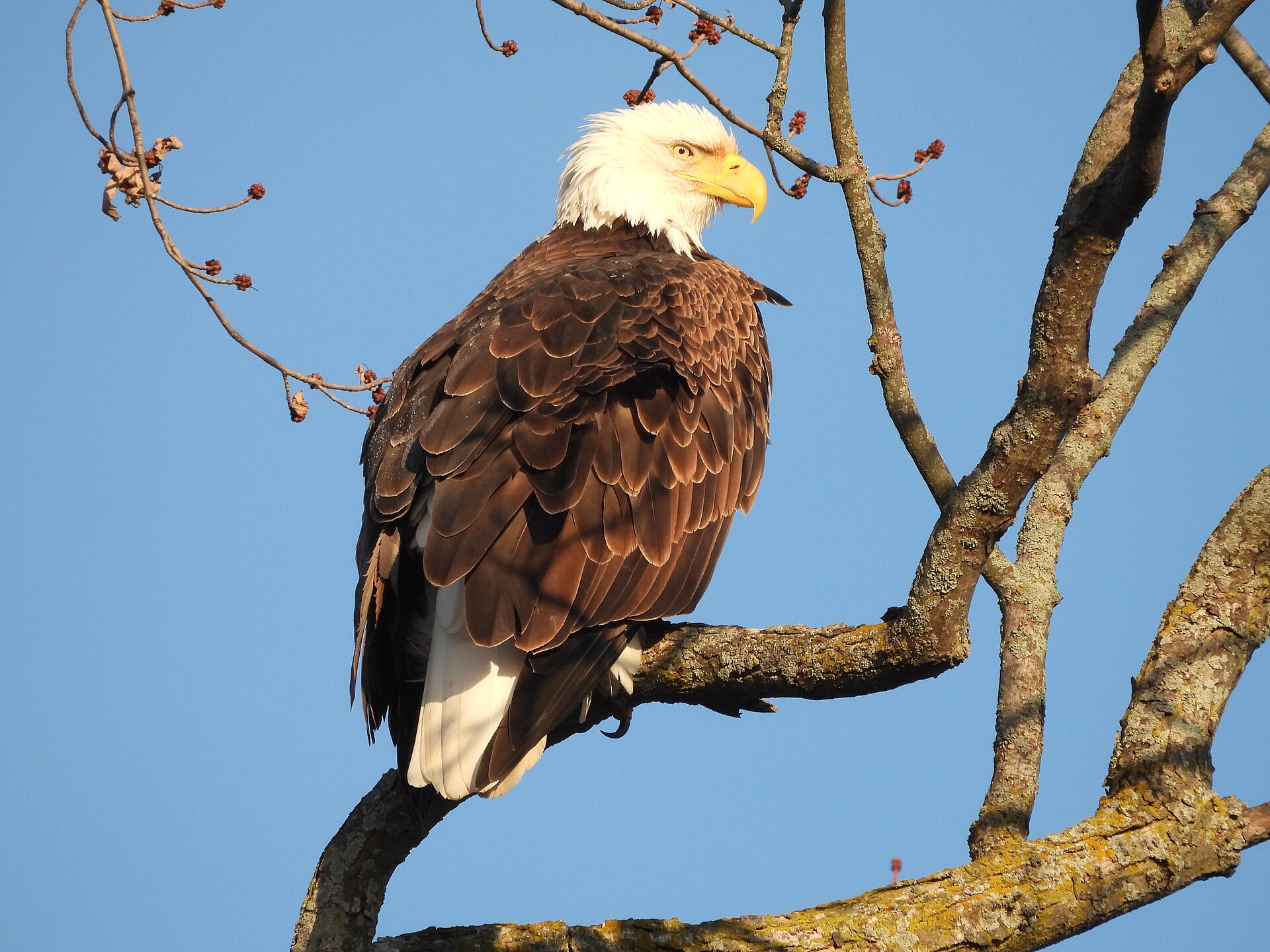
The Chesapeake Bay supports one of the largest Bald Eagle populations on the Atlantic coast, and in winter, northern eagles join the birds that live in Virginia year-round. Eagles gather along the tidal rivers, especially the James, Rappahannock, and Potomac, where they feed on fish and waterfowl. Mason Neck National Wildlife Refuge, on the Potomac in Fairfax County, was established in 1969 as the first national wildlife refuge set aside specifically for Bald Eagles, and Mason Neck State Park next door is a good place to start. Adults have the familiar white head and tail. Young eagles are mottled brown and take about five years to reach adult plumage, so a large brown bird on a riverbank snag in winter is very often an immature Bald Eagle. The Virginia birds of prey guide covers the hawks and falcons that also winter in the state.
Getting started this winter
The juncos and White-throats usually return in late October, so that’s the time to clean the feeders, put some millet on the ground, and hang a suet cake. Cover matters more than the number of feeders. Sparrows want a dense shrub, a hedge, or a brush pile within a quick hop of the food, and a holly or a cedar in the yard is worth more than any seed blend. For the coastal birds, pick a calm, clear day between December and February. Back Bay and Chincoteague both reward an early start and a warm coat, since the wind off the water is colder than the forecast suggests. The Virginia Birding and Wildlife Trail, run by the state wildlife agency, lists sites across every region and is a good way to find spots closer to home.
Counting is one of the best ways to learn winter birds. Project FeederWatch runs from November through April and only asks for a couple of short counts each week. Virginia has dozens of Christmas Bird Count circles, from the mountains to the Eastern Shore, and beginners are welcome on nearly all of them. For the birds that stay put through the cold, see the guide to birds that stay through winter in the northern US, and the Illinois and Florida winter guides show how the same season plays out farther north and farther south.
Sources: Species descriptions and range information draw on the Cornell Lab of Ornithology’s All About Birds, the National Audubon Society’s Guide to North American Birds, eBird regional records for Virginia, the Virginia Department of Wildlife Resources (including the Virginia Birding and Wildlife Trail and its black bear guidance), the U.S. Fish and Wildlife Service (Back Bay, Chincoteague, and Mason Neck National Wildlife Refuges), and the Center for Conservation Biology at William & Mary.