Winter Birds in Florida: Who Comes South for the Dry Season, October to April
Most of the country loses birds in winter. Florida gains them. From October on, the yards and parks fill with warblers, wrens, catbirds, and phoebes that spent the summer somewhere between Georgia and northern Canada,. Florida’s winter is also its dry season, roughly November through April, so the lush, buggy, thunderstorm-heavy summer gives way to cool mornings and clear skies. It’s the best birding weather of the year.
This guide covers those months. The year-round residents (cardinals, Blue Jays, Carolina Wrens, Red-bellied Woodpeckers, Red-shouldered Hawks, and the rest) are in the Florida backyard birds field guide. What follows are the winter arrivals that change what a Florida yard looks and sounds like, plus a few big birds worth an early drive.
A different kind of winter
Florida is long enough that “winter” means different things in different places. The Panhandle and the northern tier around Tallahassee and Gainesville get real frosts most years, and a few winter birds that are scarce farther south, like sapsuckers and Hermit Thrushes, are regular there. Central Florida, from Ocala down through Orlando and Tampa, is the core wintering ground for most of the songbirds in this guide. South of Lake Okeechobee and in the Keys, winter is warm and green, and the feeder list leans tropical.
The other thing that makes Florida winters different is water. The state’s marshes, lakes, wet prairies, and coastal flats host huge numbers of ducks, wading birds, pelicans, and cranes from November through March. Plenty of them are four feet tall or have nine-foot wings, so even people without a feeder notice.
The state bird in winter
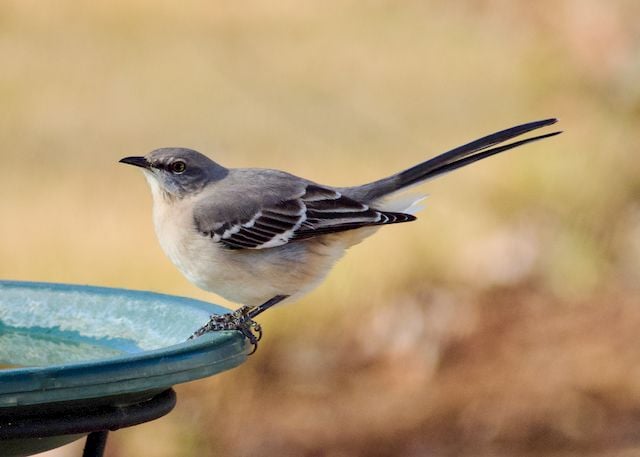
The Northern Mockingbird has been Florida’s state bird since 1927, and winter is when its behavior gets interesting. In spring and summer, mockingbirds defend breeding territories as pairs. In fall, many split up, and each bird claims its own winter feeding territory built around a good fruit source: a holly, a firethorn hedge, a beautyberry patch. A mockingbird that spends the morning chasing catbirds and robins away from one particular shrub is guarding its winter food supply. They sing in fall and winter too, though less than in spring.
Winter feeding notes for Florida
The general advice in the winter bird feeding guide applies here, with a couple of Florida-specific twists. White proso millet in a tube feeder or tray near dense shrubs is the classic Painted Bunting setup, and it also brings in Chipping Sparrows and doves. Black-oil sunflower covers cardinals, titmice, chickadees, and goldfinches. Suet works better than people expect in the cooler months, and wrens and Orange-crowned Warblers will come to it, but in a Florida December a suet cake can still soften on a warm afternoon. No-melt dough or a shaded spot helps.
Humidity is the main hygiene problem. Seed molds fast here, even in the dry season, so smaller fills that empty in a day or two beat one big feeder that sits for a week. The first-winter feeder setup guide covers the cleaning routine. A birdbath is worth as much as any feeder in the dry season, when puddles and small ponds start to shrink.
Keep the hummingbird feeder up. Ruby-throated Hummingbirds overwinter in central and southern Florida in small numbers, and the Panhandle gets a handful of western hummingbirds every winter. Change the sugar water every few days, more often on warm days.
For plants, a few natives do most of the work. Wax myrtle berries ripen in fall and feed Yellow-rumped Warblers and Tree Swallows all winter. Yaupon and dahoon holly, southern red cedar, and Walter’s viburnum carry fruit into the cold months, and firebush and coral honeysuckle keep blooming for hummingbirds in the southern half of the state. Brazilian pepper, the invasive shrub with clusters of red berries, gets eaten by catbirds and robins, which is exactly how it spreads. Replacing it with native fruiting shrubs is one of the more useful things a Florida yard can do.
Palm Warbler
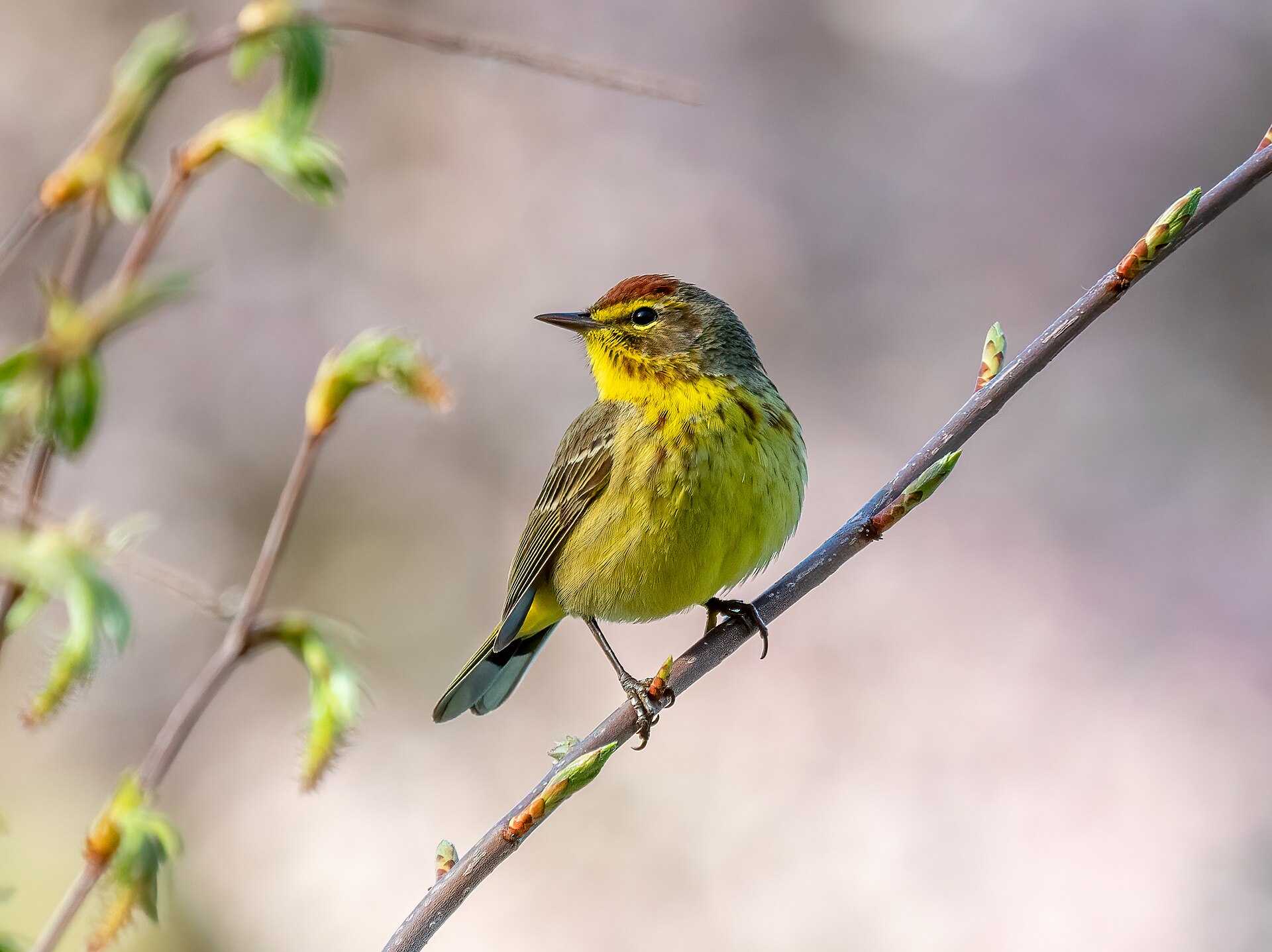
If there is one winter bird of Florida lawns, it’s this one. A small, plain warbler, about 5.5 inches, that walks on the ground and pumps its tail up and down almost constantly. In winter it’s mostly brown above with faint streaks, a pale eyebrow, and bright yellow under the tail, which flashes every time the tail bobs. The bird in the photo is a spring adult of the eastern “Yellow” form, with a rusty cap and an all-yellow underside. Most Florida winter birds are much duller and many belong to the paler western form, but the yellow undertail and the tail-pumping don’t change.
Palm Warblers breed in bogs across Canada and winter in huge numbers in Florida, along the Gulf Coast, and in the Caribbean. They show up in October and stay until April, feeding on lawns, road edges, golf courses, and parking lot medians. The name came from a specimen collected in the Caribbean.
Gray Catbird
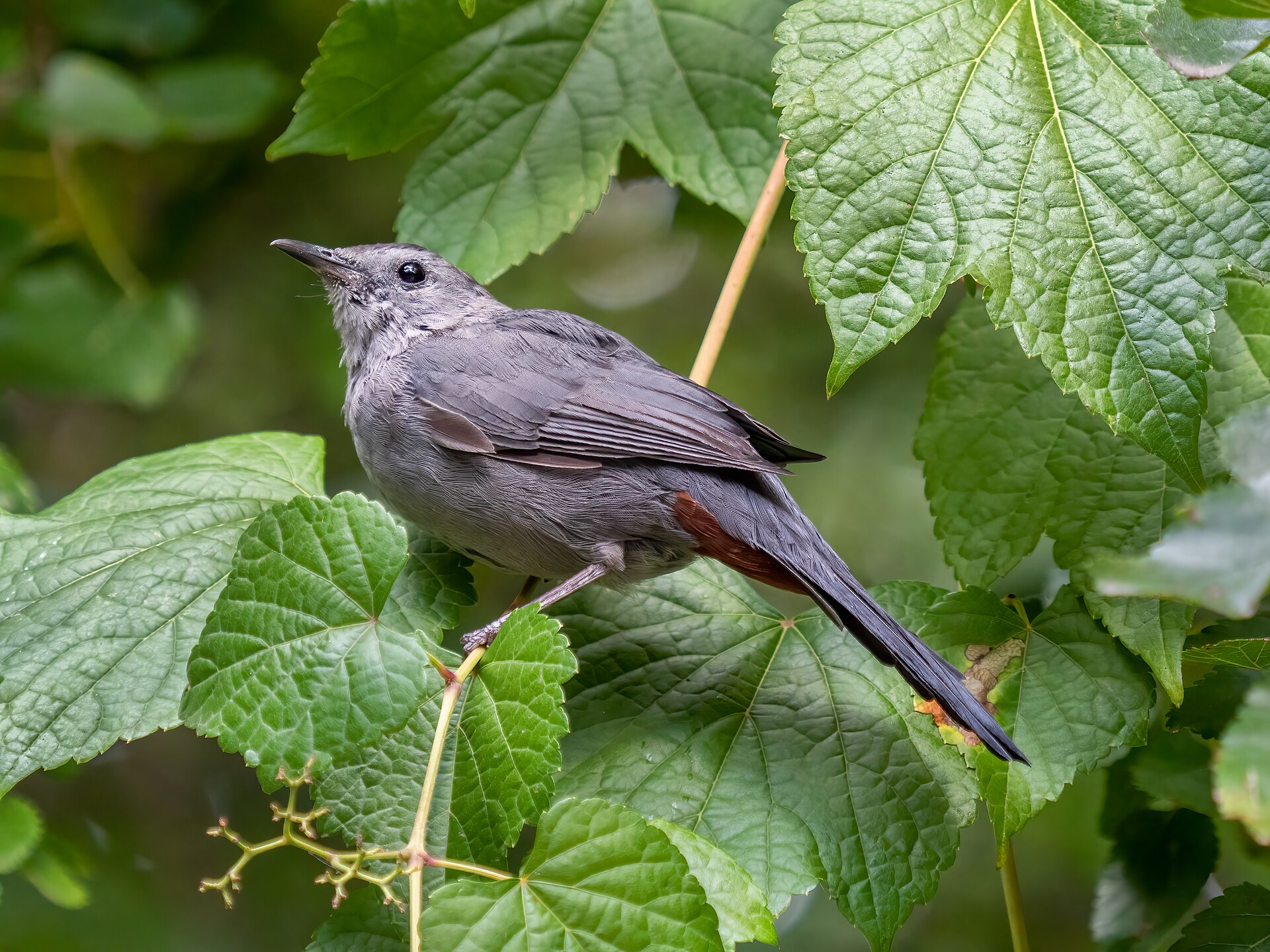
A slim, slate-gray bird about 8.5 inches long, with a black cap, a long dark tail, and a patch of rusty chestnut under the tail that’s easy to miss. The call is the thing to learn: a nasal, cat-like “mew” from inside a hedge, which is often how a catbird is first noticed in the yard.
Catbirds breed across much of the eastern US and southern Canada, and a large share of them winter in Florida, where they’re common in thickets, hedges, and overgrown yard edges from October to April. They eat fruit more than seed in winter and come readily to chopped apple, grape jelly, and soaked raisins. A dense native shrub row with berries will hold one or two all winter.
Painted Bunting
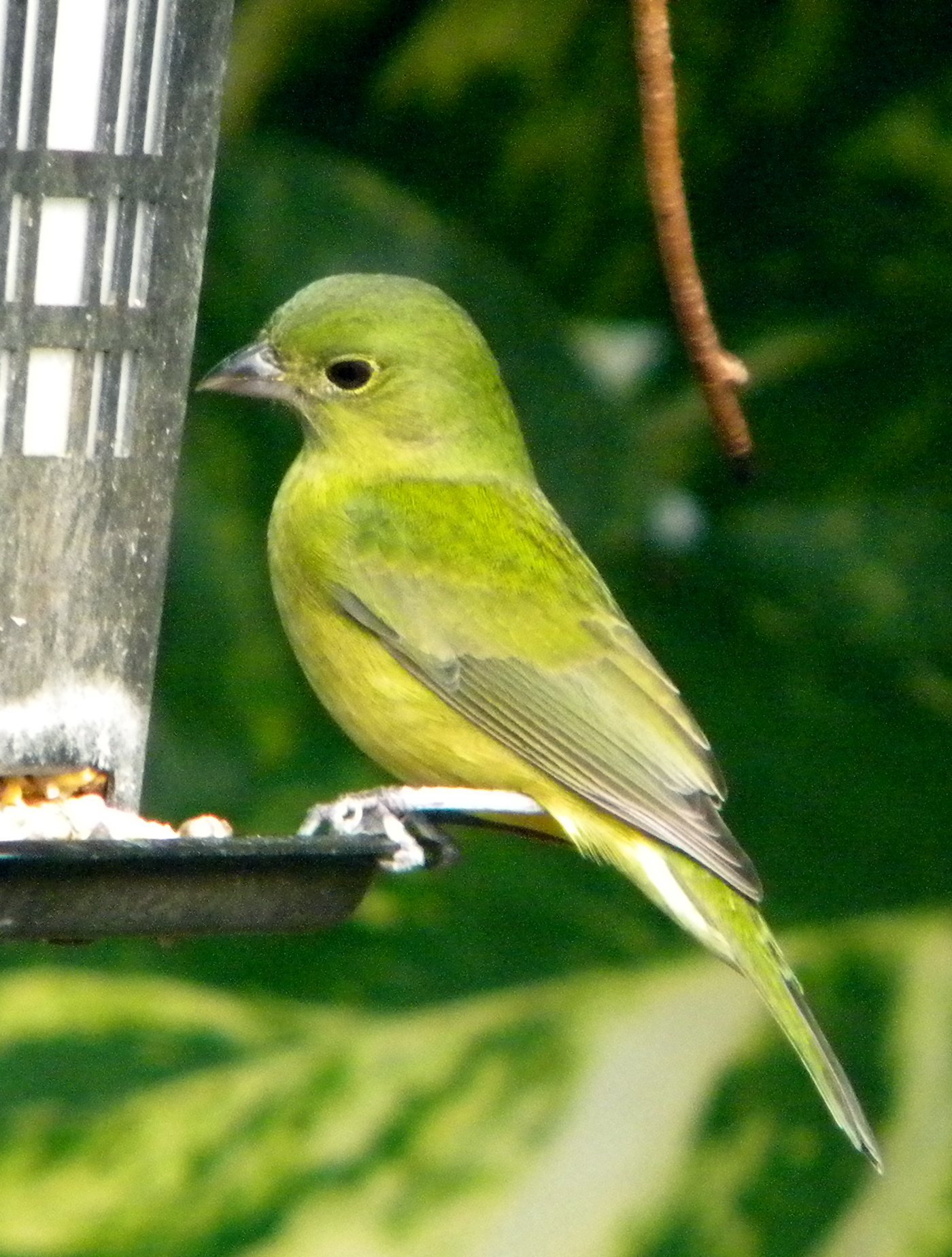
The bird people install millet feeders for. Males are almost absurd: a blue head, a red underside and eye-ring, and a lime-green back, on a bird under 6 inches long. Females and first-year males, like the bird in the photo, are a plain, even green with no streaks, a shade of green found on almost no other North American songbird.
The eastern population nests along the coast from North Carolina to northeast Florida and winters in central and southern Florida, the Bahamas, and Cuba. In winter, Painted Buntings visit feeders across central and south Florida, often appearing in late October and staying until April. They are shy and stay close to cover, so a millet feeder placed within a few feet of a dense shrub is much more likely to attract them than one in the middle of a lawn. A tube feeder with small ports, or one inside a wire cage, keeps larger birds from emptying it first.
Eastern Phoebe
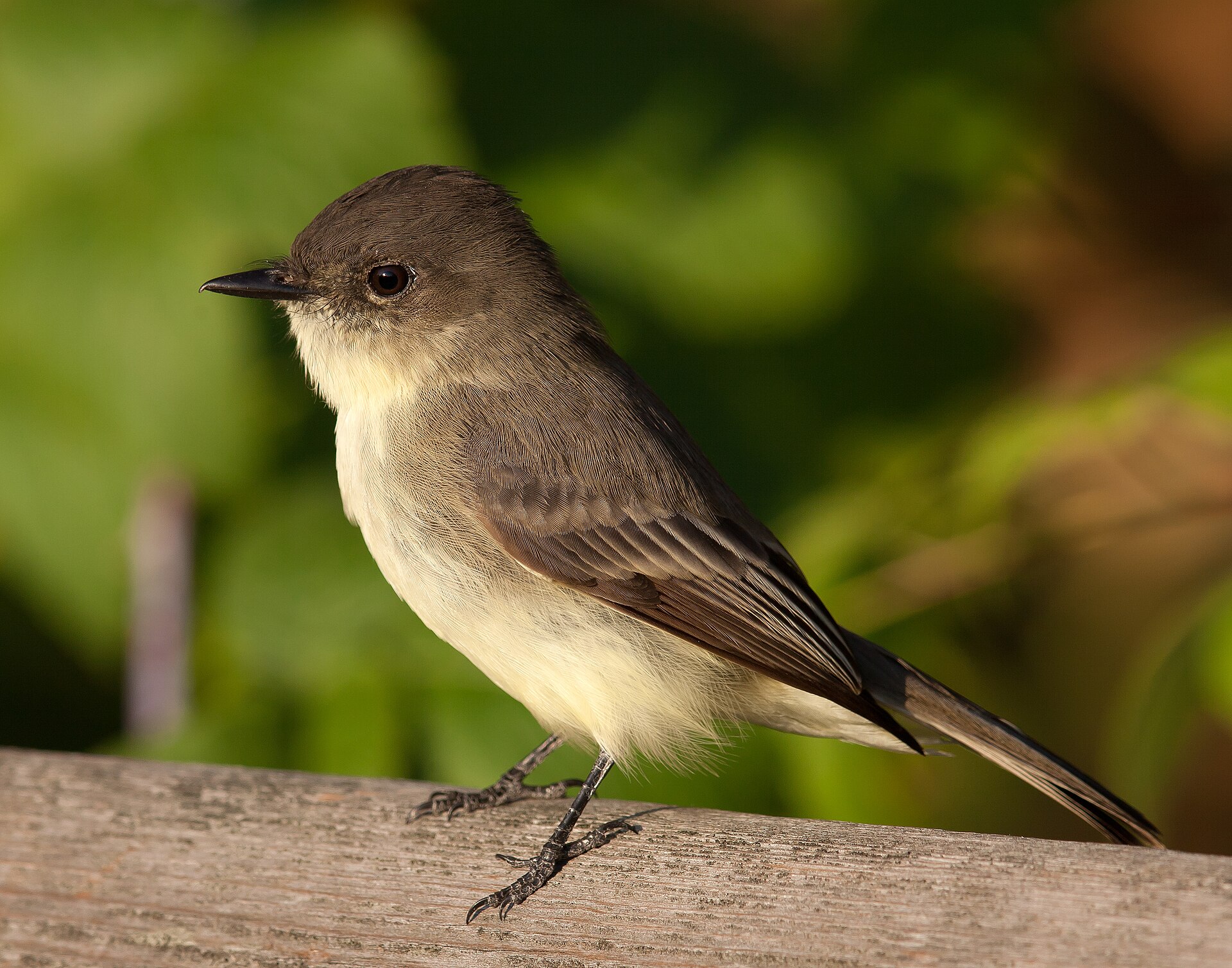
A plain gray-brown flycatcher, about 7 inches, with a darker head, a whitish throat, and a pale belly that often shows a wash of yellow in fall. It has no strong wingbars or eye-ring. What gives it away is behavior: it perches low and dips its tail down and up again, over and over. The call is a sharp “chip,” and on warm winter days it sometimes sings its name, a raspy “fee-bee.”
Phoebes are among the hardiest flycatchers, and many winter across Florida, where there are still flying insects in January. They hunt from fence posts, low branches, and pool screens, often near water.
House Wren
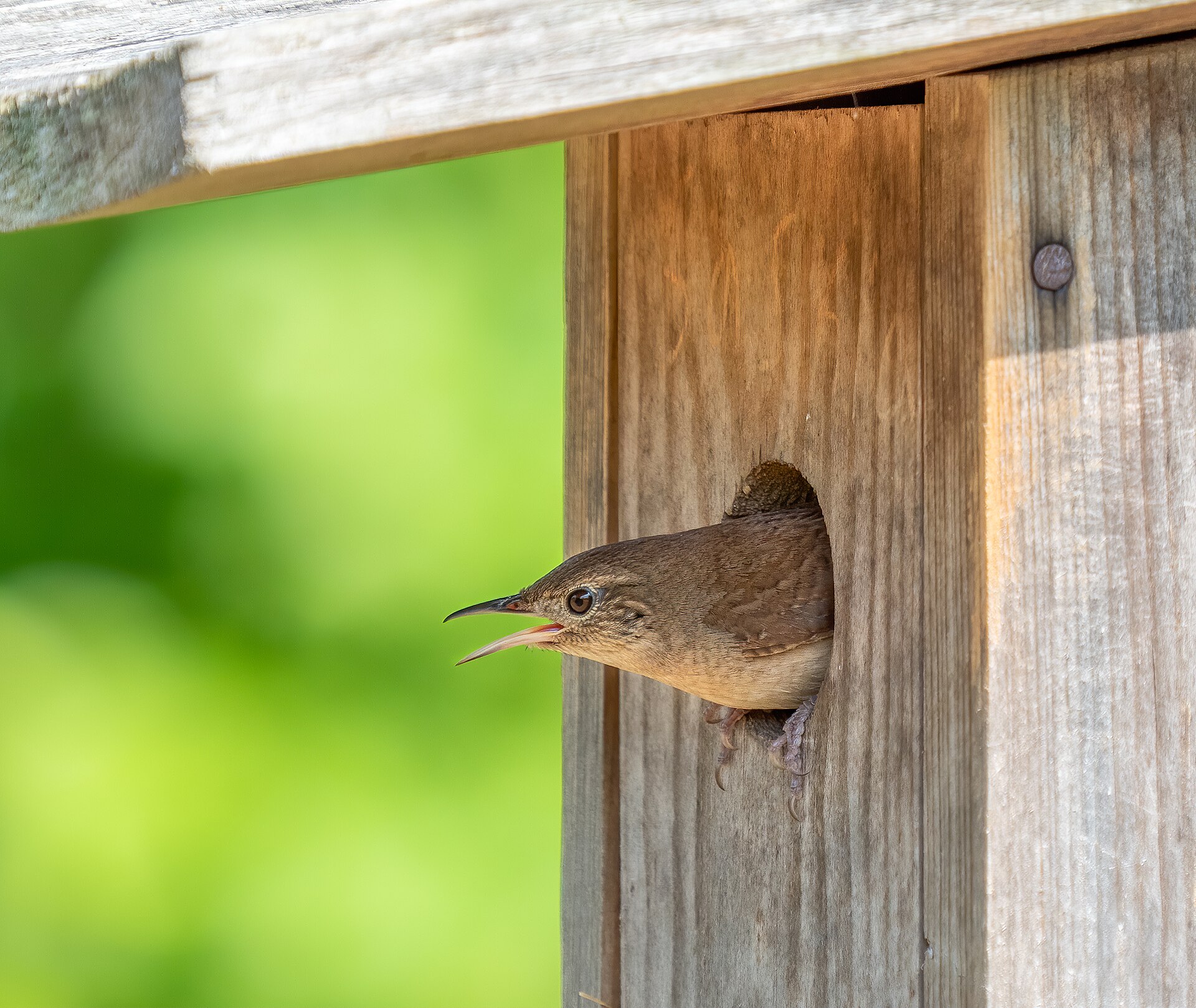
A small, plain brown wren, about 4.75 inches, with fine barring on the wings and tail, a faint eyebrow, and a thin, slightly curved bill. It’s smaller and grayer than the resident Carolina Wren, without the bold white eyebrow.
House Wrens nest across much of North America and winter in the southern states, including all of Florida. They’re quiet in winter, keeping low in brushy cover and giving a scolding chatter when disturbed, and are easiest to find in yards with brush piles, tangles, and leaf litter. A loose pile of trimmed branches in a back corner is about the best “feeder” for them.
Orange-crowned Warbler
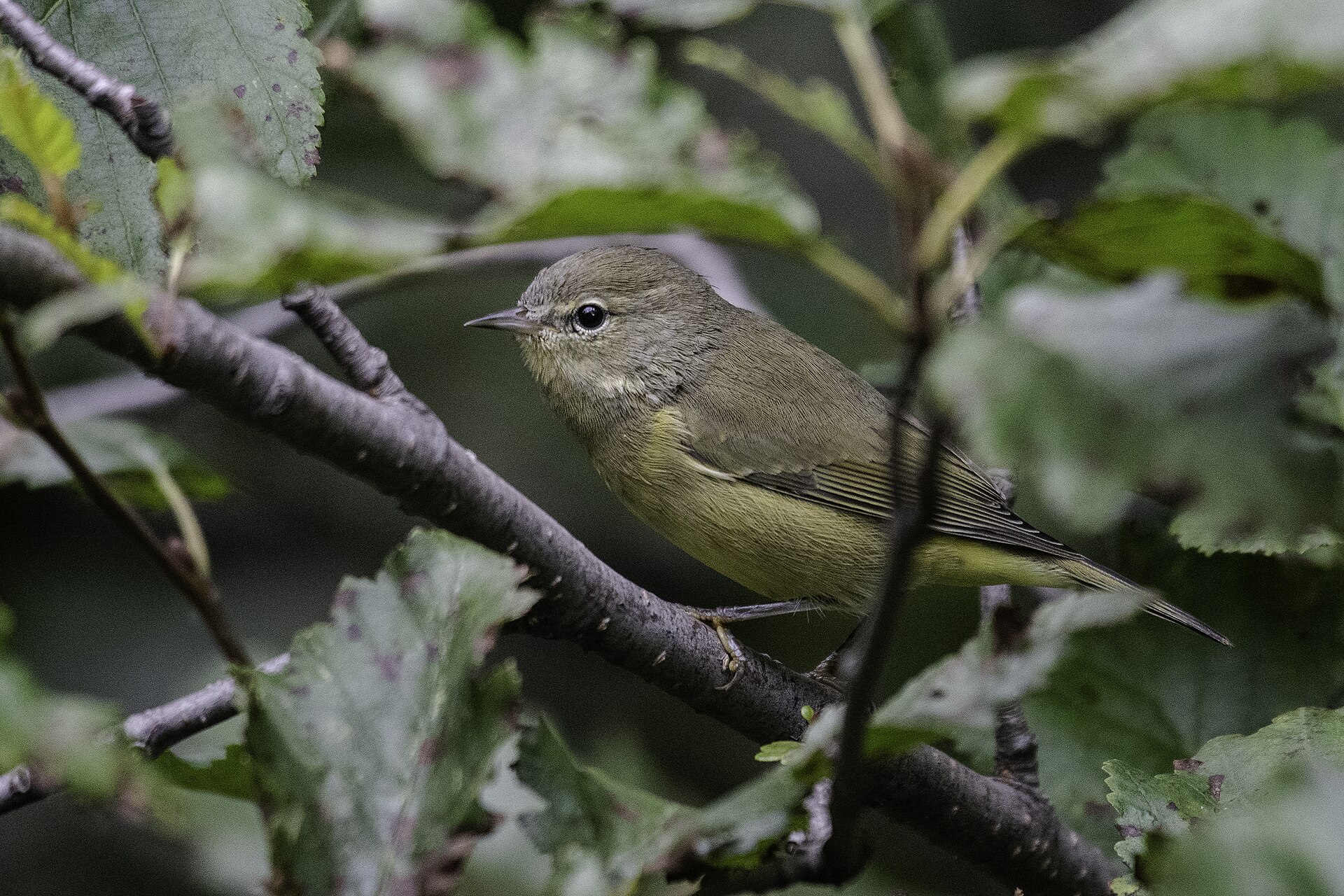
A plain olive-yellow warbler, about 5 inches, with a faint broken eye-ring, a dark line through the eye, and blurry streaking on the breast. The orange crown patch is almost never visible. The eastern birds that winter in Florida are often grayer on the head than western ones.
This is one of the few warblers a Florida feeder watcher can count on. Orange-crowns winter across the state from about October to April, and they come to suet and peanut butter mixes, and sometimes even sip from hummingbird feeders.
Ruby-crowned Kinglet
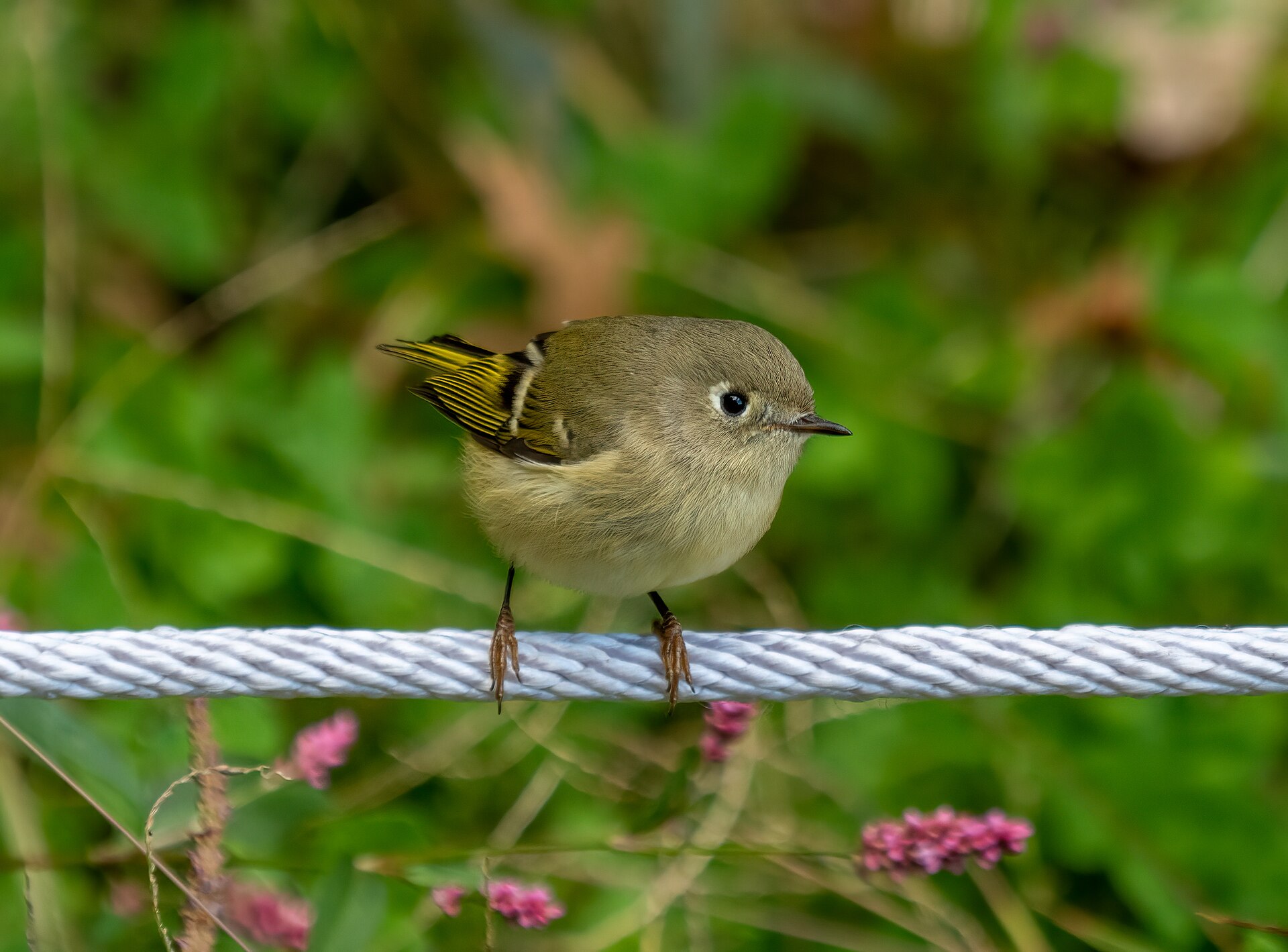
Tiny, round, and never still, about 4 inches long, olive-green with a bold, broken white eye-ring and a white wingbar next to a black bar. The red crown patch stays hidden unless a male is excited. The constant wing-flicking is usually the first clue, along with a dry, chattering “ji-dit” call.
Ruby-crowned Kinglets breed in northern and mountain conifer forests and winter across Florida from October through April. They travel with mixed flocks through oaks and shrubs and will take bits of suet.
Cedar Waxwing
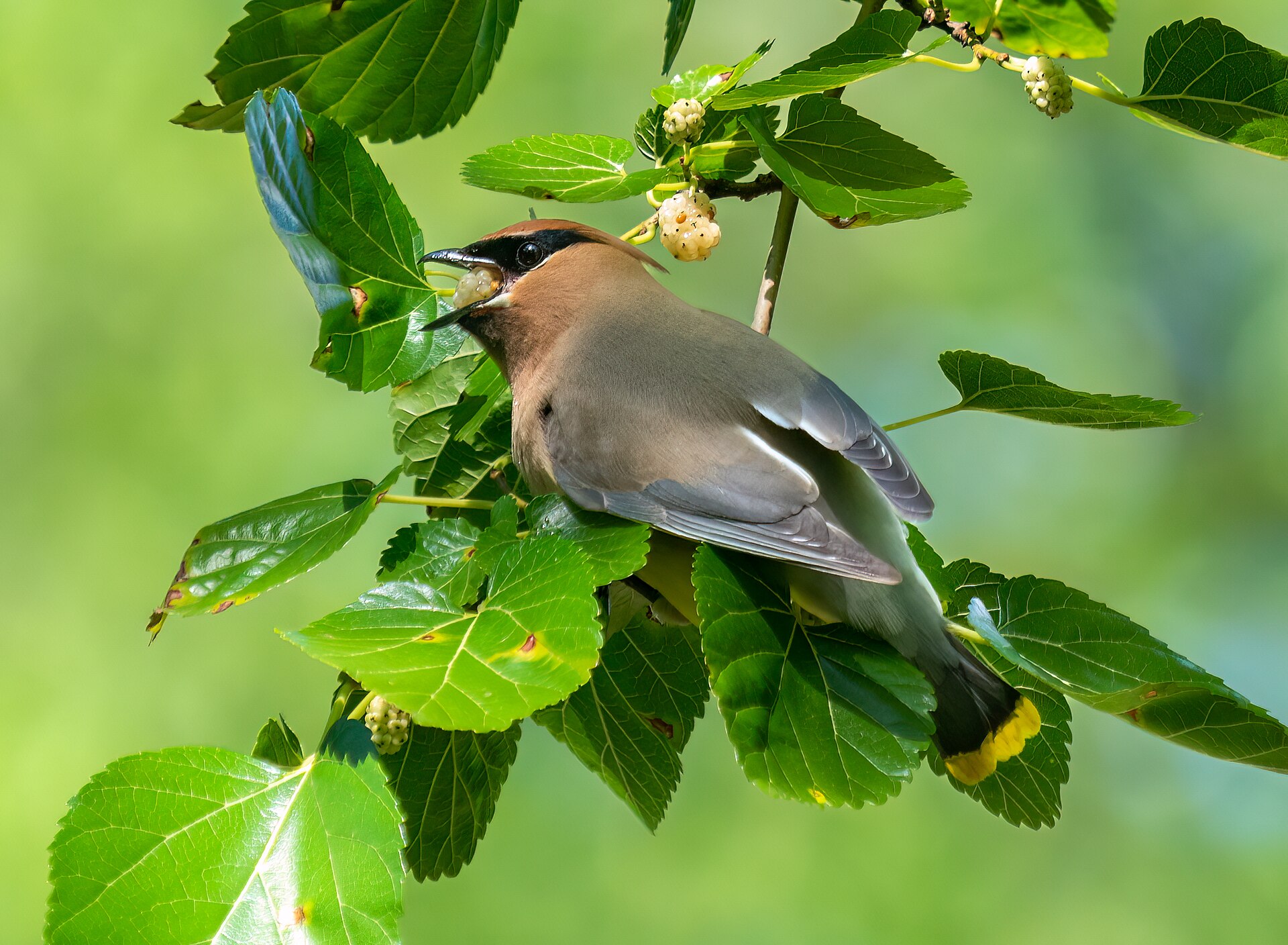
A sleek, crested bird, about 7 inches, soft brown fading to gray on the wings, with a black mask, a pale yellow belly, and a yellow-tipped tail. The red waxy tips on some wing feathers, which give the bird its name, show up close.
Waxwings are nomadic and late. In Florida they often arrive in January or February rather than October, and flocks of dozens can show up overnight, strip a holly or a red cedar of fruit, and vanish just as fast. They don’t use seed feeders, but a birdbath near fruiting shrubs is a strong draw.
Rufous Hummingbird
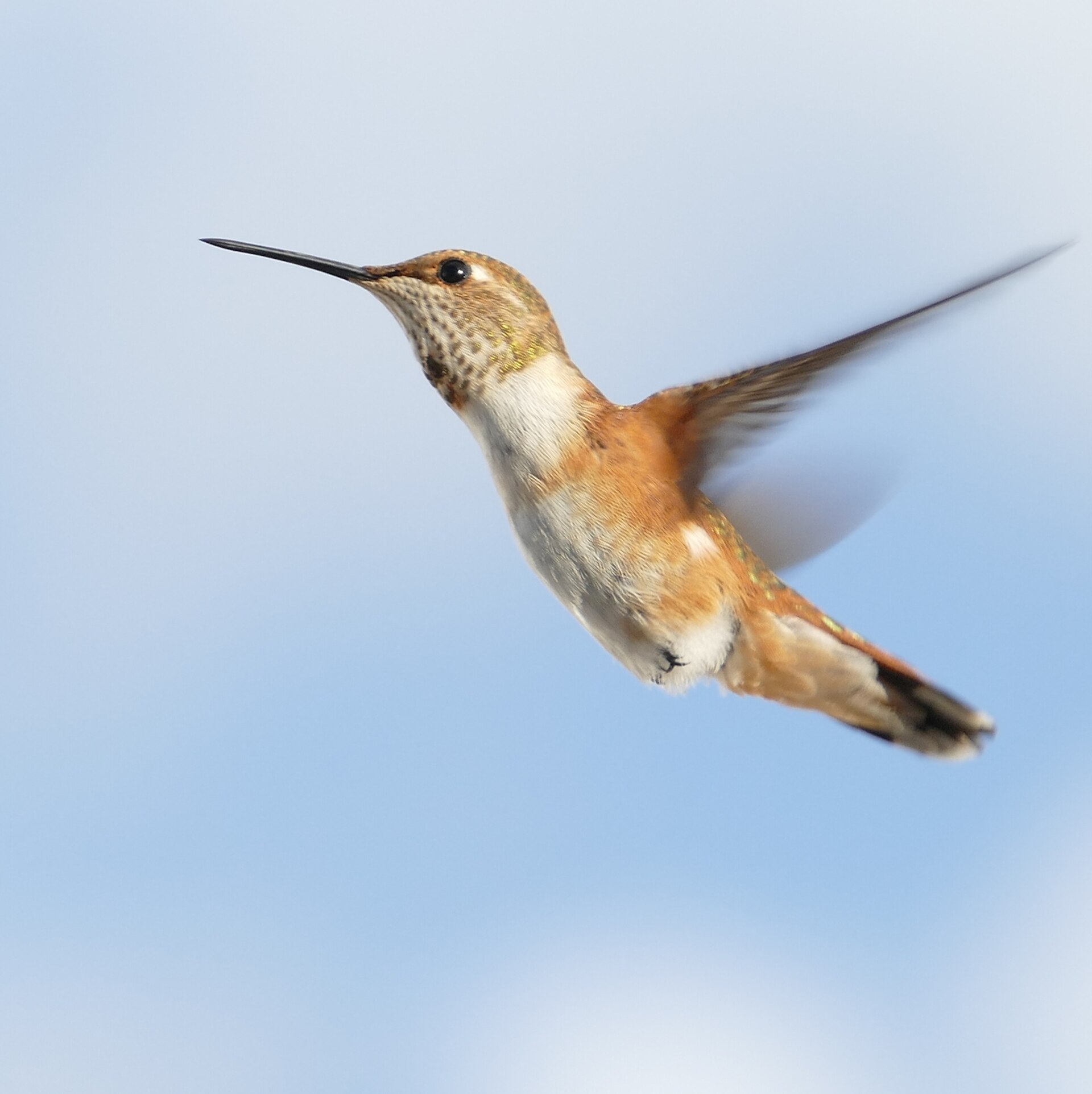
A small, feisty hummingbird, about 3.5 inches. Adult males are bright orange-rufous on the back and sides with an orange-red throat. Females and young birds, like the one in the photo, are green above with rusty sides and rufous at the base of the tail.
Rufous Hummingbirds breed in the Pacific Northwest and Alaska and mostly winter in Mexico, but a small, steady number winter along the Gulf Coast every year, including the Florida Panhandle and north Florida. These birds tend to appear at feeders in October or November and stay until late winter. That’s one of the best reasons to keep a hummingbird feeder up after the Ruby-throats thin out. A December hummingbird in north Florida deserves a careful photo.
Tree Swallow
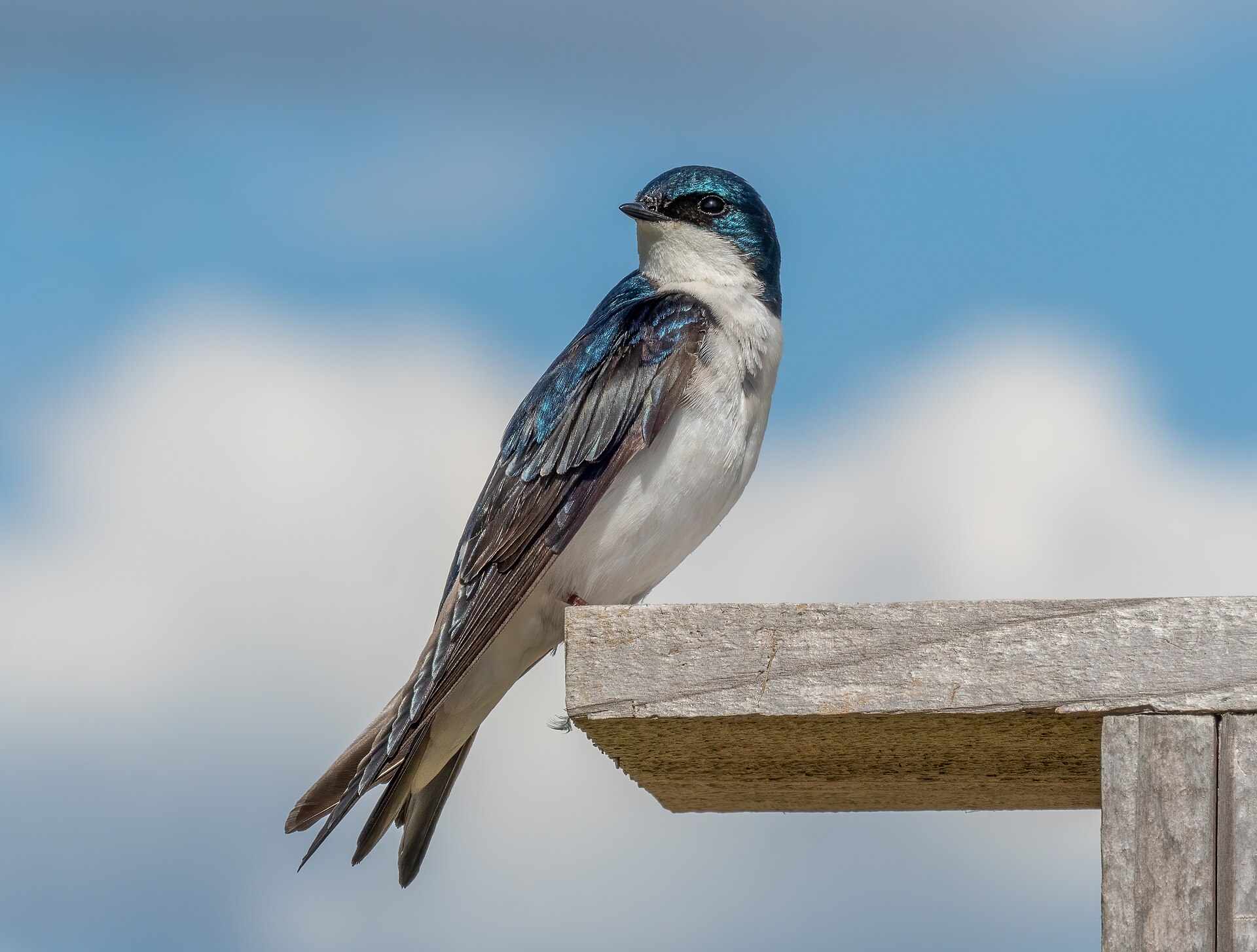
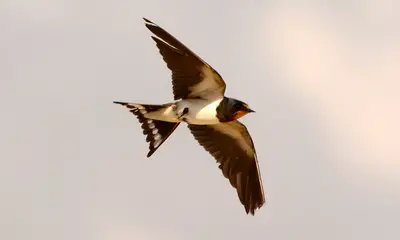
A compact swallow, about 5.5 inches, glossy blue-green above and clean white below. In winter they can gather in enormous, swirling flocks over marshes, lakes, and coastal flats, sometimes thousands of birds wheeling together before they settle to roost.
Tree Swallows are the only swallows that winter in large numbers in the United States, and Florida holds many of them from October to March. They can winter this far north because, unlike most swallows, they can digest the waxy berries of wax myrtle and bayberry. When a cold snap knocks out the flying insects, they drop into the shrubs and eat fruit. A wax myrtle hedge near water is one of the few ways a Florida yard can attract them.
American White Pelican
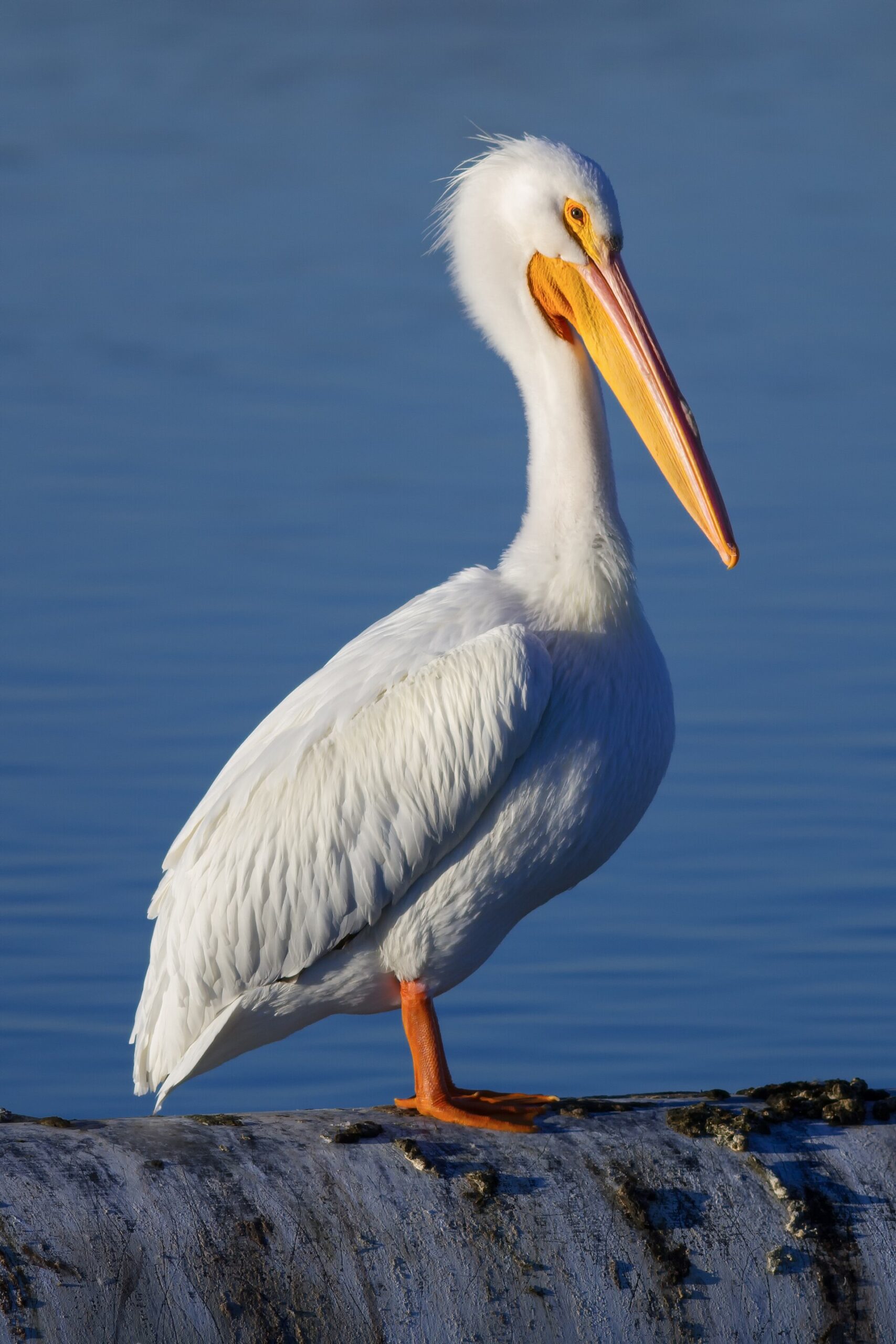
One of the largest birds in North America, with a wingspan around 9 feet. It’s bright white with black flight feathers that show only in flight, and a huge orange-yellow bill and pouch. In late winter, breeding adults grow a flat, fibrous plate on top of the bill, which falls off after nesting.
White pelicans breed on lakes in the northern plains and the interior West and winter along the Gulf Coast and in Florida. Unlike the resident Brown Pelican, they don’t plunge-dive. They swim in groups, dipping their bills together to herd fish into shallow water. J.N. “Ding” Darling National Wildlife Refuge on Sanibel Island, Merritt Island National Wildlife Refuge near Titusville, and the big lakes of central Florida are dependable winter spots, from about November to March.
Sandhill Crane
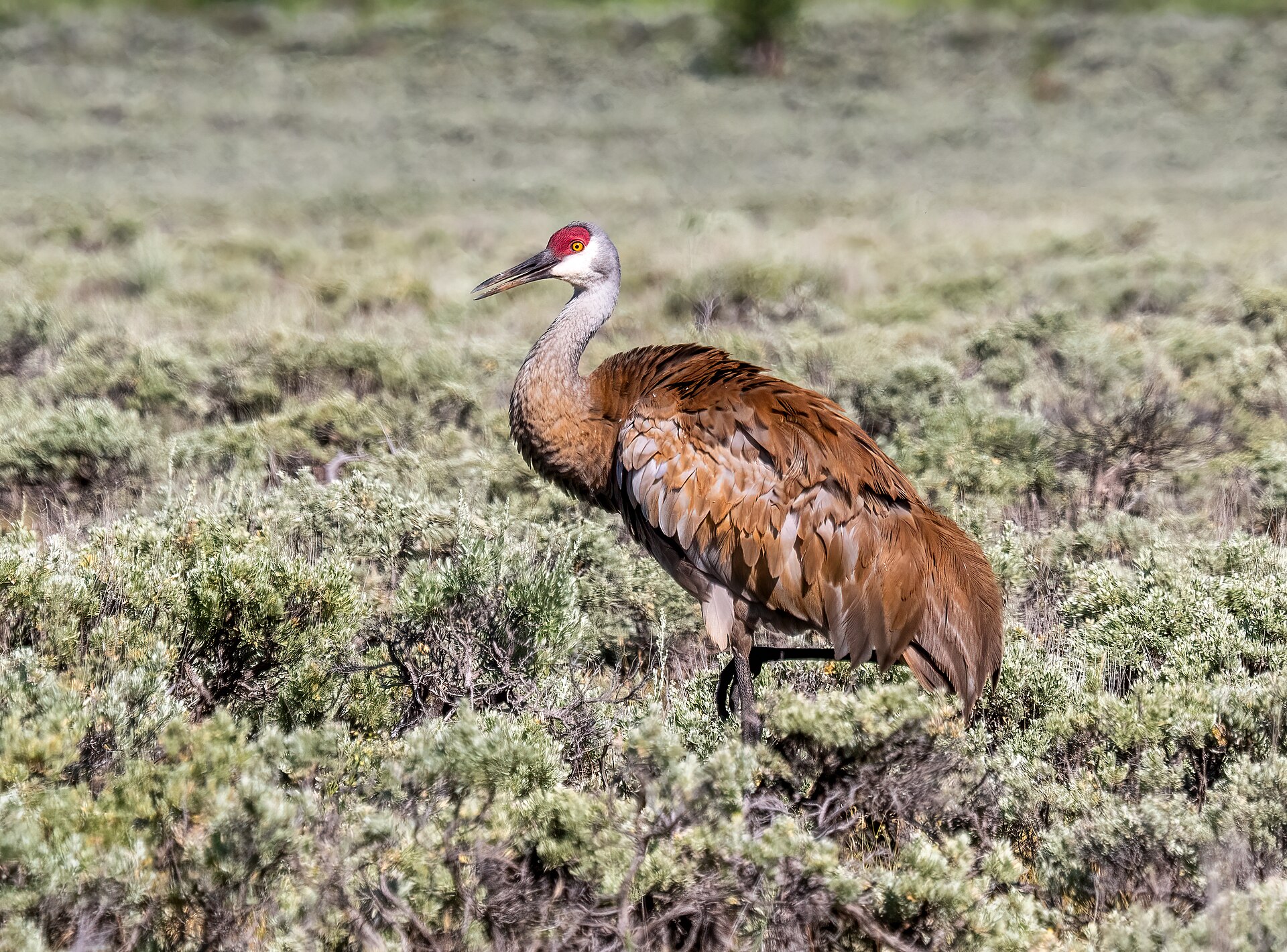
A tall gray crane, about 4 feet high, with a red forehead and long legs. Many show rusty-brown staining on the body, like the bird in the photo, which comes from preening with iron-rich mud. The call is a rolling, wooden bugle that carries for miles.
Florida is unusual in having cranes year-round. The resident Florida Sandhill Crane, a non-migratory subspecies, nests in the state’s wet prairies and pastures and is listed as threatened by the Florida Fish and Wildlife Conservation Commission. In winter, migrant Greater Sandhill Cranes from the Great Lakes region and Canada join them, and wintering numbers in the state climb into the tens of thousands. Paynes Prairie Preserve State Park near Gainesville is the classic place to see them, especially from the La Chua Trail early in the morning, from roughly November through February. Florida residents are used to cranes strolling across lawns and golf courses, but they should never be fed. Feeding them is illegal in Florida and draws them toward roads.
Getting started this winter
Timing in Florida runs a little later than up north. Most of these birds are in place by early November, so the first cool front of the season is a good cue to clean feeders, set up a millet tube for buntings, and put a birdbath where it can be seen from a window. Cover matters more than feeder count. Buntings, catbirds, and House Wrens all want a dense shrub within a few feet of food. Cooper’s and Sharp-shinned Hawks, which also winter here, hunt feeders regularly; the Florida birds of prey guide covers them, and the guide to types of herons helps with the waders in retention ponds.
Counting is one of the best ways to learn winter birds. Project FeederWatch runs from November through April and asks for a couple of short counts a week. Florida has dozens of Christmas Bird Count circles, from the Panhandle to the Keys, and they welcome beginners. For contrast, the guide to birds that stay through winter in the northern US shows what many of these same birds left behind, and the Texas and California winter guides cover the other two big Sun Belt states.
Sources: Species descriptions and range information draw on the Cornell Lab of Ornithology’s All About Birds, the National Audubon Society’s Guide to North American Birds, eBird regional records for Florida, the Florida Fish and Wildlife Conservation Commission, Florida State Parks (Paynes Prairie Preserve), and the U.S. Fish and Wildlife Service (J.N. “Ding” Darling and Merritt Island National Wildlife Refuges).