Winter Birds in Illinois: Eagles on the Rivers, Sparrows at the Feeder, November to March
An Illinois winter has a reputation, and it mostly earns it. Gray skies for weeks, wind coming off the prairie with nothing to stop it, a January cold snap or two that makes the news. But the birding doesn’t shut down. It changes. The warblers and orioles are gone by October, and in their place come juncos, Tree Sparrows, kinglets, and, in some years, flocks of finches from the north woods. Out on the big rivers, Bald Eagles gather by the hundreds.
This guide covers those months, roughly November through March. The year-round birds that stay at Illinois feeders all year (cardinals, Blue Jays, chickadees, Downy Woodpeckers, and the rest) are in the Illinois backyard birds guide. What follows are the winter visitors, plus a few birds worth a drive on a cold weekend.
Three Illinois winters
Illinois runs nearly 400 miles from the Wisconsin line to Cairo, and the winter at one end is not the winter at the other. Around Chicago and Rockford, snow cover is common from December into March, and Lake Michigan adds its own weather and its own birds: diving ducks, gulls, and the occasional Snowy Owl on a breakwall. Central Illinois, the flat farm country around Peoria, Bloomington, Champaign, and Springfield, is open, windy, and mostly plowed, which suits hawks, owls, and ground birds that like bare fields. The southern tip, below Carbondale, sits at about the latitude of central Virginia. Winters there are shorter and milder, and birds like sapsuckers, White-throated Sparrows, and Hermit Thrushes are much more common than they are up north.
Running through all three are the rivers. The Mississippi forms the whole western border, the Illinois River cuts diagonally across the state, and the Ohio meets the Mississippi at the southern tip. Where those rivers stay open in a hard freeze, they hold fish, ducks, and eagles all winter.
The state bird in winter
Illinois schoolchildren picked the Northern Cardinal as the state bird, and the legislature made it official in 1929. In winter it’s the most noticed bird in the state, partly because a red bird against snow is hard to miss, and partly because cardinals change their habits. The pairs that defended territories all summer loosen up, and loose flocks of a dozen or more can gather at a good feeder, especially late in the day. Cardinals are often the first birds at a feeder in the morning and the last to leave at dusk.
Winter feeding notes for Illinois
The general advice in the winter bird feeding guide holds here. Black-oil sunflower covers most species. White proso millet or a mixed seed scattered on the ground, or on a low platform, feeds the juncos and sparrows that make up most of an Illinois winter flock. Nyjer in a finch feeder pays off in years when siskins come south. Suet does real work in this climate; on a ten-degree morning, woodpeckers, nuthatches, and chickadees go through a cake quickly.
Cold is less of a problem for birds than people expect, as long as they can find food. Ice storms and deep snow are harder on them than low temperatures, because they bury seed. During the January 2019 polar vortex, when Chicago dropped to more than 20 degrees below zero, a feeder kept full and swept clear was doing real good. A heated birdbath is worth having from December on, when the last open puddles freeze. The first-winter feeder setup guide covers placement, cleaning, and water.
For plants, the easiest thing an Illinois yard can do is leave the garden standing in fall. Coneflower, black-eyed Susan, and native grass seed heads feed goldfinches and sparrows well into winter. Eastern red cedar gives shelter and berries, gray dogwood and hackberry hold fruit, and a brush pile in a back corner gives juncos and Tree Sparrows somewhere to dive when a Cooper’s Hawk comes through.
Bald Eagle
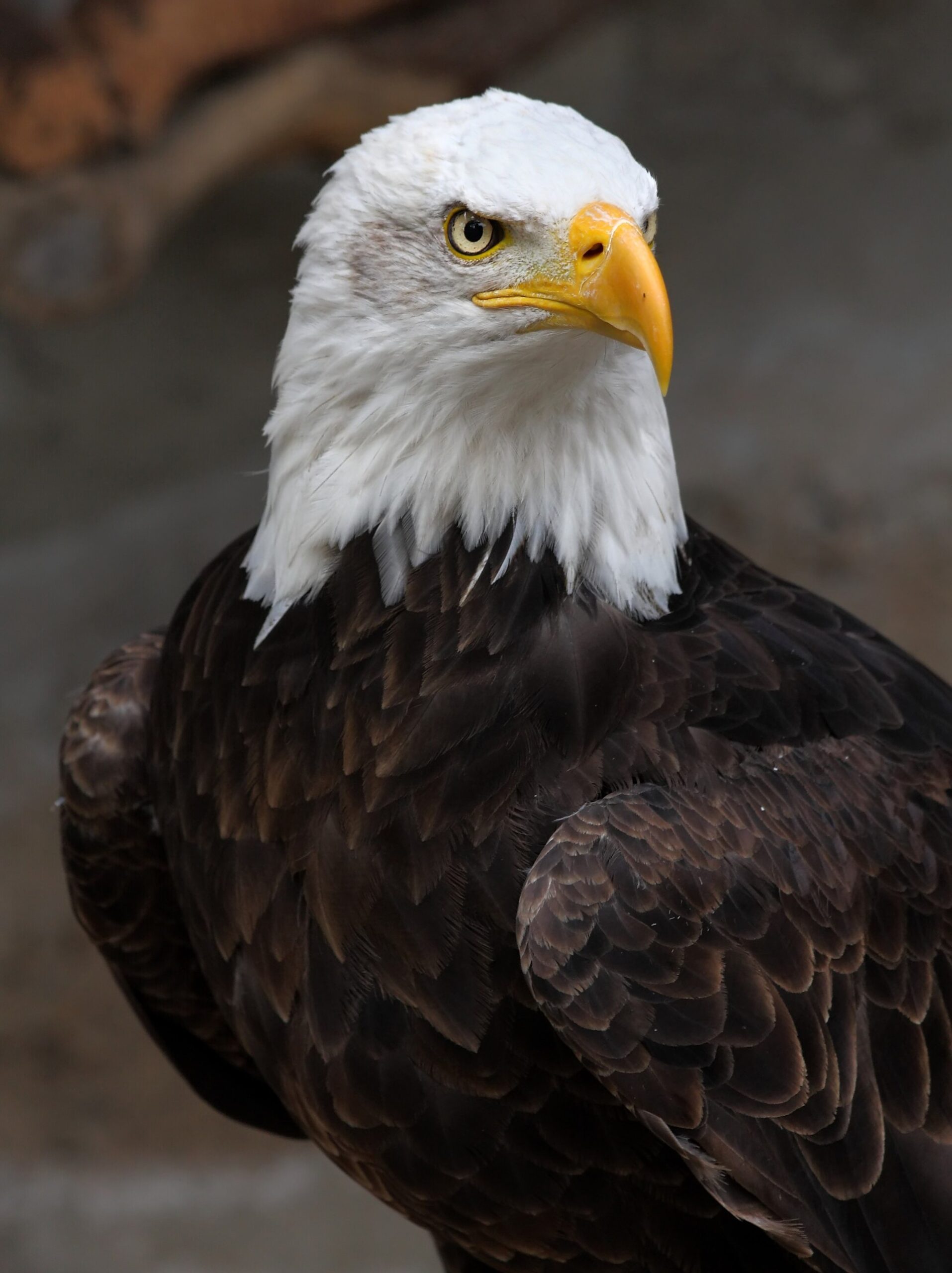
The big winter story in Illinois. In summer, Bald Eagles nest along the state’s rivers in modest numbers. In winter, eagles from Wisconsin, Minnesota, and Canada move south to wherever water stays open, and Illinois, with the Mississippi and Illinois Rivers, ends up hosting one of the largest wintering concentrations in the lower 48. The birds gather below the locks and dams, where churning water keeps a channel open and stuns gizzard shad close to the surface. An adult is unmistakable, with white head and tail. Young birds are mottled brown and white and take about five years to reach adult plumage, so a winter flock often has as many brown eagles as white-headed ones.
The classic places are Starved Rock State Park, across the Illinois River from the lock and dam; the Great River Road between Alton and Grafton, including Pere Marquette State Park; and the Quad Cities, where Lock and Dam 14 and 15 draw birds every winter. Numbers usually peak in January and early February, and the colder the winter farther north, the more eagles show up. Several towns run eagle-watching weekends with spotting scopes and naturalists.
Dark-eyed Junco
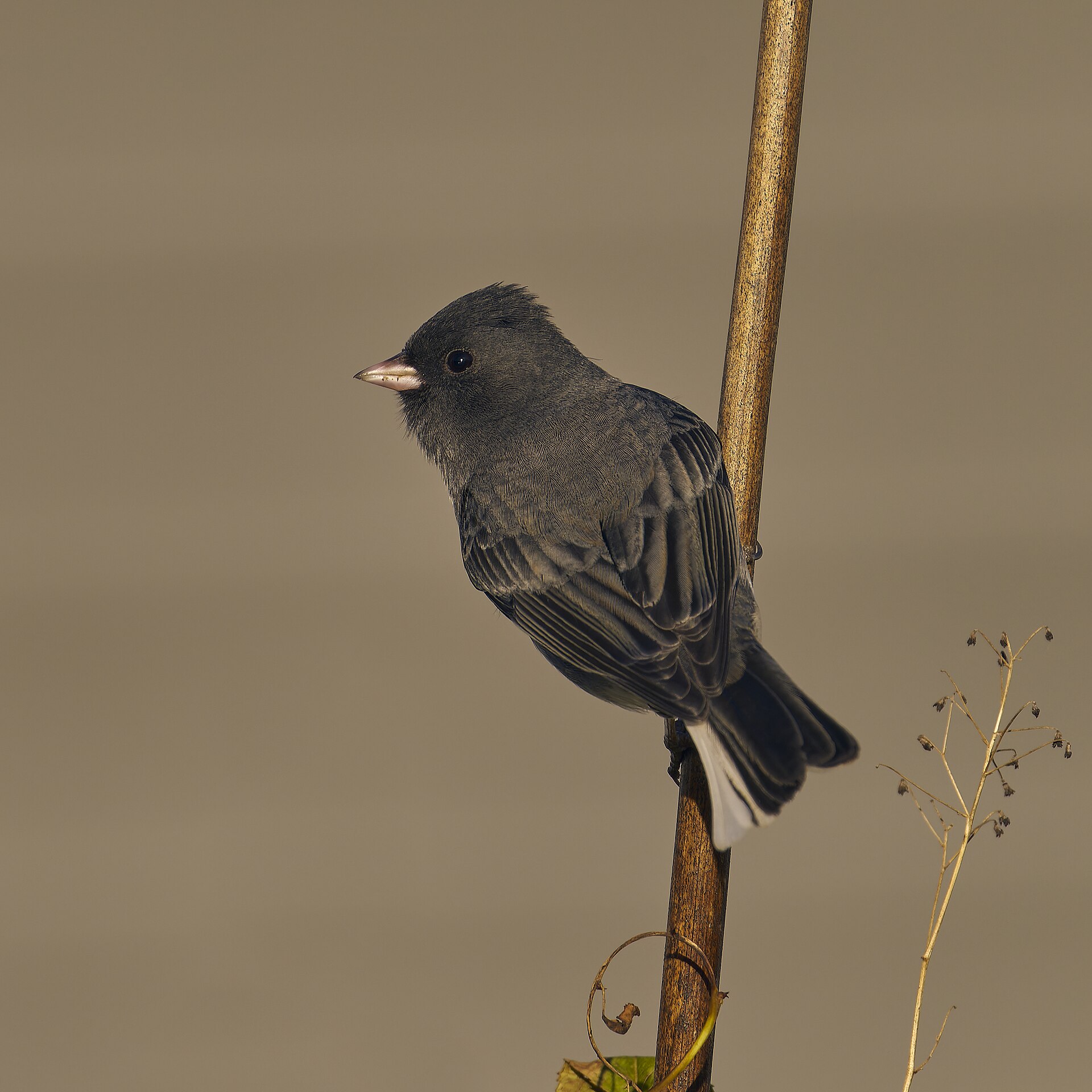
For most Illinois households, juncos are the sign that winter has actually started. They arrive from Canada and the northern forests in October and stay until April. A junco is a small, slate-gray sparrow with a white belly and a pale pink bill, and it flashes white outer tail feathers when it flies. Juncos almost always feed on the ground, under the feeder rather than on it, hopping and scratching through spilled seed in small flocks. Scattered millet on a cleared patch of snow, near shrubs, is all they need. They tend to stay in the same area all winter, so the dozen birds under a feeder in December are probably the same dozen in March.
American Tree Sparrow
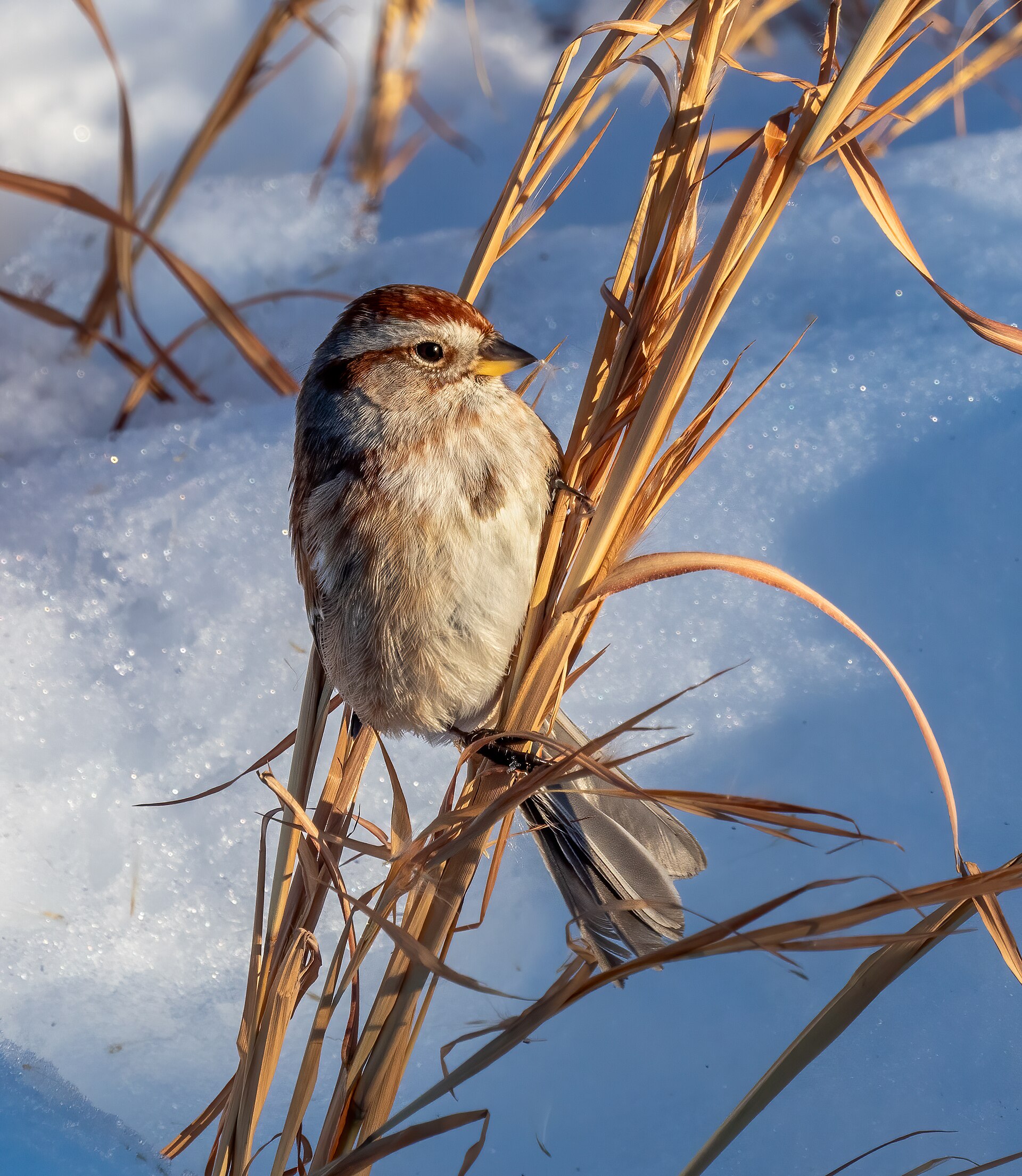
A northern sparrow that most people never see in summer, because it breeds at the edge of the Arctic tundra. In winter it’s one of the most common birds in Illinois weedy fields, fencerows, and yards with a bit of cover. It has a rusty cap, a clean gray face with a rusty line behind the eye, a two-toned bill (dark above, yellow below), and a dark spot in the middle of a plain gray breast. Don’t confuse it with the Chipping Sparrow, which has a black line through the eye and has mostly left the state by winter. Tree Sparrows come to feeders readily, usually on the ground with juncos, and they’re often busiest in the worst weather. They sing a sweet, tinkling chatter in flocks on milder days.
White-throated Sparrow
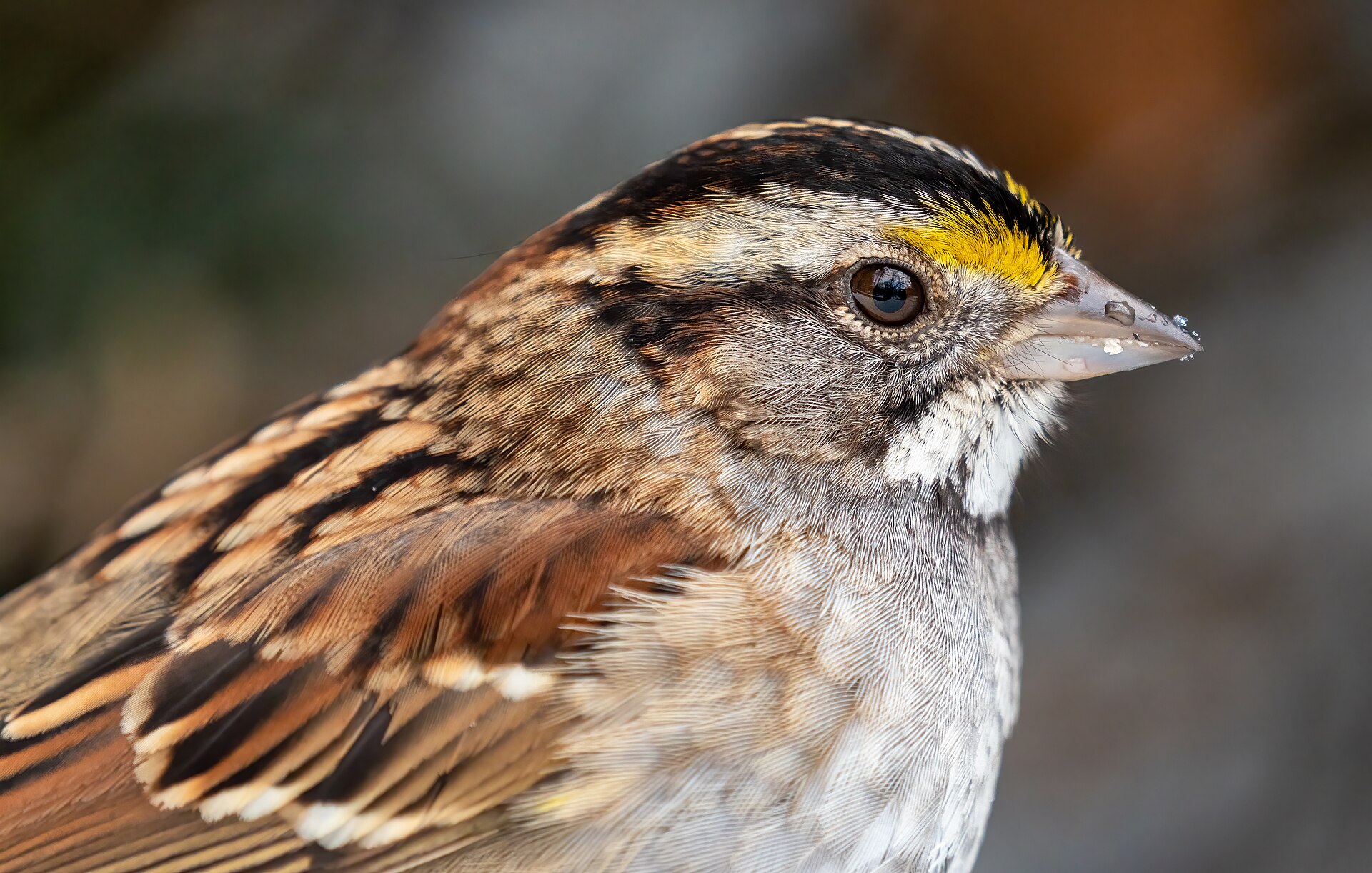
A larger sparrow with a crisp white throat patch, a striped head, and a small yellow spot between the eye and the bill. Some individuals have white head stripes and some have tan ones, and the two forms are equally common. In Illinois, White-throated Sparrows are mostly migrants in the north, passing through in big numbers in April, May, and October, but many winter in the central and southern parts of the state, and a few stay through the winter at feeders around Chicago. They scratch in leaf litter under shrubs and come out to feed on spilled seed. The song, a thin whistled Old Sam Peabody, Peabody, Peabody, is sometimes heard on mild late-winter days.
Red-breasted Nuthatch
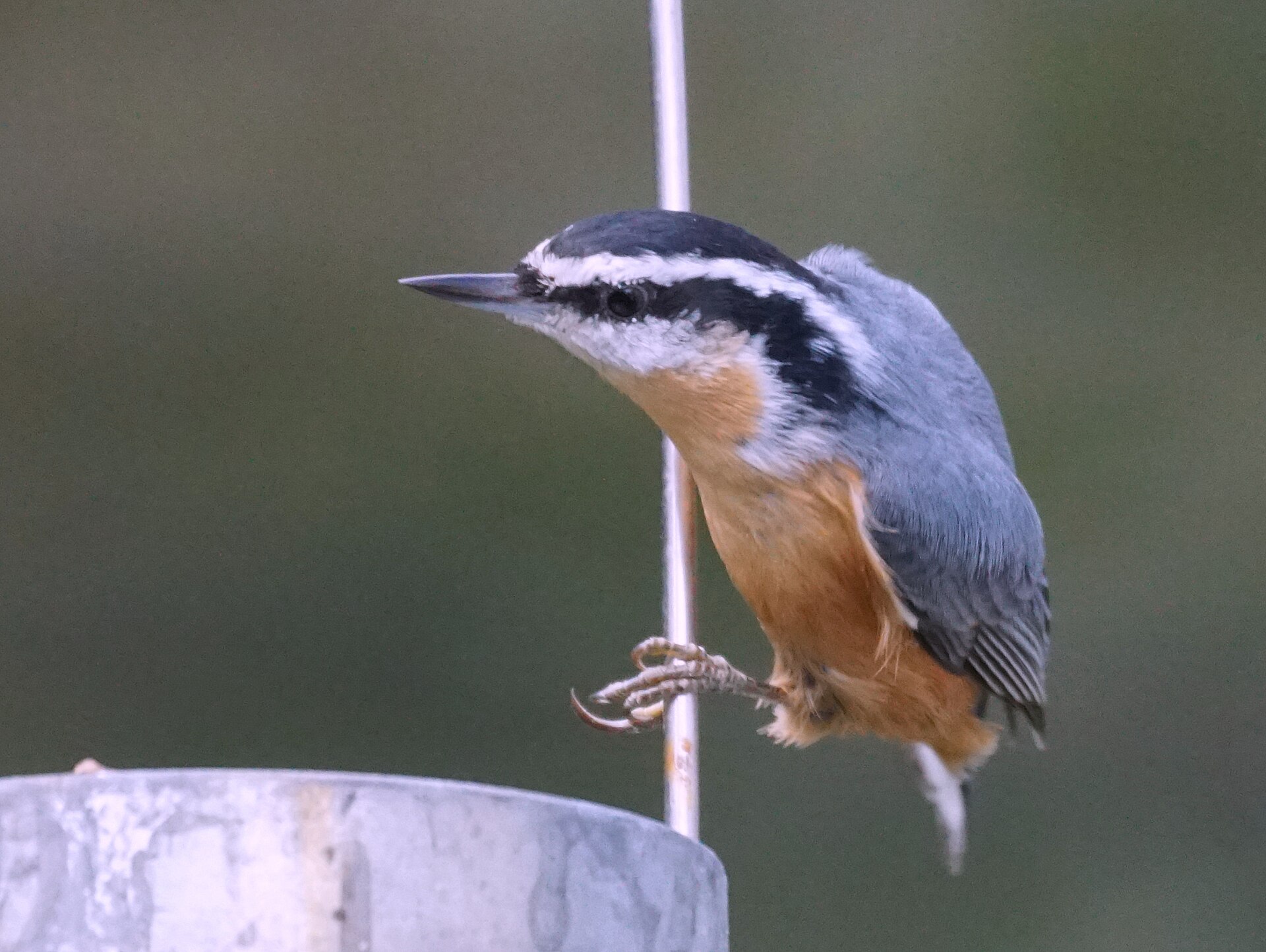
The White-breasted Nuthatch is an all-year Illinois bird. Its smaller cousin is not. The Red-breasted Nuthatch breeds mostly in the conifer forests of the north and the mountains, and in fall some move south. In some winters they flood into Illinois, and in others there are hardly any. It has a black eye line, a white eyebrow, and a rusty-orange underside, and it gives a nasal yank yank call that sounds like a tiny horn. Look for them in spruces and pines, in parks and cemeteries, and at feeders, where they grab one sunflower seed or a piece of suet and fly off to wedge it into bark. An Illinois yard with a few evergreens has a much better chance of hosting one.
Golden-crowned Kinglet
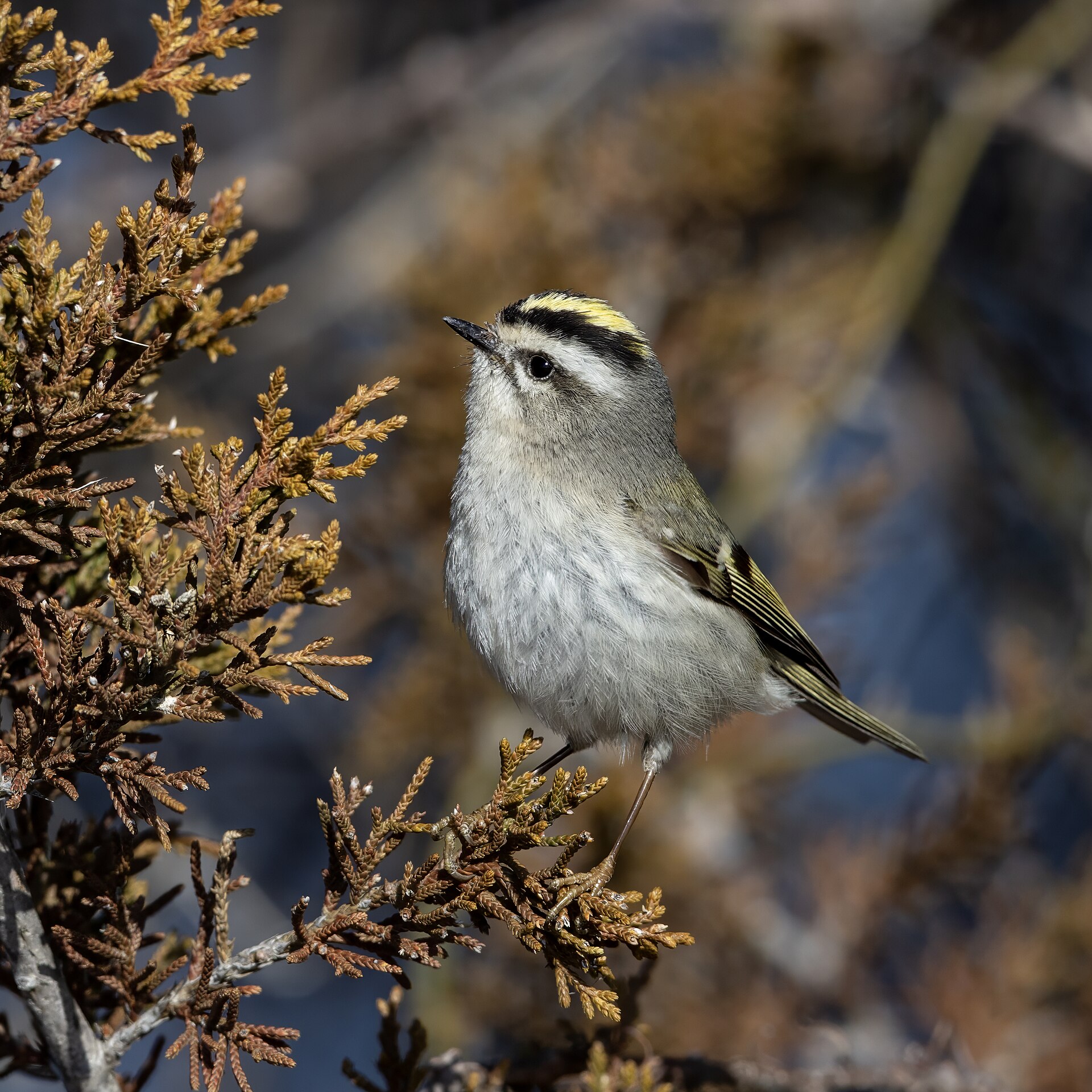
Tiny, about the weight of two pennies, and remarkably tough. Golden-crowned Kinglets winter throughout Illinois, mostly in conifers, and they survive nights well below zero. They have a bold black-and-white striped face and a yellow crown patch (with orange in the center on males). They rarely come to feeders, but they’re common in parks with spruces or pines, often with chickadees. The call is a very high, thin tsee-tsee-tsee, high enough that some people can’t hear it at all. The Ruby-crowned Kinglet, a close relative, is more of a migrant in Illinois and is uncommon in winter except in the far south.
Pine Siskin
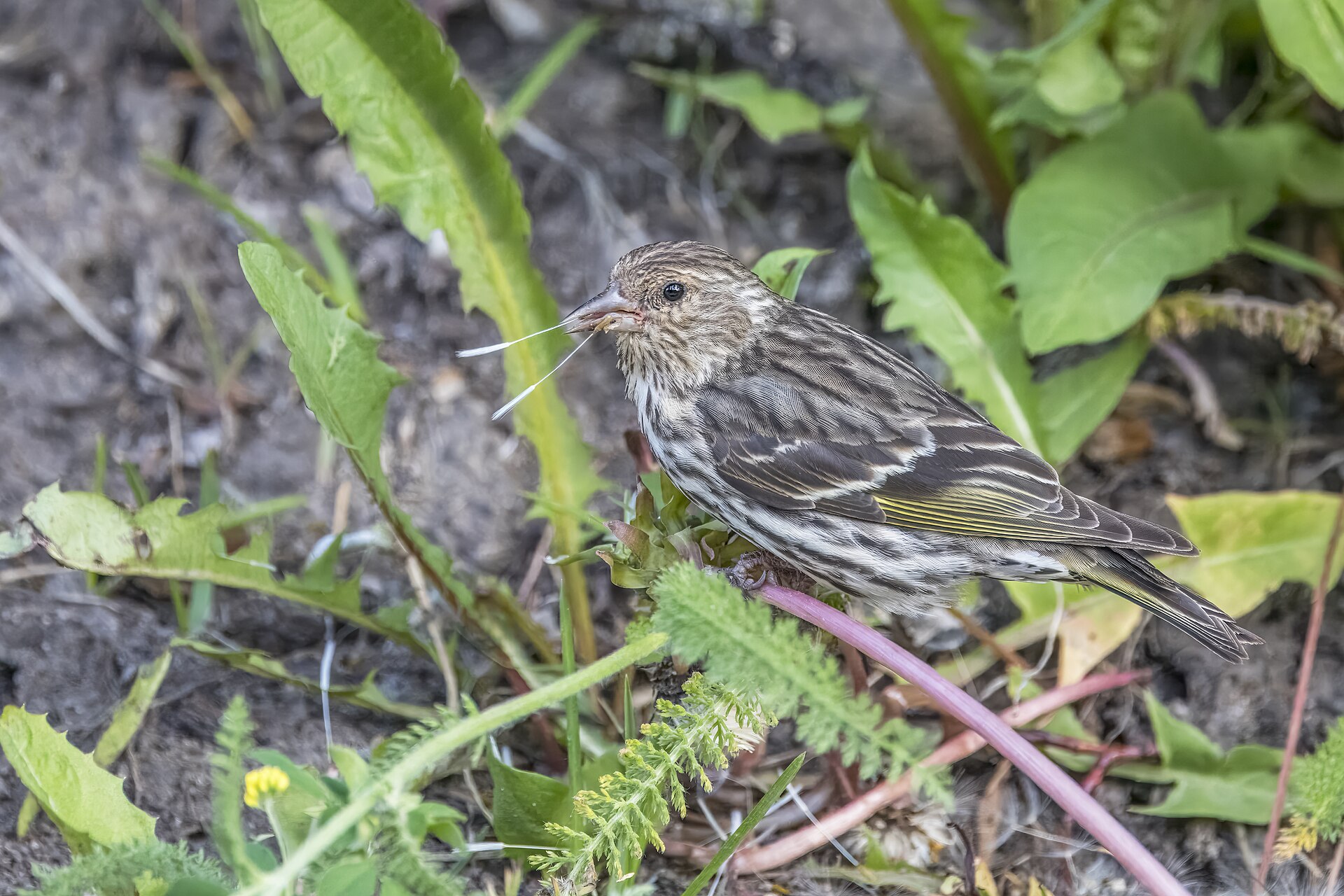
A small, heavily streaked brown finch with a sharp, pointed bill and a flash of yellow in the wings and tail. Siskins are irruptive. In some winters they arrive in Illinois by the hundreds, swarming nyjer and sunflower feeders, and in others they’re barely seen. Whether they come depends mostly on the conifer seed crop in Canada, and the Finch Research Network publishes a Winter Finch Forecast each fall that is worth a look. Siskins are prone to salmonella outbreaks when they crowd at feeders, so in a big siskin winter it pays to clean tube feeders often and to take them down for a week or two if sick or lethargic birds show up.
Yellow-bellied Sapsucker
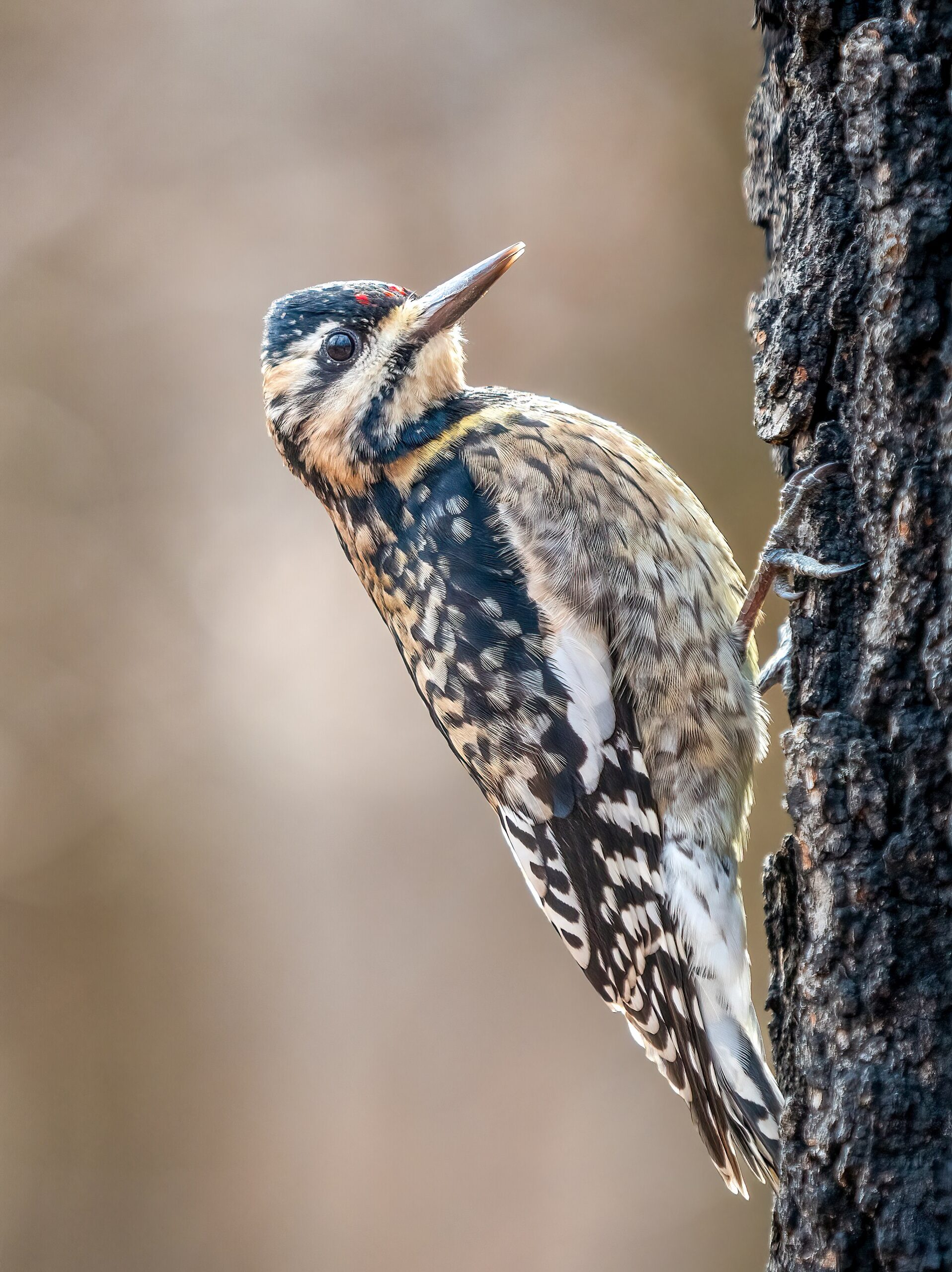
A medium-sized woodpecker that drills neat horizontal rows of small holes in tree bark and comes back to drink the sap and eat the insects that get stuck in it. Adults have a red forehead, a black-and-white striped face, and a long white wing patch; males also have a red throat. The bird in the photo is a young one, with a brownish face. In Illinois the sapsucker is a common migrant statewide, and it winters mainly in the southern and central parts of the state, often in older trees in parks and along streams. Fresh sap wells on a maple, birch, or pine are the best sign one is around. They sometimes come to suet.
Rough-legged Hawk
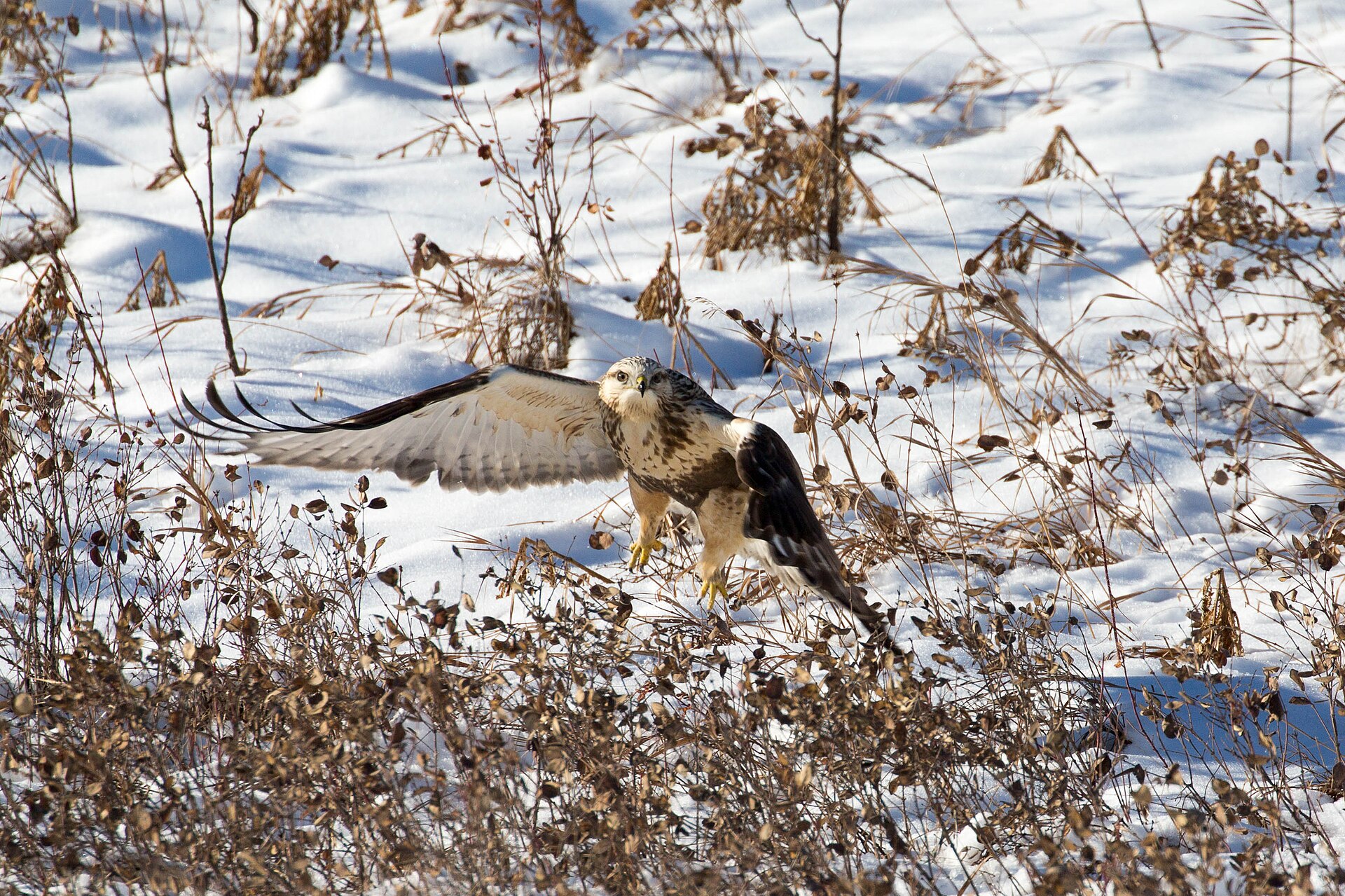
A hawk from the Arctic that spends the winter over Illinois fields and prairies, mostly from November to March. It’s about the size of a Red-tailed Hawk but has longer, narrower wings, a small bill, and legs feathered all the way to the toes. Light birds have a dark belly band and dark patches at the bend of the wing; some are almost entirely dark. The best field mark is behavior. Rough-legged Hawks hover over open ground, facing into the wind, while they hunt voles, which Red-tails rarely do for long. Large grasslands like Midewin National Tallgrass Prairie in Will County and Goose Lake Prairie State Natural Area are good places to look, along with wide-open farm country downstate.
Short-eared Owl
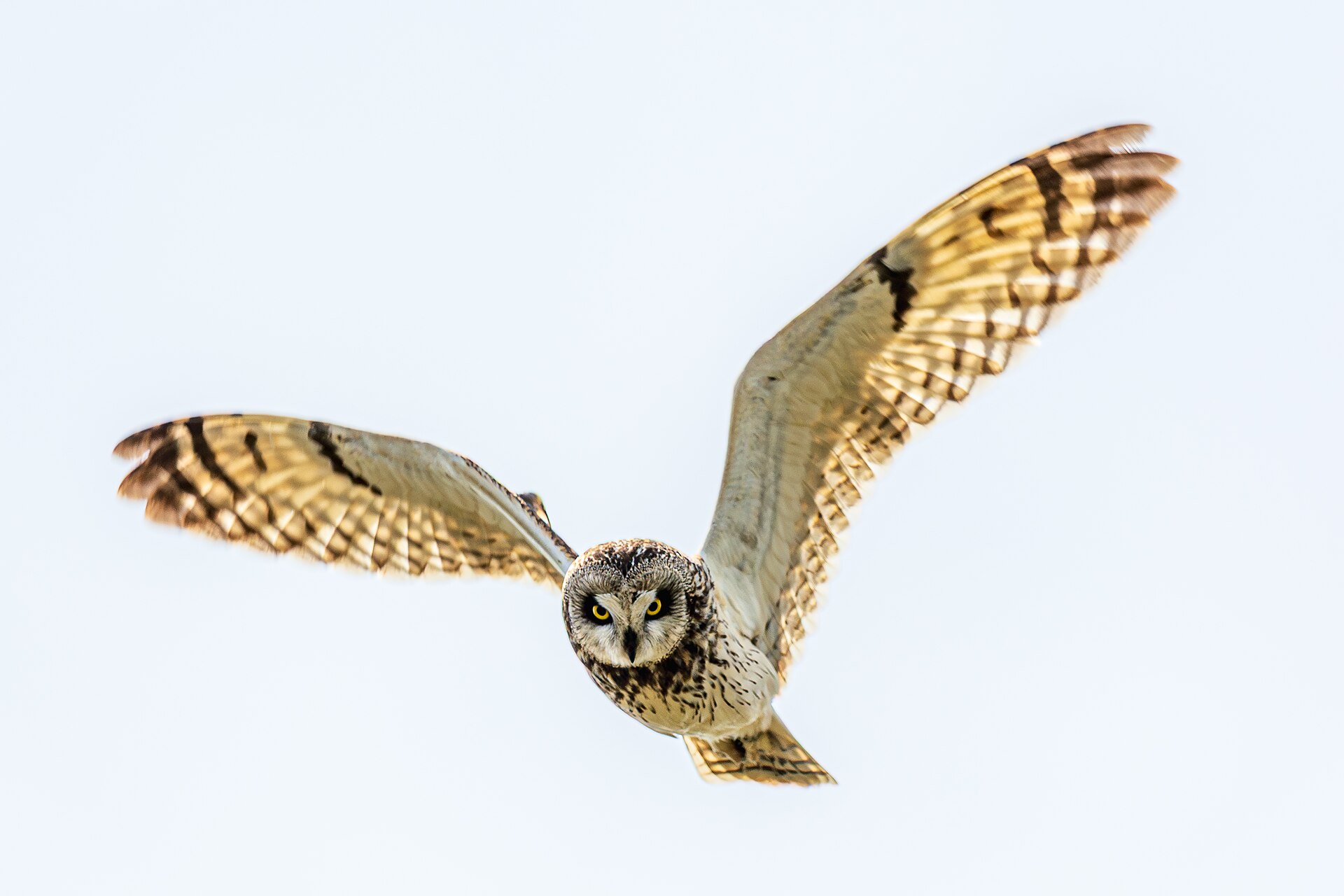
An owl of open grassland that hunts in daylight, or at least in the edges of it. In winter, Short-eared Owls from the north settle into Illinois prairies, hayfields, and reclaimed strip mines, and on calm evenings they start flying low over the grass about half an hour before sunset. They fly with loose, floppy wingbeats, almost like a big moth, and show pale buff patches on top of the wings and black marks at the wrist underneath. Short-eared Owls are listed as endangered in Illinois, since very few still nest in the state, so winter is the time to see them. Midewin, Goose Lake Prairie, and Prairie Ridge State Natural Area in Jasper County are known sites. Watching from the car and keeping off the grass is the way to do it. The guide to night birds in Illinois covers the state’s other owls.
Lapland Longspur
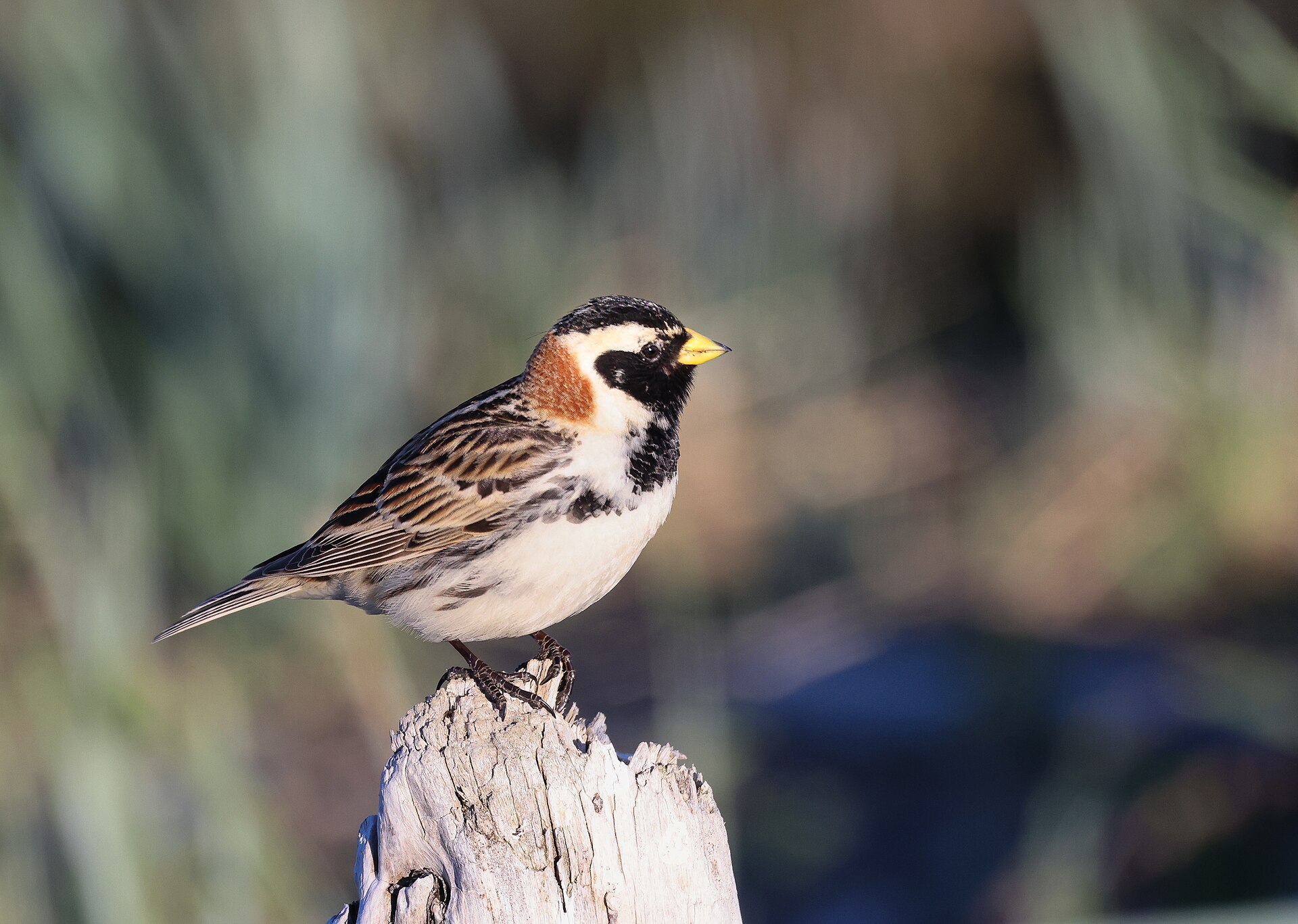
A bird of bare fields that most people drive past without ever seeing. Lapland Longspurs breed on the Arctic tundra and winter on the Great Plains and in the Midwest, where they feed in plowed fields, stubble, and manure-spread pastures, often mixed with Horned Larks. In winter they’re streaky brown, with a hint of a rusty nape and a dark-edged face. The bird in the photo is in breeding plumage, with the black face and chestnut nape that come in spring. The way to find them is to drive farm roads in central Illinois after a snowfall, when flocks crowd onto the roadsides and patches of bare ground. A flock that lifts off with a dry rattle and a whistled tyew is often longspurs.
Common Goldeneye
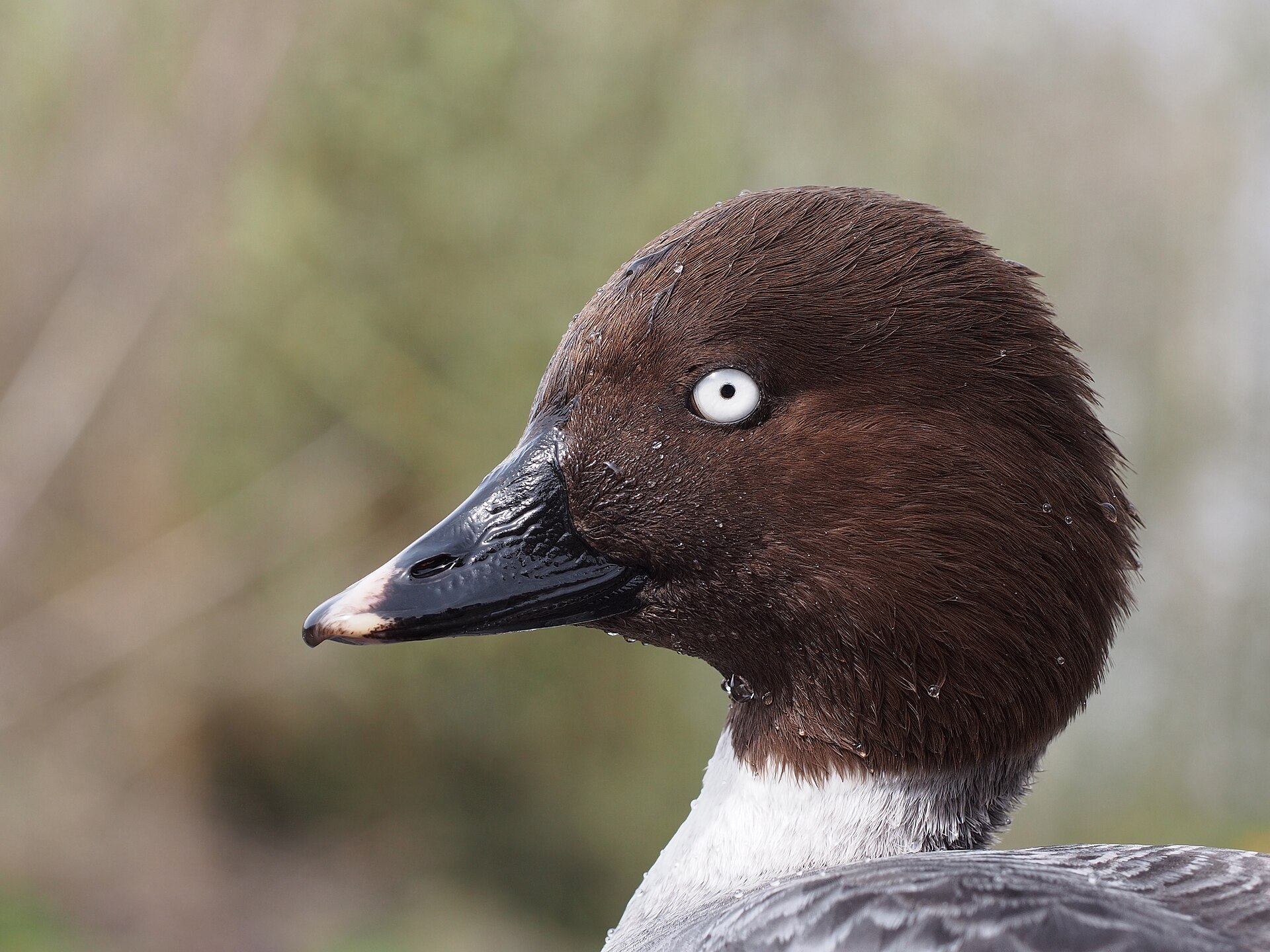
A chunky diving duck that comes south when the northern lakes freeze. Males are bright white with a dark, glossy green head and a round white spot near the bill. Females, like the one in the photo, have a chocolate-brown head, a gray body, and the same yellow eye. The wings make a whistling sound in flight, which gave the species its old nickname, whistler. In Illinois, goldeneyes winter on Lake Michigan along the Chicago lakefront, on the big rivers below the dams, and on cooling lakes that stay ice-free. Montrose Point in Chicago is a good spot to see them, along with other winter diving ducks. The guide to water birds in Illinois covers more of them.
Getting started this winter
The juncos usually show up in October, so late October or early November is the time to clean the feeders, put out some millet on the ground, and hang suet. Cover matters more than the number of feeders. Juncos, Tree Sparrows, and White-throats all want a dense shrub or brush pile within a short dash of food. If there are evergreens in the yard or nearby, keep an eye on them for kinglets and Red-breasted Nuthatches. For the eagles, plan a January morning at Starved Rock, Alton, or the Quad Cities, and dress for wind off the water.
Counting is one of the best ways to learn winter birds. Project FeederWatch runs from November through April and only needs a couple of short counts a week. Illinois has dozens of Christmas Bird Count circles, and beginners are welcome on almost all of them. The guide to birds that stay through winter in the northern US covers the residents, and the Texas and Florida winter guides show where many Illinois summer birds have gone.
Sources: Species descriptions and range information draw on the Cornell Lab of Ornithology’s All About Birds, the National Audubon Society’s Guide to North American Birds, eBird regional records for Illinois, the Illinois Department of Natural Resources (including the Illinois Endangered Species Protection Board list), the USDA Forest Service (Midewin National Tallgrass Prairie), and the Finch Research Network’s Winter Finch Forecast.